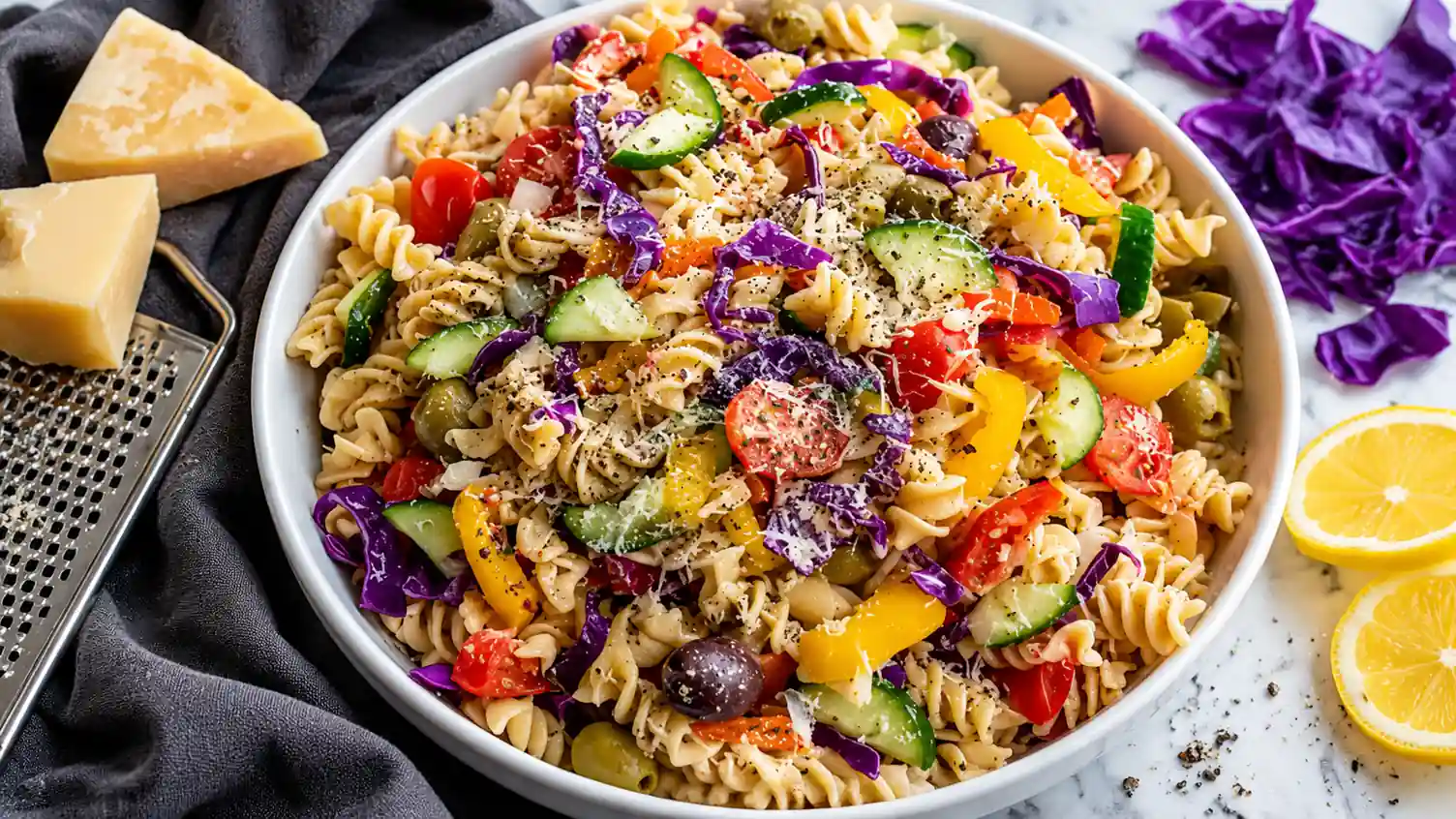
High Protein Vegetarian Pasta Salad
How to make a vibrant, meal-prep-friendly high protein vegetarian pasta salad loaded with plant-based protein and finished with a bold homemade Italian vinaigrette that ties every single ingredient together.
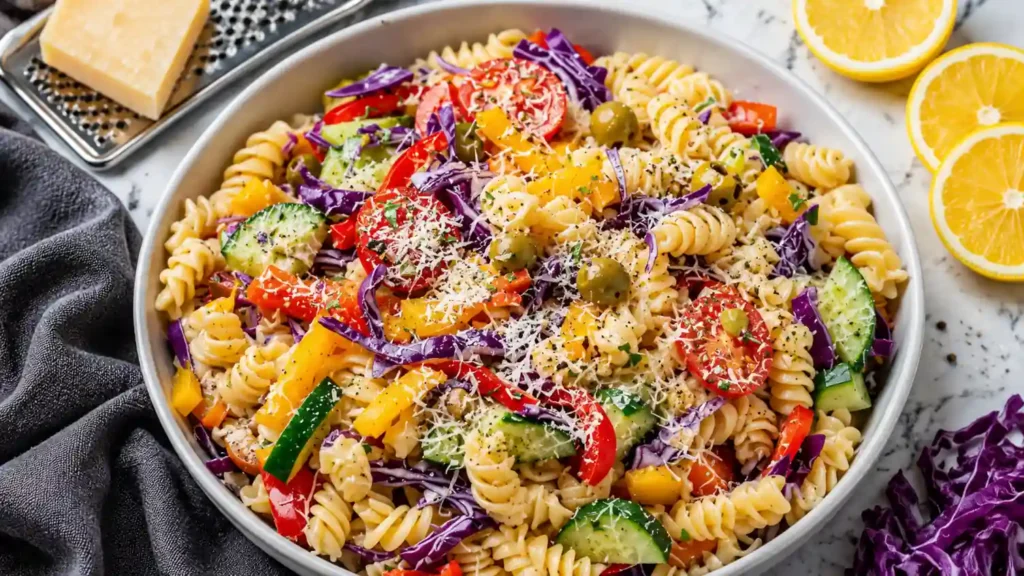
I have made a lot of pasta salads over the years, but this one is the first I have ever made on a Sunday and genuinely looked forward to eating straight through Thursday. Over 35 grams of protein per serving, completely meat-free, and ready to eat in about 20 minutes of actual hands-on cooking. When I brought a big bowl of this to a neighborhood gathering last summer, I ended up sharing the recipe with four different people before I even made it home. That told me everything I needed to know.
What makes this recipe work so well is the way the protein builds in layers rather than relying on a single source to carry the whole dish. Chickpea pasta lays a strong foundation, then chickpeas and edamame add even more plant-based protein on top of that. Pan-crisped tofu brings in satisfying texture and chew, and hard-boiled eggs finish everything off with a rich, creamy contrast. The homemade Italian vinaigrette is the thread that pulls all of those flavors into one cohesive, craveable salad. No bottled dressing is going to do what this one does.
Ingredients for High Protein Vegetarian Pasta Salad
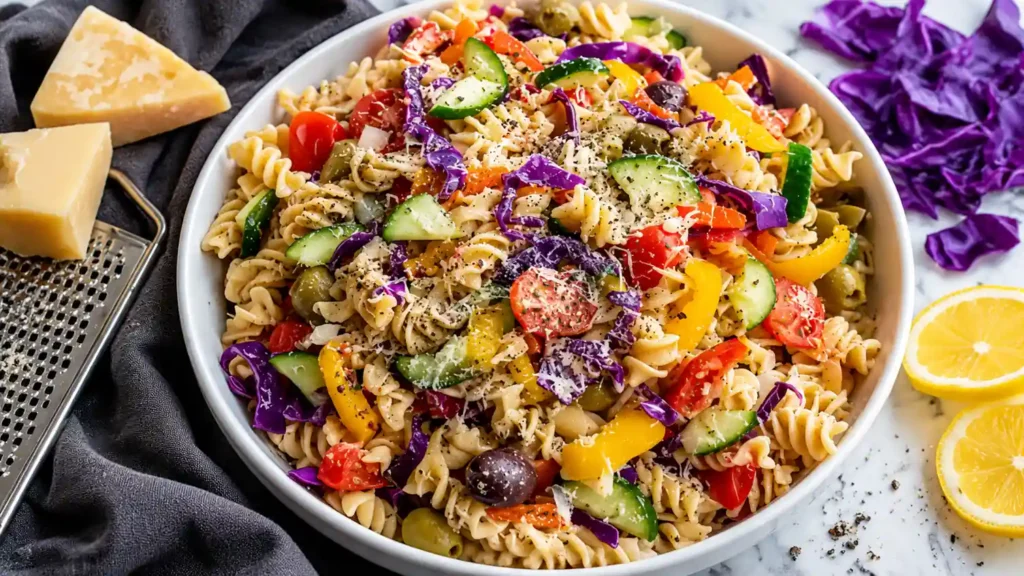
Every ingredient in this list was chosen with intention. Nothing is just here for color or bulk. Each component is actively contributing to that 35-gram protein total, which means the choices you make at the grocery store actually matter. The pasta is probably the most important decision of all, so take a moment to flip the box over and check the label before you commit.
1 lb protein pasta (Banza chickpea pasta or Barilla Protein+ are both excellent here; you are looking for at least 20g of protein per serving on the label)
1 cup grape tomatoes, halved or quartered
1 English cucumber, diced
1 1/2 cups shredded red cabbage
1 yellow bell pepper, chopped
1 orange bell pepper, chopped
1 cup sliced olives
1 cup freshly grated Parmesan (this is worth doing by hand; pre-shredded versions contain anti-caking agents that dull the flavor and prevent the cheese from melting into the dressing properly)
1 can (15 oz) chickpeas, drained and rinsed (white beans or black beans work just as well if that is what you have on hand)
1 cup shelled edamame, cooked (the frozen section is your friend here; just thaw completely before adding to the salad)
1 cup extra firm tofu, pressed and cubed (pressing for at least 15 minutes is not optional if you want golden, crispy cubes instead of soft, falling-apart ones)
4 large hard-boiled eggs, quartered (leave these out entirely if you want to keep the recipe fully vegan)
For the dressing:
1/4 cup red wine vinegar
1/3 cup fresh lemon juice, from about 1 large lemon
1 tbsp raw honey
3 garlic cloves, minced
1 tbsp Dijon mustard
2 tsp Italian seasoning
1/3 cup extra-virgin olive oil
Sea salt and black pepper to taste
Step-by-Step Instructions
The biggest time-saver here is starting the tofu press and the pasta water at exactly the same time. That overlap is what keeps everything under 20 minutes of active work without feeling rushed. Read through all six steps once before you start so the timing clicks into place naturally.
Step 1: Bring a large pot of generously salted water to a full rolling boil. Add the protein pasta and cook according to the package directions, aiming for just al dente. If you like a firmer bite, pull it about a minute before the package suggests. Drain it immediately and rinse well under cold running water to stop the cooking and cool it down quickly, then transfer it to the largest bowl you have.
Step 2: While the water is coming to a boil, get the tofu pressing. Wrap it tightly in a clean kitchen towel or a thick layer of paper towels, set something heavy on top like a cast iron skillet or a sturdy cutting board, and let it press for at least 15 minutes. You will know it is ready when the towel stops pulling any more moisture out. Cut the pressed tofu into small, uniform cubes so they cook evenly. Heat a non-stick skillet over medium-high heat, add the tofu in a single layer with a pinch of salt, and let it sear without touching it for 2 to 3 minutes per side until each piece is golden and lightly crisp, about 5 to 7 minutes total. Set it aside on a plate and let it cool completely before it goes into the salad.
Step 3: Once the pasta is cool and the tofu has come down to room temperature, it is time to build the salad. Add the grape tomatoes, cucumber, red cabbage, both bell peppers, olives, Parmesan, chickpeas, edamame, and cooled tofu to the bowl with the pasta. Toss everything gently until it is well distributed. The key word here is cooled: adding the tofu while it is still warm will wilt the vegetables and soften the crunch that makes this salad so satisfying.
Step 4: Make the dressing by combining the red wine vinegar, fresh lemon juice, honey, minced garlic, Dijon mustard, Italian seasoning, and olive oil in a small bowl or a lidded jar. Whisk it vigorously or shake it well until the dressing is fully emulsified and slightly thickened. Taste it before it goes anywhere near the salad and season with salt and pepper. Getting the dressing right at this stage means you will not have to over-season later.
Step 5: Pour the dressing over the pasta and vegetables and toss slowly and evenly until every ingredient is coated. Take one more taste and make any final adjustments to the seasoning. This is your last easy chance to balance the flavors before the eggs go on top.
Step 6: Arrange the quartered hard-boiled eggs across the surface of the salad. If you are building this for a full week of meal prep, store the eggs separately in their own container and add them fresh each day. Eggs that sit in dressing for multiple days turn rubbery and lose their appeal entirely, and this salad is too good to let that happen. Once assembled, refrigerate the salad for 20 to 30 minutes before you serve it. That resting time lets all the flavors settle into each other and it genuinely makes a noticeable difference in how the finished salad tastes.
What to Serve with High Protein Vegetarian Pasta Salad
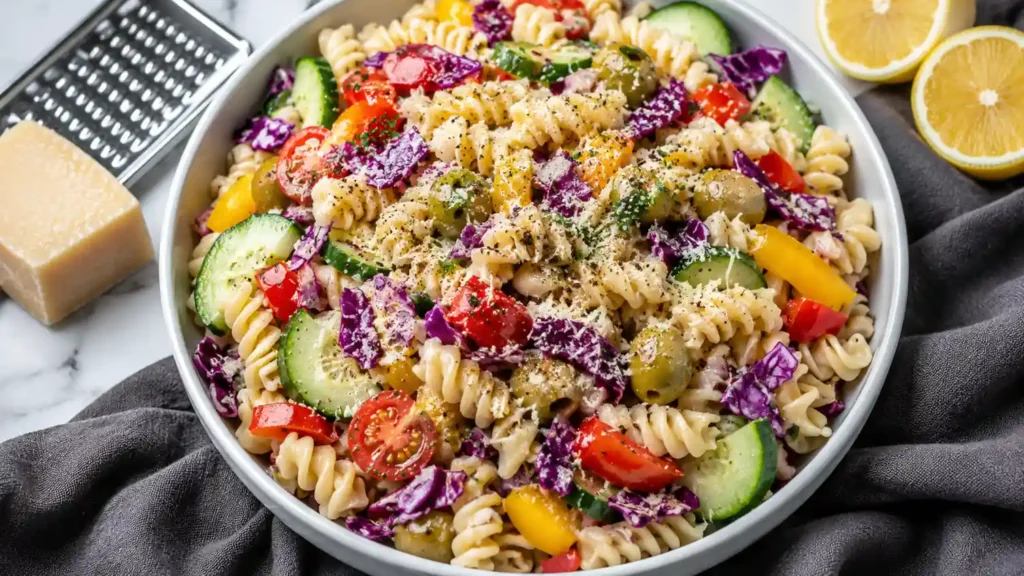
This salad is substantial enough to stand completely on its own as a full meal, and most days that is exactly how I eat it. But if you are building out a bigger spread, hosting guests, or simply want some variety across your prep week, these pairings all complement it well.
High Protein Ranch Pasta Salad: If you want a second pasta salad in the weekly rotation without the prep feeling repetitive, the ranch version is a smart pick. The flavor profile is completely different from the Italian vinaigrette here, so both can live in the fridge at the same time and feel like two distinct meals.
Thai Peanut Crunch Protein Pasta Salad: Bold, nutty, and nothing like this recipe. If you are feeding a crowd and want two pasta salads on the table, this is the perfect contrast. The peanut dressing goes in such a different direction that neither salad competes with the other.
Grilled Halloumi Salad: Warm, salty, and squeaky grilled halloumi alongside this chilled pasta salad is one of my favorite combinations for a summer lunch or a lighter dinner. The temperatures and textures play off each other in the best way.
Protein Yogurt Bowl: A simple Greek yogurt bowl on the side adds a creamy, cooling contrast and quietly pushes the total protein per meal even higher with almost no extra effort involved.
Grinder Dense Bean Salad: Another cold, protein-packed salad that works brilliantly at any potluck or cookout spread. The bean-forward base balances the pasta in a way that feels intentional rather than like an afterthought.
Pesto Pasta with Broccoli and White Beans: If you are prepping multiple dishes for the week, this one stores just as beautifully and gives you a warm pasta option to rotate in on the nights when you want something a little more comforting alongside the cold salad.
Storage and Serving Tips
Store the finished salad in an airtight container in the refrigerator and it will stay fresh and delicious for up to 5 days. The one exception is the eggs. Keep those in a separate container and add them fresh each time you serve, because eggs left sitting in vinaigrette for several days go rubbery fast and it is an easy thing to avoid.
When you pull the salad out of the fridge, give it a thorough toss before eating since the dressing naturally settles to the bottom overnight. If it looks a little dry or dull after a day or two, a small drizzle of olive oil and a squeeze of fresh lemon juice will bring it back to tasting freshly dressed in seconds. That one little trick has saved many a leftover lunch.
One thing to know going in: freezing does not work for this recipe. The vegetables lose their crunch, the tofu turns soft and watery once thawed, and the whole texture of the salad suffers in a way that cannot be fixed. This one is meant to be made fresh, kept cold, and eaten within the week while everything is still at its best.
Conclusion
The first time I made this high protein vegetarian pasta salad, I honestly did not expect it to become a weekly staple. I figured it would be good, but something this colorful, this loaded, and this high in protein coming together in under 20 minutes felt almost too easy. It has been on my Sunday prep list ever since. Make a full batch this weekend and I am confident you will find yourself reaching for it all week long, not because you have to, but because it genuinely tastes that good