
Easy Tuna Noodle Casserole: Creamy, Cheesy Weeknight Comfort Food
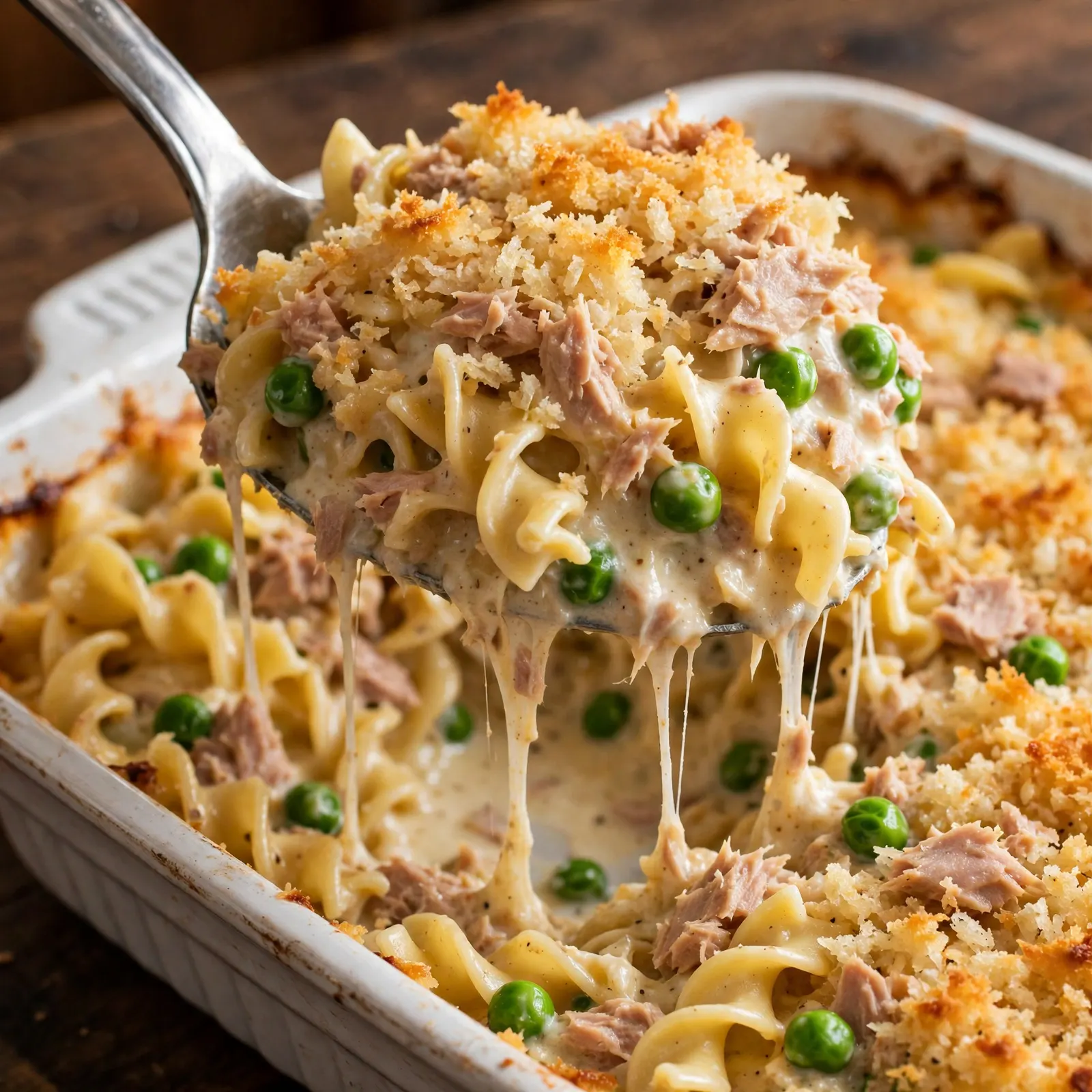
There’s something about a tuna noodle casserole coming out of the oven, top golden and edges still bubbling, that pulls everyone into the kitchen before you’ve even set the table. It’s not a glamorous dish, and it doesn’t try to be. What it is, reliably, is filling and satisfying in a way that fancier dinners often aren’t.
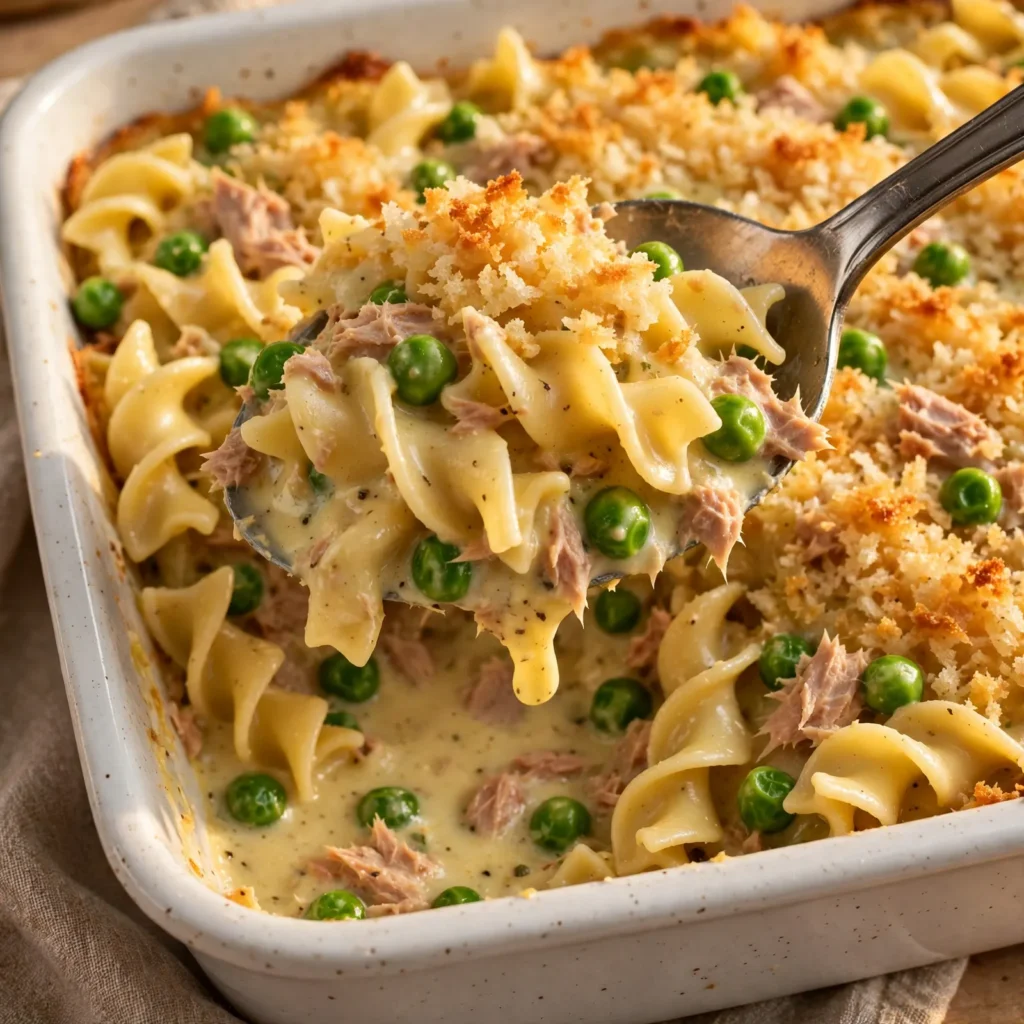
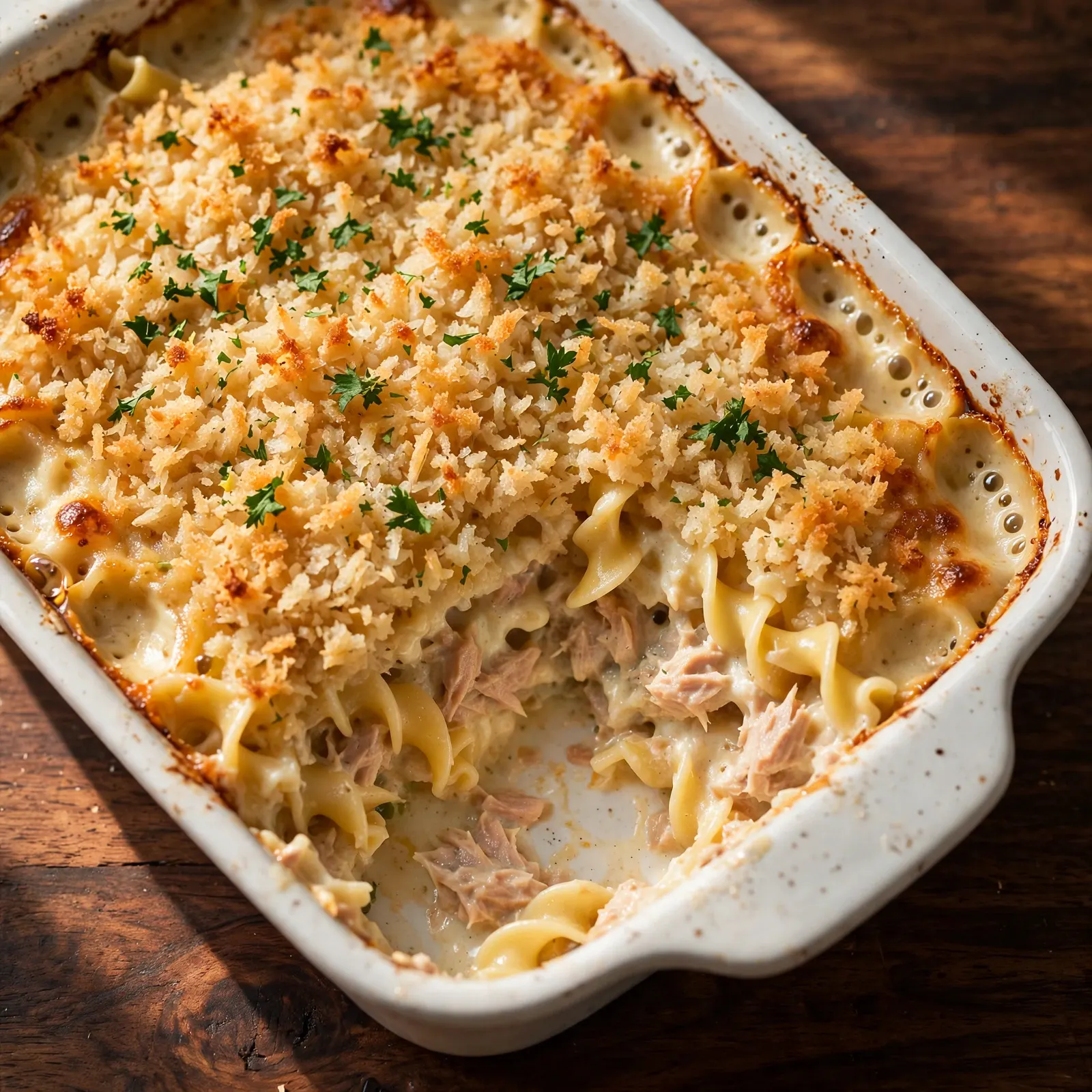
This version builds a quick cream sauce from scratch rather than relying on a can of condensed soup. It takes about 10 extra minutes on the stovetop, but the result is noticeably richer and less salty. The noodles stay tender, the tuna stays in generous flakes throughout, and the buttery panko crust on top gives you a contrast in texture that makes every scoop more interesting. It works on a Tuesday with whatever’s in your pantry and feeds 8 people without much effort.
Why You’ll Love This Tuna Noodle Casserole
- From-scratch sauce, minimal extra effort. The cream sauce comes together in one skillet in about 10 minutes and tastes noticeably better than the condensed soup version without requiring any special technique.
- Pantry-friendly. Canned tuna, egg noodles, frozen peas, and a block of cheddar are easy to keep stocked. This is a real last-minute dinner option.
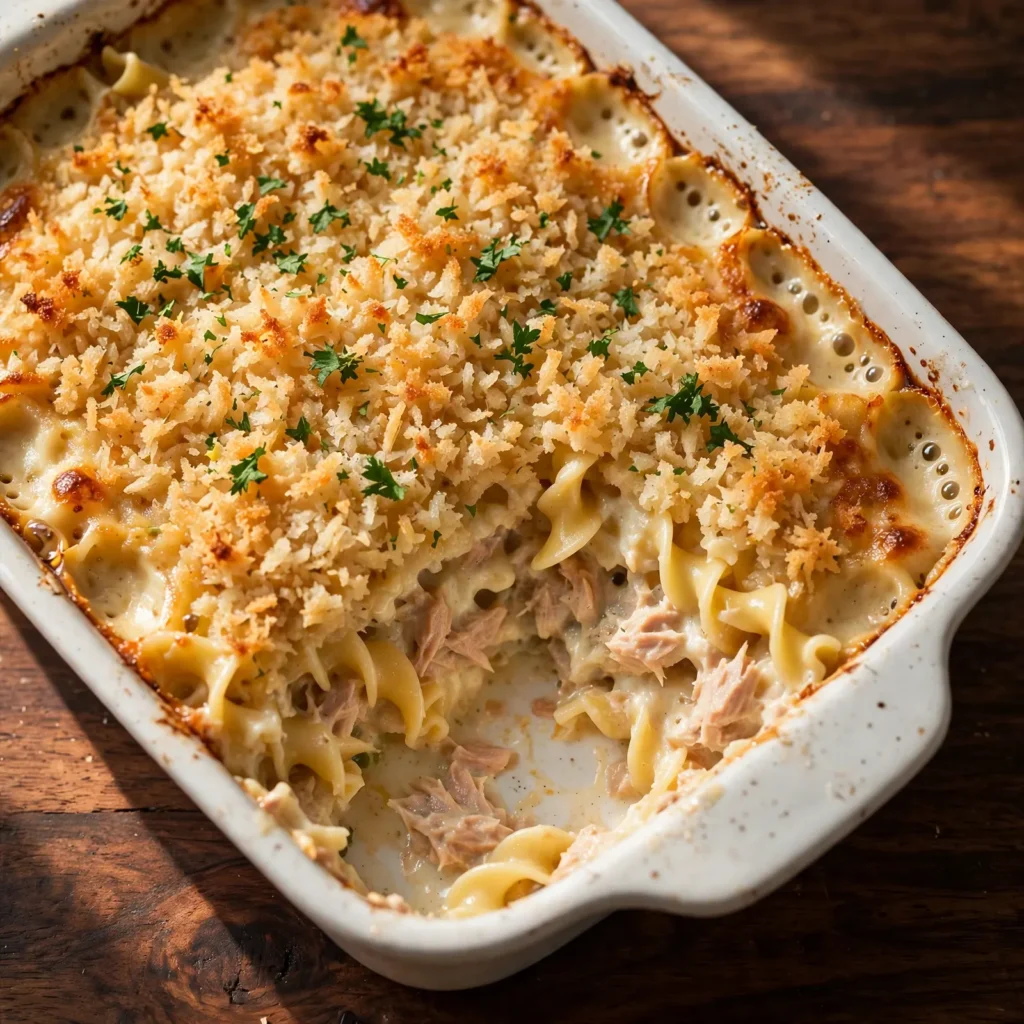
- The panko topping stays crispy. Panko tossed in melted butter browns evenly in the oven and holds its crunch even after scooping and serving, unlike regular breadcrumbs which can go soft.
- Feeds 8 people from one dish. No doubling required. Leftovers reheat well the next day, and the casserole can be assembled a full day ahead.
- Genuinely satisfying, not just filling. The from-scratch sauce with real cheese and sour cream gives this a depth of flavor that keeps people coming back for seconds.
Ingredients You’ll Need
Recipe Timing
- Servings: 8
- Difficulty: Easy
- Course: Main Course, Dinner
- Cuisine: American
- Prep Time: 20 minutes
- Cook Time: 35 minutes
- Total Time: 55 minutes
Choosing your tuna: Solid white albacore tuna in water gives the cleanest flavor and best texture. Chunk light tuna works too and has a stronger, briner taste, which some people prefer. Whichever you use, drain both cans thoroughly and press the tuna firmly against the strainer for about 30 seconds. Excess liquid is the most reliable path to a watery casserole.
For the Casserole:
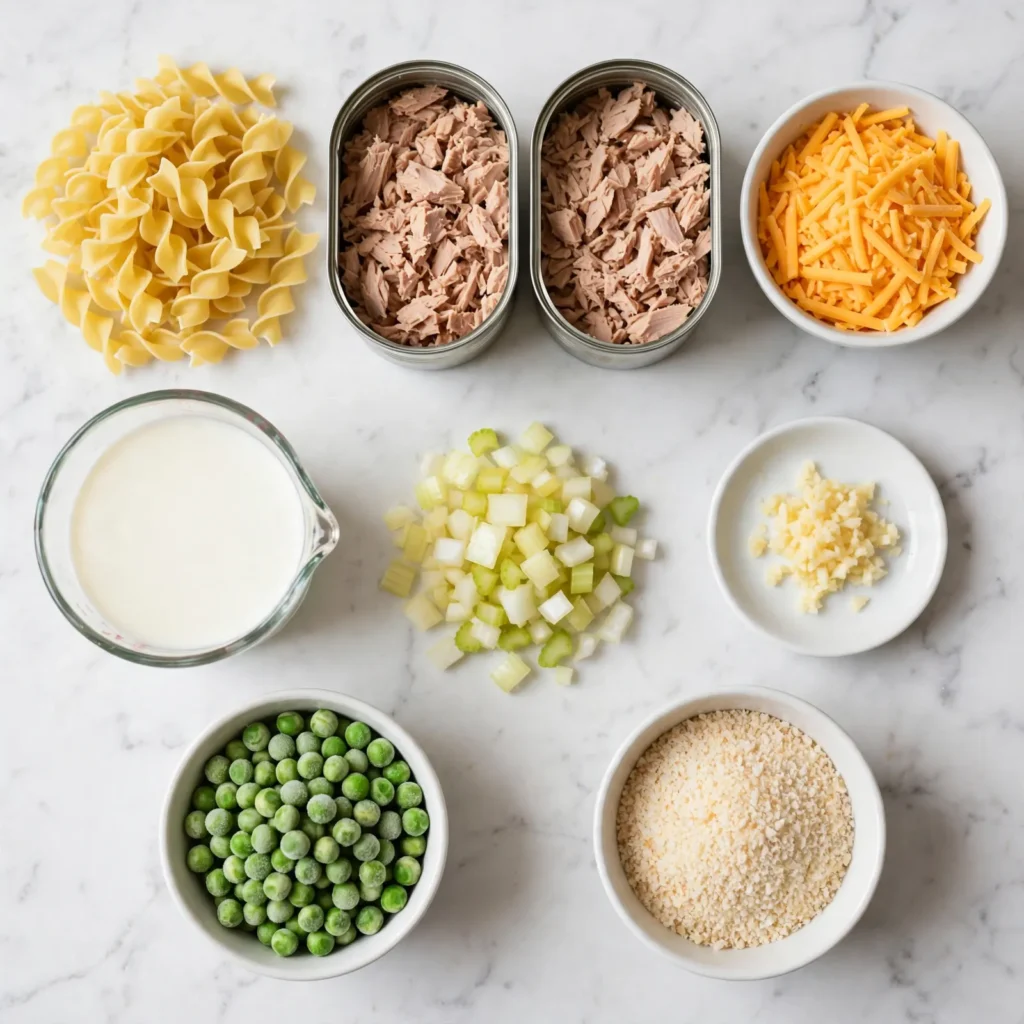
- 12 oz wide egg noodles — The classic choice for this dish because they hold onto the cream sauce without going mushy during baking. Medium egg noodles work but will soften more. Either way, cook them 2 minutes short of the package minimum; they finish in the oven.
- 3 tablespoons unsalted butter — For building the roux and sauteing the aromatics. Salted butter works if that’s what you have; just reduce the added salt by half a teaspoon.
- 1 medium yellow onion, finely diced — Gives the sauce its savory, sweet base. White onion is a fine substitute.
- 3 stalks celery, finely diced — Adds mild crunch and a clean herby note that lifts the whole dish. Don’t skip it; it’s not decorative.
- 3 garlic cloves, minced — Fresh garlic makes the sauce taste noticeably brighter than garlic powder alone. Using both (fresh in the saute, powder in the sauce) gives you two different layers of the same flavor.
- 3 tablespoons all-purpose flour — Turns the butter and aromatics into a roux, which is what thickens the sauce.
- 2 cups whole milk — Whole milk gives the sauce a creamier, fuller body. Pull it from the fridge 15 to 20 minutes before you start; cold milk can cause the roux to seize if added all at once.
- 1 cup halal chicken broth — Adds savory depth. Without it, the sauce can taste a little one-note. If you’re out, use an additional cup of milk and a small pinch of extra salt.
- 1/2 cup full-fat sour cream — Stirred in off heat, it adds a gentle tang and makes the sauce noticeably richer. Low-fat sour cream works but the filling will be slightly thinner.
- 1.5 cups shredded sharp cheddar, divided — One cup goes into the sauce; the remaining half cup goes on top before baking. Sharp cheddar has more flavor per gram than mild. Shred it yourself from a block for the smoothest melt; pre-shredded varieties contain anti-caking powder that makes sauces slightly grainy.
- 2 cans (5 oz each) tuna in water, drained and flaked — Two cans gives a generous, satisfying tuna-to-noodle ratio. Drain them both well.
- 1.5 cups frozen peas — No need to thaw beforehand. They cook through completely during baking and add a pop of sweetness and color.
- 1/2 teaspoon garlic powder — Works alongside the fresh garlic for a more rounded, deeper garlic flavor.
- 1/2 teaspoon onion powder — Same principle. It fills in the background savory note.
- Salt and black pepper to taste — Season in stages at each step rather than all at the end.
For the Panko Topping:
- 1 cup panko breadcrumbs — Panko’s coarse texture crisps up far better than regular breadcrumbs in the oven. Standard breadcrumbs tend to absorb moisture and go soft.
- 2 tablespoons unsalted butter, melted — Tossed with the panko so it browns evenly and consistently.
- 2 tablespoons fresh parsley, chopped — Brightens the topping’s flavor and look. Dried parsley works in a pinch but the color won’t be as vivid.
- 1/4 cup shredded cheddar — Optional, but adding it under the panko layer gives the crust an extra cheesy, slightly caramelized bottom.
Allergen and Dietary Disclosure
This recipe contains dairy (butter, milk, sour cream, cheddar cheese), wheat and gluten (egg noodles, flour, panko breadcrumbs), eggs (present in most egg noodle brands), and fish (tuna).
Gluten-free adaptation: Use certified gluten-free pasta in place of egg noodles, substitute the all-purpose flour with a 1:1 gluten-free baking flour blend in the same quantity, and swap the panko for gluten-free panko or crushed gluten-free crackers. The filling itself is otherwise gluten-free.
Dairy-free adaptation: Replace the butter with a plant-based butter, the whole milk with full-fat oat milk or unsweetened coconut milk, the sour cream with a dairy-free alternative, and the cheddar with a dairy-free shredded cheese. The filling will be slightly less rich but holds together well after baking.
This recipe is prepared in a home kitchen and cannot be guaranteed safe for any specific allergy.
Step-by-Step Directions
Step 1: Preheat the Oven and Start the Noodles
Set your oven to 375°F (190°C). Bring a large pot of generously salted water to a boil and cook the egg noodles for 2 minutes less than the package’s minimum cooking time. They should have a firm, slightly underdone bite since they’ll finish cooking in the oven. Drain them without rinsing and set aside. The surface starch on unrinsed noodles helps the sauce cling to every strand.

Chef’s Note: The 2-minute undercooked rule is the single most important step in this recipe. Noodles that are already tender going into a 375°F oven for 25 to 30 minutes come out soft and slightly gluey. Firm noodles come out perfectly cooked. This is easy to control and makes a real difference in the final texture.
Step 2: Saute the Aromatics
While the noodles cook, melt 3 tablespoons of butter in a large, deep skillet or Dutch oven over medium heat. Add the diced onion and celery. Cook for 5 to 6 minutes, stirring occasionally, until the onion is translucent and the celery has softened but still has some body. Add the minced garlic and stir for 1 minute until fragrant. The mixture should smell sweet and savory together.
Step 3: Build the Cream Sauce
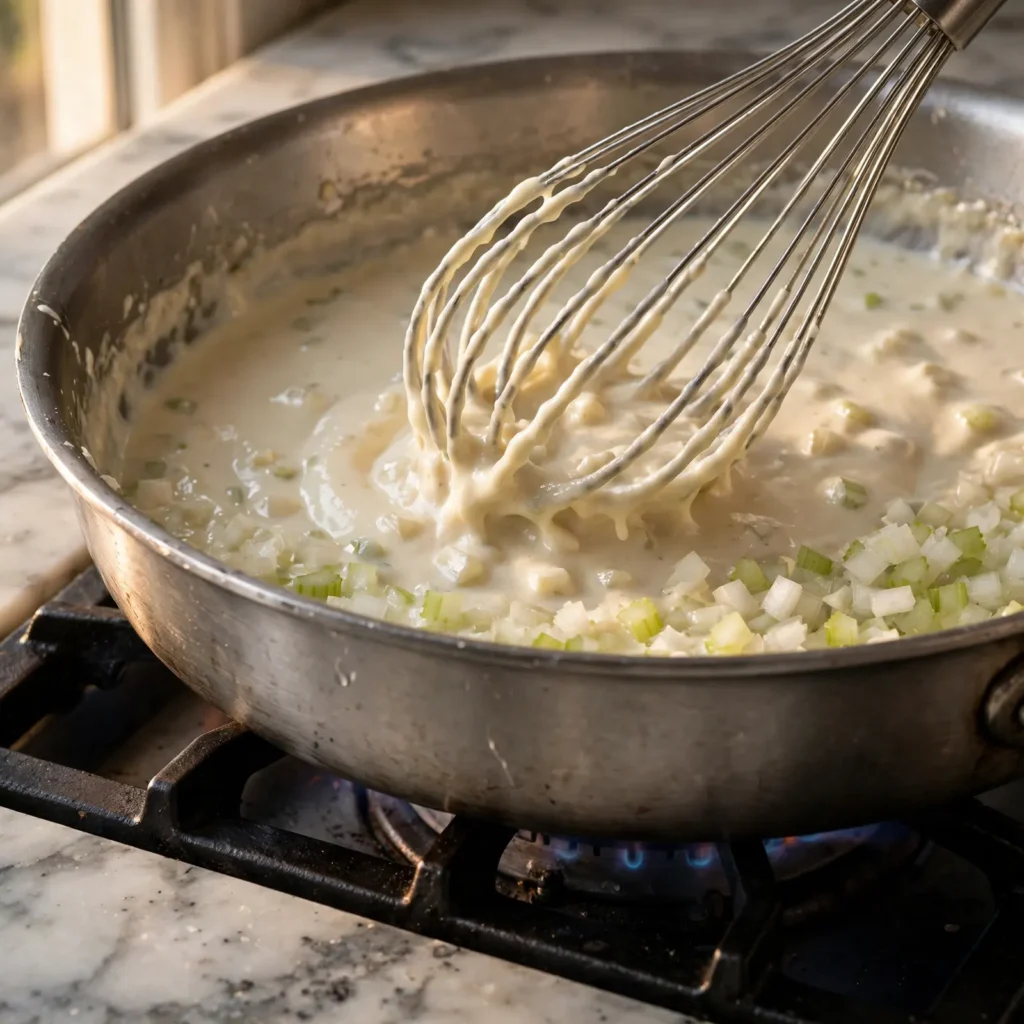
Sprinkle the flour evenly over the softened vegetables and stir constantly for 1 to 2 minutes. You’re cooking out the raw flour taste and coating the vegetables in the roux. Pour in the milk slowly, about half a cup at a time, whisking between each addition. Once all the milk is in, add the chicken broth, garlic powder, onion powder, a generous pinch of salt, and black pepper. Raise the heat slightly to medium-high and stir until the sauce thickens enough to coat the back of a spoon, about 4 to 5 minutes.
Chef’s Note: Adding milk gradually rather than all at once is the difference between a smooth sauce and a lumpy one. Cold liquid hitting a hot roux too fast creates clumps that are genuinely difficult to whisk out. Slow additions and constant whisking give you a silky sauce every time.
Step 4: Add Cheese, Tuna, and Peas
Remove the skillet from the heat completely. Stir in the sour cream and 1 cup of the shredded cheddar until both are fully melted and the sauce looks smooth and glossy. Taste and adjust seasoning now; the filling should taste slightly more seasoned than you’d expect, because the noodles will absorb and dilute the salt during baking. Fold in the drained, flaked tuna and frozen peas, using a gentle hand so the tuna stays in distinct flakes rather than breaking into a paste.
Chef’s Note: Off-heat dairy addition is non-negotiable here. Sour cream and shredded cheese added to a pan still on the burner can curdle or separate, leaving you with a greasy, grainy texture. Two seconds to pull the pan off heat saves the whole sauce.
Step 5: Combine with the Noodles and Transfer
Add the drained noodles to the skillet and fold everything together until the pasta is evenly coated and the filling is well distributed. Transfer the mixture to a lightly greased 9×13 inch baking dish and spread it into an even layer. A level surface means the topping bakes at the same rate across the whole dish.
Step 6: Add the Topping
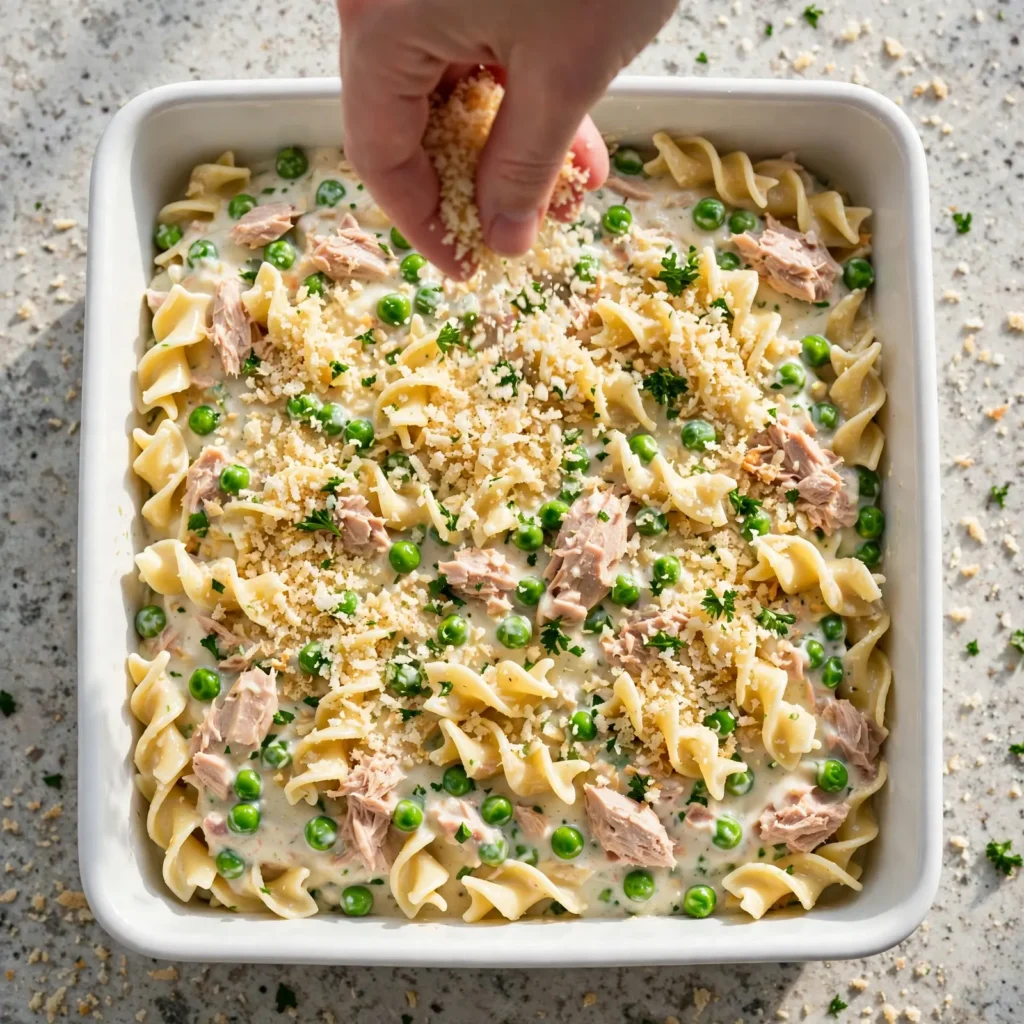
In a small bowl, stir together the panko, melted butter, and fresh parsley until the crumbs are evenly moistened. Scatter the remaining 1/2 cup of shredded cheddar directly over the casserole filling first. The cheddar melts and anchors the panko to the surface so it doesn’t slide around. Spread the panko mixture evenly over the top.
Step 7: Bake Until Golden and Bubbling
Bake at 375°F for 25 to 30 minutes, until the panko topping is deep golden brown and the sauce is visibly bubbling around the edges of the dish. If the topping is browning faster than the edges are bubbling, loosely tent the dish with foil for the last 10 minutes. Let the casserole rest on the counter for 5 minutes before scooping; this brief rest lets the sauce settle and makes the portions much neater to serve.
Common Mistakes and Troubleshooting
| Problem | Cause | Solution |
|---|---|---|
| Casserole turned watery | Tuna not drained thoroughly, or noodles were rinsed | Press tuna against the strainer for 30 seconds; never rinse cooked noodles |
| Sauce is lumpy | Cold milk added to the hot roux too quickly | Add milk in half-cup increments, whisking constantly between each addition |
| Noodles are mushy | Pasta was already fully cooked before going into the oven | Undercook noodles by exactly 2 minutes; they finish during baking |
| Topping didn’t crisp up | Filling layer was too thick, trapping steam under the panko | Spread the filling in an even, not overly heaped layer before adding the topping |
| Dish tastes flat | Seasoning only happened at the end | Taste and season the sauce before adding the tuna, then again after, then adjust once more before baking |
| Sauce turned greasy or grainy | Sour cream and cheese added while the pan was still on heat | Always take the pan off the burner completely before stirring in dairy |
Variations and Substitutions
Shortcut version: Replace the from-scratch sauce with two cans (10.5 oz each) of cream of mushroom soup combined with 1/2 cup of milk and 1/2 cup of sour cream. Stir directly with the noodles, tuna, and peas and transfer to the baking dish. The flavor will be saltier and less nuanced, but it cuts active prep time significantly.
Broccoli and tuna casserole: Add 2 cups of small broccoli florets (blanched in salted water for 2 minutes and drained first) alongside the peas. Broccoli’s slight bitterness balances the rich sauce well.
Spicy version: Stir 1 to 2 teaspoons of sriracha or a pinch of cayenne into the sauce along with the cheese. Sliced pickled jalapenos scattered on top before the panko layer add visible heat and a vinegary brightness.
Vegetable-forward version: Double the peas, add 1 cup of frozen corn and a cup of sliced mushrooms sauteed with the onion and celery. Reduce the tuna to one can. The mushrooms add an earthy note that makes the dish taste heartier without adding heaviness.
Pasta swap: Wide egg noodles are traditional, but rotini, penne, or medium shells all work. Shapes with ridges or cavities hold onto cream sauce better than smooth flat pasta.
Extra cheesy version: Stir in 4 oz of softened cream cheese along with the cheddar for a thicker, richer sauce. Reduce the sour cream to 1/4 cup to compensate.
Serving Suggestions
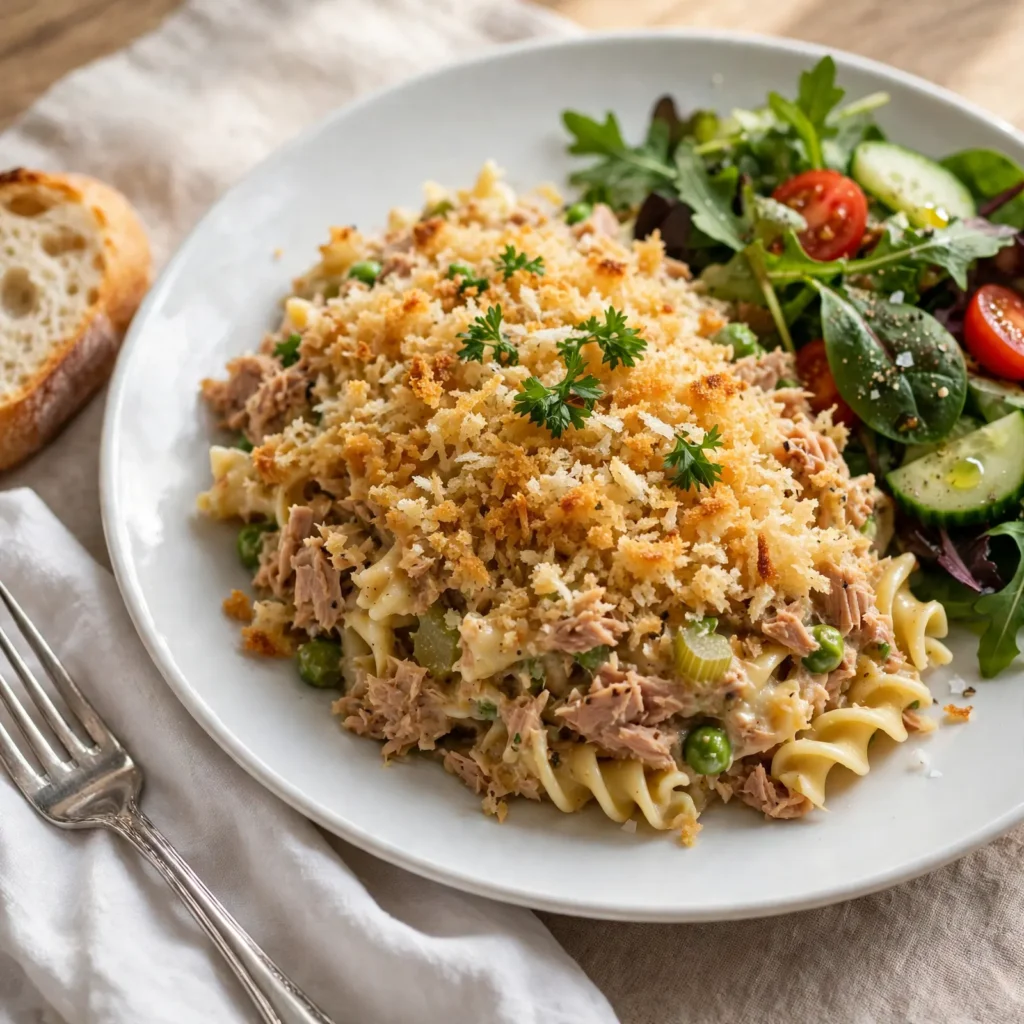
- A simple green salad with lemon vinaigrette cuts through the richness of the casserole and keeps the meal from feeling heavy.
- Steamed or roasted green beans work well as a side; they add color and a fresh element without competing with the flavors in the dish.
- Sliced tomatoes lightly seasoned with salt and a drizzle of olive oil bring acidity that balances the creaminess nicely.
- Crusty bread or dinner rolls are good for scooping up any extra sauce left in the dish.
- A light vegetable soup as a starter rounds out the meal and makes it feel complete for a bigger dinner gathering.
Tips for the Best Results
Drain the tuna aggressively. After opening each can and pouring off the liquid, place the tuna in a fine mesh strainer and press it down firmly with the back of a large spoon for a full 30 seconds per can. Water-logged tuna is one of the most reliable ways to end up with a soupy casserole, and it’s entirely preventable.
Shred the cheddar yourself. Pre-shredded cheese contains an anti-caking agent (usually powdered cellulose) that coats each strand and prevents it from melting smoothly. A block of sharp cheddar grated on a box grater takes 2 extra minutes and produces a noticeably silkier, more cohesive sauce.
Season the sauce before it goes in the oven. Once the casserole is baked, adjusting the seasoning is nearly impossible. The sauce should taste slightly saltier and more seasoned than you’d expect, because the noodles actively absorb salt from the filling during baking.
Use two burners at once. Start the pasta water and the aromatics saute at the same time on two separate burners. The noodles and the onion and celery both take about 7 to 8 minutes, so running them in parallel cuts the total stovetop time in half.
Let it rest before serving. Five minutes on the counter after coming out of the oven lets the sauce firm up slightly. Scooping immediately after baking often results in portions that look wetter than they really are.
Storage Tips
Refrigerator
Covered tightly with plastic wrap or transferred to an airtight container, leftover tuna noodle casserole keeps for up to 4 days in the fridge. The noodles will continue absorbing the sauce as it sits, so leftovers are a bit thicker than the freshly baked version. Most people find the next-day version just as satisfying once reheated.
Freezer
This casserole freezes well before baking. Assemble through Step 5, cover the dish tightly with a layer of plastic wrap followed by foil, and freeze for up to 3 months. Add the panko topping fresh on the day you bake it so it crisps properly. Thaw the dish overnight in the refrigerator before baking as directed, adding 5 to 10 extra minutes to the baking time since it starts cold.
Already-baked casserole can also be frozen in individual portions. The noodle texture softens somewhat after freezing and thawing, but the flavor holds up well. Useful for quick weekday lunches.
Reheating
Individual portions reheat well in the microwave in 2 to 3 minutes, covered loosely. If the sauce looks thick, stir in a tablespoon of milk before heating. To reheat the full dish, cover it with foil and warm at 350°F for 20 to 25 minutes, removing the foil for the final 5 minutes if you want to revive the crunch on the topping.
Nutrition Information
Per serving, based on 8 servings
| Nutrient | Amount |
|---|---|
| Calories | 420 |
| Protein | 24g |
| Carbohydrates | 44g |
| Fiber | 3g |
| Sugar | 5g |
| Fat | 16g |
| Saturated Fat | 8g |
| Cholesterol | 85mg |
| Sodium | 580mg |
| Calcium | 200mg |
| Iron | 2mg |
| Potassium | 380mg |
Nutrition values are approximate and may vary based on brands and portion sizes.
Why This Recipe Works
I’ve made this casserole in several versions over time, including the classic dump-and-bake with canned condensed soup, a straightforward bechamel, and this hybrid roux-based sauce. The from-scratch approach consistently produces a better result, and the gap is noticeable enough that the 10 extra minutes of stovetop time is worth it every time.
The layering of garlic in two forms (fresh minced in the saute, powder in the sauce) and onion in two forms (diced and sauteed, then powder in the sauce) is intentional. Fresh aromatics give you a bright, upfront flavor; powdered versions fill in the background savory note that carries through the whole dish. Using both without doubling the quantity keeps things complex without tipping into “too much.”
The decision to build a roux-based sauce rather than using condensed soup directly gives you control over the salt level. Condensed soups are already heavily seasoned and leave little room to adjust. Starting from a roux means you season as you go and finish the sauce tasting exactly how you want it before it goes in the oven.
Off-heat dairy addition is the most technique-sensitive part of this recipe. Sour cream and shredded cheese hit with heat above roughly 185°F can separate, leaving a greasy, grainy sauce. Taking the pan off the burner costs nothing and eliminates that risk entirely.
Note: Nutrition figures are estimates based on standard ingredient amounts. Actual values will vary with the brands and quantities you use.
Frequently Asked Questions
Can I make tuna noodle casserole ahead of time?
Yes, and it’s a good option for busy weeks. Assemble the casserole through Step 5, cover it tightly, and refrigerate for up to 24 hours. Add the panko topping right before baking so it doesn’t absorb moisture and go soft overnight. If baking straight from the fridge, add 5 to 8 extra minutes to the baking time and check that the sauce is bubbling at the edges before pulling it out.
Why did my tuna noodle casserole turn out watery?
Almost always the tuna. Canned tuna holds a surprising amount of liquid even after you pour off what’s in the can. Pressing it firmly against the strainer for 30 seconds per can removes a significant amount of extra moisture before it ever reaches the sauce. The other common cause is rinsed noodles; rinsing strips the surface starch that helps the sauce cling and adds moisture that thins the filling.
Can I use canned cream of mushroom soup instead of making the sauce from scratch?
Yes. Two cans (10.5 oz each) of cream of mushroom soup mixed with 1/2 cup of milk and 1/2 cup of sour cream substitutes directly for the from-scratch sauce. Stir the mixture together with the noodles, tuna, and peas and transfer to the baking dish. The result will be saltier and slightly less fresh in flavor, so taste the filling carefully before adding any extra salt.
How do I know when the casserole is done baking?
The two reliable signs are a deep golden brown panko topping and sauce that’s actively bubbling around the edges of the dish. If the topping is browning too fast before the edges bubble, tent the dish loosely with foil for the last 10 minutes of baking. An internal temperature of 165°F confirms it’s heated through, though the visual cues alone are reliable in most home ovens.
Can I substitute a different pasta for the egg noodles?
Yes. Rotini, penne, bowties, or medium shells all work. Shapes with ridges or cavities hold onto the cream sauce more effectively than smooth pasta. Cook any substitute for 2 minutes less than its package minimum, for the same reason as the egg noodles: they’ll finish cooking in the oven.
Is this recipe safe for people with a fish allergy?
No. Tuna is a finfish and a common allergen. This dish also contains dairy, wheat, and eggs, so it’s not suitable for those allergies either without the substitutions detailed in the allergen section. Always check individual ingredient labels for cross-contact warnings if you’re cooking for someone with severe allergies.
Can I use fresh tuna instead of canned?
You can, though it changes the character of the dish. Sear two fresh 6 oz tuna steaks in a hot pan for 2 to 3 minutes per side until cooked through, then flake and add exactly as you would the canned version. Fresh tuna gives a firmer texture and less briny flavor. Make sure it’s cooked fully through before adding it to the sauce, not medium-rare, since it will only heat briefly during the bake.
Conclusion
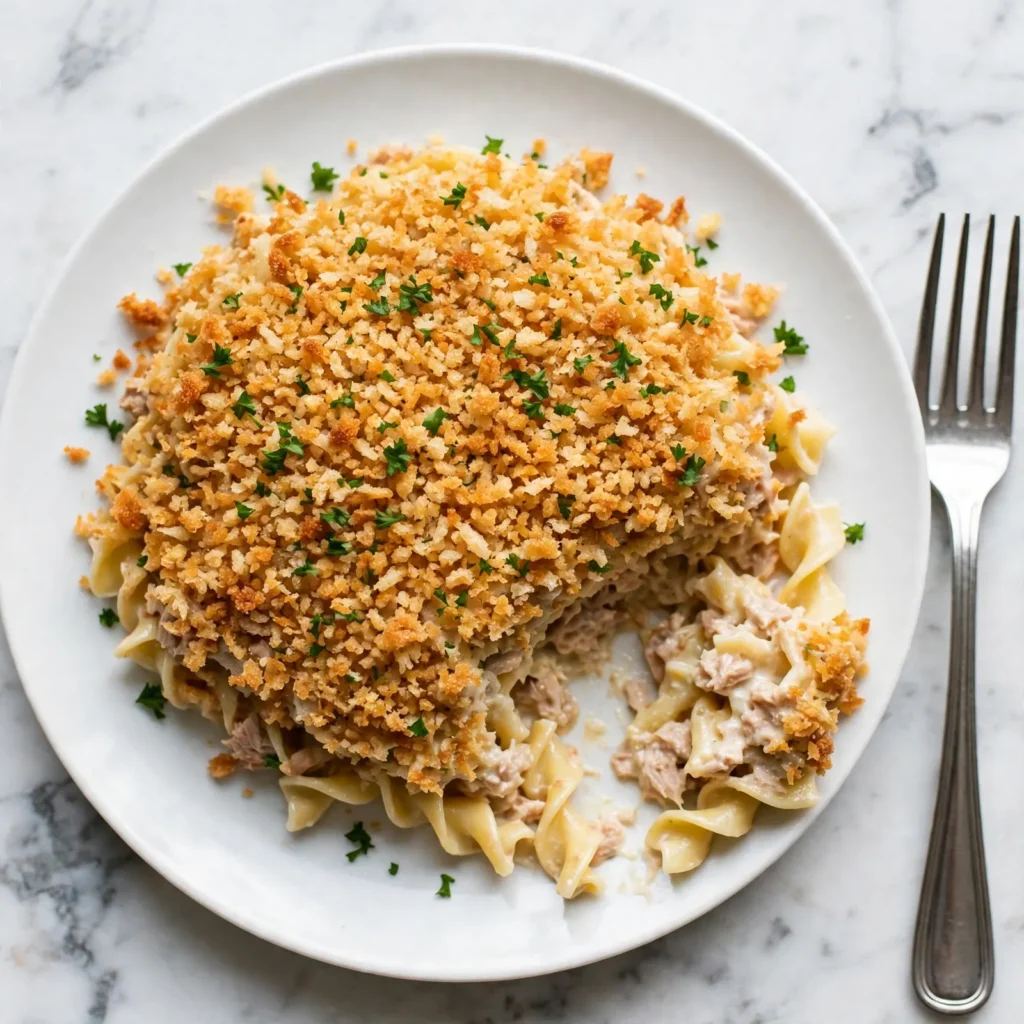
Tuna noodle casserole is the kind of dinner that earns a permanent spot in your rotation because it actually works. Not just once, but every time. The from-scratch cream sauce makes it genuinely satisfying rather than just convenient, and the golden panko crust gives the whole dish a texture that feels worth making. It feeds a crowd, it reheats well, and you probably already have most of what you need.
Make it this week on a night when you need something dependable. If you loved this tuna noodle casserole recipe, save it to your dinner ideas or comfort food Pinterest board so you can find it easily later. For more same recipes must follow Thecookingvibes Pinterest account.
Easy Tuna Noodle Casserole
Ingredients
Equipment
Method
- Heat oven to 375°F (190°C). Boil egg noodles in well-salted water for 2 minutes less than the package minimum. Drain without rinsing and set aside.
- Melt butter in a large skillet over medium heat. Add onion and celery and cook for 5 to 6 minutes until softened. Stir in garlic for 1 minute.
- Scatter flour over the vegetables and stir for 1 to 2 minutes. Add milk in half-cup increments, whisking between each addition. Pour in the broth, garlic powder, onion powder, salt, and pepper. Cook over medium-high heat, stirring, until the sauce thickens enough to coat a spoon, about 4 to 5 minutes.
- Take the pan off the heat. Stir in sour cream and 1 cup of cheddar until fully melted and smooth. Fold in the drained tuna and frozen peas. Taste and adjust seasoning.
- Add the noodles to the skillet and fold to combine. Transfer to a greased 9×13 baking dish and spread into an even layer.
- Scatter the remaining 1/2 cup of cheddar over the filling. Stir panko, melted butter, and parsley together and spread evenly on top.
- Bake for 25 to 30 minutes until the topping is golden brown and the sauce bubbles at the edges. Rest 5 minutes before serving.

