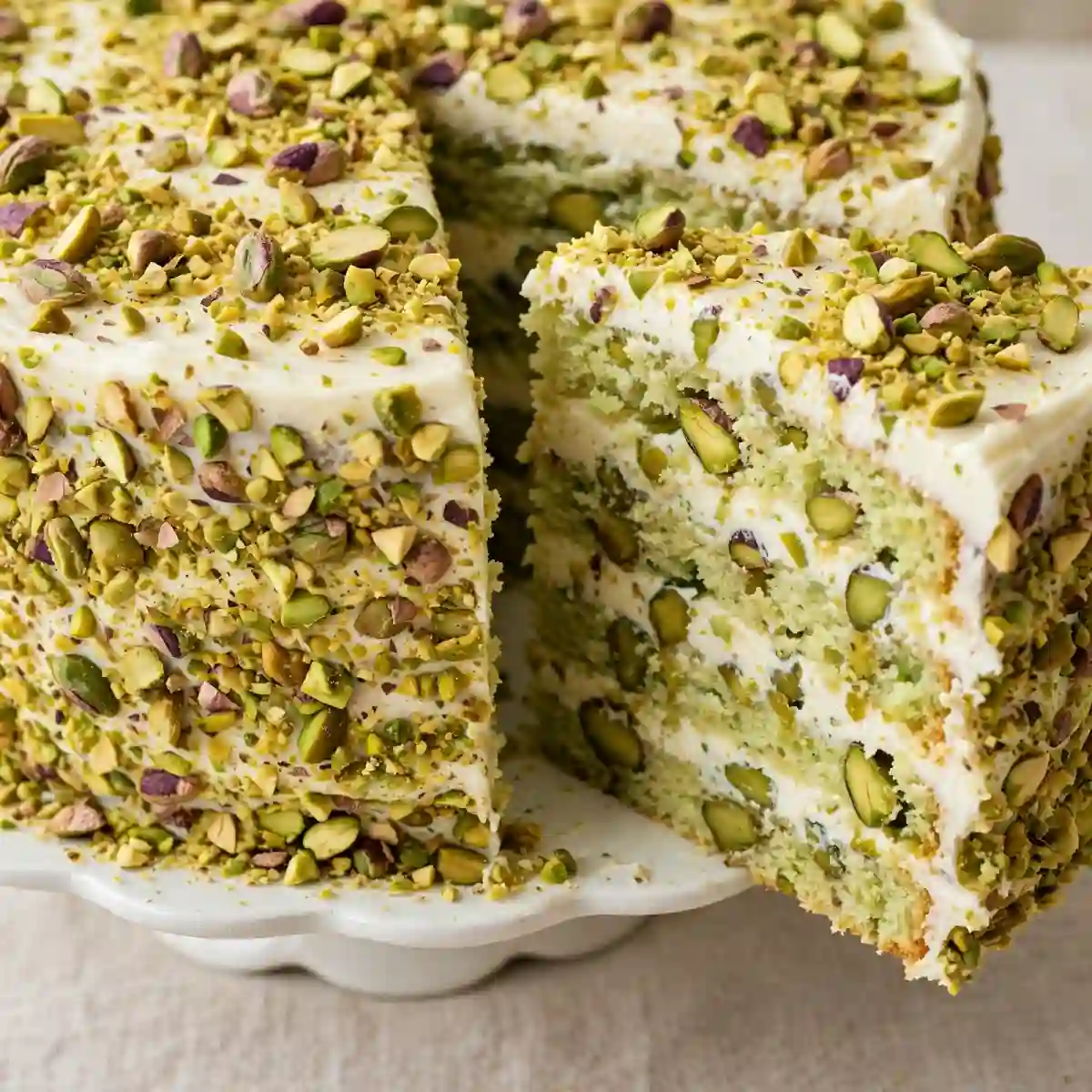
Moist Pistachio Cake (Nutty, Tender, Cream Cheese Frosting)
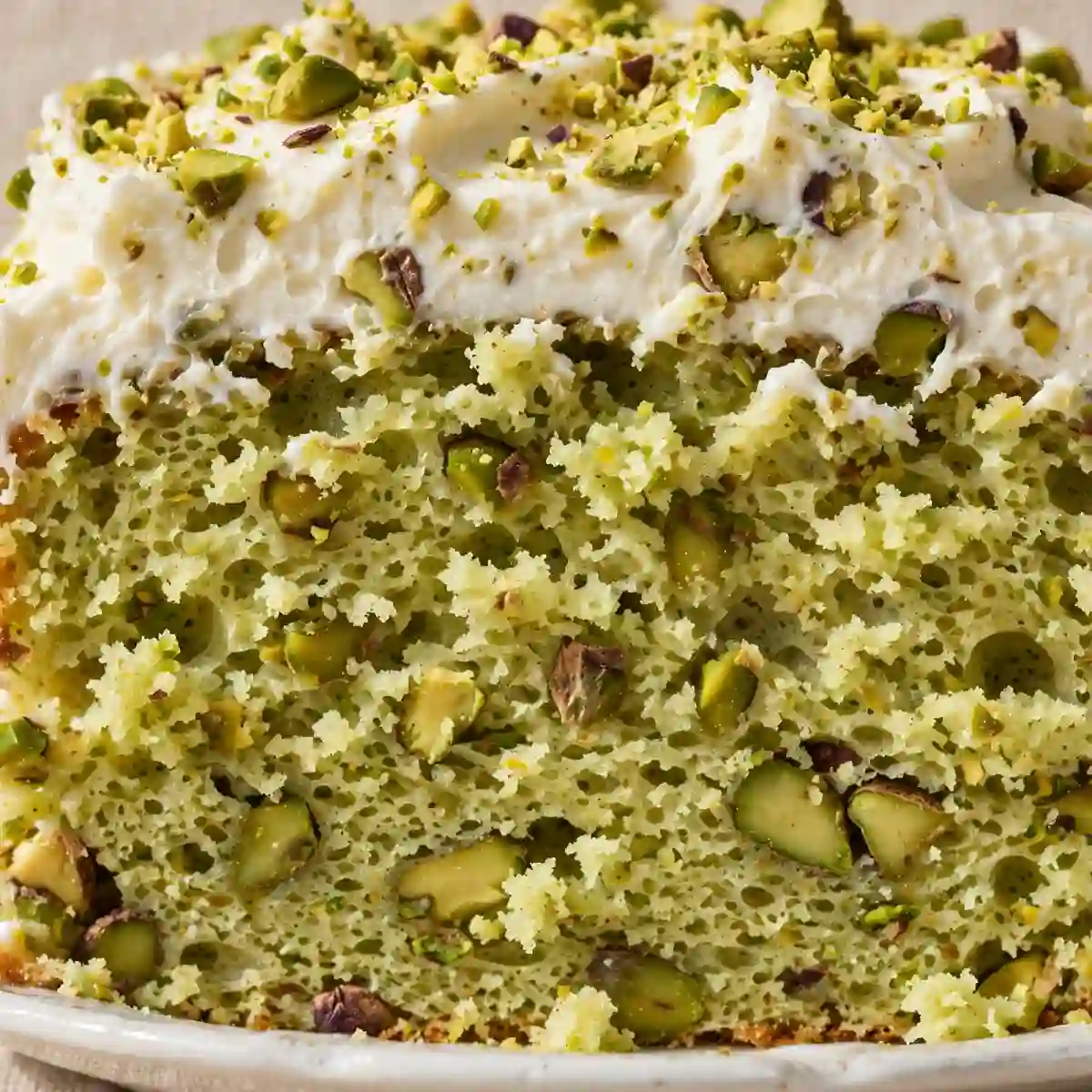
A pistachio cake made with actual ground pistachios rather than a boxed pudding mix looks, smells, and tastes fundamentally different from the pale green diner version most people grew up with. The ground nuts work directly into the batter the way almond flour does in a frangipane: they add fat, density, and a distinctly earthy, slightly sweet nuttiness that no artificial flavoring can replicate. The crumb stays moist for days rather than hours, and the green flecks from the pistachios throughout the slice are genuinely beautiful on a plate.
This pistachio cake recipe builds two moist, fluffy layers from real finely ground pistachios, all-purpose flour, butter, sour cream, and eggs, with a tangy cream cheese frosting that balances the richness of the nut-heavy batter without competing with the pistachio flavor. The color comes entirely from the pistachios: a naturally pale green that deepens at the edges where the crust browns slightly. It bakes in two standard 9-inch round pans, serves 12 people, and takes 55 minutes total. This is the pistachio cake worth making for a birthday, a gathering, or any occasion where a layer cake is the right answer.
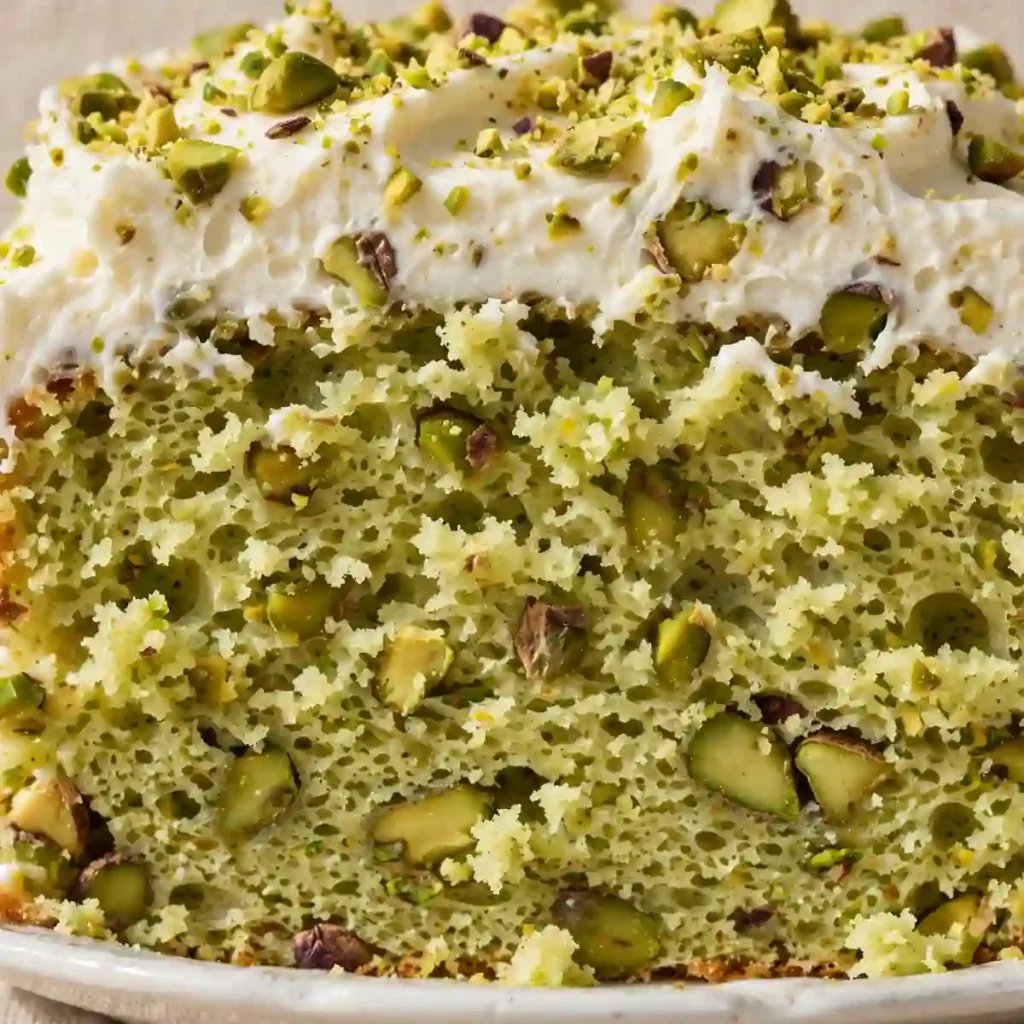
Why You’ll Love This Pistachio Cake
- Made with real pistachios, not pudding mix. Ground raw pistachios folded directly into the batter produce a genuinely nutty, earthy flavor and a natural pale green color that artificial pudding-based versions cannot come close to replicating.
- The crumb stays moist for three days. Sour cream in the batter provides fat, moisture, and acidity that keeps the crumb tender and soft long after baking, unlike cakes made with milk alone that begin drying out the same day.
- The cream cheese frosting is the right pairing. Tangy cream cheese against the slightly sweet, buttery pistachio crumb creates a balance that a plain buttercream doesn’t achieve. The tang cuts the richness and makes each bite feel complete.
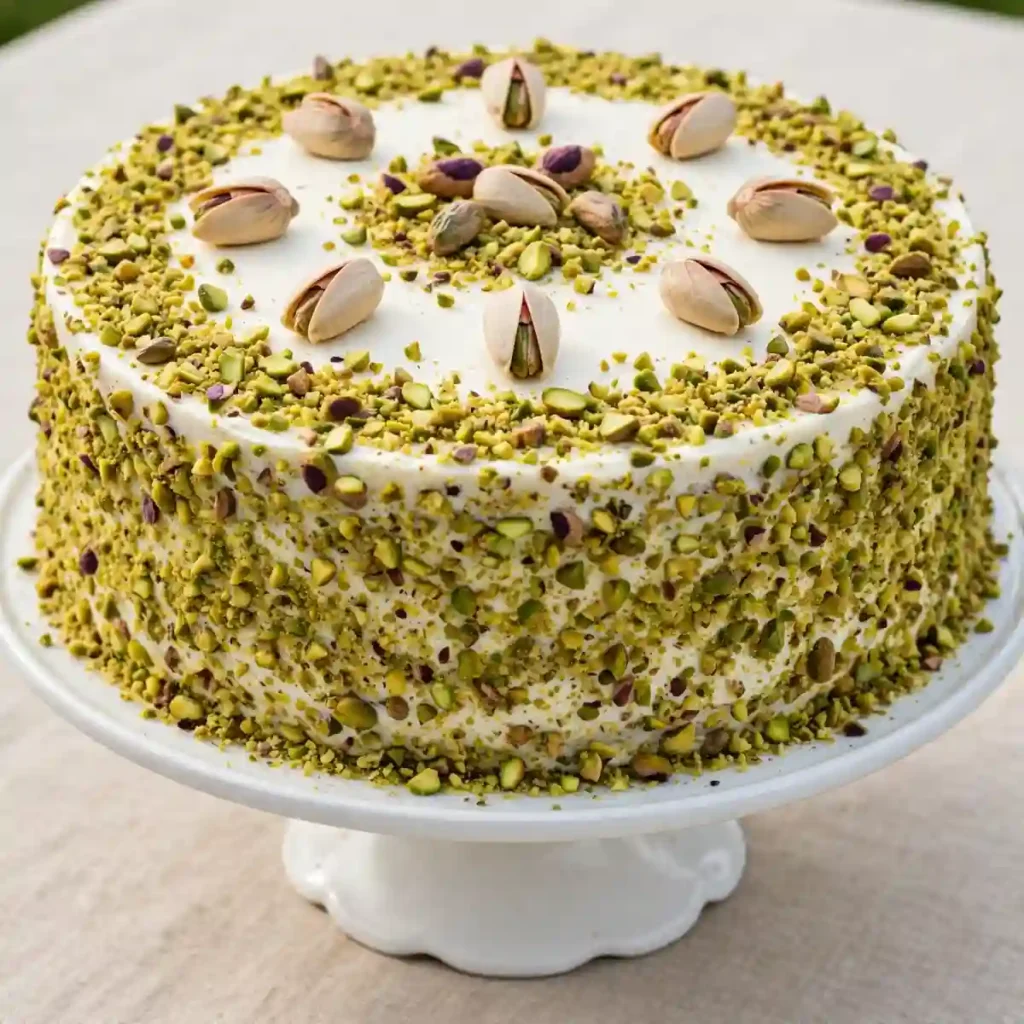
- Visually impressive with minimal decoration. A generous handful of crushed roasted pistachios pressed into the frosted top and sides turns this cake into something that looks like it came from a patisserie, with almost no extra skill required.
- The recipe scales naturally. The batter works identically as a single-layer 9×13 sheet cake, two round 9-inch layers, or twelve standard cupcakes. The same mix time, same bake temperature, different vessel and time.
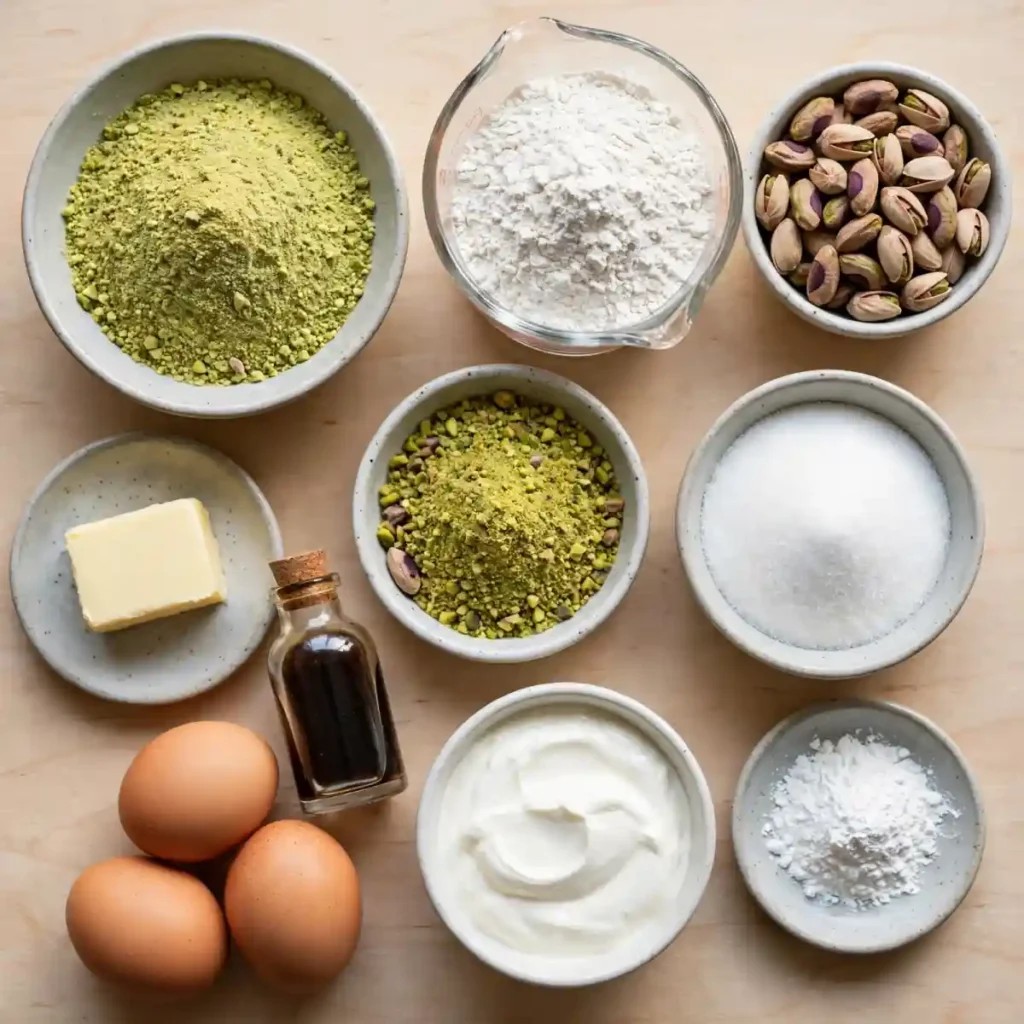
Ingredients You’ll Need
Recipe Timing
| Detail | Info |
|---|---|
| Servings | 12 slices |
| Difficulty | Intermediate |
| Course | Dessert, Cake |
| Cuisine | American |
| Prep Time | 20 minutes |
| Cook Time | 30 minutes |
| Rest Time | 5 minutes cooling in pan |
| Total Time | 55 minutes |
The most important ingredient in this recipe is the pistachio itself, and specifically how it is processed. Raw, unsalted shelled pistachios ground in a food processor to a fine crumb (similar to almond flour in texture) produce the best result. They should be blitzed until fine but stopped before they begin turning into nut butter, which happens quickly once the natural oils are fully released. Salted pistachios can be used but they add a noticeably salty background to the finished cake: if using salted, reduce the added salt in the batter to 1/4 teaspoon. Roasted pistachios have a deeper, slightly more intense flavor but also a slightly darker, more olive-toned color in the finished cake. Raw pistachios produce the more vibrant, distinctly green color that makes pistachio cake visually distinctive.
For the fat, the recipe uses both softened unsalted butter and sour cream. The butter provides the classic creamed-fat structure and rich flavor of a traditional layer cake. The sour cream adds additional fat and moisture while its acidity tenderizes the crumb and activates the baking soda.
For the frosting, block cream cheese (not the whipped or spreadable variety in a tub) is essential. Tub cream cheese contains added water and stabilizers that make it too soft to hold up as a frosting: it spreads beautifully on a bagel but stays loose and runny on a cake rather than setting to the firm, pipeable consistency that block cream cheese produces.
For the Pistachio Cake Layers:
- 1 cup (125g) raw unsalted shelled pistachios. Processed to a fine crumb in a food processor. This is the flavor and color base of the entire cake.
- 1 and 1/2 cups (190g) all-purpose flour. The structural base. Measured by spooning into the cup and leveling, not scooping.
- 1 and 1/2 teaspoons baking powder.
- 1/4 teaspoon baking soda.
- 1/2 teaspoon fine sea salt.
- 3/4 cup (170g) unsalted butter, softened to room temperature. The primary fat. Must be genuinely soft: if it leaves no indentation when pressed, it is too cold. Too-cold butter doesn’t cream properly with the sugar.
- 1 and 1/2 cups (300g) granulated white sugar.
- 3 large eggs, room temperature.
- 2 teaspoons pure vanilla extract.
- 1/2 teaspoon almond extract (optional but recommended). A very small amount of almond extract deepens the nutty character of the pistachio flavor without being identifiable as almond. Use half a teaspoon only.
- 3/4 cup (180ml) full-fat sour cream, room temperature.
- 1/2 cup (120ml) whole milk, room temperature.
For the Cream Cheese Frosting:
- 225g (8 oz) full-fat block cream cheese, completely softened. Must be fully at room temperature: cold cream cheese produces lumpy frosting that cannot be smoothed.
- 1/2 cup (115g) unsalted butter, softened.
- 3 cups (360g) powdered icing sugar, sifted.
- 1 teaspoon pure vanilla extract.
- Pinch of fine sea salt.
- 1 to 2 tablespoons heavy cream or milk, as needed for consistency.
For Decoration:
- 1/2 cup (60g) roasted unsalted pistachios, roughly chopped or crushed.
Allergen and Dietary Disclosure
This recipe contains tree nuts (pistachios), dairy (butter, sour cream, cream cheese), eggs, and gluten (all-purpose flour).
For a gluten-free version, replace the all-purpose flour with a certified gluten-free all-purpose flour blend that contains xanthan gum. The cake bakes up nearly identically, though the crumb may be very slightly denser. All other ingredients remain the same.
For a dairy-free version, replace the butter (in both the cake and frosting) with a high-quality vegan butter block. Replace the sour cream with a full-fat plain dairy-free yogurt and the milk with unsweetened oat milk. For the frosting, use a dairy-free cream cheese block: several brands perform well for frosting applications, though they may require slightly less powdered sugar to reach the same consistency.
Not suitable for anyone with a tree nut allergy, as pistachios are the central ingredient. Not guaranteed safe for any specific allergy without checking all individual ingredient labels.
Equipment Needed
A food processor. The pistachios must be processed to a fine crumb, and a food processor is the only practical tool for this. A blender works in short pulses but tends to process unevenly, leaving some nuts coarse while others over-process into paste. Process in 10-second bursts and check the texture between each burst.
A stand mixer or hand electric mixer. Creaming the butter and sugar properly requires sustained, vigorous mixing that is difficult to achieve by hand. Under-creamed butter and sugar produces a dense cake with a tight crumb rather than the light, airy structure the recipe intends. A stand mixer with the paddle attachment or a hand mixer at medium-high speed for a full 3 to 4 minutes is what produces the pale, fluffy creamed base the recipe requires.
Two 9-inch (23cm) round cake pans, at least 5cm deep. Both pans must be the same size and depth so the layers bake evenly and stack flush. Pans that are shallower than 5cm can overflow during baking given the volume of this batter. Light-colored aluminum pans produce even, golden sides; dark non-stick pans brown the sides and bottom more aggressively and can produce a tougher crust.
A rotating cake turntable (optional but highly recommended for frosting). A turntable allows you to hold the offset spatula steady and spin the cake to create a smooth, even frosting surface. Without one, frosting a layer cake neatly requires considerably more effort. A lazy Susan from a kitchen cabinet works as a substitute.
Step-by-Step Directions
Step 1: Process the Pistachios
Place the raw unsalted shelled pistachios in the bowl of a food processor. Process in 10-second bursts, stopping to check the texture between each burst, until the nuts are ground to a fine, dry crumb similar in appearance and texture to almond flour. The mixture should feel sandy and dry, not oily or clumping: when it starts to look slightly shiny or begins to form small clumps, stop immediately. Over-processing turns the nuts into paste within seconds once the oils are fully released. Set the ground pistachios aside in a bowl.

Chef’s Note: Processing the pistachios in short bursts rather than continuously is not excessive caution: the difference between finely ground pistachio crumb and pistachio butter is literally 10 to 15 seconds of continuous processing. The ground crumb is what disperses through the batter to flavor and color every bite; paste clumps together and distributes unevenly.
Step 2: Prep Pans and Preheat
Preheat the oven to 175°C (350°F). Grease both 9-inch round cake pans generously with butter or baking spray, then line the bottom of each with a circle of parchment paper cut to fit. Grease the parchment as well. This double-greasing method (grease, parchment, grease again) is the most reliable way to ensure the delicate pistachio cake layers release from the pan cleanly without tearing, which is particularly important for a cake this moist and nut-heavy.
Step 3: Combine the Dry Ingredients
In a medium bowl, whisk together the all-purpose flour, ground pistachios, baking powder, baking soda, and salt until evenly combined. The pistachio crumb should be fully distributed through the flour so there are no pockets of pure flour or pure nut. Set aside.
Chef’s Note: Pre-whisking the pistachios into the dry ingredients rather than adding them separately ensures the nut crumb distributes evenly through the batter during the final fold. When fine nut crumbs are added to a wet batter directly, they tend to clump together rather than spreading uniformly.
Step 4: Cream Butter and Sugar
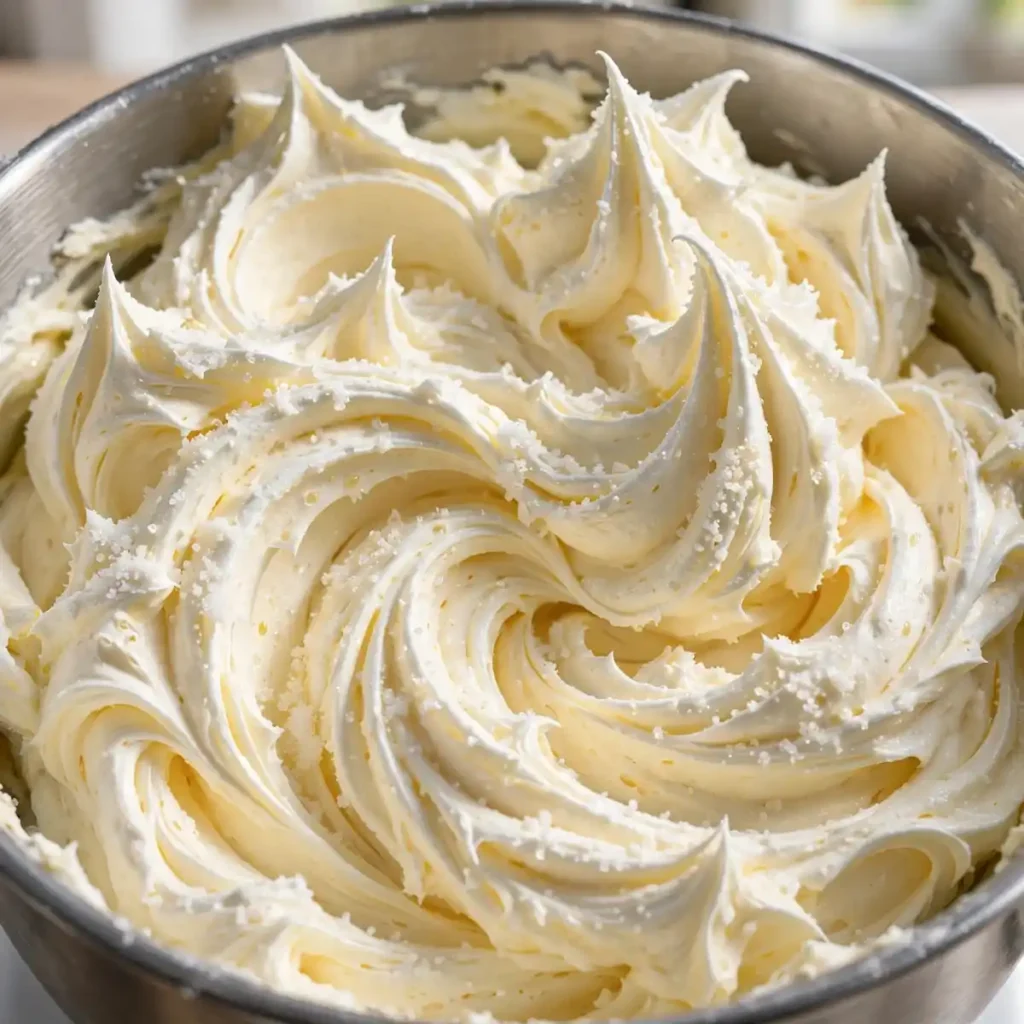
In the bowl of a stand mixer fitted with the paddle attachment (or using a hand mixer), beat the softened butter and granulated sugar together on medium-high speed for a full 3 to 4 minutes, stopping once to scrape down the bowl sides with a rubber spatula. The creamed mixture is ready when it has turned noticeably pale (almost white rather than yellow) and looks light and fluffy in texture, with the volume having increased visibly from where it started. This extended creaming time creates the air pockets in the fat that become the structure of the finished cake crumb.
Step 5: Add Eggs, Vanilla, and Sour Cream
With the mixer running on medium speed, add the eggs one at a time, mixing for 30 seconds after each addition before adding the next. After all three eggs are incorporated, add the vanilla extract and almond extract (if using) and mix for 15 seconds. Add the sour cream and mix on low speed until just combined: the batter may look slightly curdled at this stage, which is normal and resolves when the dry ingredients are added.
Food Safety Note: This recipe uses raw eggs that are fully cooked during baking. No raw batter should be consumed.
Step 6: Fold in Dry Ingredients and Milk
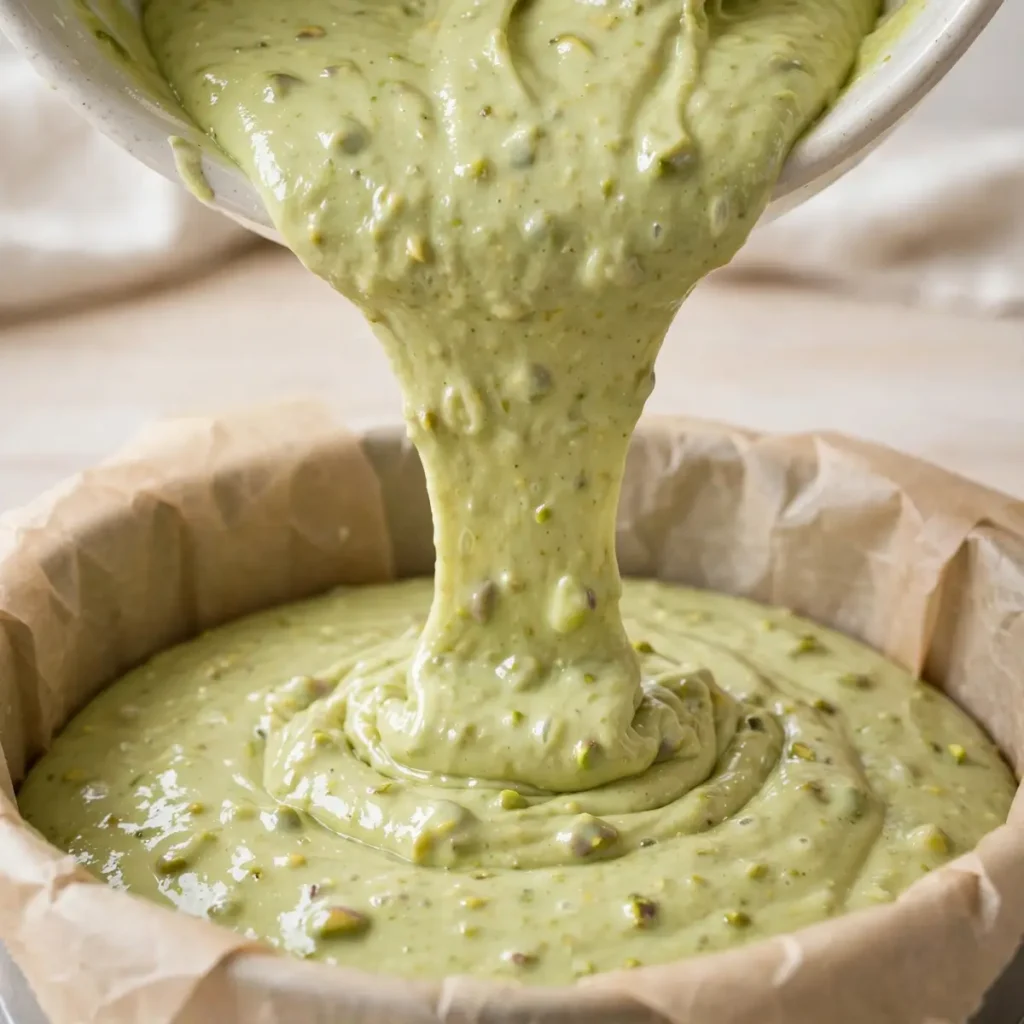
Add one-third of the pistachio flour mixture to the batter and fold with a rubber spatula on the lowest mixer speed or by hand, adding half the milk. Add another third of the dry ingredients, then the remaining milk, then the final third of the dry ingredients, folding gently between each addition just until no flour streaks remain. This three-part alternating method keeps the batter from becoming over-mixed and prevents the gluten from developing past the point that would make the cake tough rather than tender. The finished batter should be smooth, thick, and pale green from the pistachio.
Chef’s Note: Alternating dry ingredients and milk into a creamed cake batter is a standard technique with a specific purpose: adding all the flour at once can cause over-mixing during the time it takes to fully incorporate, while alternating with liquid allows smaller amounts of each to be folded in quickly before moving on. Each addition takes only 4 to 6 gentle folds to incorporate.
Step 7: Bake and Cool
Divide the batter evenly between the two prepared cake pans: a kitchen scale is the most precise method (weigh the total batter and divide by two), or use a large ice cream scoop to alternate scoops between the pans. Smooth the top of each pan with the back of a spoon or an offset spatula. Bake on the center rack at 175°C (350°F) for 28 to 32 minutes until the tops are pale golden-brown, the edges have pulled very slightly away from the pan sides, and a toothpick inserted in the center comes out with only clean dry crumbs. Cool in the pans on a wire rack for 10 minutes, then run a thin knife around the edges and invert each layer onto the rack to finish cooling completely before frosting: at least 1 hour at room temperature, or 20 minutes in the refrigerator.
Common Mistakes and Troubleshooting
| Problem | Cause | Solution |
|---|---|---|
| Cake layers are dense and heavy | Butter not softened enough before creaming; under-creamed; over-mixed after flour added | Butter must be fully soft; cream for the full 3 to 4 minutes; fold dry ingredients with minimal strokes |
| Pistachios turn paste rather than crumb in the food processor | Processed too long continuously; warm nuts | Process in 10-second bursts only; chill nuts in the freezer for 5 minutes if the kitchen is warm |
| Cake color is not green | Pistachios were roasted or salted rather than raw | Use raw, unsalted shelled pistachios for the brightest green color; roasted nuts produce a more olive-brown tone |
| Layers dome or crack at the center | Oven too hot; batter over-mixed developing too much gluten | Use an oven thermometer; fold dry ingredients minimally; a slight dome is normal and evens out when layers are stacked and pressed |
| Cream cheese frosting is runny | Cream cheese or butter too warm; too much liquid added | Both must be at room temperature (not warm); add powdered sugar gradually; chill the frosting for 15 minutes if it’s too soft before spreading |
| Cake sticks to the pan and tears | Pan not greased over parchment; layers removed before fully cooled in pan | Always grease the parchment layer; wait the full 10 minutes in the pan before attempting to remove |
Variations and Substitutions
Pistachio and Rose Cake: Add 1 teaspoon of rose water to the batter alongside the vanilla extract. Reduce the vanilla to 1 teaspoon. The rose water adds a floral, slightly perfumed quality that pairs beautifully with the nuttiness of the pistachio: a combination common in Middle Eastern pastry. Use 1 teaspoon only: more than that and the rose flavor dominates rather than complements.
Pistachio Lemon Cake: Add the finely grated zest of 2 lemons to the creamed butter and sugar before the eggs go in. Replace the almond extract with 1 tablespoon of fresh lemon juice added with the sour cream. Add 2 teaspoons of lemon zest to the cream cheese frosting as well. The lemon brightens the earthy pistachio flavor and makes the cake feel lighter and more summery.
Pistachio Cardamom Cake: Add 1 teaspoon of ground cardamom to the dry ingredients alongside the salt. The warm, floral spice amplifies the pistachio’s natural character in a way that cinnamon does not, and the combination produces a cake with a distinctly South Asian and Middle Eastern character that is genuinely compelling as an alternative to the plain version.
Pistachio Sheet Cake: Pour the full batch of batter into a greased and parchment-lined 9×13 inch baking pan. Bake at 175°C for 35 to 40 minutes until a toothpick comes out clean. Cool completely in the pan, then spread the cream cheese frosting directly over the top and scatter crushed pistachios across the surface. This version is easier to serve for a crowd and requires no leveling or stacking.
Pistachio Cupcakes: Divide the batter among 18 to 20 standard muffin cups lined with paper liners, filling each approximately three-quarters full. Bake at 175°C for 18 to 22 minutes until a toothpick comes out clean. The same cream cheese frosting piped through a round tip produces bakery-quality pistachio cupcakes. Top each with a single whole roasted pistachio.
Dark Chocolate and Pistachio Cake: Spread a thin layer of good-quality dark chocolate ganache between the two layers alongside or instead of the cream cheese frosting. Make a simple ganache by pouring 1/2 cup of hot heavy cream over 100g of finely chopped dark chocolate, stirring until smooth, and letting it cool to a spreadable consistency. The bitter chocolate against the sweet pistachio is a genuinely excellent combination.
Serving Suggestions
- At room temperature, always. Cream cheese frosting firms up considerably in the refrigerator and the pistachio crumb loses its softness when cold. Remove the cake from the refrigerator at least 30 to 45 minutes before serving. At room temperature, the frosting is creamy and spreadable and the crumb is at its most tender.
- With a cup of black tea or strong coffee. The slightly bitter quality of black tea or dark coffee balances the sweetness of the cream cheese frosting and draws out the nuttiness of the pistachio in a way that makes both the cake and the drink taste better than either does alone.
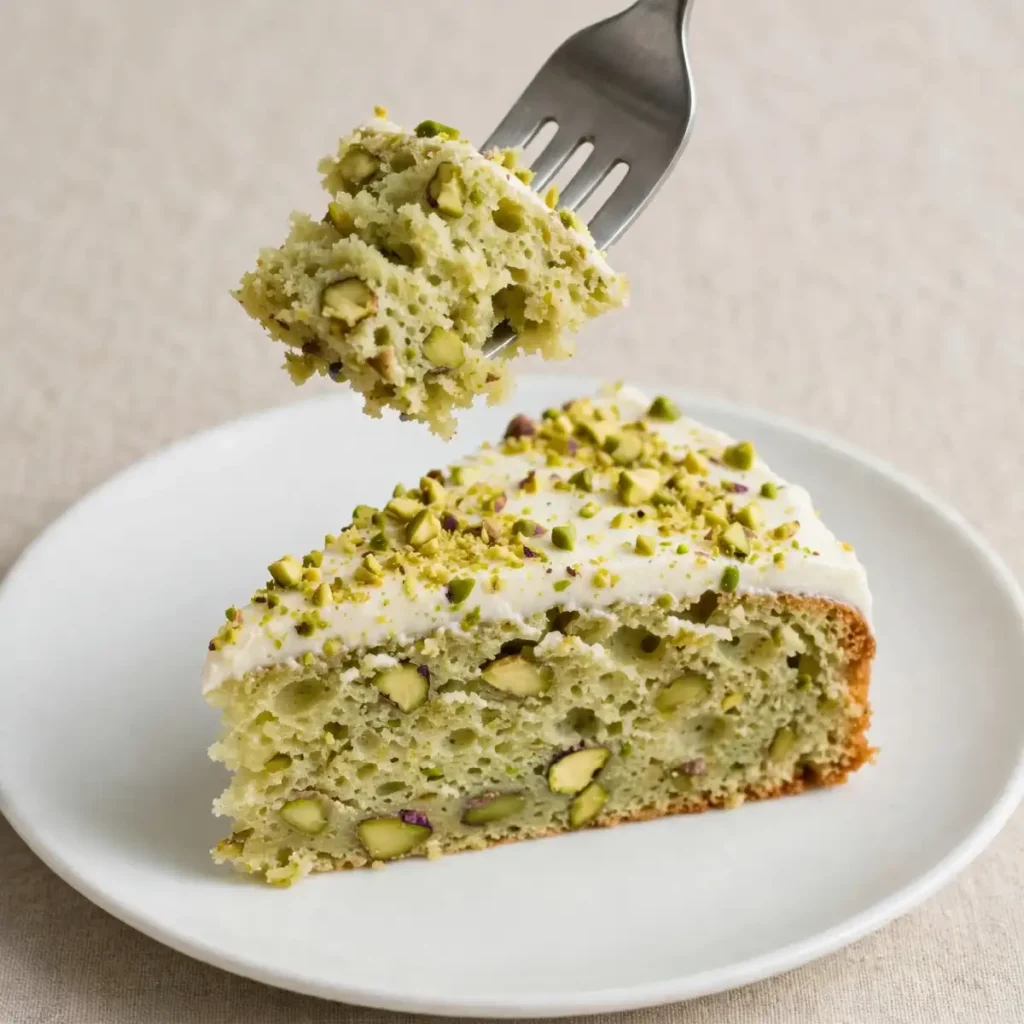
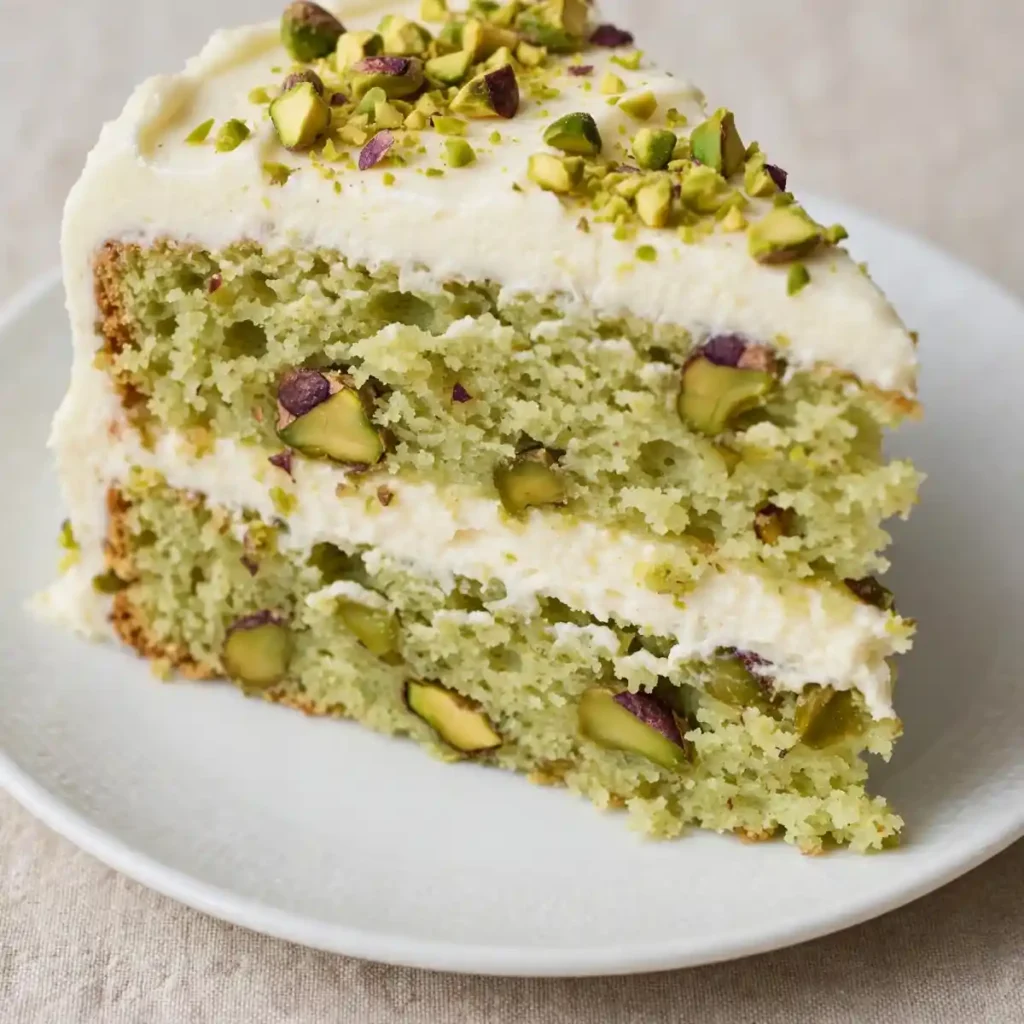
- For a birthday or celebration cake. Two layers, cream cheese frosting, and a generous scatter of crushed pistachios press this firmly into celebration territory. The pale green layers visible at the cut are genuinely striking on a dessert table and generate conversation in a way that a plain sponge doesn’t.
- As individual slices with a small scoop of vanilla or rosewater ice cream. A thin slice of pistachio cake alongside a small scoop of vanilla ice cream makes a dessert plate that is complete without any further garnish. Rosewater ice cream alongside is worth finding if you are serving this at a dinner party.
- With a drizzle of honey over the slice. A thin drizzle of good quality honey over the finished slice just before serving enhances the pistachio’s natural sweetness and adds a glossy, slightly floral element that works particularly well with the cardamom variation.
- Served the day after baking. This cake genuinely improves overnight. The flavors settle and deepen, the crumb softens slightly as the moisture redistributes, and the cream cheese frosting firms to exactly the right texture. Making it the day before a gathering is not just convenient but produces a noticeably better result.
Tips for the Best Results
- Grind the pistachios fresh for each batch. Pre-ground pistachio flour is available in some specialty stores, but it oxidizes more quickly than freshly ground nuts and often lacks the vivid green color of pistachios processed just before baking. Grinding takes 2 minutes in a food processor and makes a visible difference in both color and flavor.
- All room-temperature ingredients, no exceptions. Cold butter cannot be properly creamed with sugar. Cold eggs added to warm creamed butter cause it to curdle. Cold sour cream and milk cool the batter and slow the even incorporation of the flour. Set butter, eggs, sour cream, and milk on the counter at least 45 minutes before you begin.
- Weigh the batter when dividing between pans. Two layers that are visually similar in the pan can be as much as 30 to 40g apart in weight, which translates to uneven bake times and uneven layer heights in the finished cake. A kitchen scale eliminates this guesswork entirely and costs less than the ingredients in this recipe.
- Cool the layers completely before frosting. A warm cake layer melts cream cheese frosting on contact, causing it to slide down the sides and pool at the base rather than staying where it is spread. Even slightly warm is enough to cause problems. Patience at this stage prevents the most visually frustrating outcome in cake-making.
- Refrigerate the frosted cake for 20 minutes before the final crumb coat or decoration. Once the frosting is applied between the layers and the cake is stacked, a brief refrigerator rest sets the initial frosting layer and prevents crumbs from dragging into the final smooth coat. This is the difference between a messy-looking frosting job and a clean, professional one.
Storage Tips
Refrigerator
Store the frosted cake covered with a cake dome or in an airtight container in the refrigerator for up to 4 days. The cream cheese frosting requires refrigeration after the first 2 hours at room temperature. Remove the cake from the refrigerator 30 to 45 minutes before serving each time: cold pistachio cake has a firmer, denser crumb and the frosting is stiffer than the ideal eating temperature. If storing sliced portions, press a piece of plastic wrap directly against the exposed cake crumb to prevent it from drying out.
Freezer
The unfrosted cake layers freeze very well for up to 2 months. Cool completely, wrap each layer individually in two layers of plastic wrap, then place in a sealed freezer bag. Thaw in the refrigerator overnight, still wrapped, to prevent condensation from forming on the surface. Frost after fully thawed and at room temperature. The frosted assembled cake can also be frozen: freeze uncovered until the frosting is firm (about 1 hour), then wrap carefully in plastic wrap and freeze for up to 1 month.
Reheating
This cake is served at room temperature rather than warmed. If a refrigerated slice has been out for less than 20 minutes and still feels cold and dense, 10 seconds in the microwave at 30% power softens the crumb without melting the frosting. This is specifically for a single slice, not the full cake. The full frosted cake should never be microwaved.
Nutrition Information
Per serving (1 of 12 slices with cream cheese frosting)
| Nutrient | Amount |
|---|---|
| Calories | 520 kcal |
| Protein | 7g |
| Carbohydrates | 58g |
| Fiber | 2g |
| Sugar | 42g |
| Total Fat | 29g |
| Saturated Fat | 14g |
| Cholesterol | 100mg |
| Sodium | 220mg |
| Vitamin C | 1mg |
| Calcium | 65mg |
| Iron | 1.5mg |
| Potassium | 190mg |
Nutrition values are approximate and may vary based on brands and portion sizes.
Why This Recipe Works
Grinding raw pistachios to a fine crumb and incorporating them directly into the dry ingredients is a technique borrowed from French and Italian nut-based cakes (such as financiers and tortes), where finely ground nuts replace a portion of the flour. At the structural level, the nut crumb contributes fat, protein, and cell-wall fragments that behave quite differently from wheat flour in a batter. The pistachio fat coats gluten proteins and limits their development, producing a more tender, moist crumb than a pure flour cake at the same fat content. The pistachio protein adds structure without the elasticity that gluten provides, which is why a pistachio cake has a more delicate, fine crumb texture than a standard butter cake. The cell-wall fragments from the ground nuts also absorb moisture during and after baking, which is why the crumb stays soft for days rather than drying out quickly.
The creaming method used here (butter and sugar beaten for 3 to 4 full minutes at medium-high speed) creates the cellular structure of the finished cake through mechanical aeration. During extended creaming, the sharp sugar crystals cut into the softened butter and create millions of tiny air pockets that become trapped within the fat matrix. These air pockets expand during baking when the trapped air heats and the carbon dioxide from the leavening agents also expands into them, producing a fine, even crumb structure throughout the layer. Under-creamed butter and sugar (1 to 2 minutes rather than 3 to 4) produces noticeably fewer and larger air pockets, which corresponds to a denser, coarser crumb in the finished cake.
The alternating addition of dry ingredients and liquid (the three-wet-dry method) manages gluten development at a critical stage. When flour contacts liquid, glutenin and gliadin proteins hydrate and begin linking to form gluten networks. The longer they are stirred after hydration, the stronger and more elastic those networks become. By adding the flour in three portions alternated with the sour cream and milk, each small addition is quickly wetted and incorporated before the next addition arrives: the total mixing time for the flour is minimized without leaving dry pockets undissolved. Adding all the flour at once to a full volume of liquid requires much more mixing time to fully incorporate, which correspondingly strengthens the gluten more than is desirable in a tender layer cake.
Sour cream contributes to this recipe in two ways that plain whole milk alone cannot replicate. First, the fat content of full-fat sour cream (approximately 20% fat compared to whole milk’s 3.5%) adds significantly more lubrication to the starch and gluten proteins, producing a richer, more tender crumb. Second, the lactic acid in sour cream interacts with the baking soda in the dry ingredients to produce carbon dioxide before the batter enters the oven, giving the leavening a head start and contributing to the lighter, more even crumb structure. Using low-fat sour cream or plain milk removes both of these contributions.
Block cream cheese at room temperature is the only form of cream cheese that produces a stable, spreadable frosting. Block cream cheese is approximately 33% fat with a low water content, which gives it the firm, slightly dense texture that holds its shape when whipped with butter and powdered sugar. Tub cream cheese (the spreadable variety) contains added water and emulsifiers that lower its fat content and loosen its structure: it spreads easily because it is intentionally designed to be loose, which is precisely what you don’t want in a frosting that must hold its shape at serving temperature. Attempting to make frosting from tub cream cheese produces a runny result that cannot be corrected without adding an impractical quantity of powdered sugar.
Frequently Asked Questions
Can I make pistachio cake ahead of time?
Yes. The cake layers can be baked, cooled, wrapped individually in plastic wrap, and stored at room temperature for up to 2 days or refrigerated for up to 3 days before frosting. The cream cheese frosting can be made up to 3 days ahead and stored in an airtight container in the refrigerator: bring it to room temperature and re-beat briefly before using. The fully assembled frosted cake keeps in the refrigerator for 4 days, and actually tastes better on day two than on the day it is baked.
Why is my pistachio cake not green?
The color depends almost entirely on the type of pistachio used. Raw, unsalted shelled pistachios produce the most vibrant, distinctly green color in the finished cake. Roasted pistachios have already developed brown Maillard compounds on their surface during the roasting process, which produces a duller, more olive or brown-green tone in the baked cake. Salted roasted pistachios produce the least vivid color. For the green cake that most people associate with the name, raw shelled pistachios are the starting point.
Can I use pre-ground pistachio flour instead of grinding my own?
Yes, with a note on freshness. Pre-ground pistachio flour works in this recipe at the same quantity. However, pistachio flour available in bags has often been stored for weeks or months and can taste slightly stale or muted compared to freshly ground nuts, and its color is often less vibrant. If using pre-ground, smell it before using: it should smell clean and nutty, not flat or oily. Fresh is better when available, but pre-ground works for a consistently good result.
How do I know when the pistachio cake layers are done baking?
The layers are done when the tops are pale golden-brown (not deep brown), the edges have very slightly pulled away from the pan sides, and a toothpick inserted into the absolute center comes out with clean, dry crumbs: not wet batter and not perfectly clean with nothing on it (the latter indicates slight over-baking). The cake should spring back lightly when pressed in the center. At 175°C in two 9-inch pans, this consistently happens between 28 and 32 minutes, with the first check at 28 minutes.
Is pistachio cake gluten-free?
As written with all-purpose flour, no. To make it gluten-free, replace the all-purpose flour with a certified gluten-free all-purpose blend that contains xanthan gum in the same quantity. The cake bakes up nearly identically, though the crumb may be very slightly more tender and delicate. The ground pistachios, butter, sour cream, eggs, sugar, and all other ingredients are naturally gluten-free. Verify the baking powder and vanilla extract are also labeled gluten-free if serving to someone with celiac disease.
My cream cheese frosting is too runny. How do I fix it?
Runny cream cheese frosting is almost always caused by one of two things: the cream cheese or butter was too warm when beaten (soft and room temperature is correct; warm and slightly melted is too far), or too much liquid was added. If the frosting is runny, refrigerate it for 20 minutes without stirring, then re-beat: this firms the fat without changing the flavor or texture permanently. If still too loose, add powdered sugar 2 tablespoons at a time, mixing briefly after each addition, until the desired consistency is reached.
Can I make pistachio cake as cupcakes?
Yes. Divide the batter among 18 to 20 standard muffin cups lined with paper liners, filling each approximately three-quarters full. Bake at 175°C (350°F) for 18 to 22 minutes until a toothpick inserted in the center comes out clean. The cupcakes dome gently and turn pale golden at the top when done. Cool completely on a wire rack before frosting. The same cream cheese frosting piped through a round or star tip and topped with a single whole roasted pistachio produces a visually excellent result.
Conclusion
A pistachio cake made with real ground pistachios has a flavor and a character that the pudding-mix versions simply cannot produce: genuinely earthy, nutty, and moist in a way that improves with time rather than declining. The technique is not difficult. Grind the pistachios fresh, cream the butter and sugar long enough to build proper structure, alternate the dry ingredients with the liquid to keep the crumb tender, and give the layers time to cool completely before the cream cheese frosting goes on. Those four decisions, made correctly, produce a pistachio cake that holds its own against any occasion.
If you loved this recipe, save it to your layer cake recipes Pinterest board so you can find it easily later. For more same recipes must follow Thecookingvibes Pinterest account.
Moist Pistachio Cake With Cream Cheese Frosting
Ingredients
Equipment
Method
- Process raw pistachios in a food processor in 10-second bursts until finely ground to a dry, sandy crumb. Stop before they become oily or clump. Set aside.
- Preheat oven to 175°C (350°F). Grease two 9-inch round cake pans, line bottoms with parchment, and grease the parchment.
- Whisk together ground pistachios, flour, baking powder, baking soda, and salt in a bowl until evenly combined.
- Beat softened butter and sugar in a stand mixer on medium-high for 3 to 4 minutes until pale and fluffy, scraping the bowl once.
- Add eggs one at a time, beating 30 seconds after each. Add vanilla and almond extract. Add sour cream and mix on low until just combined.
- Add dry ingredients in three additions alternating with milk in two additions, folding gently after each until just combined. Do not overmix.
- Divide batter evenly between the two prepared pans. Bake 28 to 32 minutes until pale golden, edges pull from pan sides, and a toothpick comes out with clean dry crumbs. Cool in pans 10 minutes, then invert onto a wire rack and cool completely before frosting.
- Beat room-temperature cream cheese and butter together until smooth. Add sifted icing sugar in three additions, mixing on low. Add vanilla and salt. Add cream or milk 1 tablespoon at a time to reach a smooth, spreadable consistency.
- Stack and frost the cooled layers. Press crushed pistachios into the frosted top and sides. Refrigerate 20 minutes before slicing. Serve at room temperature.
Notes
- Use raw, unsalted pistachios for the most vibrant green color: roasted pistachios produce a more olive-brown tone.
- All ingredients (butter, eggs, sour cream, cream cheese) must be fully at room temperature for the best batter and frosting texture.
- Cool the cake layers completely before frosting: warm layers melt cream cheese frosting on contact.
- The cake tastes better on day two as the flavors deepen and the crumb softens.
- Allergens: Contains tree nuts (pistachios), dairy (butter, sour cream, cream cheese), eggs, and gluten (all-purpose flour). Not suitable for tree nut allergies. Use gluten-free flour blend for a gluten-free version. Use dairy-free alternatives for a dairy-free version. Not guaranteed safe for any specific allergy without checking all individual ingredient labels.
- Nutrition values are approximate and may vary based on brands and portion sizes.