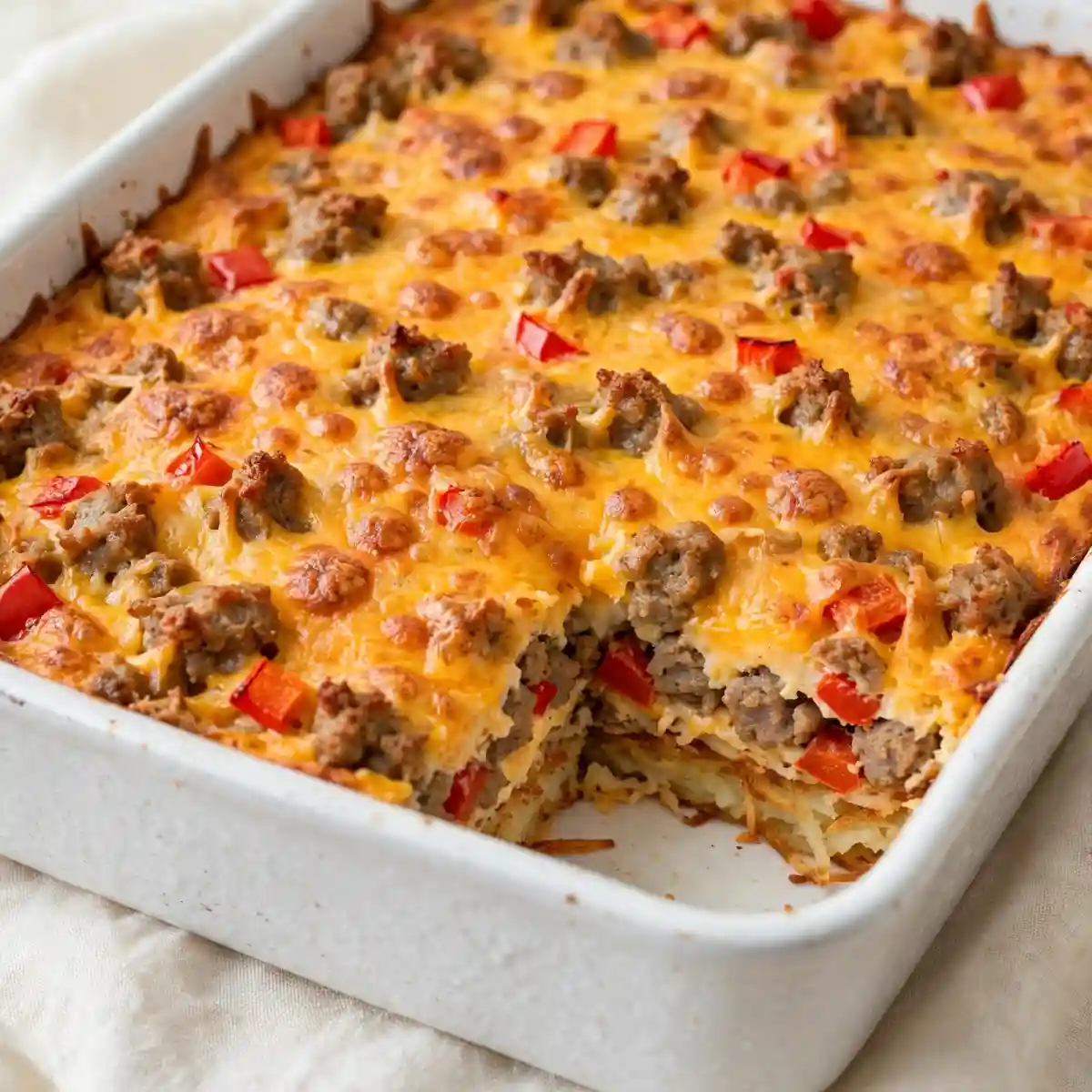
Easy Breakfast Casserole — Crispy Hash Browns, Fluffy Eggs, Loaded with Cheese
The kind of breakfast that feeds eight people without anyone standing at a stove flipping anything is rarer than it should be. A good breakfast casserole solves the morning completely: it comes out of the oven in one pan, it holds its heat for 20 minutes while people serve themselves, and the layers, crispy shredded hash browns at the base, a fluffy egg and milk custard through the middle, browned sausage and peppers throughout, and a golden cheddar crust on top, make every forkful taste like it was assembled deliberately rather than thrown together.
This hash brown breakfast casserole uses frozen shredded hash browns as the base layer, which crisps against the bottom of the dish during baking and gives the entire casserole a structure that a plain egg bake doesn’t have. The egg mixture is seasoned precisely, poured over a filling of browned beef breakfast sausage, diced bell peppers, and onion, and finished under a full layer of freshly shredded sharp cheddar. It takes about 20 minutes of active preparation, 50 minutes in the oven, and serves 8 to 10 people. It also assembles completely the night before, which makes it the most useful recipe for holiday mornings, weekend guests, or any situation where you need something impressive that requires no morning effort at all.
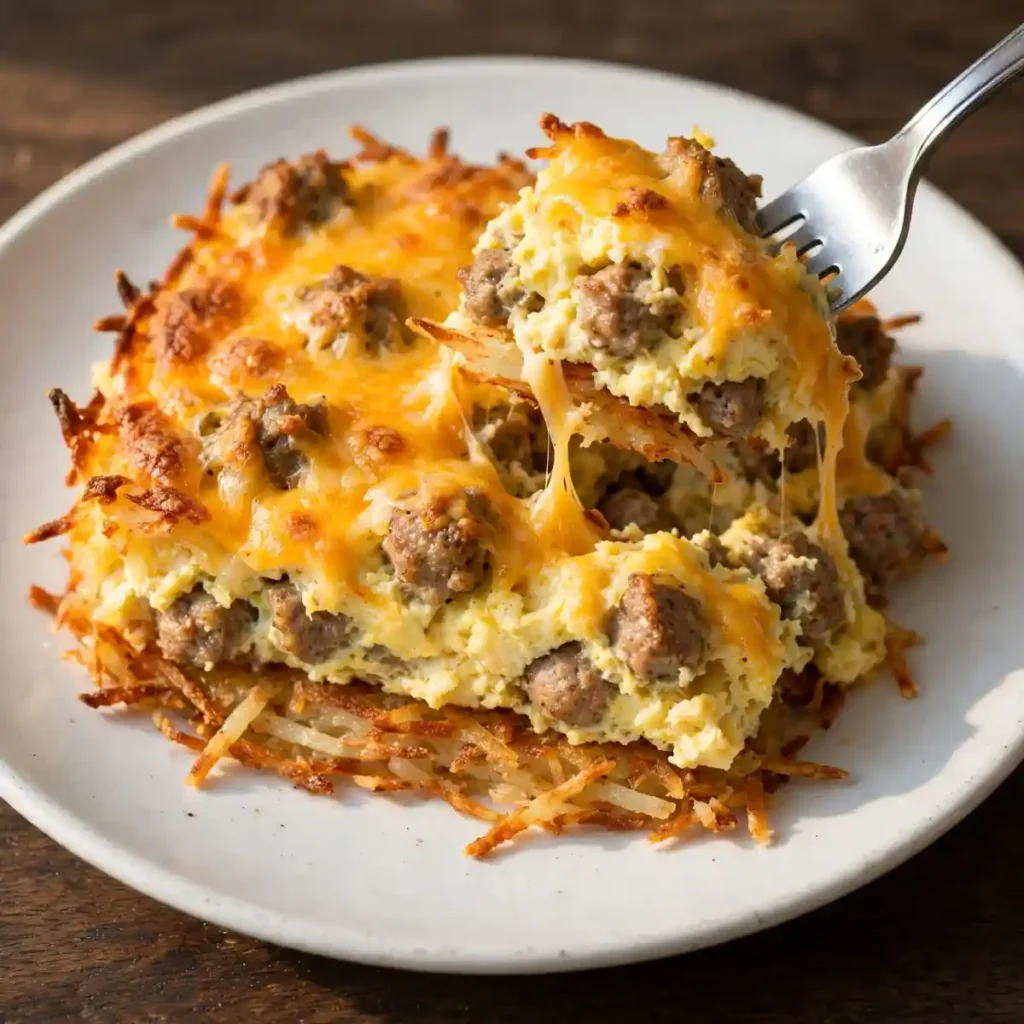
Table of Contents
- Why You’ll Love This Breakfast Casserole
- Ingredients You’ll Need
- Allergen and Dietary Disclosure
- Equipment Needed
- Step-by-Step Directions
- Common Mistakes and Troubleshooting
- Variations and Substitutions
- Serving Suggestions
- Tips for the Best Results
- Storage Tips
- Nutrition Information
- Why This Recipe Works
- Frequently Asked Questions
- Conclusion
Why You’ll Love This Breakfast Casserole
- Hash brown base that actually crisps. Pressing thawed, dried shredded hash browns firmly against the buttered baking dish and letting them pre-bake before the filling is added produces a base layer that’s genuinely golden and slightly crispy rather than soft and steamed; it holds its shape when the casserole is sliced and adds a texture that plain egg casseroles never have.
- Assembles entirely the night before. The full casserole can be built, covered, and refrigerated overnight, then pulled out in the morning and baked directly from the refrigerator with 10 extra minutes added to the bake time.
- Feeds a crowd from one pan. The 9×13-inch dish produces 8 to 10 generous servings with no last-minute plating; people serve themselves and the casserole holds its heat and texture for at least 20 minutes out of the oven.
- Flexible filling within a consistent method. The hash brown base and egg custard ratio stay constant regardless of what goes in the filling; swap the sausage, the vegetables, or the cheese and the recipe works every time.
- Leftovers that reheat cleanly. Unlike many egg dishes that turn rubbery when reheated, this breakfast casserole reheats in the oven or microwave without losing its texture because the hash brown base stays firm rather than becoming watery.
Ingredients You’ll Need
Recipe Timing
| Servings | 8 to 10 |
| Difficulty | Easy |
| Course | Breakfast, Brunch |
| Cuisine | American |
| Prep Time | 20 minutes |
| Cook Time | 50 minutes (10 min stovetop + 40 min bake) |
| Rest Time | 10 minutes |
| Total Time | 80 minutes |
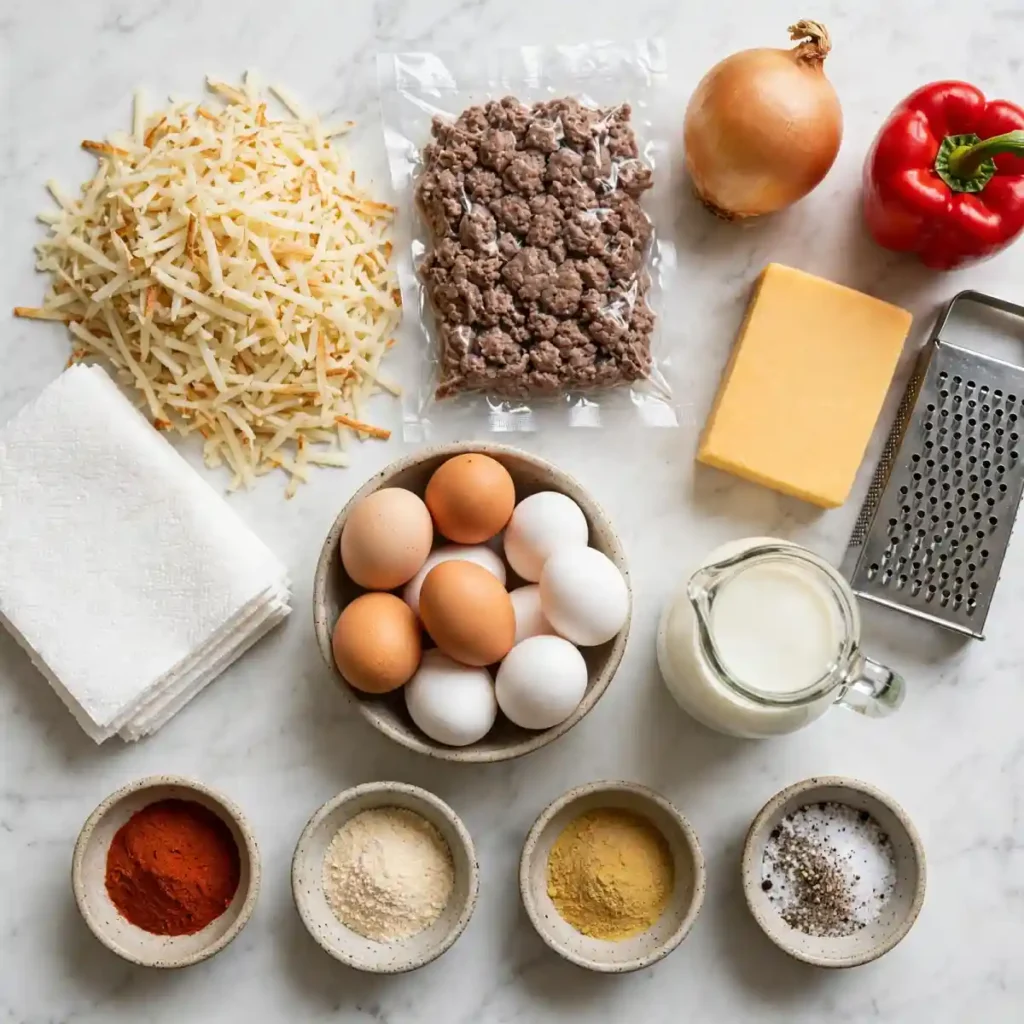
For the hash browns, frozen shredded hash browns are the most practical choice and produce the most consistent result. Thaw them completely in the refrigerator overnight before using; partially frozen hash browns release too much water steam during baking and produce a soft, soggy base layer instead of a crispy one. After thawing, squeeze as much moisture as possible out of the hash browns using a clean kitchen towel or several layers of paper towels; the drier they are before going into the dish, the crispier the base will be. Fresh grated russet potatoes work equally well if thawed frozen hash browns aren’t available; grate and immediately squeeze out all moisture the same way before using.
For the beef breakfast sausage, look for a crumbled-style beef breakfast sausage rather than a link-style sausage sliced into rounds. The fine crumble distributes through the casserole more evenly, produces better coverage in every forkful, and seasons the egg custard as it cooks from the sausage fat that renders during browning. Ground beef seasoned with 1 teaspoon of smoked paprika, 1/2 teaspoon of fennel seeds, 1/4 teaspoon of garlic powder, and 1/4 teaspoon of black pepper is a straightforward substitute if crumbled beef breakfast sausage isn’t available at your grocery store.
For the cheese, freshly shredded sharp cheddar from a block melts into a smooth, deeply colored crust that pre-shredded cheddar can’t match. Pre-shredded cheddar is coated in anti-caking agents that resist melting; the cheese on top of the casserole comes out pale and slightly grainy rather than the deep golden-brown that makes the casserole look finished and impressive.
For the eggs, the custard ratio in this recipe is 10 eggs to 240ml (1 cup) of whole milk. This ratio produces a set that is firm enough to hold the casserole together when sliced but still has a soft, slightly custardy interior texture. More milk produces a softer, pudding-like set that doesn’t hold clean slices; less milk produces a denser, drier set that can taste rubbery.
The Hash Brown Base:
- 680g (about 1 1/2 lbs) frozen shredded hash browns, fully thawed and squeezed very dry — the structural base layer; must be dry before pressing into the dish
- 2 tablespoons unsalted butter, melted — tossed through the hash browns before pressing them into the dish; promotes browning and prevents sticking at the base
- 1/2 teaspoon fine salt and 1/4 teaspoon black pepper — seasons the base layer directly since the hash browns themselves are unseasoned
The Filling:
- 450g (1 lb) beef breakfast sausage, crumbled — the primary protein; browned on the stovetop before assembly so the fat renders and the sausage is fully cooked before the casserole goes into the oven; adds deep savory flavor throughout
- 1 medium yellow onion, finely diced — cooked with the sausage so it softens completely; raw onion added directly to the casserole stays crunchy and sharp in the finished dish
- 1 red bell pepper, finely diced — adds color, slight sweetness, and texture; green bell pepper is a sharper, more assertive substitute
- 2 garlic cloves, minced — added to the sausage pan in the last 60 seconds of cooking; adds a savory background note
The Egg Custard:
- 10 large eggs — the binding structure for the entire casserole
- 240ml (1 cup) whole milk — thins the egg mixture to the right pourable consistency and produces a softer, more custardy set than eggs alone
- 1 teaspoon smoked paprika — adds warmth and color to the egg custard; the smoked variety deepens the flavor without adding heat
- 1/2 teaspoon garlic powder — a background savory note in the egg mixture
- 1/2 teaspoon fine salt and 1/4 teaspoon freshly ground black pepper — seasons the custard; the finished casserole should taste well-seasoned without additional salt at the table
- 1/4 teaspoon dry mustard powder — optional but useful; adds a subtle sharpness that makes the cheese and egg flavors taste brighter
The Topping:
- 225g (2 cups) sharp cheddar cheese, freshly shredded from a block, divided — 150g mixed through the filling, 75g reserved for the top; the top layer browns under the oven’s heat to form the golden crust
Allergen and Dietary Disclosure
This breakfast casserole contains eggs (10 large eggs in the custard), dairy (butter in the hash brown layer, whole milk in the custard, and cheddar cheese), and is naturally gluten-free as written since no flour or starch is used in the base recipe. Verify that the beef breakfast sausage brand you use is certified gluten-free if that is a concern, as some sausages contain fillers.
For dairy-free: replace the butter in the hash brown layer with a neutral oil (avocado or sunflower). Replace the whole milk with unsweetened oat milk or full-fat coconut milk at the same quantity; the custard sets slightly softer with plant milk but holds together adequately when fully baked. Use a dairy-free cheddar-style shredded cheese for the topping; watch the broil step closely as dairy-free cheeses vary significantly in how they brown.
For vegetarian: omit the beef sausage entirely and replace with a mixture of 225g of sliced cremini mushrooms and 1 cup of drained canned black beans, both cooked in the same pan until the mushrooms are deeply browned and any excess moisture has evaporated. The mushrooms add a savory, meaty depth; the black beans add protein and substance.
This recipe has not been tested in a certified allergen-free kitchen and cannot be guaranteed safe for any specific allergy.
Equipment Needed
- 9×13-inch (23x33cm) ceramic or glass baking dish — the standard size for a breakfast casserole that serves 8 to 10. Metal pans conduct heat more aggressively and can cause the hash brown base to over-brown before the egg custard sets; ceramic or glass provides more even, gentle heat distribution. Grease the dish generously with butter or cooking spray before pressing the hash browns in.
- Large skillet (12-inch or wider) — for browning the sausage, onion, and peppers on the stovetop before assembly. A wide pan allows the sausage to brown rather than steam; a narrow pan causes the filling ingredients to crowd, releasing moisture and preventing proper browning.
- Large whisk and mixing bowl — for combining the egg custard. Whisking the eggs and milk together vigorously for 30 to 45 seconds before adding the spices incorporates enough air to lighten the custard slightly; the finished casserole has a noticeably less dense texture than one made with eggs and milk simply stirred together.
- Clean kitchen towel or several layers of paper towels — for squeezing the thawed hash browns as dry as possible before the base layer is pressed into the dish. This is the step most people skip and the most consequential; wet hash browns steam from the bottom of the casserole rather than crisping, producing a soft, slightly gummy base.
- Offset spatula — for pressing the hash brown layer evenly across the entire base of the dish to a consistent depth. An even base layer, about 1 to 1.5cm thick, bakes uniformly; a thicker layer in the center takes longer to cook through than a thin layer at the edges.
Step-by-Step Directions
Step 1: Prep and Dry the Hash Browns
The night before or at least 30 minutes before assembling: spread the thawed frozen hash browns across a clean kitchen towel, gather the towel at the corners, and squeeze firmly over the sink. Continue squeezing in sections until no more visible moisture comes out; this takes about 60 to 90 seconds of determined squeezing. The hash browns should feel noticeably lighter and drier after squeezing than before. If using a kitchen towel, change to a dry section or use fresh paper towels partway through; a saturated towel can’t absorb any more moisture.
Preheat the oven to 190°C (375°F) with the rack in the center position. Generously butter a 9×13-inch baking dish on the base and all four sides.

Chef’s Note: The moisture removal from the hash browns is the single most impactful step in the entire hash brown breakfast casserole recipe. Raw potato is approximately 80% water by weight; frozen hash browns release some of that during the thawing process, but significant moisture remains in the shreds. When wet hash browns hit the oven, the water converts to steam and the base layer essentially poaches from the bottom rather than crisping. Thoroughly dried hash browns in a well-buttered dish produce a base with enough surface contact and low enough moisture content to develop genuine golden-brown crispness.
Step 2: Pre-Bake the Hash Brown Base
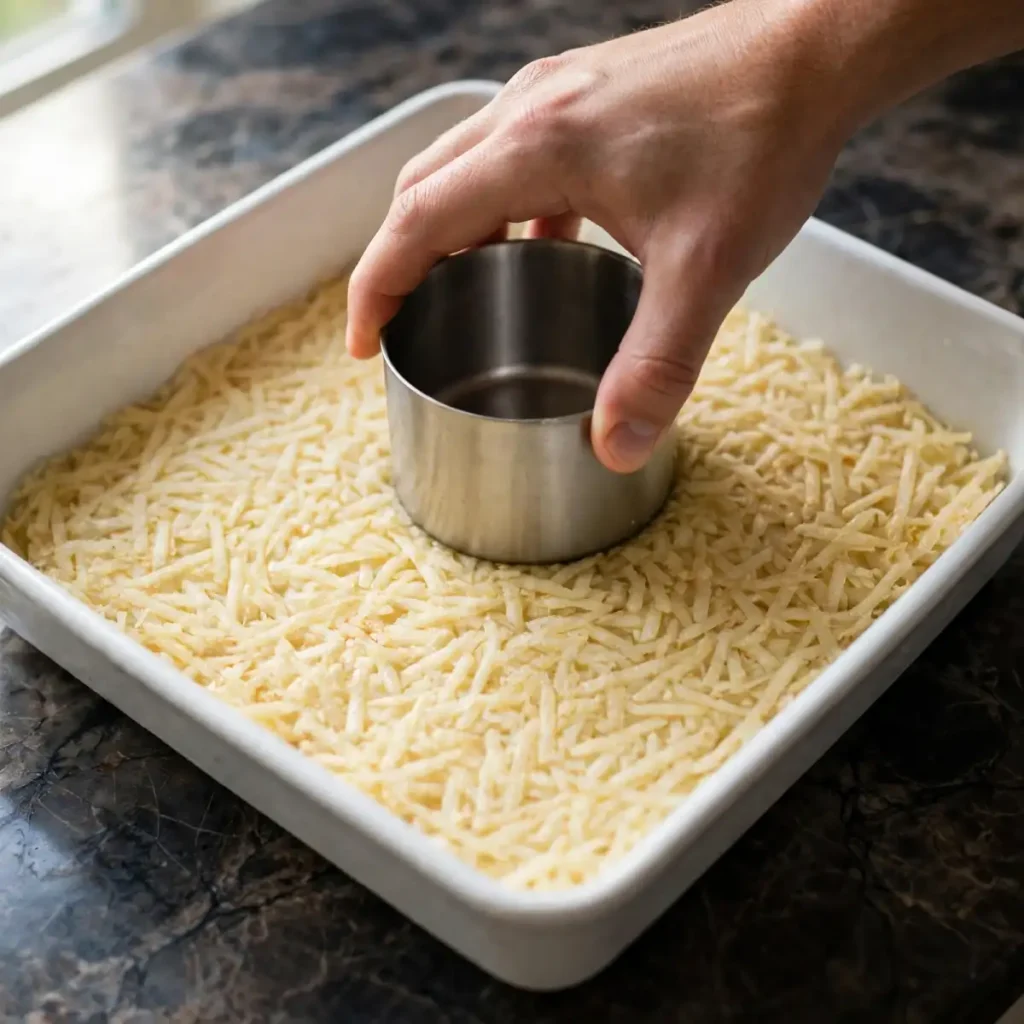
Toss the dried hash browns with the melted butter, 1/2 teaspoon of salt, and 1/4 teaspoon of black pepper in a bowl until evenly coated. Press the mixture firmly and evenly into the prepared baking dish using an offset spatula or the bottom of a measuring cup, creating a uniform layer about 1 to 1.5cm thick that covers the entire base and comes slightly up the sides of the dish. Press firmly; a tightly compacted base holds together when sliced, while a loosely pressed base falls apart.
Bake uncovered for 20 minutes until the edges are starting to turn light golden and the hash browns have firmed slightly. Remove from the oven and set aside. This pre-bake is what gives the base its structure and head-start on crisping before the wet egg custard is poured over it.
Step 3: Brown the Sausage and Vegetables
While the hash brown base pre-bakes, heat the large skillet over medium-high heat. Add the crumbled beef breakfast sausage to the dry pan in a single layer and cook without stirring for 2 to 3 minutes until the underside is browned and the fat has begun to render. Break the sausage into smaller crumbles and continue cooking, stirring occasionally, for another 3 to 4 minutes until browned all over and no pink remains. Add the diced onion and red bell pepper to the pan and cook together with the sausage for 4 to 5 minutes until the onion is softened and translucent and the edges are starting to caramelize. Add the minced garlic and cook for 60 seconds, stirring constantly, until fragrant.
Food safety note: Beef sausage must be cooked to an internal temperature of 71°C (160°F) throughout, with no pink meat remaining, before it goes into the casserole.
Remove the pan from the heat. Tilt the pan and spoon off any excess rendered fat, leaving about 1 tablespoon in the pan to avoid a greasy finished casserole. Allow the sausage and vegetable mixture to cool for 5 minutes.
Chef’s Note: Browning the sausage on the stovetop before it goes into the casserole is what develops the deep, savory flavor that makes the finished dish taste rich throughout. Sausage added raw to the casserole steams in the egg custard rather than browning; it cooks through safely during baking but produces a noticeably blander, less developed flavor than pre-browned sausage. The fond left in the pan after browning is also worth collecting: use a small splash of water to deglaze the pan and add those browned bits to the sausage mixture before assembling.
Step 4: Whisk the Egg Custard
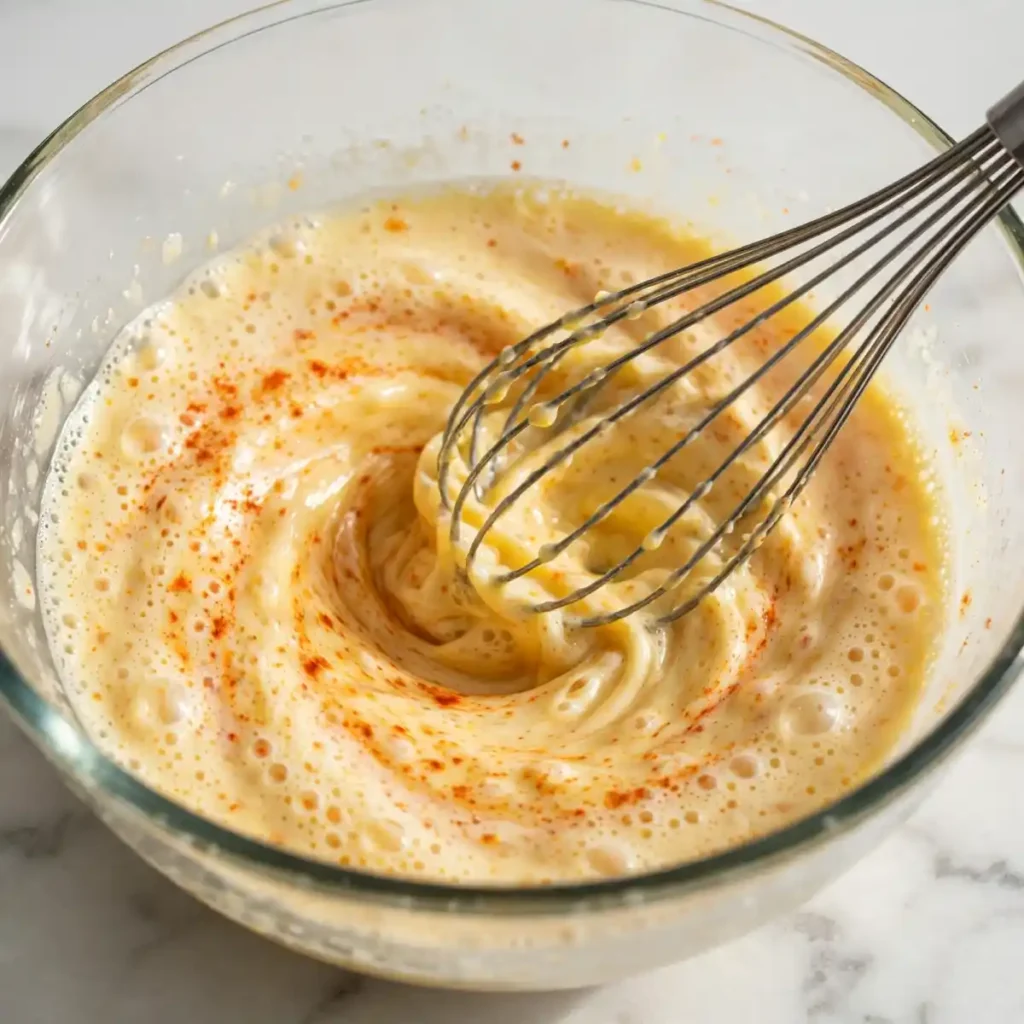
Crack the 10 eggs into a large bowl and add the whole milk, smoked paprika, garlic powder, dry mustard (if using), 1/2 teaspoon of salt, and 1/4 teaspoon of black pepper. Whisk vigorously for 30 to 45 seconds until the mixture is completely uniform, with no visible streaks of egg white remaining, and slightly pale and foamy on the surface from the incorporated air. Taste a small amount and adjust salt if needed; the custard should taste assertively seasoned since it will mellow once it sets and the hash browns and sausage dilute its saltiness across the whole dish.
Step 5: Assemble the Casserole
Spread the cooled sausage and vegetable mixture evenly over the pre-baked hash brown base, distributing it all the way to the edges in an even layer. Scatter 150g of the shredded cheddar over the sausage layer. Pour the whisked egg custard slowly and evenly over the entire surface of the dish, starting from the center and working outward; pouring too quickly in one spot can displace the filling layers. The custard should come to just below the rim of the dish; if it looks overly full, the dish is sized correctly and the custard will not overflow during baking. Scatter the remaining 75g of shredded cheddar evenly across the top of the custard.
Chef’s Note: Pouring the egg custard slowly and in a thin, steady stream over the sausage and cheese layer allows it to permeate down through the filling before it pools on the surface. When poured too quickly, the custard sits on top rather than distributing between the sausage pieces and cheese, which produces an uneven set where the top is fully cooked while pockets of custard beneath the filling remain loose.
Step 6: Bake Until Set and Golden
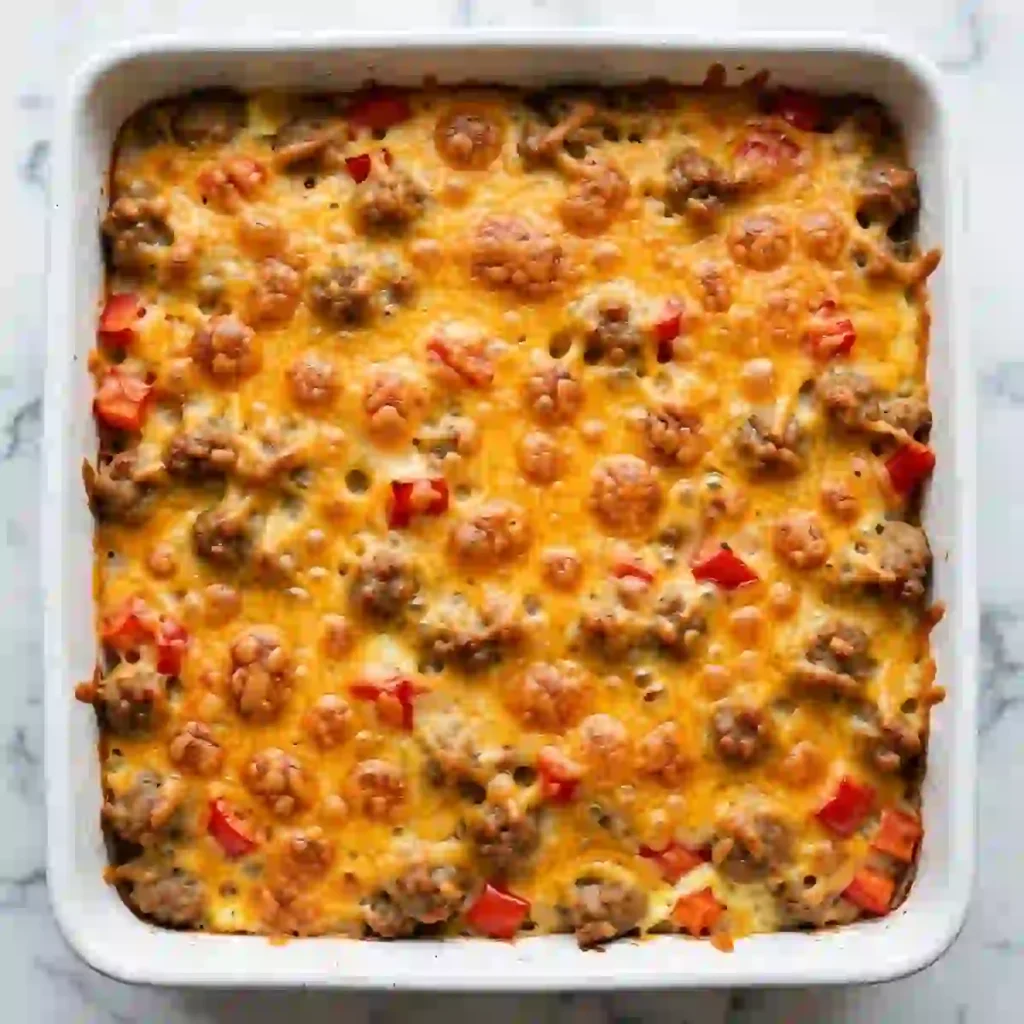
Bake the assembled breakfast casserole at 190°C (375°F) for 38 to 42 minutes until the cheddar on top is deeply golden-brown with some slightly darker spots visible, and the egg custard is fully set with no jiggle when the dish is gently shaken. The center of the casserole should feel firm, not liquid, when pressed very gently with the back of a spoon, and an instant-read thermometer inserted into the center should read at least 74°C (165°F). If the cheese is browning too quickly before the 38-minute mark, tent the dish loosely with aluminum foil for the remaining bake time.
Remove from the oven and rest for 10 minutes in the dish before slicing and serving. The resting time allows the egg custard to firm slightly from residual heat, which makes the casserole slice into cleaner, more defined pieces.
Common Mistakes and Troubleshooting
| Problem | Cause | Solution |
|---|---|---|
| Hash brown base soggy and soft rather than crispy | Hash browns not squeezed dry before pressing, or skipped the pre-bake step | Squeeze thawed hash browns thoroughly until no moisture releases; always pre-bake the base 20 minutes before adding filling |
| Egg custard watery and doesn’t set properly | Too much milk relative to eggs, or underbaked | Use the 10-egg to 240ml milk ratio exactly; bake until center reads 74°C (165°F) with no jiggle |
| Casserole tastes bland despite looking done | Custard under-seasoned, or sausage not browned properly | Season the egg custard assertively before pouring; always brown the sausage on the stovetop first rather than adding raw |
| Cheese pale and not browning on top | Pre-shredded coated cheese used, or oven temperature too low | Always shred cheddar from a block; ensure oven has preheated fully to 190°C before the casserole goes in |
| Casserole falls apart when sliced | Not rested long enough after baking, or egg ratio off | Rest for the full 10 minutes before slicing; don’t increase the milk beyond 240ml |
| Filling floating to the top rather than distributing evenly | Egg custard poured too quickly in one spot | Pour the egg custard in a slow, thin, circular stream starting from the center and working outward |
Variations and Substitutions
- Vegetable-loaded breakfast casserole: Omit the sausage entirely and cook a combination of 225g of sliced cremini mushrooms, 1 cup of fresh spinach, and 1 diced zucchini in the skillet with 1 tablespoon of olive oil over medium-high heat until the mushrooms are deeply browned and any vegetable moisture has fully evaporated, about 10 to 12 minutes. Season generously with salt and smoked paprika. Use this mixture as the filling in place of the sausage and vegetables. The key technique is the same: cook the filling until all moisture is gone before it goes into the casserole.
- Spicy jalapeño cheddar breakfast casserole: Add 2 fresh jalapeños, seeded and finely diced, to the sausage and vegetable filling during the last 2 minutes of cooking. Replace the sharp cheddar topping with a mixture of Monterey Jack and sharp cheddar in equal parts. Add 1/4 teaspoon of cayenne pepper to the egg custard alongside the smoked paprika. The result is significantly spicier and works well for a crowd that prefers heat; serve with sour cream and sliced avocado on the side.
- Southwest breakfast casserole: Add 1/2 cup of drained canned black beans and 1/2 cup of frozen corn (no need to thaw) to the sausage filling. Replace the smoked paprika in the egg custard with 1 teaspoon of ground cumin and add 1/4 teaspoon of chili powder. Use Pepper Jack cheese in place of cheddar for the topping. Serve with fresh salsa and plain yogurt instead of sour cream.
- Ham and cheese breakfast casserole: Replace the beef breakfast sausage with 300g of diced halal beef deli ham or cooked diced halal turkey ham cut into small cubes. Since deli ham doesn’t need to be cooked before assembly, the stovetop step becomes a simple sauté of the onion and bell pepper in 1 tablespoon of olive oil for 5 to 6 minutes until softened. Stir the ham cubes through the cooked vegetables and proceed with the assembly. Use Swiss or Gruyère in place of cheddar for a more classic ham-and-cheese flavor.
- Overnight make-ahead version: Assemble the full casserole through the step of scattering the top cheese layer, cover tightly with plastic wrap, and refrigerate for up to 15 hours before baking. In the morning, remove the dish from the refrigerator and allow it to sit at room temperature for 20 to 30 minutes while the oven preheats. Bake at 190°C (375°F) for 45 to 50 minutes; the extra time accounts for the casserole starting cold. This is the version I’d recommend for any holiday morning or weekend gathering where morning prep time needs to be minimal.
- Individual breakfast casserole muffins: Press the hash brown mixture into well-greased muffin tin cups (standard 12-cup tin), filling each about 1/3 full and pressing up the sides. Pre-bake at 200°C (400°F) for 15 minutes. Fill each cup with the sausage mixture and pour in enough egg custard to reach just below the rim. Top with cheddar and bake for 18 to 22 minutes until set. Muffin-sized portions are practical for meal prep, freeze individually, and reheat in the microwave in 60 to 90 seconds.
Serving Suggestions
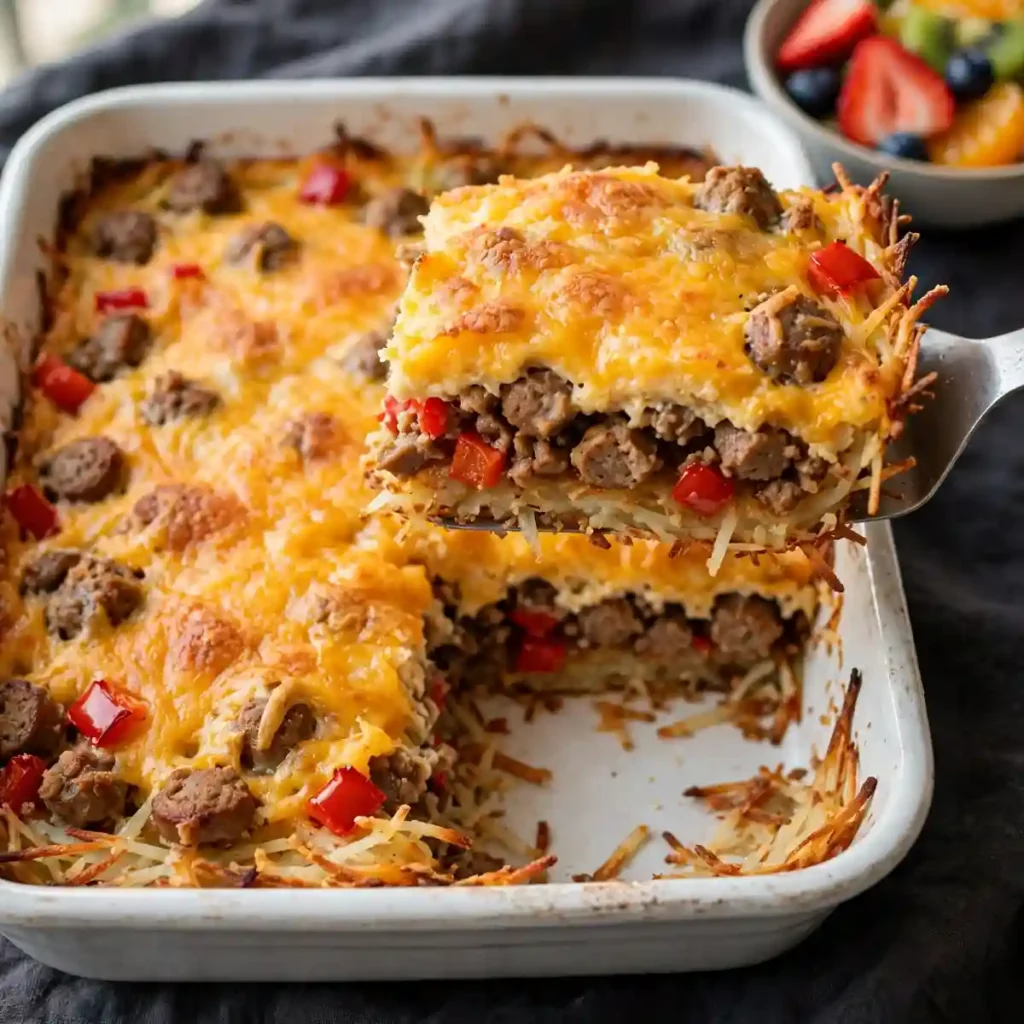
- Bring the baking dish directly from the oven to the table on a trivet or folded kitchen towel and let people serve themselves with a wide spatula. The casserole looks most appealing when served from the dish rather than transferred to a serving platter; the golden cheese crust and visible layers are the presentation.
- Serve alongside a simple fruit salad or a bowl of fresh orange segments. The acidity and freshness of fruit cuts through the richness of the egg and cheese casserole and balances the plate without requiring any additional cooking.
- A bottle of hot sauce, a small bowl of plain full-fat yogurt (as a sour cream substitute), and a small bowl of sliced green onions on the table allow everyone to customize their portion without the casserole itself needing to be tailored for individual preferences.
- For a full brunch spread, pair with a pitcher of fresh orange juice and a pot of strong black coffee. Both work well alongside the savory, rich casserole; the coffee especially cuts through the fat and makes each bite feel fresher.
- Toast thick slices of sourdough bread in a wide toaster while the casserole rests; the toast gives people something to scoop the casserole onto and absorb the flavorful egg custard from the base of their serving.
- For a holiday morning specifically, the casserole alongside a simple green salad dressed with lemon and olive oil transforms a breakfast dish into something that eats as a full lunch or brunch without feeling like a category mismatch.
Tips for the Best Results
- Squeeze the hash browns as aggressively as you can. Most people squeeze until they think they’re done and then stop, but the hash browns still have more moisture to release. Squeeze in stages: a first round removes the bulk of the moisture, then gather the towel tighter and squeeze again from a different angle. The hash browns should feel notably lightweight and almost fluffy when finished, not heavy and clumped. This step directly determines whether the base crisps or stays soft.
- Pre-bake the hash brown base before adding any filling. Skipping this step and adding the egg custard directly over raw hash browns produces a base that never fully crisps, because the wet custard soaking down keeps the potatoes moist throughout the bake. The 20-minute pre-bake at 190°C is what gives the base layer its head-start before the custard arrives.
- Brown the sausage properly on the stovetop before assembly. The sausage must have genuine color and rendered fat before it goes into the casserole; pale, barely-cooked sausage mixed through the filling produces a noticeably blander overall flavor. Don’t rush the browning step; it takes a full 5 to 7 minutes in a hot pan and the difference in the finished casserole is immediately detectable.
- Season the egg custard assertively. The custard seasons the entire interior of the casserole, including the hash browns and the sausage. Under-seasoned custard produces a dish that tastes flat even when every individual component was well-flavored before assembly. Taste the whisked custard before pouring; it should taste noticeably salty and spiced.
- Rest for 10 full minutes before slicing. The egg custard continues to firm and set during the rest period as the residual heat works through the dish. A casserole sliced immediately from the oven produces loose, sliding pieces; one rested for 10 minutes slices into clean, defined squares that hold together when lifted.
Storage Tips
Refrigerator
Leftover breakfast casserole keeps in the refrigerator, covered tightly with plastic wrap or in a sealed container, for up to 4 days. The hash brown base maintains its structure during refrigerator storage and doesn’t become significantly soggier; individual portions are easy to cut and reheat cleanly. Store with the cheddar crust facing up and cover loosely rather than pressing plastic directly against the cheese, which can pull the crust off when the wrap is removed.
Freezer
The fully baked and cooled casserole freezes well for up to 2 months. Cut into individual portions before freezing so you can thaw only what’s needed; wrap each piece individually in plastic wrap and then foil, or store in individual freezer-safe containers. The individual muffin-tin variation (from the variations section) is especially practical for freezing since each serving is already portioned. Thaw overnight in the refrigerator before reheating.
Reheating
Individual portions reheat well in the microwave at 60 to 70% power for 60 to 90 seconds until hot throughout; the hash brown base softens slightly in the microwave but retains its structure. For the best texture, reheat in the oven: place pieces on a baking sheet, cover loosely with foil, and warm at 165°C (325°F) for 12 to 15 minutes until heated through. The oven method re-crisps the hash brown base and re-melts the cheddar crust to something very close to its fresh-baked appearance.
Make-ahead note: This breakfast casserole is designed to be assembled the night before. After pressing the pre-baked hash brown base and adding the sausage filling, cheese, and egg custard, cover tightly with plastic wrap and refrigerate for up to 15 hours. Increase the bake time by 8 to 10 minutes when baking from cold. The overnight rest actually benefits the flavor slightly; the egg custard has time to absorb the sausage and vegetable flavors from the filling before it sets in the oven.
Nutrition Information
Per serving, approximately 1/10 of the recipe:
| Nutrient | Amount |
|---|---|
| Calories | 390 kcal |
| Protein | 24g |
| Total Carbohydrates | 22g |
| Dietary Fiber | 2g |
| Total Sugar | 3g |
| Total Fat | 23g |
| Saturated Fat | 10g |
| Cholesterol | 230mg |
| Sodium | 680mg |
| Vitamin C | 22mg |
| Calcium | 240mg |
| Iron | 2.8mg |
| Potassium | 480mg |
Nutrition values are approximate and may vary based on sausage brand, cheese quantity, and exact portion size.
Why This Recipe Works
The structural logic of this hash brown breakfast casserole comes from understanding three distinct cooking zones and what each one needs to do before the finished dish succeeds.
The hash brown base’s crispness depends on two conditions being present simultaneously: low surface moisture and direct heat contact. Frozen shredded potatoes contain approximately 60 to 65% water after thawing, compared to the 80% present in fresh raw potatoes; the freezing and thawing process ruptures cell walls and releases some cellular water during thawing. Even at this reduced moisture level, the remaining water content is high enough to prevent crisping if it isn’t removed mechanically before cooking. When dry hash browns are pressed against a buttered ceramic surface and placed in a 190°C oven, the butter’s fat acts as a heat transfer medium between the dish surface and the potato, raising the contact-point temperature at the potato surface above 150°C (302°F), at which point the remaining surface moisture rapidly evaporates and the potato starch and sugars undergo Maillard browning. This crisping begins at the dish surface and works upward through the layer; the 20-minute pre-bake allows this process to progress about 60 to 70% through the base layer’s depth before the egg custard is added, which is what produces a base that retains crispness at the bottom even after absorbing some moisture from the poured custard above.
The 10-egg to 240ml milk ratio in the egg custard is calibrated to a specific set texture. Egg proteins, primarily ovalbumin and ovomucin in the whites and vitellin in the yolks, coagulate when heated above approximately 62°C (144°F) for whites and 70°C (158°F) for whole blended eggs. The addition of whole milk dilutes the protein concentration and raises the final coagulation temperature slightly, producing a set that is softer and less rubbery than pure egg at the same bake temperature. At the ratio used here, the coagulated proteins form a network that is firm enough to hold the sausage and vegetable pieces in suspension throughout the slice but still moist and slightly custardy to eat. More milk raises the final set temperature further and can produce a loose, undercooked-tasting custard even when baked to the correct internal temperature; less milk produces a firmer, denser, drier egg layer.
Pre-browning the beef sausage on the stovetop before assembly produces two specific improvements in the finished casserole. First, the Maillard browning that occurs on the sausage surface at temperatures above 150°C develops hundreds of new flavor compounds, primarily pyrazines, aldehydes, and furyl compounds, that are collectively responsible for the complex, roasted meat flavor associated with well-browned sausage. These compounds cannot develop inside the oven’s wet, steam-rich environment created by the egg custard; sausage cooked raw in the casserole reaches a safe internal temperature but its surface never exceeds the temperature of the surrounding custard, which is too low for Maillard reactions. Second, browning the sausage renders its intramuscular fat into the cooking pan; this rendered fat, left in a thin layer under the sausage mixture, coats the hash brown base and seasons the casserole from the bottom during the final bake.
I’ve tested this casserole both with and without the hash brown pre-bake step across multiple batches. Without pre-baking, the base layer at the same final bake time and temperature is consistently soft and slightly steamed; it holds the casserole structurally but adds no textural contrast. With the 20-minute pre-bake, the base develops genuine crispness at the bottom contact surface that persists through the final bake and survives refrigeration and reheating better than expected.
Frequently Asked Questions
Can I make breakfast casserole the night before?
Yes, and it’s one of the best reasons to choose this recipe. After assembling the casserole fully, including the hash brown base, sausage filling, egg custard, and top cheese layer, cover tightly with plastic wrap and refrigerate for up to 15 hours. Remove from the refrigerator 20 to 30 minutes before baking and increase the total bake time by 8 to 10 minutes to account for the casserole starting cold rather than at room temperature. The overnight rest allows the egg custard to absorb the sausage flavor before it sets; the morning bake takes under an hour with no active preparation.
Why is my breakfast casserole watery in the center?
Watery center means either underbaking or too much liquid in the egg custard. The casserole is done when the center reads 74°C (165°F) on an instant-read thermometer and doesn’t jiggle when the dish is shaken gently; if either condition isn’t met, it needs more time. If you’ve used more than 240ml of milk for 10 eggs, the custard ratio is off; the standard ratio should be followed without increasing the milk. A secondary cause is a very wet hash brown base that releases water upward through the casserole during baking; always squeeze the hash browns thoroughly before pressing them into the dish.
Can I use fresh potatoes instead of frozen hash browns?
Yes. Peel and coarsely grate 680g (about 1 1/2 lbs) of russet potatoes using a box grater. Immediately after grating, squeeze out all moisture as aggressively as possible using a clean kitchen towel; fresh grated potato contains more water than thawed frozen hash browns, so this step is even more important. Season and toss with the melted butter and proceed exactly as directed. Fresh grated russet potatoes produce a slightly more cohesive, less uniform base than frozen hash browns, with a few crispy strands mixed through the layer, which some people prefer for the texture variation.
How do I know when the breakfast casserole is fully baked?
Three indicators confirm it’s done. The cheddar on top should be deeply golden-brown with no pale patches remaining. The casserole should feel firm, not liquid or soft, when the center of the surface is pressed very gently with the back of a spoon. Most reliably, an instant-read thermometer inserted into the center of the casserole (not the edge, where it sets first) should read at least 74°C (165°F). The edge portions of the casserole cook faster than the center; always check the center specifically.
Can I make this breakfast casserole gluten-free?
Yes, the base recipe as written is naturally gluten-free: eggs, potatoes, cheddar cheese, milk, butter, vegetables, and spices are all inherently gluten-free. The only potential gluten source is the beef breakfast sausage, which some brands produce with fillers or binders that contain wheat. Check the label specifically and choose a certified gluten-free sausage brand if gluten is a concern. All other ingredients in the base recipe require no substitution.
Can I freeze breakfast casserole before baking?
Yes, with one adjustment: freeze after assembling but before the final bake, and without having done the hash brown pre-bake. Assemble the raw hash brown base (unpre-baked), add the cooked sausage and vegetable filling, pour over the egg custard, and top with cheese. Cover tightly and freeze for up to 1 month. Thaw overnight in the refrigerator and bake at 190°C (375°F) for 55 to 60 minutes from cold, since the hash brown base needs its pre-bake time and the custard needs longer to set from a fully cold start. The hash brown base won’t be as crispy as the pre-baked version but will still provide good structure.
What other cheeses work in this recipe?
Sharp cheddar is the first choice because its flavor is assertive enough to come through the whole casserole and it browns well. Monterey Jack melts more smoothly and produces a milder, creamier top layer that suits the Southwest variation particularly well. Gruyère adds a nutty depth that pairs well with the ham variation. Pepper Jack adds heat and works with the jalapeño variation. Whatever cheese you choose, always shred it from a block; pre-shredded cheese coated in anti-caking starch produces a pale, grainy melt that doesn’t match the golden-brown crust that freshly grated cheese achieves.
Conclusion
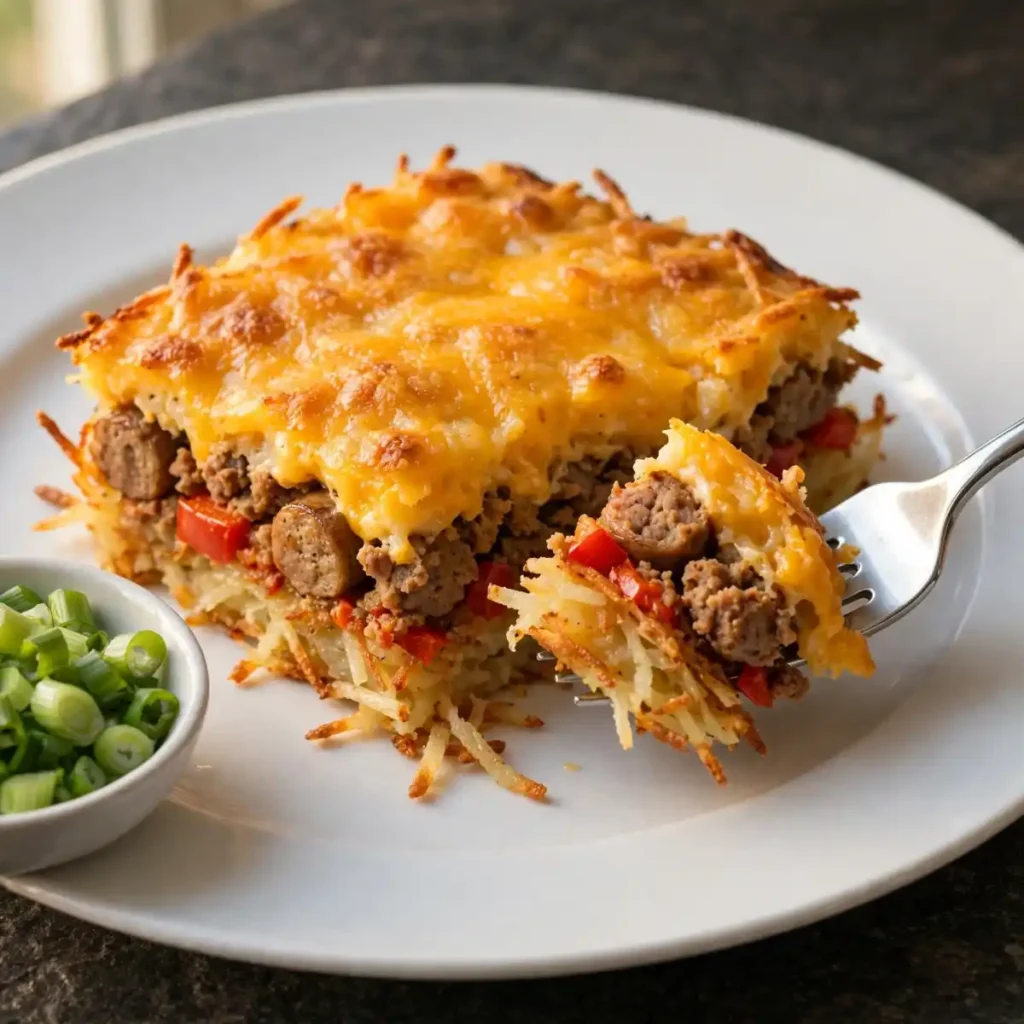
The hash brown base is what separates this breakfast casserole from every egg bake that came before it in your recipe rotation. That crispy potato layer at the base of each serving is the detail that makes people ask for the recipe before they’ve finished eating; it looks like extra effort and is actually just a matter of squeezing out enough moisture and giving it 20 minutes in the oven before anything else goes near it.
Once you’ve made this once, the overnight assembly becomes automatic: the filling gets cooked in one pan, the egg custard takes three minutes to whisk together, and the whole thing sits in the refrigerator until morning. The hardest part of Christmas morning or any weekend with guests is managing the morning itself. Knowing this breakfast casserole is already assembled and needs only 50 minutes in the oven removes the hardest part entirely.
If you loved this recipe, save it to your breakfast and brunch recipes Pinterest board so you can find it easily later. For more same recipes follow Thecookingvibes Pinterest account.
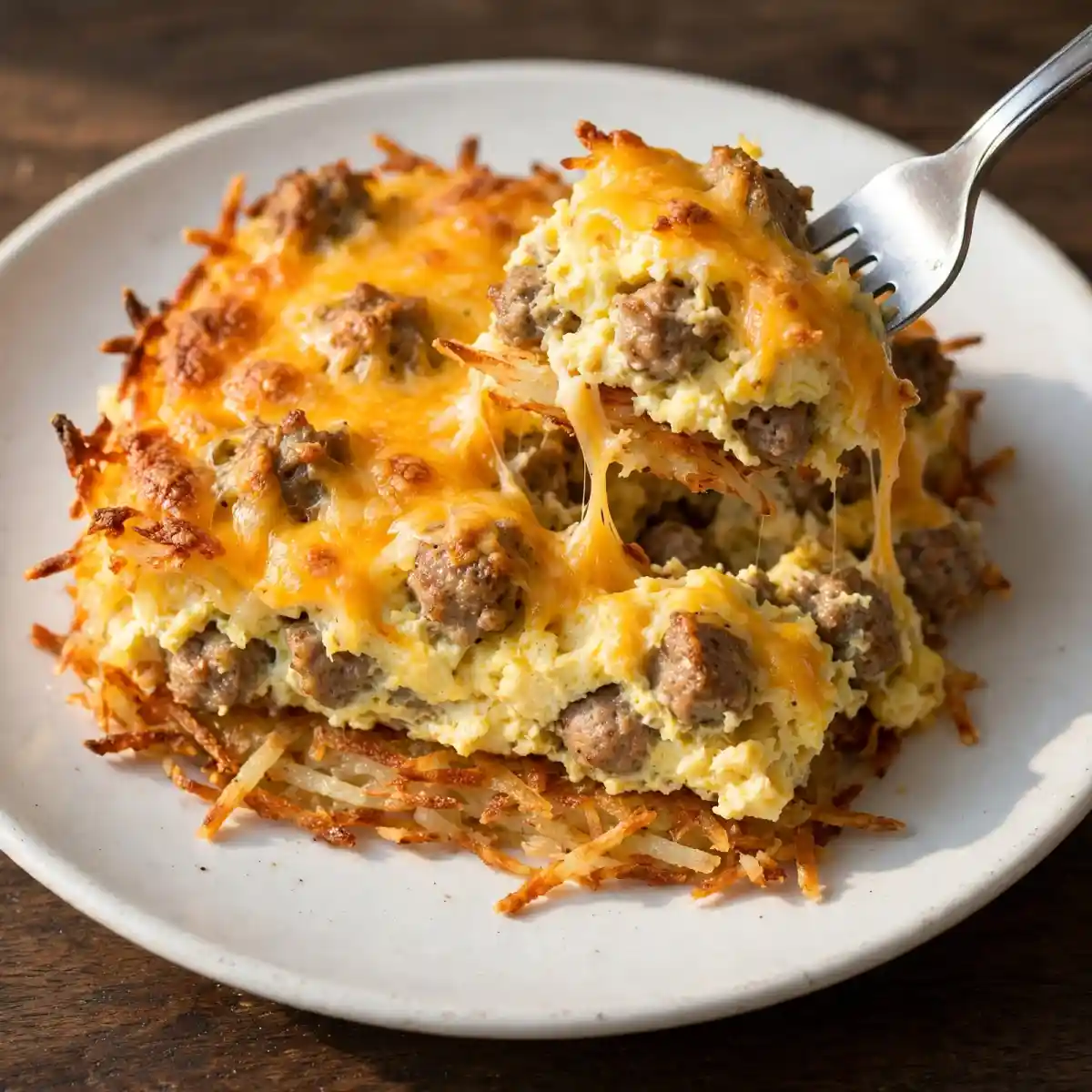
Easy Breakfast Casserole with Hash Browns
Ingredients
Equipment
Method
- Preheat oven to 190°C (375°F). Squeeze all moisture from thawed hash browns using a kitchen towel. Toss with melted butter, salt, and pepper. Grease a 9×13-inch baking dish generously. Press hash browns firmly into an even 1 to 1.5cm layer covering the entire base. Bake uncovered for 20 minutes until edges are light golden and base is firm.
- While hash browns pre-bake, cook crumbled beef sausage in a large skillet over medium-high heat for 5 to 7 minutes until browned through with no pink remaining (minimum 71°C/160°F internal). Add diced onion and red bell pepper; cook 4 to 5 minutes until softened. Add minced garlic; cook 60 seconds. Drain excess fat, leaving about 1 tablespoon.
- Whisk together eggs, whole milk, smoked paprika, garlic powder, dry mustard, salt, and black pepper in a large bowl for 30 to 45 seconds until uniform and slightly foamy.
- Spread sausage and vegetable mixture evenly over the pre-baked hash brown base. Scatter 150g of shredded cheddar over the sausage layer. Pour egg custard slowly and evenly over the entire surface. Scatter the remaining 75g of cheddar across the top.
- Bake at 190°C (375°F) for 38 to 42 minutes until cheese is deeply golden-brown, the center doesn't jiggle when the dish is shaken, and an instant-read thermometer inserted in the center reads at least 74°C (165°F).
- Rest for 10 minutes in the dish before slicing and serving.
Notes
- Squeezing the hash browns completely dry before pressing them into the dish is the most important step; moisture left in the hash browns prevents the base from crisping.
- Always brown the sausage fully on the stovetop before adding to the casserole; raw sausage steams inside the casserole and produces significantly less flavor.
- For overnight preparation: assemble through the final cheese layer, cover tightly with plastic wrap, and refrigerate for up to 15 hours. Bake at 190°C for 48 to 50 minutes from cold.
- Always shred cheddar from a block; pre-shredded cheese doesn’t melt or brown the same way.
- Allergens: Contains eggs and dairy (butter, whole milk, cheddar cheese). Naturally gluten-free as written; verify sausage brand for gluten if needed.
- This recipe has not been tested in a certified allergen-free kitchen and cannot be guaranteed safe for any specific allergy.
- Nutrition values are approximate and may vary based on sausage brand, cheese quantity, and exact portion size.