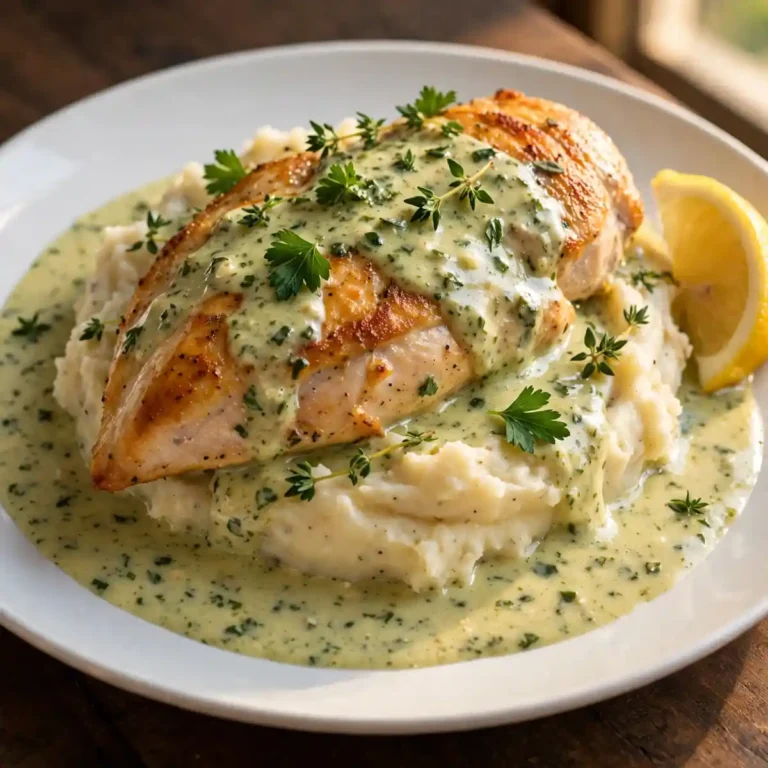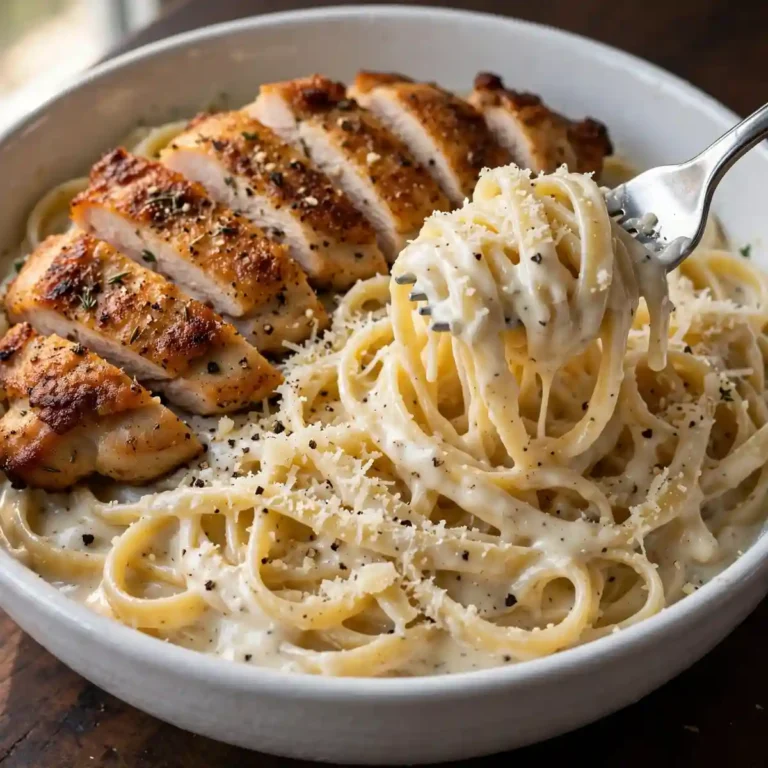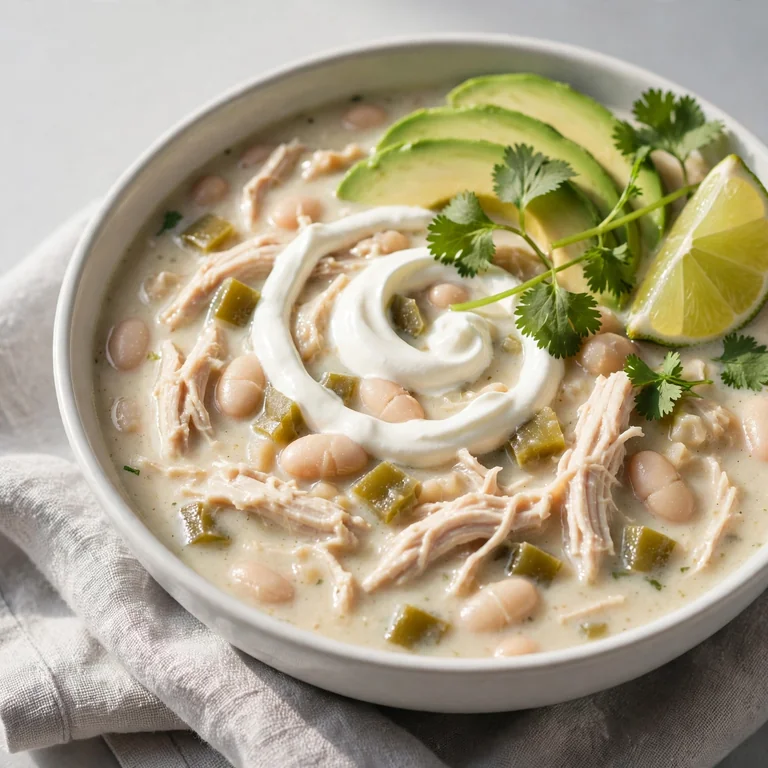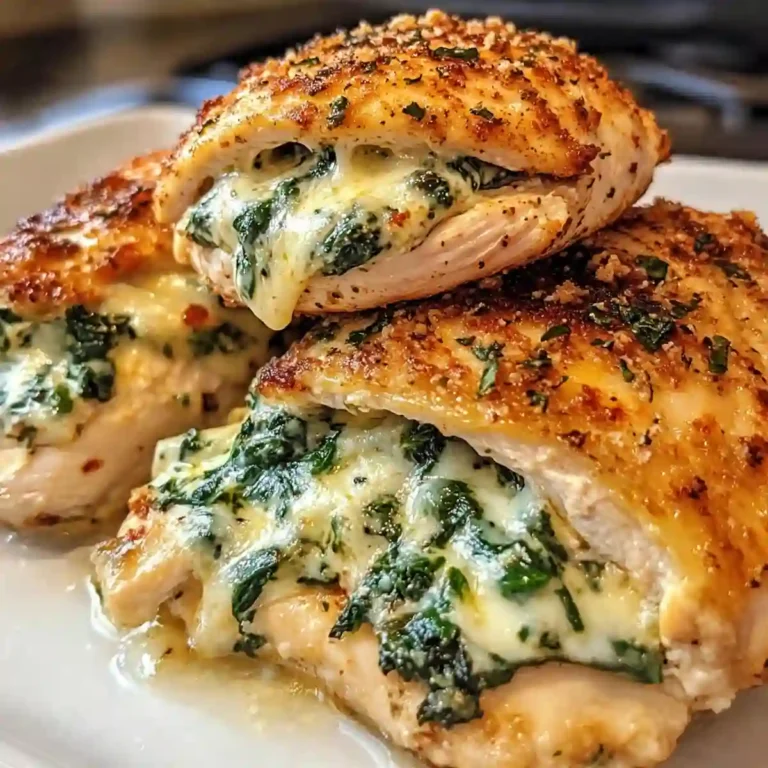
Creamy Boursin Chicken Pasta (Rich, Garlicky, 35 Min)
If you have ever wondered what happens when a soft round of garlic and herb cream cheese melts directly into hot cream and chicken broth in a skillet, the answer is a sauce that is so smooth, so deeply savory, and so completely ready to coat pasta that it feels like a shortcut that shouldn’t work this well. Boursin, a French soft cheese packed with garlic, fine herbs, and black pepper, dissolves into liquid almost instantly, requiring no whisking, no thickening, and no separate roux. The sauce makes itself.
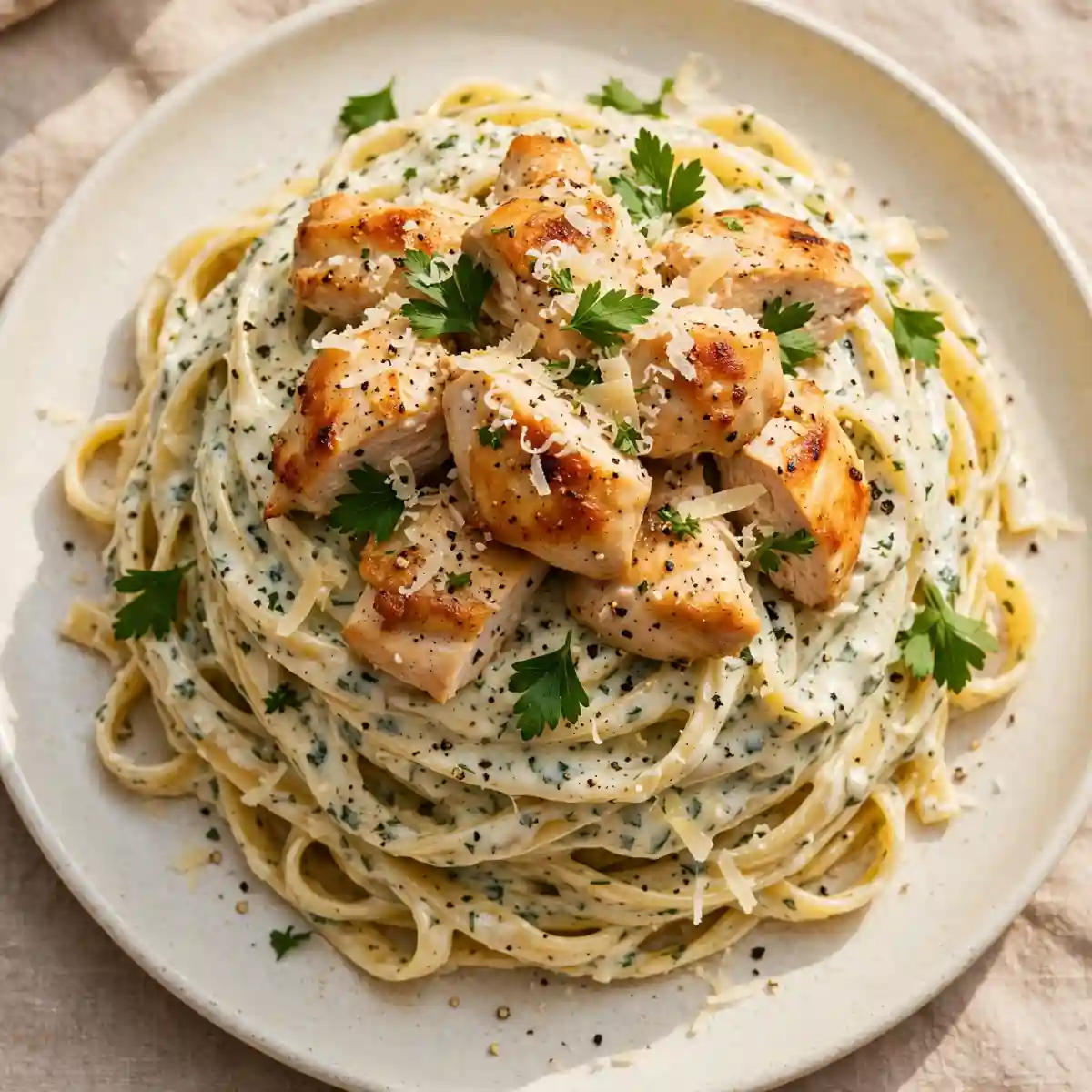
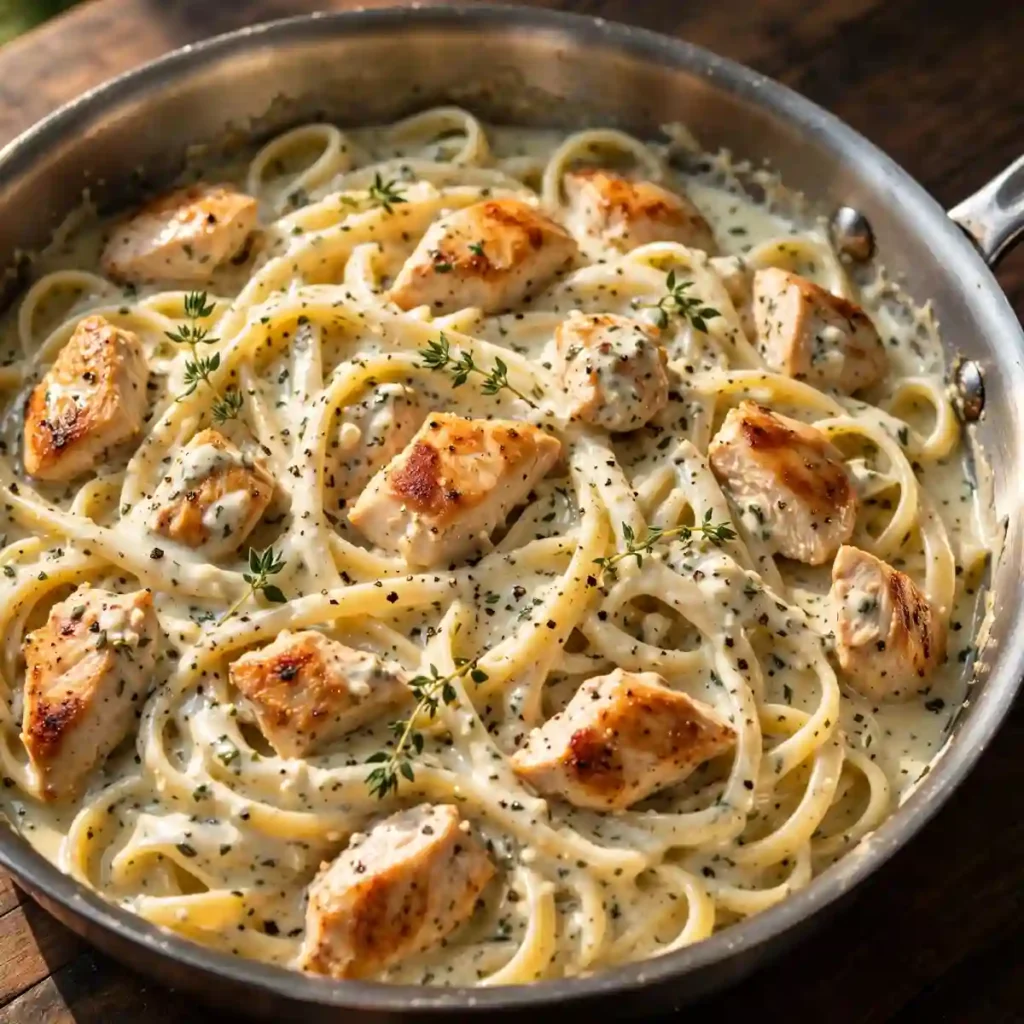
This Boursin chicken pasta recipe builds on that foundation with golden pan-seared chicken thighs, a base of shallots and extra garlic, a splash of chicken broth to deglaze the fond, heavy cream, and the full 150g round of Boursin cheese stirred directly into the simmering liquid. The pasta finishes cooking in the sauce so it absorbs every bit of flavor rather than arriving pre-cooked from a separate pot. One skillet, 35 minutes, serves four generously, and produces a cream sauce rich enough for a dinner party without requiring any technique beyond basic searing and stirring.
Why You’ll Love This Boursin Chicken Pasta
- The cheese is the sauce. Boursin melts into cream and broth within 60 seconds of contact without any whisking technique or thickening steps. The result is a silky, uniform cream sauce that is perfectly seasoned from the cheese’s own garlic, herbs, and black pepper before anything extra is added.
- Golden chicken and fond build the flavor base. Searing chicken thighs in butter until properly golden creates a layer of browned drippings at the pan bottom that becomes the flavor foundation of the entire sauce once the broth deglazes it. This step takes 6 minutes and accounts for most of the dish’s depth.
- Pasta finishes cooking in the sauce. Adding partially cooked pasta directly to the simmering cream sauce lets the noodles absorb the garlic herb flavor from the inside while simultaneously releasing starch that gives the sauce body and helps it cling.
- One skillet, nearly no cleanup. The chicken sears, the aromatics soften, the sauce builds, and the pasta finishes all in the same wide pan. Everything plates directly from the skillet.
- Rich enough for a dinner party, fast enough for a weeknight. The dish looks and tastes involved but requires no specialist technique, no difficult timing, and no last-minute components. It is as reliable at 7pm on a Tuesday as it is for Saturday guests.
Ingredients You’ll Need
Recipe Timing
| Detail | Info |
|---|---|
| Servings | 4 |
| Difficulty | Easy |
| Course | Main Course |
| Cuisine | French-Inspired, Italian-American |
| Prep Time | 10 minutes |
| Cook Time | 25 minutes |
| Total Time | 35 minutes |
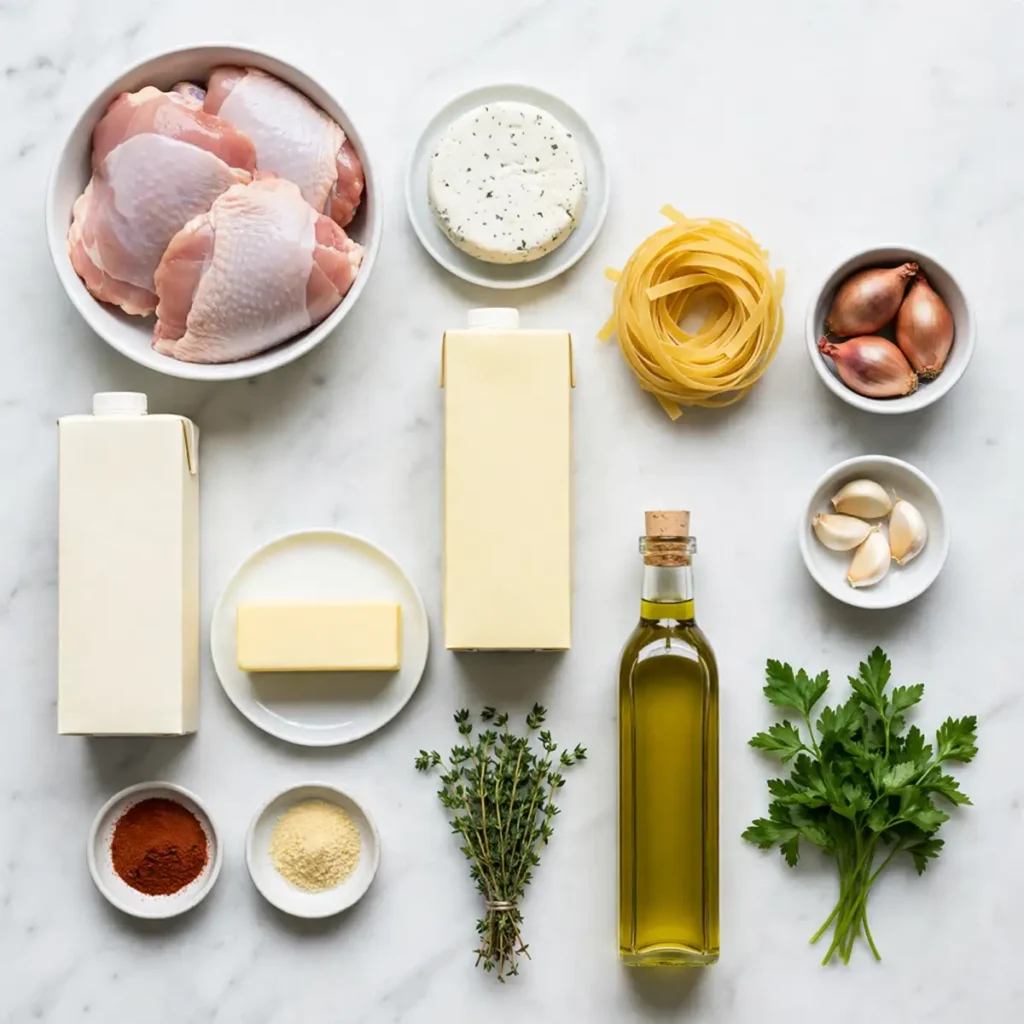
The star ingredient in this recipe is the Boursin Garlic and Fine Herbs variety, which is the classic round of soft cow’s milk cheese blended with garlic, parsley, chives, and black pepper. It is widely available in most supermarkets in the cheese section, typically sold in 150g rounds. The garlic and herb variety is the standard choice for this pasta application because its seasoning profile matches the flavor direction of the dish perfectly. If Boursin is unavailable, a soft garlic and herb cream cheese (like a homemade blend of 150g full-fat cream cheese, 2 minced garlic cloves, 1 tablespoon of chopped fresh chives, 1 tablespoon of chopped fresh parsley, and 1/4 teaspoon each of black pepper and dried thyme) produces a nearly identical result.
For the chicken, boneless skinless chicken thighs are significantly better than chicken breasts in this recipe. Thighs have a higher fat content, which keeps them moist through the searing stage and the subsequent time in the cream sauce, and their slightly more intense flavor holds up against the assertive garlic herb character of the Boursin. Breasts can be used but need to be watched carefully since they dry out quickly once past 74°C. If using breasts, cut them into 3cm pieces before seasoning to reduce cook time and preserve moisture.
For the pasta, fettuccine or linguine works best because the long, flat noodles pick up the cream sauce on a large surface area on both sides as they are tossed. Penne and rigatoni also work well for a more casual, fork-friendly version. Avoid very thin pasta like angel hair, which overcooks easily in the sauce stage.
For the Chicken:
- 700g (1.5 lbs) boneless skinless chicken thighs, cut into 3cm pieces. The primary protein. Cut into pieces before searing for faster, more even cooking and better sauce contact.
- 1 tablespoon (15g) unsalted butter. For searing. Butter produces a richer, more flavorful fond than oil alone.
- 1 tablespoon (15ml) extra virgin olive oil. Combined with the butter to raise the smoke point and prevent burning.
- 1/2 teaspoon fine sea salt.
- 1/4 teaspoon black pepper.
- 1/2 teaspoon garlic powder. Seasons the chicken independently of the sauce garlic.
- 1/2 teaspoon smoked paprika. Adds a warm, slightly smoky color and flavor to the seared chicken exterior that complements the creamy sauce.
For the Sauce and Pasta:
- 300g (10 oz) fettuccine or linguine. Cooked in salted boiling water to 2 minutes short of the package’s al dente time. Reserve 1 cup of pasta water before draining.
- 1 tablespoon (15g) unsalted butter. For cooking the aromatics after the chicken is removed.
- 3 shallots, finely diced. The aromatic base of the sauce. Shallots are sweeter and more delicate than onion and suit the refined character of a cream sauce.
- 4 cloves garlic, finely minced. Extra garlic beyond the cheese’s own garlic content deepens the savory base and ensures the garlic character is fully present in every bite.
- 1/2 cup (120ml) low-sodium chicken broth. Used to deglaze the pan after the aromatics soften, lifting the golden fond and forming the beginning of the sauce liquid.
- 1 cup (240ml) heavy cream (35% fat). The liquid base of the cream sauce. Full-fat cream is essential: lower-fat versions curdle when simmered with the acidic components of the Boursin.
- 1 round (150g / 5.3 oz) Boursin Garlic and Fine Herbs cheese, broken into rough pieces. Stirred into the simmering cream and broth until fully melted and smooth.
- 1/2 teaspoon fresh thyme leaves (or 1/4 teaspoon dried).
- 1/4 teaspoon black pepper, plus more to taste.
- Fresh flat-leaf parsley or chives, chopped, for serving.
- Freshly grated Parmesan, for serving (optional). A small amount scattered at the table adds a sharp, salty note that deepens the cream sauce’s flavor.
Allergen and Dietary Disclosure
This recipe contains dairy (butter, heavy cream, Boursin cheese, optional Parmesan) and gluten (pasta). Boursin also contains milk as a primary ingredient.
For a gluten-free version, use certified gluten-free pasta (rice-based fettuccine works well) and verify that your chicken broth is also gluten-free. All other ingredients in the recipe are naturally gluten-free.
For a lighter version, replace half the heavy cream with full-fat evaporated milk. The sauce will be slightly less rich and may be a touch thinner, but the Boursin still melts smoothly and the flavor remains largely intact. Do not use low-fat cream: it curdles during simmering.
Free from eggs, nuts, and soy as written. Not guaranteed safe for any specific allergy without checking all individual ingredient labels, particularly the Boursin packaging.
Step-by-Step Directions
Step 1: Cook the Pasta Underdone
Bring a large pot of well-salted water to a rolling boil. Add the fettuccine and cook for 2 minutes less than the package’s al dente recommendation. The pasta will look slightly underdone and feel firm at the center when bitten: this is correct. Before draining, scoop out 1 cup of the starchy cooking water and set it aside in a measuring cup. Drain the pasta and toss it lightly with a drizzle of olive oil to prevent clumping. Set aside.

Chef’s Note: The pasta water reserved here is the adjustment tool for the final sauce consistency. The dissolved starch it contains helps the cream sauce cling to the pasta and allows you to loosen a sauce that has tightened without diluting its flavor the way plain water would. Reserve it every time, even if you end up not needing it.
Step 2: Season and Sear the Chicken
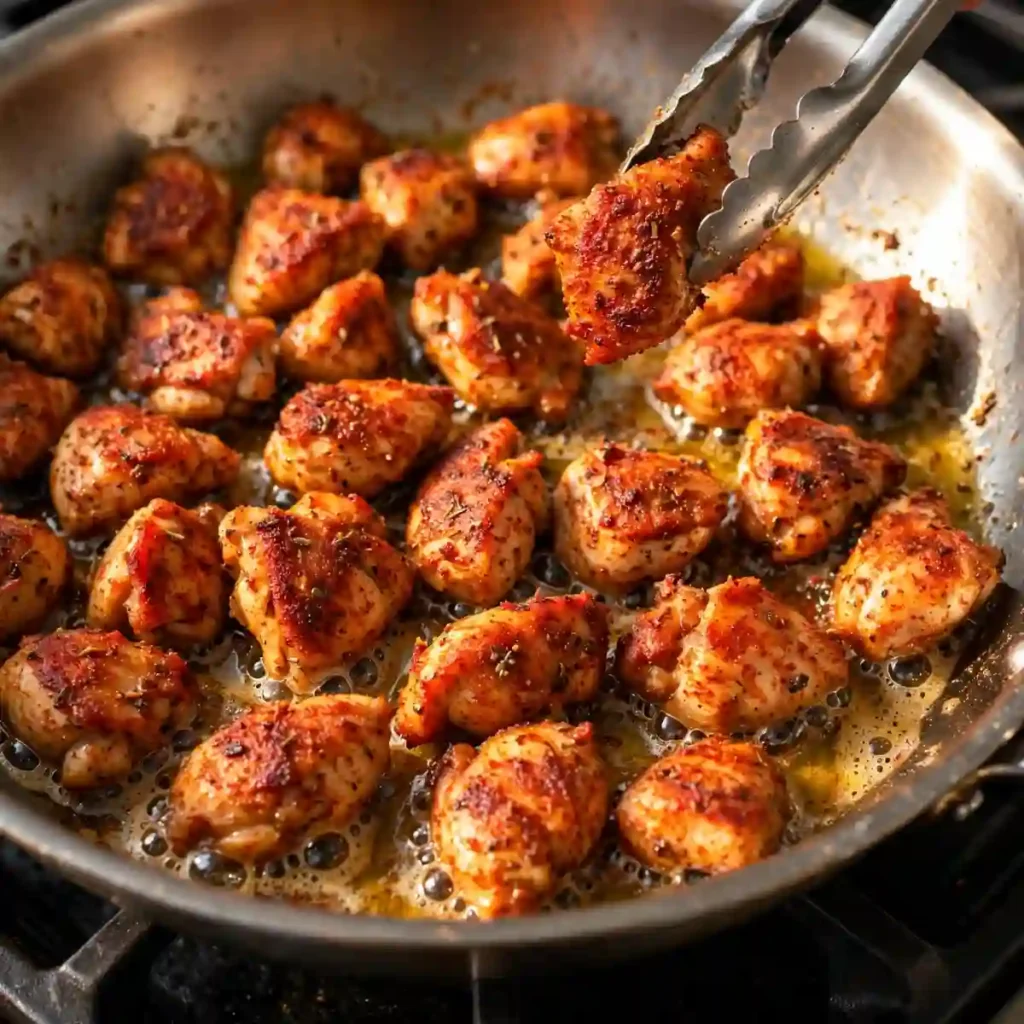
Pat the chicken thigh pieces dry with paper towels to remove surface moisture. Season evenly with salt, black pepper, garlic powder, and smoked paprika, tossing to coat all sides. Heat the butter and olive oil in a large (30cm / 12-inch) wide skillet over medium-high heat until the butter foam subsides and the mixture shimmers. Add the chicken pieces in a single layer without crowding: work in two batches if the pieces touch. Cook undisturbed for 3 to 4 minutes until the undersides are a deep golden-brown, then stir and cook for another 2 minutes until cooked through with no pink remaining and an internal temperature of 74°C (165°F). Transfer to a plate and set aside. Leave the skillet unwashed.
Food Safety Note: Chicken thigh pieces reach 74°C (165°F) reliably within 5 to 6 minutes of contact with medium-high heat when cut to 3cm. Use an instant-read thermometer to verify if unsure, cutting into the largest piece as a visual check: fully opaque, no pink at the center.
Chef’s Note: The fond (the golden-brown layer of caramelized juices left at the pan bottom after searing the chicken) is the most concentrated flavor in this entire recipe. Every bit of it will dissolve into the sauce when the broth goes in during the next step, which is what distinguishes this dish from a cream sauce made without searing the protein first.
Step 3: Soften the Aromatics
Reduce the heat to medium and add the tablespoon of butter for the sauce to the same skillet. Once it melts and the foam settles, add the diced shallots. Cook for 2 to 3 minutes, stirring frequently, until the shallots are soft, translucent, and beginning to turn very lightly golden at the edges. Add the minced garlic and stir continuously for 60 seconds until fragrant and very pale golden. Don’t let the garlic darken beyond pale gold: browned garlic turns bitter quickly and that bitterness will carry through the entire sauce.
Step 4: Deglaze and Build the Cream Base
Pour the chicken broth directly into the pan over the softened aromatics. The liquid will immediately begin bubbling aggressively as it hits the hot surface: use a wooden spoon to scrape every bit of the golden fond from the pan bottom as the broth reduces. Add the fresh thyme and black pepper. Let the broth cook for 90 seconds until it has reduced by about one-third and the fond is completely incorporated. Pour in the heavy cream and stir to combine with the reduced broth. Bring the sauce to a gentle simmer over medium heat.
Chef’s Note: Keeping the cream at a gentle simmer rather than a full boil is a temperature-control step that matters for the final sauce texture. Heavy cream at a full rolling boil can separate and develop a slightly grainy texture over time. A gentle simmer, where small bubbles break the surface steadily but not vigorously, allows the cream to thicken slowly and stably without any risk of breaking.
Step 5: Melt the Boursin Into the Sauce
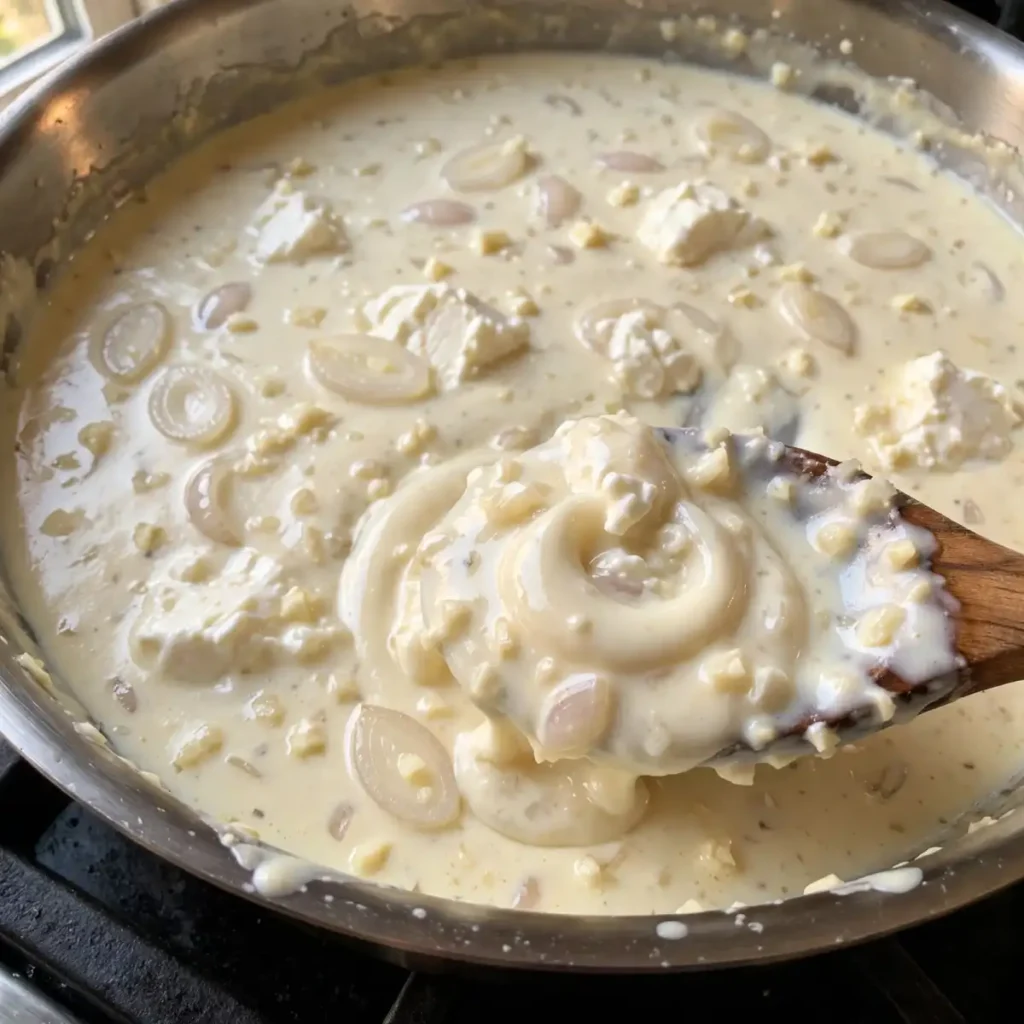
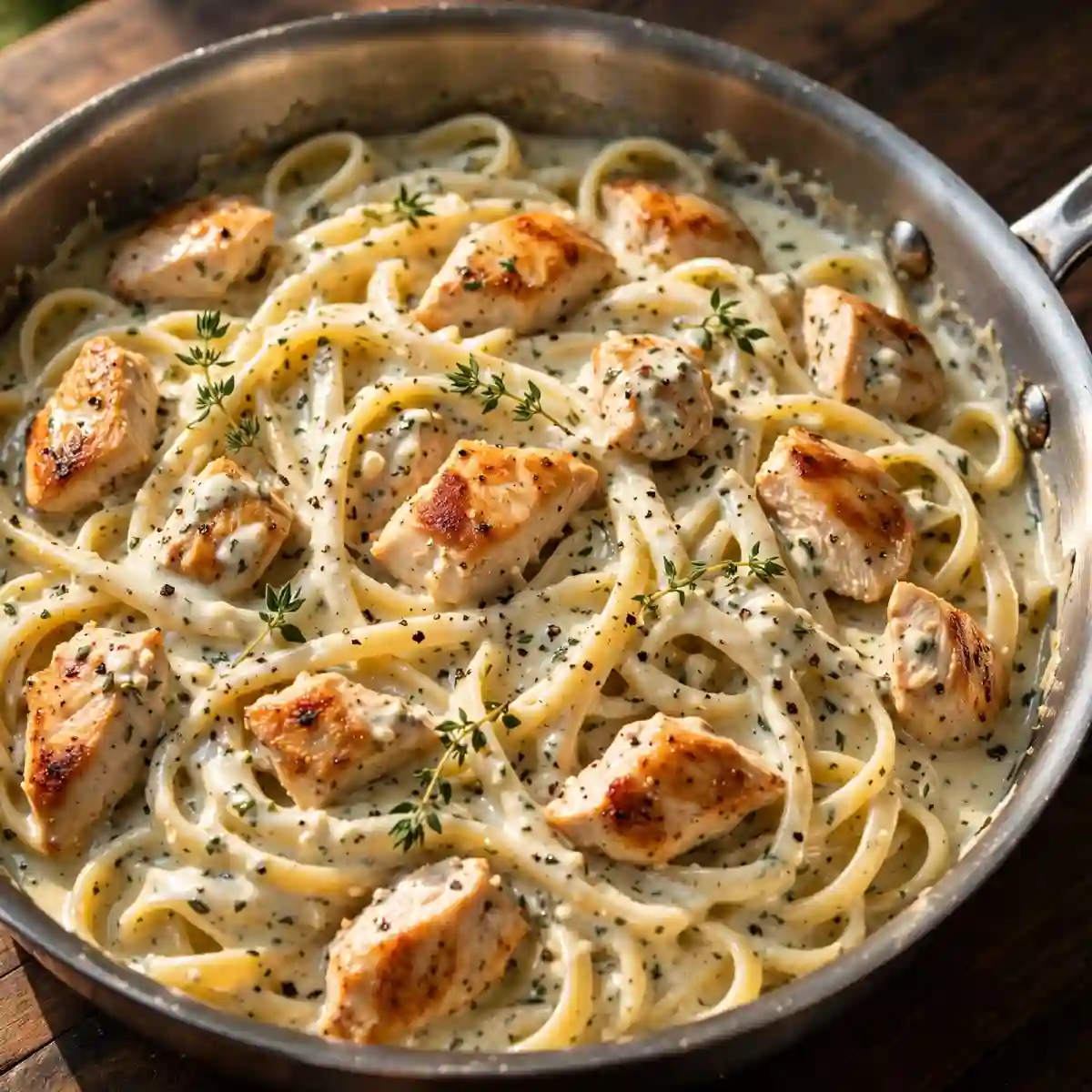
Break the Boursin round into 6 to 8 rough pieces and add them directly to the gently simmering cream. Stir continuously with a wooden spoon or silicone spatula as each piece dissolves, working them into the cream until the sauce is completely smooth and uniform in color: a pale ivory with no white Boursin streaks remaining. This takes approximately 60 to 90 seconds of stirring. Taste the sauce at this point before adding any additional salt: Boursin is already generously seasoned with salt, garlic, and herbs, and the sauce may need very little adjustment beyond a pinch of black pepper.
Step 6: Add the Pasta and Finish
Add the drained, slightly undercooked pasta directly to the sauce. Toss with tongs, lifting and folding the noodles through the sauce over medium heat for 1 to 2 minutes until every strand is coated and the pasta has finished cooking through the sauce’s heat. The pasta will absorb some of the cream sauce as it finishes, thickening the sauce slightly around the noodles. If the sauce looks too thick or the pasta begins to stick, add the reserved pasta water 2 to 3 tablespoons at a time and toss again until the consistency loosens to a smooth, flowing cream sauce that coats the noodles without pooling excessively at the bottom of the pan.
Step 7: Return the Chicken and Serve
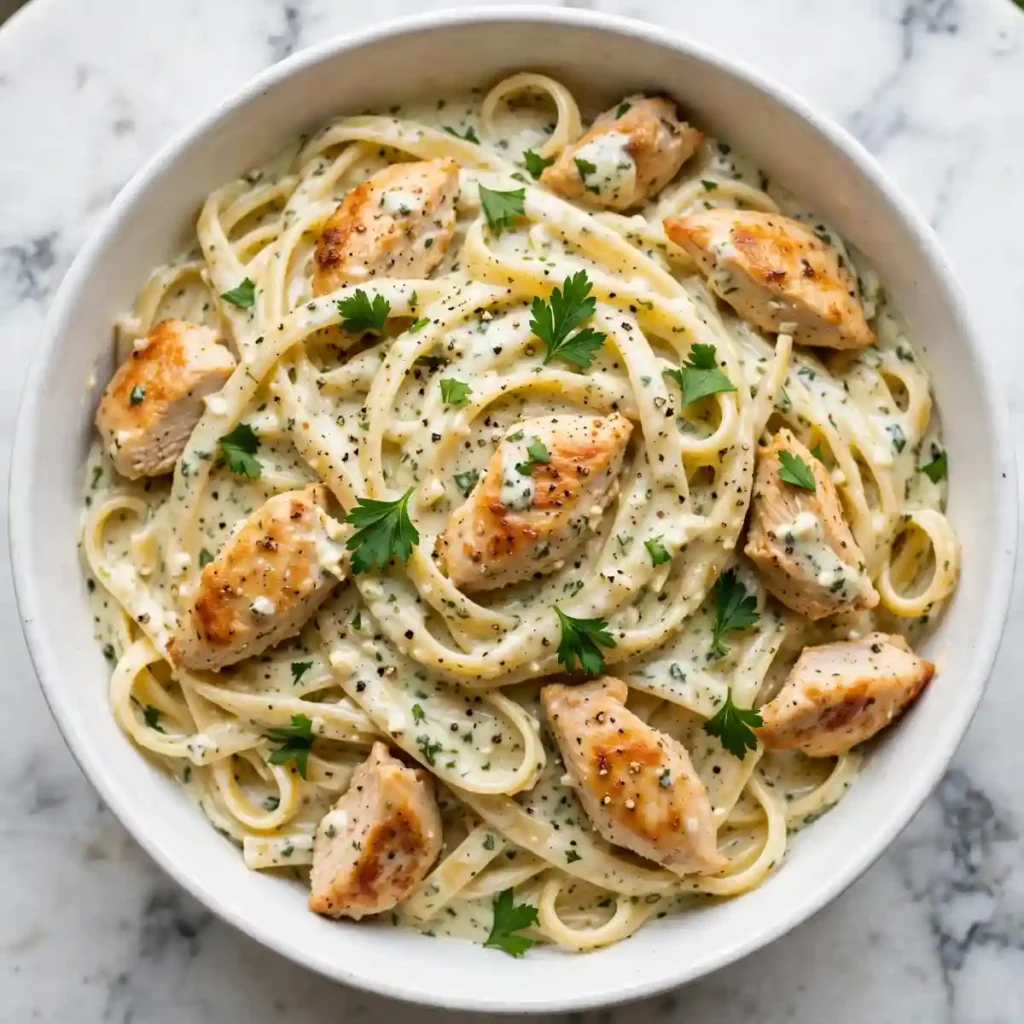
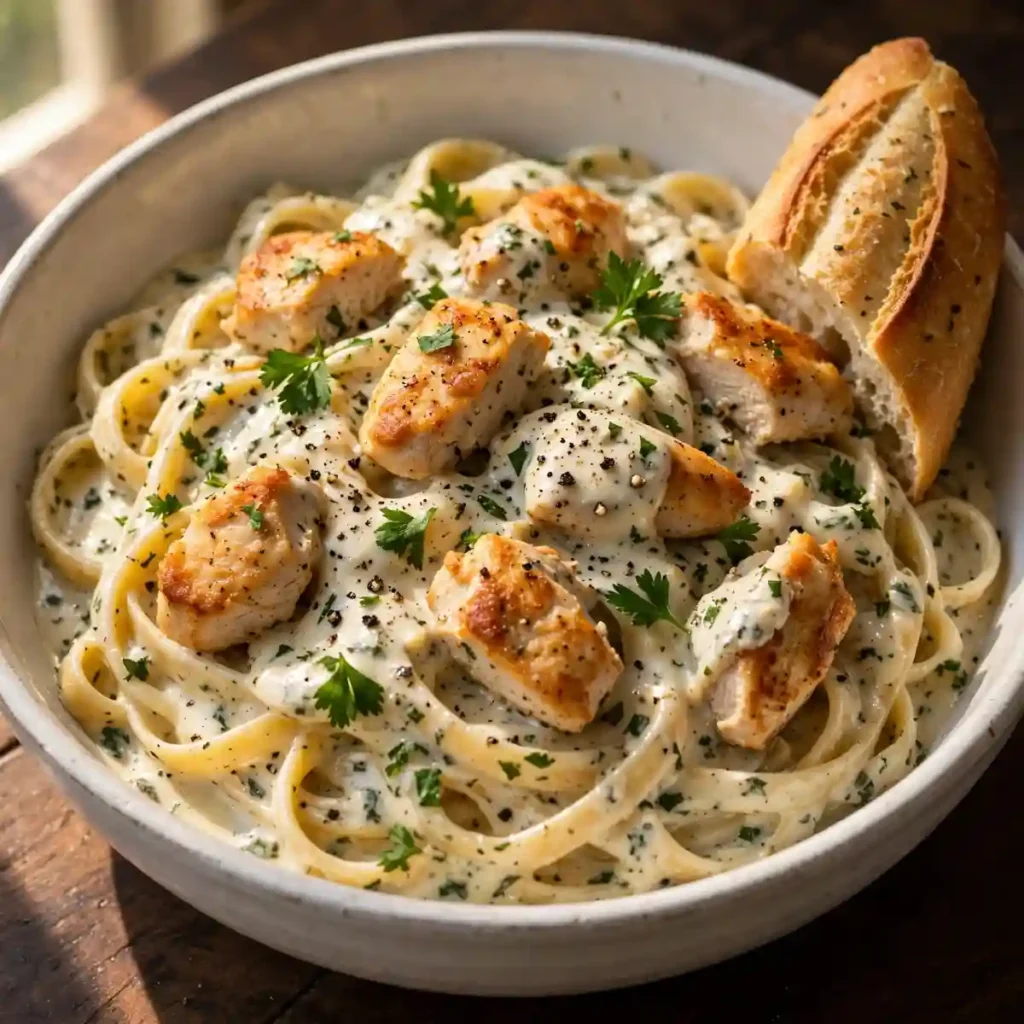
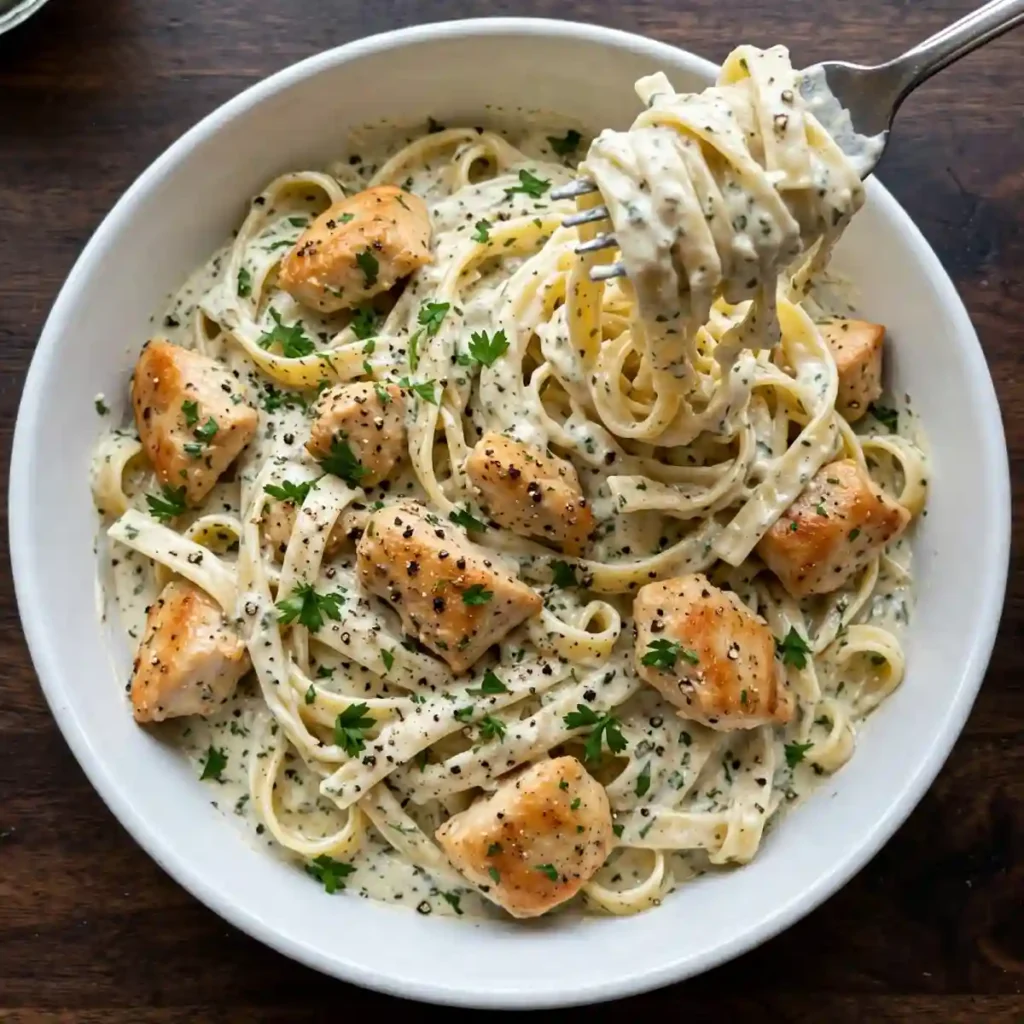
Nestle the seared chicken pieces back into the pasta, pressing them gently into the noodles so they warm from the surrounding sauce rather than cooking further over direct heat. Toss once or twice to distribute the chicken through the pasta. Remove from the heat. Scatter the chopped fresh parsley or chives generously across the top. Plate immediately, spooning any extra sauce from the base of the pan over each portion. Offer freshly grated Parmesan at the table for anyone who wants an additional layer of sharp, salty depth.
Common Mistakes and Troubleshooting
| Problem | Cause | Solution |
|---|---|---|
| Sauce is grainy or curdled | Cream was at too high a temperature; low-fat cream used | Keep heat at a gentle simmer throughout; use full-fat heavy cream (35%) only |
| Boursin won’t melt smoothly | Added to sauce that is too cold; not broken into pieces | Ensure the cream is gently simmering before adding Boursin; break it into smaller pieces and stir continuously |
| Sauce too thick after pasta is added | Pasta absorbed more sauce than expected; reduced too much before pasta | Add reserved pasta water 2 to 3 tablespoons at a time and toss; have the pasta water on standby always |
| Chicken dry and tough | Overcooked; cut pieces too small before searing | Cut to 3cm and use an instant-read thermometer; pull at exactly 74°C |
| Sauce lacks depth despite correct ingredients | Fond not properly developed; chicken was wet before searing | Pat chicken dry thoroughly before seasoning; sear undisturbed for the full 3 to 4 minutes to build proper fond |
| Dish tastes too salty | Full-fat Boursin is already heavily salted; additional salt added before tasting | Always taste the sauce after the Boursin has melted before adding any salt; the cheese usually provides enough |
Variations and Substitutions
Boursin Chicken Pasta With Spinach: Add 2 large handfuls of fresh baby spinach to the sauce in the final 60 seconds of the pasta toss, folding it through until wilted and bright green. The spinach adds color, iron, and a mild green freshness that cuts through the richness of the cream without changing the flavor direction of the dish. This is the simplest and most popular variation.
Boursin Chicken Pasta With Sun-Dried Tomatoes: Add 3 tablespoons of drained, oil-packed sun-dried tomatoes (roughly chopped) alongside the shallots in Step 3. Their concentrated, slightly sweet, slightly tangy flavor pairs beautifully with the garlic herb cream sauce and adds a visual pop of deep red against the ivory cream.
Boursin Chicken Pasta With Mushrooms: Add 250g of sliced cremini mushrooms to the skillet after removing the seared chicken. Cook over medium-high heat for 4 to 5 minutes until golden and reduced in volume, then proceed with the shallots. The mushrooms add an earthy depth to the cream sauce and make the dish substantially more filling.
Spicy Boursin Chicken Pasta: Stir 1 teaspoon of red chilli flakes into the sauce alongside the garlic in Step 3, before the broth goes in. The heat builds gently through the cream and is balanced by the richness of the Boursin, producing a noticeably warming finish that works particularly well in colder months.
Boursin Chicken Pasta With Lemon: Add 1 tablespoon of fresh lemon juice and 1/2 teaspoon of lemon zest to the finished sauce just before the pasta goes in. The lemon introduces a brightness and slight acidity that cuts through the cream’s richness and makes the dish feel lighter and more vibrant, especially in spring and summer.
Boursin Pasta Without Chicken (Vegetarian): Omit the chicken entirely. Instead, roast 400g of cherry tomatoes at 200°C (400°F) for 20 minutes until blistered and jammy. Add them to the finished cream sauce alongside the pasta in the final toss. The tomatoes provide sweetness, acidity, and substance that makes the vegetarian version feel complete rather than reduced.
Serving Suggestions
- As a standalone dinner in wide shallow bowls. Boursin chicken pasta is rich enough to be entirely self-contained. A wide, shallow bowl lets the cream sauce pool around the base of the noodles so it stays accessible throughout the meal rather than being absorbed entirely by the pasta.
- With garlic bread for sauce mopping. The cream sauce in this dish is worth pursuing to the last drop. A thick slice of garlic bread or a warm baguette at the table handles the sauce that the pasta doesn’t capture.
- With a crisp green salad alongside. An arugula or baby gem salad dressed with lemon juice, olive oil, and a pinch of salt provides a sharp, peppery counterpoint to the richness of the cream that refreshes the palate between bites. This pairing makes the meal feel balanced rather than indulgent.
- With roasted asparagus or tenderstem broccoli. A simply roasted green vegetable on the same plate as the pasta adds color, texture, and a slightly bitter note that works well against the cream’s sweetness. Roast at 200°C for 10 to 12 minutes with olive oil and salt.
- For a date night or dinner party main. Plated with the noodles twirled high in the bowl, chicken pieces arranged on top, extra sauce spooned over, and fresh herbs scattered across, this pasta looks considerably more composed and effortful than 35 minutes of cooking warrants. It is a genuinely reliable dinner party dish.
- With extra cracked black pepper at the table. A fresh grind of black pepper over each bowl enhances the dish’s existing pepper character from the Boursin and adds an aromatic sharpness that makes each forkful taste slightly more alive than without it.
Tips for the Best Results
- Dry the chicken thoroughly before seasoning. Surface moisture on the chicken prevents the Maillard browning that creates the fond, the flavor foundation of the sauce. Two minutes of paper towel pressing before seasoning produces a noticeably more golden, more flavorful crust and a richer sauce than searing wet chicken does.
- Keep the cream sauce at a gentle simmer throughout. Heavy cream held at a full rolling boil for more than 2 to 3 minutes can separate into fat and liquid, producing a greasy, slightly grainy sauce that won’t coat the pasta properly. Medium heat with small, steady bubbles at the surface is the right level to maintain from the moment the cream goes in until the pasta is done.
- Taste the sauce before salting. Boursin is seasoned generously with salt as one of its primary flavor components. The finished sauce often needs no additional salt whatsoever, particularly if the pasta water was well-salted and the chicken was seasoned before searing. Taste after the cheese melts and add salt only if the sauce genuinely tastes flat.
- Have the pasta water on the counter, not poured out. Pasta water is the most useful last-minute adjustment tool in this recipe. The sauce thickens as it sits and as the pasta absorbs it. Having the reserved pasta water accessible means you can loosen the sauce in seconds if it tightens too much, rather than adding plain water that dilutes the flavor.
- Serve the moment it comes together. Cream pasta thickens significantly as it sits and cools. Five minutes in the pan after the pasta is finished produces a noticeably thicker, drier result than the same dish served immediately. Have your bowls warm (rinsed with hot water and dried) and serve directly from the pan to the table.
Storage Tips
Refrigerator
Transfer cooled Boursin chicken pasta to an airtight container and refrigerate for up to 3 days. The cream sauce thickens considerably when cold, and the pasta absorbs more of it overnight, so the refrigerated version will look drier and more clumped than the original. Both are normal and reverse well with reheating. The flavor actually improves slightly overnight as the garlic herb seasoning from the Boursin absorbs deeper into the pasta and chicken.
Freezer
The cream sauce in this recipe does not freeze well. Heavy cream-based sauces separate when frozen and thawed, producing a grainy, broken texture that cannot be fully corrected by reheating. If you want to prepare components ahead for freezing, the seared chicken pieces freeze well on their own for up to 2 months in a sealed bag. Make a fresh sauce from new Boursin and cream when ready to serve, adding the thawed, reheated chicken at the end.
Reheating
From the fridge: add the pasta to a skillet over medium-low heat with 3 to 4 tablespoons of whole milk, cream, or chicken broth. Stir gently and heat for 3 to 4 minutes until the sauce loosens and the pasta steams throughout. The addition of liquid restores the sauce’s original flowing consistency. The microwave at 50% power in 90-second intervals with a splash of milk or cream added before heating also works, though the stovetop method produces a smoother, more uniform reheated sauce. Avoid high microwave power: it separates the cream.
Nutrition Information
Per serving (approximately 1/4 of the full recipe)
| Nutrient | Amount |
|---|---|
| Calories | 720 kcal |
| Protein | 42g |
| Carbohydrates | 58g |
| Fiber | 2.5g |
| Sugar | 4g |
| Total Fat | 35g |
| Saturated Fat | 19g |
| Cholesterol | 185mg |
| Sodium | 680mg |
| Vitamin C | 4mg |
| Calcium | 110mg |
| Iron | 2.5mg |
| Potassium | 490mg |
Nutrition values are approximate and may vary based on brands, Boursin variety, and portion sizes.
Why This Recipe Works
Boursin’s composition makes it an unusually effective sauce base compared to other cream cheeses and soft cheeses. Standard cream cheese has a relatively firm, dense structure even at room temperature because of its higher casein protein content and lower moisture level. When added to hot liquid, it requires significant mechanical work (whisking, blending) to fully disperse without leaving lumps. Boursin, by contrast, is a fresh soft cheese with a considerably higher moisture content and a looser, more spreadable structure at room temperature. Its fat globules are smaller and more uniformly distributed than those in cream cheese, which means it disperses almost instantly in gently simmering cream without any vigorous whisking. The garlic and herbs are already fully integrated through the cheese, so they distribute evenly through the sauce in the same motion.
Building the sauce in the pan used to sear the chicken, rather than starting with a clean pan, is the step that separates this dish from a Boursin cream sauce made independently and poured over pasta. The fond on the pan bottom after searing 700g of well-seasoned chicken thighs contains Maillard-browned amino acids, caramelized sugars from the natural chicken juices, and concentrated protein fragments, all of which carry savory, complex flavor compounds that dissolve instantly when the broth hits them. These compounds are the reason a 90-second deglaze step produces a sauce base that tastes like it has been simmering for 20 minutes.
The two-stage pasta technique (cooking to underdone in salted water, then finishing in the sauce) is a starch-management approach that produces two distinct improvements over adding fully cooked pasta to a finished sauce. First, the pasta arrives at the sauce stage with its starch slightly under-gelatinized at the center, which means it has more capacity to absorb the sauce liquid as it finishes: the noodles genuinely take on the garlic herb flavor rather than simply being coated by it. Second, the residual surface starch on the drained pasta disperses into the sauce during the final toss, slightly thickening it and improving its ability to coat the noodles in a continuous, clingy layer rather than a thin film that runs off.
Chicken thighs stay juicy through the searing and sauce stages because of their intramuscular fat content, which is approximately 3 to 4 times higher than that of chicken breasts by weight. When muscle tissue cooks, water migrates out of the protein fibers through a process called protein denaturation and contraction. In lean breast meat, this water loss is rapid and cannot be compensated by the small amount of intramuscular fat, which is why breasts become dry quickly past 74°C. In thigh meat, the intramuscular fat melts as the muscle heats, basting the fibers from within and partially compensating for the water loss. The result is a piece of chicken that remains noticeably moist and tender at 74°C rather than beginning to tighten and dry.
The reserved pasta water adjustment step serves a practical calibration function that plain water cannot replicate. As the pasta finishes cooking in the cream sauce, it absorbs both liquid and starch from the sauce simultaneously, which thickens the remaining sauce while reducing its volume. The speed and extent of this thickening depend on the specific pasta shape, the pasta’s surface area, and how underdone it was when added. Having pasta water on standby allows you to respond to whatever the sauce does in real time: a splash of starchy pasta water loosens a sauce that has tightened more than expected without diluting the garlic herb flavor that the Boursin and fond built.
I’ve tested this recipe with both chicken breasts and thighs in the same sauce preparation. The thigh version remained consistently juicy and flavorful after the full sauce stage; the breast version was noticeably drier and more compact in texture by the time it was served, particularly near the edges of the larger pieces. For this recipe, thighs are the clearly superior choice for anyone who wants consistently moist chicken in every bowl.
Frequently Asked Questions
Can I make Boursin chicken pasta ahead of time?
Boursin chicken pasta is best made and served immediately because cream sauces thicken significantly as they cool and the pasta continues absorbing liquid in the fridge. For advance preparation, sear the chicken pieces up to 24 hours ahead and refrigerate in an airtight container. The day of serving, make a fresh sauce from new Boursin and cream, add the warmed or room-temperature pre-seared chicken, and toss with freshly cooked pasta. This approach produces a result nearly identical to the fully fresh version.
Why is my Boursin sauce grainy?
A grainy or slightly separated sauce is almost always caused by one of two things: the cream was held at too high a heat (boiling rather than simmering), or a lower-fat cream was used. Heavy cream at 35% fat is stable enough to simmer for several minutes without separating. Cream at 18% to 25% fat separates much more readily at simmering temperatures. If your sauce has already grazed, reduce the heat immediately and add a small splash of full-fat cream or pasta water while stirring gently: this sometimes restores the emulsion if the separation is mild.
Can I use a different Boursin flavor?
Yes. The Shallot and Chive variety and the Pepper variety both work in this application. The Shallot and Chive version produces a milder, slightly sweeter sauce; the Pepper version adds a more assertive heat that suits spicier palates. The Garlic and Fine Herbs variety is the most widely available and the closest match to the flavor profile this recipe is built around, so start there if it’s your first time.
How do I know when the pasta is done in the sauce?
Pasta finishing in the sauce is done when it feels fully tender throughout with no hard or starchy center when bitten, the noodles are coated in a clingy cream sauce rather than sitting in a pool of loose liquid, and the sauce has thickened slightly from the starch the pasta has released. This takes 1 to 2 minutes in a gently simmering sauce for pasta that was pulled 2 minutes underdone from the boiling water. If the pasta is still slightly firm at 2 minutes, add a splash of pasta water to loosen and toss for another 60 seconds.
Is Boursin chicken pasta gluten-free?
As written with standard wheat pasta, no. To make it gluten-free, substitute certified gluten-free pasta (rice-based fettuccine or linguine) and ensure the chicken broth is also gluten-free. All other ingredients in the recipe, including the Boursin cheese, butter, cream, shallots, garlic, and herbs, are naturally gluten-free. The finished dish with these substitutions is fully gluten-free.
Can I substitute the heavy cream with something lighter?
Half-and-half (10 to 12% fat) can be used in place of heavy cream in a pinch, but the sauce will be noticeably thinner and more prone to separating when the acidic Boursin goes in. If you use it, keep the heat very low after the Boursin is added and stir continuously to minimize separation. Full-fat coconut cream is a dairy-free alternative that produces a rich, slightly sweet sauce with a mild coconut undertone: it works well with the spicy or sun-dried tomato variations. Avoid single cream, skimmed milk, or any dairy under 20% fat.
What pasta shape works best for Boursin chicken pasta?
Long, flat pasta shapes (fettuccine, linguine, tagliatelle) are the best match because their wide, flat surface area makes full contact with the cream sauce on both sides during tossing, producing an evenly coated noodle. Penne and rigatoni also work well because the sauce gets inside the tubes. Avoid very thin pasta (angel hair, vermicelli): it cooks through almost instantly in the sauce stage and can become mushy before the chicken has warmed. Avoid very thick pasta (pappardelle): it needs longer in the sauce to finish cooking and can over-reduce the cream before the pasta is done.
Conclusion
Boursin chicken pasta succeeds because it removes every complication from cream sauce making and replaces them with one ingredient that does all the work: a soft round of garlic herb cheese that dissolves into simmering cream in 60 seconds and produces a sauce that is perfectly seasoned, deeply savory, and silky without any additional technique. The seared chicken fond, the two-stage pasta method, and the pasta water on standby are the three supporting decisions that take the dish from good to genuinely memorable. Make this recipe on a weeknight and it feels effortless. Serve it at a dinner table and it looks like you spent considerably more time than 35 minutes. That gap between effort and result is what makes Boursin chicken pasta worth returning to.
If you loved this recipe, save it to your creamy pasta recipes Pinterest board so you can find it easily later. For more recipes and daily food inspiration, follow TheCookingVibes on Pinterest.
Creamy Boursin Chicken Pasta
Ingredients
Equipment
Method
- Boil pasta in well-salted water for 2 minutes less than the package’s al dente time. Reserve 1 cup of pasta water before draining. Drain and toss with a drizzle of oil to prevent sticking.
- Pat chicken dry and season with salt, pepper, garlic powder, and smoked paprika. Heat butter and olive oil in a large skillet over medium-high until butter foam subsides. Sear chicken in a single layer, undisturbed, for 3 to 4 minutes until golden, then stir and cook 2 more minutes until internal temperature reaches 74°C (165°F). Remove to a plate.
- Reduce heat to medium. Add sauce butter, then diced shallots. Cook 2 to 3 minutes until soft. Add garlic and stir 60 seconds until fragrant and very pale golden.
- Pour in chicken broth, scraping all fond from the pan. Add thyme and pepper. Simmer 90 seconds until reduced by one-third. Add heavy cream and bring to a gentle simmer.
- Add Boursin pieces to the simmering cream. Stir continuously for 60 to 90 seconds until fully melted and smooth. Taste and adjust salt only if needed.
- Add drained pasta to the sauce. Toss with tongs over medium heat for 1 to 2 minutes until coated and pasta finishes cooking. Add reserved pasta water 2 to 3 tablespoons at a time if the sauce tightens.
- Return chicken to the pan and toss gently to distribute. Remove from heat. Garnish with fresh herbs and serve immediately.
Notes
- Pat chicken completely dry before searing: surface moisture prevents the golden fond that flavors the sauce.
- Always taste the sauce after the Boursin melts before adding salt: the cheese is already well-seasoned.
- Keep cream at a gentle simmer, not a boil, throughout the sauce stage to prevent separation.
- Serve immediately: cream pasta thickens noticeably as it sits.
- Allergens: Contains dairy (butter, heavy cream, Boursin cheese, optional Parmesan) and gluten (pasta). Free from eggs, nuts, and soy as written. Use certified gluten-free pasta and broth for a gluten-free version.
- Not guaranteed safe for any specific allergy without checking all individual ingredient labels.
- Nutrition values are approximate and may vary based on brands and portion sizes.