

Homemade Alfredo Sauce — Silky, Rich, Ready in 20 Minutes
The difference between a homemade Alfredo sauce and a jarred one is immediately obvious the first time you make it properly. A good Alfredo coats every strand of pasta in a smooth, glossy layer that doesn’t separate or pool at the bottom of the bowl. It tastes of real butter, real cream, and real Parmesan, all three in a balance that feels genuinely rich without being heavy. That result takes about 20 minutes and a handful of ingredients, none of which require a specialty store to find.
This Alfredo sauce recipe builds the sauce by melting butter, warming heavy cream, and incorporating freshly grated Parmesan off the direct heat so the cheese emulsifies cleanly into the sauce rather than clumping. A small amount of pasta cooking water added at the end binds everything together and creates the silky, clingy consistency that makes Alfredo worth making from scratch. It pairs with fettuccine in the classic format, but works equally well over any pasta shape, on baked chicken, or spooned over roasted vegetables.

Why You’ll Love This Alfredo Sauce
- Three core ingredients, one technique. Butter, heavy cream, and real Parmesan are all this sauce needs. The technique of adding the cheese off the heat is what separates a smooth, glossy result from a grainy, broken one.
- Ready in 20 minutes. The sauce cooks faster than a pot of pasta water comes to a boil. You can time them together and have everything on the table within 25 minutes of starting.
- No flour, no thickener. Alfredo sauce gets its body from the fat in the cream and the protein in the Parmesan. No cornstarch, no roux, no shortcuts that muddy the flavor.
- Better than any jarred version. Jarred Alfredo contains stabilizers and additives that prevent separation on a store shelf. Homemade uses none of those, which means the flavor is cleaner and more direct.
- Endlessly adaptable. The base sauce takes additions naturally: garlic, lemon, spinach, mushrooms, shredded chicken. Every variation starts from the same 20-minute foundation.

Ingredients You’ll Need
Recipe Timing
| Detail | Info |
|---|---|
| Servings | 4 (as a pasta sauce) |
| Difficulty | Easy |
| Course | Main Course, Sauce |
| Cuisine | Italian-American |
| Prep Time | 5 minutes |
| Cook Time | 15 minutes |
| Rest Time | 0 minutes |
| Total Time | 20 minutes |
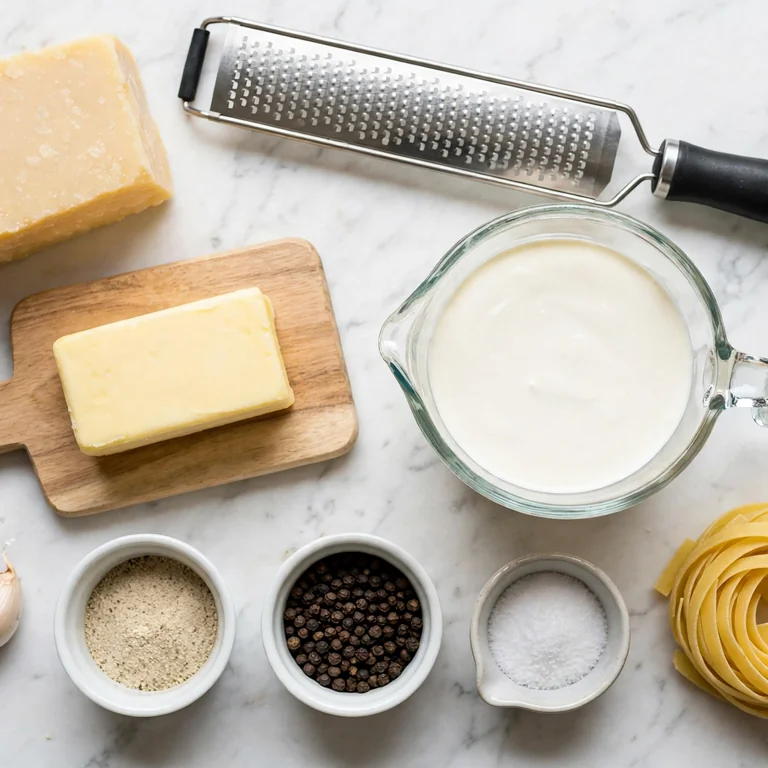
For the Parmesan, buy a block and grate it yourself immediately before making the sauce. Pre-grated Parmesan from a canister or a bag contains cellulose and anti-caking agents that prevent the cheese from melting cleanly into cream. Those particles remain suspended in the sauce as tiny white specks that never fully dissolve, and the texture of the finished sauce is noticeably grainier than one made with freshly grated cheese. A microplane or the fine side of a box grater produces the finest shreds, which melt most quickly and evenly.
For the cream, heavy whipping cream with a minimum fat content of 35% is the correct choice. Lower-fat creams, including half-and-half or single cream, don’t contain enough fat to maintain a stable emulsion with the melting butter and cheese. They tend to look thin and slightly watery in the finished sauce rather than coating the pasta with the velvety consistency that defines a good Alfredo.
For the butter, unsalted gives you full control over the final seasoning. Salted butter varies by brand in sodium content and can make the sauce taste over-salted once the Parmesan, which is naturally quite salty, is added. Use unsalted and season at the end.
- 4 tablespoons (60g) unsalted butter — the fat base of the sauce; provides richness and the first layer of flavor; use real butter, not a spread
- 1 cup (240ml) heavy whipping cream, minimum 35% fat — the liquid body of the sauce; don’t substitute with lighter cream as it won’t emulsify properly
- 2 large garlic cloves, minced — optional but strongly recommended; adds a savory, aromatic background note that the classic Roman version omits but the Italian-American version almost always includes
- 1 1/2 cups (about 150g) Parmesan cheese, freshly grated on a microplane — the primary flavor and secondary thickener; freshly grated is non-negotiable for a smooth sauce
- 1/2 teaspoon fine salt, plus more to taste — season after adding Parmesan since the cheese itself adds considerable sodium
- 1/4 teaspoon freshly ground white pepper — white pepper is traditional in cream sauces because it adds warmth without the visible black flecks; black pepper works just as well if that’s what you have
- 1/4 teaspoon freshly ground black pepper — for finishing; adds visual contrast and a sharp top note over the creamy sauce
- 1/4 cup (60ml) pasta cooking water, reserved — the starchy water from boiling the pasta; essential for thinning and binding the sauce to the pasta; reserve it before you drain
- 450g (1 lb) fettuccine or pasta of choice — cooked al dente and tossed directly into the sauce; the pasta finishes cooking in the sauce for the final 60 seconds
Allergen and Dietary Disclosure
This Alfredo sauce contains dairy (butter, heavy cream, Parmesan cheese). It does not contain gluten in the sauce itself, though fettuccine and most pasta served with it contains gluten. Parmesan is an aged cheese with very low lactose content, but the cream and butter contain significant dairy fat and some lactose.
For gluten-free: the sauce itself is naturally gluten-free. Pair it with certified gluten-free pasta, zucchini noodles, or spaghetti squash. Check that your Parmesan block is processed without shared equipment if cross-contamination is a strict concern.
For dairy-free: a full dairy-free Alfredo requires substituting all three dairy components. Use vegan butter, full-fat unsweetened coconut cream for the heavy cream, and a dairy-free Parmesan alternative or nutritional yeast for the cheese. The flavor profile shifts considerably, but the technique remains the same. The sauce will be slightly thinner and may need an extra minute of simmering to reach a coating consistency.
For lower calorie: replace up to half the heavy cream with whole milk. The sauce will be thinner and may not emulsify as cleanly; stir in a small extra amount of Parmesan to help bind it. It won’t have the same richness, but the flavor is still pleasant over pasta.
This recipe has not been tested in a certified allergen-free kitchen and cannot be guaranteed safe for any specific allergy.
Equipment Needed
- Wide, heavy-bottomed skillet or sauté pan, 12-inch — the width matters more than the depth for Alfredo sauce. A wide pan allows the cream to reduce faster and more evenly across the surface, and it gives you room to toss the pasta through the sauce without spilling. A narrow saucepan concentrates the heat at the bottom and makes the sauce more prone to scorching.
- Microplane or fine-sided box grater — for grating the Parmesan directly into fine, thread-like shreds. The finer the shreds, the faster and more completely they melt into the warm cream. Coarsely grated Parmesan takes much longer to incorporate and leaves visible unmelted pieces in the sauce.
- Pasta pot with lid, large enough for 450g of pasta — cook the pasta in a generous amount of salted water. Crowded pasta sticks together and cooks unevenly; you need at least 4 litres of water for this quantity of fettuccine.
- Ladle or heatproof measuring cup — for scooping out the pasta water before draining. This is easy to forget in the moment; keep the ladle or cup right next to the pot as a physical reminder to take the water before draining the pasta.
- Tongs or pasta forks — for tossing the pasta through the Alfredo sauce directly in the pan. Tongs let you pick up and fold the pasta repeatedly, coating each strand evenly without breaking the sauce.
Step-by-Step Directions
Step 1: Start the Pasta Water
Fill your largest pot with at least 4 litres of cold water and bring it to a full rolling boil over high heat. Once boiling, add 1 tablespoon of fine salt. The water should taste noticeably salty, not overwhelming, but salted enough that you can taste it. This is the only opportunity to season the pasta itself, and under-salted pasta water produces a finished dish where the sauce does all the flavoring work and the pasta tastes hollow underneath it.

Chef’s Note: Starting the water before beginning the sauce is the correct sequence for timing. A wide pan of Alfredo sauce reaches a finished state in about 15 minutes, which aligns nearly perfectly with the time it takes heavily salted water to reach a boil and cook fettuccine to al dente. Both should finish at approximately the same moment.
Step 2: Melt the Butter and Soften the Garlic
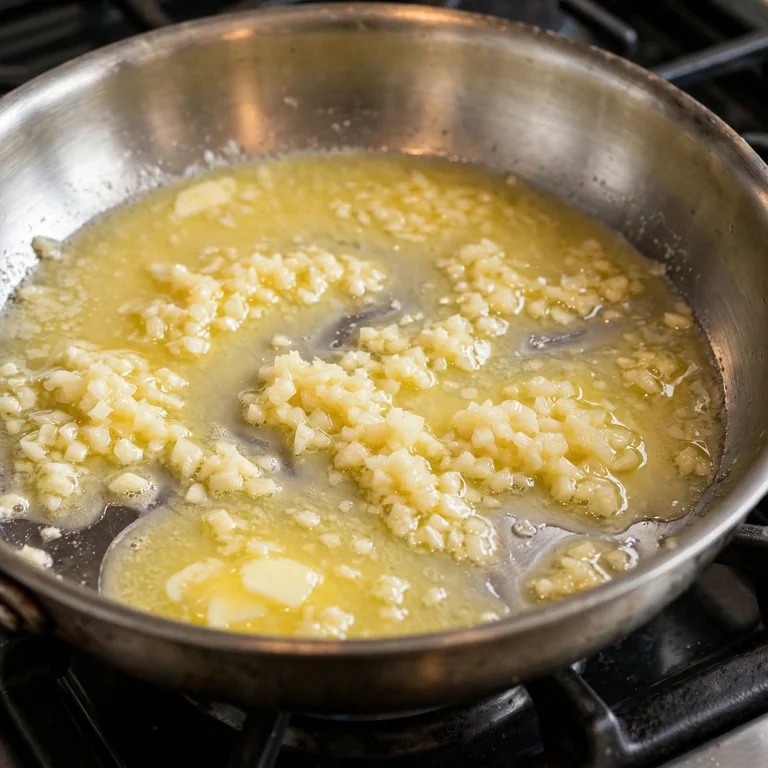
Place the wide skillet over medium-low heat. Add the butter and let it melt slowly, swirling the pan once or twice so it coats the bottom evenly. When the butter is fully melted and beginning to look slightly clear at the edges without browning, add the minced garlic. Stir the garlic continuously for 60 to 90 seconds until it smells fragrant and warm but hasn’t taken on any color. The garlic should soften without browning; browned garlic in Alfredo sauce introduces a bitter note that competes with the clean cream and cheese flavor.
Chef’s Note: Medium-low heat is deliberate here. High heat causes butter to separate and the milk solids to brown prematurely, which changes both the color and the flavor of the finished sauce. Alfredo sauce should look pale ivory throughout; butter that browns early pushes the color toward yellow-gold and introduces a nuttiness that belongs in a different kind of sauce entirely.
Step 3: Add the Cream and Simmer
Pour the heavy cream directly into the pan with the garlic butter in a slow, steady stream while stirring. The cream will immediately pick up the butter and garlic flavor as it warms. Increase the heat to medium and let the cream come to a gentle simmer, with small consistent bubbles breaking at the edges of the pan but not a hard boil across the surface. Cook at this simmer for 4 to 5 minutes, stirring every 30 seconds, until the cream thickens slightly and coats the back of a spoon in a light, even layer that holds when you run your finger across it.
Step 4: Cook the Pasta
Add the fettuccine to the boiling salted water and cook for 1 minute less than the package’s al dente instruction. If the package says 10 minutes for al dente, cook for 9 minutes. The pasta finishes cooking in the Alfredo sauce for the final minute, which causes it to absorb a thin layer of sauce right to its core rather than just having sauce on the exterior. Before draining, scoop out at least 1/2 cup of the cloudy, starchy pasta cooking water and set it aside in a heatproof cup.
Step 5: Remove the Pan From Heat and Add the Parmesan
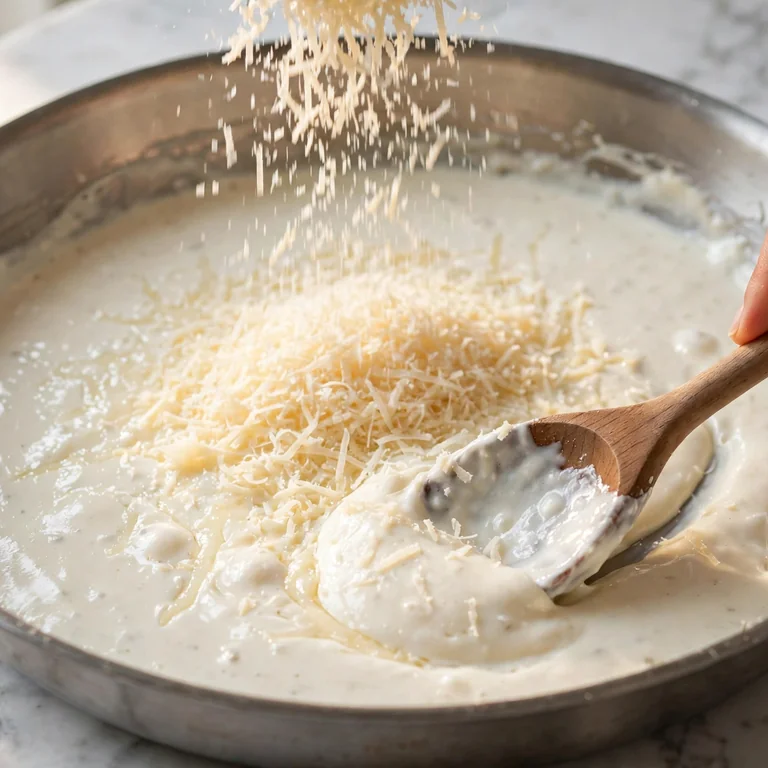
Take the skillet completely off the burner. Wait 30 seconds for the cream to stop actively simmering, then add the freshly grated Parmesan in three separate handfuls. Stir after each addition, using slow circular motions, until each batch is fully melted into the cream before adding the next. Adding all the cheese at once into very hot cream causes the proteins to tighten quickly and produces grainy lumps. Off the heat and in batches, the cheese melts smoothly into glossy, even threads that bind the sauce together without any visible clumping.
Chef’s Note: The temperature of the cream when the Parmesan goes in is the most important variable in the entire recipe. Above a steady simmer, Parmesan proteins break and seize. Below it, off the direct heat, those same proteins soften gradually and emulsify into the fat rather than clumping against it. This is why every reliable Alfredo sauce recipe specifies adding cheese off or away from direct heat.
Step 6: Adjust Consistency With Pasta Water
Once all the Parmesan is incorporated and the sauce looks glossy and smooth, return the pan to very low heat. Add the reserved pasta cooking water, starting with 2 tablespoons and stirring it through. The starch in the pasta water bonds with the fat in the sauce and produces a consistency that clings to pasta in a way that plain thinned cream doesn’t. Add more water a tablespoon at a time if the sauce looks thicker than a heavy coating consistency; the right texture should pour slowly from a spoon rather than drop in thick clumps. Season with fine salt, white pepper, and black pepper, tasting as you go.
Step 7: Toss the Pasta in the Sauce
Drain the pasta quickly, then add it directly to the skillet with the Alfredo sauce. Use tongs to lift and fold the pasta through the sauce for 60 to 90 seconds over very low heat. The pasta will absorb a thin film of sauce through this tossing process and the sauce will cling to each strand rather than pooling at the bottom. If the sauce tightens as the pasta goes in, add another splash of pasta water and continue tossing. Serve immediately; Alfredo sauce thickens quickly as it cools, and a bowl that sat for 5 minutes will look noticeably denser than one that went straight from the pan to the table.
Common Mistakes and Troubleshooting
| Problem | Cause | Solution |
|---|---|---|
| Sauce is grainy with white specks | Pre-grated cheese used, or cheese added to hot simmering cream | Always grate Parmesan fresh; remove pan from heat before adding cheese |
| Sauce too thick and gluey | Cream reduced too long, or not enough pasta water added | Stir in pasta cooking water one tablespoon at a time until the sauce flows smoothly |
| Sauce too thin and watery | Low-fat cream used, or cream not simmered long enough | Use minimum 35% fat heavy cream; simmer for 4 to 5 minutes before adding Parmesan |
| Sauce separated and looks oily | Heat too high when cheese was added, or cream boiled hard | Keep heat at medium-low throughout; always add cheese with the pan off the heat |
| Pasta swimming in sauce rather than coated | Pasta not tossed through the sauce, or too much liquid added | Toss pasta actively for 60 to 90 seconds in the pan; add pasta water gradually |
| Sauce tastes bland despite seasoning | Pasta water was unsalted, or not enough Parmesan used | Salt pasta water generously; use the full 1.5 cups of freshly grated Parmesan |
Variations and Substitutions
- Garlic Alfredo: Double the garlic to 4 cloves and let it cook for a full 2 minutes before adding the cream. The garlic flavor becomes more pronounced and slightly deeper in character. Finish with an extra small pinch of garlic powder stirred into the sauce at the end for a layered garlic note.
- Lemon Alfredo: Add the zest of one lemon and 1 tablespoon of fresh lemon juice to the finished sauce just before tossing the pasta. The citrus cuts through the richness and brightens the flavor considerably. This version works particularly well served with grilled chicken or over angel hair pasta.
- Spinach and mushroom Alfredo: Sauté 200g of sliced mushrooms in a separate pan with 1 tablespoon of butter over medium-high heat until deeply golden, about 6 to 7 minutes. Add 2 large handfuls of fresh baby spinach for the final 60 seconds until wilted. Stir both into the finished Alfredo sauce along with the pasta.
- Lighter cream substitute: Replace up to half the heavy cream with whole milk. The sauce will be thinner and somewhat less rich, but still flavorful. Add an extra 2 to 3 tablespoons of Parmesan to help maintain the binding consistency that the missing fat would otherwise provide.
- Shredded chicken Alfredo: Add 2 cups of shredded cooked chicken thighs to the pan when the pasta goes in and toss everything together over low heat for 60 seconds. The chicken warms through without overcooking and makes the dish a complete one-pan meal. Rotisserie chicken works perfectly here.
- Herb Alfredo: Stir 2 tablespoons of finely chopped fresh basil and 1 tablespoon of fresh thyme leaves into the sauce just before tossing the pasta. The herbs add brightness and a summery character that shifts the sauce away from its classic profile while keeping the same creamy base.
Serving Suggestions
- Serve immediately after tossing, while the sauce is at its most silky and fluid. Alfredo sauce thickens significantly within 5 minutes of being off the heat, and a bowl that sits too long becomes denser and less glossy before it reaches the table.
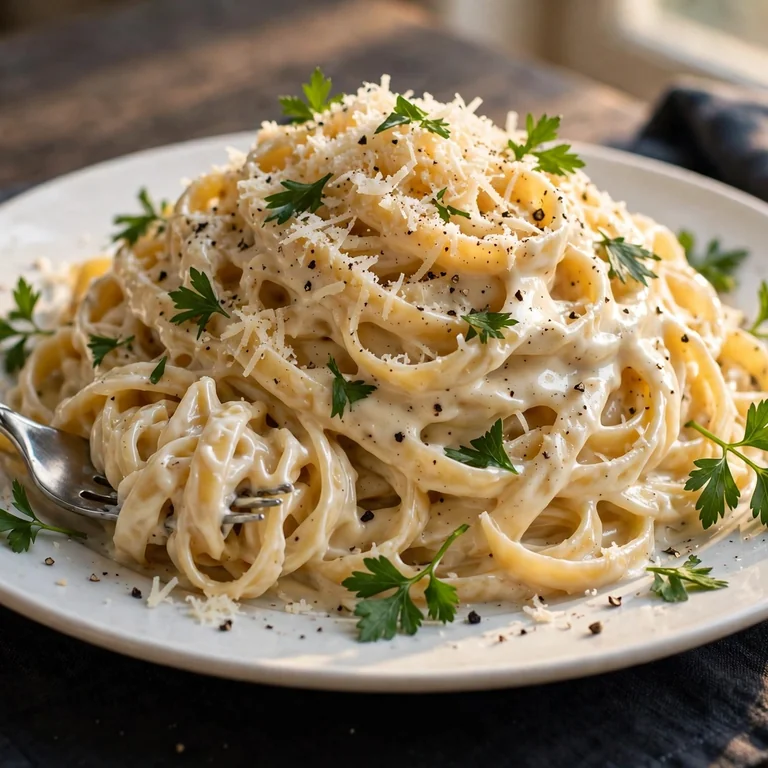
- Top each serving with a light extra grating of fresh Parmesan directly over the pasta, a generous crack of black pepper, and a small scattering of flat-leaf parsley. The Parmesan on top softens slightly from the heat of the pasta and adds a second cheese layer to each bite.
- Serve alongside a crisp green salad dressed with a sharp lemon vinaigrette. The acid in the dressing contrasts directly with the richness of the cream sauce and makes both taste more distinct.
- A warm loaf of crusty garlic bread alongside is the natural pairing for Alfredo pasta. The bread picks up any sauce left in the bowl, which is worth planning for.
- For a complete dinner, pair with grilled chicken thighs seasoned with Italian herbs and lemon. Slice the chicken and lay it directly over the Alfredo pasta for a plate that looks composed and complete without any extra cooking steps.
- Serve as a side dish rather than a main by using a smaller portion alongside a more substantial protein, such as pan-seared salmon or a simple baked chicken breast. The rich sauce works well as a supporting element rather than the centerpiece of the plate.
Tips for the Best Results
- Grate the Parmesan immediately before using it. Parmesan that was grated even an hour earlier starts to dry at the surface and doesn’t melt as cleanly as freshly grated shreds. The moisture content in freshly grated cheese is part of what allows it to emulsify smoothly into warm cream. Grate it directly over the pan or into a small bowl right before the sauce is ready for it.
- Never let the cream reach a hard boil. A rolling boil causes cream to reduce too aggressively, concentrate the fat, and ultimately break the emulsion when the cheese is added. The correct simmer is small, lazy bubbles breaking gently at the edges of the pan while the center stays relatively calm. If the cream starts boiling across the whole surface, lift the pan off the heat for 30 seconds before continuing.
- Reserve more pasta water than you think you need. Scoop out at least 1/2 cup; you may only use 3 to 4 tablespoons of it, but having extra available means you can adjust the sauce consistency precisely rather than adding too much water from the tap, which doesn’t contain the starch that makes pasta water so effective as a sauce binder.
- Toss the pasta in the sauce rather than pouring sauce over plated pasta. Pasta tossed through the sauce in the pan picks up a thin layer of Alfredo all the way through each strand. Pasta plated first with sauce poured on top has sauce only on the exterior. The difference in how evenly the dish tastes is significant enough to make the tossing step worth doing every time.
- Serve in warmed bowls. Cold bowls pull heat from Alfredo sauce very quickly and the sauce thickens at the edges before the first bite. Running hot water through the serving bowls for 30 seconds before plating is a small habit that makes a real difference in how the finished dish presents.
Storage Tips
Refrigerator
Store leftover Alfredo sauce separately from the pasta if possible. The sauce keeps in a sealed container for up to 3 days in the fridge. When stored with pasta, the noodles absorb most of the sauce overnight and the bowl will look much drier than when freshly made. The sauce on its own reheats more evenly and can be tossed with freshly cooked pasta for what tastes like a near-fresh result. If stored together, the pasta can still be reheated; it will just be denser and creamier rather than saucy.
Freezer
Alfredo sauce does not freeze well in its standard form. The cream and cheese emulsion breaks during freezing and thawing, leaving a separated, grainy liquid that doesn’t come back together properly even with vigorous whisking. If you want to plan ahead, make a double batch of the butter and garlic base, freeze that portion only, and add fresh cream and Parmesan when ready to serve. The full cream-and-cheese sauce is best made fresh each time.
Reheating
Reheat leftover Alfredo sauce or pasta gently over the lowest possible heat in a small saucepan or wide skillet. Add 2 to 3 tablespoons of whole milk or heavy cream and stir continuously as it warms. The added dairy helps re-emulsify the sauce, which tightens during refrigeration. Do not microwave Alfredo sauce on high power; the uneven heat causes the edges to overheat and separate while the center is still cold. If microwaving, use 50% power in 30-second intervals and stir between each.
Make-ahead note: The most practical make-ahead approach is to cook the pasta, toss it lightly in olive oil to prevent sticking, and refrigerate it separately from the freshly made sauce. Rewarm the sauce gently and the pasta separately, then toss together just before serving. This produces results that are closer to freshly made than refrigerating the assembled dish.
Nutrition Information
Per serving, sauce only (1/4 of the recipe, without pasta):
| Nutrient | Amount |
|---|---|
| Calories | 420 kcal |
| Protein | 12g |
| Total Carbohydrates | 3g |
| Dietary Fiber | 0g |
| Total Sugar | 2g |
| Total Fat | 40g |
| Saturated Fat | 25g |
| Cholesterol | 120mg |
| Sodium | 480mg |
| Vitamin C | 0mg |
| Calcium | 320mg |
| Iron | 0.4mg |
| Potassium | 95mg |
Nutrition values are approximate and may vary based on brands and portion sizes. Pasta not included.
Why This Recipe Works
Alfredo sauce is, at its core, an emulsion: a suspension of fat droplets from the butter and cream held in a stable, smooth state by the proteins and starches contributed by the Parmesan and pasta water. Understanding what maintains that emulsion, and what breaks it, explains every technique decision in the recipe.
When cream is heated gently and steadily, the fat globules remain evenly distributed in the liquid. When Parmesan is added off the heat, the cheese proteins gradually unfold and bond with the fat molecules in the cream through a process called emulsification, creating a cohesive, glossy sauce. When heat is too high or the cheese is added to aggressively simmering cream, those proteins tighten rapidly rather than unfolding gradually, and they pull the fat out of suspension rather than bonding with it. The result is the grainy, oily sauce that most people experience when they first try to make Alfredo and add the cheese too quickly to too-hot liquid.
Pasta cooking water is not a placeholder ingredient. The starchy water that boils off cooking pasta contains dissolved amylose, a form of starch that acts as a natural emulsifier. When this starchy liquid is stirred into a cream-based sauce, the amylose molecules position themselves between the fat and water phases of the sauce and hold them together more stably. This is why a splash of pasta water makes an Alfredo sauce cling to pasta rather than pooling at the bottom of the bowl. Plain water doesn’t achieve this because it contains no starch; it simply thins the sauce and dilutes the flavor.
Freshly grated Parmesan versus pre-shredded is not an aesthetic preference. Block Parmesan grated immediately before use retains the full moisture content of the cheese’s interior structure. Pre-shredded Parmesan is treated with powdered cellulose to prevent clumping in the bag; that cellulose absorbs liquid rather than melting, and it remains as visible specks in the finished sauce no matter how long you stir. The texture difference between a sauce made with freshly grated cheese and one made with bagged pre-shredded is significant enough to notice on first bite.
The garlic in this recipe, while absent from the original Roman version of the dish, is included here because it addresses a common complaint about Alfredo sauce tasting monotonous after the first few bites. The garlic’s volatile sulfur compounds add a savory background note that keeps the sauce interesting all the way through the bowl without competing with the cream and cheese. Cooked gently in butter before the cream is added, the garlic loses its sharpness and mellows into something that most people can’t identify directly but would notice immediately if it were absent.
I’ve tested this recipe with both single cream (18% fat) and heavy whipping cream (35% fat) at the same quantities. Heavy cream produces a sauce that thickens to a coating consistency in 4 to 5 minutes and holds that consistency through the tossing process. Single cream takes longer to reduce, never quite reaches the same texture, and tends to separate more easily when the Parmesan is added because there isn’t enough fat in the liquid to fully accommodate the cheese proteins. Heavy cream is the only dairy that produces a reliable result without modification.
Frequently Asked Questions
Can I make Alfredo sauce ahead of time?
Alfredo sauce is best made fresh and served immediately, but you can make it up to 24 hours ahead and refrigerate it in a sealed container. It thickens considerably during refrigeration. Reheat over low heat in a small saucepan with 2 to 3 tablespoons of whole milk or heavy cream, stirring steadily until smooth and fluid again. Never reheat at high heat, which breaks the emulsion and leaves the sauce separated. For best results with leftovers, store the sauce separately from any cooked pasta.
Why is my Alfredo sauce grainy?
Graininess in Alfredo sauce almost always comes from one of two causes: pre-grated Parmesan was used, or the cheese was added to cream that was still actively simmering. Pre-grated cheese contains anti-caking agents that don’t melt into cream and remain as gritty particles. Adding cheese to hot simmering cream causes the proteins to seize rather than melt smoothly. Fix it for future batches by grating Parmesan fresh on a microplane and removing the pan from the heat entirely before the cheese goes in.
Can I use milk instead of heavy cream?
Whole milk can replace up to half the heavy cream, but using it as a full substitute produces a sauce that’s significantly thinner and more prone to separation. Milk contains about 3.5% fat compared to 35% in heavy cream; that fat is what gives Alfredo sauce its body and its ability to hold the emulsion with the cheese. If you use whole milk as a partial substitute, increase the Parmesan quantity by 2 to 3 tablespoons to help compensate for the reduced fat content. The sauce will be lighter but still flavorful.
How do I know when the cream has reduced enough?
The cream is ready for the Parmesan when it coats the back of a spoon in a thin, even layer that holds when you draw a finger across the spoon. At this point the volume has reduced by about 20%, the color has deepened slightly to a light ivory, and the texture feels marginally thicker when you stir it. This happens after 4 to 5 minutes at a gentle simmer. Don’t reduce it past this point; over-reduced cream separates when the cheese is added and the sauce becomes very difficult to bring back together.
What pasta works best with Alfredo sauce?
Fettuccine is the traditional choice because its wide, flat surface area holds the cream sauce efficiently and the thickness means it doesn’t overcook in the sauce during the final tossing. Other pasta shapes that work well include linguine, pappardelle, and rigatoni. Rigatoni’s tube shape traps sauce inside as well as outside, which produces a different eating experience that many people enjoy. Avoid very thin pasta like angel hair; it cooks too quickly and turns soft almost immediately in a warm cream sauce.
Is Alfredo sauce gluten-free?
The Alfredo sauce itself contains no gluten in its standard form. Butter, heavy cream, and Parmesan are all naturally gluten-free ingredients. The pasta typically served with it is not gluten-free unless specifically labeled so. To serve a gluten-free Alfredo, pair the sauce with certified gluten-free pasta, zucchini noodles, or spaghetti squash. Also verify that the pasta water you reserve and add to the sauce comes from gluten-free pasta, as starchy gluten pasta water would introduce trace gluten.
Can I add cream cheese to make the sauce thicker?
You can, though it changes the flavor and texture of the sauce. Adding 60 to 90g of softened full-fat cream cheese to the butter and garlic base before the heavy cream creates a noticeably thicker, richer sauce with a slightly tangier finish. Stir it through until completely smooth before adding the cream. This version is more stable and less likely to separate during reheating, which makes it a good choice if you know you’ll have leftovers. It tastes more like a cream cheese pasta sauce than a classic Alfredo, but many people prefer it.

Conclusion
Alfredo sauce rewards understanding how it works more than any other pasta sauce. Once you know that the Parmesan must go in off the heat, that the starchy pasta water is what makes the sauce cling rather than pool, and that heavy cream is not interchangeable with lighter options, the whole recipe becomes reliable and repeatable in a way that recipes without that understanding never quite are.
Twenty minutes and three core ingredients produce something that genuinely tastes better than anything from a jar, and the technique carries over to every variation you’ll want to make afterward. That base method, butter, cream, Parmesan, and pasta water in the right order and at the right temperatures, is the one thing worth learning properly. This Alfredo sauce recipe is the version worth committing to memory.
If you loved this recipe, save it to your pasta recipes and Italian-American cooking Pinterest board so you can find it easily later. For more same recipes follow Thecookingvibes Pinterest account.
Homemade Alfredo Sauce
Ingredients
Equipment
Method
- Bring a large pot of water to a boil. Salt generously and cook fettuccine 1 minute less than package al dente time. Before draining, scoop out at least 1/2 cup of pasta cooking water and set aside.
- While pasta cooks, melt butter in a wide 12-inch skillet over medium-low heat. Add minced garlic and stir continuously for 60 to 90 seconds until fragrant and softened with no browning.
- Pour heavy cream into the skillet in a slow stream while stirring. Increase heat to medium and bring to a gentle simmer with small bubbles at the edges. Cook for 4 to 5 minutes, stirring every 30 seconds, until the cream coats the back of a spoon.
- Remove the pan completely from the heat. Wait 30 seconds. Add freshly grated Parmesan in three separate batches, stirring steadily after each addition until fully melted before adding the next.
- Return pan to very low heat. Stir in 2 tablespoons of reserved pasta water to adjust consistency. Add more water 1 tablespoon at a time until the sauce pours smoothly from a spoon. Season with salt, white pepper, and black pepper.
- Drain pasta and add directly to the skillet. Use tongs to toss and fold the pasta through the sauce for 60 to 90 seconds over very low heat until each strand is evenly coated. Serve immediately.
Notes
- Freshly grated Parmesan from a block is essential; pre-shredded cheese contains anti-caking agents that prevent smooth melting.
- Remove the pan from heat completely before adding cheese; this is the single most important step for a smooth, non-grainy sauce.
- Reserve pasta water before draining; the starch in it is what makes the sauce cling to pasta rather than pool at the bottom.
- Serve immediately; Alfredo sauce thickens quickly as it cools and is at its best within 2 to 3 minutes of tossing.
