Easy Shrimp Marinade — Garlicky, Zesty, 5 Ingredients
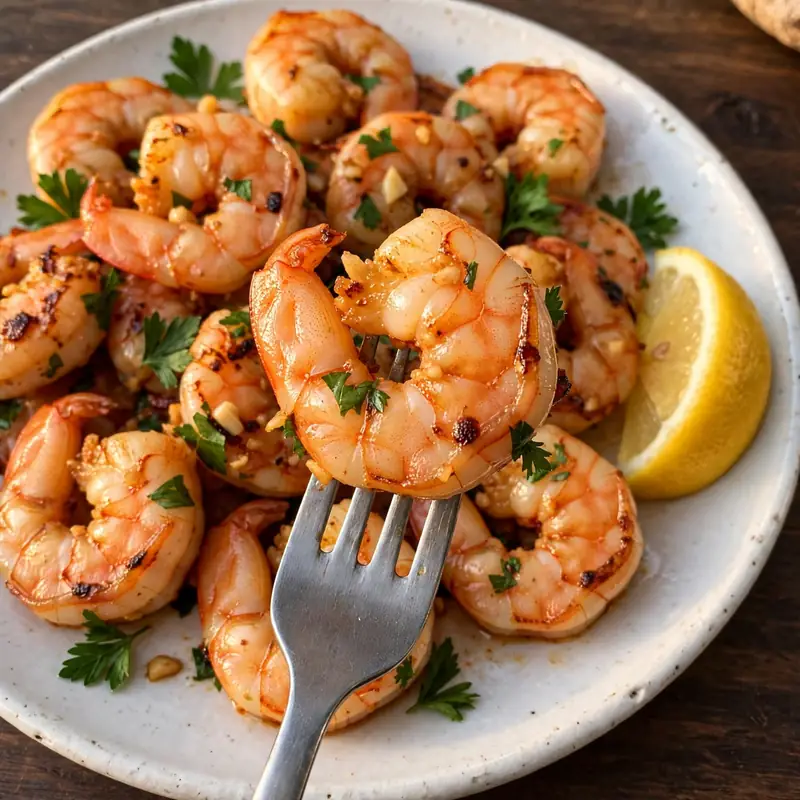
A good shrimp marinade does two things at once: it seasons the shrimp through to the center so the flavor isn’t just on the outside, and it sets up the surface for rapid caramelization the moment the shrimp hits heat. The combination of olive oil, garlic, lemon, and smoked paprika in this marinade achieves both. The oil carries the fat-soluble aromatics into the shrimp’s surface tissue, the lemon juice’s acidity lightly denatures the outer protein layer to help the seasonings penetrate, and the smoked paprika gives the shrimp a caramelized, slightly charred crust in under 2 minutes of contact with a hot pan or grill grate.
This shrimp marinade recipe uses five core pantry ingredients and takes about 5 minutes to assemble. Marinate the shrimp for 15 to 30 minutes, then cook by any method: grill, pan-sear, or bake. The marinade works equally well for a quick weeknight dinner and a grilled seafood platter for a gathering. It is deliberately versatile, producing well-seasoned, juicy shrimp that work in tacos, pasta, rice bowls, salads, or served simply with crusty bread and a squeeze of fresh lemon.
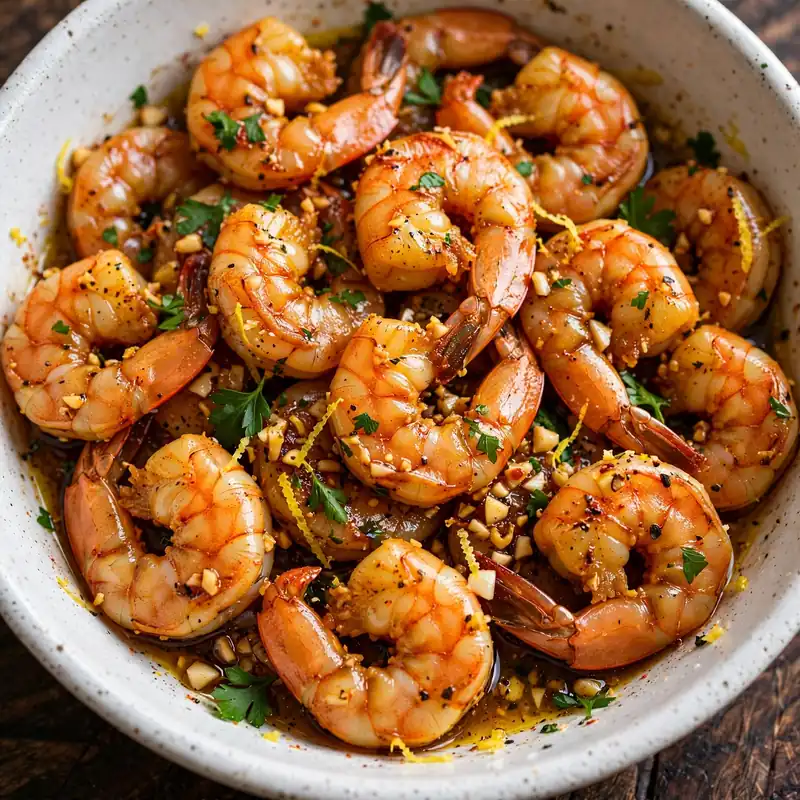
Table of Contents
- Why You’ll Love This Shrimp Marinade
- Ingredients You’ll Need
- Allergen and Dietary Disclosure
- Step-by-Step Directions
- Common Mistakes and Troubleshooting
- Variations and Substitutions
- Serving Suggestions
- Tips for the Best Results
- Storage Tips
- Nutrition Information
- Why This Recipe Works
- Frequently Asked Questions
- Conclusion
Why You’ll Love This Shrimp Marinade
- Seasons the shrimp through and through. The combination of lemon juice and olive oil carries the seasoning past the surface into the shrimp’s outer tissue, so every bite has flavor rather than just the exterior.
- Works with any cooking method. Grilling, pan-searing, baking at high heat, or broiling: this marinade performs consistently across all four methods because the oil base protects the shrimp surface while the spices develop under any heat source.
- Ready in under 5 minutes to mix. Five ingredients measured directly into the bowl or bag; no blending, cooking, or extra equipment needed.
- 30 minutes maximum marinating time. Shrimp only need 15 to 30 minutes; longer than 30 minutes in an acidic marinade starts to cook the protein from the outside in, which produces a texture change before the shrimp even hits heat.
- Highly customizable flavor base. The core five ingredients are a platform, not a rigid formula; add fresh herbs, chili paste, citrus zest, or any spice blend and the underlying method and timing stay the same.

Ingredients You’ll Need
Recipe Timing
| Servings | 4 |
| Difficulty | Easy |
| Course | Main Course, Appetizer |
| Cuisine | American, Mediterranean-inspired |
| Prep Time | 5 minutes |
| Cook Time | 6 minutes |
| Rest Time | 20 minutes (marinating) |
| Total Time | 31 minutes |
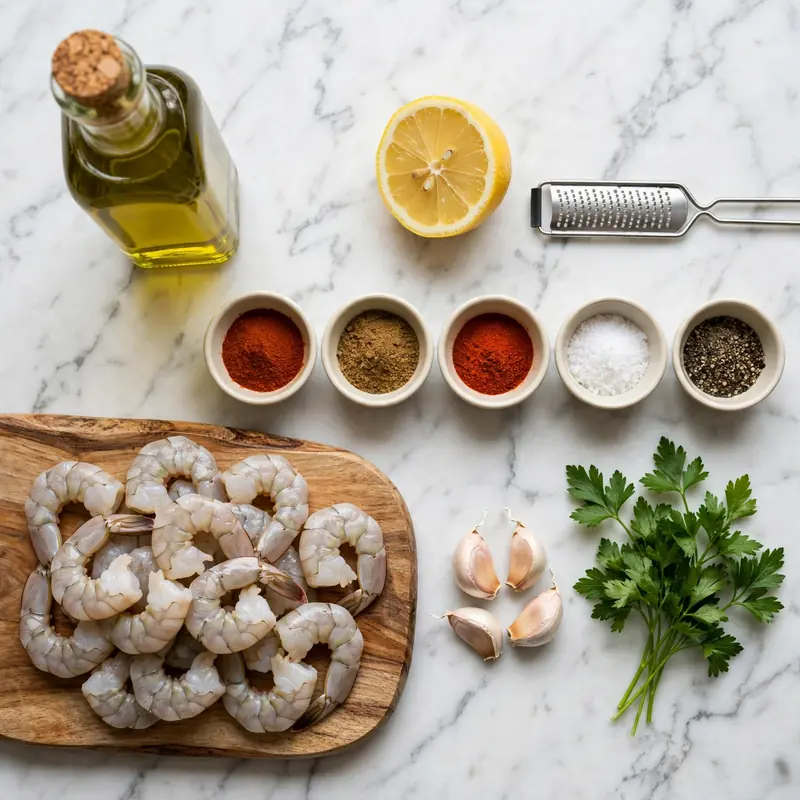
For the shrimp, large or jumbo shrimp in the 16 to 20 count or 21 to 25 count range work best with this marinade. They have enough surface area to absorb flavor and enough mass to stay juicy through the cook time without drying out. Very small shrimp, such as salad-size or cocktail-size shrimp, absorb the marinade too aggressively and can become rubbery if the marinating time runs toward the 30-minute end. If using small shrimp, keep the marinating time to 10 to 15 minutes maximum.
Buy shrimp that are peeled and deveined to save time; the marinade doesn’t require shell-on shrimp to work effectively. If using frozen shrimp, thaw them overnight in the refrigerator or under cold running water in a sealed bag; never thaw in warm water or at room temperature, which creates food safety risks and compromises texture. Pat the thawed shrimp completely dry before adding the marinade; any residual surface water dilutes the marinade and prevents it from adhering properly.
For the garlic, fresh minced cloves produce a noticeably sharper, more pronounced garlic flavor in the finished shrimp than garlic powder. If you want a milder, more integrated garlic presence, garlic powder at 1/2 teaspoon substitutes cleanly; fresh garlic is visible on the shrimp surface and can char slightly on a very hot grill, which adds a slightly bitter note that some people prefer and others want to avoid.
For the smoked paprika, it should be labeled sweet smoked rather than hot smoked unless you want significant heat in the marinade. The smokiness from even sweet smoked paprika is what produces the characteristic color and caramelized edge on the shrimp when it hits high heat; regular sweet paprika lacks that smoky depth and produces a paler, less complex result.
The Marinade:
- 3 tablespoons olive oil — the fat base; carries all the fat-soluble aromatics and spices into the shrimp surface; also prevents sticking on the grill or pan
- 3 tablespoons fresh lemon juice (about 1 large lemon) — the acidic component; opens the surface protein structure slightly so the marinade penetrates; adds brightness to the finished shrimp
- Zest of 1 lemon — adds floral, aromatic citrus notes that the juice alone doesn’t provide; zest before juicing
- 4 garlic cloves, finely minced or grated on a microplane — the dominant aromatic; grated garlic distributes more evenly through the marinade than minced pieces
- 1 teaspoon smoked paprika — adds warmth, color, and a subtle smoky depth that caramelizes beautifully under high heat
- 1/2 teaspoon ground cumin — a warm, slightly earthy note that complements the garlic and smoked paprika without overpowering
- 1/4 teaspoon cayenne pepper — adds very mild background warmth; adjust up or down freely
- 1/2 teaspoon fine salt — seasons the marinade and draws the flavors into the shrimp surface
- 1/4 teaspoon freshly ground black pepper
- 2 tablespoons fresh flat-leaf parsley, finely chopped — added to the marinade for freshness; also acts as a visual indicator of even coating when the shrimp are tossed
The Shrimp:
- 500g (about 1 lb) large or jumbo shrimp, peeled and deveined, tails on or off — food safety note: shrimp must reach an internal temperature of 63°C (145°F) before consuming; they turn opaque pink and curl into a C-shape at this point
Allergen and Dietary Disclosure
This shrimp marinade contains shellfish (shrimp). It is naturally gluten-free, dairy-free, and egg-free as written. Verify any added sauces or accompaniments for allergens if applicable.
For shellfish allergy: there is no substitute for shrimp in this recipe; the marinade formula itself is designed for shellfish. The marinade base of olive oil, lemon, garlic, and smoked paprika transfers directly to chicken thighs, firm white fish such as cod or tilapia, or tofu for a non-shellfish application; adjust the cook time for the alternative protein.
For nightshade-free: replace the smoked paprika and cayenne with 1/2 teaspoon of ground cumin and an extra pinch of ground turmeric. The marinade loses its characteristic orange-red color and some smoky depth but remains very flavorful on the finished shrimp.
This recipe has not been tested in a certified allergen-free kitchen and cannot be guaranteed safe for any specific allergy.
Step-by-Step Directions
Step 1: Mix the Marinade
Combine the olive oil, fresh lemon juice, lemon zest, minced garlic, smoked paprika, cumin, cayenne, salt, and black pepper in a bowl large enough to hold all the shrimp. Whisk briefly for 20 to 30 seconds until the oil and lemon juice have emulsified into a cohesive, uniformly colored orange-red liquid. An emulsified marinade coats the shrimp more evenly than a broken, separated one; you’ll see this visually: an emulsified marinade looks uniform in color throughout rather than showing a floating oil layer above a watery lemon layer.

Chef’s Note: Whisking the marinade until it emulsifies before the shrimp go in is the step that produces even coating across every shrimp rather than patchy coverage. A partially separated marinade distributes the oil on some shrimp and the lemon juice on others, producing inconsistent seasoning and inconsistent caramelization when the shrimp hit the heat.
Step 2: Add and Coat the Shrimp
Pat the shrimp completely dry with paper towels before adding them to the marinade. Surface moisture dilutes the marinade and prevents it from adhering. Add the shrimp and the chopped parsley to the bowl. Toss thoroughly using clean hands or a spoon, turning each shrimp so it’s fully coated on all surfaces. Every shrimp should look visibly orange-red from the paprika and coated in a glossy oil layer with no pale, uncoated patches.
Step 3: Marinate for 15 to 30 Minutes
Cover the bowl tightly with plastic wrap and refrigerate for 15 to 30 minutes. At 15 minutes, the marinade has penetrated the surface and the shrimp are well-seasoned. At 30 minutes, the flavor is slightly deeper but the lemon juice’s acidity begins to lightly firm the outer protein layer; cooking them at this point is still ideal but going significantly past 30 minutes is not recommended. Set a timer rather than estimating; shrimp marinade timing is specific in a way that chicken or beef marinades are not.
Chef’s Note: The 30-minute limit on shrimp marinating is not arbitrary caution. Lemon juice contains citric acid with a pH of approximately 2.0 to 3.0; at this acidity, the acid begins to chemically denature the shrimp’s myofibrillar proteins at the surface, which is the same process that heat-cooking causes. Shrimp left in an acid-forward marinade for 60 minutes or more will have an increasingly opaque, firm outer layer when they go into the pan, and the resulting texture can be slightly mealy rather than succulent.

Step 4: Cook the Shrimp
Remove the shrimp from the marinade, letting any excess drip back into the bowl; discard the used marinade and don’t pour it back over cooked shrimp.
For grilling: Preheat the grill to high heat, 230 to 260°C (450 to 500°F). Grill the shrimp for 1.5 to 2 minutes per side until the undersides develop visible grill marks and the shrimp turns opaque pink and curls into a C-shape. Don’t walk away; shrimp cook faster on a hot grill than almost anything else.
For pan-searing: Heat a wide cast iron skillet or stainless steel pan over medium-high heat until the surface is very hot. Add the shrimp in a single layer without overcrowding. Sear undisturbed for 90 seconds until the underside turns golden-pink and slightly caramelized, then flip and cook for 60 seconds on the second side until opaque throughout and curled to a C-shape.
For oven broiling: Arrange shrimp in a single layer on a rimmed baking sheet. Place under a preheated broiler, 10 to 12cm from the element, and broil for 3 to 4 minutes until the surface is slightly charred at the edges and the shrimp are fully opaque.
Food safety note: Shrimp must reach an internal temperature of 63°C (145°F) throughout before consuming. They are done when fully opaque pink with no translucent grey remaining anywhere. Do not reuse marinade that contained raw shrimp as a sauce without boiling it first for at least 1 full minute.
Chef’s Note: The C-shape versus O-shape test is the most reliable doneness indicator for shrimp cooked by any method. A shrimp that has curled just enough to form a loose C has reached the safe internal temperature with the ideal succulent texture. A shrimp curled into a tight O-shape has overcooked and its muscle fibers have expelled moisture; the texture is noticeably tighter and drier. The transition from C to O takes less than 60 seconds at high heat; watch the shape, not the timer.

Step 5: Rest and Serve
Transfer the cooked shrimp to a serving plate and rest for 2 minutes before serving. The 2-minute rest allows the internal juices, which concentrate at the center of each shrimp during high-heat cooking, to redistribute slightly toward the edges. A shrimp eaten immediately off the heat can taste slightly dry at the surface while the center is still releasing liquid; 2 minutes of resting produces a uniformly juicy result. Squeeze a small amount of fresh lemon juice over the plated shrimp just before serving; the acid brightens the smoked paprika and garlic flavor and makes the finished dish taste considerably more alive.
Common Mistakes and Troubleshooting
| Problem | Cause | Solution |
|---|---|---|
| Shrimp rubbery and chewy | Overmarinated past 30 minutes, or overcooked past the C-shape | Keep marinating time between 15 and 30 minutes; pull from heat the moment a loose C forms |
| Marinade slides off the shrimp rather than adhering | Shrimp not dried before marinating, or marinade not emulsified | Always pat shrimp dry; whisk marinade until uniformly colored before adding shrimp |
| Shrimp pale rather than caramelized | Pan or grill not hot enough, or shrimp were wet | Heat the pan until very hot before adding shrimp; dry shrimp produce better surface contact |
| Flavor too acidic and sharp | Too much lemon juice, or marinated too close to 30 minutes | Balance lemon juice with an extra tablespoon of olive oil; keep marinating time to 15 to 20 minutes for less acid penetration |
| Shrimp sticking to grill grates | Grill not preheated sufficiently, or oil in marinade not enough | Preheat to 230°C minimum; brush grill grates with additional oil just before adding shrimp |
| Garlic burns before shrimp cook | Fresh garlic pieces on very high heat grill | For very high heat grilling, use garlic powder in place of fresh minced garlic; it distributes evenly without charring |
Variations and Substitutions
- Lemon herb marinade: Replace the cumin and cayenne with 1 teaspoon of dried oregano and 1/2 teaspoon of dried thyme. Increase the parsley to 3 tablespoons and add 1 tablespoon of fresh dill. The herb-forward version produces a cleaner, more Mediterranean-flavored shrimp that works particularly well over pasta, with a simple green salad, or in a wrap with tzatziki.
- Honey garlic shrimp marinade: Add 1 tablespoon of honey to the base marinade and reduce the lemon juice to 2 tablespoons. The honey adds a mild sweetness that caramelizes dramatically on a hot grill, producing deep amber, slightly sticky shrimp with a natural glaze. Watch the heat; honey-based marinades burn faster than oil-based ones.
- Spicy sriracha marinade: Replace the cayenne with 1 tablespoon of sriracha or sambal oelek stirred into the olive oil before the other ingredients. The chili paste adds heat plus a slight vinegar acidity that the dry cayenne alone doesn’t provide. Increase the honey addition to 1 tablespoon to balance the extra heat for a sweet-spicy result.
- Soy ginger Asian-style marinade: Replace the olive oil with sesame oil at 2 tablespoons plus 1 tablespoon of neutral oil. Replace the lemon juice with 2 tablespoons of rice vinegar. Replace the smoked paprika with 1 tablespoon of soy sauce and 1 teaspoon of freshly grated ginger. Skip the cumin; add 1 teaspoon of sesame seeds to the finished marinade. This version works well for stir-fry shrimp or rice bowls.
- Cilantro lime marinade: Replace the lemon with an equal amount of fresh lime juice and lime zest. Replace the parsley with 2 tablespoons of fresh cilantro, finely chopped. Add 1/2 teaspoon of ground coriander alongside the cumin. This version has a distinctly Tex-Mex flavor profile that works perfectly for shrimp tacos, burrito bowls, or grilled shrimp over Mexican-style rice.
- Butter garlic glaze finish: After grilling or pan-searing the marinated shrimp, add 1 tablespoon of cold unsalted butter directly to the pan or skillet off the heat and swirl until it melts and coats the shrimp in a glossy finish. The butter adds richness and a glossy visual appeal that makes the shrimp look restaurant-plated. This takes 20 extra seconds and changes the presentation significantly.
Serving Suggestions
- Thread the marinated shrimp onto skewers before grilling for a presentation that’s easy to serve at a gathering: 4 to 5 shrimp per skewer, tails in the same direction, and served directly on the skewers with a wedge of lemon alongside. Soak wooden skewers in water for 30 minutes before grilling to prevent charring.
- Serve over a bed of fluffy steamed white rice or herbed couscous that soaks up the garlic-lemon marinade juices released during cooking. The juices from the cooked shrimp are flavorful and shouldn’t be wasted; tipping them from the pan over the rice adds seasoning without any extra effort.
- Tuck the cooked shrimp into warm flour tortillas with shredded cabbage, sliced avocado, a spoonful of plain yogurt, and a squeeze of lime for fast shrimp tacos. The marinade’s spice profile works directly with Mexican-inspired toppings without any additional seasoning needed.
- Toss the cooked shrimp with hot linguine, extra olive oil, fresh parsley, and a squeeze of lemon for a 10-minute pasta that eats like a proper dinner. The marinade flavors left on the shrimp season the pasta as everything is tossed together.
- Serve as an appetizer on a platter with a dipping sauce of plain yogurt mixed with fresh dill, garlic, and lemon; the cool, tangy sauce contrasts the warm, spiced shrimp and makes a simple platter feel composed.
- Pair with a cold sparkling water with lime or a cold pressed cucumber juice. Both provide a clean contrast to the warm spice in the marinade and refresh the palate between bites.

Tips for the Best Results
- Dry the shrimp before adding the marinade. Moisture on the surface of the shrimp dilutes the marinade’s concentration and prevents it from adhering evenly to the surface. Pat each shrimp dry with paper towels; this takes 90 seconds and makes an immediately visible difference in how evenly the marinade coats.
- Emulsify the marinade before the shrimp go in. Whisk the olive oil and lemon juice together for 20 to 30 seconds until the liquid looks uniformly orange-red rather than separated into an oil layer on top. An emulsified marinade coats every surface of each shrimp evenly; a broken marinade distributes its components unevenly and produces inconsistent seasoning.
- Set a timer and stick to the 30-minute maximum. Shrimp is one of the proteins where the difference between 20 minutes and 60 minutes in an acid-based marinade is significant and irreversible. The lemon juice doesn’t stop working at 30 minutes; it continues to denature the surface proteins, producing a pre-cooked exterior texture that can’t be corrected with heat. Set a timer, pull the shrimp, and cook.
- Cook on the hottest heat appropriate for your method. Marinated shrimp develop their best color and texture when they hit very hot surfaces. The smoked paprika in the marinade contains sugars that caramelize rapidly above 150°C but don’t brown at lower temperatures; a hot pan produces a deeply colored, caramelized surface while a medium-heat pan produces pale, steamed-looking shrimp with a significantly less developed flavor.
- Never reuse the marinade without boiling it first. The raw shrimp marinade contains proteins and cellular fluid from the raw shellfish. Using it as a finishing sauce directly over cooked shrimp creates a cross-contamination risk. If you want the marinade as a sauce, boil it in a small saucepan for 1 full minute and then use it; the sustained heat neutralizes the risk.
Storage Tips
Refrigerator
Cooked marinated shrimp keep in the refrigerator for up to 3 days in a sealed container. The flavor is best on day 1; by day 3 the shrimp have absorbed more of the garlic flavor and the lemon is slightly more pronounced. Store without any additional sauce mixed in; add fresh lemon and parsley when serving leftovers. The marinade itself, unmixed and in a sealed jar without raw shrimp, keeps in the refrigerator for up to 5 days and can be used for multiple batches during the week.
Freezer
Raw shrimp marinated and frozen before cooking is a practical make-ahead option. Combine the shrimp with the marinade in a freezer-safe zip bag, press out as much air as possible, and freeze flat for up to 1 month. Thaw overnight in the refrigerator; the shrimp marinate during the thawing process, which is convenient for planning ahead. Don’t exceed 30 minutes of marinating at room temperature after thawing before cooking. Cooked marinated shrimp can also be frozen for up to 2 months, though the texture after thawing is slightly firmer than fresh-cooked.
Reheating
Reheating cooked shrimp requires caution because they overcook very rapidly. The stovetop is the best method: heat a small skillet over medium heat with a teaspoon of olive oil, add the shrimp, and cook for 60 to 90 seconds total, tossing gently, just until warmed through. Don’t heat until the shrimp curls more tightly or the texture will be rubber-like. Microwave reheating at 50% power in 20-second bursts works for a single serving but tends to produce slightly uneven heating and can tighten the texture if any portion gets too hot.
Make-ahead note: The marinade itself is the most practical thing to make ahead. Mix the olive oil, lemon juice, zest, garlic, and spices in a sealed jar at the beginning of the week and refrigerate; it takes 3 to 4 minutes to assemble and is then ready to use on any evening within 5 days. Adding fresh shrimp and marinating for 15 to 30 minutes on the day brings a complete dinner to the table in under 40 minutes total.
Nutrition Information
Per serving, approximately 1/4 of the recipe, shrimp and marinade, sides not included:
| Nutrient | Amount |
|---|---|
| Calories | 210 kcal |
| Protein | 25g |
| Total Carbohydrates | 3g |
| Dietary Fiber | 0.5g |
| Total Sugar | 0.5g |
| Total Fat | 11g |
| Saturated Fat | 1.5g |
| Cholesterol | 215mg |
| Sodium | 450mg |
| Vitamin C | 14mg |
| Calcium | 90mg |
| Iron | 1.8mg |
| Potassium | 310mg |
Nutrition values are approximate and may vary based on shrimp size, exact oil quantity absorbed, and brands. Sides, rice, and pasta not included.
Why This Recipe Works
The function of each component in this shrimp marinade is specific and traceable. Olive oil serves two purposes simultaneously. As the fat carrier, it dissolves the fat-soluble aromatic compounds in garlic (specifically allicin and its breakdown products) and smoked paprika (primarily capsaicin-related compounds and carotenoid pigments) and suspends them throughout the marinade. Without fat, those compounds remain insoluble in the lemon juice and either sit on the surface without penetrating or wash off entirely during cooking. As a surface coating, the oil physically protects the shrimp from rapid moisture loss when it contacts a hot pan or grill grate; uncoated raw shrimp on high heat lose surface moisture within seconds through rapid evaporation, which produces a pale, slightly steamed exterior rather than a seared one.
The lemon juice performs a more complex function than simple flavor addition. Shrimp myofibrillar proteins, specifically myosin and actin, have an isoelectric point at around pH 5.0 to 5.5; below this pH the proteins carry a slight positive charge that causes them to repel each other slightly and loosen the protein network structure at the surface. Lemon juice, at pH 2.0 to 3.0, creates this condition at the shrimp’s surface, which physically opens the surface tissue slightly and allows the dissolved aromatic compounds in the marinade to move deeper into the outer few millimetres of the shrimp flesh than they would in a neutral-pH marinade. This is why acid-marinated shrimp taste seasoned through to the center of the outer layer rather than just coated on the surface. The 30-minute limit exists because extended acid exposure at this pH level continues denaturing the myosin proteins progressively further into the shrimp, eventually producing the same result as partial heat-cooking: firm, opaque, protein-structured flesh before the shrimp has touched any heat source.
Smoked paprika’s caramelization behavior under high heat explains why this marinade produces such deeply colored shrimp. The pigment compounds in smoked paprika, primarily capsanthin and capsorubin, are carotenoid molecules that undergo Maillard-adjacent browning reactions when heated above approximately 150°C in the presence of the amino acids from the shrimp surface and the trace sugars present in the paprika itself. The result is the deep amber, slightly charred edges visible on properly seared paprika-marinated shrimp, which carry a complex, slightly smoky, lightly sweet flavor that plain oil-and-lemon-marinated shrimp, browned only from their own proteins, don’t develop in the same time.
The 20 to 30 minutes of marinating time is calibrated to a specific depth of flavor penetration. Smaller molecules, including the citric acid from lemon, diffuse through the shrimp’s surface tissue in roughly 15 to 20 minutes. Larger aromatic compounds from garlic and paprika require the oil carrier to assist their transport and penetrate to their effective depth within approximately 20 to 25 minutes. Beyond 30 minutes, no additional meaningful penetration of aromatic compounds occurs; the outer protein network has already absorbed what it can. The time after 30 minutes only adds more acid-denaturing of the protein network, which contributes the mealy texture discussed above.
I’ve tested this marinade at four time intervals: 10 minutes, 20 minutes, 30 minutes, and 60 minutes. At 10 minutes, the shrimp taste well-coated on the surface but the flavor doesn’t penetrate noticeably into the flesh. At 20 minutes, the flavor is present through the outer layer of the shrimp and the texture is ideal. At 30 minutes, the flavor is slightly deeper and still excellent. At 60 minutes, the outer 1 to 2mm of the shrimp has begun to firm and turn slightly opaque from acid denaturation, and the cooked texture is noticeably tighter and less succulent than the 20 to 30-minute versions.
Frequently Asked Questions
Can I make the shrimp marinade ahead of time?
Yes. Mix the full marinade, without the shrimp, and store in a sealed jar in the refrigerator for up to 5 days. The olive oil, lemon juice, garlic, and spices hold together well in the refrigerator; shake or stir the jar to re-emulsify before using since the oil and lemon juice may separate slightly during storage. The fresh parsley is best added on the day you use the marinade rather than storing it in the jar, as it loses color and releases excess moisture over several days.
Why can’t I marinate shrimp for more than 30 minutes?
The lemon juice in the marinade has a pH low enough to denature, or chemically cook, the shrimp’s surface proteins. This process is the same one that produces ceviche, where raw seafood is made opaque and firm by acid alone without heat. In a marinade, this starts producing a noticeably different texture after 30 minutes: the outer layer becomes firm and slightly mealy in the finished cooked shrimp rather than succulent and tender. Keeping marinating time between 15 and 30 minutes prevents this while still allowing full flavor penetration.
Can I use this shrimp marinade on frozen shrimp?
Yes, with an important adjustment. Thaw the shrimp first rather than marinating from frozen; a frozen shrimp can’t absorb the marinade because its surface is covered in ice crystals that block penetration. Thaw overnight in the refrigerator, drain thoroughly, and pat completely dry before marinating. One practical shortcut: combine the thawed, drained shrimp with the marinade in a sealed zip bag and cook within 20 to 25 minutes; the thawing liquid dilutes the marinade slightly, so pat the shrimp as dry as possible before combining.
What is the best cooking method for marinated shrimp?
All three main methods, grilling, pan-searing, and broiling, produce excellent results with this marinade. Grilling produces the most dramatic visual result with distinct char marks and a light smoky layer. Pan-searing in a very hot cast iron skillet produces the deepest, most even caramelization across the entire shrimp surface. Broiling is the most convenient method for cooking a large batch without crowding; it produces results close to grilling without requiring outdoor equipment. The choice depends on what you’re serving the shrimp with rather than on any quality difference between methods.
Is shrimp marinade gluten-free?
This shrimp marinade is naturally gluten-free as written. All core ingredients, including olive oil, fresh lemon, garlic, smoked paprika, cumin, cayenne, salt, black pepper, and fresh parsley, are inherently gluten-free. No substitutions are needed for this specific recipe. If you’re using any of the variation versions, check the soy sauce in the Asian-style variation; standard soy sauce contains wheat and should be replaced with certified gluten-free tamari if gluten-free is required.
Can I use this marinade on other proteins?
Yes. The marinade formula transfers directly to chicken thighs, firm white fish such as cod, tilapia, or snapper, and pressed extra-firm tofu. The marinating time changes significantly: chicken thighs benefit from 2 to 4 hours of marinating and need an internal temperature of 74°C (165°F); firm white fish needs 20 to 30 minutes maximum, similar to shrimp; and pressed tofu benefits from 1 to 2 hours and doesn’t have the same acid-denaturation concern since its protein structure is different. The cooking method and heat level remain the same for all.
How do I prevent the marinade from burning on the grill?
The smoked paprika in the marinade caramelizes very quickly on a very hot grill and can go from caramelized to burned in less than a minute. Two adjustments prevent this: first, shake off excess marinade before placing shrimp on the grill rather than placing them dripping with it; excess pooled marinade burns faster than the thin layer adhered to the shrimp surface. Second, keep the grill on high but cook for no more than 1.5 to 2 minutes per side; shrimp at this size cook fully in that time at high heat. If garlic bits char before the shrimp cook, switch to garlic powder in future batches.

Conclusion
A good shrimp marinade isn’t complicated, but it is specific. The 30-minute time limit, the emulsification before coating, the completely dry shrimp before the marinade goes on, and the highest possible heat during cooking are each decisions with a traceable outcome in the finished shrimp’s texture and flavor. Skip any of them and the shrimp are still edible; include all of them and the shrimp taste genuinely worth the effort.
The marinade base in this recipe is reliable enough to memorize: olive oil, lemon, garlic, smoked paprika, salt. Once those proportions are familiar, every variation listed here, and any others you build yourself, starts from the same well-understood foundation. That’s what makes a shrimp marinade worth learning properly rather than following once and forgetting.
If you loved this recipe, save it to your easy seafood dinners and grilling recipes Pinterest board so you can find it easily later. For more recipes and daily food inspiration, follow TheCookingVibes on Pinterest.
Easy Shrimp Marinade
Ingredients
Equipment
Method
- Whisk together olive oil, lemon juice, lemon zest, garlic, smoked paprika, cumin, cayenne, salt, and black pepper in a bowl until fully emulsified and uniformly orange-red in color, about 20 to 30 seconds of vigorous whisking.
- Pat shrimp completely dry with paper towels on both sides. Add shrimp and chopped parsley to the bowl. Toss with clean hands or tongs until every shrimp is visibly coated on all surfaces.
- Cover tightly and refrigerate for 15 to 30 minutes. Set a timer; do not exceed 30 minutes.
- Remove shrimp from marinade, shaking off excess. Discard used marinade.
- Cook by preferred method: For grilling, grill on high heat 230°C (450°F) for 1.5 to 2 minutes per side until the shrimp are opaque pink and curl into a C-shape. For pan-searing, heat a cast iron skillet over medium-high until very hot, cook 90 seconds undisturbed, flip, and cook 60 more seconds. For broiling, broil on a sheet pan 10 to 12cm from the element for 3 to 4 minutes.
- Confirm shrimp have reached 63°C (145°F) internal temperature and are fully opaque with no grey remaining. Rest 2 minutes. Squeeze fresh lemon over the finished shrimp and serve immediately.
Notes
- Never exceed 30 minutes of marinating time; the lemon juice’s acidity denatures the shrimp surface proteins after this point, producing a firmer, less succulent texture.
- Always dry the shrimp before adding the marinade; surface moisture dilutes the marinade and prevents even coating.
- Do not reuse the marinade as a sauce without boiling it in a saucepan for 1 full minute first.
- The marinade without shrimp keeps in a sealed jar in the refrigerator for up to 5 days.