
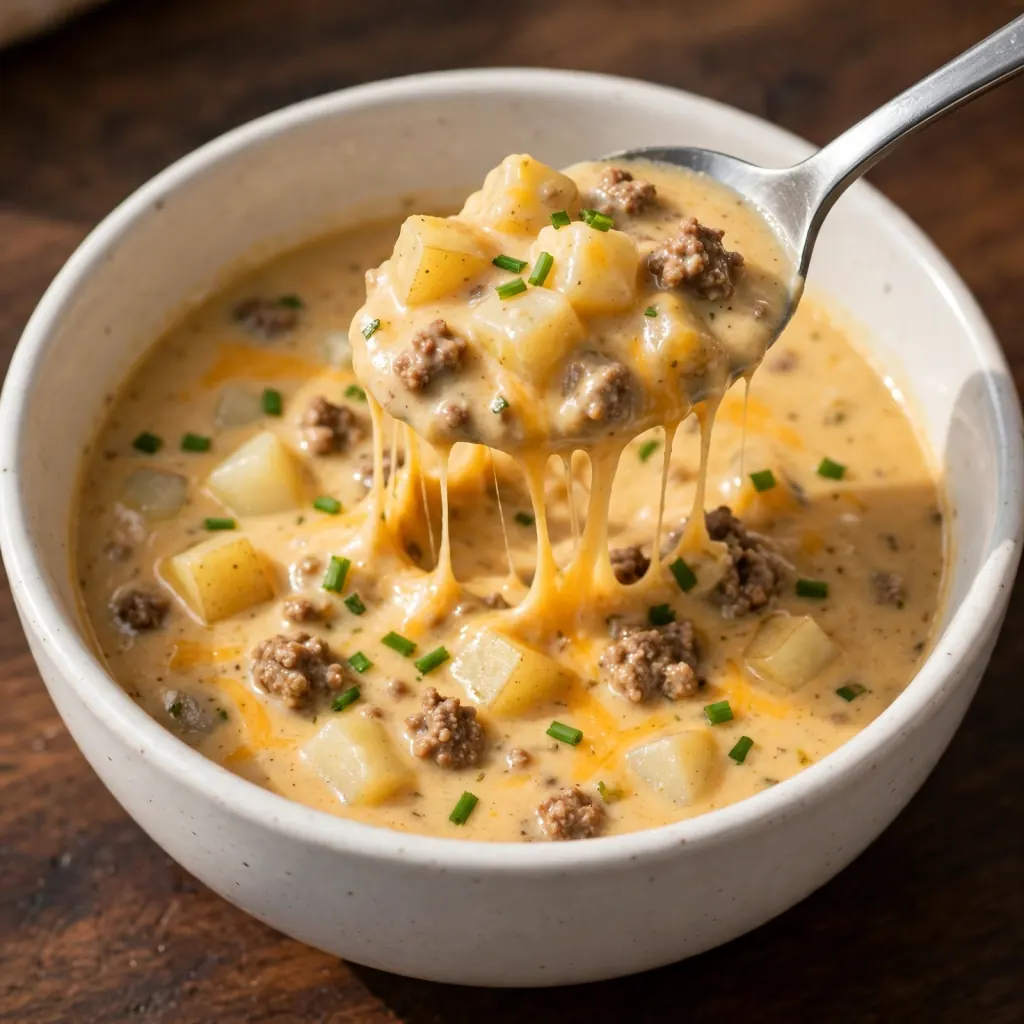
Easy Cheeseburger Soup (Creamy, Hearty, One Pot)
The first time someone puts a bowl of cheeseburger soup in front of you, there is a moment of genuine skepticism: can a soup actually taste like a cheeseburger? Then you take the first spoonful and the answer is an immediate, unambiguous yes. The ground beef is there, the cheddar is unmistakable, the potato adds the soft starchiness you associate with a bun, and the whole thing has that savory, slightly beefy, slightly tangy quality that makes a good cheeseburger worth eating.
This cheeseburger soup recipe builds a creamy cheddar broth around seasoned ground beef, diced Yukon Gold potatoes, carrots, celery, and onion. A quick roux thickens the base, sharp cheddar melts in at the end, and the whole pot is ready in 45 minutes from start to finish. It is one pot, minimal prep, and feeds six people generously. The flavors are bold, the texture is creamy without being heavy, and it holds up well as a leftover for the next two days.

Why You’ll Love This Cheeseburger Soup
- One pot, 45 minutes, no complicated steps. Brown the beef, build the soup, melt in the cheese. The entire process happens in a single Dutch oven and the technique is straightforward at every stage.
- The cheese actually melts smoothly. Using a roux-thickened base before adding the cheddar prevents the cheese from breaking into greasy clumps. The result is a genuinely silky, coating broth rather than a grainy approximation of it.
- Substantial enough to be the whole meal. Between the beef, the potatoes, and the vegetables, a bowl of this soup is a complete dinner. It does not need a side dish to feel like a proper meal.
- Kids genuinely enjoy it. The familiar cheeseburger flavor profile makes this one of the easier soups to put in front of children who are skeptical of vegetable-forward dishes. The potatoes and beef carry the meal.
- Better than you expect from leftovers. The soup thickens overnight in the fridge and the cheddar flavor deepens. Day-two cheeseburger soup reheated with a small splash of broth is consistently good.

Ingredients You’ll Need
Recipe Timing
| Detail | Info |
|---|---|
| Servings | 6 |
| Difficulty | Easy |
| Course | Main Course, Soup |
| Cuisine | American |
| Prep Time | 15 minutes |
| Cook Time | 30 minutes |
| Total Time | 45 minutes |
For the cheese, use freshly shredded sharp cheddar and shred it yourself from a block. Pre-shredded cheddar from a bag contains cellulose and potato starch as anti-caking agents, which prevent the cheese from melting cleanly into the broth. These additives cause the soup to turn grainy rather than smooth no matter how long you stir. A block of sharp cheddar shredded at home takes two minutes and makes a visible difference in the finished texture.
For the potatoes, Yukon Gold is the best choice: their slightly waxy texture holds up through the simmer without falling apart into starch, and their natural buttery flavor deepens the richness of the broth. Russets work but break down faster and can make the broth thicker than intended. Avoid new or red potatoes, which stay too firm.
For the ground beef, 80/20 or 85/15 gives you the best flavor. Leaner beef lacks the fat needed to carry the savory, beef-forward character that makes this soup taste like a cheeseburger. Drain excess fat after browning but leave a thin layer in the pot for cooking the aromatics.
- 500g (1 lb) ground beef. The primary protein and the defining flavor element of the soup. Browned before everything else to build fond on the pot.
- 1 medium yellow onion, finely diced. Cooked in the beef drippings to build the aromatic base. Diced finer than the other vegetables so it softens into the soup.
- 3 cloves garlic, finely minced. Added after the onion softens. Gives the broth a savory depth it would lack without it.
- 3 medium Yukon Gold potatoes (about 450g), peeled and cut into 1.5cm cubes. The starchy filling element. They simmer directly in the broth until just fork-tender, which releases enough starch to contribute to the body of the soup without making it gluey.
- 2 medium carrots, peeled and diced into 1cm pieces. Add natural sweetness and color. They take slightly longer than potatoes to become fully tender, so they go in at the same time.
- 2 stalks celery, thinly sliced. Adds a background savory note and a small amount of texture contrast to the finished bowl.
- 3 tablespoons (45g) unsalted butter. Used to make the roux that thickens the broth. Don’t substitute with oil: butter contributes to the rich, slightly toasty flavor of the finished base.
- 3 tablespoons (22g) all-purpose flour. Combined with the butter to form the roux. Gives the soup its creamy, coating consistency rather than a thin, watery broth.
- 2 cups (480ml) low-sodium beef broth. The primary liquid. Beef broth deepens the savory, meaty character of the soup in a way chicken broth cannot replicate here.
- 1 cup (240ml) whole milk. Added with the broth to create a creamy base. Full-fat milk keeps the texture rich without making it as heavy as a purely cream-based soup.
- 1 cup (240ml) heavy cream. Adds body and a silky richness that ties the broth together and prevents it from breaking when the cheese goes in.
- 2 cups (200g) sharp cheddar cheese, freshly shredded. The defining flavor and texture of the finished soup. Added off the heat to prevent the proteins from seizing.
- 1 teaspoon Dijon mustard. A small amount echoes the condiment character of a cheeseburger and deepens the flavor in a way that is hard to identify but would be noticed if absent.
- 1/2 teaspoon smoked paprika. Adds a mild, slightly smoky warmth that gives the broth a more complex, savory character.
- 1/2 teaspoon fine sea salt, plus more to taste.
- 1/4 teaspoon black pepper.
- Fresh chives or flat-leaf parsley, chopped, for serving. A fresh garnish that adds color and a mild onion note to balance the richness of the finished bowl.

Allergen and Dietary Disclosure
This recipe contains dairy (butter, whole milk, heavy cream, cheddar cheese), gluten (all-purpose flour in the roux), and eggs are absent.
For a gluten-free version, replace the all-purpose flour with a 1:1 gluten-free flour blend, or use 2 tablespoons of cornstarch whisked into the cold broth before adding it to the pot. The cornstarch method produces a slightly glossier, cleaner-tasting broth.
For a lighter dairy version, replace the heavy cream with an additional cup of whole milk and reduce the cheddar to 1.5 cups. The soup will be thinner and less rich but still recognizably creamy and cheesy.
Free from eggs, nuts, and soy as written. Not guaranteed safe for any specific allergy without checking all individual ingredient labels.
Step-by-Step Directions
Step 1: Brown the Ground Beef
Place a large Dutch oven or heavy soup pot over medium-high heat. Add the ground beef and break it apart immediately with a wooden spoon or spatula into small, even pieces roughly the size of a large pea. Cook, stirring occasionally, for 6 to 8 minutes until every piece is fully browned with no pink remaining and the liquid released has evaporated, leaving a golden-brown fond on the bottom of the pot. Use a slotted spoon to transfer the cooked beef to a plate, leaving the drippings behind.
Food Safety Note: Ground beef must reach a minimum internal temperature of 71°C (160°F) before proceeding. No pink should be visible in any piece.

Chef’s Note: Leaving a thin layer of beef drippings in the pot for the next step adds depth to the aromatics that you would lose if you drained everything out. The fond on the bottom of the pot is flavor: the broth will lift it all when the liquid goes in.
Step 2: Cook the Aromatics
Reduce the heat to medium. Add the diced onion to the drippings in the pot and cook for 3 to 4 minutes, stirring occasionally, until soft and translucent. Add the minced garlic and stir constantly for 60 seconds until it smells fragrant and turns just barely golden at the edges. Don’t let the garlic go past pale gold or it will carry a bitter note through the entire soup.
Step 3: Add Vegetables and Simmer
Add the diced potatoes, carrots, and sliced celery to the pot. Pour in the beef broth and stir to combine everything, scraping up any browned bits from the bottom as the liquid goes in. Add the smoked paprika, salt, and black pepper. Raise the heat to medium-high and bring the broth to a steady simmer. Once simmering, reduce heat to medium and cook uncovered for 12 to 15 minutes until the potatoes are completely tender when pierced with a fork and the carrots offer no resistance. The broth will look thin at this stage.
Chef’s Note: Scraping the fond from the pot as the broth goes in is one of those small steps with an outsized impact. Those browned bits are concentrated beef flavor that would otherwise stay stuck to the pot and never make it into the soup.

Step 4: Make the Roux Separately
While the vegetables simmer, melt the butter in a small saucepan over medium heat until it foams and the foam begins to subside. Add the flour all at once and whisk vigorously for 60 to 90 seconds until the mixture is smooth, pale golden, and smells faintly nutty. The flour must cook for at least 60 seconds to eliminate the raw, pasty taste that uncooked flour leaves in a sauce. Remove from heat.
Step 5: Thicken the Soup
Once the vegetables are tender, reduce the heat under the Dutch oven to medium-low. Stir the roux into the simmering soup one heaped spoonful at a time, whisking as it goes in to prevent lumps. After all the roux is incorporated, pour in the whole milk and heavy cream. Stir everything together and bring the soup back to a gentle simmer for 3 to 4 minutes, stirring frequently, until the broth thickens noticeably and coats the back of a spoon in a smooth, even layer.
Chef’s Note: Adding the roux in small additions rather than all at once gives you more control over the final consistency and prevents lumps from forming. If any lumps do appear, a quick pass with a whisk resolves them easily while the soup is still at a simmer.
Step 6: Add the Beef, Cheese, and Mustard
Stir the browned ground beef back into the thickened soup. Remove the pot from the heat entirely before adding the cheddar. Sprinkle the shredded cheddar over the surface of the soup in two additions, stirring gently after each until fully melted. Stir in the Dijon mustard. Taste the soup and adjust salt and pepper at this point. The heat-off technique is critical: cheddar added to a boiling or even simmering soup seizes into greasy, grainy clumps because the high temperature causes the fat to separate from the protein. Off the heat, with residual warmth only, it melts into a smooth, cohesive broth.

Step 7: Serve Immediately
Ladle the finished cheeseburger soup into bowls while it is still hot. Garnish each bowl with a pinch of freshly chopped chives or flat-leaf parsley and an optional extra scatter of shredded cheddar over the top. Serve immediately, as the soup thickens further as it cools and is at its creamiest texture right out of the pot.
Common Mistakes and Troubleshooting
| Problem | Cause | Solution |
|---|---|---|
| Cheese turned grainy or greasy | Cheese added while soup was still at a boil or simmer | Always remove the pot completely from heat before adding cheddar; residual heat is all it needs |
| Soup is too thin | Not enough roux; cream added before broth reduced | Cook roux for the full 60 to 90 seconds; simmer the thickened broth 3 to 4 minutes before cheese goes in |
| Soup is too thick and pasty | Too much flour; flour not fully cooked | Use exactly 3 tablespoons flour; whisk roux for at least 60 seconds until pale golden and nutty-smelling |
| Potatoes still firm after full simmer time | Cut too large; or heat too low | Cut potatoes no larger than 1.5cm cubes; maintain a visible simmer throughout the 12 to 15 minute cook |
| Soup has a raw flour taste | Roux not cooked long enough | Cook the butter-flour mixture until it smells nutty before adding it to the soup; never rush this step |
| Broth tastes flat | Insufficient salt or missing mustard | Taste before serving and add salt gradually; the Dijon mustard is not optional here, it ties the whole flavor profile together |
Variations and Substitutions
Double Cheddar Version: Add 1/2 cup of shredded smoked cheddar alongside the sharp cheddar for a deeper, more layered cheese flavor. The smoked cheddar adds a subtle woodiness that is not immediately identifiable but makes the soup taste more complex than a single-cheese version.
Spicy Cheeseburger Soup: Add 1/2 teaspoon of cayenne pepper to the smoked paprika when seasoning the vegetables, and stir 1 to 2 teaspoons of hot sauce into the finished soup before serving. The heat cuts through the richness of the cheddar and cream without making the soup sharp.
Loaded Baked Potato Style: Top each bowl with a spoonful of sour cream, a scatter of shredded cheddar, and extra chives in addition to the standard garnish. The sour cream adds a cold, tangy contrast against the hot soup that makes the whole bowl feel considerably more indulgent.
Vegetable-Loaded Version: Add 1 cup of diced zucchini and 1/2 cup of frozen corn alongside the potatoes and carrots. Both cook through in the same 12 to 15 minute simmer time without becoming mushy, and they add color and a slightly sweeter profile to the broth.
Chicken Cheeseburger Soup: Replace the ground beef with 400g of ground chicken and use chicken broth instead of beef broth. The flavor is lighter and the color of the finished broth will be paler, but the cheddar and cream still produce a genuinely creamy, satisfying soup. Season the chicken more assertively during browning to compensate for its milder flavor.
Lower-Fat Version: Replace the heavy cream with an additional cup of whole milk and reduce the cheddar to 1.5 cups. Shred the cheese even finer so it disperses more evenly through the thinner broth. The result is lighter than the original but still cheesy and satisfying.
Serving Suggestions
- With crusty bread or a dinner roll. The broth in this soup is rich enough to warrant bread for dipping. A thick slice of sourdough or a soft dinner roll handles it perfectly and makes the bowl feel like a complete, satisfying meal.
- With a simple green salad. A crisp salad with a sharp vinaigrette cuts through the cream and cheddar in a way that refreshes the palate between spoonfuls. Keep the dressing light and acidic rather than creamy.
- Topped with crispy onions. A small handful of store-bought crispy fried onions scattered over the top of each bowl adds texture contrast and a savory crunch that plays against the smooth, creamy broth.
- With pickles on the side. Dill pickle spears or sliced gherkins served alongside the soup echo the condiment character of an actual cheeseburger and add an acidic contrast that cuts through the richness effectively.
- As a hearty weeknight dinner. This soup needs nothing alongside it to be a complete dinner. Serve it in deep bowls with bread and call it done.
- In a bread bowl. Hollow out a round sourdough boule, ladle the soup inside, and serve with the torn bread pieces alongside for dipping. The bread bowl absorbs the soup over the course of the meal and becomes a part of the dish.

Tips for the Best Results
- Always remove the pot from heat before adding the cheese. This is the single most important technique step in the entire recipe. Cheddar added to liquid at a rolling simmer or boil separates into fat and protein, producing a greasy, grainy result that cannot be fixed. Residual heat from the pot off the burner is sufficient to melt the cheese perfectly.
- Shred the cheddar yourself. Pre-bagged shredded cheese contains anti-caking coatings that prevent clean melting and leave the broth grainy regardless of technique. A block of sharp cheddar and a box grater takes two minutes and produces a fundamentally better result.
- Cook the roux until nutty. A roux that goes into the soup too soon, before the flour has had 60 seconds to cook out its raw taste, leaves a pasty, starchy aftertaste that lingers through the finished bowl. Watch for the pale golden color and the faintly nutty smell before taking it off the heat.
- Dice the potatoes small and evenly. Potato cubes of 1.5cm cook through in 12 to 15 minutes of simmering. Larger pieces take longer, which can mean overcooked vegetables surrounding undercooked potato. Consistent size across all the vegetables is what produces a soup where everything finishes at the same time.
- Add the Dijon mustard. It is a small quantity and the soup does not taste like mustard. What it does is add a tangy, slightly sharp depth that connects the flavor profile to a cheeseburger in a way that is difficult to articulate but immediately recognizable. Taste the soup with and without it once and the difference is clear.
Storage Tips
Refrigerator
Cool the soup completely before transferring to an airtight container. Cheeseburger soup keeps well in the refrigerator for up to 4 days. It thickens considerably as it cools because the starch in the roux and the potatoes continues to absorb liquid overnight. Add a splash of beef broth or whole milk when reheating to restore the original creamy consistency. Store without additional garnishes: add chives and extra cheese fresh per bowl.
Freezer
Cream-based soups with cheese can be frozen but the texture changes somewhat after thawing: the cream may separate slightly and the cheddar can become grainy. The flavor remains good but the texture is best in the first two days. If you want to freeze it, cool completely, portion into freezer-safe containers leaving 2cm headspace, and freeze for up to 2 months. Thaw overnight in the refrigerator before reheating gently.
Reheating
From the fridge: pour one portion into a small saucepan with 2 to 3 tablespoons of whole milk or beef broth. Reheat over medium-low heat, stirring frequently, until hot and smooth, about 4 to 5 minutes. Don’t let it boil: high heat can cause the cheese to separate in the reheated version the same way it would if overheated when first made. The microwave works at 50% power in 90-second intervals, stirring between each, with a splash of liquid added before heating.
Nutrition Information
Per serving (approximately 1/6 of the full recipe, about 400ml)
| Nutrient | Amount |
|---|---|
| Calories | 520 kcal |
| Protein | 32g |
| Carbohydrates | 22g |
| Fiber | 2g |
| Sugar | 5g |
| Total Fat | 34g |
| Saturated Fat | 19g |
| Cholesterol | 130mg |
| Sodium | 640mg |
| Vitamin C | 10mg |
| Calcium | 290mg |
| Iron | 3mg |
| Potassium | 560mg |
Nutrition values are approximate and may vary based on brands and portion sizes.
Why This Recipe Works
The roux is the structural decision that separates a genuinely creamy cheeseburger soup from a thin, watery version with cheese floating on top. A butter-flour roux cooked to the pale golden stage creates a starch matrix that binds the liquid components (broth, milk, cream) into a cohesive, coating sauce when they are heated together. Without it, the milk and cream stay separated from the broth and the cheese has nothing to melt into uniformly. The roux also prevents the dairy from breaking when the temperature rises during simmering, which is why the broth stays smooth throughout the cooking process.
Removing the pot from heat before adding the cheddar is the technique decision with the most visible impact on the finished texture. Cheddar contains both fat and protein. At temperatures above approximately 71°C (160°F), those proteins begin to tighten and squeeze the fat out, which is why cheese added to a boiling soup turns grainy and greasy rather than melting smoothly. Below that temperature, in residual heat only, the proteins relax and the fat distributes evenly through the surrounding liquid. The difference between cheese added on the heat and off the heat is the difference between a silky broth and an oily one.
The Dijon mustard serves a specific culinary function here. Mustard contains lecithin, a natural emulsifier, and its acidic character balances the fat-heavy dairy in the broth. In small quantities, you don’t taste it as mustard: it functions as a background sharpness that makes the other flavors more defined and prevents the soup from tasting one-dimensionally rich.
Yukon Gold potatoes over russets hold their shape through the 12 to 15 minute simmer because of their starch composition. Russets are high in amylose starch, which breaks down quickly in water and turns the potato pieces into soft, crumbling chunks. Yukon Golds contain more amylopectin, which stays more intact during simmering, giving you distinct potato cubes that hold their shape while still contributing a small amount of starch to the broth body.
I’ve tested this recipe with both pre-shredded and freshly shredded cheddar in side-by-side comparisons. The pre-shredded version produced a noticeably grainy, slightly oily broth even when added off the heat. The freshly shredded version from the same brand of cheddar melted into a completely smooth, glossy broth. The anti-caking coating on pre-shredded cheese is the only variable that changes between the two, and its impact on texture is significant.
Frequently Asked Questions
Can I make cheeseburger soup ahead of time?
Yes. The soup keeps well in the refrigerator for up to 4 days and the flavor actually improves by day two as the cheddar and beef flavors deepen together. Make the full batch, cool completely, and store in an airtight container. When reheating, add a splash of whole milk or broth to restore the original creamy consistency, since the soup thickens considerably as it sits.
Why did my cheese turn grainy when I added it?
The soup was still too hot when the cheese went in. Cheddar needs to melt into liquid that is warm but not actively simmering or boiling: above approximately 71°C (160°F), the proteins in the cheese tighten and squeeze out the fat, causing the grainy, greasy texture. Always remove the pot completely from the heat source, wait 30 seconds, and then add the cheese in two additions, stirring gently after each.
Can I use a different cheese instead of cheddar?
Sharp cheddar produces the most recognizable cheeseburger flavor, but Colby Jack, Monterey Jack, or a good-quality American cheese all melt smoothly and work well in this soup. Avoid pre-shredded versions of any cheese. Swiss and Gruyere melt smoothly but change the flavor profile significantly. Parmesan does not melt well in this application and would make the broth grainy.
How do I know when the potatoes are done?
Pierce one cube with a fork: it should slide in with no resistance and the piece should fall off the fork under its own weight rather than holding. If there is any firmness at the center, give the soup 3 to 4 more minutes at a steady simmer. Potatoes that still resist a fork after 15 minutes of simmering either were cut too large or the heat was too low to maintain a proper simmer.
Is cheeseburger soup gluten-free?
As written, this recipe is not gluten-free because the roux uses all-purpose wheat flour. For a gluten-free version, replace the flour with 2 tablespoons of cornstarch whisked into the cold broth before adding it to the pot. This produces a slightly glossier, lighter-tasting broth than the roux version and thickens just as effectively. Confirm that your beef broth is also certified gluten-free, as some brands contain wheat as a flavor component.
Can I use ground turkey instead of ground beef?
Yes. Ground turkey works as a direct substitute in the same quantity. Use dark meat ground turkey (93/7 rather than 99/1) for better flavor: it has enough fat to produce a savory, meaty character in the broth. Switch to chicken broth instead of beef broth to complement the lighter protein. The finished soup will be paler in color and slightly milder in flavor but is still creamy, satisfying, and recognizably cheeseburger-inspired.
Can I make this soup in a slow cooker?
Yes, with a modification. Brown the ground beef and cook the aromatics in a skillet first, then transfer to the slow cooker with the broth and vegetables. Cook on low for 6 to 7 hours or high for 3 to 4 hours. In a separate small pan, make the roux and stir it in with the milk and cream in the last 30 minutes of cooking. Turn the slow cooker off completely before stirring in the cheddar and mustard at the end.

Conclusion
Cheeseburger soup earns its place in weeknight dinner rotation because it does something most soups don’t: it tastes exactly like what it promises. The cheddar is there from the first spoonful to the last, the beef gives the broth a savory backbone that vegetables alone can’t provide, and the potatoes make the whole bowl feel genuinely substantial. The technique decisions, taking the pot off the heat before the cheese goes in and making a proper roux first, are both simple and non-negotiable, and once you understand why each one matters the soup comes out right every time. Make cheeseburger soup once and it will become one of those recipes you return to whenever you need something reliable, filling, and consistently good.
If you loved this recipe, save it to your soup recipes Pinterest board so you can find it easily later. For more healthy recipes and daily food inspiration, follow TheCookingVibes on Pinterest.
Easy Cheeseburger Soup
Ingredients
Equipment
Method
- Brown ground beef in a large Dutch oven over medium-high heat, breaking into small pieces, until fully cooked with no pink remaining and juices have evaporated, 6 to 8 minutes. Transfer beef to a plate, leaving drippings in the pot.
- Add diced onion to the pot over medium heat and cook 3 to 4 minutes until softened. Add garlic and stir 60 seconds until fragrant.
- Add potatoes, carrots, celery, smoked paprika, salt, and pepper. Pour in the beef broth and stir, scraping up any browned bits from the bottom. Bring to a simmer over medium-high heat, then reduce to medium and cook uncovered for 12 to 15 minutes until potatoes and carrots are fork-tender.
- While vegetables simmer, melt butter in a small saucepan over medium heat. Add flour and whisk constantly for 60 to 90 seconds until pale golden and nutty-smelling.
- Stir the roux into the simmering soup in small additions, whisking after each. Pour in the whole milk and heavy cream. Simmer 3 to 4 minutes, stirring frequently, until the broth thickens and coats a spoon.
- Return browned beef to the pot. Remove from heat entirely. Add shredded cheddar in two additions, stirring gently after each until fully melted. Stir in Dijon mustard. Taste and adjust salt.
- Ladle into bowls and garnish with fresh chives and extra cheddar. Serve immediately.
Notes
- Always remove the pot from heat before adding the cheese: cheddar added to boiling liquid becomes grainy.
- Shred cheddar fresh from a block. Pre-shredded cheese contains anti-caking agents that prevent smooth melting.
- The soup thickens in the fridge overnight. Stir in a splash of milk or broth when reheating.
- Use Yukon Gold potatoes, not russets, for pieces that hold their shape through the simmer.