Classic Egg Salad — Creamy, Well-Seasoned, Ready in 20 Minutes
The difference between egg salad that gets eaten immediately and egg salad that gets pushed to the back of the refrigerator comes down to two things: eggs cooked to the right doneness without the grey-green ring that signals overcooking, and a dressing seasoned deliberately enough that the mixture tastes complete rather than bland and mayonnaise-heavy. Most egg salad falls short on both counts, which is why a version that gets both right feels like a genuine discovery rather than just a familiar recipe.
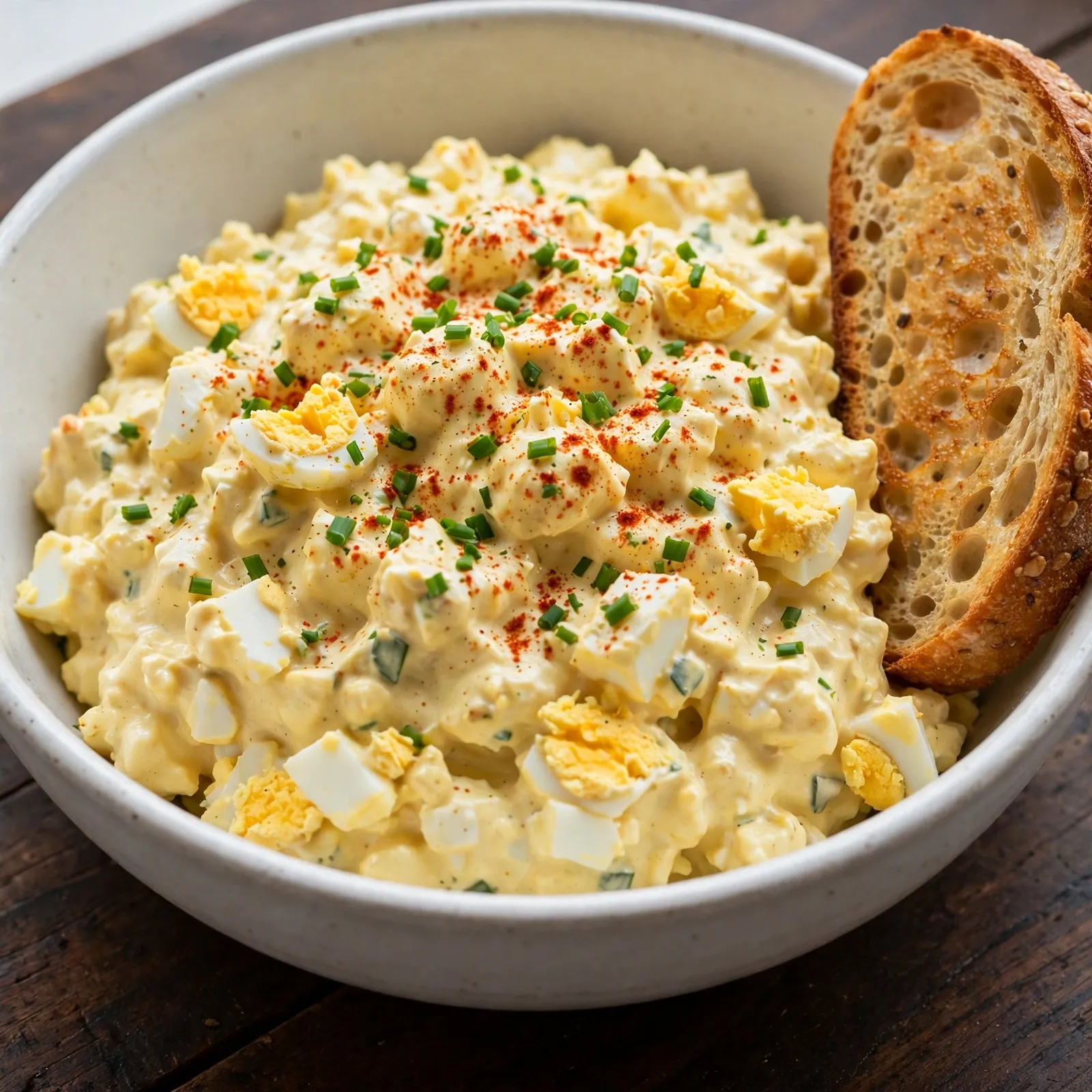
This egg salad recipe uses hard-boiled eggs cooked via the cold-water start method for consistent doneness, a mayonnaise and Dijon mustard base seasoned with lemon juice, celery for crunch, and fresh chives for color and a mild allium bite. It takes about 20 minutes from start to finish, serves 4, and keeps in the refrigerator for up to 3 days. It works in sandwiches, stuffed into lettuce cups, served over toast, or eaten directly with a fork. The recipe is simple enough that the quality of each individual ingredient is what you taste, which makes the seasoning and the egg doneness the two decisions worth getting right every time.
Why You’ll Love This Egg Salad Recipe
- No grey-green ring around the yolk. The cold-water start method and precise timing produce yolks that are fully cooked but still bright, creamy yellow throughout; overcooking is what creates the sulfurous grey ring that dulls both the appearance and the flavor.
- Seasoned well enough to taste complete on its own. The combination of Dijon mustard, lemon juice, and a deliberate salt level produces a dressing where the egg flavor comes through rather than getting buried in a flat mayonnaise base.
- Ready in 20 minutes. The eggs cook and cool in under 20 minutes; the mixing takes 3 to 4 minutes; the total time from cold eggs to a filled sandwich is well under half an hour.
- Practical for meal prep. Egg salad keeps in the refrigerator for up to 3 days with no loss in flavor, which makes a batch on Sunday the foundation for quick lunches for several days without any additional prep.
- Genuinely versatile. The base recipe is neutral enough to serve in any format: sandwich, wrap, toast, lettuce cup, or as a dip with crackers; its flavor profile suits both a casual lunch and a composed platter.
Ingredients You’ll Need
Recipe Timing
| Detail | Info |
|---|---|
| Servings | 4 |
| Difficulty | Easy |
| Course | Lunch, Side Dish, Snack |
| Cuisine | American |
| Prep Time | 5 minutes |
| Cook Time | 12 minutes |
| Rest Time | 5 minutes cooling |
| Total Time | 22 minutes |
For the eggs, use large eggs that are at least 7 to 10 days old rather than the freshest eggs you can find. Very fresh eggs have a lower pH in the egg white, which causes the white to adhere more firmly to the inner membrane of the shell during cooking; older eggs have a higher pH that reduces this adhesion and makes peeling dramatically easier. If you only have very fresh eggs, adding 1/2 teaspoon of baking soda to the cooking water raises the pH and replicates this effect.
For the mayonnaise, full-fat is the only version that produces the right texture and flavor. Low-fat mayonnaise contains more water and less fat, which produces a thinner dressing that makes the egg salad watery and slightly less rich. The mayonnaise is the dominant flavor vehicle in the dressing; use one you’d eat on its own and trust its quality.
For the mustard, Dijon specifically produces a sharper, more complex flavor than yellow mustard. Yellow mustard adds turmeric color and a blunter, more vinegary note; Dijon adds a subtle heat and a more nuanced background flavor that integrates more naturally with the egg. Whole-grain mustard works as a visual and textural variation and adds a pleasant pop of seed texture throughout.
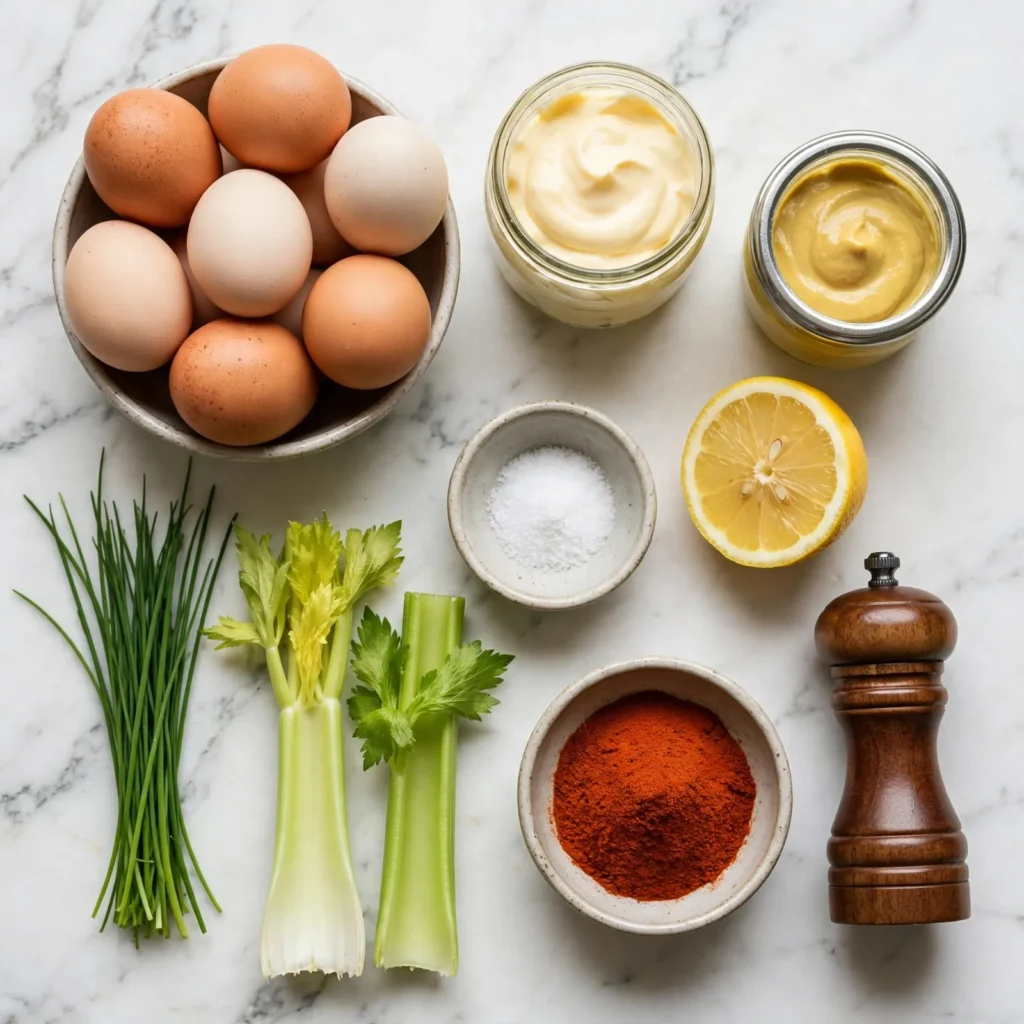
- 8 large eggs — the entire base of the recipe; their doneness is the most consequential single decision
- 4 tablespoons full-fat mayonnaise — the primary binding and flavoring component; adjust by 1/2 tablespoon based on preference after mixing
- 1 teaspoon Dijon mustard — adds depth, slight heat, and a sharpness that prevents the dressing from tasting flat
- 1 tablespoon fresh lemon juice — the acid component; brightens the entire mixture and prevents the mayonnaise from tasting heavy; use fresh, not bottled
- 2 celery stalks, finely diced — adds crunch and a clean, mildly vegetal freshness that contrasts the creaminess; finely diced means no piece larger than 5mm
- 3 tablespoons fresh chives, finely chopped — adds color and a mild allium note; green onions thinly sliced are a direct substitute at the same quantity
- 1/2 teaspoon fine salt — seasons the eggs and the dressing; taste before serving and adjust since mayonnaise brands vary significantly in their salt levels
- 1/4 teaspoon freshly ground black pepper — adds a background sharpness
- 1/4 teaspoon smoked paprika — scattered on top rather than mixed in; adds color, mild smokiness, and makes the finished bowl look more composed
- Optional: 1/4 teaspoon garlic powder — adds a very subtle savory background; easily omitted
Allergen and Dietary Disclosure
This egg salad contains eggs as its primary ingredient and mayonnaise, which is made from eggs and typically soy-based oil. Some mayonnaise brands contain trace amounts of mustard allergens beyond the listed Dijon; verify labels if mustard allergy is a concern.
For egg-free: a true egg salad substitute uses firm silken tofu or chickpeas mashed to a similar texture, combined with the same mayonnaise dressing (use vegan mayonnaise). The result is a different dish with a comparable flavor profile rather than a genuine egg salad; it works well as a sandwich filling and is worth knowing about for households with mixed dietary needs.
For dairy-free: the standard egg salad recipe contains no dairy as written. Verify the mayonnaise brand; most commercial mayonnaise is dairy-free but some specialty varieties include cream or milk solids.
For lower fat: replace 2 tablespoons of the mayonnaise with 2 tablespoons of full-fat plain Greek yogurt at the same quantity. The yogurt adds a mild tang that suits the lemon and Dijon, and the texture is slightly looser but still cohesive. Full-fat Greek yogurt is preferable to low-fat for the same reasons that full-fat mayonnaise is better.
This recipe has not been tested in a certified allergen-free kitchen and cannot be guaranteed safe for any specific allergy.
Equipment Needed
- Medium saucepan, 2 to 3 quart — for boiling the eggs. The saucepan should be wide enough to hold 8 eggs in a single layer without stacking; eggs that stack on top of each other cook unevenly because the bottom eggs are in direct contact with the heat source and the top eggs are insulated by the ones below.
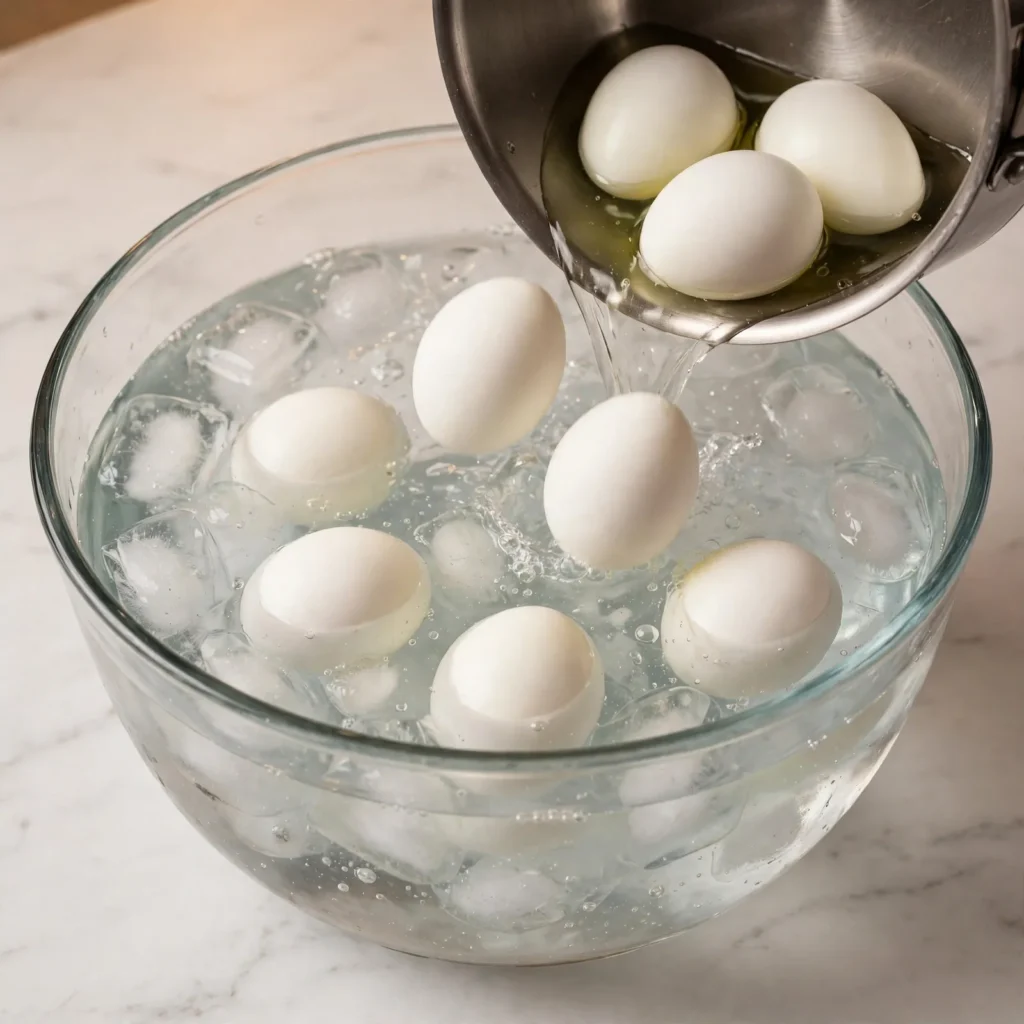
- Large bowl of ice water — for shocking the cooked eggs immediately after boiling. The ice bath stops the cooking process at the exact moment the eggs come off the heat; without it, the residual heat continues cooking the eggs for several minutes and can push them past the ideal doneness into the grey-ring territory. Fill the bowl before the eggs go in the water so it’s ready the moment the timer goes off.
- Egg slicer or sharp knife — for cutting the peeled eggs. An egg slicer produces uniform pieces quickly; a sharp knife produces more irregular, rustic-looking pieces that many people prefer for texture variation in the finished salad. Avoid serrated knives, which tear the egg white rather than cutting cleanly through it.
Step-by-Step Directions
Step 1: Cook the Eggs
Place the eggs in a single layer in the saucepan. Cover with cold water by at least 3cm. Place over medium-high heat and bring to a full, rolling boil; watch the pan because the transition from a simmer to a full boil can happen quickly. The moment the water reaches a full rolling boil, reduce the heat to medium-low to maintain a gentle boil and set a timer for exactly 10 minutes. This timing produces hard-boiled eggs with fully set, bright creamy-yellow yolks and no grey-green ring. At 8 minutes the yolk is set but has a slightly fudgy center; at 12 minutes the yolk is fully set and drier; 10 minutes is the precise sweet spot for egg salad.
Food safety note: Hard-boiled eggs cooked to this doneness reach a safe internal temperature throughout. Do not use cracked eggs in the cooking water.

Chef’s Note: The cold-water start method, placing cold eggs in cold water and bringing both to a boil together, produces more reliably centered yolks than the hot-water drop method. Dropping cold eggs into already-boiling water risks thermal shock cracking the shell and produces eggs where the yolk shifts to one side as the white sets rapidly in one direction. Cold-start eggs set evenly from all sides as the water temperature rises gradually.
Step 2: Ice Bath and Peel
While the eggs cook, fill the large bowl with cold water and a generous amount of ice. When the timer goes off, use a slotted spoon to transfer the eggs immediately from the hot water into the ice bath. Let them sit in the ice bath for at least 5 minutes; the cold water contracts the egg white slightly away from the shell membrane, which makes peeling considerably easier and prevents further cooking from the residual heat.
To peel each egg, roll it gently but firmly on the counter surface to crack the shell all over, then peel from the widest end where the air pocket is largest. Hold the peeled egg under cold running water as you remove the last shell fragments. Pat dry with a paper towel. A well-peeled egg should look smooth and unblemished; any rough patches are torn egg white and will affect the appearance of the finished salad if the eggs are cut rather than chopped.
Chef’s Note: Peeling under cold running water rather than completely dry is a practical technique detail that makes a difference. The thin stream of water lubricates the space between the shell membrane and the egg white, allowing the membrane to slide away from the white cleanly rather than tearing fragments of the white with it. This is particularly useful for very fresh eggs or eggs that didn’t peel cleanly after rolling.
Step 3: Chop the Eggs
Once peeled and patted dry, cut each egg into quarters with the sharp knife, then roughly chop the quarters into pieces. The ideal size is uneven rather than uniform: some pieces as small as 5 to 8mm for creamy integration into the dressing, and some pieces up to 1.5 to 2cm that provide textural definition and are visibly identifiable as egg white in the finished salad. Completely fine-chopping produces an egg salad that reads as paste; completely coarse-chopping produces one that doesn’t hold together on bread. The mix of sizes is what gives the salad both its creaminess and its texture.
Place all the chopped eggs in the large mixing bowl.
Step 4: Mix the Dressing
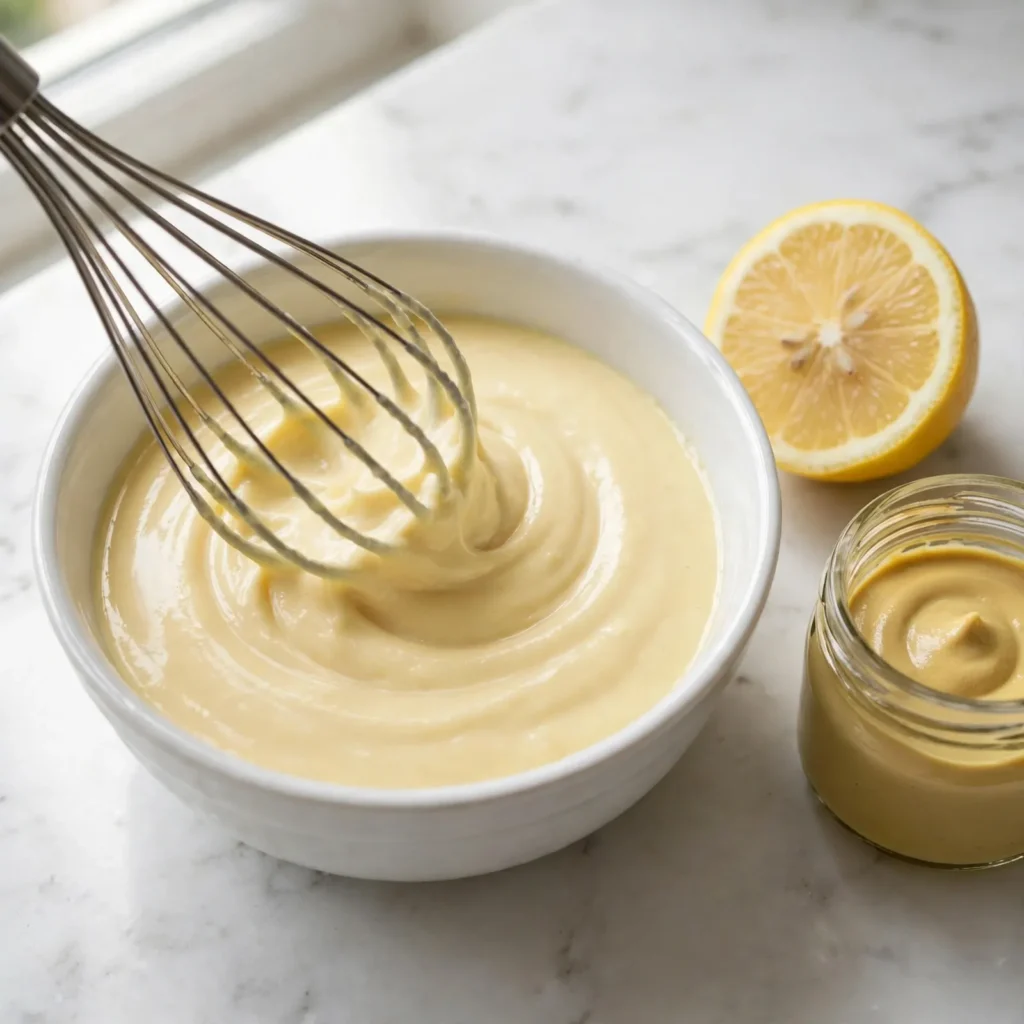
In a small separate bowl, combine the mayonnaise, Dijon mustard, lemon juice, salt, black pepper, and optional garlic powder. Whisk together briefly until the ingredients form a smooth, cohesive dressing. Taste this dressing before it touches the eggs; it should taste assertively seasoned and slightly sharper than you’d want in the finished salad because the eggs will dilute both the salt and the lemon significantly when combined.
Chef’s Note: Mixing the dressing separately before adding it to the eggs serves a specific purpose: it ensures the salt, mustard, and lemon are evenly distributed through the mixture from the first toss. When seasonings are added directly to the chopped eggs without pre-mixing, the salt tends to concentrate in areas of contact and the lemon hits some pieces more than others. A pre-mixed dressing distributes evenly in a single fold.
Step 5: Combine and Finish
Pour the dressing over the chopped eggs. Add the finely diced celery and most of the chopped chives (reserve a small amount for garnish). Fold everything together gently with a large spoon or spatula using broad strokes that lift the eggs from the bottom of the bowl and fold them through the dressing. Stop folding as soon as the dressing coats all the egg pieces and no dry egg remains; over-folding continues breaking down the egg pieces and produces an egg salad that’s too smooth and paste-like. Taste and adjust salt and lemon.
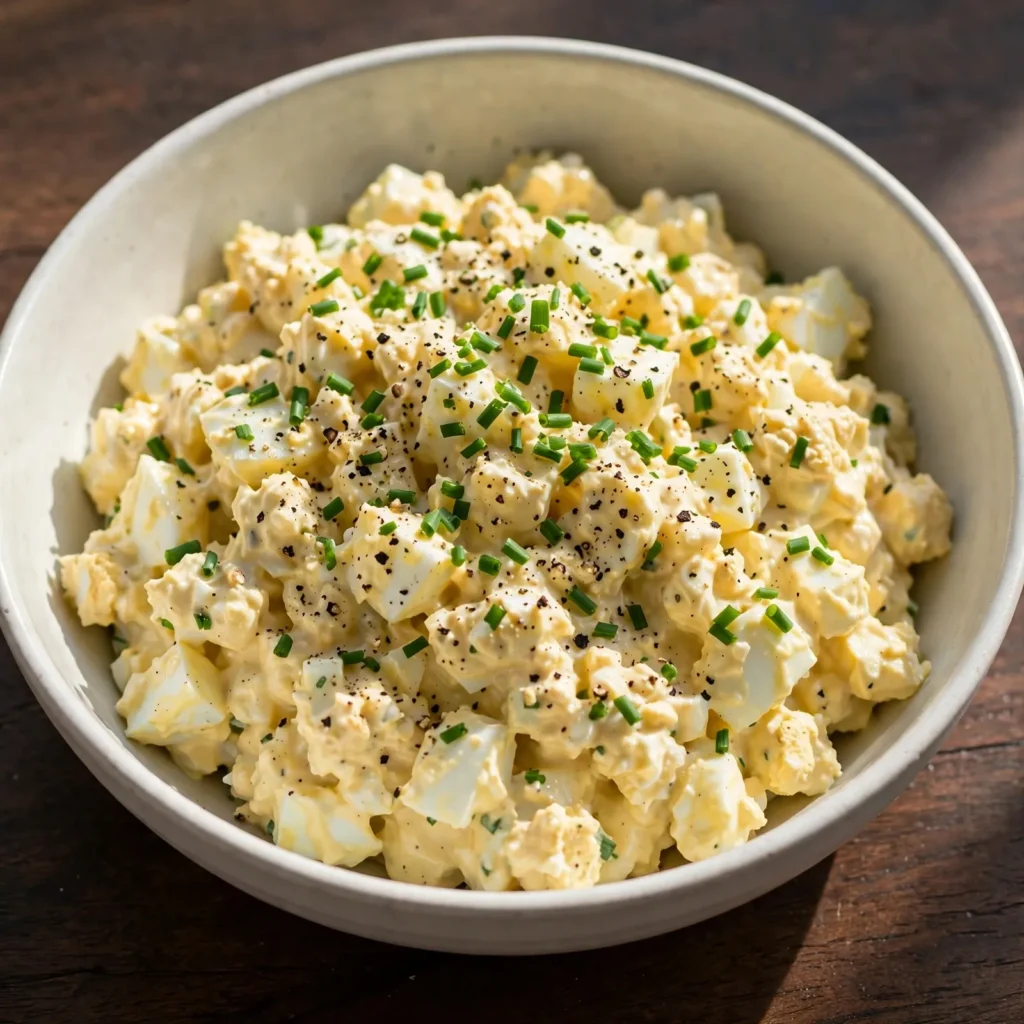
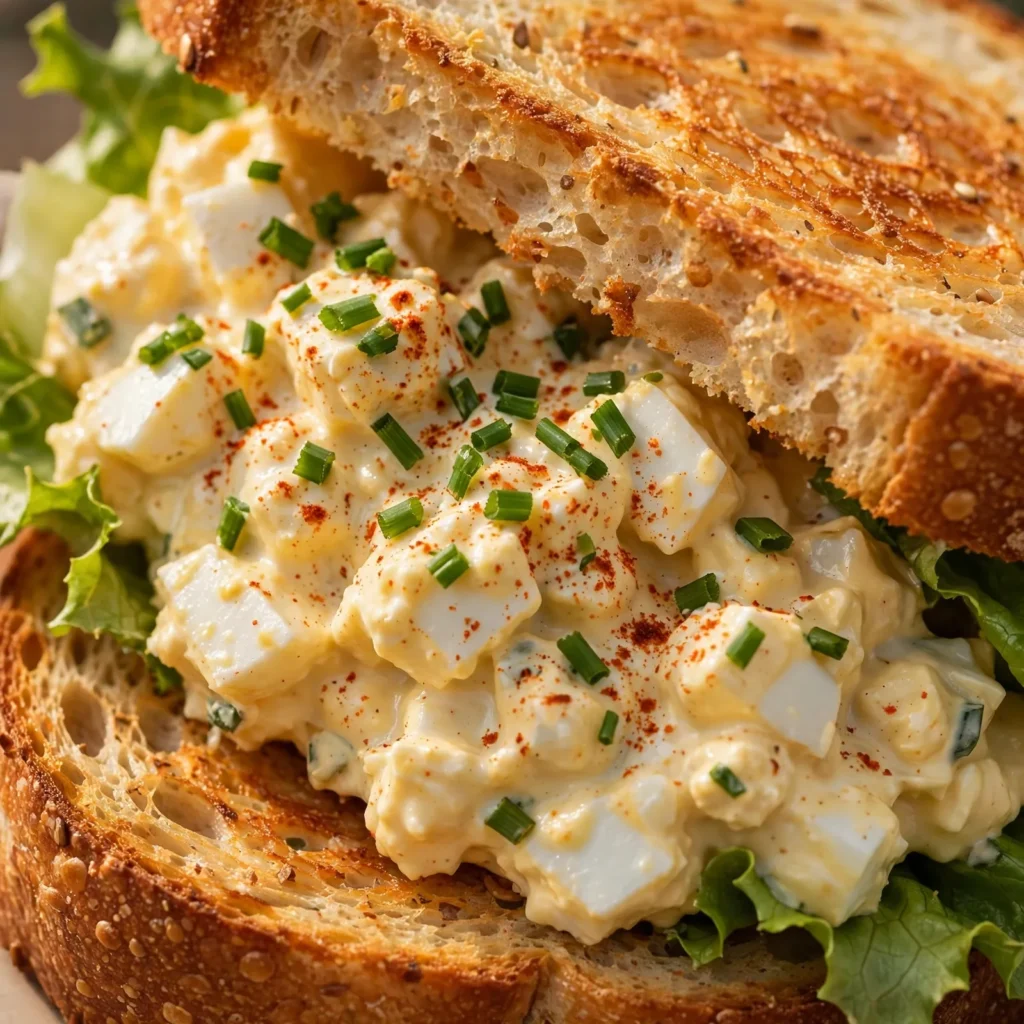
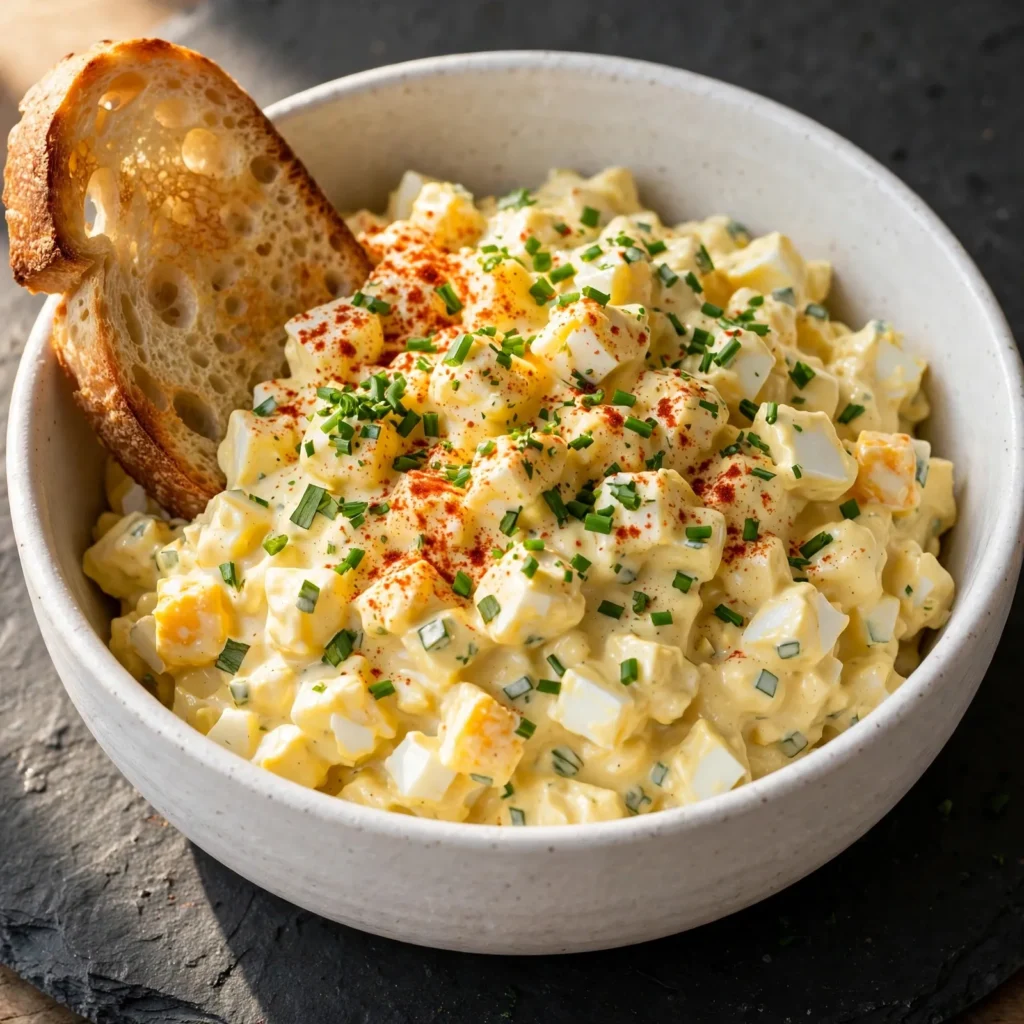
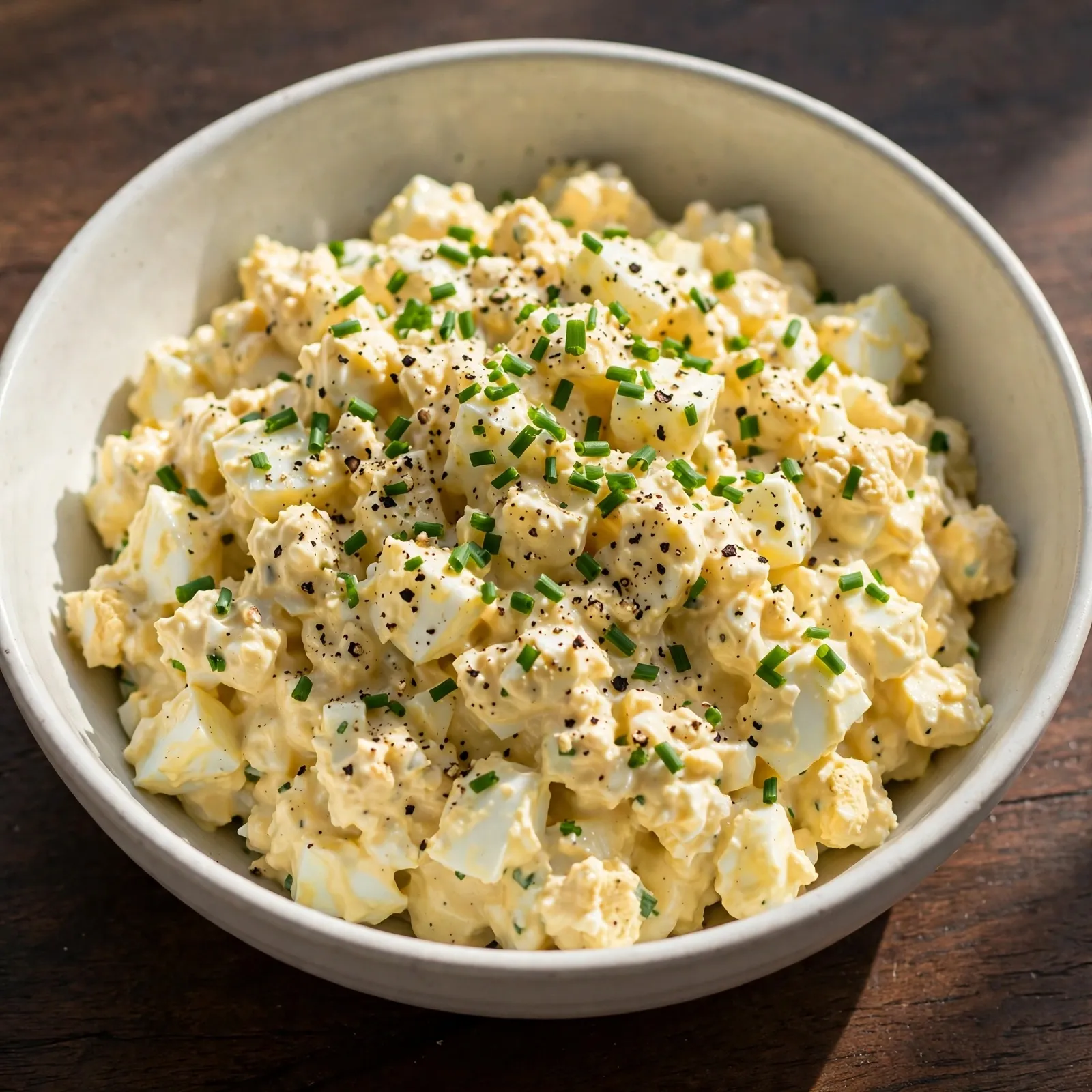
Transfer to a serving bowl and finish with the reserved chives and a light dusting of smoked paprika directly over the surface.
Common Mistakes and Troubleshooting
| Problem | Cause | Solution |
|---|---|---|
| Grey-green ring around the yolk | Eggs overcooked or not cooled in ice bath immediately | Cook for exactly 10 minutes from rolling boil; transfer to ice bath the moment the timer goes off; never guess |
| Egg salad watery and pooling liquid | Low-fat mayonnaise used, or eggs not patted dry after the ice bath | Always use full-fat mayonnaise; dry each peeled egg with a paper towel before chopping |
| Eggs impossible to peel without tearing | Eggs too fresh, or no ice bath used | Use eggs 7 to 10 days old; always ice bath for at least 5 minutes; peel under cold running water |
| Salad tastes bland and flat | Under-seasoned dressing, or dressing mixed directly into eggs without pre-tasting | Mix and taste the dressing separately before adding; season assertively knowing the eggs will dilute the flavor |
| Texture too pasty and uniform | Eggs over-chopped or over-folded after adding dressing | Leave some egg pieces up to 2cm; fold until just combined and stop before the mixture becomes smooth |
| Dressing too thick and heavy | Too much mayonnaise relative to the egg quantity | Start with 3 tablespoons of mayonnaise and add the fourth only after tasting; add extra lemon juice to loosen |
Variations and Substitutions
- Avocado egg salad: Replace 2 tablespoons of the mayonnaise with half a ripe avocado, mashed until smooth directly in the mixing bowl before the eggs are added. The avocado produces a creamier, slightly richer base with a mild green color and adds healthy fat without making the salad heavier. Add an extra teaspoon of lemon juice to prevent oxidation. This version should be eaten the same day since avocado browns rapidly.
- Curried egg salad: Add 3/4 teaspoon of mild curry powder and 1/4 teaspoon of ground turmeric to the dressing before mixing. Add 2 tablespoons of finely diced dried apricots alongside the celery for a sweet counterpoint to the warm spice. The turmeric deepens the yellow color dramatically and the curry spice produces a completely different but very cohesive flavor profile that works particularly well in a wrap with fresh cilantro.
- Herb-forward egg salad: Add 2 tablespoons of fresh dill, 1 tablespoon of fresh tarragon, and 1 tablespoon of flat-leaf parsley to the chives, all finely chopped. Reduce the Dijon to 1/2 teaspoon and increase the lemon juice to 1.5 tablespoons. The multiple fresh herbs produce a more complex, lighter-tasting egg salad that suits a composed platter or open-faced toast more than a standard closed sandwich.
- Spicy sriracha egg salad: Add 1 to 2 teaspoons of sriracha or a similar chili sauce to the dressing. Replace the chives with finely diced red onion at 2 tablespoons. The chili heat cuts through the richness of the mayonnaise cleanly and the red onion adds a sharper, more assertive allium note than chives. This version works well in a sandwich with sliced avocado and crispy lettuce.
- Greek yogurt egg salad: Replace all the mayonnaise with full-fat plain Greek yogurt at the same quantity. The yogurt produces a noticeably tangier, lighter egg salad with slightly less creaminess. Increase the Dijon to 1.5 teaspoons and the lemon to 1.5 tablespoons to compensate for the yogurt’s thicker, less fat-forward base. This version is practical for people who find the standard version too rich.
- Gluten-free confirmation: The egg salad recipe itself is naturally gluten-free; the eggs, mayonnaise, mustard, lemon, celery, chives, and spices contain no gluten. Verify the mayonnaise and Dijon mustard brands individually if strict gluten-free compliance is needed, as some specialty versions contain wheat-derived vinegar or stabilizers. Serve over certified gluten-free bread, rice cakes, or in lettuce cups.
Serving Suggestions
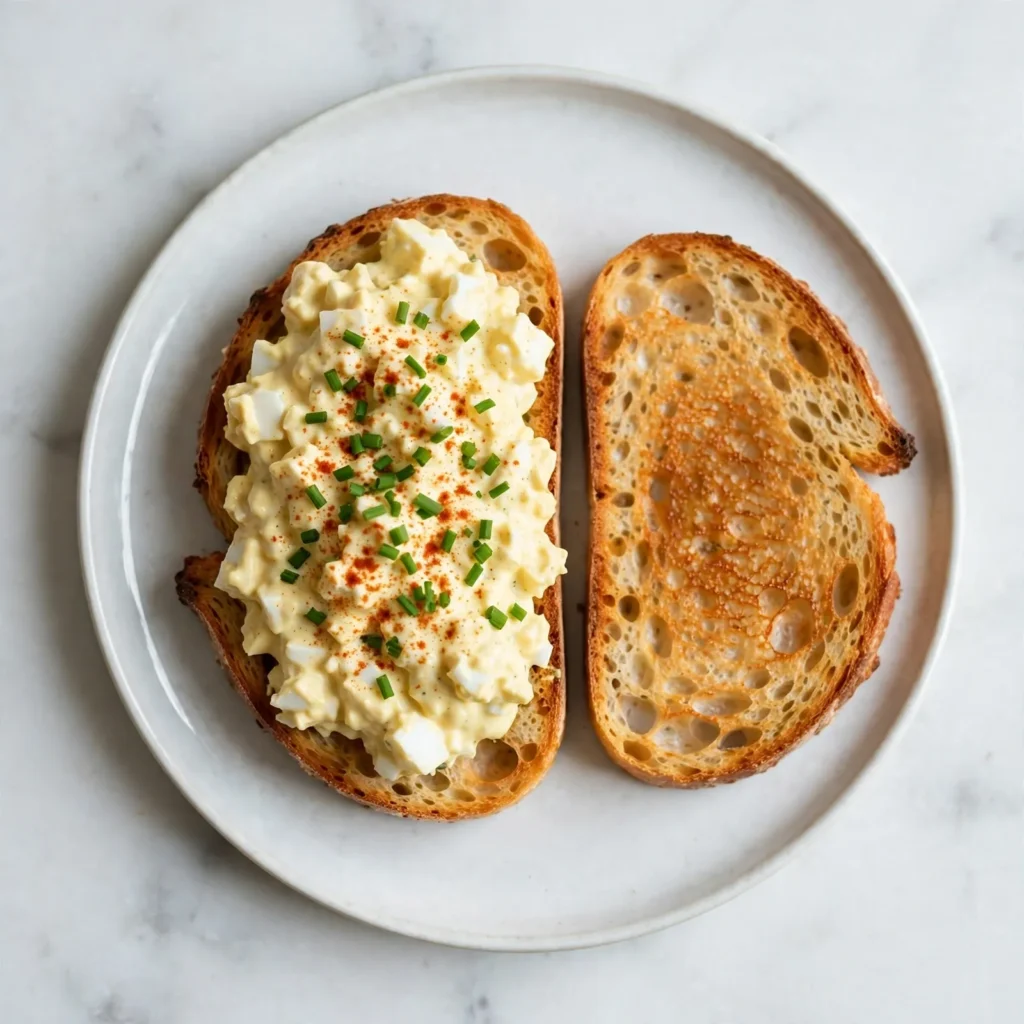
- Pile generously onto thick-sliced toasted sourdough or a toasted brioche bun and add a layer of crisp iceberg lettuce for the cold crunch that contrasts the creamy filling. The toasted bread holds up under the moisture of the egg salad longer than untoasted, which makes the sandwich more practical to hold and eat.
- Spoon into butter lettuce cups for a low-carb presentation that works well as a light lunch or as a composed appetizer plate; the lettuce cups look intentional and require no bread at all.
- Serve over a slice of ripe tomato on a wide plate for a simple lunch that requires no bread. The tomato’s acidity works with the lemon in the dressing and its juices don’t make the salad soggy the way bread would.
- Use as a filling in a whole-wheat or plain flour wrap with sliced cucumber, shredded carrots, and a drizzle of hot sauce; the wrap format makes the egg salad portable without any extra equipment or prep.
- Arrange on a platter as part of a brunch spread alongside smoked salmon, sliced cucumbers, and toasted bagels. The egg salad anchors the protein component of the spread and pairs naturally with everything else on the table without any specific adjustment.
- Pair with cold sparkling water with lemon or a simple cucumber water; both provide a clean, refreshing contrast to the richness of the mayonnaise base without competing with the salad’s flavor.
Tips for the Best Results
- Use the ice bath every single time, without exception. The ice bath is the one step most commonly skipped when making hard-boiled eggs, and it’s the most consequential. Without it, the eggs continue cooking in their residual heat for 3 to 5 minutes after coming off the stove, which is enough to push them past the creamy-yolk stage into the overcooking range. A 5-minute ice bath stops this process at exactly the right moment and makes the eggs considerably easier to peel.
- Taste the dressing before and after combining. The egg salad’s final flavor is impossible to predict until the dressing has been folded through the eggs, because the eggs absorb and dilute both the salt and the acid. Make the dressing assertively seasoned in the bowl, taste it, fold it into the eggs, taste again, and adjust. This two-stage tasting is the practical step that eliminates the bland, under-seasoned egg salad problem entirely.
- Leave some texture variation in the chopped eggs. Uniformly fine-chopped egg produces a texture that reads as paste rather than salad; uniformly coarse-chopped egg doesn’t hold together in a sandwich. The combination of some finely broken yolk integrated into the dressing and some larger egg white chunks provides a salad that is simultaneously creamy and texturally interesting. Achieve this by chopping half the eggs finely and half more coarsely, then combining.
- Dice the celery finely enough that it doesn’t dominate. Celery pieces larger than 5mm create a crunch that can feel like an intrusion rather than a contribution; finely diced celery below 5mm provides crunch that’s present in every bite without any single piece being large enough to distract. Take the extra 90 seconds to dice finely.
- Serve cold rather than at room temperature. Egg salad served straight from the refrigerator has better flavor definition and a more cohesive texture than egg salad left at room temperature for 20 minutes; the fat in the mayonnaise is more structured when cold, which keeps the dressing from thinning and making the salad look and feel greasy. If the salad has been refrigerated and is very cold, allow it to sit at room temperature for no more than 5 to 8 minutes before serving.
Storage Tips
Refrigerator
Egg salad keeps in the refrigerator in a sealed container for up to 3 days. Press a sheet of plastic wrap directly against the surface of the salad before sealing the container; this prevents the top layer from drying out and developing a skin during storage. The flavor is best on days 1 and 2; by day 3 the lemon note has faded and the celery has softened slightly. Stir the salad from the bottom before serving since the dressing can settle. Do not store already-dressed egg salad at room temperature for more than 2 hours; the combination of eggs and mayonnaise falls into the food safety risk zone above 4°C after 2 hours.
Freezer
Egg salad does not freeze well. Mayonnaise separates and becomes greasy and grainy during freezing, and the egg white texture becomes rubbery after thawing. Hard-boiled eggs themselves also change texture dramatically in the freezer: the white becomes tough and rubbery while the yolk becomes crumbly. Do not freeze egg salad in any form.
Reheating
Egg salad is never reheated; it is a cold preparation served cold or at room temperature. If the container has been in the refrigerator and the mayonnaise-based dressing has thickened more than you’d like, allow it to rest at room temperature for 5 to 8 minutes and fold gently once before serving.
Make-ahead note: Egg salad is genuinely one of the most practical make-ahead items for a weekly meal prep routine. The full batch takes 22 minutes and stays good for 3 days in the refrigerator, which means it can be the ready-to-use protein base for a lunch every day from Monday to Wednesday with a single Sunday preparation session. Hard-boil the eggs and mix the dressing ahead; combine them when ready to eat for the freshest texture, or combine fully and refrigerate.
Nutrition Information
Per serving, approximately 1/4 of the recipe, egg salad without bread:
| Nutrient | Amount |
|---|---|
| Calories | 240 kcal |
| Protein | 13g |
| Total Carbohydrates | 2g |
| Dietary Fiber | 0.3g |
| Total Sugar | 1g |
| Total Fat | 20g |
| Saturated Fat | 4g |
| Cholesterol | 380mg |
| Sodium | 390mg |
| Vitamin C | 3mg |
| Calcium | 60mg |
| Iron | 1.8mg |
| Potassium | 155mg |
Nutrition values are approximate and may vary based on mayonnaise brand, egg size, and serving additions such as bread.
Why This Recipe Works
The texture and flavor of a well-made egg salad depend on understanding what happens to eggs at different temperatures during cooking and why the yolk color changes with time. Egg yolks are approximately 30% fat, 16% protein, and contain a high concentration of sulfur-bearing amino acids, particularly methionine and cysteine. When eggs are cooked at boiling temperature (100°C), the heat denatures these proteins and causes them to set into the firm, compact structure of a cooked yolk. Up to about 10 minutes of cooking from the point of boiling, the internal temperature of the yolk is sufficient to fully coagulate the proteins while retaining a creamy, slightly moist texture that crumbles softly and mixes smoothly into a dressing. Beyond 12 to 14 minutes of boiling, the sulfur compounds in the egg yolk’s proteins begin reacting with the hydrogen in the surrounding water and the iron in the egg white to produce iron sulfide, a greenish-grey compound that forms at the interface between the yolk and the white. This is the grey-green ring that signals overcooking; it is a chemical change, not a food safety issue, but it significantly affects both the appearance and the flavor, adding a faintly sulfurous note that makes the egg taste less clean and more muted.
The ice bath’s role extends beyond simply stopping the cooking. When a hot egg is submerged in ice water, the rapid drop in temperature at the shell surface causes the outer layers of the egg white to contract slightly away from the shell membrane. This thermal contraction creates a small physical gap between the egg white and the shell, which is why ice-bathed eggs peel so much more readily than eggs allowed to cool at room temperature. At room temperature, the egg white cools slowly and contracts gradually, maintaining a closer bond with the shell membrane; the gap that makes peeling easy either doesn’t form or forms unevenly.
Mayonnaise’s role in egg salad is both structural and flavor-related. Mayonnaise is an oil-in-water emulsion: tiny fat droplets from the oil are suspended throughout an aqueous phase and held apart by lecithin from the egg yolk used in its manufacture. When mayonnaise is mixed with the chopped eggs, the emulsified fat coats each egg piece and creates a smooth, cohesive dressing that doesn’t separate into oily and watery phases. This is why full-fat mayonnaise produces a stable, consistent egg salad and low-fat varieties produce a watery one; low-fat mayonnaise contains more water and fewer fat droplets, which produces a less stable emulsion that breaks down more readily when mixed with the additional moisture released by the eggs during chopping.
Dijon mustard contributes flavor through two mechanisms. It contains allyl isothiocyanate, the compound responsible for its characteristic sharp heat, which provides the background bite that distinguishes a well-seasoned egg salad from a flat one. It also functions as an emulsifier in the dressing itself: the mucilage compounds in ground mustard seed help stabilize the oil-in-water structure of the mayonnaise when the additional lemon juice (a water-based liquid) is introduced, preventing the dressing from breaking or becoming greasy when the acid dilutes the existing emulsion. This is why the dressing mixed separately, with all the liquid added before combining with the eggs, holds together better than one assembled directly in the egg bowl.
I’ve tested this recipe with three egg-to-mayonnaise ratios: a standard 4 tablespoons for 8 eggs, a reduced 3 tablespoons, and an increased 5 tablespoons. At 5 tablespoons the mayonnaise flavor dominates the egg and the salad reads as mayonnaise with egg rather than egg salad. At 3 tablespoons the salad is well-seasoned but noticeably drier and doesn’t coat the bread or lettuce cup evenly. At 4 tablespoons, the mayonnaise enhances the egg without overwhelming it and the texture is cohesive without being heavy; this is the correct ratio for 8 large eggs.
Frequently Asked Questions
How long does egg salad last in the refrigerator?
Egg salad lasts up to 3 days in the refrigerator stored in a sealed container with plastic wrap pressed directly against the surface. The flavor is best on days 1 and 2; by day 3 the lemon note has softened and the celery has lost some of its crunch. Do not leave egg salad at room temperature for longer than 2 hours, as the combination of eggs and mayonnaise creates food safety risks above refrigerator temperature after this point.
Why does my egg salad turn watery?
Watery egg salad comes from two main sources. The most common is using low-fat or light mayonnaise rather than full-fat; low-fat mayonnaise has significantly more water content, which separates from the mixture over time and pools in the bowl. The second is not patting the eggs dry after the ice bath before chopping them; surface water from the ice bath dilutes the dressing. A third cause is using very fresh eggs that contain more moisture; older eggs (7 to 10 days) produce a slightly drier, more cohesive egg salad.
Can I make egg salad without mayonnaise?
Yes. The most successful no-mayonnaise version uses full-fat plain Greek yogurt at the same quantity as a straight swap; it produces a tangier, lighter result that still holds together well and complements the lemon and Dijon. Mashed avocado works as a partial or full replacement for a creamier, richer version. Hummus thinned slightly with lemon juice is a less conventional but workable substitute that produces a completely different flavor profile. None of these is identical to the mayonnaise version, but each produces an egg salad that holds together and tastes deliberate.
How do I know if my hard-boiled eggs are done?
For hard-boiled eggs destined for egg salad, the target is a fully set yolk with a creamy, yellow center and no grey-green ring. At exactly 10 minutes from the moment the water reaches a full rolling boil (cold-water start method), this is consistently what you get. The most reliable confirmation is visual: peel one egg and cut it in half; the yolk should be uniformly yellow throughout with no green tinge and no damp, translucent center. An instant-read thermometer inserted into the center of a peeled yolk should read above 74°C.
Can I add vegetables other than celery?
Yes. Finely diced red bell pepper adds a sweet, slightly fruity crunch with bright color. Finely diced red onion adds a sharper allium note than chives; use no more than 2 tablespoons since raw onion can quickly dominate. Finely diced dill pickles or cornichons add a briny, tangy element that works well alongside the Dijon. Corn kernels add sweetness and a soft crunch. Any addition should be finely diced to 5mm or below so it integrates rather than competing with the egg as the primary ingredient.
Is egg salad gluten-free?
Yes, the egg salad recipe as written is naturally gluten-free. Eggs, mayonnaise, Dijon mustard, lemon, celery, chives, and spices are all inherently gluten-free. Verify the mayonnaise and Dijon mustard brands if strict celiac compliance is needed, as some specialty or flavored varieties contain wheat-derived thickeners or vinegar. The egg salad itself is fine; the decision point is the serving vehicle: use certified gluten-free bread, rice cakes, or lettuce cups to maintain a completely gluten-free meal.
Why is there a grey ring around my egg yolk?
The grey-green ring is iron sulfide, formed when the sulfur compounds in the egg yolk react with iron from the egg white at sustained high temperatures. It forms when eggs are cooked beyond approximately 12 to 13 minutes at boiling temperature or when they are not cooled immediately in an ice bath. The ring is visually unappealing and adds a faintly sulfurous flavor to the egg but is not a food safety concern. To prevent it: cook for exactly 10 minutes from a rolling boil, and transfer immediately to an ice bath the moment the timer goes off. There is no way to reverse it once it has formed.
Conclusion
Egg salad rewards attention at two specific moments: pulling the eggs from the heat at exactly the right time and getting the dressing seasoned before it touches the eggs rather than trying to adjust it after. Both take under 30 seconds of awareness and produce a measurably better result than skipping either step.
The make-ahead value of this recipe is genuine. A batch of egg salad made on Sunday takes 22 minutes and delivers ready-to-use protein for three days of lunches without any repeated effort. The base recipe is consistent enough to rely on each time; the variations are worth exploring once the base is familiar and automatic.
If you loved this recipe, save it to your easy lunch ideas and meal prep recipes Pinterest board so you can find it easily later. For more same recipes follow Thecookingvibes Pinterest account.
Classic Egg Salad
Ingredients
Equipment
Method
- Arrange eggs in a single layer in a medium saucepan. Cover with cold water by at least 3cm. Bring to a full rolling boil over medium-high heat. Reduce to medium-low and set a timer for exactly 10 minutes.
- While the eggs cook, fill a large bowl with cold water and a generous amount of ice. When the timer goes off, transfer eggs immediately to the ice bath using a slotted spoon. Rest for 5 minutes minimum.
- Peel each egg by rolling on the counter to crack the shell all over, then peeling from the wide end under cold running water. Pat each peeled egg dry with a paper towel.
- Chop the eggs into varied pieces: some finely broken down (5 to 8mm) and some larger (up to 2cm). Place in a large mixing bowl.
- In a separate small bowl, combine mayonnaise, Dijon mustard, lemon juice, salt, pepper, and garlic powder. Whisk until smooth. Taste and adjust; the dressing should be assertively seasoned before touching the eggs.
- Pour dressing over the chopped eggs. Add finely diced celery and most of the chives. Fold gently with a large spoon until everything is just coated. Do not over-fold.
- Transfer to a serving bowl. Scatter reserved chives and smoked paprika across the surface. Serve immediately or refrigerate.
Notes
- Always use the ice bath immediately after cooking; without it, residual heat continues cooking the eggs and causes the grey-green yolk ring.
- Taste and season the dressing before adding it to the eggs; it should taste assertive since the eggs will dilute both salt and lemon significantly.
- Leave varied piece sizes when chopping: uniformly fine-chopped egg produces paste, not salad.
- Press plastic wrap directly against the salad surface before refrigerating to prevent a skin forming during storage.