Creamy Asparagus Soup — Vivid Green, Silky, 30 Minutes
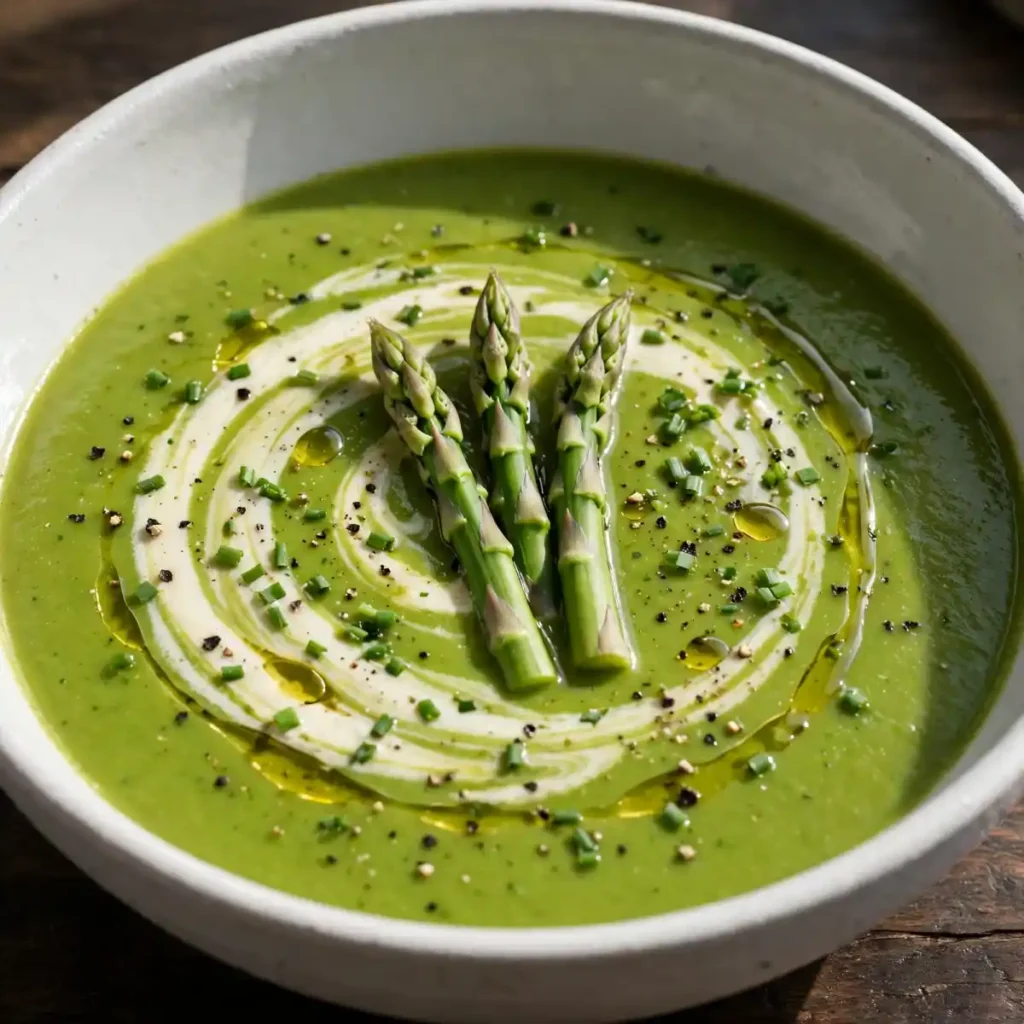
Blend a properly made asparagus soup and the color in the blender should stop you for a moment: it’s a bright, almost electric green that only happens when the asparagus goes into barely simmering liquid and comes out again quickly, before the heat has had long enough to convert its chlorophyll from vivid to dull army-green. That color is the visual signal that the soup’s flavor is still alive too, grassy and clean and distinctly asparagus rather than the muted, overcooked vegetable taste that most blended soups settle into.
This asparagus soup recipe uses a simple base of leek, garlic, and a small amount of potato to give the soup body without flour or cream as a thickener, vegetable broth that keeps everything clean-tasting, a brief 8 to 10 minute simmer that preserves the asparagus’s bright character, and an optional swirl of cream at the end for richness without heaviness. It serves 4, takes 30 minutes, and works beautifully hot from the pot in spring, or chilled over ice in warmer months as a genuinely elegant cold soup that requires no additional effort.
Why You’ll Love This Asparagus Soup
- Color that holds its brightness. The 8 to 10 minute cooking window is specifically short enough to preserve the asparagus’s chlorophyll in its bright green form; a 20 to 25 minute simmer produces a dull, grey-green soup that looks tired before it reaches the table.
- Silky texture without flour or heavy thickening. A single small potato cooked into the base provides enough dissolved starch to give the blended soup a smooth, slightly coating body without any flour roux or excessive cream; the result feels light and clean rather than gluey.
- Works hot or cold without any adjustment. The seasoning balance and acid level in this recipe are calibrated to taste bright at both temperatures; most soups taste flat when chilled because cold numbs the perception of salt and acid, so this recipe accounts for that with a final seasoning check just before serving.
- Ready in 30 minutes with almost no active attention. The base softens in 8 minutes, the asparagus cooks in 10, the blending takes 2 minutes; most of the half-hour is hands-off simmering while you do something else.
- Naturally vegan and gluten-free as written. The base recipe contains no dairy or gluten; cream is an optional finish rather than a structural ingredient, making this accessible to a wide range of dietary needs without separate preparation.
Ingredients You’ll Need
Recipe Timing
| Servings | 4 |
| Difficulty | Easy |
| Course | Starter, Main Course, Light Lunch |
| Cuisine | European, American |
| Prep Time | 10 minutes |
| Cook Time | 20 minutes |
| Rest Time | 0 minutes |
| Total Time | 30 minutes |
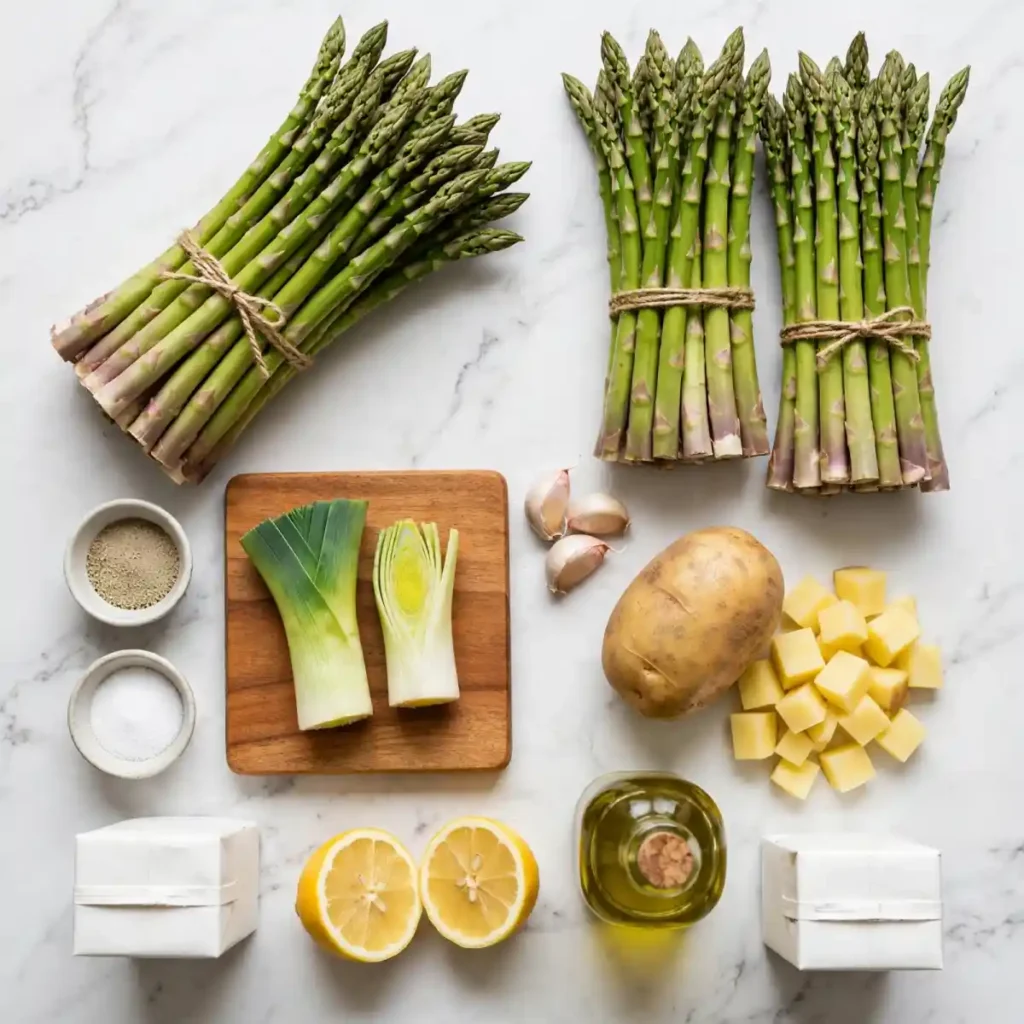
For the asparagus, choose firm stalks with tightly closed tips; loose, feathering tips indicate the asparagus is past peak freshness and will produce a less vivid, slightly more bitter soup. Thinner asparagus (pencil-thin) blends to a smoother result than very thick stalks, which contain more woody fiber in their lower sections. Regardless of thickness, snap or cut off the woody bottom 3 to 5cm of each stalk; these woody ends contain very little of the asparagus’s flavor but significantly more of its fibrous, indigestible material that makes the blended soup feel grainy rather than smooth.
For the leek, use only the white and pale green sections; the dark green tops are too fibrous and produce a slightly bitter, grassy note in the base that competes with the asparagus’s cleaner flavor. Rinse the sliced leek thoroughly after cutting; leeks trap significant soil between their layers that is invisible until the soup is finished.
For the potato, use a starchy variety (russet or Yukon Gold) rather than a waxy variety. Starchy potatoes release their starch more readily into the cooking liquid during simmering, which produces a smoother, more evenly thickened blended soup. Waxy potatoes hold their structure even when cooked through and produce a slightly grainy, less integrated result when blended.
For the broth, a good-quality low-sodium vegetable broth produces a cleaner, lighter soup that lets the asparagus’s flavor remain central. Chicken broth adds a savory depth that some people prefer; either works at the same quantity.
- 700g (about 2 large bunches) fresh asparagus, woody ends snapped off — the primary ingredient; don’t skimp; use the full quantity for a deeply flavored, vivid-colored soup
- 1 medium leek (white and pale green parts only), cleaned and sliced into rounds — the aromatic base; mellower and sweeter than onion, which pairs better with asparagus’s delicate flavor
- 3 garlic cloves, roughly chopped — adds savory depth; rough-chopped rather than minced since everything gets blended
- 1 medium starchy potato (about 200g), peeled and diced into 2cm cubes — the natural thickener; keeps the soup silky without flour or heavy cream
- 1 litre (4 cups) low-sodium vegetable broth — the cooking liquid; adds flavor without overpowering the asparagus; substitute chicken broth for a deeper, more savory result
- 2 tablespoons olive oil — for softening the leek and garlic; also contributes a fruity, slightly peppery background note
- 1/2 teaspoon fine salt — season at the start to begin drawing out moisture from the leek; adjust at the end
- 1/4 teaspoon white pepper — white pepper is specifically preferred over black here because it integrates invisibly into the blended green soup; black pepper produces visible dark flecks that interrupt the soup’s color
- 1 tablespoon fresh lemon juice — added after blending; brightens and amplifies the asparagus flavor without making the soup taste lemony
- Optional: 60ml (1/4 cup) heavy cream — stirred in after blending for richness; skip for a vegan, lighter version
- For garnish: 8 to 12 thin reserved asparagus tips briefly blanched, a small drizzle of cream or olive oil, fresh chives or flat-leaf parsley, flaky salt, cracked black pepper
Allergen and Dietary Disclosure
This asparagus soup is naturally dairy-free (without the optional cream), gluten-free, egg-free, and nut-free as written. With the optional cream, it contains dairy.
For vegan: omit the optional cream entirely; the soup is fully vegan without it. For a creamy finish without dairy, stir in 2 tablespoons of full-fat coconut cream or 2 tablespoons of cashew cream for richness; both integrate smoothly into the green soup without significantly altering its flavor at this small quantity. If using coconut cream, use a refined (unflavored) variety.
For lower sodium: use an unsalted or no-sodium-added vegetable broth and reduce the initial salt to a pinch; taste and add small amounts at the end only. Asparagus has a naturally savory character that reads as more fully seasoned than it is; it needs less salt than most vegetables.
This recipe has not been tested in a certified allergen-free kitchen and cannot be guaranteed safe for any specific allergy.
Equipment Needed
- High-powered blender or immersion blender — for the smooth, silky texture that defines this soup. A high-powered countertop blender (such as a Vitamix-style or similar) produces the absolute smoothest result because the high blade speed processes the asparagus fibers into a uniform, nearly invisible dispersion. An immersion blender works adequately and avoids transferring hot liquid between vessels, but produces a slightly coarser texture that some people prefer straining through a fine mesh sieve for the cleanest result. Never fill a countertop blender more than half-full with hot liquid; fill it in two batches if the volume is too large, holding the lid down with a folded cloth.
- Fine mesh sieve (optional but recommended) — for straining the blended soup if using an immersion blender or if a very refined, restaurant-smooth texture is the goal. Push the blended soup through the sieve with the back of a ladle; the fibrous pulp that remains behind produces a noticeably smoother, more elegant result when removed.
- Large heavy-bottomed saucepan (3 to 4-quart) — wide enough to allow the asparagus to cook in a relatively shallow layer of broth, which helps the brief simmer time cook the stalks evenly before color loss.
Step-by-Step Directions
Step 1: Prepare the Asparagus
Reserve 8 to 12 of the thinnest, most attractive asparagus tips (about 5cm from the top) in a small bowl of cold water; these will be briefly blanched separately for the garnish and should not go into the main soup. Cut the remaining asparagus into rough 3 to 4cm pieces; precise cuts are not needed since everything will be blended.
Wash the sliced leek thoroughly in a bowl of cold water, swishing to dislodge any soil trapped between the layers, then lift out and drain. Soil settled at the bottom of the bowl stays behind; don’t pour the leek through a colander or the soil goes back over it.
Step 2: Soften the Aromatics
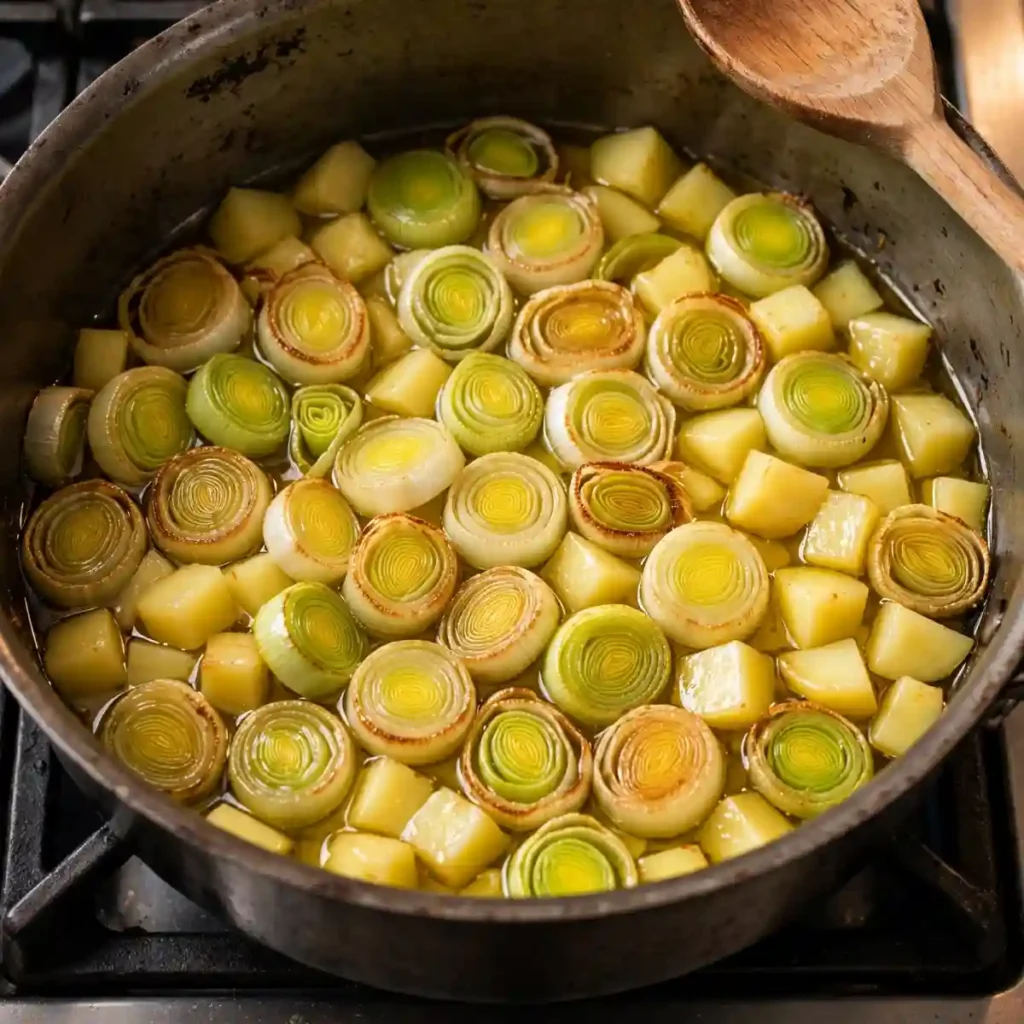
Heat the olive oil in the large saucepan over medium heat until it shimmers lightly. Add the drained sliced leek and the salt, stirring to coat in the oil. Cook for 6 to 8 minutes, stirring every 90 seconds, until the leek has softened completely throughout with no visible firm or crunchy pieces remaining, and looks slightly translucent and reduced. Add the roughly chopped garlic and cook for 60 seconds until fragrant and just barely beginning to turn golden at the edges.
Add the diced potato and stir to combine with the leek and garlic.

Chef’s Note: Softening the leek fully before adding any liquid is the step that determines the soup’s sweetness and depth. Raw leek added directly to broth steams rather than sautées; it develops a sharper, more raw-tasting base note. A fully softened leek in oil develops gentle sweetness through its own moisture release and mild caramelization at the edges, which produces a noticeably more rounded base flavor that supports rather than competes with the asparagus.
Step 3: Simmer the Potato Until Tender
Pour the vegetable broth over the softened leek and potato. Bring to a full boil over medium-high heat, then reduce to a steady medium simmer. Cook uncovered for 8 to 10 minutes until the potato cubes are fully tender throughout; a fork or small knife inserted into the center of a cube should meet no resistance and the cube should almost break apart when pressed. The potato needs to be genuinely soft at this stage because it will be blended; undercooked potato produces a dense, slightly gritty texture in the finished soup.
Chef’s Note: Cooking the potato through before the asparagus goes in is a sequencing decision that protects the asparagus’s color. The potato needs 8 to 10 minutes to soften; the asparagus needs only 8 minutes of gentle cooking to be perfectly tender while still holding its color. Adding both together means either the asparagus over-cooks into grey-green territory, or the potato is still firm and produces an unevenly textured soup. Sequential cooking produces both components at their ideal state simultaneously.
Step 4: Add the Asparagus and Cook Briefly
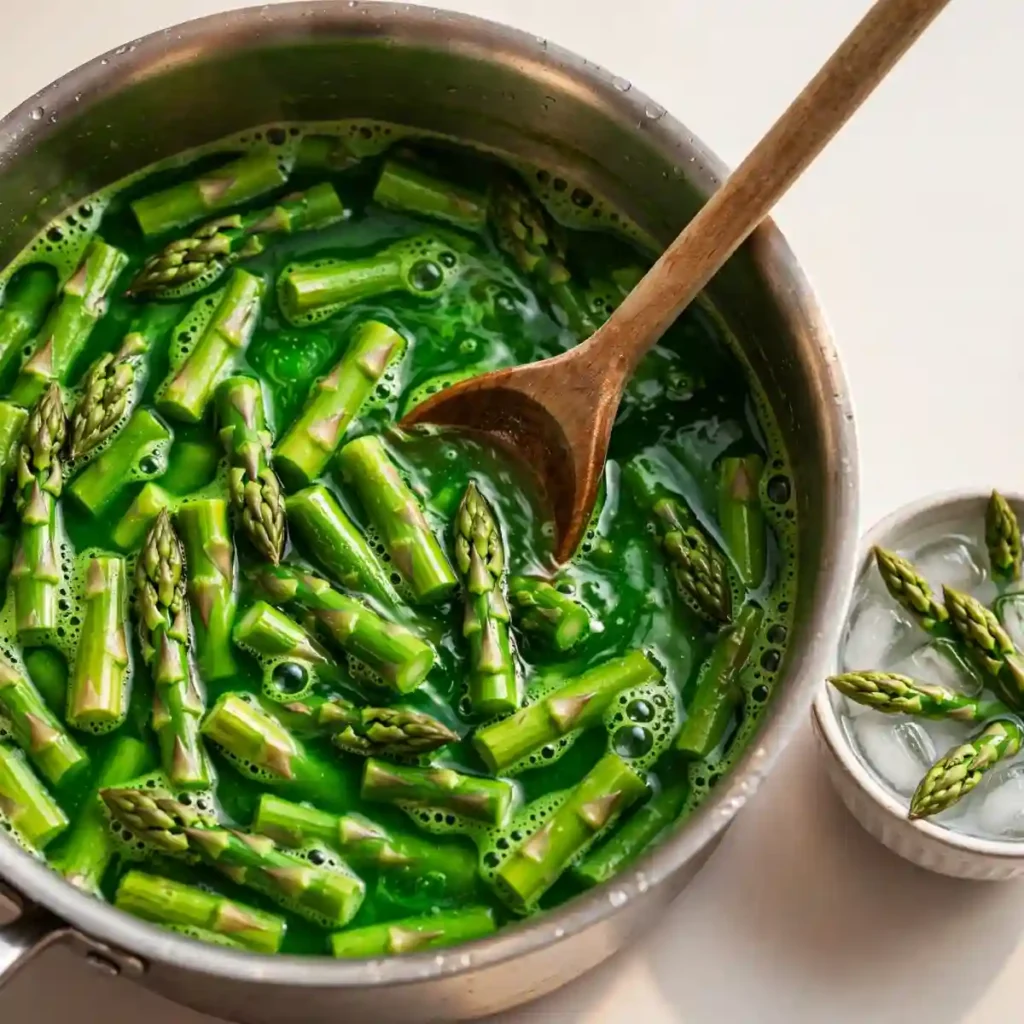
Add all the cut asparagus pieces (not the reserved tips) to the simmering broth. Stir to submerge and cook at a gentle simmer for 8 to 10 minutes, until the asparagus pieces are completely tender when pierced with a fork but the soup is still a vivid green color throughout. The key visual indicator: the broth should be bright green, not dull olive-green. If the color is shifting toward khaki or olive, the asparagus has been cooking too long; remove from heat immediately regardless of texture.
While the asparagus simmers, blanch the reserved asparagus tips: drop them into a small pan of salted boiling water for 60 to 90 seconds until bright green and just tender, then transfer immediately to a bowl of ice water to stop the cooking and lock the color. These will garnish the finished soup.
Step 5: Blend Until Smooth
Remove the saucepan from the heat. If using a countertop blender, allow the soup to cool for 2 minutes (not longer, to preserve the color), then blend in two batches filling the blender no more than half full. Hold the lid firmly with a folded cloth to prevent the hot steam from forcing the lid off; begin on low speed and increase to high, blending each batch for 60 to 90 seconds until completely smooth with no visible fibrous texture remaining.
If using an immersion blender, blend directly in the saucepan for 2 to 3 minutes, moving the blender in broad strokes to reach all parts of the soup. For the smoothest result with an immersion blender, strain the blended soup through a fine mesh sieve afterward, pressing firmly with the back of a ladle.
Return the soup to the saucepan if it was blended in batches in a countertop blender.
Chef’s Note: The 2-minute cooling period before blending is specifically to prevent two things: the steam pressure building under the blender lid (which can force hot soup explosively), and the continuation of cooking during the blending process that can shift the color from bright to dull. Two minutes is enough for the temperature to drop from a full boil but not enough for color loss to progress meaningfully.
Step 6: Finish and Season
Return the saucepan to low heat. Add the white pepper and stir through. Add the optional heavy cream in a slow stream while stirring, if using. Bring the soup back to a gentle simmer for 60 seconds to integrate everything.
Remove from heat and add the fresh lemon juice. Stir through and taste immediately; the lemon should sharpen and amplify the asparagus flavor without being identifiable as lemon on its own. Adjust salt and pepper; remember that if serving cold, the soup will need slightly more salt than it needs at serving temperature, since cold suppresses the perception of saltiness.
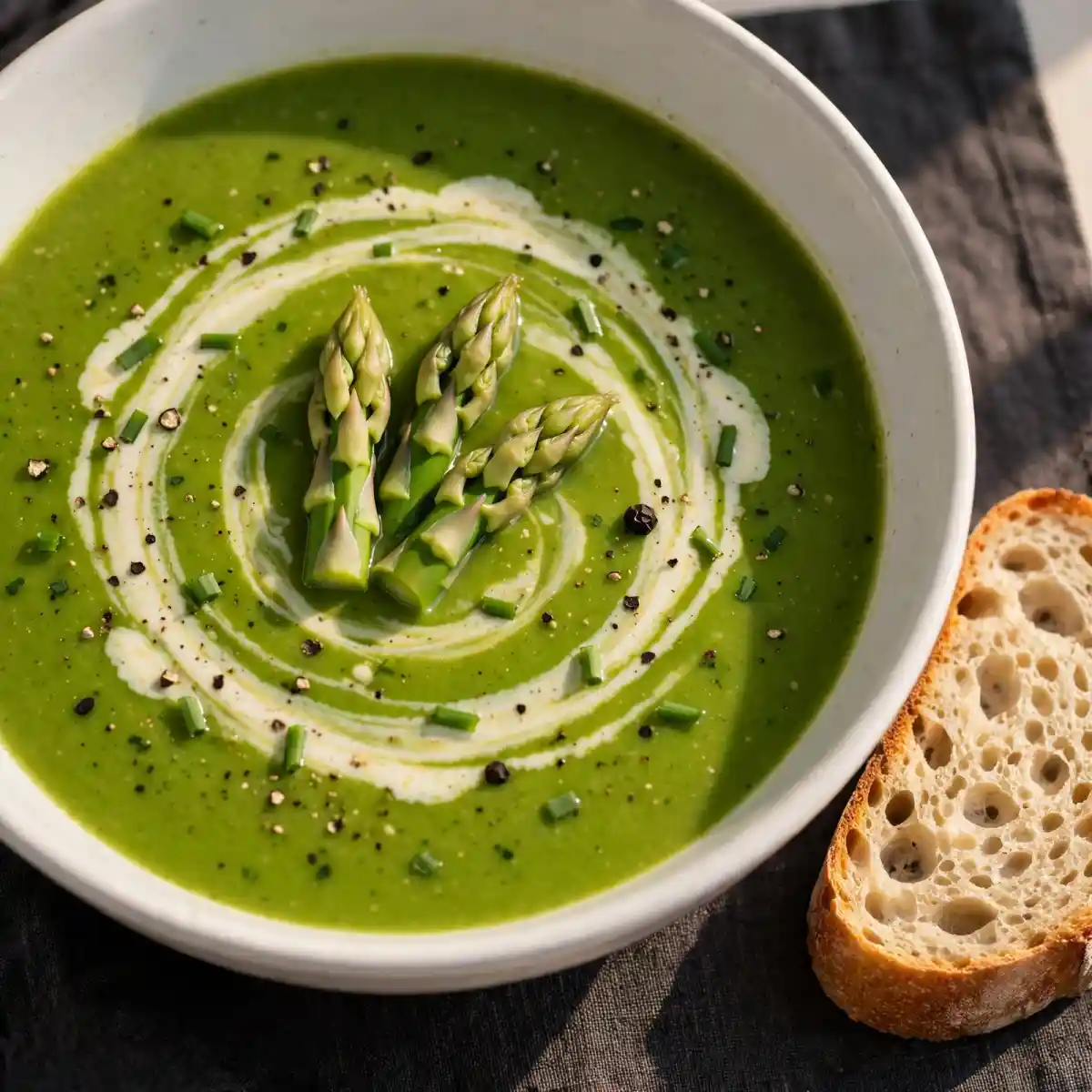
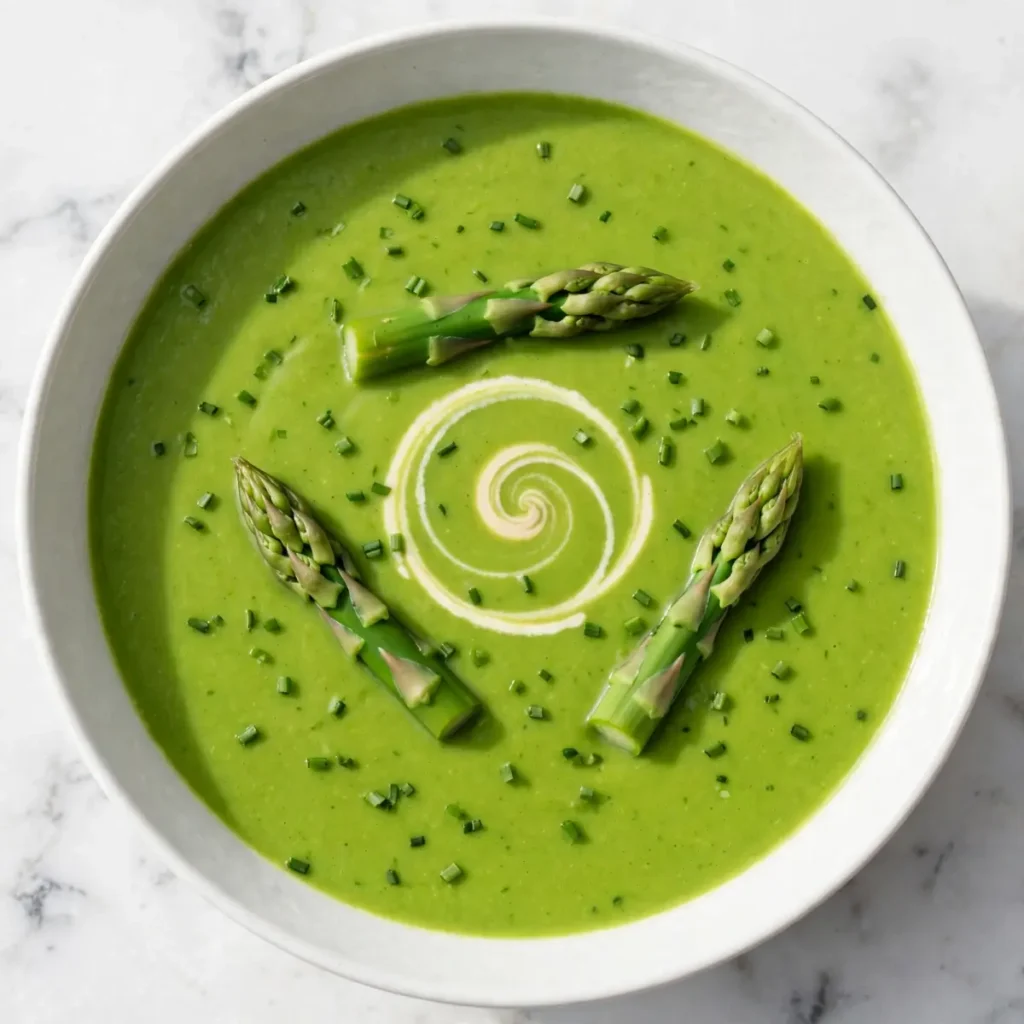
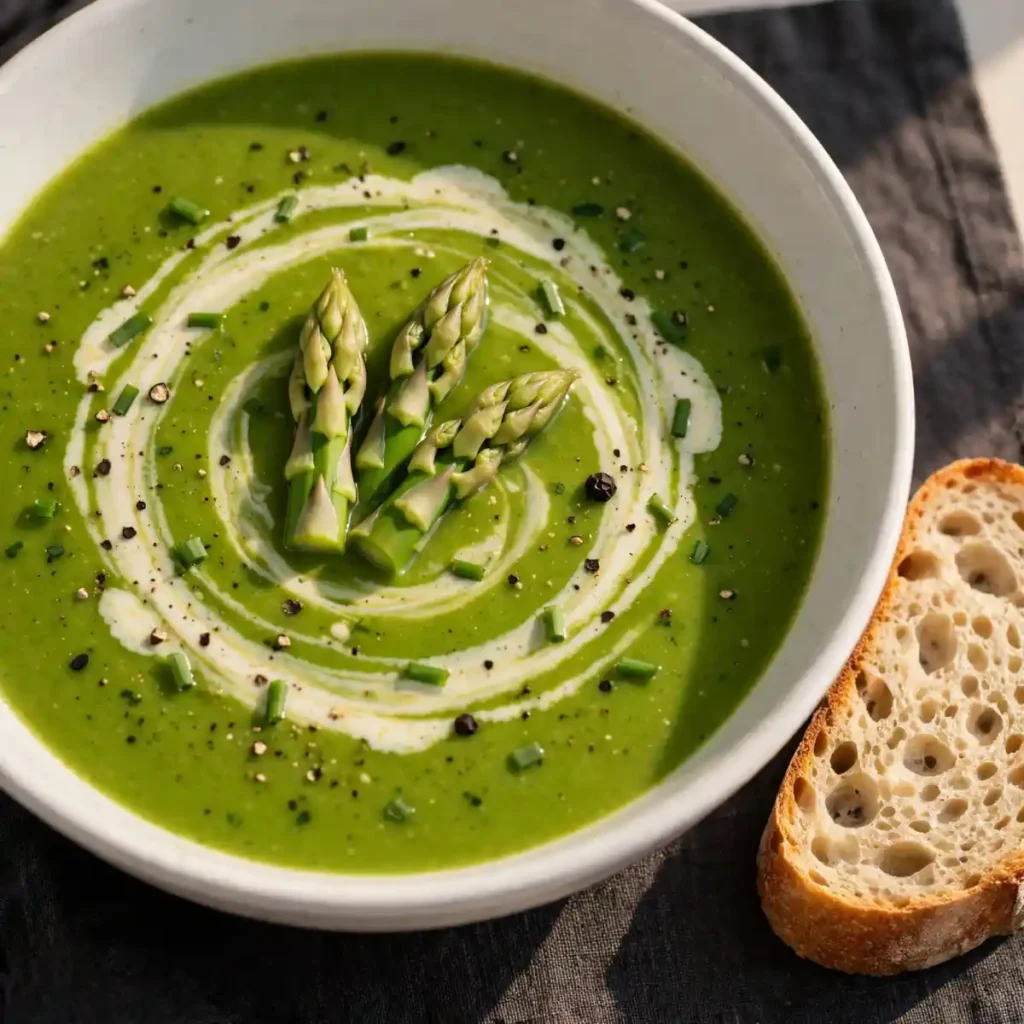
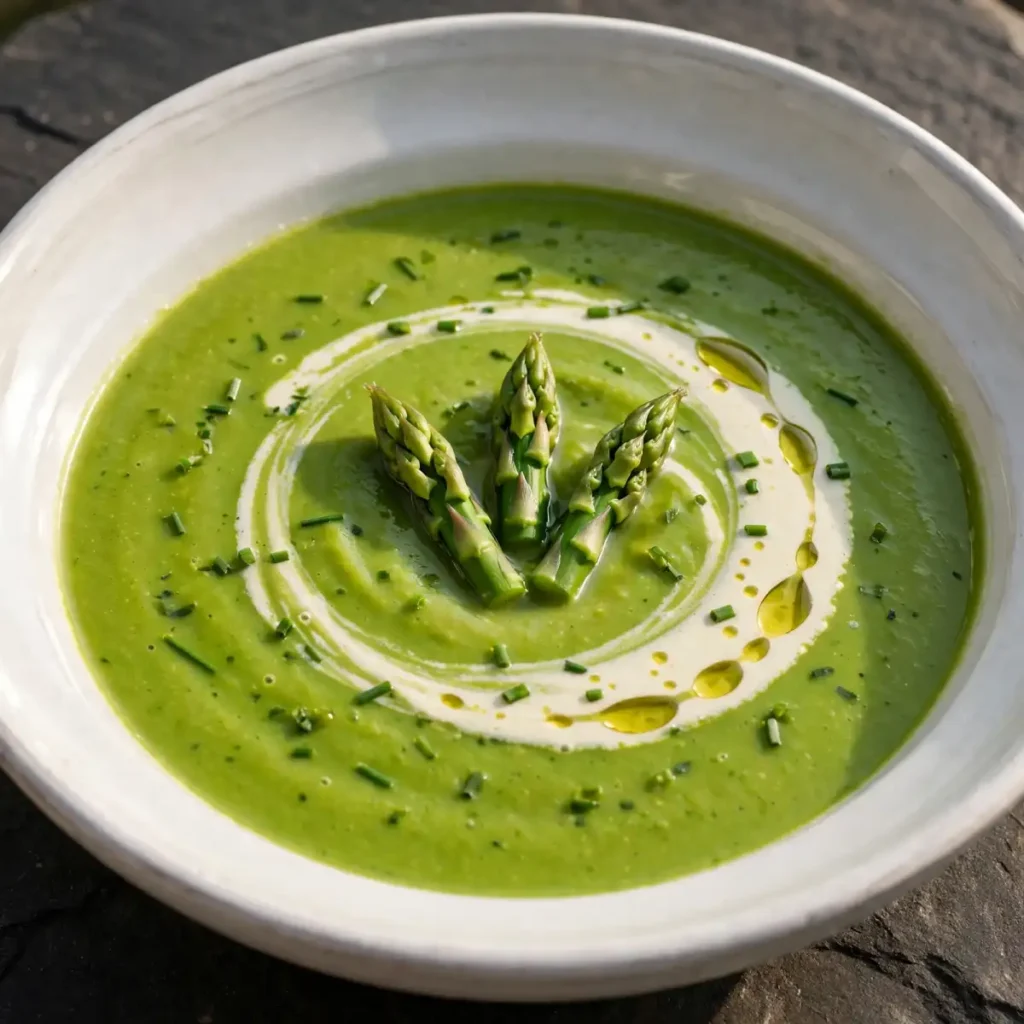
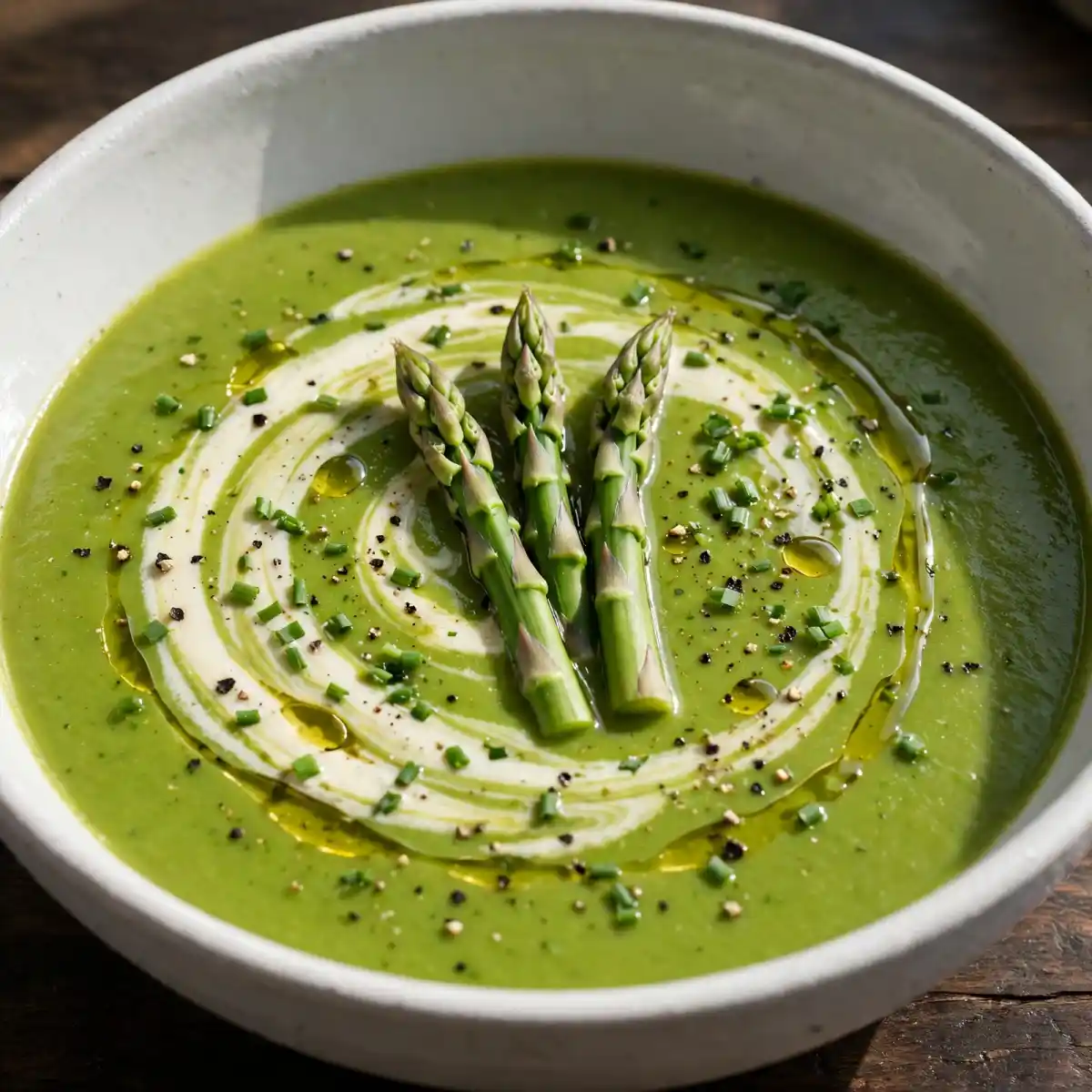
Ladle into warm bowls. Arrange 2 to 3 of the blanched asparagus tips in the center of each serving, drizzle with a thin spiral of cream or good olive oil, scatter chives, and finish with a pinch of flaky salt and cracked black pepper.
Common Mistakes and Troubleshooting
| Problem | Cause | Solution |
|---|---|---|
| Soup turned grey-green rather than bright green | Asparagus cooked too long, or blended too slowly after cooking | Cook asparagus for 8 to 10 minutes only; blend immediately after removing from heat |
| Soup gritty and fibrous rather than smooth | Woody ends not removed, or blender not powerful enough | Snap off the bottom 3 to 5cm of every stalk before cooking; strain through a fine mesh sieve after blending |
| Soup too thin and watery | Potato undercooked and not releasing starch, or too little potato used | Cook potato until genuinely fork-tender before adding asparagus; use the full 200g quantity |
| Soup tastes flat even when seasoned | Lemon juice not added, or too little salt for the serving temperature | Add the full tablespoon of lemon juice; if serving cold, add an extra pinch of salt beyond the hot-tasting point |
| Soup too thick after cooling | Potato released too much starch during simmering | Thin with warm vegetable broth or warm water, 2 to 3 tablespoons at a time, stirring until the desired consistency |
| Leek grit in finished soup | Leek not rinsed properly before cooking | Always wash sliced leek in a full bowl of cold water; lift out rather than pouring through a colander |
Variations and Substitutions
- Pea and asparagus soup: Replace 200g of the asparagus with 200g of frozen peas added in the final 3 minutes of simmering rather than with the asparagus. The peas add a sweeter, more rounded green flavor alongside the asparagus’s sharper, more mineral character, and produce an even more vivid green color than asparagus alone. This version is particularly well-suited to serving cold.
- Asparagus and spinach soup: Add a large handful (60g) of fresh baby spinach to the blender alongside the hot asparagus soup before blending. The spinach deepens the green color significantly and adds an earthy, iron-rich note that makes the soup taste more substantial; it also provides an additional natural thickening element.
- Roasted asparagus soup: Toss the cut asparagus pieces in olive oil and roast at 220°C (425°F) for 12 to 15 minutes until the tips are slightly caramelized and the stalks are tender before adding them to the softened leek base. Skip the brief simmer; instead pour the warm broth over the leek base, add the roasted asparagus, and blend immediately. The roasted version has a deeper, more caramelized flavor but produces a duller, more olive-green color than the briefly simmered version.
- Asparagus and mint soup: Add 10 to 12 fresh mint leaves to the blender alongside the hot soup before blending. The mint adds a cooling, slightly sweet herbal note that pairs beautifully with cold asparagus soup served over ice in summer. Use fresh mint only; dried mint produces a tea-like flavor that dominates the delicate asparagus.
- Asparagus soup with crispy chickpeas: Serve hot asparagus soup topped with a small handful of chickpeas roasted until very crispy at 200°C with olive oil, salt, and smoked paprika. The crispy chickpeas provide a substantial textural contrast to the silky soup and make the bowl filling enough to serve as a complete light lunch rather than only a starter.
- Chilled asparagus vichyssoise: Increase the potato to 280g for a slightly thicker base, chill the finished soup completely in the refrigerator for at least 2 hours, and serve over a single ice cube in a wide, shallow bowl. Garnish with a swirl of crème fraîche, a few blanched asparagus tips, and a thin slice of cucumber pressed against the bowl’s inner wall. This is a genuinely elegant dinner party starter that requires minimal work and can be made the day before.
Serving Suggestions
- Serve hot in warmed bowls with a swirl of cream or good olive oil on the surface and a few blanched asparagus tips arranged neatly in the center; the presentation communicates what the soup is at a glance and takes 30 seconds.
- Pair with thick slices of rustic sourdough bread or a warm crusty baguette; the bread’s slightly sour character and chew complement the soup’s clean, vegetal flavor and make the meal satisfying enough for a full lunch.
- Serve chilled as a dinner party first course in small, wide cups with a single asparagus tip balanced across the top; the volume needed for a starter portion is small and the presentation is elegant without any additional effort or expense.
- Top with a soft-boiled egg, halved, placed at the center of a full lunch portion; the egg’s creamy yolk runs into the soup and adds protein, richness, and visual interest.
- Finish each bowl with a few drops of good quality truffle oil instead of plain olive oil for a dinner party version that costs very little extra but tastes noticeably more complex and restaurant-worthy.
- Pair with cold sparkling water with lemon or a cold pressed apple and ginger juice; both light, slightly acidic drinks echo the lemon in the soup and refresh the palate between spoonfuls of the rich, creamy version.
Tips for the Best Results
- Cook the asparagus for exactly 8 to 10 minutes and blend immediately. The chlorophyll molecules responsible for asparagus’s bright green color begin converting to pheophytin, a dull olive-brown compound, after approximately 10 to 12 minutes of heat exposure. This conversion accelerates as the cooking continues; a 15-minute simmer produces noticeably duller soup than a 10-minute one, and a 20-minute simmer produces a noticeably grey-green result. Set a timer and blend the moment the asparagus is tender; every minute of additional heat is color loss you can’t reverse.
- Remove the woody stalk ends before cooking, not after. The woody bottom 3 to 5cm of an asparagus stalk is primarily composed of lignin, a structural compound that doesn’t soften during cooking and produces a fibrous, slightly bitter pulp in the blended soup. Removing it before cooking costs 2 minutes; removing it afterward means the lignin has already released its bitter compounds into the broth during cooking. Snap each stalk at its natural break point, where it bends and snaps rather than bending and folding, to find the woody-to-tender transition point without measuring.
- Add lemon juice after blending, never before. Acids accelerate the chlorophyll-to-pheophytin conversion dramatically; adding lemon juice to the soup while it is still hot and before blending is a faster path to grey-green soup than even over-cooking. The lemon is added after blending and after the soup is off the heat, where it can brighten the flavor without acting on the color at a temperature that would cause damage.
- Season more assertively if serving cold. Cold temperature significantly suppresses the palate’s sensitivity to both salt and acid; a soup that tastes perfectly seasoned at serving temperature will taste flat, dull, and under-seasoned at refrigerator temperature. When making the soup specifically to serve chilled, add an additional 1/4 teaspoon of salt and an additional squeeze of lemon juice beyond the hot-tasting point before refrigerating.
- Strain through a fine mesh sieve for the smoothest texture. This step adds 3 minutes and is optional for a home dinner, but it’s the difference between a soup that feels smooth and a soup that feels silky. The fine mesh sieve catches every piece of asparagus fiber that the blender couldn’t fully process; what remains in the sieve after pushing the soup through is a small amount of dry, fibrous pulp that would otherwise be almost undetectable individually but collectively gives the soup a very slight texture that the sieve removes.
Storage Tips
Refrigerator
Asparagus soup keeps in the refrigerator for up to 3 days in a sealed container. The color will fade slightly to a slightly more muted green over 24 to 48 hours as the chlorophyll continues converting slowly at refrigerator temperature; this is unavoidable but the flavor remains excellent. Store without the cream garnish if possible and add fresh cream when reheating or serving. The soup thickens noticeably during refrigerator storage as the potato starch gels; this is normal and reverses with gentle reheating and a splash of additional broth.
Freezer
Asparagus soup freezes for up to 2 months without the cream. Freeze in portion-sized sealed containers or in flat freezer bags. The color will be significantly more muted after freezing and thawing; the flavor holds well but the vivid green the fresh soup is known for is lost through the freeze-thaw cycle. Thaw overnight in the refrigerator and reheat gently on the stovetop. If the soup separates slightly on thawing, a brief blend with an immersion blender after reheating restores a smooth, cohesive texture. Add cream fresh when serving.
Reheating
Reheat the soup in a small saucepan over medium-low heat, adding 2 to 3 tablespoons of vegetable broth or water to thin it back to the original pouring consistency; the potato starch gels during storage and the soup will be noticeably thicker straight from the refrigerator than it was fresh. Stir continuously while heating to prevent the thicker soup from catching on the pan base. Do not bring to a full boil; a gentle simmer is enough to heat it through and minimizes additional color loss. Taste and re-season before serving.
Make-ahead note: Asparagus soup is well-suited to advance preparation with one caveat: make it on the day for the best color, or accept a slightly more muted green if making it the day before for a dinner party. The flavor actually improves slightly after 24 hours in the refrigerator as the base notes from the leek and garlic deepen and integrate; the trade-off is color. For best of both, make the base (leek, potato, broth) the day before; add and cook the asparagus fresh on the day of serving, then blend.
Nutrition Information
Per serving, approximately 1/4 of the recipe without cream:
| Nutrient | Amount |
|---|---|
| Calories | 155 kcal |
| Protein | 6g |
| Total Carbohydrates | 22g |
| Dietary Fiber | 5g |
| Total Sugar | 6g |
| Total Fat | 6g |
| Saturated Fat | 0.9g |
| Cholesterol | 0mg |
| Sodium | 380mg |
| Vitamin C | 18mg |
| Calcium | 55mg |
| Iron | 3.8mg |
| Potassium | 520mg |
Nutrition values are approximate and may vary based on broth brand, potato size, and whether cream is included.
Why This Recipe Works
The color science of asparagus soup is specific and teachable. Asparagus’s vivid green color comes from chlorophyll a and chlorophyll b, two magnesium-containing porphyrin compounds that absorb red and blue light and reflect green. These compounds are chemically stable in the asparagus cell’s slightly acidic vacuoles while the cell is intact; when heat ruptures the cell membranes, the chlorophyll molecules are released into the cooking liquid where they encounter the cooking water’s pH. In a neutral or slightly alkaline cooking medium (plain vegetable broth sits at approximately pH 7.0 to 7.5), the chlorophyll molecules remain largely intact for the first 8 to 12 minutes of heat exposure. After 12 minutes at a steady simmer, the magnesium ion at the center of each chlorophyll molecule is progressively replaced by hydrogen ions from the water; this substitution converts the molecule from chlorophyll to pheophytin, a compound that absorbs green light rather than reflecting it and produces the characteristic dull olive-brown color of overcooked green vegetables. The 8 to 10 minute cooking window in this recipe specifically targets the period before significant pheophytinization occurs.
Adding lemon juice after the soup is blended and off the heat rather than during cooking is a direct application of this chemistry. Citric acid from the lemon dramatically lowers the cooking medium’s pH; at pH 5 to 6, pheophytinization occurs significantly faster than at neutral pH because the increased hydrogen ion concentration accelerates the magnesium displacement reaction. Bright green soups that have lemon juice added before or during cooking consistently turn dull within minutes; the same amount of lemon juice added after the soup is removed from heat and no longer being heated serves only as a flavor brightener without participating in the color chemistry.
The potato’s thickening mechanism in this recipe differs fundamentally from a flour roux. A roux works by dispersing starch granules in fat before liquid is added; the starch absorbs the liquid and swells into a gel during cooking, creating a viscous, slightly opaque suspension. A potato thickener works through partial gelatinization and mechanical disruption: when a fully cooked potato is blended into a hot liquid, its cell walls rupture under the blade and release their gelatinized starch directly into the surrounding liquid in a dissolved form. This dissolved starch coats the blender-dispersed vegetable fibers and produces a smooth, slightly coating body that is different from the more pasty, flour-thickened texture. The result is a lighter, cleaner-feeling thickness that is more appropriate for a vegetable soup where the goal is to taste the vegetable rather than the thickener.
The leek’s specific advantage over yellow onion as the aromatic base for asparagus soup is a matter of volatile compound composition. Yellow onions contain a higher concentration of sulfur compounds (propanthial S-oxide and various thiosulfinates) that produce the pungent, sharp onion flavor; this sharpness competes with asparagus’s milder, more delicate flavor profile and can dominate a simple soup where there are few other components. Leeks contain similar sulfur compounds at lower concentrations alongside a higher proportion of softer, sweeter-tasting volatile alcohols; the flavor contribution is savory and aromatic without being sharp, which supports the asparagus’s character rather than competing with it. This difference is most noticeable in a simple soup with a short cook time where the aromatics don’t have time to fully mellow.
I’ve made this soup with four different cooking times for the asparagus: 6, 8, 10, and 15 minutes at a gentle simmer. At 6 minutes, the asparagus was vivid green but slightly underdone; the soup had a slightly raw, grassy edge that some people enjoy but others find unpleasant, and the blended texture was not quite as smooth because the cell walls hadn’t fully softened. At 8 minutes, the asparagus was just tender, the color was vivid bright green, and the flavor was clean, fresh, and distinctly asparagus. At 10 minutes, the color was still vivid but just beginning to shift; the flavor was slightly more cooked and mellow. At 15 minutes, the color was noticeably more olive-green and the flavor had lost its fresh, clean brightness in favor of a more cooked vegetable character. The 8 to 10 minute range produces consistently the best combination of color and flavor.
Frequently Asked Questions
Can I make asparagus soup ahead of time?
Yes, with the best approach being a split preparation: make the leek and potato base up to 2 days ahead and refrigerate; cook and add the asparagus fresh on the day of serving, then blend. This produces the best color. Fully assembled asparagus soup keeps refrigerated for 3 days; the color fades slightly to a more muted green but the flavor remains excellent. For a dinner party, you can make it completely the day before and accept the slightly less vivid color in exchange for a fully stress-free serving day.
Why is my asparagus soup grey-green rather than bright green?
Grey-green asparagus soup comes from one of two causes. The asparagus cooked too long; above 12 minutes at a simmer, the chlorophyll molecules convert to pheophytin and the color shifts permanently to olive or grey-green. Or acid was added during cooking; lemon juice, vinegar, or any acidic ingredient added while the soup is still on the heat dramatically accelerates that same color conversion. Add lemon juice only after the soup is blended and removed from heat. For the brightest color, cook the asparagus for exactly 8 to 10 minutes and blend immediately after removing from heat.
Can I use frozen asparagus instead of fresh?
Yes. Use 700g of frozen asparagus pieces thawed and drained thoroughly. The color of frozen asparagus soup will be slightly less vivid than fresh because frozen asparagus has already undergone partial blanching and cell wall damage during the freeze-thaw cycle. Reduce the simmering time to 5 to 6 minutes since the asparagus is already partially cooked. The flavor is very good; frozen asparagus is harvested and frozen at peak freshness and often produces a more reliably asparagus-flavored soup than fresh asparagus that has been stored for several days after harvest.
Is asparagus soup good cold?
Yes, genuinely. The soup’s natural sweetness and clean flavor profile hold up well at cold temperature, making it one of the few vegetable soups that works as well chilled as hot. Season it slightly more assertively before chilling since cold suppresses the perception of salt and acid. Serve in wide, shallow bowls over a single ice cube with a swirl of crème fraîche and blanched asparagus tips. It’s a particularly elegant starter for a warm-weather dinner party that can be made entirely the day before.
Is asparagus soup gluten-free and dairy-free?
The base recipe as written is both gluten-free and dairy-free. All ingredients including asparagus, leek, potato, vegetable broth, olive oil, and lemon juice are naturally gluten-free and dairy-free. The optional heavy cream is the only dairy-containing ingredient; skip it for a fully dairy-free bowl. If using vegetable broth, verify the brand label for any wheat-derived ingredients, as some commercially produced broths contain maltodextrin or yeast extract from wheat.
How do I make asparagus soup thicker without adding cream?
Three options work without cream. Add an extra 50g of diced potato to the base and cook until very soft before the asparagus goes in; the additional potato releases more dissolved starch into the broth during blending. Alternatively, stir 1 tablespoon of cashew butter into the finished soup after blending; it adds a neutral, creamy thickness without any dairy flavor at this small quantity. Or simply reduce the broth quantity by 120ml to 240ml; less liquid produces a naturally thicker blend without changing any other ingredient.
What’s the best way to cut asparagus for soup?
Rough cuts of 3 to 4cm pieces are all that’s needed since everything gets blended; precise, uniform cuts add prep time without improving the finished soup. The only precise cutting needed is removing the bottom 3 to 5cm of woody stalk from each spear before the rough cut. The quickest method: gather a bunch in one hand, feel for where the stalk transitions from supple to stiff and snap, or simply cut 4cm from the base of each bunch with a single knife stroke across the whole bundle at once.
Conclusion
Asparagus soup rewards the two minutes it takes to understand the color science: cook for exactly 8 to 10 minutes, add the lemon juice after the heat is off, blend immediately. Those three decisions are the difference between a soup that looks as vivid and alive as the vegetable it came from and one that looks like it’s been sitting on a steam table for an hour.
The cold version is worth making specifically. Most people haven’t had properly chilled asparagus soup and are genuinely surprised by how good it is, particularly in warmer months when the idea of a hot bowl doesn’t appeal. Make the soup the day before, chill overnight, and serve it with crème fraîche and a blanched tip garnish; it’s one of the most effortless elegant starters available from a single ingredient.
If you loved this recipe, save it to your easy soup recipes and spring dinner ideas Pinterest board so you can find it easily later. For more recipes and daily food inspiration, follow TheCookingVibes on Pinterest.
Creamy Asparagus Soup
Ingredients
Equipment
Method
- Snap woody ends from asparagus stalks and discard. Reserve 8 to 12 thin asparagus tips in cold water for garnish; cut the remaining stalks into rough 3 to 4cm pieces. Wash sliced leek in a bowl of cold water; lift out and drain.
- Heat olive oil in a large saucepan over medium heat. Add drained leek and salt; cook 6 to 8 minutes, stirring regularly, until fully softened and translucent throughout. Add garlic; stir 60 seconds until fragrant. Add diced potato and stir to combine.
- Pour in vegetable broth. Bring to a boil, then reduce to a medium simmer. Cook uncovered 8 to 10 minutes until potato cubes are completely fork-tender with no resistance.
- Add cut asparagus pieces; return to a gentle simmer. Cook 8 to 10 minutes until asparagus is tender and the broth is vivid bright green. While the asparagus simmers, blanch reserved asparagus tips in a small pan of salted boiling water for 60 to 90 seconds; transfer to ice water to hold color.
- Remove pan from heat. Blend immediately in two batches in a countertop blender (filling no more than half full, holding lid with a cloth) or use an immersion blender directly in the pan. Blend each batch 60 to 90 seconds until completely smooth. Strain through a fine mesh sieve for the silkiest result.
- Return soup to the saucepan over low heat. Add white pepper and optional cream; stir through and simmer gently for 60 seconds. Remove from heat. Add lemon juice; stir and taste. Adjust salt; add extra for cold serving. Ladle into warmed bowls. Garnish with blanched tips, a cream or olive oil drizzle, chives, flaky salt, and cracked black pepper.
Notes
- Cook asparagus for 8 to 10 minutes only; longer cooking converts the vivid green chlorophyll to dull olive pheophytin, which cannot be reversed.
- Add lemon juice only after the soup is off the heat; acid added during cooking accelerates the same color loss.
- Season more assertively if serving cold; cold temperature suppresses the perception of salt and acid significantly.
- The soup base (leek, potato, broth) can be made 2 days ahead; add and cook the asparagus fresh on the day for the best color.
- Allergens: Contains dairy if cream is included. Naturally gluten-free, egg-free, and nut-free. Verify vegetable broth label for gluten if strict compliance is needed.
- This recipe has not been tested in a certified allergen-free kitchen and cannot be guaranteed safe for any specific allergy.
- Nutrition values are approximate and may vary based on broth brand, potato size, and whether cream is included.