
Creamy Tomato Soup — Roasted Tomatoes, Silky Smooth Finish
Roast a tray of halved tomatoes at high heat until their cut surfaces caramelize and darken at the edges and the surrounding sheet pan is covered with their released, concentrated juice, and you’ve already done the most important work of a great tomato soup before a single drop of broth hits the pot. That caramelized surface and the sticky, sweet reduced juice scraped from the pan are the flavor the blended version from a tin can never quite approximate: deep, slightly sweet, and genuinely complex rather than one-dimensionally acidic.
This tomato soup recipe starts with fresh Roma or San Marzano tomatoes roasted with olive oil, garlic, and a halved onion, then simmered briefly with low-sodium vegetable broth and finished with a small amount of heavy cream and a knob of butter before blending to a completely smooth, silky consistency. It serves 4 generously as a starter or a full bowl with crusty bread, comes together in about 55 minutes, and reheats so well that making a double batch is one of the more practical decisions in weeknight cooking.

Why You’ll Love This Tomato Soup
- Roasted tomatoes build flavor that simmering cannot. High-heat roasting caramelizes the cut surfaces of the tomatoes, concentrating their natural sugars and producing a depth of flavor that raw or simply sautéed tomatoes don’t have; the difference in the finished soup is immediately obvious.
- Silky smooth texture with no strainer needed. A high-powered blender produces a completely smooth, restaurant-quality result from the roasted tomatoes and aromatics without any sieving or passing through a fine-mesh strainer.
- Dairy-free adaptable without any flavor loss. The cream adds richness but the roasted tomato base is so full-flavored on its own that a coconut cream substitute or simply omitting the dairy produces a soup that still tastes complete and satisfying.
- Freezes perfectly. This tomato soup holds its smooth texture through freezing and thawing better than most cream-based soups, which makes it an ideal batch-cook recipe for weekday lunches across several weeks.
- One sheet pan and one pot. The roasting, the aromatics, and the simmering all happen with minimal equipment; cleanup is one pan and one blender jar.

Ingredients You’ll Need
Recipe Timing
| Detail | Info |
|---|---|
| Servings | 4 |
| Difficulty | Easy |
| Course | Starter, Main Course |
| Cuisine | American, Italian-inspired |
| Prep Time | 10 minutes |
| Cook Time | 45 minutes |
| Rest Time | 0 minutes |
| Total Time | 55 minutes |
For the tomatoes, Roma tomatoes are the most reliable choice for this recipe because of their lower water content, fewer seeds, and thicker flesh relative to their size. Less water means the tomatoes concentrate faster in the oven and produce more caramelized surface area rather than steaming in their own moisture. San Marzano tomatoes, when in season, produce a noticeably sweeter and more complex result. Standard round beefsteak tomatoes work but have a higher water content and need an extra 5 to 8 minutes of roasting time to achieve the same caramelization level. Cherry or grape tomatoes roast in less time and produce a sweeter, more intense soup; reduce the roasting time to 25 minutes if using them.
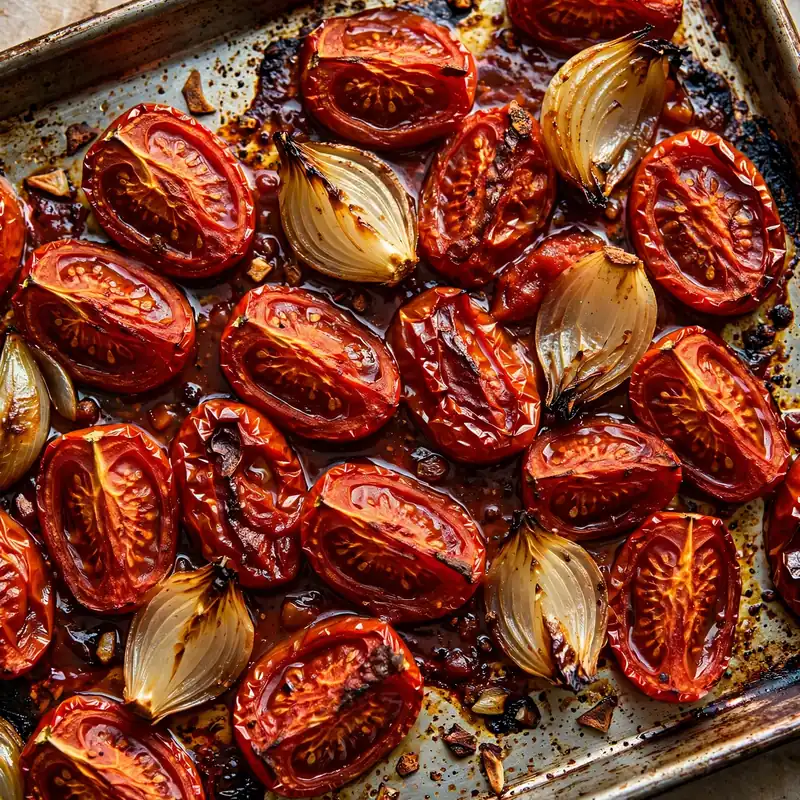
The tomatoes should be cut side up on the roasting sheet, not face down, so the cut surfaces face the radiant oven heat directly. Face-down tomatoes steam in their released juice rather than caramelizing, missing the key flavor development step entirely.
For the garlic, whole unpeeled cloves roasted alongside the tomatoes produce a mellow, sweet garlic flavor completely different from the sharp raw garlic that would need to be sautéed separately. Squeeze the roasted cloves directly from their papery skins into the pot.
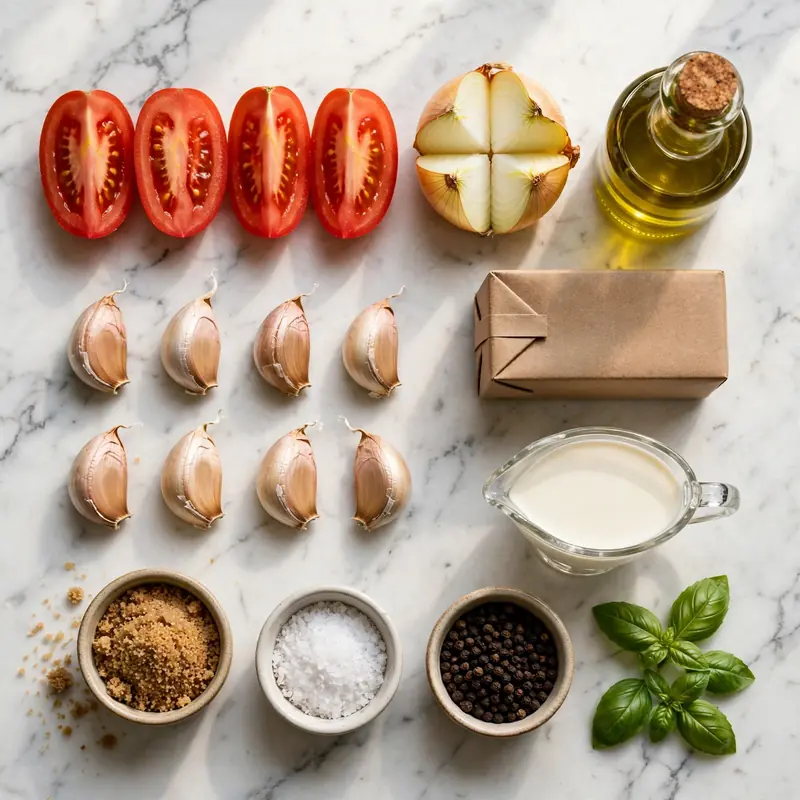
- 1.2 kg (about 2.5 lbs) Roma or San Marzano tomatoes, halved lengthwise — the primary ingredient; the roasting step concentrates their natural sugars and produces the caramelized depth that defines the soup’s flavor
- 1 large yellow onion, quartered — roasted alongside the tomatoes; the quarters caramelize at their cut edges and add a sweet savory depth to the blended soup
- 8 garlic cloves, unpeeled — roasted whole in their skins; squeezing out the softened cloves produces a mellow, sweet garlic character rather than a sharp raw one
- 3 tablespoons olive oil, divided — 2 tablespoons for roasting, 1 tablespoon for finishing; the roasting oil picks up all the caramelized tomato flavor from the pan and goes directly into the soup
- 1 teaspoon fine salt, plus more to taste — seasons the tomatoes before roasting to draw out moisture and accelerate caramelization
- 1/2 teaspoon freshly ground black pepper — added before roasting; black pepper blooms during the high heat and integrates into the tomato flavor
- 1 teaspoon light brown sugar — optional but useful; adds a small amount of sweetness that counterbalances the tomatoes’ natural acidity, particularly if the tomatoes are less ripe or out of peak season
- 480ml (2 cups) low-sodium vegetable broth — the liquid that brings the soup to the right consistency after blending; low-sodium preserves your ability to control the final seasoning
- 1/2 cup (120ml) heavy cream — stirred in after blending; rounds the acidity and gives the soup its characteristic pale amber-orange color and rich mouthfeel; omit or replace for dairy-free
- 1 tablespoon unsalted butter — optional finishing fat; adds a subtle richness and a slight glossiness that makes the soup look more restaurant-quality in the bowl
- Fresh basil leaves — for serving; the floral, slightly anise-like flavor of fresh basil is the natural companion to a good tomato soup; dried basil does not substitute well here
Allergen and Dietary Disclosure
This tomato soup contains dairy (heavy cream and optional butter). It is naturally gluten-free, egg-free, and nut-free as written. Verify the vegetable broth label for any gluten-containing additives if celiac disease is a concern.
For dairy-free and vegan: replace the heavy cream with full-fat coconut cream at the same quantity. The coconut cream adds a subtle sweetness that pairs well with the roasted tomato flavor and contributes a similarly rich, creamy consistency. Skip the finishing butter entirely, or replace it with a teaspoon of high-quality extra-virgin olive oil stirred in at the end.
For lower fat: reduce the cream to 3 tablespoons or omit it entirely. The roasted tomato base is so full-flavored that the soup tastes complete without dairy; it will be slightly less rich and slightly more acidic, which you can balance with the optional teaspoon of brown sugar.
This recipe has not been tested in a certified allergen-free kitchen and cannot be guaranteed safe for any specific allergy.
Equipment Needed
- Large rimmed baking sheet — for roasting the tomatoes, onion, and garlic. A rimmed sheet keeps all the released tomato juice and caramelized bits contained; that liquid is flavor and goes directly into the pot. A flat sheet risks spills and loses that crucial concentrated juice off the edges.
- Large heavy-bottomed pot or Dutch oven, 5 to 6 quart — for the stovetop simmer before blending. Heavy construction distributes heat evenly and prevents the reduced broth and tomatoes from scorching at the bottom of the pot during the brief simmer.
- High-powered blender or immersion blender — for achieving the silky texture. A countertop blender produces the smoothest result because it generates a tighter vortex and more completely breaks down the tomato skins and flesh. If using a countertop blender, fill each batch no more than halfway and hold a folded towel firmly over the lid; the steam pressure from hot soup can force the lid off.
- Rubber spatula or silicone scraper — for scraping every drop of caramelized tomato juice and the sticky fond from the roasting sheet into the pot. That residue is the most concentrated flavor in the recipe; leaving it on the pan to wash away is a significant flavor loss.
Step-by-Step Directions
Step 1: Prepare and Arrange the Tomatoes
Preheat the oven to 220°C (425°F). Arrange the halved tomatoes cut side up in a single layer across the rimmed baking sheet; they should be close together but not overlapping. Scatter the onion quarters and unpeeled garlic cloves across the pan in the gaps between the tomatoes. Drizzle 2 tablespoons of olive oil over everything and use clean hands or a brush to ensure each cut tomato surface has a thin coating. Season evenly with the fine salt and black pepper. Sprinkle the optional brown sugar over the tomatoes only, not the onion or garlic.

Chef’s Note: Arranging the tomatoes cut side up rather than face down is the placement decision that determines whether they caramelize or steam. Cut side up means the tomato flesh faces the radiant oven heat directly, which rapidly evaporates the surface moisture and allows the sugars to concentrate and brown. Cut side down traps the moisture between the tomato and the pan; the tomato softens rather than caramelizes, and the result is a considerably less flavorful soup.
Step 2: Roast Until Deeply Caramelized
Roast on the center rack for 35 to 40 minutes without opening the oven door before the 30-minute mark. The tomatoes are ready when the cut surfaces are deeply caramelized to a dark, concentrated red with some amber-brown edges, the onion quarters have softened and browned at their edges, and the surrounding sheet pan is covered with a layer of thick, sticky, dark tomato juice. The garlic cloves should feel completely soft when pressed.
Step 3: Transfer to the Pot
Using a rubber spatula, scrape all the roasted tomatoes and onion pieces into the large pot, including every bit of the dark, sticky juice from the pan surface. This is the step where the flavor of the finished soup is partially determined by how thoroughly you work the spatula across the pan. Squeeze the roasted garlic cloves out of their skins directly into the pot; the softened garlic slides out easily when squeezed from the root end. Discard the papery garlic skins.
Chef’s Note: The dark sticky layer on the baking sheet, what cooks call the fond, is the most concentrated source of caramelized tomato flavor in the entire recipe. Scraping the pan thoroughly into the pot takes about 60 seconds with a silicone spatula and contributes noticeably to the depth and complexity of the finished soup. Skip it and the soup is good; include it and the soup tastes genuinely different.
Step 4: Simmer with Broth
Pour the vegetable broth into the pot and stir to combine with the tomatoes, onion, and garlic. Bring to a gentle boil over medium-high heat, then reduce to medium-low and simmer uncovered for 10 minutes. The broth absorbs the caramelized flavors from the tomatoes and the fond during this brief simmer, and the whole mixture reduces slightly into a more concentrated base before blending.

Step 5: Blend Until Silky Smooth
Turn off the heat. Working in batches, ladle the soup into a countertop blender, filling each batch no more than halfway. Remove the center cap from the lid and hold a folded kitchen towel firmly over the opening to allow steam to escape without splattering. Blend each batch on high speed for 60 to 90 seconds until completely smooth with no visible tomato skin pieces or fibrous threads remaining. Pour each finished batch into a clean pot or large bowl. Alternatively, use an immersion blender directly in the pot for 2 to 3 minutes; the result will be very good but slightly less smooth than a countertop blender produces.
Step 6: Finish and Season
Return all the blended soup to the pot over low heat. Stir in the heavy cream and the optional tablespoon of butter. Heat gently for 3 to 4 minutes, stirring occasionally, until the cream is fully incorporated and the soup is steaming throughout; don’t allow it to boil hard after the cream is added. Taste carefully and season with additional salt and pepper. If the soup tastes too sharp or acidic, stir in the remaining finishing tablespoon of olive oil or a tiny additional pinch of brown sugar, which softens the acidity without adding a perceptible sweetness.
Chef’s Note: The soup’s acidity level after blending depends heavily on the ripeness and variety of the tomatoes used. Peak-season Roma or San Marzano tomatoes in July and August produce a naturally sweeter, less acidic soup that needs little or no sugar adjustment. Out-of-season hothouse tomatoes are considerably more acidic and often benefit from the full teaspoon of brown sugar added before roasting plus a small pinch more stirred into the finished soup.
Step 7: Serve with Garnish
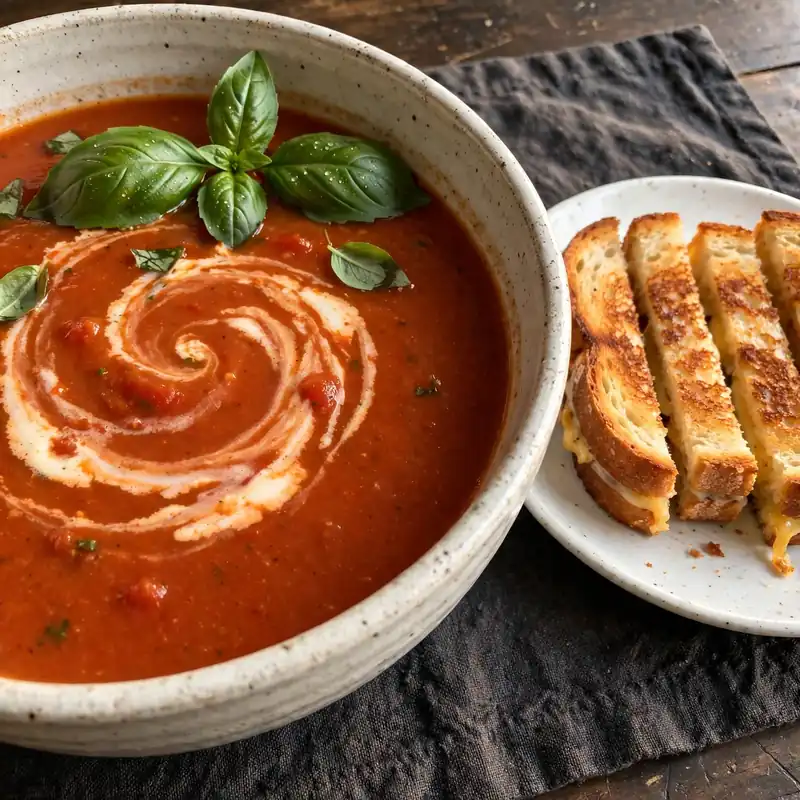
Ladle the soup into warmed bowls. Add a slow swirl of cream or a thin drizzle of olive oil by pouring from the center outward in a spiral. Tear a few fresh basil leaves and scatter them over the surface. Add a light crack of black pepper. Serve immediately with crusty bread or grilled cheese alongside.
Common Mistakes and Troubleshooting
| Problem | Cause | Solution |
|---|---|---|
| Soup tastes thin and acidic rather than rich | Tomatoes placed cut side down, or roasting time too short | Always arrange cut side up; roast until the surfaces are deeply caramelized, not just soft and pale |
| Texture grainy or fibrous after blending | Blending time too short, or immersion blender used without long enough processing | Blend on high for 90 seconds minimum; countertop blender gives the smoothest result |
| Soup too thick after blending | Tomatoes had very low water content, or too little broth added | Stir in extra broth 1/4 cup at a time while heating until the consistency flows easily from a ladle |
| Soup too thin | Tomatoes had high water content, or too much broth added | Simmer uncovered for 5 to 8 additional minutes after blending to reduce to the right body |
| Cream curdles or looks separated | Soup was boiling when cream was added, or cream went in cold | Always reduce heat to low and let the soup come off a hard boil before adding cream; bring cream to room temperature first if possible |
| Fond left on the roasting pan | Scraping missed the sticky layer, or a non-silicone spatula was used | Use a silicone spatula and add 2 tablespoons of broth to the warm pan to loosen stuck bits; pour the loosened liquid into the pot |
Variations and Substitutions
- Canned tomato version: Replace the fresh tomatoes with two 400g (14 oz) cans of whole peeled San Marzano tomatoes, drained. Skip the roasting step; instead, cook the onion and garlic in olive oil in the pot for 8 to 10 minutes until softened and golden, then add the canned tomatoes and broth and simmer for 20 minutes. The flavor is less complex than the roasted version but considerably faster and very good for a weeknight soup.
- Roasted red pepper tomato soup: Add 2 large red bell peppers, halved and seeded, to the roasting sheet alongside the tomatoes. Red peppers caramelize beautifully at the same temperature and add a mild, slightly sweet depth that complements the tomato base and produces a slightly more complex flavor. No other adjustments are needed.
- Spiced tomato soup: Add 1/2 teaspoon of smoked paprika and 1/4 teaspoon of ground cumin to the tomatoes before roasting. Both spices develop beautifully under the high heat and produce a warmer, earthier tomato soup that pairs particularly well with a swirl of coconut cream and a few torn cilantro leaves rather than basil.
- Tomato bisque: Increase the heavy cream to 3/4 cup and add 2 tablespoons of cream cheese broken into small pieces alongside the cream at the end of cooking. Stir over low heat until the cream cheese is fully melted and incorporated. The result is a thicker, richer, restaurant-style bisque with a noticeably more luxurious texture.
- Extra vegetables: Add 2 medium carrots and 2 celery stalks, both roughly chopped, to the roasting sheet alongside the tomatoes. Both vegetables soften during the 35-minute roast and blend completely smooth with the tomatoes. The carrots add a natural sweetness and a slightly more orange color; the celery adds a faint herbal depth.
- Vegan roasted tomato soup: Use vegetable broth, replace the cream with full-fat coconut cream at the same quantity, and skip the butter finish. Drizzle a teaspoon of good-quality extra-virgin olive oil over each finished bowl in place of the cream swirl. The coconut cream contributes a subtle tropical sweetness that works surprisingly well with the caramelized tomato base.
Serving Suggestions
- Serve with a classic grilled cheese sandwich cut into strips for dipping. The combination of creamy tomato soup and melted cheese in toasted buttered bread is one of the most satisfying pairings in comfort food and the reason this soup appears on so many lunch tables.
- A generous slice of thick-cut sourdough toast drizzled lightly with olive oil alongside gives the bowl something to soak up without competing with the soup’s flavor the way a heavily buttered slice might.
- Garnish with homemade croutons made from day-old bread cubed and toasted in olive oil with a pinch of garlic powder in a hot skillet for 4 to 5 minutes until golden and crispy on all sides. The croutons float on the surface and soften slightly as they absorb the soup, which makes each spoonful more textured.
- A small handful of freshly grated Parmesan scattered over the surface of each bowl adds a savory, slightly salty finish that plays beautifully with the sweetness of the roasted tomatoes.
- For a lunch presentation, serve in smaller mugs rather than bowls alongside a simple arugula salad with lemon dressing. The format feels more composed and the arugula’s slight bitterness contrasts cleanly with the sweet, rich soup.
- Pair with a cold sparkling water with lemon or a warm spiced herbal tea. Both provide a clean contrast to the cream-enriched tomato base and make the fresh basil garnish taste brighter.
Tips for the Best Results
- Roast until genuinely caramelized, not just softened. This is the technique decision that has the most impact on the finished soup’s flavor. Soft, pale roasted tomatoes produce a soup that tastes very close to a canned version. Deeply caramelized, dark-edged, concentrated tomatoes produce one that tastes developed and complex. Give the tomatoes the full 35 to 40 minutes and don’t pull them early because the cut surfaces look done before the juice around them has reduced to its stickiest, most concentrated point.
- Scrape the roasting pan completely. The sticky dark layer on the baking sheet after roasting is the most concentrated flavor in the recipe. A silicone spatula worked across the pan in overlapping strokes captures it efficiently. Adding 2 tablespoons of warm broth to the pan and letting it sit for 60 seconds before scraping loosens any particularly stubborn bits.
- Blend for longer than you think necessary. Tomato skins are fibrous and resist complete breakdown unless subjected to sustained high-speed blending. At 60 seconds of blending a batch on high speed, the soup looks smooth; at 90 seconds, it is smooth. The extra 30 seconds per batch is worth taking, and the difference is noticeable in the texture of the finished bowl.
- Add cream at low heat, not a rolling boil. Heavy cream added to a vigorously boiling soup can break slightly, producing a slightly grainy or separated appearance rather than the smooth, uniform color and texture of a properly incorporated cream soup. Reduce the heat to low after blending, stir in the cream, and let it incorporate gently over 3 to 4 minutes.
- Taste for acidity after blending, before serving. The blended tomato base’s acidity level varies significantly with the ripeness of the tomatoes used. Taste the finished soup and adjust with a small pinch of brown sugar or an extra drizzle of olive oil if the acidity is too sharp. Salt amplifies all the other flavors and is often the adjustment that makes a flat-tasting soup come into focus rather than additional seasoning.
Storage Tips
Refrigerator
Tomato soup keeps in a sealed container in the refrigerator for up to 5 days. The flavor deepens noticeably after the first 24 hours as the roasted tomato and garlic notes continue to develop in the cream-enriched base. The soup thickens slightly in the refrigerator; stir in a splash of broth or water while reheating to restore the original consistency. Store without the fresh basil garnish; add it fresh each time the soup is served.
Freezer
This soup freezes exceptionally well for up to 3 months. For the best frozen result, freeze the soup before adding the cream; the cream-free base freezes and thaws without any texture compromise. Stir in fresh cream when reheating from frozen. If you’ve already added the cream, the soup can still be frozen successfully; stir it well as it reheats and the texture comes back together. Freeze in individual portions for single-serving convenience. Thaw overnight in the refrigerator before reheating.
Reheating
The stovetop is the best reheating method for tomato soup. Pour into a saucepan over medium-low heat, add a small splash of broth if the soup has thickened, and stir every 2 minutes until a steady, gentle simmer appears across the surface. This takes 6 to 8 minutes from refrigerator temperature. Microwave reheating at 60% power in 90-second intervals with stirring between each works well for individual portions; avoid full power, which can superheat spots in the cream and cause uneven separation.
Make-ahead note: The roasted tomato base, blended but without cream or butter, can be made up to 3 days ahead and refrigerated. Reheat it gently on the stovetop and stir in fresh cream just before serving; this produces a noticeably brighter cream flavor than reheating the cream with the soup.
Nutrition Information
Per serving, approximately one bowl (1/4 of the recipe), cream swirl and bread not included:
| Nutrient | Amount |
|---|---|
| Calories | 210 kcal |
| Protein | 3.5g |
| Total Carbohydrates | 20g |
| Dietary Fiber | 4g |
| Total Sugar | 12g |
| Total Fat | 14g |
| Saturated Fat | 5.5g |
| Cholesterol | 22mg |
| Sodium | 360mg |
| Vitamin C | 42mg |
| Calcium | 60mg |
| Iron | 1.6mg |
| Potassium | 720mg |
Nutrition values are approximate and may vary based on tomato variety, broth brand, and portion sizes. Bread and garnishes not included.
Why This Recipe Works
Roasting tomatoes before blending them into soup produces a measurably different flavor than simmering raw tomatoes in broth because of two simultaneous reactions that occur on the cut surfaces during high-heat oven cooking. The first is caramelization: at temperatures above 160°C (320°F), the fructose and glucose in tomato flesh undergo thermal decomposition into hundreds of smaller aromatic molecules associated with a concentrated, slightly sweet, deeply savory flavor. The second is a limited Maillard reaction between the trace amino acids in the tomato flesh and its sugars, which adds a faint savory, almost roasted depth to what would otherwise be a purely acidic, sweet flavor profile. Neither reaction occurs during simmering, where the surrounding water keeps the tomato’s temperature at 100°C regardless of how high the stove heat is set.
The unpeeled garlic cloves roasted whole produce a flavor fundamentally different from either raw garlic or sautéed garlic in the same quantity. Raw garlic contains allicin and various sulfur compounds that produce its sharp, sometimes harsh flavor. When whole cloves are heated slowly in their skins to above 150°C over 35 to 40 minutes, the enzyme activity that produces those sharp sulfur compounds is fully deactivated and the remaining sugars in the cloves caramelize into sweet, mellow compounds. Squeezing roasted garlic into the soup produces what amounts to a sweet garlic paste that integrates into the tomato base without any sharpness or raw garlic flavor.
The heavy cream at the end of the recipe is doing more than just adding richness. Tomato-based soups have a pH of approximately 4.0 to 4.5, which places them well into the acidic range. Heavy cream has a pH closer to 6.5; adding cream to the blended tomato base raises the overall pH of the soup slightly, which reduces the perceived acidity without adding any sweetness. This is why a cream-finished tomato soup tastes simultaneously richer and less sharp than the plain tomato base, even when the cream quantity is relatively small.
The fond scraped from the roasting pan, the dark, sticky layer of concentrated tomato juice and caramelized solids, contains the highest concentration of the Maillard reaction products and caramelized sugars in the entire recipe. When this liquid is scraped into the pot with the tomatoes and simmered with broth, those compounds dissolve into the liquid and distribute through the soup. I’ve tested this recipe both with and without thoroughly scraping the pan; the version with the full scraping produces a soup with a noticeably darker, more concentrated finish and a deeper overall flavor. The difference is most apparent in the first few seconds of tasting, when the initial flavor impression is immediately more rounded and less sharp in the scraped version.
Using Roma or San Marzano tomatoes rather than beefsteak or round tomatoes is a structural decision as much as a flavor one. Roma tomatoes have a flesh-to-juice ratio of approximately 3:1 compared to the roughly 2:1 ratio of round tomatoes. This higher proportion of solid flesh means more of the tomato’s substance is available for caramelization during roasting, rather than evaporating as steam from released water. In practice, Roma tomatoes produce a more concentrated, drier roasted surface in the same time and at the same temperature, while beefsteak tomatoes can still be wet and steaming at the 30-minute mark when Romas are already well into caramelization.
Frequently Asked Questions
Can I make tomato soup ahead of time?
Yes, and it’s one of the better soups for advance preparation. Make the full recipe without the cream up to 3 days ahead, cool completely, and refrigerate. When ready to serve, reheat gently on the stovetop and stir in fresh heavy cream just before ladling into bowls; this produces a noticeably brighter, fresher cream flavor than reheating with the cream already incorporated. The soup also freezes well for up to 3 months; freeze without cream for the cleanest texture after thawing.
Why does my tomato soup taste flat and acidic?
Two causes cover most cases. The tomatoes weren’t roasted long enough to develop the caramelized depth that softens acidity and builds complexity; pale, barely softened roasted tomatoes produce a soup that tastes very close to tinned rather than developed and rich. Second, the fond scraped from the roasting pan was left behind; that concentrated layer carries the sweetest, deepest flavor in the recipe. If the soup still tastes acidic after both adjustments, stir in a small pinch of brown sugar or a teaspoon of extra cream at the end.
Can I use canned tomatoes instead of fresh?
Yes. Use two 400g (14 oz) cans of whole peeled San Marzano tomatoes, drained. Skip the roasting step and instead sauté the onion in olive oil for 8 to 10 minutes until golden, add minced garlic for 60 seconds, then add the canned tomatoes and broth and simmer for 20 minutes before blending. The canned version is noticeably faster and very good, but the roasted version has a deeper, more complex flavor that canned tomatoes cannot replicate because they don’t caramelize during processing.
How do I know when the tomato soup is done?
After blending, the soup is ready when it pours smoothly from a ladle in a steady, even stream without any fibrous bits catching on the ladle’s edge, when the color is a deep, even red-orange throughout, and when the seasoning tastes balanced: savory, mildly sweet from the roasted tomatoes, and only gently acidic. After the cream is added, the soup is ready when the color shifts to a paler amber-orange and the cream has fully incorporated into a uniform color with no streaks of white remaining.
Is tomato soup gluten-free?
Yes, this tomato soup is naturally gluten-free as written. The only potential source of gluten is the vegetable broth; some brands include gluten-containing additives or are processed in shared facilities with wheat. Check the broth label specifically for a gluten-free certification if celiac disease or gluten sensitivity is a concern. All other ingredients, including the tomatoes, olive oil, garlic, onion, cream, and butter, are naturally gluten-free.
Can I make this soup vegan?
Yes. Replace the heavy cream with full-fat coconut cream at the same quantity and skip the butter finishing step; a teaspoon of good extra-virgin olive oil swirled in at the end adds a similar finishing richness. Use vegetable broth rather than chicken broth. All other ingredients and every step of the method remain identical. The coconut cream adds a very mild sweetness and a faintly tropical note that actually pairs well with the roasted garlic and caramelized tomato base.
Why does my cream-based tomato soup curdle or look separated?
Curdling in cream-based tomato soup happens when the cream is added to a soup that is still at a rolling boil, or when the cream is very cold when it goes into the hot soup. The high temperature causes the milk proteins in the cream to coagulate before they have a chance to incorporate smoothly. Fix it: always reduce the heat to low and let the soup come off a hard boil before the cream goes in. If separation has already occurred, whisk the soup briskly off the heat and it often comes back together; or blend the curdled portion briefly, which breaks the coagulated proteins back into a smooth emulsion.

Conclusion
Tomato soup earns a place in permanent recipe rotation when it’s built around roasted tomatoes rather than raw ones. The 35 to 40 minutes in the oven does the flavoring work that no amount of stovetop seasoning can replicate, and once you understand that the scraped fond from the roasting pan is the most valuable part of the process, the recipe becomes something you approach deliberately rather than casually.
The method here is worth repeating even when peak-season tomatoes aren’t available, because the high-heat roasting concentrates whatever sweetness is in the tomatoes and compensates for what a less ripe fruit lacks. A bowl of this tomato soup with a grilled cheese alongside is one of those meals that earns its place in the permanent rotation.
If you loved this recipe, save it to your soups and cozy winter dinner Pinterest board so you can find it easily later. For more healthy recipes and daily food inspiration, follow TheCookingVibes on Pinterest.
Creamy Roasted Tomato Soup
Ingredients
Equipment
Method
- Preheat oven to 220°C (425°F). Arrange halved tomatoes cut side up on a large rimmed baking sheet. Scatter onion quarters and unpeeled garlic cloves in the gaps. Drizzle with 2 tablespoons olive oil. Season with salt and pepper. Sprinkle optional brown sugar over the tomatoes only.
- Roast on the center rack for 35 to 40 minutes until tomato surfaces are deeply caramelized to dark red with amber-brown edges and the surrounding pan is coated with thick, sticky tomato juice.
- Using a silicone spatula, scrape all roasted tomatoes, onion, and accumulated pan juices into a large pot. Squeeze roasted garlic from their skins directly into the pot; discard skins.
- Add vegetable broth to the pot. Bring to a gentle boil over medium-high heat, then reduce and simmer uncovered for 10 minutes.
- Turn off heat. Blend in batches in a countertop blender on high speed for 90 seconds per batch, filling each batch no more than halfway. Or use an immersion blender directly in the pot for 2 to 3 minutes.
- Return blended soup to the pot over low heat. Stir in heavy cream and optional butter. Heat gently for 3 to 4 minutes until fully incorporated and steaming. Taste and adjust seasoning.
- Ladle into warmed bowls. Garnish with a cream swirl, fresh basil leaves, and a drizzle of olive oil. Serve immediately.
Notes
- Always arrange tomatoes cut side up; cut side down causes steaming rather than caramelization.
- Scrape the roasting pan thoroughly with a silicone spatula; the sticky fond is the most flavor-concentrated part of the recipe.
- For make-ahead: refrigerate or freeze the base without cream for up to 3 months; stir in fresh cream when reheating.
- For vegan: replace cream with full-fat coconut cream and skip the butter; all other ingredients and steps are unchanged.