Easy Chicken Fried Rice (Better Than Takeout, 25 Min)
The moment you slide day-old rice into a screaming hot wok and hear that aggressive sizzle, you understand why restaurant fried rice tastes the way it does: it is about heat, and about rice that has had time to dry out so every grain fries separately rather than steaming into a clump. Most home versions get this wrong, which is why they end up wet and sticky rather than dry and smoky with individual grains that each carry a coating of savory sauce.
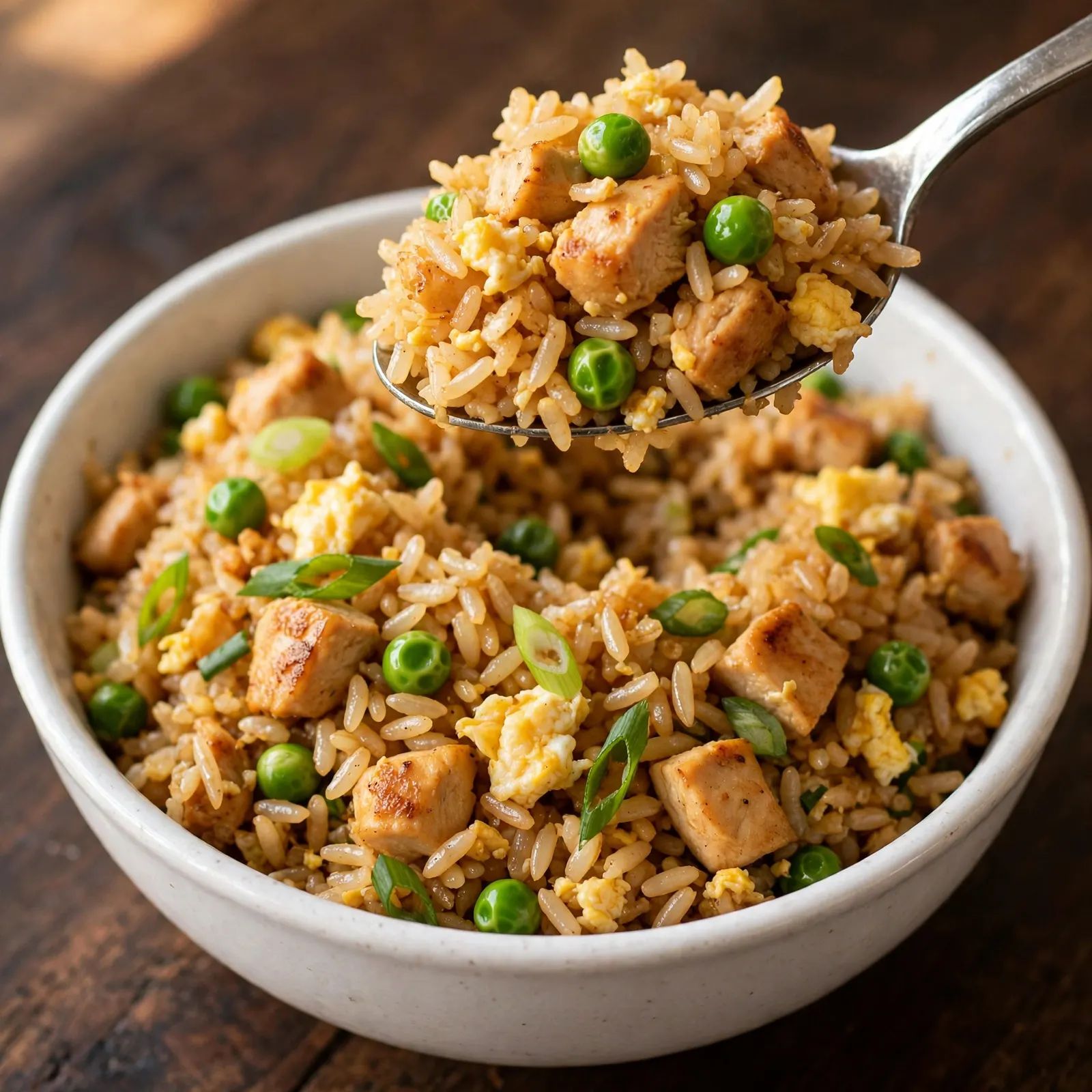
This chicken fried rice recipe solves the home-cook version of that problem. Day-old rice, a genuinely hot pan, chicken cooked in stages, and a sauce built from soy, oyster sauce, and sesame oil that goes in at the right moment rather than washing everything out. The eggs scramble separately and get folded in last so they stay distinct rather than disappearing into the rice. The entire dish takes 25 minutes and serves four people as a complete meal with no other cooking required.
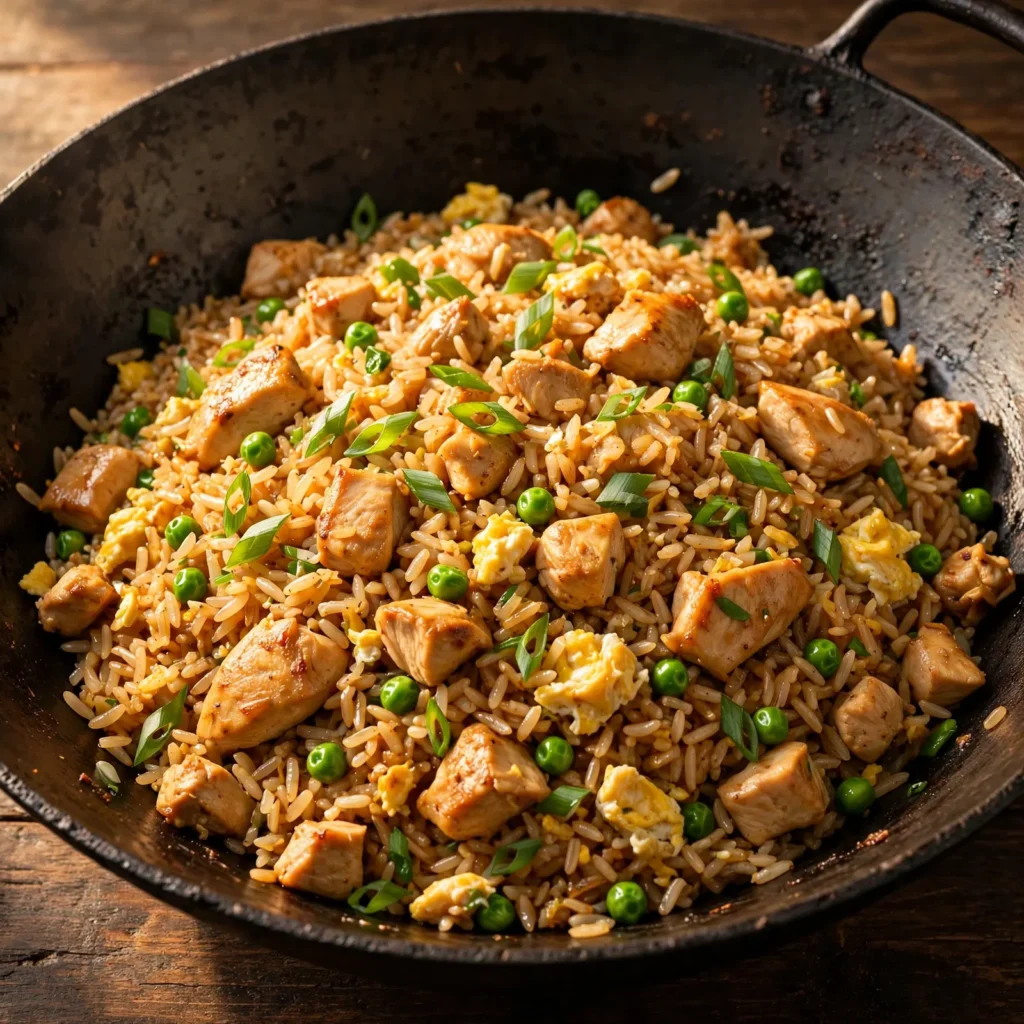
Why You’ll Love This Chicken Fried Rice
- The rice stays dry and separate. Day-old refrigerated rice has lost its surface moisture, which means it fries rather than steams in the pan. Each grain gets a thin, savory coating of sauce rather than clumping together into a wet mass.
- One pan, 25 minutes from start to finish. The chicken, the vegetables, the eggs, and the rice all cook in the same wok in stages. Cleanup is minimal and everything gets done in the time it would take to order delivery.
- The sauce goes on at the right moment. Adding the soy and oyster sauce directly to the hot rice rather than the chicken or vegetables means every grain picks up flavor rather than the protein absorbing it all and leaving the rice bland.
- Adaptable to what is in your fridge. The core technique stays the same regardless of what vegetables you use. Frozen peas, leftover roasted vegetables, fresh corn cut off the cob: anything works in the right quantity.
- Genuinely satisfying as a complete meal. The chicken provides protein, the eggs add richness, and the rice provides enough carbohydrates to make a bowl of this hold you for hours.
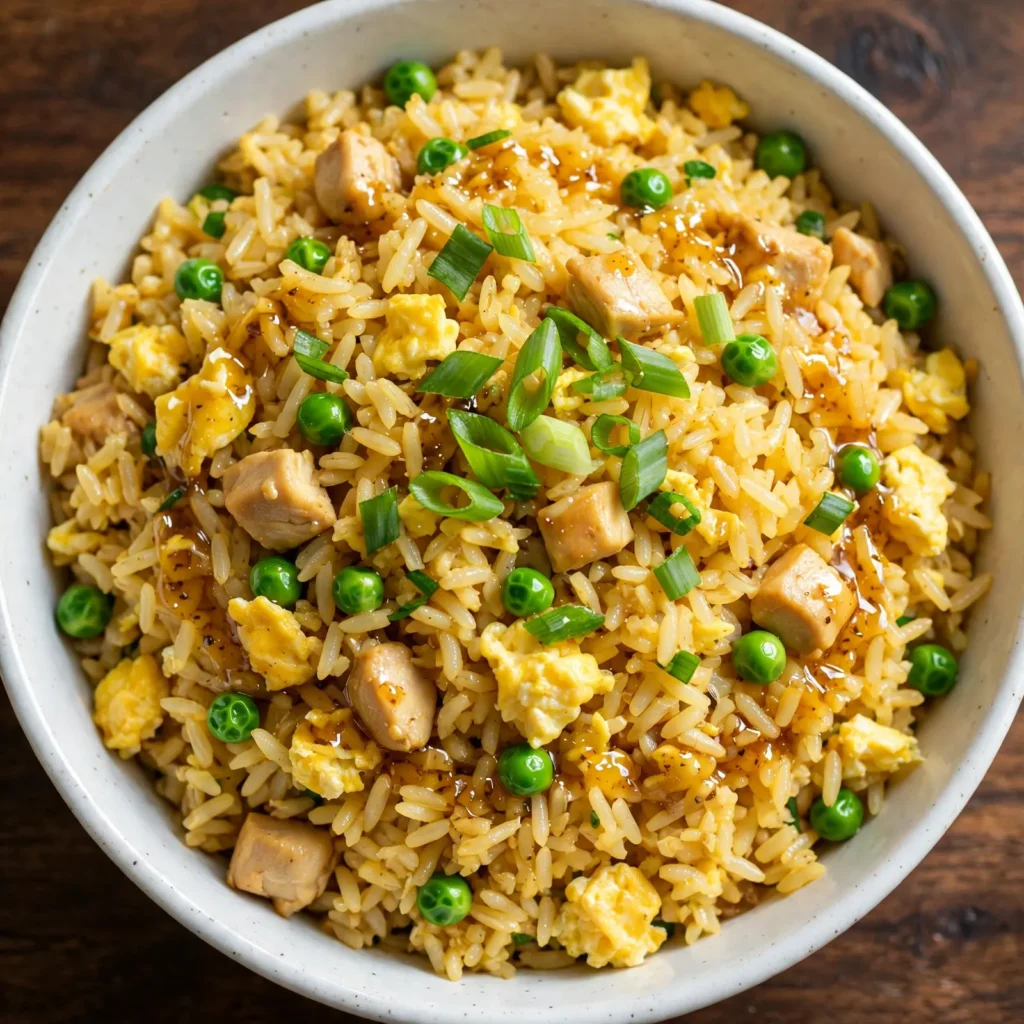
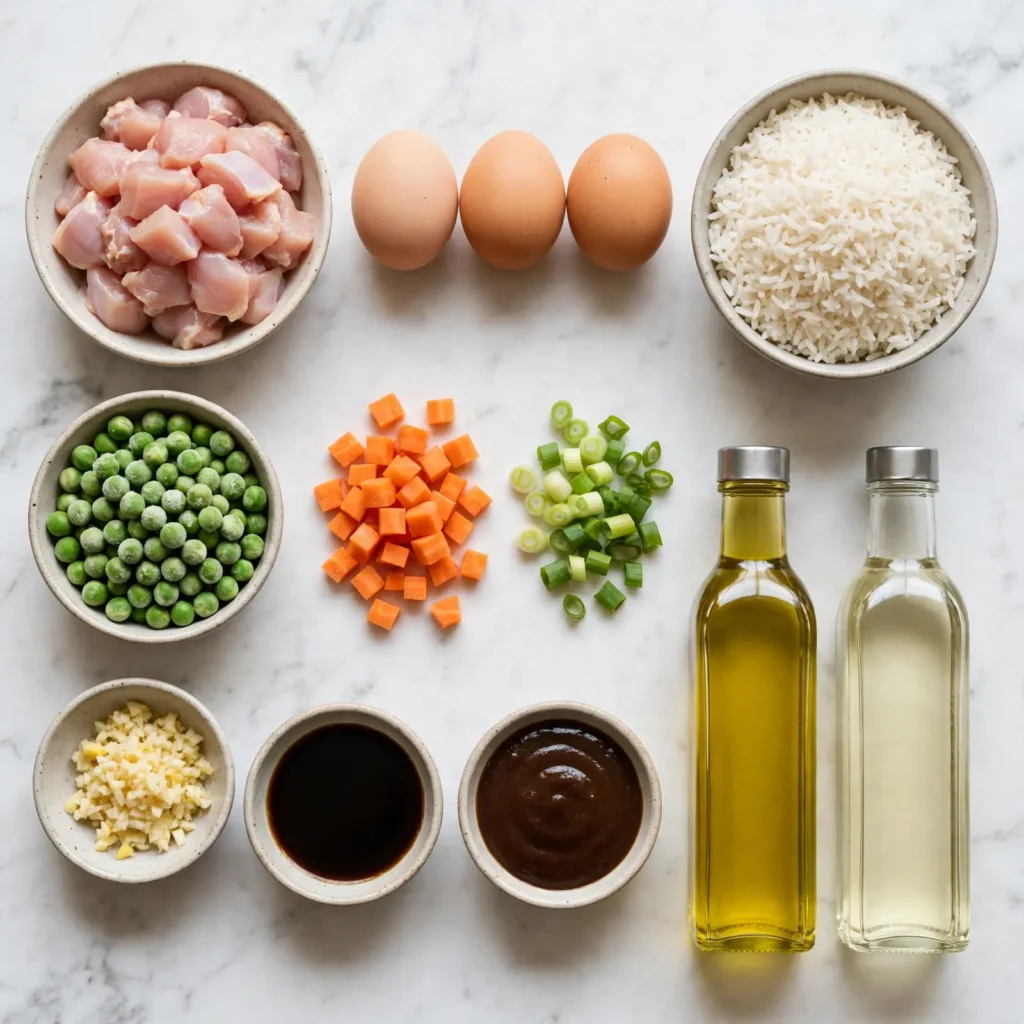
Ingredients You’ll Need
Recipe Timing
| Detail | Info |
|---|---|
| Servings | 4 |
| Difficulty | Easy |
| Course | Main Course |
| Cuisine | Chinese-American |
| Prep Time | 10 minutes |
| Cook Time | 15 minutes |
| Total Time | 25 minutes |
The single most important ingredient in this recipe is the rice, and specifically its age. Freshly cooked rice is too moist to fry properly: it releases steam in the pan, which cools the surface temperature and causes the grains to stick together rather than frying separately. Day-old rice that has been refrigerated overnight has lost most of its surface moisture through evaporation, which is why each grain fries cleanly. If you do not have day-old rice, spread freshly cooked rice on a baking sheet in a thin layer and refrigerate it for at least 2 hours before using. The goal is dry, cold, individual grains, not fresh, warm, clumping ones.
For the chicken, boneless skinless thighs stay more moist and flavorful through the high-heat cook than breasts, which can dry out quickly at wok temperatures. If using breasts, cut them smaller (1cm pieces rather than 1.5cm) and pull them from the pan the moment they turn opaque.
For the soy sauce, use a regular or light soy sauce for the primary seasoning. Dark soy sauce has a stronger, slightly sweet flavor and colors the rice dark brown rather than golden: it is a supporting sauce, not a primary one. If you are new to Chinese cooking, regular soy sauce from any supermarket works perfectly here.
- 3 cups (about 480g) cooked day-old jasmine or long-grain white rice. Cold, refrigerated, separated into individual grains before cooking. If clumping, break apart with your hands before the pan gets hot.
- 300g (about 10 oz) boneless skinless chicken thighs, cut into 1.5cm cubes. The primary protein. Thighs stay juicier than breasts at high heat. Pat dry before cutting.
- 3 large eggs. Scrambled separately and folded in at the end so they stay in distinct, tender pieces rather than being overcooked into the rice.
- 1 cup (160g) frozen peas. Add color, sweetness, and texture. Go in from frozen; no thawing needed.
- 1 medium carrot, peeled and finely diced (about 1cm cubes). Adds color and a mild natural sweetness. Small dice ensures it cooks through in the brief stir-fry time.
- 3 stalks green onion (scallions), white and green parts separated. White parts cook with the aromatics at the start; green parts garnish at the finish. Don’t skip the separation: the cooked white parts add savory depth, the fresh green tops add brightness and color.
- 4 cloves garlic, finely minced. Goes in early and briefly to bloom in the oil before the other ingredients join.
- 1 teaspoon freshly grated ginger (about a 1cm piece). Adds a warm, slightly spicy note that distinguishes homemade fried rice from a flat, one-dimensional version. Omit only if unavailable.
- 3 tablespoons neutral oil, divided (vegetable, sunflower, or canola). Used in stages: some for the chicken, some for the eggs, some for the aromatics and rice. High smoke point is essential. Don’t use olive oil, which burns at these temperatures.
- 3 tablespoons soy sauce. The primary savory seasoning for the rice. Use light or regular; dark soy sauce is too strong as the main soy component.
- 1 tablespoon oyster sauce. Adds a thick, slightly sweet, deeply savory note that soy sauce alone doesn’t provide. Omit for a soy-only version or substitute with hoisin sauce.
- 1 teaspoon sesame oil. Stirred in at the very end, off the heat. It adds a nutty, aromatic finish that is distinctly associated with restaurant fried rice. Don’t use it for cooking: its low smoke point means it burns and turns bitter at high temperatures.
- 1/2 teaspoon white pepper (or black pepper). White pepper is traditional in Chinese cooking and has a slightly different, earthier heat than black. Either works.
- 1/4 teaspoon fine sea salt. For seasoning the chicken before cooking.
Allergen and Dietary Disclosure
This recipe contains gluten (soy sauce and oyster sauce both contain wheat), eggs, and soy.
For a gluten-free version, use certified gluten-free tamari in place of regular soy sauce, and replace the oyster sauce with a gluten-free oyster sauce or coconut aminos. Check the labels on both carefully.
For an egg-free version, omit the eggs entirely or replace them with extra firm tofu, pressed dry and crumbled into small pieces, cooked in the same step where the eggs would go. The texture is different but the role of adding a soft, rich element to the rice is similar.
Free from dairy and nuts as written. Not guaranteed safe for any specific allergy without checking all individual ingredient labels.
Equipment Needed
A wok or large heavy-bottomed skillet. A wok is the ideal vessel for fried rice because its sloping sides allow you to push food up the sides while frying fresh additions at the base. A standard 30cm (12-inch) cast iron skillet or stainless steel skillet works well as a substitute. The critical requirement in either case is that the surface is hot before anything goes in. Non-stick pans are not recommended: they cannot tolerate the high heat needed for proper fried rice and the rice will steam rather than fry.
A wok spatula or large flat-edged spatula. The wide, thin blade of a wok spatula lets you toss and stir without breaking the rice grains or compressing them against the pan surface. A regular wooden spoon creates too much surface drag and can cause the rice to compact.
A large prep bowl. All the cooked components (chicken, eggs, vegetables) that come out of the pan between additions need somewhere to hold while the next stage cooks. Have a large bowl beside the stove before you start.
Step-by-Step Directions
Step 1: Prep Everything Before the Pan Gets Hot
Dice the chicken, mince the garlic and ginger, dice the carrot, separate the green onion white and green parts, and break up any clumps in the cold rice with your hands so the grains are fully separated. Crack the eggs into a small bowl, beat them lightly with a fork, and set them nearby. Measure the soy sauce, oyster sauce, and sesame oil into one small bowl so they are ready to go in together. Fried rice moves fast once the pan is hot: you will not have time to measure and chop between steps.

Chef’s Note: The mise en place is not optional in fried rice. This is one of the few recipes where having everything ready and within reach before you turn on the heat is genuinely critical to the outcome. Scrambling to find the soy sauce while the rice is burning is how home fried rice goes wrong.
Step 2: Cook the Chicken
Heat 1 tablespoon of neutral oil in the wok or skillet over the highest heat your stove can produce. When the oil shimmers and just begins to smoke slightly, add the diced chicken in a single layer. Season with salt and white pepper. Cook without touching the chicken for 60 to 90 seconds until the bottom of each piece develops a golden sear, then stir and cook for another 60 seconds until the chicken is cooked through with no pink remaining and the edges are light golden. Transfer to the large bowl beside the stove.
Food Safety Note: Chicken must reach a minimum internal temperature of 74°C (165°F). At the high heat of this step, small 1.5cm pieces reach that temperature quickly. If in doubt, check one piece by cutting it open: the interior should be completely opaque and white with no translucency remaining.
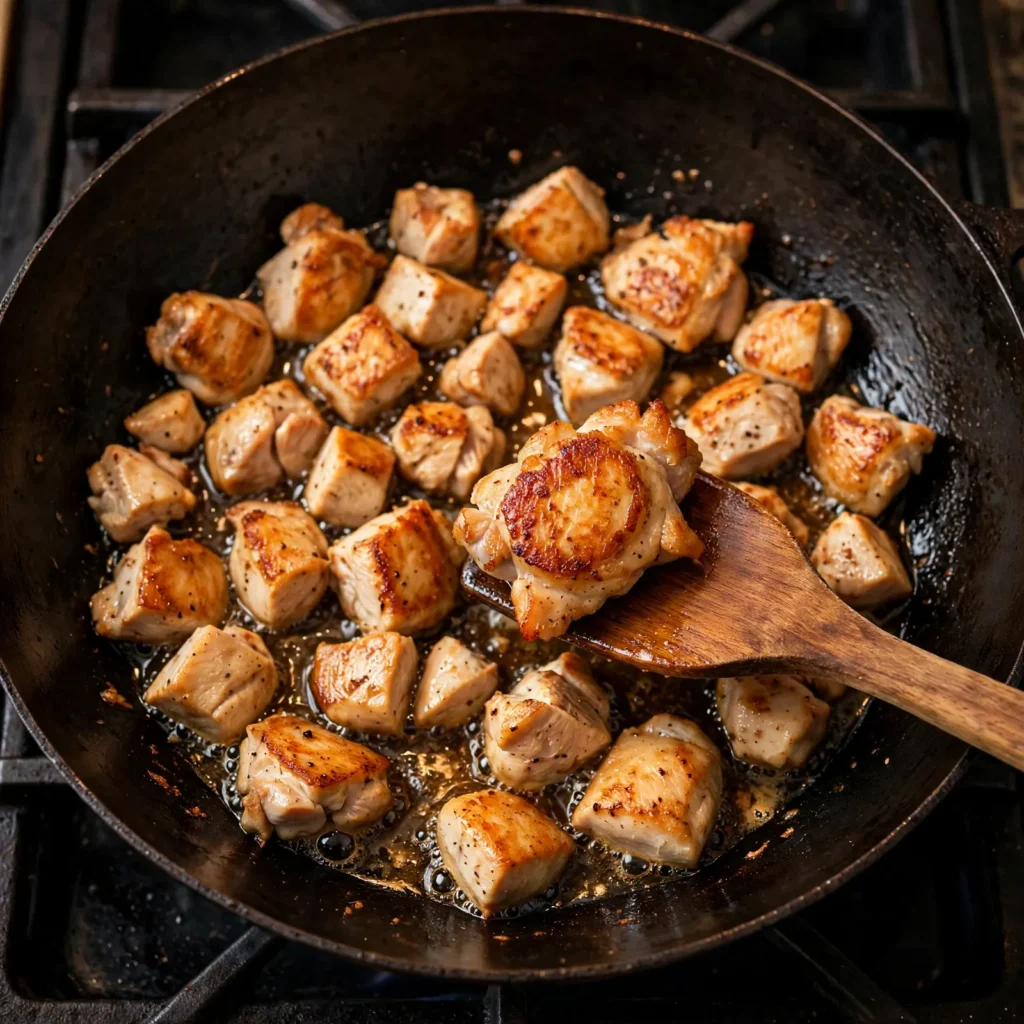
Step 3: Cook the Vegetables
Without cleaning the wok, add another half tablespoon of oil. Add the diced carrot and the white parts of the green onion. Stir-fry over high heat for 2 minutes, moving everything constantly with the spatula, until the carrot is slightly softened but still has a small amount of resistance at the center. Add the minced garlic and grated ginger and stir for 30 seconds until fragrant. Add the frozen peas and stir for 30 more seconds until they are bright green and heated through. Transfer the vegetable mixture to the bowl with the chicken.
Step 4: Scramble the Eggs Separately
Add the remaining half tablespoon of oil to the wok. Pour in the beaten eggs all at once. Let them sit undisturbed for 10 to 15 seconds until the edges begin to set, then use the spatula to fold them gently into large, soft curds. Pull them from the pan when they are just barely set with a slight glossy undercooked look in the center: they will finish cooking when stirred back into the hot rice. Transfer to the bowl with the chicken and vegetables.
Chef’s Note: Slightly undercooked eggs going into the rice are the right call here. If the eggs are fully cooked before they rejoin the rest of the dish, they will be rubbery and dry in the finished bowl. The residual heat of the rice finishes them perfectly.
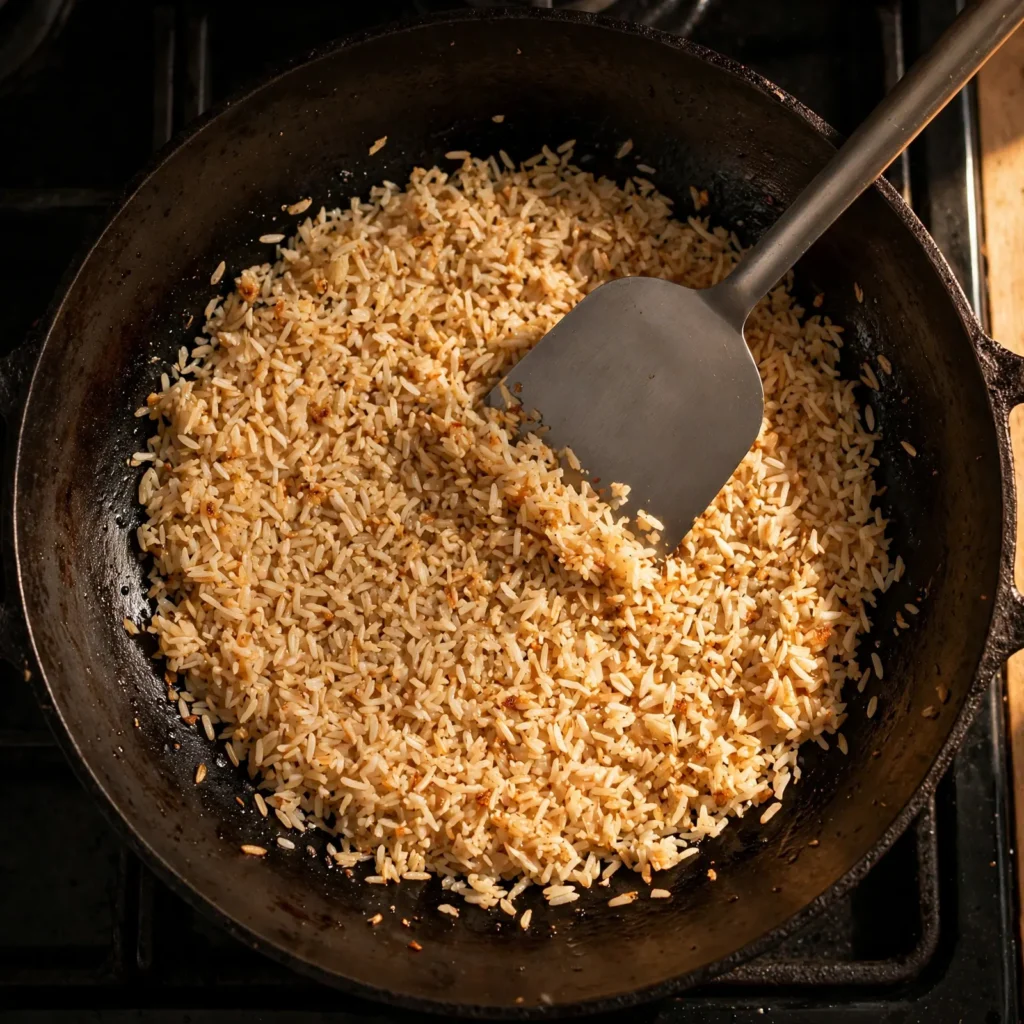
Add the remaining tablespoon of oil to the hot wok. Add all the cold, separated rice at once and spread it in an even layer across the bottom and up the sides of the wok. Press it gently against the surface with the spatula and leave it undisturbed for 60 seconds: you should hear active, aggressive sizzling. This is the rice frying, not steaming. After 60 seconds, toss the rice using the spatula, press it down again, and leave for another 30 seconds. The rice should smell lightly toasty and each grain should look slightly glossy and separate.
Chef’s Note: The undisturbed press-and-fry method is the key to getting individual, separated rice grains rather than a clumped mass. The 60 seconds of contact with the hot surface lets each grain develop a thin, fried exterior that keeps them separate when you toss and stir.
Step 6: Add the Sauce and Combine Everything
Pour the combined soy sauce, oyster sauce, and white pepper directly over the fried rice. Toss quickly with the spatula until every grain is evenly coated and the rice has turned an even golden-brown color with no dry white grains visible. Return the chicken, vegetables, and scrambled eggs to the wok. Toss everything together for 60 seconds until fully combined and heated through. Remove the wok from the heat entirely and drizzle the sesame oil over the surface. Toss once more, then transfer to serving bowls. Scatter the sliced green onion tops across each bowl.
Common Mistakes and Troubleshooting
| Problem | Cause | Solution |
|---|---|---|
| Rice is wet and clumping | Fresh rice used instead of day-old; pan not hot enough | Always use refrigerated day-old rice; heat the pan until the oil shimmers before any rice goes in |
| Rice has no color or flavor | Sauce added before rice was fried; heat too low | Fry the rice first until lightly toasty, then add sauce so it coats the already-fried grains |
| Eggs are rubbery and overcooked | Fully cooked before returning to the rice | Scramble eggs until just barely set with glossy centers; they finish in the residual heat of the rice |
| Chicken is dry and stringy | Cooked too long or cut too large | Cut to 1.5cm cubes maximum; pull from the pan the moment no pink remains |
| Everything tastes like plain soy sauce | Oyster sauce or sesame oil skipped | Use both: oyster sauce adds savory depth; sesame oil adds the aromatic finish that defines restaurant fried rice |
| Pan smoking excessively and burning | Stove heat too high for the pan used | Use a heavy-bottomed wok or cast iron; thin skillets burn faster; reduce heat very slightly if food scorches |
Variations and Substitutions
Shrimp Fried Rice: Replace the chicken with 300g of medium shrimp, peeled and deveined. Cook the shrimp in the same oil over high heat for 60 to 90 seconds per side until they turn pink and curl into a C-shape. They cook faster than chicken, so watch closely. Add them back to the rice in the final toss the same way the chicken does.
Vegetable Fried Rice: Skip the chicken entirely and double the vegetables. Add diced broccoli, sliced mushrooms, or baby corn alongside the carrot and peas. The sauce quantities stay the same. Increase the eggs to 4 for a protein addition that replaces some of the chicken’s substance.
Kimchi Fried Rice: Add 1/2 cup of roughly chopped kimchi to the wok alongside the white parts of the green onion. Let it cook for 90 seconds until some of the liquid evaporates and the kimchi edges begin to caramelize. Reduce the soy sauce to 2 tablespoons since kimchi is already well-salted. The result has a tangy, slightly fermented depth that transforms the dish entirely.
Spicy Version: Add 1 to 2 teaspoons of sambal oelek or chili garlic sauce to the soy and oyster sauce mixture before pouring it over the rice. Start with 1 teaspoon, taste the finished dish, and add more if wanted. A drizzle of chili oil over each finished bowl also works well as a tableside heat addition.
Brown Rice Version: Replace the white jasmine rice with cooked and refrigerated brown rice. Brown rice has a chewier texture that stays firmer through the frying process. The technique stays identical: it must be cold and day-old before cooking.
Cauliflower Rice Version: Replace the cooked rice with 3 cups of raw cauliflower rice (grated or processed cauliflower). Cook it in the hot wok for 3 to 4 minutes until the moisture evaporates and the cauliflower is lightly golden. The final dish will be lighter, lower in carbohydrates, and have a slightly different texture but takes the sauce and seasonings well.
Serving Suggestions
- As a standalone main course. A generous bowl of chicken fried rice needs nothing alongside it to be a satisfying dinner. The protein, carbohydrates, and vegetables are all in the bowl already.
- With egg drop soup. A light, quick egg drop soup made with warm broth alongside the fried rice makes the meal feel more complete and restaurant-style without requiring significant extra effort.
- With cucumber salad. A quick salad of sliced cucumber, rice vinegar, a pinch of sugar, and sesame seeds provides a cool, slightly acidic contrast to the warm, savory richness of the fried rice.
- With steamed bok choy. Bok choy halved and steamed for 4 minutes then drizzled with a little soy sauce and sesame oil alongside the fried rice adds a clean, simple vegetable component that balances the dish.
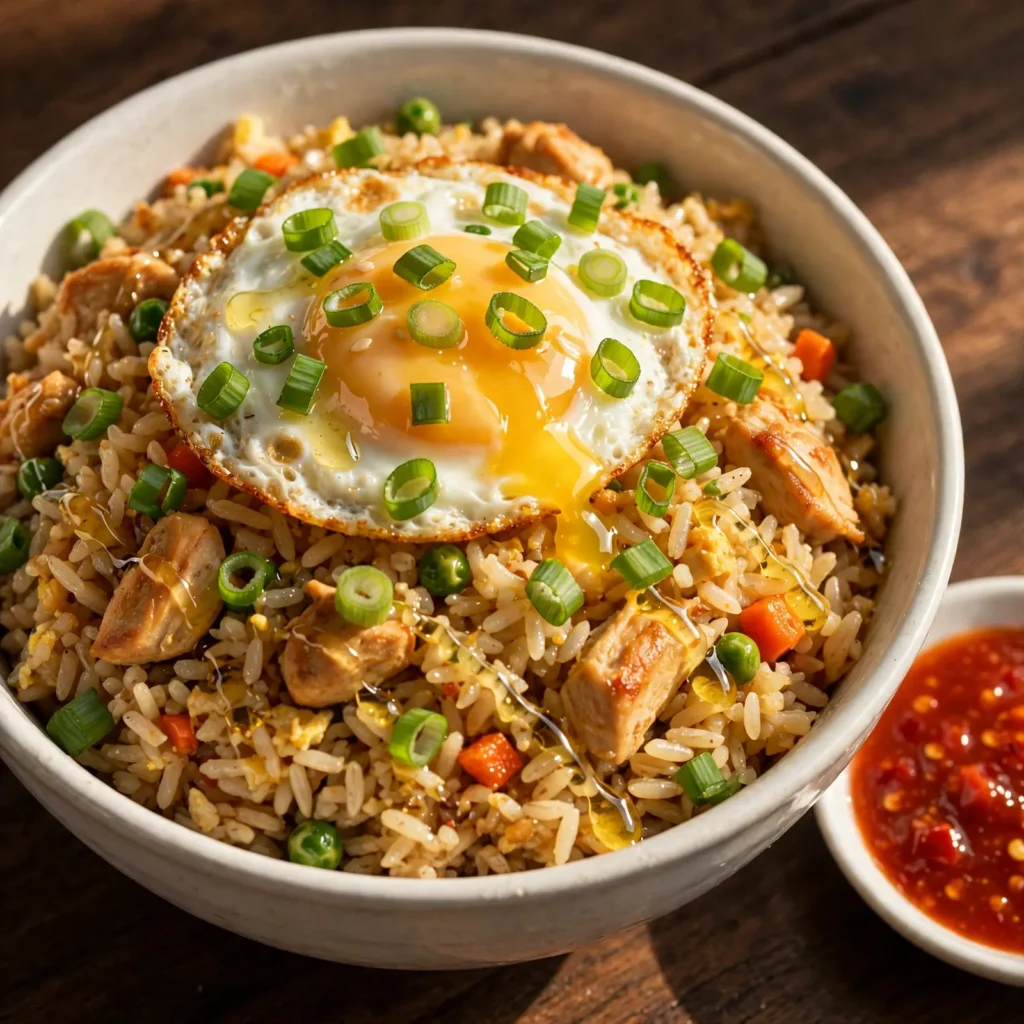
- With a fried egg on top. An over-easy or sunny-side-up fried egg placed on top of each bowl of fried rice right before serving is a common topping that adds extra richness and a runny yolk that mixes into the rice as you eat.
- As a lunch the next day. Cold leftover chicken fried rice eaten at room temperature is a genuinely good lunch: the soy and sesame flavors deepen overnight, the rice firms up, and the whole thing tastes more cohesive than it did freshly made.
Tips for the Best Results
- Cold, dry, day-old rice is non-negotiable. This is the single factor that most determines the quality of the finished dish. Fresh rice has too much surface moisture to fry properly and will clump and steam rather than creating the distinct, individually-coated grains that define good fried rice.
- Use the highest heat your stove can produce. The technical term for the smoky, slightly charred quality that restaurant fried rice has is “wok hei”: it comes from ultra-high heat that briefly chars the rice surface without burning it. Home stoves cannot perfectly replicate this, but using maximum heat on a heavy pan gets you closer than any other approach.
- Cook in stages, never all at once. Adding everything to the pan at the same time drops the temperature dramatically and turns a stir-fry into a braise. Chicken first, vegetables second, eggs third, rice fourth: each stage on its own ensures every component cooks at the right temperature.
- Add sesame oil off the heat. Sesame oil has a low smoke point and turns bitter when exposed to cooking-level heat. It is a finishing oil, not a cooking oil. Its aromatic quality comes through clearly when it hits the warm finished dish rather than the screaming hot wok.
- Season the chicken before cooking. The rice absorbs most of the soy sauce seasoning during the final toss, which means the chicken needs its own baseline seasoning from the salt and white pepper applied before it goes into the pan. Under-seasoned chicken in a well-seasoned rice results in one component that tastes noticeably flat against the other.
Storage Tips
Refrigerator
Transfer cooled chicken fried rice to an airtight container and refrigerate for up to 3 days. The rice will firm up and dry out slightly in the fridge, which is actually fine: it reheats more easily from a firmer state than from a fresh, warm one. Store without any garnishes or fresh green onion on top: add those fresh when reheating or serving.
Freezer
Chicken fried rice freezes reasonably well. Cool it completely, portion into freezer-safe containers, and freeze for up to 1 month. The egg texture changes slightly after freezing and thawing, becoming a little more firm than fresh, but the flavor is intact. Thaw overnight in the refrigerator before reheating, or reheat directly from frozen in a covered pan over medium-low heat.
Reheating
From the fridge: the best method is a hot skillet or wok with a very small drizzle of oil and a tablespoon of water added alongside the rice. Cover the pan with a lid for 60 seconds to steam slightly, then remove the lid and stir for 1 to 2 minutes until heated through and the moisture has evaporated. The microwave works at full power in 90-second intervals with a damp paper towel over the bowl to add steam, but the texture is noticeably better from the stovetop. Add a few drops of soy sauce and a small drizzle of sesame oil after reheating to freshen the flavor.
Nutrition Information
Per serving (approximately 1/4 of the full recipe, about 350g)
| Nutrient | Amount |
|---|---|
| Calories | 480 kcal |
| Protein | 32g |
| Carbohydrates | 50g |
| Fiber | 3g |
| Sugar | 4g |
| Total Fat | 16g |
| Saturated Fat | 3g |
| Cholesterol | 195mg |
| Sodium | 820mg |
| Vitamin C | 12mg |
| Calcium | 55mg |
| Iron | 2.5mg |
| Potassium | 470mg |
Nutrition values are approximate and may vary based on brands and portion sizes.
Why This Recipe Works
The staged cooking sequence is the structural decision that makes this recipe work consistently. Fried rice fails when too much goes into the pan at once because every addition drops the pan temperature. A cold pan cannot fry: it can only steam and braise, which produces the wet, clumping fried rice that most home attempts deliver. By cooking the chicken, vegetables, and eggs separately and returning them all at the end, every component gets the maximum heat available to the pan for its entire cooking time. The temperature never drops significantly.
Day-old rice works better than fresh rice for a specific physical reason. Freshly cooked rice contains significant residual moisture inside and on the surface of each grain. When that rice hits a hot pan, the surface moisture turns to steam, which creates a vapor barrier between the grain and the pan surface. The grain never makes direct contact with the hot metal, so it never fries: it steams from within. Rice that has been refrigerated overnight has lost most of that surface moisture through evaporation. Each grain makes full contact with the pan surface and fries immediately rather than steaming.
The separate scrambling of eggs before they rejoin the rice preserves their texture in a way that scrambling them into the rice directly doesn’t. Eggs scrambled into a dry, hot rice pan over maximum heat cook too quickly and become dry and rubbery before the rice has time to absorb any of the egg’s richness. Scrambled separately until just barely set, they retain moisture and tenderness and contribute a soft, yielding contrast to the firmer rice grains throughout the finished bowl.
Sesame oil added off the heat is a finishing technique rather than a cooking technique for a practical reason: its smoke point is approximately 175°C (350°F), far below the temperatures of active wok cooking. At cooking temperature, sesame oil degrades rapidly and produces a flat, slightly bitter character that has none of the nutty aromatic quality that makes it valuable as a finishing element. Added to a bowl of hot food that is no longer over direct heat, it stays aromatic and contributes the distinctive fried rice flavor that most home versions miss.
I’ve made this recipe with both chicken breasts and chicken thighs in side-by-side tests. The thigh version produced juicier, more flavorful pieces that stayed moist through the final toss in the hot rice. The breast version was noticeably drier by the time it finished cooking in the residual heat of the dish. For a recipe where the protein gets cooked twice (once in the wok, once when returned with hot rice), thighs are the better choice.
Frequently Asked Questions
Can I use freshly cooked rice for chicken fried rice?
Freshly cooked rice can work in a pinch, but the result is noticeably different from day-old rice. If you must use fresh rice, spread it in a thin layer on a baking sheet and refrigerate for at least 2 hours to remove surface moisture. Even then, it won’t behave exactly like properly aged, refrigerated rice. The best approach is to plan ahead: cook extra rice the evening before and use it the next day.
Why is my chicken fried rice mushy and wet?
Wet, mushy fried rice almost always comes from one of two causes: using fresh rice with too much residual moisture, or not getting the pan hot enough before adding the rice. Both result in steaming rather than frying. Use cold, day-old rice and make sure the oil is shimmering before the rice goes in. If the pan isn’t producing a loud, immediate sizzle when the rice hits it, the heat is too low.
Can I make chicken fried rice without oyster sauce?
Yes. The oyster sauce adds a thick, deeply savory note that soy sauce alone doesn’t fully replicate, but you can use hoisin sauce as the closest substitute (use the same quantity). Alternatively, add an extra teaspoon of soy sauce and a small drizzle of honey for a slightly sweet, savory version without oyster sauce. The flavor will be different but the dish is still good.
How do I know when the chicken is fully cooked?
At the high heat used for fried rice, small 1.5cm cubes of chicken thigh reach the safe internal temperature of 74°C (165°F) within 2 to 3 minutes of cooking. The most reliable visual check is that every piece turns completely opaque with no pink or translucent area visible at the center. If you cut the largest piece in half and see white, opaque meat all the way through, the chicken is done. Pull it out of the pan immediately at that point to prevent it from drying out.
Is chicken fried rice gluten-free?
As written, this recipe is not gluten-free because both regular soy sauce and oyster sauce contain wheat. To make a gluten-free version, replace the soy sauce with certified gluten-free tamari (same quantity) and use a gluten-free oyster sauce or coconut aminos in place of the oyster sauce. Check the label of every condiment carefully, as formulations vary significantly between brands.
Can I add more vegetables?
Yes, within reason. The key constraint is total volume: adding more than about 1.5 to 2 cups of vegetables total risks dropping the pan temperature enough to steam rather than stir-fry. Dense vegetables like broccoli florets, diced bell pepper, or sliced mushrooms work well and should go in with the carrot. Soft vegetables like bean sprouts or zucchini go in after the garlic and ginger and need only 30 to 60 seconds of cooking.
Can I substitute the chicken with a different protein?
Yes. Shrimp, diced firm tofu, or thinly sliced beef all work in the same quantity. Shrimp cooks in 90 seconds per side and should be added back to the rice at the same point as the chicken. Tofu should be pressed dry and pan-fried until golden before being set aside. Beef should be thinly sliced against the grain and cooked over maximum heat for 60 to 90 seconds until just browned and no longer pink. Each protein adjusts slightly in cooking time but the overall method stays the same.
Conclusion
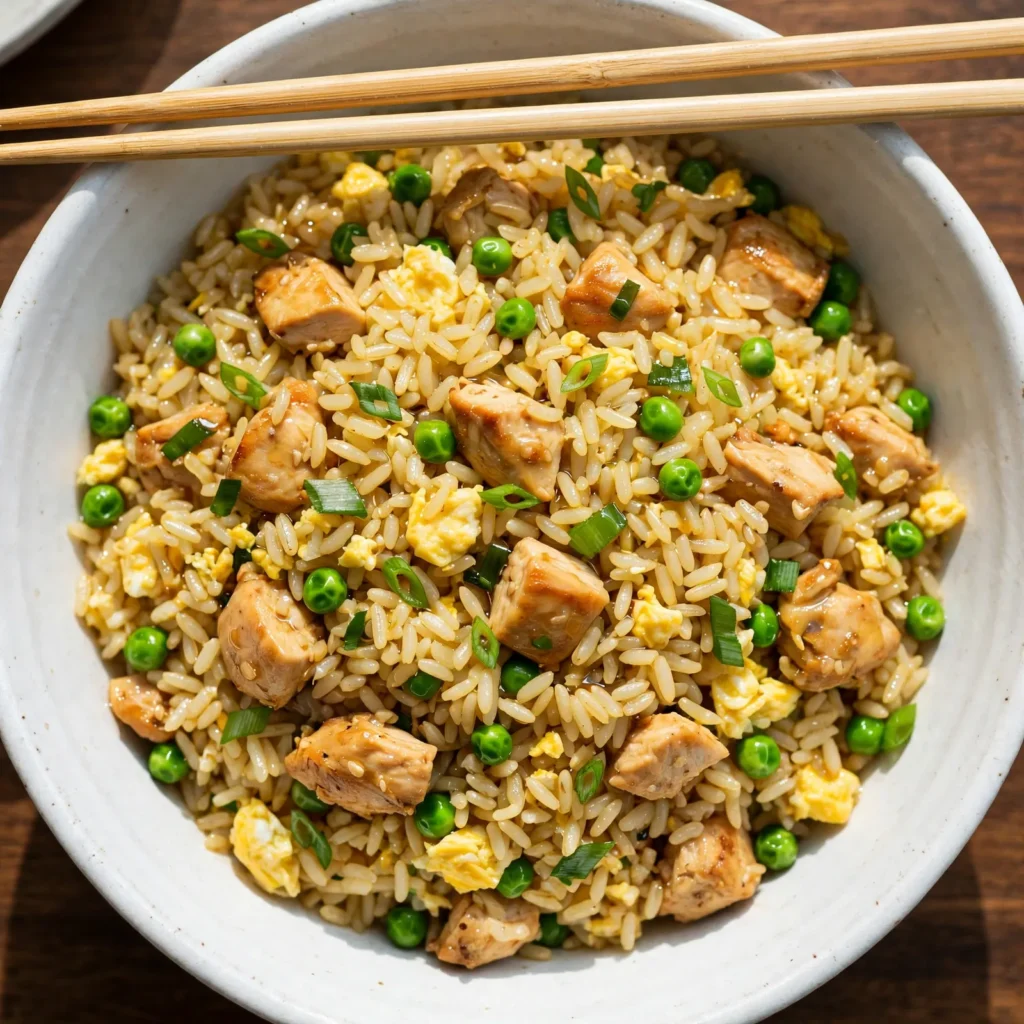
Chicken fried rice done well is not complicated, but it is specific. Cold rice, a genuinely hot pan, everything prepped and staged before the heat goes on, and the sesame oil added at the very end rather than in the middle: these are not optional suggestions, they are the details that separate a good result from a mediocre one. Once the technique clicks, it becomes one of those recipes you make reflexively whenever there is leftover rice in the fridge, because the whole thing takes 25 minutes and uses whatever you have. Chicken fried rice at home, made this way, is genuinely better than most takeout versions.
If you loved this recipe, save it to your easy dinner recipes Pinterest board so you can find it easily later. For more healthy recipes and daily food inspiration, follow TheCookingVibes on Pinterest.
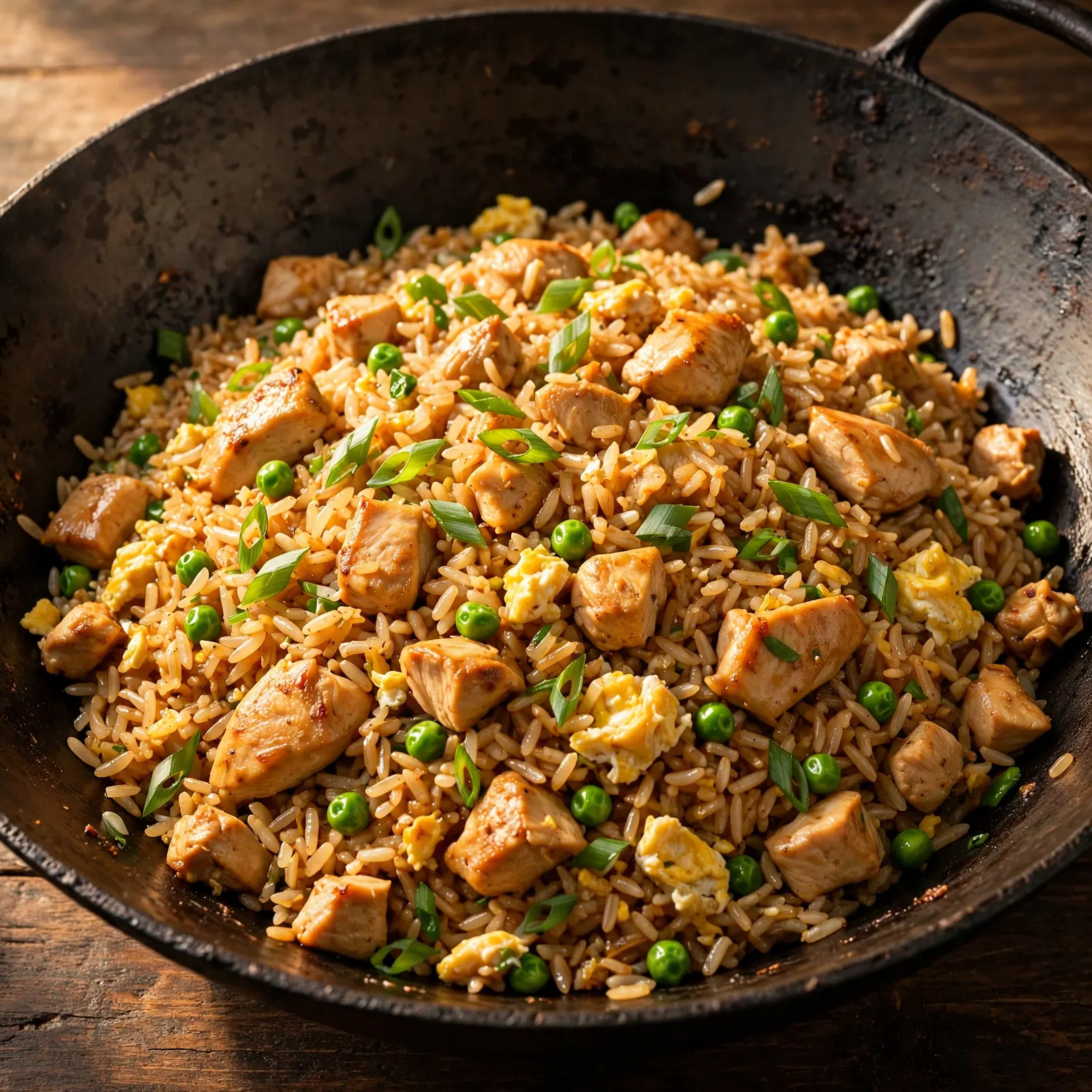
Easy Chicken Fried Rice
Ingredients
Equipment
Method
- Prep all ingredients before heating the pan: dice chicken, mince garlic and ginger, dice carrot, separate green onion parts, break apart cold rice, beat eggs, and combine soy sauce, oyster sauce, and white pepper in one small bowl.
- Heat 1 tablespoon oil in a wok or large skillet over maximum heat until shimmering. Season chicken with salt and white pepper, add in a single layer. Cook 60 to 90 seconds undisturbed until golden underneath, then stir and cook 60 more seconds until no pink remains. Transfer to a bowl.
- Add 1/2 tablespoon oil to the pan. Stir-fry carrot and green onion whites for 2 minutes. Add garlic and ginger, stir 30 seconds. Add frozen peas, stir 30 seconds. Transfer to the bowl with chicken.
- Add remaining 1/2 tablespoon oil. Pour in beaten eggs and let sit 10 to 15 seconds, then fold into large, barely-set curds. Transfer to the bowl when still slightly glossy.
- Add the remaining 1 tablespoon oil to the hot pan. Add cold rice in an even layer, press against the surface, and leave undisturbed for 60 seconds. Toss and press again for 30 more seconds until grains are separate and lightly toasty.
- Pour the sauce mixture over the rice and toss until every grain is evenly coated and golden. Return chicken, vegetables, and eggs to the pan. Toss 60 seconds until heated through.
- Remove from heat. Drizzle sesame oil over the top. Toss once, transfer to bowls, and scatter green onion tops over each serving.