Perfect Roasted Carrots — Caramelized Edges, Tender Centers
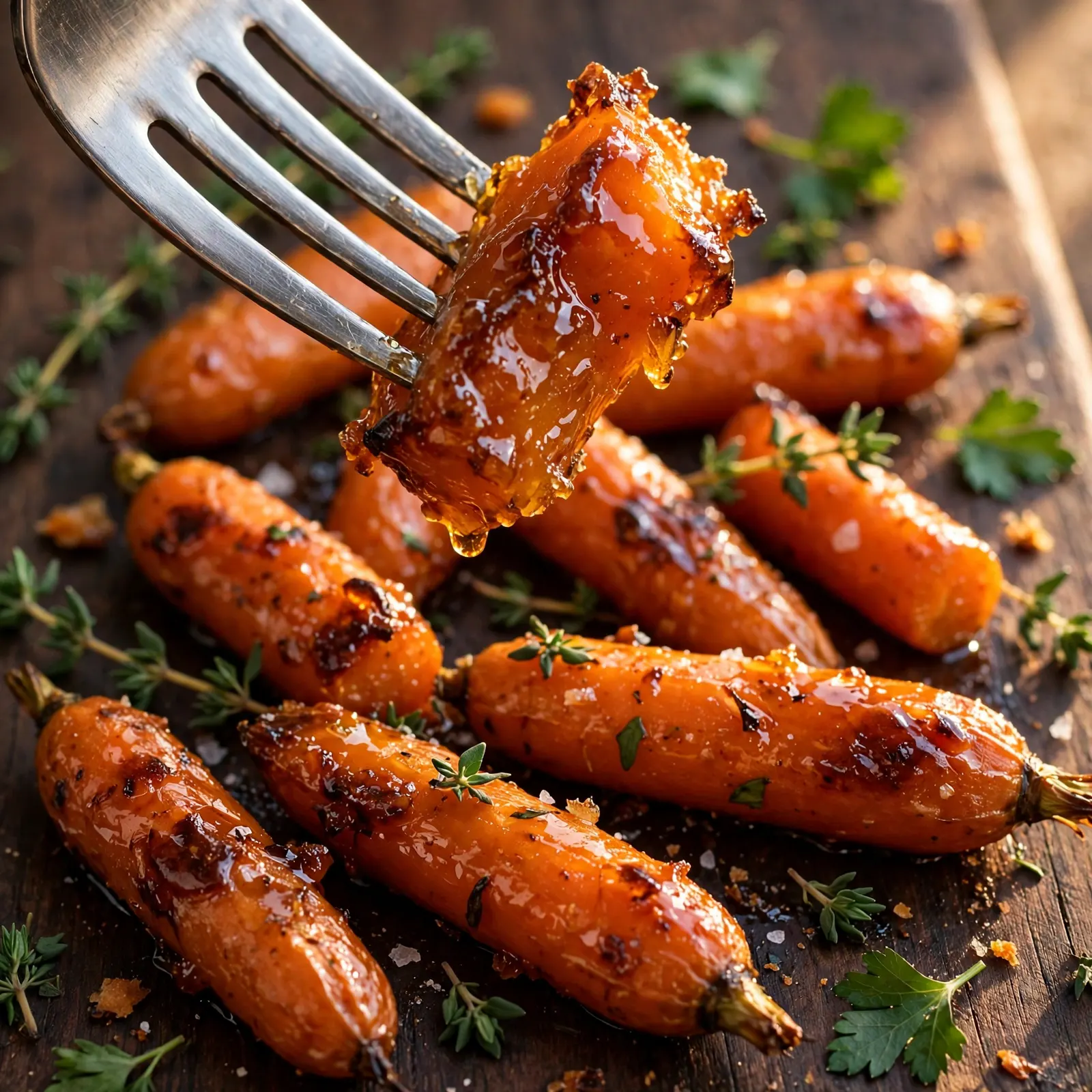
Raw carrots are one thing. Roasted carrots are something else entirely. The oven pulls out the natural sugars, the cut edges caramelize to a deep amber, and the centers go from crunchy and sharp-tasting to soft and almost sweet. Add a drizzle of honey, a little garlic, and fresh thyme, and you have a side dish that makes people reach for seconds before the main course has even been passed around.
This roasted carrots recipe works with whole baby carrots, halved regular carrots, or long diagonal cuts depending on what you have on hand. The technique is the same regardless of the shape: high heat, a thin coat of oil, enough space on the pan for the edges to roast rather than steam, and 25 minutes of mostly hands-off oven time. It pairs with roasted chicken, braised beef, grilled fish, or any grain-based dish, and it works just as well on a Tuesday night as it does on a holiday table.
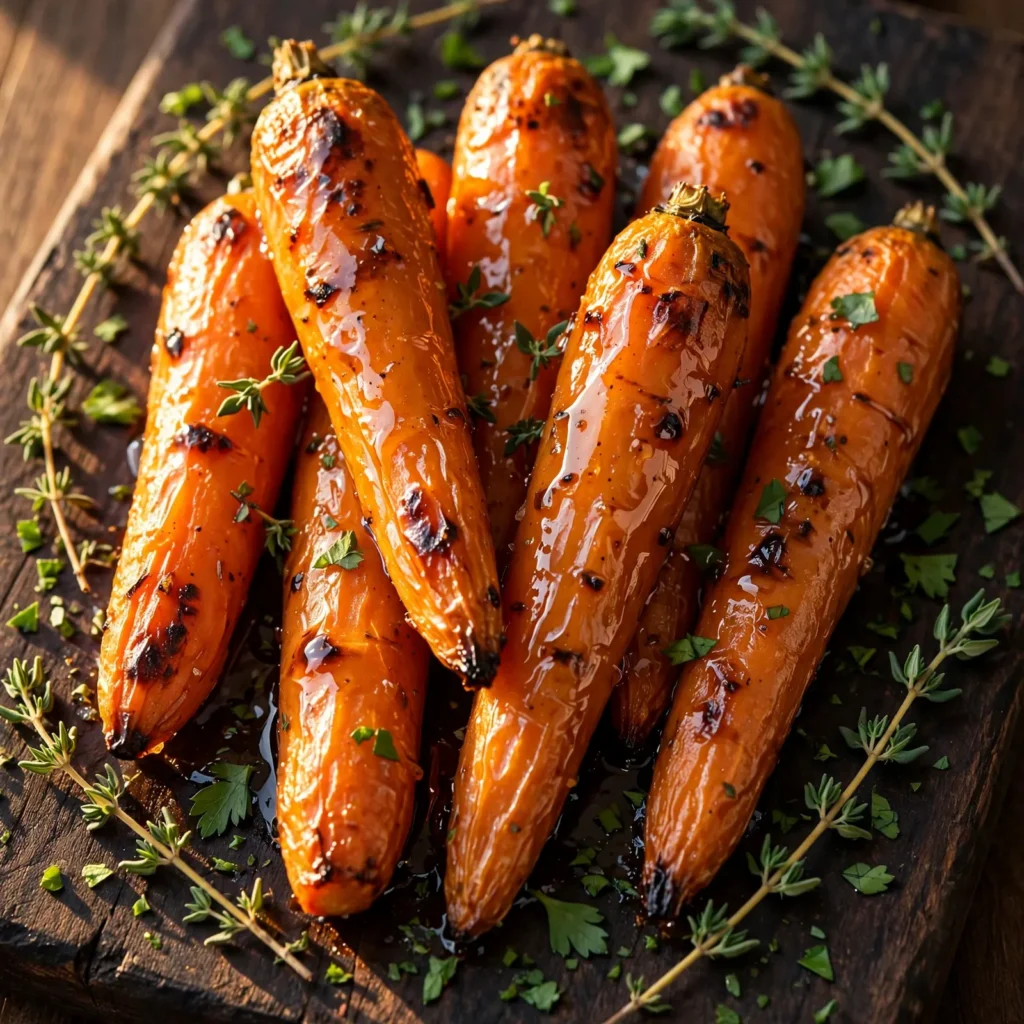
Why You’ll Love These Roasted Carrots
- Natural sweetness, amplified. Roasting concentrates the sugars already present in carrots. A honey drizzle supports rather than overwhelms that natural flavor, which is why the finished dish tastes genuinely complex from a short ingredient list.
- Caramelized edges without burning. The combination of high heat, dry pan surface, and enough space between pieces creates caramelized edges on the cut sides while the centers stay tender. This is what a steamed or boiled carrot can never produce.
- Twenty-five minutes in the oven. Active prep time is 10 minutes of peeling, cutting, and tossing with seasonings. After that the oven does all the work and you can focus on the rest of the meal.
- Works with any size or cut of carrot. Baby carrots, halved rainbow carrots, or long diagonal cuts all roast well with the same method. The only adjustment is checking 2 to 3 minutes earlier for thinner pieces.
- Naturally gluten-free and easily vegan. The base recipe contains no gluten. Swap the honey for maple syrup and the butter (if using) for olive oil, and the recipe is fully plant-based without any compromise in flavor.
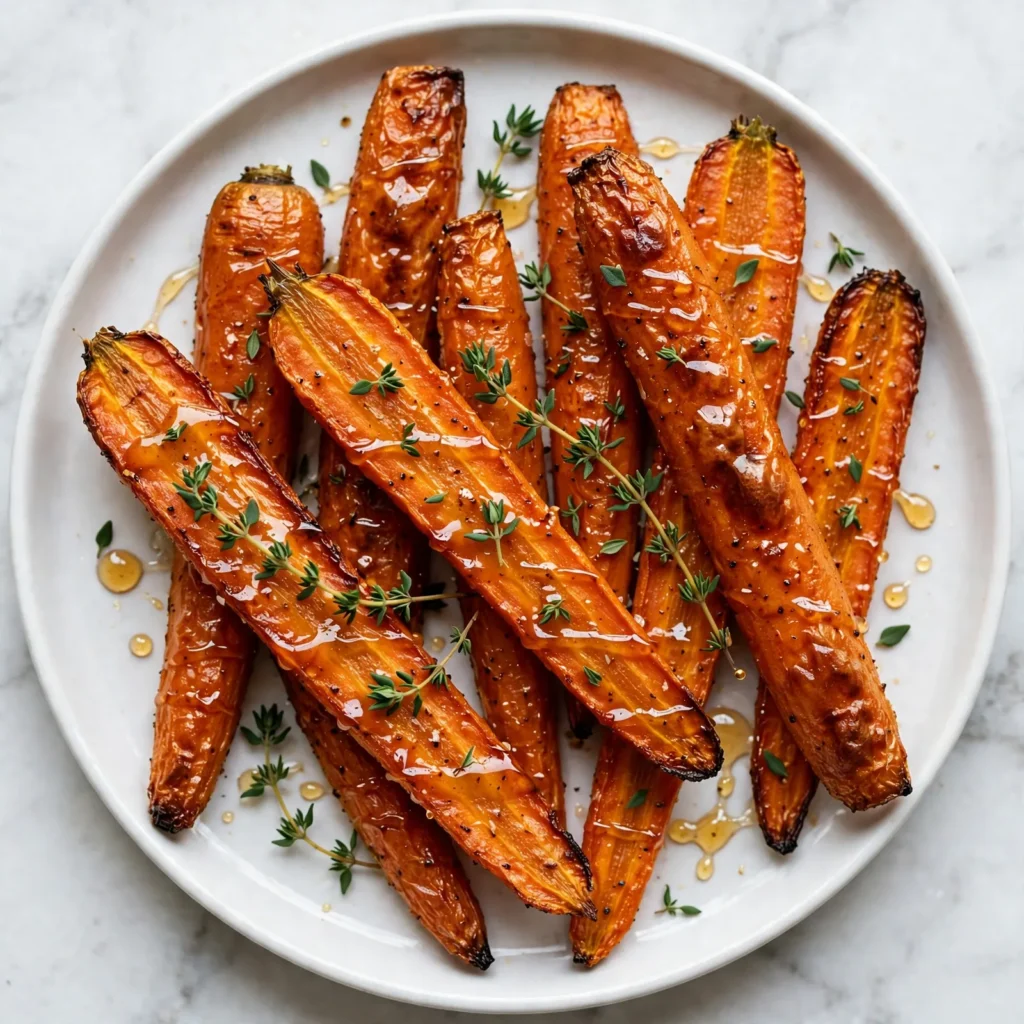
Ingredients You’ll Need
Recipe Timing
| Detail | Info |
|---|---|
| Servings | 4 |
| Difficulty | Easy |
| Course | Side Dish |
| Cuisine | American |
| Prep Time | 10 minutes |
| Cook Time | 25 minutes |
| Total Time | 35 minutes |
Choose carrots that feel firm and dense when you press them. Soft or rubbery carrots have lost significant moisture in storage and will shrivel further during roasting rather than caramelizing properly. Thicker carrots (2 to 3 cm in diameter) are ideal because they hold up to high oven heat without drying out through the center before the edges have a chance to color. Thin baby carrots cook faster and need watching from the 18-minute mark.
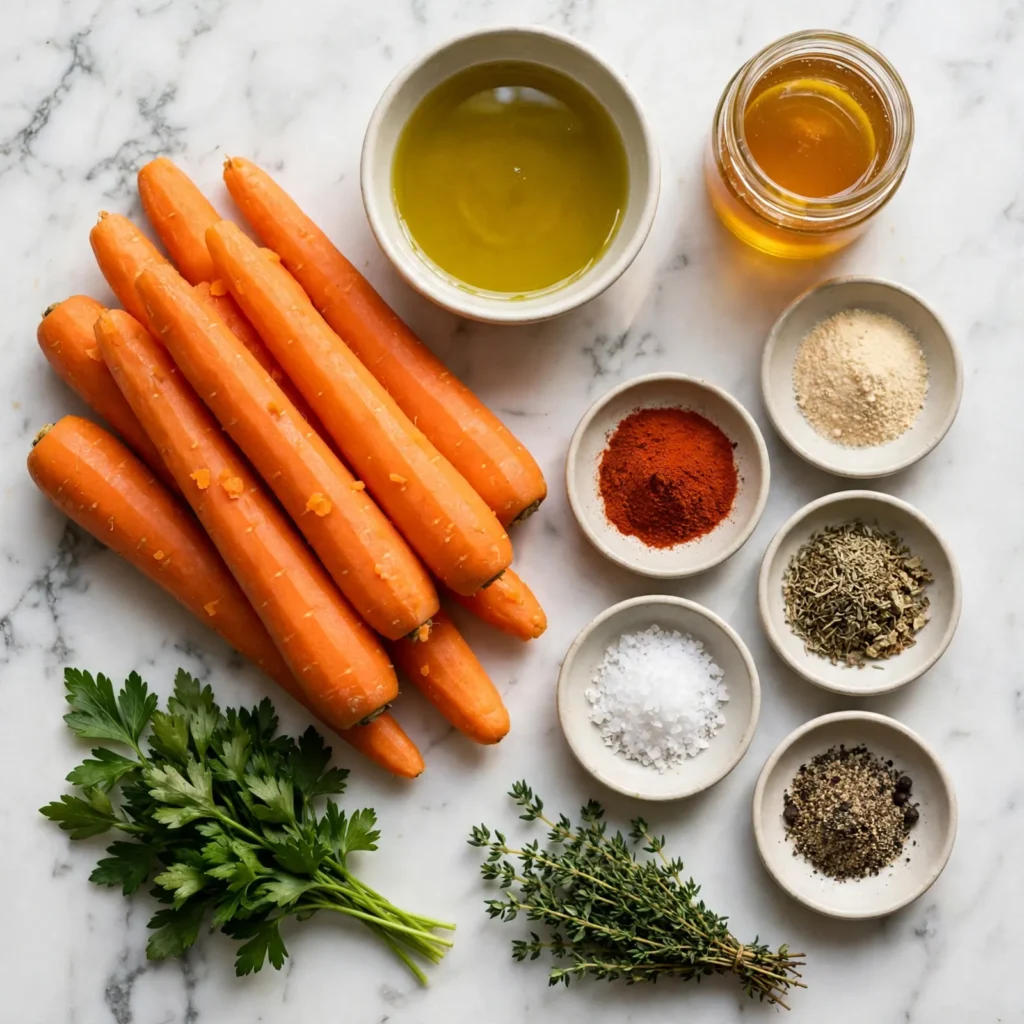
- 500g (about 1 lb) carrots, peeled — The main ingredient and the one that sets everything else. You can use standard orange carrots, rainbow carrots for visual variety, or baby carrots for convenience. Standard carrots have a more pronounced, earthy-sweet flavor; baby carrots are milder and roast slightly faster.
- 2 tbsp olive oil — Coats the carrot surfaces to conduct heat evenly and promote browning. Don’t reduce this amount; under-oiled carrots steam rather than roast and come out pale and soft rather than caramelized.
- 1 tbsp honey — Encourages browning on the cut surfaces and adds a rounded sweetness that complements the carrot’s natural sugar. Add it before roasting rather than after so it has time to caramelize directly onto the surface. Maple syrup works as a 1:1 substitute with a slightly more complex, smoky-sweet flavor.
- 1/2 tsp garlic powder — Distributes evenly across the carrots in a way fresh garlic doesn’t without burning. Fresh garlic cloves can be used (add them halfway through roasting to prevent burning), but garlic powder is the more consistent choice for this method.
- 1/2 tsp dried thyme — Earthy, slightly floral, and one of the herbs that pairs most naturally with roasted root vegetables. Fresh thyme (about 4 to 5 sprigs laid across the carrots before baking) gives a brighter, greener flavor if you have it.
- 1/4 tsp smoked paprika — Adds a subtle warmth and depth that you won’t necessarily identify as paprika but would notice was missing. Regular sweet paprika works as a substitute; smoked gives slightly more complexity.
- 1/2 tsp fine salt
- 1/4 tsp ground black pepper
- Fresh flat-leaf parsley or fresh thyme, for garnish — A small handful of roughly chopped parsley over the finished carrots adds a bright green contrast that makes the dish look finished and cuts through the sweetness of the honey glaze.
- 1 tbsp unsalted butter, optional — Added in the last 5 minutes of roasting, it melts over the carrots and gives the finished dish a richer, more indulgent flavor. Omit for a dairy-free version with no significant texture change.
Equipment Needed
- Large rimmed baking sheet (half-sheet pan, 45×30 cm) — Size matters more than most people realize. A full pound of carrots needs a pan large enough to spread them in a single layer with at least 2 to 3 cm of space between pieces. Overcrowding is the single most common reason roasted carrots steam instead of caramelize.
- Parchment paper or silicone baking mat — Prevents sticking, makes cleanup significantly faster, and provides a slightly more even heat surface beneath the carrots. Don’t use aluminum foil directly under the carrots; it conducts heat more intensely and can over-brown the bottom before the top colors.
- Large mixing bowl — For tossing the carrots with oil, honey, and seasonings before spreading on the pan. Tossing in a bowl produces more even coating than drizzling directly onto the pan surface, where the oil tends to pool unevenly.
- Sharp chef’s knife and cutting board — For cutting carrots into consistent pieces. Uneven cuts produce mixed results: some pieces caramelize correctly while others are underdone or dried out.
Step-by-Step Directions
Step 1: Preheat the Oven
Set your oven to 220°C (425°F) and position one rack in the center position. Line your large baking sheet with parchment paper. A higher oven temperature is what creates caramelization rather than just softening; don’t lower it to 180°C thinking the carrots will cook more evenly. They won’t caramelize at lower temperatures within a reasonable time frame.

Chef’s Note: The oven needs to be fully up to temperature before the carrots go in. An oven that’s still heating when the pan goes in starts the carrots at a lower temperature, which means they soften and release moisture before the surface has a chance to dry out and color. Give the oven at least 15 minutes to preheat fully.
Step 2: Prepare the Carrots
Peel the carrots and cut them into even pieces. For standard-sized carrots, cut them in half lengthwise first and then into segments about 8 to 10 cm long so each piece has at least one flat cut surface that sits directly on the pan. That flat side is where the deepest caramelization happens. For baby carrots, leave them whole or halve them lengthwise. For a more elegant presentation, cut standard carrots on the diagonal into 4 to 5 cm pieces at a 45-degree angle.
Step 3: Season and Toss
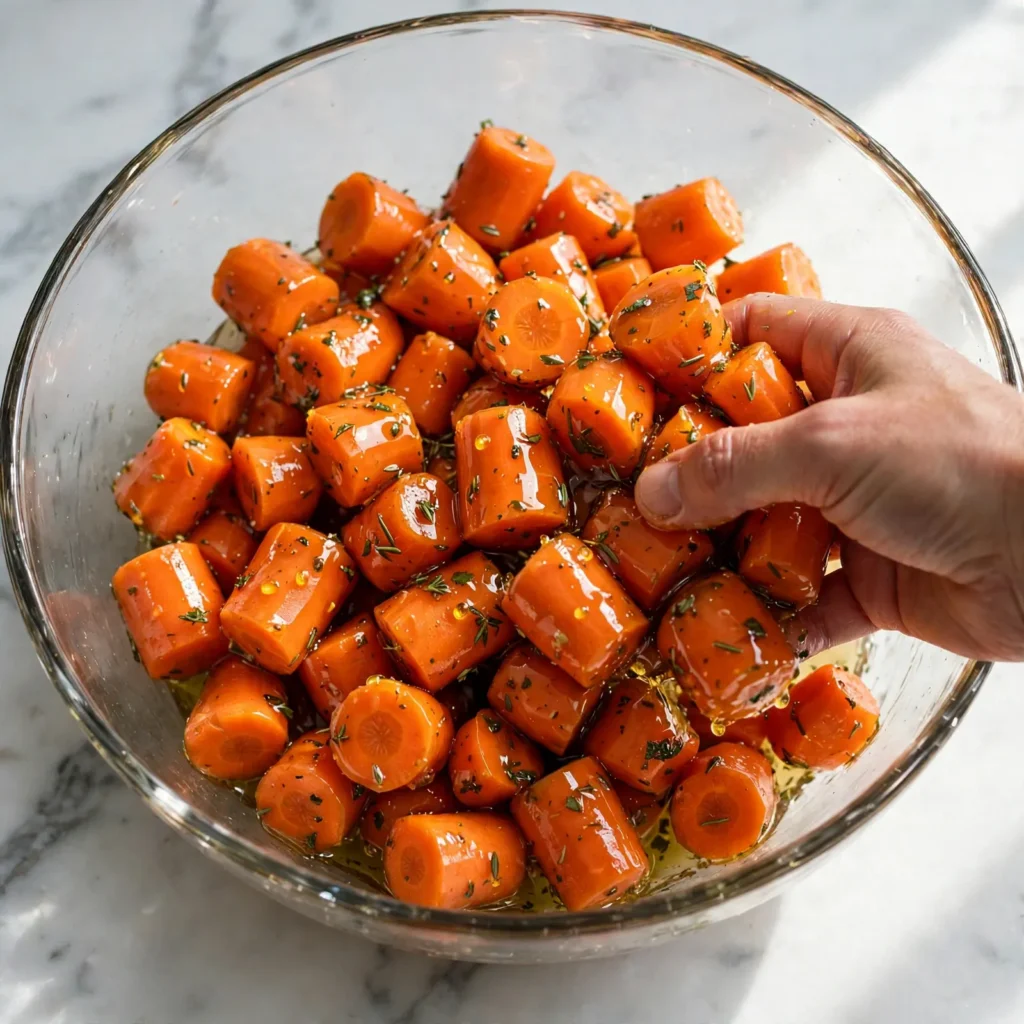
Place the prepared carrot pieces in your large mixing bowl. Drizzle the olive oil and honey directly over them. Sprinkle in the garlic powder, dried thyme, smoked paprika, salt, and pepper. Toss with your hands or two spoons until every piece has a visible, even coating of oil and seasonings. Don’t rush this step; any bare patches on the carrot surface will stay pale and soft rather than caramelizing to an amber crust.
Chef’s Note: ossing with your hands gives you direct tactile feedback about whether every surface is coated. You can feel the difference between a well-coated piece and a dry one in a way you can’t by looking. It also ensures the honey distributes across all the pieces rather than clumping on a few.
Step 4: Spread on the Baking Sheet
Arrange the seasoned carrots on the parchment-lined baking sheet in a single layer, cut side down where possible. Leave visible space between pieces: at least 2 cm on all sides. If the carrots cover every inch of the pan with no gaps, divide them across two baking sheets. A crowded pan traps the steam that carrots release during cooking, which keeps the surface wet and prevents browning.
Step 5: Roast Until Caramelized
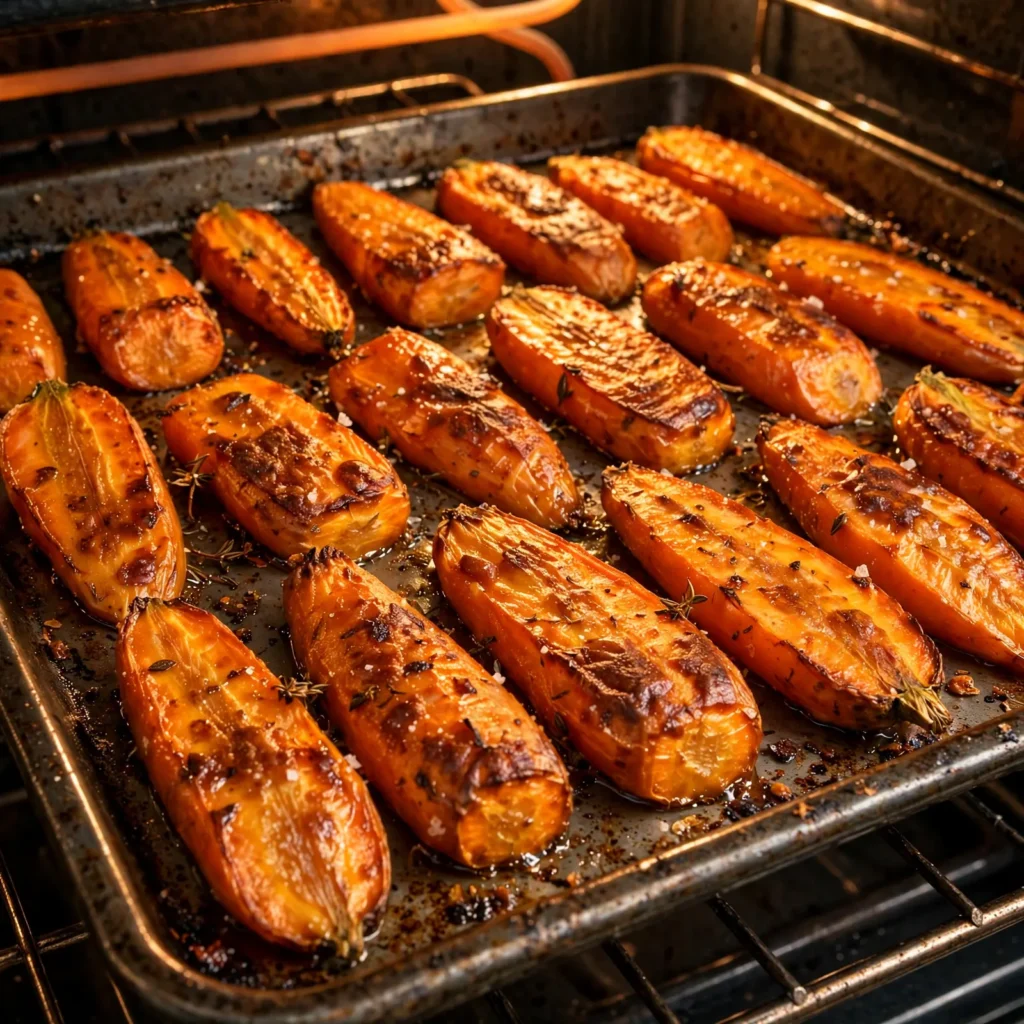
Slide the pan into the preheated oven and roast at 220°C (425°F) for 20 minutes without opening the oven door. The carrots need sustained high heat to develop color; opening the door drops the oven temperature and extends the caramelization time. At the 20-minute mark, check one of the thicker pieces: the cut surfaces should be a deep golden amber and the top should show some browning. If they look pale, return to the oven for another 3 to 5 minutes.
Chef’s Note: The cut surfaces caramelize first because they are flat against the hot pan and have direct contact heat. If you want color on all sides, use tongs to flip the carrots at the 15-minute mark. If you want a deeply caramelized flat side and a softer rounded top, leave them undisturbed.
Step 6: Add Butter and Finish
If using butter, add small pats across the carrots in the last 5 minutes of roasting. It melts over the hot surface and coats the carrots in a glossy, rich layer as they finish cooking. Total roast time is 22 to 25 minutes for standard-sized pieces.
Step 7: Garnish and Serve
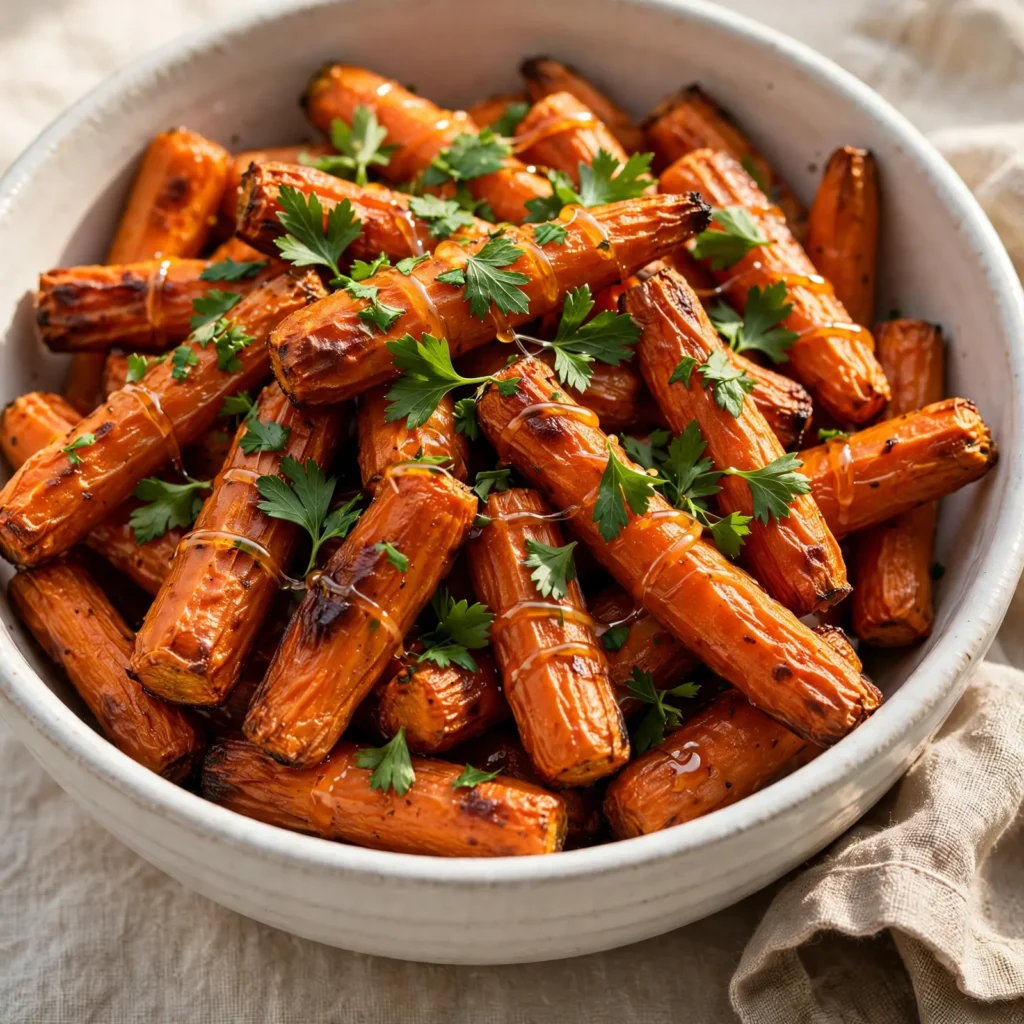
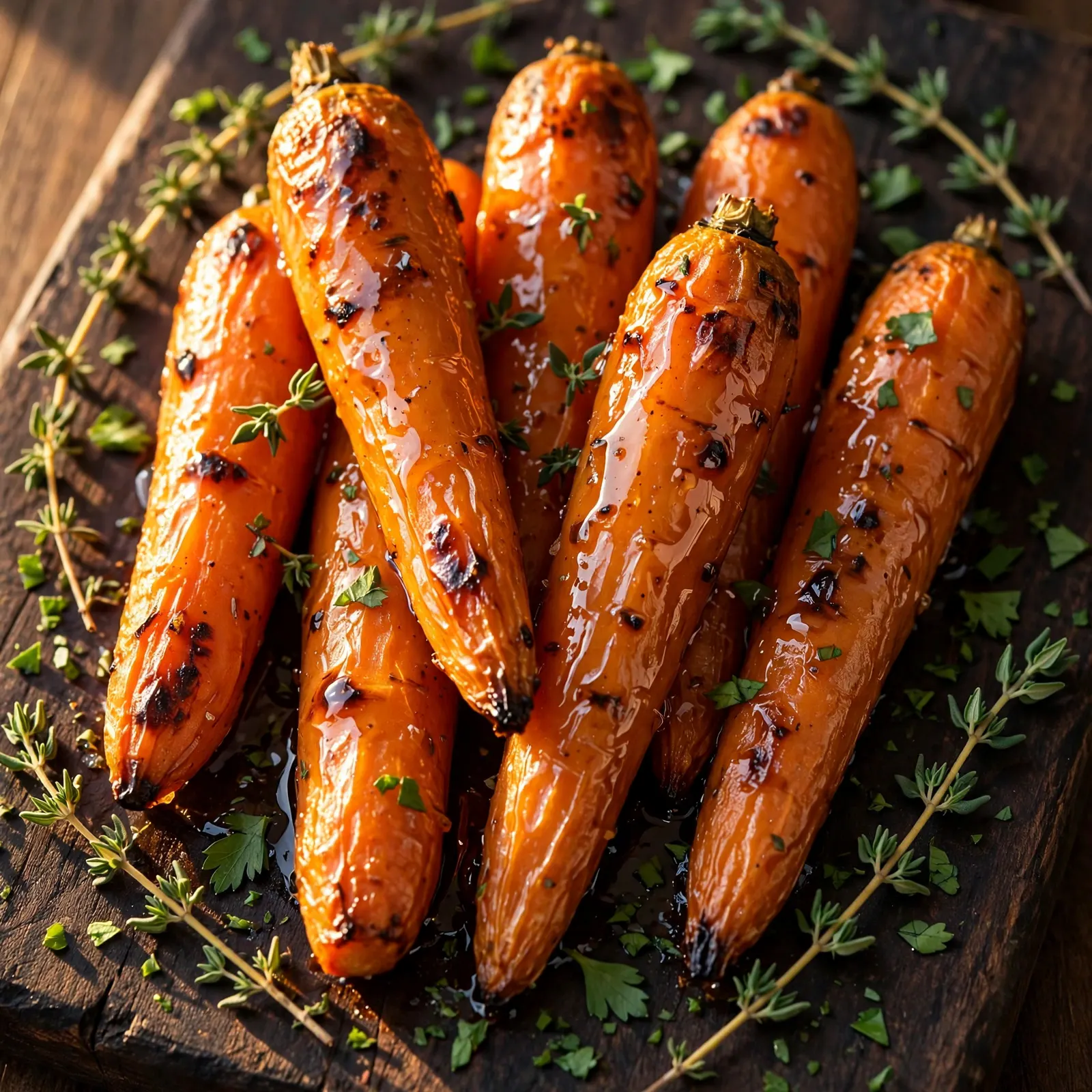
Transfer the roasted carrots to a serving plate or serve directly from the pan. Scatter fresh chopped parsley or fresh thyme leaves over the top immediately before serving. A small additional drizzle of honey over the finished carrots deepens the glaze appearance and adds a final hit of sweetness if you want it.
Common Mistakes and Troubleshooting
| Problem | Cause | Solution |
|---|---|---|
| Carrots are soft and pale, not caramelized | Pan overcrowded, oven temperature too low, or moisture not given time to evaporate | Spread carrots with visible gaps on the pan. Use two pans if needed. Keep oven at 220°C (425°F) minimum. Don’t open the oven door in the first 20 minutes. |
| Carrots dried out and shriveled | Thin baby carrots cooked too long, or oven temperature too high for extended time | Check baby carrots at 18 minutes. Standard cut carrots at 22 minutes. Remove as soon as fork-tender with caramelized edges. |
| Honey burned and turned bitter | Applied too heavily, or oven temperature too high for the honey concentration | Use no more than 1 tablespoon of honey per 500g of carrots. If burning occurs before the carrots are done, loosely tent with foil for the remaining time. |
| Uneven cooking, some pieces done and others still firm | Carrot pieces cut to different sizes | Cut all pieces to the same length and diameter before seasoning. Halve any significantly thicker pieces lengthwise to match the rest. |
| Carrots sticking to the pan and tearing | Insufficient oil, or moved too early before caramelization released them naturally | Use a full 2 tablespoons of oil per 500g. Don’t try to flip or move the carrots until they release from the parchment naturally, which happens once caramelization is complete. |
Variations and Substitutions
Balsamic Glazed Roasted Carrots: Replace the honey with 1 tablespoon of balsamic glaze (the thick, reduced variety, not regular balsamic vinegar). Balsamic glaze caramelizes more deeply and adds a tangy complexity that works particularly well alongside savory main courses like roasted lamb or braised chicken thighs.
Cumin and Coriander Roasted Carrots: Replace the thyme and smoked paprika with 1 teaspoon of ground cumin and 1/2 teaspoon of ground coriander. This spice combination is common in North African and Middle Eastern vegetable dishes and pairs well with roasted carrots served alongside couscous, lentils, or flatbread.
Maple Walnut Roasted Carrots: Swap the honey for maple syrup and scatter 3 tablespoons of roughly chopped walnuts across the carrots in the last 8 minutes of roasting. The walnuts toast in the residual oven heat and add crunch and a slightly bitter contrast to the sweet maple glaze.
Spicy Honey Roasted Carrots: Add 1/4 teaspoon of cayenne pepper and 1/4 teaspoon of red pepper flakes to the seasoning mix. The heat builds slowly against the sweet honey glaze and produces a genuinely interesting sweet-spicy balance. Increase to 1/2 teaspoon cayenne for noticeable heat.
Za’atar Roasted Carrots: Replace the thyme and smoked paprika with 1.5 teaspoons of za’atar (a Middle Eastern herb and sesame blend). Drizzle a thin line of tahini over the finished carrots and scatter pomegranate seeds on top for a complete presentation. This version works beautifully as part of a mezze spread.
Vegan Version: Omit the optional butter entirely and use maple syrup instead of honey. The finished carrots are fully plant-based with no change to the roasting method or any other ingredient.
Serving Suggestions
- Serve alongside roasted chicken thighs or a whole roasted chicken. The sweetness of the glazed carrots complements the savory, slightly fatty chicken skin in a way that makes both components taste better than they would separately.
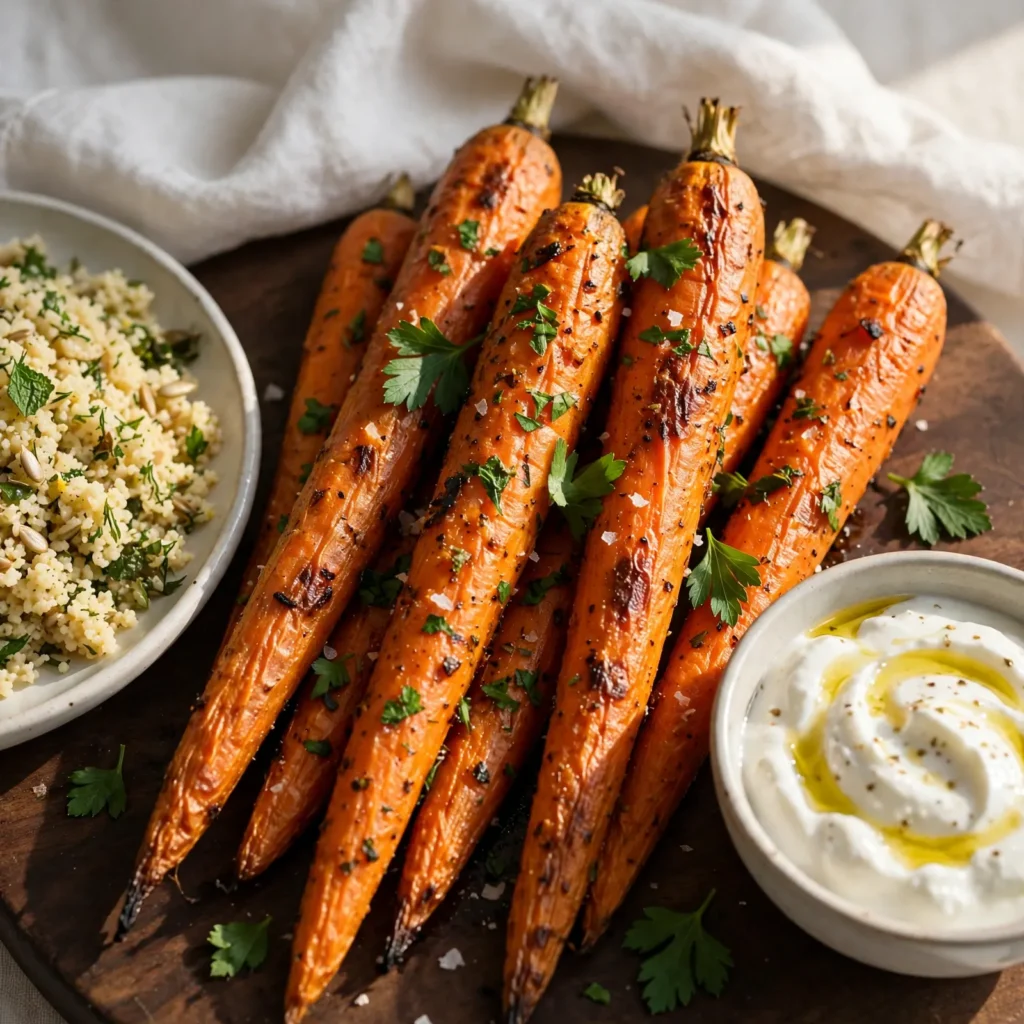
- Pair with a grain side dish like herbed couscous, basmati rice, or farro. The carrots provide color, sweetness, and natural moisture that contrasts the neutral, absorptive texture of the grain.
- Add to a vegetable mezze platter alongside hummus, roasted red peppers, and warm flatbread. Roasted carrots hold their shape and flavor at room temperature for about an hour, which makes them practical for shared table serving.
- Serve over a bed of plain Greek yogurt with a drizzle of olive oil and a pinch of za’atar. The cool, tangy yogurt beneath the warm, sweet carrots is one of the more satisfying combinations for a vegetable-forward meal.
- Use leftovers in a grain bowl the next day: slice cooled roasted carrots over brown rice or quinoa with chickpeas, sliced cucumber, and a lemon tahini dressing. Cold roasted carrots hold their texture and flavor well in grain bowls without reheating.
Tips for the Best Results
High heat is non-negotiable. Roasting at 220°C (425°F) produces caramelization. Roasting at 180°C (350°F) produces soft, cooked carrots. The temperature determines whether you get color and flavor development on the carrot surface or just softening. Don’t lower the heat thinking it will produce more even results; it produces less interesting ones.
One layer, every time. Overlapping carrots or a crowded pan traps steam between the pieces. Steam keeps the surface wet, and wet surfaces can’t brown. If your pan isn’t large enough to spread everything in a single layer with gaps, use two pans or roast in two batches. The result is worth the extra pan.
Cut surfaces face down. When you arrange the carrots on the pan, place any flat, cut surfaces directly against the parchment. That direct contact with the hot pan surface creates the deepest caramelization. The rounded skin side touching the hot air above it will color more slowly and less dramatically.
Don’t add fresh garlic before roasting. Fresh garlic burns at 220°C (425°F) before the carrots are done and turns bitter in a way that taints the whole dish. Garlic powder distributes evenly and tolerates the heat without burning. If you want fresh garlic flavor, add thinly sliced or whole smashed cloves at the 12-minute mark, not at the start.
Season after tasting, not before eating. After the carrots come out of the oven, taste one before serving. The honey and seasoning concentrate during roasting, and what tasted balanced raw can occasionally tip toward sweet or salty after 25 minutes of heat. A small pinch of flaky salt over the finished dish corrects most seasoning issues immediately.
Storage Tips
Refrigerator
Cool the roasted carrots completely before storing, which takes about 20 minutes at room temperature. Transfer to an airtight container and refrigerate for up to 4 days. The honey glaze softens as the carrots sit, which is expected. They taste good cold as a salad component but are best reheated when served as a side dish.
Freezer
Roasted carrots freeze adequately but not ideally. The texture softens after thawing because the cell structure that held their shape during roasting breaks down as ice crystals form. If you need to freeze them, cool completely, spread on a lined baking sheet until solid, then transfer to a freezer bag with the air pressed out. Freeze for up to 2 months and use in soups, stews, or blended dishes where texture matters less than flavor.
Reheating
Spread refrigerated carrots on a lined baking sheet and reheat at 200°C (400°F) for 8 to 10 minutes. This method restores some of the surface texture and warms them through evenly. Microwave reheating works for speed: 60 to 90 seconds at full power with a damp paper towel loosely over the container to prevent drying. The microwave won’t restore any crispness to the surface but is acceptable when time is short.
Make-Ahead Note: You can season the raw carrots and keep them covered in the fridge for up to 8 hours before roasting. The olive oil and honey marinade the surface slightly, which can produce a slightly deeper color during roasting. Roast directly from the fridge, adding 3 to 4 extra minutes to the total time.
Nutrition Information
Per serving, based on 4 servings, without optional butter. Values are approximate.
| Nutrient | Amount |
|---|---|
| Calories | 120 kcal |
| Protein | 1.5g |
| Carbohydrates | 18g |
| Fiber | 3.5g |
| Sugar | 11g |
| Total Fat | 6g |
| Saturated Fat | 0.8g |
| Cholesterol | 0mg |
| Sodium | 340mg |
| Potassium | 390mg |
| Vitamin C | 9mg |
| Calcium | 42mg |
| Iron | 0.5mg |
Nutrition values are approximate and may vary based on brands and portion sizes.
Why This Recipe Works
The flavor difference between boiled carrots and roasted carrots comes entirely from water loss and surface temperature. When carrots are submerged in water, the temperature inside the pot can’t exceed 100°C regardless of the flame setting, and the vegetables sit in liquid that dilutes the flavor compounds they release as they soften. In a 220°C (425°F) oven on a dry pan, the moisture on the surface of the carrot evaporates almost immediately, allowing the surface temperature to climb high enough to trigger Maillard browning and caramelization of the natural sugars. Those two reactions produce the deep amber color and concentrated, complex sweetness that makes roasted carrots so different from their boiled counterparts.
The honey in this recipe does two things beyond sweetness. It lowers the surface moisture threshold at which caramelization begins, so the carrots start browning slightly earlier in the roasting process. It also creates a thin, glossy layer on the cut surfaces that catches heat and colors more dramatically than plain oil-coated carrot flesh would.
Garlic powder over fresh garlic is a deliberate choice at this temperature. Fresh garlic begins to burn around 160°C (320°F) and turns acrid at higher temperatures, tainting everything it touches. Garlic powder is a more heat-stable form that provides the garlic flavor without the burning risk during high-heat roasting.
Across test batches comparing different temperatures (190°C, 200°C, and 220°C) and pan setups (crowded versus spaced), the 220°C spaced arrangement consistently produced the most caramelization in the shortest time without drying out the interior. At 190°C the carrots softened fully but the edges remained pale. At 220°C with a crowded pan, the edges stayed pale for different reasons as steam prevented browning. The 220°C spaced method produced the result that matched what most people are looking for when they search for roasted carrots.
Frequently Asked Questions
Can I make roasted carrots ahead of time?
Yes. Roasted carrots reheat well and can be made up to 2 days in advance. Store cooled carrots in an airtight container in the fridge and reheat on a baking sheet at 200°C (400°F) for 8 to 10 minutes before serving. You can also season the raw, cut carrots up to 8 hours before roasting and keep them covered in the fridge until you’re ready to cook.
Why are my roasted carrots not caramelizing?
The two most common causes are an overcrowded pan and an oven that wasn’t fully preheated. When carrots are packed closely together, the moisture they release during cooking can’t escape and the pan fills with steam, which keeps the carrot surfaces wet and prevents browning. Spread them with visible gaps and make sure your oven is at a full 220°C (425°F) before the pan goes in.
Can I use baby carrots instead of regular carrots?
Yes, at a direct 1:1 weight substitution. Baby carrots roast well and don’t need peeling, which saves a few minutes of prep. They cook slightly faster because they are thinner; start checking at 18 minutes rather than 22. Halving them lengthwise gives you a flat cut surface for deeper caramelization and is worth the extra minute of prep.
How do I know when roasted carrots are done?
Pierce the thickest piece with a thin knife or fork. It should slide through with no resistance but the carrot should hold its shape rather than collapsing. The cut surfaces should be a deep golden amber with visible browning at the edges. If the carrot is tender but the surface is still pale, turn the oven to the broil setting for 2 to 3 minutes and watch closely until the surface colors.
Can I roast carrots without honey?
Yes. Olive oil, salt, pepper, and your choice of dried herbs produce a savory roasted carrot with good caramelization from the natural sugars in the carrot alone. The honey deepens the color and sweetness but is not structurally necessary. Maple syrup, agave, or a thin drizzle of pomegranate molasses all work as alternatives with slightly different flavor profiles.
Are roasted carrots healthy?
Carrots are a good source of beta-carotene, which the body converts to vitamin A, and they provide fiber and potassium. Roasting in olive oil retains most of the nutrients that boiling would leach into the cooking water, making roasted carrots nutritionally comparable to raw carrots. The honey and oil add calories but in modest amounts at the quantities used here. Each serving is approximately 120 calories with 3.5g of fiber.
Can I add other vegetables to the same pan?
Yes, but choose vegetables with similar roasting times. Parsnips, beets cut to the same size, and Brussels sprouts all roast well alongside carrots at the same temperature and time. Vegetables that cook faster, such as zucchini or cherry tomatoes, need to go into the oven partway through the carrot cooking time or they will be overdone before the carrots are ready.
Conclusion
Roasted carrots earn a permanent spot in the side dish rotation because they ask almost nothing of you and consistently deliver something genuinely good. The prep is 10 minutes, the oven does the rest, and the result is a caramelized, tender, naturally sweet vegetable that upgrades whatever main course it sits beside.
Once you understand that the two variables controlling the outcome are pan space and oven temperature, roasted carrots become one of those recipes you stop second-guessing. High heat, single layer, enough time. The rest takes care of itself.
If you loved this recipe, save it to your side dish recipes Pinterest board so you can find it easily later. For more same recipes follow Thecookingvibes Pinterest account.
Honey Glazed Roasted Carrots
Ingredients
Equipment
Method
- Preheat oven to 220°C (425°F). Line a large rimmed baking sheet with parchment paper.
- Peel carrots and cut into even pieces: halve lengthwise and then into 8 to 10 cm segments, or cut on the diagonal into 4 to 5 cm pieces at a 45-degree angle.
- Place the carrot pieces in a large mixing bowl. Drizzle with olive oil and honey. Add garlic powder, dried thyme, smoked paprika, salt, and pepper. Toss until every piece has an even coating.
- Spread the carrots in a single layer on the prepared baking sheet, cut side down where possible. Leave at least 2 cm of space between pieces. Use two pans if the carrots are crowded.
- Roast at 220°C (425°F) for 20 minutes without opening the oven door.
- Check at 20 minutes. Cut surfaces should be a deep amber color. If pale, continue roasting for 3 to 5 more minutes. If using butter, add small pats across the carrots and return to the oven for a final 5 minutes.
- Transfer to a serving plate, garnish with fresh chopped parsley or thyme, and serve immediately.