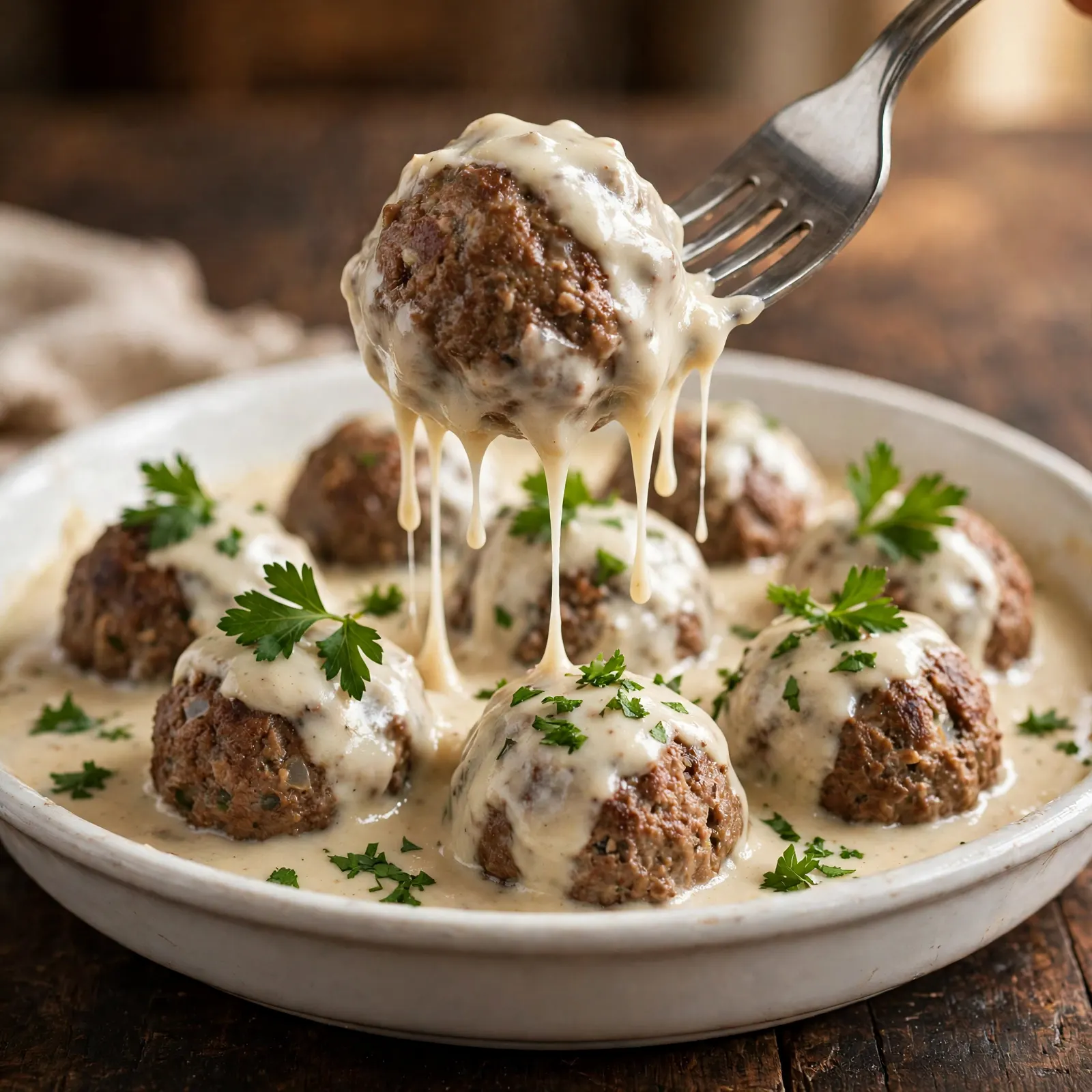
Easy Swedish Meatballs (Tender, Creamy Gravy, Comfort Food)
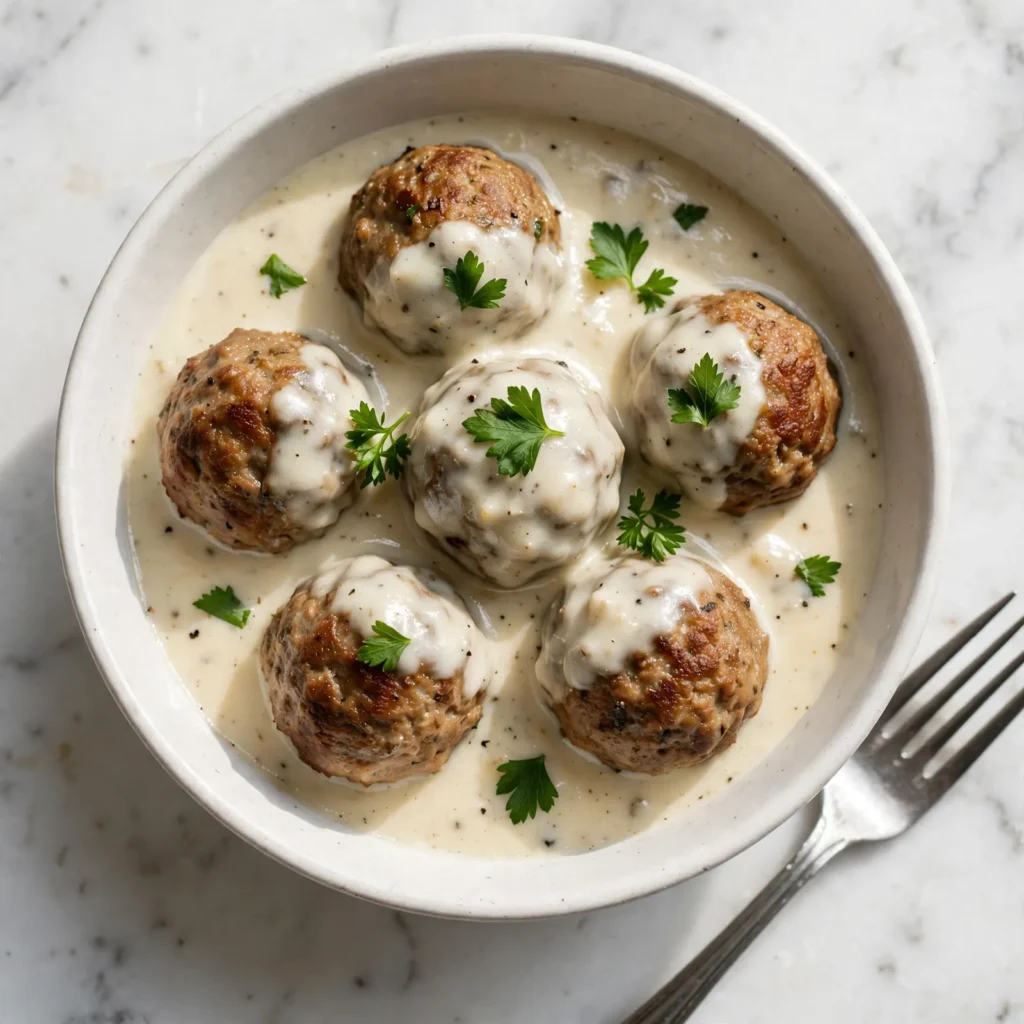
The first bite of a proper Swedish meatball tells you everything. It is soft all the way through, not springy or dense, with a warm spice note you can’t quite name until someone tells you it is allspice and nutmeg. The cream gravy coats the back of the spoon in a thick, glossy layer, and when you pour it over a plate of egg noodles or mashed potatoes, the whole thing absorbs together into something that tastes far more considered than the 45 minutes it took to make.
This Swedish meatballs recipe builds the meatballs from a seasoned ground beef mixture with breadcrumbs, egg, and the classic spice combination that gives the dish its distinctive character. They are pan-seared until golden on the outside and finished in the oven so they cook through evenly without drying out. The cream gravy uses the browned drippings from the meatball pan as its base, which is where most of the flavor comes from. It is a complete dinner that works for a casual family meal and holds up well as a make-ahead dish.
Why You’ll Love These Swedish Meatballs
- Tender all the way through, not bouncy. The panade (breadcrumbs soaked in milk) keeps the meat mixture moist and loose so the meatballs stay soft rather than compacting into dense, rubbery balls during cooking.
- The gravy tastes like it simmered for hours. Using the pan drippings from the seared meatballs as the base of the cream sauce builds a depth of flavor in 10 minutes that would otherwise take significantly longer to develop.
- The spice blend is warm without being strong. A small amount of allspice and nutmeg gives the meatballs their signature character: present, distinctive, but never overpowering the beef flavor underneath.
- Scales up with no extra effort. Double the recipe, use a larger pan, and the oven time stays the same. Swedish meatballs are one of the best make-ahead batch cooking options for a week of meals.
- Versatile enough for multiple serving styles. Over egg noodles, mashed potatoes, or rice: the cream gravy works equally well with all of them and the meatballs hold their shape through serving.
Ingredients You’ll Need
Recipe Timing
| Detail | Info |
|---|---|
| Servings | 4 to 5 (makes about 24 meatballs) |
| Difficulty | Easy |
| Course | Main Course |
| Cuisine | Swedish, Scandinavian |
| Prep Time | 20 minutes |
| Cook Time | 25 minutes |
| Total Time | 45 minutes |
For the ground beef, use 80/20 or 85/15 fat ratio. Leaner beef produces drier, firmer meatballs that lack the richness the classic version calls for. The fat in the meat contributes directly to the tender, moist texture as well as the flavor depth in the drippings that become the base of the gravy.
For the breadcrumbs, use plain fine breadcrumbs rather than panko. Fine breadcrumbs absorb the milk more completely and blend into the meat mixture without leaving textural spots. Panko stays coarser and can create an uneven texture in the finished meatball.
The milk-soaked breadcrumb mixture (called a panade) is the technique decision that matters most for texture. The soaked breadcrumbs physically interrupt the protein strands in the ground beef as it is mixed, preventing the meat from binding too tightly and becoming tough. This is the difference between a soft, yielding meatball and one that feels like you are chewing through compressed meat.
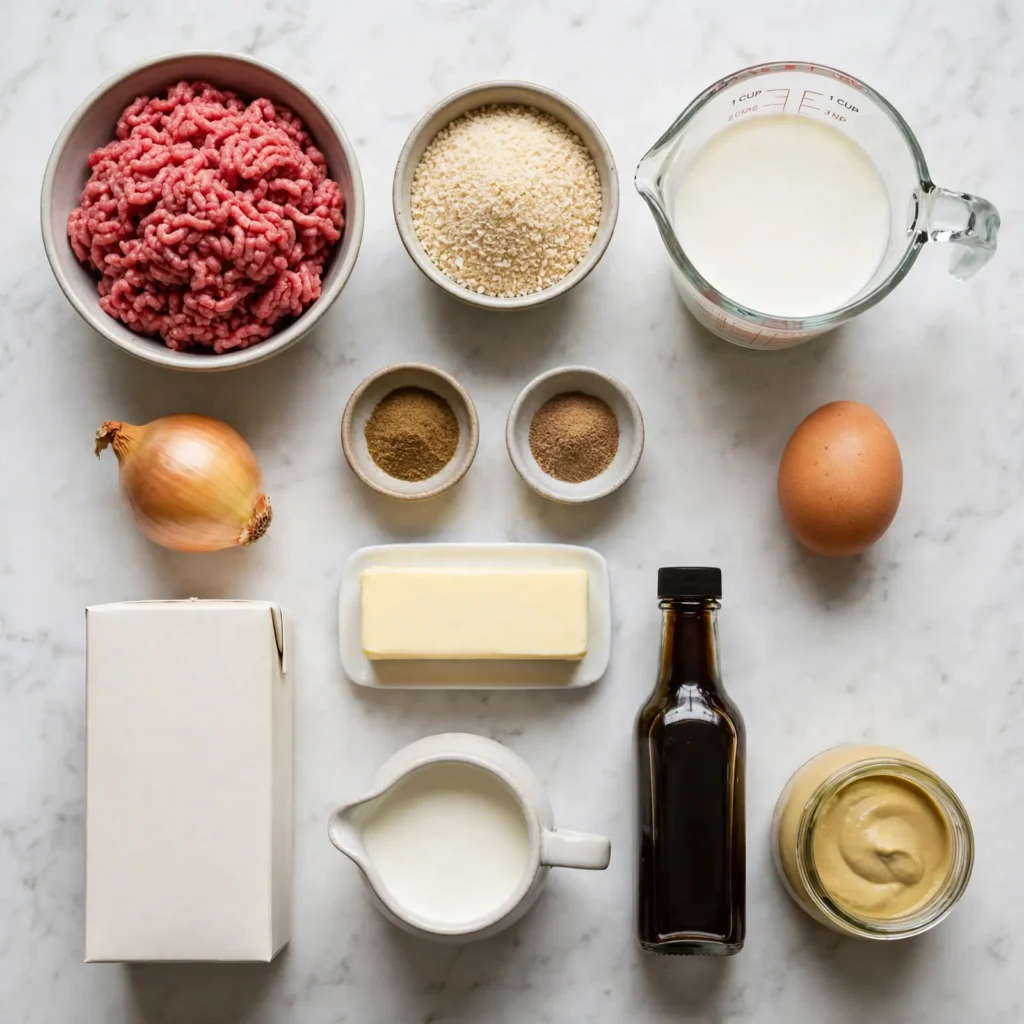
For the Meatballs:
- 500g (1 lb) ground beef, 80/20 fat ratio. The primary protein. The fat content keeps the meatballs moist through the sear and finish cook.
- 1/3 cup (30g) plain fine breadcrumbs. Combined with milk to form the panade. Fine breadcrumbs integrate more smoothly into the meat mixture than coarser varieties.
- 1/4 cup (60ml) whole milk. Soaked into the breadcrumbs before mixing. The moisture prevents the meatballs from becoming dry during cooking.
- 1 large egg. Binds the mixture and adds a small amount of richness. Use at room temperature for smoother incorporation.
- 1 small yellow onion, very finely grated (about 1/4 cup). Grated rather than diced so the onion practically disappears into the meat mixture and adds moisture and sweetness without visible chunks. A box grater works well here.
- 1/2 teaspoon ground allspice. One of the two spices that define Swedish meatball flavor. Warm, slightly sweet, and distinctly different from any single warm spice on its own.
- 1/4 teaspoon ground nutmeg. Works alongside the allspice to create the characteristic warmth. Freshly grated nutmeg is more fragrant than pre-ground.
- 1/2 teaspoon fine sea salt.
- 1/4 teaspoon black pepper.
- 2 tablespoons neutral oil. For searing the meatballs. A high smoke point oil (sunflower, canola, or vegetable) prevents burning during the browning stage.
For the Cream Gravy:
- 3 tablespoons (45g) unsalted butter. Used in the same pan as the meatball drippings to build the roux base of the gravy.
- 3 tablespoons (22g) all-purpose flour. Combined with the butter and drippings to form the roux that thickens the gravy. Cooked for 60 seconds to eliminate raw flour taste.
- 2 cups (480ml) low-sodium beef broth. The primary liquid. Beef broth deepens the savory, meaty flavor of the gravy. Low-sodium gives you control over the final salt level.
- 1/2 cup (120ml) heavy cream. Stirred in after the broth to add richness and the glossy, velvety texture that defines a classic Swedish meatball cream sauce.
- 1 teaspoon Worcestershire sauce. A small amount adds a savory umami depth to the gravy without making it taste like Worcestershire sauce. This is a supporting note, not a main flavor.
- 1/2 teaspoon Dijon mustard. Adds a subtle tang that prevents the cream gravy from tasting overly rich or flat. Like the Worcestershire, you don’t taste it as mustard in the finished sauce.
- 1/4 teaspoon fine sea salt, plus more to taste.
- Fresh flat-leaf parsley, roughly chopped, for serving.
Allergen and Dietary Disclosure
This recipe contains dairy (whole milk in the meatballs, butter and heavy cream in the gravy), gluten (breadcrumbs and all-purpose flour), and eggs.
For a gluten-free version, use certified gluten-free breadcrumbs in the meatball mixture and replace the all-purpose flour in the roux with a 1:1 gluten-free flour blend or 2 tablespoons of cornstarch whisked into the cold broth before adding it to the pan. Confirm the beef broth and Worcestershire sauce are also gluten-free, as both can contain wheat derivatives.
For a dairy-free version, replace the milk in the meatballs with a full-fat oat milk or almond milk. In the gravy, use a dairy-free butter block (not a soft spread) and replace the heavy cream with full-fat coconut cream, which reduces to a similar consistency without a strong coconut flavor in a savory sauce context.
Free from nuts and soy as written. Not guaranteed safe for any specific allergy without checking all individual ingredient labels.
Step-by-Step Directions
Step 1: Make the Panade and Mix the Meatballs
Combine the plain fine breadcrumbs and whole milk in a large mixing bowl. Stir briefly and leave them to sit together for 3 to 4 minutes until the breadcrumbs have fully absorbed the milk and the mixture looks like a soft paste. Add the ground beef, grated onion, egg, allspice, nutmeg, salt, and black pepper to the bowl. Mix with your hands, working the ingredients together until just combined and uniform, about 60 seconds of gentle mixing. The mixture should feel cohesive but still slightly tacky, not stiff or dense.

Chef’s Note: Over-mixing the meatball mixture develops the protein strands in the beef aggressively, which produces a firm, rubbery meatball rather than a soft, tender one. Mix until you can no longer see separate streaks of egg or breadcrumb and then stop, even if the mixture still looks slightly rough.
Step 2: Portion and Roll the Meatballs
Using a tablespoon measure or a small cookie scoop, portion the meat mixture into balls of approximately 3cm (about 1.25 inches) in diameter, then roll each one between your palms with light, consistent pressure until smooth and round. This should give you approximately 24 meatballs. Place them on a plate or baking sheet as you go. Wet your hands lightly with cold water between every 4 to 5 meatballs: the cold water prevents the mixture from sticking to your palms and produces a smoother surface on each ball.
Chef’s Note: Consistent size matters here because it means all the meatballs finish cooking at the same time. Larger meatballs alongside smaller ones result in some being overcooked while the smaller ones are still at the right doneness.
Step 3: Preheat Oven and Sear the Meatballs
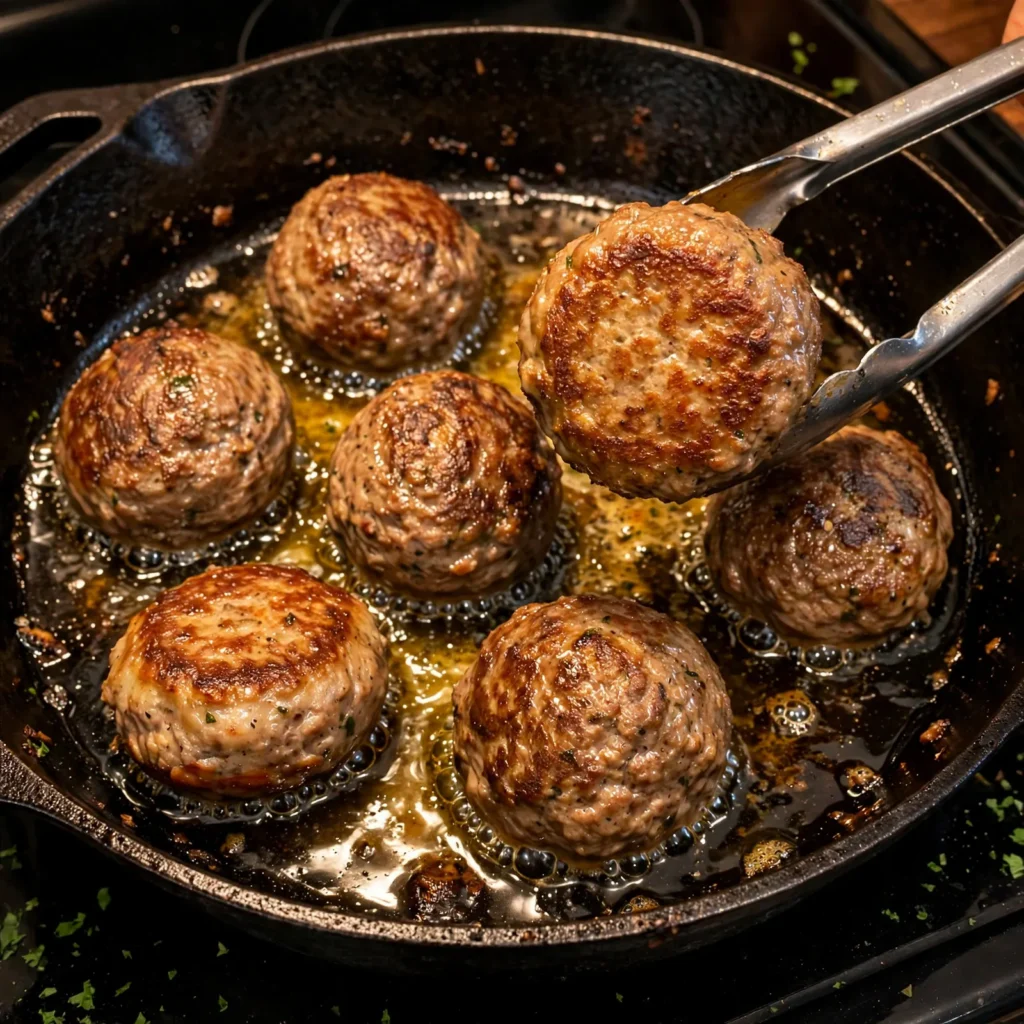
Preheat the oven to 190°C (375°F). Heat the neutral oil in a large oven-safe skillet over medium-high heat until the oil shimmers. Working in two batches to avoid crowding, add the meatballs to the pan and cook without touching them for 2 minutes until the bottom develops a deep golden-brown crust. Turn each meatball with a fork or tongs to brown a second side for 90 seconds. They will not be cooked through at this stage: the oven finishes the interior. Transfer the browned meatballs to a plate after each batch.
Food Safety Note: Ground beef must reach an internal temperature of 71°C (160°F) before it is safe to eat. The meatballs will reach this in the oven. Do not skip the oven step even if the meatballs look fully colored from the sear.
Step 4: Finish the Meatballs in the Oven
Once all the meatballs are browned, return them all to the skillet in a single layer and transfer the skillet to the preheated oven. Roast for 10 to 12 minutes until the meatballs are cooked through with no pink visible when you cut one open at the thickest point, and a thermometer inserted into the center of the largest meatball reads 71°C (160°F). Remove the skillet from the oven and transfer the cooked meatballs back to the plate. Keep the drippings in the pan: they are the foundation of the gravy.
Step 5: Make the Cream Gravy
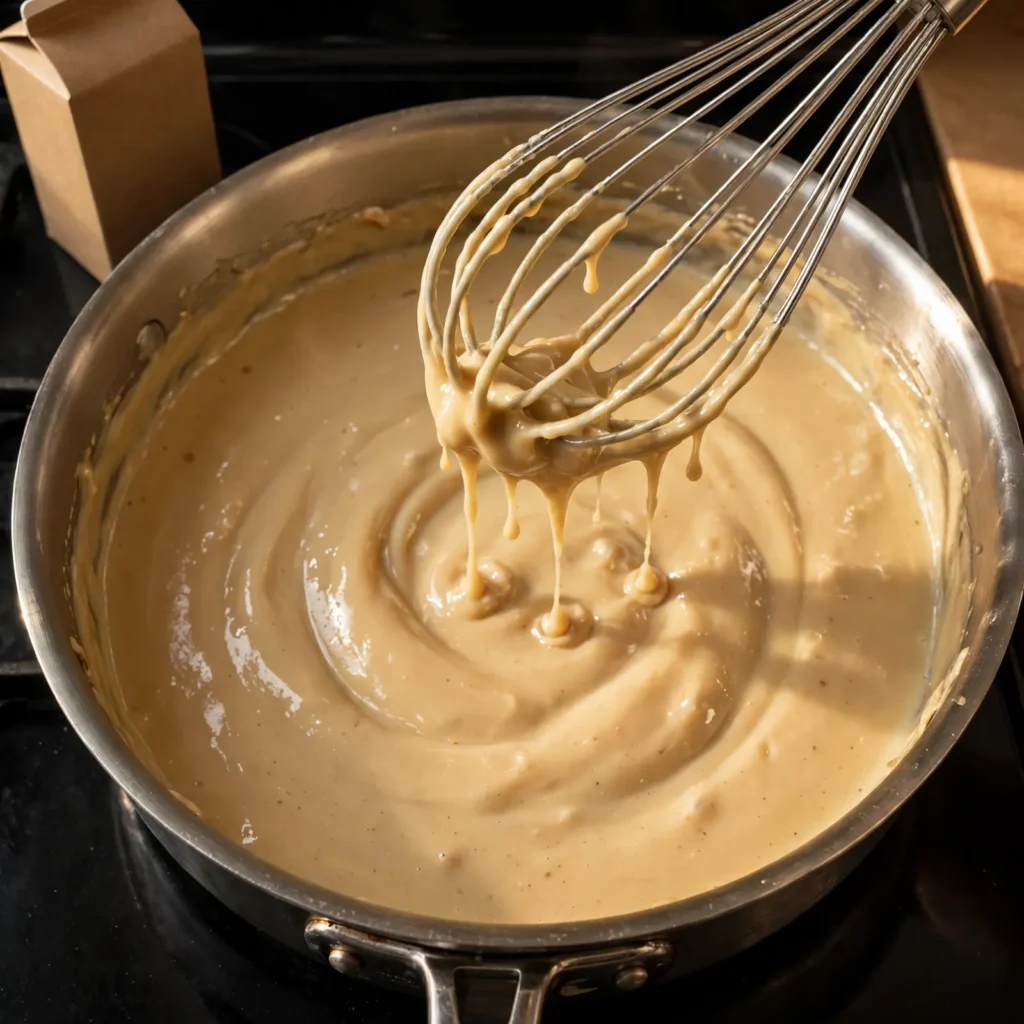
With the skillet still over medium heat, add the butter to the pan drippings. Once the butter melts and the foam subsides, whisk in the flour. Stir continuously for 60 to 90 seconds until the roux turns pale golden and smells faintly nutty, using the whisk to scrape up the browned bits from the bottom of the pan as you go. Pour in the beef broth gradually, whisking steadily after each addition to prevent lumps from forming. Add the Worcestershire sauce and Dijon mustard. Bring the gravy to a steady simmer and cook for 3 to 4 minutes until it thickens enough to coat the back of a spoon in a smooth, even layer.
Chef’s Note: The browned bits stuck to the bottom of the skillet from searing the meatballs are concentrated beef flavor. The broth deglazes the pan and lifts all of that into the gravy as you whisk. A spoon going in at this stage should taste noticeably more complex than plain broth: that is the drippings doing their job.
Step 6: Add the Cream and Return the Meatballs
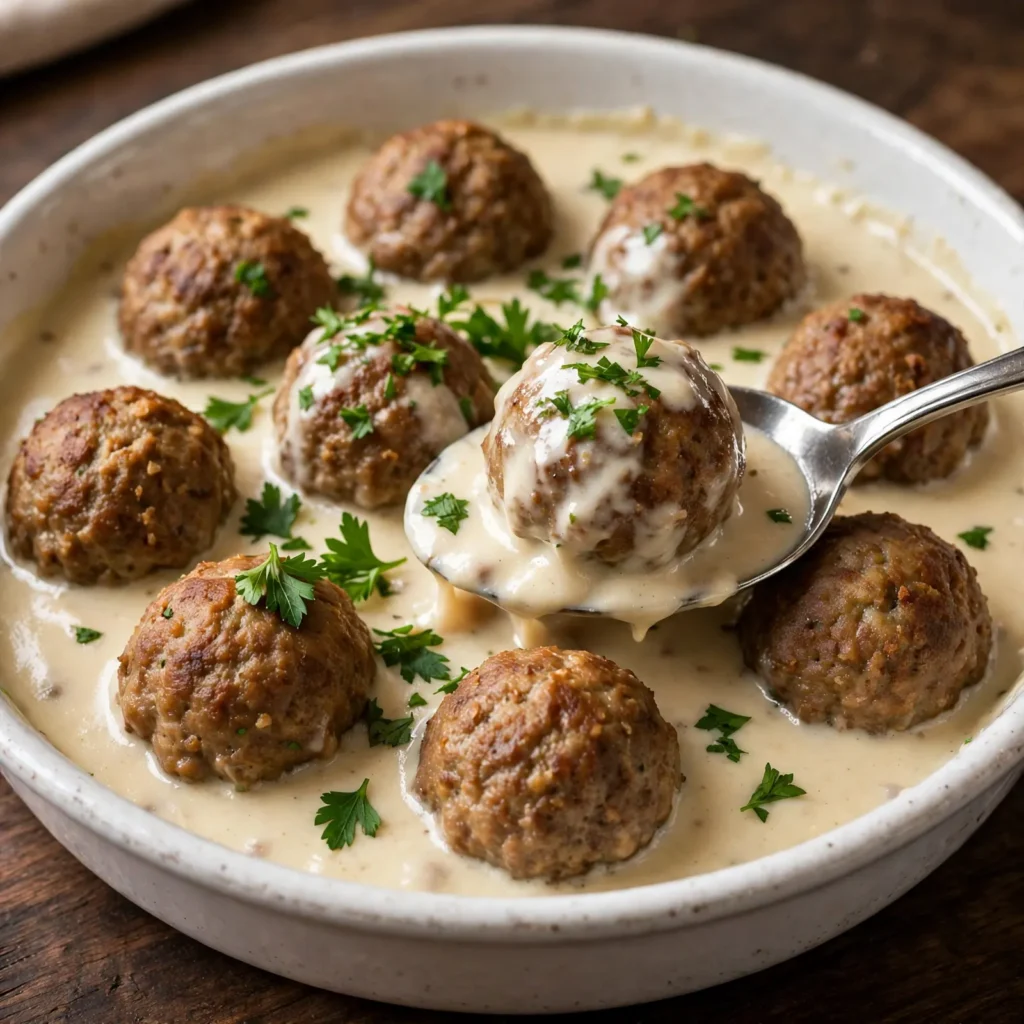
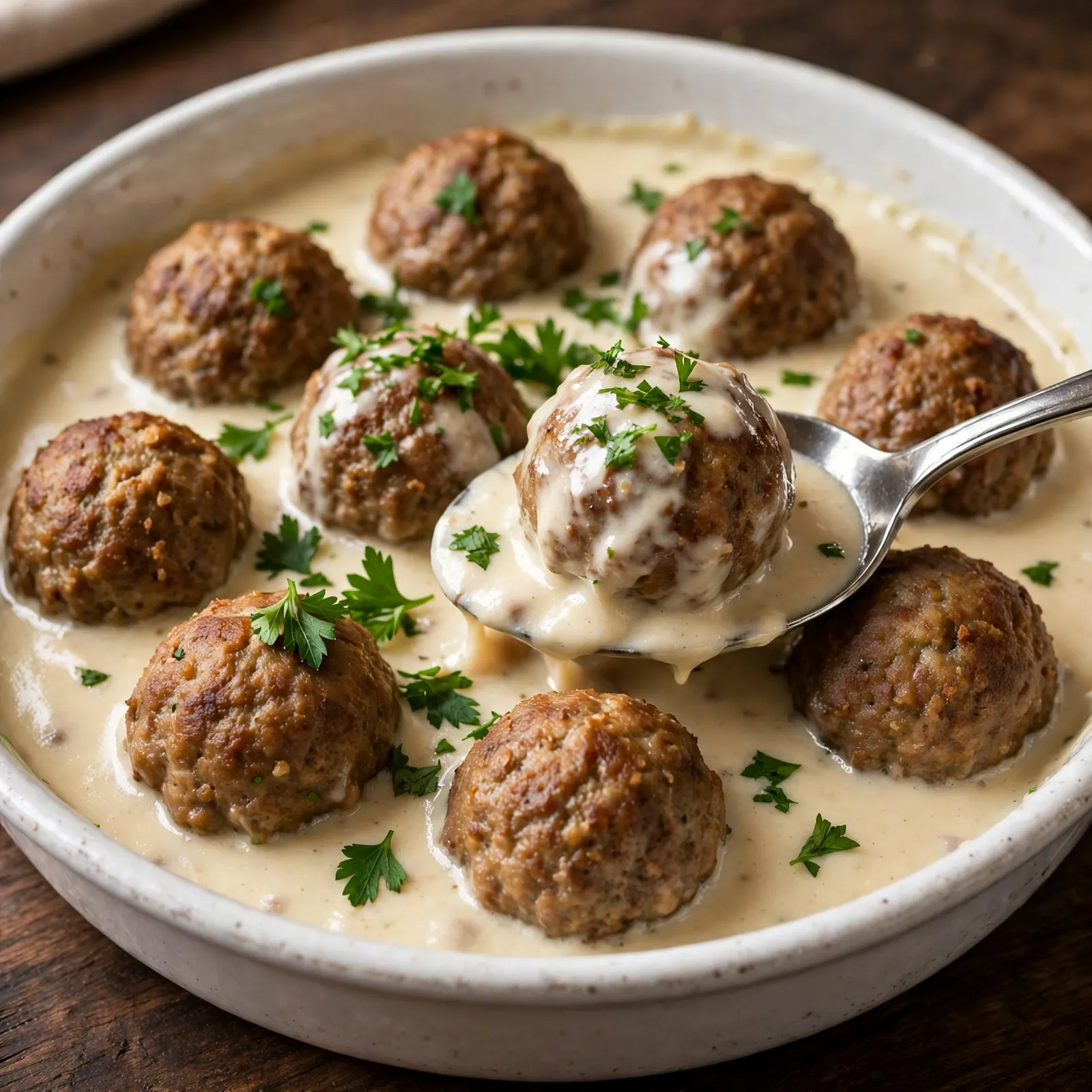
Reduce the heat under the skillet to medium-low. Pour in the heavy cream and stir to combine. Simmer gently for 2 minutes until the gravy deepens slightly in color and consistency. Taste at this point and adjust salt. Nestle all the cooked meatballs back into the gravy, turning each one gently to coat it on all sides. Spoon the gravy over any meatballs that are not fully submerged. Simmer everything together on low heat for 2 to 3 minutes until the meatballs are heated through and the gravy has settled into a thick, glossy sauce.
Step 7: Garnish and Serve
Scatter the chopped fresh parsley generously over the surface of the meatballs and gravy just before bringing the pan to the table. The parsley adds color and a fresh brightness that contrasts with the richness of the cream sauce. Serve directly from the pan for a casual presentation, or transfer to a warm serving dish if plating individually.
Common Mistakes and Troubleshooting
| Problem | Cause | Solution |
|---|---|---|
| Meatballs are dense and tough | Over-mixed meat mixture; no panade | Mix only until just combined; always soak breadcrumbs in milk before adding to the meat |
| Meatballs fell apart during searing | Mixture too wet; not enough binding | Ensure breadcrumbs are fully absorbed into milk before mixing; add an extra tablespoon of breadcrumbs if mixture seems loose |
| Gravy is lumpy | Broth added too quickly without whisking; roux too thick | Add broth gradually in a thin stream while whisking constantly; work out lumps immediately with the whisk before they cool and set |
| Gravy tastes flat | Drippings not used; Worcestershire and mustard skipped | Never discard the pan drippings: they are the foundation of the flavor. Use both Worcestershire and mustard as supporting notes |
| Meatballs still pink inside after searing | Only pan-seared without the oven finish | Always finish in a 190°C (375°F) oven for 10 to 12 minutes; confirm internal temperature of 71°C (160°F) |
| Gravy too thin | Insufficient flour in the roux; cream added too early | Cook the roux for at least 60 seconds before adding broth; add broth in stages; simmer without a lid until it reaches the right consistency |
Variations and Substitutions
Beef and Lamb Meatballs: Replace 200g of the ground beef with 200g of ground lamb for a slightly richer, more complex meatball with a deeper meaty character. Keep all the spices and technique the same. The allspice particularly complements lamb, making this combination a natural fit for the classic spice profile.
Turkey Swedish Meatballs: Replace the ground beef entirely with ground turkey (use dark meat turkey, not extra-lean breast-only turkey, for moisture). Add 1 extra tablespoon of butter to the pan when searing since turkey has less fat to render. The cream gravy technique stays identical.
Spiced Up Version: Increase the allspice to 3/4 teaspoon and add a pinch of ground cardamom alongside the nutmeg. The cardamom adds a slightly floral, aromatic complexity that deepens the Scandinavian spice character of the meatballs without making them taste out of place.
Mushroom Cream Gravy: After the roux is made and before the broth goes in, add 150g of thinly sliced cremini mushrooms to the pan. Cook for 3 to 4 minutes until their moisture evaporates and they begin to brown. Then proceed with adding the broth and cream. The mushrooms add an earthy savory depth to the gravy and give it a more substantial texture.
Tomato-Free Lighter Gravy: For a lighter version of the gravy, reduce the heavy cream to 1/4 cup and increase the beef broth to 2.5 cups. Add 1 teaspoon of lemon juice at the end for brightness. The gravy will be less rich but still coats and flavors the meatballs effectively.
Baked-Only Version: Skip the pan searing entirely. Place the rolled meatballs on a foil-lined baking sheet lightly greased with oil and bake at 200°C (400°F) for 18 to 20 minutes until golden on the exterior and cooked through. The exterior color won’t be as deep as pan-seared, but the meatballs will be fully cooked and tender. Make the gravy separately in a saucepan using butter, flour, and broth without pan drippings.
Serving Suggestions
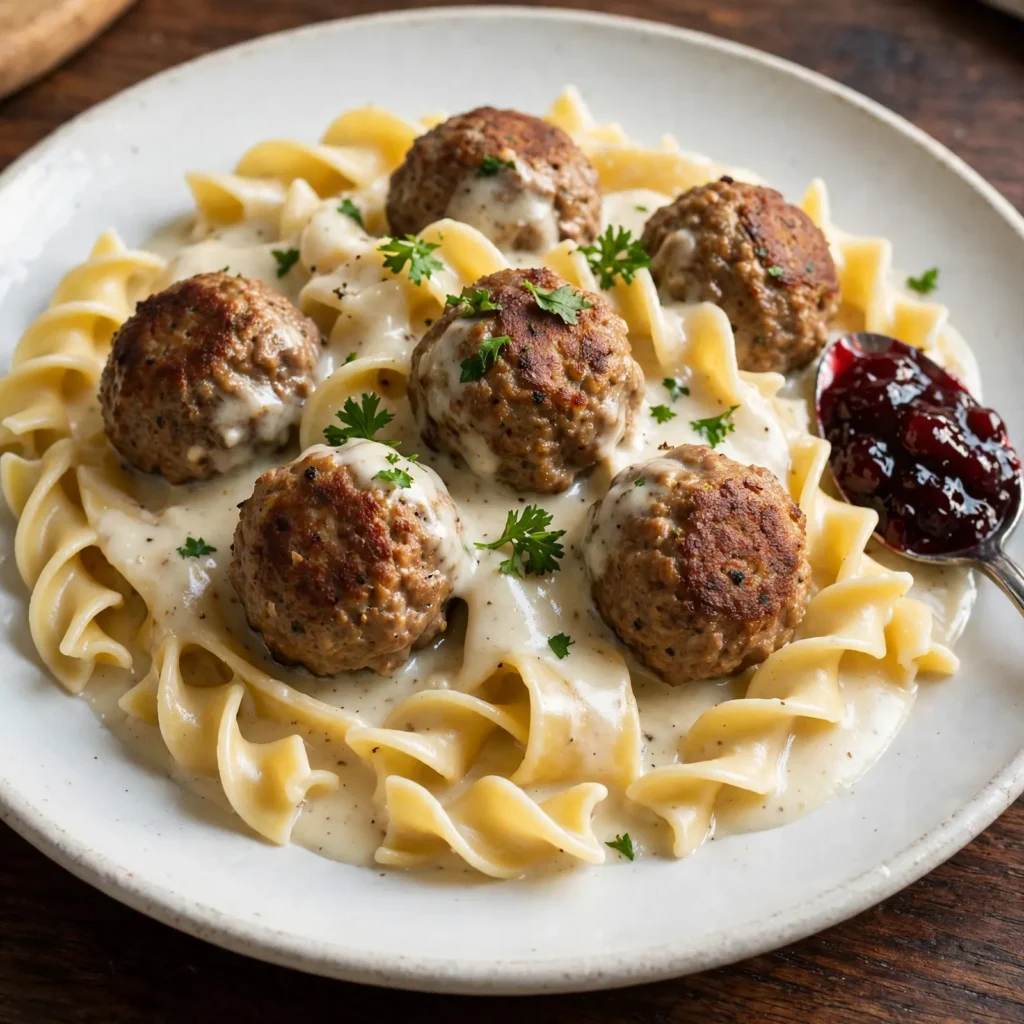
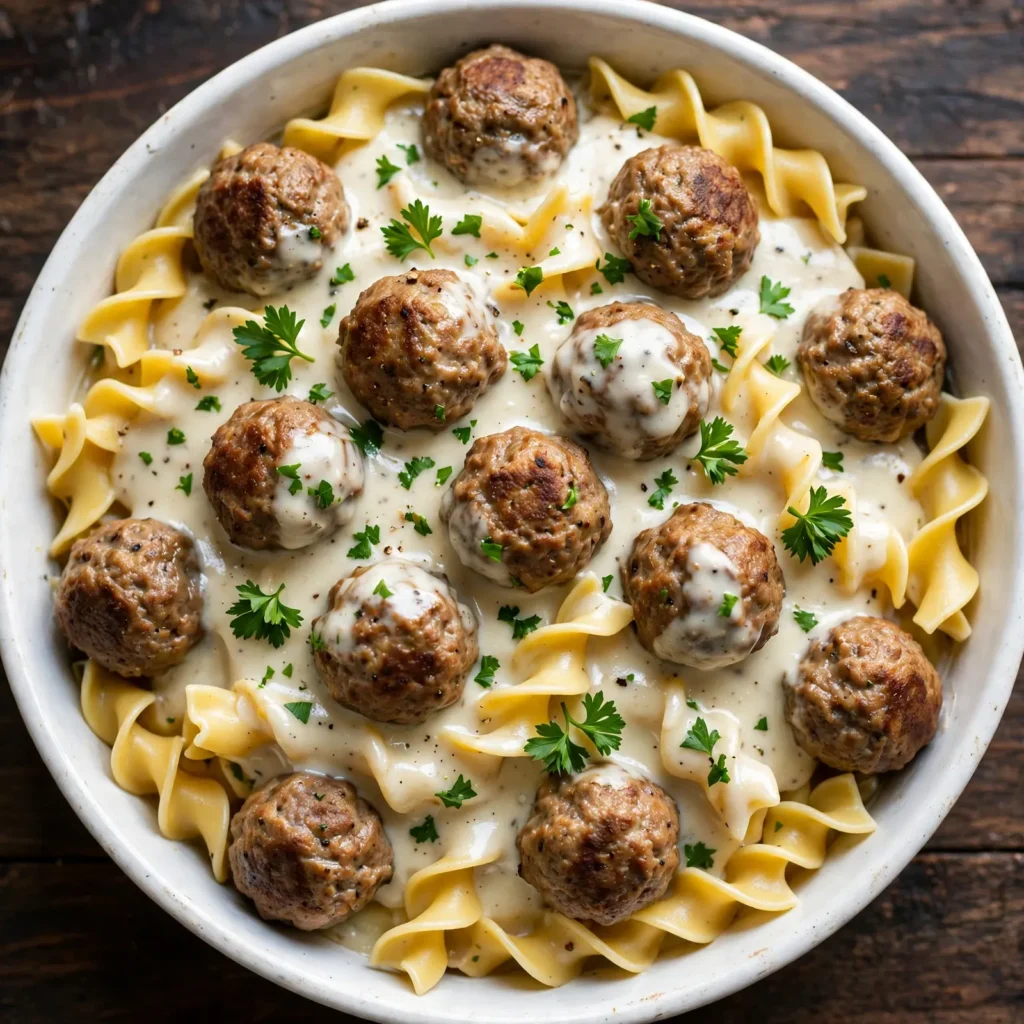
- Over egg noodles. Wide egg noodles, cooked al dente and tossed with a small amount of butter, are the most traditional accompaniment. The noodles catch the cream gravy in their folds and turn the plate into a cohesive, comforting meal.
- With mashed potatoes. Creamy mashed potato beneath the meatballs and gravy is a Scandinavian-style serving that makes the dish feel more substantial and homestyle. The potato absorbs the gravy in a way that is deeply satisfying.
- Over steamed white rice. For a quicker, lighter alternative to noodles or potatoes, plain steamed rice provides a neutral base that lets the cream gravy and meatball flavors remain the focus.
- With lingonberry jam on the side. The traditional Swedish accompaniment is a spoonful of lingonberry jam alongside the plate. The sharp, slightly tart berry flavor provides a clean contrast to the richness of the cream gravy in a way that works remarkably well. Cranberry sauce is a close substitute if lingonberry is unavailable.
- With pickled cucumbers. Thinly sliced cucumber in a light mixture of vinegar, sugar, and dill served alongside the meatballs provides acidity and freshness that cuts through the cream sauce without competing with the main flavors.
- As part of a buffet spread. Swedish meatballs in a covered dish with a small ladle hold their quality at room temperature for up to an hour, which makes them practical for a gathering or a holiday spread where dishes need to be ready in advance.
Tips for the Best Results
- Grate the onion, don’t dice it. Grated onion virtually disappears into the meat mixture and releases its moisture and sweetness evenly through every meatball. Diced onion stays in distinct pieces and can create soft spots in the texture. Use the fine side of a box grater and grate directly over the bowl so the juice goes in too.
- Wet your hands between rolling. Cold water on your palms prevents the meat mixture from sticking and allows you to shape smooth, tight balls quickly. Dry hands drag against the mixture and create surface cracks that open during cooking.
- Never skip the oven finish. Pan searing alone is too fast and too variable to cook a 3cm meatball all the way through without burning the exterior. The oven gives you even, controlled heat that cooks the center gently while the already-seared exterior holds its color. It takes 10 to 12 minutes and produces a meatball that is safe and properly cooked throughout.
- Cook the roux for the full 60 seconds. A roux that goes into the gravy too quickly, before the flour has had time to cook out its raw starch taste, leaves a noticeable pasty aftertaste in the finished sauce. Sixty seconds at medium heat until it smells faintly nutty is the minimum.
- Taste the gravy before returning the meatballs. Once the meatballs go back into the gravy and simmer together, adjusting the seasoning is harder because the meatball flavor changes the overall taste. Season the gravy to where you want it while the meatballs are still on the plate.
Storage Tips
Refrigerator
Cool the meatballs and gravy completely before transferring to an airtight container. Store them together: meatballs stored without the gravy dry out significantly. They keep in the refrigerator for up to 4 days. The gravy thickens in the cold and the flavors deepen overnight, making the leftovers genuinely good. Stir in a tablespoon or two of beef broth when reheating to restore the original consistency.
Freezer
Swedish meatballs freeze very well both with and without the gravy. For the best result, freeze them together in the cream gravy in a freezer-safe container, leaving 2cm of headspace. Freeze for up to 2 months. The cream gravy may separate slightly after thawing but comes back together with gentle stirring during reheating. Thaw overnight in the refrigerator before reheating. Alternatively, freeze the meatballs ungrazed on a flat tray until solid, then transfer to a bag. Make fresh gravy when reheating.
Reheating
From the fridge: place meatballs and gravy in a saucepan over medium-low heat with a tablespoon of broth or water. Stir gently and heat for 5 to 7 minutes until steaming throughout. Don’t let the gravy boil or the cream may separate. The microwave works at 50% power in 90-second intervals, stirring gently between each, until hot all the way through. Add a splash of broth before microwaving to prevent the gravy from becoming too thick.
Nutrition Information
Per serving (approximately 5 to 6 meatballs with gravy, about 1/4 of the full recipe)
| Nutrient | Amount |
|---|---|
| Calories | 520 kcal |
| Protein | 30g |
| Carbohydrates | 14g |
| Fiber | 0.5g |
| Sugar | 3g |
| Total Fat | 38g |
| Saturated Fat | 18g |
| Cholesterol | 165mg |
| Sodium | 650mg |
| Vitamin C | 3mg |
| Calcium | 75mg |
| Iron | 3.5mg |
| Potassium | 480mg |
Nutrition values are approximate, for meatballs and gravy only, and may vary based on brands and portion sizes. Values do not include noodles, potatoes, or other accompaniments.
Why This Recipe Works
The panade technique is the structural decision that produces a consistently tender meatball. When raw ground beef is mixed alone, the proteins in the meat bind tightly to each other during cooking, which produces a firm, bouncy texture. Soaked breadcrumbs physically interrupt those protein bonds as the mixture is combined, preventing the meat strands from fusing as aggressively when heat is applied. The result is a meatball that yields easily when bitten into rather than resisting.
The two-stage cooking method (pan sear then oven finish) solves the fundamental problem of cooking a round ball of dense meat at home. Pan searing gives the exterior a deep, caramelized crust that adds flavor and helps the meatball hold its shape. But cooking a 3cm ball all the way through in a hot pan without burning the outside requires significantly more time than most people allow, and the result is usually an overcooked exterior with an undercooked center. The oven at 190°C (375°F) provides even, consistent heat from every direction, cooking the interior in 10 to 12 minutes without any additional color change on the outside.
Using the pan drippings as the base of the roux builds a flavor into the gravy that could not be replicated by starting with clean butter and flour. The fond (the browned residue left in the pan after searing) contains concentrated Maillard reaction compounds from the caramelized beef and the rendered fat. When the flour and butter roux goes into the same pan and is whisked with the broth, those compounds dissolve into the sauce and distribute through the entire gravy. A gravy made in a clean pan tastes like beef broth. A gravy made from the drippings tastes like the meatballs themselves.
The small amounts of Worcestershire sauce and Dijon mustard in the gravy serve as flavor amplifiers rather than primary ingredients. Both contain naturally occurring glutamates, which are compounds that activate savory taste receptors and make the surrounding flavors taste more pronounced and complex. At the quantities used here, neither ingredient is identifiable as itself: they function as seasoning that makes the beef and cream taste more complete.
I’ve tested this recipe with both mixing by hand and mixing with a stand mixer paddle. The hand-mixed version consistently produced more tender meatballs because it is easier to stop at just-combined when working by hand than to stop the machine at exactly the right moment. For meatballs, hand mixing for 60 seconds is the more reliable technique.
Frequently Asked Questions
Can I make Swedish meatballs ahead of time?
Yes, and they are particularly well suited to being made a day ahead. The flavors in both the meatballs and the cream gravy improve considerably after 12 to 24 hours in the refrigerator as the spices deepen and the sauce settles. Make the full recipe, cool completely, and store covered in the fridge for up to 4 days. Reheat gently on the stovetop with a splash of broth to restore the gravy’s original consistency before serving.
Why are my meatballs falling apart?
Meatballs that fall apart during searing usually have one of two problems: the meat mixture is too wet, or the pan was not hot enough before the meatballs went in. If the mixture is very loose, add an extra tablespoon of dry breadcrumbs and mix briefly. If the pan was not hot enough, the meatballs stick and tear rather than releasing cleanly after the sear sets the exterior. Wait until the oil shimmers clearly before adding the meatballs and don’t move them for the full 2 minutes.
Can I make Swedish meatballs without cream?
Yes. Replace the heavy cream with an equal amount of whole milk for a lighter, thinner gravy that still coats the meatballs well. The color will be paler and the richness noticeably reduced, but the flavor remains good. For a dairy-free version, full-fat coconut cream works well in its place: it reduces to a similar consistency and does not taste of coconut in a savory sauce with beef broth and Worcestershire.
How do I know when the meatballs are fully cooked?
The most reliable method is an instant-read thermometer inserted into the center of the largest meatball: the internal temperature should read 71°C (160°F) or above. Visually, a cooked meatball cut at its widest point should show no pink or translucent color at the center, only uniform, opaque grey-brown meat. After the 10 to 12 minutes in a 190°C (375°F) oven, properly sized 3cm meatballs should be safely cooked through.
Is this recipe gluten-free?
As written, no. The breadcrumbs in the meatballs and the all-purpose flour in the gravy both contain gluten. To make a gluten-free version, use certified gluten-free breadcrumbs in the meatball mixture and replace the flour in the roux with a gluten-free 1:1 flour blend or 2 tablespoons of cornstarch whisked into cold broth. Also confirm that your Worcestershire sauce and beef broth are labeled gluten-free, as standard versions can contain wheat.
What is the difference between Swedish meatballs and regular meatballs?
Swedish meatballs are smaller, seasoned with warm spices (allspice and nutmeg specifically) that set them apart from Italian-American meatballs, and served in a cream-based gravy rather than a tomato sauce. They are traditionally softer in texture because of the panade technique and the higher breadcrumb ratio relative to their size. Italian meatballs are typically larger, seasoned with garlic and herbs, and served in a tomato sauce with pasta.
Can I skip the oven step and just pan-fry them?
You can pan-fry them all the way through, but it requires more attention and is less reliable than the two-stage method. Keep the heat at medium rather than medium-high for the full cook, and turn the meatballs every 2 to 3 minutes for approximately 12 to 15 minutes total until cooked through at 71°C (160°F). The exterior will be darker than the oven version since it continues to color throughout the longer cook time. The oven method is more forgiving and produces more evenly cooked results.
Conclusion
Swedish meatballs are worth making from scratch because both the texture and the flavor depend on things you cannot replicate with a shortcut. The soaked breadcrumbs in the meat mixture, the pan drippings going into the gravy, the allspice and nutmeg in exactly the right proportion: each detail matters and each one is easy to execute. The result is a dish that tastes richer and more considered than the 45 minutes it takes, holds up brilliantly the next day, and can be made in large batches without any adjustment to the technique. Once Swedish meatballs become a regular part of your dinner rotation, you will wonder why it took you so long to make them at home.
If you loved this recipe, save it to your comfort food recipes Pinterest board so you can find it easily later. For more healthy recipes and daily food inspiration, follow TheCookingVibes on Pinterest.
Easy Swedish Meatballs With Cream Gravy
Ingredients
Equipment
Method
- Combine breadcrumbs and milk in a large bowl. Let soak 3 to 4 minutes until fully absorbed. Add ground beef, egg, grated onion, allspice, nutmeg, salt, and pepper. Mix gently until just combined, about 60 seconds.
- Portion into approximately 24 balls of about 3cm diameter. Roll smooth between wet palms.
- Preheat oven to 190°C (375°F). Heat oil in an oven-safe skillet over medium-high heat. Sear meatballs in batches until golden brown on the bottom, 2 to 3 minutes per side or until golden all over.
- Return all meatballs to the skillet and transfer to the oven. Roast 10 to 12 minutes until internal temperature reaches 71°C (160°F).
- Over medium heat, add butter to the drippings. Once foaming subsides, whisk in flour and cook 60 to 90 seconds until lightly golden. Pour in beef broth slowly in a thin stream, whisking constantly. Simmer 3 to 4 minutes until thickened. Stir in Worcestershire sauce and Dijon mustard.
- Reduce heat to medium-low. Stir in heavy cream and simmer 2 minutes. Taste and adjust salt. Return meatballs to the skillet and coat in the gravy for 1 to 2 minutes.
- Scatter fresh parsley over the top and serve immediately over egg noodles, mashed potatoes, or rice.