Creamy Scalloped Potatoes (Golden, Layered, Deeply Savory)
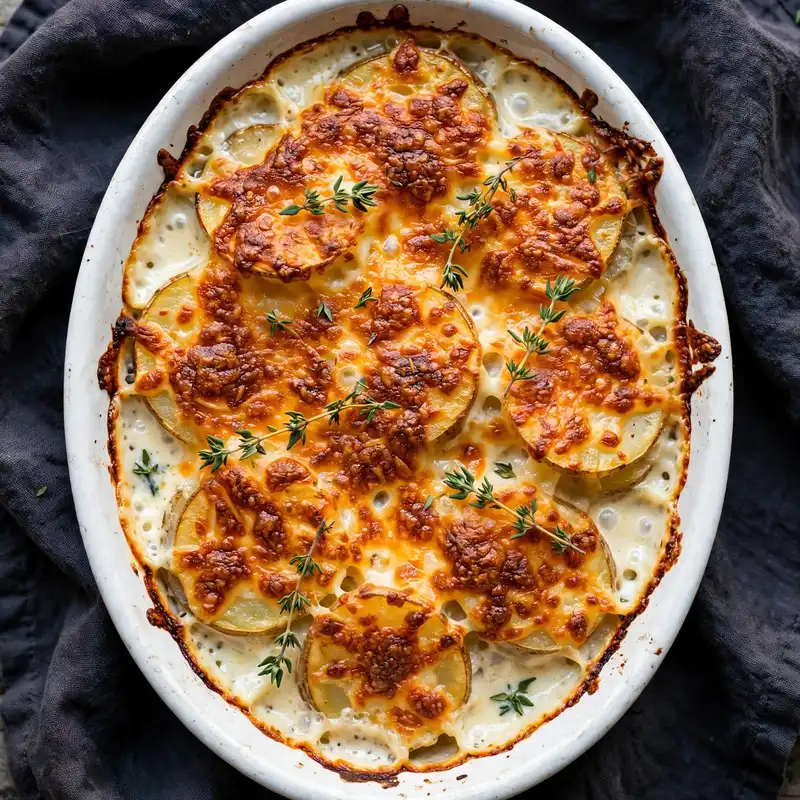
Pull scalloped potatoes out of the oven when the edges are bubbling and the top has gone a deep amber gold, and the whole kitchen smells like cream, garlic, and toasted cheese. Cut into the dish and you get those distinct layers of tender potato, each one saturated with the cream sauce that has been slowly reducing around it for over an hour. It is one of those side dishes that turns a regular dinner into something people actually talk about.
This recipe builds the cream sauce from scratch directly in the baking dish, which means fewer pots and a sauce that absorbs into the potato layers rather than sitting on top of them. It works as a holiday side, a Sunday dinner dish, or anything in between where you want something genuinely satisfying on the table without complicated technique.
Why You’ll Love These Scalloped Potatoes
- Layers that actually hold together. Slicing the potatoes uniformly thin and building them in overlapping layers gives you clean, defined cuts rather than a collapsed mash when you serve it.
- The sauce is built into the dish. No separate bechamel to make and dirty another pot. The cream, butter, garlic, and cheese go directly into the layers, and the oven does the reducing.
- Rich without being heavy. The combination of whole milk and cream gives the sauce enough body to coat every slice without making the finished dish feel like pure fat on a plate.
- Scales easily for a crowd. Double the recipe, use a larger dish, add 15 to 20 minutes of covered bake time. The technique stays exactly the same.
- Better the next day. The sauce sets as it cools and the layers firm up, which makes reheated leftovers slice cleanly and taste just as good as fresh from the oven.
Ingredients You’ll Need
Recipe Timing
| Detail | Info |
|---|---|
| Servings | 6 to 8 |
| Difficulty | Intermediate |
| Course | Side Dish |
| Cuisine | American, French-Inspired |
| Prep Time | 20 minutes |
| Cook Time | 1 hour 15 minutes |
| Total Time | 1 hour 35 minutes |
Potato selection matters more than anything else in this recipe. Yukon Gold potatoes are the best choice: their waxy-yet-creamy flesh holds its shape through the long bake while still absorbing the cream sauce. Russet potatoes work but tend to break down slightly more during baking, which gives you a softer, more collapsed texture. Avoid red or new potatoes, which stay too firm and waxy to absorb the cream properly.
Slice the potatoes to exactly 3mm (1/8 inch) thick. Thicker than that and the layers won’t cook through by the time the top browns; thinner and they turn to mush. A mandoline makes this precise and fast. A sharp knife works with patience and a steady hand.
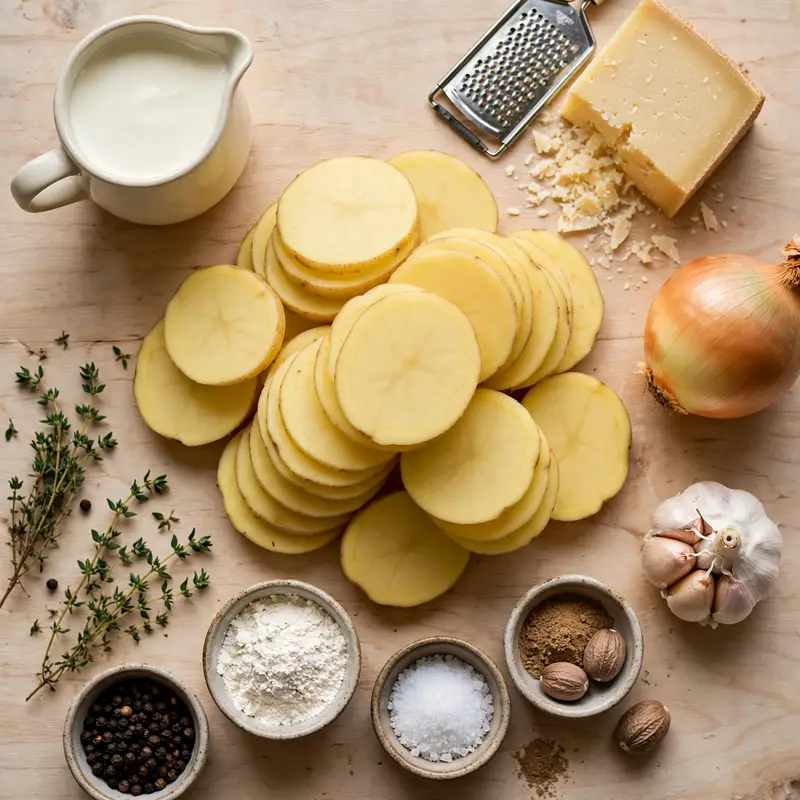
- 1.2kg (about 2.5 lbs) Yukon Gold potatoes. Peeled and sliced to 3mm thickness. Don’t soak them in water after slicing; the surface starch helps the layers bind together and thickens the sauce as it bakes.
- 2 cups (480ml) heavy cream. The primary fat in the sauce. It reduces during baking into a coating that clings to each potato layer. Don’t substitute with light cream; it won’t reduce to the same consistency.
- 1 cup (240ml) whole milk. Thins the cream slightly so the sauce isn’t cloyingly heavy, and helps it distribute between the layers more evenly during the early stages of baking.
- 3 tablespoons (45g) unsalted butter. Used to cook the aromatics and adds richness to the base of the sauce.
- 4 cloves garlic, finely minced. Cooked briefly in the butter to take the sharpness off before going into the cream. Raw garlic scattered between layers can taste harsh after baking.
- 1 small yellow onion, very thinly sliced. Adds a mild savory depth that disappears into the finished dish but would be noticeably absent without it.
- 2 tablespoons (15g) all-purpose flour. Whisked into the butter and garlic briefly before the cream goes in. Gives the sauce a little body so it doesn’t run completely liquid in the dish.
- 1 1/2 teaspoons fine sea salt + 1/2 teaspoon black pepper. Season the cream sauce directly. Under-seasoned sauce produces bland potatoes no matter how good everything else is.
- 1/4 teaspoon freshly grated nutmeg. A small amount, but it lifts the cream sauce and adds a background warmth that is hard to identify but would be missed.
- 1 teaspoon fresh thyme leaves (or 1/2 teaspoon dried). Pairs naturally with cream and potato. Fresh is better; dried works fine.
- 1 1/2 cups (150g) shredded Gruyere cheese, divided. Half goes between the layers, half goes on top. Gruyere melts into a nutty, slightly elastic layer that browns beautifully. Sharp cheddar is a very good substitute with a more pronounced tang.

Allergen and Dietary Disclosure
This recipe contains dairy (heavy cream, whole milk, butter, Gruyere cheese) and gluten (all-purpose flour).
For a gluten-free version, replace the all-purpose flour with a 1:1 gluten-free flour blend or use 1 tablespoon of cornstarch instead. Whisk the cornstarch into the cold cream before heating to prevent lumps.
For a dairy-free version, full-fat coconut cream works in place of heavy cream and gives the sauce enough body to reduce properly. Use a good-quality plant-based butter and a dairy-free cheese that melts well (not all do). The flavor profile will be different but the dish holds together.
Free from eggs, nuts, and soy as written. Not guaranteed safe for any specific allergy without checking all individual ingredient labels.
Equipment Needed
Mandoline slicer. For cutting potatoes to a consistent 3mm thickness, a mandoline is genuinely faster and more accurate than a knife. Use the hand guard every time. A sharp chef’s knife works as a substitute if you take your time, but uniform thickness is critical to even cooking.
3-quart (2.8L) oval or rectangular baking dish. The depth of the dish matters. Too shallow and the cream bubbles over during baking; too deep and the layers never get enough heat to cook through. A standard 9×13 inch or a 3-quart oval ceramic dish is the right size for this quantity.
Heavy-bottomed saucepan. For making the cream sauce. A light pan creates hot spots that can scorch the milk solids on the bottom before the sauce comes together.
Sharp chef’s knife and cutting board. Even if you use a mandoline for the potatoes, you’ll need a knife for the garlic and onion.
Step-by-Step Directions
Step 1: Preheat and Prepare the Dish
Position the oven rack in the center and preheat to 180°C (350°F). Butter the inside of your baking dish generously, making sure to coat the sides as well as the base. This prevents the cream from sticking and makes serving cleaner. Set it aside.
Step 2: Slice the Potatoes
Peel the potatoes and slice them to 3mm thickness, working steadily. As you finish each potato, lay the slices in a single pile rather than submerging them in water. The surface starch you preserve helps the layers adhere and contributes to the sauce’s final consistency. Work quickly and proceed directly to the next step so the cut potatoes don’t oxidize significantly.

Chef’s Note: Run your finger along a sliced piece. It should be firm but thin enough to bend slightly without snapping. If it snaps clean, it is too thick and will be undercooked in the center when the top browns.
Step 3: Build the Cream Sauce
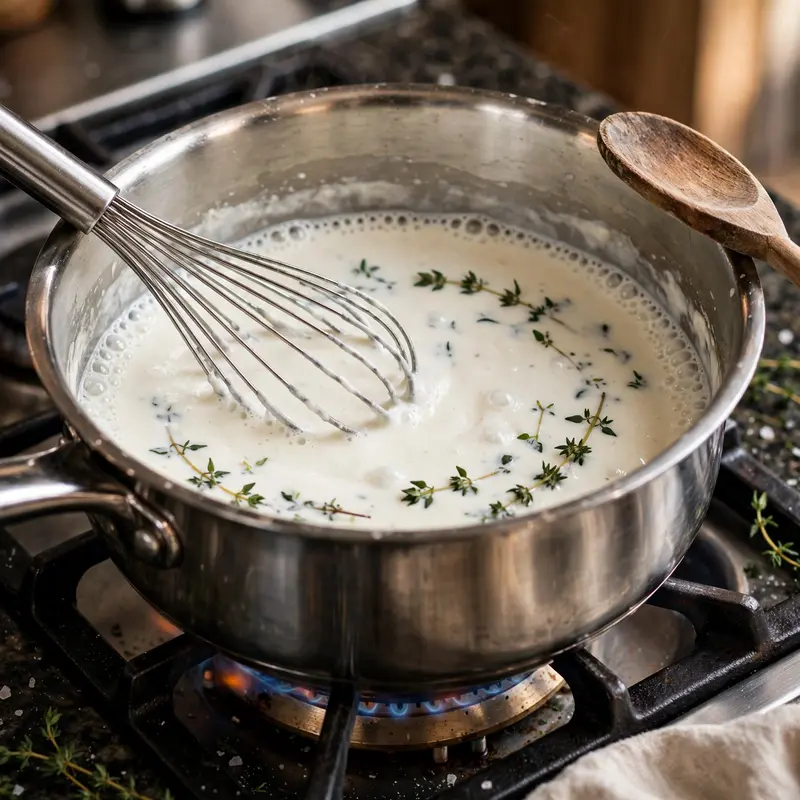
Melt the butter in a heavy saucepan over medium heat. Add the minced garlic and sliced onion and cook, stirring occasionally, for 3 to 4 minutes until the onion is softened and translucent and the garlic smells fragrant but has not taken on any color. Sprinkle the flour over the onion and garlic and stir continuously for 60 seconds to cook out the raw flour taste. Slowly pour in the heavy cream and milk, whisking as you go to prevent lumps from forming. Add the salt, pepper, nutmeg, and thyme. Bring the sauce to a gentle simmer over medium heat, stirring often, until it thickens enough to coat the back of a spoon, about 3 to 4 minutes. Remove from the heat.
Chef’s Note: The sauce will look thinner than you expect at this stage. It continues to reduce during baking, so starting it slightly loose is correct. A sauce that is too thick before baking won’t distribute between the layers properly.
Step 4: Layer the Potatoes
Arrange one-third of the potato slices in overlapping layers across the bottom of the buttered baking dish, like shingles on a roof. Each slice should overlap the previous one by about half. Season lightly with salt and pepper, pour over one-third of the cream sauce, and scatter over one-quarter of the shredded Gruyere. Repeat this sequence two more times with the remaining potatoes and sauce, finishing with a layer of potatoes on top. Pour any remaining cream sauce over everything, making sure it seeps down into the edges and sides of the dish. Reserve the remaining cheese for the last stage of baking.
Chef’s Note: The layering doesn’t need to be perfect. Slightly uneven edges and irregular overlaps actually create more surface texture on top, which means more areas for the cheese to brown and crisp.
Step 5: First Bake (Covered)
Cover the dish tightly with aluminum foil and place it in the preheated oven. Bake covered for 45 minutes. During this phase, the potatoes steam and soften in the cream without the top burning. The cream sauce begins absorbing into the layers and the potato starch starts to thicken everything together.
Step 6: Uncover, Add Cheese, and Finish
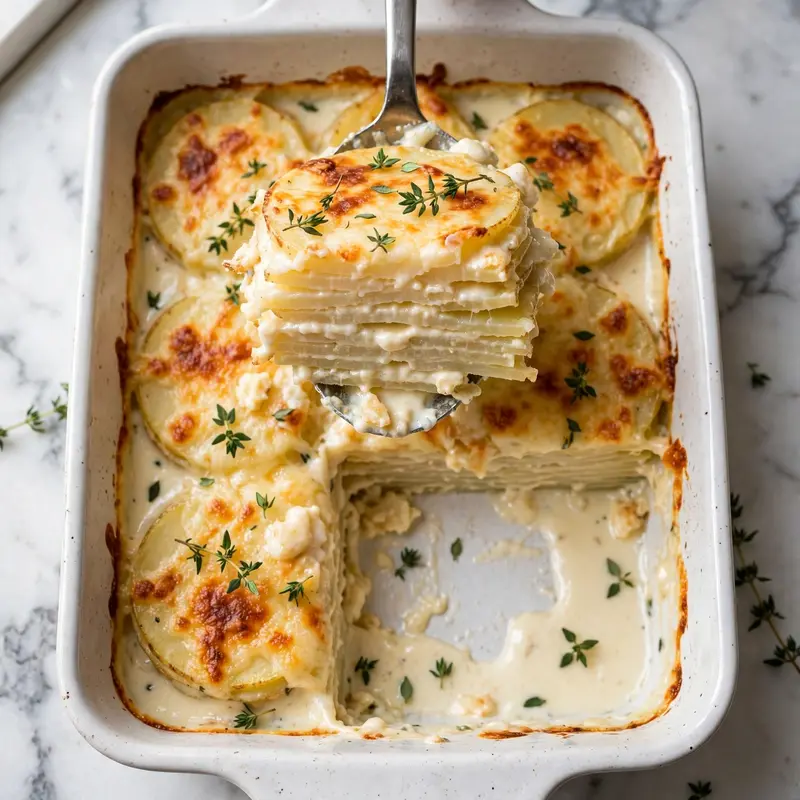
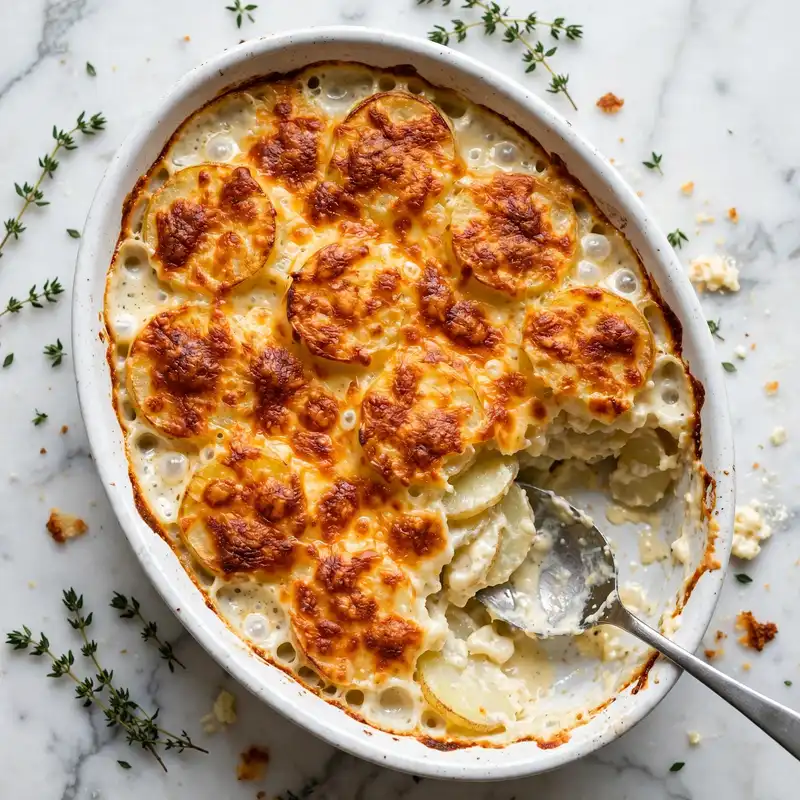
After 45 minutes, carefully remove the foil (hot steam will escape). Scatter the reserved Gruyere evenly over the top. Return the dish to the oven uncovered and bake for a further 25 to 30 minutes until the top is deeply golden brown with darker caramelized patches at the edges, and the cream sauce is visibly thick and bubbling around the sides. Test doneness by inserting a sharp knife or skewer into the center: it should slide through all the layers with no resistance.
Step 7: Rest Before Serving
Leave the dish on a wire rack or heatproof surface for 10 full minutes before serving. This rest period allows the cream sauce to set slightly so it doesn’t pour out of the cut when you serve it. Scalloped potatoes served straight from the oven tend to be runny and hard to portion cleanly.
Common Mistakes and Troubleshooting
| Problem | Cause | Solution |
|---|---|---|
| Potatoes still firm after full bake time | Slices cut too thick, or oven runs cool | Use a mandoline for consistent 3mm slices; verify oven temp with thermometer |
| Cream sauce watery and thin in finished dish | Too much liquid or not baked long enough uncovered | Extend uncovered bake by 10 to 15 minutes; check that foil was fully sealed during covered phase |
| Top burned before potatoes cooked through | Oven too hot or uncovered too early | Keep dish covered the full 45 minutes; reduce temperature by 10°C if burning quickly |
| Layers fell apart when serving | Not rested long enough after baking | Wait the full 10 minutes minimum; 15 minutes gives even cleaner portions |
| Sauce is grainy or separated | Cream overheated or brought to a hard boil | Keep sauce at a gentle simmer only; do not boil the cream mixture at any stage |
| Dish tastes bland | Under-seasoned cream sauce | Season the sauce assertively before layering; taste it directly and adjust |
Variations and Substitutions
Sharp Cheddar Version: Replace the Gruyere with an equal amount of sharp white cheddar or a mix of cheddar and mozzarella. Cheddar gives you a sharper, more pronounced flavor and browns well. It is also more widely available and less expensive.
Garlic Herb Version: Add 1 tablespoon of fresh rosemary (finely chopped) and an extra teaspoon of thyme to the cream sauce. The rosemary is strong, so keep it at 1 tablespoon or it can overpower the potato.
Caramelized Onion Version: Instead of raw sliced onion cooked briefly in butter, cook 2 thinly sliced onions in butter over medium-low heat for 25 to 30 minutes until deeply golden and jammy. Layer these between the potato slices for a much sweeter, more complex flavor profile.
Lighter Version: Replace the heavy cream entirely with whole milk and increase the flour to 3 tablespoons to compensate for the reduced fat content. The sauce will be less rich but still coats the layers adequately. Baking time may need to increase by 5 to 10 minutes.
Spiced Version: Add 1/2 teaspoon smoked paprika and a pinch of cayenne to the cream sauce. The heat is mild in the finished dish but gives a warm, slightly complex background note that works well against the cheese.
Sweet Potato Version: Replace half the Yukon Gold potatoes with thinly sliced sweet potatoes. Layer them alternately for a dish with a subtle natural sweetness and more visual contrast. Sweet potato slices may need an extra 10 minutes of covered baking time.
Serving Suggestions
- Alongside roast chicken. The cream sauce and the chicken’s pan juices complement each other naturally. A simple roast with lemon and herbs lets the potatoes be the main event on the side.
- With a crisp green salad. The richness of the dish calls for something light and acidic alongside it. A salad dressed with a sharp lemon or red wine vinegar dressing balances the plate well.
- As part of a holiday spread. Scalloped potatoes hold their temperature well in the baking dish and reheat without losing quality, which makes them practical for larger meals where timing across multiple dishes is difficult.
- With roasted or steamed green vegetables. Broccoli, asparagus, or green beans alongside give the plate color contrast and cut through the cream without competing for flavor attention.
- With a simple grilled chicken breast. The potatoes provide enough richness that the protein alongside can be plain and simply seasoned. Grilled chicken thighs work equally well.
- As a standalone lunch. A generous portion with a side salad is a complete meal. The cream and potato content makes it filling enough to stand alone.

Tips for the Best Results
- Don’t rinse the sliced potatoes. The surface starch on a freshly cut potato slice is what helps the cream sauce thicken naturally as it bakes. Rinsing or soaking removes that starch and leaves you with a thinner, looser sauce in the finished dish.
- Season the cream sauce like it is a soup. The potatoes are not seasoned separately in this recipe, so all the salt needs to come from the sauce. Taste it directly from the spoon before layering and make sure it is well-seasoned, not just lightly so.
- Seal the foil tight during the covered bake. Loose foil lets steam escape during the first 45 minutes, which slows the cooking and can leave the lower layers undercooked when the top browns. Press the edges down firmly around the rim of the dish.
- Use a dish that fits the volume of potatoes snugly. If the dish is too large and the layers are thin, the cream will spread out and reduce too quickly, leaving a dry finished dish. If it is too small and the layers pile up too high, the center won’t cook through.
- Let the dish rest on a flat surface, not a burner. The ceramic holds heat well. Resting on a wire rack allows air to circulate underneath and prevents the bottom layer from continuing to cook against a hot surface.
Storage Tips
Refrigerator
Cover the cooled dish with plastic wrap or transfer leftovers to an airtight container. It keeps well in the fridge for up to 4 days. The texture actually improves after a night in the fridge because the sauce sets and the layers firm up into clean, sliceable portions.
Freezer
Scalloped potatoes can be frozen, though the cream sauce may separate slightly on thawing and the potato texture softens compared to fresh. For best results, portion into individual servings in freezer-safe containers before freezing. They keep for up to 2 months. Thaw overnight in the refrigerator before reheating.
Reheating
From the fridge: cover the dish with foil and reheat in a 160°C (325°F) oven for 20 to 25 minutes until heated through, then uncover for 5 minutes to re-crisp the top. The microwave works for single portions at 50% power in 90-second intervals, stirring the cream sauce between intervals. From frozen: thaw fully in the fridge first, then reheat as above.
Nutrition Information
Per serving (approximately 1/8 of the full dish)
| Nutrient | Amount |
|---|---|
| Calories | 380 kcal |
| Protein | 9g |
| Carbohydrates | 28g |
| Fiber | 2.5g |
| Sugar | 4g |
| Total Fat | 26g |
| Saturated Fat | 16g |
| Cholesterol | 85mg |
| Sodium | 480mg |
| Vitamin C | 12mg |
| Calcium | 210mg |
| Iron | 1.2mg |
| Potassium | 620mg |
Nutrition values are approximate and may vary based on brands and portion sizes.
Why This Recipe Works
The covered-then-uncovered baking method solves the most common scalloped potato problem: a top that browns before the center layers cook through. Covering the dish for the first 45 minutes traps steam inside, which cooks the potato layers by moist heat without any browning. Removing the foil for the final 25 to 30 minutes lets the top surface dehydrate and caramelize while the interior is already tender. The two phases do different jobs.
Building the cream sauce separately before layering, rather than just pouring raw cream over raw potato slices, makes a meaningful difference to the final texture. Cooking the garlic and onion in butter first removes harshness. Whisking in flour creates a light binder that keeps the sauce from separating in the oven. A partially thickened sauce coats each potato slice as you layer it, which means the flavor distribution is even from the top to the bottom of the dish.
Yukon Gold potatoes have a specific starch-to-water ratio that makes them ideal here. They hold their shape better than a high-starch russet but release just enough starch into the surrounding cream to help the sauce thicken naturally from the inside. I’ve tested this recipe with russets as a direct comparison: they work but give a slightly softer, less distinct layered result.
Nutmeg is a small addition but it is a classic pairing with cream sauces for a reason. In quantities this small, you don’t taste it as nutmeg. It just makes the cream sauce taste more complete.
Frequently Asked Questions
Can I make scalloped potatoes ahead of time?
Yes, and the dish actually holds up well when made ahead. Assemble the full dish, cover it tightly with foil, and refrigerate unbaked for up to 24 hours. When ready to bake, add 10 to 15 minutes to the covered baking phase since the dish is going in cold. Alternatively, bake the dish completely, refrigerate, and reheat covered in a 160°C (325°F) oven for 25 minutes before serving.
What is the difference between scalloped potatoes and au gratin potatoes?
The terms are often used interchangeably, but traditionally scalloped potatoes use a cream-based sauce without cheese (or very little), while potatoes au gratin are defined by a generous cheese topping that forms a browned crust. This recipe leans toward au gratin with its Gruyere layers and cheesy top while keeping the cream-forward sauce that scalloped potatoes are known for. The practical result is the best of both.
Why are my scalloped potatoes still hard after baking?
The two most likely causes are potato slices cut too thick, or an oven that runs cooler than its dial setting. Potatoes cut to 4mm or thicker won’t cook through in the standard time even in a well-calibrated oven. Use a mandoline to achieve a consistent 3mm. If your oven runs cool, add 15 to 20 minutes to the covered phase and verify the temperature with an oven thermometer.
Can I use a different cheese?
Yes. Gruyere is the classic choice for its meltability and nutty flavor, but sharp cheddar, Colby, Monterey Jack, or a fontina work well. Avoid soft cheeses like brie or ricotta, which don’t melt into the same type of layered crust. Parmesan alone tends to be too sharp and doesn’t melt smoothly, but mixing it 50/50 with cheddar gives a good result.
How do I keep the cream sauce from curdling or separating?
The sauce separates when it is heated too aggressively. Keep it at a gentle simmer when you make it on the stovetop, never a rolling boil. In the oven, the covered phase protects the sauce from overheating too fast. If your sauce still looks slightly broken when you pull the foil off, stir a tablespoon of cold butter into the visible liquid at the edges of the dish before adding the cheese and continuing to bake. It usually brings it back together.
Can I slice the potatoes the night before?
You can, but they need to be stored properly. Toss the slices in the cream sauce immediately after cutting and store the whole mixture (potatoes in sauce) in the fridge overnight. Do not store sliced potatoes in water; it removes the surface starch you need for sauce thickening. Alternatively, store them in a zip-lock bag with a splash of cream to prevent oxidation.
What size baking dish works best?
A 3-quart baking dish, which is roughly a 9×13 inch rectangular dish or a standard large oval ceramic dish, works for this quantity of potatoes. The layers should come to about 3 to 4 cm from the top of the dish when stacked, which leaves enough room for the cream sauce to bubble without spilling over.
Conclusion
Scalloped potatoes are one of those dishes that rewards patience. The prep takes 20 minutes, the oven takes care of the rest, and the result is a dish with far more depth than its ingredient list suggests. The cream reduces, the layers set, the cheese goes golden, and you end up with something that holds its shape, tastes rich without being overwhelming, and makes leftovers that are arguably better than the original serving. Once you have the layering and the two-stage baking down, this becomes a genuinely reliable recipe you can make for any occasion without second-guessing it.
If you loved this recipe, save it to your potato recipes Pinterest board so you can find it easily later! For more recipes and daily food inspiration, follow TheCookingVibes on Pinterest.
Creamy Scalloped Potatoes
Ingredients
Equipment
Method
- Preheat the oven to 180°C (350°F). Butter the inside of a 3-quart baking dish generously, including the sides. Peel and slice potatoes to 3mm thickness. Set aside without rinsing.
- Melt butter in a saucepan over medium heat. Cook garlic and onion for 3 to 4 minutes until softened. Add flour and stir for 60 seconds. Pour in cream and milk gradually, whisking to combine. Add salt, pepper, nutmeg, and thyme. Simmer 3 to 4 minutes until the sauce lightly coats a spoon. Remove from heat.
- Layer one-third of the potato slices in overlapping rows in the baking dish. Pour over one-third of the cream sauce and scatter one-quarter of the Gruyere. Repeat twice more, finishing with a potato layer and the remaining sauce. Reserve the last portion of cheese.
- Cover tightly with foil and bake for 45 minutes.
- Remove foil, scatter the reserved cheese over the top, and return to the oven for 25 to 30 minutes until the top is deeply golden and a knife slides through all layers without resistance.
- Rest for 10 minutes before portioning and serving.
Notes
- Do not rinse sliced potatoes; the surface starch helps thicken the cream sauce naturally.
- Sharp cheddar is a reliable substitute for Gruyere if unavailable.
- The dish can be assembled up to 24 hours ahead and refrigerated unbaked; add 10 to 15 minutes to the covered bake.
- Leftovers keep up to 4 days in the fridge and reheat well covered with foil in a low oven.