Classic Apple Cake — Moist Spiced Crumb, Caramelized Apple Chunks
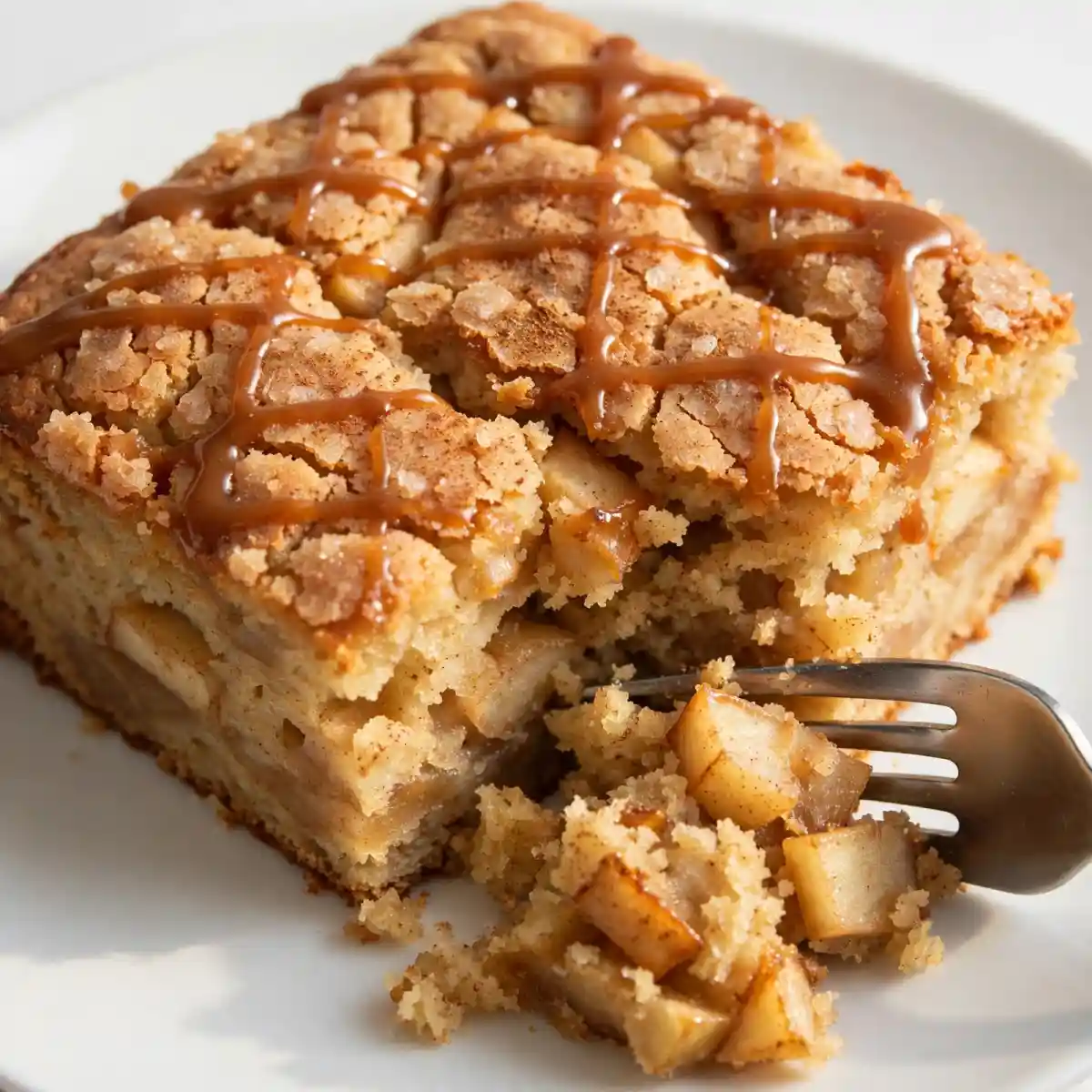
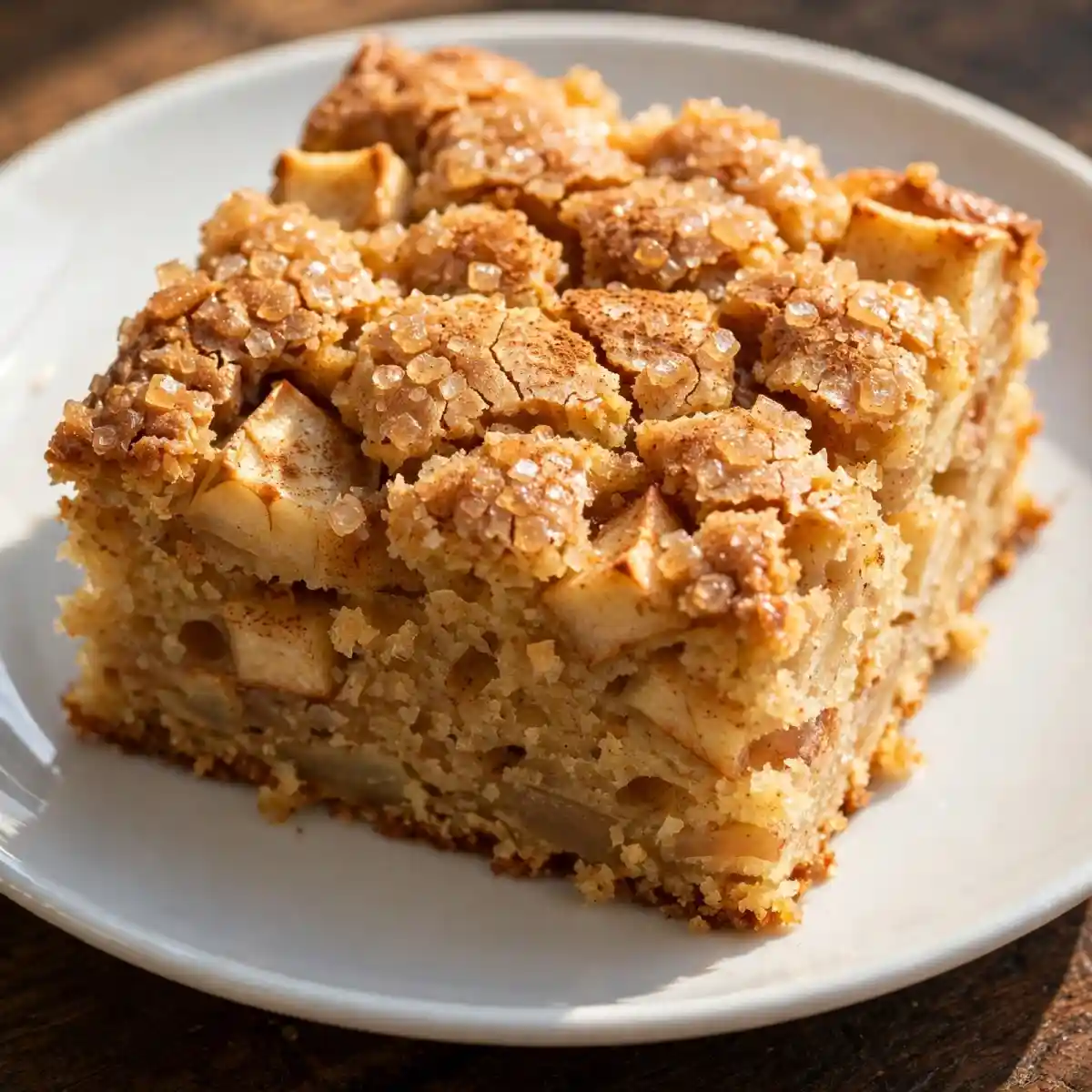
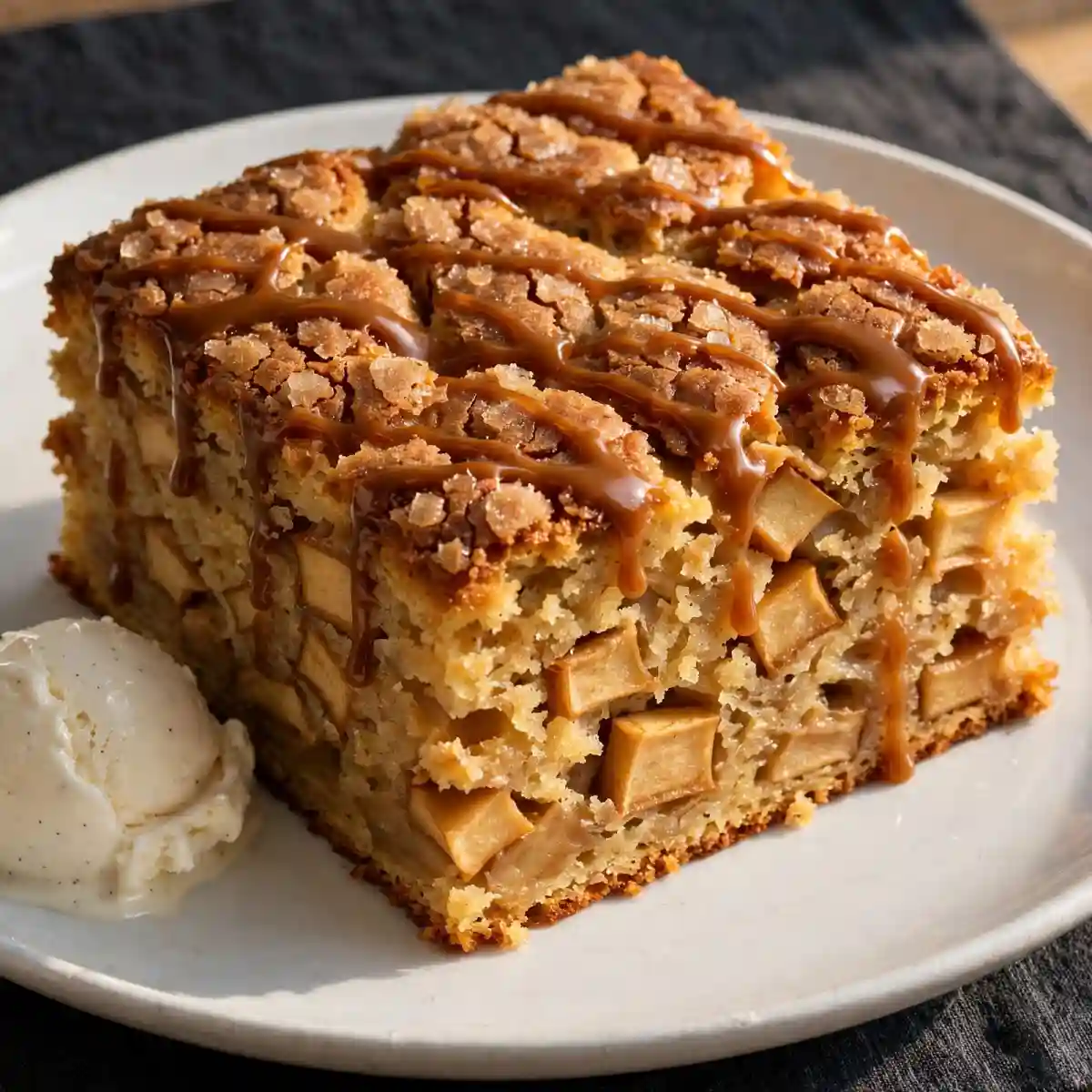
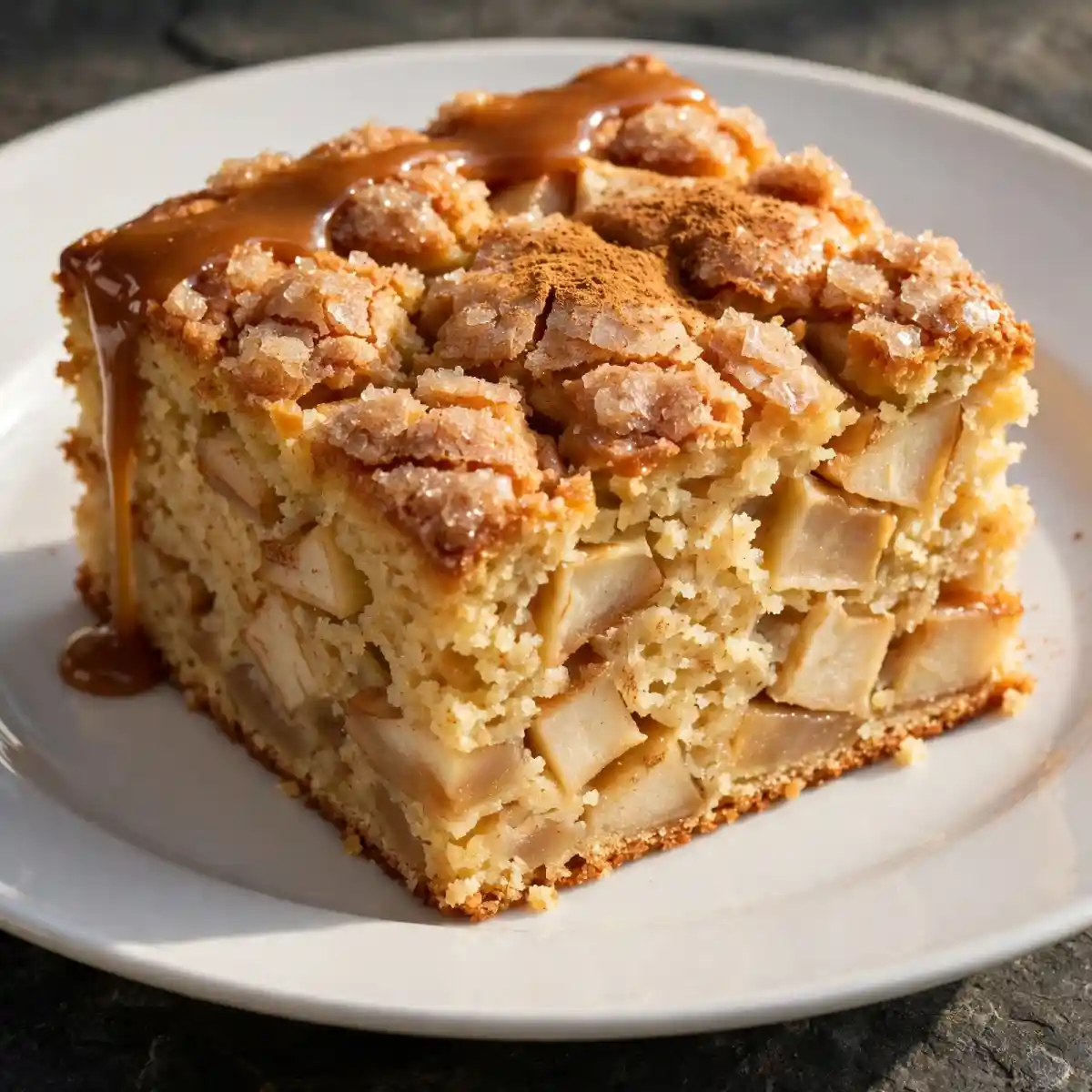
Pull an apple cake from the oven at exactly the right moment and the smell hits before you’ve even set the pan down: warm cinnamon, brown sugar that’s caramelized at the edges, and something deeper from the apple juices that released during baking and soaked into the surrounding crumb. The top surface has a crackled, slightly crystallized crust from the turbinado sugar scattered on before baking, and when you cut into it the crumb is dense-tender rather than fluffy, with visible apple chunks that stayed distinct rather than dissolving into the batter.
This apple cake recipe uses a brown butter and brown sugar base for depth, fresh apple chunks folded into the batter rather than grated so they provide textural pockets of soft fruit rather than simply adding moisture, and a measured cinnamon and nutmeg spice blend that tastes unmistakably like fall without being overwhelming. It bakes in a single 9×13-inch pan, serves 12 to 16, takes about an hour from start to finish, and works for everything from a casual weeknight dessert to a celebration cake dressed up with salted caramel sauce poured at the table.
Why You’ll Love This Apple Cake
- Moist crumb that stays tender for days. The combination of brown butter, oil, and chunked fresh apples provides multiple fat and moisture sources that keep the crumb soft at room temperature for 3 to 4 days rather than drying out by the next morning.
- Apple chunks that stay distinct rather than disappearing. Folding diced apple pieces rather than grated apple into the batter produces pockets of soft, lightly caramelized fruit in every slice; the textural contrast between the tender crumb and the yielding apple is what makes each bite interesting.
- Brown butter adds depth the standard version doesn’t have. The 5 minutes spent browning the butter converts the milk solids into toasted, nutty aromatic compounds that make the cake taste noticeably more complex than one made with plain melted butter at the same quantity.
- A crackled turbinado sugar top at no extra effort. Scattering turbinado sugar across the batter before baking produces a lightly crystallized, slightly crunchy surface that provides textural contrast to the soft interior without requiring any frosting or glaze.
- One bowl, one pan, no mixer required. The wet ingredients are whisked by hand, the dry folded in, the apples added last. No stand mixer, no multiple bowls, and cleanup is minimal.
Ingredients You’ll Need
Recipe Timing
| Detail | Info |
|---|---|
| Servings | 12 to 16 squares |
| Difficulty | Easy |
| Course | Dessert, Snack |
| Cuisine | American |
| Prep Time | 20 minutes |
| Cook Time | 40 minutes |
| Rest Time | 20 minutes (cooling before cutting) |
| Total Time | 1 hour 20 minutes |
For the apples, Granny Smith and Honeycrisp are both excellent choices for different reasons. Granny Smith apples are tart and firm; they provide a bright acidity that contrasts the cake’s sweetness and their firmness means they hold their shape through the bake without becoming mushy. Honeycrisp apples are sweeter and slightly less firm; they produce a more tender apple chunk that blends more softly into each bite. Using half Granny Smith and half Honeycrisp produces the best of both: sweet-tart complexity and varied texture. Avoid very soft, water-logged apples like Red Delicious; they release excess moisture into the batter and produce a gummy layer around each apple piece.
For the butter, browning it is the specific technique that elevates this cake beyond a standard version. The browning takes 5 minutes and produces nutty, toasted Maillard compounds that plain melted butter at the same quantity simply doesn’t contain. The browned butter must be cooled to room temperature or just above before combining with the eggs; hot butter added to eggs scrambles them rather than producing a smooth batter.
For the flour, all-purpose flour produces a sturdier, denser crumb than cake flour, which is appropriate for a fruit-loaded cake that needs structural support to hold the apple chunks without collapsing. Cake flour produces a more tender but structurally weaker cake that can slump under the weight of the apple pieces; all-purpose is the right choice here.
For the sugar, the combination of light brown sugar and granulated white sugar produces both molasses depth and sweetness; an all-brown-sugar version is too dense and moist, while all-white-sugar lacks the caramel undertone that makes apple cake taste autumnal.
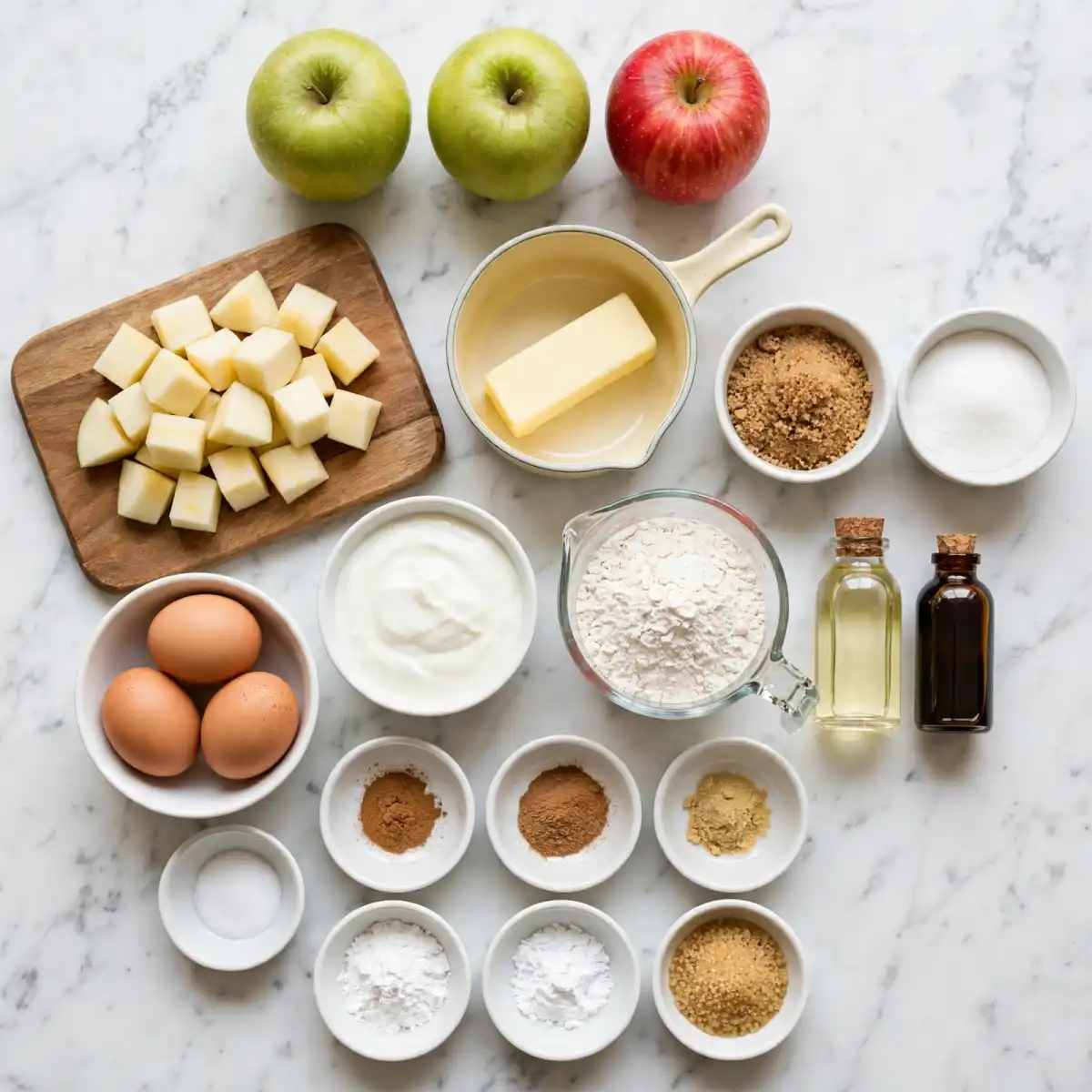
- 360g (3 cups) fresh apples, peeled, cored, and cut into 1.5cm cubes (from about 3 medium apples) — the defining ingredient; cut into chunks rather than grated; a mix of Granny Smith and Honeycrisp is ideal
- 120g (1/2 cup) unsalted butter — browned before use; the browning is the flavor upgrade that sets this recipe apart
- 80ml (1/3 cup) neutral oil (grapeseed or refined sunflower) — combined with browned butter; the oil keeps the crumb moist for longer than butter alone since it doesn’t solidify at room temperature
- 200g (1 cup) light brown sugar, packed — the primary sweetener; molasses depth complements the cinnamon and apple
- 100g (1/2 cup) granulated white sugar — balances the brown sugar’s richness with clean sweetness
- 3 large eggs, at room temperature — provide structure and bind the batter; room-temperature eggs incorporate more evenly than cold ones
- 2 teaspoons pure vanilla extract
- 280g (2 1/4 cups, spooned and leveled) all-purpose flour — the structural base
- 1.5 teaspoons baking powder — the primary leavener
- 1/2 teaspoon baking soda — works with the apple’s natural acidity to produce additional lift
- 2 teaspoons ground cinnamon — the dominant spice; use a freshly opened jar for the most aromatic result
- 1/2 teaspoon ground nutmeg — adds a warm, slightly sweet woody note
- 1/4 teaspoon ground ginger — adds a mild sharpness that makes the cinnamon taste more vivid
- 1/2 teaspoon fine salt
- 120ml (1/2 cup) plain full-fat Greek yogurt — adds moisture and a slight tang; keeps the crumb tender and prevents dryness; sour cream substitutes directly
- 2 tablespoons turbinado sugar — scattered across the top of the batter before baking; creates the crackled crust
Allergen and Dietary Disclosure
This apple cake contains dairy (butter and Greek yogurt), eggs (three whole eggs), and gluten (all-purpose flour). It is naturally nut-free as written.
For gluten-free: replace the all-purpose flour with a certified gluten-free 1:1 baking flour blend that includes xanthan gum. The cake bakes nearly identically; begin checking for doneness at 36 minutes rather than 40 since gluten-free cakes can set faster. The crumb is very slightly denser than the wheat version.
For dairy-free: replace the butter with a vegan butter block at the same quantity (the browning step works with most vegan butter blocks, though the flavor is slightly different), and substitute the Greek yogurt with full-fat coconut yogurt or plain oat-based yogurt at the same quantity. The finished crumb is very close to the dairy version.
For egg-free: replace each egg with 3 tablespoons of plain full-fat Greek yogurt; for a three-egg recipe this means adding 9 tablespoons (a generous 1/2 cup) of additional yogurt to the batter. The crumb will be slightly denser and less springy; the cake is still pleasant and bakes without structural problems.
This recipe has not been tested in a certified allergen-free kitchen and cannot be guaranteed safe for any specific allergy.
Equipment Needed
- 9×13-inch (23x33cm) baking pan — the standard format for this recipe; the wide, shallow pan produces an even crumb depth that bakes consistently from edge to center in the stated 40 minutes. A smaller, deeper pan produces a thicker cake that takes significantly longer to bake through; if using an 8×8 or 9×9 pan, bake two separate batches.
- Light-colored saucepan for browning butter — a light interior, stainless steel or white enamel, allows you to see the milk solid color as the butter browns; the solids turn from pale yellow to amber in a process that happens quickly, and a dark pan makes it impossible to judge the color accurately.
- Large mixing bowl — wide enough to fold the apple chunks into the batter with broad strokes without the batter climbing the sides.
- Kitchen scale — for accurate flour measurement; scooped flour varies by up to 30% depending on technique and significantly changes the cake’s density.
Step-by-Step Directions
Step 1: Brown the Butter
Place the butter in the light-colored saucepan over medium heat. As it melts, it will foam, then the foam will subside, then small golden-brown dots will appear on the base of the pan and the entire butter will smell unmistakably nutty and toasted rather than simply buttery. This takes 5 to 6 minutes; the moment the milk solids turn a deep amber and the smell peaks at nutty-toasted, pour the entire contents into a large mixing bowl immediately. The process goes from amber to burned in under 60 seconds if the butter is left in the hot pan.
Allow the brown butter to cool for 10 to 15 minutes until it’s no longer hot to the touch but still liquid. It should feel warm rather than hot when you hold the bowl.

Chef’s Note: The color and smell of the brown butter are the reliable indicators, not the timer. Kitchens vary in ambient temperature and saucepan thickness, which affects how quickly the milk solids brown. Watch the solids at the base of the pan rather than the timer; pull when they’re amber, not when they’re just golden. The difference between amber and over-browned happens fast but the difference in flavor between properly browned and plain melted butter is the main reason this recipe tastes better than a standard version.
Step 2: Prepare the Apples and Preheat
Preheat the oven to 175°C (350°F). Grease the 9×13-inch baking pan thoroughly and line the base with parchment paper for easy removal. Peel, core, and cut the apples into 1.5cm cubes. Toss the cubed apple pieces with 1 teaspoon of the measured cinnamon and a small pinch of the measured brown sugar; this brief coating with spice and sugar means the apple chunks’ exterior is already seasoned and slightly caramelized before they go into the batter.
Set the spiced apple cubes aside while you mix the batter.
Chef’s Note: Pre-tossing the apple cubes with cinnamon is not mandatory but produces a noticeably better result. The cinnamon coating directly on each piece means every bite of apple carries its own spice note rather than relying entirely on the surrounding batter; the effect is a more consistent spice presence throughout the cake rather than a background note that ebbs between bites of plain apple.
Step 3: Mix the Wet Ingredients
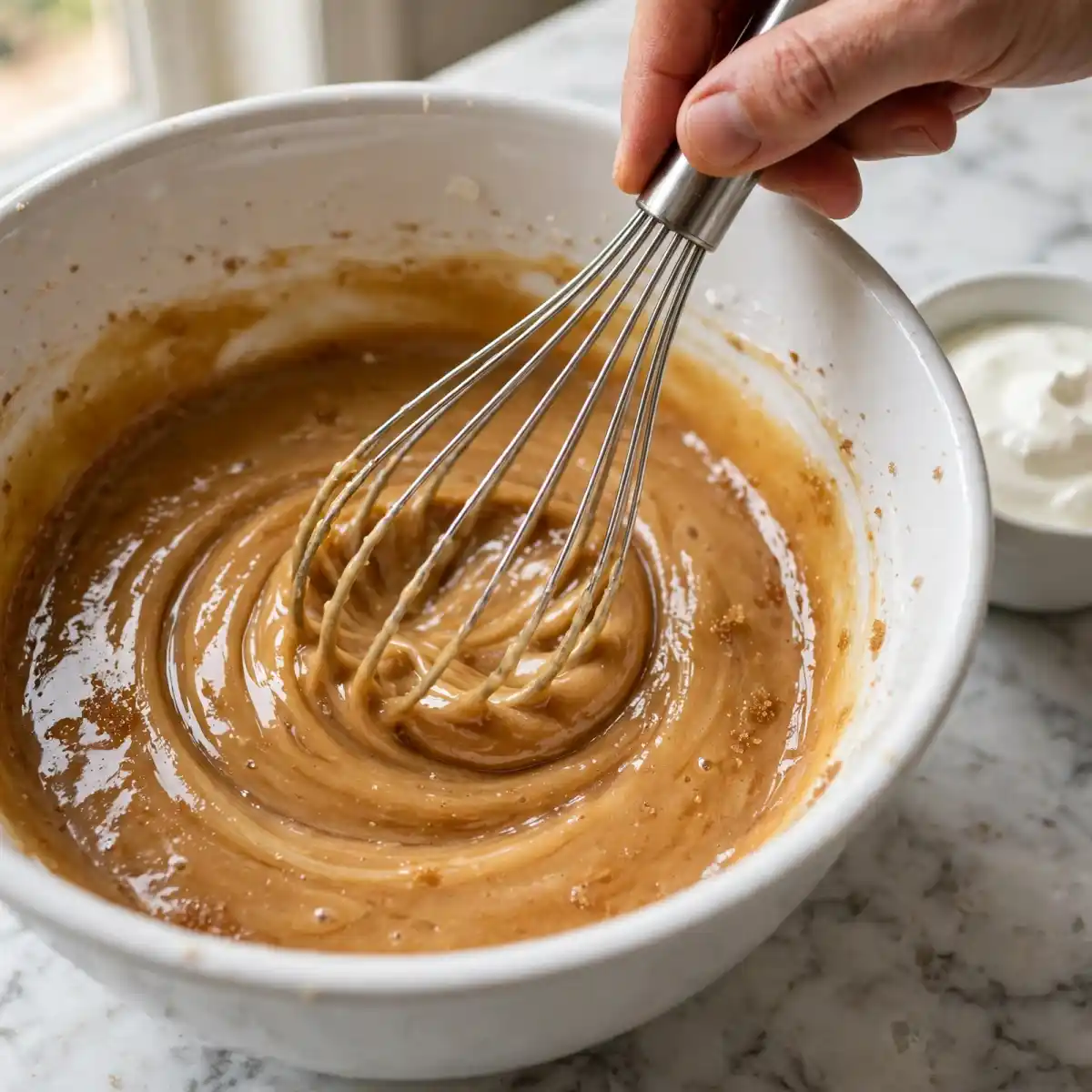
Add the neutral oil to the cooled brown butter in the mixing bowl. Add both sugars and whisk vigorously for 60 to 90 seconds until the sugars are fully incorporated and the mixture looks uniform rather than showing streaks of sugar. Add the eggs one at a time, whisking after each until fully incorporated, then add the vanilla extract. Whisk for a further 30 seconds until the mixture looks slightly thickened, pale, and uniform; this brief emulsification builds a more cohesive batter that holds the apple chunks in suspension during baking.
Add the Greek yogurt and whisk until it disappears into the batter.
Step 4: Fold in the Dry Ingredients
Whisk together the flour, baking powder, baking soda, remaining cinnamon, nutmeg, ginger, and salt in a separate bowl. Add the dry ingredients to the wet ingredients in two additions, folding with a large spatula using broad, circular strokes from the bottom of the bowl upward. Stop the moment no visible flour streaks remain; the batter should look thick, slightly rough, and spoonable. Over-mixing at this stage develops gluten and produces a tougher, denser crumb.
Step 5: Fold in the Apple Chunks
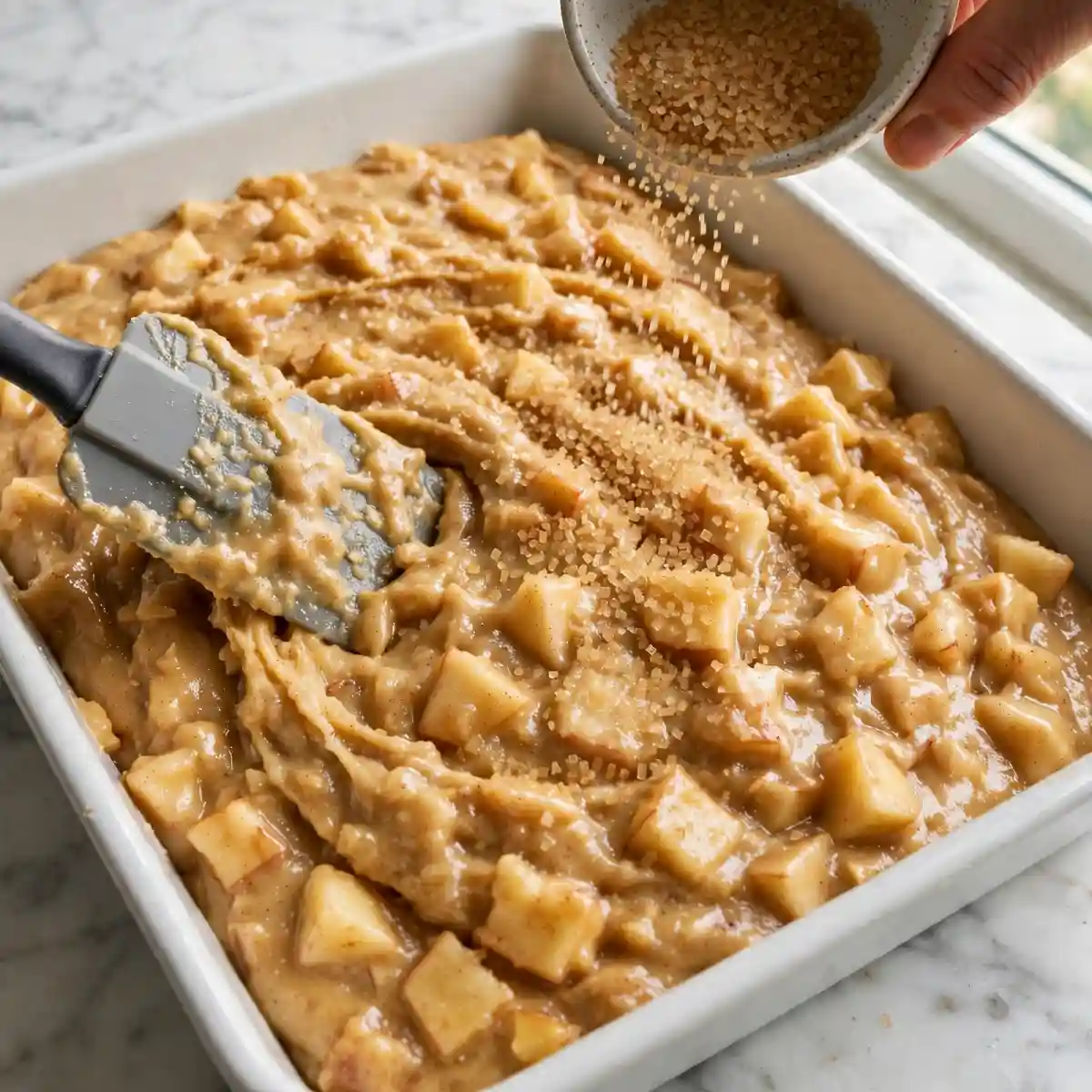
Add the spiced apple cubes to the batter and fold them in with 6 to 8 broad strokes using the spatula, distributing the pieces evenly throughout the batter without crushing them. The batter will look very thick and loaded with apple pieces; this is correct. Some pieces will be close to the surface and some will be submerged; both are fine.
Pour the batter into the prepared 9×13-inch pan, spreading it to the edges and smoothing the surface with the spatula. Scatter the turbinado sugar evenly across the entire surface.
Step 6: Bake and Rest
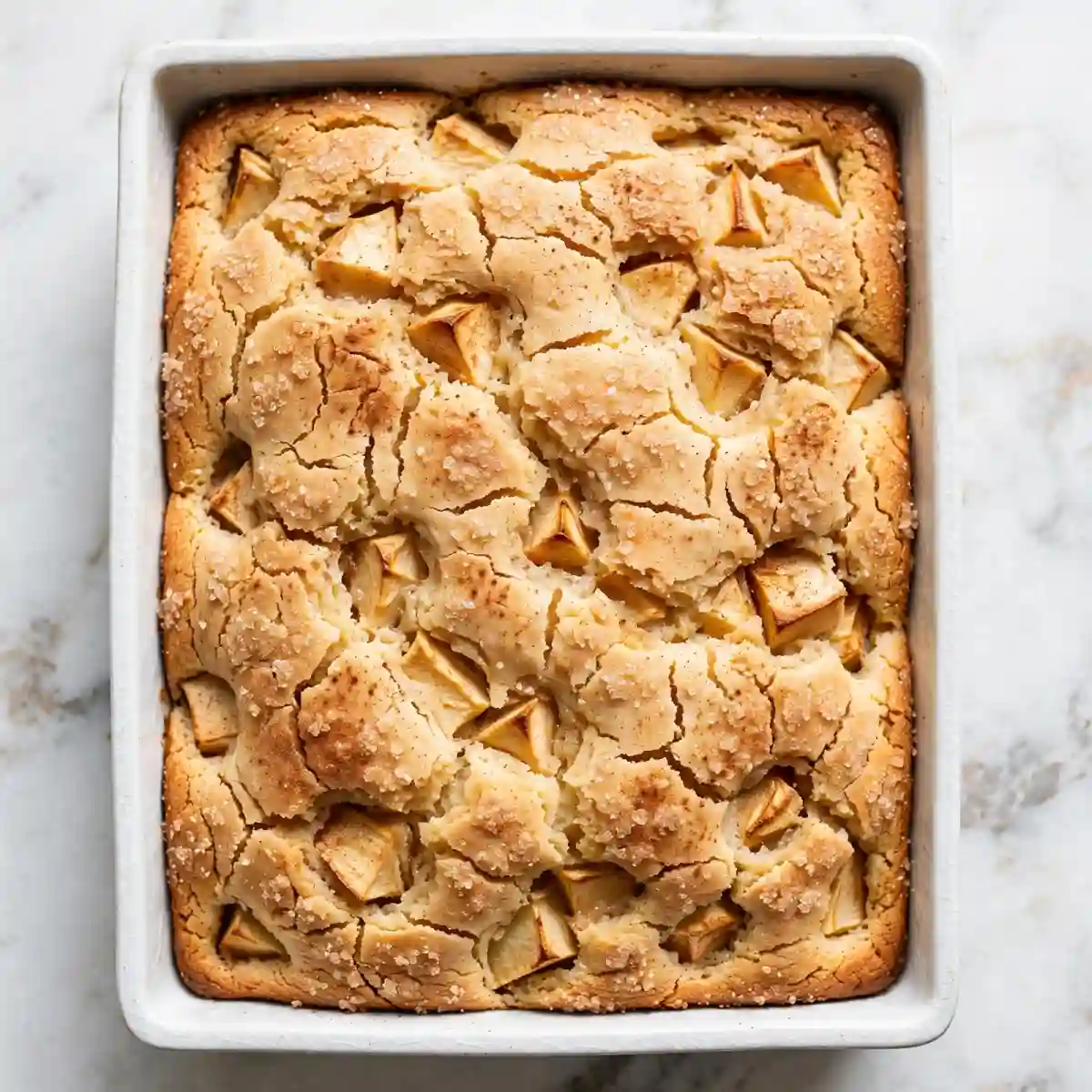
Bake at 175°C for 38 to 44 minutes until a toothpick inserted into the center of the cake comes out with only a few moist crumbs attached, the surface looks set and matte rather than shiny and liquid, and the edges have pulled very slightly away from the pan sides. The turbinado sugar on top should be visibly crystallized and slightly darker than the surrounding cake surface.
Remove from the oven and place the pan on a wire rack. Allow to cool in the pan for at least 20 minutes before cutting; cutting while hot produces crumbling rather than clean slices since the structure hasn’t fully set.
Common Mistakes and Troubleshooting
| Problem | Cause | Solution |
|---|---|---|
| Gummy wet layer around apple pieces | Apples too watery or over-ripe, or apple pieces too large | Use firm apple varieties (Granny Smith, Honeycrisp); cut to 1.5cm maximum; pat grated or very juicy apples dry before adding |
| Dense, heavy crumb | Over-mixing after flour was added, or too much flour from scooping rather than weighing | Stop folding the moment flour disappears; always weigh flour or spoon and level |
| Cake sinks in the center | Oven door opened before 30 minutes, or underbaked | Never open before 30 minutes; confirm toothpick comes out with moist crumbs only, not wet batter |
| Turbinado sugar melts into the surface rather than crackling | Turbinado not scattered thickly enough, or too much moisture from batter surface | Use the full 2 tablespoons; ensure the batter surface is not wet or pooled before scattering |
| Butter browned unevenly | Dark saucepan used, or heat too high | Use a light-colored saucepan; medium heat only; watch the milk solids, not the clock |
| Cake too dry by day 2 | Overbaked, or not enough fat from skipping oil | Pull at moist-crumb stage, not dry; include the neutral oil alongside the butter |
Variations and Substitutions
- Apple and walnut cake: Add 100g of roughly chopped walnuts to the batter alongside the apple chunks. The walnuts provide a rich, slightly bitter crunch that contrasts the tender apple and sweet crumb; the combination is a classic pairing. This is the only variation where adding nuts is genuinely appropriate rather than gratuitous.
- Apple and pear cake: Replace half the apple with the same weight of firm, ripe pear cut into the same 1.5cm cubes. Bartlett pears that are just ripe but not soft work best; very ripe pears release too much moisture during baking. The pear adds a floral, honeyed note alongside the apple’s tartness.
- Brown butter cream cheese frosting version: Make a simple brown butter cream cheese frosting by browning 60g of butter, cooling until solid, and beating with 170g of softened cream cheese, 240g of sifted powdered sugar, and 1 teaspoon of vanilla. Spread over the completely cooled cake; the frosted version is a full celebration cake that works for birthdays and gatherings.
- Spiced apple upside-down cake: Melt 60g of butter with 100g of brown sugar in the prepared pan over low heat until it forms a bubbling toffee layer, arrange thin apple slices in a decorative pattern across the base, then pour the batter over the top and bake as directed. Invert onto a serving plate immediately after removing from the oven; the toffee-coated apple pattern is now on top.
- Maple apple cake: Replace 60g of the granulated white sugar with 60ml of pure maple syrup added to the wet ingredients alongside the yogurt. Reduce the neutral oil by 30ml to compensate for the added liquid. The maple adds a distinctive, slightly smoky sweetness that pairs naturally with the cinnamon and brown butter.
- Gluten-free apple cake: Replace the all-purpose flour with a certified gluten-free 1:1 baking flour blend containing xanthan gum at the same weight. The method is identical; begin checking doneness at 36 minutes. All other ingredients are naturally gluten-free.
Serving Suggestions
- Serve warm, cut into squares directly from the pan, with a small scoop of vanilla ice cream placed beside each piece; the ice cream melts slightly against the warm cake and the cold-cream-against-warm-spiced-crumb contrast is one of the more satisfying dessert experiences available from a simple cake.
- Pour warm salted caramel sauce in a thin stream over each square immediately before serving; the caramel pools in the crevices of the crackled turbinado crust and soaks slightly into the edges of the crumb, amplifying the brown sugar notes already in the batter.
- For a morning or afternoon version, serve at room temperature with a cup of strong black tea; the tannins in black tea contrast the cake’s sweetness and make the apple and cinnamon flavors taste more vivid between sips.
- Dust each serving with a light sprinkle of powdered sugar and a pinch of cinnamon for the simplest presentation that still looks deliberately finished; both additions take 10 seconds and transform a casual pan cake into something that looks deliberately dressed.
- Serve as a birthday cake by cutting into large squares, transferring to a cake stand, and topping with the brown butter cream cheese frosting from the variation section and a few thin fresh apple slices fanned across the top; the presentation is striking and the cake is substantial enough to serve a party.
- Pair with a small dollop of full-fat Greek yogurt stirred with a teaspoon of honey rather than ice cream for a less sweet accompaniment that works as a breakfast or brunch item.
Tips for the Best Results
- Cut the apple into 1.5cm cubes, no smaller and no larger. Smaller pieces melt into the crumb during baking and lose their textural identity; larger pieces release too much moisture to the surrounding batter and create a wet, dense zone around each piece. The 1.5cm size holds its shape through the bake while softening to a tender, lightly caramelized texture that is distinct from but integrated with the surrounding crumb.
- Don’t skip the neutral oil. Brown butter produces extraordinary flavor but it solidifies at room temperature, which means an all-brown-butter cake tightens and feels slightly dry by day 2 as the butter fat solidifies in the crumb. The neutral oil remains liquid at room temperature and maintains the crumb’s soft, moist texture for 3 to 4 days after baking. The combination of browned butter fat for flavor and oil for sustained moisture is what makes this cake practical for advance baking.
- Measure the flour by weight. This is the most consequential measurement in the recipe. A cup of flour scooped from a bag can weigh anywhere from 120g to 160g depending on how compacted it is; the recipe calls for 280g. The difference between 280g and 350g of flour (which scooping can easily produce) is the difference between a moist, tender crumb and a dry, dense one. Use a scale; the 10 seconds it takes saves far more time than adjusting a cake that didn’t come out right.
- Scatter the turbinado sugar generously in an even layer. A thin scatter produces only occasional crackled spots rather than a full crystallized crust across the top; use the full 2 tablespoons and distribute it from one end of the pan to the other in an even, complete covering. The turbinado’s large crystals don’t fully dissolve during baking at 175°C, which is what produces the crackled rather than simply-sugared top.
- Rest for 20 minutes before cutting. Hot apple cake looks set when it comes from the oven but the crumb is still fragile and the apple pieces are surrounded by molten fruit juices that need 20 minutes to firm and re-absorb into the surrounding batter. Cutting at 10 minutes produces crumbling, irregular slices with wet pockets; cutting at 20 minutes produces clean, defined squares with a fully set crumb.
Storage Tips
Refrigerator
Apple cake keeps in the refrigerator covered with a dome lid or plastic wrap (not touching the turbinado crust) for up to 5 days. The crumb actually improves slightly during refrigerator storage as the apple juice redistributes through the surrounding batter; the day-2 version at room temperature is often noticeably more moist and flavorful than the same cake served fresh. Remove from the refrigerator 20 to 30 minutes before serving to bring the crumb back to its ideal soft, slightly yielding texture; cold cake feels denser and drier than the same cake at room temperature.
Freezer
Apple cake freezes well for up to 2 months. Cut into individual squares, wrap each tightly in plastic wrap and then in foil, and freeze flat. Thaw overnight in the refrigerator and bring to room temperature for 20 minutes before eating. The turbinado crust loses some of its crackle after freezing and thawing since the moisture absorbed during thawing softens the sugar crystals; the flavor and crumb texture are very close to fresh. Freeze without frosting if using the cream cheese frosting variation; add the frosting after thawing.
Reheating
Individual squares can be warmed at 50% microwave power for 20 to 25 seconds; the apple chunks return to their lightly steaming, tender texture and the cinnamon aroma releases again. For a larger portion, cover loosely with foil and warm in a 150°C (300°F) oven for 8 to 10 minutes. Don’t reheat to the point where the crust is hot; the turbinado crust doesn’t re-crackle on reheating and very hot cake loses the texture contrast between the crust and the crumb.
Make-ahead note: Apple cake is an excellent make-ahead bake. Baking the day before serving allows the apple juice to redistribute through the crumb overnight and produces a noticeably more moist, integrated result than the same cake served the day it’s baked. For a gathering, bake the day before, cool completely at room temperature, cover the pan, and serve from the pan the next day at room temperature or gently warmed.
Nutrition Information
Per serving, approximately one square (1/15 of the cake, without frosting):
| Nutrient | Amount |
|---|---|
| Calories | 285 kcal |
| Protein | 4g |
| Total Carbohydrates | 44g |
| Dietary Fiber | 1.5g |
| Total Sugar | 28g |
| Total Fat | 11g |
| Saturated Fat | 5g |
| Cholesterol | 58mg |
| Sodium | 160mg |
| Vitamin C | 2mg |
| Calcium | 50mg |
| Iron | 1.2mg |
| Potassium | 85mg |
Nutrition values are approximate and may vary based on apple variety, butter brand, and yogurt fat content.
Why This Recipe Works
The combination of browned butter and neutral oil as the fat base addresses two separate needs that neither ingredient meets alone. Browned butter contributes the toasted, nutty Maillard compounds produced when its milk solid proteins and lactose react above approximately 150°C; these compounds include diacetyl, various pyrazines, and methyl ketones that have characteristic toasted-popcorn, nutty, and caramel-adjacent aromatic profiles absent from plain melted butter. These fat-soluble aromatic compounds dissolve into the butter’s fat phase and distribute through every bite of the finished cake. However, butter contains approximately 80% fat with a solidification temperature near 32°C; at room temperature on day 2, the solidified butter fat in the crumb produces a slightly firm, less yielding texture. Neutral oil, being 100% fat with no solidification temperature in the range of ambient kitchen temperatures, remains liquid in the crumb at room temperature indefinitely; its presence maintains the crumb’s soft, moist texture for 3 to 4 days after baking in a way that an all-butter formulation cannot.
The Greek yogurt’s role in the batter is both structural and chemical. Greek yogurt contains approximately 4 to 5% protein and 0.5 to 1% lactic acid by weight; the protein contributes to the crumb’s structural network alongside the eggs, providing additional setting strength that prevents the apple chunks’ moisture from collapsing the surrounding crumb during baking. The lactic acid reacts with the baking soda in the formula through an acid-base reaction that produces carbon dioxide gas; this gas production, occurring directly in the batter during the first 10 to 15 minutes of baking before the crumb sets, produces additional lift that partially counteracts the density from the heavy apple chunks. Without an acidic dairy component like yogurt or sour cream, an apple cake at this apple-to-batter ratio can be noticeably squat and dense; the yogurt acid reacting with the baking soda is what produces the slightly lighter crumb.
Pre-tossing the apple chunks with cinnamon before folding them into the batter distributes the spice differently from mixing it only into the batter. When cinnamon is mixed exclusively into the batter, it distributes through the flour, fat, and liquid phases but concentrates wherever those phases are denser; the apple pieces themselves, being largely water and fiber, don’t absorb fat-soluble cinnamon compounds from the surrounding batter during the brief baking time and can taste relatively plain inside the spiced crumb. Pre-tossing applies a thin coating of cinnamon directly to each apple piece’s surface before baking; during baking, the apple’s water softens and partially absorbs the cinnamon coating, producing a piece of apple that itself carries cinnamon flavor rather than simply existing in a cinnamon-flavored batter.
The turbinado sugar crust works through a specific size-dependent crystal behavior. Granulated white sugar crystals fully dissolve into any available water within the first 5 minutes of oven exposure; a cake top scattered with granulated sugar produces a glassy, smooth surface rather than a textured crust. Turbinado sugar crystals are approximately 5 to 10 times larger than granulated sugar crystals; at 175°C with limited surface moisture (the batter seals the turbinado from the inside as it bakes), the outer portion of each turbinado crystal caramelizes at the surface while its core retains some crystalline structure. This produces the characteristic crackled appearance: dark caramelized exteriors and partially intact crystal cores that give each bite of the top surface a subtle crunch rather than a smooth, dissolved sweetness.
Firm apple varieties like Granny Smith hold their structure through the bake because of their higher pectin content and cell wall rigidity. Pectin is a structural polysaccharide in fruit cell walls that gels and maintains shape at baking temperatures (roughly 60 to 85°C for apple); in higher-pectin varieties, the cell walls remain sufficiently intact through the bake to produce visible, distinct chunks rather than collapsing into fruit-flavored mush. Very soft or over-ripe apples have already undergone significant pectin breakdown through enzymatic action before baking; they release most of their moisture in the first 10 minutes of oven time, creating pockets of wet batter around each piece that never properly set.
I’ve made this cake with three apple preparation methods: grated apples, thinly sliced apples, and cubed apples at 1.5cm. Grated apples dissolved into the batter within 20 minutes of baking, leaving a uniform, slightly damp crumb with no apple texture; the flavor was present but nothing was distinctly apple. Thin slices produced layers of apple that were visible in cross-section but prone to creating wet zones above and below each layer. The cubed version produced the most satisfying result: visible pieces that held their shape, a slight textural contrast with every other bite, and no localized wet zones because each small cube released its moisture gradually into the surrounding crumb rather than creating a large wet pocket.
Frequently Asked Questions
Can I make apple cake ahead of time?
Yes, and it actively improves with 24 hours of resting. The apple juices redistribute through the crumb during storage, producing a noticeably more moist and integrated result by the next day. Bake the day before, cool completely in the pan, cover, and serve at room temperature or gently warmed. The cake keeps well at room temperature for 2 days, refrigerated for up to 5 days, and frozen for up to 2 months.
Why did my apple cake come out dense and heavy?
Dense apple cake comes from one of three causes. Over-mixing after the flour is added develops gluten and tightens the crumb; fold only until no flour streaks remain, then stop. Too much flour from scooping rather than weighing produces a crumb with too much structural protein; always use a scale or spoon and level carefully. Very watery or overripe apples can release excess moisture that weighs the crumb down; use firm, fresh apples and toss in spice before adding to the batter.
Can I use applesauce instead of fresh apples?
Yes, but the result is a different cake. Replacing the fresh apple chunks with 240ml (1 cup) of unsweetened applesauce produces a uniformly moist, more bread-like crumb without any textural apple pieces. Reduce the Greek yogurt to 60ml (1/4 cup) to compensate for the applesauce’s moisture content. The flavor is mild and sweet apple throughout; the textural contrast of distinct fruit chunks is absent. It’s a good cake but it’s closer to an apple quick bread than the chunky-apple version this recipe produces.
How do I know when the apple cake is done?
A toothpick inserted into the center of the pan should come out with only a few moist crumbs attached, not wet batter. The surface should look set and matte rather than shiny or liquid in the center. The edges should have pulled very slightly away from the pan sides. Begin checking at 38 minutes; the actual bake time depends on the apple variety’s moisture content and the oven’s precision. A cake that passes the toothpick test but looks slightly underdone on the surface is correctly baked; the top appearance is not a reliable indicator because of the turbinado sugar.
What apples work best for apple cake?
Granny Smith and Honeycrisp are the top choices for distinct reasons. Granny Smith apples are tart and firm; they hold their shape through baking and provide acidity that balances the cake’s sweetness. Honeycrisp apples are sweeter and produce a more tender apple chunk. Using both together produces the most complex result. Braeburn, Pink Lady, and Fuji also work well; all are firm enough to hold their shape during baking. Avoid very soft varieties like Red Delicious or McIntosh, which collapse and release excessive moisture.
Is apple cake gluten-free?
The standard recipe as written is not gluten-free because it uses all-purpose flour. To make it gluten-free, replace the all-purpose flour with a certified gluten-free 1:1 baking flour blend that includes xanthan gum at the same 280g quantity; the method is identical. All other ingredients in the recipe, including the apples, brown butter, oil, eggs, sugars, yogurt, spices, and turbinado sugar, are naturally gluten-free. Begin checking doneness at 36 minutes when using gluten-free flour.
Can I make apple cake in a different pan size?
Yes, with timing adjustments. For two 9-inch round pans, divide the batter equally and bake for 28 to 34 minutes; this produces a layer cake that works well with the brown butter cream cheese frosting variation. For a 9×9-inch (23x23cm) square pan, the batter will be deeper; bake for 45 to 52 minutes and check with a toothpick. For a standard 12-cup muffin tin, fill liners to 2/3 capacity and bake as muffins at 175°C for 20 to 24 minutes. Avoid an 8×8-inch pan for the full batch; it overflows.
Conclusion
Apple cake is one of those recipes where understanding why each decision matters makes the technique intuitive rather than a list of steps to follow. The brown butter isn’t optional decoration; it’s the flavor architecture. The cubed apple isn’t arbitrary; it’s the textural identity of the cake. The turbinado sugar isn’t just sweetener; it’s the crackled crust that makes the first bite worth pausing for. Once you’ve made it once and tasted the difference each of those decisions produces, every subsequent batch is faster and more confident.
The day-ahead approach is the most practical way to serve this apple cake at its best: bake it the evening before, let it rest overnight, and serve from the pan the next morning or afternoon when the crumb is at its most moist and the apple flavor has fully settled.
If you loved this recipe, save it to your fall baking and easy dessert recipes Pinterest board so you can find it easily later. For more healthy recipes and daily food inspiration, follow TheCookingVibes on Pinterest.
WPRM RECIPE CARD DATA
Recipe Name: Classic Apple Cake
Recipe Summary/Description: One-bowl apple cake made with browned butter, neutral oil, light brown sugar, and chunked Granny Smith and Honeycrisp apples folded into a cinnamon-spiced batter with Greek yogurt, baked in a 9×13-inch pan with a crackled turbinado sugar crust. Serves 12 to 16, bakes in 40 minutes, improves overnight.
| Prep Time | 20 minutes |
| Cook Time | 40 minutes |
| Rest Time | 20 minutes |
| Total Time | 1 hour 20 minutes |
| Servings | 12 to 16 squares |
| Yield | One 9×13-inch apple cake |
| Difficulty | Easy |
| Course | Dessert, Snack |
| Cuisine | American |
Keywords/Tags: apple cake, apple cake recipe, easy apple cake, moist apple cake, homemade apple cake, spiced apple cake, apple cake from scratch
Ingredients:
- 360g (3 cups) fresh apples, peeled, cored, and cut into 1.5cm cubes (about 3 medium apples, ideally Granny Smith and Honeycrisp)
- 120g (1/2 cup) unsalted butter, for browning
- 80ml (1/3 cup) neutral oil (grapeseed or refined sunflower)
- 200g (1 cup) light brown sugar, packed
- 100g (1/2 cup) granulated white sugar
- 3 large eggs, at room temperature
- 2 teaspoons pure vanilla extract
- 280g (2 1/4 cups, spooned and leveled) all-purpose flour
- 1.5 teaspoons baking powder
- 1/2 teaspoon baking soda
- 2 teaspoons ground cinnamon, divided
- 1/2 teaspoon ground nutmeg
- 1/4 teaspoon ground ginger
- 1/2 teaspoon fine salt
- 120ml (1/2 cup) plain full-fat Greek yogurt
- 2 tablespoons turbinado sugar, for the top
Instructions:
- Brown the butter in a light-colored saucepan over medium heat, swirling occasionally, until milk solids turn deep amber and smell nutty, 5 to 6 minutes. Pour immediately into a large mixing bowl and cool 10 to 15 minutes until warm but not hot.
- Preheat oven to 175°C (350°F). Grease and line a 9×13-inch baking pan with parchment. Peel, core, and cube the apples into 1.5cm pieces. Toss with 1 teaspoon of the cinnamon and a pinch of brown sugar; set aside.
- Add neutral oil to the cooled brown butter. Add both sugars and whisk 60 to 90 seconds until uniform. Add eggs one at a time, whisking after each. Add vanilla. Add Greek yogurt and whisk until fully incorporated.
- In a separate bowl, whisk together flour, baking powder, baking soda, remaining 1 teaspoon of cinnamon, nutmeg, ginger, and salt. Add the dry mixture to the wet ingredients in two additions, folding with a spatula until just combined with no visible flour streaks.
- Fold in the spiced apple cubes with 6 to 8 broad strokes until evenly distributed. Pour batter into prepared pan, spread to the edges, and smooth the surface. Scatter turbinado sugar evenly across the entire top.
- Bake at 175°C for 38 to 44 minutes until a toothpick inserted into the center comes out with only moist crumbs, the surface looks set and matte, and the edges have pulled slightly from the pan sides. Cool in the pan on a wire rack for at least 20 minutes before cutting.
Notes:
- Use firm apple varieties (Granny Smith, Honeycrisp) so the chunks hold their shape through baking.
- Measure flour by weight; scooped flour produces a noticeably denser, drier cake.
- Cool for the full 20 minutes before cutting; cutting while hot produces crumbling.
- This cake improves on day 2 as the apple juices redistribute through the crumb overnight.
Allergens: Contains dairy (butter, Greek yogurt), eggs, and gluten (all-purpose flour). Naturally nut-free as written.
This recipe has not been tested in a certified allergen-free kitchen and cannot be guaranteed safe for any specific allergy.
Nutrition (per serving, 1 square, approximately 1/15 of cake without frosting):
| Nutrient | Amount |
|---|---|
| Calories | 285 kcal |
| Protein | 4g |
| Total Carbohydrates | 44g |
| Dietary Fiber | 1.5g |
| Total Sugar | 28g |
| Total Fat | 11g |
| Saturated Fat | 5g |
| Cholesterol | 58mg |
| Sodium | 160mg |
| Vitamin C | 2mg |
| Calcium | 50mg |
| Iron | 1.2mg |
| Potassium | 85mg |
Nutrition values are approximate and may vary based on apple variety, butter brand, and yogurt fat content.
Recipe Image Placeholder: [Add your own recipe photo/video here]
Timing Consistency Check: Prep (20 min) + Cook (40 min) + Rest (20 min) = Total (80 min = 1 hour 20 minutes). Matches Recipe Timing H3 exactly.
Classic Apple Cake
Ingredients
Equipment
Method
- Brown the butter in a light-colored saucepan over medium heat, swirling occasionally, until milk solids turn deep amber and smell nutty, 5 to 6 minutes. Pour immediately into a large mixing bowl and cool 10 to 15 minutes until warm but not hot.
- Preheat oven to 175°C (350°F). Grease and line a 9×13-inch baking pan with parchment. Peel, core, and cube the apples into 1.5cm pieces. Toss with 1 teaspoon of the cinnamon and a pinch of brown sugar; set aside.
- Add neutral oil to the cooled brown butter. Add both sugars and whisk 60 to 90 seconds until uniform. Add eggs one at a time, whisking after each. Add vanilla. Add Greek yogurt and whisk until fully incorporated.
- In a separate bowl, whisk together flour, baking powder, baking soda, remaining 1 teaspoon of cinnamon, nutmeg, ginger, and salt. Add the dry mixture to the wet ingredients in two additions, folding with a spatula until just combined with no visible flour streaks.
- Fold in the spiced apple cubes with 6 to 8 broad strokes until evenly distributed. Pour batter into prepared pan, spread to the edges, and smooth the surface. Scatter turbinado sugar evenly across the entire top.
- Bake at 175°C for 38 to 44 minutes until a toothpick inserted into the center comes out with only moist crumbs, the surface looks set and matte, and the edges have pulled slightly from the pan sides. Cool in the pan on a wire rack for at least 20 minutes before cutting.
Notes
- Use firm apple varieties (Granny Smith, Honeycrisp) so the chunks hold their shape through baking.
- Measure flour by weight; scooped flour produces a noticeably denser, drier cake.
- Cool for the full 20 minutes before cutting; cutting while hot produces crumbling.
- This cake improves on day 2 as the apple juices redistribute through the crumb overnight.
This recipe has not been tested in a certified allergen-free kitchen and cannot be guaranteed safe for any specific allergy.