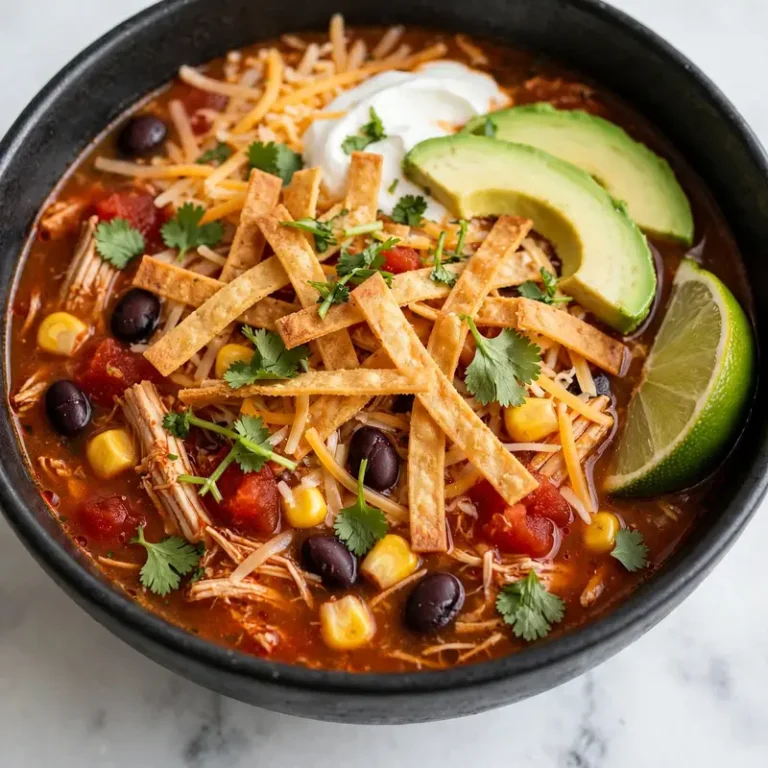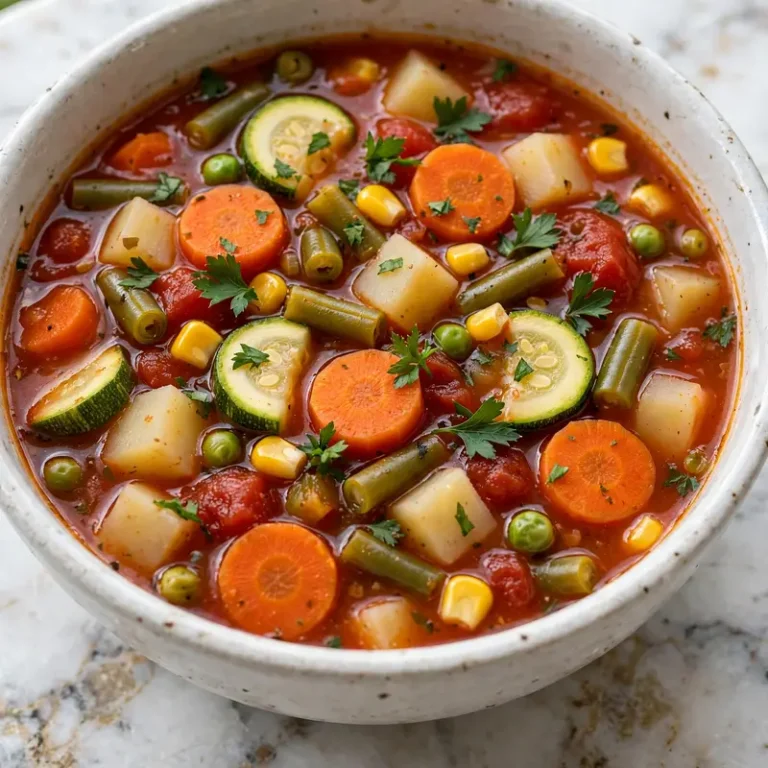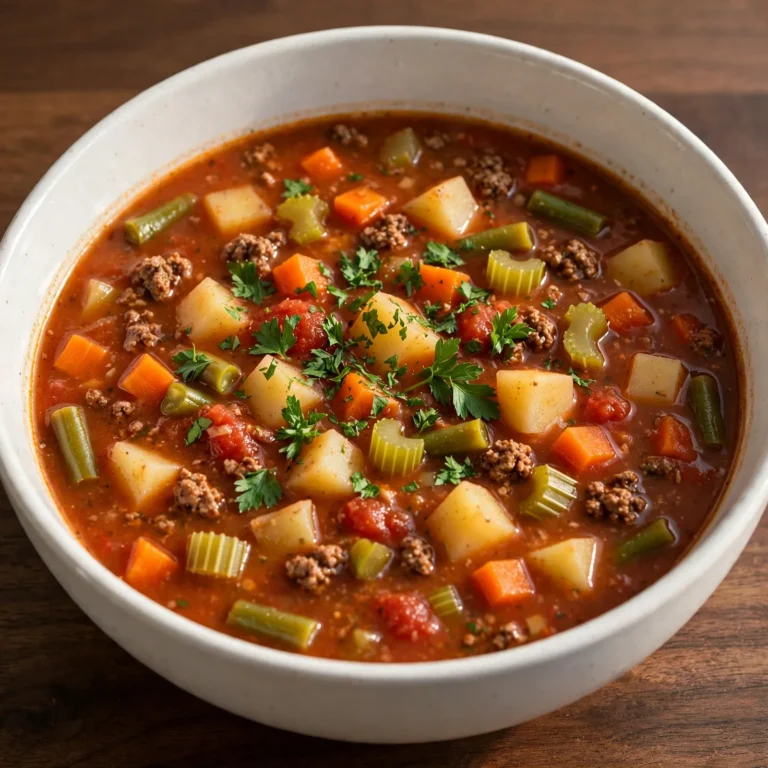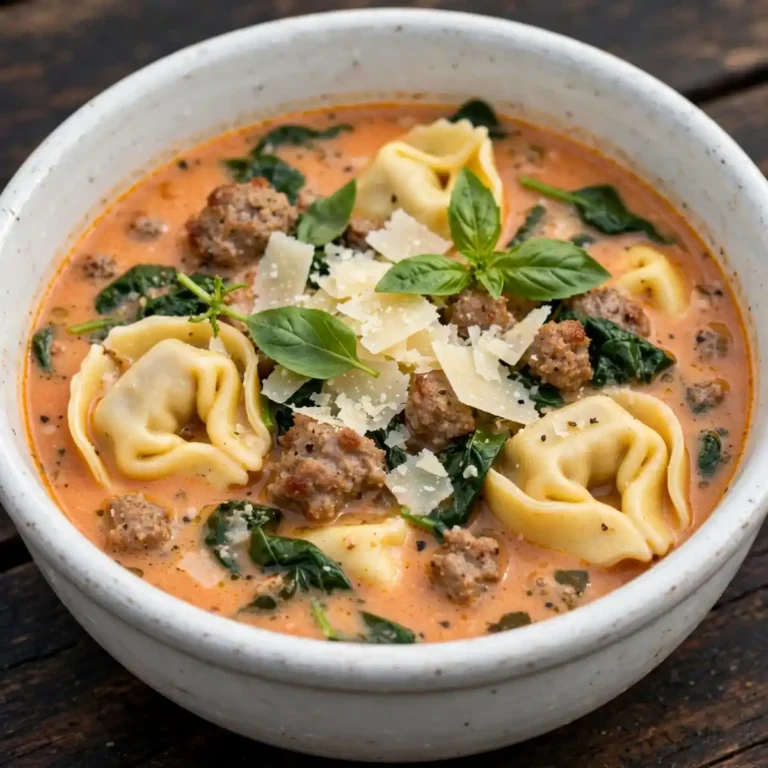
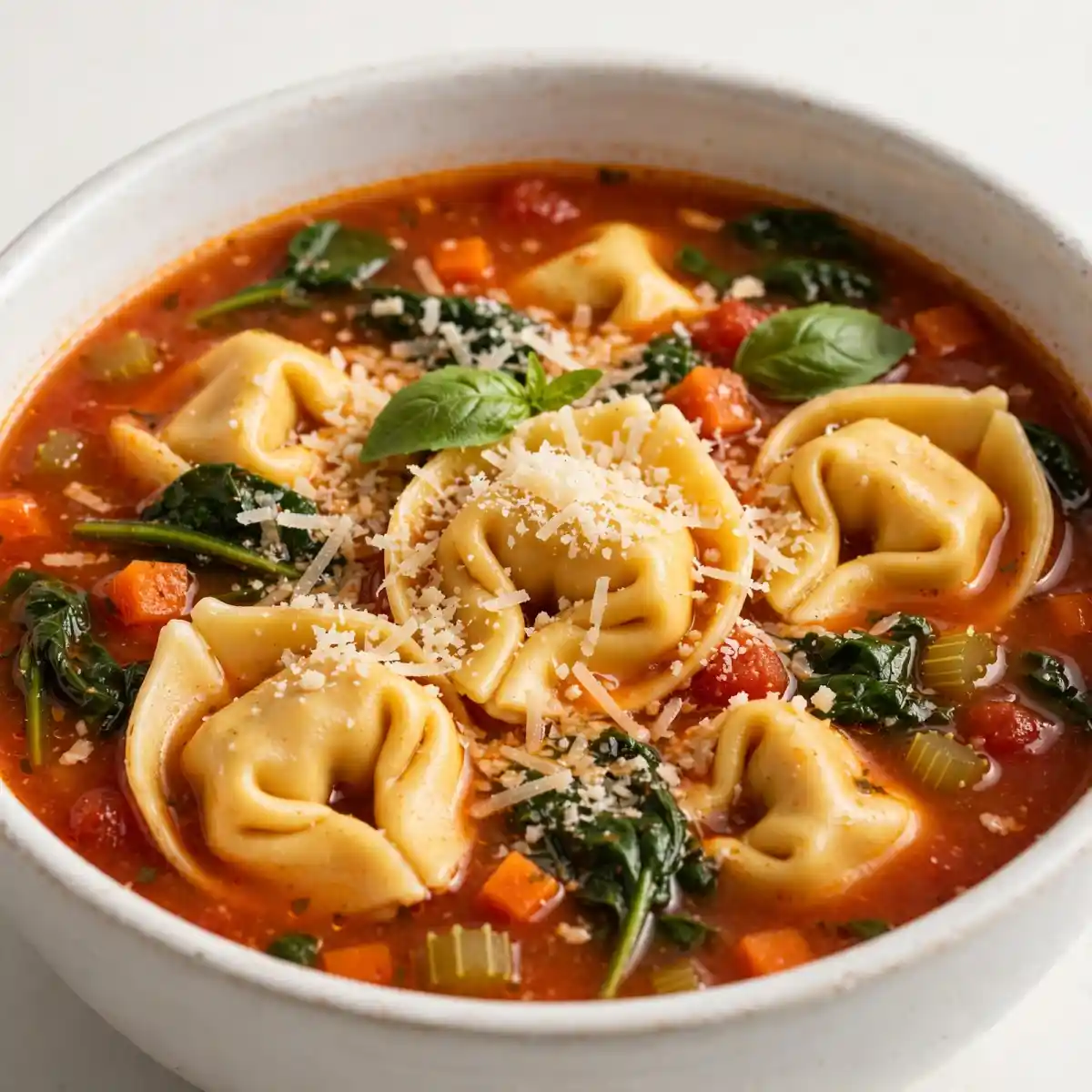
Easy Tortellini Soup — Cheesy Tortellini, Rich Tomato Broth, 30 Minutes
A bowl of tortellini soup done right has a specific quality that plain pasta soup doesn’t: the cheese-filled pasta adds a richness to every spoonful that you can taste in the broth itself, not just in the tortellini. The broth absorbs a small amount of starch and cheese flavor from the cooking pasta, the vegetables hold their shape rather than turning to mush, and the whole thing comes together in a single pot in 30 minutes without any step that requires close attention. It’s the kind of soup you make on a weeknight when it’s cold outside and you want something genuinely warming rather than simply warm.
This tortellini soup recipe uses a base of onion, celery, carrot, and garlic sautéed until softened, a seasoned tomato-forward chicken broth enriched with crushed tomatoes and Italian seasoning, and fresh or refrigerated cheese tortellini added at the end so they cook directly in the broth without becoming mushy. It serves 6, takes 30 minutes, and works both as a light dinner on its own or as a starter alongside crusty bread and a simple green salad. The broth is the kind people tip the bowl for.
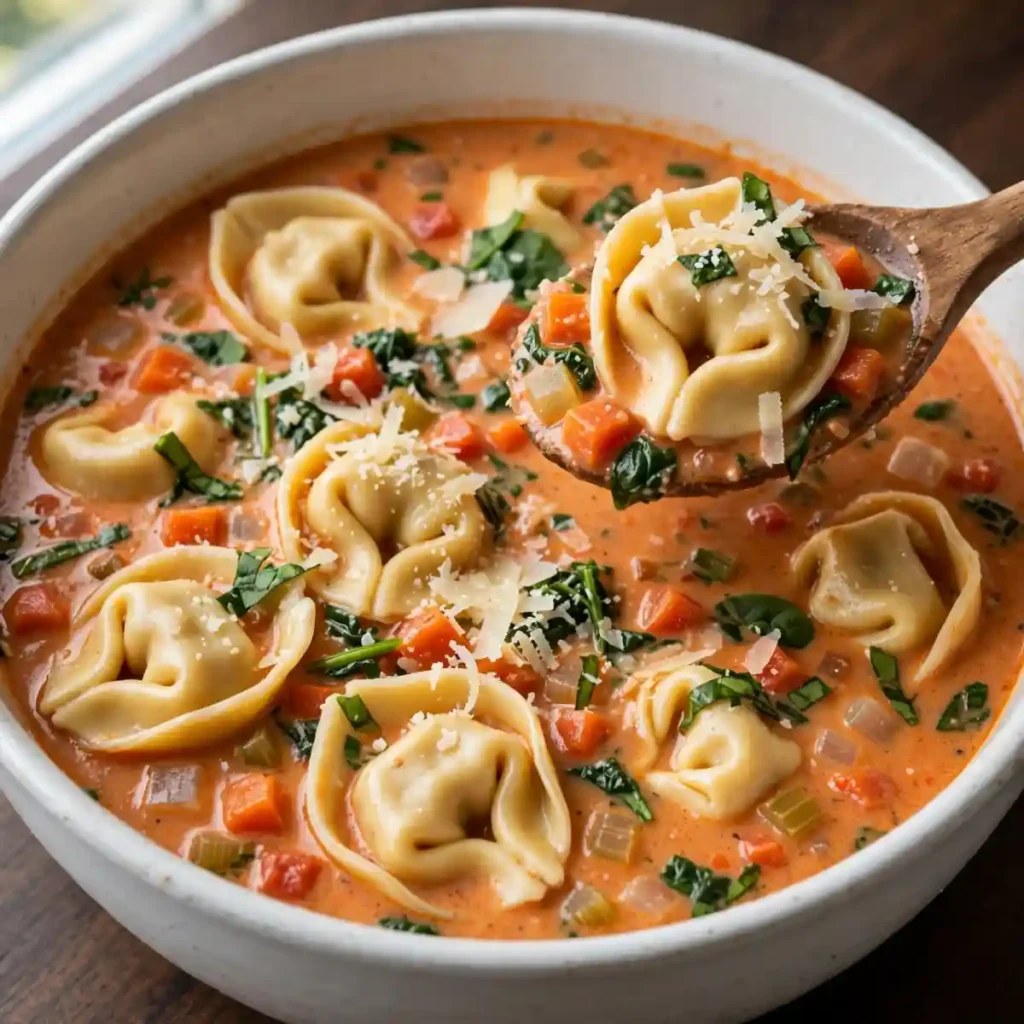
Why You’ll Love This Tortellini Soup
- Broth that tastes genuinely developed in 30 minutes. Building the aromatics fully in the pot before the liquid goes in produces a broth with enough depth to make this taste like it simmered all day; the tomato paste caramelizes, the garlic softens past its sharp raw edge, and the vegetables release their sugars into the fat before any liquid dilutes them.
- Tortellini cook in the broth and absorb its flavor. Unlike boiling pasta separately and adding it to finished soup, cheese tortellini cooked directly in the seasoned broth take on the tomato, garlic, and herb flavor from the inside out; every bite of pasta carries the soup’s character.
- One pot, genuine minimal cleanup. The aromatics, broth, and pasta all go into the same pot in sequence; nothing else touches the stove.
- Flexible enough for what’s in your refrigerator. The base formula works with whatever vegetables need using; zucchini, kale, white beans, and corn all fold in without changing the method or timing.
- Ready in 30 minutes without rushing. Each stage has clear visual indicators rather than precise timers, making it forgiving across different stovetop heat levels.
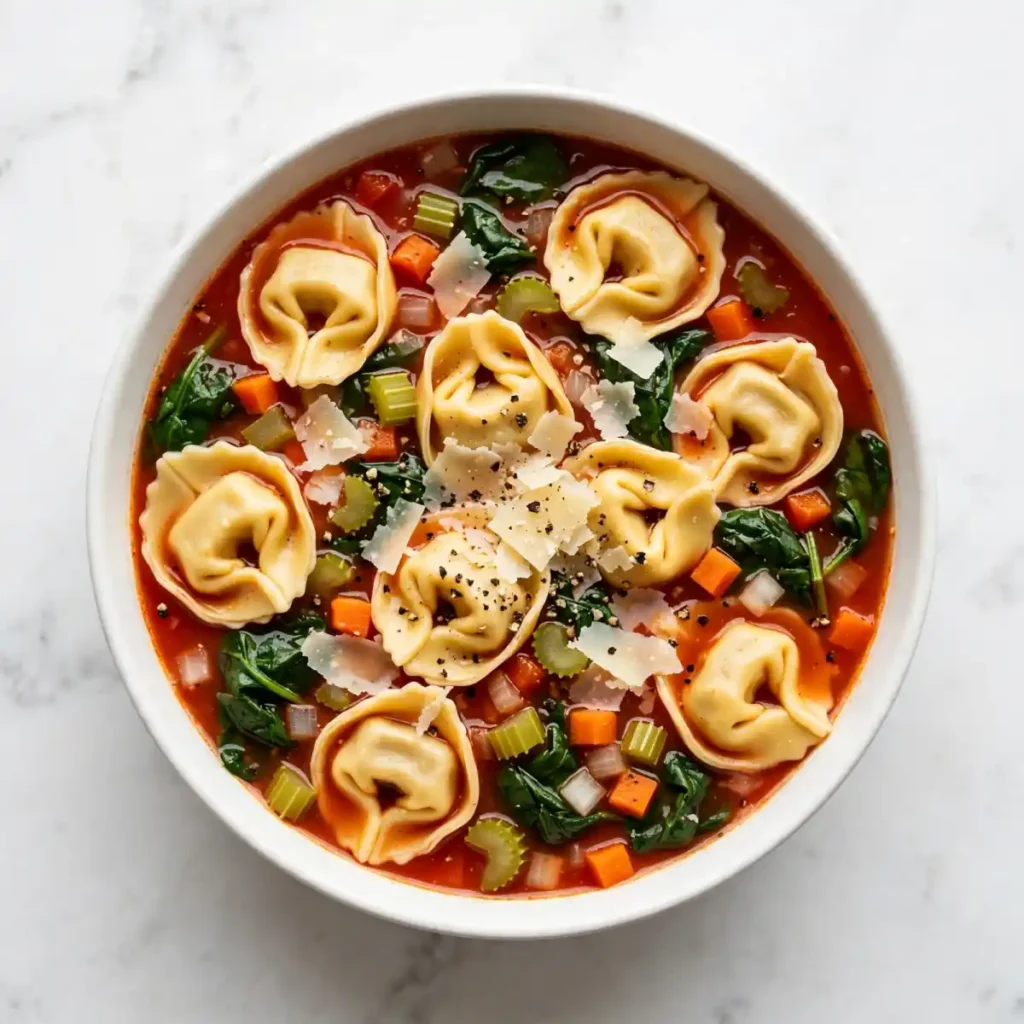
Ingredients You’ll Need
Recipe Timing
| Detail | Info |
|---|---|
| Servings | 6 |
| Difficulty | Easy |
| Course | Main Course, Soup |
| Cuisine | Italian-American |
| Prep Time | 10 minutes |
| Cook Time | 20 minutes |
| Rest Time | 0 minutes |
| Total Time | 30 minutes |
For the tortellini, fresh or refrigerated cheese tortellini from the refrigerated section at the grocery store produce the best result. They cook in 5 to 7 minutes in simmering broth, their pasta dough absorbs the broth’s flavor, and their cheese filling adds richness to the surrounding liquid as they cook. Frozen tortellini work at the same quantity and cook time (add 1 to 2 extra minutes without thawing). Dried tortellini require 10 to 12 minutes and benefit from 240ml of additional broth since the pasta absorbs more liquid during the longer cooking time.
For the broth, low-sodium chicken broth allows you to control the final salt level since the Parmesan adds a significant amount of sodium as a finishing ingredient. If only full-sodium broth is available, reduce or omit the salt added during cooking and taste at the end before adding any extra. Vegetable broth substitutes directly for a fully vegetarian soup.
For the tomato paste, caramelizing it briefly in the olive oil before the liquid goes in converts its raw, slightly sharp flavor into a deeper, more savory one through Maillard browning reactions; this single step produces a more complex broth than simply stirring raw tomato paste into the liquid.
For the vegetables, the dice size matters for the texture of the finished soup. Carrot and celery cut to 1cm cubes soften to exactly the right tender-but-not-mushy texture in 10 minutes of simmering; smaller pieces over-soften, larger pieces stay too firm.
- 1 tablespoon olive oil — for sautéing the aromatics
- 1 medium yellow onion, finely diced — the aromatic base; adds sweet savory background that dissolves into the broth
- 2 medium carrots, peeled and cut into 1cm cubes — adds color, natural sweetness, and a vegetable body to the broth
- 3 celery stalks, cut into 1cm pieces — adds aromatic savory depth and slight bitterness that balances the tomato’s acidity
- 4 garlic cloves, finely minced — the dominant aromatic note in the broth; added after the vegetables have softened
- 2 tablespoons tomato paste — caramelized in the pot before the liquid; adds concentrated, umami-rich tomato depth
- 1 can (400g) crushed tomatoes — the tomato base of the broth; adds color, body, and acidity
- 1.2 litres (5 cups) low-sodium chicken broth — the primary cooking liquid; use low-sodium for seasoning control
- 1.5 teaspoons Italian seasoning — the herbal backbone of the broth
- 1/2 teaspoon garlic powder — amplifies the fresh garlic’s savory note
- 1/2 teaspoon onion powder — adds background savory depth
- 1/2 teaspoon fine salt — adjust at the end based on broth and Parmesan sodium
- 1/4 teaspoon red chili flakes — adds a mild background warmth; optional
- 1/4 teaspoon freshly ground black pepper
- 280g (10 oz) refrigerated cheese tortellini — added in the final 7 minutes; never cook ahead and store separately
- 100g (3 lightly packed cups) fresh baby spinach — added in the final 90 seconds; wilts without overcooking
- 60g (3/4 cup) freshly grated Parmesan — 2 tablespoons stirred directly into the broth before serving; the rest for individual bowls
- Fresh basil leaves — for garnish; optional but vivid
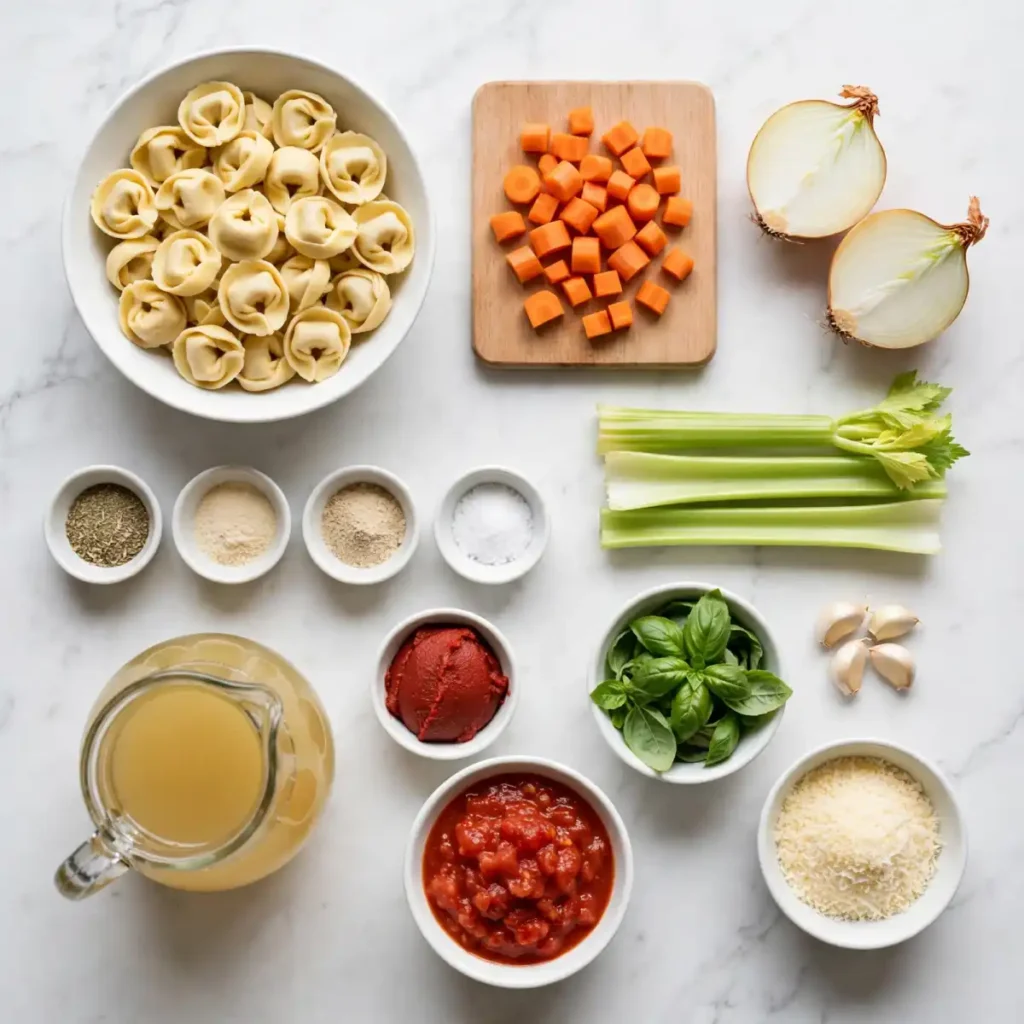
Allergen and Dietary Disclosure
This tortellini soup contains dairy (Parmesan cheese, and cheese filling inside the tortellini), eggs if the tortellini uses egg-based pasta dough (most fresh tortellini does; check the package label), and gluten (tortellini pasta). It is naturally nut-free as written.
For gluten-free: replace the cheese tortellini with certified gluten-free tortellini, available from specialty food stores. All other ingredients are naturally gluten-free. Verify the chicken broth and Italian seasoning labels if strict gluten-free compliance is needed.
For dairy-free: use dairy-free tortellini (available in some specialty stores) and omit the Parmesan entirely; replace with 1 tablespoon of nutritional yeast stirred into the broth for comparable savory depth. The soup is still richly flavored without the Parmesan, particularly if the broth is well-seasoned.
For vegetarian: replace the chicken broth with an equal quantity of vegetable broth. The method is identical and the soup is fully vegetarian with this single swap.
This recipe has not been tested in a certified allergen-free kitchen and cannot be guaranteed safe for any specific allergy.
Equipment Needed
- Large 5 to 6-quart Dutch oven or heavy-bottomed soup pot — wide enough to hold all the vegetables, broth, and tortellini with space to stir without overflowing. A Dutch oven’s heavy walls distribute heat evenly and prevent the tomato base from scorching at the bottom during the simmering stage; a regular stockpot works but requires more frequent stirring to prevent hot spots.
- Heatproof ladle — for serving; a wide-mouth ladle scoops tortellini and vegetables together in each spoonful without chasing them around the pot.
Step-by-Step Directions
Step 1: Sauté the Aromatics
Heat the olive oil in the large Dutch oven over medium heat until it shimmers. Add the diced onion, cubed carrot, and celery pieces all at once and stir to coat in the oil. Cook over medium heat for 5 to 6 minutes, stirring every 60 to 90 seconds, until the onion has turned translucent and softened throughout, the carrot pieces look slightly glossy at the edges, and the celery has softened but still holds its shape.
Add the minced garlic and stir continuously for 60 seconds until its raw sharp smell softens into something fragrant and mellow rather than pungent; don’t let the garlic brown at this stage.

Chef’s Note: The 5 to 6 minutes of vegetable sautéing before any liquid goes into the pot is the step that most separates a developed, flavorful tortellini soup broth from a thin, flat one. Heat drives off the vegetables’ surface water and concentrates their natural sugars, which then participate in light caramelization and Maillard reactions with their amino acids, producing new aromatic compounds that transfer into the broth. Vegetables added directly to cold liquid without this sautéing step produce a broth that tastes boiled and flat rather than sautéed and savory.
Step 2: Caramelize the Tomato Paste
Add the tomato paste to the center of the pot, pressing it flat against the hot base. Leave it undisturbed for 45 to 60 seconds until the tomato paste darkens from bright red to a deeper brick-red and begins to smell toasted and savory rather than sharp and raw. Stir through the vegetables thoroughly for 30 seconds until the paste coats them in a uniform, deeply colored layer.
Add the garlic powder, onion powder, Italian seasoning, chili flakes, salt, and black pepper to the coated vegetables and stir for 20 seconds to bloom the spices briefly in the residual oil.
Chef’s Note: The 45 to 60 second tomato paste caramelization against the hot pan produces Maillard browning reactions between the tomato’s concentrated glutamic acid and its reducing sugars; the flavor compounds produced in this brief contact are roasted, savory, and complex rather than the sharp, one-dimensional acidic flavor of raw tomato paste stirred directly into liquid. This step takes under a minute and produces a noticeably more developed broth.
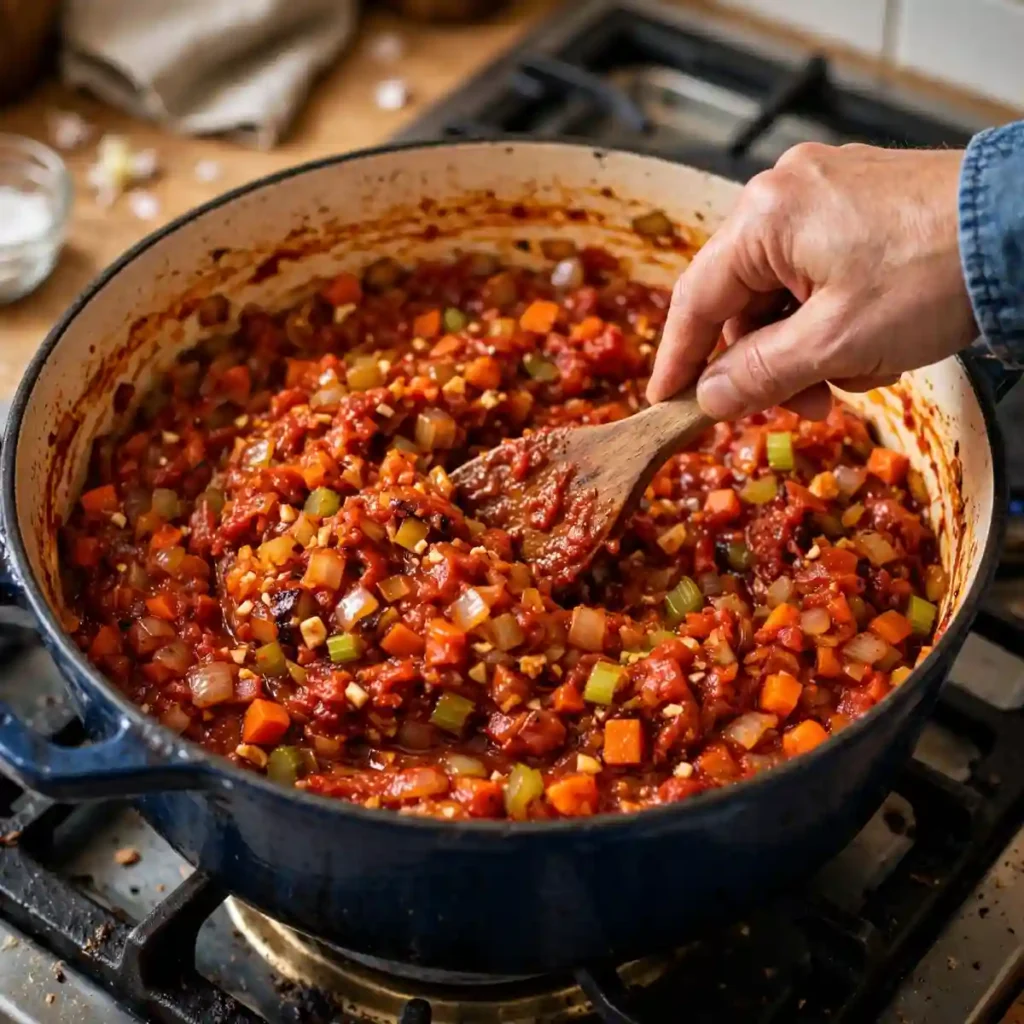
Step 3: Add the Tomatoes and Broth
Pour the crushed tomatoes into the pot and stir to incorporate, scraping any caramelized tomato paste from the base into the liquid. Add the chicken broth in a steady pour while continuing to stir. The liquid should look a uniform orange-red from the combined tomato and spices with visible vegetable pieces throughout.
Increase the heat to medium-high and bring the soup to a full, rolling boil, stirring occasionally as it heats.
Step 4: Simmer the Vegetables
Reduce the heat to medium-low once the soup reaches a full boil. Simmer uncovered for 8 to 10 minutes until the carrot pieces are just tender when pressed with the back of a spoon, with no resistance at their center. Don’t let them cook past this point before adding the tortellini; they’ll continue softening during the tortellini’s cooking time and should arrive at a fully tender, but still intact, texture by the time the soup is finished.
Taste the broth at this point and adjust salt, pepper, and chili flakes; the broth should taste well-seasoned and slightly more assertive than the finished soup, since the tortellini and Parmesan will mellow it slightly.
Chef’s Note: Tasting the broth before the tortellini go in is the most reliable way to catch any seasoning gaps while they’re still easy to fix. Once the tortellini cook in the broth, they absorb some of its salt; a broth that tastes just right before the pasta will taste slightly underseasoned after. Season the broth to a point where it tastes one notch more assertive than the ideal finished soup, then add the tortellini.
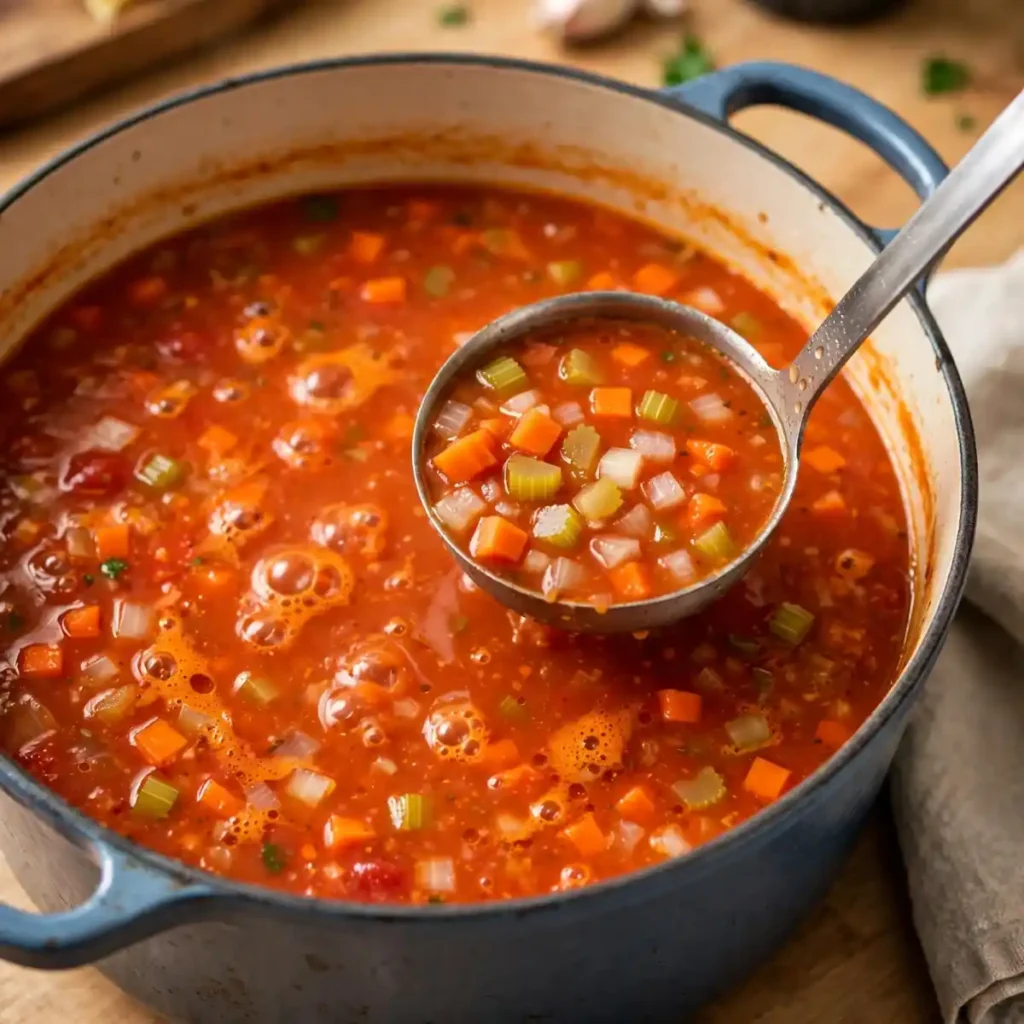
Step 5: Add the Tortellini
Add the refrigerated cheese tortellini directly to the simmering broth and stir gently to submerge them. Keep the heat at medium-low to maintain a steady simmer, not a rolling boil; a vigorous boil can burst the tortellini’s sealed edges and release their cheese filling into the broth before you’ve served it. Cook uncovered for 5 to 7 minutes, stirring every 2 minutes to prevent the tortellini from sticking to each other or settling on the pot base, until the tortellini are plump, floating consistently at the surface, and fully tender when one is pressed with the back of a spoon without any resistance.
Step 6: Add Spinach, Parmesan, and Serve
Reduce the heat to low. Add the fresh baby spinach in two or three additions, stirring each handful until it wilts completely into the broth before adding the next. The full batch of spinach wilts within 60 to 90 seconds of contact with the hot soup.
Stir 2 tablespoons of the freshly grated Parmesan directly into the broth and stir through; this small addition thickens the broth slightly and adds a salty, savory depth that makes the entire soup taste more complete. Taste one final time and adjust seasoning.
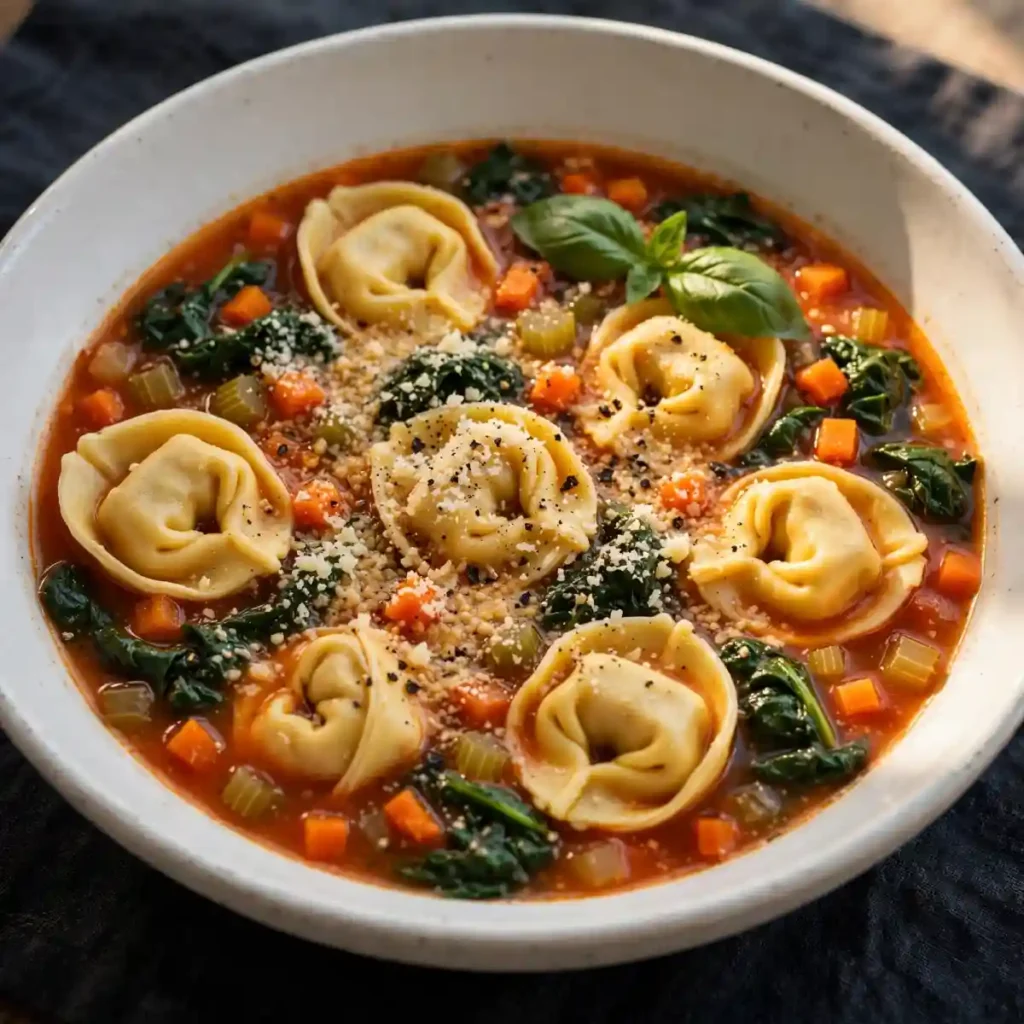
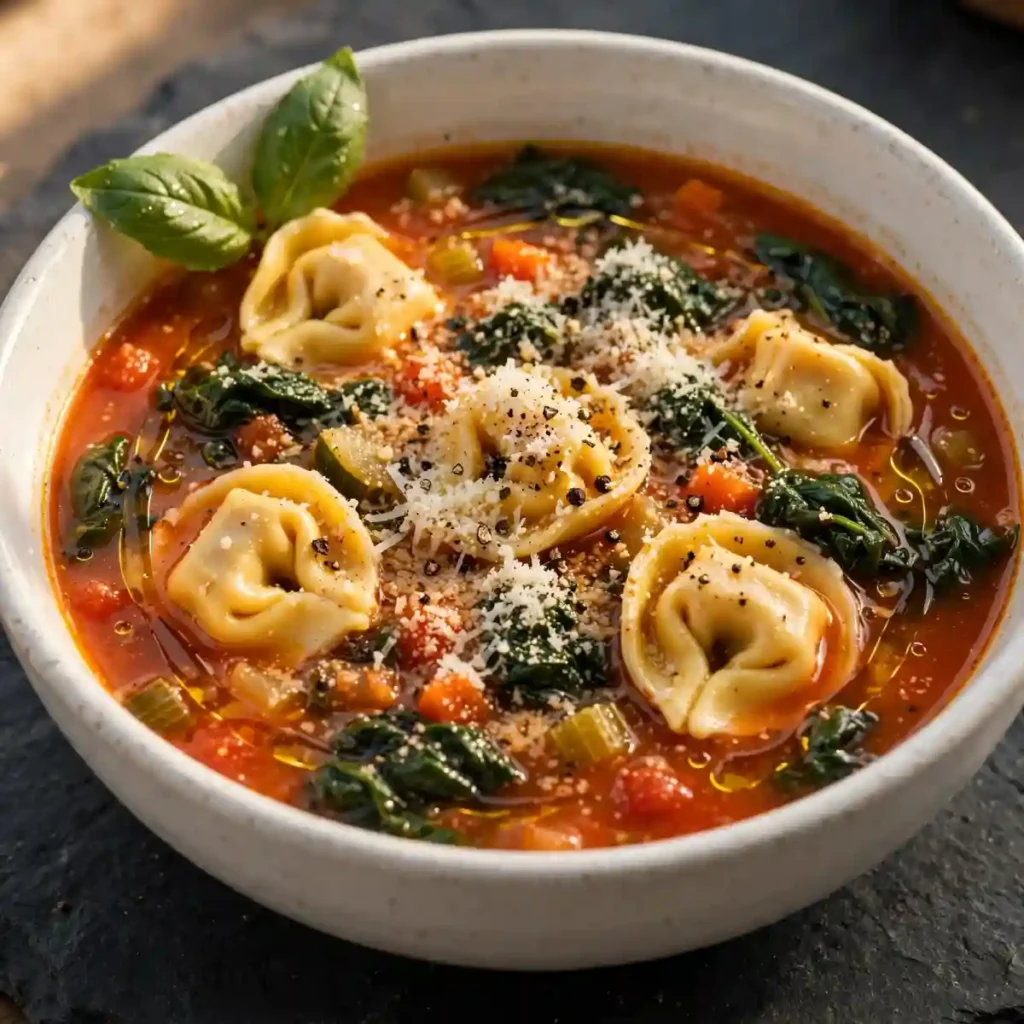
Ladle immediately into wide, warm bowls. Top each bowl with additional freshly grated Parmesan, a few fresh basil leaves, and cracked black pepper. Serve without delay; tortellini continue absorbing broth and soften further every minute they sit in the hot soup.
Common Mistakes and Troubleshooting
| Problem | Cause | Solution |
|---|---|---|
| Tortellini burst and cheese leaks into broth | Heat too high during the tortellini cooking stage, or over-stirring | Keep at a gentle simmer, not a rolling boil; stir gently every 2 minutes rather than continuously |
| Broth too thin and watery | Sautéing step skipped, or tomato paste not caramelized | Always sauté the aromatics fully before adding liquid; caramelize the tomato paste for the full 45 to 60 seconds |
| Vegetables too soft or mushy | Simmered too long before the tortellini were added | Add the tortellini when the carrots are just tender; they’ll continue softening during the pasta’s cooking time |
| Soup over-thickened after sitting | Tortellini absorbed too much broth while resting | Add 120ml of hot broth or water when reheating to restore the broth’s original consistency |
| Broth tastes flat despite full seasoning | Tomato paste not caramelized, or insufficient salt | Caramelize the paste until genuinely brick-red; taste after adding Parmesan and add salt in small increments |
| Spinach slimy and overcooked | Added too early or left in simmering broth too long | Add only in the final 60 to 90 seconds over low heat; it wilts almost instantly at that temperature |
Variations and Substitutions
- Creamy tortellini soup: Stir 120ml (1/2 cup) of heavy whipping cream into the broth immediately after the tortellini are cooked and before the spinach goes in. Reduce the heat to low before adding the cream; cream added to boiling soup can curdle. The cream shifts the color from orange-red to a pale, warm orange and produces a richer, more indulgent broth character alongside the same cheese tortellini.
- White bean and tortellini soup: Add one 400g can of drained and rinsed cannellini beans alongside the crushed tomatoes. The beans add protein, fiber, and a creamy starchy body to the broth that makes the soup more filling without changing the cooking method. Use a wooden spoon to press a few of the beans against the pot side during the simmer; they thicken the broth slightly as they break down.
- Chicken tortellini soup: Add 300g of diced boneless skinless chicken thighs to the pot alongside the aromatics at the start and cook through completely, reaching 74°C (165°F) throughout, before adding the tomato paste and liquid. Remove, shred roughly, and return to the pot before the tortellini go in. The chicken adds substantial protein and makes the soup a genuinely hearty main course.
- Tuscan kale tortellini soup: Replace the baby spinach with 100g of curly kale leaves stripped from their stems and torn into bite-sized pieces. Add the kale 3 to 4 minutes before the tortellini are done since kale takes longer to soften than spinach; it should be tender but still holding some structure by the time the soup is served. Kale’s slightly bitter, robust flavor contrasts the sweet tomato broth pleasantly.
- Spicy Italian tortellini soup: Double the red chili flakes to 1/2 teaspoon and add 1 tablespoon of your preferred chili sauce to the broth alongside the tomatoes. The chili sauce adds acidity alongside the heat that makes the spice feel integrated rather than simply hot. For a more complex heat, add one finely diced chipotle pepper in adobo sauce in place of the extra chili flakes.
- Vegetarian tortellini soup: Replace the chicken broth with an equal quantity of good-quality vegetable broth. The method is completely identical. For additional savory depth to compensate for the chicken broth’s umami contribution, add 1 tablespoon of soy sauce to the broth alongside the crushed tomatoes; at this quantity it adds savory depth without tasting identifiably of soy.
Serving Suggestions
- Serve immediately after finishing, while the broth is still at its ideal consistency and the tortellini are at their ideal plump, tender texture. The window is 5 to 8 minutes after removing from heat; after that the tortellini continue absorbing broth and softening. Warm the serving bowls for 5 minutes in a low oven before ladling to extend this window.
- Pair with thick slices of crusty Italian bread or a warm focaccia alongside each bowl; the bread’s purpose is the tomato broth remaining after the tortellini and vegetables are gone, which is worth having something to scoop it with.
- A simple arugula salad dressed with lemon juice and extra virgin olive oil alongside is the natural accompaniment for a complete meal; the peppery arugula and bright lemon contrast the soup’s rich, herby tomato broth in a way that makes the meal feel balanced.
- Finish each bowl with a drizzle of good-quality extra virgin olive oil poured from a height just before serving; the olive oil adds a fruity, slightly peppery top note that makes the broth taste more complex and less one-dimensionally tomatoey.
- For a dinner party, serve in wide, shallow pasta bowls rather than deep soup bowls; the tortellini and vegetables are visible from above in the shallow bowls, the Parmesan snow and basil leaves look more composed, and the broth’s color is more vivid.
- Pair with cold sparkling water with lemon or a cold pressed apple juice; both provide a clean, slightly acidic contrast to the soup’s tomato richness and refresh the palate between spoonfuls of the cheese-filled tortellini.
Tips for the Best Results
- Don’t skip the full sautéing time for the aromatics. Five to six minutes feels long for a 30-minute soup, but the sautéing step is where the broth’s flavor foundation is built. At this point the vegetables’ water has largely evaporated, their sugars have begun to caramelize at the edges, and their aromatic compounds are suspended in the cooking fat ready to distribute into the broth. Cutting the sauté to 2 to 3 minutes to save time produces a noticeably thinner, flatter-tasting broth.
- Keep the heat at a steady simmer during the tortellini cooking stage. The sealed edges of cheese tortellini are held together by the pasta dough’s protein network; at a rolling boil, the vigorous agitation physically stresses those sealed edges and can rupture them, releasing the cheese filling into the broth. The cheese disperses into the liquid and produces a cloudy, broken-looking broth rather than a clear orange-red base. Medium-low heat producing gentle, consistent bubbles keeps the tortellini intact.
- Serve the moment the spinach wilts. This is the soup’s most time-sensitive instruction. Spinach wilts in 60 to 90 seconds; the ideal window between wilted-but-vibrant and overcooked-and-slimy is about 2 minutes. Have the bowls ready and the Parmesan grated before the spinach goes in; the moment it’s wilted, the soup goes into the bowls.
- Stir Parmesan directly into the broth. The 2 tablespoons of Parmesan stirred into the whole pot, rather than added exclusively to individual bowls, distributes its flavor through the entire broth and adds a slight umami-salty depth to every spoonful regardless of the Parmesan that lands on top. The difference between broth finished with stirred-in Parmesan and broth without it is subtle but consistently noticeable; it’s the detail that makes the soup taste fully rounded rather than simply tomato-forward.
- Make the broth in advance and add tortellini fresh. The soup base, everything through the vegetable simmering stage, can be made up to 2 days ahead and refrigerated. When ready to serve, bring the base back to a simmer, add fresh tortellini and cook 5 to 7 minutes, then finish with spinach and Parmesan. This approach produces tortellini with the ideal texture every time and makes the recipe genuinely practical for advance preparation.
Storage Tips
Refrigerator
Tortellini soup presents a specific storage consideration: the tortellini continue absorbing broth in the refrigerator, dramatically changing the texture of both the pasta and the remaining broth by the next day. After 24 hours refrigerated, the tortellini will be significantly softer and larger, and the broth will be noticeably reduced in volume and thicker. The flavor remains good but the texture difference is significant. For the best result, store the soup base separately from any leftover tortellini, or accept the thicker, stew-like consistency of day-2 soup and add 120ml of additional broth when reheating to restore the original consistency. The base without tortellini keeps refrigerated for up to 4 days.
Freezer
The soup base, made through step 4 without the tortellini, cream, or spinach, freezes well for up to 2 months. Freeze the base only; fresh tortellini and spinach should be added when reheating from frozen for the best texture. Fully assembled tortellini soup with pasta included doesn’t freeze well; the tortellini become very soft and gummy after thawing since the starch gelatinization that occurs during cooking is disrupted by freezing. Thaw the base overnight in the refrigerator before reheating.
Reheating
Reheat the soup base over medium heat until it reaches a full simmer, adding 120ml of additional chicken broth per 2 servings to compensate for the liquid absorbed during storage. Add fresh tortellini directly to the simmering base and cook for 5 to 7 minutes until tender. Add fresh spinach in the final 90 seconds and stir in Parmesan before serving. For assembled leftover soup, reheat at medium-low with a generous splash of broth stirred in, using 60% microwave power for single portions in 90-second intervals with stirring between.
Make-ahead note: The most practical approach for a quick weeknight dinner or a dinner party is to make the soup base up to 2 days ahead and refrigerate; the base improves in flavor as the spices continue permeating the broth. On the day of serving, bring the base to a simmer (5 minutes), add fresh tortellini (7 minutes), add spinach and Parmesan (2 minutes), and serve. The total active time on the serving day is 15 minutes.
Nutrition Information
Per serving, approximately 1/6 of the recipe:
| Nutrient | Amount |
|---|---|
| Calories | 320 kcal |
| Protein | 14g |
| Total Carbohydrates | 46g |
| Dietary Fiber | 4g |
| Total Sugar | 8g |
| Total Fat | 9g |
| Saturated Fat | 3g |
| Cholesterol | 25mg |
| Sodium | 680mg |
| Vitamin C | 18mg |
| Calcium | 180mg |
| Iron | 2.8mg |
| Potassium | 520mg |
Nutrition values are approximate and may vary based on tortellini brand and filling, Parmesan quantity, and broth sodium content.
Why This Recipe Works
The broth’s flavor depth in a 30-minute soup depends entirely on how efficiently each ingredient contributes its flavor compounds during the brief cooking time. The sautéing stage is the most consequential early decision: when vegetables are cooked in fat before liquid is added, their water evaporates and their cell walls break down enough to release the flavor-carrying volatile compounds into the cooking fat. Fat-soluble flavor compounds from the garlic’s allicin breakdown products, the carrot’s beta-carotene and terpene compounds, and the celery’s phthalide and limonene dissolve into the olive oil during this stage and distribute through the entire broth volume when the liquid is added. These compounds are substantially more soluble in fat than in water; a sauté-first approach extracts and distributes them far more efficiently than adding raw vegetables directly to cold broth.
The tomato paste caramelization step produces Maillard browning products from the tomato’s concentrated glutamic acid (the amino acid responsible for umami) and its reducing sugars, specifically fructose and glucose, at the contact temperature of a hot dry pan. These reactions produce furanones, pyrazines, and other roasted aromatic compounds that are absent from raw tomato paste but abundant in caramelized tomato paste; the flavor shift from sharp, raw tomato acid to deep, roasted tomato-umami happens in 45 to 60 seconds. Because these compounds are produced before the liquid is added, they disperse through the entire broth volume rather than remaining concentrated at the point of addition.
Cooking the tortellini directly in the broth rather than in a separate pot of salted water produces a more integrated result through two simultaneous mechanisms. First, the pasta dough absorbs a small but measurable quantity of the broth’s flavor compounds through the concentration gradient across its surface; tortellini cooked in the seasoned broth taste of the soup from the inside out rather than simply absorbing it from outside. Second, the pasta releases starch into the broth during cooking; in a separate large pot of water, this starch is diluted into an effectively unlimited volume and poured away with the cooking water. In the soup’s smaller, contained broth volume, the released starch dissolves into the liquid and very slightly increases its viscosity, producing a broth that clings to spoons and coats the mouth with slightly more body than a starch-free thin broth.
Stirring 2 tablespoons of Parmesan directly into the finished broth before serving distributes the cheese’s dissolved amino acids, particularly glutamate and aspartate, through the entire soup volume rather than leaving them concentrated on the surface of individual bowls. Glutamate’s umami effect is synergistic with the inosinate naturally present in the chicken broth; the two umami compounds together produce a perception of savory depth significantly greater than either alone. The small quantity of Parmesan added to the pot doesn’t visibly change the broth’s appearance but measurably changes its perceived flavor richness, which is why seasoned cooks finish Italian soups with Parmesan in the pot rather than exclusively at the table.
The carrot’s specific structural contribution to the soup’s visual appeal is worth noting: its orange color pigment, beta-carotene, disperses partially into the tomato broth during simmering and subtly deepens the broth’s orange-red hue beyond what tomatoes alone produce. This is a minor flavor contribution but a significant visual one; the richer orange color of a carrot-containing tortellini soup compared to a plain tomato-only broth reads as more appetizing because the brain associates deeper orange food colors with ripeness, sweetness, and nutritional density.
Frequently Asked Questions
Can I make tortellini soup ahead of time?
Yes, with the best approach being to prepare the soup base through the vegetable simmering stage, refrigerate for up to 2 days, and add fresh tortellini, spinach, and Parmesan when reheating on the day of serving. This produces perfectly textured tortellini every time and actually improves the broth flavor since the spices continue developing during refrigerator storage. Fully assembled soup with tortellini keeps refrigerated for up to 2 days but the pasta softens significantly; add extra broth when reheating.
Why did my tortellini burst in the soup?
Tortellini burst when the soup is at a full rolling boil during the cooking stage rather than a gentle simmer. The vigorous agitation from a boil physically stresses the sealed edges of the pasta; they rupture and release the cheese filling into the broth. Reduce the heat to medium-low before adding the tortellini so only gentle, consistent bubbles are visible. If the tortellini have already burst, the soup is still perfectly good to eat; the released cheese adds richness to the broth.
Can I use frozen tortellini instead of refrigerated?
Yes. Add frozen tortellini directly to the simmering broth without thawing first; they just need 1 to 2 extra minutes compared to refrigerated tortellini, so cook for 7 to 9 minutes total and check for tenderness by pressing one against the pot side with a spoon. Dried tortellini also work but require 10 to 12 minutes of simmering and benefit from an additional 240ml of broth in the pot since they absorb more liquid during the longer cooking time.
How do I know when the tortellini are ready?
Three signs used together provide reliable confirmation. The tortellini should float consistently at the soup’s surface rather than sinking. They should look plump and slightly translucent at the edges where the pasta has fully hydrated and softened. Pressing one firmly against the pot side with the back of a spoon should compress it without resistance; a doughy or rubbery center means 1 to 2 more minutes are needed. Never rely on color change alone; the broth’s orange-red color makes it difficult to judge doneness visually.
Is tortellini soup gluten-free?
The soup base, made with vegetables, chicken broth, tomatoes, and spices, is naturally gluten-free. The tortellini are not, as they are made from wheat pasta dough. To make the full soup gluten-free, replace the cheese tortellini with certified gluten-free tortellini from a specialty store. Verify the chicken broth and Italian seasoning labels if strict compliance is needed; some broths and spice blends contain wheat-derived ingredients.
Can I make tortellini soup vegetarian?
Yes, with one swap: replace the chicken broth with an equal quantity of good-quality vegetable broth. The method is completely identical and all other ingredients in the recipe are naturally vegetarian. For additional savory depth to compensate for the chicken broth’s contribution, add 1 tablespoon of soy sauce or 1/2 teaspoon of Worcestershire sauce (verify it’s vegetarian if needed) to the broth alongside the crushed tomatoes. The finished soup is fully vegetarian, hearty, and deeply flavored.
Why does my soup thicken so much overnight?
The pasta continues absorbing the surrounding broth during refrigerator storage through the same starch-and-liquid exchange that happens during cooking; the starch-water balance shifts progressively as the pasta absorbs more broth. This is completely normal and not a sign anything went wrong. When reheating, stir in 120ml of additional chicken broth per 2 servings before heating; the broth returns to its original consistency once the soup is hot and the thickened broth has had a chance to thin with the added liquid.
Conclusion
Tortellini soup rewards the two investments of time that actually matter: sautéing the aromatics fully before the liquid goes in, and caramelizing the tomato paste until it’s genuinely brick-red. Both take under 10 minutes combined and are responsible for most of the broth’s depth and character. Skip either and the soup is still edible; don’t skip either and the soup tastes like it took three times as long.
The make-ahead base approach, everything through the vegetable simmer, stored in the refrigerator for up to 2 days with fresh tortellini added on the day, is the most practical way to fit this into a busy week. It makes a 30-minute dinner into a 15-minute one when you need it most. That flexibility, alongside the fact that the broth is genuinely worth tipping the bowl for, is what keeps this tortellini soup in regular rotation.
If you loved this recipe, save it to your easy soup recipes and Italian-American dinner ideas Pinterest board so you can find it easily later. For more healthy recipes and daily food inspiration, follow TheCookingVibes on Pinterest.
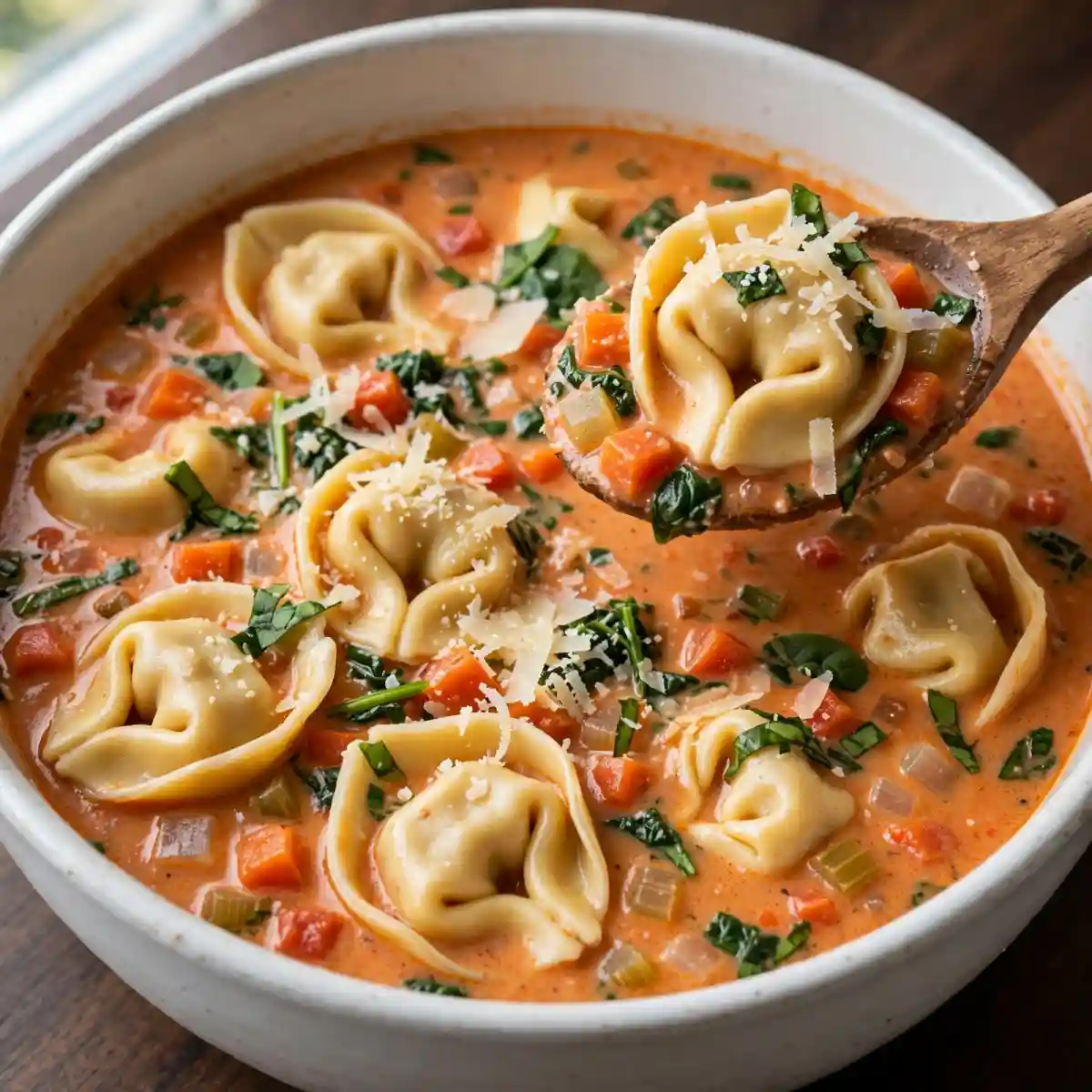
Easy Tortellini Soup
Ingredients
Equipment
Method
- Heat olive oil in a large Dutch oven over medium heat. Add diced onion, cubed carrots, and celery; cook 5 to 6 minutes, stirring every 60 to 90 seconds, until the onion is translucent and the carrot edges look glossy. Add minced garlic; stir 60 seconds until fragrant.
- Push vegetables to the sides and add tomato paste to the center; leave undisturbed 45 to 60 seconds until brick-red and smelling savory rather than raw. Stir through vegetables 30 seconds. Add garlic powder, onion powder, Italian seasoning, chili flakes, salt, and pepper; stir 20 seconds.
- Pour in crushed tomatoes, scraping any caramelized paste from the base. Add chicken broth in a steady stream while stirring. Bring to a full boil over medium-high heat.
- Reduce heat to medium-low. Simmer uncovered for 8 to 10 minutes until carrot pieces are just tender when pressed with a spoon. Taste the broth and adjust seasoning.
- Add refrigerated cheese tortellini and stir to submerge. Keep at a gentle simmer, not a full boil. Cook uncovered 5 to 7 minutes, stirring every 2 minutes, until the tortellini are plump, floating at the surface, and fully tender with no doughy center.
- Reduce heat to low. Add baby spinach in two additions, stirring each until fully wilted before the next (60 to 90 seconds total). Stir 2 tablespoons of grated Parmesan into the broth. Taste and adjust seasoning. Ladle into warm bowls. Top with additional Parmesan, fresh basil, and cracked black pepper. Serve immediately.
Notes
- Never skip the full sautéing time for the aromatics; this is where the broth’s flavor foundation is built.
- Keep the soup at a gentle simmer during the tortellini cooking stage; a rolling boil can burst the sealed edges.
- Serve immediately once the spinach wilts; tortellini continue absorbing broth and softening every minute they rest.
- For make-ahead: prepare through step 4 and refrigerate up to 2 days; add fresh tortellini and spinach when reheating.
- Allergens: Contains dairy (Parmesan, cheese filling in tortellini), eggs (fresh tortellini pasta dough; verify label), and gluten (tortellini pasta). Naturally nut-free.
- This recipe has not been tested in a certified allergen-free kitchen and cannot be guaranteed safe for any specific allergy.