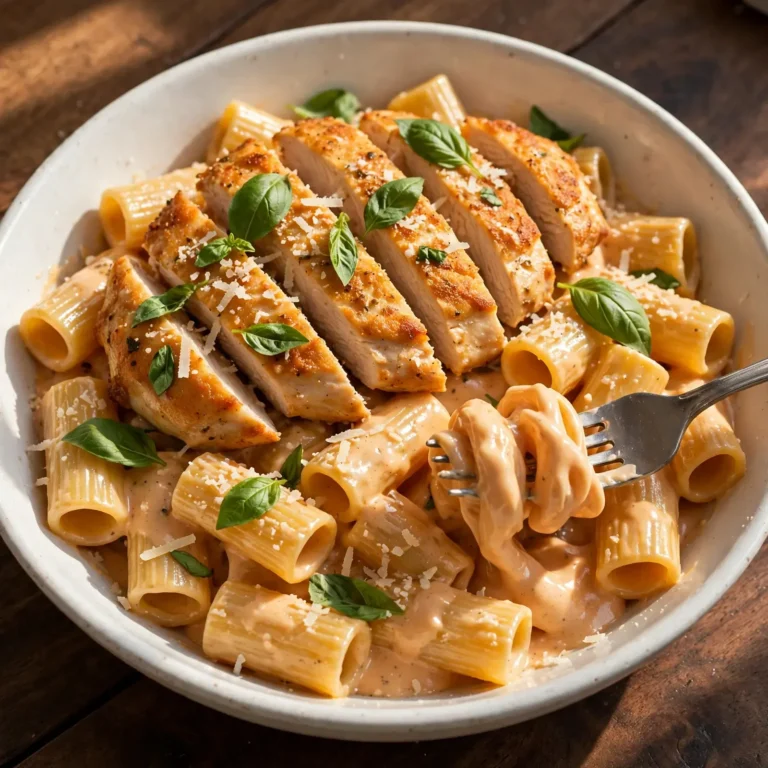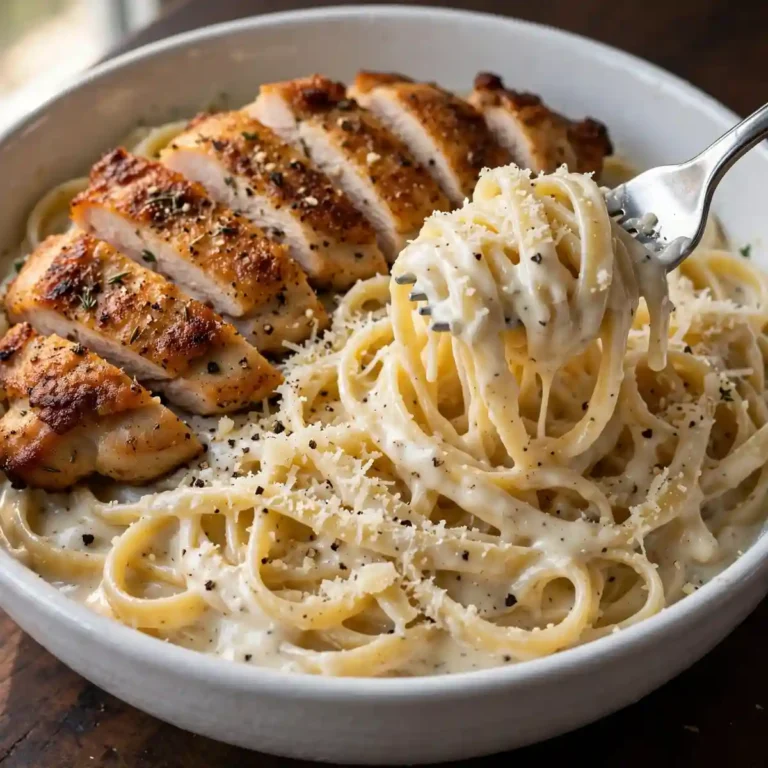
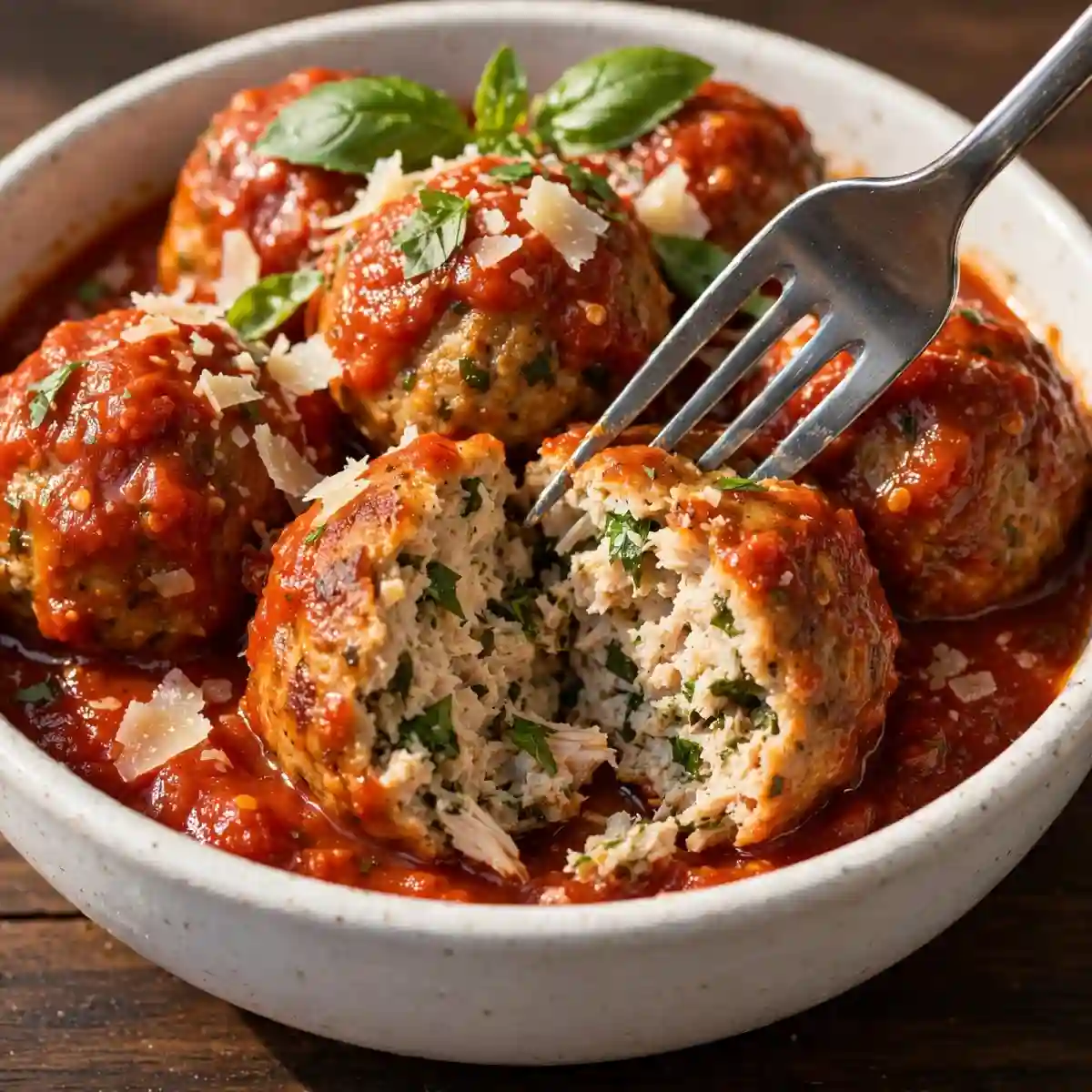
Easy Chicken Meatballs (Juicy, Herb-Packed, Never Dry)
The reason most chicken meatballs disappoint is not the chicken itself: it is the absence of fat. Ground beef has natural marbling that keeps meatballs moist through the oven’s heat. Ground chicken has almost none, which means without a deliberate moisture strategy built into the mixture, what comes out is a dense, slightly rubbery ball that tastes less of herbs and seasoning and more of compacted, dry protein. The solution is a panade, a paste of breadcrumbs soaked in milk that is folded into the meat before shaping, and it changes everything about how these meatballs eat.
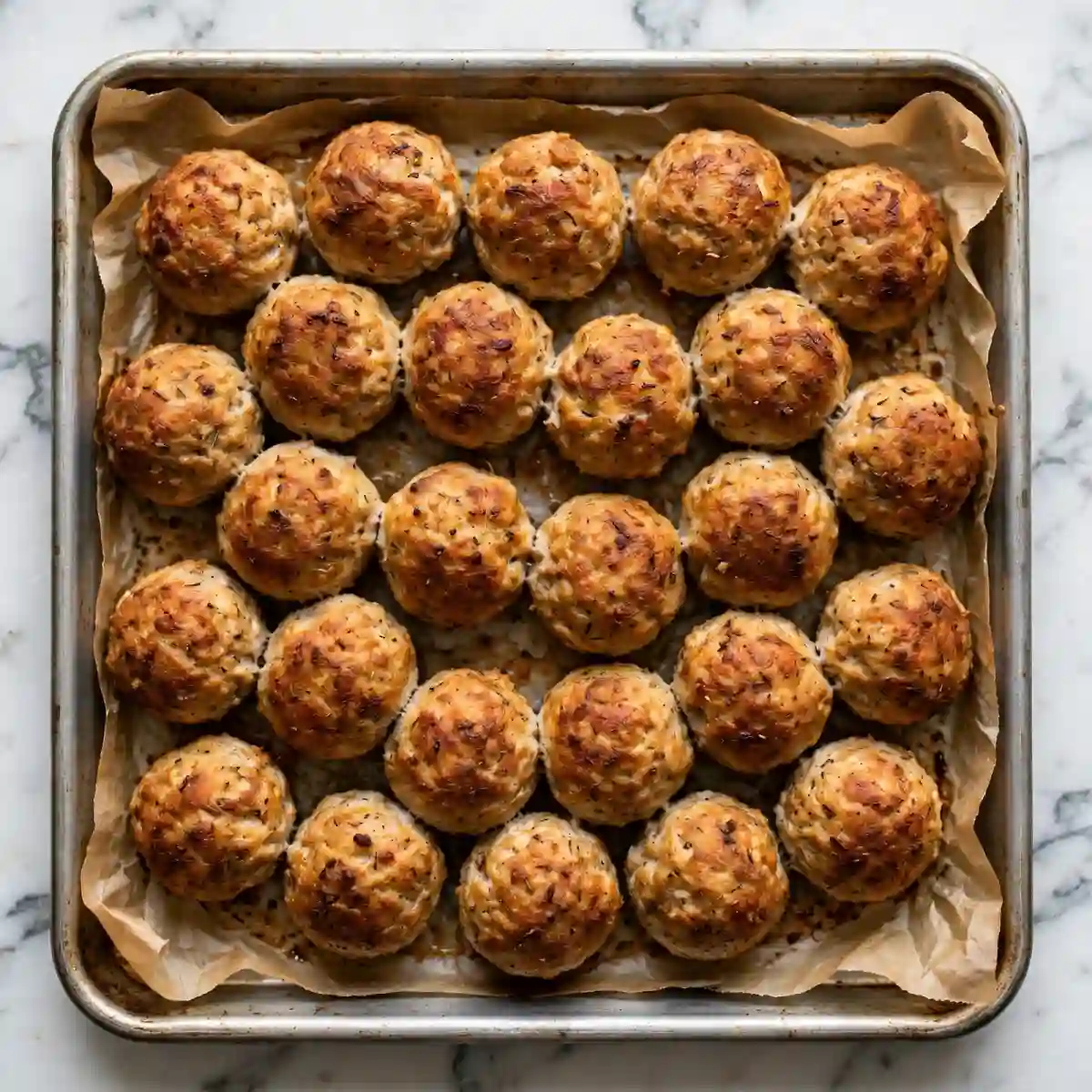
This chicken meatballs recipe combines the panade with fresh garlic, Parmesan, fresh parsley, and a small amount of olive oil to build in both moisture and flavor from the inside out. The meatballs bake at high heat for 18 to 20 minutes, developing a lightly golden exterior without any active pan monitoring, and come out tender enough to cut with a fork while holding their shape cleanly in a sauce. They work over pasta, tucked into a sub roll, served with rice, or eaten straight from the pan. Thirty-five minutes, makes 20 to 22 meatballs, serves four to five people generously.
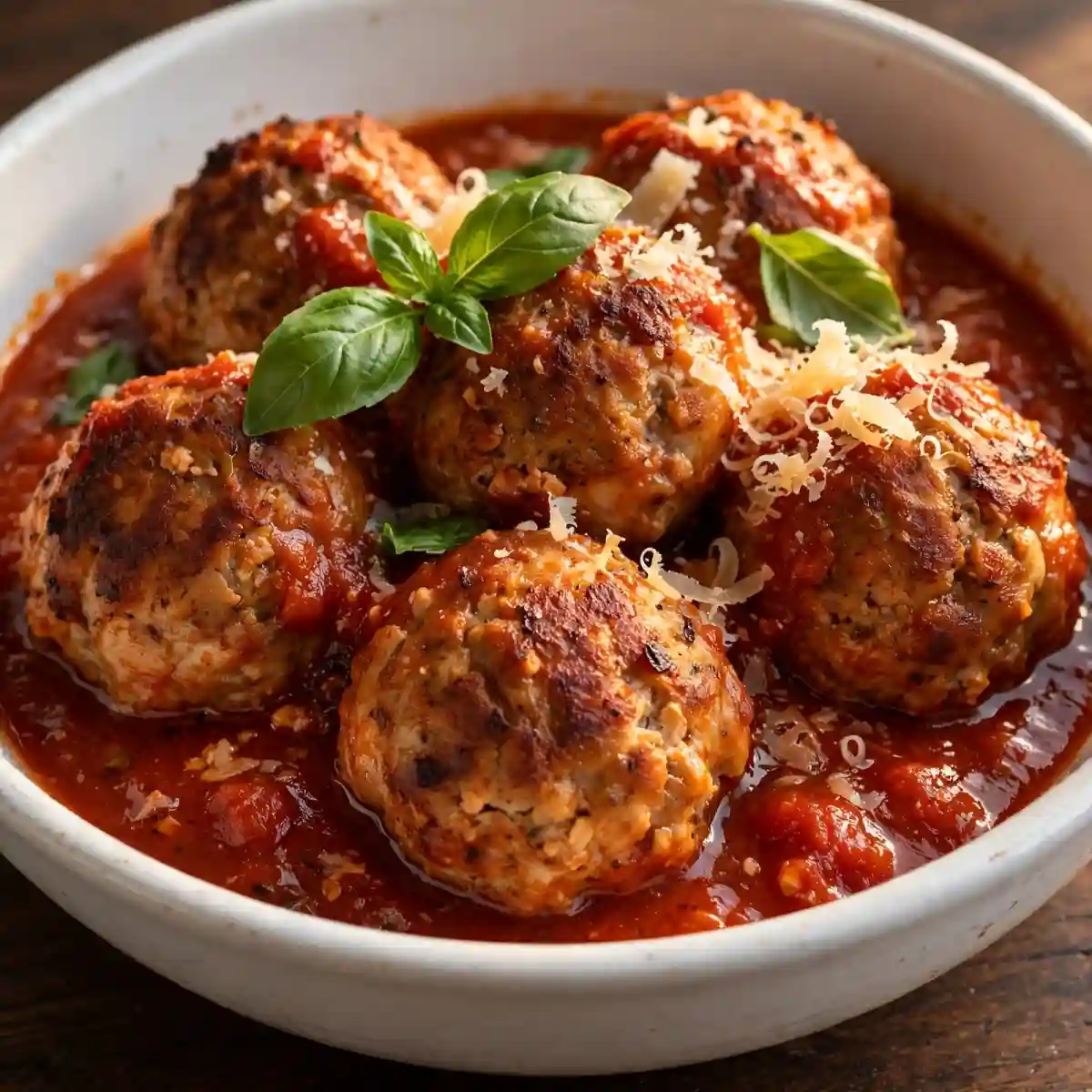
Why You’ll Love These Chicken Meatballs
- The panade keeps them genuinely juicy. Breadcrumbs soaked in milk physically prevent the protein strands in ground chicken from contracting and squeezing out moisture during cooking. Without it, chicken meatballs dry out predictably. With it, they stay tender and moist from the center to the edge.
- Baked, not fried, with actual color. A 220°C (425°F) oven produces a lightly golden exterior without standing over a hot pan turning meatballs individually. High heat is what creates the crust: low-heat baking only produces pale, steamed meatballs.
- The flavor goes all the way through. Parmesan, fresh garlic, parsley, onion powder, and Italian seasoning are worked into the mixture before shaping, so every bite carries full seasoning rather than a flavored surface over bland meat.
- Lighter than beef with more protein per serving. Ground chicken breast is significantly lower in fat than ground beef while delivering comparable protein, making these meatballs a genuinely satisfying option without the heaviness of a traditional beef-pork blend.
- Works in any application. The same batch of chicken meatballs works over spaghetti with marinara, in a sub with mozzarella, over rice with a teriyaki-style glaze, or in a soup. The base recipe is neutral enough to adapt in every direction.
Ingredients You’ll Need
Recipe Timing
| Detail | Info |
|---|---|
| Servings | 4 to 5 (20 to 22 meatballs) |
| Difficulty | Easy |
| Course | Main Course |
| Cuisine | Italian-American |
| Prep Time | 15 minutes |
| Cook Time | 20 minutes |
| Total Time | 35 minutes |
The most important ingredient decision in this recipe is the ground chicken itself. Ground chicken thigh produces noticeably juicier, more flavorful meatballs than ground chicken breast because of its higher fat content: typically 7 to 10% fat compared to breast’s 1 to 3%. If your grocery store sells both, the thigh version is worth seeking out specifically for meatballs. If only ground breast is available, the panade becomes even more critical: don’t reduce the breadcrumb or milk quantities, as they are doing extra work compensating for the lower fat content.
For the breadcrumbs, use plain dry breadcrumbs rather than Italian seasoned: the recipe already has its own seasoning balance and Italian-seasoned breadcrumbs can push the garlic and herb notes past the point where the Parmesan registers distinctly. If you only have panko on hand, pulse it briefly in a food processor or crush it in a bag until the flakes are fine enough to absorb the milk without leaving visible white chunks in the finished meatball.
For the Parmesan, freshly grated from a block produces a significantly better result than the powdered pre-grated variety sold in shelf-stable containers. Fresh Parmesan melts into the mixture and seasons it evenly; the powdered version can create a slightly gritty texture and doesn’t distribute the sharp, salty flavor as cleanly.
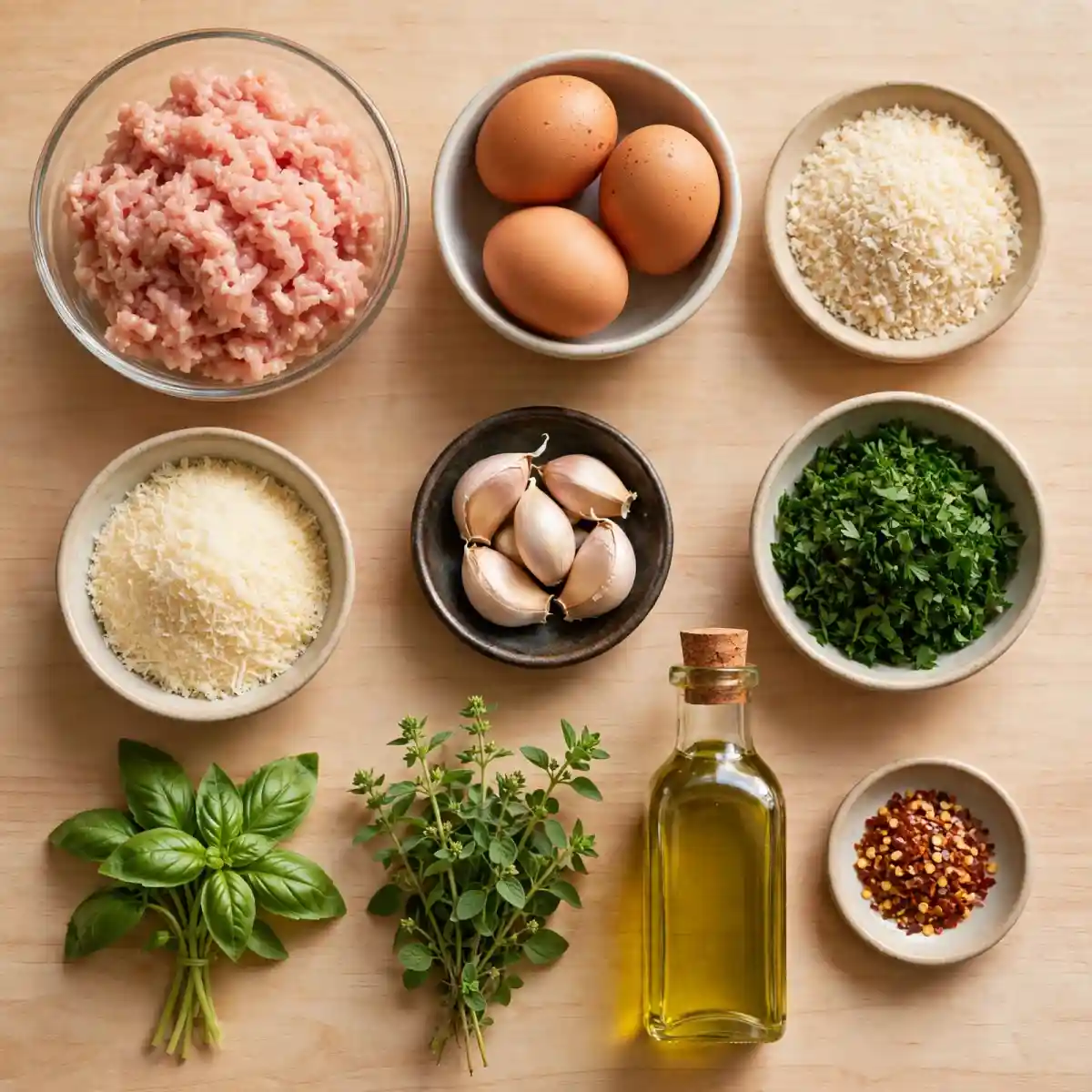
- 500g (1.1 lbs) ground chicken, preferably thigh. The protein base. The higher the fat content, the juicier the finished meatball, which is why thigh is preferred over breast.
- 1/3 cup (35g) plain dry breadcrumbs. The first component of the panade. Absorbs milk to form a paste that keeps the meatballs moist during baking.
- 3 tablespoons (45ml) whole milk. The liquid component of the panade. Combined with the breadcrumbs before the meat goes in, allowing full absorption before mixing.
- 1 large egg. Provides binding and structure. Without the egg, the meatballs can crumble when lifted.
- 1/2 cup (45g) freshly grated Parmesan cheese. Adds a salty, sharp, umami-rich flavor throughout the mixture. Contributes fat and binding alongside its flavor role.
- 3 cloves garlic, finely grated or pressed to a paste. Grated rather than minced so it disperses evenly through the mixture without creating raw garlic chunks in any single meatball.
- 3 tablespoons fresh flat-leaf parsley, very finely chopped. The primary fresh herb. Adds color, freshness, and a mild, clean flavor that balances the richness of the Parmesan.
- 1 teaspoon dried Italian herb blend (or a mix of dried oregano and basil).
- 1/2 teaspoon onion powder. Provides a background savory sweetness without the texture of diced onion in the mixture.
- 1/2 teaspoon fine sea salt.
- 1/4 teaspoon black pepper.
- 1/4 teaspoon red pepper flakes (optional). Adds a mild warmth. Omit for a fully mild, kid-friendly version.
- 1 tablespoon extra virgin olive oil. Stirred into the mixture. Adds a small but measurable amount of additional fat that improves both juiciness and flavor in a low-fat ground chicken base.
Allergen and Dietary Disclosure
This recipe contains dairy (milk, Parmesan), eggs, and gluten (breadcrumbs).
For a gluten-free version, use certified gluten-free breadcrumbs or fine almond flour in the same quantity as the breadcrumbs. Almond flour absorbs milk slightly differently than breadcrumbs: use the same 3 tablespoons of milk but allow a 2-minute rest before mixing with the meat to confirm the mixture feels cohesive rather than wet. The finished meatballs will be very slightly more tender and less structured than the breadcrumb version.
For a dairy-free version, replace the milk with unsweetened oat milk or plain soy milk in the same quantity, and replace the Parmesan with 3 tablespoons of nutritional yeast. The nutritional yeast provides a comparable savory, slightly cheesy flavor without dairy. The meatballs will be marginally less rich but still well-flavored.
For an egg-free version, replace the egg with 1 tablespoon of olive oil plus 1 extra tablespoon of milk. The meatballs will be slightly more fragile when first removed from the oven but firm up as they cool and handle sauce very well.
Not guaranteed safe for any specific allergy without checking all individual ingredient labels, particularly the breadcrumbs and Parmesan.
Equipment Needed
A rimmed baking sheet with parchment paper or a wire rack. The rimmed sides prevent any released juices from running off the pan. Parchment paper prevents sticking and makes cleanup easy. A wire rack set inside the rimmed sheet allows air circulation under the meatballs, which produces a more evenly golden exterior on the bottom surface rather than the pale, slightly steamed underside that happens when meatballs sit directly on a solid pan.
A fine grater or Microplane for the garlic. Grated garlic distributes more evenly through the meat mixture than minced garlic and doesn’t create the pockets of raw, sharp flavor that chunky minced garlic produces in individual bites. A standard box grater on the fine side works; a Microplane is faster.
A cookie scoop or ice cream scoop (3 tablespoon / 45ml capacity). Not strictly required, but a consistent scoop size produces meatballs that are all the same diameter, which means they all reach the correct internal temperature at the same time. Meatballs shaped by hand to different sizes have some finishing undercooked while others overbake.
An instant-read thermometer. Ground poultry must reach 74°C (165°F) throughout. Visual cues (color and firmness) are less reliable for poultry than for beef, and a thermometer removes the guesswork entirely from a food safety perspective.
Step-by-Step Directions
Step 1: Make the Panade
In a large mixing bowl, combine the plain dry breadcrumbs and the whole milk. Stir briefly to combine and then leave the mixture undisturbed for 2 to 3 minutes while the breadcrumbs fully absorb the milk. By the end, the mixture should look like a cohesive, slightly thick paste with no dry white breadcrumb visible and no pooled milk remaining. If it looks too dry, add milk half a teaspoon at a time. If it looks too wet, add breadcrumbs a teaspoon at a time. The correct consistency is paste-like: it holds together when you press it with a spoon but isn’t stiff.

Chef’s Note: The panade needs its full absorption time before the meat goes in. Adding the ground chicken before the breadcrumbs have fully absorbed the milk results in uneven moisture distribution through the mixture, with some parts of the meatball dry and others dense from undistributed wet breadcrumb clumps.
Step 2: Combine the Mixture
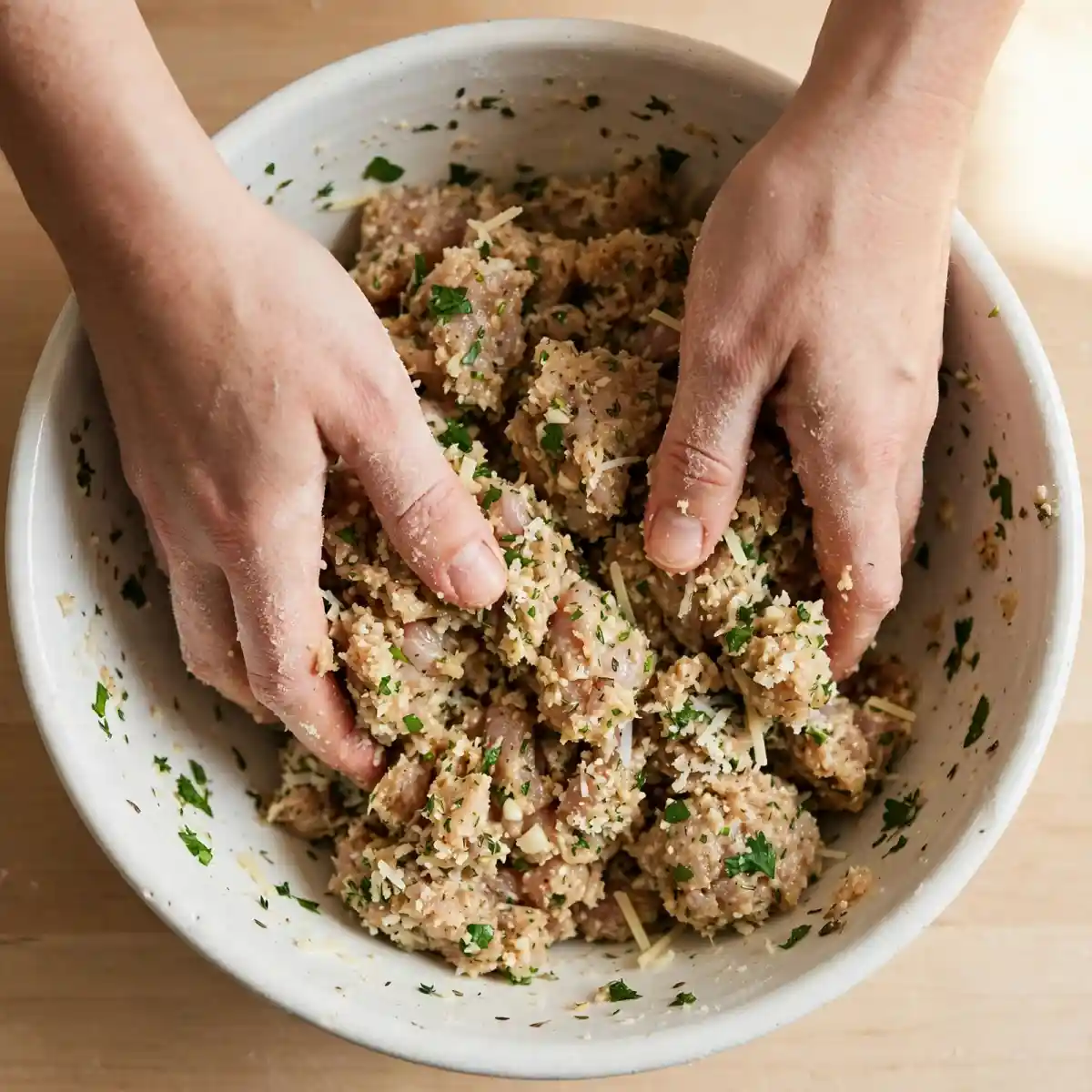
Add the ground chicken, egg, grated Parmesan, grated garlic, chopped parsley, Italian seasoning, onion powder, salt, black pepper, red pepper flakes if using, and olive oil directly to the bowl with the panade. Using your hands or a fork, mix everything together until just combined, working the ingredients through the mixture with a folding and pressing motion rather than aggressive kneading. Stop the moment the mixture looks uniform and no streaks of egg or pockets of dry herb remain. Overmixed ground chicken becomes dense and rubbery when cooked: the goal is fully combined, not thoroughly worked.
Chef’s Note: Cold ground chicken is easier to mix and shape than meat that has warmed to room temperature. If your chicken came from the refrigerator and feels cold, that is ideal. Cold fat in the mixture stays in place during mixing rather than smearing, which produces a more cohesive texture in the finished meatball.
Food Safety Note: Raw ground chicken must be handled carefully. Wash hands and all surfaces thoroughly after contact. Never taste the raw mixture.
Step 3: Portion and Shape
Preheat the oven to 220°C (425°F). Line a rimmed baking sheet with parchment paper or set a wire rack inside it. Using a 3-tablespoon cookie scoop or your hands, portion the mixture into equal amounts and roll each portion between your palms into a smooth, tight ball approximately 4cm in diameter. Place each shaped meatball on the prepared pan with about 3cm of space between each piece. Wet your hands lightly with cold water between every 3 to 4 meatballs: this prevents the mixture from sticking to your palms and allows you to roll each ball smooth rather than having it adhere in uneven patches.
Step 4: Bake at High Heat
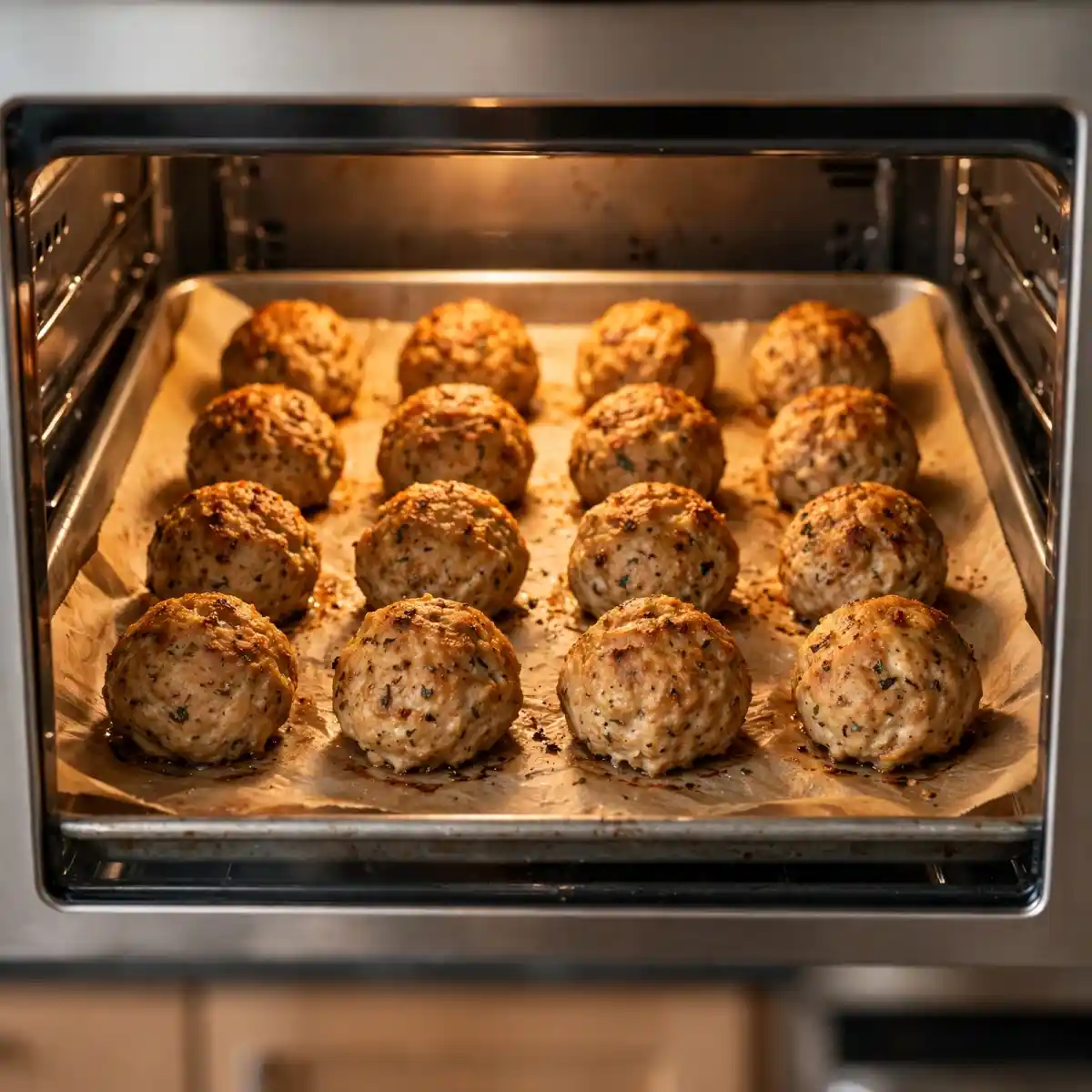
Place the baking sheet on the center rack of the preheated oven. Bake for 18 to 20 minutes without opening the oven or turning the meatballs during cooking. At 220°C (425°F), the meatballs develop a lightly golden, slightly caramelized exterior on all exposed surfaces from the oven’s dry convective heat. At the 18-minute mark, check the internal temperature of the largest meatball using an instant-read thermometer inserted into the center: it should read at least 74°C (165°F). If the temperature is below this, return to the oven for 2 more minutes and check again.
Food Safety Note: Ground chicken must reach 74°C (165°F) throughout before it is safe to eat. This is the minimum internal temperature for all ground poultry. Visual cues alone are not sufficient: the exterior may look done while the interior is still below safe temperature.
Chef’s Note: Resisting the urge to open the oven and turn the meatballs during baking preserves the oven’s temperature and allows the bottom surface to develop color from contact with the hot pan rather than losing heat every time the door opens. The high initial temperature does the work of browning from above and from the pan simultaneously.
Step 5: Rest Briefly Before Saucing
Remove the baking sheet from the oven and leave the meatballs to rest on the pan for 3 to 5 minutes before transferring them to sauce or serving. This short rest allows the internal temperature to equalize and the proteins at the surface to set fully, which makes the meatballs firm enough to handle without breaking. Meatballs transferred to a hot sauce immediately from the oven continue cooking slightly in the sauce heat, which is fine and actually deepens the flavor as the meatball surface absorbs the sauce. If serving without sauce, rest and serve as is.
Step 6: Finish in Sauce or Serve Directly
For pasta or sub applications, transfer the rested meatballs to a saucepan of warm marinara or tomato sauce over medium-low heat. Nestle them gently into the sauce, spoon the sauce over each meatball, and let them sit for 5 minutes in the barely simmering sauce. This finishing time gives the meatballs a chance to absorb surface flavor from the sauce and softens their baked exterior slightly, integrating them with the sauce rather than sitting as separate components in it. For other applications like rice bowls or soups, transfer directly without the sauce-finishing step.
Common Mistakes and Troubleshooting
| Problem | Cause | Solution |
|---|---|---|
| Meatballs dry and dense after baking | Overmixed after meat was added; panade skipped or reduced; ground breast used without enough fat compensation | Mix only until just combined; include the full panade; add an extra teaspoon of olive oil to the mixture if using breast |
| Meatballs fall apart when lifted | Insufficient egg or not enough binding; mixture too wet | Ensure the full egg is included; if the mixture feels extremely sticky, add 1 extra tablespoon of breadcrumbs and refrigerate for 10 minutes before shaping |
| Exterior pale with no color | Oven not hot enough; too much moisture on meatball surface; baked too briefly | Preheat fully to 220°C (425°F); pat hands dry between rolling; bake the full 18 to 20 minutes without opening the oven |
| Meatballs uneven size with different cook times | Shaped by hand without a consistent portion guide | Use a cookie scoop for every meatball; aim for a consistent 4cm diameter |
| Raw garlic taste in finished meatballs | Garlic minced too coarsely; large pieces didn’t cook through | Always grate or press garlic to a fine paste; coarse minced garlic doesn’t cook evenly in a baked meatball |
| Mixture too sticky to shape | Ground chicken warmed to room temperature; mixture over-handled | Keep the mixture cold throughout; refrigerate for 15 minutes before shaping if it feels unmanageably soft |
Variations and Substitutions
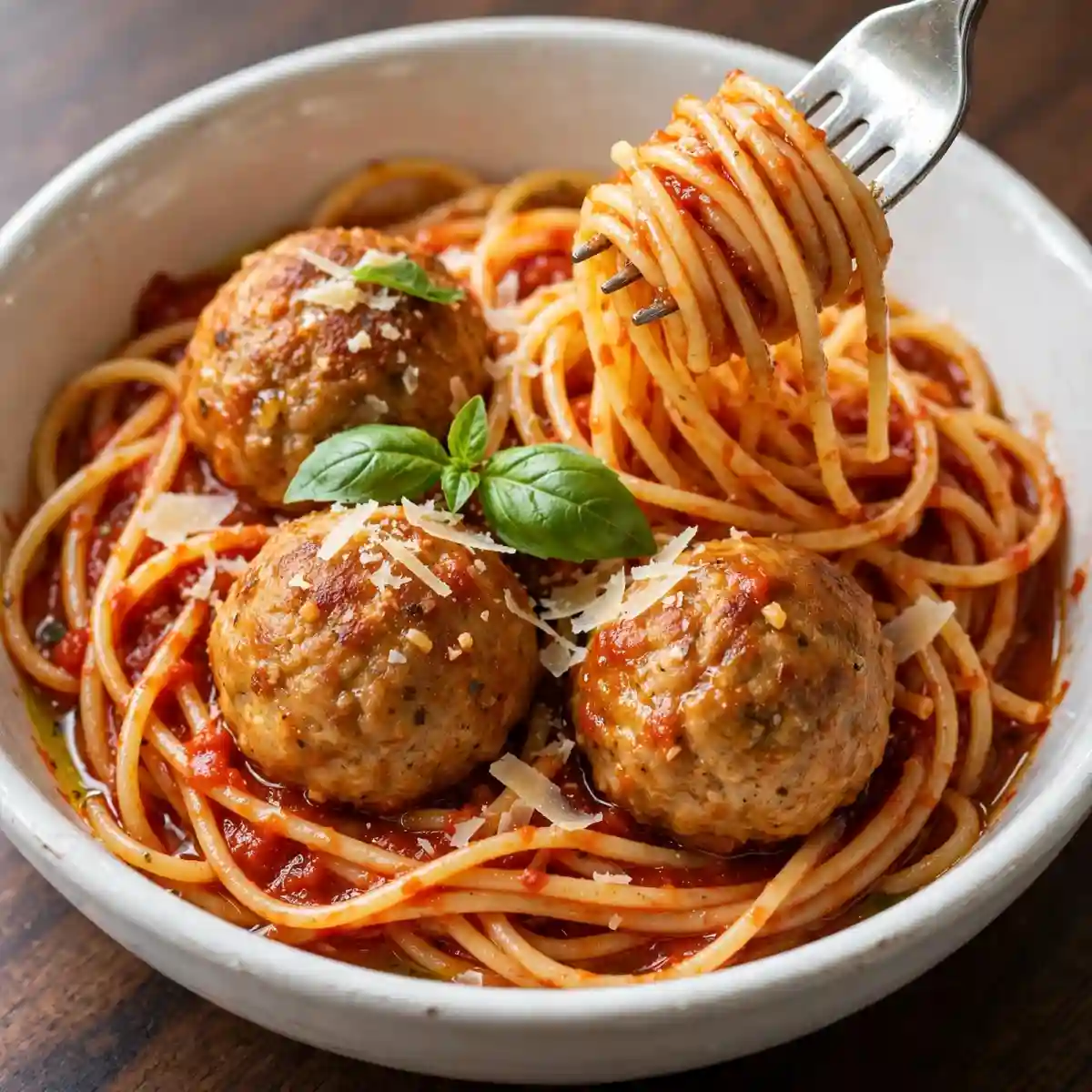
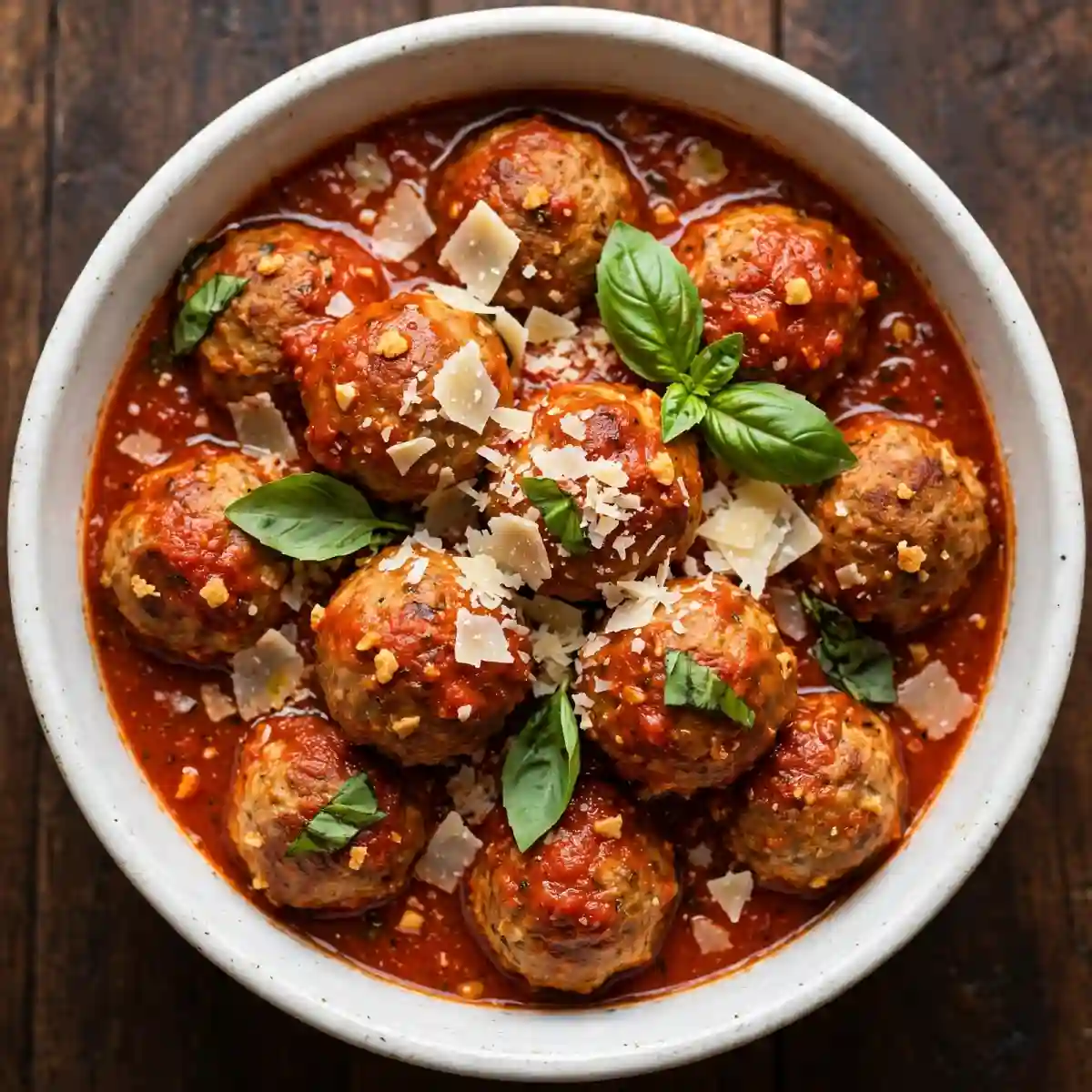
Chicken Meatballs in Marinara: Transfer baked meatballs to a wide saucepan containing 2 cups of warm marinara sauce. Add 1/4 cup of water to loosen the sauce slightly, nestle the meatballs in, and simmer on medium-low for 8 to 10 minutes, turning once, until the sauce has thickened back and the meatball surface has taken on the sauce’s color and flavor. Serve over spaghetti or penne with Parmesan and fresh basil. This is the most versatile application for the base recipe and works equally well for a dinner party or a Tuesday night.
Teriyaki Chicken Meatballs: Omit the Parmesan, Italian herbs, and parsley from the base recipe. Replace with 1 teaspoon of sesame oil, 1 teaspoon of grated fresh ginger, 2 tablespoons of soy sauce, and 1 teaspoon of honey mixed into the meat. Bake as directed. Glaze with a teriyaki sauce (soy sauce, honey, garlic, ginger simmered until syrupy) in the final 5 minutes of baking. Serve over steamed jasmine rice with sesame seeds and sliced green onion.
Chicken Meatball Soup: Add baked meatballs directly to a simmering pot of chicken broth with orzo or small pasta, diced carrots, celery, and spinach. The meatballs need only 5 minutes in the hot broth to warm through and begin contributing flavor to the soup. This is an excellent use of leftover baked meatballs from a previous batch and produces a complete, hearty soup from components that are already prepared.
Spicy Harissa Chicken Meatballs: Add 1 tablespoon of harissa paste to the meat mixture alongside the other seasonings. Bake as directed. Serve with a cooling yogurt sauce (plain yogurt, lemon juice, garlic, and fresh mint) and warm flatbread. The harissa adds a smoky, complex North African heat that works particularly well against the mild ground chicken base and the cool dairy of the yogurt sauce.
Lemon and Herb Chicken Meatballs: Add the zest of 1 lemon, 1 extra tablespoon of fresh parsley, and 1 tablespoon of fresh chopped dill to the base mixture. Omit the red pepper flakes. Bake as directed and serve with a lemon tahini dipping sauce or over a Greek salad. The lemon zest adds a bright, citrus-forward character that transforms the same base recipe into something that feels considerably lighter and more summer-appropriate.
Baked Chicken Meatball Sub: Place 4 to 5 baked meatballs in a toasted sub roll, spoon warm marinara over them, and top with sliced or shredded mozzarella. Place under the broiler for 90 seconds until the cheese melts and bubbles. The meatballs are firm enough from the baking to stay in place in the roll without crumbling, which makes this one of the cleaner ways to serve them compared to pan-finished meatballs.
Serving Suggestions
- Over spaghetti with marinara. The classic application for a reason: the tender, herb-flavored meatballs against a bright, acidic tomato sauce over long pasta is one of the most satisfying combinations in Italian-American cooking. Finish with freshly grated Parmesan and torn basil.
- As an appetizer with dipping sauce. Set a platter of baked chicken meatballs alongside a bowl of warm marinara and a bowl of garlic aioli for a gathering. They are easy to pick up, pre-portioned, and substantial enough to be satisfying without being filling.
- In a rice bowl with roasted vegetables. Two or three meatballs over steamed jasmine rice with roasted broccoli, a drizzle of soy-ginger glaze, and sesame seeds makes a complete, protein-focused bowl that works as a meal-prep lunch for the following days.
- In a soup with orzo. The meatballs are already cooked and need only 5 minutes in a simmering broth to warm through and contribute flavor. Add them to a vegetable or chicken broth with orzo, spinach, and lemon for a complete soup that comes together in 15 minutes.
- In a flatbread wrap. Halve 4 meatballs and tuck them into a warm flatbread with hummus, sliced cucumbers, pickled onions, and fresh herbs. The meatballs work as the protein component of a wrap in the same way falafel does, providing substance and flavor without requiring any additional preparation.
- Meal-prepped and frozen for later. Baked chicken meatballs freeze perfectly and reheat in a sauce from frozen in 10 minutes. Making a double batch and freezing half produces a genuinely fast dinner on any weeknight without additional cooking.
Tips for the Best Results
- Don’t skip the panade rest time. Two to three minutes of letting the breadcrumbs absorb the milk before the meat goes in is not optional. Breadcrumbs added wet and immediately mixed with the chicken distribute unevenly: some meatballs in the batch will have pockets of wetter texture, others will be drier. A fully absorbed panade distributes moisture uniformly across all meatballs.
- Mix the meat only until just combined. The moment you can no longer see streaks of egg or unmixed herbs, stop. Ground chicken that is mixed past this point develops a tighter, denser protein network that bakes into a rubbery, compact texture rather than a tender one. This is the most common mistake in homemade meatballs of any kind.
- Keep the mixture cold until it goes in the oven. Cold ground chicken holds its shape during rolling and doesn’t smear or stick to your hands the way room-temperature meat does. If your kitchen is warm or the mixture has been sitting for more than 10 minutes after mixing, refrigerate it for 15 minutes before shaping. Cold meatballs also hold their round shape more reliably through the first minutes of baking.
- Use the full 220°C (425°F) temperature. Lower oven temperatures are tempting because they feel safer for a leaner protein, but they produce pale, slightly steamed meatballs with no surface color. The quick hit of high heat is what creates the lightly caramelized exterior that adds flavor and texture. The panade protects the interior from drying out at this temperature.
- Always verify internal temperature. Ground chicken looks done before it always is, particularly in a larger meatball where the center takes longer than the edges. An instant-read thermometer check at 18 minutes is 10 seconds of effort that eliminates any food safety concern and prevents the scenario of re-baking a whole batch after they’ve been plated.
Storage Tips
Refrigerator
Transfer cooled chicken meatballs to an airtight container and refrigerate for up to 4 days. Store them without sauce if possible: sauceless baked meatballs retain their texture and exterior integrity in the refrigerator significantly better than ones stored submerged in tomato sauce, which softens them progressively. If stored in sauce, they are still good and arguably more flavorful by day two, but their exterior loses the slight firmness of the baked surface.
Freezer
Chicken meatballs freeze exceptionally well and are one of the most practical proteins to batch-cook for freezing. After baking and cooling completely, arrange them in a single layer on a parchment-lined baking sheet and freeze until solid, about 2 hours. Transfer the frozen meatballs to a sealed freezer bag, pressing out as much air as possible. Freeze for up to 3 months. Freezing in a single layer first prevents them from sticking together in the bag, so you can remove exactly the number needed without thawing the entire batch.
Reheating
From the fridge: add meatballs to a saucepan of warm marinara or broth over medium-low heat for 5 to 7 minutes until heated through, turning once. The microwave at 50% power in 90-second intervals with a small splash of water or sauce covering the meatballs also works for a single serving. From frozen: add directly to a simmering sauce or broth without thawing first. Frozen meatballs need 10 to 12 minutes in a gently simmering sauce to heat through completely, and the sauce should not boil aggressively since rapid heat can cause the meatball exterior to tighten and toughen before the center is warm.
Nutrition Information
Per serving (4 to 5 meatballs, approximately 1/5 of the full recipe, without sauce)
| Nutrient | Amount |
|---|---|
| Calories | 285 kcal |
| Protein | 28g |
| Carbohydrates | 9g |
| Fiber | 0.5g |
| Sugar | 1.5g |
| Total Fat | 14g |
| Saturated Fat | 4g |
| Cholesterol | 115mg |
| Sodium | 480mg |
| Vitamin C | 4mg |
| Calcium | 110mg |
| Iron | 1.5mg |
| Potassium | 420mg |
Nutrition values are approximate and may vary based on brands and portion sizes. Values reflect baked meatballs without sauce.
Why This Recipe Works
The panade technique exploits a specific behavior of starch granules under heat that directly counteracts ground chicken’s main structural weakness. When dry breadcrumbs absorb milk, they form a starch-water paste. During baking, the starch granules in that paste gelatinize at approximately 60 to 70°C (140 to 158°F), forming a gel network throughout the meat mixture. This gel acts as a moisture reservoir: rather than the protein contracting and expelling its moisture as the meatball’s internal temperature rises toward 74°C (165°F), the gelatinized starch holds that moisture in place, releasing it slowly as the meatball cools. The result is a meatball that feels juicy when you cut into it even though ground chicken’s protein structure would otherwise produce a dry, tight texture at the same temperature.
Overmixing ground chicken after all ingredients are added destroys the panade’s protective effect by over-developing the actomyosin protein network in the meat. When ground meat is worked aggressively, the myosin proteins extracted from the muscle fibers form cross-links with each other and with actin proteins, creating a dense, tight matrix that contracts forcefully during cooking and squeezes all available moisture out of the meatball. The same proteins, minimally worked to just-combined, form a loose, open network that allows the panade’s moisture to distribute freely and prevents the extreme contraction that produces a rubbery, dry result.
The 220°C (425°F) baking temperature creates Maillard browning on the meatball surface through dry convective heat, which is the same chemical process responsible for the flavor of browned meat generally. At the temperatures achieved on the meatball surface in a properly preheated oven, reducing sugars (from the milk, Parmesan, and breadcrumbs) react with amino acids from the meat proteins to produce hundreds of distinct flavor compounds, including the characteristic savory, slightly roasted character associated with well-browned meat. At lower oven temperatures, the surface moisture from the mixture evaporates too slowly to allow the temperature to rise above approximately 100°C (212°F), and the Maillard reaction (which requires temperatures above 140°C / 284°F) never occurs. The result is a pale, steamed-looking exterior with noticeably less flavor than the high-heat version.
Grating the garlic rather than mincing it distributes the volatile sulfur compounds (allicin and its derivatives) evenly through every part of the mixture rather than concentrating them in discrete pieces. When garlic is minced and baked in a meatball, the large pieces at the surface of a cut meatball taste sharp and raw because the garlic inside the meat is essentially insulated from direct heat by the surrounding protein and starch. Grated garlic, with far more surface area exposed, releases its compounds into the surrounding fat (olive oil and Parmesan fat) during the brief mixing stage, which distributes a milder, more evenly integrated garlic flavor throughout the entire meatball rather than delivering sharp bursts from individual pieces.
Freshly grated Parmesan contributes more than flavor to this recipe. The natural glutamates in aged Parmesan are free amino acids that activate umami receptors directly, amplifying the perception of savory flavors in the meat and herbs surrounding them. The fat content in the cheese also coats protein strands during mixing, contributing to tenderness in a way that is structurally similar to the panade’s role but through a fat-based rather than starch-based mechanism.
I’ve tested this recipe with ground breast and ground thigh side by side. The thigh version was noticeably more juicy and flavorful with an identical panade. The breast version was still tender and moist with the full panade, meaningfully better than any breast meatball I’ve made without it, but slightly less rich. For anyone regularly making chicken meatballs, buying ground thigh when available is a consistent upgrade that requires no technique change.
Frequently Asked Questions
Can I make chicken meatballs ahead of time?
Yes, in two ways. You can mix and shape the meatballs, arrange them on the parchment-lined baking sheet, cover with plastic wrap, and refrigerate for up to 24 hours before baking. The cold rest actually helps them hold their shape better in the oven. Alternatively, bake the full batch, cool completely, and refrigerate in an airtight container for up to 4 days. For longer storage, the freezer method described in the Storage section produces meatballs that are virtually identical to freshly baked when reheated in sauce.
Why are my chicken meatballs falling apart?
Chicken meatballs fall apart for two reasons: not enough binding (the egg is missing or the mixture was too wet), or the mixture was shaped while too warm and soft. Verify that the full egg was included. If the mixture feels very wet and sticky before shaping, add 1 extra tablespoon of dry breadcrumbs and refrigerate the mixture for 15 minutes before rolling. Cold, slightly firmer mixture holds together during rolling and maintains its shape through the first minutes of baking when the protein structure is still loose.
Can I pan-fry chicken meatballs instead of baking?
Yes. Heat 2 tablespoons of olive oil in a large skillet over medium heat. Add the meatballs in a single uncrowded layer and cook for 2 to 3 minutes per side, turning every 2 to 3 minutes to brown all surfaces evenly, for a total of 10 to 12 minutes until the internal temperature reaches 74°C (165°F). Pan-frying produces a more uniformly browned crust on all sides than baking but requires more active attention and works best for smaller batches. Baking is more practical for 20-plus meatballs.
How do I know when chicken meatballs are fully cooked?
The only reliable method for ground chicken is an instant-read thermometer reading of 74°C (165°F) at the center of the largest meatball. Visual cues are less reliable than for beef: ground chicken turns opaque white when cooked but can look done on the outside while the interior is still below safe temperature, particularly in larger meatballs. The 18 to 20-minute bake at 220°C (425°F) consistently reaches this temperature for 4cm meatballs, but checking the largest one confirms it.
Can I use ground turkey instead of chicken?
Ground turkey works in this recipe with no changes to the method or quantities. Ground turkey thigh produces results closest to ground chicken thigh in terms of juiciness and flavor. Ground turkey breast is slightly drier than ground chicken breast, so the panade is even more important when using it. The finished meatballs have a slightly milder, less fatty flavor than chicken thigh meatballs but are still well-seasoned and tender with the full panade.
Is this recipe gluten-free?
As written, no: standard dry breadcrumbs contain wheat. To make it gluten-free, use certified gluten-free breadcrumbs (available in most supermarkets) or substitute with fine almond flour in the same quantity. The panade works with almond flour but produces a slightly more delicate meatball that is best handled carefully when transferring to sauce. All other ingredients, including ground chicken, egg, Parmesan, garlic, parsley, olive oil, and herbs, are naturally gluten-free.
Can I add vegetables to chicken meatballs?
Yes, with two practical limits. Finely grated zucchini (moisture squeezed out thoroughly with paper towels before adding) or finely diced sautéed mushrooms cooled to room temperature can both be folded into the mixture. Keep the total added vegetable volume to no more than 1/4 cup: larger quantities add excess moisture that makes the mixture too soft to shape, and large vegetable pieces create structural weak points that cause the meatball to crack or split during baking. Squeeze out as much moisture as possible from any vegetable before adding it.
Conclusion
Chicken meatballs that actually stay juicy and tender come down to two decisions made before the oven turns on: building the panade correctly and stopping the mixing at just-combined. Everything else, the Parmesan, the grated garlic, the high baking temperature, the thermometer check, is in service of those two fundamentals. Get them right and the result is a meatball that is lighter than beef, higher in protein, and genuinely satisfying in a way that most lean-protein recipes don’t quite manage. Make a double batch, freeze half, and you have a genuinely fast dinner available any night of the week without any planning required. These chicken meatballs earn their place in a regular rotation.
If you loved this recipe, save it to your easy chicken dinner recipes Pinterest board so you can find it easily later. For more healthy recipes and daily food inspiration, follow TheCookingVibes on Pinterest.
Easy Chicken Meatballs
Ingredients
Equipment
Method
- Combine breadcrumbs and milk in a large mixing bowl. Stir once and leave for 2 to 3 minutes until the breadcrumbs fully absorb the milk into a cohesive paste.
- Add ground chicken, egg, Parmesan, grated garlic, parsley, Italian seasoning, onion powder, salt, pepper, red pepper flakes, and olive oil to the panade. Mix by hand until just combined, stopping the moment no streaks of egg or unmixed herbs remain. Do not overmix.
- Preheat oven to 220°C (425°F). Line a rimmed baking sheet with parchment paper. With lightly wet hands, roll 3-tablespoon portions of mixture into smooth balls about 4cm in diameter. Space 3cm apart on the pan.
- Bake on the center rack for 18 to 20 minutes without opening the oven. Check the internal temperature of the largest meatball: it must reach 74°C (165°F) throughout.
- Rest on the pan for 3 to 5 minutes. Transfer to sauce or serve directly.
Notes
- Always let the panade fully absorb before adding the meat: 2 to 3 minutes undisturbed is enough.
- Mix only until just combined: overmixing ground chicken produces dense, rubbery meatballs.
- Keep the mixture cold before shaping for easier rolling and better shape retention.
- Verify 74°C (165°F) internal temperature with a thermometer: visual checks alone are not reliable for ground poultry.