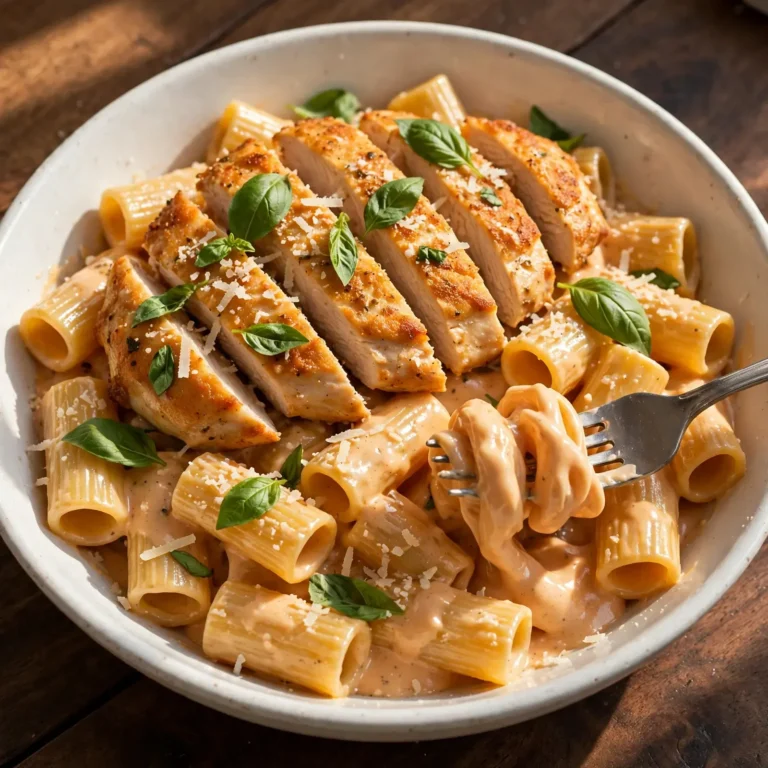
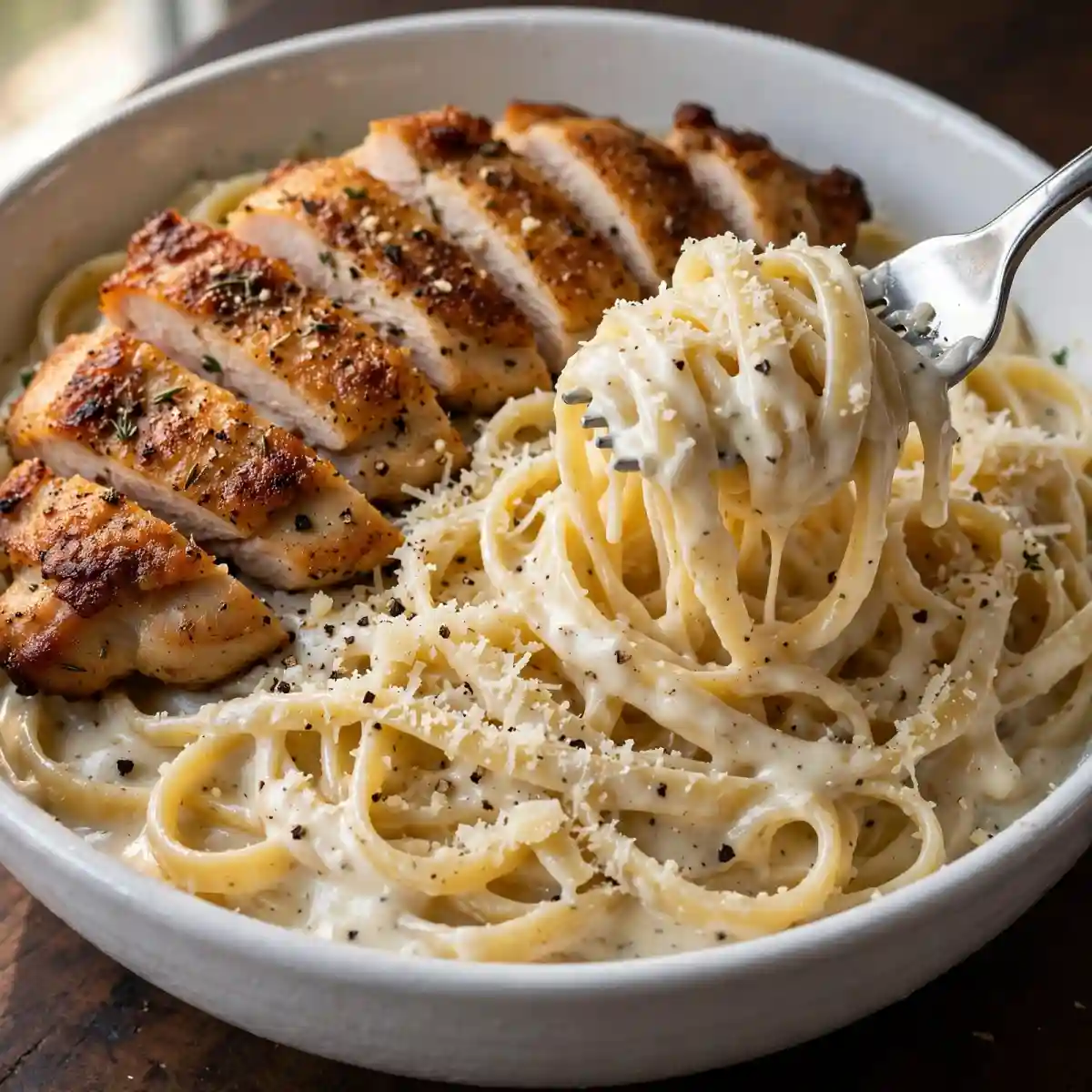
Chicken Alfredo Pasta — Silky Parmesan Sauce, Tender Seared Chicken
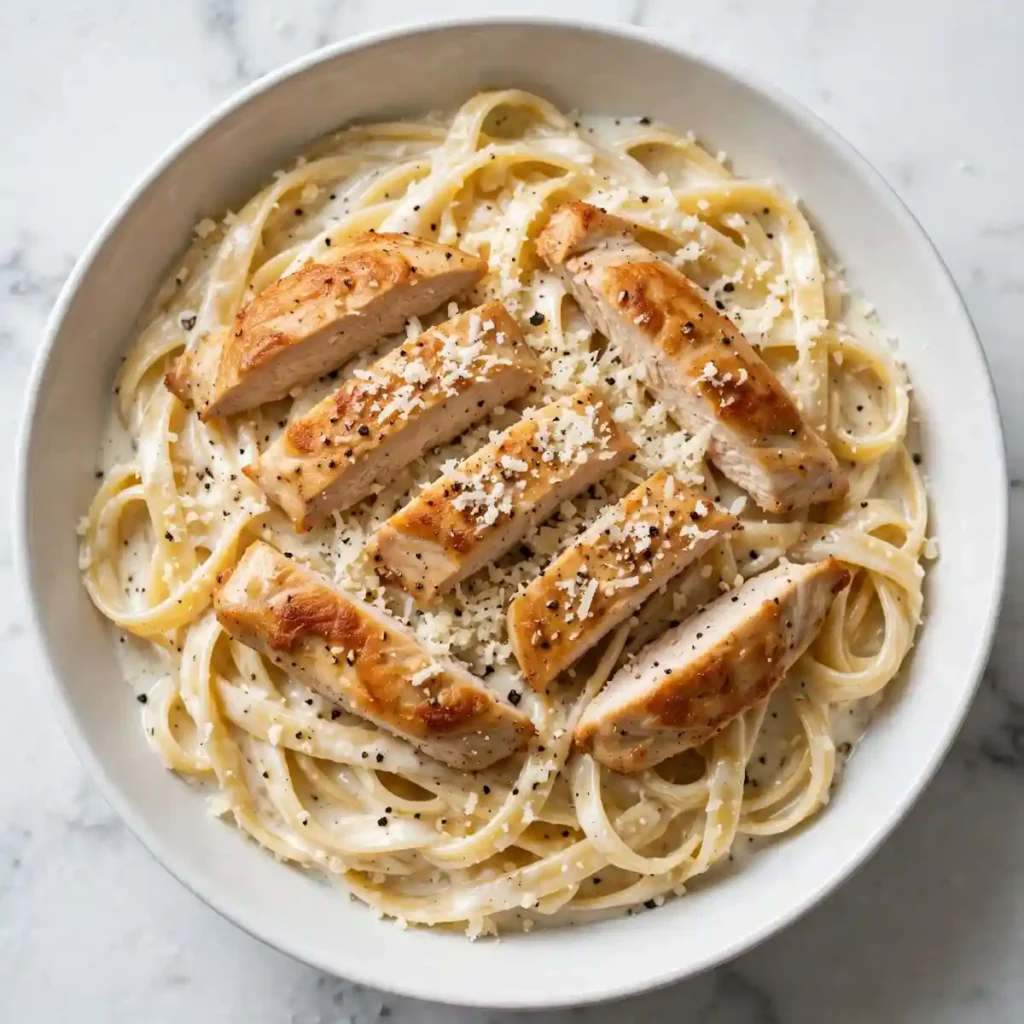
The difference between a chicken alfredo that tastes like a restaurant and one that tastes like a jar of cream sauce poured over pasta is almost entirely in one step: the Parmesan must be grated fresh from a block and added off the heat in small increments to warm cream, never to boiling liquid. Do it right and the sauce is silky, deeply savory, and coats every strand of fettuccine in a glossy, cohesive layer that doesn’t break or pool at the bottom of the bowl. Do it wrong and you get a grainy, separated sauce that no amount of stirring fixes.
This chicken alfredo pasta recipe uses boneless skinless chicken thighs, which stay juicier than breasts under the same sear-then-rest method and pair better with the richness of the sauce, fettuccine cooked just to al dente so it finishes in the sauce rather than going soft, and a Parmesan cream sauce built on butter, garlic, heavy cream, and a generous amount of freshly grated Parmesan folded in gradually off the heat. It serves 4, takes 35 minutes, and produces the kind of chicken alfredo that people ask for the recipe after finishing.
Why You’ll Love This Chicken Alfredo Pasta
- Sauce that stays silky rather than breaking or pooling. Adding the Parmesan off the heat in increments, rather than into boiling cream, keeps the cheese proteins from seizing; the result is a cohesive, glossy sauce that clings to the pasta rather than separating into greasy puddles.
- Chicken thighs stay juicy even when seared hard. Thighs have a higher fat content and more connective tissue than breasts; they can be cooked to a deep golden sear without drying out, and their flavor stands up to the richness of the Parmesan cream without being overwhelmed.
- Ready in 35 minutes without rushing any step. Each stage has clear visual indicators rather than rigid timers, so the recipe works at a natural pace without anything being sacrificed.
- The pasta finishes cooking in the sauce. Pulling the fettuccine 1 minute before package instructions and finishing it in the sauce allows the pasta to absorb the sauce’s flavor and release its surface starch into the cream, which thickens the sauce naturally and produces a more integrated result than pasta dumped into pre-made sauce.
- Far better than any jarred version at a fraction of restaurant cost. The ingredients are ordinary pantry and refrigerator staples; the technique is what makes it taste like something from an Italian-American trattoria.
Ingredients You’ll Need
Recipe Timing
| Detail | Info |
|---|---|
| Servings | 4 |
| Difficulty | Easy to Moderate |
| Course | Main Course |
| Cuisine | Italian-American |
| Prep Time | 10 minutes |
| Cook Time | 25 minutes |
| Rest Time | 0 minutes |
| Total Time | 35 minutes |
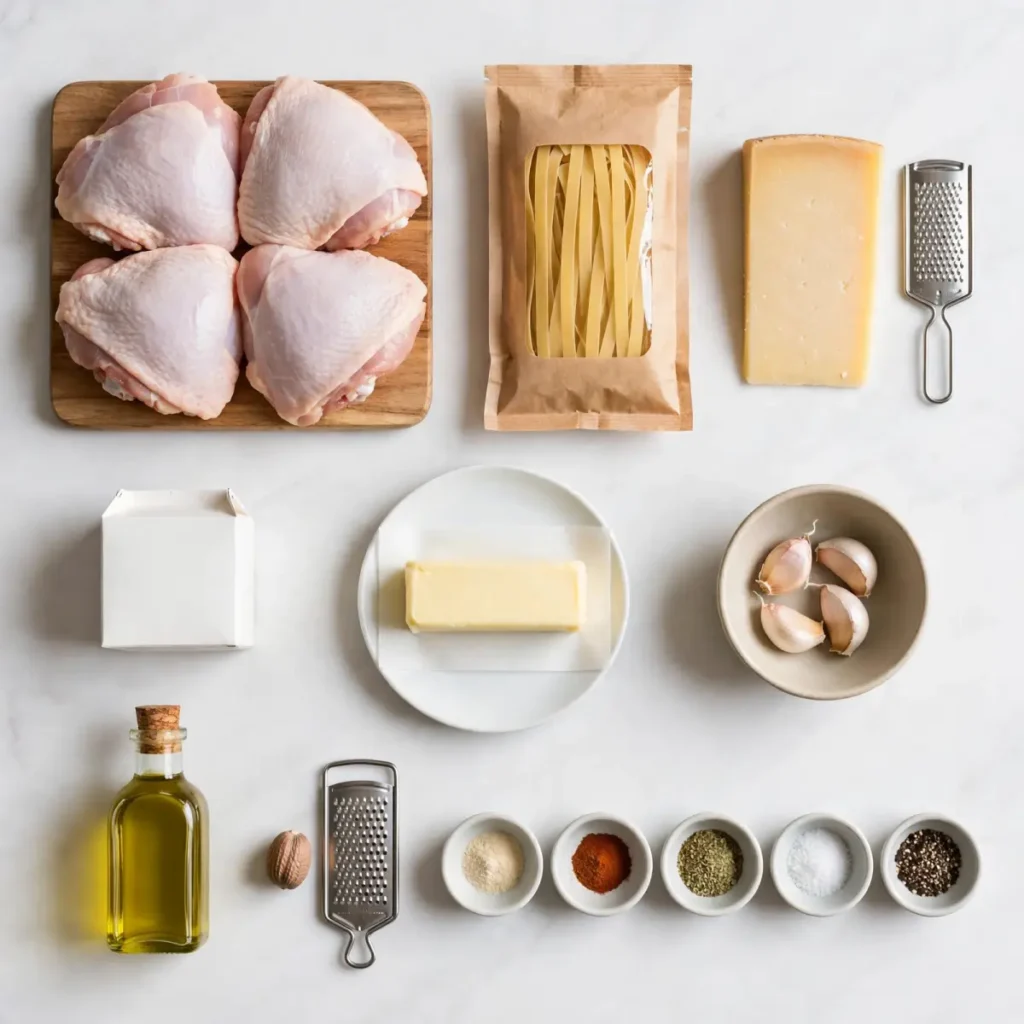
For the chicken, boneless skinless chicken thighs are specifically recommended over breasts for this recipe. At the same high searing temperature needed to build the golden crust that flavors the sauce base, chicken thighs reach 74°C without drying because their fat content continues to baste the meat during cooking. If you prefer chicken breasts, pound them to an even 1.5cm thickness before seasoning to ensure the thinner and thicker sections cook simultaneously; uneven thickness is the main reason breast meat dries before the thicker parts are done.
For the Parmesan, buying a block and grating it yourself immediately before using is not optional for a smooth alfredo sauce. Pre-shredded Parmesan contains cellulose (an anti-caking agent) that prevents the cheese from melting smoothly; it clumps in hot liquid and produces a grainy, unpleasant sauce texture regardless of technique. A wedge of genuine Parmigiano-Reggiano produces the best result; a good-quality domestic Parmesan block is a practical substitute that works very well.
For the pasta, dry fettuccine is traditional and ideal because its flat, wide shape holds a creamy sauce better than round spaghetti and doesn’t clump as readily as tagliatelle. Fresh fettuccine works at the same quantity but cooks in 2 to 3 minutes rather than 8 to 10; adjust the timing accordingly. Cook the pasta in heavily salted water, generously salty like the sea is a useful reference, because pasta absorbs the cooking water and much of its seasoning comes from that absorption during cooking.
For the cream, heavy whipping cream at 35% fat is the specific variety that produces a stable, non-breaking sauce. Lower fat creams (single cream, half-and-half) are more prone to separating when Parmesan is added because the lower fat content provides less emulsification stability for the cheese proteins.
The Chicken:
- 600g boneless skinless chicken thighs (about 4 medium thighs) — the protein; food safety note: chicken must reach 74°C (165°F) internal temperature throughout before serving
- 1.5 teaspoons garlic powder — seasons the exterior crust
- 1 teaspoon Italian seasoning
- 1 teaspoon fine salt
- 1/2 teaspoon freshly ground black pepper
- 1/2 teaspoon smoked paprika — adds color and a subtle smokiness to the seared crust
- 1 tablespoon olive oil — for searing
The Pasta and Sauce:
- 400g (14 oz) dry fettuccine — the classic format for alfredo; cooked 1 minute short of al dente
- Fine salt for pasta water — 2 tablespoons per 4 litres of water; heavily salted water seasons the pasta from the inside
- 60g (4 tablespoons) unsalted butter — the sauce’s fat base; produces the initial richness the cream builds upon
- 4 garlic cloves, finely minced — the aromatic base of the sauce; cooked briefly in butter before the cream goes in
- 480ml (2 cups) heavy whipping cream — the sauce’s liquid base; must be full-fat for a stable, non-breaking emulsion
- 150g (about 1.5 cups, loosely packed) Parmesan, freshly grated on the fine side of a box grater — the primary flavor; added off the heat in increments; never use pre-shredded
- 120ml (1/2 cup) reserved pasta cooking water — the sauce’s consistency adjuster; its dissolved starch helps the sauce emulsify and cling to the pasta
- 1/4 teaspoon freshly grated nutmeg — a traditional alfredo note; adds a warm, slightly sweet depth that is noticeable without being identifiable
- Fine salt and freshly ground black pepper to finish
For serving:
- Additional freshly grated Parmesan
- Fresh flat-leaf parsley, roughly chopped — optional; adds a fresh color contrast against the cream-white sauce
- Freshly cracked black pepper
Allergen and Dietary Disclosure
This chicken alfredo pasta contains dairy (butter, heavy cream, and Parmesan), gluten (fettuccine pasta), and eggs if fresh egg-based fettuccine is used (dry fettuccine is typically egg-free; check the package label). It is naturally nut-free as written.
For gluten-free: replace the fettuccine with a certified gluten-free pasta at the same weight, preferably a rice-based fettuccine or a good-quality gluten-free spaghetti. The sauce is entirely gluten-free. Cook the gluten-free pasta 1 minute less than the package instructions since it over-softens faster than wheat pasta; gluten-free pasta also releases more starch into the cooking water, so the reserved pasta water works particularly well for thinning the sauce.
For dairy-free: replace the butter with vegan butter block, the heavy cream with full-fat coconut cream (which produces a slightly sweeter, more tropical-tinted sauce), and the Parmesan with 60g of nutritional yeast blended with 1 tablespoon of cashew cream for a comparable savory depth. The sauce will be less silky than the full-dairy version but adequately creamy.
For lighter version: replace 240ml of the heavy cream with an equal quantity of whole milk mixed with 1 tablespoon of cornstarch. The reduced fat content makes the sauce slightly thinner and less rich; the cornstarch compensates for the fat’s emulsifying role and prevents the milk from curdling against the warm Parmesan.
This recipe has not been tested in a certified allergen-free kitchen and cannot be guaranteed safe for any specific allergy.
Equipment Needed
- Large 12-inch skillet or wide sauté pan — wide enough to sear the chicken without crowding, and to finish the pasta in the sauce in a single layer. A skillet that’s too small forces you to pile the pasta rather than toss it, which results in unevenly coated noodles. The same pan is used for both the chicken sear and the sauce; the fond (browned bits) left by the chicken adds depth to the sauce base.
- Large pasta pot (at least 4 to 5 litres) — pasta cooked in insufficient water produces sticky, starchy noodles because the released starch has nowhere to dilute; a large volume of water keeps the starch concentration low and the noodles separate during cooking.
- Fine box grater or Microplane — for grating the Parmesan fine enough to melt smoothly into the warm cream. Coarsely grated Parmesan takes longer to melt and can produce lumps in the sauce if the cream isn’t hot enough to dissolve it completely.
- Heatproof measuring cup — for scooping the reserved pasta cooking water before draining; pasta water is frequently forgotten in the moment of draining; having the measuring cup ready beside the pot prevents this.
Step-by-Step Directions
Step 1: Season and Sear the Chicken
Pat the chicken thighs completely dry on both sides with paper towels; a wet surface produces steaming rather than searing and inhibits the Maillard browning reaction that builds the flavorful golden crust. Combine the garlic powder, Italian seasoning, smoked paprika, salt, and pepper in a small bowl and press the mixture firmly onto both sides of each thigh, coating evenly.
Heat the olive oil in the large skillet over medium-high heat until shimmering. Add the seasoned thighs smooth-side down in a single layer without crowding. Sear undisturbed for 5 to 6 minutes until the bottom surface is a deep, golden-brown and releases cleanly from the pan without resistance. Flip and sear the second side for 4 to 5 minutes until an instant-read thermometer inserted at the thickest point reads 74°C (165°F) throughout.
Food safety note: chicken thighs must reach 74°C internal temperature before removal from the pan.
Transfer the seared thighs to a cutting board. Rest for 5 minutes, then slice into 1.5cm pieces on the diagonal.

Chef’s Note: Letting the chicken sear for 5 to 6 minutes without moving it is what produces the deep golden-brown Maillard crust rather than a pale, grey surface. The thigh is ready to flip when it releases naturally from the pan without sticking; forced early flipping tears the crust and indicates the browning reaction isn’t complete. The browned residue left in the pan after removing the chicken is the first flavor layer of the sauce.
Step 2: Cook the Pasta
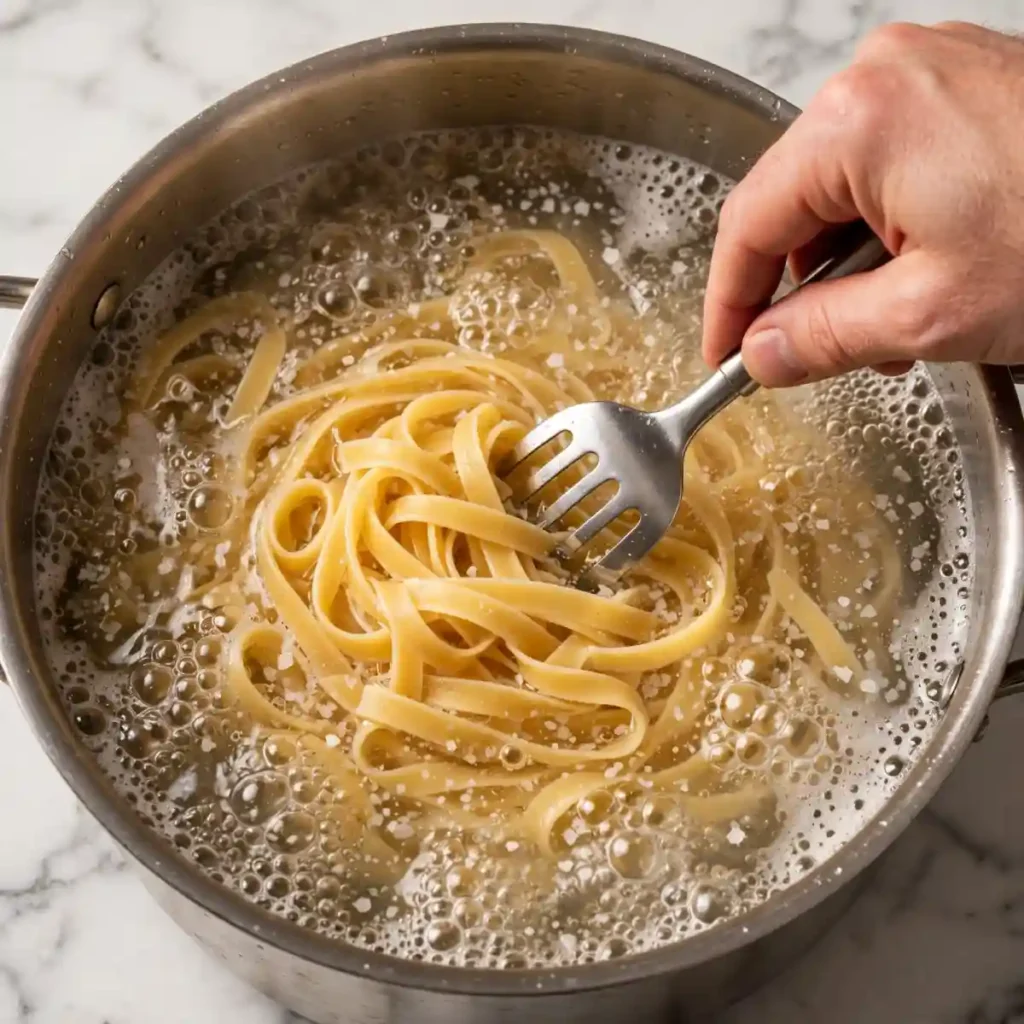
Bring a large pot of water to a full, rolling boil. Add 2 tablespoons of fine salt; the water should taste noticeably salty, not overwhelmingly so, but clearly seasoned. Add the fettuccine and cook for 1 minute less than the package’s al dente instruction; the pasta will finish cooking in the sauce and will reach the ideal texture there. It should be slightly underdone when you pull it from the pot, with a small white dot still visible in the cross-section when a strand is broken.
Before draining, scoop out 240ml (1 cup) of the cloudy pasta cooking water into a heatproof measuring cup and set aside. This starchy liquid is the sauce’s consistency and emulsification adjuster; don’t skip it. Drain the pasta and toss it with a tiny drizzle of olive oil to prevent clumping while you finish the sauce, but don’t rinse it; rinsing removes the surface starch that helps the sauce adhere.
Step 3: Build the Alfredo Sauce Base
In the same skillet used for the chicken, pour off any excess oil leaving only about 1 tablespoon. Add the butter to the skillet over medium heat and let it melt completely, then foam and subside; the small amount of browning that occurs from the residual chicken fond and the butter adds to the sauce’s depth. Add the minced garlic and cook for 60 to 90 seconds, stirring constantly, until the raw garlic smell softens and the garlic turns very faintly golden at the edges. Don’t let it brown; browned garlic produces a bitter note that dominates the delicate cream sauce.
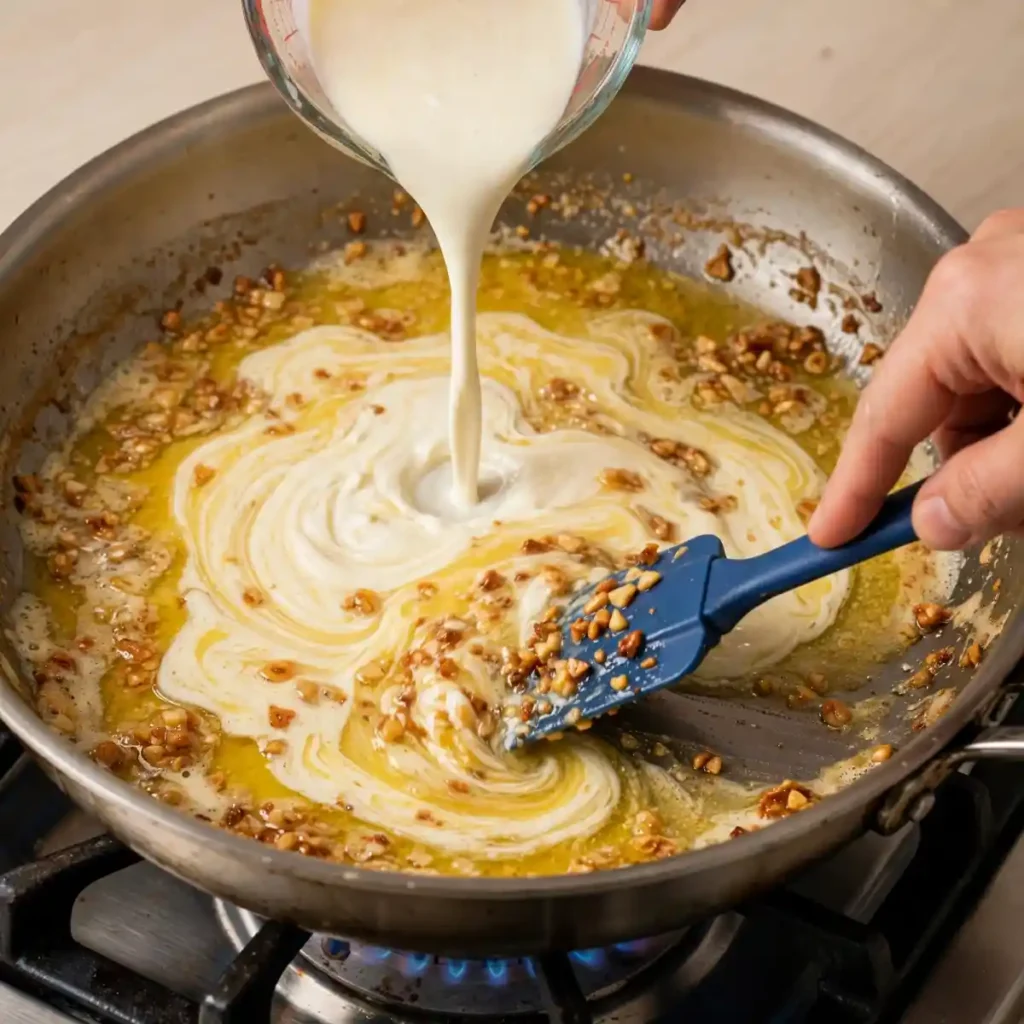
Pour the heavy cream into the pan in a steady stream while stirring to lift any remaining fond from the base. Bring the cream to a gentle simmer, not a full boil, over medium heat; bubbles should appear slowly at the edges and the cream should look slightly thickened after 2 to 3 minutes of gentle simmering. Add the grated nutmeg and stir through.
Chef’s Note: The fond left by the chicken sear is the reason the sauce tastes better built in the same pan rather than a clean one. Those browned residues are concentrated Maillard compounds from the chicken’s proteins and seasonings; when the cream dissolves them off the pan base during the initial simmer, they distribute through the entire sauce volume and produce the savory depth that makes alfredo taste like more than cream and cheese.
Step 4: Add the Parmesan Off the Heat
Remove the skillet from the heat entirely. Wait 20 to 30 seconds for the cream to stop bubbling and settle below approximately 85°C. Add the freshly grated Parmesan in three equal additions, stirring each addition completely into the cream before the next goes in. Use a figure-eight stirring motion that moves the cheese through the cream in broad strokes rather than simply circling, which distributes the cheese more evenly and prevents it from clumping at one side of the pan.
The sauce will look thin after the first addition and progressively thicker and more cohesive with each subsequent addition; after all three are incorporated the sauce should coat the back of a spoon in a smooth, draping layer. Taste it at this point; it should be deeply savory, faintly nutty from the Parmesan, and well-rounded rather than sharp or one-dimensionally salty.
Chef’s Note: The critical temperature window for adding Parmesan to cream is 70 to 85°C. Above 90°C, the heat denatures the cheese’s casein proteins too aggressively and they tighten into chewy, insoluble clumps that no amount of stirring will smooth out; this is the grainy alfredo problem. Below 70°C, the cream isn’t warm enough to fully melt the Parmesan’s fat phase and the cheese sits in the sauce as shreds rather than dissolving into it. Off the heat with a 20 to 30 second wait puts the cream in the right window consistently.
Step 5: Finish the Pasta in the Sauce
Return the skillet to low heat. Add the drained fettuccine directly to the Parmesan cream sauce and toss using tongs to coat every strand in the sauce. The pasta will absorb the sauce rapidly; add the reserved pasta cooking water 2 tablespoons at a time, tossing after each addition, until the sauce is fluid enough to coat the pasta without pooling at the bottom of the pan. The pasta needs 1 to 2 minutes in the sauce over low heat to finish cooking to the ideal al dente texture and to absorb the sauce’s flavor into the noodles.
Taste and adjust salt and pepper before plating.
Step 6: Plate and Add the Chicken
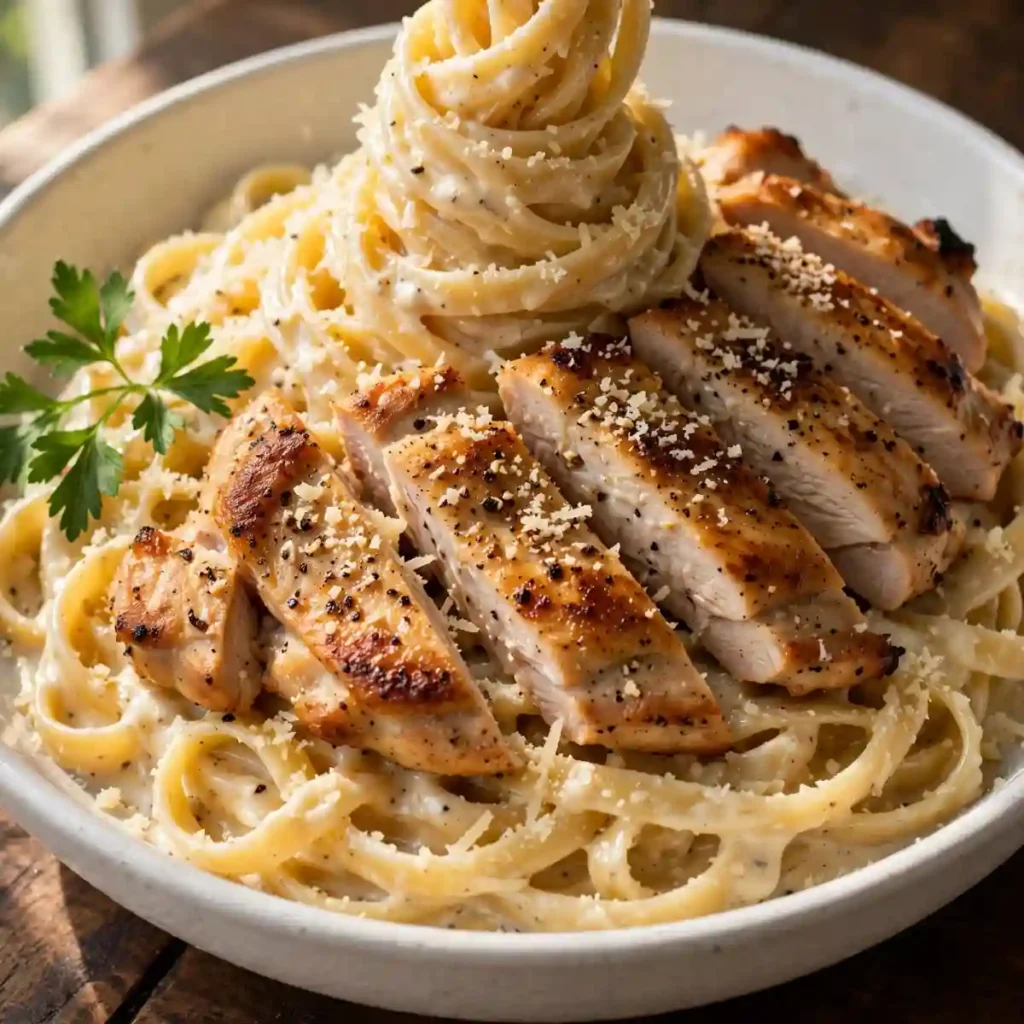
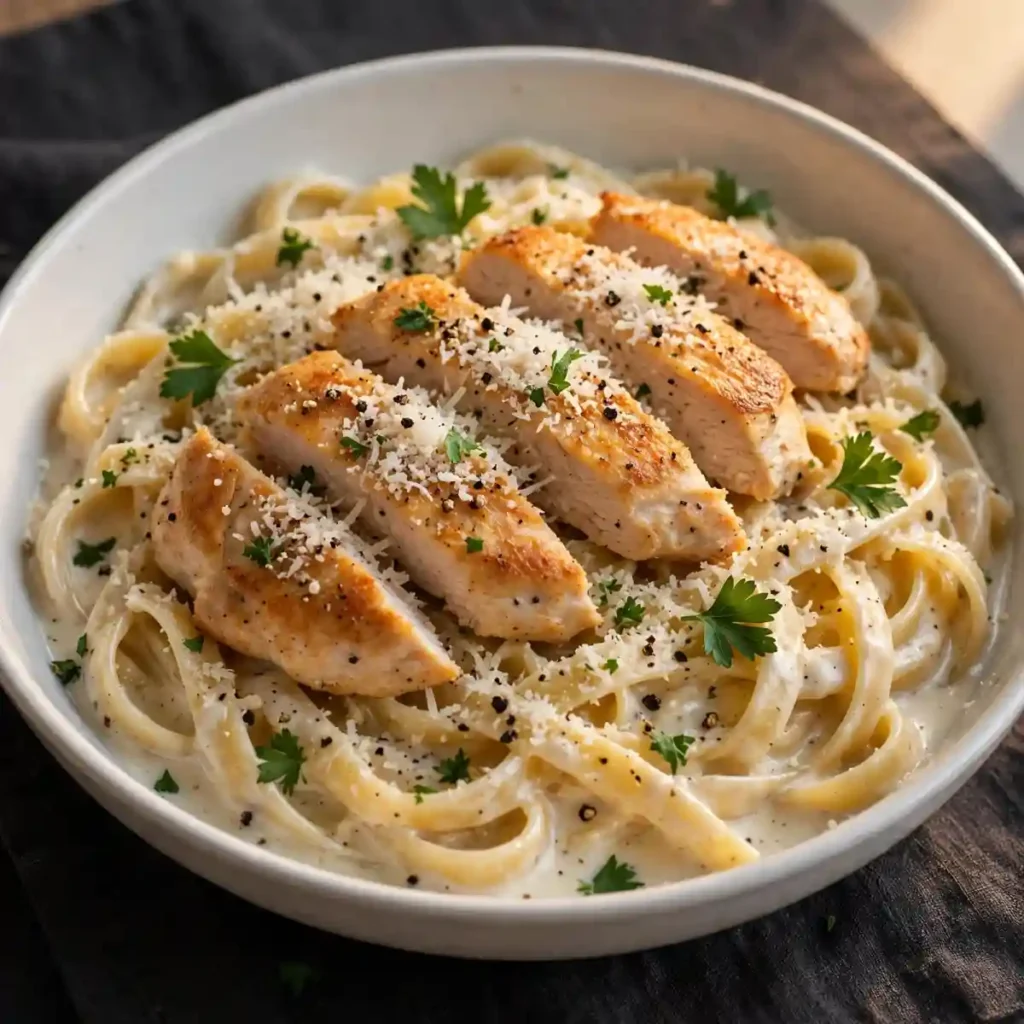
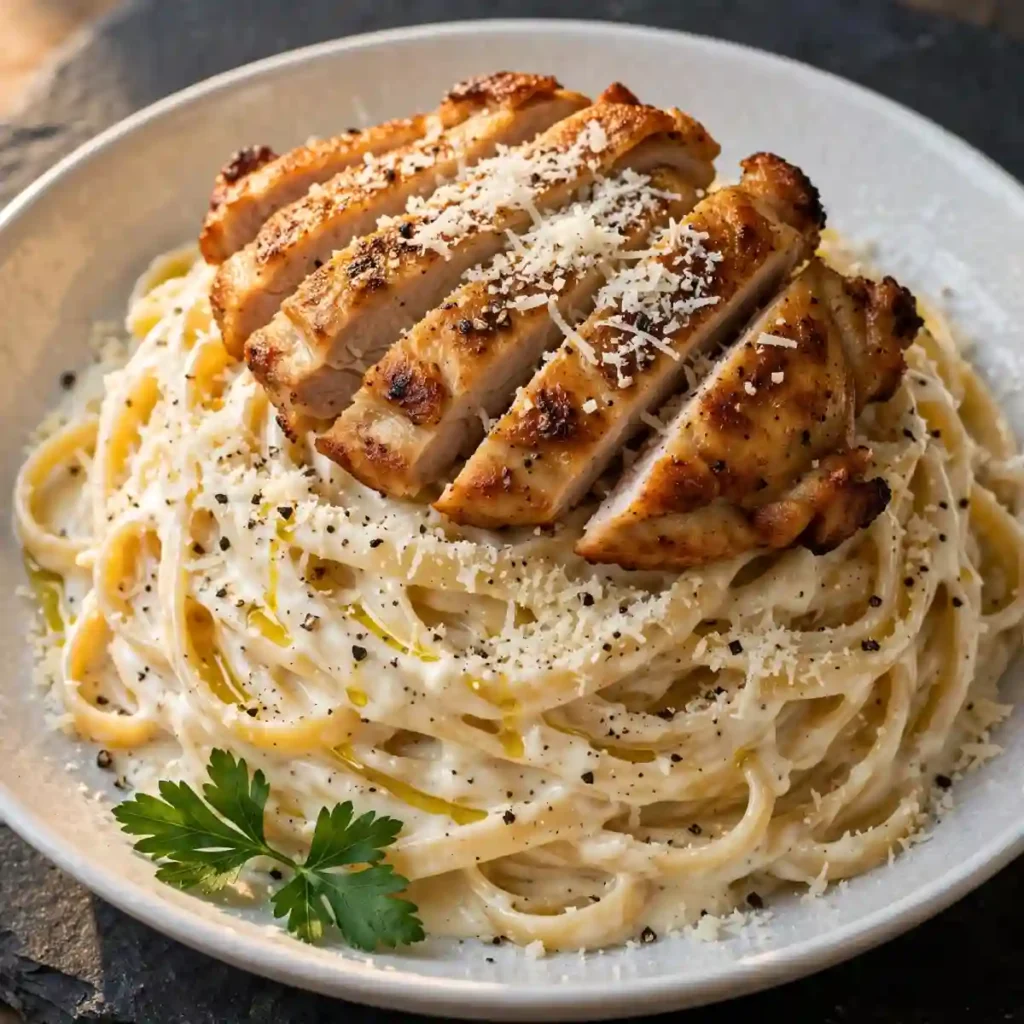
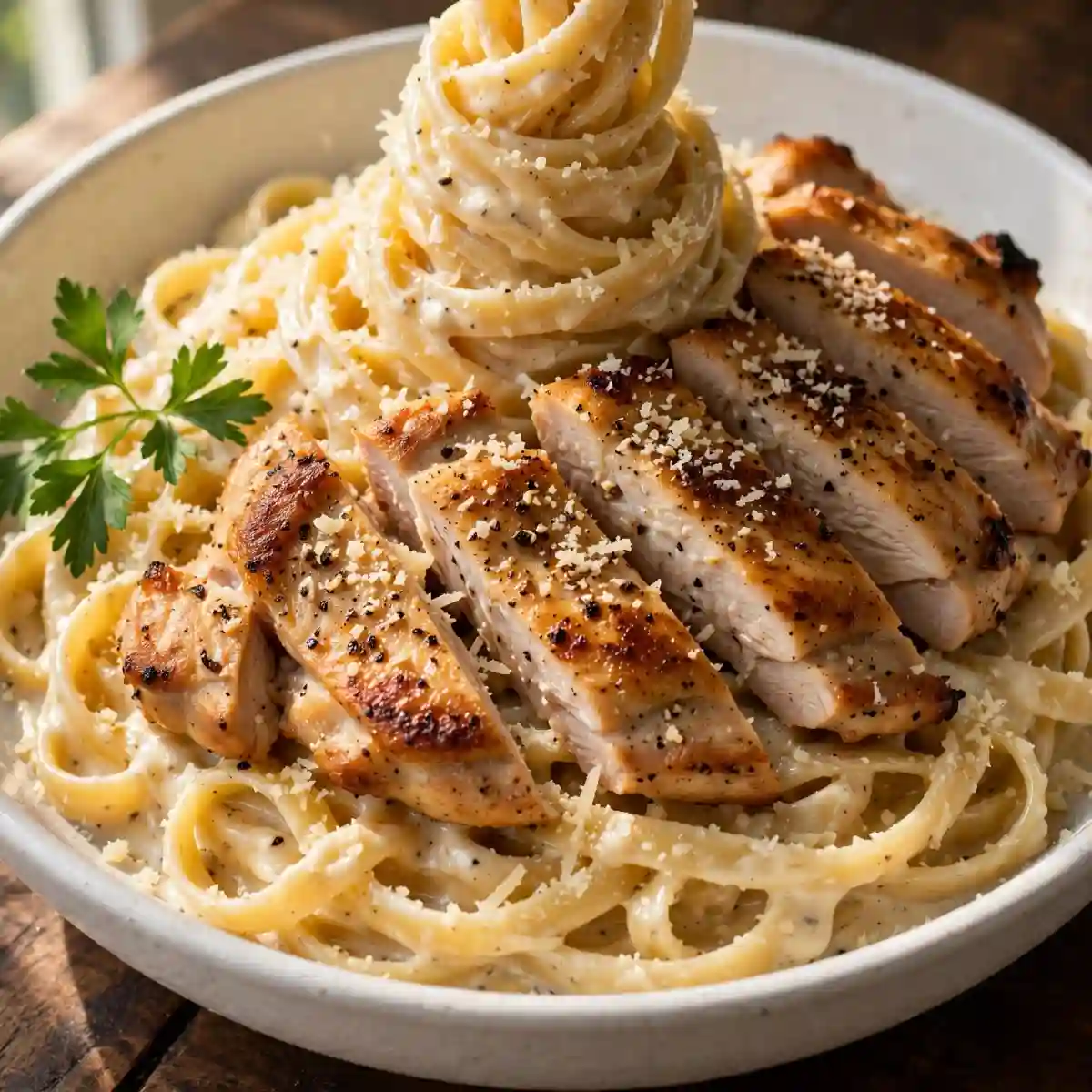
Divide the pasta between four warm, wide bowls using tongs, twirling each portion into a slight mound. Arrange the sliced chicken pieces over and around each pasta portion. Finish each bowl with a generous scatter of additional freshly grated Parmesan, freshly cracked black pepper, and the optional flat-leaf parsley. Serve immediately while the sauce is at its ideal silky, flowing consistency.
Common Mistakes and Troubleshooting
| Problem | Cause | Solution |
|---|---|---|
| Sauce grainy and separated | Parmesan added while cream was at a full boil, or pre-shredded cheese used | Always remove the pan from heat and wait 20 to 30 seconds before adding Parmesan; use only freshly grated block Parmesan |
| Sauce too thick and gluey | Too little pasta water added, or pasta overcooked and releasing excess starch | Add reserved pasta water 2 tablespoons at a time while tossing; use al dente pasta rather than soft |
| Sauce too thin and watery | Cream not simmered long enough to reduce before Parmesan was added | Simmer cream for a full 2 to 3 minutes until it shows early thickening before removing from heat |
| Chicken dry and stringy | Cooked past 74°C, or not rested before slicing | Pull chicken at exactly 74°C; rest for 5 minutes before slicing to allow moisture to redistribute |
| Pasta clumped together | Pasta rinsed after draining, or held too long before adding to sauce | Never rinse fettuccine; add to sauce within 2 minutes of draining |
| Garlic bitter and overwhelming | Garlic browned or burned before the cream was added | Cook garlic on medium heat for 60 to 90 seconds only until fragrant and very faintly golden; remove from heat immediately if it smells sharp |
Variations and Substitutions
- Broccoli chicken alfredo: Add 200g of broccoli florets blanched in the pasta water during the last 2 minutes of the pasta’s cook time; drain both together and add to the sauce simultaneously. The broccoli provides textural contrast to the soft pasta and absorbs the sauce in the same way the noodles do, so each floret is coated in Parmesan cream rather than sitting separately on the plate.
- Sun-dried tomato chicken alfredo: Stir 60g of roughly chopped oil-packed sun-dried tomatoes into the sauce after the Parmesan has fully melted. The tomatoes add a concentrated, slightly acidic sweetness that cuts through the cream’s richness and provides a visual contrast of deep red against the white sauce. This version pairs particularly well with the smoked paprika crust on the chicken.
- Mushroom chicken alfredo: Sauté 200g of thinly sliced cremini mushrooms in 1 tablespoon of butter until golden and their moisture has completely evaporated, about 7 minutes, before building the cream sauce in the same pan. The mushrooms add an earthy, umami depth and a satisfying meaty texture that makes the dish feel more substantial.
- Spicy chicken alfredo: Add 1/2 teaspoon of red chili flakes to the garlic while it cooks in the butter and increase to 1 teaspoon for a more pronounced heat. The chili’s heat contrasts the cream’s richness in a way that makes the sauce taste more vivid and less one-dimensionally heavy; this version works particularly well with the smoked paprika chicken.
- Shrimp alfredo: Replace the chicken thighs with 500g of large shrimp, peeled and deveined. Season with the same spice blend, sear in the same oil for 90 seconds per side until pink and opaque throughout, and slice or leave whole. The shrimp’s delicate sweetness pairs beautifully with the Parmesan cream and the total cook time drops to under 25 minutes.
- Gluten-free chicken alfredo: Replace the fettuccine with certified gluten-free rice fettuccine or a good-quality gluten-free spaghetti at the same weight. All sauce ingredients are naturally gluten-free. Cook the gluten-free pasta 1 to 2 minutes less than the package instruction; gluten-free pasta softens faster than wheat in hot sauce and can become mushy if the timing isn’t shortened.
Serving Suggestions
- Serve immediately after plating; alfredo sauce thickens as it cools and the pasta continues absorbing it, so the ideal texture window is within 5 minutes of leaving the pan. Warm the serving bowls for 5 minutes in a 100°C oven before plating to extend that window.
- A simple green salad dressed with lemon juice and extra virgin olive oil alongside is the natural accompaniment; the acid from the lemon cuts through the cream sauce’s richness and refreshes the palate between bites of the dense, Parmesan-heavy pasta.
- Serve with thick slices of crusty garlic bread or a warm baguette; the bread’s purpose is the sauce remaining in the bowl after the pasta is finished, and a good alfredo produces enough of it to make the bread worthwhile.
- For a more substantial dinner table, pair with roasted cherry tomatoes on the vine; the tomatoes’ bright acidity and slight sweetness contrast the creamy pasta and provide a visual and flavor complement to the golden chicken.
- Finish each bowl with a drizzle of good-quality extra virgin olive oil poured from a height just before serving; the oil adds a fruity, peppery top note that makes the cream sauce taste lighter and more complex than it would on its own.
- Pair with cold sparkling water with lemon or a cold pressed apple juice; both provide a clean, slightly sweet-acid contrast to the rich Parmesan cream and prevent the meal from feeling heavy after the first few bites.
Tips for the Best Results
- Grate the Parmesan immediately before using it. Pre-grated Parmesan starts losing its volatile aromatic compounds (the ones responsible for its characteristic sharp, nutty smell) from the moment it’s grated; a block grated fresh 10 minutes before using tastes noticeably more vivid than the same cheese grated the day before. For alfredo specifically, freshly grated Parmesan also melts more cleanly than older grated cheese because it hasn’t had time to dry out and develop a desiccated outer layer that resists melting.
- Never add Parmesan to boiling cream. This is the single most common alfredo failure and it’s completely avoidable. Boiling temperature (100°C) causes the casein proteins in Parmesan to seize and tighten rather than melt; they form tough, chewy clumps that cannot be smoothed out regardless of subsequent stirring or heat. Remove the pan from heat, wait 20 to 30 seconds, and add the cheese gradually to warm rather than boiling cream.
- Reserve the pasta water before draining. It’s easy to forget in the motion of draining, but pasta water is irreplaceable once the pasta is in the colander. Set a measuring cup directly in the sink or at the base of the colander before you even carry the pot to the drain; the act of placing it makes you remember to scoop before pouring. The dissolved starch in that water is the sauce’s most effective consistency adjuster and its best emulsification aid.
- Finish the pasta in the sauce, not in the bowl. Tossing drained pasta in sauce in the skillet over low heat for 60 to 90 seconds does two things that plating separately cannot: it allows the pasta’s surface starch to thicken the sauce slightly, and it allows the warm sauce to penetrate the pasta’s outer layer rather than simply coating it. The difference is subtle but real; pasta finished in sauce tastes more integrated than pasta plated and sauced at the table.
- Use chicken thighs, not breasts, for reliability. At the high heat needed for a golden sear, chicken thighs reach temperature without drying because their fat content continues to baste them internally during cooking. Chicken breasts at the same heat and time can be done at the thinner end and underdone at the thicker end; they require pounding to even thickness for the same reliable result. For a weeknight recipe, thighs remove one variable and produce a more forgiving, juicier protein every time.
Storage Tips
Refrigerator
Chicken alfredo pasta keeps in the refrigerator for up to 3 days in a sealed container. The sauce thickens considerably during storage as the pasta absorbs the remaining cream; the day-2 version straight from the refrigerator will look significantly denser and more clumped than the fresh version. This reverses on reheating with the addition of a splash of cream or water. Store the chicken and pasta together or separately; together is simpler and the chicken continues to absorb the sauce flavors during storage, which some people prefer.
Freezer
Cream-based pasta sauces generally don’t freeze well as assembled dishes; the cream separates during the freeze-thaw cycle and produces a watery, broken sauce on reheating. If you want to freeze the components: freeze the seared, sliced chicken separately for up to 2 months (it reheats well); freeze the sauce alone (without pasta) in a sealed container for up to 1 month, understanding that it may need vigorous stirring and a splash of cream to re-emulsify on reheating; cook fresh pasta on the day. Fully assembled chicken alfredo is best not frozen.
Reheating
Stovetop reheating produces the best result for maintaining sauce consistency. Add the leftover chicken alfredo to a skillet over medium-low heat with 3 to 4 tablespoons of whole milk, cream, or chicken broth per serving. Heat gently for 4 to 5 minutes, tossing frequently, until the sauce has loosened and the pasta is heated through. Avoid high heat; it breaks the sauce’s emulsion and produces a greasy, separated result. Microwave reheating at 50% power in 60-second intervals with a splash of milk stirred between works for a single portion; the sauce won’t be as smooth but is adequately hot and creamy for a quick meal.
Make-ahead note: The most practical make-ahead approach for chicken alfredo is to cook the chicken up to 2 days ahead, refrigerate sliced, and reheat gently in the skillet before serving while the fresh sauce and pasta are made on the day. The 10-minute active sauce process is the fastest part of the recipe; preparing it fresh while the pasta cooks simultaneously produces the best texture result.
Nutrition Information
Per serving, approximately 1/4 of the recipe:
| Nutrient | Amount |
|---|---|
| Calories | 820 kcal |
| Protein | 46g |
| Total Carbohydrates | 72g |
| Dietary Fiber | 3g |
| Total Sugar | 4g |
| Total Fat | 38g |
| Saturated Fat | 20g |
| Cholesterol | 195mg |
| Sodium | 780mg |
| Vitamin C | 2mg |
| Calcium | 320mg |
| Iron | 3.4mg |
| Potassium | 490mg |
Nutrition values are approximate and may vary based on chicken thigh size, Parmesan brand, cream fat content, and pasta quantity served.
Why This Recipe Works
The smooth, non-grainy alfredo sauce depends entirely on managing the temperature at which Parmesan is added to the cream. Parmesan’s protein structure is primarily casein, organized in calcium-phosphate-bridged micelle networks within the cheese’s solid matrix. When these micelles are gradually dispersed into warm fat (the cream’s fat droplets) at temperatures between 70 and 85°C, the calcium bridges partially dissolve and the casein proteins unfurl from their micelle structure into individual strands that distribute through the fat phase as a smooth, homogeneous dispersion. This dispersion is what makes alfredo sauce silky; the casein strands are individually suspended rather than aggregated. Above 90°C, the heat denatures the casein proteins into irreversibly tightened conformations that aggregate into visible clumps and precipitate out of the fat phase; this is the grainy alfredo result. The off-heat technique keeps the cream below 90°C throughout the cheese addition by removing the heat source before adding the cheese, so the temperature at the moment of addition is 80 to 85°C rather than 95 to 100°C.
The pasta cooking water’s role in finishing the sauce is not simply about adjusting thickness; it’s about emulsification. When pasta cooks in heavily salted water, it releases starch granules and starch fragments into the water; these dissolved starches act as surface-active agents that stabilize the boundary between the sauce’s fat droplets and its water phase. When a few tablespoons of this starchy water are added to the warm Parmesan cream and tossed with the pasta, the starch molecules insert themselves at the fat-water interface and physically prevent the fat droplets from coalescing and separating from the aqueous phase. This emulsifying action is why Italian pasta cooking consistently uses pasta water as a sauce ingredient rather than plain water; the starch content is what makes the difference.
Finishing the pasta in the sauce rather than saucing it in the bowl produces a more integrated result through a specific starch exchange mechanism. During the last 60 to 90 seconds of tossing in the warm sauce, the pasta’s outermost starch layer, gelatinized during cooking but not yet fully set, absorbs the cream’s fat molecules and exchanges starch with the sauce. The pasta releases starch into the sauce, thickening it fractionally and adding cohesion; the sauce returns fat and flavor molecules into the pasta’s outer layer, seasoning it beyond the salted cooking water’s contribution. The result is pasta that tastes of the sauce from just inside its surface rather than pasta coated on the outside only.
Using chicken thighs’ fat content to self-baste during the sear is a thermodynamic advantage over breasts for this application. The thigh’s higher intramuscular fat content (approximately 7 to 9% fat versus 1 to 3% for breast) renders progressively as the sear proceeds; this rendered fat continuously bastes the exposed meat surfaces at temperatures above its melting point, keeping those surfaces lubricated and preventing the kind of rapid moisture loss that produces dryness in breast meat at the same searing temperature. The fat also carries flavor compounds from the thigh’s myoglobin and connective tissue proteins, which concentrate on the seared surface and produce the flavorful, deeply colored crust whose fond then directly flavors the cream sauce.
The garlic’s contribution changes fundamentally between 60 and 90 seconds of cooking in butter and anything beyond 2 minutes. At 60 to 90 seconds over medium heat, the allicin in the minced garlic converts through thermal degradation into a range of secondary sulfur compounds including diallyl disulfide and ajoene; these compounds have a sweet, savory, roasted-garlic character that is the aromatic base of the sauce. Beyond 2 minutes at the same heat, the garlic begins browning through Maillard reactions with its own amino acids and sugars; the resulting browning compounds are sharp, slightly bitter, and compete with the cream’s delicate flavor rather than complementing it. The 60 to 90 second window is the precise range where the allicin conversion is complete but Maillard browning hasn’t begun.
Frequently Asked Questions
Can I make chicken alfredo pasta ahead of time?
The most practical make-ahead strategy is to cook and slice the chicken up to 2 days ahead and refrigerate; reheat gently in the skillet before the pasta is done. Make the sauce and finish the pasta fresh on the day of serving; the entire active sauce process takes about 10 minutes while the pasta cooks alongside. Fully assembled chicken alfredo can be refrigerated for up to 3 days and reheats adequately with a splash of cream on medium-low heat, though the fresh-made version is noticeably silkier.
Why is my alfredo sauce grainy?
Grainy alfredo sauce comes from one cause almost every time: Parmesan added to boiling or near-boiling cream. Temperatures above 90°C cause the cheese’s casein proteins to seize and clump rather than melt smoothly into the fat phase. Remove the pan from heat, wait 20 to 30 seconds for the cream to drop below 90°C, and add the freshly grated Parmesan in three additions rather than all at once. Using pre-shredded Parmesan with anti-caking additives produces the same grainy result regardless of temperature; always grate fresh from a block.
Can I use chicken breasts instead of thighs?
Yes, with one adjustment: pound the chicken breasts to an even 1.5cm thickness before seasoning to ensure the thinner and thicker sections cook simultaneously. Without pounding, the thin end overcooks and dries while the thicker end is still reaching temperature. The sear-then-rest method is identical; pull at 74°C internal temperature. The breast version is leaner and slightly milder in flavor than the thigh version; the sauce carries the dish either way.
How do I know when the pasta is at the right stage to add to the sauce?
Pull the fettuccine 1 minute before the package’s stated al dente time. Break one strand and look at the cross-section; a small white dot at the very center indicates it’s slightly underdone, which is exactly right. It will finish cooking in the warm sauce. If no white dot is visible, the pasta is fully al dente and needs to go into the sauce immediately to prevent it from becoming too soft by the time it’s served. Never cook the pasta to the soft stage before adding to the sauce.
Is chicken alfredo gluten-free?
The sauce itself, made with butter, cream, garlic, Parmesan, and seasonings, is naturally gluten-free. The traditional fettuccine is not, as it’s made from wheat flour. To make the full dish gluten-free, replace the fettuccine with certified gluten-free pasta at the same weight. All other components are inherently gluten-free. Verify the Parmesan label if strict compliance is needed, as some blended cheese products contain anti-caking agents derived from wheat.
Can I substitute the heavy cream with something lighter?
Half-and-half or single cream can replace the heavy cream at the same quantity, but requires a technique adjustment: add 1 tablespoon of cornstarch whisked into 2 tablespoons of cold water to the garlic-butter base before the cream goes in. The cornstarch compensates for the lower fat content’s reduced emulsification ability and prevents the cream from curdling against the warm Parmesan. The sauce will be lighter and less coating on the palate; whole milk with the same cornstarch addition works for the lightest version, producing a noticeably thinner sauce.
Why does the sauce become thick and gluey as it cools?
The thickening happens because the pasta continues absorbing the cream and because the Parmesan’s fat solidifies progressively as the temperature drops. This is normal behavior for a cream and cheese sauce and doesn’t indicate anything went wrong. When reheating, add 2 to 3 tablespoons of cream, milk, or warm water per serving and stir over medium-low heat until the sauce loosens and flows again. For plating at a dinner party, serve immediately in warmed bowls to extend the ideal texture window.
Conclusion
Chicken alfredo pasta rewards the two minutes of patience it takes to learn why the Parmesan goes in off the heat and why the pasta finishes in the sauce rather than in the bowl. Those two decisions account for almost the entire difference between a grainy, separated sauce and a silky, restaurant-quality one. Neither requires any special skill; they just require understanding the reason before you start.
The practical value of this recipe is its weeknight reliability. With the chicken pre-cooked and refrigerated, the entire dinner is on the table in under 20 minutes on the busiest evenings. The sauce comes together in the same time the pasta takes to boil; the whole thing is one pot, one pan, and 35 minutes of active cooking time that produces something genuinely worth eating.
If you loved this recipe, save it to your easy pasta recipes and Italian-American dinner ideas Pinterest board so you can find it easily later. For more recipes and daily food inspiration, follow TheCookingVibes on Pinterest.
Chicken Alfredo Pasta
Ingredients
Equipment
Method
- Pat chicken thighs completely dry. Mix garlic powder, Italian seasoning, smoked paprika, salt, and pepper; press firmly onto both sides of each thigh. Heat olive oil in a large skillet over medium-high until shimmering. Add thighs smooth-side down; sear 5 to 6 minutes undisturbed until deep golden-brown and releasing cleanly. Flip; sear 4 to 5 minutes more until a thermometer reads 74°C (165°F) throughout. Transfer to a board, rest 5 minutes, slice diagonally.
- Bring a large pot of water to a full boil. Add 2 tablespoons of salt. Cook fettuccine 1 minute less than the package al dente time. Reserve 1/2 cup pasta water before draining; do not rinse pasta.
- In the same skillet used for chicken, keep 1 tablespoon of fat. Melt butter over medium heat until foaming. Add garlic; cook 60 to 90 seconds until fragrant and faintly golden. Pour in cream; bring to a gentle simmer. Grate in nutmeg; season with salt and pepper.
- Remove skillet from heat entirely. Wait 20 to 30 seconds. Add freshly grated Parmesan in three equal handfuls, stirring until melted and smooth before the next addition. Add reserved pasta water 1 to 2 tablespoons at a time if needed for a silky consistency.
- Return skillet to low heat. Add drained fettuccine and toss to coat. Add reserved pasta water 2 tablespoons at a time until the sauce clings to the pasta. Taste and adjust salt and pepper.
- Divide pasta between warm, wide bowls. Arrange sliced chicken on top. Scatter additional Parmesan, chopped parsley, and freshly cracked black pepper. Serve immediately.
Notes
- Never add Parmesan to boiling cream; remove from heat and wait 20 to 30 seconds before adding cheese.
- Always grate Parmesan fresh from a block; pre-shredded contains anti-caking agents that prevent smooth melting.
- Reserve pasta water before draining; its dissolved starch emulsifies the sauce and adjusts consistency.
- Use chicken thighs for a more forgiving, juicier protein; if using breasts, pound to even 1.5cm thickness before cooking.
- Contains dairy (butter, heavy cream, Parmesan) and gluten (fettuccine). Naturally egg-free when dry pasta is used (verify package). Naturally nut-free.
- This recipe has not been tested in a certified allergen-free kitchen and cannot be guaranteed safe for any specific allergy.
This recipe has not been tested in a certified allergen-free kitchen and cannot be guaranteed safe for any specific allergy.