Easy Cornbread Casserole (Soft, Buttery, Crowd Pleaser)
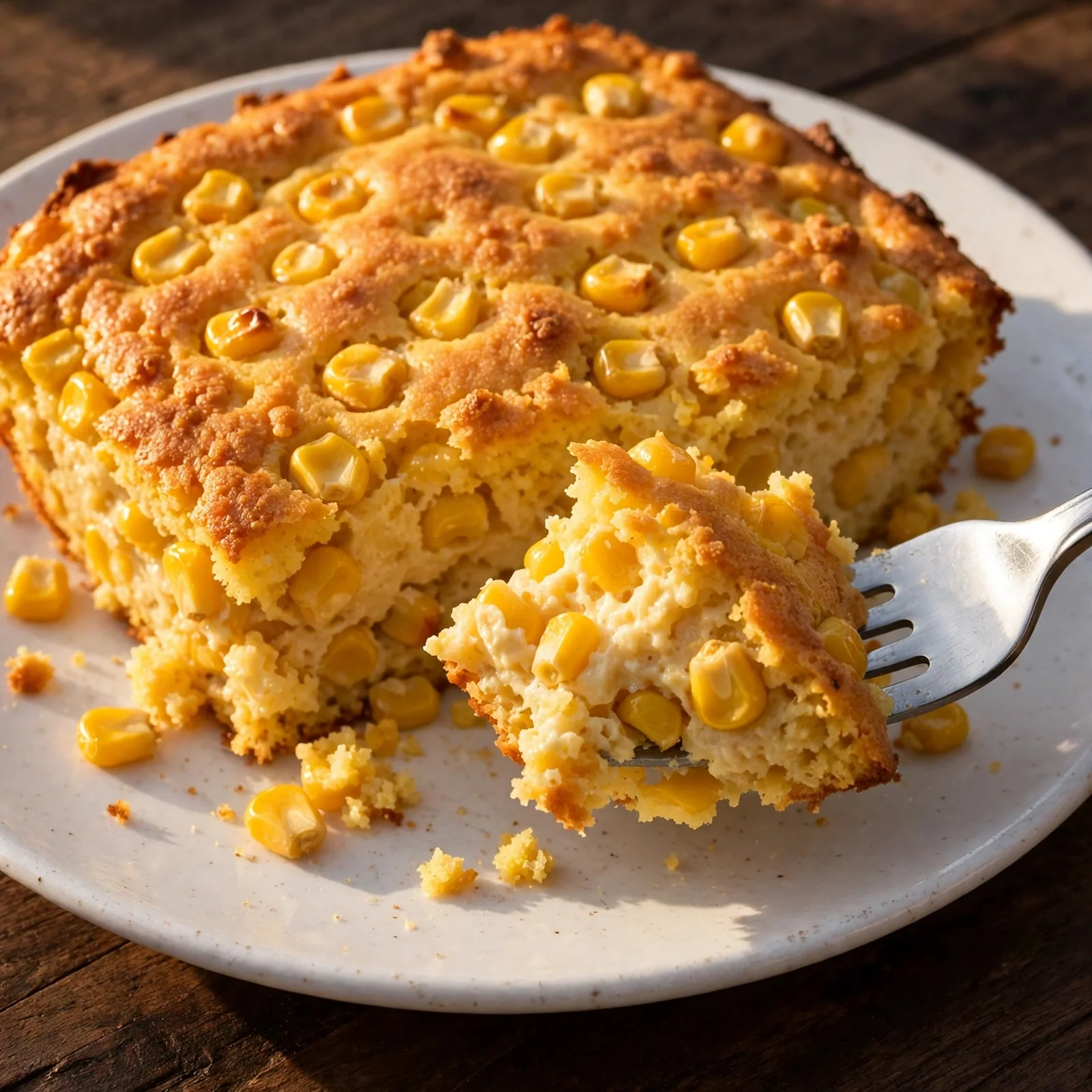
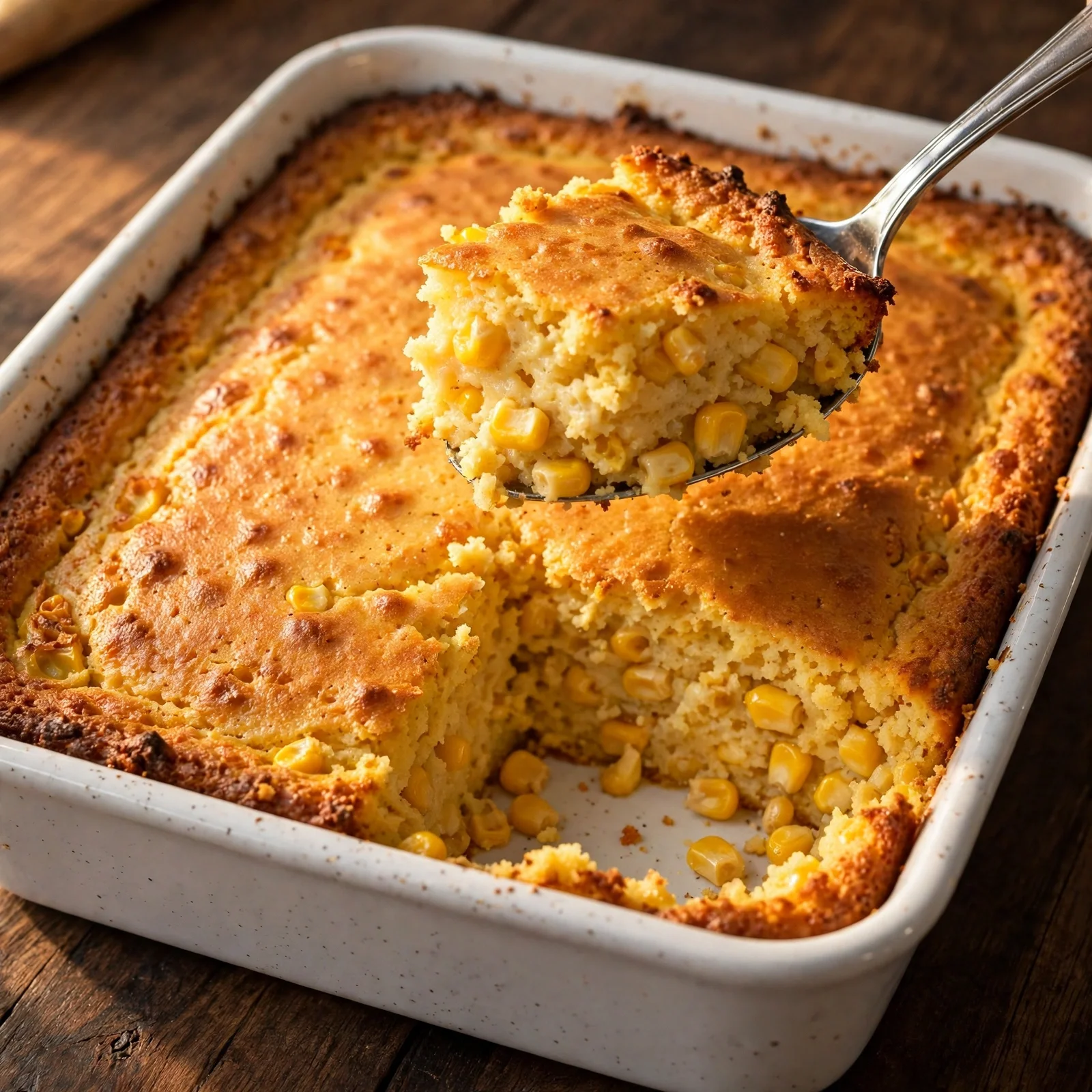
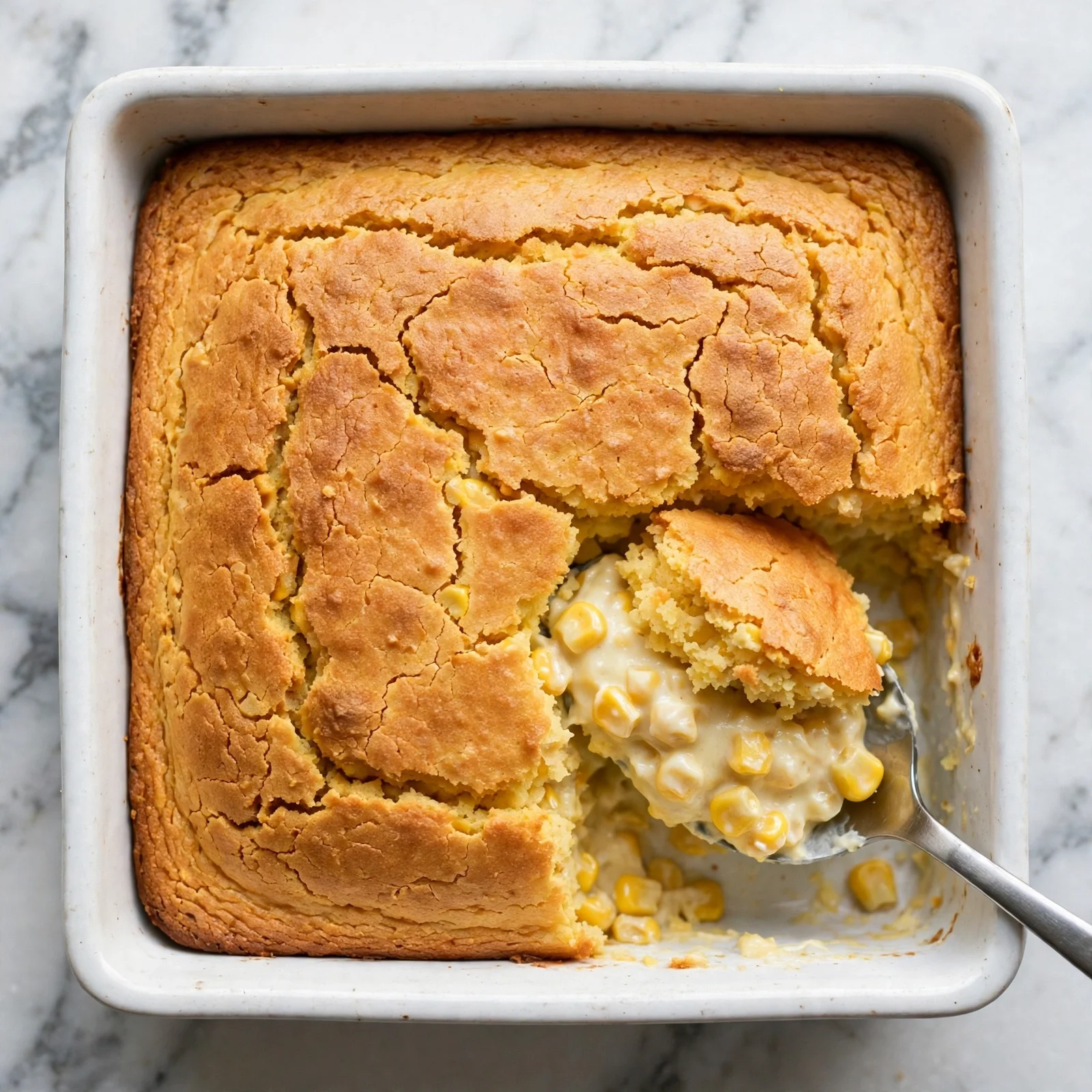
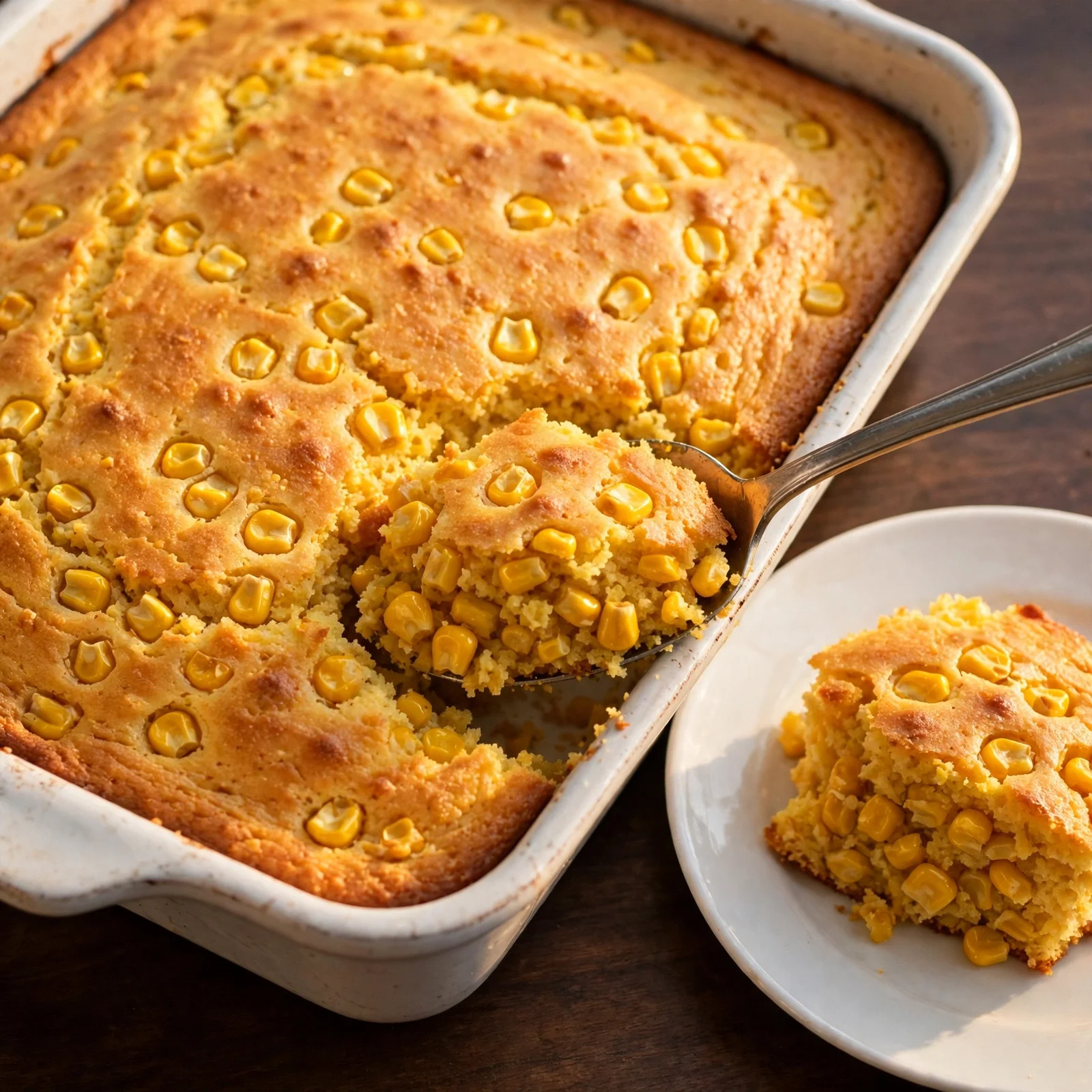
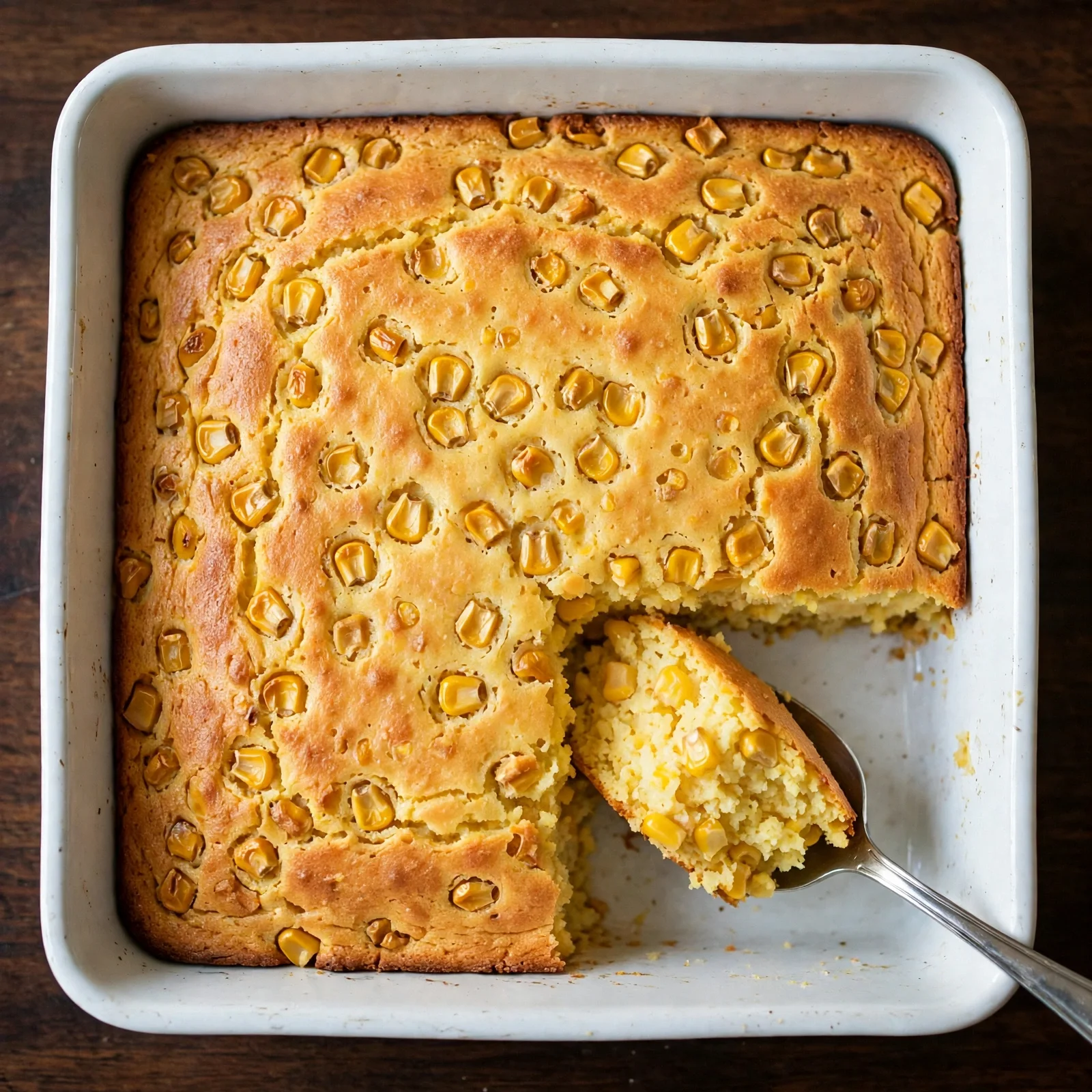
Somewhere between a dense cornbread and a corn pudding sits cornbread casserole: scoopable with a spoon rather than sliceable like a brick, with a golden baked top and a center that is soft, almost custardy, and richly flavored from both whole corn kernels and cream-style corn working together in the same batter. It is the kind of dish that disappears from a Thanksgiving or holiday buffet before most people have finished their first plate, and the kind people ask about afterward.
This cornbread casserole recipe uses a simple batter built from two types of corn, sour cream, butter, eggs, and a box of corn muffin mix as the base. The sour cream is what distinguishes this version from a plain cornbread: it adds a slight tang, a tender crumb, and a moisture that keeps the casserole soft rather than drying out in the oven. It bakes in a standard 9×13 inch dish, serves 10 to 12 people, and takes 50 minutes from mixing bowl to table. It is genuinely one of the easiest dishes you can bring to a gathering and one of the most reliably appreciated.
Why You’ll Love This Cornbread Casserole
- One bowl, one dish, almost no effort. Mix the batter by hand in a single bowl, pour it into a greased baking dish, and bake. No electric mixer, no separate steps, no technique required beyond basic stirring.
- The soft, custardy texture is the whole point. This is not a dry, crumbly cornbread. The sour cream and cream-style corn produce a center that is almost pudding-like, soft enough to scoop with a spoon and genuinely satisfying in a way that standard cornbread isn’t.
- Feeds a large group from one dish. A 9×13 inch casserole serves 10 to 12 people generously as a side dish. For a potluck or holiday dinner, this is the recipe that fills the buffet table without requiring multiple batches.
- Genuinely good at room temperature. Unlike many hot casseroles that are noticeably worse once they cool, cornbread casserole holds its texture and flavor well for an hour after coming out of the oven, which makes it practical for buffet-style serving.
- Customizable to any occasion. A handful of shredded cheddar, a can of diced green chillies, or a drizzle of honey over the finished dish changes the character completely with almost no additional work. The base recipe supports additions in every direction.
Ingredients You’ll Need
Recipe Timing
| Detail | Info |
|---|---|
| Servings | 10 to 12 |
| Difficulty | Easy |
| Course | Side Dish |
| Cuisine | American, Southern-Inspired |
| Prep Time | 10 minutes |
| Cook Time | 40 minutes |
| Total Time | 50 minutes |
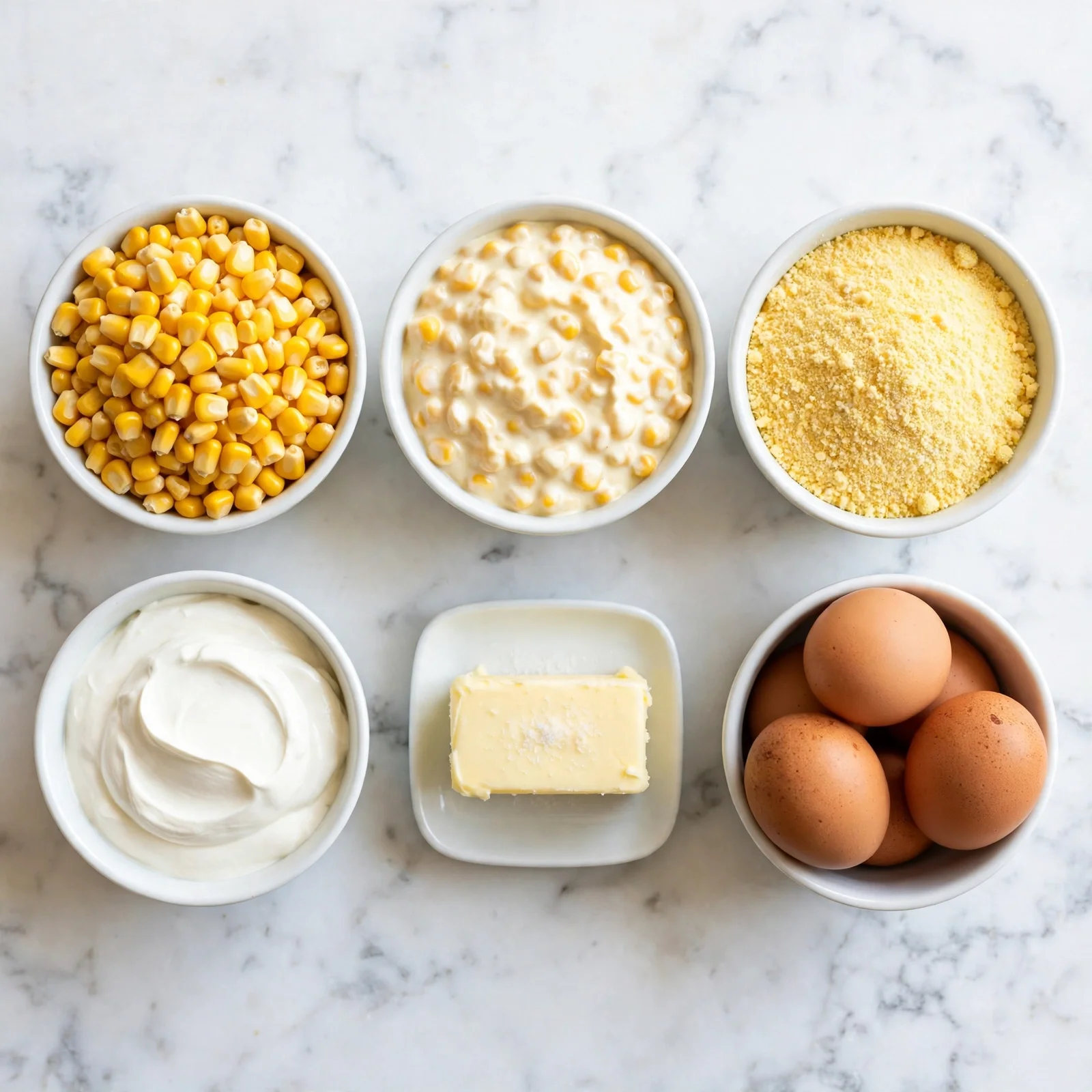
The two most important ingredients in this recipe are the two types of corn, and understanding why both are necessary. Whole kernel corn (drained from a can) provides texture: distinct corn pieces that give the finished casserole something to bite into. Cream-style corn provides moisture, body, and a concentrated, slightly sweet corn flavor: its puree-like consistency disperses through the batter during baking and creates the soft, almost pudding-like interior texture that is the defining characteristic of a good cornbread casserole. Using only one type produces either a casserole that is too dry and chunky or one that is too smooth and undifferentiated. Both together are what produce the right result.
For the corn muffin mix, any standard 8.5 oz (240g) box of dry corn muffin mix works. The mix provides the cornmeal, leavening, sugar, and flour in a pre-balanced ratio that removes the need to measure multiple dry ingredients separately. If you prefer to make it from scratch, substitute with a homemade mix of 1 cup fine cornmeal, 1/3 cup all-purpose flour, 3 tablespoons sugar, 1.5 teaspoons baking powder, and 1/4 teaspoon salt.
For the sour cream, full-fat sour cream produces the richest, most tender result. Low-fat sour cream works but the casserole will be slightly less moist. Greek yogurt (full-fat, plain) is a workable substitute at the same quantity.
- 1 can (400g / 14 oz) whole kernel corn, drained. Provides texture and distinct corn pieces through the batter. Pat lightly with paper towels if the corn seems very wet after draining.
- 1 can (400g / 14 oz) cream-style corn. Used directly from the can without draining. The liquid is part of the recipe and provides moisture and concentrated corn flavor throughout.
- 1 box (240g / 8.5 oz) dry corn muffin mix. The dry base. Use directly from the box without preparing it as directed on the package: the instructions on most muffin mix boxes are for muffins, not this casserole application.
- 1 cup (240ml) full-fat sour cream. The ingredient that separates a standard cornbread from a soft, tender cornbread casserole. Adds tang, richness, and the moisture that keeps the interior custardy rather than dry.
- 1/2 cup (115g / 1 stick) unsalted butter, melted and slightly cooled. Adds richness and a buttery flavor throughout the batter. Slightly cooled so it doesn’t scramble the eggs when combined.
- 2 large eggs, lightly beaten. Provide structure and binding. Room-temperature eggs incorporate more smoothly into the butter and sour cream than cold eggs.
- 1/4 teaspoon fine sea salt. A small additional amount on top of whatever salt the muffin mix contributes, to ensure the finished dish is properly seasoned. Taste the batter before baking and adjust if needed.
Allergen and Dietary Disclosure
This recipe contains dairy (butter, sour cream), eggs, and gluten (corn muffin mix contains wheat flour in most brands, alongside the cornmeal).
For a gluten-free version, use a certified gluten-free corn muffin mix or make the homemade dry mix using certified gluten-free flour in place of regular all-purpose flour. The rest of the recipe is naturally gluten-free. Verify that your canned corn products are labeled gluten-free as well.
For a dairy-free version, replace the butter with melted refined coconut oil or a vegan butter block (not a soft spread) and replace the sour cream with a full-fat plain dairy-free yogurt. The texture will be slightly different but the casserole still bakes up soft and flavorful.
Free from nuts and soy as written. Not guaranteed safe for any specific allergy without checking all individual ingredient labels, particularly the corn muffin mix.
Step-by-Step Directions
Step 1: Preheat and Prepare the Dish
Preheat the oven to 175°C (350°F). Grease a 9×13 inch (23x33cm) baking dish generously with butter or cooking spray, covering the base and all four sides. A properly greased dish ensures the casserole releases cleanly when scooped and prevents the edges from sticking and tearing when you serve it. Set the dish aside while you prepare the batter.
Step 2: Melt and Cool the Butter
Melt the butter in a small saucepan over low heat or in the microwave at 50% power in 30-second intervals until fully liquid. Set it aside to cool for 3 to 5 minutes before it goes into the batter. Butter that is still very hot when combined with the eggs will scramble them before the batter is mixed, which creates small, cooked egg pieces in the finished casserole rather than a smooth, homogeneous batter.

Chef’s Note: The cooling step takes 3 minutes and prevents the most common texture problem in this recipe. Warm butter (not hot) incorporates smoothly into the sour cream and eggs and produces a silky, uniform batter. Hot butter produces scrambled egg pieces.
Step 3: Combine the Wet Ingredients
In a large mixing bowl, combine the sour cream, lightly beaten eggs, and the cooled melted butter. Stir with a large spoon or spatula until the mixture is smooth and no streaks of separate ingredient remain. The batter at this stage should look creamy and uniform in color. Don’t use an electric mixer: the casserole batter does not benefit from aeration and over-mixing at this stage can toughen the finished texture.
Step 4: Add the Corn and Muffin Mix
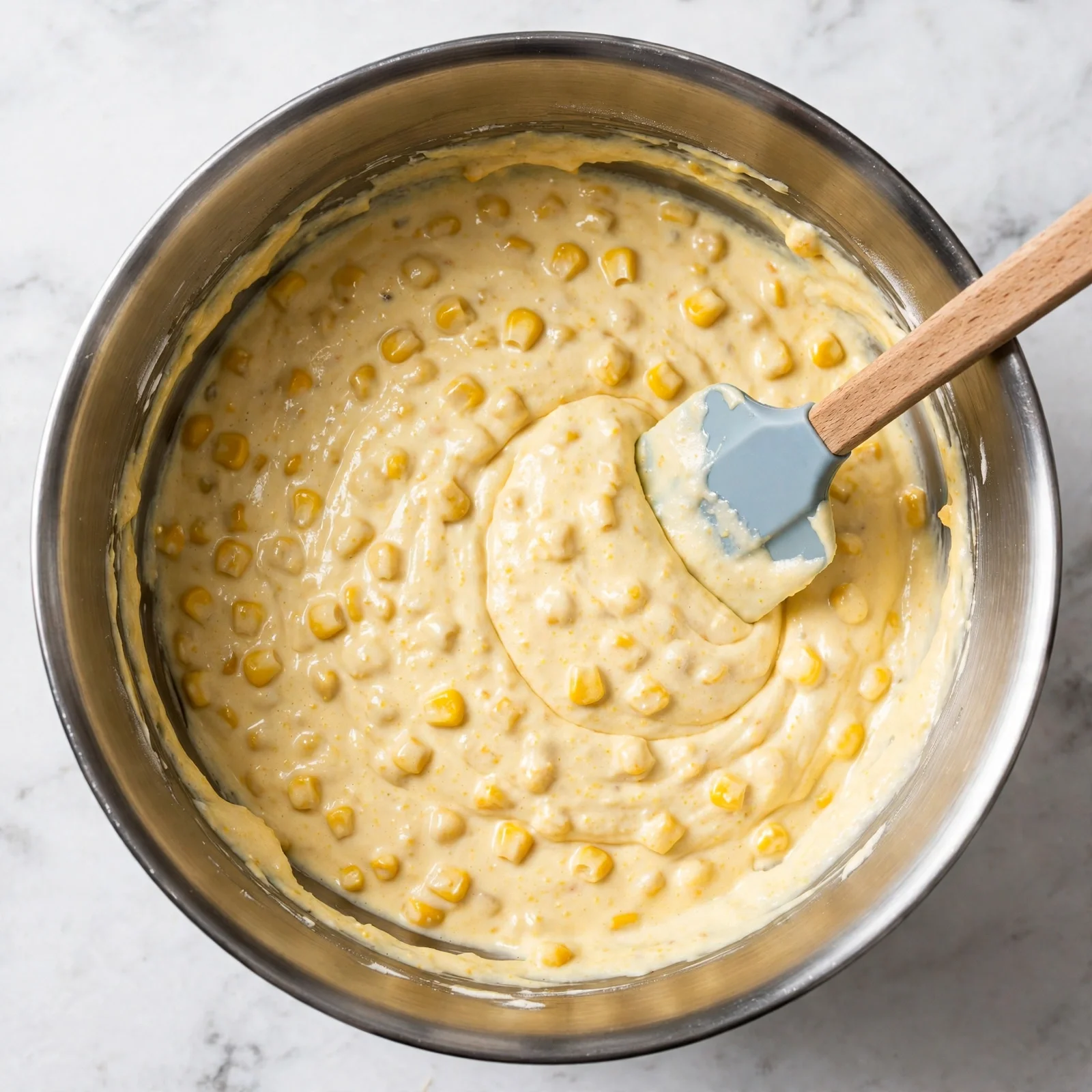
Add both cans of corn directly to the bowl: the drained whole kernel corn and the cream-style corn with all its liquid. Stir until the corn is evenly distributed through the wet mixture. Add the dry corn muffin mix and salt. Fold everything together with the spatula until just combined, working until no dry pockets of mix remain visible but stopping before the batter looks completely smooth. A few small lumps in the batter are fine and preferable to an over-stirred batter that develops too much gluten from the wheat flour in the mix.
Chef’s Note: Folding the muffin mix in gently rather than stirring aggressively is the same principle that applies to muffin batter generally: the more you stir a flour-containing batter, the more gluten develops, and the tougher and denser the finished product becomes. For a soft, tender cornbread casserole, fold until the dry mix disappears and stop immediately.
Step 5: Pour and Bake
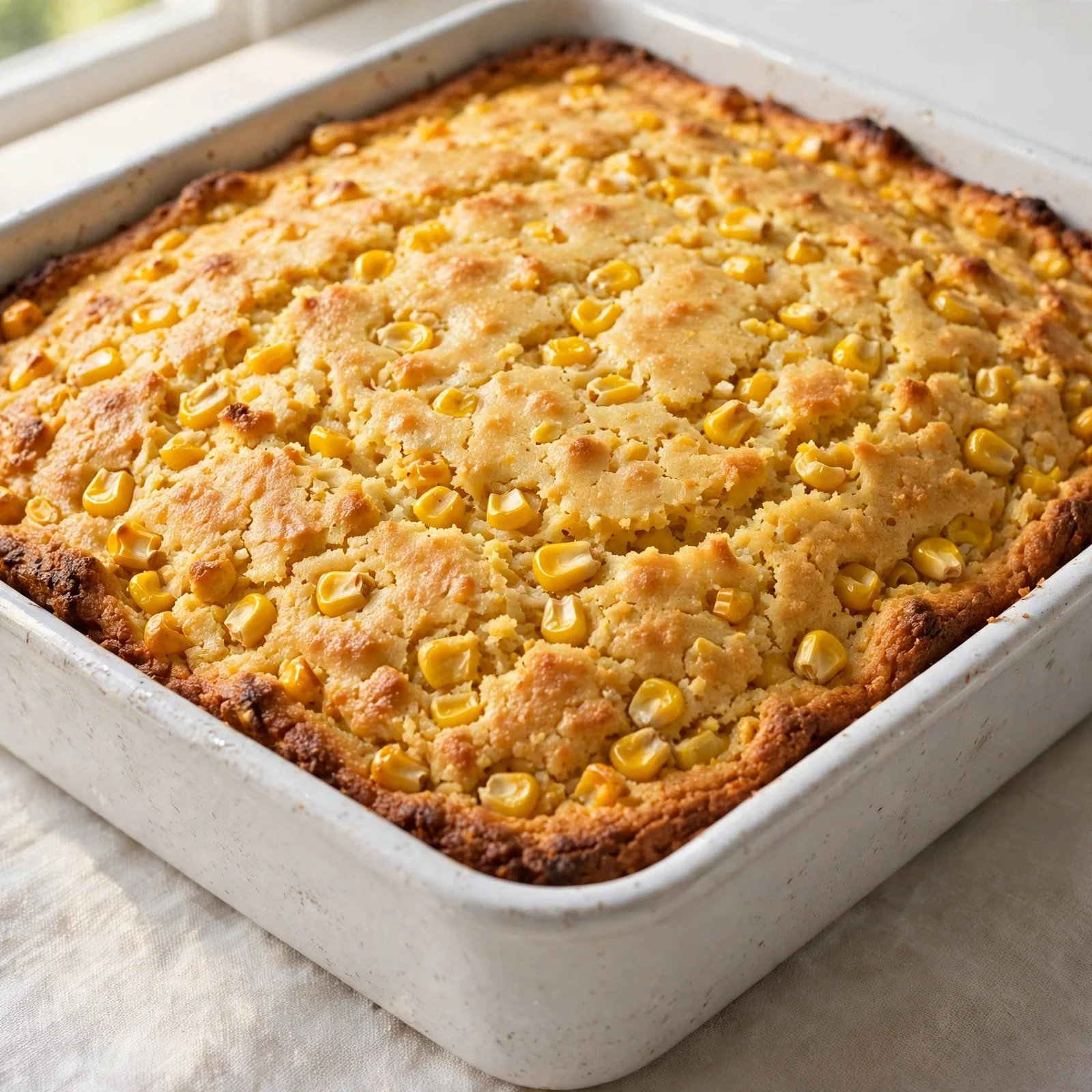
Pour the finished batter into the prepared baking dish and spread it into an even layer with the spatula, working it gently to the corners and sides. The batter will be quite thick and will not self-level significantly. Bake on the center rack at 175°C (350°F) for 35 to 40 minutes until the top is a deep golden-brown color across the entire surface, the edges have pulled away very slightly from the sides of the dish, and a toothpick inserted into the center comes out with moist (not wet) crumbs. The center should not look liquid or jiggle when you gently shake the dish.
Step 6: Rest Before Serving
Remove the baking dish from the oven and place it on a wire rack or heatproof surface. Leave it undisturbed for 5 to 10 minutes before scooping and serving. The casserole continues setting during this rest period as the internal temperature equalizes and the starch structure firms slightly. Scooping immediately from the oven produces portions that are looser and harder to lift cleanly than portions taken after the brief rest.
Common Mistakes and Troubleshooting
| Problem | Cause | Solution |
|---|---|---|
| Casserole too dry and crumbly | Low-fat or no sour cream used; overbaked | Use full-fat sour cream; check at 35 minutes and pull when toothpick shows moist crumbs, not dry |
| Center still liquid after 40 minutes | Oven running cool; dish too deep for the quantity | Use an oven thermometer to verify temperature; stick to a 9×13 inch dish for this batter volume |
| Scrambled egg pieces in the batter | Butter was still hot when added to eggs | Cool melted butter to just warm before combining with eggs; 3 to 5 minutes of rest is sufficient |
| Top too dark before center is done | Oven rack too high; oven running hot | Move to center rack; tent with foil after 25 minutes if top is browning too quickly before center is set |
| Casserole sticks to the dish | Insufficient greasing, especially at corners | Grease very generously with butter or spray, covering all four sides and corners, not just the base |
| Batter too thick to spread evenly | Normal for this recipe; over-folding adds to density | Spread with a damp spatula using gentle pressure; do not add extra liquid to thin the batter |
Variations and Substitutions
Cheesy Cornbread Casserole: Stir 1.5 cups of shredded sharp cheddar cheese directly into the batter before pouring it into the dish. The cheese melts through the casserole during baking, creating pockets of savory, slightly sharp cheddar flavor throughout the soft corn interior. This is the most popular variation and pairs particularly well with chilli or barbecued chicken.
Green Chilli Cornbread Casserole: Add one 120g (4 oz) can of diced green chillies (drained) to the batter alongside the corn. The mild green chillies add a gentle heat and a slight tang without making the casserole spicy. For more heat, use a half can of diced jalapeños instead. This version works particularly well as a side dish for Tex-Mex meals.
Honey Butter Cornbread Casserole: Add 2 tablespoons of honey to the wet ingredients alongside the butter. The honey deepens the sweetness of the corn flavor and adds a faint floral note that balances well against the tang of the sour cream. Brush a small amount of additional melted honey butter over the top during the final 5 minutes of baking for a glossy, slightly caramelized finish.
Jalapeño Cheddar Cornbread Casserole: Combine both the cheddar and jalapeño variations above: 1.5 cups of shredded cheddar and 2 tablespoons of finely diced pickled jalapeños folded into the batter. The result is a sweet, spicy, cheesy cornbread casserole that is a natural match for a Tex-Mex or Southern-style dinner spread.
Lightened Version: Replace the full-fat sour cream with full-fat plain Greek yogurt in the same quantity and reduce the butter to 6 tablespoons (85g). The casserole will be slightly less rich but still moist and soft, with the yogurt’s tanginess delivering a similar flavor effect to the sour cream. The finished texture is marginally denser but still scoopable.
Herb and Corn Casserole: Add 2 tablespoons of finely chopped fresh chives and 1 tablespoon of fresh thyme leaves to the batter. The herbs distribute through the casserole during baking and add a savory, aromatic character that shifts the dish toward a more sophisticated dinner table presentation than the plain version. This variation works well alongside roasted chicken or turkey.
Serving Suggestions
- At Thanksgiving or holiday dinners. Cornbread casserole is a natural complement to roast turkey, mashed potatoes, and green beans at a holiday table. It provides a sweet, soft counterpoint to the more savory components of the meal and holds its temperature well on a buffet for up to 45 minutes.
- Alongside chilli. A scoop of cornbread casserole beside or underneath a ladle of beef or chicken chilli is one of those combinations that makes both components taste better. The corn’s sweetness against the spiced, tomato-forward chilli is a classic pairing.
- With pulled or barbecued chicken. The soft, buttery character of the casserole handles the richness of barbecued chicken in the same way that traditional cornbread does, with a considerably more tender, less dry texture.
- As a potluck dish. Cornbread casserole is a potluck-ideal recipe: it bakes in a standard 9×13 dish that travels well, feeds 10 to 12 people, holds quality at room temperature for over an hour, and is unusual enough in texture that people comment on it even at a table full of familiar dishes.
- With a drizzle of honey at the table. A thin drizzle of warm honey over individual scoops just before eating enhances the corn’s natural sweetness in a way that makes the dish feel considered rather than simple. Set a small honey jar alongside the dish when serving.
- As a simple weeknight side. Alongside a rotisserie chicken and a green salad, cornbread casserole rounds out a dinner that feels considerably more homemade and complete than the effort involved would suggest.
Tips for the Best Results
- Don’t drain the cream-style corn. The liquid in cream-style corn is part of the recipe: it contributes both the moisture and the flavor that makes the interior custardy. Draining it produces a drier casserole with less corn flavor. Use the entire contents of the can directly from opening.
- Cool the butter before it meets the eggs. This takes 3 minutes and is the difference between a smooth, uniform batter and one with scrambled egg pieces. The butter should feel warm, not hot, against your palm before it goes into the bowl with the eggs and sour cream.
- Don’t overmix after the muffin mix goes in. The muffin mix contains wheat flour, and flour develops gluten when stirred. Overmixed cornbread casserole batter produces a tougher, denser, less tender finished dish. Fold until the dry pockets disappear, then stop.
- Check early rather than late. Every oven is different and cornbread casserole can go from perfectly set to slightly overbaked and drier than ideal in 5 minutes. Start checking at 35 minutes by inserting a toothpick in the center: moist crumbs on the toothpick is correct. Clean means overbaked. Wet batter means 5 more minutes.
- Rest before serving. The 5 to 10 minute rest after baking is when the internal structure finishes setting and the casserole firms from loose to perfectly scoopable. Served immediately from the oven, it may seem underdone at the center. After 5 minutes of rest on a wire rack, it holds its shape cleanly when scooped.
Storage Tips
Refrigerator
Cover the cooled casserole tightly with plastic wrap or transfer portions to an airtight container. It keeps in the refrigerator for up to 4 days. The casserole firms up slightly in the cold, which makes refrigerated leftovers hold together more cleanly than the freshly baked version. The corn flavor actually deepens overnight, making day-two cornbread casserole genuinely satisfying reheated. Store in the dish with a cover for easiest reheating.
Freezer
Cornbread casserole freezes well. Cool completely, cut into individual portions, and wrap each tightly in plastic wrap before placing in a sealed freezer bag. Freeze for up to 2 months. Alternatively, freeze the full casserole in its dish covered with two layers of plastic wrap and a layer of foil. Thaw overnight in the refrigerator before reheating. The texture after freezing is slightly more dense than fresh, but the flavor is virtually unchanged.
Reheating
From the fridge: cover the dish with foil and reheat at 160°C (325°F) for 15 to 20 minutes until warmed through, or microwave individual portions covered with a damp paper towel at 50% power in 90-second intervals. The foil prevents the top from drying out during oven reheating. From frozen: thaw overnight in the refrigerator and then reheat as above. Add a small drizzle of melted butter over the surface before oven reheating if the casserole looks dry after thawing.
Nutrition Information
Per serving (1/12 of the full casserole, approximately 130g)
| Nutrient | Amount |
|---|---|
| Calories | 235 kcal |
| Protein | 5g |
| Carbohydrates | 30g |
| Fiber | 1.5g |
| Sugar | 9g |
| Total Fat | 11g |
| Saturated Fat | 6g |
| Cholesterol | 65mg |
| Sodium | 370mg |
| Vitamin C | 3mg |
| Calcium | 50mg |
| Iron | 1mg |
| Potassium | 130mg |
Nutrition values are approximate and may vary based on brands and portion sizes, particularly the corn muffin mix brand used.
Why This Recipe Works
The combination of two types of corn in the batter is not redundant: each form contributes something the other cannot. Whole kernel corn provides physical texture, the experience of biting through a distinct piece of corn that provides a slight pop and a burst of corn flavor. Cream-style corn provides moisture, starch, and a concentrated flavor base that distributes through the entire batter during baking and produces the uniformly moist, tender interior. The cream-style corn’s natural starch content also contributes to the slightly gel-like, pudding-adjacent texture of the finished casserole center, which is what distinguishes cornbread casserole from plain cornbread baked in a larger dish.
Sour cream’s role in the batter goes beyond flavor. The lactic acid in sour cream interacts with the leavening agents (sodium bicarbonate and baking powder) in the corn muffin mix, producing additional carbon dioxide bubbles that create a lighter, more tender crumb than a batter made with milk or buttermilk would produce at the same fat content. The fat content in full-fat sour cream also coats the starch granules in the cornmeal and flour during mixing, which inhibits gluten development and keeps the finished texture tender rather than chewy. The combination of acid-activated leavening and fat-inhibited gluten is why sour cream produces a noticeably more tender result than lower-fat alternatives.
The corn muffin mix provides a pre-balanced ratio of leavening to flour to sugar to cornmeal that is calibrated for the specific baking time and temperature range of a cornbread product. Building from scratch requires individual measurement of these components in a ratio that replicates this balance, while the mix delivers it in a single addition. The practical effect is a recipe that is both simpler and more consistent: the same muffin mix produces the same result regardless of the cook’s experience level.
Cooling the melted butter before adding it to the eggs protects the egg proteins from denaturation at high temperature. Egg proteins begin to coagulate at approximately 63°C (145°F). Butter melted on the stove is typically around 90 to 100°C (195 to 212°F) when poured, which is well above the coagulation threshold. Combined with eggs at that temperature, the proteins cook on contact and create small, rubbery cooked egg particles distributed through the batter rather than a smooth, homogeneous mixture. Five minutes of cooling brings the butter to approximately 50 to 60°C (122 to 140°F), warm enough to mix smoothly but below the temperature at which egg proteins seize.
The 5 to 10 minute rest after baking serves a structural purpose beyond simply cooling the casserole. During baking, the starch granules in the cornmeal and flour gelatinize (absorb water and swell) and the egg proteins coagulate to form the structural network of the finished casserole. Directly from the oven, these networks are still partially fluid and the casserole is at its most fragile. As it cools during the rest, the starch granules set more firmly and the gelatinized starch retrogrades slightly into a more cohesive structure. The result is a casserole that holds its shape when scooped rather than collapsing into a soft puddle on the serving plate.
I’ve tested this recipe with both full-fat and low-fat sour cream in side-by-side bakes. The full-fat version produced a noticeably more tender, moist interior and a richer overall flavor. The low-fat version was acceptable but produced a slightly drier, more cornbread-like result that was less distinctly different from a standard baked cornbread. For the custardy interior texture that defines cornbread casserole, full-fat sour cream is worth using.
Frequently Asked Questions
Can I make cornbread casserole ahead of time?
Yes. Assemble the full casserole, cover the unbaked dish tightly with plastic wrap, and refrigerate for up to 24 hours before baking. When ready, remove from the refrigerator 15 minutes before baking to take the chill off, then bake as directed, adding 5 extra minutes to the bake time since the dish starts cold. Alternatively, bake it fully, cool completely, and refrigerate for up to 4 days. Reheat covered with foil at 160°C (325°F) for 15 to 20 minutes.
Why is my cornbread casserole too dry?
Dry cornbread casserole almost always comes from one of two causes: overbaking, or using low-fat or no-fat sour cream. Check for doneness starting at 35 minutes rather than relying on the full 40-minute time: moist crumbs on the toothpick is correct, not a clean toothpick. The other common cause is draining the cream-style corn: its liquid is intentionally part of the recipe and removing it significantly reduces the final moisture.
Can I make cornbread casserole without a corn muffin mix?
Yes. Replace the box of corn muffin mix with: 1 cup (120g) fine yellow cornmeal, 1/3 cup (40g) all-purpose flour, 3 tablespoons granulated sugar, 1.5 teaspoons baking powder, and 1/4 teaspoon salt, whisked together. Use this homemade mix in exactly the same quantity and in the same way as the box mix. The result is virtually identical and allows for complete control over the ingredients, which is useful if you need a gluten-free version using certified gluten-free flour.
How do I know when cornbread casserole is done baking?
The top should be a deep, even golden-brown across the entire surface with slightly darker edges where the casserole has pulled gently away from the dish sides. A toothpick inserted in the very center should come out with moist, tender crumbs: not wet batter, and not completely dry. The center should feel set rather than liquid when you press it lightly with the back of a spoon. If the edges are golden but the center still jiggles visibly, give it another 5 minutes and check again.
Is cornbread casserole gluten-free?
As written with a standard corn muffin mix, no: most muffin mixes contain wheat flour alongside the cornmeal. To make a gluten-free version, use a certified gluten-free corn muffin mix (available in most supermarkets) or make the homemade dry mix with certified gluten-free all-purpose flour. The rest of the recipe, including both corn products, sour cream, butter, and eggs, is naturally gluten-free. Verify the canned corn labels if serving to someone with celiac disease.
Can I add other mix-ins to cornbread casserole?
Yes. Shredded cheddar cheese (1 to 1.5 cups), diced green chillies, diced jalapeños, cooked crumbled ground beef or chicken, fresh corn cut from the cob, or finely diced bell pepper all work as additions. Fold them in at the end of Step 4 after the muffin mix is incorporated but before pouring into the dish. Keep the total volume of additions to around 1 to 1.5 cups to avoid making the batter too heavy or unbalanced.
Why does cornbread casserole have a pudding-like texture instead of firm cornbread texture?
The custardy center is the intended result, not a sign of underbaking. Cornbread casserole is specifically designed to sit between a baked cornbread (firm enough to slice) and a corn pudding (pourable and spoonable). The cream-style corn and sour cream together produce a batter with more moisture than standard cornbread, and the resulting dish is meant to be scooped rather than sliced. If your casserole is too soft for your preference, reduce the sour cream to 3/4 cup and bake for 5 additional minutes.
Conclusion
Cornbread casserole earns its place at every holiday table, potluck, and weeknight dinner because it delivers something genuinely distinct from regular cornbread: a soft, almost custardy interior that holds its moisture from the oven to the table and beyond. The two types of corn working together, the sour cream that keeps everything tender, and the effortless single-bowl method are what make this a recipe people come back to consistently. Make it once and you will understand why a dish this simple produces a reaction that is entirely disproportionate to the effort. Cornbread casserole is the kind of recipe that earns a permanent spot in your rotation.
If you loved this recipe, save it to your holiday side dishes Pinterest board so you can find it easily later. For more healthy recipes and daily food inspiration, follow TheCookingVibes on Pinterest.
Easy Cornbread Casserole
Ingredients
Equipment
Method
- Preheat oven to 175°C (350°F). Grease a 9×13 inch baking dish generously with butter or cooking spray on the base and all sides.
- Melt butter and set aside to cool for 3 to 5 minutes until warm rather than hot.
- Combine sour cream, lightly beaten eggs, and cooled melted butter in a large bowl. Stir until smooth and no streaks remain.
- Add both cans of corn (drained whole kernel and undrained cream-style). Stir to combine. Add dry corn muffin mix and salt. Fold gently until no dry pockets remain, stopping before the batter looks fully smooth.
- Pour batter into the prepared dish and spread evenly to the corners. Bake on the center rack for 35 to 40 minutes until the top is deep golden-brown, edges have slightly pulled from the dish, and a toothpick inserted in the center comes out with moist crumbs.
- Rest on a wire rack for 5 to 10 minutes before scooping and serving.
Notes
- Do not drain the cream-style corn: its liquid is part of the recipe.
- Cool melted butter before combining with eggs to prevent scrambling.
- Fold muffin mix gently: overmixing develops gluten and produces a tougher texture.
- Check at 35 minutes: moist toothpick crumbs are correct; a dry toothpick means overbaked.
- Allergens: Contains dairy (butter, sour cream), eggs, and gluten (corn muffin mix contains wheat flour). Free from nuts and soy as written. Use a certified gluten-free corn muffin mix for a gluten-free version.
- Not guaranteed safe for any specific allergy without checking all individual ingredient labels.