Easy Kale Salad (Crisp, Massaged, Lemon Tahini Dressing)
Raw kale eaten without being massaged first is a genuinely unpleasant experience: tough, bitter, slightly waxy, and resistant to chewing in a way that makes you understand why people avoid it. Massaged kale is a completely different vegetable. Thirty seconds of working olive oil and salt into the leaves by hand breaks down the cell walls just enough to soften the texture, reduce the bitterness, and transform the kale from something you feel virtuous eating into something you actually want to eat again.
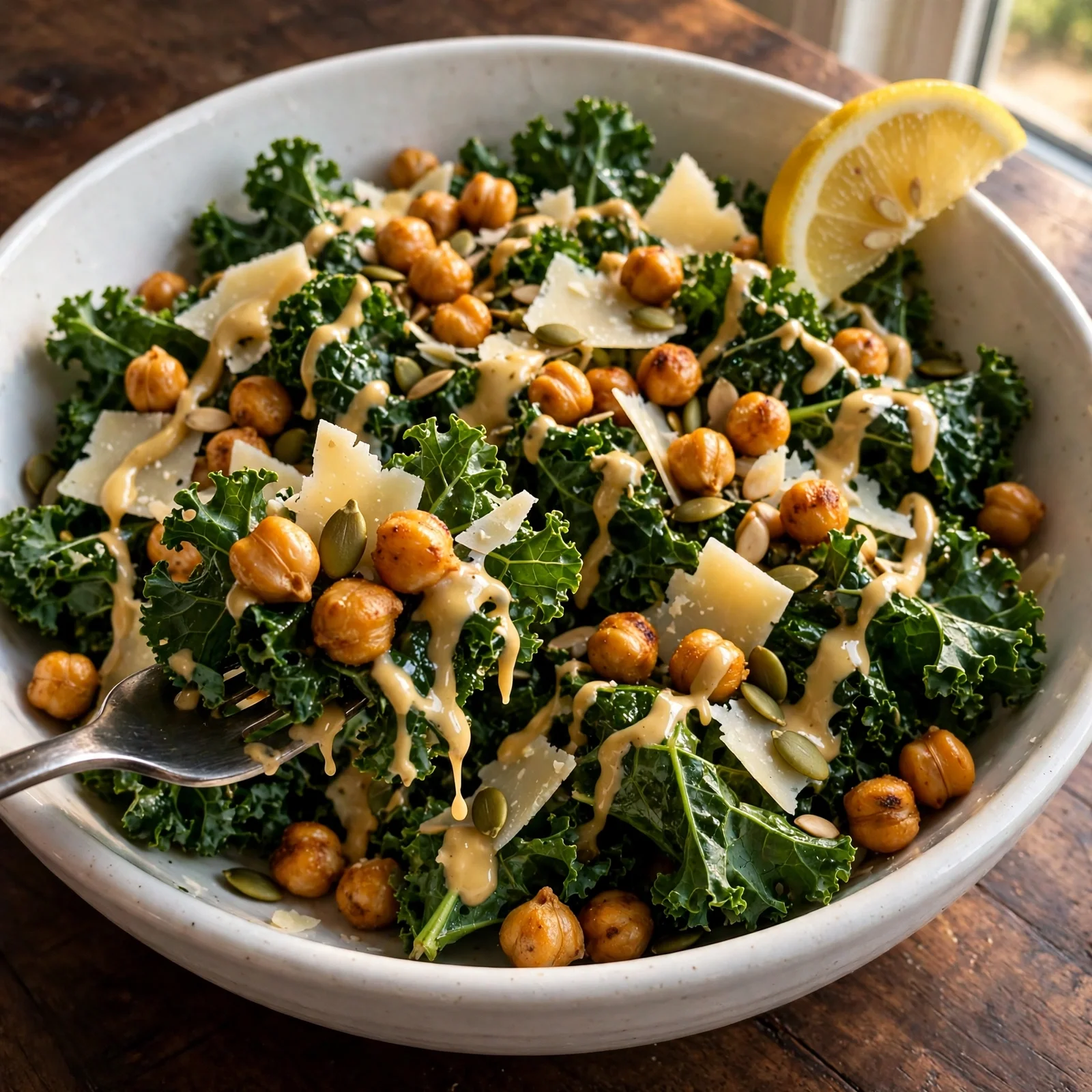
This kale salad recipe builds on that foundation with a lemon tahini dressing that is bright, nutty, and slightly garlicky, roasted chickpeas that add crunch where the kale itself can’t, Parmesan shaved directly over the finished bowl, and a handful of pumpkin seeds for extra texture. It takes 20 minutes, serves four as a main or six as a side, and holds up in the refrigerator for two full days without wilting: the massaging and the sturdy leaf structure that made raw kale difficult to enjoy are exactly what make dressed kale salad an outlier in a category where most salads turn soggy within an hour.
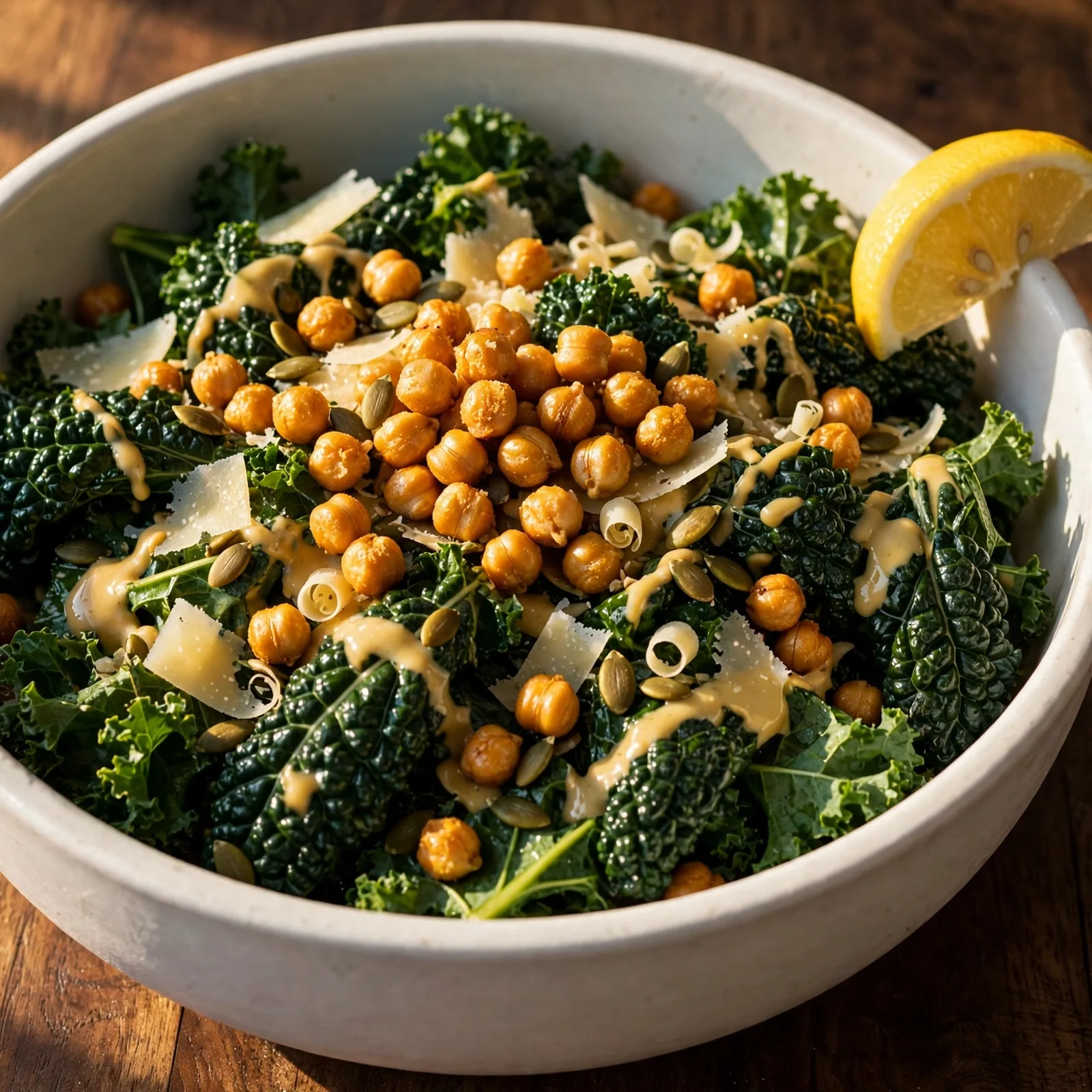
Why You’ll Love This Kale Salad
- Massaging changes everything about the texture. Thirty seconds of working olive oil and salt into the kale breaks down the fibrous cell structure and reduces the bitterness to a mild, pleasant earthiness. The kale becomes pliable, slightly darker green, and genuinely enjoyable to eat rather than something you push through for the nutritional benefit.
- The dressing holds for days without separating. A tahini-based dressing is significantly more stable than a vinaigrette because the sesame paste acts as a natural emulsifier. It stays homogeneous in a jar in the refrigerator for up to a week without any stirring required.
- The salad keeps for two days dressed. Most salads are ruined within an hour of being dressed. Because kale is so sturdy, this salad can sit in the refrigerator with dressing already on it for 48 hours and come out crisper and more flavorful than when it went in.
- The roasted chickpeas add the crunch that the kale can’t. Pan-roasted or oven-roasted chickpeas develop a lightly crisp surface that provides textural contrast against the chewy kale leaves and the creamy dressing, making each bite more interesting than a plain leafy salad.
- High protein and fiber for a salad. Between the chickpeas, pumpkin seeds, Parmesan, and tahini, this kale salad delivers meaningfully more protein per serving than most green salads and keeps you full for considerably longer.
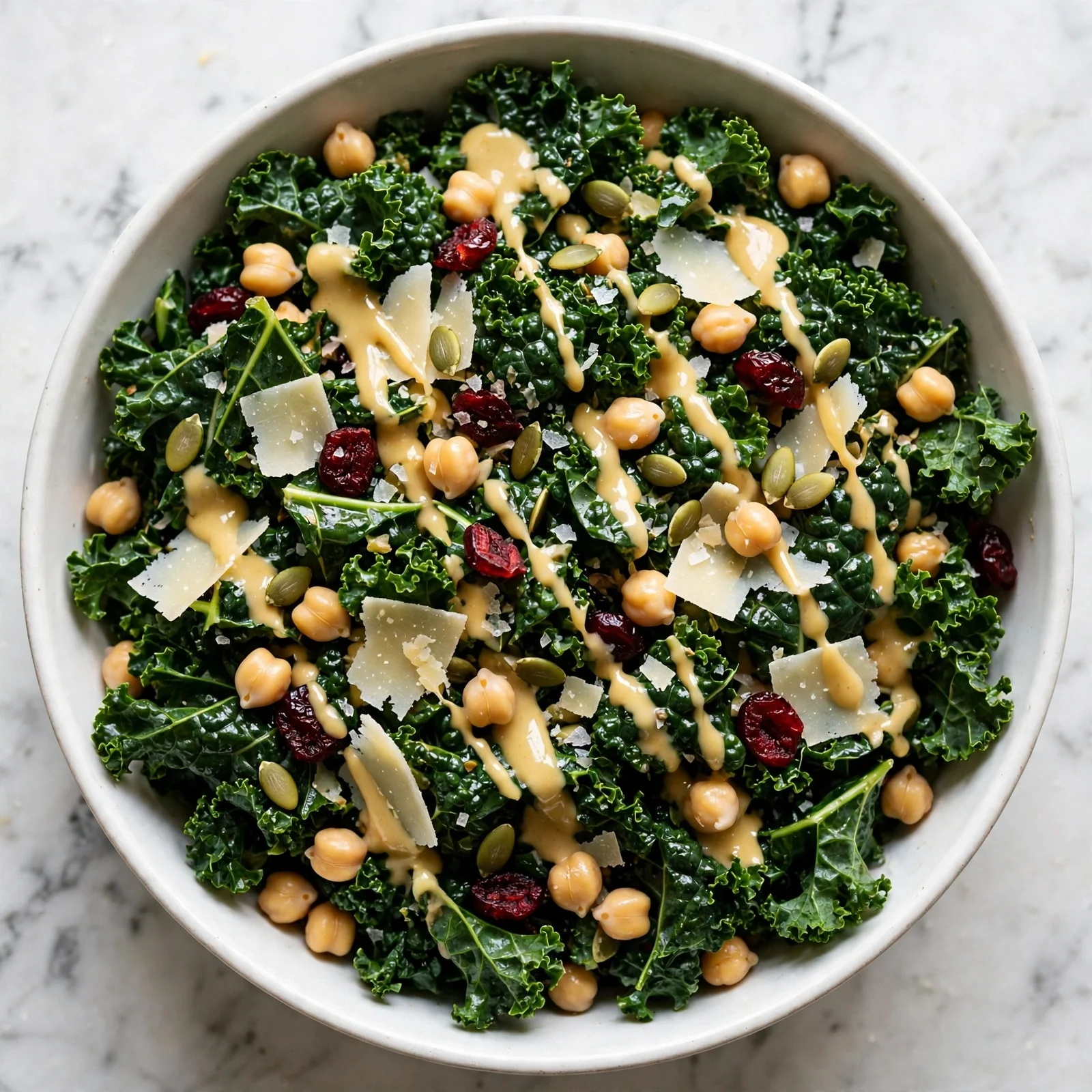
Ingredients You’ll Need
Recipe Timing
| Detail | Info |
|---|---|
| Servings | 4 as a main, 6 as a side |
| Difficulty | Easy |
| Course | Salad, Main Course, Side Dish |
| Cuisine | American, Mediterranean-Inspired |
| Prep Time | 15 minutes |
| Cook Time | 5 minutes |
| Total Time | 20 minutes |
The most important ingredient in this recipe is the kale itself, and specifically which variety you use. Curly kale (the ruffled, dark green variety most commonly available) holds up best to massaging and to dressing because its sturdy, textured surface grips the dressing and maintains its structure for days. Lacinato kale (also called dinosaur kale or Tuscan kale) is flatter and more tender, which means it needs slightly less massaging time and produces a more delicate salad with less structural staying power. Both work well: the curly variety is better for a make-ahead salad; the lacinato is better for a more elegant, slightly refined result.
For the tahini, use a good-quality runny tahini rather than a stiff, separated jar. The best tahini is made purely from roasted hulled sesame seeds with no added oil or stabilizers. When you open it, it should be pourable and uniform in color: pale beige with a slightly glossy surface. Stiff, chalky tahini produces a grainy dressing that doesn’t emulsify smoothly. If your tahini is separated, stir it vigorously from the bottom of the jar until it comes back together before measuring.
For the chickpeas, canned chickpeas that have been drained, rinsed, and dried thoroughly work perfectly. The drying step matters: chickpeas with surface moisture will not develop any crispness during roasting and simply steam in the oven rather than developing the lightly crunchy exterior the recipe calls for.
For the Massaged Kale:
- 1 large bunch curly kale (about 300g / 10 oz after stems removed). The base of the salad. Stems removed and leaves torn or sliced into bite-sized pieces before massaging.
- 1 tablespoon extra virgin olive oil. Used to massage the kale. The fat physically disrupts the waxy cuticle on the kale surface and helps break down the cell structure.
- 1/4 teaspoon fine sea salt. Added alongside the oil during massaging. The salt draws moisture out of the kale cells through osmosis, which is part of what causes them to collapse and soften.
For the Roasted Chickpeas:
- 1 can (400g / 14 oz) chickpeas, drained, rinsed, and dried very thoroughly. Pat them between two layers of paper towels and roll gently until no visible surface moisture remains.
- 1 tablespoon olive oil. Coats the chickpeas so they roast rather than steam.
- 1/2 teaspoon smoked paprika.
- 1/4 teaspoon garlic powder.
- 1/4 teaspoon fine sea salt.
- 1/4 teaspoon black pepper.
For the Lemon Tahini Dressing:
- 3 tablespoons good-quality runny tahini. The emulsifying base and primary flavor of the dressing.
- 3 tablespoons fresh lemon juice (about 1.5 lemons). Provides the primary acidity. Fresh only: bottled lemon juice lacks the aromatic volatile compounds that make the dressing taste bright.
- 1 tablespoon extra virgin olive oil.
- 1 clove garlic, finely grated or pressed to a paste. Grated rather than minced so it disperses evenly through the dressing without chunks.
- 1 tablespoon water (plus more to thin as needed). Added to adjust the dressing to a pourable consistency: tahini thickens considerably when mixed with acid.
- 1 teaspoon honey or maple syrup. A very small amount rounds out the acidity and prevents the dressing from tasting sharp.
- 1/4 teaspoon fine sea salt.
- 1/4 teaspoon black pepper.
For Assembling:
- 1/3 cup (35g) freshly shaved or grated Parmesan cheese. Use a vegetable peeler for wide, curling shavings that sit visually on top of the finished salad. Pre-grated Parmesan lacks the sharp, crystalline bite of a freshly shaved piece.
- 3 tablespoons (30g) pumpkin seeds (pepitas), raw or lightly toasted.
- 2 tablespoons dried cranberries (optional). Add a sweet-tart contrast that works particularly well with the savory tahini dressing.
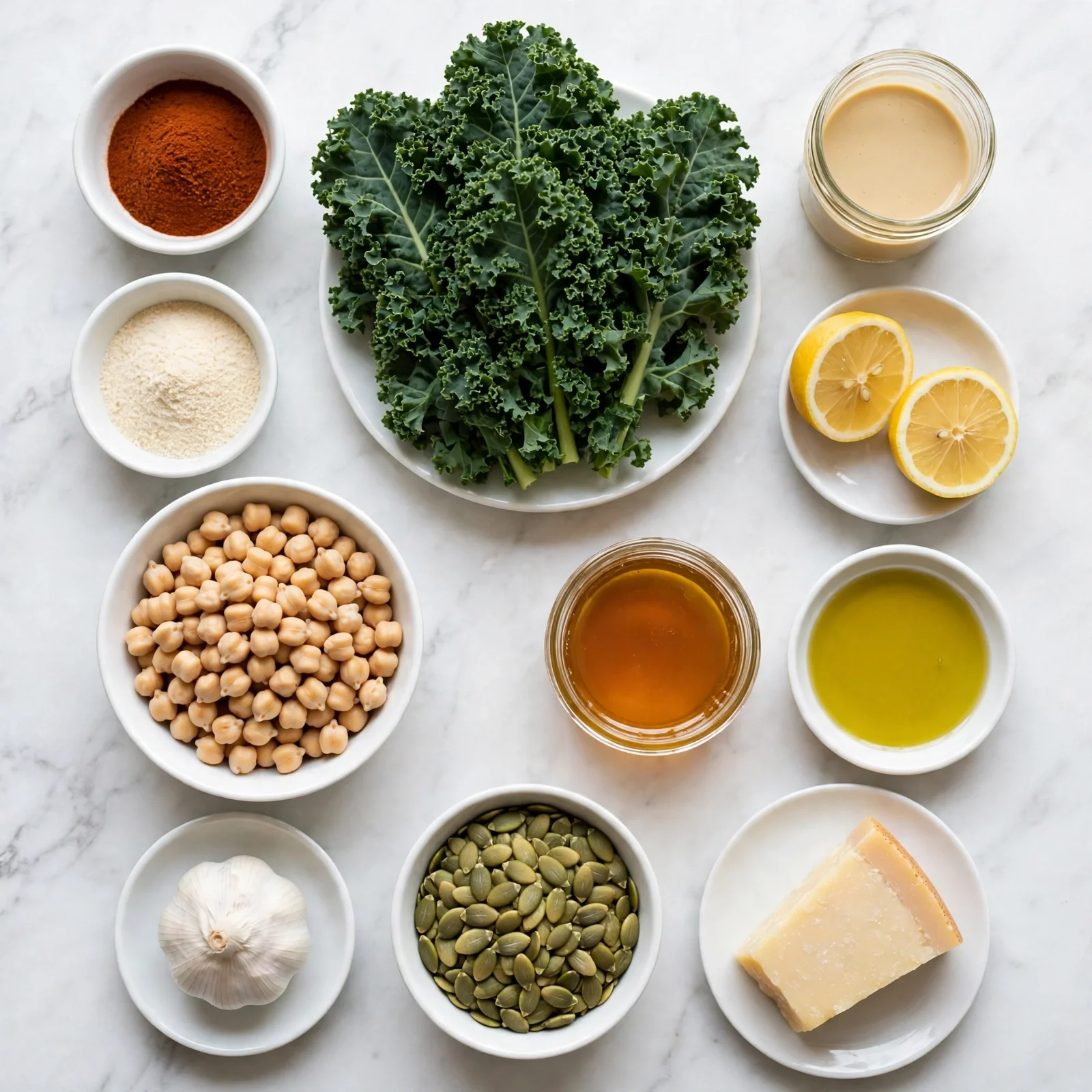
Allergen and Dietary Disclosure
This recipe contains dairy (Parmesan) and sesame (tahini). Pumpkin seeds are classified as seeds rather than tree nuts but may be processed in facilities that handle nuts: check the label if serving to someone with a nut allergy.
For a vegan version, replace the Parmesan with 3 tablespoons of nutritional yeast scattered over the finished salad (it provides a comparable savory, cheesy note) and use maple syrup rather than honey in the dressing. The rest of the recipe is naturally vegan.
For a nut-free version (excluding sesame), replace the tahini in the dressing with unsweetened sunflower seed butter in the same quantity. The flavor changes from sesame-forward to slightly nuttier and more neutral, but the texture and emulsification are nearly identical.
For a dairy-free version, simply omit the Parmesan or replace it with the nutritional yeast option above.
Free from gluten, eggs, and meat as written. Not guaranteed safe for any specific allergy without checking all individual ingredient labels.
Step-by-Step Directions
Step 1: Prep the Kale
Strip the kale leaves from their stems by holding the stem firmly with one hand and pulling the leaf away with the other in a downward motion. The leaf should separate cleanly. Discard the stems or save them for another use (they can be finely chopped and cooked in a stir-fry or soup). Tear or slice the stripped leaves into pieces roughly 4 to 5cm across: small enough to pick up with a fork, large enough to retain some texture after massaging. Transfer to a large bowl.

Chef’s Note: Smaller kale pieces are easier and more pleasant to eat than whole leaves, particularly after massaging, which makes them pliable but slightly dense in texture. The 4 to 5cm piece size produces a salad that is easy to eat without cutting and holds the dressing on its surface area well.
Step 2: Massage the Kale
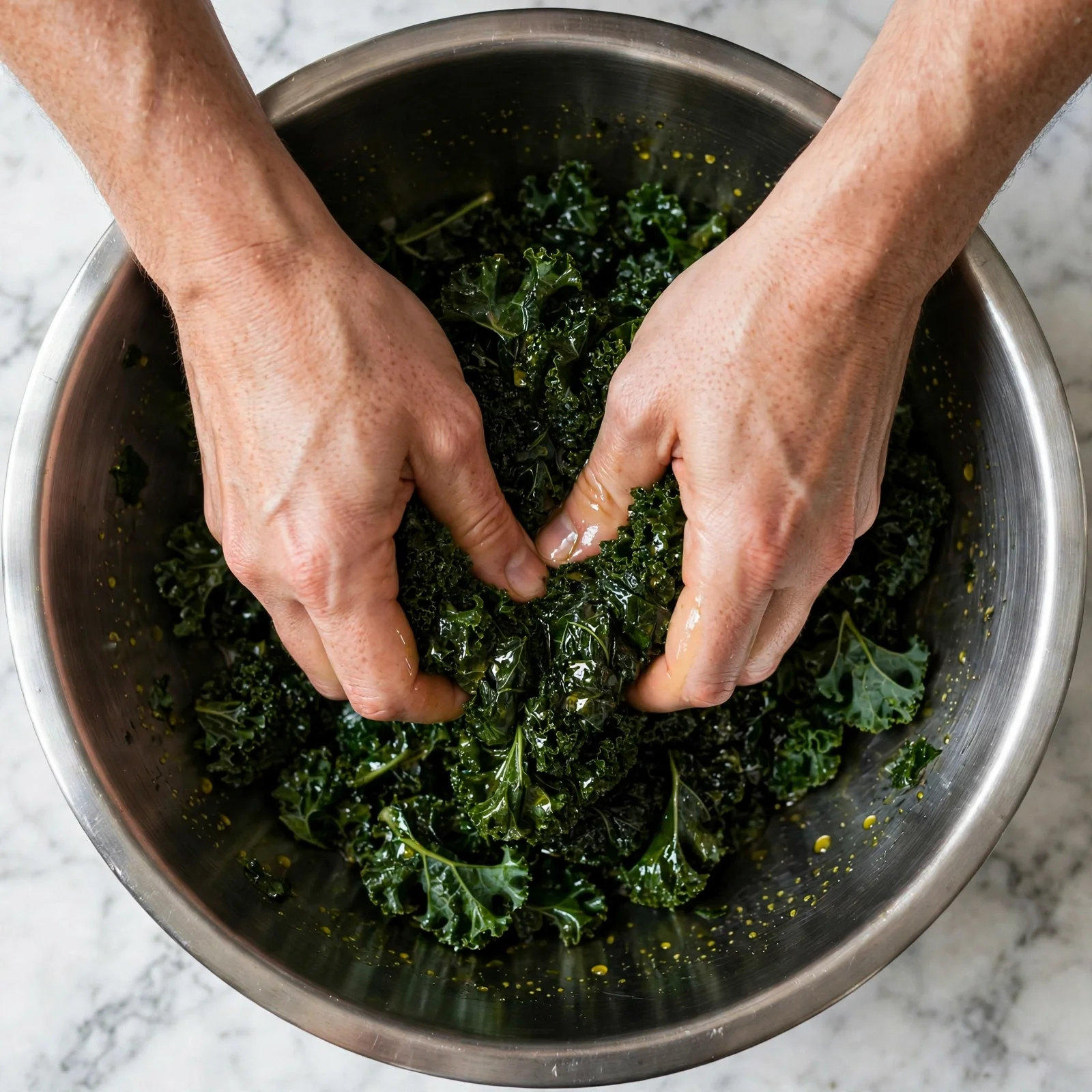
Drizzle the tablespoon of olive oil and the salt over the prepared kale. Use both hands to massage the kale, working the oil and salt into every leaf by squeezing, pressing, and rubbing them between your palms. The kale will begin to darken noticeably in color within 15 seconds and will reduce in volume by about one-third as the cell walls collapse. After 30 to 45 seconds of consistent massaging, the leaves should feel soft and silky rather than stiff and waxy, and the color should have shifted from bright to deep green throughout. Taste a small piece: it should be tender and mild rather than tough or bitter.
Chef’s Note: The massaging is not simply about softening the texture. The physical pressure ruptures the vacuoles inside the kale’s cells, releasing their bitter-tasting compounds (glucosinolates) and allowing them to dissipate rather than concentrating on the tongue when you eat the leaf. A properly massaged kale leaf tastes genuinely mild. Under-massaged kale tastes harsh.
Step 3: Roast the Chickpeas
Preheat the oven to 220°C (425°F) or heat a large dry skillet over medium-high heat for the stovetop method. Pat the drained chickpeas between paper towels until completely dry on the surface. Toss with olive oil, smoked paprika, garlic powder, salt, and pepper until every chickpea is coated.
For the oven method: spread in a single layer on a rimmed baking sheet and roast for 20 to 25 minutes, shaking the pan at the halfway point, until the chickpeas are golden, slightly shrunken, and develop a lightly crisp surface. For the stovetop method: add to the dry preheated skillet and cook, shaking every 60 seconds, for 8 to 10 minutes until golden and slightly crispy at the edges. Both methods produce good results: the oven version is more hands-off and crispier; the stovetop version is faster.
Chef’s Note: Completely drying the chickpeas before seasoning is the step that determines whether they roast or steam. Any surface moisture creates a steam environment in the oven or pan, which prevents the exterior from ever becoming crispy. Even a 2-minute extra pat-dry makes a visible difference in the final crunch.
Step 4: Make the Lemon Tahini Dressing
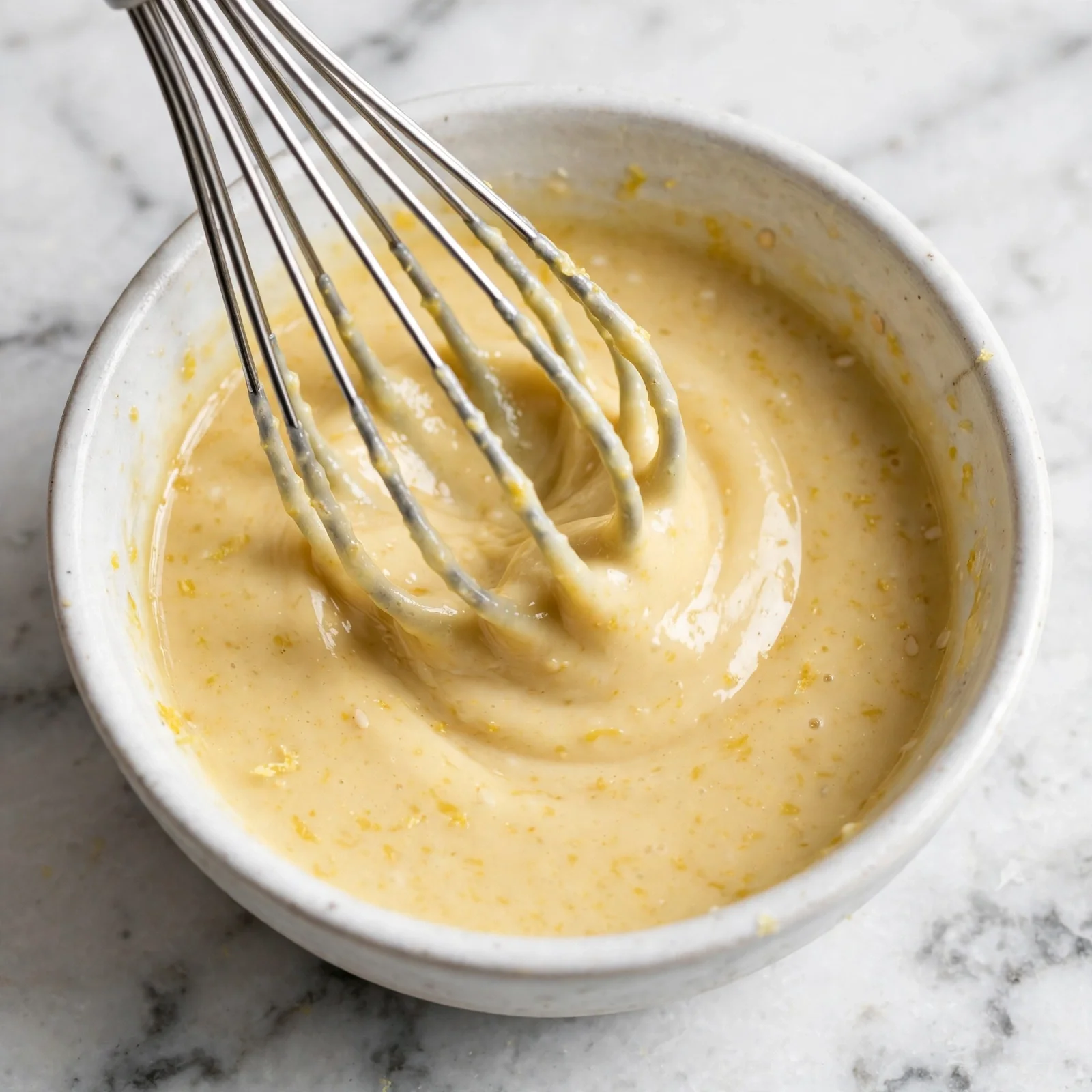
Combine the tahini, fresh lemon juice, olive oil, grated garlic, honey, salt, and pepper in a small jar or bowl. Stir or whisk vigorously: the tahini will initially seize and thicken when it meets the lemon juice, which looks alarming but is normal. Continue stirring and add the tablespoon of water. The dressing will loosen and become smooth and pourable. If it still looks too thick to drizzle, add water half a teaspoon at a time until it reaches a consistency that drizzles off a spoon in a thin, steady stream. Taste and adjust: more lemon if it needs brightness, more salt if it tastes flat, more honey if it tastes sharp.
Step 5: Dress and Assemble the Salad
Pour two-thirds of the tahini dressing over the massaged kale. Toss thoroughly with tongs or your hands until every leaf is lightly coated in the dressing. Taste a leaf: if the dressing is not evenly distributed or the flavor needs more, add the remaining dressing and toss again. Add the dried cranberries if using and the pumpkin seeds, tossing once more to distribute them through the salad.
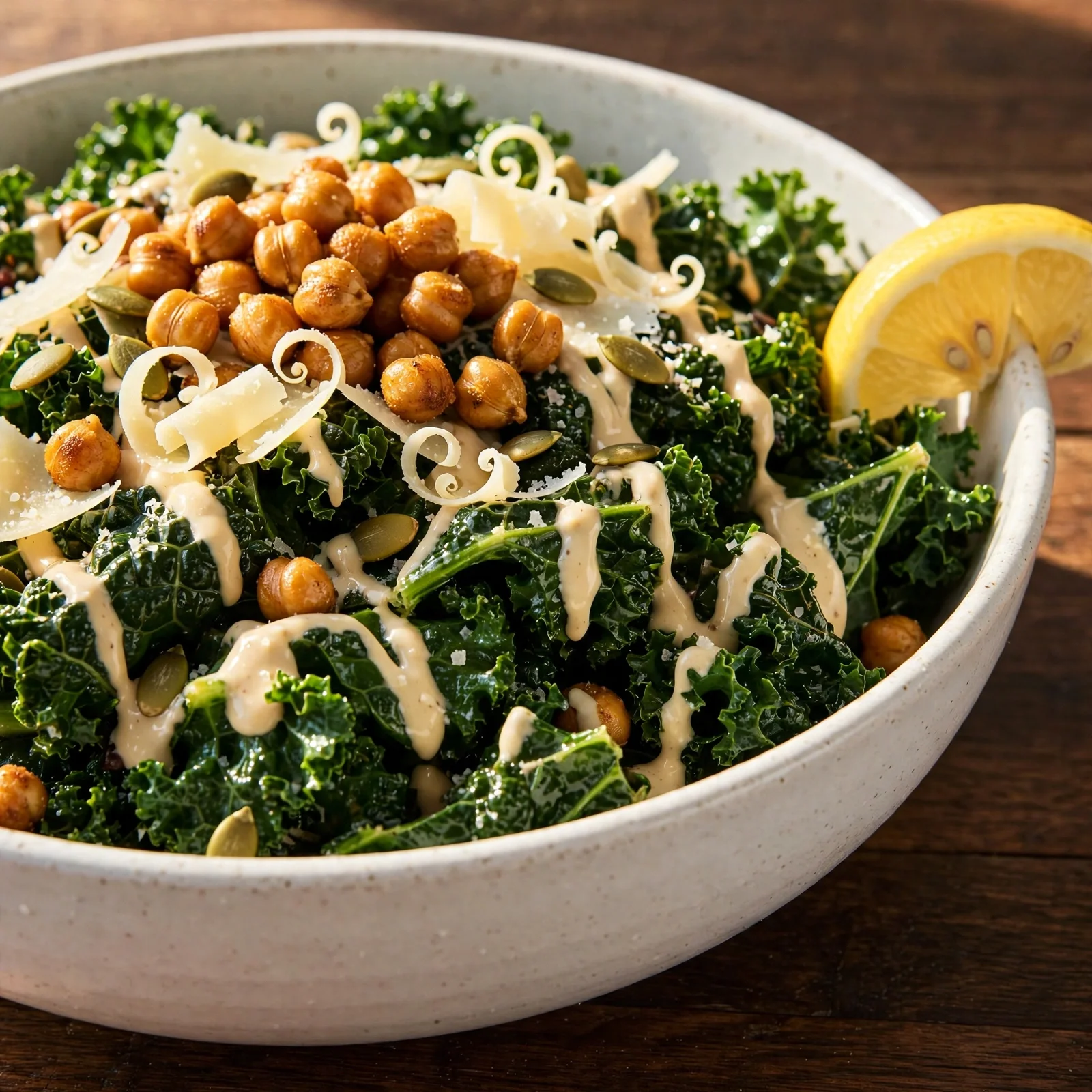
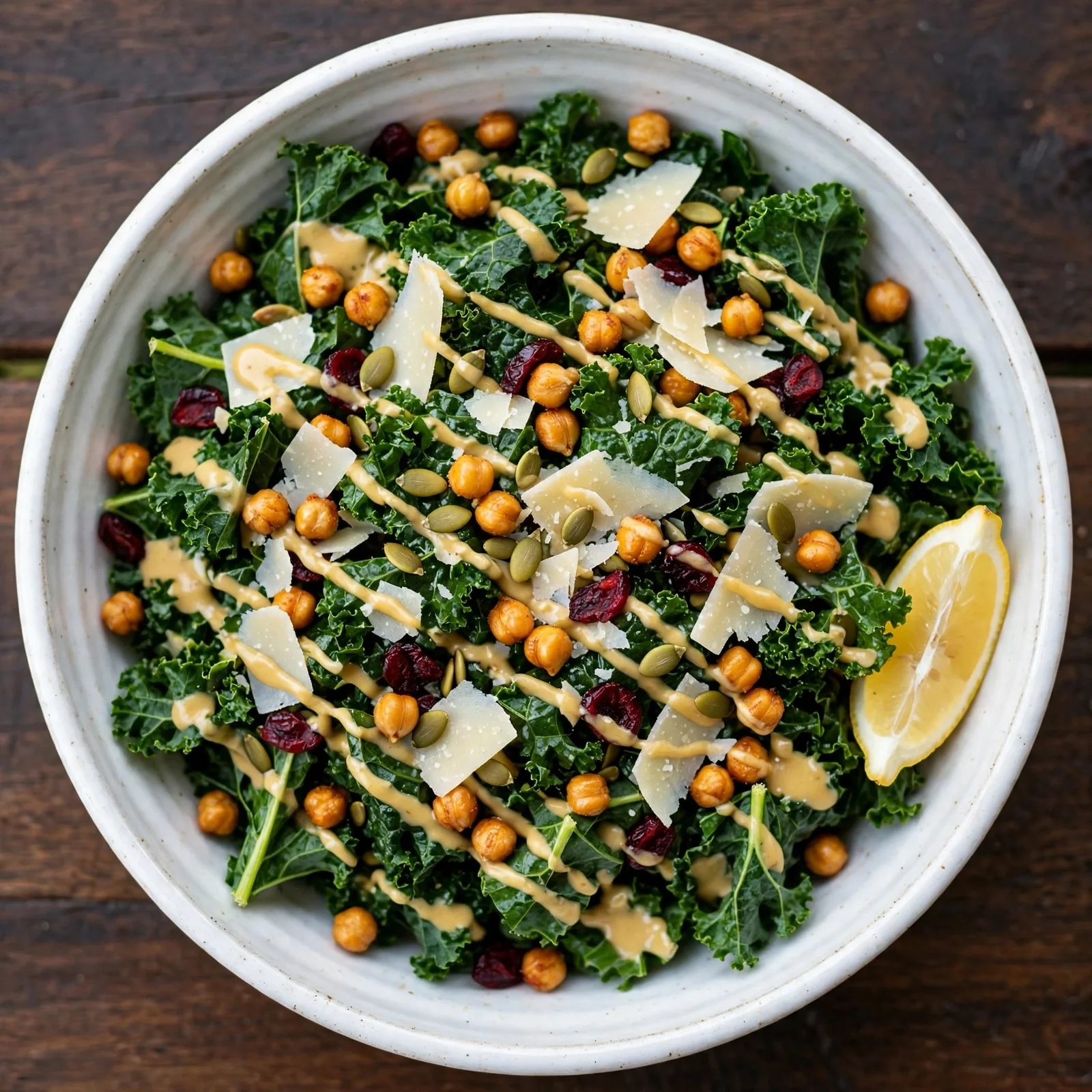
Transfer the dressed kale to a wide serving bowl or individual plates. Scatter the warm or room-temperature roasted chickpeas across the top. Use a vegetable peeler to shave wide, thin curls of Parmesan directly over the finished salad. The Parmesan sits on top where it is visible and can be picked up with each forkful rather than disappearing into the kale.
Step 6: Serve With Extra Dressing on the Side
Reserve the remaining dressing in a small pitcher or ramekin beside the salad for people to add more at the table. The kale can absorb a significant amount of dressing without becoming soggy, so providing extra allows everyone to dress their own portion to their preference. Serve immediately for the best chickpea crunch, or refrigerate for up to 48 hours for a salad that develops more flavor as the dressing absorbs deeper into the leaves.
Common Mistakes and Troubleshooting
| Problem | Cause | Solution |
|---|---|---|
| Kale still tough and bitter after massaging | Under-massaged; stems not removed | Massage for a full 30 to 45 seconds with consistent hand pressure until leaves are dark, silky, and reduced in volume; remove stems before massaging |
| Tahini dressing too thick and clumpy | Lemon juice caused tahini to seize; not enough water | Add water half a teaspoon at a time while stirring vigorously; room-temperature tahini loosens more easily than cold tahini |
| Chickpeas soft with no crunch | Surface moisture not removed; chickpeas crowded on the pan | Pat dry aggressively between paper towels before roasting; spread in a single uncrowded layer so they roast rather than steam |
| Salad tastes flat despite correct ingredients | Dressing under-seasoned; salt added to massaged kale but not to dressing | Season the dressing properly with salt and taste it before it goes on the kale; both components need their own seasoning |
| Kale turns soggy after a few hours | Only applies to very young or baby kale which lacks structural integrity | Use curly kale or lacinato kale specifically; both hold up to dressing for 24 to 48 hours where softer greens cannot |
| Dressing separates when stored | Tahini-based dressings can separate in the refrigerator over time | Stir or shake the jar before using; a 10-second stir fully restores the original consistency |
Variations and Substitutions
Kale Caesar Salad: Replace the tahini dressing with a simple Caesar: 2 tablespoons of mayonnaise, 1 tablespoon of lemon juice, 1 teaspoon of Dijon mustard, 1 small grated garlic clove, 1 teaspoon of Worcestershire sauce, salt, and pepper. The massaged kale holds up to the creamy Caesar dressing even better than romaine does, producing a salad that is crisper and more flavorful the next day.
Kale and Apple Salad: Add 1 crisp apple (Granny Smith for tartness, Honeycrisp for sweetness), sliced into thin matchsticks, alongside the pumpkin seeds. The apple adds a refreshing, juicy contrast to the dense kale leaves and pairs naturally with the tahini dressing. Add just before serving since cut apple browns quickly.
Warm Kale Salad With Roasted Sweet Potato: Add 1 medium sweet potato, cubed and roasted at 200°C (400°F) for 25 minutes until golden, to the finished salad alongside the chickpeas. The warm sweet potato contrasts beautifully with the cold, dressed kale and adds carbohydrates that make the salad genuinely filling as a standalone main course.
Kale and Quinoa Power Bowl: Add 1 cup of cooled cooked quinoa to the dressed kale and toss together before adding the chickpeas and Parmesan. The quinoa adds protein, texture, and additional body that transforms the salad from a side dish into a complete, protein-rich main. Increase the dressing quantity by half to account for the additional dry ingredient.
Spicy Kale Salad: Add 1/4 teaspoon of cayenne pepper and 1 teaspoon of harissa paste to the tahini dressing. The harissa adds a smoky, complex heat that is very different from plain chilli flakes and pairs well with the nuttiness of the tahini. This version works particularly well alongside grilled chicken or lamb.
Lemon Garlic Kale Salad (No Tahini): Replace the tahini dressing with a simple lemon garlic vinaigrette: 3 tablespoons of lemon juice, 3 tablespoons of olive oil, 1 small grated garlic clove, 1 teaspoon of Dijon mustard, salt, and pepper whisked together. The result is lighter and more acidic than the tahini version and works better as a side salad alongside heavier main courses.
Serving Suggestions
- As a standalone lunch main. A large bowl of this kale salad with roasted chickpeas, Parmesan, and pumpkin seeds is a complete, filling lunch that holds its quality well enough to be packed and eaten 2 to 3 hours later without deterioration. The chickpeas may lose some crunch in a container, but the flavor improves.
- Alongside grilled chicken or fish. The brightness of the lemon tahini dressing makes this salad an excellent partner for a simply grilled piece of chicken breast, salmon, or any white fish. The salad provides contrast in both flavor and temperature against the warm protein.
- As part of a mezze spread. The Mediterranean character of the tahini and lemon dressing fits naturally alongside hummus, pita, olives, roasted peppers, and other mezze elements. Serve it in a wide, shallow bowl with extra lemon wedges and olive oil nearby.
- Topped with a soft-boiled or poached egg. A soft-boiled egg cut in half and placed on top of the kale salad adds richness and additional protein that makes the bowl substantially more satisfying. The runny yolk mingles with the tahini dressing in a way that is genuinely worth trying.
- As a potluck or gathering dish. Because dressed kale salad holds its quality for 48 hours, it is one of the rare salads you can dress entirely ahead of time and bring to a gathering without it wilting between preparation and eating. Bring the extra dressing in a jar and add the chickpeas just before serving to keep them crunchy.
- With flatbread or pita alongside. A piece of warm flatbread or pita torn and used to scoop up the dressed kale and chickpeas makes this salad feel considerably more substantial and gives you a vehicle for the extra dressing at the bottom of the bowl.
Tips for the Best Results
- Don’t rush the massaging. A full 30 to 45 seconds of real, firm, pressing and squeezing pressure is what transforms raw kale into something genuinely pleasant. A gentle toss with the dressing is not massaging: you need direct palm pressure on the leaves to rupture the cell structure. When the kale is correctly done, it will look darker, feel silky, and taste noticeably milder than when you started.
- Taste the dressing before it touches the kale. The dressing should taste slightly over-seasoned and assertively flavored on its own because it will dilute considerably once distributed across the kale leaves. A dressing that tastes perfect in the spoon produces a lightly dressed, slightly under-flavored salad. A dressing that tastes too strong by itself produces a perfectly seasoned, balanced bowl.
- Add the chickpeas just before serving if making ahead. The chickpeas lose their crunch within a few hours of contact with the dressed kale, absorbing moisture from the leaves and dressing. For a 24-hour make-ahead salad, store the dressed kale in the refrigerator and the roasted chickpeas in a separate container at room temperature, combining them in the final 5 minutes before serving.
- Use a vegetable peeler for the Parmesan. Wide shavings produced by a vegetable peeler have significantly more visual and textural impact than finely grated Parmesan, which disappears into the kale. The shavings sit visually on the salad and are picked up with individual forkfuls, delivering a concentrated burst of sharp, salty Parmesan flavor in each bite.
- Let the salad rest for 10 minutes after dressing before serving. Even if serving immediately, 10 minutes of resting allows the dressing to work into the kale leaves slightly and the flavors to settle into each other. The salad tastes more cohesive at 10 minutes than at the moment it is first dressed.
Storage Tips
Refrigerator
Dressed kale salad stores better than almost any other dressed salad because of the kale’s structural resilience. Transfer to an airtight container and refrigerate for up to 2 days. The kale deepens in flavor as the dressing absorbs overnight, and the leaves stay firm and pleasantly chewy rather than collapsing. Store chickpeas separately at room temperature if possible to maintain their texture. The tahini dressing stored separately keeps in a jar in the refrigerator for up to 1 week: stir before using if it has separated.
Freezer
Raw kale freezes well (blanch for 30 seconds in boiling water, then immediately transfer to ice water and squeeze dry before freezing in bags) and can be kept for up to 3 months. However, dressed or massaged kale salad should not be frozen: the massaged cell structure breaks down completely on thawing, producing a limp, waterlogged result. Freeze raw kale only for use in cooked applications like soups, smoothies, or stir-fries.
Reheating
This is a cold salad and is not reheated. If the dressed salad has been refrigerated, remove it from the refrigerator 10 minutes before serving so the kale loses its chill slightly: the dressing loosens back to its original consistency at room temperature and the flavors are more perceptible at a slightly warmer temperature than directly from the fridge. Roasted chickpeas that have softened overnight can be re-crisped in a 200°C (400°F) oven for 5 minutes or in a dry skillet over medium-high heat for 3 minutes before being added back to the salad.
Nutrition Information
Per serving (approximately 1/4 of the recipe as a main course)
| Nutrient | Amount |
|---|---|
| Calories | 320 kcal |
| Protein | 14g |
| Carbohydrates | 28g |
| Fiber | 8g |
| Sugar | 6g |
| Total Fat | 18g |
| Saturated Fat | 3.5g |
| Cholesterol | 8mg |
| Sodium | 480mg |
| Vitamin C | 55mg |
| Calcium | 185mg |
| Iron | 4mg |
| Potassium | 520mg |
Nutrition values are approximate and may vary based on brands and portion sizes.
Why This Recipe Works
The massaging technique works through two simultaneous mechanisms that together transform raw kale into something genuinely edible and pleasurable. The first is mechanical: the physical pressure of massaging ruptures the cellular membranes inside the kale leaf, releasing the intracellular fluid and collapsing the rigid cell walls that make raw kale tough and resistant. This softens the texture from fibrous and chewy to something closer to a wilted cooked green, while still retaining enough structure to hold dressing and maintain a pleasant bite. The second is chemical: the glucosinolates responsible for kale’s bitterness are stored separately from the myrosinase enzyme that activates them. In an intact cell, they never meet. When the cells rupture during massaging, the two compounds interact and are released from the leaf surface, which is why massaged kale loses most of its bitterness even though no cooking has occurred.
Tahini is a more functional dressing emulsifier than olive oil alone because of its protein and fat composition. Sesame paste contains sesame proteins that have both hydrophilic (water-attracting) and lipophilic (fat-attracting) regions on the same molecule. When tahini is vigorously mixed with an acidic ingredient like lemon juice and an oil, these proteins position themselves at the oil-water interface and physically prevent the two phases from separating. The result is a dressing that stays homogeneous at refrigerator temperature for a week without any additional emulsifiers. A simple oil-and-acid vinaigrette separates within 10 to 15 minutes because it lacks these bridging proteins.
The initial seizing of tahini when lemon juice is added is a starch reaction that many cooks find alarming. Tahini contains a small amount of starch that gelatinizes rapidly when it contacts the acid in lemon juice, causing the mixture to thicken dramatically. Adding water loosens the starch network and restores the pourable consistency: this is a physical process rather than a chemical one, which is why the fix works instantly and the dressing doesn’t taste starchy.
Drying chickpeas thoroughly before roasting is a steam-prevention measure that exploits the difference between steaming and roasting at the surface level. At 220°C (425°F), water on the surface of a chickpea converts to steam rather than allowing the surface temperature to rise above 100°C (212°F). This keeps the chickpea surface moist and prevents any browning or crispness from developing. A completely dry chickpea surface, by contrast, reaches 220°C almost immediately upon entering the oven, triggering Maillard browning and moisture evaporation from the outer layers simultaneously. The result is a chickpea with a drier, lightly crisp surface that provides textural contrast in the finished salad.
The fact that dressed kale salad holds for 48 hours is not a workaround: it is a genuine advantage over other salads that comes directly from the properties that make raw kale difficult to eat. The same thick, waxy cuticle that made the raw leaf tough acts as a protective barrier against the rapid water uptake that collapses softer lettuce leaves when they contact dressing. The cellular structure that required massaging to soften, while now collapsed, is still physically present and provides enough rigidity to prevent the kind of total structural failure that turns dressed romaine or spinach into a wilted mass within an hour.
I’ve made this salad with both oven-roasted and stovetop-roasted chickpeas in side-by-side tests. The oven version produced a more uniformly crispy, slightly drier result that held its texture for longer after being added to the salad. The stovetop version was faster and produced good results but the chickpeas were crunchier on the exterior and softer inside, which was a less satisfying texture against the chewy kale. For a make-ahead salad, the oven method is worth the extra time.
Frequently Asked Questions
Can I make kale salad ahead of time?
Yes, and dressed kale salad is one of the rare cases where making it ahead actually improves the result. The dressing absorbs deeper into the massaged leaves overnight, the flavors integrate, and the kale remains firm and pleasant to eat for up to 48 hours in the refrigerator. The only component to add fresh is the roasted chickpeas, which lose their crunch after a few hours of contact with the dressed kale. Store chickpeas separately at room temperature and add just before serving.
Why is my kale still bitter after massaging?
If the kale tastes bitter after massaging, the most likely cause is under-massaging: the leaves need a full 30 to 45 seconds of consistent, firm palm pressure to rupture the cell walls and release the bitter compounds. A gentle toss with oil is not enough. The second possibility is that the stems were left in: kale stems are significantly more bitter than the leaves and are tough even after massaging. Remove them completely before starting.
Can I use baby kale instead of curly kale?
Baby kale works in this recipe but needs much less massaging (10 to 15 seconds only) because its cell structure is considerably more delicate than mature curly kale. The resulting salad will be softer and less structured, and it will begin to wilt within a few hours of dressing rather than holding for 48 hours. If using baby kale, make and serve the salad on the same day and dress it in the last 10 to 15 minutes before eating.
What can I substitute for tahini in the dressing?
Sunflower seed butter is the closest substitute in terms of texture and emulsification behavior: use the same quantity and thin with water as directed. Almond butter or cashew butter also work well and add a nuttier, slightly sweeter background flavor. For a tahini-free, completely nut-free dressing, whisk 2 tablespoons of olive oil with the lemon juice, garlic, honey, salt, and 1 teaspoon of Dijon mustard (which acts as an emulsifier in place of the tahini protein).
Is kale salad gluten-free?
Yes. Curly kale, tahini, lemon juice, olive oil, chickpeas, Parmesan, pumpkin seeds, and honey are all naturally gluten-free. The only ingredient to verify is the Worcestershire sauce if you make the Caesar variation, which occasionally contains barley malt vinegar. The standard recipe as written contains no gluten-containing ingredients.
How do I keep roasted chickpeas crispy?
Roasted chickpeas are crispiest immediately after roasting and within the first 2 hours at room temperature. After that, they begin absorbing ambient humidity and softening. To extend their crispness, cool them completely on the baking sheet before storing in an open bowl at room temperature (not in an airtight container, which traps residual moisture). Re-crisp in a 200°C (400°F) oven for 5 minutes if needed. Never refrigerate roasted chickpeas before serving: the refrigerator humidity softens them quickly.
Can I add protein to this kale salad to make it a complete meal?
Yes, and it is a natural addition. Grilled chicken breast or thigh, sliced thinly across the grain, works best because its mild flavor lets the tahini dressing remain the dominant flavor. Warm roasted salmon flaked over the top is another excellent option. The chickpeas already provide significant plant-based protein: 400g of chickpeas across 4 servings delivers approximately 10g of protein per serving before any added protein.
Conclusion
Kale salad done right is not an act of nutritional self-discipline: it is a genuinely good salad that happens to be built on one of the most nutrient-dense greens available. The massaging is what makes it possible. The tahini dressing is what makes it craveable. The roasted chickpeas are what make it worth coming back to. And the fact that it holds for two days in the refrigerator already dressed is what makes it practical enough to build into a regular meal rotation. Make this kale salad once and understand what massaged kale actually tastes like, and you will wonder why you ever avoided it.
If you loved this recipe, save it to your healthy salad recipes Pinterest board so you can find it easily later. For more healthy recipes and daily food inspiration, follow TheCookingVibes on Pinterest.
Easy Kale Salad With Lemon Tahini Dressing
Ingredients
Equipment
Method
- Remove kale stems and tear leaves into 4 to 5cm pieces. Place in a large bowl. Drizzle with olive oil and salt. Using both hands, massage firmly for 30 to 45 seconds until leaves are dark green, silky, and reduced in volume by one-third.
- Preheat oven to 220°C (425°F). Pat chickpeas completely dry between paper towels. Toss with olive oil, smoked paprika, garlic powder, salt, and pepper. Spread in a single layer on a baking sheet. Roast 20 to 25 minutes, shaking halfway, until golden and lightly crispy. Or pan-roast in a dry skillet over medium-high heat for 8 to 10 minutes.
- Whisk tahini, lemon juice, olive oil, grated garlic, honey, salt, and pepper in a small bowl. Add 1 tablespoon of water and stir until smooth and pourable. Add more water half a teaspoon at a time if too thick. Taste and adjust balance before using.
- Pour two-thirds of the dressing over the massaged kale. Toss thoroughly until every leaf is coated. Add pumpkin seeds and cranberries if using. Toss once more.
- Transfer to a serving bowl. Scatter roasted chickpeas across the top. Use a vegetable peeler to shave wide Parmesan curls over the surface. Serve with remaining dressing on the side.
Notes
- Massage kale for the full 30 to 45 seconds: under-massaged kale remains tough and bitter.
- Pat chickpeas completely dry before roasting or they will steam rather than crisp.
- Tahini thickens when it meets acid: add water to loosen and stir vigorously until smooth.
- Store dressed kale in the refrigerator for up to 2 days; add chickpeas fresh before serving to keep their crunch.
- Allergens: Contains dairy (Parmesan) and sesame (tahini). Pumpkin seeds may be processed alongside nuts: check the label. Use nutritional yeast instead of Parmesan and sunflower seed butter instead of tahini for a dairy-free, sesame-free version. Free from gluten, eggs, and meat as written.
- Not guaranteed safe for any specific allergy without checking all individual ingredient labels.