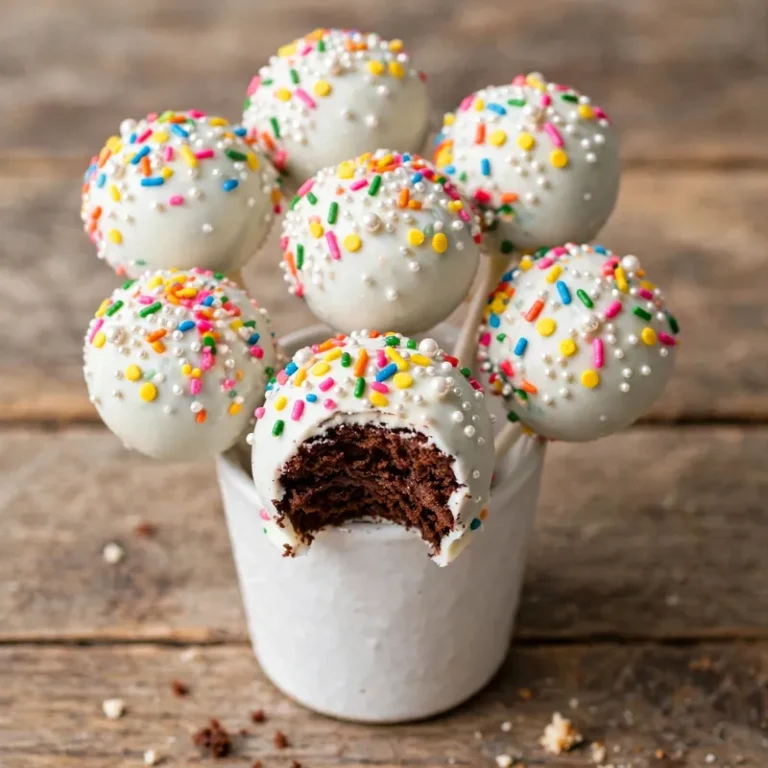

Easy Cream Cheese Frosting (Thick, Tangy, Pipes Beautifully)
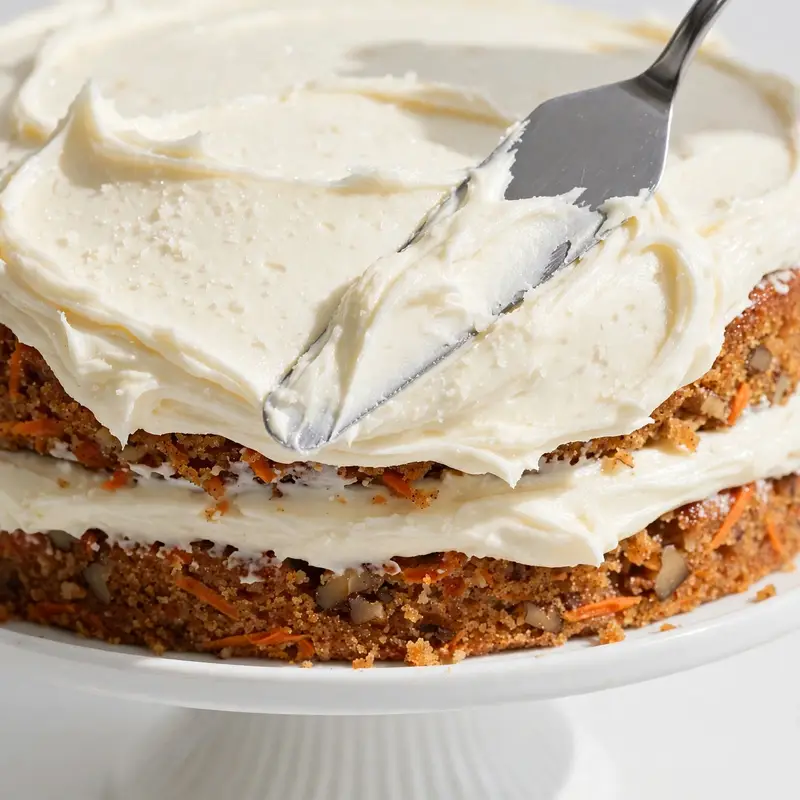
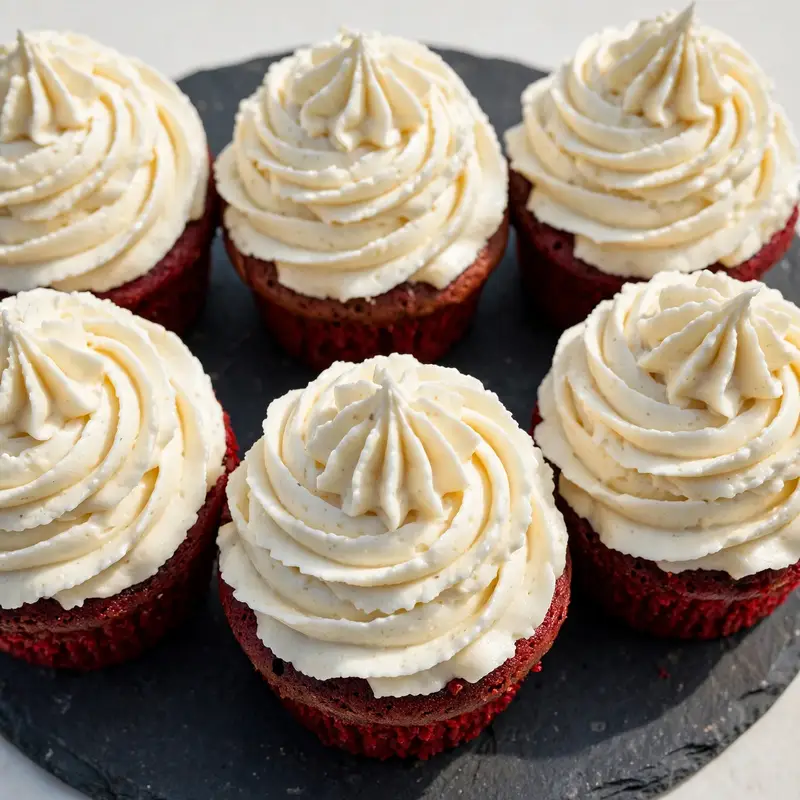
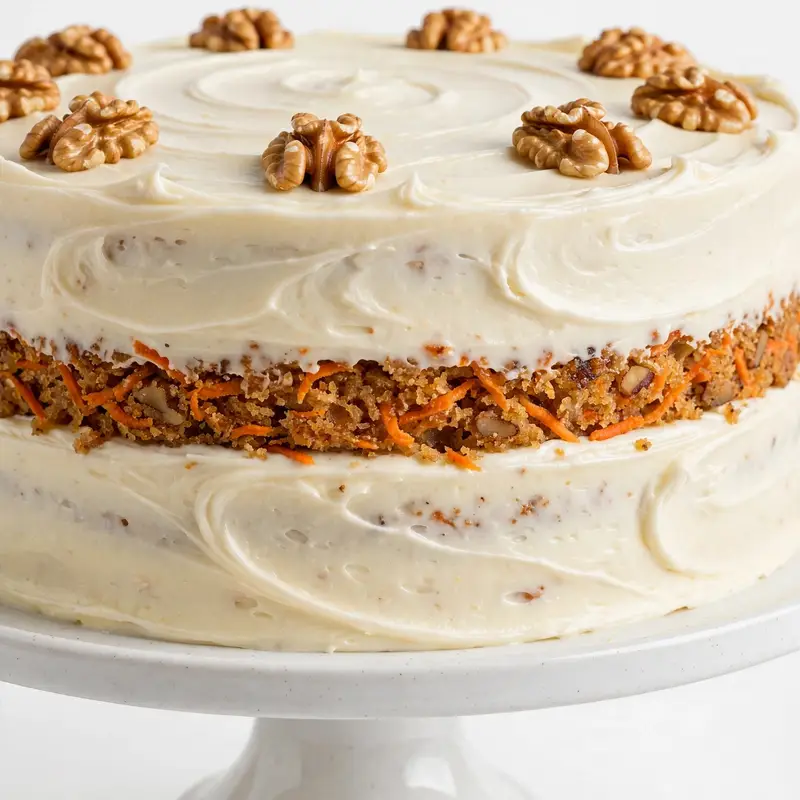
Spread cream cheese frosting onto a carrot cake while it is still slightly cool and it goes on in smooth, clean sweeps. Pipe it onto a red velvet cupcake and it holds its swirl without slumping. That balance between soft enough to work with and firm enough to hold its shape is exactly what separates a well-made cream cheese frosting from the versions that slide off the cake or collapse in the heat before anyone gets to the table.
This recipe uses four ingredients and takes 10 minutes with a hand mixer or stand mixer. The cream cheese and butter must both be at genuine room temperature, not cool-from-the-fridge temperature: that single detail determines whether the frosting is smooth and spreadable or lumpy with white flecks running through it. Get that right and the rest is straightforward. The recipe makes enough to frost and fill a standard two-layer 9-inch cake or generously top 24 cupcakes.
Why You’ll Love This Cream Cheese Frosting
- Four ingredients, 10 minutes. Cream cheese, butter, powdered sugar, and vanilla. No cornstarch, no heavy cream, no stabilizers. The simplicity is the point.
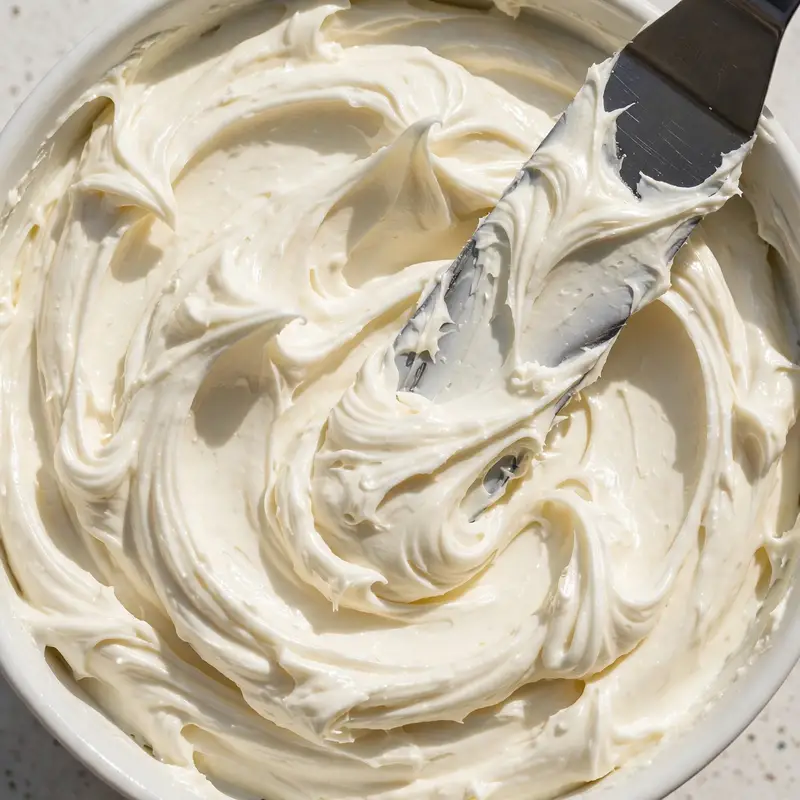
- Thick enough to pipe. With the right ratio of cream cheese to butter and the correct sugar amount, this frosting holds a piped swirl without collapsing, even at room temperature for a few hours.
- Tanginess you can actually taste. The cream cheese flavor comes through clearly rather than being buried under excessive sweetness. The balance here leans tangy-first, sweet-second, which is what makes it pair so well with spiced or chocolate cakes.
- Adjustable consistency. Add more powdered sugar for a stiffer frosting that pipes sharply. Add a tablespoon of heavy cream for something softer and more spreadable. The base recipe is the starting point.
- Works on more than just carrot cake. Red velvet, banana cake, spice cake, chocolate cupcakes, cinnamon rolls, and even sugar cookies all work with this frosting as the finish.
Ingredients You’ll Need
Recipe Timing
| Detail | Info |
|---|---|
| Servings | Frosts one 2-layer 9-inch cake or 24 cupcakes |
| Yield | Approximately 3 cups of frosting |
| Difficulty | Easy |
| Course | Frosting, Dessert Component |
| Cuisine | American |
| Prep Time | 10 minutes |
| Cook Time | 0 minutes |
| Total Time | 10 minutes |
The most important ingredient decision in this recipe is the cream cheese. Use full-fat block-style cream cheese only, not the spreadable kind that comes in a tub. Tub cream cheese contains more water and stabilizers that make it softer at room temperature, which translates directly to a frosting that is too loose to pipe and takes excessive amounts of powdered sugar to thicken. Block cream cheese (the kind in the foil-wrapped rectangular package) has a denser, firmer texture that produces a stable, thick frosting with the right tangy flavor.
Both the cream cheese and the butter must be at true room temperature before you start: soft enough that you can press your finger into them and leave an indent without any resistance, but not so warm that they look greasy or shiny. If either goes in too cold, the frosting will have lumps and an uneven texture that no amount of additional mixing will fully fix.
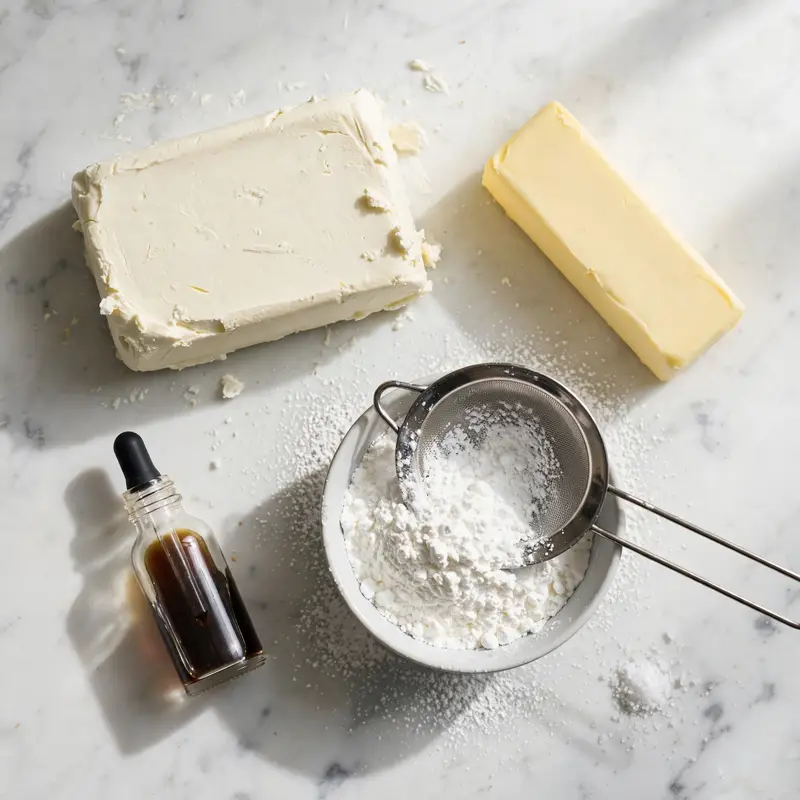
- 225g (8 oz) full-fat block cream cheese, at room temperature. The backbone of the frosting. It provides the tang, the structure, and the characteristic flavor. One standard block is exactly the right amount for this recipe.
- 1/2 cup (113g) unsalted butter, at room temperature. Adds richness, helps the frosting hold its shape, and softens the sharpness of the cream cheese slightly. Salted butter works in a pinch but makes the final sweetness harder to control.
- 3 to 3.5 cups (360 to 420g) powdered sugar, sifted. Sweetens and thickens the frosting. Sifting is not optional: unsifted powdered sugar contains lumps that don’t fully dissolve in a cream-based frosting even with extended mixing. Start with 3 cups and add the extra half cup only if you want a stiffer frosting for piping.
- 1 teaspoon pure vanilla extract. Rounds out the flavor and softens the slightly sharp edge of the cream cheese. Use pure extract rather than imitation; the difference is noticeable in something this simple with no other competing flavors.
- Pinch of fine sea salt (about 1/8 teaspoon). This is optional but genuinely recommended. Salt balances the sweetness and sharpens the cream cheese flavor so the frosting tastes complex rather than one-dimensional.
Allergen and Dietary Disclosure
This recipe contains dairy (cream cheese, butter) and eggs are not present, but this frosting is used on baked goods that often contain eggs.
The frosting itself is gluten-free as written, provided all individual ingredients are confirmed gluten-free on their labels (some powdered sugars contain trace starch that may be cornstarch or wheat starch depending on the brand).
For a dairy-free version, use dairy-free cream cheese (Violife and Kite Hill both produce block-style versions that work reasonably well) and a plant-based butter block. The texture will be slightly softer and the flavor more neutral, so a little extra vanilla and a pinch more salt help compensate.
Not guaranteed safe for any specific allergy without checking all individual ingredient labels.
Equipment Needed
Hand mixer or stand mixer. A hand mixer is sufficient for this recipe and most home bakers will find it easier to control the frosting consistency with one. A stand mixer with the paddle attachment works well for larger batches. Do not attempt to make cream cheese frosting by hand with a spoon or whisk: the friction required to fully smooth the cream cheese is too high to achieve manually, and you will be left with a lumpy, uneven result.
Fine mesh sieve or sifter. For sifting the powdered sugar before it goes into the bowl. This is the step most people skip, and it is the step most responsible for lumpy frosting. A fine mesh strainer held over the bowl and tapped works just as well as a dedicated sifter.
Rubber spatula. For scraping down the sides of the bowl during mixing. Cream cheese and butter cling to the bowl sides and bottom, and portions that never get incorporated stay lumpy while the rest of the frosting looks smooth. Scrape twice during mixing: once after adding the cream cheese and butter, and once after all the sugar is in.
Offset spatula or palette knife. For spreading frosting onto a cake. The angled blade lets you apply even pressure across the surface without your hand dragging through the frosting. A straight butter knife works for a more rustic finish.
Step-by-Step Directions
Step 1: Confirm Temperature of Ingredients
Before starting the mixer, press your finger firmly into the cream cheese block and then into the butter. Both should yield immediately without any cool resistance. If either feels even slightly firm, the frosting will not come together smoothly. Set cold ingredients on the counter for 30 to 45 minutes before starting. In a warm kitchen, 20 minutes is usually sufficient.

Chef’s Note: This is the most skipped and most consequential step in the recipe. Cream cheese that is 5 degrees too cold will leave white lumps throughout the frosting that look like curdled milk. No amount of extra mixing fixes genuinely cold cream cheese once it is in the bowl.
Step 2: Beat Cream Cheese Until Completely Smooth
Place the room-temperature cream cheese in the bowl of your stand mixer or a large mixing bowl. Beat with the paddle attachment or hand mixer on medium speed for 60 to 90 seconds until the cream cheese is completely smooth, with no lumps or firm pieces visible. Scrape down the bowl sides with a rubber spatula and beat for another 20 seconds.
Step 3: Add the Butter and Beat Together
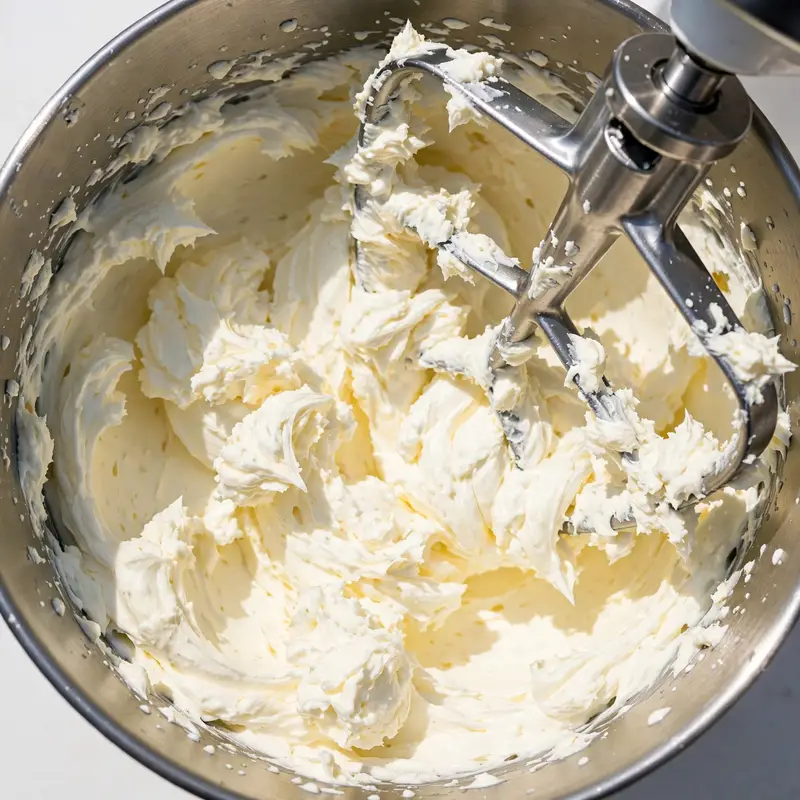
Add the room-temperature butter to the smoothed cream cheese. Beat on medium speed for 90 seconds until the two are fully combined and the mixture looks light, pale, and fluffy. Scrape down the bowl again. The combined butter and cream cheese mixture should look uniform with no streaks of white or yellow running through it.
Chef’s Note: Beating the cream cheese fully smooth before adding the butter is a deliberate sequence. Adding cold butter to unbeaten cream cheese makes the lumps harder to resolve because the butter coats the outside of the cold cream cheese pieces and seals them against further mixing.
Step 4: Sift in the Powdered Sugar
Hold a fine mesh sieve over the bowl and add the powdered sugar through it in two or three additions, tapping the sieve to push it through. After each addition, start the mixer on the lowest speed setting to prevent a powdered sugar cloud from coating your counter, then increase to medium once the sugar is incorporated. Add the vanilla extract and salt with the second addition of sugar.
Chef’s Note: Starting on low speed with each sugar addition is not just about mess control. It also prevents the sugar from compacting against the wet frosting before it has a chance to distribute, which is another source of lumps.
Step 5: Mix to the Right Consistency
After all the powdered sugar is in, beat on medium speed for a final 60 seconds until the frosting is completely smooth and holds a soft peak when you lift the beater. Scrape the bowl one last time and check the texture. For spreading onto a cake or cinnamon rolls, this consistency is ideal. For piping defined rosettes or swirls, beat in the additional 1/2 cup of powdered sugar and chill the frosting for 15 minutes before piping.

Step 6: Use Immediately or Chill
Use the frosting immediately for spreading onto a cooled cake or cinnamon rolls. If using for piping, transfer it to a piping bag and refrigerate for 15 to 20 minutes before piping. The brief chill firms the frosting slightly so it holds sharper edges when piped. Always frost a completely cooled cake: a warm or even slightly warm cake melts the cream cheese component and causes the frosting to slide.
Common Mistakes and Troubleshooting
| Problem | Cause | Solution |
|---|---|---|
| Frosting is lumpy | Cream cheese or butter too cold when mixed | Always start with ingredients at genuine room temperature; beat cream cheese alone first until completely smooth |
| Frosting is too soft and runny | Tub cream cheese used instead of block, or kitchen too warm | Use only block-style full-fat cream cheese; chill frosting 20 to 30 minutes before using |
| Frosting is too sweet | Too much powdered sugar added | Start with 3 cups, taste before adding more; a pinch of salt reduces sweetness perception |
| Powdered sugar lumps visible in finished frosting | Sugar not sifted before adding | Always sift powdered sugar through a fine mesh strainer before it goes into the bowl |
| Frosting slides off the cake | Cake was still warm when frosted | The cake must be completely cool, ideally refrigerated for 30 minutes before frosting |
| Frosting loses its shape after piping | Not chilled before piping, or too little sugar | Refrigerate filled piping bag for 15 to 20 minutes; add the extra 1/2 cup of powdered sugar |
| Frosting tastes flat | Salt or vanilla skipped | Both make a real difference in a frosting this simple; include both even in small amounts |
Variations and Substitutions
Lemon Cream Cheese Frosting: Add 1 teaspoon of fresh lemon zest and 1 tablespoon of fresh lemon juice to the frosting along with the vanilla. The citrus lifts the tang of the cream cheese and pairs particularly well with lemon cake, blueberry cake, or any fruit-forward dessert.
Brown Butter Cream Cheese Frosting: Brown the butter first (cook it in a light-colored pan over medium heat until the milk solids turn golden and smell nutty, about 5 to 6 minutes), then cool it in the fridge until solid and bring it back to room temperature before using. The browned butter adds a nutty, caramel-like depth that makes the frosting taste considerably more complex.
Cinnamon Spice Frosting: Add 1/2 teaspoon of ground cinnamon and 1/4 teaspoon of ground nutmeg along with the vanilla. Works well on carrot cake, apple cake, or spiced cupcakes. The spices deepen the warmth of the frosting without overpowering the cream cheese flavor.
Chocolate Cream Cheese Frosting: Sift 1/3 cup (30g) of unsweetened cocoa powder in with the powdered sugar. The cocoa makes the frosting considerably stiffer, so you may need to add 1 to 2 tablespoons of whole milk to bring it back to spreading consistency. The result is tangy, slightly bitter, and deeply chocolatey.
Maple Cream Cheese Frosting: Replace the vanilla extract with 2 tablespoons of pure maple syrup. Reduce the powdered sugar by 2 tablespoons to compensate for the added liquid. This version is excellent on spice cake, sweet potato cake, or any baked good with warm fall flavors.
Strawberry Cream Cheese Frosting: Add 2 tablespoons of very thick strawberry jam (not fresh pureed strawberry, which adds too much liquid) to the finished frosting and stir by hand to swirl it in. The result is a marbled, pale pink frosting with visible fruit streaks and a fruity-tangy flavor that works beautifully on vanilla or chocolate cake.
Serving Suggestions
- On carrot cake. The classic pairing for good reason. The warm spice of the cake and the cool tang of the frosting are genuinely complementary flavors, not just tradition. Use this frosting generously between the layers and on the exterior.
- On red velvet cake or cupcakes. The mild cocoa flavor and deep red color of red velvet are specifically designed to contrast with a white, tangy frosting. Cream cheese frosting is the standard finish for this reason.
- On cinnamon rolls. A thinner version (add 1 to 2 tablespoons of milk to the base recipe) poured over warm cinnamon rolls while they are still slightly hot seeps into the spirals and sets into a glaze-like layer. Different from the piped version but just as good.
- On banana cake or banana muffins. Banana and cream cheese are underrated together. The frosting balances the sweetness of the banana and gives the finished cake a professional quality that simple sugar glaze doesn’t.
- As a dip for fresh fruit. Thin the frosting with 2 to 3 tablespoons of milk until it is a thick, pourable consistency and serve it as a sweet dip alongside sliced strawberries, apple slices, or graham crackers. Doubles as a quick dessert option for gatherings.
- On sugar cookies. Pipe a small swirl onto each cooled sugar cookie instead of using a standard royal icing. The frosting is softer, doesn’t dry hard, and gives the cookies a more bakery-style finish with noticeably better flavor.
Tips for the Best Results
- Room temperature is non-negotiable. Both the cream cheese and butter need to be soft before they go into the bowl. If you forget to take them out ahead of time, cut the cream cheese and butter into small cubes and leave them on a plate for 15 to 20 minutes. Small pieces come to room temperature significantly faster than whole blocks.
- Sift every time. Even if the powdered sugar looks smooth in the bag, it compacts during storage and contains lumps that don’t dissolve in a cold fat-based frosting. A fine mesh sieve takes 30 seconds. Skipping it costs you a smooth result.
- Beat cream cheese alone first. This single-step sequence change (cream cheese smoothed before butter goes in) produces a noticeably smoother frosting than adding both at the same time. It only adds 90 seconds to the process.
- Chill before piping, not before spreading. For spreading, use the frosting at room temperature: it is easier to handle and spreads more smoothly than chilled frosting, which drags and tears the surface of the cake. For piping, the 15-minute chill makes a meaningful difference to how sharply the swirls hold.
- Taste before you finish. Before the frosting goes onto the cake, taste a small amount on a spoon. Adjust salt if it tastes too flat. Add a few drops of extra vanilla if it needs more warmth. A pinch of additional salt genuinely reduces the perception of sweetness without adding more.
Storage Tips
Refrigerator
Cream cheese frosting contains dairy and must be refrigerated if not used immediately. Transfer unused frosting to an airtight container and refrigerate for up to 5 days. Any frosted cake or baked good should also be refrigerated, covered loosely with plastic wrap or a cake dome. Remove the frosted cake from the fridge 30 to 45 minutes before serving so the frosting softens to its best texture.
Freezer
Cream cheese frosting freezes well. Spoon it into a freezer-safe container or zip-lock bag, press out the air, and freeze for up to 3 months. Thaw overnight in the refrigerator, then let it come to room temperature on the counter for 30 minutes before re-beating briefly with a hand mixer to restore its smooth consistency. It may look slightly broken after thawing but a brief beat brings it back together.
Reheating
Frosting does not reheat. If it has been refrigerated and is too stiff to spread directly, let it sit at room temperature for 20 to 30 minutes before using. Do not microwave it to soften it: even 10 seconds of microwave heat melts the butter component and breaks the emulsion irreversibly. If it thickened too much in the fridge, beat it briefly with a hand mixer on medium speed until it relaxes back to a spreadable consistency.
Nutrition Information
Per serving (approximately 2 tablespoons of frosting)
| Nutrient | Amount |
|---|---|
| Calories | 145 kcal |
| Protein | 1g |
| Carbohydrates | 18g |
| Fiber | 0g |
| Sugar | 17g |
| Total Fat | 8g |
| Saturated Fat | 5g |
| Cholesterol | 25mg |
| Sodium | 55mg |
| Vitamin C | 0mg |
| Calcium | 18mg |
| Iron | 0mg |
| Potassium | 25mg |
Nutrition values are approximate and may vary based on brands and portion sizes. Values are for frosting only, not including the cake or baked good it is applied to.
Why This Recipe Works
Cream cheese frosting is technically an emulsion: fat (from both the cream cheese and butter) dispersed through a sugar matrix. The stability of that emulsion depends entirely on the temperature of the fat when you start mixing. Cold fat doesn’t disperse evenly; it breaks into small chunks that remain visible even after extended beating. Properly softened fat at 18 to 20°C (65 to 68°F) distributes smoothly on the first pass.
The ratio of cream cheese to butter in this recipe sits at roughly 2:1 by weight. A higher cream cheese ratio gives you more tang but a softer, less stable frosting. A higher butter ratio gives you firmer piping consistency but loses the cream cheese character that makes this frosting distinct from a standard buttercream. The 2:1 ratio is the balance point between flavor and structural integrity.
Sifted powdered sugar dissolves into cream-based frostings differently than granulated sugar does. The fine particles coat and integrate rather than needing to dissolve, which is why powdered sugar works in cold frostings where granulated sugar would leave grit. Unsifted powdered sugar that has compacted during storage behaves more like irregular lumps than fine particles, which is why lumps survive even thorough mixing.
Salt in frosting deserves a specific explanation. Sweetness and saltiness are competing sensations on the palate. A small amount of salt (well below the threshold where you taste it as salty) suppresses some of the sweet signal and amplifies the other flavors, particularly the tang of the cream cheese and the warmth of the vanilla. This is why frosting with a pinch of salt tastes more complex than frosting without one, even though you cannot identify salt as a flavor in the finished result.
I’ve made this recipe with both tub-style and block-style cream cheese for direct comparison. The tub version required an extra 1.5 cups of powdered sugar to reach piping consistency, which made the frosting noticeably sweeter and less tangy. The block version reached correct piping consistency at 3.5 cups and kept the cream cheese flavor prominent. The difference is meaningful enough that block cream cheese is the only recommended option here.
Frequently Asked Questions
Can I make cream cheese frosting ahead of time?
Yes. Make the frosting up to 5 days ahead and store it in an airtight container in the refrigerator. When you are ready to use it, take it out 30 minutes before and beat it briefly with a hand mixer on medium speed for 30 to 60 seconds to restore its smooth, spreadable consistency. It may look slightly stiff or grainy straight from the fridge but comes back to its original texture after a quick beat.
Why is my cream cheese frosting runny?
The most likely cause is using tub-style cream cheese instead of full-fat block cream cheese. Tub cream cheese is formulated to be soft and spreadable at refrigerator temperature, which means at room temperature it is far too loose for frosting. The second common cause is a kitchen that is too warm: in summer or a hot kitchen, the fat in both the cream cheese and butter softens past the ideal consistency during mixing. In that case, chill the frosting for 20 to 30 minutes and beat again briefly before using.
Can I use salted butter?
Yes, with a small adjustment. If using salted butter, skip the pinch of added sea salt in the recipe. The overall flavor will be very similar, just with the sodium coming from the butter rather than being added separately. The texture and structure of the frosting are not affected by the salt content of the butter.
How much cream cheese frosting do I need for a two-layer cake?
This recipe yields approximately 3 cups of frosting, which is enough to fill and frost a standard two-layer 9-inch round cake with a moderate amount of frosting on the exterior. If you prefer a thick crumb coat plus a generous smooth outer layer, make 1.5x the recipe. For a three-layer cake, make a double batch.
Can cream cheese frosting be left at room temperature?
For short periods, yes. A frosted cake or plate of frosted cupcakes can sit at room temperature for up to 2 hours without any food safety concern. Beyond 2 hours, cream cheese frosting should be refrigerated because the dairy content can deteriorate at warm room temperatures. If serving at a party or gathering, keep the time at room temperature in mind and refrigerate anything that won’t be finished within 2 hours.
Is this frosting stable enough for a tiered cake?
This recipe produces a frosting that is stable for a standard two-tier cake served and refrigerated on the same day. For stacked tiered cakes that need to sit out for several hours, or for cakes being transported in warm weather, the frosting is on the softer side of what most decorators use for structural work. In those situations, adding 1/2 cup more powdered sugar and keeping the assembled cake refrigerated until 30 minutes before serving gives the most reliable result.
Can I color cream cheese frosting?
Yes, using gel food coloring rather than liquid food coloring. Liquid food coloring adds water to the frosting, which softens it and can make it runny if you need a deep or saturated color (which requires adding more dye and therefore more liquid). Gel colorings are highly concentrated and add color without adding meaningful liquid. Add gel coloring one small drop at a time and stir thoroughly after each addition before deciding whether to add more.
Conclusion
Cream cheese frosting is one of those recipes where the technique matters more than the ingredient list. Four ingredients, yes, but the temperature of those ingredients and the order you add them are what determine whether you end up with something smooth and pipe-able or lumpy and loose. Softened cream cheese beaten smooth before anything else goes in, sifted powdered sugar added in stages, and a brief chill before piping: those three details produce a result that holds its shape, tastes properly tangy, and complements almost any cake you put it on. Once this cream cheese frosting recipe feels familiar, it becomes one of those things you make without looking at the recipe at all.
If you loved this recipe, save it to your frosting and cake recipes Pinterest board so you can find it easily later! For more latest recipes don’t forget to visit thecookingvibes Pinterest account
Easy Cream Cheese Frosting
Ingredients
Equipment
Method
- Confirm temperature of ingredients: press your finger firmly into the cream cheese block — it should give easily and leave an indent.
- Beat the room-temperature cream cheese in a mixing bowl until completely smooth and lump-free.
- Add the room-temperature butter and beat together on medium speed until fully combined and fluffy.
- Sift in the powdered sugar in two additions through a fine mesh sieve, starting on low speed with each addition.
- Mix to the right consistency: after all the sugar is in, beat on medium speed for a final 60 seconds. Add vanilla and salt, mix briefly.
- Use immediately for spreading onto a cooled cake, or chill 15 to 20 minutes before piping.
Notes
- Always use room-temperature cream cheese and butter. Cold ingredients leave lumps.
- Sift the powdered sugar every time — unsifted sugar leaves visible lumps.
- Beat cream cheese alone first, before adding butter, for the smoothest result.
- Chill the filled piping bag 15 to 20 minutes before piping for sharp shapes.