Easy Jambalaya Recipe — Smoky, Spicy, and Full of Flavor
The first thing that hits when a pot of jambalaya is going is the smell: smoked sausage browning in a hot pan, the holy trinity of onion, celery, and bell pepper starting to soften in the drippings, and the moment when the tomatoes and spices hit the heat and the whole kitchen shifts into something that smells like a proper Southern dinner. By the time the rice has absorbed every drop of that spiced, smoky broth, you understand why this is one of the most replicated dishes in American cooking.
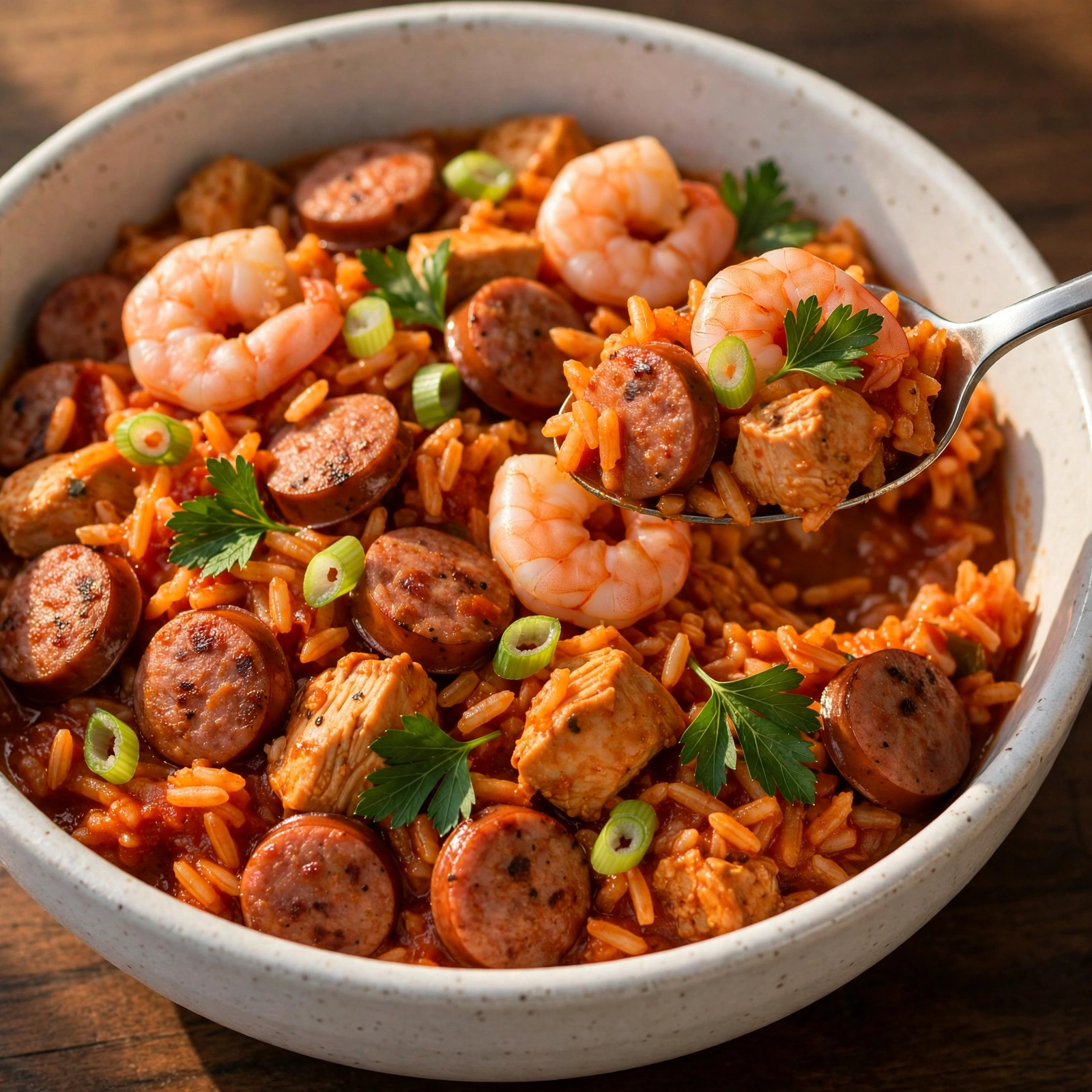
This jambalaya recipe uses chicken thighs, smoked beef sausage, and shrimp layered into a rich tomato and broth base seasoned with Cajun spices, garlic, and thyme. Everything cooks in one pot from start to finish: the protein gets browned first to build flavor, the vegetables go in next to pick up the drippings, and the rice cooks directly in the spiced broth so every grain absorbs the full depth of the dish. It makes six generous servings and tastes even better the following day when the flavors have had time to fully meld.
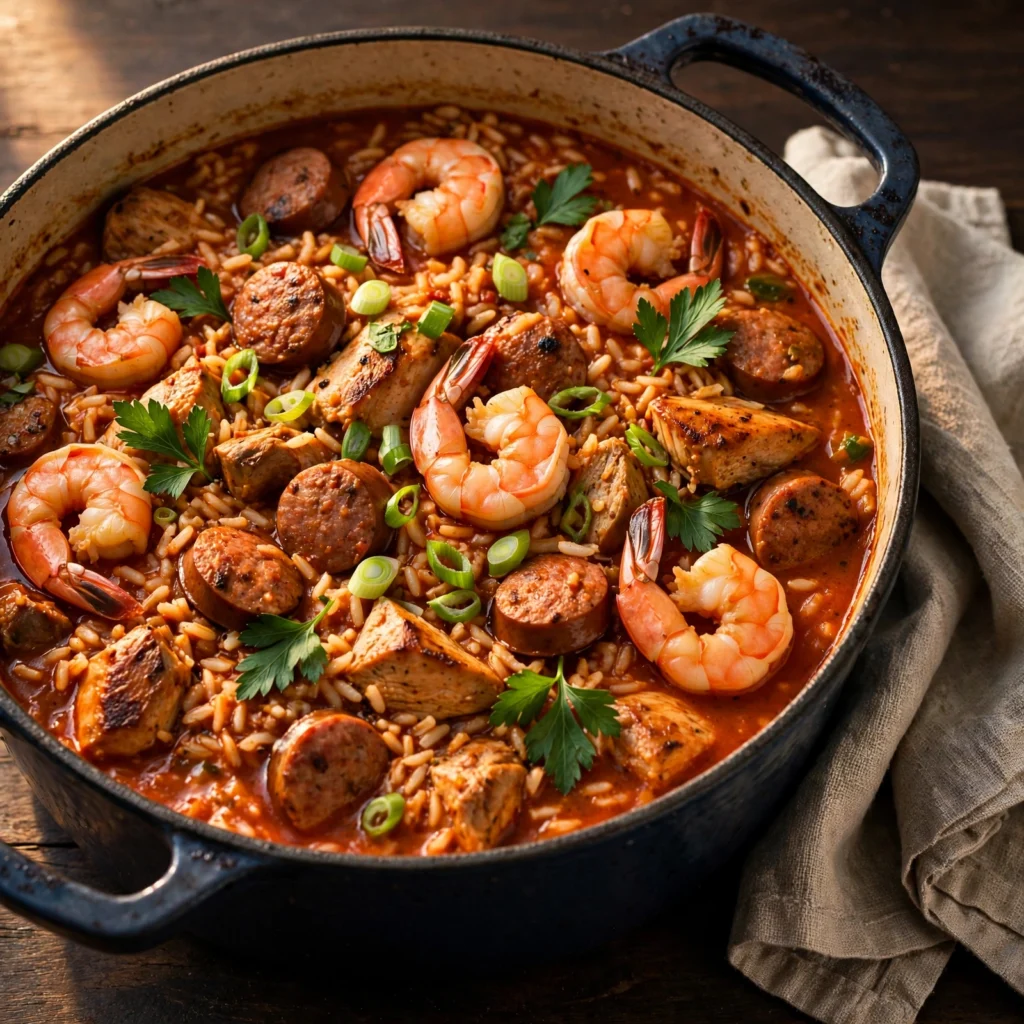
Why You’ll Love This Jambalaya Recipe
- One pot, zero shortcuts on flavor. Browning the sausage first, building the vegetable base in those drippings, and cooking the rice directly in spiced broth means every component contributes to a layered, genuinely deep flavor without requiring multiple pans or long prep windows.
- Three proteins in one dish. Chicken thighs add richness, smoked beef sausage adds the characteristic smoky depth, and shrimp added at the end stays tender rather than rubbery. The sequence of adding them matters and is built into the method.
- Rice that absorbs everything, not just sits in broth. The raw long-grain rice goes directly into the spiced liquid and cooks by absorption. Every grain ends up deeply flavored rather than tasting like plain steamed rice sitting alongside a saucy protein.
- Scalable and practical. The recipe makes six hearty servings and reheats well the next day, which makes it as practical for Sunday meal prep as it is for a dinner party.
- Adjustable heat level. The Cajun spice blend here is warm but not aggressive. You can take it spicier with more cayenne or hot sauce, or reduce it to suit a table with varying heat preferences, and the dish holds together either way.
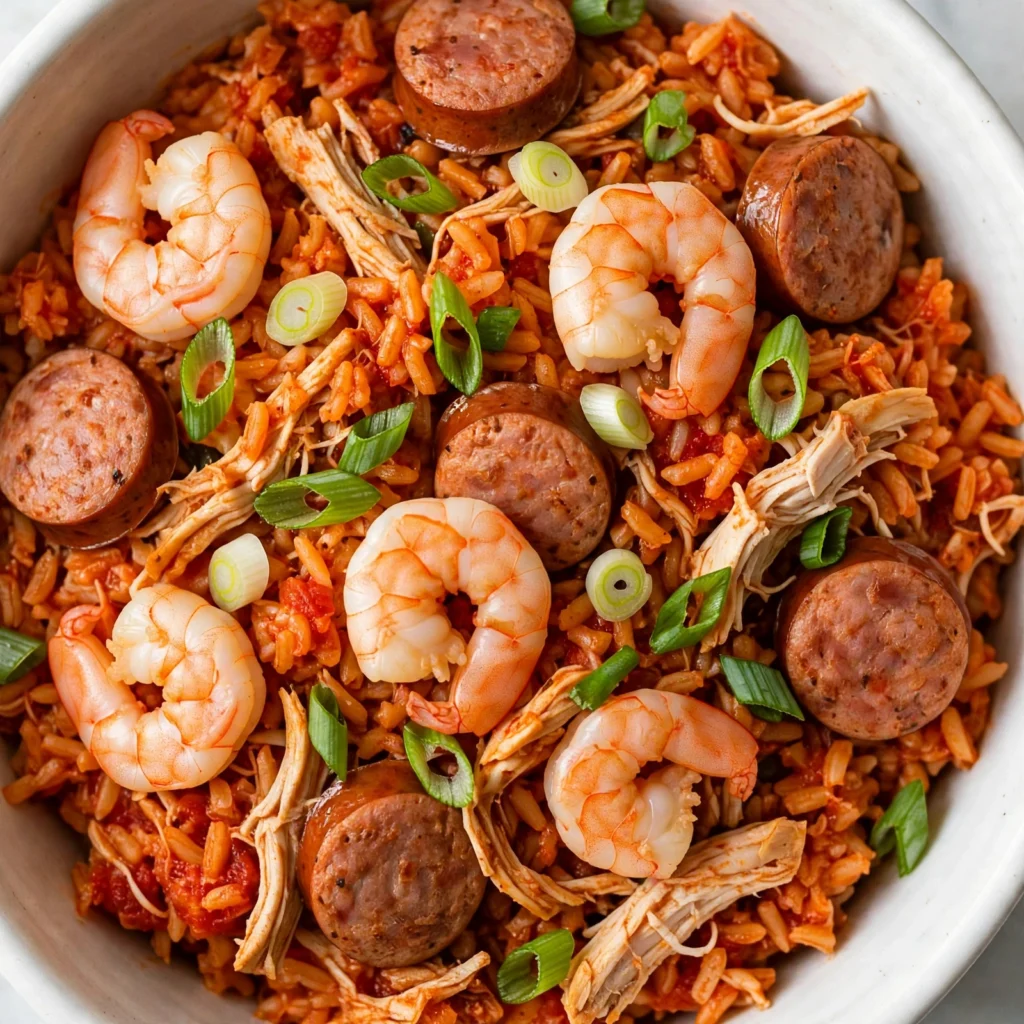
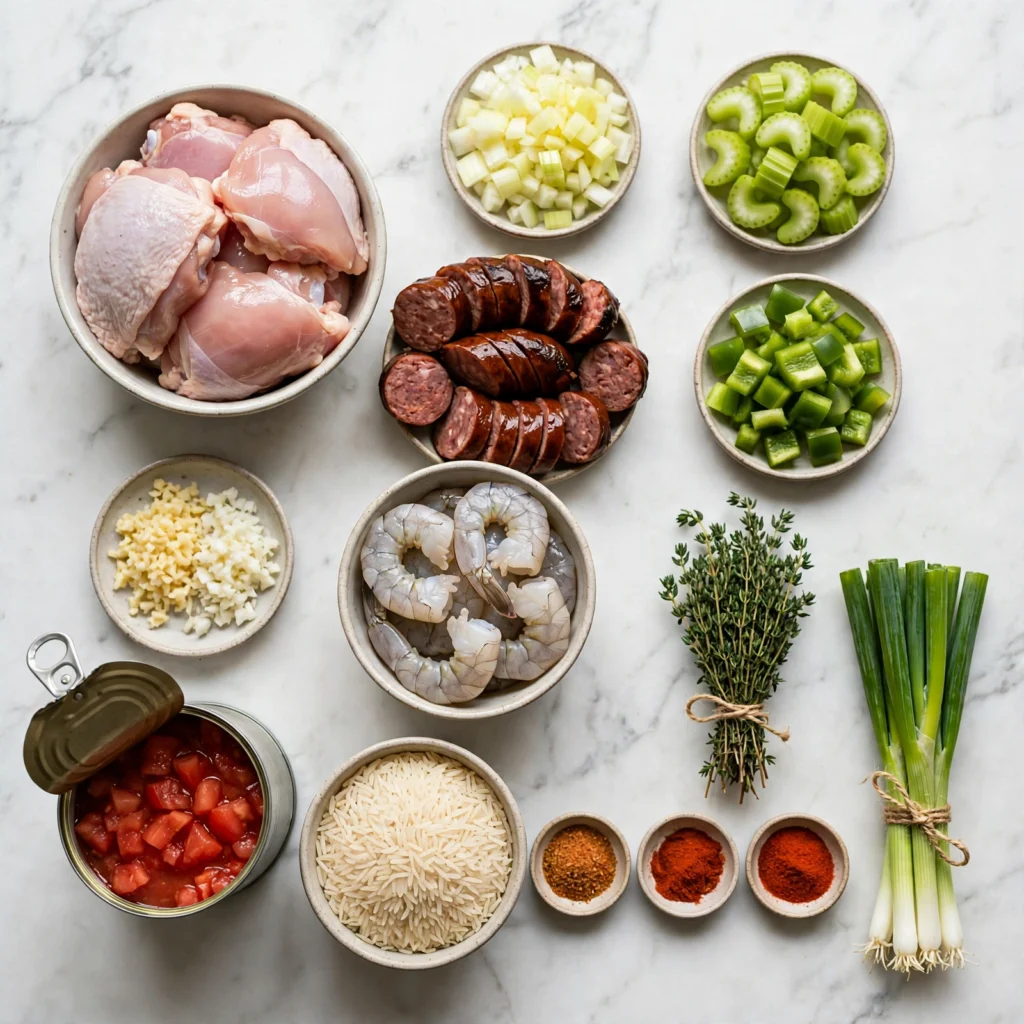
Ingredients You’ll Need
Recipe Timing
| Detail | Info |
|---|---|
| Servings | 6 |
| Difficulty | Intermediate |
| Course | Main Course |
| Cuisine | Cajun, American Southern |
| Prep Time | 15 minutes |
| Cook Time | 40 minutes |
| Total Time | 55 minutes |
Use long-grain white rice for this recipe rather than medium-grain or short-grain varieties. Long-grain rice stays distinct after absorbing the broth; shorter-grain varieties release more starch as they cook and can make the finished dish gluey and heavy rather than loose and separate. Jasmine rice works and adds a faint floral note, but plain long-grain white rice gives the most neutral, authentic result.
For the shrimp, buy them raw rather than pre-cooked. Pre-cooked shrimp added to a hot pot turns rubbery and dry within minutes; raw shrimp added in the final 5 minutes of cooking reaches the right tender, just-set texture.
For the Proteins:
- 450g (1 lb) boneless, skinless chicken thighs, cut into 3 cm pieces — Thighs have more fat than breast meat, which means they stay moist through the 25-minute simmer inside the broth. Breast meat can be used but the pieces tend to dry out; if you use breast, cut the simmering time by 5 minutes and check earlier.
- 300g (about 10 oz) smoked beef sausage or smoked chicken sausage, sliced into 1 cm rounds — The smoke in the sausage is the backbone of the dish’s flavor. A fully cooked, pre-smoked beef sausage works well and browns beautifully in the pot. Smoked chicken sausage is a lighter alternative with the same flavor contribution.
- 300g (about 10 oz) raw medium shrimp, peeled and deveined — Goes in at the very end to prevent overcooking. If using frozen shrimp, thaw completely and pat dry before adding; excess moisture from frozen shrimp can dilute the broth.
For the Aromatics and Vegetables:
- 2 tbsp neutral oil — For browning the sausage and chicken. A high smoke-point oil like vegetable or avocado oil handles the high initial heat without burning.
- 1 large yellow onion, diced — The flavor base. Cooked in the sausage drippings, it picks up smokiness immediately.
- 3 stalks celery, sliced — Part of the Cajun holy trinity. Adds a slight vegetal bitterness that balances the richness of the sausage.
- 1 large green bell pepper, diced — The third element of the holy trinity. Green bell pepper has a slightly sharper flavor than red or yellow and is the traditional choice for Cajun cooking.
- 4 cloves garlic, freshly minced — Added after the trinity has softened to prevent burning. Garlic cooked in the residual fat from sausage and oil becomes sweeter and more mellow than raw.
- 1 can (400g / 14 oz) diced tomatoes with juice — Contributes acidity, body, and the red-orange color to the broth. Don’t drain; the tomato liquid adds flavor and helps cook the rice.
- 2 cups (480ml) chicken broth, low sodium — The cooking liquid for the rice. Low sodium gives you control over the final salt level since the sausage and Cajun spice blend both carry salt.
For the Rice and Spices:
- 1.5 cups (280g) long-grain white rice, uncooked — Goes directly into the pot with the broth. See notes above on why long-grain is the right variety here.
- 2 tsp Cajun seasoning — A blend typically containing paprika, garlic powder, onion powder, cayenne, black pepper, and dried herbs. You can use a store-bought blend or mix your own (recipe in the variations section).
- 1 tsp smoked paprika — Adds extra smoky depth beyond what the sausage alone provides and deepens the color of the broth.
- 1 tsp dried thyme — A classic herb in Cajun cooking. Its slightly floral, earthy note pairs well with the smoky, spiced broth.
- 1/2 tsp dried oregano
- 1/4 tsp cayenne pepper — Adjust up for more heat; this quantity gives background warmth without making the dish aggressively spicy.
- 1 tsp fine salt, or to taste — Added conservatively since the sausage and broth both contain salt; taste and adjust after the rice finishes cooking.
- 1/2 tsp ground black pepper
For Garnish:
- 3 to 4 green onions (scallions), thinly sliced — Scattered over the finished dish for a fresh, sharp contrast to the smoky base.
- Fresh flat-leaf parsley, roughly chopped — Optional but adds a bright visual and flavor note.
- Hot sauce, for serving — Optional but traditional. Offer it on the side so each person controls their own heat level.
Allergen and Dietary Disclosure
This recipe contains shellfish (shrimp), which is one of the most common serious allergens. For a shellfish-free version, simply omit the shrimp and increase the chicken to 600g (about 1.3 lbs). The dish is complete and fully satisfying without shrimp.
Check the label on your smoked sausage if you are managing a gluten sensitivity, as some commercially smoked sausages contain wheat-based fillers or flavor additives. The rest of the recipe ingredients are naturally gluten-free.
This recipe does not contain dairy, eggs, or tree nuts in its base form.
This recipe has not been prepared in an allergen-free facility. Always verify individual product labels if you are managing a serious allergy.
Equipment Needed
- Large Dutch oven or heavy-bottomed pot (at least 6-litre capacity) — The single most important piece of equipment for this recipe. A Dutch oven distributes heat evenly, which prevents the rice from scorching at the bottom during the covered absorption phase. A thin-bottomed pot creates hot spots that burn the bottom layer of rice before the top finishes cooking.
- Wooden spoon or silicone spatula — For stirring and scraping the browned bits from the bottom of the pot when the liquid goes in. Those bits carry concentrated flavor and dissolve into the broth when properly scraped.
- Sharp chef’s knife and cutting board — For cutting the chicken, slicing the sausage, and prepping the holy trinity. Getting all three done before heat touches the pan keeps the cooking sequence smooth.
- Measuring cups and spoons — Precision matters more in jambalaya than most one-pot dishes because the rice-to-liquid ratio directly determines whether the finished texture is properly cooked or wet and gummy.
- Tight-fitting lid — Essential for the covered rice-absorption phase. A lid with a poor seal lets steam escape and the rice may not absorb all the liquid properly.
Step-by-Step Directions
Step 1: Brown the Sausage
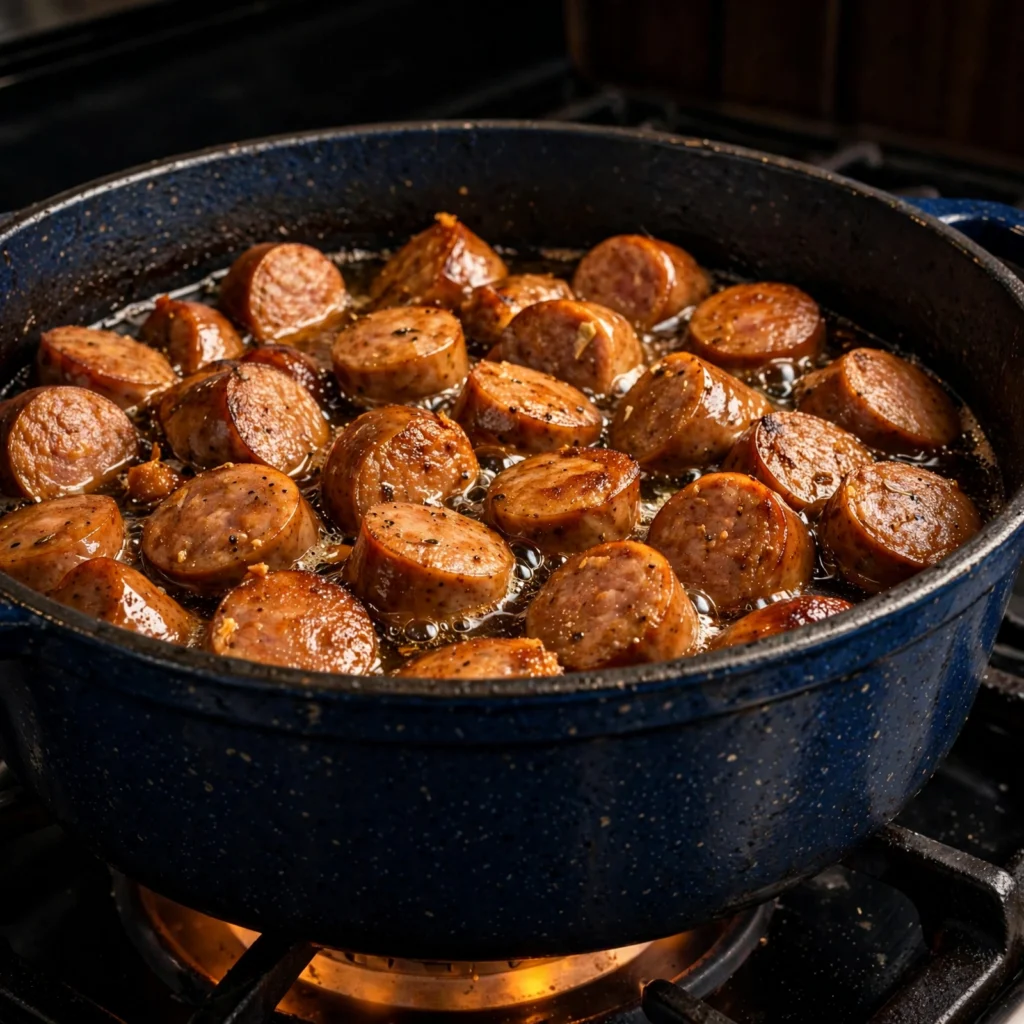
Heat 1 tablespoon of the oil in your Dutch oven over medium-high heat until the oil shimmers. Add the sausage slices in a single layer, without overcrowding. Cook undisturbed for 2 minutes until the undersides are deeply browned, then flip and brown the other side for another 90 seconds. Remove the sausage to a plate using a slotted spoon, leaving every drop of the rendered fat and drippings in the pot.

Chef’s Note: The browned bits stuck to the bottom of the pot after searing the sausage are the beginning of the jambalaya’s flavor. Don’t clean the pot between steps; those caramelized drippings will be lifted by the vegetables and broth in the next steps and distributed through the entire dish.
Step 2: Brown the Chicken
Add the remaining tablespoon of oil to the same pot over medium-high heat. Add the chicken thigh pieces in a single layer and cook for 3 to 4 minutes without moving them until the undersides are golden. Stir once and cook for another 2 minutes. The chicken doesn’t need to be cooked through at this stage; it will finish cooking in the broth. Remove to the same plate as the sausage.
Food safety note: Use a clean plate or separate sections of the plate for raw and cooked chicken. Wash any surfaces that contacted the raw chicken before using them for other food.
Step 3: Cook the Holy Trinity
Reduce the heat to medium. Add the diced onion, celery, and green bell pepper to the pot with its accumulated drippings. Stir to coat the vegetables in the fat and cook for 6 to 7 minutes, stirring occasionally, until the onion is translucent and the celery has softened. The vegetables will pick up color from the browned bits in the pot; this is what you want. Add the minced garlic and stir for 60 seconds until fragrant.
Chef’s Note: Cooking the vegetables in the sausage drippings rather than in clean oil is the step that lifts all the flavor from the browning phase into the rest of the dish. The natural sugars and savory compounds that caramelized onto the pot surface dissolve into the moisture released by the vegetables as they cook.
Step 4: Add Spices and Tomatoes
Add the Cajun seasoning, smoked paprika, dried thyme, oregano, cayenne, salt, and black pepper directly to the vegetables and stir for about 30 seconds until the spices are evenly coating the vegetable mixture and you can smell them blooming in the residual heat. Pour in the canned diced tomatoes with their juice and stir, scraping the bottom of the pot thoroughly to lift any remaining browned bits into the liquid.
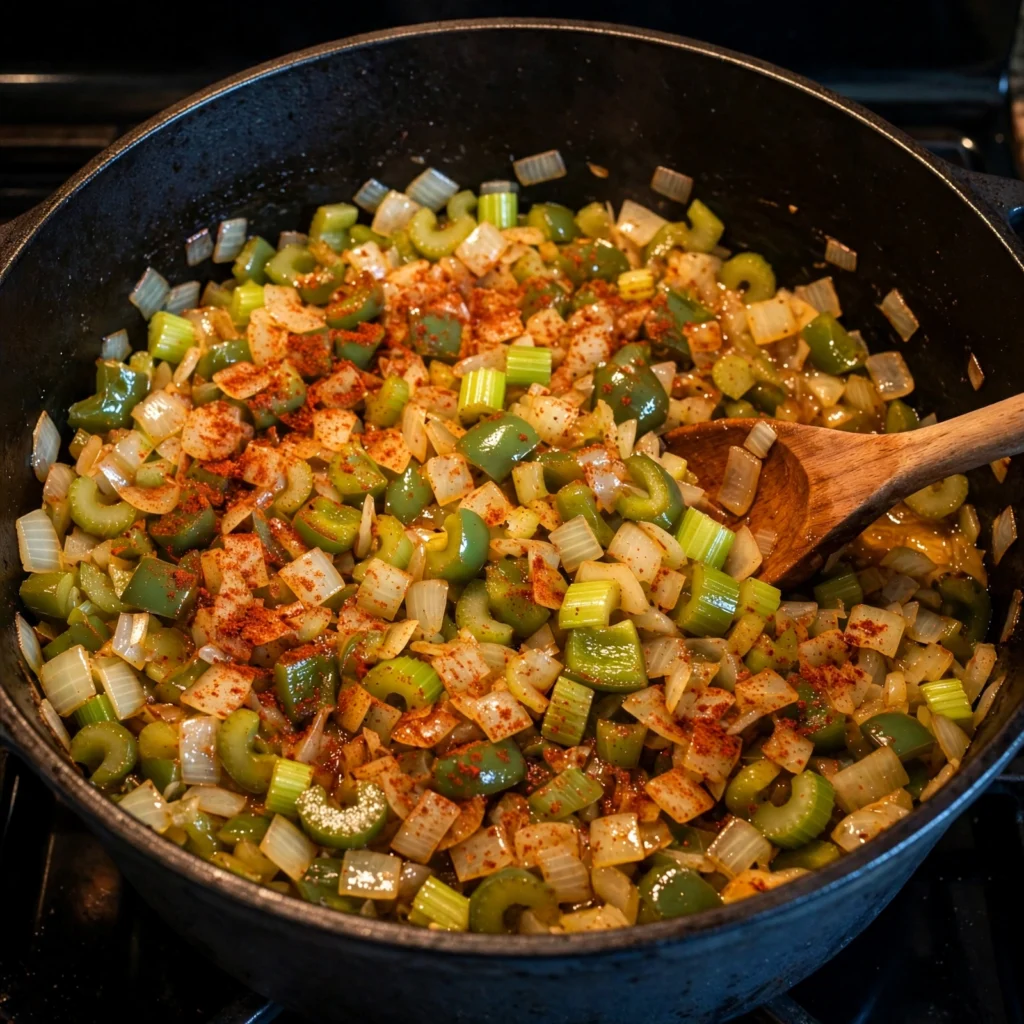
Step 5: Add Broth, Rice, and Browned Proteins
Pour in the chicken broth and stir to combine everything into a cohesive, broth-red liquid. Return the browned sausage and chicken to the pot, along with any juices that have collected on the plate. Stir in the uncooked rice, distributing it evenly throughout the pot. The liquid should just barely cover the rice and proteins; press down any rice floating above the surface.
Bring the pot to a vigorous boil over medium-high heat, which takes about 4 to 5 minutes.
Step 6: Simmer Covered Until Rice Absorbs
Once the pot reaches a rolling boil, stir once more from the bottom to prevent any rice from sticking, then reduce the heat to low. Place the lid tightly on the pot and simmer for 20 to 25 minutes without lifting the lid. The steam trapped inside is cooking the rice evenly from all directions; opening the lid releases that steam and extends the cooking time unpredictably.
At 20 minutes, lift the lid and check: the rice should have absorbed almost all of the liquid, the surface should look dry rather than soupy, and a spoon pressed into the center should reach tender rice rather than crunchy grains. If the rice is still firm or the liquid hasn’t absorbed, replace the lid and cook for another 3 to 5 minutes.
Chef’s Note: Every stovetop runs at a slightly different temperature at the “low” setting. If you’ve noticed that your burner on low still runs fairly hot, check the rice at 18 minutes rather than 20. Rice that has fully absorbed the liquid but sits over heat for several extra minutes starts to develop a slightly scorched layer at the very bottom of the pot, which is actually traditional in some versions of jambalaya and adds a pleasant texture, but too long produces a bitter char.
Step 7: Add Shrimp and Finish
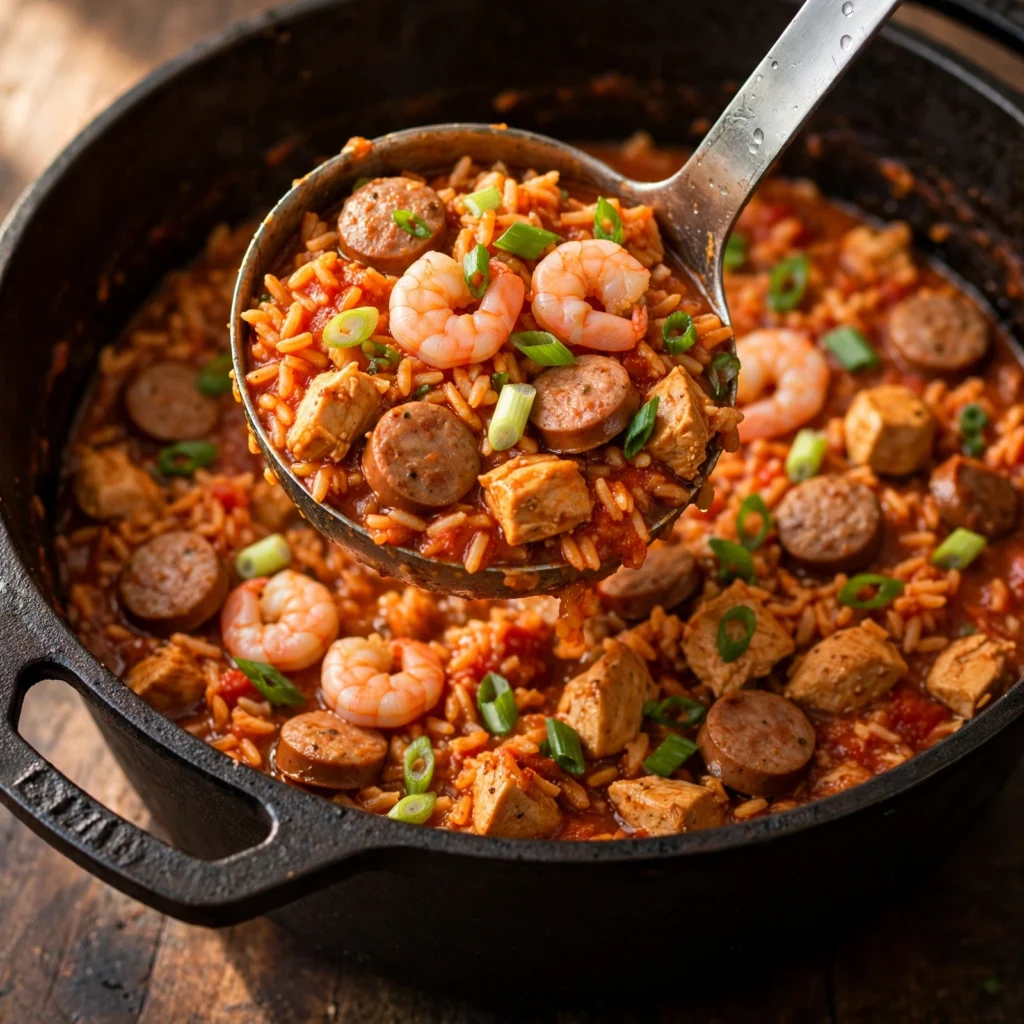
Once the rice is tender and the liquid absorbed, nestle the raw shrimp across the top of the rice. Replace the lid and cook on low heat for 4 to 5 minutes until the shrimp are pink, curled into a C-shape, and opaque throughout. If you cut the thickest shrimp open, the interior should be white with no translucency. Don’t cook beyond this point; overcooked shrimp becomes rubbery and loses its tender bite.
Scatter the sliced green onions and chopped parsley across the surface, give the pot one gentle fold from the bottom to incorporate the shrimp through the rice, and serve directly from the pot with hot sauce on the side.
Common Mistakes and Troubleshooting
| Problem | Cause | Solution |
|---|---|---|
| Rice is crunchy after full cook time | Lid wasn’t sealed tightly, heat was too low, or too much liquid evaporated before covering | Make sure the lid fits snugly. Add 1/4 cup of extra broth if the liquid looks low before covering. Check and reseal at 20 minutes if needed. |
| Rice is mushy and overcooked | Too much liquid relative to rice, or cooked too long after liquid absorbed | Stick to the 1.5 cups rice to 2.5 cups total liquid ratio (broth plus tomato juice). Don’t continue cooking after the liquid is absorbed. |
| Shrimp is rubbery and overcooked | Added too early, or cooked for too long after adding | Always add shrimp in the last 4 to 5 minutes. Watch for the pink color and C-shape curl as the doneness cue. |
| Dish lacks depth and tastes flat | Sausage and chicken weren’t properly browned first, or spices were added directly to the broth without blooming in the fat | Brown proteins until genuinely caramelized, not just gray. Add spices to the vegetable mixture in the dry pot and stir briefly before adding liquid. |
| Rice scorched on the bottom | Heat was too high during the covered simmer | Reduce heat to the lowest setting your burner offers once covered. If scorching is a persistent issue, place a heat diffuser between the burner and the pot. |
Variations and Substitutions
All-Chicken Jambalaya: Skip the sausage and use 750g of chicken thighs total. To compensate for the lost smokiness, add 1/2 teaspoon of liquid smoke to the broth and increase the smoked paprika to 2 teaspoons. The dish is lighter in flavor but still distinctly spiced.
Vegetarian Jambalaya: Omit the chicken, sausage, and shrimp entirely. Use 2 cans of drained red kidney beans and 1 cup of diced zucchini added with the tomatoes. Swap the chicken broth for a rich vegetable broth. The holy trinity, spices, and tomato base carry the dish well without meat, and the beans provide the protein and body.
Extra Spicy Version: Increase the cayenne pepper to 1/2 teaspoon, add 1/4 teaspoon of red pepper flakes with the other spices, and stir a tablespoon of your preferred hot sauce directly into the broth before the rice goes in. Serve with extra hot sauce at the table.
Homemade Cajun Spice Blend: If you don’t have pre-made Cajun seasoning, combine 1 tsp smoked paprika, 1/2 tsp garlic powder, 1/2 tsp onion powder, 1/4 tsp cayenne, 1/4 tsp dried oregano, 1/4 tsp dried thyme, and 1/4 tsp black pepper. This yields approximately 2 teaspoons, which is the right amount for this recipe.
Brown Rice Version: Replace the white long-grain rice with long-grain brown rice. Brown rice requires approximately 40 minutes of covered simmering and absorbs slightly more liquid, so add an extra 1/2 cup of broth. The texture is slightly chewier and nuttier, and the flavor pairs well with the smoky sausage.
Serving Suggestions
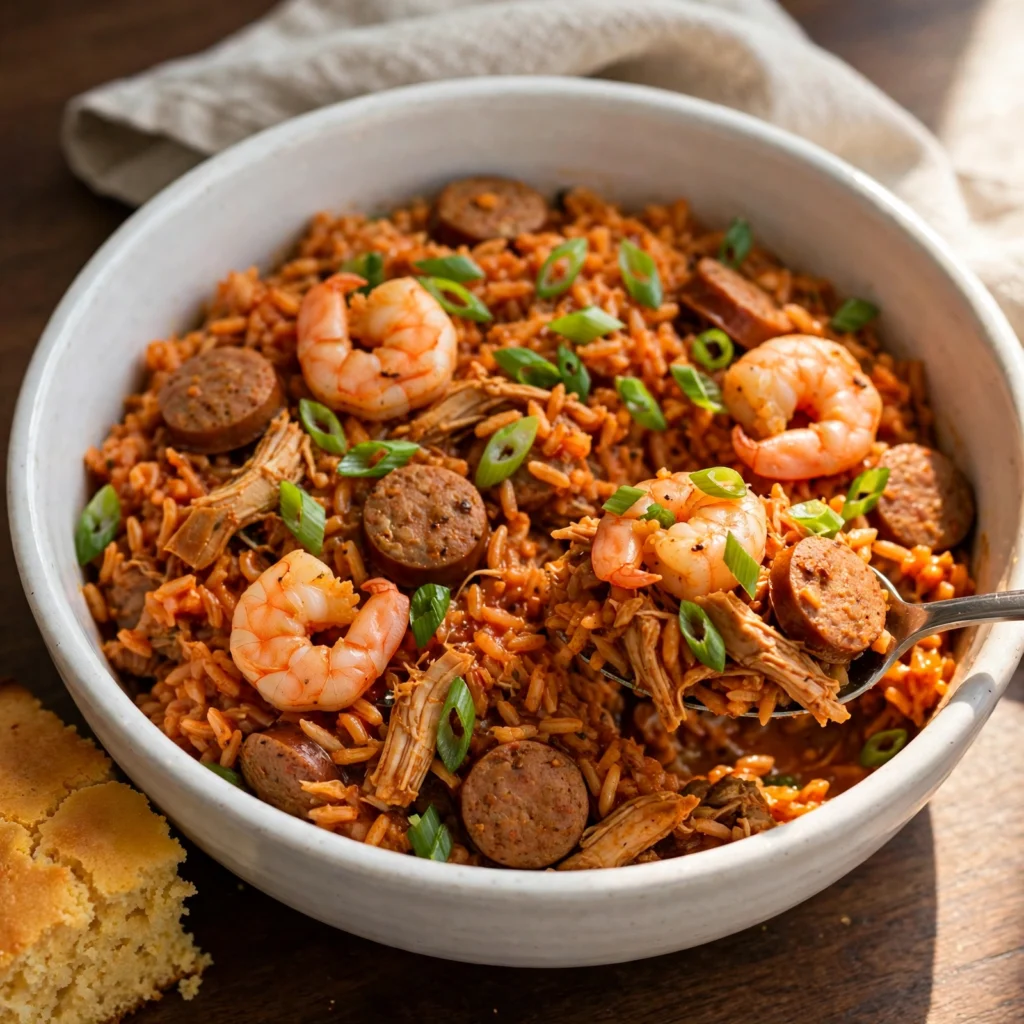
- Serve directly from the Dutch oven at the table with a ladle. Jambalaya is a communal dish and looks most impressive still in the pot it cooked in, especially with the green onions and parsley scattered across the top.
- Offer hot sauce on the side so each person can control the heat level. The base recipe is approachably spiced, which makes it practical for a mixed table; adding heat at the table rather than in the pot keeps everyone happy.
- Pair with a slice of cornbread for soaking up any extra broth left in the bowl. Cornbread’s slight sweetness balances the smoky, spicy broth naturally.
- Serve alongside a simple green salad with a light lemon vinaigrette. The acidity of the dressing cuts through the richness of the sausage drippings and rice.
- A cold glass of unsweetened iced tea or a sparkling water with citrus works well alongside jambalaya, where the light, cool drink provides a natural break between the warm, spiced bites.
Tips for the Best Results
Brown the proteins properly before the broth goes in. The caramelized crust on the sausage and the golden surface on the chicken are the flavor foundation of the entire dish. If either one just turns gray rather than developing a crust, the finished jambalaya will taste flat no matter how well you season the broth. High heat and a dry, uncrowded surface are what create the crust.
Don’t lift the lid during the covered rice phase. Every time you open the pot, you release the steam that’s cooking the rice from above. A 20-second lid lift can add 5 minutes to the rice cooking time and throw off the liquid absorption balance. Set a timer and leave it.
Bloom the spices in the dry pot before adding liquid. Stirring the Cajun seasoning and other spices into the hot vegetable mixture for 30 seconds before the tomatoes go in activates the fat-soluble flavor compounds in the spices in a way that adding them directly to liquid never achieves. The spiced broth at the end tastes noticeably more complex when the spices are bloomed first.
Use the right rice. Long-grain white rice is the only variety that consistently produces the right texture in jambalaya. Medium and short-grain varieties release more starch during absorption cooking and turn the finished dish gluey. Brown rice works but requires more liquid and time. Arborio or sushi rice would produce an entirely different dish.
Add shrimp only at the end. Raw shrimp takes 4 to 5 minutes to cook through in residual heat; adding them at the same time as the chicken means they’ll be tough and overcooked before the chicken finishes. Nestle them across the top of the rice after it’s done and the residual heat from the covered pot will cook them perfectly.
Storage Tips
Refrigerator
Cool jambalaya completely before transferring to airtight containers. It keeps well in the refrigerator for up to 4 days. The rice continues to absorb any remaining broth overnight, which makes the texture firmer and the flavor more concentrated. Day-two jambalaya is genuinely excellent and many people prefer it to fresh-made.
Freezer
Jambalaya freezes adequately for up to 2 months. The shrimp is the ingredient most affected by freezing; it tends to become slightly tougher after thawing. For the best frozen result, freeze the dish before the shrimp is added and cook fresh shrimp into the reheated dish. If you do freeze it with shrimp included, thaw overnight in the refrigerator rather than at room temperature and reheat gently to avoid toughening the shrimp further.
Reheating
Add a splash of chicken broth or water (about 2 to 3 tablespoons per serving) to the portion before reheating, since the rice will have absorbed remaining moisture during storage and can dry out during reheating. For stovetop reheating, warm over medium-low heat in a covered skillet for 5 to 7 minutes, stirring once. For microwave reheating, cover with a damp paper towel and heat at 70% power for 2 to 3 minutes, stirring once at the halfway mark.
Make-Ahead Note: You can prep all the vegetables and measure the spices up to 24 hours ahead. Brown the proteins and build the holy trinity base, then refrigerate it before the broth and rice go in. The day of serving, reheat the base to a simmer, add the broth and rice, and continue as directed. This cuts the day-of cooking time to about 30 minutes.
Nutrition Information
Per serving, based on 6 servings. Values are approximate.
| Nutrient | Amount |
|---|---|
| Calories | 520 kcal |
| Protein | 38g |
| Carbohydrates | 48g |
| Fiber | 3g |
| Sugar | 6g |
| Total Fat | 18g |
| Saturated Fat | 5g |
| Cholesterol | 185mg |
| Sodium | 820mg |
| Potassium | 680mg |
| Calcium | 95mg |
| Iron | 3.2mg |
| Vitamin C | 22mg |
Nutrition values are approximate and may vary based on brands and portion sizes.
Why This Recipe Works
The sequence of cooking steps in jambalaya is not arbitrary; it’s a specific order designed to extract maximum flavor from a relatively short ingredient list at each stage before moving to the next.
Browning the sausage first creates a layer of caramelized, rendered fat and Maillard reaction compounds on the bottom of the pot. Those compounds are deeply flavorful and would be wasted if the pot were cleaned between steps. Cooking the holy trinity directly in those drippings means the vegetables are seasoned with sausage flavor from the moment they touch the heat, rather than just absorbing it passively from the broth later. Blooming the dried spices in the hot, fat-coated vegetables for 30 seconds activates the fat-soluble flavor molecules in the paprika, cayenne, and thyme before the liquid dilutes them. By the time the broth goes in, it’s absorbing a flavor base that has been building for 15 minutes rather than starting from scratch.
Cooking the rice directly in the broth rather than separately and combining later is the technique that defines Creole-style jambalaya. The starch on the surface of each grain of rice dissolves slightly into the broth as it absorbs, which thickens the liquid and creates the characteristic cohesive texture where the rice and broth are inseparable rather than one sitting in the other.
The shrimp-last technique addresses the most common failure point in jambalaya: rubbery shrimp. Shrimp cooks through in 4 to 5 minutes at even moderate heat, and 25 minutes in a simmering pot would turn it tough and small. Placing it across the top of the cooked rice and using residual heat under a lid to finish it produces shrimp that is just cooked through, tender, and still large enough to be satisfying.
Across test batches comparing different browning durations and rice-to-liquid ratios, the combination of proper searing (genuine caramelization, not just color), a 2:1 total liquid to rice ratio, and 20 to 25 minutes of covered simmering consistently produced the most cohesive, fully flavored result.
Frequently Asked Questions
Can I make jambalaya ahead of time?
Yes. Jambalaya reheats very well and many people find the flavor better after resting overnight. Make the full recipe, cool completely, and refrigerate for up to 4 days. For make-ahead with the freshest texture, you can also prepare the browned protein and vegetable base up to 24 hours ahead, refrigerate it, and add the broth and rice on the day of serving. This reduces same-day active cooking time significantly.
Why is my jambalaya rice crunchy?
Crunchy rice usually comes from one of three things: the lid wasn’t sealed tightly enough during the absorption phase, the heat was set too low for your particular burner, or the broth evaporated too much before you covered the pot. Check the seal on your lid, increase the heat by a small increment on the low setting, and add 1/4 cup of extra broth if the liquid looks low before covering. At 20 minutes, check and add a small amount of water if needed, then re-cover for 5 more minutes.
Can I use chicken breast instead of thighs?
Yes, with a timing adjustment. Chicken breast cooks through faster than thighs and can dry out during the 20-minute covered simmer. If using breast, cut pieces slightly larger (about 4 cm), add them to the broth with 5 minutes less covered simmering time, and check the doneness earlier. The internal temperature should reach 74°C (165°F). The flavor will be leaner and slightly less rich than thighs.
How do I keep the shrimp from getting rubbery?
Only add shrimp in the last 4 to 5 minutes of cooking, after the rice has fully absorbed the broth. Nestle them across the top of the finished rice, replace the lid, and cook on low heat until they just turn pink and curl into a C-shape. An O-shape (fully curled into a tight circle) means they’re overcooked. Remove the pot from the heat the moment they reach pink and opaque throughout; residual heat will continue cooking them slightly even off the burner.
What makes this Creole rather than Cajun jambalaya?
The diced tomatoes are the main distinction. Creole-style jambalaya includes tomatoes, which gives the broth and rice their characteristic red-orange color. Cajun-style jambalaya is a brown jambalaya made without tomatoes; the color comes entirely from the browned proteins and caramelized vegetables. Both styles use the holy trinity and similar spices, and both cook the rice directly in the broth. This recipe follows the Creole style.
Can I make jambalaya without shrimp?
Yes. Simply omit the shrimp; the dish is complete and satisfying with chicken and sausage alone. Increase the chicken to 600g if you want to maintain the same protein volume. You can also replace the shrimp with extra sausage slices or add a drained can of white beans in the last 5 minutes for a different texture addition.
Is jambalaya gluten-free?
The base recipe is naturally gluten-free with one exception: some commercially smoked sausages use wheat-based fillers or natural flavorings that contain gluten. Check the label on your specific sausage brand and choose a certified gluten-free variety if this is important to you. All other ingredients, including the rice, spices, broth, vegetables, chicken, and shrimp, are naturally free of gluten.
Conclusion
Jambalaya rewards the sequence of its cooking steps more than almost any other one-pot dish. The browning, the bloomed spices, the covered absorption: each step builds on the one before it, and the result is a pot that tastes far more developed than its cooking time suggests. Once you’ve made it once and understood why the steps happen in that order, it becomes one of those recipes you can execute from memory on a weeknight without thinking twice.
This jambalaya recipe holds its own for a simple family dinner and scales easily when you need to feed a crowd. It reheats beautifully, stores for days, and still tastes like the real thing the second time around. If you loved this recipe, save it to your dinner recipes Pinterest board so you can find it easily later. For more same recipes follow Thecookingvibes Pinterest account.
Jambalaya
Ingredients
Equipment
Method
- Heat 1 tablespoon of oil in a large Dutch oven over medium-high heat. Add sausage slices and cook undisturbed for 2 minutes until deeply browned underneath. Flip and cook another 90 seconds. Remove to a plate, leaving drippings in the pot.
- Add remaining oil to the pot. Add chicken pieces in a single layer and cook for 3 to 4 minutes without moving until golden. Stir and cook another 2 minutes. Remove to the same plate as the sausage.
- Reduce heat to medium. Add onion, celery, and green bell pepper to the pot. Cook for 6 to 7 minutes until softened, stirring occasionally. Add garlic and stir for 60 seconds until fragrant.
- Add Cajun seasoning, smoked paprika, thyme, oregano, cayenne, salt, and pepper to the vegetables. Stir for 30 seconds until the spices coat the vegetables and you can smell them blooming. Pour in the diced tomatoes and scrape up any browned bits from the bottom.
- Pour in the chicken broth. Return the sausage and chicken to the pot with any collected juices. Stir in the uncooked rice to distribute evenly. Bring to a vigorous boil over medium-high heat.
- Stir once from the bottom, then reduce heat to low. Cover tightly and simmer for 20 to 25 minutes without lifting the lid until the rice has absorbed the liquid and is tender.
- Nestle the raw shrimp across the top of the rice. Replace the lid and cook on low for 4 to 5 minutes until shrimp are pink, curled, and opaque throughout. Scatter green onions and parsley over the top. Fold gently once and serve with hot sauce on the side.
Notes
- Don’t lift the lid during the covered rice phase. Steam loss causes uneven cooking and extends the absorption time.
- Long-grain white rice only. Medium or short-grain varieties turn gluey during absorption cooking.
- Add shrimp only after the rice has finished. Earlier addition results in overcooked, rubbery shrimp.
- For a shellfish-free version, omit shrimp and increase chicken to 600g.