Marry Me Chicken Recipe (Creamy, Golden, One Pan)
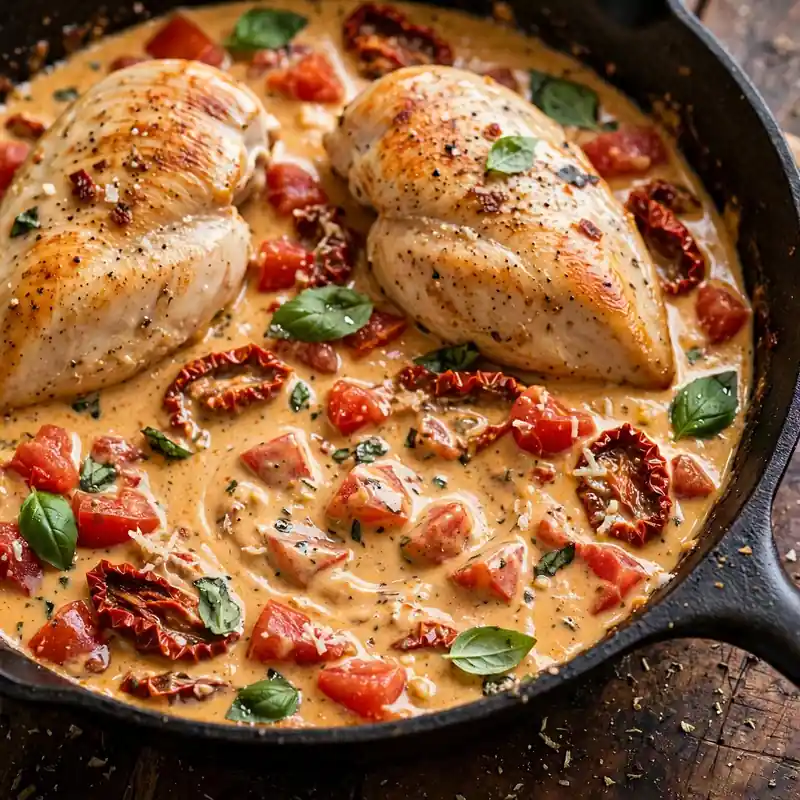
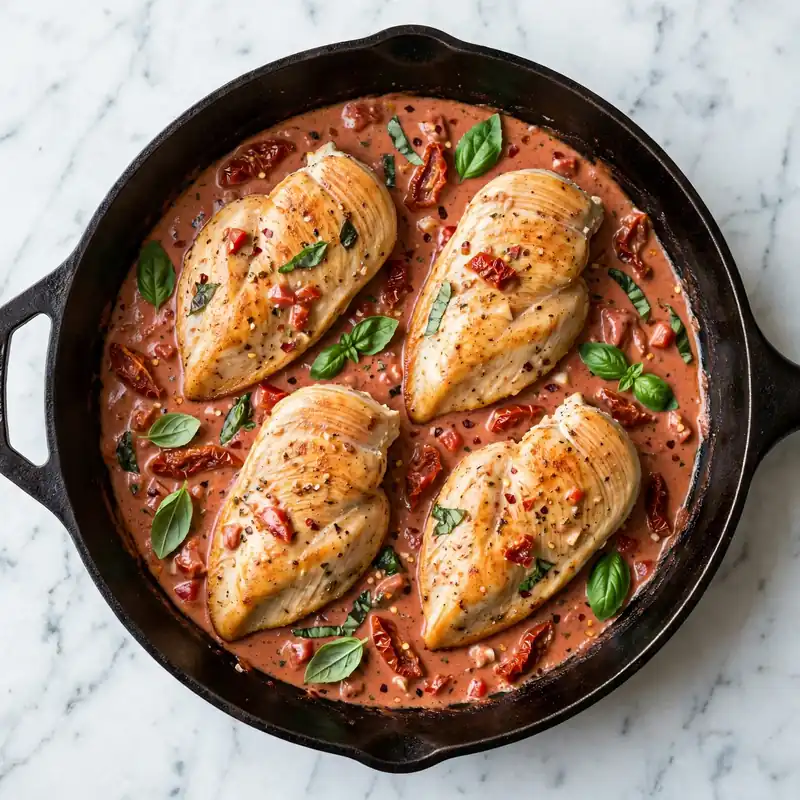
The name sounds like a joke until you taste the sauce. Marry me chicken is one of those recipes where the pan situation after cooking looks almost too good to be real: golden chicken sitting in a deep, brick-red cream sauce flecked with sun-dried tomatoes, garlic, and fresh basil. The kind of thing that makes someone at the table go quiet for a moment before asking for the recipe.
It comes together in one skillet in about 35 minutes. The chicken gets a quick sear first, which builds a fond on the bottom of the pan that goes straight into the sauce. The result is a dinner that looks like you spent considerably longer than you did, which makes it just as useful on a Tuesday night as it is on a proper occasion.
Why You’ll Love This Marry Me Chicken
- One pan, minimal cleanup. Everything happens in the same skillet: the sear, the sauce, the finish. Fewer dishes for a dinner that genuinely impresses.
- The sauce is the real star. Garlic, sun-dried tomatoes, heavy cream, and Parmesan come together into something deeply savory with just enough richness. It is the kind of sauce you mop up with bread long after the chicken is gone.
- Weeknight-fast, occasion-worthy. 35 minutes total, most of which is hands-off simmering. It looks like a restaurant dish without requiring restaurant-level effort.
- Easy to scale. Double the recipe for a family dinner or a gathering. The sauce scales with almost no adjustment.
- Works with different cuts. Chicken thighs, tenderloins, or even bone-in pieces all work here with small timing adjustments.
Ingredients You’ll Need
Recipe Timing
| Detail | Info |
|---|---|
| Servings | 4 |
| Difficulty | Easy |
| Course | Main Course |
| Cuisine | American, Italian-Inspired |
| Prep Time | 10 minutes |
| Cook Time | 25 minutes |
| Total Time | 35 minutes |
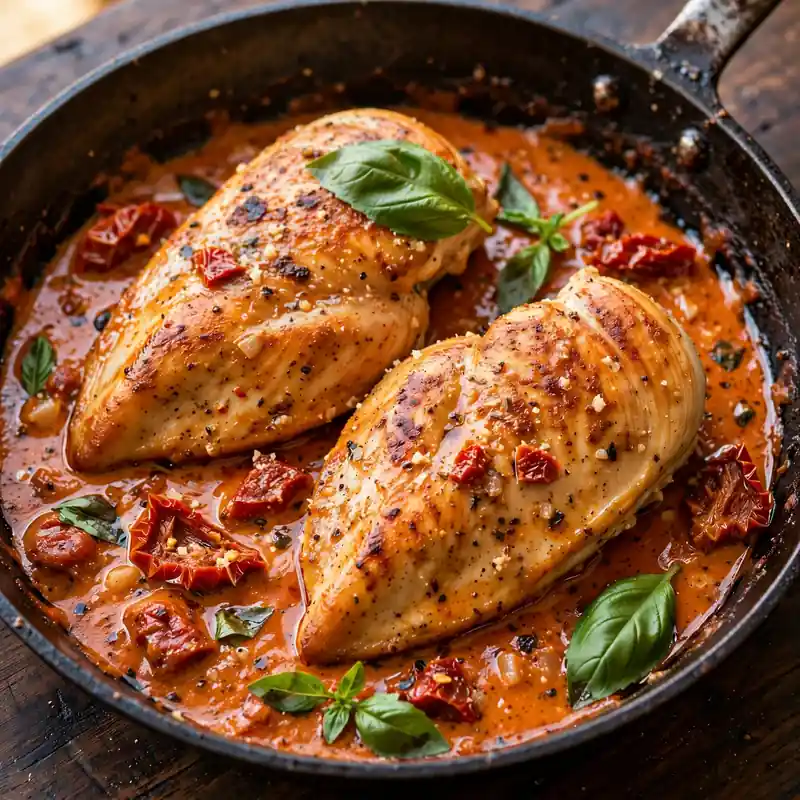
Look for sun-dried tomatoes packed in oil rather than the dry-packed kind. The oil-packed ones are softer, more flavorful, and won’t tighten up in the sauce. Drain them well before adding. For the chicken, thicker breasts work better here than thin ones because they stay juicy through the sear and the sauce simmer. If yours are uneven in thickness, a quick pound with a rolling pin or the flat of your hand brings them to about 2cm (3/4 inch) throughout.
- 4 boneless, skinless chicken breasts (about 700g / 1.5 lbs). The main protein. Even thickness matters for even cooking. Pat them dry before seasoning so the flour coating sticks properly.
- 1/2 cup (60g) all-purpose flour. Used for dredging. Creates a thin crust on the chicken that holds the sauce and prevents the surface from turning rubbery.
- Salt, black pepper, and 1/2 teaspoon garlic powder. Season directly into the flour or the chicken, or both. This is the base flavor of the crust.
- 2 tablespoons olive oil. For the initial sear. Use a neutral oil with a high smoke point if you prefer.
- 2 tablespoons unsalted butter. Added after the oil for flavor. The milk solids in butter help build color in the fond.
- 5 cloves garlic, finely minced. Minced finer than a rough chop so the pieces soften into the sauce rather than staying sharp and raw-tasting.
- 1/2 cup (80g) sun-dried tomatoes in oil, drained and roughly chopped. They give the sauce its color, depth, and a concentrated savory-sweet note.
- 1 teaspoon dried thyme + 1 teaspoon dried oregano. Dried herbs work better here than fresh because they bloom in the fat and distribute evenly through the sauce.
- 1/2 teaspoon red pepper flakes. Optional, but recommended. Cuts through the richness of the cream without making the dish spicy.
- 1 cup (240ml) low-sodium chicken broth. The liquid base for the sauce. Using low-sodium gives you control over the final salt level.
- 1 cup (240ml) heavy cream (double cream). Full-fat cream only. Reduced-fat cream tends to split when it hits the hot pan.
- 1/2 cup (50g) freshly grated Parmesan cheese. Grate it yourself from a block. Pre-shredded Parmesan contains anti-caking agents that make sauces grainy instead of smooth.
- Fresh basil leaves, to finish. Torn and added at the very end for brightness and color.
Allergen and Dietary Disclosure
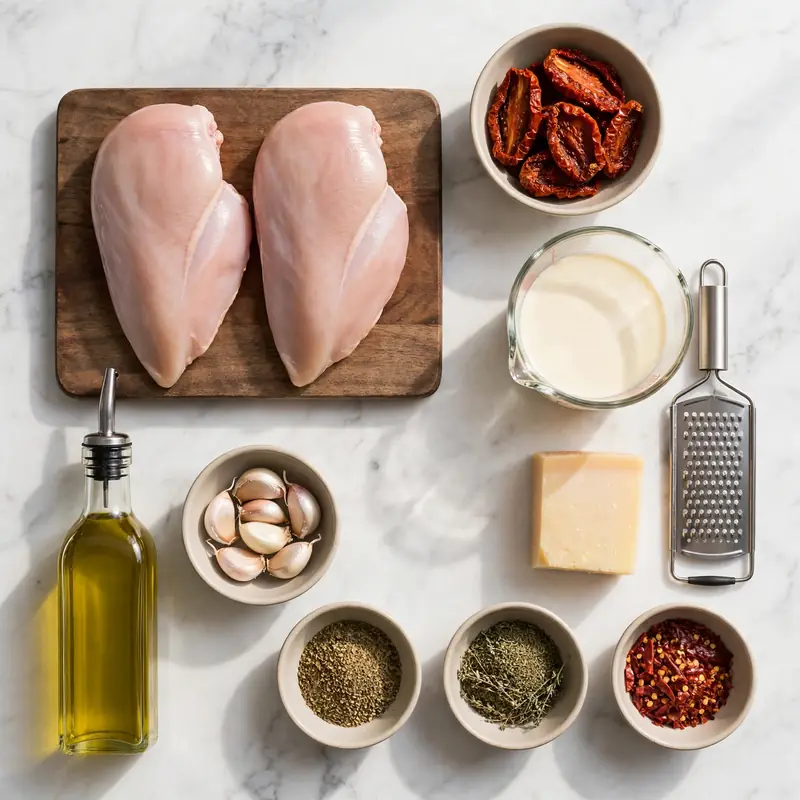
This recipe contains dairy (butter, heavy cream, Parmesan cheese) and gluten (all-purpose flour used for dredging).
For a gluten-free version, swap the flour with a 1:1 gluten-free flour blend or use fine rice flour. The crust will be slightly lighter but still holds up through the sear.
For a dairy-free version, replace the butter with olive oil, use full-fat coconut cream in place of heavy cream (it holds well in this type of sauce and doesn’t taste strongly of coconut when combined with the garlic and herbs), and skip the Parmesan or use a plant-based hard cheese alternative.
This recipe is free from eggs, nuts, and soy as written. Not guaranteed safe for any specific allergy without checking individual ingredient labels.
Step-by-Step Directions
Step 1: Season and Dredge the Chicken
Mix the flour, salt, black pepper, and garlic powder together in a shallow dish. Pat the chicken breasts completely dry with paper towels, then press each one into the flour on both sides, shaking off any excess. A thin, even coating is what you want. Too much flour sitting in the pan will burn and make the sauce bitter.
Food Safety Note: Always wash hands thoroughly after handling raw chicken and keep it away from ready-to-eat ingredients.
Step 2: Sear Until Golden
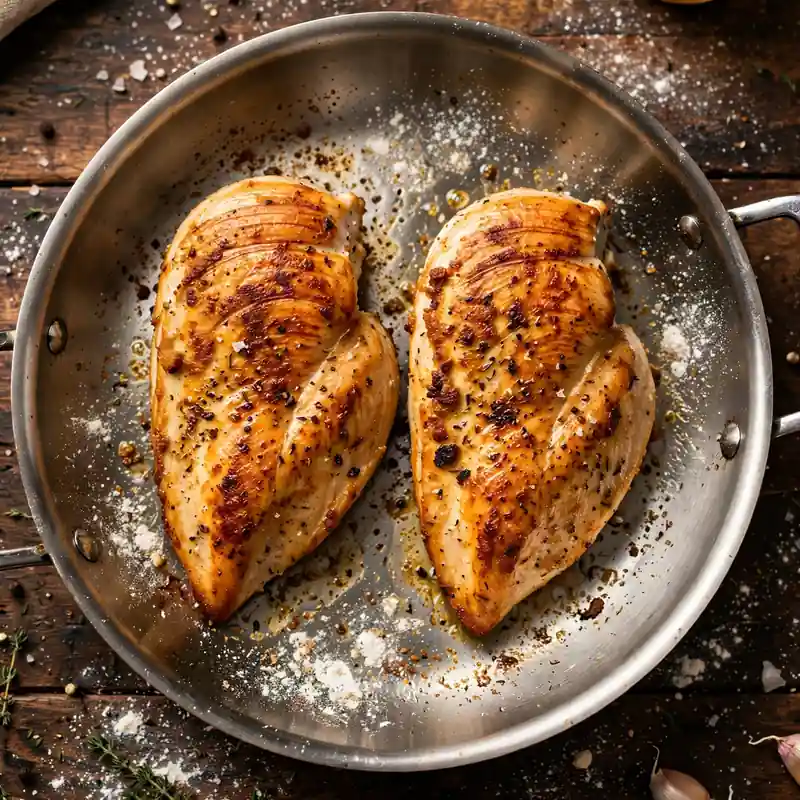
Heat the olive oil in a large, heavy skillet (cast iron or stainless steel work best) over medium-high heat until it shimmers. Add the butter, and once it stops foaming, place the chicken breasts in the pan without overlapping. Cook undisturbed for 4 to 5 minutes per side until the surface is a deep, even golden brown. The chicken does not need to be cooked through at this stage. Transfer to a clean plate.

Chef’s Note: Resist the urge to move the chicken around. It will release naturally from the pan when the crust is properly formed. If it pulls with resistance, give it another 30 to 60 seconds.
Step 3: Build the Sauce Base
Without cleaning the pan, reduce the heat to medium. Add the minced garlic to the remaining oil and butter in the pan and cook for 60 to 90 seconds, stirring constantly, until it smells fragrant and turns just barely golden at the edges. Add the chopped sun-dried tomatoes, dried thyme, oregano, and red pepper flakes. Stir everything together and let it cook for another minute so the herbs bloom in the fat.
Chef’s Note: The browned bits stuck to the bottom of the pan from the chicken sear are pure flavor. The liquid you add in the next step will lift them right off.
Step 4: Add the Broth and Deglaze
Pour the chicken broth into the pan and use a wooden spoon to scrape up every browned bit from the bottom. Let the liquid come to a simmer and reduce by about half, which takes 3 to 4 minutes. The sauce will look thin at this stage.
Step 5: Stir in the Cream and Parmesan
Pour in the heavy cream and stir to combine. Bring the sauce to a gentle simmer (small bubbles at the edges, not a rolling boil) and let it cook for 3 to 4 minutes until it thickens enough to coat the back of a spoon. Add the grated Parmesan and stir until it fully melts into the sauce. Taste and adjust salt and pepper.
Chef’s Note: Keep the heat at medium-low once the cream goes in. High heat causes cream sauces to separate and can make the Parmesan clump rather than melt smoothly.

Step 6: Return the Chicken and Finish
Nestle the seared chicken breasts back into the sauce, spooning some of the sauce over each piece. Reduce the heat to low, cover loosely, and cook for 7 to 10 minutes until the chicken reaches an internal temperature of 74°C (165°F) at the thickest part. A meat thermometer is the most reliable way to check this. Scatter torn fresh basil leaves over the top just before serving.
Common Mistakes and Troubleshooting
| Problem | Cause | Solution |
|---|---|---|
| Sauce is too thin and watery | Cream not reduced long enough | Simmer uncovered for an additional 3 to 5 minutes until it coats a spoon |
| Sauce is grainy or curdled | Heat too high when cream was added, or pre-shredded cheese used | Keep heat at medium-low; always use freshly grated Parmesan |
| Chicken is dry inside | Overcooked in the final simmer stage | Use a thermometer; pull at 74°C (165°F), not by time alone |
| Golden crust didn’t form properly | Pan wasn’t hot enough, or chicken was wet | Pat chicken completely dry; wait until oil shimmers before adding chicken |
| Sauce tastes flat | Not enough seasoning or Parmesan | Taste before serving; add salt gradually and increase Parmesan by 2 tablespoons |
| Garlic burned | Heat too high when building the sauce | After searing chicken, reduce heat to medium before adding garlic |
Variations and Substitutions
Chicken Thighs: Boneless, skinless thighs work just as well and are more forgiving if you overcook them slightly. Add 3 to 4 minutes to the final simmer time. The sauce picks up a slightly richer flavor from the thigh meat.
Spicier Version: Double the red pepper flakes and add a pinch of smoked paprika to the flour dredge. The heat builds gradually through the sauce and works well against the cream.
Mushroom Addition: Add 200g of sliced cremini or button mushrooms to the pan after the garlic, before the broth. Cook until they release their liquid and that liquid evaporates, about 4 to 5 minutes. They absorb the sauce beautifully.
Spinach Cream Version: Stir in two large handfuls of fresh baby spinach in the last 2 minutes of simmering. The leaves wilt down almost immediately and add color and a mild earthiness to the sauce.
Lighter Version: Replace the heavy cream with evaporated milk. The sauce will be thinner and slightly less rich, but still very good. Don’t boil it hard or it may separate.
Herb Swap: Fresh thyme and fresh basil stirred in at the end (rather than dried herbs during cooking) give the sauce a brighter, more aromatic finish if you have them on hand.
Serving Suggestions
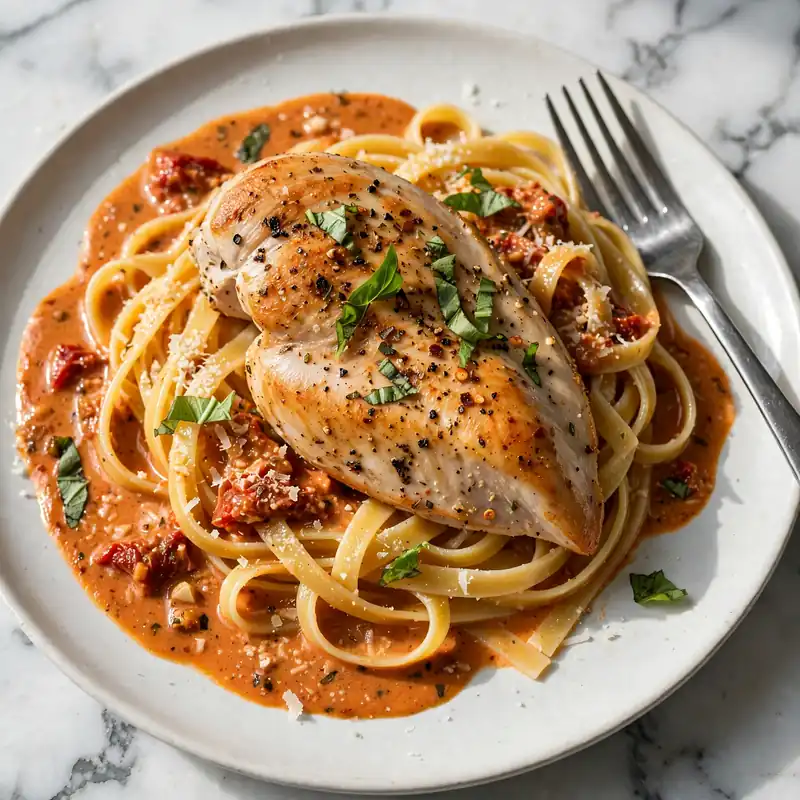
- Over pasta: Wide pasta like pappardelle, fettuccine, or rigatoni catches the sauce well. Cook the pasta just shy of al dente and finish it in the sauce for 1 minute.
- With crusty bread: The sauce is too good to waste. A warm baguette or sourdough alongside handles the extra sauce on the plate.
- Spooned over rice: Simple steamed white or basmati rice absorbs the cream sauce and makes this meal stretch further for a larger group.
- With roasted vegetables: Roasted zucchini, asparagus, or broccolini on the side balances the richness of the cream without competing with the main flavors.
- Over mashed potatoes: The sauce works as its own gravy here. Creamy mashed potato beneath creamy chicken sauce is genuinely indulgent in the best way.
- With a simple green salad: A lightly dressed salad with lemon vinaigrette cuts through the richness and rounds the meal out without any effort.
Tips for the Best Results
- Dry the chicken before dredging. Surface moisture is the enemy of a proper sear. Paper towels and 30 seconds of patting make a real difference to the crust you get.
- Use a heavy-bottomed pan. Cast iron or a thick stainless steel skillet retains heat evenly. Thin pans create hot spots that burn the flour coating before the chicken cooks through.
- Don’t crowd the pan. If your skillet won’t fit four breasts without them touching, sear in two batches. Crowded chicken steams instead of sears.
- Grate the Parmesan fresh. Pre-packaged shredded Parmesan contains cellulose coating that prevents it from melting properly, which gives the sauce a grainy, broken texture.
- Let the sauce rest 2 minutes before serving. It thickens slightly as it settles and the flavors pull together. Those 2 minutes are worth it.
Storage Tips
Refrigerator
Transfer leftover chicken and sauce together into an airtight container. It keeps well in the fridge for up to 3 days. Store it with the sauce so the chicken doesn’t dry out.
Freezer
The cream sauce can separate slightly after freezing due to the dairy content, but it still tastes good after reheating. Freeze the chicken and sauce together in a freezer-safe container for up to 2 months. Thaw overnight in the fridge before reheating.
Reheating
Reheat gently in a skillet over low heat with a splash of chicken broth (2 to 3 tablespoons) to loosen the sauce. Stir as it warms up. The microwave works in a pinch at 50% power in 90-second intervals, but the stovetop method keeps the sauce from breaking. Avoid high heat, which causes the cream to separate.
Nutrition Information
Per serving (1 chicken breast with sauce, approximately 300g)
| Nutrient | Amount |
|---|---|
| Calories | 520 kcal |
| Protein | 42g |
| Carbohydrates | 14g |
| Fiber | 1g |
| Sugar | 3g |
| Total Fat | 32g |
| Saturated Fat | 16g |
| Cholesterol | 165mg |
| Sodium | 620mg |
| Vitamin C | 5mg |
| Calcium | 185mg |
| Iron | 2mg |
| Potassium | 710mg |
Nutrition values are approximate and may vary based on brands and portion sizes.
Why This Recipe Works
The technique here follows a classic French method: sear the protein, build the sauce in the same pan using the fond, add a liquid to deglaze and reduce, then finish with cream and cheese. It is a straightforward sequence that produces a deeply layered sauce without any complicated steps.
The combination of sun-dried tomatoes with heavy cream works because the tomatoes are intensely concentrated and acidic enough to balance the fat in the cream. Without that acid note, a cream sauce this rich can taste flat and one-dimensional. The Parmesan adds a second savory layer (from natural glutamates) that makes the sauce taste more complex than its ingredient list suggests.
Dredging the chicken in flour before searing does two things: it creates a thin crust that provides texture contrast against the soft sauce, and the flour helps bind the sauce to the surface of the chicken as it finishes cooking. Without the flour, the cream sauce slides right off.
I’ve tested this recipe with both chicken breasts and thighs. Thighs are more forgiving and slightly richer in flavor. Breasts give you a cleaner presentation and work better when you want to serve this at a dinner where appearance matters. Both are genuinely good.
The red pepper flakes are small in quantity but do real work. They don’t make the dish hot, but they prevent the cream and Parmesan from making the whole thing taste heavy.
Frequently Asked Questions
Can I make marry me chicken ahead of time?
Yes. The whole dish can be made up to 2 days ahead and stored in the fridge in an airtight container with the sauce covering the chicken. Reheat it low and slow in a skillet with a small splash of chicken broth to bring the sauce back to its original consistency. The flavor actually improves a little overnight as everything settles together.
Why did my sauce break or turn grainy?
Two things cause this most often. First, the heat was too high when the cream went in. Heavy cream should never hit a hard boil; keep it at a gentle simmer. Second, pre-shredded Parmesan was used instead of freshly grated. The coating on pre-shredded cheese prevents it from melting smoothly into a sauce. If the sauce does break, remove it from the heat and whisk in a tablespoon of cold butter, which often brings it back together.
Can I use milk instead of heavy cream?
Whole milk can work in a pinch, but the sauce will be noticeably thinner and more prone to splitting over heat. A better substitute is evaporated milk, which is more stable under heat and gives you a closer result to the original. Full-fat coconut cream is the best dairy-free option and holds together very well in this type of sauce.
How do I know when the chicken is fully cooked?
The most reliable method is a meat thermometer inserted into the thickest part of the breast. You’re looking for 74°C (165°F). Cutting into the chicken to check lets the juices run out and dries it out faster. Color alone is not reliable: chicken that looks white inside can still be under temperature, especially with thicker breasts.
What are sun-dried tomatoes in oil and can I substitute them?
Sun-dried tomatoes packed in oil are tomatoes that have been dehydrated and then stored in oil, which keeps them soft and pliable. They are much more intensely flavored than fresh tomatoes. If you only have dry-packed sun-dried tomatoes, rehydrate them in warm water for 15 minutes first, then drain. Fresh tomatoes don’t work as a direct substitute because they release too much liquid and dilute the sauce significantly.
Can I use bone-in chicken pieces?
Yes, bone-in thighs or drumsticks work well but require more time in the oven. After the sauce is built, transfer everything to an oven-safe dish, cover with foil, and bake at 190°C (375°F) for 35 to 40 minutes until the chicken reaches 74°C (165°F) internally. The bone adds flavor to the sauce during the longer cook time.
What pan works best for this recipe?
A 30cm (12-inch) cast iron or stainless steel skillet gives you the best sear and the most even sauce. Non-stick pans don’t develop the browned fond that the sauce builds on, so the sauce ends up missing a layer of depth. If you only have a non-stick pan, sear the chicken in it and build the sauce in a separate stainless pan using a bit of extra butter to compensate.
Conclusion
Marry me chicken earns its reputation because the sauce is genuinely worth making on its own. The combination of sun-dried tomatoes, garlic, cream, and Parmesan in one pan produces something that tastes more involved than the 35 minutes of effort going into it. That gap between perceived effort and actual effort is exactly what makes this recipe useful for so many occasions. Whether you make it on a weeknight for yourself or put it on the table for a dinner you care about, the result is the same: a plate of marry me chicken that gets finished completely, sauce and all.
If you loved this recipe, save it to your chicken dinner recipes Pinterest board so you can find it easily later! For more healthy recipes and daily food inspiration, follow TheCookingVibes on Pinterest.
Marry Me Chicken
Ingredients
Equipment
Method
- Combine flour, garlic powder, salt, and pepper in a shallow dish. Pat chicken dry and dredge each breast on both sides, shaking off excess.
- Heat olive oil and butter together in a large skillet over medium-high. Once butter stops foaming, add chicken and cook 4 to 5 minutes per side until deep golden brown. Move to a plate.
- Reduce heat to medium. Cook minced garlic in the remaining pan fat for 60 to 90 seconds until fragrant. Add sun-dried tomatoes, thyme, oregano, and red pepper flakes and stir for 1 minute.
- Pour in chicken broth and scrape the pan bottom clean. Simmer until reduced by half, about 3 to 4 minutes.
- Stir in the heavy cream and bring to a gentle simmer. Cook 3 to 4 minutes until the sauce coats a spoon. Add Parmesan and stir until fully melted.
- Return chicken to the pan, spoon sauce over each piece, cover loosely, and cook on low heat for 7 to 10 minutes until the internal temperature reaches 74°C (165°F).
- Top with torn fresh basil and serve directly from the pan.