Moist Cornbread Recipe — Golden Crust, Tender Crumb Every Time
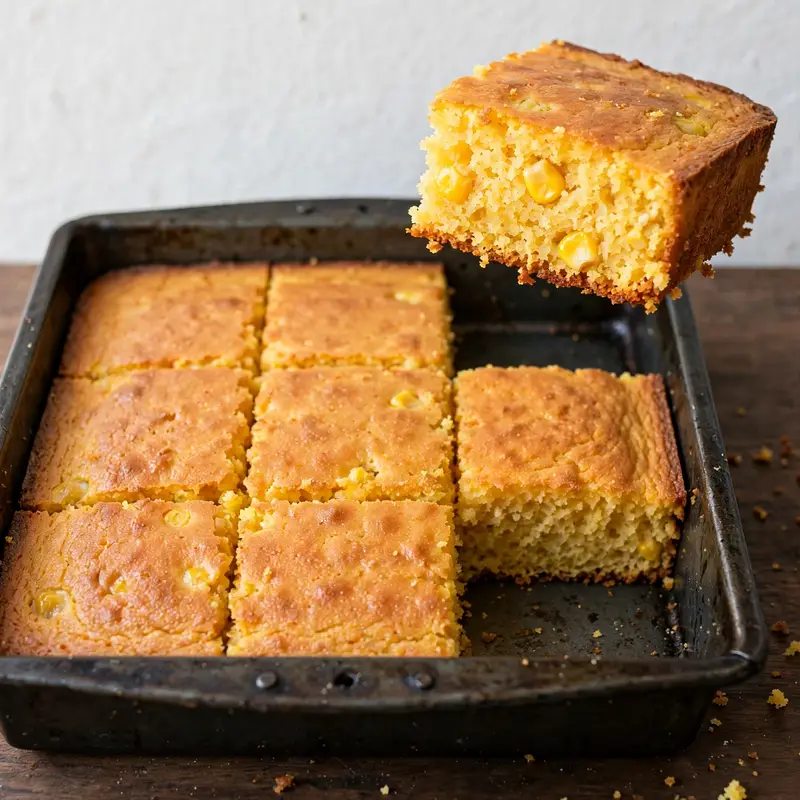
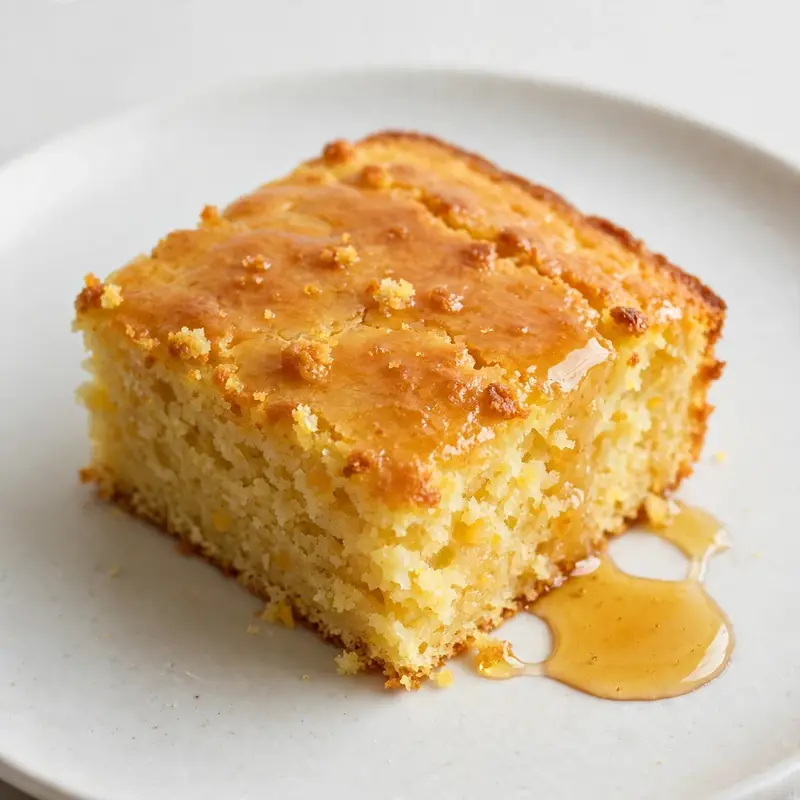
Pull a pan of cornbread out of the oven and the edges are already pulling away from the sides, the top is a deep golden brown, and the whole kitchen smells like butter and something slightly sweet. Cut a square while it’s still warm and the crumb holds together just long enough to get from the pan to the plate before it starts to steam. That’s what good cornbread does, and the difference between that and a dry, crumbly disappointment is smaller than most people think.
This cornbread recipe uses buttermilk for a tender, moist crumb that doesn’t dry out after the first hour, a measured amount of sugar that adds depth without making it taste like cake, and melted butter throughout the batter rather than oil, which gives every bite a genuinely rich flavor. It bakes in a square pan or a cast iron skillet, comes together in one bowl, and is done in 32 minutes from start to finish. It works alongside chili, soups, stews, and roasted chicken, and it also holds its own on its own with a little honey butter.
Why You’ll Love This Cornbread Recipe
- Moist crumb, not dry and crumbly. Buttermilk adds moisture and a faint tang that keeps the crumb tender even after the cornbread cools completely. Recipes that use regular milk produce a noticeably drier result by comparison.
- Buttery flavor all the way through. Melted butter goes into the batter, not just on top at serving. It distributes through every bite rather than sitting only on the surface, which makes the finished cornbread taste richer than its ingredient list suggests.
- Balanced sweetness, not dessert-sweet. Two tablespoons of honey and a quarter cup of sugar add a mild sweetness that complements the savory corn flavor without pushing the cornbread into cake territory. Increase or reduce both to suit your preference.
- One bowl, 10 minutes of prep. There’s no separate creaming step, no electric mixer, and no complicated technique. Dry ingredients in one bowl, wet ingredients stirred together, combined with minimal folding, and into the pan.
- Works in a skillet or a square pan. Cast iron gives you crispier edges and a slightly darker bottom crust. A standard 8-inch square baking pan gives you neater squares and a softer overall texture. Both are genuinely good options.
Ingredients You’ll Need
Recipe Timing
| Detail | Info |
|---|---|
| Servings | 9 squares |
| Difficulty | Easy |
| Course | Side Dish, Bread |
| Cuisine | American, Southern |
| Prep Time | 10 minutes |
| Cook Time | 22 minutes |
| Total Time | 32 minutes |
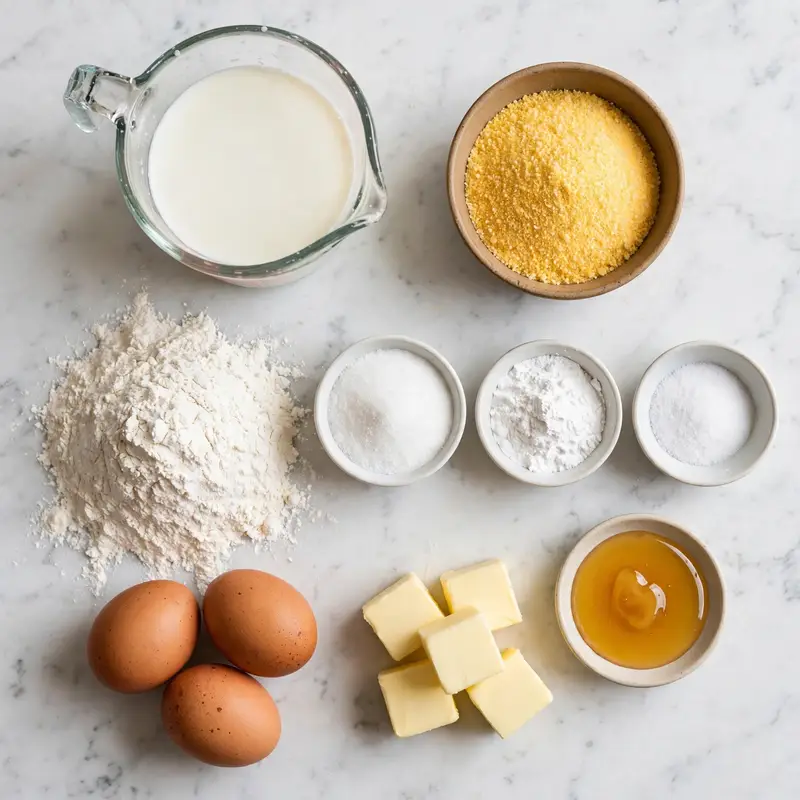
Use fine or medium-grind yellow cornmeal rather than coarse-grind for this recipe. Coarse-grind gives you a grittier texture that some people love but that can make the crumb feel uneven. Fine to medium grind produces a smooth, cohesive crumb that slices cleanly. White cornmeal works as a direct substitute and produces a milder, less corn-forward flavor.
Dry Ingredients:
- 1 cup (130g) yellow cornmeal, fine to medium grind — The primary flavor and structure of the bread. A higher ratio of cornmeal to flour produces a denser, more rustic texture; the 1:1 ratio here gives you the balance between corn flavor and a tender, cakelike crumb.
- 1 cup (125g) all-purpose flour — Provides the gluten structure that holds the cornbread together. Without it, a pure cornmeal batter would be crumbly and fall apart when cut. For a slightly denser, nuttier result, replace up to half the flour with whole wheat flour.
- 1/4 cup (50g) granulated white sugar — Adds a mild sweetness that balances the natural earthiness of the cornmeal. If you want a more savory, Southern-style cornbread, reduce this to 1 tablespoon. If you want a sweeter bread closer to a corn muffin, increase to 1/3 cup.
- 1 tbsp baking powder — The leavening that makes the cornbread rise. Use fresh baking powder; a batch that’s been open for more than 6 months may not produce enough lift, leaving you with a dense, flat loaf.
- 1/2 tsp fine salt — Essential for flavor. Without it the cornbread tastes flat regardless of the other ingredients.
Wet Ingredients:
- 1 cup (240ml) buttermilk, at room temperature — This is the ingredient most responsible for the tender crumb. The acidity in buttermilk reacts with the baking powder during baking to create extra lift, and the fat and protein content keep the crumb moist. If you don’t have buttermilk, make a quick substitute: add 1 tablespoon of white vinegar or lemon juice to a measuring cup, fill to the 1-cup line with regular whole milk, stir, and let it sit for 5 minutes.
- 2 large eggs, at room temperature — Bind the batter and contribute to the rise. Cold eggs can cause the melted butter to solidify into small clumps when mixed in. Let them sit on the counter for 20 minutes before you start.
- 1/3 cup (75g) unsalted butter, melted and cooled for 5 minutes — Gives the cornbread its rich, distinctly buttery flavor. Melted butter distributes more evenly than creamed butter in a simple batter like this. Let it cool slightly before adding to avoid scrambling the eggs when they make contact.
- 2 tbsp honey — Adds a rounded sweetness with a faint floral note that white sugar alone doesn’t provide. It also contributes to a slightly more golden top during baking. Maple syrup works as an equal substitute.
Allergen and Dietary Disclosure
This recipe contains dairy (buttermilk and butter), eggs, and gluten (all-purpose flour). For a dairy-free version, replace the buttermilk with an equal amount of unsweetened oat milk with 1 tablespoon of apple cider vinegar stirred in and left to curdle for 5 minutes. Replace the butter with melted refined coconut oil at the same quantity; refined coconut oil has a neutral flavor that won’t compete with the corn. For a gluten-free version, use a 1:1 gluten-free baking flour blend in place of the all-purpose flour at the same weight, and expect the crumb to be slightly more tender and fragile when cutting.
This recipe has not been prepared in an allergen-free facility. Always check individual product labels if you are managing a serious allergy.
Equipment Needed
- 8-inch (20 cm) square baking pan or 10-inch cast iron skillet — The pan choice changes the texture of the finished bread. A square baking pan produces neat, even squares with a softer bottom crust. A cast iron skillet, preheated in the oven before the batter goes in, produces dramatically crisper edges and a dark, almost crackling bottom crust. Both work; the choice depends on the texture you prefer.
- Large mixing bowl — Big enough to hold all the wet and dry ingredients together with room to fold without spilling. A bowl that’s too small makes proper folding difficult without overmixing.
- Medium bowl — For whisking the wet ingredients separately before combining. This ensures the eggs, buttermilk, butter, and honey are fully blended before they hit the dry ingredients.
- Whisk — For the dry ingredients and for combining the wet mixture. A fork works if you don’t have one, but a whisk aerates the dry ingredients more effectively in fewer strokes.
- Rubber spatula — For folding the wet and dry mixtures together. A spatula lets you fold with a few firm sweeps rather than vigorous stirring, which is the key to avoiding a tough, overdeveloped crumb.
- Toothpick or thin skewer — For testing doneness. A knife works in a pinch, but a toothpick is thin enough to test the center without disturbing the crumb.
Step-by-Step Directions
Step 1: Preheat the Oven and Prepare the Pan
Set your oven to 200°C (400°F). If you’re using a square baking pan, grease it generously with butter or cooking spray on the bottom and all four sides. If you’re using a cast iron skillet, place it in the oven while it preheats so it gets thoroughly hot before the batter goes in. A preheated cast iron pan creates the characteristic sizzle when the batter makes contact, which is what builds the crispy bottom crust.

Chef’s Note: Greasing all the way up the sides of the pan rather than just the bottom is the step that lets the edges pull away cleanly when you cut the cornbread. Undergreased sides stick and tear the crumb at the edges.
Step 2: Whisk Together the Dry Ingredients
Add the cornmeal, flour, sugar, baking powder, and salt to your large mixing bowl. Whisk for about 30 seconds until the ingredients are evenly distributed throughout the mixture and no visible pockets of baking powder remain. Baking powder that’s concentrated in one spot rather than dispersed evenly can create uneven rise with large air pockets in the finished bread.
Step 3: Mix the Wet Ingredients Separately
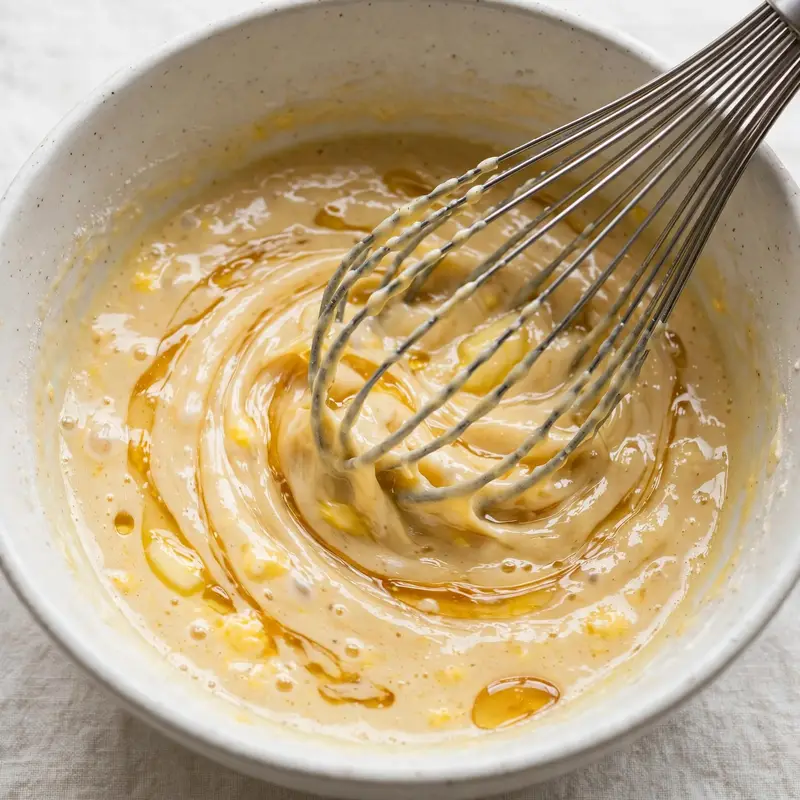
In your medium bowl, whisk together the buttermilk, eggs, melted and slightly cooled butter, and honey until the mixture is fully uniform. The butter may want to solidify into small flecks if the buttermilk or eggs are very cold; room-temperature ingredients prevent this. The mixture should look smooth and pourable, with no streaks of honey running through it.
Chef’s Note: Mixing the wet ingredients in a separate bowl before combining is not an unnecessary step. It ensures the eggs and honey are fully incorporated before they contact the dry mixture, so you don’t end up overmixing the batter trying to break up unmixed egg or honey streaks after the flour is already in.
Step 4: Fold the Batter Together
Pour the wet ingredients into the bowl with the dry ingredients. Using your rubber spatula, fold the mixture together with slow, deliberate strokes: bring the spatula down through the center of the batter, sweep along the bottom of the bowl, and fold the mixture up and over itself. Rotate the bowl a quarter turn and repeat. Stop folding the moment no dry flour streaks are visible. The batter will look slightly lumpy and thick, which is exactly right. Overmixing after the wet and dry ingredients combine develops the gluten in the flour and produces a tough, dense cornbread.
Step 5: Pour Into the Pan and Bake
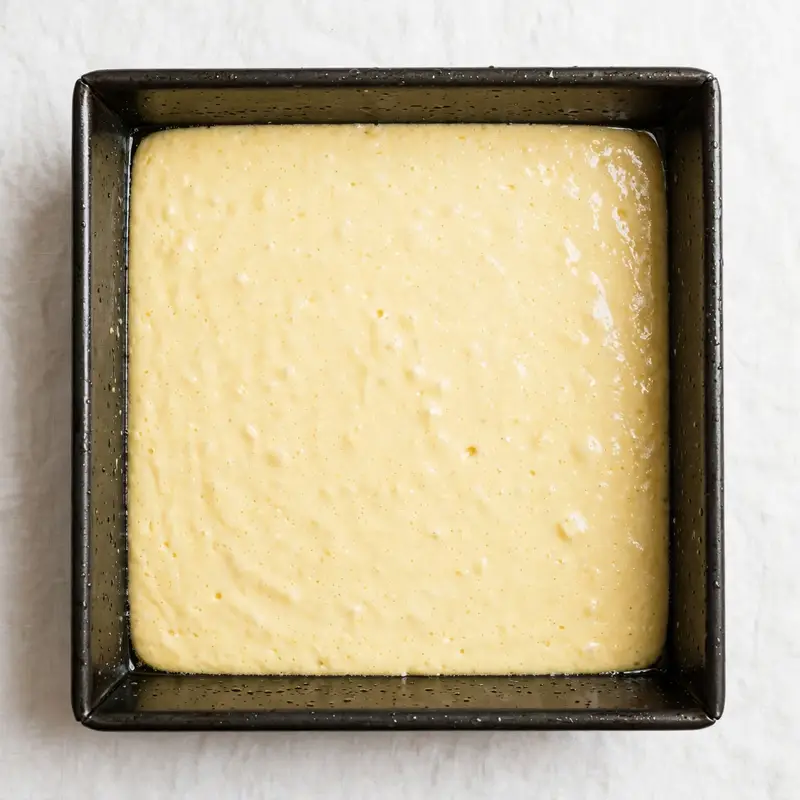
If using a square pan, pour the batter in directly and spread it to the corners with the spatula. If using a preheated cast iron skillet, remove it carefully from the oven with oven mitts, swirl a small pat of butter around the interior (it will melt and sizzle on contact), then pour the batter in quickly and return it to the oven before the pan loses its heat. Bake at 200°C (400°F) for 20 to 22 minutes.
Chef’s Note: The batter should fill the pan to about 3/4 full before baking. A pan that’s too large relative to the batter volume produces a very thin cornbread that dries out quickly. A pan that’s too small overflows. The 8-inch square pan and 10-inch cast iron skillet are both calibrated to this batter volume.
Step 6: Test Doneness and Cool
At 20 minutes, insert a toothpick into the center of the cornbread. It should come out clean or with just one or two dry crumbs attached. If wet batter clings to it, bake for another 2 minutes and test again. The top should be a deep, even golden brown across the surface, and the edges should have pulled slightly away from the pan sides. Let the cornbread cool in the pan for 10 minutes before cutting. Cutting into it earlier compresses the crumb and makes it difficult to get clean squares.
Common Mistakes and Troubleshooting
| Problem | Cause | Solution |
|---|---|---|
| Cornbread is dry and crumbly | Overbaked, or too much flour relative to liquid | Pull at 20 minutes and test. Use a scale for flour; scooped cups often add 20 to 30g more than intended. |
| Dense, heavy texture with no lift | Baking powder is old, or batter was overmixed | Smell and taste the baking powder before using. It should have a sharp, slightly bitter scent. Replace if it smells like nothing. Fold the batter in as few strokes as possible. |
| Flat top with no rise | Oven wasn’t fully preheated when the pan went in | Always wait for the oven to reach full temperature. An underheated oven lets the batter spread before it can set and rise. |
| Soggy, wet center even after full bake time | Too much liquid, or pan too small causing the center to stay dense | Measure buttermilk precisely. If using a smaller pan, add 3 to 5 minutes to the bake time and test with a toothpick. |
| Bottom is burnt but top isn’t done | Pan placed too low in the oven, or dark pan absorbing too much heat | Bake on the center rack. For dark metal pans, reduce the oven temperature to 190°C (375°F) and extend the bake time by 4 to 5 minutes. |
Variations and Substitutions
Jalapeño Cheddar Cornbread: Fold in 1 cup (100g) of shredded sharp cheddar and 2 finely diced jalapeños (seeds removed for mild heat, seeds left in for more) after combining the wet and dry ingredients. The cheese melts into pockets throughout the crumb and the jalapeño distributes a warm, slow heat that suits the buttery base well.
Honey Butter Cornbread: Increase the honey in the batter to 3 tablespoons and reduce the granulated sugar to 2 tablespoons. Serve with whipped honey butter: beat 4 tablespoons of softened butter with 2 tablespoons of honey until smooth and slightly fluffy. The sweetness is still restrained enough to work alongside savory dishes.
Cast Iron Skillet Version: This is the Southern approach. Preheat the oiled skillet in the oven for 10 minutes before the batter goes in. The sizzle when the batter hits the hot cast iron immediately begins forming the crust. The result has a dark, crackling bottom edge and a slightly chewier outer crust with the same tender interior.
Gluten-Free Cornbread: Swap the all-purpose flour for an equal weight of a 1:1 gluten-free baking flour blend. The batter will look slightly thicker. Don’t thin it out with extra buttermilk; the texture evens out during baking. The finished cornbread is slightly more fragile but holds together when cooled.
Dairy-Free Cornbread: Replace the buttermilk with oat milk plus 1 tablespoon of apple cider vinegar (let it sit for 5 minutes until slightly curdled). Replace the butter with melted refined coconut oil. The crumb is slightly less rich but still moist and well-structured.
Corn Kernel Cornbread: Fold 3/4 cup (120g) of frozen or fresh corn kernels into the finished batter before pouring into the pan. The kernels add bursts of sweet corn flavor and a slight textural variation that makes the cornbread more interesting as a standalone side.
Serving Suggestions
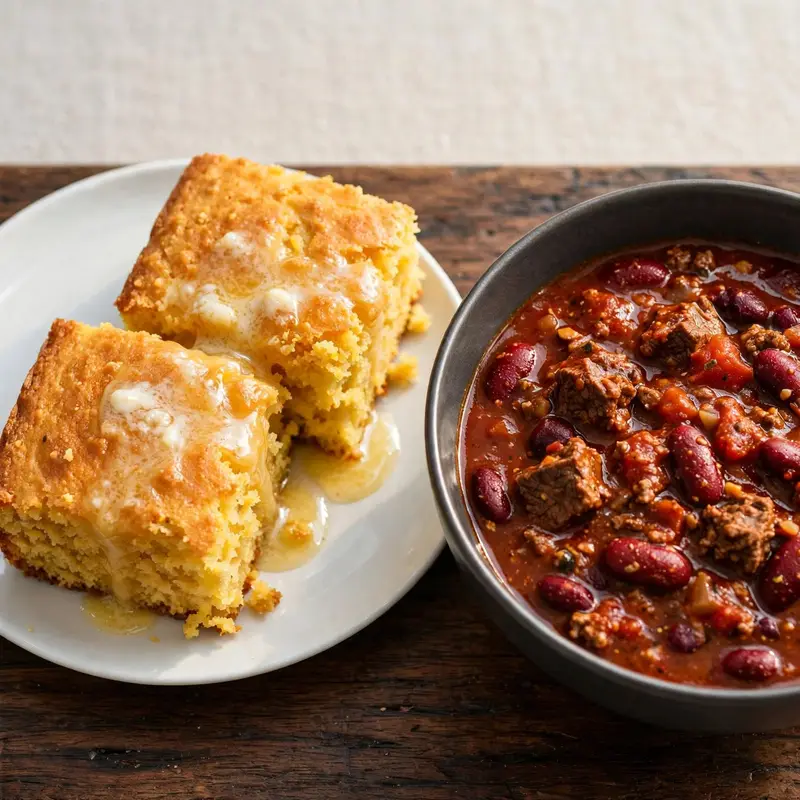
- Serve warm with a bowl of beef or vegetable chili. The cornbread absorbs the broth from the bottom of the bowl in a way that makes both the soup and the bread better than they would be on their own.
- Spread with softened butter and a drizzle of honey while the bread is still slightly warm from the pan. The butter melts into the surface immediately and the honey pools in the small crevices of the crumb.
- Crumble cold leftover cornbread into a bowl and pour warm buttermilk over it. This is a traditional Southern way to eat day-old cornbread for breakfast, and it works because the dense crumb softens in the buttermilk without falling apart completely.
- Serve alongside a pot of braised greens, lentil soup, or roasted tomato soup. The slightly sweet, buttery bread balances any bitterness from the greens and complements the acidity in tomato-based dishes.
- Cut into small squares and serve as part of a dinner bread basket alongside butter and flavored spreads. Cornbread holds its shape better than most quick breads and doesn’t need to be sliced, which makes it practical for shared serving.
Tips for the Best Results
Don’t overmix the batter. Once the wet and dry ingredients come together, fold only until the dry streaks disappear. Eight to ten folds with a spatula is usually sufficient. Every extra stroke after that develops gluten and toughens the crumb. Lumps in the batter are fine; they bake out.
Measure flour by weight. A cup of all-purpose flour measured by scooping directly from the bag can weigh anywhere from 125g to 160g depending on how packed it is. The extra 35g changes the texture from moist and tender to dry and dense. A kitchen scale eliminates that variable every time.
Use room-temperature dairy and eggs. Cold buttermilk causes the melted butter to solidify into small clumps as soon as it makes contact. Cold eggs don’t incorporate smoothly. Both issues produce an uneven batter that bakes inconsistently. Set everything out at least 20 minutes before you start.
Cool for 10 minutes before cutting. The crumb needs this time to set after baking. Cut too early and the squares compress, the bottom layer sticks to the pan, and the interior looks gummy even though it’s fully cooked. A 10-minute rest is enough to get clean cuts without the bread going cold.
Preheat your pan for cast iron. If you use a skillet, this step is non-negotiable for the crispy bottom crust. The batter needs to hit a hot surface immediately to form that crust layer before the bread starts rising. A cold cast iron skillet produces cornbread with a soft, pale bottom indistinguishable from a square pan result.
Storage Tips
Counter
Store cooled cornbread wrapped tightly in plastic wrap or in an airtight container at room temperature for up to 2 days. After that it begins to dry out noticeably. Keep it away from direct sunlight, which accelerates staling. A thin slice of bread stored alongside the cornbread in the container helps maintain moisture.
Refrigerator
Refrigeration dries cornbread out faster than room-temperature storage because the cold air draws moisture from the crumb. If you need to keep it for up to 5 days, wrap individual squares tightly in plastic wrap first, then place in an airtight container. The extra layer of wrap makes a measurable difference in how moist the squares are when you reheat them.
Freezer
Cornbread freezes very well for up to 3 months. Cool completely, cut into individual squares, wrap each one tightly in plastic wrap, and place in a zip-lock freezer bag with the air pressed out. Thaw at room temperature for about 30 minutes or overnight in the fridge. Freezing and thawing doesn’t noticeably affect the texture when the cornbread is properly wrapped.
Make-Ahead Note: You can mix the dry ingredients and the wet ingredients separately up to 24 hours in advance and store each covered in the fridge. Combine them immediately before baking. This saves prep time on busy days and produces the same result as making the batter fresh because the leavening doesn’t activate until the wet and dry ingredients are combined.
Nutrition Information
Per serving, based on 9 squares. Values are approximate.
| Nutrient | Amount |
|---|---|
| Calories | 220 kcal |
| Protein | 5g |
| Carbohydrates | 32g |
| Fiber | 1.5g |
| Sugar | 10g |
| Total Fat | 8.5g |
| Saturated Fat | 4.8g |
| Cholesterol | 58mg |
| Sodium | 290mg |
| Potassium | 135mg |
| Calcium | 95mg |
| Iron | 1.4mg |
| Vitamin C | 0mg |
Nutrition values are approximate and may vary based on brands and portion sizes.
Why This Recipe Works
Most dry, crumbly cornbread comes down to one of three problems: too much flour, overmixed batter, or overbaking. This recipe addresses all three with specific, built-in corrections.
The 1:1 ratio of cornmeal to flour sits at the balance point between a dense, purely corn-based bread and a fluffy quick bread that tastes more like cake than cornbread. More cornmeal shifts the texture toward gritty and fragile; more flour pushes it toward bready and mild. At equal parts, you get the corn flavor with enough flour gluten to hold the crumb together cleanly.
Buttermilk does two things beyond adding moisture. Its acidity reacts with the baking powder to create additional carbon dioxide during baking, which contributes extra lift and a slightly more open crumb. It also breaks down some of the protein in the flour, which is part of what keeps the texture tender rather than tough. A cornbread made with regular whole milk bakes up noticeably firmer and drier at the same recipe ratios.
Melted butter in the batter distributes more evenly than creamed or softened butter in a simple fold-together batter. It coats more of the flour proteins before they hydrate, which limits gluten development and contributes to a more tender crumb. The small amount of honey alongside the granulated sugar adds not just sweetness but also hygroscopic properties, meaning it draws and holds moisture from the air, which is part of why this cornbread stays soft longer than recipes sweetened with sugar alone.
Tested across multiple batches with different pan types and oven temperatures, the 200°C (400°F) bake for 20 to 22 minutes consistently produced a fully cooked center without drying the edges. Lower temperatures required longer bake times that dehydrated the crumb. Higher temperatures set the outside before the center cooked through.
Frequently Asked Questions
FAQ research note: Questions below are based on typical search patterns for this recipe type. Live search was not available.
Can I make cornbread ahead of time?
Yes. Cornbread bakes and stores well. Make it the day before, cool completely, wrap tightly in plastic wrap, and store at room temperature overnight. It reheats well and tastes almost as good as fresh. For more than one day ahead, freeze individual wrapped squares and thaw at room temperature before serving. You can also prep the dry and wet ingredients separately up to 24 hours in advance and combine them right before baking.
Why is my cornbread dry and crumbly?
Three causes cover almost every case. Too much flour from measuring by volume instead of weight is the most common. Overbaking by even 3 to 4 minutes dries the crumb significantly. And using oil instead of butter reduces the perceived richness and makes the bread feel drier on the palate even when it’s technically moist. Measure flour by weight, pull the cornbread at 20 minutes and test with a toothpick, and stick with butter in the batter.
Can I make cornbread without buttermilk?
Yes. Combine 1 tablespoon of white vinegar or fresh lemon juice with enough whole milk to fill a 1-cup measure. Stir once and let it sit for 5 minutes until the surface looks slightly curdled. This quick acidified milk performs similarly to real buttermilk in baking, providing the acidity the recipe needs to work with the baking powder and keep the crumb tender. Plain yogurt thinned with a little milk to a pourable consistency is another reliable substitute.
How do I know when cornbread is done?
Insert a toothpick into the center of the pan at the 20-minute mark. It should come out clean or with just a few dry crumbs, no wet batter. The top should be a uniform deep golden brown, and the edges should have pulled slightly away from the pan sides all the way around. If the toothpick comes out with wet batter, return to the oven for 2 minutes and test again.
Can I use white cornmeal instead of yellow?
Yes, at a direct 1:1 substitution. White cornmeal produces a slightly milder, less distinctly corn-flavored bread because white corn has a more delicate flavor profile than yellow corn. The texture is identical. Some Southern-style cornbread recipes specifically call for white cornmeal; both are traditional in different regional contexts.
Is cornbread gluten-free?
Standard cornbread is not gluten-free because it contains all-purpose flour. Cornmeal itself is naturally gluten-free, but the flour in this recipe is not. To make it gluten-free, replace the all-purpose flour with an equal weight of a 1:1 gluten-free baking flour blend. The finished texture is slightly more tender and fragile but holds together well when fully cooled before cutting.
Why do some cornbread recipes have no sugar at all?
Traditional Southern cornbread is typically savory with little to no sugar, made with white cornmeal and baked in a hot cast iron skillet. Northern-style cornbread tends to be sweeter and more cake-like. This recipe sits between the two: enough sugar and honey to add depth and balance without making the bread sweet. If you prefer the classic savory Southern style, reduce the sugar to 1 tablespoon and skip the honey entirely.

Conclusion
What makes this cornbread recipe worth coming back to is how little it demands and how consistently it delivers. The technique is direct: mix dry, mix wet, fold together briefly, bake at high heat. The ingredients are pantry staples. The result is a genuinely moist, golden, buttery cornbread that holds its texture through the next day and freezes without quality loss.
Once you understand why each ingredient is there, this becomes a recipe you can adjust confidently. Less sugar for a savory table bread, a preheated cast iron for a crunchier crust, cheddar and jalapeño folded in for something more substantial. The base is solid enough to support all of it.
If you loved this recipe, save it to your bread recipes Pinterest board so you can find it easily later! For more recipes and daily food inspiration, follow TheCookingVibes on Pinterest.
Moist Cornbread
Ingredients
Equipment
Method
- Preheat oven to 200°C (400°F). Grease an 8-inch square baking pan generously on the bottom and all sides.
- Whisk cornmeal, flour, sugar, baking powder, and salt together in a large bowl until evenly distributed.
- In a separate bowl, whisk the buttermilk, eggs, cooled melted butter, and honey until smooth and uniform with no streaks.
- Pour the wet ingredients into the dry. Fold with a rubber spatula using slow, deliberate strokes until no dry flour streaks remain. Stop immediately.
- Pour into the prepared pan and smooth the surface to the corners.
- Bake for 20 to 22 minutes until a toothpick inserted in the center comes out clean and the top is deep golden brown. Cool in the pan for 10 minutes before serving.
Notes
- Measure flour by weight, not volume, for consistent results. Scooped cups add 20 to 30g more than intended.
- Don’t overmix after combining wet and dry. Eight to ten folds is enough.
- For the crispiest bottom crust, use a preheated cast iron skillet.
- Buttermilk substitute: 1 tablespoon white vinegar in a 1-cup measure, filled to the line with whole milk, rested 5 minutes.