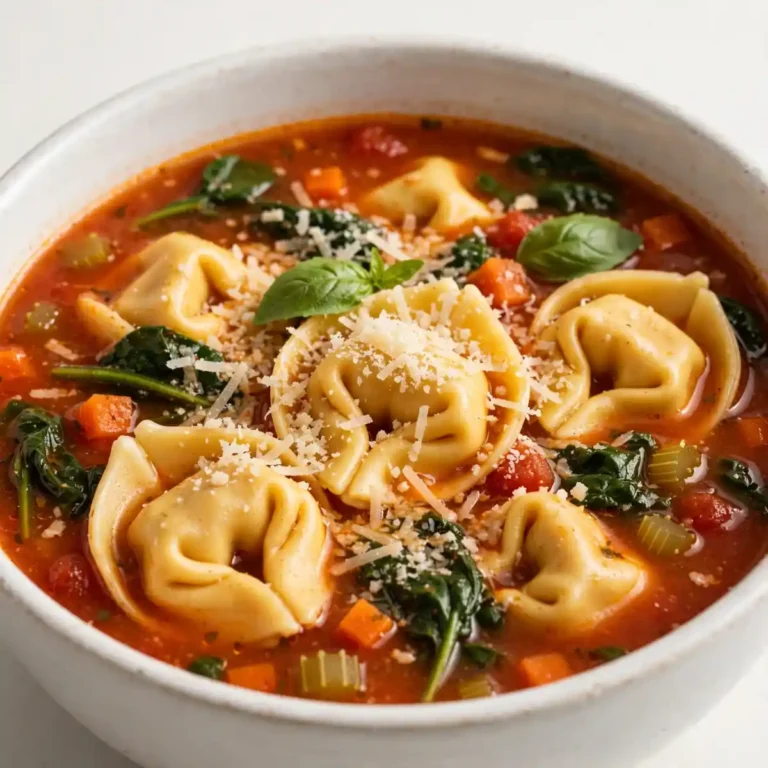
Sausage Tortellini Soup — Creamy Tomato Broth, Hearty One-Pot Meal
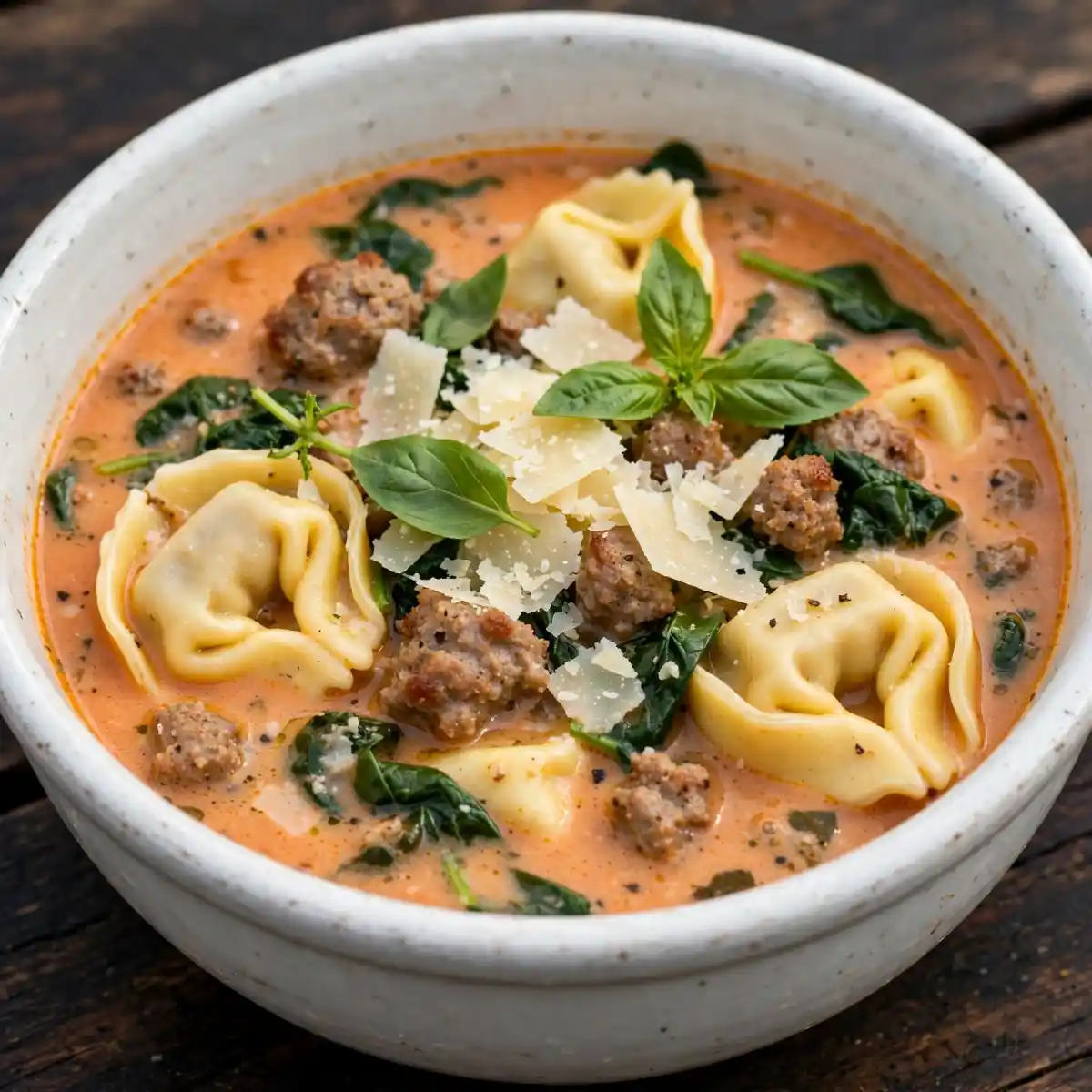
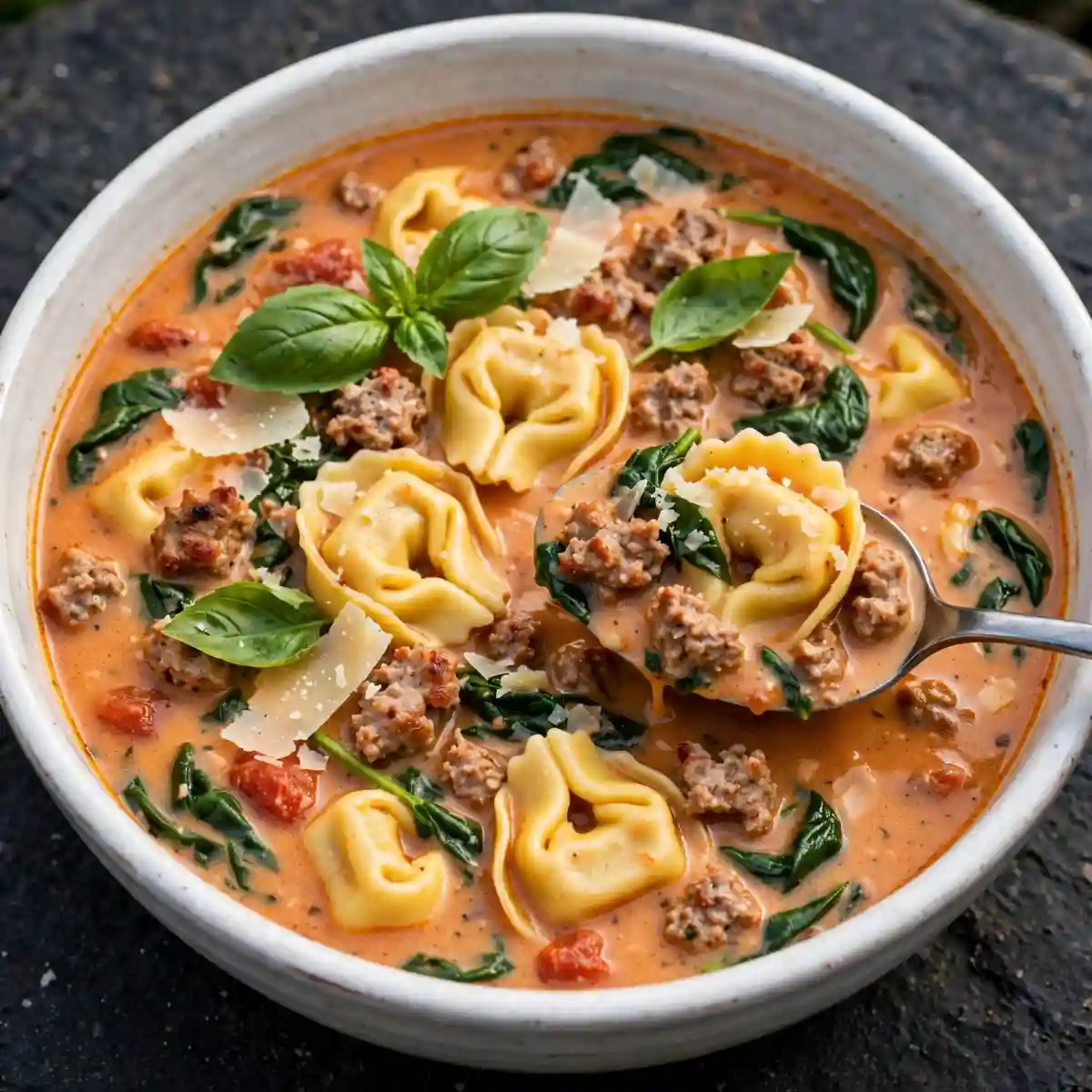
There are soups that are technically filling and soups that feel genuinely satisfying from the first spoonful, and sausage tortellini soup is firmly in the second category. The broth is creamy without being heavy, deeply seasoned from the sausage drippings and tomato base, and the cheese-filled tortellini cook directly in the soup and absorb enough of the broth to taste integrated rather than like pasta dropped into a bowl of liquid at the last moment. Add a handful of spinach two minutes before serving and the whole pot is finished before anything has had time to get cold.
This sausage tortellini soup recipe uses seasoned ground chicken sausage browned in a wide pot, then built into a creamy tomato and broth base with garlic, onion, Italian seasoning, and a splash of cream that adds richness without overpowering the tomato. Fresh or refrigerated cheese tortellini go in during the final 7 minutes and finish cooking in the simmering broth. It serves 6, takes 35 minutes from start to finish, and works for a weeknight dinner that requires almost no active attention after the first 10 minutes of browning and building the base.
Why You’ll Love This Sausage Tortellini Soup
- One pot, genuinely minimal cleanup. The sausage browns, the aromatics soften, the broth builds, and the tortellini finish all in the same pot; nothing else needs to be washed besides bowls and spoons.
- Tortellini cook directly in the broth and absorb its flavor. Unlike pasta cooked separately and added at serving, tortellini simmered in the seasoned broth for 7 minutes absorb the tomato-cream flavor into the pasta dough itself, producing a noticeably more integrated result.
- The sausage drippings build the entire broth’s flavor foundation. Browning the seasoned chicken sausage first and building everything on top of its rendered fat and fond produces a depth of flavor in the base that plain broth and a separate protein never achieves.
- Ready in 35 minutes without any rushed steps. The timing is forgiving; each stage has a clear visual cue rather than a rigid timer, which means the recipe works in a real kitchen where other things are happening.
- Genuinely filling without feeling heavy. The cream adds richness to the broth without producing a thick, starchy texture; the tortellini provide substantial body, and the spinach lightens the visual and adds color without changing the soup’s character.
Ingredients You’ll Need
Recipe Timing
| Detail | Info |
|---|---|
| Servings | 6 |
| Difficulty | Easy |
| Course | Main Course, Soup |
| Cuisine | Italian-American |
| Prep Time | 10 minutes |
| Cook Time | 25 minutes |
| Rest Time | 0 minutes |
| Total Time | 35 minutes |
For the sausage, ground chicken sausage with Italian seasoning built in produces the most cohesive flavor because the spices bloom into the fat as the meat browns, seasoning the entire pot from the first step. If ground chicken sausage isn’t available, season plain ground chicken yourself: add 1 teaspoon of Italian seasoning, 1/2 teaspoon of fennel seed, 1/4 teaspoon of garlic powder, 1/4 teaspoon of red chili flakes, and 1/2 teaspoon of fine salt to 500g of plain ground chicken before browning. The result is virtually identical.
For the tortellini, refrigerated fresh or fresh-frozen cheese tortellini are the best choice for this recipe. They cook in 5 to 7 minutes in the simmering broth and their fresh pasta dough absorbs the soup more readily than dried tortellini, which can take 10 to 12 minutes and sometimes become slightly dense in the broth. If only dried tortellini are available, add an extra 240ml of broth to account for the longer cook time and additional liquid absorption.
For the cream, heavy whipping cream at 35% fat produces the most stable, richly flavored result. The high fat content prevents the cream from curdling when it contacts the acidic tomato broth; lower-fat creams (half-and-half or single cream) are more likely to curdle or look grainy when added to an acid-based soup. If a lower-fat option is desired, stir in the cream off the heat rather than while the soup is simmering, which reduces the risk of breaking.
For the spinach, fresh baby spinach wilts in about 90 seconds of contact with the hot broth and doesn’t need any preparation beyond washing. Frozen spinach thawed and squeezed very dry substitutes directly but produces a slightly more compressed, less fresh-looking result. Add frozen spinach at the same point and stir to distribute.
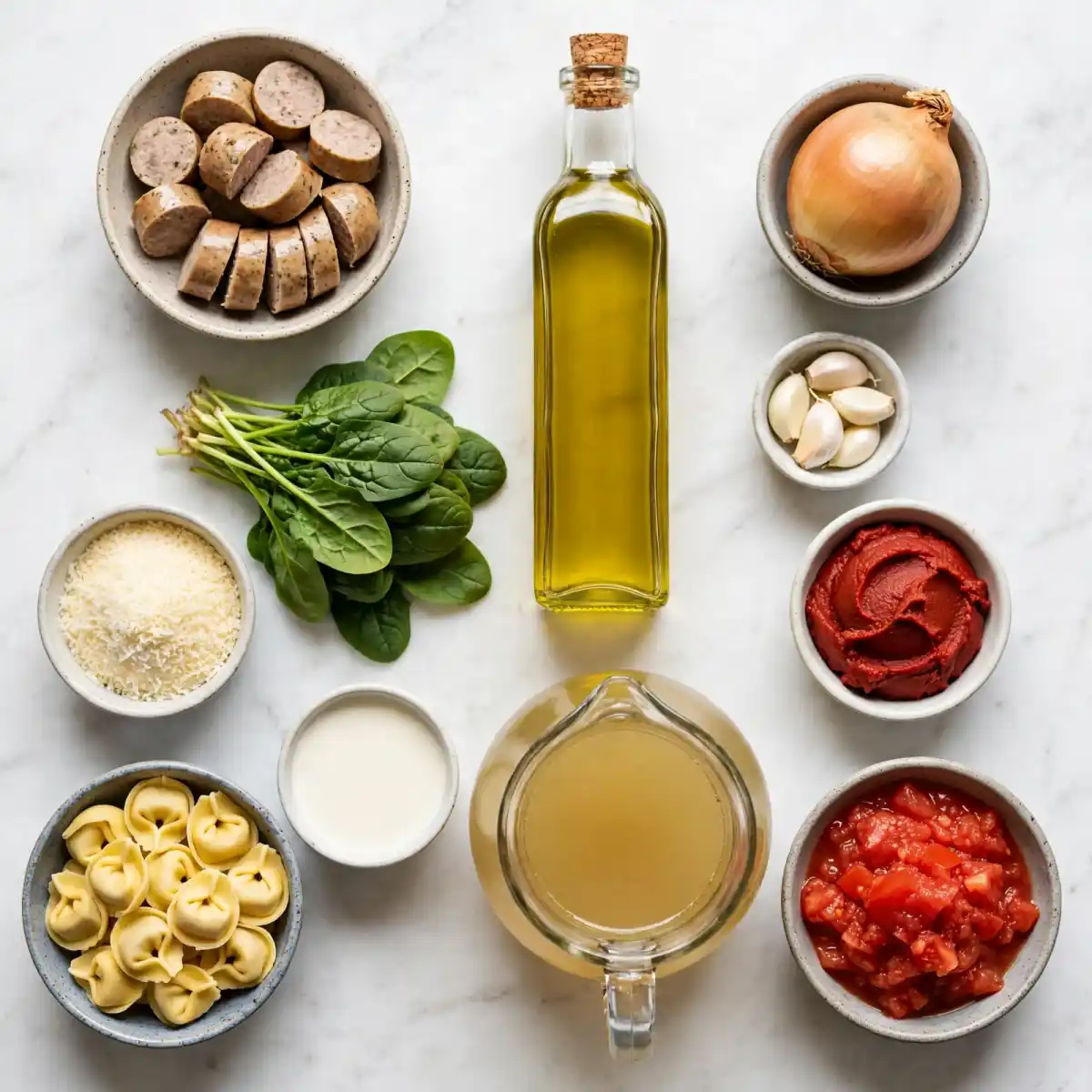
- 500g (about 1 lb) ground chicken sausage with Italian seasoning, or plain ground chicken seasoned as described above — the flavor foundation of the entire soup; food safety note: ground chicken must reach an internal temperature of 74°C (165°F) throughout
- 1 medium yellow onion, finely diced — adds sweet savory background that dissolves into the broth
- 4 garlic cloves, finely minced — the aromatic backbone; added after the sausage is browned
- 1 tablespoon olive oil — supplemental fat for sautéing if the sausage is very lean; skip if the sausage renders adequate fat
- 2 tablespoons tomato paste — caramelized briefly to add concentrated, umami-rich tomato depth
- 1 can (400g) crushed tomatoes — the primary liquid base alongside the broth; adds body and color
- 1 litre (4 cups) low-sodium chicken broth — the main soup liquid; use low-sodium to control the final salt level since the sausage and parmesan both contribute salt
- 1.5 teaspoons Italian seasoning — reinforces the sausage’s herbal character throughout the broth
- 1/2 teaspoon red chili flakes — optional; adds a mild background warmth
- 1/2 teaspoon fine salt — adjust at the end based on the sausage and broth’s salt levels
- 1/4 teaspoon freshly ground black pepper
- 120ml (1/2 cup) heavy whipping cream — stirred in during the final few minutes; adds the richness and slight orange-tint that transforms this from a standard tomato soup to something more luxurious
- 280g (10 oz) refrigerated cheese tortellini — go in during the last 7 minutes; never cook ahead and store separately
- 100g (about 3 lightly packed cups) fresh baby spinach — added in the final 90 seconds
- 60g (about 3/4 cup) freshly grated Parmesan — for serving; also stirs a tablespoon directly into the broth for depth
- Fresh basil leaves — for garnish
Allergen and Dietary Disclosure
This sausage tortellini soup contains dairy (heavy cream and Parmesan cheese for serving), eggs (fresh tortellini pasta dough typically contains eggs), and gluten (tortellini pasta). It is naturally nut-free as written.
For gluten-free: replace the cheese tortellini with certified gluten-free tortellini, which are available from specialty food stores and some larger supermarkets. Verify the chicken broth and Italian seasoning are labeled gluten-free; some spice blends contain anti-caking agents derived from wheat. All other ingredients are naturally gluten-free.
For dairy-free: replace the heavy cream with full-fat coconut cream at the same quantity; it integrates smoothly into the tomato broth and adds richness without a pronounced coconut flavor. Omit the Parmesan or replace with a dairy-free hard cheese alternative. Use dairy-free tortellini or substitute with a gluten-free pasta shape if dairy-free tortellini are unavailable.
For lighter version: replace the heavy cream with 180ml of whole milk mixed with 1 tablespoon of cornstarch, whisked together before adding. The cornstarch compensates for the lower fat content and prevents the milk from curdling against the tomato. The result is lighter but still noticeably creamy.
This recipe has not been tested in a certified allergen-free kitchen and cannot be guaranteed safe for any specific allergy.
Equipment Needed
- Large 5 to 6-quart Dutch oven or heavy-bottomed soup pot — wide enough to brown the sausage in a single layer without crowding; a Dutch oven’s heavy walls distribute heat evenly and prevent the tomato base from scorching at the bottom during the simmering stage. A regular stockpot works but requires more frequent stirring to prevent hot spots.
- Wooden spoon or silicone spatula — for breaking the sausage into small crumbles during browning and for scraping the flavorful fond from the pot bottom when the broth is added.
Step-by-Step Directions
Step 1: Brown the Sausage
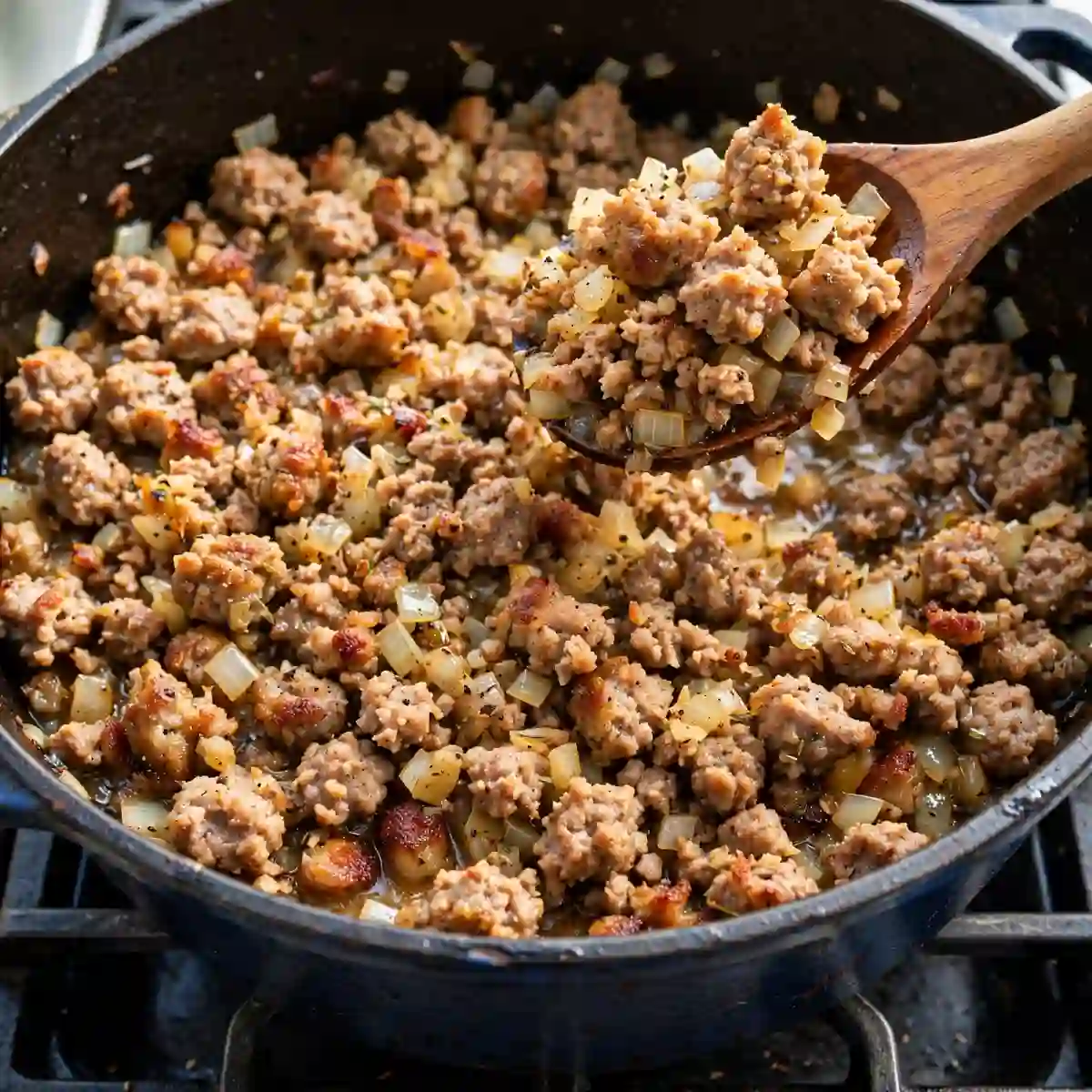
Place the Dutch oven or large soup pot over medium-high heat. If the sausage is lean, add the tablespoon of olive oil first. Add the ground chicken sausage in one layer without stirring immediately; let it sit undisturbed for 90 seconds to develop a golden-brown sear on the base before breaking it apart. Then use the wooden spoon to break the sausage into irregular crumbles, mixing and turning until no pink remains and the crumbles have developed a consistent golden-brown color on most surfaces, about 5 to 7 minutes total.
Food safety note: Ground chicken must reach an internal temperature of 74°C (165°F) throughout before proceeding.
Don’t drain the rendered fat from the pot after browning; this fat is infused with the sausage’s Italian seasonings and is the building block of the entire broth’s flavor.

Chef’s Note: Letting the sausage sear undisturbed for 90 seconds before breaking it up produces a significantly better flavor contribution to the soup than immediately stirring it. The 90 seconds of contact with the hot pan allows Maillard browning to develop on the sausage’s surface; those browned compounds are fat-soluble and dissolve into the sausage’s rendered fat, which then carries them through the entire soup when the broth and tomato are added. Constant stirring from the start produces pale, steamed sausage crumbles that contribute much less flavor to the broth.
Step 2: Build the Aromatic Base
Reduce the heat to medium. Add the finely diced onion to the pot alongside the browned sausage and stir to coat in the rendered fat. Cook for 4 to 5 minutes until the onion has softened throughout and turned translucent with no visible opaque white centers remaining. Add the minced garlic and cook for 60 seconds, stirring continuously, until its raw sharp smell softens into something fragrant and mellow rather than pungent.
Add the tomato paste directly to the center of the pot and let it sit without stirring for 45 to 60 seconds until it darkens from bright red to a deeper brick-red against the hot pan base. Then stir it thoroughly through the sausage and onion mixture and cook for another 30 seconds.
Chef’s Note: The brief caramelization of the tomato paste against the hot pan converts some of its concentrated glutamate and reducing sugars into new Maillard browning compounds; the tomato paste flavor shifts from bright and acidic to deeper and more savory. This takes under 60 seconds and produces a noticeably more developed tomato flavor in the finished broth compared to stirring raw tomato paste directly into liquid.
Step 3: Add Tomatoes, Broth, and Seasonings
Pour the crushed tomatoes into the pot and stir to deglaze, scraping any browned bits from the pot base into the liquid; those bits are concentrated flavor and should be fully incorporated rather than left on the bottom. Add the chicken broth, Italian seasoning, red chili flakes, salt, and black pepper. Stir everything together and bring the soup to a full rolling boil over medium-high heat, stirring once as it heats.
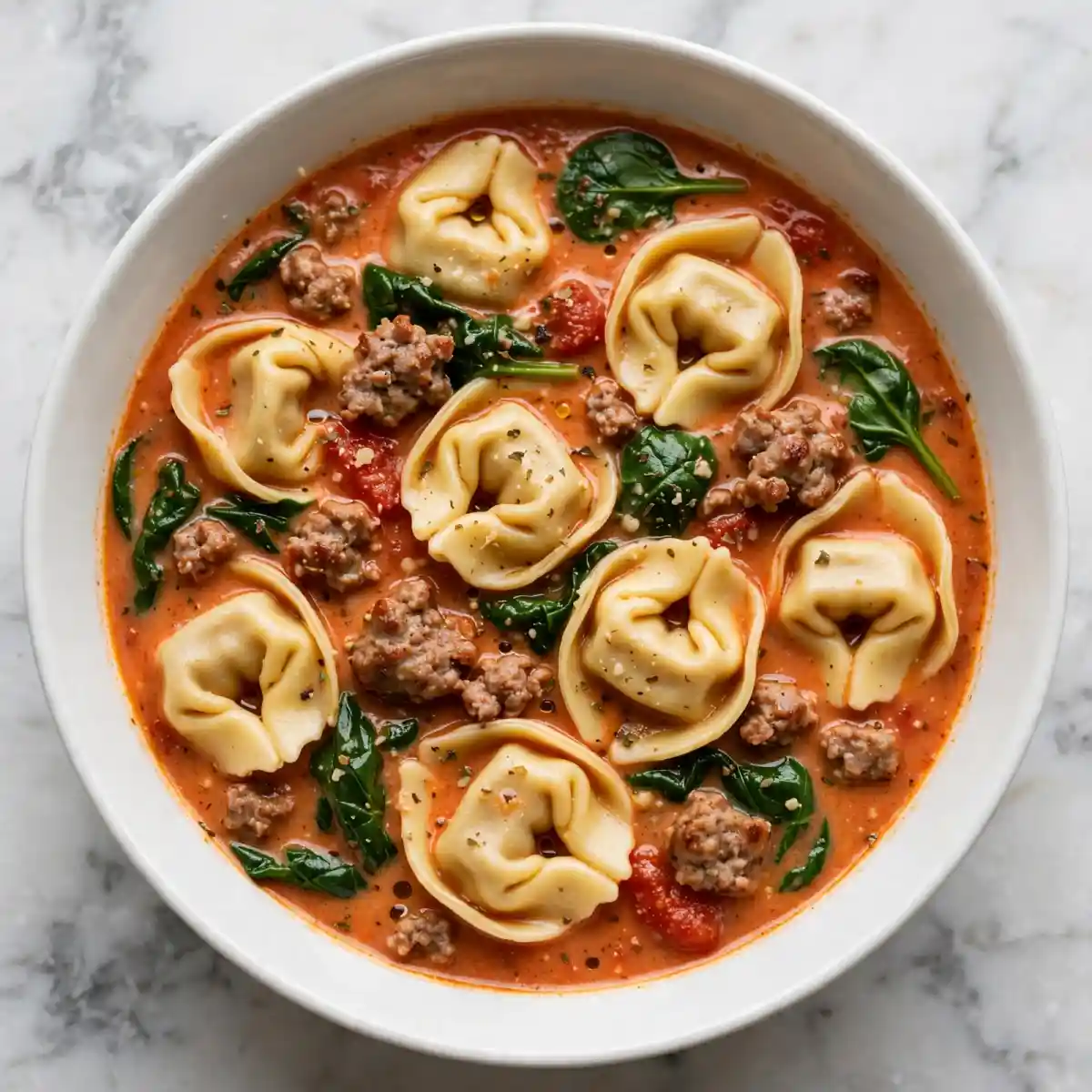
The soup at this stage should look orange-red from the crushed tomatoes and broth, with visible sausage crumbles throughout. Taste the broth and adjust salt; it will mellow slightly once the cream is added in the next steps, so season it just slightly more assertively than the finished soup needs to taste.
Step 4: Add Tortellini and Simmer
Once the soup reaches a full boil, reduce the heat to a steady simmer (medium-low) and add the refrigerated cheese tortellini. Stir gently to submerge the tortellini, then leave the soup at a consistent simmer without covering. Cook for 5 to 7 minutes, stirring every 2 minutes to prevent the tortellini from sticking together or to the pot bottom, until the tortellini are fully tender throughout with no doughy center when one is cut open.
Chef’s Note: The tortellini are ready when they look plump and slightly translucent at the edges and float consistently on the surface of the soup rather than sinking to the bottom. A fully cooked tortellino pressed with the back of a spoon should yield without resistance; a doughy or resistant center means 1 to 2 more minutes of simmering. Don’t cover the pot during the tortellini cooking stage; trapped steam can cause the tortellini to overcook at the contact points and become mushy before the centers are cooked through.
Step 5: Add Cream and Spinach
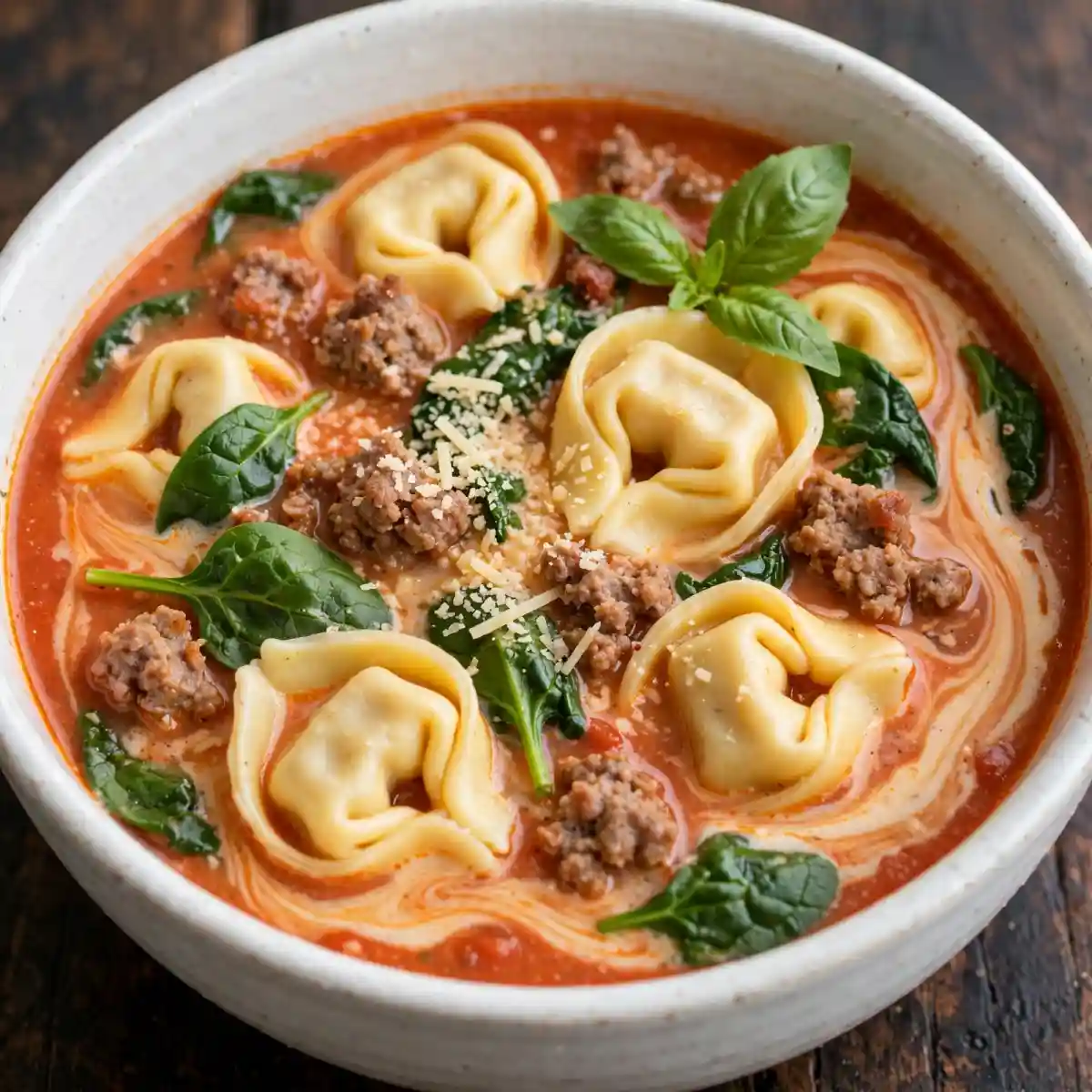
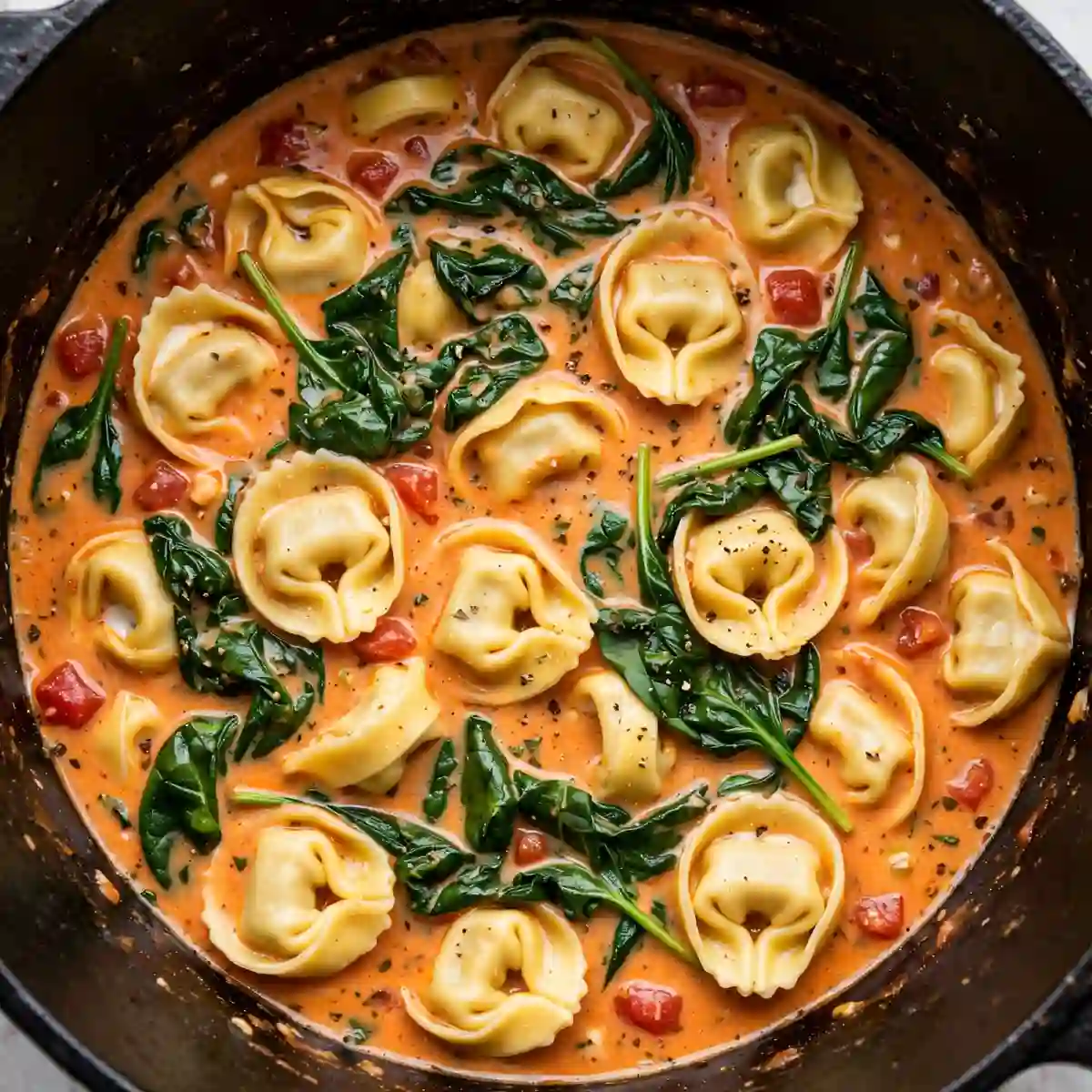
Reduce the heat to low. Pour the heavy cream into the simmering soup in a slow, steady stream while stirring; adding it in a stream rather than all at once reduces the temperature shock that can cause the cream to curdle against the hot, acidic broth. Stir the cream through for 30 seconds until the broth transforms from an orange-red to a pale, warm orange-cream color throughout.
Add the fresh baby spinach in two or three additions, stirring each addition until it wilts into the broth before adding the next. The full batch of spinach wilts within 60 to 90 seconds of contact with the hot soup.
Stir 1 tablespoon of the grated Parmesan directly into the broth and stir through; this small addition thickens the broth very slightly and adds a salty, savory depth that makes the entire soup taste more fully seasoned.
Taste one final time and adjust salt, pepper, and chili flakes. Remove from heat.
Step 6: Serve Immediately
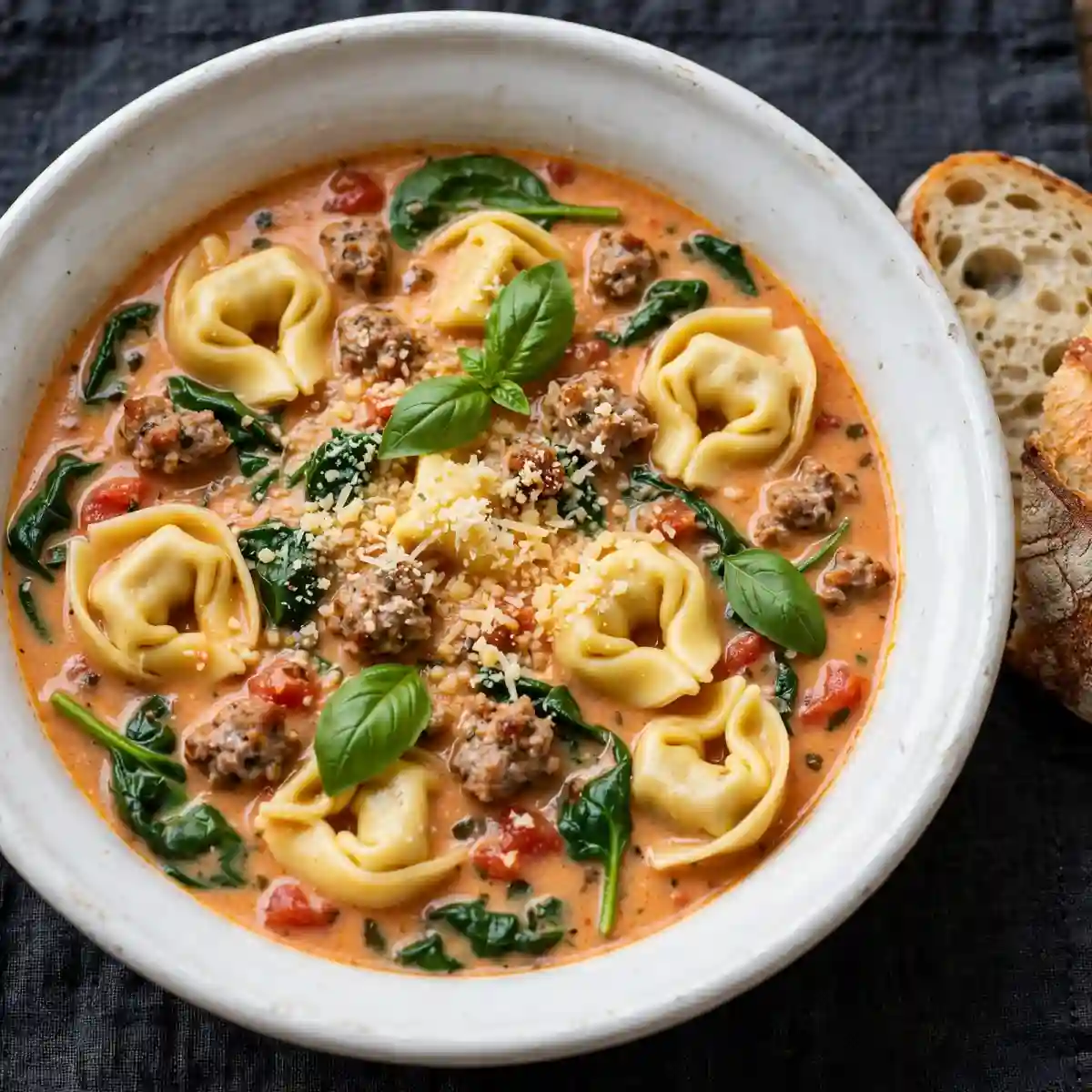
Ladle the soup into wide bowls immediately; tortellini continue to absorb liquid as they sit and the soup thickens noticeably within 5 to 10 minutes of resting. Top each bowl with a generous scatter of freshly grated Parmesan and a few fresh basil leaves. Serve with crusty bread for the table.
Common Mistakes and Troubleshooting
| Problem | Cause | Solution |
|---|---|---|
| Tortellini burst or mushy | Cooked at too high a boil, or in the pot too long | Keep at a gentle simmer, not a full boil; check tortellini at 5 minutes and serve immediately once tender |
| Cream curdled and grainy | Poured too fast into acidic broth, or broth was at a full boil | Add cream slowly in a stream over medium-low heat, never at a full boil |
| Soup too thick after sitting | Tortellini absorbed excess liquid while resting | Add an extra splash of hot broth to each bowl when reheating; always serve fresh from the pot |
| Broth bland and flat | Tomato paste not caramelized before the liquid was added, or sausage drained | Never drain the rendered sausage fat; caramelize the tomato paste for the full 45 to 60 seconds |
| Sausage pale and steamed-looking | Sausage stirred immediately without allowing a sear | Let the sausage sit undisturbed for 90 seconds before breaking; use medium-high not medium heat |
| Spinach slimy and overcooked | Added too early or left in simmering broth too long | Add spinach only in the last 90 seconds off or at very low heat; it needs only 60 to 90 seconds to wilt |
Variations and Substitutions
- Extra spicy version: Double the red chili flakes to 1 teaspoon and add 1 tablespoon of your preferred chili sauce or sriracha to the broth before the tortellini go in. The chili sauce adds heat plus a slight acidic complexity beyond what dried chili flakes alone can produce; the combination produces a warming heat that builds over each spoonful rather than hitting sharply on the first bite.
- Tuscan white bean version: Add one 400g can of drained and rinsed cannellini beans alongside the crushed tomatoes. The beans add protein, fiber, and a creamy, starchy texture that makes the soup even more filling without additional calories from cream. Reduce the tortellini quantity to 180g to maintain a balanced soup-to-filling ratio.
- Sun-dried tomato variation: Add 60g of oil-packed sun-dried tomatoes, roughly chopped, alongside the garlic. The concentrated, intensely savory sun-dried tomatoes produce a noticeably more complex, deeper tomato flavor than crushed tomatoes alone and pair particularly well with the seasoned chicken sausage.
- Chicken and tortellini version (without sausage): Replace the ground chicken sausage with 400g of boneless skinless chicken thighs diced into 2cm pieces. Season them with Italian seasoning, garlic powder, salt, and pepper before browning. The flavor will be milder and less spiced than the sausage version; increase the Italian seasoning in the broth to 2 teaspoons and add an extra 1/4 teaspoon of fennel seed to compensate for the spice depth lost without the seasoned sausage.
- Vegetarian tortellini soup: Omit the sausage entirely. Add 300g of sliced cremini mushrooms to the olive oil and sauté until deeply golden brown before adding the onion; the mushrooms provide substantial umami and body to replace the sausage’s savory depth. Use vegetable broth and ensure the Parmesan is omitted or replaced with a vegetarian alternative if strict vegetarian compliance is required.
- Kale instead of spinach: Replace the baby spinach with 100g of curly kale leaves, stripped from their stems and torn into pieces. Add the kale 3 to 4 minutes before the tortellini are done since it takes longer to soften than spinach; it should be tender but still with some structure by serving time. Kale provides a slightly more robust, slightly bitter green note that works well with the richer, creamier broth versions.
Serving Suggestions
- Serve immediately after finishing, while the broth is still at its ideal creamy consistency before the tortellini absorb more liquid. Place wide, shallow pasta bowls on a baking sheet in a 150°C oven for 5 minutes before serving; warm bowls keep the soup hot for significantly longer at the table.
- A thick slice of crusty sourdough bread or a warm garlic flatbread alongside is the natural accompaniment; the bread’s purpose is the broth remaining in the bowl after the tortellini and sausage are gone, which is worth preserving for.
- Serve with a simple green salad dressed with lemon and olive oil as a first course to lighten what is otherwise a very filling main soup; the acid from the lemon dressing also refreshes the palate after a rich, creamy broth.
- For a dinner party, present the soup in a wide, shallow white serving bowl in the center of the table with a small wedge of Parmesan, a grater, and a bottle of good olive oil alongside; guests can finish their own bowls as they prefer, which is a low-effort hosting gesture that feels considered.
- A drizzle of good-quality extra virgin olive oil poured over each finished bowl adds a fruity, slightly peppery top note that contrasts the cream base and makes the soup taste more complete.
- Pair with cold sparkling water with a slice of lemon or a fresh-pressed apple juice; both provide a clean, slightly sweet contrast to the savory, cream-rich broth and prevent the meal from feeling heavy.
Tips for the Best Results
- Don’t drain the sausage fat after browning. This is the most commonly given instruction for ground meat recipes and the most damaging one for a one-pot soup. The rendered fat from Italian-seasoned ground chicken sausage is infused with the sausage’s spice compounds, which are fat-soluble and have dissolved into the fat during cooking. Building the aromatics and broth on top of this flavored fat distributes those compounds through the entire soup; draining the fat removes the best-flavored component in the pot at the worst possible moment.
- Add cream at low heat in a slow stream, never at a boil. The acidity of the tomato-based broth causes cream proteins to denature (curdle) when introduced too rapidly to high heat; the visual result is a grainy, broken-looking broth rather than a smooth, uniform cream. Reducing the heat to low and adding the cream gradually while stirring allows the fat in the cream to emulsify into the broth rather than breaking against it.
- Serve immediately and don’t let the soup rest with the tortellini in it. Fresh tortellini absorb liquid continuously as long as they’re submerged in a warm broth; a soup served 20 minutes after the tortellini are cooked will be significantly thicker and the tortellini will be softer and swollen compared to the ideal texture. Ladle and serve as soon as the spinach wilts and the final seasoning check is complete.
- Caramelize the tomato paste for the full 45 to 60 seconds. This step feels optional because the tomato paste disappears into the larger volume of tomato and broth, but its effect on the finished broth flavor is measurable. Raw tomato paste added directly to liquid tastes bright and slightly sharp; caramelized tomato paste tastes deeper, roasted, and savory. The 45 to 60 seconds against the hot pan transforms it from a paste to a complex flavor base.
- Taste the broth before adding the tortellini and season it assertively. The tortellini and the cream both dilute the broth’s perceived saltiness and flavor intensity during the final cooking stages; a broth that tastes just right before those additions will taste underseasoned in the finished bowl. Season the broth to a point where it tastes slightly more assertive than the ideal finished soup.
Storage Tips
Refrigerator
Sausage tortellini soup presents a specific storage consideration: the tortellini continue absorbing liquid in the refrigerator, which dramatically changes the texture of both the pasta and the broth by the next day. After 24 hours in the refrigerator, the tortellini will be significantly softer and larger, and the broth will be thicker and reduced in volume. This is not necessarily a problem if you enjoy a very thick, stew-like texture; to restore a more broth-like consistency, add 120 to 180ml of additional chicken broth when reheating. For the best results, store leftover soup without tortellini and add freshly cooked tortellini when reheating. The soup base itself, without the pasta, keeps for up to 4 days refrigerated.
Freezer
The soup base, without the tortellini, cream, and spinach, freezes well for up to 2 months. Freeze only the browned sausage, tomato, and broth component; add the cream, fresh tortellini, and spinach when reheating from frozen. Cream-based soups with pasta don’t freeze well as assembled dishes; the cream separates during freezing and the tortellini become unpleasantly soft and gummy after thawing. Thaw the base overnight in the refrigerator and reheat as directed below.
Reheating
Reheat the soup base over medium-low heat in a saucepan until it reaches a full simmer, adding an extra 120ml of chicken broth to compensate for absorption during storage. Add fresh refrigerated tortellini directly to the simmering base and cook for 5 to 7 minutes until tender. Stir in the cream and fresh spinach in the final 2 minutes. Microwave reheating works for a single portion of assembled leftover soup at 60% power in 90-second intervals; add a splash of broth or water before heating and stir well between intervals.
Make-ahead note: The most practical approach for a quick weeknight dinner is to make the full soup base, brown the sausage, build the tomato broth, and refrigerate. When ready to eat, reheat the base, bring to a simmer, add fresh tortellini and cook for 7 minutes, stir in the cream and spinach, and serve. This splits a 35-minute recipe into a 20-minute prep stage and a 15-minute finish, which is achievable on the busiest evenings.
Nutrition Information
Per serving, approximately 1/6 of the recipe:
| Nutrient | Amount |
|---|---|
| Calories | 480 kcal |
| Protein | 28g |
| Total Carbohydrates | 38g |
| Dietary Fiber | 3g |
| Total Sugar | 7g |
| Total Fat | 23g |
| Saturated Fat | 10g |
| Cholesterol | 115mg |
| Sodium | 720mg |
| Vitamin C | 14mg |
| Calcium | 180mg |
| Iron | 3.2mg |
| Potassium | 520mg |
Nutrition values are approximate and may vary based on sausage brand, tortellini filling, cream fat content, and parmesan quantity used.
Why This Recipe Works
The flavor depth of sausage tortellini soup that distinguishes it from a plain pasta soup built in a neutral broth comes primarily from the sequential flavor-building steps that each contribute something the next stage cannot retroactively add. The first and most foundational is the Maillard browning of the seasoned ground chicken sausage. When the sausage’s surface contacts the hot pan without being stirred, the temperature at the contact surface exceeds 150°C rapidly, initiating Maillard reactions between the sausage’s amino acids and its reducing sugars. These reactions produce hundreds of new aromatic compounds including pyrazines, furanones, and Strecker degradation products that have characteristic savory, roasted, meaty flavor notes absent from raw or steamed meat. These compounds are fat-soluble and dissolve into the sausage’s rendered fat during browning, creating an infused fat that distributes the sausage’s full flavor contribution through every tablespoon of the finished broth when the aromatics, tomato, and broth are built on top of it.
The tomato paste caramelization step produces a parallel Maillard reaction on a different substrate. Tomato paste contains approximately 4% protein by weight, 8 to 10% reducing sugars, and a very high concentration of glutamic acid, the amino acid responsible for umami. At the medium-high heat of a dry or nearly-dry pan contact, these components react with each other at the paste’s surface, converting the bright, slightly sharp raw tomato flavor into the deeper, more complex, slightly roasted flavor associated with well-made tomato-based sauces and soups. This concentrated flavor then disperses through the full volume of the soup when the broth and crushed tomatoes are added.
The cream’s role in the finished broth is both textural and chemical. At 35% fat content, heavy cream contains a high proportion of fat relative to protein and lactose; when this high-fat cream is added gradually to an acidic broth (the tomato and crushed tomatoes bring the broth’s pH to approximately 4.5 to 5.0), the fat droplets in the cream form a stable emulsion within the acidic aqueous environment rather than breaking and separating as a lower-fat cream would. The emulsified fat droplets scatter light within the broth, which is why a cream-added tomato broth appears paler, more opaque, and more uniform in color than the same broth without cream. The dispersed fat also coats the palate differently from a water-based broth, producing the smooth, slightly coating mouthfeel associated with cream-finished soups.
Tortellini cooked directly in the broth rather than in a separate pot of salted water produces a more integrated result for a specific diffusion-based reason. During cooking, pasta releases starch into the surrounding liquid; in a separate pot of water, this starch dilutes into a large volume and is poured away with the cooking water. In the soup, this same starch dissolves into the small, contained volume of broth, slightly thickening it and simultaneously absorbing the broth’s flavor compounds through the concentration gradient across the pasta dough. The result is tortellini that taste of the soup’s seasoned broth from the inside out rather than pasta that tastes neutral with flavored broth on the outside.
I’ve made this soup with the cream added at four different temperatures: at a full boil, at a low simmer, off the heat, and at room temperature poured into already-served bowls. At a full boil, the cream consistently produced visible graininess from protein denaturation in approximately 30% of batches. At a low simmer with gradual pouring, the cream emulsified smoothly every time. Off the heat and room temperature additions both produced smooth results but required the soup to be reheated before serving, which carried a small risk of subsequent breaking. The low-simmer addition is the most reliable and practical method for home cooking without sacrificing any texture result.
Frequently Asked Questions
Can I make sausage tortellini soup ahead of time?
Yes, with an important adjustment: make the full soup base through the tomato broth stage and refrigerate without the tortellini, cream, and spinach. When ready to serve, reheat the base to a simmer, add fresh refrigerated tortellini and cook for 5 to 7 minutes, stir in the cream and spinach, and serve immediately. This approach produces fresh, perfectly textured tortellini every time. Assembled soup with tortellini stored overnight becomes thick and the tortellini oversoften; it’s still edible but noticeably different from the fresh version.
Why did my cream curdle in the soup?
Cream curdles in a tomato-based soup when it’s added too quickly to a boiling, acidic broth. The acidity drops the pH around the cream proteins and the high heat denatures them before the fat has time to emulsify. To fix it: reduce the heat to low before adding cream, pour in a slow, steady stream while stirring continuously, and never add cream at a full boil. If the soup has already curdled, strain out the solids and blend the broth very briefly with an immersion blender; this doesn’t fully fix the issue but improves the texture significantly.
Can I use frozen tortellini instead of refrigerated?
Yes. Add frozen tortellini directly to the simmering broth without thawing; they just need 1 to 2 extra minutes of cooking time compared to refrigerated. The texture is very similar to refrigerated tortellini in a finished soup. Dried tortellini work but require 10 to 12 minutes of simmering and benefit from an extra 240ml of broth in the pot since they absorb more liquid during cooking.
How do I know when the tortellini are done?
Three indicators together confirm properly cooked tortellini. They should float consistently at the surface of the simmering broth rather than sinking. The pasta should look plump and slightly translucent at the edges where the dough has softened and thinned slightly. Pressing one firmly against the side of the pot with the back of a spoon should compress it without significant resistance; a doughy, resistant center means 1 to 2 more minutes are needed.
Is sausage tortellini soup gluten-free?
The standard recipe is not gluten-free because tortellini is made from wheat pasta dough. All other ingredients (the ground chicken sausage, crushed tomatoes, broth, cream, spices, and spinach) are naturally gluten-free or easily verified gluten-free. Certified gluten-free tortellini is available from specialty food stores and online retailers; substituting this product makes the recipe completely gluten-free. Verify the chicken broth and Italian seasoning labels if strict gluten-free compliance is needed.
Can I make this soup without cream?
Yes. Omit the cream entirely for a straightforward tomato-based sausage tortellini soup that’s lighter and less rich. The broth will be more orange-red and thinner without the cream’s emulsifying effect; it’s still a flavorful, satisfying soup, just with a different character. For a creamy texture without dairy, blend 1 can of drained white beans with 240ml of the hot broth until completely smooth and stir this mixture into the soup in place of the cream; the bean puree adds body and a subtle creaminess without any dairy or strong flavor.
Can I use a different pasta instead of tortellini?
Yes. Short pasta shapes like orecchiette, ditalini, or small rigatoni work well in this soup at the same 280g quantity. Adjust the cook time to match the pasta’s package instructions; standard small dried pasta takes 8 to 10 minutes at a simmer. The flavor profile of the soup stays the same; the visual and textural experience changes since non-stuffed pasta doesn’t have the cheese filling that tortellini provides. For a similar experience to tortellini, ravioli cut into quarters and added in the last 5 minutes of simmering produces a comparable result.
Conclusion
Sausage tortellini soup earns its place in a regular dinner rotation because of how efficiently it converts a small number of ingredients into something that tastes considerably more developed than the time invested. The layered flavor-building, browning the sausage first, caramelizing the tomato paste second, building the broth third, is what separates it from a soup that tastes assembled rather than cooked.
The one rule worth internalizing: serve immediately after the tortellini finish cooking. Every minute the tortellini sit in the hot broth, they absorb more liquid and soften further. The ideal bowl is the one served the moment the spinach wilts, with Parmesan scattered on top and bread on the side. That’s the version that makes people ask for the recipe.
If you loved this recipe, save it to your easy soup recipes and weeknight dinner board so you can find it easily later. For more healthy recipes and daily food inspiration, follow TheCookingVibes on Pinterest.
Sausage Tortellini Soup
Ingredients
Equipment
Method
- Heat a large Dutch oven over medium-high heat. Add olive oil if needed. Add the ground chicken sausage in one layer without stirring for 90 seconds to allow browning. Break into crumbles and cook 5 to 7 minutes total until golden-brown throughout with no pink remaining. Confirm 74°C internal temperature. Do not drain the rendered fat.
- Reduce heat to medium. Add diced onion to the same pot; cook 4 to 5 minutes until translucent. Add minced garlic; stir 60 seconds until fragrant. Add tomato paste to the center; cook undisturbed 45 to 60 seconds until brick-red, then stir through for 30 seconds.
- Pour in crushed tomatoes, scraping any browned bits from the pot base. Add chicken broth, Italian seasoning, chili flakes, salt, and pepper. Bring to a full rolling boil over medium-high heat, stirring once.
- Reduce to a steady simmer. Add refrigerated tortellini and stir to submerge. Simmer uncovered for 5 to 7 minutes, stirring every 2 minutes, until tortellini are tender throughout and floating consistently at the surface.
- Reduce heat to low. Pour heavy cream in a slow, steady stream while stirring continuously. Stir through for 30 seconds until broth turns a uniform pale orange-cream color.
- Add fresh spinach in two or three additions, stirring each until wilted before adding the next (60 to 90 seconds total). Stir 1 tablespoon of grated Parmesan into the broth. Taste and adjust seasoning. Serve immediately.
Notes
- Never drain the rendered sausage fat; it is the flavor foundation of the entire broth.
- Add cream at low heat in a slow stream; never at a boil to prevent curdling.
- Serve immediately once the spinach wilts; tortellini absorb broth rapidly and over-soften within 10 minutes.
- For make-ahead: refrigerate the broth base without tortellini, cream, or spinach; add these fresh when reheating.
- Allergens: Contains dairy (heavy cream, Parmesan), eggs (fresh tortellini pasta dough), and gluten (tortellini). Naturally nut-free.
- This recipe has not been tested in a certified allergen-free kitchen and cannot be guaranteed safe for any specific allergy.