

Easy Lentil Soup (Hearty, Spiced, Naturally Thick)
A pot of lentil soup done right has a texture that is somewhere between a broth and a puree: thick enough to coat a spoon, loose enough to pour easily into a bowl, with visible lentil pieces giving way to a smooth, almost creamy base underneath. The cumin and coriander hit first, then the tomato, then a clean brightness from the lemon that lifts everything and makes the soup taste much lighter than its density would suggest. You taste it and think: this took effort. It didn’t.
This lentil soup recipe uses red lentils, which dissolve partially as they cook and create that naturally thick consistency without any blending required. A spice blend built on cumin, coriander, turmeric, and smoked paprika gives the broth real depth. Canned tomatoes add body and acidity. Lemon juice goes in at the end, off the heat, to sharpen everything that came before it. One pot, 50 minutes, six generous servings. It is naturally vegan as written, gluten-free, high in protein and fiber, and one of the most reliable soups to make in large batches.
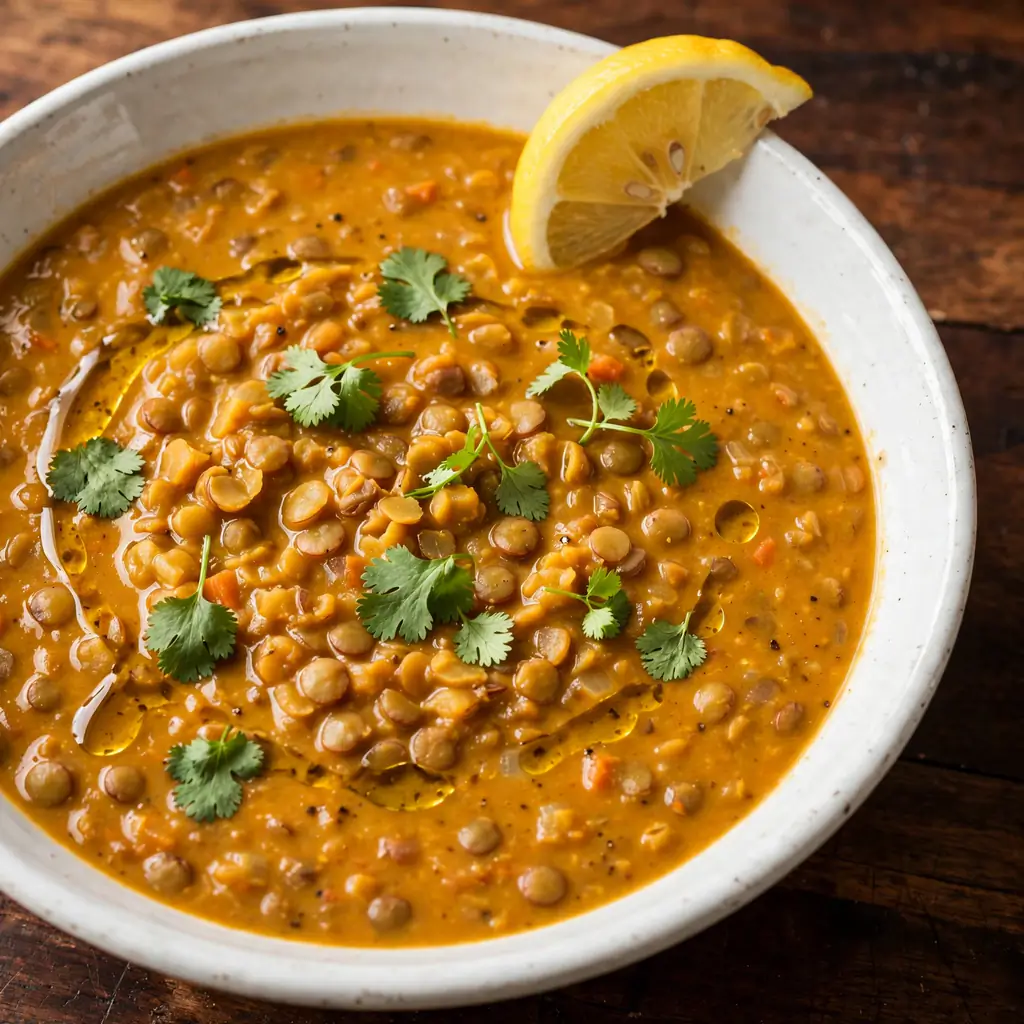
Table of Contents
- Why You’ll Love This Lentil Soup
- Ingredients You’ll Need
- Step-by-Step Directions
- Common Mistakes and Troubleshooting
- Variations and Substitutions
- Serving Suggestions
- Tips for the Best Results
- Storage Tips
- Nutrition Information
- Why This Recipe Works
- Frequently Asked Questions
- Conclusion
Why You’ll Love This Lentil Soup
- Naturally thick without blending. Red lentils break down as they cook, giving the soup a creamy body that develops on its own. No immersion blender required, though using one for a few seconds is an option if you want a smoother texture.
- The spice blend tastes intentional, not generic. Cumin, coriander, turmeric, and smoked paprika bloomed in olive oil before the liquid goes in produce a soup that tastes warm and layered rather than like seasoned water with lentils.
- Complete nutrition in one pot. Red lentils deliver roughly 18 grams of protein and 15 grams of fiber per cooked cup. This soup feeds you for hours without the heaviness of meat-based dishes.
- Genuinely freezer-friendly. Lentil soup holds up better through freezing and thawing than almost any other soup. The texture is practically identical on the way out of the freezer as it was going in.
- Scales effortlessly. Double the recipe in the same pot with no timing change. Lentil soup is one of the easiest large-batch cooking projects you can take on.

Ingredients You’ll Need
Recipe Timing
| Detail | Info |
|---|---|
| Servings | 6 |
| Difficulty | Easy |
| Course | Main Course, Soup |
| Cuisine | Middle Eastern-Inspired, Mediterranean |
| Prep Time | 15 minutes |
| Cook Time | 35 minutes |
| Total Time | 50 minutes |
The most important ingredient decision is the lentil variety. Red lentils (sometimes labeled red split lentils) are the correct choice for this recipe. They dissolve partially during cooking, which creates the naturally thick, creamy texture that defines a good lentil soup. They require no soaking and cook in 20 to 25 minutes. Green or brown lentils stay intact and produce a brothier, more textured soup with a different eating experience: both are good but they are not interchangeable with red lentils in this recipe without adjusting technique and cook time.
Rinse the red lentils thoroughly under cold water until the water runs clear before using. They carry a mild dusty coating from processing that leaves a slightly chalky taste in the soup if not rinsed.
For the spices, freshness matters more here than in recipes with stronger flavors. Cumin and coriander that have been sitting in the pantry for more than a year lose their volatile oils and taste flat. Open the jars and smell them before using: they should smell immediate and sharp, not muted. If in doubt, a fresh jar makes a noticeable difference.
- 1 1/2 cups (300g) red lentils, rinsed until clear. The backbone of the soup. They dissolve partially during cooking and naturally thicken the broth without any blending. Don’t substitute with green or brown lentils without adjusting timing.
- 3 tablespoons olive oil. Used for blooming the spices and cooking the aromatics. The fat carries the spice flavors through the broth. Don’t reduce it significantly: thin-oil lentil soups taste watery.
- 1 large yellow onion, finely diced. The primary aromatic. Cooked until genuinely soft and golden rather than just translucent, which adds sweetness and depth to the base.
- 5 cloves garlic, finely minced. Goes in after the onion. Adds a sharp, savory backbone that prevents the soup from tasting flat despite the absence of meat.
- 2 medium carrots, peeled and diced into small pieces (about 1cm). Add natural sweetness, color, and a small amount of texture contrast in the finished bowl.
- 2 teaspoons ground cumin. The dominant spice. Bloomed in oil to release its fat-soluble flavor compounds before any liquid goes in.
- 1 1/2 teaspoons ground coriander. Adds a slightly citrusy, floral warmth that complements the cumin rather than competing with it.
- 1 teaspoon smoked paprika. Gives the broth a subtle smoky depth and a deep orange-amber color.
- 1/2 teaspoon ground turmeric. Contributes a mild earthiness and deepens the golden color of the finished soup.
- 1/4 teaspoon cayenne pepper (optional). Adds background warmth without making the soup spicy. Omit entirely for a mild version or increase to 1/2 teaspoon for noticeable heat.
- 1 can (400g / 14 oz) crushed tomatoes. Adds acidity, body, and color to the broth. The acid from the tomatoes brightens the spices and prevents the soup from tasting one-dimensionally earthy.
- 1.4 litres (6 cups) low-sodium vegetable broth. The primary liquid. Low-sodium keeps the salt level controllable since canned tomatoes already contribute sodium.
- 1 teaspoon fine sea salt, plus more to taste.
- 1/2 teaspoon black pepper.
- 3 tablespoons fresh lemon juice (about 1.5 lemons). Added off the heat at the very end. The acid brightens the entire soup and is the finishing touch that makes a good lentil soup taste complete rather than heavy.
- Fresh cilantro or flat-leaf parsley, roughly chopped, for serving. A fresh herb on top adds color and a bright counterpoint to the warm, earthy spices underneath.
- Extra olive oil, for drizzling. A thin drizzle over each bowl just before serving adds a glossy richness and a fruity note that lifts the presentation.

Step-by-Step Directions
Step 1: Rinse the Lentils
Place the red lentils in a fine mesh strainer and rinse under cold running water for 45 to 60 seconds, moving them with your hand. The water will run milky at first and gradually turn clear. Stop rinsing when the water coming off the lentils is mostly clear. Shake the strainer once or twice to drain and set aside. This removes the surface starch and light dusty coating from processing that would otherwise give the broth a slightly bitter, chalky undertone.

Chef’s Note: Rinsed lentils produce a noticeably cleaner-tasting broth than unrinsed ones. It takes 60 seconds and is worth doing every time.
Step 2: Cook the Aromatics Until Golden
Heat the olive oil in a large, heavy-bottomed soup pot or Dutch oven over medium heat. Once the oil shimmers and moves freely across the surface, add the diced onion. Cook for 6 to 7 minutes, stirring every 2 minutes, until the onion turns soft and the edges develop a golden color. This is longer than the usual 4-minute soften: the extra time builds sweetness and a more complex base. Add the minced garlic and diced carrots. Cook for another 2 minutes, stirring constantly, until the garlic is fragrant and just barely golden at the tips.
Chef’s Note: Taking the onion to golden rather than just translucent at the start is the single technique decision that most affects the depth of the finished soup. Golden onion carries a sweet, slightly caramelized character that translucent onion does not, and it comes through clearly in the broth.
Step 3: Bloom the Spices
Add the cumin, coriander, smoked paprika, turmeric, cayenne (if using), black pepper, and salt directly to the onion mixture in the pot. Stir continuously for 60 seconds, pressing the spices into the oil and vegetables. The pot will smell intensely fragrant and the spices will darken very slightly in color. This is the bloom: the heat and oil activating the fat-soluble flavor compounds in the dried spices. Don’t rush past 60 seconds and don’t let the spices sit without stirring or they can scorch on the bottom of the pot.

Step 4: Add Tomatoes and Cook Briefly
Pour the crushed tomatoes into the pot with the spiced aromatics. Stir well and cook for 2 to 3 minutes over medium heat, letting the tomatoes bubble into the spice mixture. The tomato liquid will sizzle as it hits the hot oil, and the mixture will thicken into a paste-like consistency at the bottom of the pot. This brief cook concentrates the tomato flavor and lets it integrate with the spices before the broth dilutes everything.
Step 5: Add Lentils and Broth
Add the rinsed lentils to the pot and stir to coat them in the tomato-spice mixture. Pour in the vegetable broth and stir everything together thoroughly, scraping any spiced tomato residue off the bottom of the pot as the liquid goes in. Raise the heat to medium-high and bring the soup to a steady boil. Once boiling, reduce the heat to medium-low and cover the pot with the lid set slightly ajar to allow steam to escape.
Step 6: Simmer Until Lentils Break Down
Cook the soup at a gentle but consistent simmer for 20 to 25 minutes, stirring every 5 to 6 minutes to prevent the lentils from settling and sticking to the bottom. The lentils are done when most of them have dissolved into the broth, giving it a thick, creamy texture, while some pieces remain partially intact. The soup should have reduced slightly in volume and the surface should look almost uniform in color with no visible separate liquid at the edges. If the soup looks too thick at the 20-minute mark, stir in 1/2 cup of additional broth and continue simmering for 5 more minutes.
Chef’s Note: Red lentils can go from perfectly textured to fully dissolved within a few minutes. Start checking at the 20-minute mark so you can pull it off the heat at the texture you prefer: more intact for a brothier soup, fully dissolved for a smooth, creamy one.

Step 7: Finish With Lemon and Adjust Seasoning
Remove the pot from the heat completely before squeezing in the fresh lemon juice. Stir the lemon through the soup and taste immediately. The lemon should be clearly perceptible but not sharp or sour: it lifts the warm earthiness of the spices and makes the soup taste brighter and more complete. Adjust salt at this point. If the soup tastes flat, more salt will help; if it tastes heavy, a little more lemon will fix it. Ladle into bowls, drizzle each with a swirl of extra olive oil, and scatter chopped cilantro or parsley over the top.
Common Mistakes and Troubleshooting
| Problem | Cause | Solution |
|---|---|---|
| Soup tastes flat and dull | Spices not bloomed in oil; onion not cooked golden; lemon not added | Always bloom spices in oil for 60 seconds; take the onion to golden; always add lemon off the heat at the end |
| Lentils stuck to the bottom | Heat too high; not stirring regularly | Keep heat at medium-low once simmering; stir every 5 to 6 minutes; use a heavy-bottomed pot |
| Soup too thin | Lentils not simmered long enough; too much broth | Simmer for the full 20 to 25 minutes; add broth conservatively and stir to check thickness before adding more |
| Soup too thick | Lentils over-cooked; too little broth | Stir in broth a quarter cup at a time until the right consistency; lentil soup always thickens more as it cools |
| Chalky or bitter undertone | Lentils not rinsed before cooking | Always rinse red lentils under cold water until the water runs clear before adding to the pot |
| Soup tastes heavy after eating | Lemon juice skipped or added too early | Add lemon strictly off the heat; the brightness it adds prevents the soup from feeling dense despite its protein content |
Variations and Substitutions
Coconut Lentil Soup: Replace 1 cup of the vegetable broth with one 400ml can of full-fat coconut milk added in the last 10 minutes of simmering. The coconut adds a rich, slightly sweet creaminess that pairs beautifully with the cumin and coriander. Garnish with lime juice instead of lemon for a more Southeast Asian character.
Spinach and Lentil Soup: Stir 2 large handfuls of fresh baby spinach directly into the finished soup after removing it from the heat. The spinach wilts within 60 seconds in the residual heat and adds color, iron, and a mild green freshness to the bowl without requiring any additional cooking.
Tomato-Free Version: Skip the canned tomatoes and replace them with an additional 1/2 cup of vegetable broth. The soup will be paler in color and lighter in body but still warmly spiced and satisfying. This works well if you are serving someone with a tomato sensitivity.
Harissa Lentil Soup: Stir 1 to 2 tablespoons of harissa paste into the tomato mixture before adding the broth. The harissa deepens both the heat and the complexity of the spice base, adding a smoky, slightly fruity heat that builds through the bowl. Start with 1 tablespoon and taste before adding more.
Lemon and Cumin Version (Egyptian-Inspired): Increase the cumin to 3 teaspoons and reduce the coriander to 1/2 teaspoon. Add an additional tablespoon of lemon juice at the end for a more assertively citrusy, cumin-forward soup. A drizzle of cumin-infused hot olive oil (briefly heat olive oil with 1/2 teaspoon of whole cumin seeds until they sputter, then drizzle over each bowl) as a finishing touch adds a beautiful aromatic layer.
Red Lentil Dal Variation: Add 1 teaspoon of garam masala alongside the other spices, stir in a small knob of butter (or vegan butter) with the lemon at the end, and garnish with a tadka: heat 2 tablespoons of oil in a small pan, add 1/2 teaspoon of whole cumin seeds and 2 dried red chillies, let them sizzle for 20 seconds, and pour the sizzling oil directly over the surface of each bowl of soup just before serving.
Serving Suggestions
- With warm flatbread or naan. The thick broth clings to torn flatbread in a way that makes the bread as much of the meal as the soup itself. Warm it directly over a gas flame or in a dry pan for 30 seconds per side.
- With crusty sourdough. A thick slice of sourdough with a slight char on the crust is the Western pairing equivalent. The tang of the sourdough works well against the earthiness of the lentils.
- Over a scoop of plain cooked rice. Ladle a generous portion of soup directly over a small scoop of steamed basmati rice in the bowl. The rice absorbs the spiced broth and turns the meal into something substantially more filling with no additional cooking required.
- Topped with a spoonful of plain yogurt. A dollop of cold plain yogurt on top of the hot soup adds a cool, tangy contrast and a creaminess that makes the bowl feel more complete. Use dairy-free yogurt to keep the recipe vegan.
- With a simple cucumber and tomato salad. A lightly dressed cucumber, tomato, and red onion salad dressed with lemon juice and olive oil alongside the soup adds freshness and crunch to a meal that is otherwise entirely soft in texture.
- As part of a spread with hummus and olives. Lentil soup served alongside hummus, olives, pickles, and flatbread makes a generous, naturally plant-based spread that works for a casual lunch gathering without requiring any additional cooking.

Tips for the Best Results
- Take the onion to golden, not just soft. The difference between translucent onion and golden onion is about 2 extra minutes of cooking time and a noticeably more complex, sweeter base flavor. The caramelization that develops during those extra 2 minutes carries through to the finished broth.
- Bloom every spice before the liquid goes in. Sixty seconds of stirring spices in hot oil feels brief but produces a broth that tastes twice as complex as one where spices were added directly to liquid. The fat activates and distributes flavor compounds that cold water cannot dissolve.
- Add the lemon off the heat, every time. Lemon juice added to a simmering or boiling soup loses most of its brightness within minutes as the volatile compounds cook off. Off the heat, the fresh acid hits every spoonful intact and transforms the flavor of the soup.
- Check consistency at 20 minutes, not 25. Red lentils dissolve at different rates depending on their freshness and age. Older lentils take longer; fresher ones are done faster. Checking at the 20-minute mark lets you pull the soup at exactly the texture you want rather than discovering it has gone past that point.
- Season generously at the end. Lentil soup is a dense, high-fiber dish that can absorb a significant amount of seasoning before it tastes correctly salted. The final taste-and-adjust step after the lemon goes in is the most important seasoning moment in the whole recipe.
Storage Tips
Refrigerator
Cool the soup completely before transferring to an airtight container. Lentil soup thickens considerably in the refrigerator as the lentils continue absorbing the broth: a soup that was perfectly pourable at dinner can be almost solid by morning. Stir in 2 to 4 tablespoons of warm water or broth per portion when reheating to restore the original consistency. It keeps well in the fridge for up to 5 days.
Freezer
Lentil soup freezes better than almost any other soup. Cool completely and portion into freezer-safe containers, leaving 2cm of headspace. Freeze for up to 4 months. Thaw overnight in the refrigerator, or run the sealed container under warm water to loosen it and transfer to a saucepan directly. The texture after thawing is nearly identical to the original: the dissolved lentils hold their structure through freezing in a way that dairy or potato soups don’t.
Reheating
From the fridge: add the thickened soup to a small saucepan with 3 to 4 tablespoons of water or vegetable broth. Reheat over medium-low heat, stirring frequently, for 4 to 5 minutes until hot throughout. Adjust salt if needed and add a fresh squeeze of lemon to brighten it back up, since the acid fades over time. From frozen: thaw overnight in the fridge or on the stovetop over low heat with a lid, adding liquid as needed. The microwave works at full power in 90-second intervals, stirring between each, with liquid added before heating.
Nutrition Information
Per serving (approximately 1/6 of the full recipe, about 380ml)
| Nutrient | Amount |
|---|---|
| Calories | 285 kcal |
| Protein | 16g |
| Carbohydrates | 42g |
| Fiber | 14g |
| Sugar | 7g |
| Total Fat | 7g |
| Saturated Fat | 1g |
| Cholesterol | 0mg |
| Sodium | 480mg |
| Vitamin C | 14mg |
| Calcium | 65mg |
| Iron | 5mg |
| Potassium | 680mg |
Nutrition values are approximate and may vary based on brands and portion sizes.
Why This Recipe Works
The technique of blooming spices in oil before adding liquid is the single most impactful decision in this recipe. Cumin, coriander, turmeric, and paprika all contain fat-soluble flavor compounds: molecules that activate and disperse when combined with fat and heat but remain largely insoluble in water. A spice added directly to cold or warm broth releases only the water-soluble portion of its flavor, which is a fraction of its full character. The same spice bloomed in hot oil for 60 seconds releases the full complement of fat-soluble compounds, which then distribute evenly through the broth as the liquid goes in. The practical result is a soup that tastes like it was built over hours from a recipe that takes 50 minutes.
Red lentils are specifically the right lentil for this soup because of their starch composition. They are high-starch legumes that partially gelatinize during cooking, releasing soluble starch into the surrounding liquid and creating a naturally thick, creamy broth without the need for blending, cream, or any external thickener. Green and brown lentils are lower in this type of soluble starch and stay more intact during cooking, producing a brothier, more textured soup. Neither is better overall: they are different dishes built from different science.
The lemon juice off the heat is a finishing technique used broadly across Middle Eastern and Mediterranean cooking. Citric acid degrades rapidly at temperatures above 80°C, losing its volatile brightness and leaving behind only residual sourness. Added to a simmering soup, lemon juice tastes sour but not bright. Added to a pot taken off the heat, it retains its full character: sharp, clean, and immediately freshening against the warm, earthy spice base. That contrast, warm and earthy below, bright and citrusy on top, is what makes lentil soup taste complete rather than merely filling.
The extended onion cooking time (6 to 7 minutes to golden rather than 3 to 4 minutes to translucent) triggers Maillard reactions at the outer edges of the diced onion pieces, producing sweeter, more complex flavor compounds that carry through the broth. Translucent onion is aromatic. Golden onion is sweet, complex, and savory simultaneously. For a soup with no meat in it, that baseline complexity is what prevents the finished broth from tasting thin or one-dimensional.
I’ve tested this recipe with both freshly opened spice jars and older jars that had been open for over a year. The fresh-spice version produced a noticeably more vibrant, aromatic soup with a clear and distinct spice character. The older-spice version produced a duller, more muted broth even with the same blooming technique. If one thing is worth investing in for this recipe, it is fresh spice jars.
Frequently Asked Questions
Can I make lentil soup ahead of time?
Yes, and making it ahead is recommended. Lentil soup tastes noticeably better 12 to 24 hours after cooking because the spices deepen and the flavors integrate as the soup sits. Make a full batch, cool it completely, and refrigerate for up to 5 days. It thickens considerably in the fridge, so stir in a splash of broth or water and a fresh squeeze of lemon when reheating to restore the original brightness and consistency.
Why is my lentil soup bland even with all the spices?
Two things cause flat-tasting lentil soup most often: spices added to liquid rather than bloomed in oil, and missing the lemon juice at the end. If the spices went directly into the broth, the soup will taste faintly spiced but never deeply flavored. If the lemon was skipped, the soup will taste heavy and one-dimensional no matter how well seasoned it is. Taste the finished soup and add salt first; if it still tastes flat after that, add lemon. Between those two things, most lentil soup flavor problems can be fixed.
Can I use green or brown lentils instead of red?
Yes, with adjustments. Green and brown lentils do not dissolve during cooking the way red lentils do, so the soup will have a much brothier, more textured consistency with distinct intact lentil pieces throughout. They also take longer to cook: 30 to 40 minutes of simmering rather than 20 to 25. If using green or brown lentils, soak them for 30 minutes beforehand to reduce cooking time, and check them for doneness by tasting rather than relying on appearance.
How do I know when red lentils are fully cooked?
Red lentils are done when most of them have dissolved into the broth, producing a thick, creamy consistency, with some pieces remaining slightly intact. If you pick one up with a spoon, it should crush between two fingers with almost no pressure. The broth should look uniformly opaque and thick rather than watery with floating lentil pieces. At this point, the soup will thicken further as it cools, so pull it from the heat when it looks just slightly looser than your target serving consistency.
Is lentil soup gluten-free?
Yes, as written this recipe is naturally gluten-free. Lentils, vegetables, olive oil, canned tomatoes, vegetable broth, and spices all contain no gluten. The only potential source of hidden gluten is the vegetable broth, which occasionally contains wheat as a flavor component. Check the label of your specific broth and use a certified gluten-free option if you are cooking for someone with celiac disease or a serious gluten sensitivity.
Can I make lentil soup without tomatoes?
Yes. Skip the canned tomatoes and replace them with an extra half cup of vegetable broth. The soup will be lighter in color and slightly less acidic, with a cleaner, more straightforwardly earthy flavor. To compensate for the missing acidity, increase the lemon juice to 4 tablespoons at the end. The soup is still good without tomatoes; it just has a different character.
How do I make lentil soup thinner or thicker?
To thin it: stir in additional warm broth or water, a quarter cup at a time, until the consistency is where you want it. To thicken it beyond what the natural lentil dissolving produces: use an immersion blender to briefly blend 30 to 40% of the soup directly in the pot, then stir to combine. This produces an even creamier, more uniform texture. Alternatively, let the soup continue simmering uncovered for an additional 5 to 8 minutes to reduce and concentrate it further.

Conclusion
Lentil soup rewards the cook who pays attention to a few specific details: the onion taken to golden, the spices given their 60 seconds in hot oil, and the lemon added strictly off the heat. None of these require skill. They require patience and the understanding of why each step exists. Get those right and the rest of the recipe takes care of itself in one pot over 50 minutes. The broth is warm, complex, and bright in a way that makes the soup feel far more involved than it is. Lentil soup is the kind of recipe that earns a permanent spot in your regular rotation because it is reliable, genuinely nourishing, and always better than you expect it to be.
If you loved this recipe, save it to your soup recipes Pinterest board so you can find it easily later. For more healthy recipes and daily food inspiration, follow TheCookingVibes on Pinterest.
Easy Lentil Soup
Ingredients
Equipment
Method
- Rinse red lentils under cold water until the water runs clear. Drain and set aside.
- Heat olive oil in a large Dutch oven over medium heat. Add diced onion and cook, stirring every 2 minutes, for 6 to 7 minutes until soft and golden at the edges. Add garlic and carrots, stir and cook 2 more minutes until garlic is fragrant.
- Add all the spices, salt, and pepper directly to the pot. Stir continuously for 60 seconds until the spices coat the vegetables and smell deeply fragrant.
- Add crushed tomatoes. Stir and cook for 2 to 3 minutes until the tomatoes thicken into the spice mixture.
- Add rinsed lentils and vegetable broth. Stir well, scraping any residue from the bottom. Bring to a boil over medium-high heat, then reduce to medium-low. Cover with lid slightly ajar and simmer for 20 to 25 minutes, stirring every 5 to 6 minutes, until lentils dissolve into a thick, creamy broth.
- Remove from heat completely. Stir in lemon juice. Taste and adjust salt. Ladle into bowls, drizzle with olive oil, and top with fresh cilantro or parsley.
Notes
- Always bloom the spices in oil before adding liquid: 60 seconds makes a significant difference to the depth of the broth.
- Add lemon juice strictly off the heat to preserve its brightness.
- The soup thickens considerably in the fridge overnight. Stir in broth or water and a fresh squeeze of lemon when reheating.
- Red lentils only for this recipe: green or brown lentils stay intact and produce a different soup entirely.