
Hearty Cabbage Soup — Tender Vegetables, Deeply Savory Broth
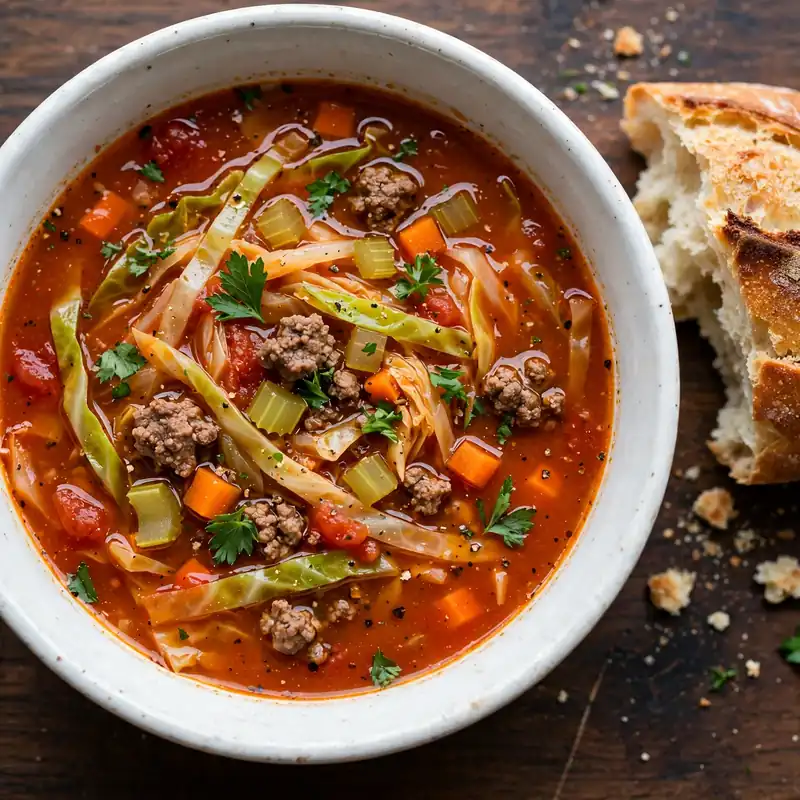
A pot of cabbage soup done properly is thicker than most soups but lighter than a stew, with a broth that tastes like it has been going all afternoon even when it’s been on the stove for 40 minutes. The cabbage holds its shape better than you might expect from a vegetable that looks so fragile when raw; it softens into the broth without becoming mushy and adds a faint, almost sweet background note that keeps the tomato-forward broth from tasting sharp or flat.
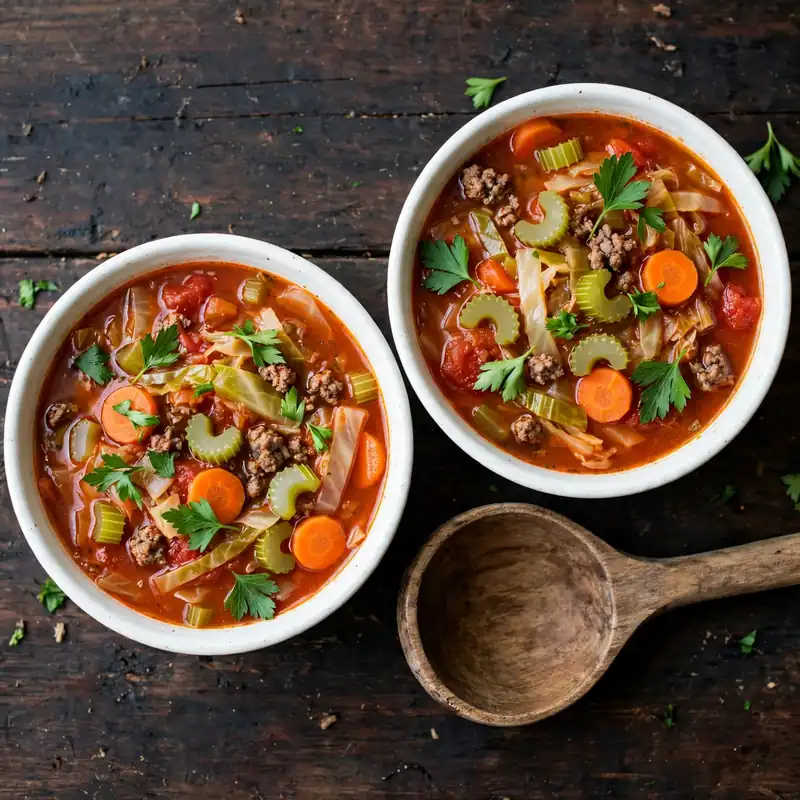
This cabbage soup recipe uses browned ground beef, diced onion, garlic, carrots, celery, and a full head of green cabbage simmered in a seasoned tomato and beef broth base. It’s a complete, filling meal in a single pot that serves 6 to 8 generously, stores for 5 days in the refrigerator and improves noticeably the next day, and freezes well enough to make in a double batch. The method is simple: brown the beef, build the aromatics, add everything else, and let the pot do the rest over medium heat while the kitchen fills with the smell of something genuinely worthwhile.
Why You’ll Love This Cabbage Soup
- Filling without being heavy. Ground beef adds substantial protein and the cabbage adds real bulk, but the tomato broth keeps the soup light enough to eat a full bowl without feeling weighed down afterward the way a cream-based soup might.
- Broth that tastes genuinely developed. Browning the beef and caramelizing the tomato paste before the liquid goes in produces a broth with savory depth that a simple boiled version never achieves, even with the same ingredients and the same simmer time.
- One pot, minimal cleanup. Every component from the first browned beef through the finished bowl happens in a single Dutch oven; there’s nothing extra to wash except ladles and bowls.
- Better the second day. The cabbage releases flavor into the broth overnight and the beef absorbs the surrounding tomato and spice base more fully; leftover cabbage soup is one of the more rewarding refrigerator meals in weeknight cooking.
- Economical and genuinely satisfying. A full head of cabbage and 500g of ground beef feed 6 to 8 people generously; the per-serving cost is low and the result is something people actually want to eat rather than something that merely feeds them.
Ingredients You’ll Need
Recipe Timing
| Detail | Info |
|---|---|
| Servings | 6 to 8 |
| Difficulty | Easy |
| Course | Main Course, Starter |
| Cuisine | American, Eastern European-inspired |
| Prep Time | 15 minutes |
| Cook Time | 40 minutes |
| Rest Time | 5 minutes |
| Total Time | 60 minutes |
For the cabbage, a firm, compact head of green cabbage is the right choice for this recipe. Green cabbage holds its shape better than savoy cabbage during the simmer time and produces a cleaner, less bitter flavor contribution to the broth. Choose a head that feels heavy for its size with tightly packed leaves and no soft spots or brown edges. You’ll need approximately half to three quarters of a standard head, which typically weighs around 700 to 800g before trimming. Cut it into rough pieces no larger than 4cm; pieces much larger take significantly longer to reach the right tender consistency and pieces much smaller dissolve into the broth without contributing texture.
For the ground beef, an 80/20 lean-to-fat ratio produces the most flavorful broth because the rendered fat carries the spice and tomato compounds through the surrounding liquid. The fat also provides the richness that keeps this soup tasting substantial rather than watery despite the high vegetable content. Drain most of the fat after browning, leaving a thin layer to sauté the aromatics.
For the broth, low-sodium gives you full control over seasoning as you go. The combination of beef broth and tomatoes produces a richer, more developed base than tomatoes and water alone, and the beef broth reinforces the depth of the browned ground beef throughout the soup.
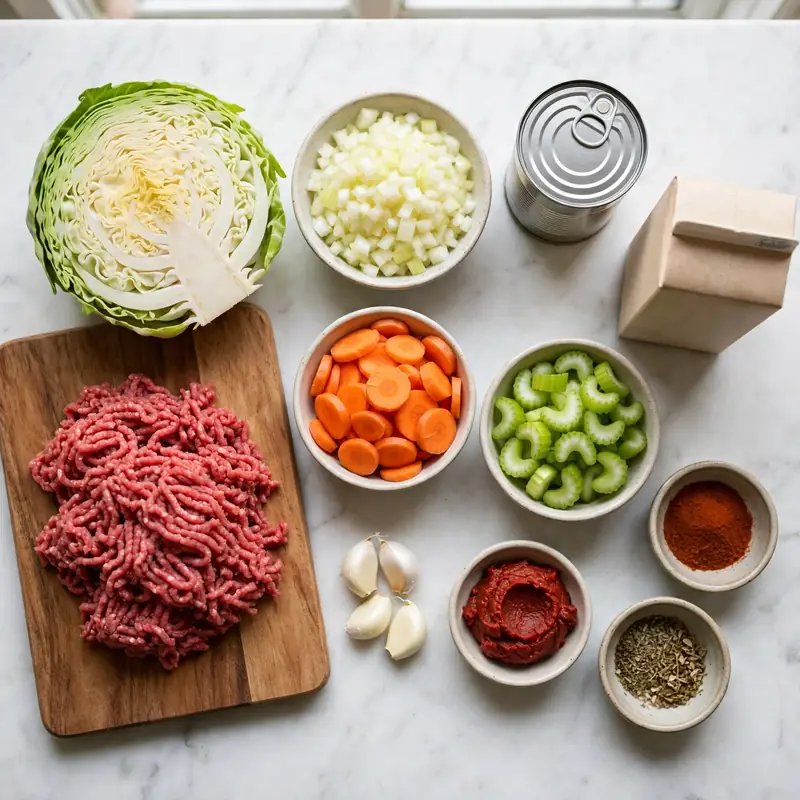
- 500g (about 1 lb) ground beef, 80/20 — the primary protein and flavor base; food safety note: ground beef must reach an internal temperature of 71°C (160°F) before consuming
- 1 tablespoon olive oil — for the initial browning if needed; ensures even contact with the pan
- 1 large yellow onion, diced — the aromatic foundation; softens into the broth and adds savory sweetness
- 3 medium carrots, peeled and sliced into 5mm rounds — adds natural sweetness, color, and a vegetable body that holds up through the full simmer
- 3 celery stalks, sliced — adds a subtle herbal depth and slight bitterness that balances the tomato base
- 4 garlic cloves, minced — adds savory depth; added after the onion to prevent burning
- 2 tablespoons tomato paste — caramelized in the pot before the liquid goes in for a concentrated, deeper tomato flavor than the canned tomatoes alone provide
- 1 can (400g/14 oz) diced tomatoes, with juice — adds body, acidity, and tomato texture to the broth; include all the juice
- 960ml (about 4 cups) low-sodium beef broth — the primary liquid base; low-sodium gives control over the finished salt level
- 700g (about 1.5 lbs or 3/4 of a medium head) green cabbage, core removed and cut into rough 3 to 4cm pieces — the signature vegetable; added after the broth to retain some texture through the simmer
- 1 teaspoon ground cumin — adds warm earthiness that complements the beef and tomato base
- 1/2 teaspoon smoked paprika — a faint smoky background note that adds complexity without being identifiable as a single spice
- 1/2 teaspoon dried thyme — a subtle herbal anchor for the broth
- 1/4 teaspoon red chili flakes — adds mild background warmth; adjust to taste
- 1 tablespoon Worcestershire sauce — adds a savory, slightly sweet umami depth; look for a non-seafood variety if serving to those with fish allergies
- Salt and freshly ground black pepper — season in layers throughout
- Fresh flat-leaf parsley, roughly chopped — added at the end and at serving for brightness and color
Allergen and Dietary Disclosure
This cabbage soup contains gluten potentially from the Worcestershire sauce (some brands contain malt vinegar derived from barley) and possibly from the beef broth depending on brand additives. The soup is naturally dairy-free and egg-free as written. Verify both labels if gluten sensitivity is a concern.
For gluten-free: use a certified gluten-free Worcestershire sauce and a labeled gluten-free beef broth. All other ingredients in the recipe are naturally gluten-free; no other changes are needed.
For vegetarian: omit the ground beef entirely and replace the beef broth with an equal quantity of good-quality vegetable broth. Add one 400g can of white beans or chickpeas, drained and rinsed, along with the cabbage for protein and bulk. The method stays identical from the aromatics step onward; sauté the onion, carrot, and celery in olive oil for 6 to 7 minutes before adding the garlic and tomato paste.
For lower sodium: use unsalted beef broth, no-salt-added canned tomatoes, and a low-sodium Worcestershire sauce. Season the finished soup gradually with a small amount of fine salt rather than seasoning throughout. The spices and Worcestershire provide enough flavor scaffolding that the sodium reduction doesn’t noticeably flatten the broth.
This recipe has not been tested in a certified allergen-free kitchen and cannot be guaranteed safe for any specific allergy.
Equipment Needed
- Large Dutch oven or heavy-bottomed pot, 7 to 8 quart — cabbage soup generates significant volume once the cabbage is added; it wilts considerably during cooking but still occupies substantial space in the pot before it reduces. A smaller pot makes it difficult to stir without spilling and creates uneven simmering where the edges cool while the center boils.
- Wooden spoon or heat-resistant spatula — for breaking the ground beef into fine, even crumbles during browning and for stirring without scratching the pot surface. A wooden spoon also works well for scraping the caramelized fond from the pot base when the broth is added.
- Sharp chef’s knife and cutting board — cabbage is a dense vegetable and a dull knife requires more pressure to cut through, which compresses the leaves rather than cutting them cleanly and produces uneven pieces that cook at different rates.
- Instant-read thermometer — for verifying the ground beef has reached a safe internal temperature of 71°C (160°F). Ground beef cooked in a pot with surrounding liquid can appear fully browned before the center has reached a safe temperature; a thermometer confirms it.
Step-by-Step Directions
Step 1: Brown the Ground Beef
Heat the olive oil in a large Dutch oven over medium-high heat until it shimmers. Add the ground beef in a single, even layer across the pot base and press it flat. Leave it completely undisturbed for 2 to 3 minutes until a visible caramelized crust forms on the underside, then break it into small crumbles and continue cooking for 4 to 5 more minutes, stirring every 60 to 90 seconds, until no pink remains throughout.
Food safety note: Ground beef must reach an internal temperature of 71°C (160°F) throughout before it is safe to consume. Verify with an instant-read thermometer before proceeding.
Drain the excess fat from the pot, leaving a thin layer of approximately 1 tablespoon behind to sauté the aromatics. Removing excess fat prevents the finished broth from being greasy; the small amount left ensures the vegetables have enough fat to cook properly rather than dry-scorching.

Chef’s Note: Leaving the beef undisturbed for the first 2 to 3 minutes, rather than stirring from the start, allows a proper caramelized crust to form on the contact side. That crust carries Maillard reaction flavor compounds that dissolve into the broth when liquid is added and give the finished soup its savory backbone. Ground beef stirred constantly from the start produces a grey, steamed result with a noticeably flatter-tasting broth.
Step 2: Soften the Aromatics
Reduce the heat to medium. Add the diced onion, sliced carrots, and sliced celery to the pot with the browned beef. Cook, stirring every 2 to 3 minutes, for 6 to 7 minutes until the onion is fully soft and translucent with pale golden edges, the carrots have lost their raw brightness, and the celery looks glossy and slightly softened at its outer edges. Add the minced garlic and stir continuously for 60 seconds until the sharp raw smell gives way to a warm, faintly sweet aroma.
Step 3: Caramelize the Tomato Paste and Add Spices
Push the beef and vegetable mixture to the sides of the pot, creating a small clear space in the center. Add the tomato paste to that bare center section and let it sit without stirring for 60 to 90 seconds until it darkens from bright red to a concentrated brick-red color. Stir the paste through the beef and vegetables. Add the cumin, smoked paprika, dried thyme, and red chili flakes directly to the mixture and stir for 60 seconds, letting the spices toast briefly in the fat before any liquid is added.
Chef’s Note: The combination of caramelizing the tomato paste against the hot pan and blooming the spices in the remaining fat before adding the broth produces two sequential flavor improvements that together account for the soup’s depth. Tomato paste that goes directly into liquid without the caramelization step tastes noticeably sharper and more one-dimensional; spices added directly to water or broth without fat contact produce a flatter, less integrated spice presence throughout the finished soup.
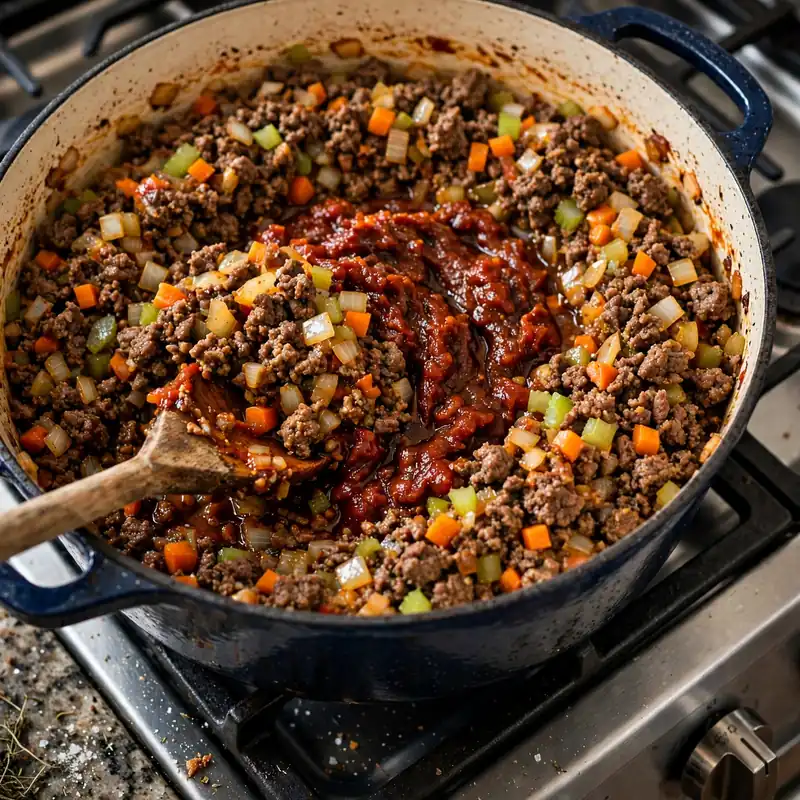
Step 4: Add Broth and Tomatoes
Pour the beef broth into the pot in a steady stream while stirring, using the wooden spoon to scrape any browned bits from the base of the pot as the liquid loosens them. Add the can of diced tomatoes with all their juice and the Worcestershire sauce. Stir everything together and bring the pot to a gentle boil over medium-high heat. Taste the broth at this point before the cabbage goes in and adjust salt and pepper; it should taste well-seasoned and slightly more assertive than you want in the finished bowl, since the cabbage will absorb and mellow the seasoning as it cooks.
Step 5: Add the Cabbage and Simmer
Add all the cut cabbage to the pot. The pieces will sit above the broth level initially and the pot will look very full; this is normal. Stir the cabbage down into the liquid as much as possible, place a lid slightly ajar on the pot, and reduce the heat to medium-low. The cabbage wilts dramatically within the first 5 minutes as it absorbs heat, dropping significantly below the pot rim. Simmer for 25 to 30 minutes total, stirring every 5 to 6 minutes, until the cabbage is fully tender when pressed with a spoon, the carrots are cooked through without being soft enough to mash, and the broth has deepened in color and concentration.
Chef’s Note: Adding the cabbage to an already-simmering, seasoned broth rather than to cold or just-boiled water is what keeps it from tasting bland in the finished soup. The cabbage begins absorbing the seasoned, beef-enriched broth from its first contact with the liquid, which means the finished pieces carry flavor through to their interior rather than tasting of plain cooked vegetable with a flavorful broth around them.

Step 6: Final Seasoning and Rest
Turn off the heat. Stir in the fresh parsley and taste the soup one final time, adjusting salt, pepper, and any spices at this stage. The soup at this point should taste complete: savory and slightly smoky from the beef and smoked paprika, with a clean tomato acidity that doesn’t dominate, and a gentle herbal note from the thyme and parsley. Let the pot rest uncovered for 5 minutes before serving; the residual heat continues to develop the flavors slightly and the broth settles into a more uniform consistency as it drops from a hard simmer to a resting temperature.
Common Mistakes and Troubleshooting
| Problem | Cause | Solution |
|---|---|---|
| Broth tastes thin and flat | Beef not properly browned, or tomato paste not caramelized | Brown beef until a crust forms before crumbling; caramelize tomato paste against the bare pot for 60 to 90 seconds before stirring in |
| Cabbage mushy rather than tender | Simmer time too long, or cabbage cut too small | Cut cabbage into 3 to 4cm pieces; check for doneness at the 20-minute mark and pull from heat when just tender |
| Soup too watery and thin-bodied | Too little tomato paste, or too much broth | Increase tomato paste to 3 tablespoons; simmer uncovered for 8 to 10 additional minutes after the lid is removed to reduce |
| Ground beef not evenly distributed | Beef broken into large chunks during browning | Use a wooden spoon pressed firmly against the pot to break beef into very small, uniform crumbles during the cooking stage |
| Soup tastes bitter | Cabbage overcooked, or too much of the tough outer leaves used | Remove the tough outer leaves before cutting; avoid cooking cabbage beyond the tender stage; taste and add a pinch of sugar to balance if bitterness is noticeable |
| Spices taste raw or separate from the broth | Spices added directly to broth without fat blooming | Always stir spices into the fat in the pot for 60 seconds before adding any liquid; never add them to cold or liquid-covered ingredients |
Variations and Substitutions
- Beef and potato cabbage soup: Add 2 medium Yukon Gold potatoes, peeled and cut into 2cm cubes, along with the cabbage in step 5. Potatoes add bulk and starch to the soup; the starch released during cooking thickens the broth slightly into a more substantial, almost stew-like body. Add an extra 240ml of broth to account for the potatoes’ absorption during the simmer.
- Ground turkey cabbage soup: Replace the ground beef with ground turkey thighs for a lighter but still flavorful version. Turkey thighs have enough fat to brown properly; turkey breast runs dry and produces a significantly less flavorful broth. Increase the smoked paprika to 1 teaspoon to compensate for turkey’s milder flavor and add a teaspoon of soy sauce to the broth for additional savory depth.
- Spicy cabbage soup: Double the red chili flakes to 1/2 teaspoon and add one finely diced jalapeño alongside the onion in step 2. The jalapeño adds fresh heat that the dried chili alone doesn’t produce; together they create a layered warmth that builds gradually rather than hitting immediately. Serve with a small spoonful of plain yogurt for those who want to cool the heat at the table.
- Vegetarian cabbage soup: Omit the ground beef and use vegetable broth. Sauté the onion, carrots, and celery in 2 tablespoons of olive oil for 7 to 8 minutes before adding the garlic and tomato paste. Add one 400g can of white beans or chickpeas, drained and rinsed, with the cabbage. The beans provide protein, body, and a slightly creamy texture that makes the vegetarian version satisfying rather than sparse.
- Cabbage soup with lemon: Squeeze the juice of half a large lemon into the finished soup just before serving, stirring it through off the heat. The lemon juice adds a brightness that makes the tomato and beef flavors more vivid and prevents the soup from tasting heavy or one-dimensional on the palate. This simple addition works particularly well with the vegetarian version.
- Slow cooker cabbage soup: Brown the beef and sauté the aromatics with the tomato paste and spices on the stovetop through step 3. Transfer to a slow cooker, add the broth, canned tomatoes, Worcestershire sauce, and cabbage. Cook on low for 6 to 7 hours or high for 3 to 4 hours. The slow cooker produces a deeply mellow broth and very soft cabbage; stir in the fresh parsley just before serving.
Serving Suggestions
- Ladle directly into deep, warmed bowls and serve while the broth is steaming. Cabbage soup cools faster than most because of the high vegetable content that draws heat from the broth; a warmed bowl extends the optimal eating temperature by several minutes.
- Thick-cut crusty bread or a warm sourdough roll alongside is the most natural pairing: the bread soaks up the tomato-forward broth at the bottom of the bowl and turns each bite into something more complete than the soup alone.
- A dollop of full-fat sour cream or plain Greek yogurt on top of each bowl adds a cool, tangy contrast to the savory, slightly smoky broth and provides a visual contrast against the deep red-orange color of the soup.
- A small dish of sliced crusty baguette rounds and a side salad of bitter greens dressed simply with lemon and olive oil make this a composed, balanced meal without requiring any additional cooking.
- For a hearty family dinner, serve alongside baked potatoes topped with sour cream and fresh chives. Both the soup and the potato are forgiving of timing variations and can hold at temperature while the table is set without losing quality.
- Pair with cold sparkling water with lemon or a warm cup of black tea. Both provide a clean contrast to the full-bodied broth and make the fresh parsley garnish taste noticeably brighter.

Tips for the Best Results
- Brown the beef without stirring for the first 2 to 3 minutes. The caramelized crust on the underside of the beef before it gets broken into crumbles is where the broth’s savory depth comes from. Every time you stir the beef before that crust has formed, you’re trading flavor for convenience. Set a timer, resist the urge to stir, and the broth will reward you.
- Caramelize the tomato paste before adding the broth. This takes 90 seconds and produces a measurably richer, more complex tomato flavor in the finished broth. Tomato paste added directly to liquid tastes sharp and raw-edged; paste caramelized against a hot, dry section of the pot for 90 seconds develops a sweeter, rounder depth that integrates cleanly into the beef and vegetable base.
- Season the broth before the cabbage goes in. Cabbage absorbs surrounding liquid as it cooks, which dilutes the salt level in the broth. Season assertively, to a point where the broth tastes slightly saltier than you want in the finished bowl, before the cabbage goes in. The finished soup will reach exactly the right level after 25 minutes of the cabbage absorbing and mellow the seasoning.
- Don’t overcook the cabbage. Tender cabbage with a slight texture remaining is far better than soft, fallen-apart pieces that dissolve into the broth without contributing any bite. Check at the 20-minute mark; the cabbage is ready when a piece pressed against the side of the pot yields without resistance but doesn’t mush or shred on contact.
- Add fresh parsley at the very end, off the heat. Parsley added to simmering soup loses its bright green color and most of its fresh herbal flavor within 2 minutes; added off the heat just before serving, it stays vibrantly green and delivers a clean, grassy brightness that the slow-cooked vegetables and beef can’t provide.
Storage Tips
Refrigerator
Cabbage soup keeps in a sealed container in the refrigerator for up to 5 days. The flavor genuinely improves on day 2 as the cabbage continues to release its natural sugars into the broth and the spices fully integrate. The broth may thicken slightly overnight as the cabbage starch and natural sugars concentrate; stir in a splash of extra broth or water while reheating to restore the original consistency. Store without the fresh parsley garnish; add it fresh each time the soup is served.
Freezer
Cabbage soup freezes well for up to 3 months. Cool completely before transferring to freezer-safe containers or bags. The cabbage softens further after freezing and thawing, becoming very tender in a way that some people prefer; the broth and beef hold their flavor through the freeze-thaw cycle without any quality compromise. Thaw overnight in the refrigerator before reheating. Freeze in individual serving portions for the most practical weekday lunch option.
Reheating
The stovetop produces the best reheating result. Pour the soup into a saucepan over medium heat, add a splash of beef broth or water to loosen any thickening that occurred during storage, and stir every 2 minutes until a steady simmer appears across the surface. This takes 7 to 9 minutes from refrigerator temperature. Microwave reheating at 70% power in 90-second intervals with stirring between each works well for single portions; the cabbage and broth reheat evenly without the cabbage becoming noticeably softer than the stovetop method.
Make-ahead note: Cabbage soup is one of the most practical batch-cooking recipes available. A double batch on Sunday evening provides lunches or light dinners for the full week with no quality compromise from day 1 to day 5. The soup holds so well that day 4 leftovers are genuinely worth looking forward to rather than being eaten out of obligation.
Nutrition Information
Per serving, approximately one bowl (1/7 of the recipe), bread and sour cream not included:
| Nutrient | Amount |
|---|---|
| Calories | 255 kcal |
| Protein | 20g |
| Total Carbohydrates | 18g |
| Dietary Fiber | 5g |
| Total Sugar | 9g |
| Total Fat | 12g |
| Saturated Fat | 4g |
| Cholesterol | 50mg |
| Sodium | 420mg |
| Vitamin C | 52mg |
| Calcium | 75mg |
| Iron | 3.1mg |
| Potassium | 680mg |
Nutrition values are approximate and may vary based on beef fat content, broth brand, and portion sizes.
Why This Recipe Works
The flavor architecture of this cabbage soup depends on three sequential browning events that each contribute something the others cannot. The first is the ground beef sear. When raw ground beef contacts a hot, oiled pot surface and is left undisturbed, the proteins and trace sugars at the contact points undergo Maillard reactions at temperatures above approximately 150°C, producing hundreds of new aromatic compounds associated with the deeply savory flavor of properly browned meat. Those compounds are fat-soluble; they transfer into the rendered fat in the pot and disperse through the broth once liquid is added. Ground beef stirred constantly from the start never reaches the surface temperatures required for these reactions and produces a noticeably milder, less complex broth baseline.
The second browning event is the caramelization of the tomato paste against the dry hot pot base. Tomato paste contains approximately 30% total solids including significant concentrations of glutamates, sugars, and amino acids. When that concentrated mixture contacts a hot, dry surface, its water evaporates rapidly and the remaining solids reach temperatures at which sugars caramelize and amino acids undergo partial Maillard reactions, producing a set of flavor compounds associated with a roasted, slightly sweet, savory tomato flavor. The same tomato paste stirred directly into liquid never reaches those temperatures because the surrounding water caps the temperature at 100°C regardless of stove heat.
The third event is the blooming of the dried spices in the fat. Cumin, smoked paprika, and thyme all contain significant quantities of fat-soluble aromatic compounds, including terpenes, aldehydes, and phenols, that dissolve into fat at cooking temperatures but dissolve only partially into water. Stirring these spices into the remaining fat in the pot for 60 seconds before any liquid goes in releases the maximum quantity of those aromatic compounds into the fat, which then carries them through the entire broth when the liquid is added. Spices stirred directly into broth release their water-soluble flavor fractions only; the fat-soluble fraction, which carries much of the characteristic warm, complex spice aroma, remains largely unavailable.
Cabbage as a soup ingredient produces a specific textural and flavor evolution during the simmer. Raw cabbage contains a relatively high concentration of sulfur-containing glucosinolates that produce a sharp, slightly bitter flavor when the vegetable is first cut. As the cabbage heats in the broth, those compounds break down and volatilize, and the cell walls soften as their pectin structure loosens in the warm liquid. The residual sugars in the cabbage, primarily glucose and fructose, leach gradually into the surrounding broth during the 25-minute simmer, adding a faint, clean sweetness that softens the tomato’s acidity without requiring any added sugar. This is why cabbage soup broth tastes sweeter and rounder after a full simmer than the broth alone tasted before the cabbage went in.
I’ve tested this recipe with the cabbage added at the start alongside the aromatics, mid-way through the simmer, and added after the broth had already reduced for 15 minutes. The late-addition version, which is the method described here, consistently produces the best result: the cabbage is tender without being soft, the glucosinolate bitterness has fully dissipated, and the flavor contribution is cleanly sweet without being heavy or overcooked. Early-addition cabbage is mushier and the broth is noticeably more bitter from prolonged cooking of the glucosinolates.
Frequently Asked Questions
Can I make cabbage soup ahead of time?
Yes, and it’s one of the best soups for advance preparation. The flavor genuinely improves after 24 hours as the cabbage releases sugars into the broth, the spices integrate more fully, and the beef absorbs the surrounding tomato and vegetable flavors. Make a full batch, cool completely, and refrigerate for up to 5 days or freeze for up to 3 months. Reheat on the stovetop with a splash of extra broth to restore the original consistency; add fresh parsley only when serving.
Why does my cabbage soup taste bitter?
Bitterness in cabbage soup almost always comes from overcooked cabbage. Green cabbage contains sulfur compounds called glucosinolates that produce a bitter, slightly harsh flavor when they break down from extended high-heat cooking. The solution is to add cabbage only after the broth is already simmering, limit the simmer to 25 to 30 minutes, and pull the pot off the heat the moment the cabbage reaches a tender but not mushy consistency. A small pinch of sugar stirred in at the end can correct mild bitterness if you catch it too late.
Can I use savoy cabbage instead of green cabbage?
Yes, but adjust the simmer time. Savoy cabbage has looser, more delicate leaves than green cabbage and cooks through in about 15 to 18 minutes rather than 25 to 30. Add it at the same point in the recipe but check for doneness starting at the 12-minute mark. The flavor of savoy cabbage is slightly milder and less sweet than green cabbage, which produces a subtly more delicate broth; neither version is better, just different. The texture of savoy cabbage in the finished soup is softer overall.
How do I know when the cabbage soup is done?
The soup is done when the cabbage pieces are fully tender throughout when pressed with the back of a spoon, yielding without resistance but still holding their shape as distinct pieces rather than dissolving into threads. The carrots should be completely cooked through but firm enough to retain a slight bite at the center. The broth should taste complex and fully developed rather than sharp or raw-spiced; a broth that still has sharp edges from the tomato or spices needs 3 to 4 more minutes of simmering. Taste the broth before ladling and adjust salt and pepper as the final check.
Can I make this soup without meat?
Yes. Replace the ground beef with one 400g can of white beans or chickpeas, drained and rinsed, and use vegetable broth instead of beef broth. Sauté the onion, carrots, and celery in 2 tablespoons of olive oil for 7 to 8 minutes before adding the garlic and tomato paste, then proceed exactly as written from step 3. The beans provide protein and starch that thickens the broth slightly, and the caramelized tomato paste and bloomed spices still produce a deeply flavorful base without the beef.
Is cabbage soup gluten-free?
The soup is naturally gluten-free with two caveats: some Worcestershire sauce brands contain malt vinegar derived from barley, and some packaged beef broths include gluten-containing additives or are processed in shared facilities with wheat. Check both labels specifically for a gluten-free certification if celiac disease or significant gluten sensitivity is a concern. All other ingredients, including the cabbage, beef, tomatoes, vegetables, and spices, are naturally gluten-free.
Can I add more vegetables to this soup?
Yes, and it’s one of the more flexible soups for additional vegetables. Diced parsnip, cubed sweet potato, sliced zucchini, or a handful of frozen corn all work well added with the cabbage. Keep total vegetable additions to about 2 additional cups combined to avoid diluting the broth or extending the simmer time significantly beyond what the recipe calls for. Very watery vegetables like zucchini release additional moisture during cooking; if adding them, add an extra tablespoon of tomato paste to the step 3 caramelization to compensate.

Conclusion
Cabbage soup earns its reputation as a practical, satisfying meal because the method behind it is actually sound rather than simply convenient. The three browning stages, beef sear, tomato paste caramelization, and spice blooming, each produce specific flavor compounds that accumulate in the broth and make the finished soup taste developed and complete. Skip any of them and the soup is still edible; include all of them and it tastes like something made with genuine care.
The overnight improvement is real and worth planning for. A pot of cabbage soup made on a Sunday and eaten through the week gets better each day as the broth concentrates and the vegetable flavors continue to meld. Very few recipes improve that reliably with time, and even fewer cost this little to make.
If you loved this recipe, save it to your cozy soups and easy weeknight dinner Pinterest board so you can find it easily later. For more healthy recipes and daily food inspiration, follow TheCookingVibes on Pinterest.
Hearty Cabbage Soup
Ingredients
Equipment
Method
- Heat olive oil in a large Dutch oven over medium-high heat. Add ground beef in a flat even layer. Cook undisturbed 2 to 3 minutes until a caramelized crust forms on the underside, then crumble and cook until no pink remains throughout. Confirm internal temperature of 71°C (160°F). Drain excess fat, leaving about 1 tablespoon.
- Reduce heat to medium. Add diced onion, carrots, and celery to the pot. Cook 6 to 7 minutes, stirring occasionally, until onion is soft and translucent. Add garlic and stir 60 seconds until fragrant.
- Push the beef and vegetables to the sides and add tomato paste to the bare center of the pot. Cook 60 to 90 seconds until darkened to brick-red, then stir through. Add cumin, smoked paprika, thyme, and chili flakes. Stir for 60 seconds until the spices smell toasted.
- Pour in beef broth, scraping any browned bits from the base. Add diced tomatoes with all their juice and Worcestershire sauce. Stir to combine and bring to a gentle boil. Taste and season with salt and pepper.
- Add all the cabbage pieces to the pot. Stir down into the liquid as much as possible. Cover with lid slightly ajar and reduce heat to medium-low. Simmer 25 to 30 minutes, stirring every 5 to 6 minutes, until cabbage is fully tender and carrots are cooked through.
- Turn off heat. Stir in fresh parsley. Taste and adjust seasoning. Rest 5 minutes before ladling into warmed bowls.
Notes
- Brown the beef undisturbed for the first 2 to 3 minutes; the caramelized crust is the primary source of the broth’s savory depth.
- Season the broth assertively before the cabbage goes in; the cabbage absorbs and mellows the seasoning during the simmer.
- The soup improves noticeably after 24 hours in the refrigerator; make it a day ahead when possible.
- For gluten-free, use a certified gluten-free Worcestershire sauce and a labeled gluten-free beef broth.