
Hearty Lasagna Soup — All the Flavor, One Pot
There is a specific comfort that comes from a bowl of lasagna, the layered richness of the meat sauce, the soft pasta, the melted cheese sitting heavy and satisfying at the center of the plate. Lasagna soup captures every one of those flavors without the assembly, the layering, or the hour of baking. You get the same deeply seasoned tomato-beef broth, the same pasta, and the same three-cheese finish, but it all comes together in one pot in under an hour. On a Tuesday night, that distinction matters considerably.
This lasagna soup recipe builds a bold, herb-forward tomato broth around browned ground beef, broken lasagna noodles cooked directly in the pot, and a ricotta-mozzarella-Parmesan mixture spooned into each bowl at serving. The cheese blend melts slowly into the hot broth as you eat, which recreates the layered richness of the original dish in a format that’s genuinely faster to make and considerably easier to clean up after.

Why You’ll Love This Lasagna Soup
- Lasagna flavor without the assembly. The broth carries the same basil-oregano-garlic tomato depth as a classic meat sauce, and the three-cheese topping recreates the filling layer. No layering, no baking dish, no 90-minute oven time.
- Noodles cooked in the broth itself. The pasta releases starch into the soup as it cooks, which slightly thickens the broth and creates a texture closer to actual lasagna than soup with pasta added separately.
- Ricotta spooned in at the table. Keeping the cheese blend separate until serving lets everyone control how much they get, and the ricotta stays creamy rather than dissolving into the broth during cooking.
- One pot, start to finish. From browned beef to finished bowl, everything happens in a single Dutch oven. Active cooking time is about 20 minutes; the rest is simmering.
- Stores and reheats beautifully. The broth thickens overnight into something closer to a pasta sauce, which makes leftover lasagna soup one of the better next-day lunches in this category of recipes.

Ingredients You’ll Need
Recipe Timing
| Servings | 6 |
| Difficulty | Easy |
| Course | Main Course |
| Cuisine | Italian-American |
| Prep Time | 15 minutes |
| Cook Time | 35 minutes |
| Rest Time | 5 minutes (off heat before serving) |
| Total Time | 55 minutes |
For the ground beef, an 80/20 lean-to-fat ratio produces a richer, more flavorful broth than extra-lean beef because the fat that renders during browning carries flavor compounds into the cooking base. If you prefer a leaner broth, use 90/10 and add an extra tablespoon of olive oil to the pot after draining to maintain enough fat for the aromatics to cook properly.
For the lasagna noodles, standard dry lasagna sheets broken into rough 2 to 3-inch pieces work well. The irregular shapes and jagged edges cook unevenly in a way that actually improves the texture, giving you some slightly thicker pieces that hold up to the broth and some thinner edges that soften into something almost silky. No-boil lasagna noodles also work; they cook slightly faster, so start checking for doneness at the 10-minute mark rather than 12.
For the tomatoes, use whole canned San Marzano tomatoes if they’re available and crush them by hand directly over the pot. The flesh is meatier and less watery than standard diced canned tomatoes, and the juice from the can is sweet and deeply flavored. Crushed canned tomatoes are the most convenient substitute and produce a smooth, consistent broth with no extra work.
The Soup Base:
- 500g (about 1 lb) ground beef, 80/20 — the primary protein and the source of the fat that builds the browned, savory base of the broth; food safety note: raw ground beef must reach an internal temperature of 71°C (160°F) before consuming
- 2 tablespoons olive oil — for sautéing the aromatics; also prevents the beef from sticking during browning
- 1 medium yellow onion, finely diced — the aromatic base; softens into the broth and adds sweetness
- 4 garlic cloves, minced — essential for a genuine Italian-American flavor profile; fresh garlic contributes a depth that garlic powder can’t replicate in this context
- 2 tablespoons tomato paste — caramelized briefly in the pot before liquid is added; this one step significantly deepens the tomato flavor and adds a subtle sweetness
- 1 can (400g/14 oz) crushed tomatoes — the primary tomato body of the broth; San Marzano tomatoes crushed by hand are the best version
- 1 can (400g/14 oz) diced tomatoes, with juice — adds texture contrast; the small tomato pieces soften during simmering and become part of the broth
- 1 litre (about 4.5 cups) low-sodium beef broth — the cooking liquid; beef broth amplifies the ground beef flavor; chicken broth works as a lighter substitute
- 1 teaspoon dried basil — the signature herb in a lasagna-style sauce; along with oregano, it defines the overall flavor character
- 1 teaspoon dried oregano — earthy and slightly bitter, it balances the sweetness of the tomatoes
- 1/2 teaspoon dried thyme — adds background herbal complexity
- 1 teaspoon garlic powder — reinforces the fresh garlic flavor through the long simmer
- 1/2 teaspoon onion powder — subtle but fills out the savory depth of the broth
- 1/2 teaspoon red pepper flakes — optional; adjust to taste or omit entirely for a mild broth
- 1 teaspoon fine salt, plus more to taste — season in layers; the pasta and cheese both add sodium, so taste before the final adjustment
- 1/2 teaspoon black pepper — add more at the end if needed
- 200g (about 7 oz) dry lasagna noodles, broken into 2 to 3-inch pieces — cooked directly in the broth, releasing starch and tying the dish together
Three-Cheese Topping (mixed together separately):
- 250g (about 1 cup) whole-milk ricotta — the creamy, mild base of the topping; whole-milk ricotta is noticeably creamier and less grainy than part-skim
- 120g (about 1 cup) mozzarella, shredded — melts into the broth in long, stretchy threads; freshly shredded from a block melts better than pre-shredded
- 40g (about 1/3 cup) Parmesan, freshly grated — sharp and salty, it sharpens the overall cheese flavor and prevents the topping from tasting too mild
- 1 tablespoon fresh basil, finely chopped — stirred into the cheese mixture for a fresh herb note
- Pinch of salt and black pepper — seasons the cheese topping so it doesn’t taste flat against the bold broth

Allergen and Dietary Disclosure
This lasagna soup contains gluten (dry lasagna noodles) and dairy (ricotta, mozzarella, Parmesan). It also contains beef, which may be a concern for some dietary preferences.
For gluten-free: use certified gluten-free lasagna noodles or swap to gluten-free penne or rigatoni. The cooking time may vary by a few minutes depending on the brand; test for tenderness from the 10-minute mark. Also verify that your beef broth and canned tomatoes are certified gluten-free, as some contain additives with gluten.
For dairy-free: replace the ricotta with a plain, thick dairy-free cashew cream or a store-bought dairy-free ricotta alternative. Omit the mozzarella or replace with a dairy-free mozzarella shred. Skip the Parmesan or use a nutritional yeast-based alternative sprinkled over the top. The broth itself contains no dairy, so the soup is still creamy and flavorful without the cheese topping.
For lighter calories: use 90/10 ground beef, reduce the ricotta to a smaller spoonful per bowl, and serve with a green salad rather than bread. The broth’s flavor doesn’t depend on the cheese topping; it stands on its own.
This recipe has not been tested in a certified allergen-free kitchen and cannot be guaranteed safe for any specific allergy.
Equipment Needed
- Large Dutch oven or heavy-bottomed pot, 6 to 7 quart — this recipe generates significant volume once the broth, tomatoes, and noodles are all in the pot. A smaller pot will work but the noodles will crowd and stick together rather than floating freely. A Dutch oven also holds heat evenly, which matters for the simmering stage where the noodles are cooking.
- Wooden spoon or heat-resistant spatula — for breaking up the ground beef during browning and for stirring the broth without scratching the pot. Breaking the beef into fine, even crumbles during cooking means better distribution through every bowl rather than large chunks concentrated in some servings and absent from others.
- Box grater or Microplane — for fresh-grating the Parmesan and shredding the mozzarella block. Pre-shredded mozzarella contains a starch coating that slows melting; freshly shredded integrates into the broth much more cleanly.
- Small mixing bowl — for combining the three-cheese topping separately from the soup. Keeping the cheese mixture at room temperature while the broth cooks means it loosens slightly and spoons into the bowl more cleanly.
Step-by-Step Directions
Step 1: Brown the Ground Beef
Heat 1 tablespoon of olive oil in a large Dutch oven over medium-high heat until it shimmers. Add the ground beef and spread it across the base of the pot in a thin, even layer. Let it cook undisturbed for 2 to 3 minutes until the bottom side develops a visible dark brown crust, then begin breaking it apart into small, irregular crumbles. Continue cooking for another 4 to 5 minutes, stirring every minute, until no pink remains anywhere in the pot and the beef smells deeply savory and caramelized rather than steamy and grey.
Food safety note: Ground beef must reach an internal temperature of 71°C (160°F) throughout before it is safe to eat. The color and texture cue above is a reliable visual indicator at this quantity and heat level, but a thermometer confirms it definitively.
Drain any excess fat from the pot, leaving behind about 1 tablespoon to cook the aromatics in. If your beef was very lean and produced little fat, add the remaining tablespoon of olive oil at this point.
Chef’s Note: The difference between grey, steamed ground beef and properly browned, caramelized beef is one of the most impactful flavor decisions in this recipe. Don’t move the beef around for the first 2 to 3 minutes; let the crust form. That browned surface is where most of the savory depth in the finished broth comes from.
Step 2: Build the Aromatic Base
Reduce the heat to medium. Add the diced onion to the pot and cook in the remaining beef fat for 5 to 6 minutes, stirring occasionally, until the onion turns fully soft and slightly golden at the edges. Add the minced garlic and stir for 60 seconds until the aroma shifts from sharp and raw to warm and toasted. The garlic should smell nutty, not acrid.
Step 3: Caramelize the Tomato Paste
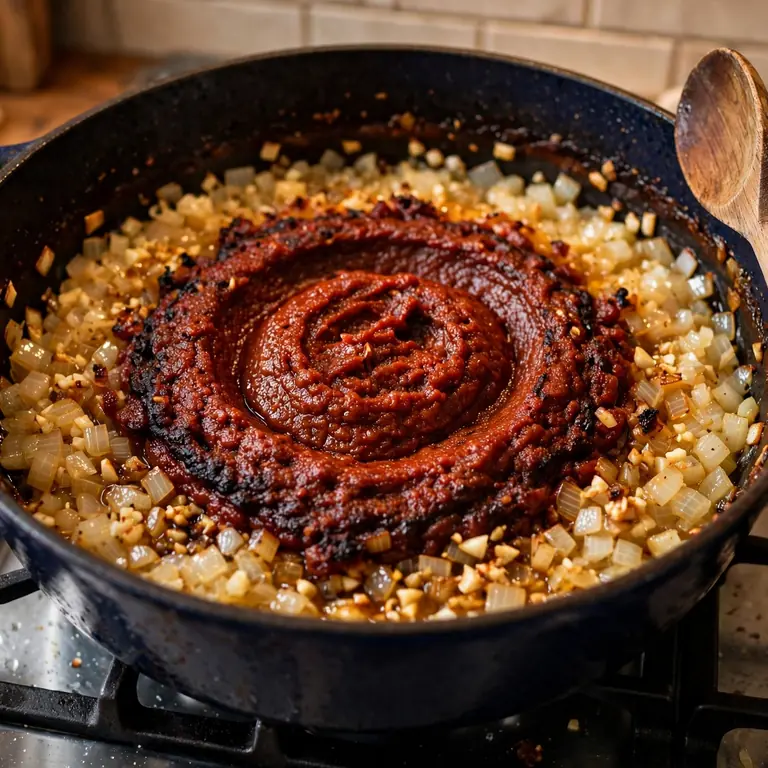
Push the onions and garlic to the edges of the pot and add the tomato paste directly onto the bare center of the hot surface. Let it sit undisturbed for 60 to 90 seconds until the paste darkens from a bright red to a deep brick-red and smells slightly sweet. Stir it through the onions and garlic and cook everything together for another 30 seconds.
Chef’s Note: Caramelizing tomato paste in direct contact with the hot pan, rather than just stirring it into the liquid, triggers a Maillard reaction in the tomato sugars that produces a noticeably deeper, sweeter, more complex tomato flavor than adding raw paste to broth. This 90-second step is one of the most impactful techniques in the entire recipe.
Step 4: Add the Tomatoes and Broth
Pour the crushed tomatoes and diced tomatoes (with all their juice) into the pot and stir to incorporate the caramelized paste and aromatics. Add the beef broth, dried basil, oregano, thyme, garlic powder, onion powder, red pepper flakes, salt, and black pepper. Return the browned beef to the pot if you removed it temporarily. Stir everything together and bring to a steady boil over medium-high heat.
Step 5: Cook the Lasagna Noodles
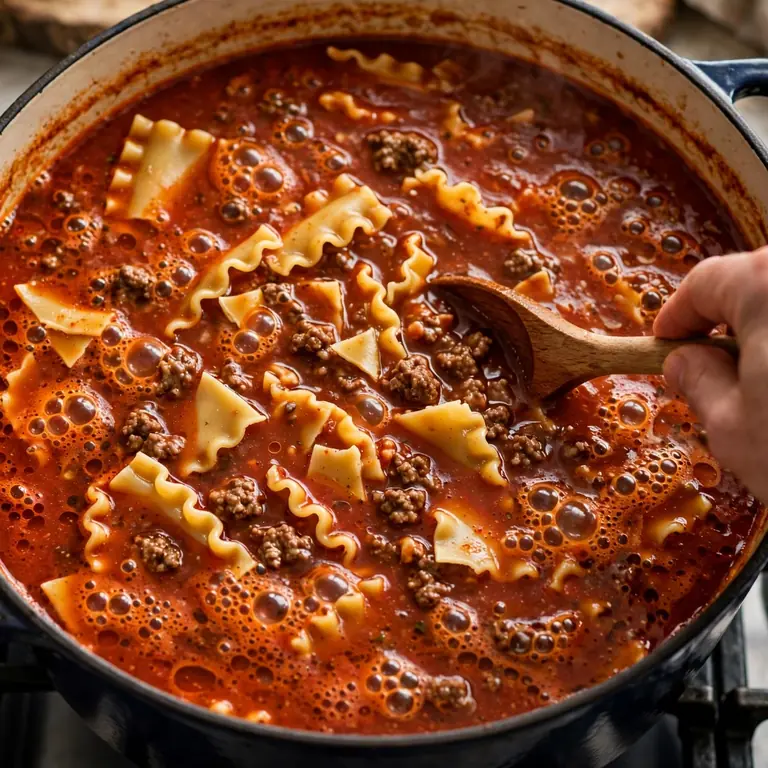
Add the broken lasagna noodle pieces directly to the boiling broth and stir immediately to prevent any pieces from sticking together at the bottom. Reduce the heat to medium and maintain a steady simmer. Cook uncovered for 12 to 15 minutes, stirring every 3 to 4 minutes. The noodles are done when they bend easily, feel uniformly soft all the way through when pressed between two fingers, and have lost any chalky resistance at the center. They will continue softening slightly after the heat is off, so pull them when they are just past al dente.
Chef’s Note: Stirring the noodles regularly during cooking is not optional. Broken lasagna sheets are flat and wide, which means they settle on top of each other and stick together if left undisturbed. A brief stir every few minutes keeps them separated and ensures even cooking throughout the pot.
Step 6: Prepare the Three-Cheese Topping
While the noodles cook, combine the ricotta, shredded mozzarella, grated Parmesan, chopped fresh basil, and a pinch of salt and pepper in a small bowl. Stir until the three cheeses are evenly blended and the mixture has a thick, spreadable consistency. Taste it on its own and adjust the seasoning; it should taste slightly more seasoned than you think necessary because it will dilute slightly when spooned into the hot broth.
Step 7: Season and Rest
Once the noodles are done, turn off the heat. Taste the broth and adjust salt, pepper, and red pepper flakes. The finished broth should taste bold, herby, and deeply tomato-forward. If it tastes flat, it almost always needs more salt. If it tastes sharp or acidic, stir in 1/2 teaspoon of sugar to balance the tomato’s acidity. Let the soup rest for 5 minutes, during which the noodles finish softening and the broth settles.
Step 8: Assemble and Serve
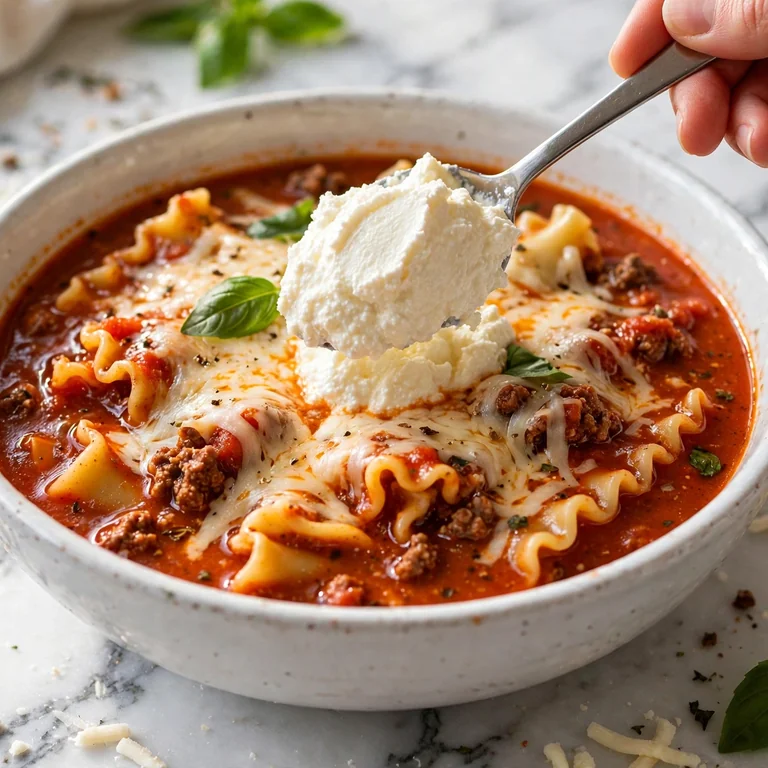
Ladle the soup into deep bowls. Drop a generous spoonful (about 3 to 4 tablespoons) of the ricotta cheese mixture into the center of each bowl and let it sit on top of the broth without stirring it in. Finish with a few extra shreds of mozzarella, a light dusting of Parmesan, and a fresh basil leaf or two. Serve immediately while the cheese is still cold against the hot broth, which creates a temperature contrast that changes slightly with each spoonful as the ricotta warms and melts in.
Common Mistakes and Troubleshooting
| Problem | Cause | Solution |
|---|---|---|
| Noodles stuck together in the pot | Not stirred often enough during cooking, or heat too low to keep them moving | Stir every 3 to 4 minutes while noodles cook; maintain a steady active simmer, not a lazy bubble |
| Broth tastes thin or watery | Tomato paste not caramelized, or broth simmered too briefly | Always caramelize the paste for a full 90 seconds; simmer uncovered to allow some evaporation and concentration |
| Noodles mushy by the time soup is served | Overcooked during simmering, or soup held too long before serving | Pull noodles when just past al dente; they continue softening in residual heat, so build that in |
| Broth too acidic or sharp | High-acid canned tomatoes, or not enough salt | Add 1/2 teaspoon of sugar and stir; taste again after 2 minutes; the sweetness balances the acid without making the broth sweet |
| Ricotta topping watery in the bowl | Part-skim ricotta used, or cheese mixture too cold and wet | Use whole-milk ricotta; drain it briefly through a fine strainer if it looks wet; season the mixture before serving |
| Beef grey and soft rather than browned | Pan too crowded, or beef moved too quickly | Let beef sit undisturbed for the first 2 to 3 minutes; browning requires direct contact with the hot surface without steam interference |
Variations and Substitutions
- Ground turkey version: Replace the ground beef with ground turkey thighs (not breast, which runs dry). Turkey produces a lighter-colored broth that’s slightly less rich; compensate by increasing the tomato paste to 3 tablespoons and adding an extra 1/2 teaspoon of garlic powder to deepen the flavor.
- Vegetarian lasagna soup: Skip the ground beef entirely. Increase the olive oil to 3 tablespoons for sautéing the aromatics, add 1 diced zucchini and 200g of sliced mushrooms along with the onion, and swap the beef broth for a good-quality vegetable broth. The mushrooms contribute enough savory depth to keep the broth from tasting vegetable-light.
- Spicy version: Double the red pepper flakes to 1 full teaspoon and add 1/2 teaspoon of smoked paprika with the dry spices. Serve with sliced pickled jalapeños on the side for guests who want additional heat they can control themselves.
- Extra vegetables: Add a large handful of fresh baby spinach directly to the broth in the last 2 minutes of simmering. It wilts immediately and adds color and nutrition without changing the flavor of the broth noticeably. Diced zucchini or sliced mushrooms added with the onions in step two also work well.
- Gluten-free: Certified gluten-free lasagna noodles or broken gluten-free rigatoni substitute cleanly. Gluten-free pasta sometimes releases more starch into the broth and may thicken it slightly more than regular pasta; add an extra 1/2 cup of broth if the consistency becomes too thick during cooking.
- Make it creamier: Stir 120ml (1/2 cup) of heavy cream into the broth in the last 5 minutes of simmering, just before the noodles finish cooking. The broth turns a deeper orange-red and the overall flavor becomes richer and more mellow. This version is particularly good when the weather is very cold.
Serving Suggestions
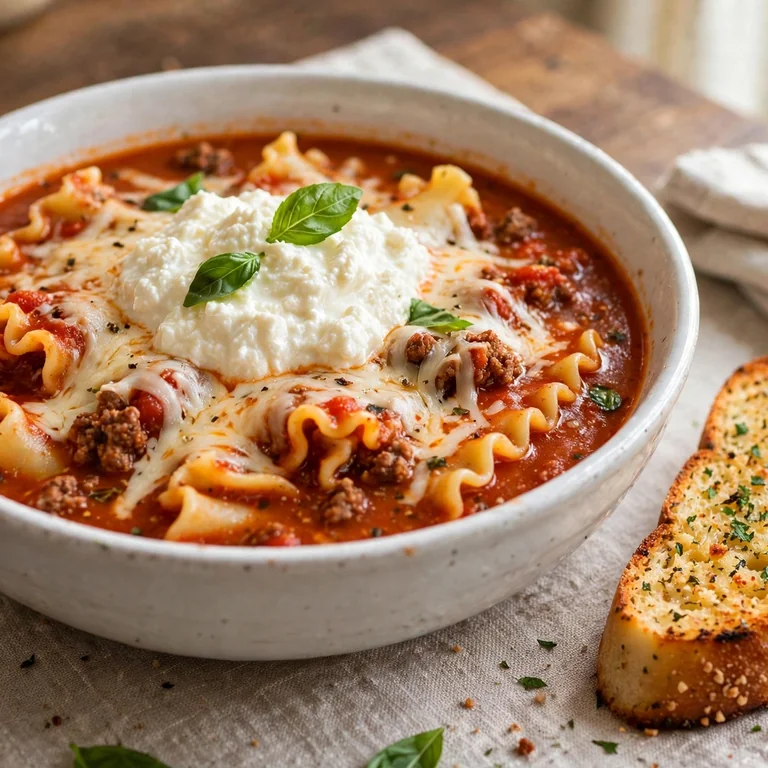
- Serve with a thick slice of garlic bread or a toasted ciabatta roll for dipping into the broth. The bread does exactly what it does alongside regular lasagna, soaks up the tomato sauce and provides a textural contrast to the soft noodles.
- A simple green salad with a sharp lemon vinaigrette alongside the soup cuts through the richness of the cheese topping and the full-bodied tomato broth. Arugula with shaved Parmesan and lemon works particularly well because it mirrors the Italian-American flavor profile of the soup.
- Set out extra Parmesan in a small bowl at the table. People consistently want more, and grated Parmesan stirred into the broth partway through the bowl adds a secondary layer of salty, savory flavor that deepens as it dissolves.
- For a dinner party, serve in warmed bowls with the ricotta topping, a sprig of fresh basil, a drizzle of good-quality olive oil, and a light crack of coarse black pepper over the top. It looks considerably more composed than the effort involved.
- Pair with a sparkling water with lemon or a non-alcoholic sparkling grape juice for a meal that feels like a proper occasion without requiring any extra cooking.
- Serve smaller portions as a starter before a simple main of grilled chicken or roasted vegetables. A half-bowl of lasagna soup is filling enough to function as a substantial first course without overpowering what follows.
Tips for the Best Results
- Don’t rush the beef browning. Leave the ground beef in contact with the hot surface for the first 2 to 3 minutes without touching it. The crust that forms in that time is where the savory depth of the broth comes from. Stirring too early steams the beef instead of browning it, and steamed beef produces a significantly flatter-tasting broth no matter what you add afterward.
- Caramelize the tomato paste every time. Skipping this step and adding the paste directly to the liquid is the single shortcut that most noticeably affects the flavor of the finished broth. The 90 seconds it takes to darken the paste against the hot pan converts the simple tomato flavor into something with genuine depth and a slight background sweetness.
- Season the cheese topping before it goes into the bowl. Unseasoned ricotta tastes bland and slightly flat against a well-seasoned broth. A pinch of salt, a crack of black pepper, and the Parmesan folded through lift the topping enough that it complements the broth rather than just sitting neutrally on top of it.
- Stir the noodles frequently while they cook. Flat, wide noodle pieces settle and overlap in a heavy broth. A brief stir every 3 minutes keeps them moving and prevents the clumped, gummy pieces that happen when lasagna sheets sit against each other in hot liquid for more than a few minutes without disturbance.
- Store noodles and broth separately if making ahead. Lasagna noodles left in the broth overnight absorb a significant amount of liquid and become very soft. If you know you’ll have leftovers, cook the noodles separately and add them to individual bowls at serving time. The broth stores and reheats beautifully on its own for up to 4 days.
Storage Tips
Refrigerator
Cool the soup completely before transferring it to a sealed container. Without separated noodles, the broth stores for up to 4 days in the fridge. The noodles will absorb liquid overnight and soften considerably; the soup will look very thick and the broth will be noticeably reduced by the next day. This is normal. Reheat on the stovetop with a generous splash of broth to restore the original consistency. For the best leftovers, store the ricotta topping in a separate small container and add it fresh when serving.
Freezer
The tomato beef broth freezes very well for up to 3 months, but the noodles do not freeze cleanly. They become soft and slightly disintegrated after thawing. For the best results, freeze only the broth without the pasta. When ready to serve, thaw the broth overnight in the fridge, reheat on the stovetop, and cook a fresh batch of broken noodles directly in the reheated broth for the final 12 to 15 minutes. The cheese topping should always be made fresh.
Reheating
The stovetop produces the best result. Pour leftover soup into a saucepan over medium heat and stir every 90 seconds as it warms. Add beef broth or water, a quarter cup at a time, until the broth returns to a soup-like consistency rather than a thick pasta sauce. Microwave reheating works for individual portions; cover loosely and heat at 70% power in 90-second intervals, stirring between each. Add a splash of broth before microwaving to pre-loosen the noodles.
Make-ahead note: The broth, including the browned beef, aromatics, and tomato base, can be made up to 2 days ahead and refrigerated. When ready to serve, bring the broth back to a simmer, add fresh broken noodles, and cook for 12 to 15 minutes as in step 5. Make the cheese topping fresh. This produces a lasagna soup that’s indistinguishable from a fully same-day version.
Nutrition Information
Per serving, approximately one bowl (1/6 of recipe), with one spoonful of cheese topping:
| Nutrient | Amount |
|---|---|
| Calories | 510 kcal |
| Protein | 32g |
| Total Carbohydrates | 42g |
| Dietary Fiber | 4g |
| Total Sugar | 9g |
| Total Fat | 22g |
| Saturated Fat | 10g |
| Cholesterol | 80mg |
| Sodium | 680mg |
| Vitamin C | 18mg |
| Calcium | 280mg |
| Iron | 4.2mg |
| Potassium | 740mg |
Nutrition values are approximate and may vary based on brands and portion sizes. Values include one serving of the three-cheese topping.
Why This Recipe Works
The flavor depth of a good lasagna, the kind that tastes like it’s been in the oven for an hour, comes almost entirely from two things: properly caramelized tomato compounds and well-browned meat. Both require direct contact with a hot surface, which is why this soup starts with an extended browning phase for the beef and a separate caramelization step for the tomato paste. When tomato paste sits against a hot, dry pan surface rather than being stirred immediately into liquid, the natural sugars in the paste undergo caramelization and Maillard reactions that produce entirely new flavor compounds, including furfural and 5-methylfurfural, which contribute the roasted, complex notes that distinguish a rich marinara from a simple one. That 90-second step accounts for a disproportionate share of the broth’s finished depth.
Cooking the noodles directly in the broth rather than in a separate pot of salted water is a deliberate textural choice, not just a convenience. As the noodles cook, they release starch into the surrounding liquid. That starch gels slightly as it disperses, creating a broth with noticeably more body than the same soup made with noodles added from a separate pot. The broth thickens enough to cling to the noodle pieces rather than sitting thinly around them, which produces a bite that feels closer to actual lasagna than standard pasta soup. The tradeoff is that the noodles absorb broth over time if the soup sits for more than an hour, which is why the make-ahead and storage guidance separates them.
The three-cheese topping served cold against the hot broth is not a plating choice; it’s a flavor technique. When you spoon cold ricotta into a very hot broth, the temperature differential slows the cheese’s melting and allows it to distribute gradually as you eat through the bowl. Each spoonful is slightly different depending on how much cheese you pick up and how long it’s been in the bowl. That variation, familiar from eating layered lasagna where the cheese-to-sauce ratio shifts from slice to slice, is what makes the soup feel like its namesake rather than just a tomato pasta soup with a white dollop on top.
Whole-milk ricotta is specified for a specific reason. Part-skim ricotta has a higher protein-to-fat ratio, which produces a grainier, slightly rubbery texture that doesn’t soften into the broth the same way. The fat in whole-milk ricotta lubricates the protein strands and keeps the cheese mixture silky, both when it’s in the bowl and after it’s been sitting in the hot broth for a few minutes. I’ve tested this side by side and the texture difference is clear and immediate.
Frequently Asked Questions
Can I make lasagna soup ahead of time?
Yes, with one adjustment. Make the full broth including the beef and tomato base up to 2 days ahead and refrigerate it without the noodles. When you’re ready to serve, bring the broth back to a simmer and cook fresh broken noodles directly in it for 12 to 15 minutes. Make the ricotta topping fresh each time. Noodles stored in the broth overnight absorb a significant amount of liquid and soften considerably, which changes the texture substantially. The broth itself reheats well and often tastes more developed on day two.
Why do my noodles keep sticking together?
Two things cause this most often: the broth isn’t simmering vigorously enough to keep the pieces moving, or the noodles aren’t stirred frequently enough during cooking. Wide, flat pasta pieces settle naturally and overlap in any heavy broth. Maintain a steady, active simmer rather than a lazy bubble, and stir the pot every 3 to 4 minutes to keep the pieces separated. If you do get a clump, separate the pieces gently with a spoon before they cool and set together.
Can I use a different type of pasta instead of lasagna noodles?
Yes. Wide egg noodles, broken pappardelle, broken rigatoni, or even regular penne all work in this recipe. Each changes the texture slightly: rigatoni holds its shape better than broken lasagna sheets and stays al dente longer, while egg noodles soften faster and produce a slightly lighter-feeling bowl. The cooking time will vary by 2 to 5 minutes depending on the pasta type; use the package cooking time as a starting guide and test for tenderness from 2 minutes before that mark.
How do I know when the noodles are done?
Press a piece between your thumb and forefinger. It should bend completely without any stiff or chalky resistance at the center. If there’s still a firm core, it needs more time. The target is just past al dente, where the noodle is fully soft but still has a slight chew. Because the noodles continue softening in the residual heat of the broth after you turn off the stove, pulling them at just past al dente rather than fully soft gives you the right texture by the time the bowl reaches the table.
Can I use part-skim ricotta in the topping?
You can, but the texture will be noticeably grainier and slightly less creamy than whole-milk ricotta. Part-skim versions have more protein relative to fat, which makes them slightly rubbery when cold and less silky when they begin to melt into the hot broth. If whole-milk ricotta isn’t available, drain the part-skim version through a fine strainer for 15 minutes before using to remove excess moisture, and stir in 1 tablespoon of olive oil to compensate partially for the lower fat content.
Is this soup gluten-free?
The base recipe contains gluten from the dry lasagna noodles. To make it gluten-free, substitute certified gluten-free lasagna sheets or gluten-free wide pasta. Also confirm that both your beef broth and canned tomato products are labeled gluten-free, since some brands use gluten-containing additives. The rest of the recipe, broth base, aromatics, spices, and cheese topping, contains no gluten in its standard form.
The broth tastes too acidic. How do I fix it?
Add 1/2 teaspoon of granulated sugar, stir it into the simmering broth, and taste after 2 minutes. The sugar doesn’t make the broth taste sweet; it rounds the sharp edges of the tomato’s acidity and brings the other flavors forward. If the broth is still sharp after the first addition, add another small pinch and repeat. Also check that you’ve added enough salt: under-seasoned tomato broth reads as more acidic than it actually is because the salt is what balances and mellows the tomato’s natural sharpness.

Conclusion
Lasagna soup earns its place as a regular recipe because it delivers something that most weeknight soups don’t: the specific satisfaction of a slow-cooked Italian-American meat sauce in a format that takes under an hour. The caramelized tomato paste and properly browned beef are the two steps that make the difference between a soup that tastes assembled quickly and one that tastes like it spent the afternoon on the stove.
The ricotta topping is what ties everything together. It’s the detail that makes this genuinely feel like lasagna rather than just a pasta soup with a similar spice profile. Spoon it in cold, let it sit for a minute before you start eating, and the whole bowl shifts from a single flavor into something layered. Make this lasagna soup once on a cold weeknight and it will become a regular rotation recipe.
If you loved this recipe, save it to your soup and pasta recipes Pinterest board so you can find it easily later. For more same recipes follow Thecookingvibes Pinterest account.
Hearty Lasagna Soup
Ingredients
Equipment
Method
- Heat olive oil in a large pot over medium-high heat. Add onion and cook until softened, about 4 minutes.
- Heat olive oil in Dutch oven over medium-high. Brown ground beef 2-3 min undisturbed, break into crumbles, cook until no pink. Drain fat leaving 1 tbsp.
- Reduce to medium. Cook onion 5-6 min until soft golden. Add garlic 60 seconds.
- Push onions aside, add tomato paste to center, sit 90 sec until brick-red, stir through onions 30 sec.
- Add crushed tomatoes, diced tomatoes with juice, beef broth, all dried herbs and spices, salt, pepper. Bring to boil.
- Add broken noodle pieces, stir immediately. Simmer uncovered 12-15 min stirring every 3-4 min until just past al dente.
- Mix ricotta, mozzarella, Parmesan, basil, salt, pepper in small bowl.
- Off heat. Adjust seasoning. Rest 5 min.
- Ladle into bowls. Spoon 3-4 tbsp cheese mixture into center. Top with Parmesan and basil. Serve immediately.
Notes
Stir noodles every 3-4 min.
Store broth and noodles separately for leftovers.
Make ricotta topping fresh each time.