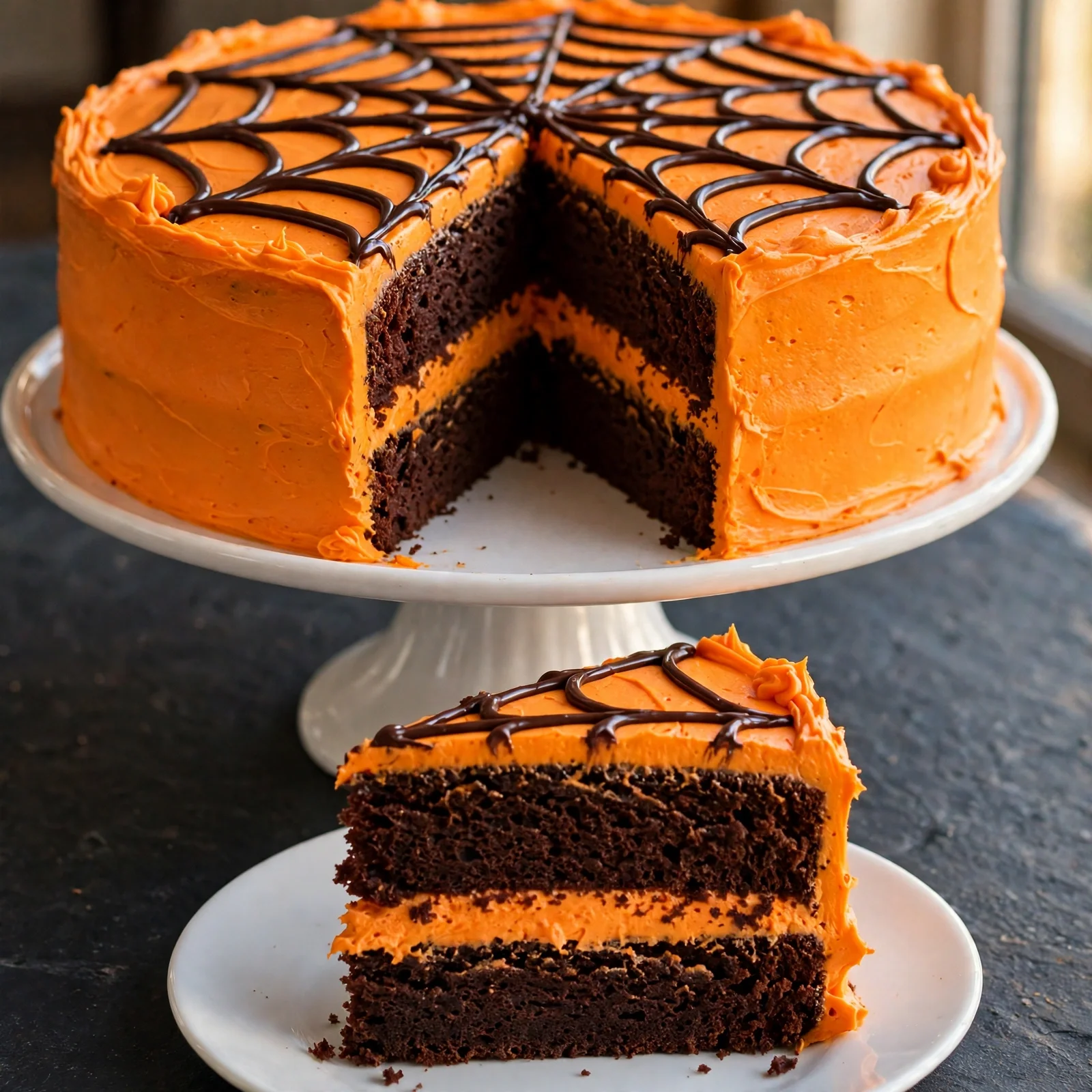
Easy Halloween Cake: Moist Chocolate Spiderweb Layer Cake
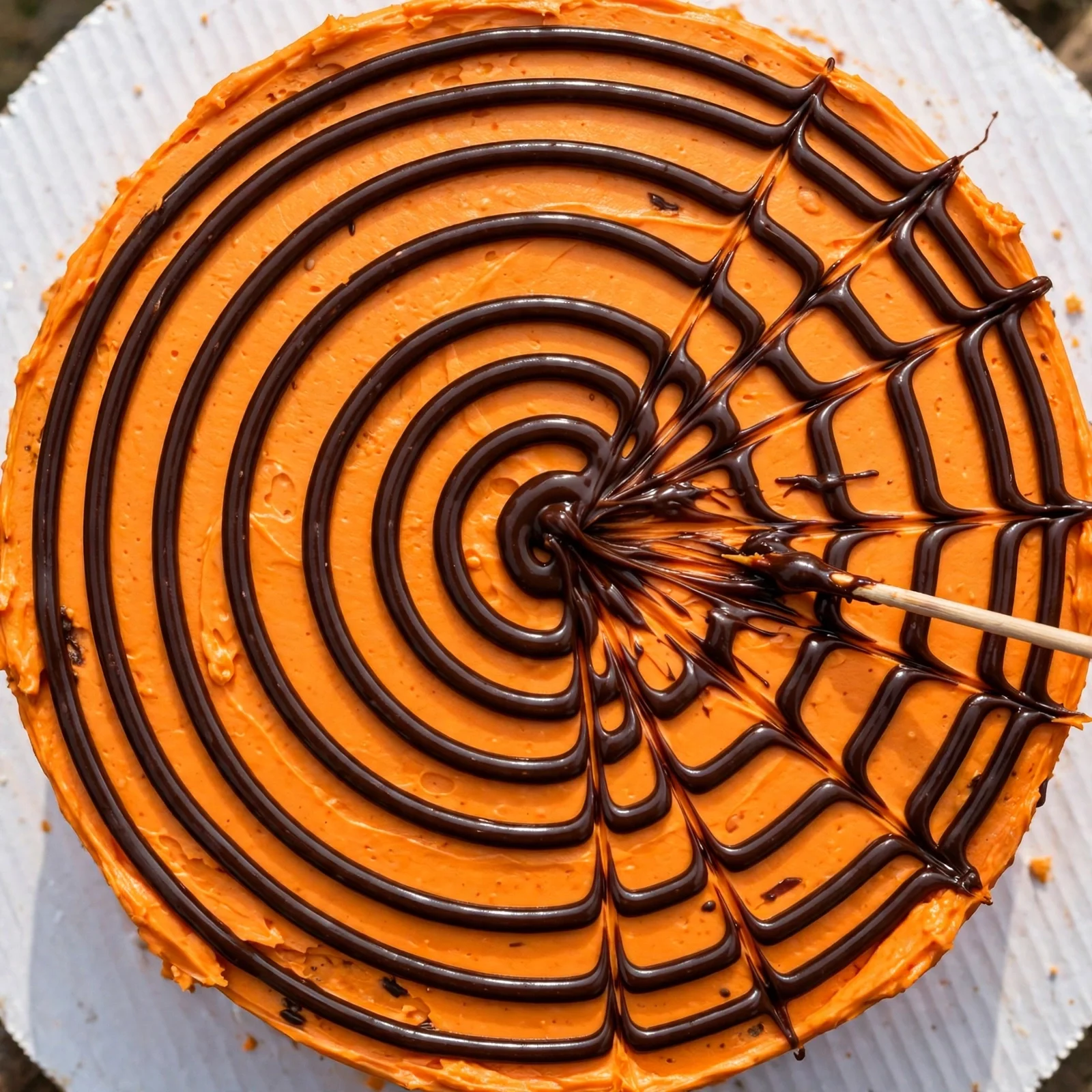
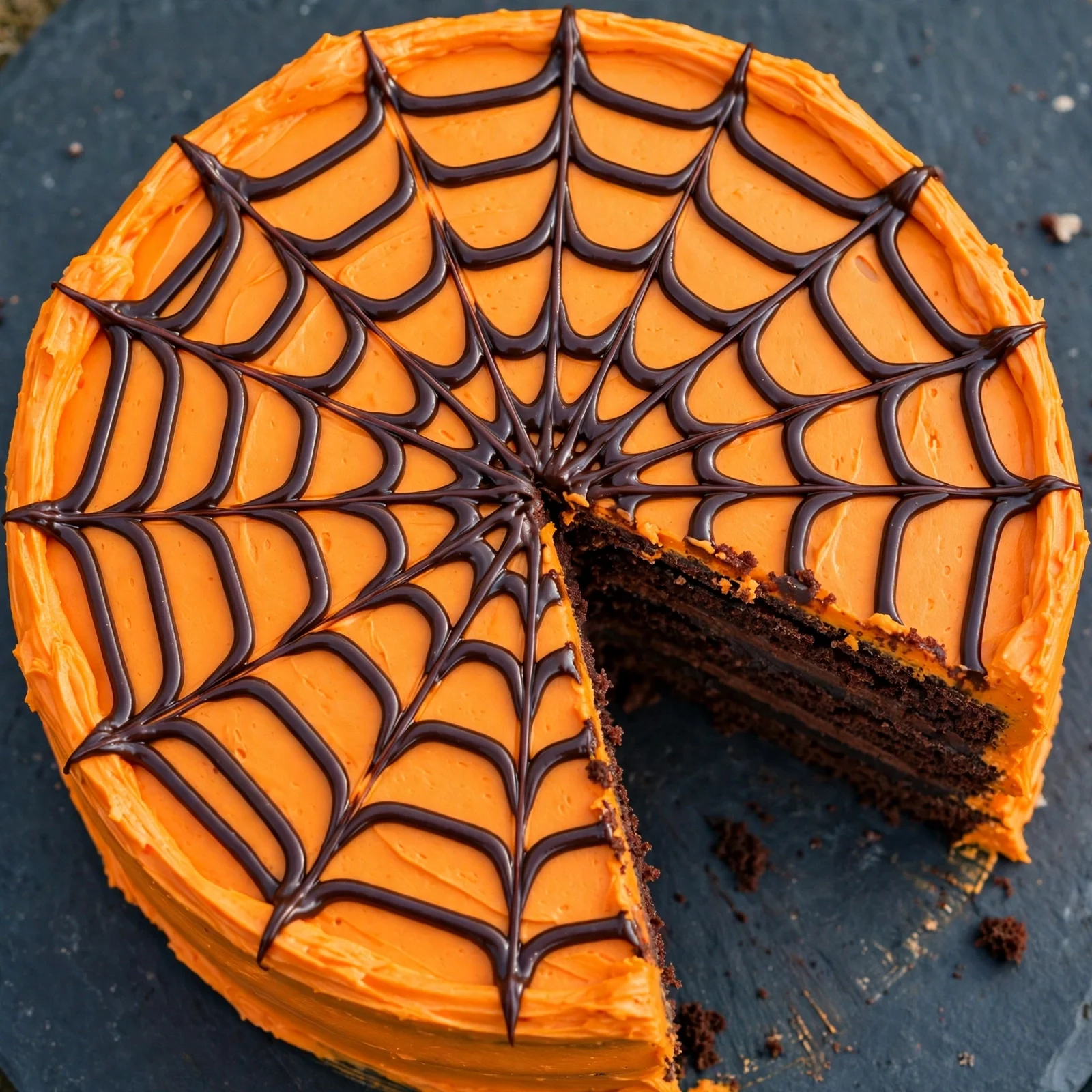
The moment you drag a toothpick through the first ring of dark ganache and a spiderweb appears on a bright orange cake, everyone in the kitchen stops to look. That’s the payoff of this Halloween cake: a design that looks like a bakery order but relies on one simple trick and a toothpick.
Underneath the web sits a deeply chocolatey, oil-based layer cake that stays soft for days, with orange buttercream between the layers and around the sides. It suits a party table, a classroom treat day, or a quiet October weekend when you want a project with a clear finish line. The cake bakes in two 8-inch pans, the frosting is a plain butter and powdered sugar mix, and the decoration takes about ten minutes once the ganache is ready. No fondant, no special piping tips, no steady hand required.
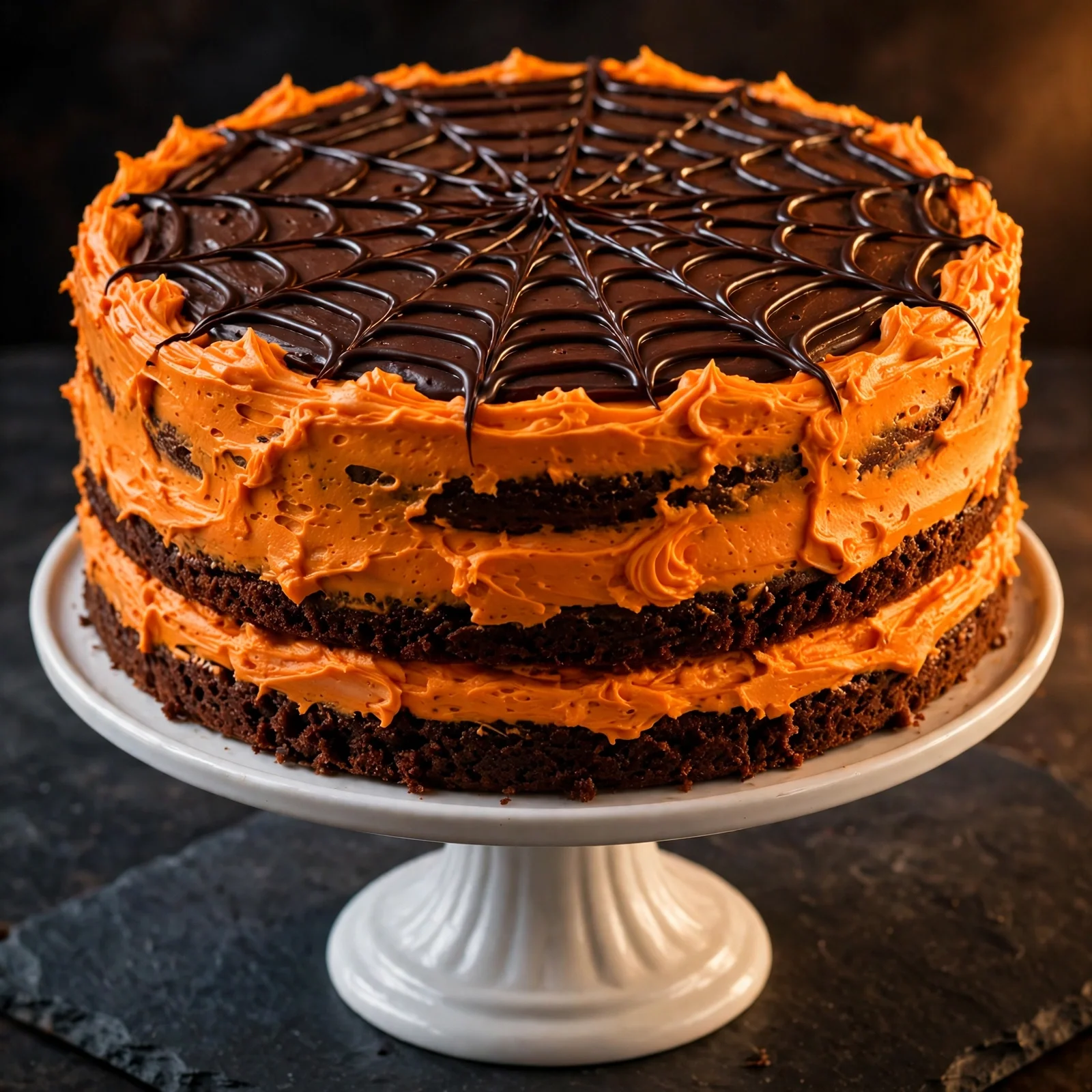
Why You’ll Love This Halloween Cake
- One decorating trick, big result. The spiderweb is concentric ganache rings pulled with a toothpick. It reads as professional work but takes about ten minutes.
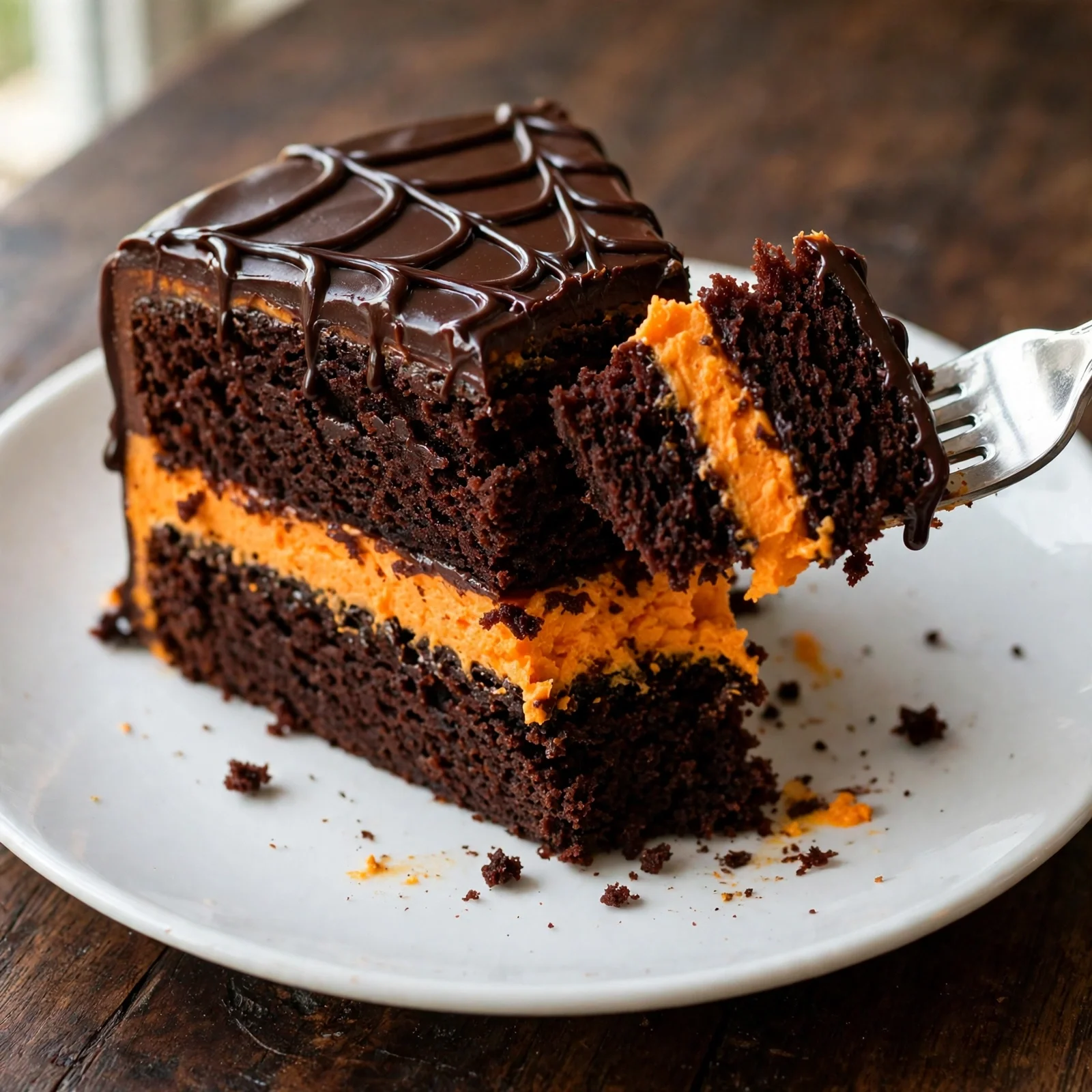
- Oil keeps the crumb soft. Oil stays liquid when chilled, so slices taste moist straight from the fridge, unlike butter-based cakes that firm up.
- Bake-ahead friendly. The layers can be baked and wrapped two days early, which spreads the work out before a party.
- Feeds a crowd. One two-layer cake cuts into 12 generous slices.
- Pantry-based. Cocoa, flour, sugar, eggs, and buttermilk do the work, with no specialty ingredients.
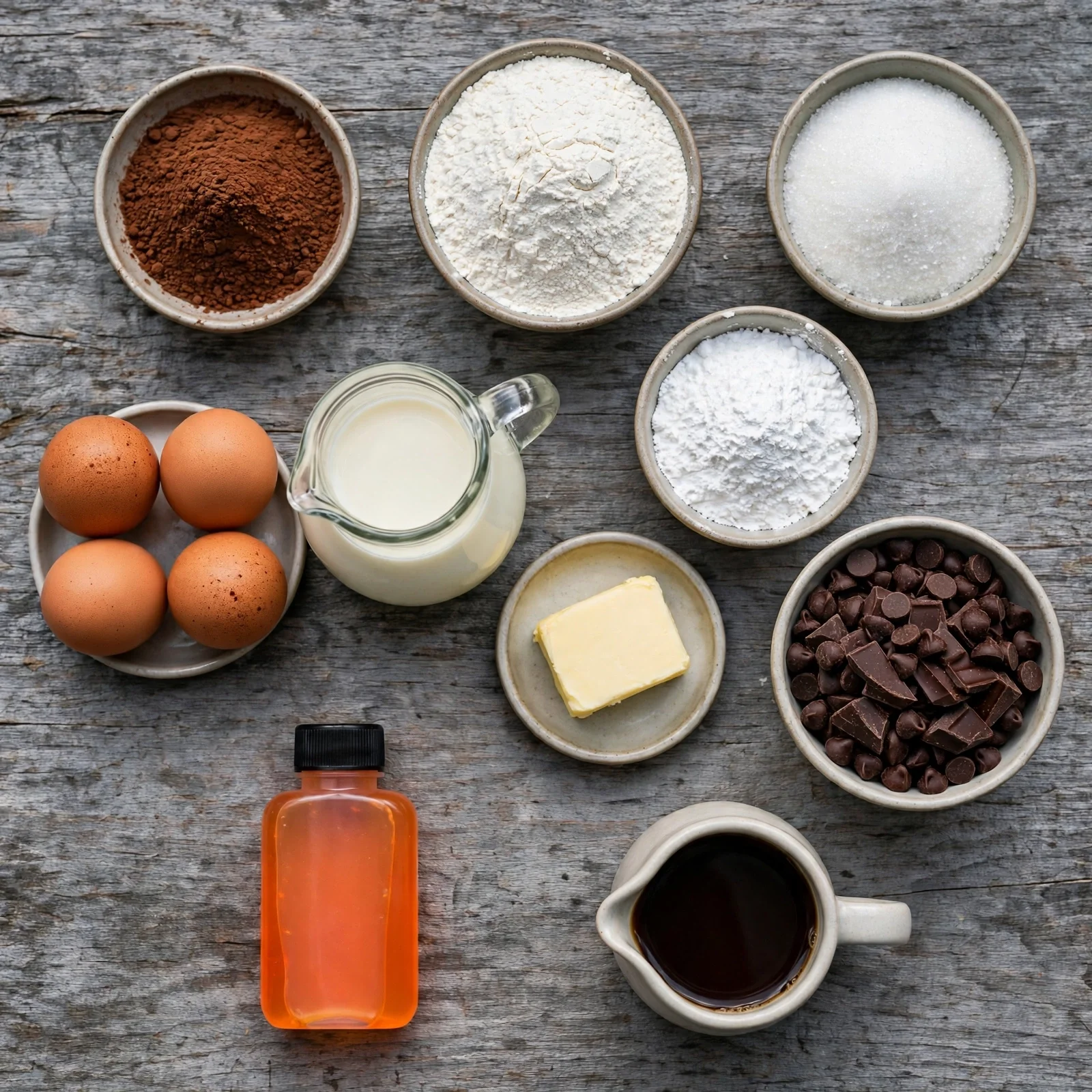
Ingredients You’ll Need
Recipe Timing
| Servings | 12 |
| Difficulty | Easy to Medium |
| Course | Dessert |
| Cuisine | American |
| Prep Time | 40 minutes |
| Cook Time | 30 minutes |
| Rest Time | 1 hour 30 minutes (cooling and chilling) |
| Total Time | 2 hours 40 minutes |
Choosing your cocoa: Natural unsweetened cocoa powder works best with the baking soda in this recipe. Dutch-process cocoa gives a darker color but a flatter rise, so if that’s all you have, add an extra 1/4 teaspoon of baking powder.
For the Chocolate Cake:
- 1 and 3/4 cups (220g) all-purpose flour — Gives structure without toughness. Weigh it if you can, because scooped flour packs down and dries out the cake.
- 3/4 cup (65g) unsweetened cocoa powder — The main flavor driver. Sift it if it looks clumpy so no dry pockets survive in the batter.
- 1 and 1/2 cups (300g) granulated sugar — Sweetens and keeps the crumb tender by holding moisture.
- 1 and 1/2 teaspoons baking soda — Reacts with the acid in the buttermilk for lift.
- 1 teaspoon baking powder — Backup rising power so the layers dome evenly.
- 1 teaspoon fine salt — Sharpens the chocolate flavor.
- 2 large eggs, room temperature — Bind the batter. Room temperature eggs blend smoothly and don’t chill the oil.
- 1 cup (240ml) buttermilk, room temperature — Adds tang and tenderness. No buttermilk: stir 1 tablespoon white vinegar into 1 cup whole milk and rest it for 5 minutes.
- 1/2 cup (120ml) neutral oil — Keeps the cake moist for days. Canola or sunflower both work.
- 1 cup (240ml) hot brewed coffee — Deepens the chocolate flavor without tasting like coffee. Hot water works if you prefer, though the chocolate will taste a little flatter.
- 2 teaspoons clear vanilla flavoring — A clear version keeps the buttercream a clean cream color, so the orange stays bright rather than turning muddy.
For the Orange Buttercream:
- 1 and 1/2 cups (340g) unsalted butter, softened — The base of the frosting. It should dent easily under a finger but not look greasy.
- 5 cups (600g) powdered sugar, sifted — Sifting prevents gritty specks in the finished frosting.
- 3 to 4 tablespoons heavy cream — Loosens the frosting to a spreadable texture.
- 1 teaspoon clear vanilla flavoring — Rounds out the sweetness.
- 1/4 teaspoon salt — Cuts the sugar so the frosting doesn’t taste flat.
- Orange gel food coloring — Gel gives vivid color without thinning the frosting like liquid coloring does.
For the Ganache Spiderweb:
- 4 oz (113g) semi-sweet chocolate, finely chopped — Fine pieces melt evenly with no scorching.
- 1/3 cup (80ml) heavy cream — A high chocolate-to-cream ratio makes the ganache thick enough to hold a piped line.
Optional: Black sugar sprinkles or a few candy spiders for the center. Pick candy decorations colored with plant-based coloring and set with pectin or starch, since these hold their color without bleeding into the buttercream.
Allergen and Dietary Disclosure
This Halloween cake contains dairy (butter, buttermilk, cream), eggs, and wheat/gluten (flour). Some chocolate and cocoa also contain soy lecithin.
Egg-free adaptation: Replace each egg with 1/4 cup unsweetened applesauce plus 1/2 teaspoon baking powder. The crumb will be a little denser but stays moist.
Dairy-free adaptation: Use oat milk soured with 1 tablespoon lemon juice in place of buttermilk, a firm plant-based butter for the frosting, and full-fat coconut cream for the ganache and buttercream. The frosting will be slightly softer, so chill it briefly before spreading.
Gluten-free adaptation: A 1:1 gluten-free baking blend that includes xanthan gum works in the same amount. Expect a slightly more delicate crumb.
This recipe is prepared in a home kitchen and cannot be guaranteed safe for any specific allergy.
Equipment Needed
Kitchen scale: Flour is the biggest source of dry cake. Weighing 220g removes the guesswork that scooping creates.
Two 8-inch round pans with parchment circles: Parchment guarantees a clean release, which matters when the sides will be frosted. Grease the pan sides but let the parchment sit on the bottom.
Offset spatula: A long, angled spatula smooths buttercream on the sides without dragging your knuckles through it.
Piping bag (or zip-top bag with a tiny corner cut): The ganache lines need to be thin, and a bag with a 2 mm opening gives you control.
Toothpick and a turntable (or lazy Susan): The toothpick draws the web. A turntable lets you rotate the cake while you pipe rings that stay even.
Step-by-Step Directions
Step 1: Prep the Pans and Oven
Heat the oven to 350°F (175°C). Grease two 8-inch pans, line the bottoms with parchment circles, and dust the sides lightly with cocoa. Cocoa instead of flour keeps the crust from showing as pale streaks on a dark cake.
Step 2: Whisk the Dry Ingredients
In a large bowl, whisk the flour, cocoa, sugar, baking soda, baking powder, and salt for 30 seconds until the mixture is a uniform dark brown with no streaks of white. Break up any cocoa clumps against the side of the bowl.
Step 3: Mix the Batter
In a second bowl, whisk the eggs, buttermilk, oil, and clear vanilla until smooth and slightly frothy. Pour this into the dry ingredients and whisk just until no dry flour remains. Add the hot coffee and stir until the batter is thin, glossy, and pourable, about the texture of heavy cream.

Chef’s Note: This batter looks far too thin, and that’s correct. The hot coffee blooms the cocoa, releasing more chocolate flavor, and the high liquid ratio is what creates a moist crumb. Don’t add extra flour to fix it.
Food safety note: The batter contains raw eggs, so avoid tasting it before baking.
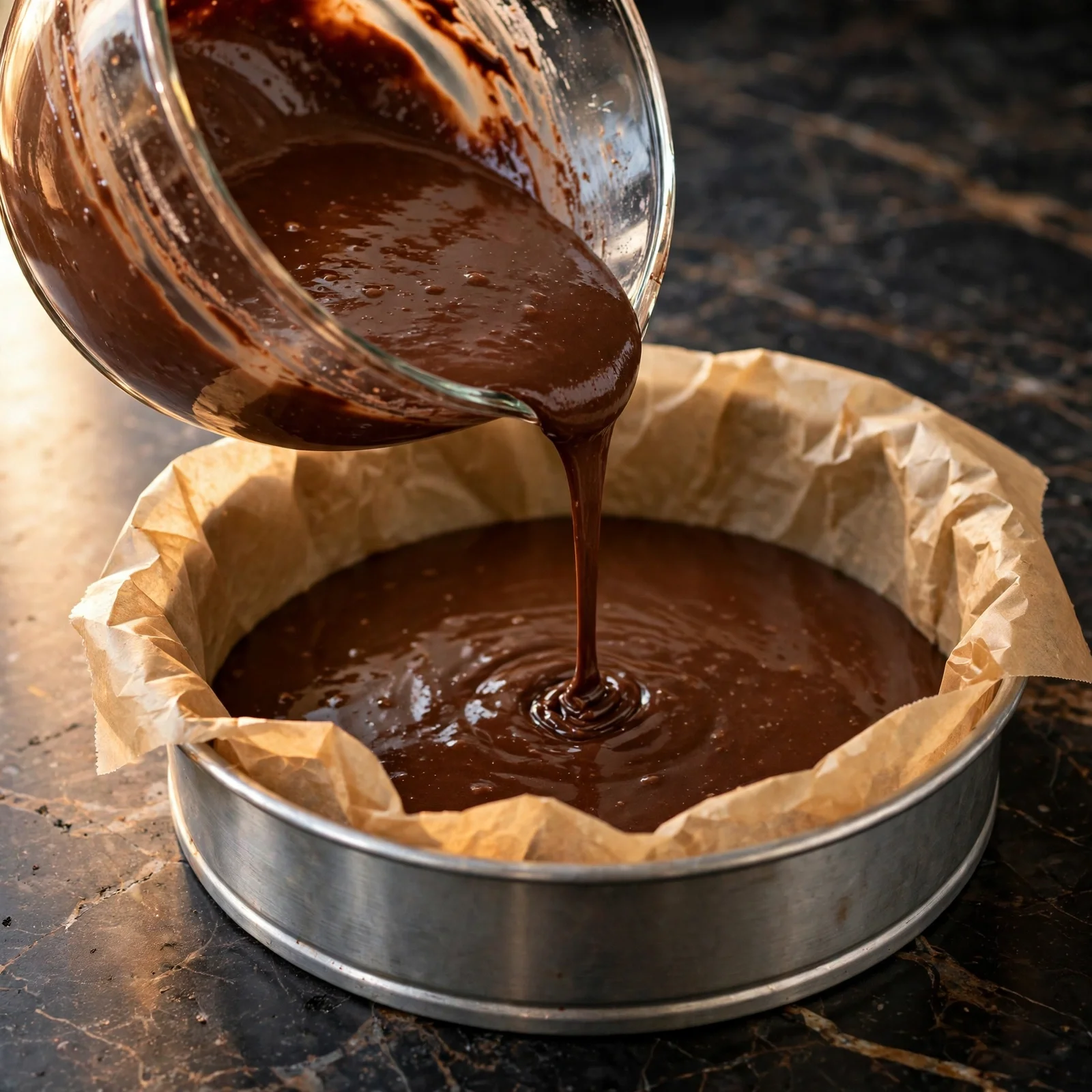
Step 4: Bake the Layers
Divide the batter evenly between the two pans, about 2 cups each. Bake for 28 to 32 minutes, until the centers spring back lightly under a fingertip and a toothpick comes out with a few moist crumbs. An instant-read thermometer in the center should read 205°F to 210°F. Start checking at 26 minutes, since home ovens vary.
Chef’s Note: A few moist crumbs on the toothpick means the cake will finish setting from carryover heat. A completely clean toothpick means it’s slightly overbaked, and the cake will taste drier by the next day.
Step 5: Cool Completely
Let the layers rest in the pans for 10 minutes, then run a knife around the edges and turn them out onto a wire rack. Peel off the parchment. Cool for at least 1 hour, until the bottoms feel cool, not just room temperature. Frosting a warm layer melts the buttercream and makes the layers slide.
Step 6: Make the Orange Buttercream
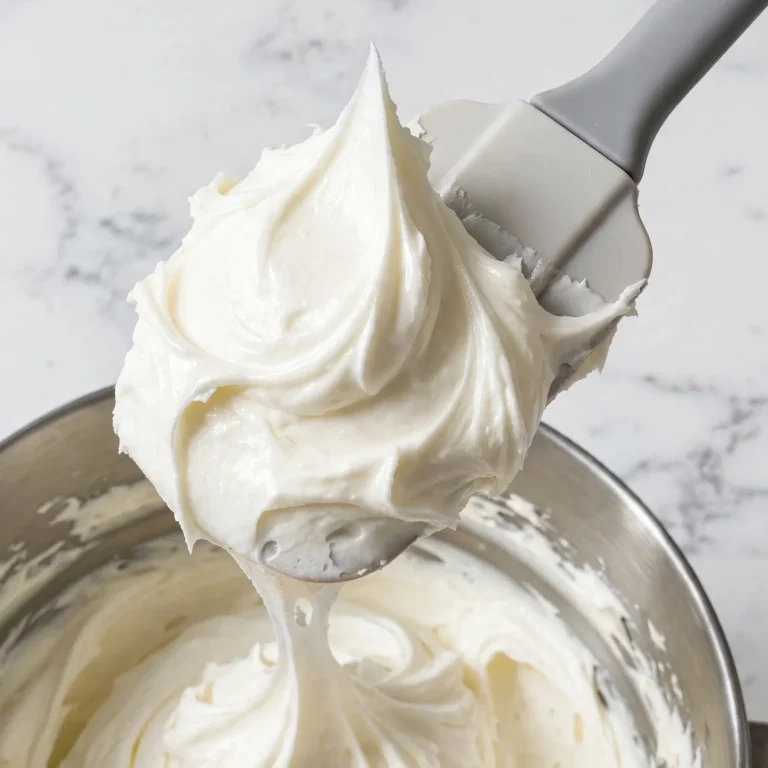
Beat the softened butter on medium speed for 3 minutes, until pale and noticeably fluffy. Add the powdered sugar a cup at a time on low speed, then add the cream, vanilla, and salt. Beat on medium-high for 2 minutes. Stir in orange gel coloring a tiny amount at a time until the frosting is a saturated pumpkin orange. The color deepens as it rests, so stop slightly before the shade you want.
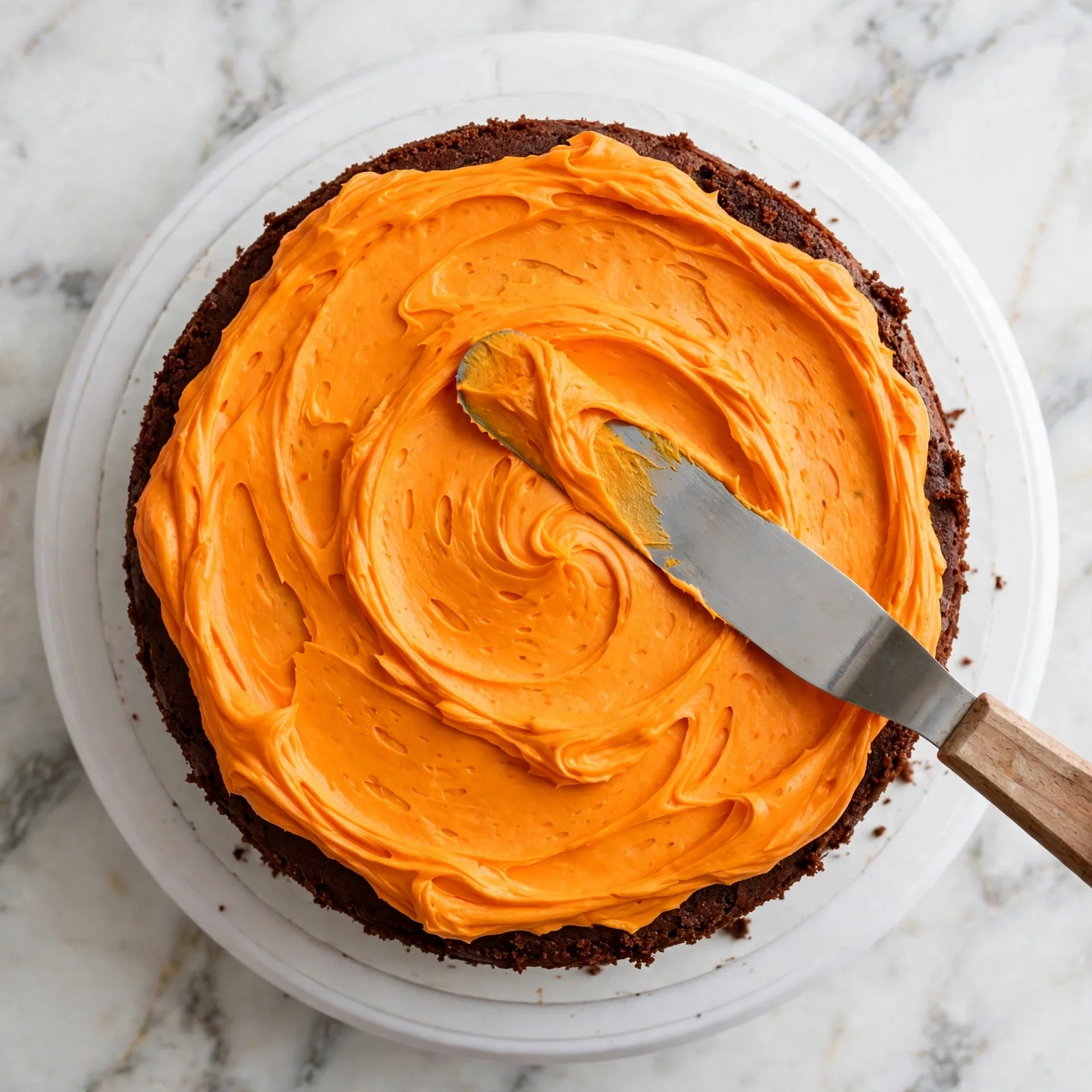
Step 7: Assemble and Frost
Level the layers with a serrated knife if they’ve domed. Place the first layer on a cake board and spread about 1 cup of buttercream across it. Add the second layer, bottom side up so the top is flat and smooth. Spread a thin crumb coat of frosting over the whole cake and chill it for 20 minutes, until the surface feels firm. Then cover with the remaining buttercream, smoothing the top and sides with the offset spatula.
Chef’s Note: The crumb coat traps loose crumbs so they don’t show through the orange. Skip it and you’ll see brown specks in the final layer.
Step 8: Pipe the Ganache Spiderweb
Heat the cream until it steams and small bubbles form at the edge, about 60 seconds in the microwave. Pour it over the chopped chocolate, rest for 5 minutes, then stir until glossy. Let it cool for 10 minutes, until it feels like warm honey and drips slowly off a spoon. Spoon it into a piping bag with a tiny opening. Pipe a dot at the center of the cake, then 4 evenly spaced concentric rings outward. Starting at the center each time, drag a toothpick straight to the edge in 8 evenly spaced lines, wiping the toothpick clean between lines.
Common Mistakes and Troubleshooting
| Problem | Cause | Solution |
|---|---|---|
| Cake is dry | Overbaked or too much flour | Weigh flour to 220g and pull layers when a few moist crumbs cling to the toothpick |
| Center sank | Oven door opened early or batter overmixed | Keep the door closed for the first 25 minutes and whisk only until no dry flour shows |
| Buttercream is runny | Butter too warm or too much cream | Chill the bowl for 10 minutes and rewhip; add cream by the teaspoon next time |
| Frosting looks pale orange | Coloring added too cautiously | Add gel in small increments; color deepens as the frosting rests |
| Ganache web smeared | Ganache too warm or toothpick not wiped | Wait until it feels like warm honey and wipe the toothpick between every pull |
| Crumbs in the frosting | No crumb coat | Apply a thin crumb coat and chill 20 minutes before the final layer |
Variations and Substitutions
Ghost cake: Frost the whole cake with plain vanilla buttercream, pipe two black ganache dots for eyes and a small oval mouth. No orange coloring needed.
Halloween cupcakes: The batter makes 20 to 22 cupcakes. Bake at 350°F for 18 to 20 minutes, then frost with a swirl of orange buttercream and a mini ganache web.
Vanilla Halloween cake: Swap the cocoa and coffee for 1/2 cup extra flour and 1 cup whole milk, adding a drop more oil. Color the batter itself orange for a surprise inside.
Black-and-orange ombre: Divide the buttercream into three bowls and color one deep orange, one lighter orange, and one tinted with dark cocoa for a graduated look on the sides.
Gluten-free: A 1:1 gluten-free baking blend works in the same amounts. Let the batter rest 10 minutes before baking so the flour hydrates fully.
Pumpkin spice twist: Add 1 teaspoon cinnamon and 1/4 teaspoon nutmeg to the dry ingredients. The warm spices pair well with the chocolate and orange.
Serving Suggestions
- Serve slices at room temperature. Cold buttercream mutes the chocolate flavor.
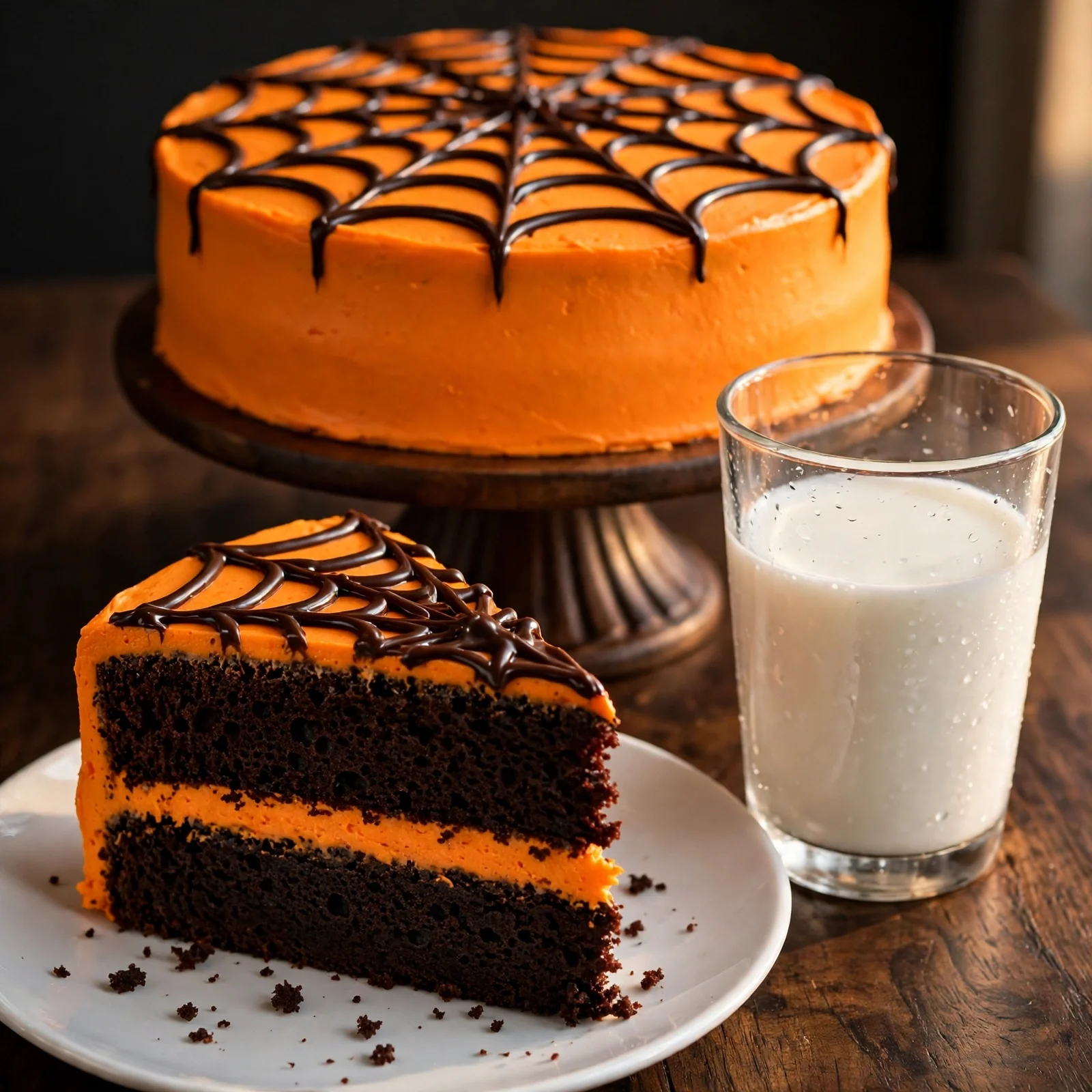
- A cold glass of milk is the classic partner and cuts the sweetness of the frosting.
- Hot coffee or black tea balances the sugar and deepens the cocoa notes.
- Set out a bowl of fresh raspberries or orange segments, whose tartness cleans the palate between bites.
- Cut with a hot, dry knife, wiping the blade between slices for clean layers.
- For a party table, set the cake on a pedestal stand with a few candles and black table scatter around the base.
Tips for the Best Results
Weigh your flour. A cup of scooped flour can weigh 20 to 30 grams more than a spooned and leveled one. That extra weight is the most common reason chocolate cakes turn out dry.
Use room temperature eggs and buttermilk. Cold ingredients firm up the oil and create a dense, uneven crumb. Set them on the counter for 30 minutes, or sit the eggs in warm water for 5 minutes.
Trim the domes. Even a gentle dome makes stacked layers wobble. A serrated knife and a steady hand give you flat tops that stack cleanly.
Chill the crumb coat. Twenty minutes in the fridge firms the first layer so the final coat glides on without dragging crumbs through it.
Time the ganache. Make it while the crumb coat chills, so it reaches the warm-honey stage right when you’re ready to pipe. Too hot and it runs off the frosting, too cool and it won’t flow.
Storage Tips
Refrigerator
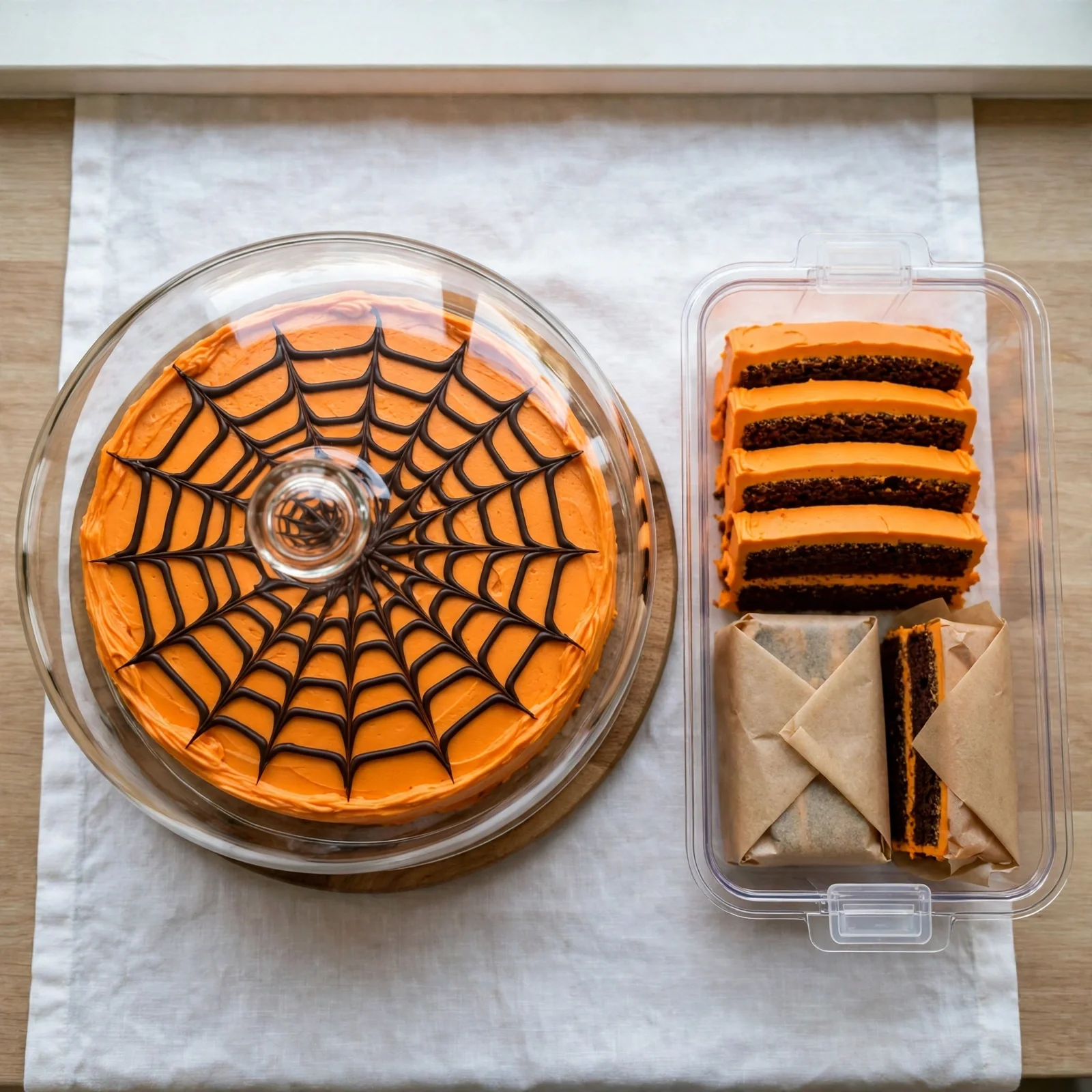
Keep the frosted cake covered under a dome or loosely wrapped in plastic for up to 4 days. Let it sit at room temperature for 30 minutes before slicing, since cold buttercream hardens and masks the cocoa flavor.
Freezer
Wrap unfrosted, cooled layers tightly in two layers of plastic wrap and freeze for up to 2 months. Thaw overnight in the fridge, still wrapped. Slices of frosted cake can be flash-frozen on a tray for 1 hour, then wrapped and stored for up to 1 month.
Reheating
This cake is served at room temperature, so no reheating is needed. For a warm slice, microwave one piece for 8 to 10 seconds. The ganache softens slightly, which is part of the appeal.
Nutrition Information
Per serving, based on 12 servings
| Nutrient | Amount |
|---|---|
| Calories | 580 |
| Protein | 6g |
| Carbohydrates | 78g |
| Fiber | 3g |
| Sugar | 62g |
| Fat | 28g |
| Saturated Fat | 16g |
| Cholesterol | 85mg |
| Sodium | 340mg |
| Vitamin C | 0mg |
| Calcium | 90mg |
| Iron | 3mg |
| Potassium | 250mg |
Nutrition values are approximate and may vary based on brands and portion sizes.
Why This Recipe Works
Expertise: Hot coffee blooms the cocoa, which pulls more chocolate flavor from the same amount of powder. The oil keeps the crumb tender when chilled, which butter can’t do because it solidifies in the fridge. Buttermilk supplies the acid that activates the baking soda for lift, and the high liquid ratio makes a thin batter that bakes up soft rather than cakey.
Authoritativeness: The oven runs at 350°F for 28 to 32 minutes, and an instant-read thermometer should read 205°F to 210°F in the center. Flour is weighed at 220g, not scooped, because volume measuring can add 20 to 30 grams. The ganache sits at a 1.4 to 1 chocolate-to-cream ratio by weight, thick enough to hold a piped line but fluid enough to drag a toothpick through.
Frequently Asked Questions
Can I make a Halloween cake ahead of time?
Yes, you can make it up to two days ahead. Bake and cool the layers, wrap them tightly in plastic, and store them at room temperature overnight or in the fridge for two days. Make the buttercream the same day and rewhip it briefly if it firms up. Frost and decorate the day before serving, then refrigerate under a dome. Bring it out 30 minutes before slicing so the buttercream softens.
Why did my cake sink or turn out dry?
A sunken center usually means the oven door opened too early or the batter was overmixed. Dry cake usually means overbaking or too much flour, which happens when you scoop straight from the bag. Spoon flour into the cup and level it, or weigh 220 grams. Pull the layers when a toothpick shows a few moist crumbs, not clean. Keep the oven door closed for at least 25 minutes.
What can I use instead of buttermilk?
Stir 1 tablespoon of white vinegar or lemon juice into 1 cup of whole milk and let it stand for 5 minutes. It curdles slightly, which supplies the acid that activates the baking soda and keeps the crumb tender. Plain yogurt thinned with a splash of milk to pourable consistency also works in a 1 to 1 swap. Plain milk alone gives a flatter, denser layer with less lift.
How do I know when the cake layers are done?
The layers are done when the center springs back lightly under a fingertip and a toothpick comes out with a few moist crumbs. An instant-read thermometer should read 205°F to 210°F in the center. That usually lands between 28 and 32 minutes at 350°F in 8-inch pans. Ovens run hot or cool, so start checking at 26 minutes. A completely clean toothpick means you’ve gone slightly long.
Is this cake safe for someone with egg or dairy allergies?
Not as written. The cake contains eggs, dairy, wheat, and possibly soy if your chocolate includes soy lecithin. For an egg-free version, replace each egg with 1/4 cup unsweetened applesauce. The crumb will be a bit denser but stays moist. Always check labels on cocoa, chocolate, and sprinkles for cross-contact warnings, because this recipe cannot be guaranteed safe for any specific allergy.
Why won’t my ganache spiderweb work?
The ganache is probably too warm or too cold. Pipe it when it feels like warm honey, about 10 minutes after stirring. If it runs, wait 5 more minutes. If it clumps in the bag, warm it in the microwave for 5 seconds and stir. Drag the toothpick in one confident stroke from the center to the edge and wipe it clean between lines so the web stays sharp.
Can I turn this Halloween cake into cupcakes?
Yes, the batter makes 20 to 22 cupcakes. Fill liners two-thirds full and bake at 350°F for 18 to 20 minutes, until a toothpick shows a few moist crumbs. Cool completely before frosting. Pipe a swirl of orange buttercream and add a small ganache web to each, using a smaller center dot and two rings. Double the ganache if you want every cupcake decorated.
Conclusion
A good Halloween cake doesn’t need fondant or hours of decorating. It needs a moist chocolate base, a bright frosting, and one dramatic detail that makes people lean in. The spiderweb does that job in minutes, and the oil-based layers keep the cake tasting fresh even on day three. Make the layers early, decorate the day of, and let the toothpick do the showing off.
If you loved this recipe, save it to your Halloween dessert Pinterest board so you can find it easily later. For more healthy recipes and daily food inspiration, follow TheCookingVibes on Pinterest.
Halloween Spiderweb Chocolate Layer Cake
Ingredients
Equipment
Method
- Set the oven to 350°F (175°C). Grease two 8-inch pans, add parchment circles, and dust the sides with cocoa.
- Stir flour, cocoa, sugar, baking soda, baking powder, and salt together until evenly dark with no white streaks.
- Whisk eggs, buttermilk, oil, and vanilla in a second bowl. Combine with the dry mixture, then stir in hot coffee until the batter is thin and glossy.
- Divide between pans. Bake 28 to 32 minutes, until the centers spring back and a toothpick shows a few moist crumbs, or the center reads 205°F to 210°F.
- Rest in pans 10 minutes, turn out onto racks, and cool for at least 1 hour.
- Beat butter 3 minutes until pale. Mix in powdered sugar, cream, vanilla, and salt. Tint with orange gel to a bold pumpkin shade.
- Stack the layers with buttercream between them, coat the whole cake thinly, and chill 20 minutes. Finish with a thicker layer of buttercream.
- Heat cream until steaming, pour over chocolate, rest 5 minutes, stir, and cool 10 minutes. Pipe a center dot and four rings, then drag a toothpick from center to edge in eight evenly spaced lines.
Notes
- Weigh the flour to avoid a dry cake.
- Room temperature eggs and buttermilk give an even crumb.
- Chill the crumb coat for 20 minutes before the final layer.
- Wipe the toothpick clean between every web line.
- Allergens: Dairy (butter, buttermilk, cream), eggs, wheat/gluten (flour). Some cocoa and chocolate contain soy.
- Not guaranteed safe for any specific allergy.