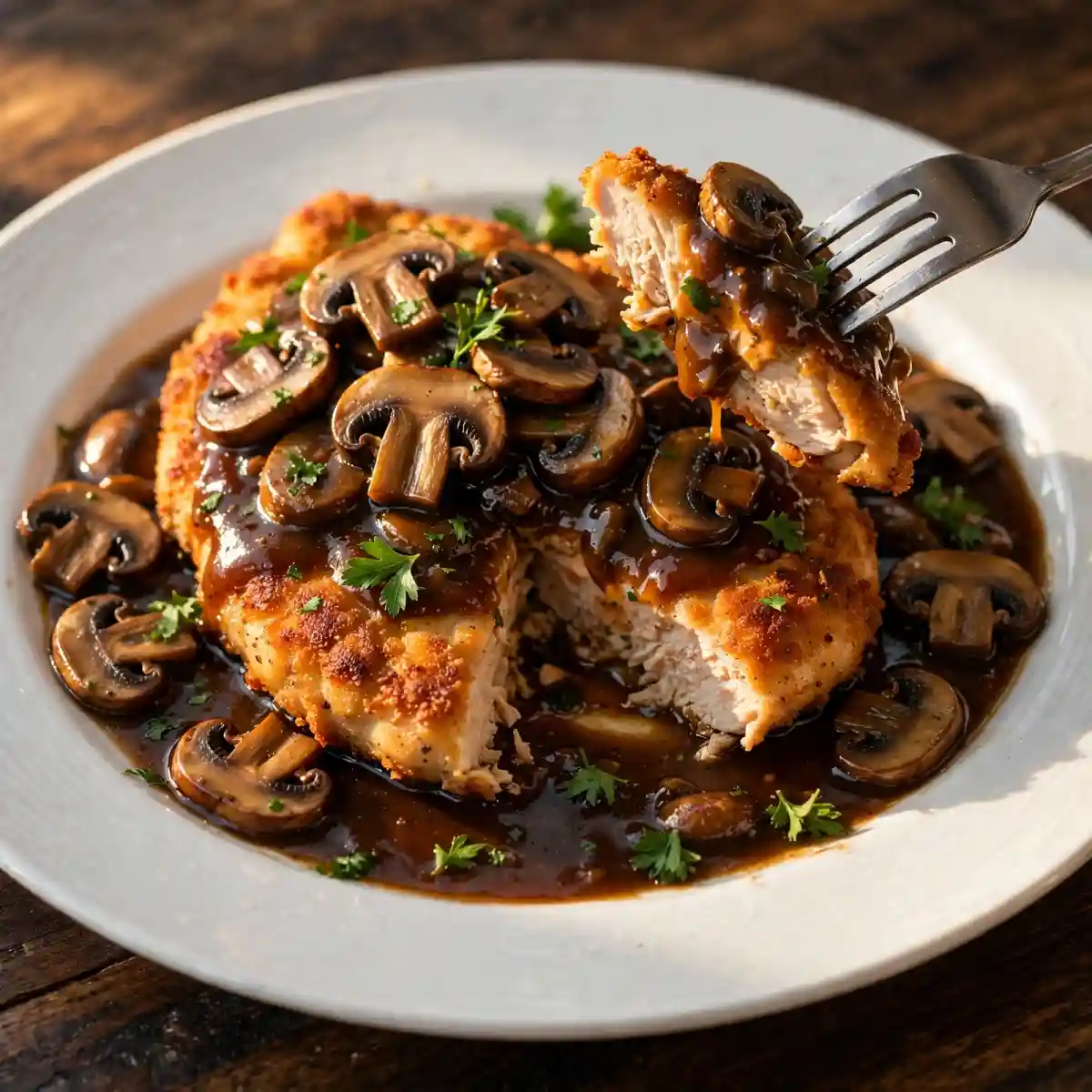
Easy Chicken Marsala (Tender, Mushroom, Rich Brown Sauce)
The moment you pour the deglazing liquid into a hot skillet full of browned mushrooms and chicken fond, the smell that fills the kitchen is unmistakably restaurant-quality: deeply savory, slightly sweet, with the rich, caramelized undertone of a proper pan sauce that took real work to build. The reality is that work took about 10 minutes, most of which was simply watching the mushrooms cook down and the sauce reduce. Chicken Marsala is one of those recipes that reliably produces a result more impressive than the technique behind it.
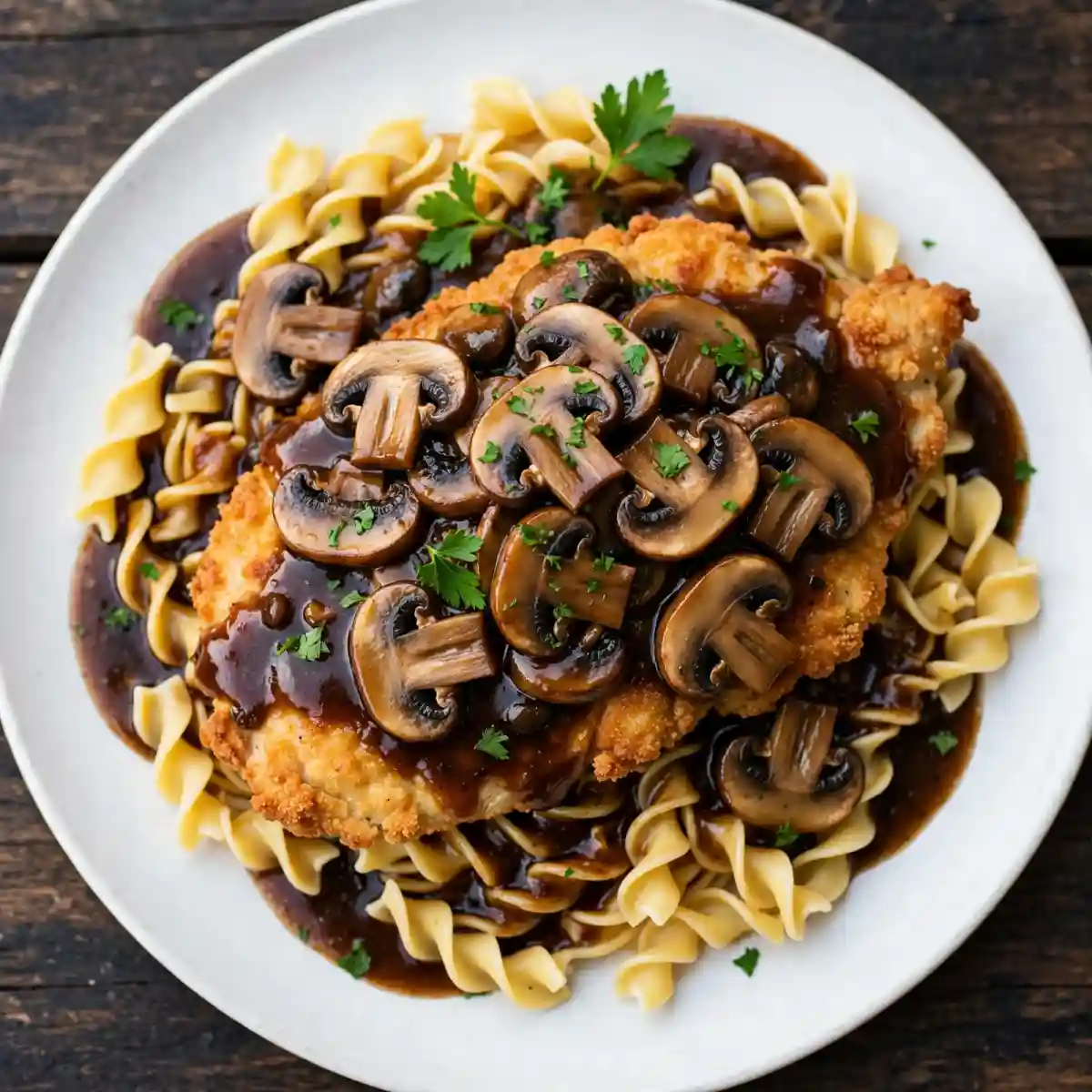
This chicken Marsala recipe builds the classic Italian-American dish from pounded chicken cutlets dredged in seasoned flour, seared golden in butter and olive oil, and finished in a brown sauce made from cremini mushrooms, shallots, garlic, a sweet grape juice and broth base that delivers the deep, slightly sweet, savory character the dish is known for, and finished with cold butter for a glossy, restaurant-style finish. One skillet, 40 minutes, serves four. It is the kind of weeknight dinner that makes people ask what restaurant you ordered from.
Why You’ll Love This Chicken Marsala
- The sauce is genuinely glossy and restaurant-quality. Finishing the sauce with cold butter pieces stirred in off the heat creates an emulsified, glossy finish that coats the chicken and mushrooms in a way that plain sauces never achieve without this step.
- Pounded thin cutlets cook through in 3 minutes per side. Thin, even chicken cutlets sear faster, more evenly, and with less risk of drying out than thick, uneven breasts. The flour dredge creates a light golden crust that holds the sauce.
- The mushrooms do the heavy flavor lifting. Cremini mushrooms cooked down until their moisture evaporates and they begin to brown produce a deeply savory, earthy flavor that becomes the backbone of the sauce rather than just a topping.
- One skillet, minimal cleanup. The chicken sears, the mushrooms cook, the sauce builds, and everything finishes in the same pan. The fond from the chicken and the mushrooms becomes part of the sauce.
- 40 minutes from start to plated. Despite looking and tasting like a dish that required considerable effort, the entire recipe fits comfortably within a weeknight dinner window.
Ingredients You’ll Need
Recipe Timing
| Detail | Info |
|---|---|
| Servings | 4 |
| Difficulty | Intermediate |
| Course | Main Course |
| Cuisine | Italian-American |
| Prep Time | 15 minutes |
| Cook Time | 25 minutes |
| Total Time | 40 minutes |
The most important preparation decision in this recipe is how you prepare the chicken. Boneless skinless chicken breasts need to be halved horizontally to create two thinner pieces, then each piece pounded to an even thickness of approximately 1cm (3/8 inch). This flattening serves two purposes: it ensures the chicken cooks through evenly in the 3 minutes per side the recipe calls for, and it tenderizes the meat by breaking down the muscle fibers before cooking. Chicken that is not pounded thin either cooks unevenly (browned outside, undercooked inside) or requires longer in the pan, which dries the exterior before the center reaches temperature. Take the extra 3 minutes to pound the cutlets.
For the mushrooms, cremini (also called chestnut or baby bella) mushrooms produce a deeper, earthier flavor than white button mushrooms and are worth using if available. Slice them thickly (about 5mm) rather than thinly: thick slices hold their structure through the sauté rather than collapsing completely, giving the finished dish distinct mushroom pieces that are visible and texturally present in every bite.
For the deglazing base, this recipe uses a combination of unsweetened white grape juice and low-sodium chicken broth. The grape juice contributes the natural sweetness, slight acidity, and depth that the classic deglazing liquid provides, while the broth adds savory body. This combination produces the characteristic slightly sweet, deeply savory sauce profile of authentic chicken Marsala without any alcohol.
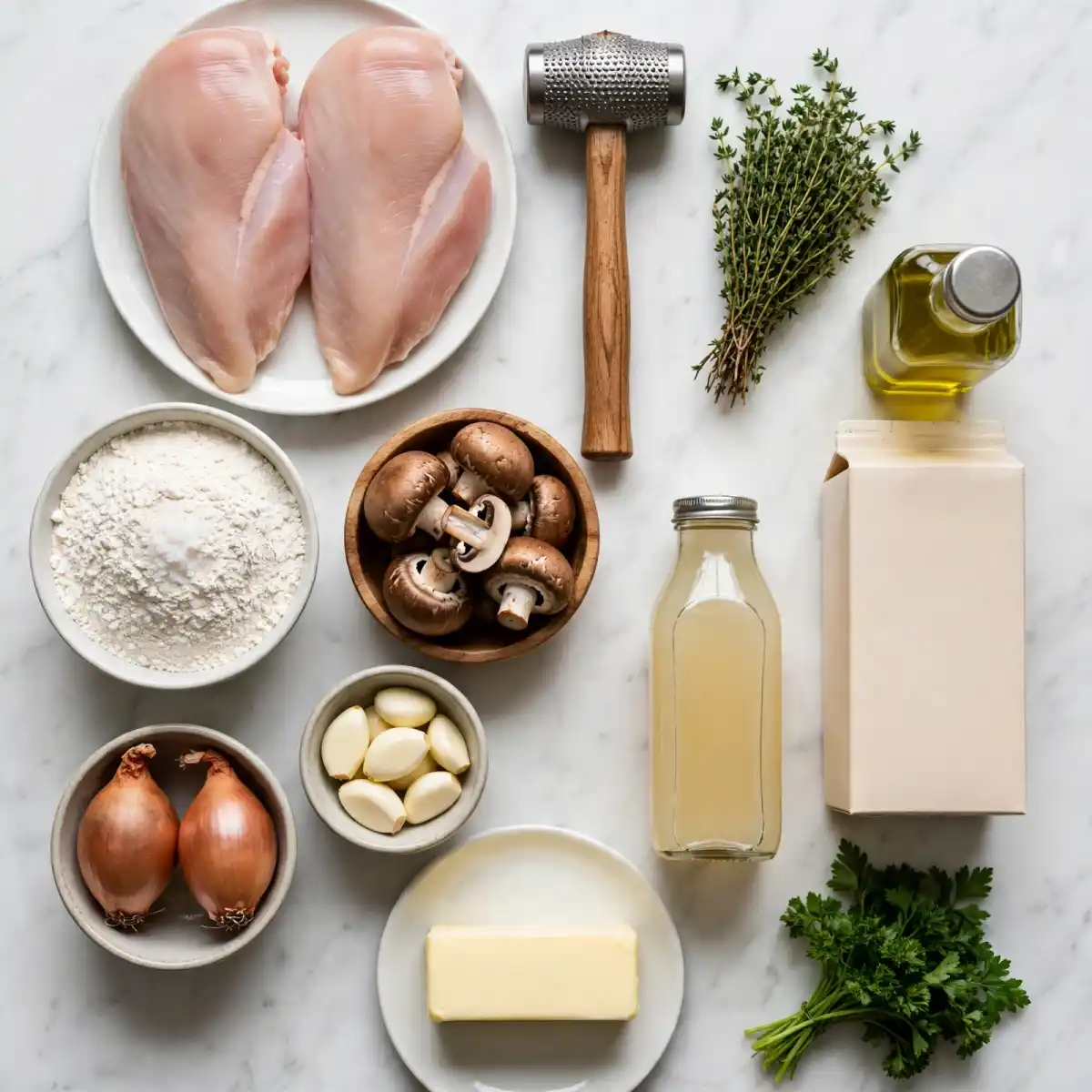
For the Chicken:
- 2 large boneless skinless chicken breasts (about 700g / 1.5 lbs), halved horizontally and pounded to 1cm thickness. This yields 4 thin cutlets, one per serving. Pound between two sheets of plastic wrap to avoid tearing.
- 1/2 cup (60g) all-purpose flour. For dredging. The flour creates the golden crust, helps the sauce cling to the chicken, and adds a small amount of body to the sauce as it dissolves.
- 1/2 teaspoon fine sea salt.
- 1/4 teaspoon black pepper.
- 1/4 teaspoon garlic powder.
- 2 tablespoons (30g) unsalted butter. For searing. Butter browns the chicken more attractively than oil alone and contributes to the flavor of the fond.
- 2 tablespoons (30ml) extra virgin olive oil. Combined with the butter to raise the smoke point and prevent the butter from burning during the high-heat sear.
For the Marsala Sauce:
- 2 tablespoons (30g) unsalted butter. For cooking the aromatics and mushrooms.
- 2 shallots, finely diced. Cooked until softened before the mushrooms go in. Shallots provide a sweeter, more refined aromatic base than regular onion in this sauce.
- 3 cloves garlic, finely minced.
- 400g (14 oz) cremini mushrooms, stems trimmed and sliced 5mm thick. The primary flavor component of the sauce alongside the deglazing liquid.
- 1/2 cup (120ml) unsweetened white grape juice. Provides the natural sweetness and slight acidity of the classic deglazing base. Use a good-quality unsweetened variety: sweetened grape juice throws the sauce balance off and makes it noticeably too sweet.
- 1/2 cup (120ml) low-sodium chicken broth. Combined with the grape juice to create the sauce base. Provides savory depth and body.
- 1/2 cup (120ml) additional low-sodium chicken broth. Added after the first reduction to control the final sauce consistency.
- 2 teaspoons fresh thyme leaves (or 1/2 teaspoon dried).
- 2 tablespoons (30g) cold unsalted butter, cut into small cubes. The finishing element. Whisked into the sauce off the heat to create the glossy, emulsified finish. Must be cold.
- 1/4 teaspoon fine sea salt, plus more to taste.
- Fresh flat-leaf parsley, chopped, for serving.
Allergen and Dietary Disclosure
This recipe contains dairy (butter), gluten (all-purpose flour in the dredge), and eggs are absent.
For a gluten-free version, replace the all-purpose flour dredge with a certified gluten-free all-purpose flour blend or fine rice flour. The dredge functions identically and the sauce thickens by the same mechanism. Verify that your chicken broth is also gluten-free.
For a dairy-free version, replace the butter in both the sear and the sauce with a high-quality vegan butter block (not a soft spread). The finishing step (cold butter whisked in off the heat) is the most critical dairy element: vegan butter blocks work for this step, though the emulsification is slightly less stable than with dairy butter.
Free from eggs, nuts, and soy as written. Not guaranteed safe for any specific allergy without checking all individual ingredient labels.
Step-by-Step Directions
Step 1: Pound and Season the Chicken
Place each halved chicken breast between two sheets of plastic wrap on a flat, stable surface. Using a meat mallet or the bottom of a heavy skillet, pound firmly and evenly, working from the center toward the edges, until each piece is a uniform 1cm (3/8 inch) thick throughout. Season both sides of each cutlet with the salt, pepper, and garlic powder. Place the seasoned flour on a wide, shallow plate and dredge each cutlet, pressing gently so the flour adheres to both sides. Shake off any excess so only a thin, even coating remains.

Chef’s Note: The thin, even flour coating is the difference between a golden crust and a patchy, uneven one. Too much flour creates a gummy layer that never fully crisps; too little means the crust is thin and breaks away from the chicken as the sauce cooks. Press the cutlet firmly onto the flour, flip, press again, then hold it at an angle over the plate and pat gently to remove loose flour.
Food Safety Note: Raw chicken must reach an internal temperature of 74°C (165°F). With 1cm cutlets at the heat level described, this is reliably reached within the 3-minute-per-side cook time.
Step 2: Sear the Chicken Cutlets
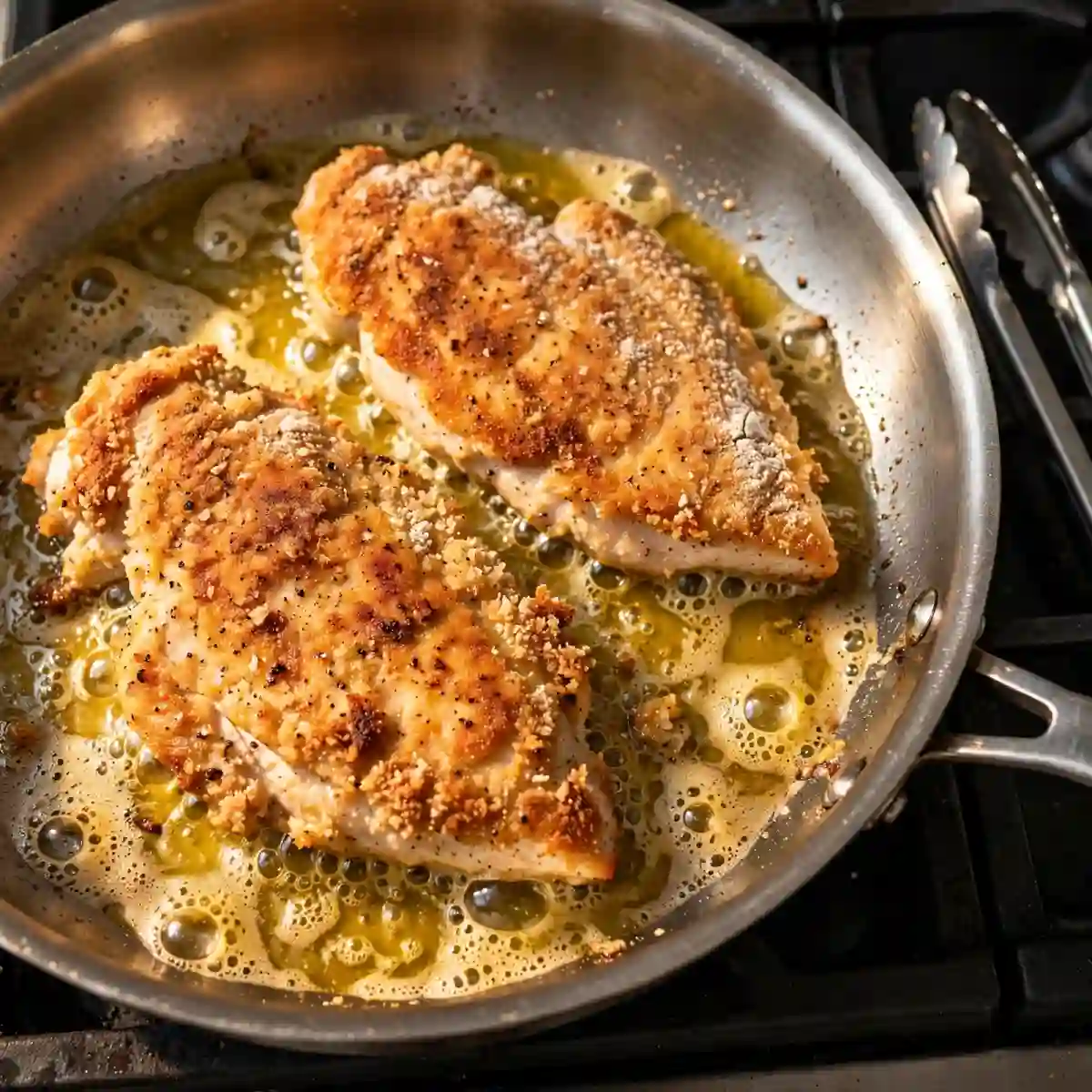
Heat the 2 tablespoons of butter and 2 tablespoons of olive oil in a large (30cm / 12-inch) stainless steel or cast iron skillet over medium-high heat. When the butter foam has subsided and the mixture is visibly shimmering with tiny ripples at the surface, add two cutlets in a single layer. Cook undisturbed for exactly 3 minutes until the underside is a deep golden-brown. Flip and cook the second side for 2 to 3 minutes until fully cooked through with no pink at the center and an internal temperature of 74°C (165°F). Transfer to a plate. Repeat with the remaining two cutlets. Do not wipe the skillet.
Step 3: Cook the Shallots and Mushrooms
Reduce the heat under the skillet to medium. Add the 2 tablespoons of butter for the sauce. Once it melts, add the diced shallots and cook for 2 minutes, stirring, until they soften and become translucent. Add the minced garlic and stir for 30 seconds. Add the sliced cremini mushrooms in a single layer as much as possible. Cook without stirring for 2 minutes until the bottom sides begin to brown, then stir and continue cooking for 4 to 5 more minutes until most of the mushroom moisture has evaporated, the mushrooms are golden-brown, and they have reduced to about half their original volume. The mushrooms need to actually brown here, not just soften: golden, slightly caramelized mushrooms produce a much deeper-tasting sauce than pale, steamed ones.
Chef’s Note: Mushrooms release a significant volume of water when they first hit the hot pan. If you stir them too early, they steam in that liquid rather than searing. Leave them untouched for the first 2 minutes and you will see the difference: the bottom sides develop a golden color while the released liquid concentrates rather than flooding the pan.
Step 4: Deglaze and Build the Sauce
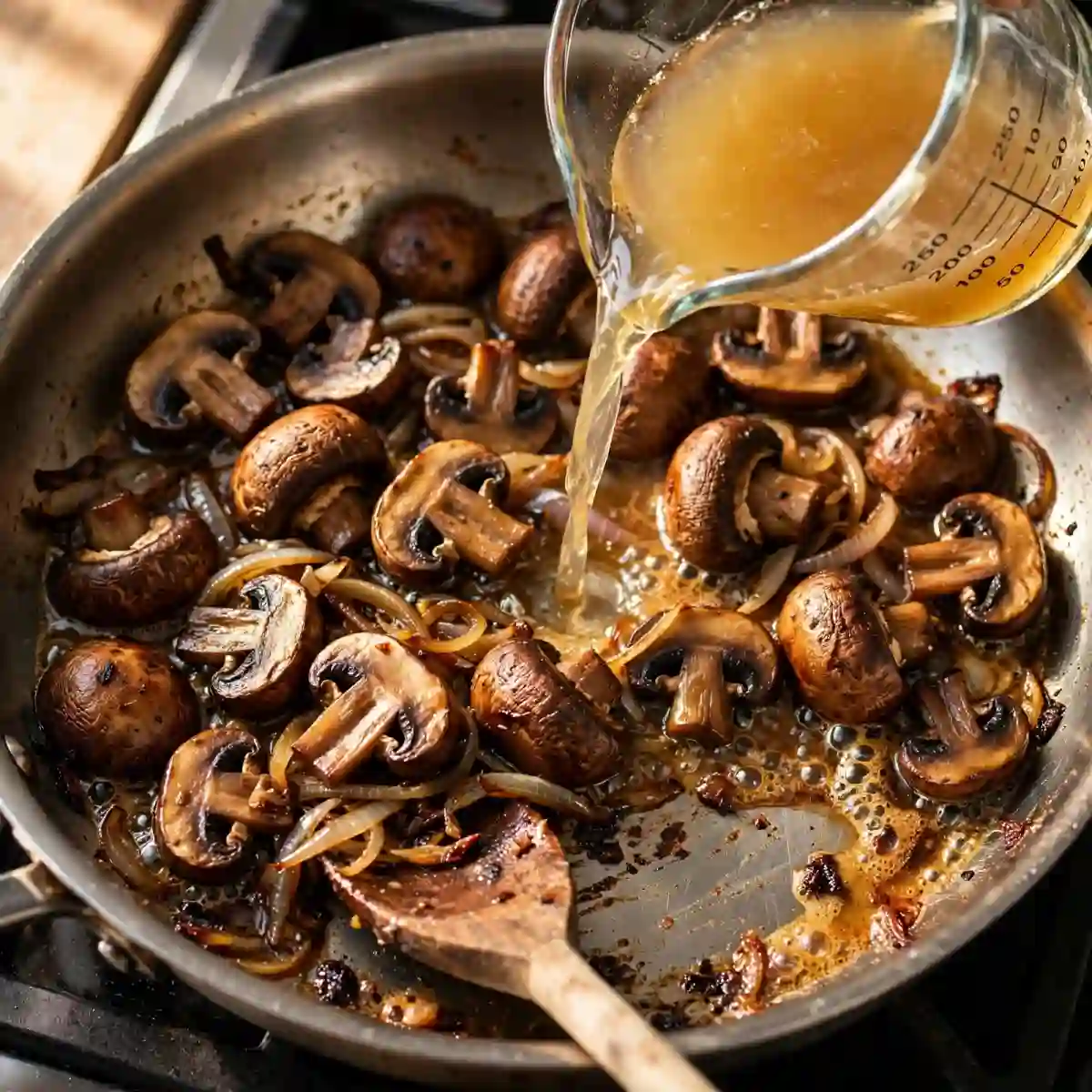
Pour the white grape juice directly into the pan with the mushrooms. The liquid will sizzle and immediately begin lifting the dark, flavorful fond from the pan bottom: stir vigorously with a wooden spoon, scraping every browned bit into the sauce as the liquid bubbles. Add the fresh thyme and the first 1/2 cup of chicken broth. Stir to combine. Raise the heat to medium-high and bring the sauce to a simmer. Cook uncovered for 3 to 4 minutes, stirring occasionally, until the liquid has reduced by approximately one-third and the sauce looks slightly more concentrated and darker in color.
Chef’s Note: The fond scraped from the pan bottom during deglazing is the most concentrated flavor in the entire dish. Every dark, caramelized bit contains Maillard-browned compounds from the seared chicken and the caramelized mushrooms. Getting all of it into the sauce rather than leaving it on the pan is the step that makes the difference between a restaurant sauce and a home version that tastes one-dimensional.
Step 5: Finish the Sauce
Add the remaining 1/2 cup of chicken broth to the reduced sauce. Stir to combine and cook for another 2 minutes until the sauce is lightly thickened, deeply savory-smelling, and coats the back of a spoon in a thin, even layer. Taste it at this point and adjust salt. Remove the skillet from the heat entirely. Add the cold butter cubes directly to the hot sauce and whisk vigorously for 30 to 45 seconds until each piece melts and disappears into the sauce, leaving it noticeably more glossy and slightly thicker than before. This is the beurre monté technique: cold butter whisked into a hot sauce off the heat creates a temporary emulsion that gives restaurant sauces their characteristic glossy appearance.
Chef’s Note: The cold butter must go in off the heat. Hot, boiling sauce breaks the emulsion the butter creates, turning the sauce greasy rather than glossy. At the residual heat of a just-removed pan, the butter melts slowly enough for the fat globules to form a stable emulsion with the sauce liquid. If the sauce breaks (looks oily and separated), it cannot be fully fixed, so getting the heat right here matters.
Step 6: Return the Chicken and Serve
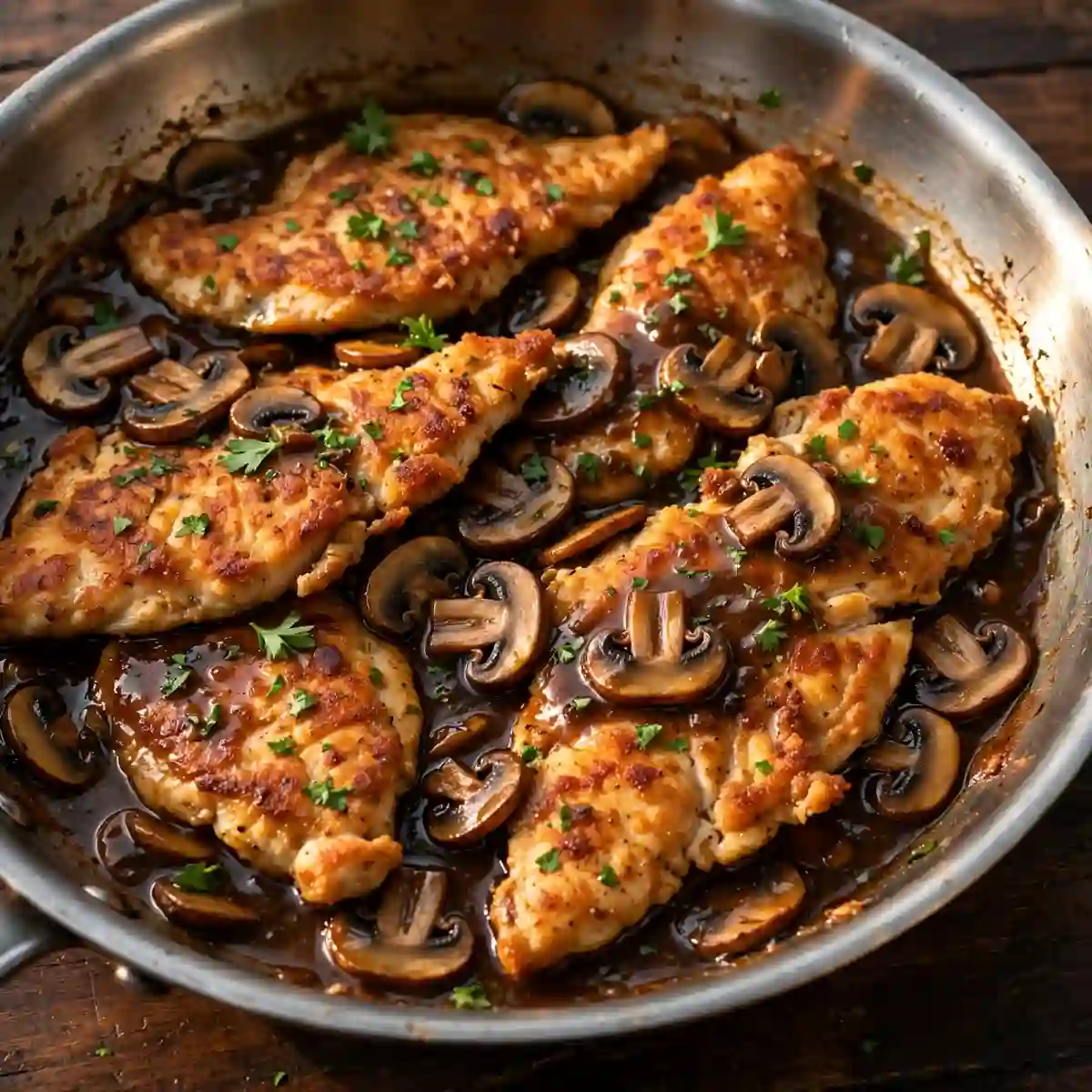
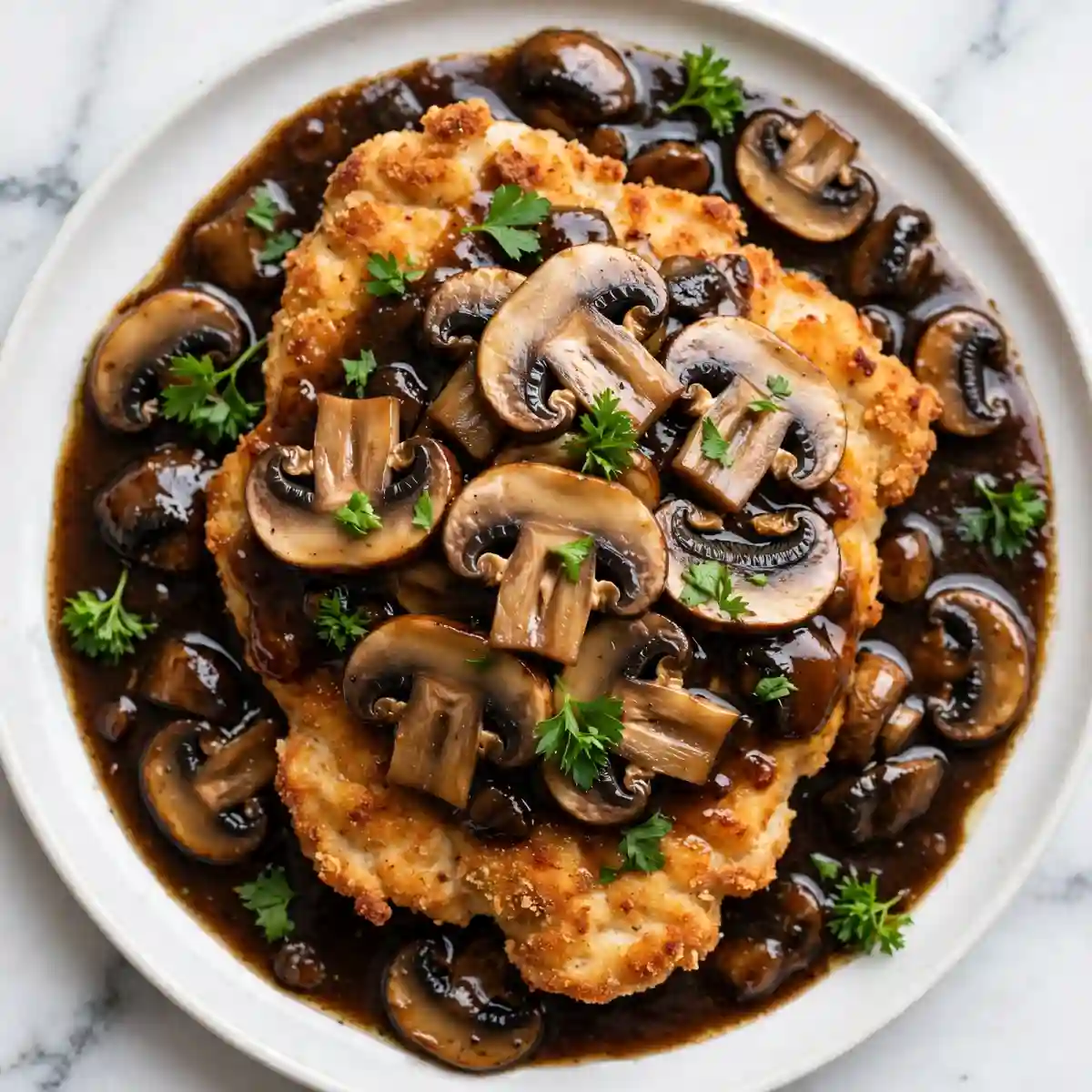
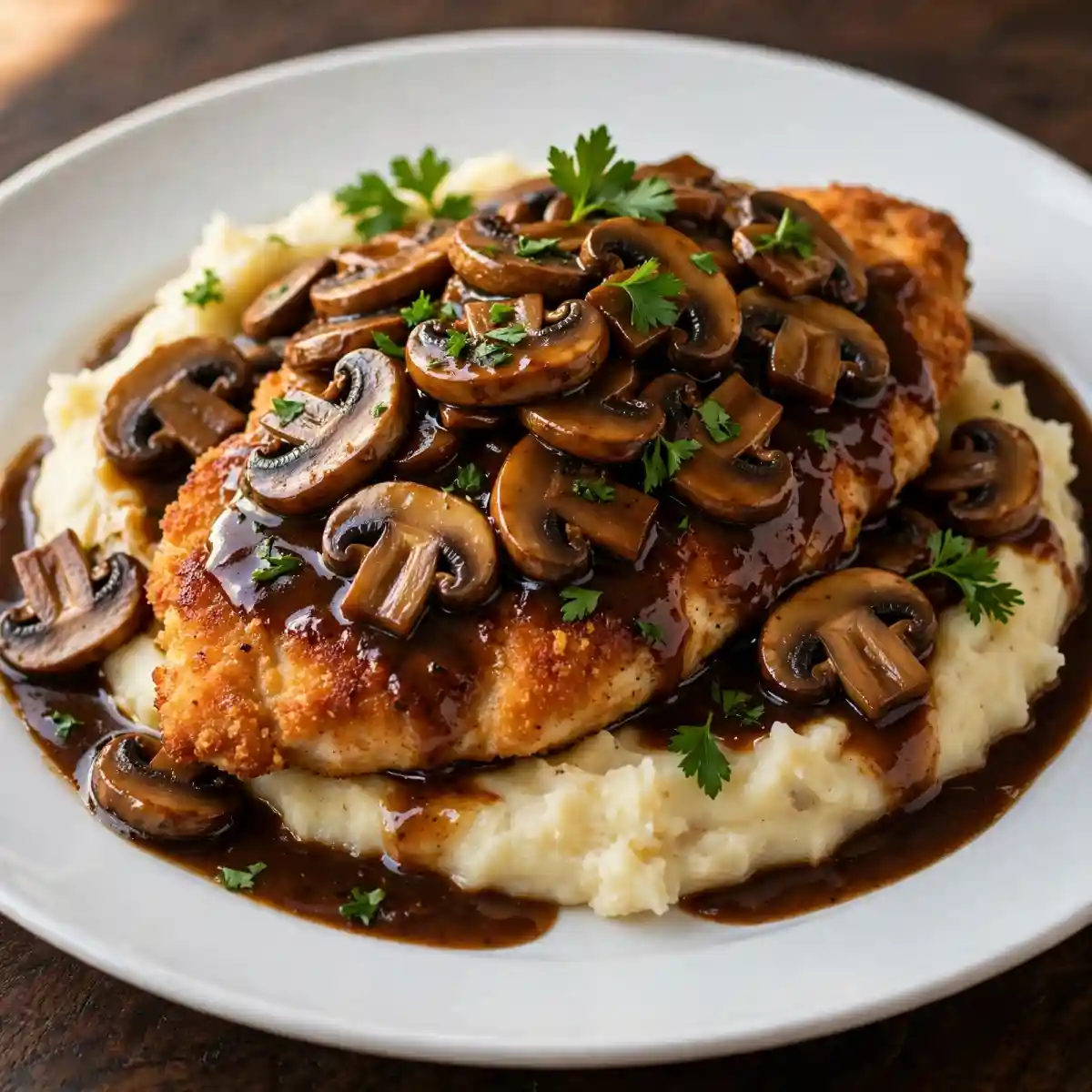
Nestle the seared chicken cutlets back into the skillet, spooning the sauce and mushrooms generously over each piece. Leave them in the sauce for 1 to 2 minutes off the heat or over the lowest heat setting to warm through without overcooking. The sauce should pool around and over the chicken, coating it in a glossy, mushroom-laden layer. Scatter the chopped fresh parsley over the finished dish and serve immediately, spooning extra sauce from the pan over each portion on the plate.
Common Mistakes and Troubleshooting
| Problem | Cause | Solution |
|---|---|---|
| Chicken is dry and tough | Not pounded thin; overcooked on the second side | Always pound to 1cm even thickness; pull the moment internal temperature reaches 74°C (165°F), not beyond |
| Flour coating falls off during cooking | Too much flour left on the cutlet; pan not hot enough before chicken went in | Shake off excess flour firmly; heat oil and butter until butter foam fully subsides before adding chicken |
| Mushrooms steamed instead of browning | Pan crowded; stirred too early; heat too low | Use a 30cm skillet; leave mushrooms untouched for 2 minutes; keep heat at medium throughout |
| Sauce too thin after reducing | Sauce not reduced enough before finishing butter; too much broth added | Reduce until the sauce coats a spoon before adding the last 1/2 cup of broth; simmer until it coats again |
| Sauce greasy and broken after butter finish | Sauce still at a boil when cold butter was added | Remove from heat entirely before whisking in cold butter; the pan must be off the burner |
| Sauce too sweet | Sweetened grape juice used instead of unsweetened | Use only unsweetened white grape juice; sweetened versions are noticeably too sweet for a savory sauce |
Variations and Substitutions
Chicken Marsala With Cream: After deglazing and before the second broth addition, stir in 1/4 cup of heavy cream. Let it simmer for 2 minutes until it integrates with the mushroom sauce and thickens slightly. The cream transforms the sauce from a glossy brown pan sauce into a richer, slightly ivory-tinted cream sauce that is fuller on the palate. Skip the cold butter finish when using cream since the sauce is already rich enough.
Chicken Marsala With Prosciutto: Skip. Per the halal filter, prosciutto is not used. Instead, for a more complex, layered sauce, add 2 tablespoons of tomato paste alongside the shallots and cook for 1 minute before the mushrooms go in. The tomato paste adds a rounded, savory depth that complements the mushroom and grape juice sauce without changing its fundamental character.
Beef Marsala: Replace the chicken with 4 thin-cut beef sirloin or minute steaks, pounded to 1cm thickness and dredged identically. Sear for 2 minutes per side for medium. The beef pairs beautifully with the mushroom sauce and the slightly sweet, savory deglazing base. Use beef broth in place of chicken broth in the sauce.
Vegetarian Mushroom Marsala: Double the mushrooms to 800g and use a mix of cremini and shiitake for added depth. Omit the chicken entirely. Build the sauce from vegetable broth and the same grape juice base, finishing with the cold butter as directed. Serve over egg noodles, polenta, or mashed potatoes as a complete vegetarian main course. The shiitake mushrooms provide enough savory depth that the dish doesn’t feel incomplete without the meat.
Chicken Marsala With Lemon: Add 1 tablespoon of fresh lemon juice to the finished sauce off the heat alongside the cold butter. The lemon adds a sharp, bright counterpoint to the sweetness of the grape juice base and the richness of the butter, producing a lighter, more vibrant character that is particularly good in warmer months.
Sheet Pan Marsala: Sear the pounded, dredged chicken cutlets as directed, then transfer to a sheet pan. Build the mushroom sauce in the same skillet but pour it directly over the chicken on the pan. Roast at 190°C (375°F) for 10 minutes to finish the chicken and reduce the sauce simultaneously. This method is more practical for larger quantities (8 cutlets rather than 4) without requiring multiple batches in the skillet.
Serving Suggestions
- Over mashed potatoes. A generous mound of creamy mashed potato beneath a chicken Marsala cutlet with sauce pooled around it is the most satisfying plating for this dish. The potato absorbs the mushroom sauce in a way that pasta and rice don’t quite replicate.
- With egg noodles. Wide egg noodles tossed with a small amount of butter alongside chicken Marsala is the classic Italian-American restaurant pairing. The noodles are a neutral vehicle for the sauce without competing with the dish’s flavors.
- With steamed broccolini or asparagus. A simple green vegetable steamed or roasted alongside provides a fresh, slightly bitter contrast to the rich, sweet-savory sauce and rounds out the plate without additional cooking complexity.
- With polenta. Creamy polenta, slightly loose and very well-seasoned, is a genuinely excellent base for chicken Marsala. The corn’s natural sweetness complements the grape juice notes in the sauce in a way that is unexpected but works very well.
- With crusty bread for sauce dipping. A thick slice of good bread at the table alongside a plate of chicken Marsala is for the sauce: there is too much good sauce to leave behind and bread handles it perfectly.
- With a glass of cold sparkling water and lemon. The acidity of cold sparkling water with lemon cuts through the richness of the butter-finished sauce and refreshes the palate between bites in a way that makes the meal feel balanced rather than heavy.
Tips for the Best Results
- Pound the chicken before you do anything else. The entire recipe’s cook time is built around 1cm cutlets. Thicker chicken means longer cooking, which means a drier result by the time the center is safe to eat. The pounding also tenderizes the meat. It takes 3 minutes and makes the dish significantly better.
- Don’t move the chicken for the first 3 minutes. A properly seared cutlet releases cleanly from the pan when the crust is fully set. If you try to lift it before that point, it tears rather than releasing. If it sticks when you try to flip it, it needs another 30 seconds.
- Let the mushrooms brown, not just soften. The flavor difference between pale, cooked mushrooms and deeply golden-brown mushrooms is not subtle. Golden mushrooms carry Maillard-browned flavor compounds that dissolve into the sauce and are responsible for most of its complexity. Soft, pale mushrooms produce a noticeably thinner-tasting sauce.
- Use cold butter and add it off the heat. The finishing butter step is what gives the sauce its restaurant-quality appearance. The butter must be cold so it melts slowly as it emulsifies. The pan must be off the heat so the sauce doesn’t boil and break the emulsion. These two conditions together are what produce the glossy, cohesive finish.
- Taste the sauce before the chicken goes back in. Once the cutlets are in the sauce, adjusting seasoning becomes messier and less precise. Taste the sauce at the end of Step 5, while it is still a pure sauce, and add salt then. The finished dish will be seasoned correctly without any adjustment at the table.
Storage Tips
Refrigerator
Transfer cooled chicken Marsala to an airtight container and refrigerate for up to 3 days. Store the chicken and sauce together: the chicken continues absorbing the sauce overnight, which deepens the flavor of the meat. The butter emulsion in the sauce breaks when cold and the sauce will look slightly separated in the refrigerator: this is normal and resolves when the sauce is gently reheated. The flavor remains good throughout.
Freezer
Chicken Marsala can be frozen, though the flour-dredged chicken loses its crisp crust entirely after freezing and thawing. Freeze in an airtight container with the sauce for up to 2 months. The mushroom sauce freezes very well: its flavor is fully intact after thawing. Freeze the chicken and sauce together in individual portions for the most practical reheating. Thaw overnight in the refrigerator before reheating gently.
Reheating
From the fridge: place the chicken and sauce in a skillet over medium-low heat with 2 to 3 tablespoons of chicken broth added to loosen the sauce. Stir gently and heat for 4 to 5 minutes until steaming throughout. Don’t let the sauce come to a boil during reheating: high heat breaks the butter emulsion further and can dry the chicken. The microwave at 50% power in 90-second intervals with the container covered works for single portions, with a splash of broth added before heating. The sauce may look thinner when reheated by microwave but tastes equally good.
Nutrition Information
Per serving (1 chicken cutlet with sauce and mushrooms, approximately 1/4 of the full recipe)
| Nutrient | Amount |
|---|---|
| Calories | 420 kcal |
| Protein | 38g |
| Carbohydrates | 15g |
| Fiber | 1.5g |
| Sugar | 6g |
| Total Fat | 22g |
| Saturated Fat | 10g |
| Cholesterol | 125mg |
| Sodium | 580mg |
| Vitamin C | 5mg |
| Calcium | 40mg |
| Iron | 2.5mg |
| Potassium | 680mg |
Nutrition values are approximate and may vary based on brands and portion sizes.
Why This Recipe Works
The flour dredge on the chicken cutlets is a multi-function ingredient rather than just a coating. First, the starch in the flour creates the Maillard-browning reactions at the chicken surface during searing that produce the golden color and roasted, slightly nutty flavor of the crust. Second, the small amount of flour that remains on the chicken after shaking off the excess dissolves into the sauce when the cutlets are returned to the pan, contributing a light body and slightly coating consistency to the finished sauce without requiring any separate thickening. Third, the flour creates a physical surface that the sauce can adhere to more effectively than bare chicken skin, which is why each bite of sauced chicken carries the full flavor of the sauce rather than just having sauce pooled around it.
Cooking the mushrooms to a genuinely golden, slightly caramelized state before deglazing is the step that determines the depth of the sauce more than any other. When mushrooms first hit a hot pan, they release a large volume of water from their cellular structure. During the first few minutes, this water dominates the pan and the mushrooms effectively steam rather than sear. As the water evaporates over 4 to 5 minutes of continued cooking, the pan surface re-establishes contact with the mushrooms at a temperature above 140°C (284°F), and Maillard browning begins at the mushroom surfaces. The flavor compounds produced during this browning are significantly more complex and savory than the flavor of raw or steamed mushrooms. When the deglazing liquid goes into a pan with golden, browned mushrooms, it dissolves all those browning compounds into the sauce in seconds.
The cold butter finish, called beurre monté in professional kitchens, works through lipid emulsification. Butter is itself an emulsion: fat droplets suspended in a water-based liquid that contains milk proteins and lecithin as stabilizing agents. When cold butter is added to a hot sauce and whisked off the heat, the mechanical action of whisking breaks the butter into tiny fat droplets that become suspended in the sauce liquid, while the milk proteins and lecithin in the butter coat the fat droplets and prevent them from coalescing back together. The result is a sauce that appears glossy, slightly thickened, and uniformly opaque rather than translucent. If the sauce is too hot when the butter goes in, the heat causes the milk proteins to denature and lose their emulsifying capacity, the fat droplets coalesce, and the sauce turns greasy and broken. The off-heat requirement is not optional.
The two-stage broth addition (first 1/2 cup, then another 1/2 cup after the first reduction) gives you practical control over the final sauce consistency that a single addition doesn’t provide. After the first reduction, you can see exactly how the sauce is behaving: how much body it has, how intensely flavored it is, and how close it is to the right consistency. The second addition then adjusts it to exactly the right thickness before the cold butter finish. A single large broth addition makes this calibration impossible.
I’ve made this recipe with both unsweetened white grape juice and plain apple juice as the deglazing base in side-by-side comparisons. The grape juice version produced a more complex, slightly more fruity and nuanced sauce that was closer to the classic restaurant version. The apple juice version was pleasant but noticeably simpler and lacked the slight tartness that balances the sweetness of the deglazing base in the finished sauce. For anyone making chicken Marsala regularly, unsweetened white grape juice is worth keeping in the pantry specifically for this application.
Frequently Asked Questions
Can I make chicken Marsala ahead of time?
Yes. Cook the full recipe, cool completely, and refrigerate in an airtight container for up to 3 days. The flavors deepen overnight as the chicken absorbs the sauce. The butter emulsion in the sauce will break in the cold and the sauce will look slightly separated: this is normal. When reheating, do so gently over medium-low heat with a small splash of chicken broth to loosen the sauce. It comes back together and tastes very close to the freshly made version.
Why is my chicken Marsala sauce so thin?
A thin sauce usually means the mushrooms were not cooked down long enough to evaporate their moisture before the deglazing liquid was added, or the first reduction didn’t go far enough before the second broth addition. Cook the mushrooms until golden and significantly reduced in volume, and reduce the first broth addition until the sauce visibly coats the back of a spoon before adding the remaining broth. The cold butter finish at the end also adds body: don’t skip it.
Can I use chicken thighs instead of chicken breasts?
Yes. Boneless skinless chicken thighs work well and are arguably more forgiving than breasts since the higher fat content makes them harder to dry out. Remove the excess fat, pound them to an even 1cm thickness, and cook for the same time. The finished result is slightly juicier and more flavorful than the breast version. The dredge and sauce technique stay identical.
How do I know when the chicken is fully cooked?
Thin (1cm) pounded chicken cutlets cooked at medium-high heat in butter and oil for 3 minutes per side reliably reach the safe internal temperature of 74°C (165°F). The most reliable visual check is cutting into the thickest part of one cutlet: the interior should be completely opaque and white, with no pink or translucent area remaining. An instant-read thermometer inserted into the thickest part confirming 74°C provides the most definitive assurance.
Is chicken Marsala gluten-free?
As written, no: the flour dredge contains all-purpose wheat flour. To make it gluten-free, replace the flour with a certified gluten-free all-purpose flour blend or fine rice flour in the same quantity. The dredge functions identically and the sauce behaves the same way. Verify that your chicken broth is also certified gluten-free, as some brands use wheat-based thickeners. With these two substitutions, the entire recipe is naturally gluten-free.
Can I skip pounding the chicken?
You can, but the recipe doesn’t work as well. Unpounded thick chicken breasts take 6 to 8 minutes per side to cook through fully, by which time the flour coating has gone past golden to brown or dark, the crust can become overly thick and chewy, and the meat can be dry at the edges before the center is safe to eat. The pounding step takes 3 minutes and is the most direct way to ensure the chicken cooks evenly and quickly enough that the crust stays golden, the meat stays juicy, and the whole recipe fits into the 40-minute window.
What is the best mushroom to use for chicken Marsala?
Cremini mushrooms (also labeled chestnut or baby bella) produce the best flavor for chicken Marsala because they are more intensely flavored than white button mushrooms and hold their shape through the sauté without collapsing entirely. Shiitake mushrooms are a good secondary option that add a deeper, more earthy note. A 50/50 mix of cremini and shiitake produces a particularly complex mushroom flavor in the sauce. Avoid portobello mushrooms: they are too large and meaty for a pan sauce context and release too much moisture.
Conclusion
Chicken Marsala earns its restaurant reputation at home when two things are done correctly: the mushrooms are cooked to actually golden rather than just soft, and the cold butter finish is added strictly off the heat. Those two decisions produce a sauce with the depth and glossiness that makes the dish look and taste considerably more involved than the 40 minutes it takes. The pounded thin cutlets, the deglazing scrape, and the two-stage broth addition are all practical decisions that build toward the same result: a pan sauce that is worth every bite. Make chicken Marsala once with these principles in place and it becomes the dinner party recipe you rely on without hesitation.
If you loved this recipe, save it to your Italian dinner recipes Pinterest board so you can find it easily later. For more recipes and daily food inspiration, follow TheCookingVibes on Pinterest.
WPRM RECIPE CARD DATA
Recipe Name: Easy Chicken Marsala
Recipe Summary: Thin pounded chicken cutlets seared golden in butter and olive oil, finished in a deeply savory mushroom sauce built from golden cremini mushrooms, a grape juice and broth base, and cold butter whisked in off the heat for a glossy, restaurant-quality finish.
Prep Time: 15 minutes
Cook Time: 25 minutes
Rest Time: N/A
Total Time: 40 minutes
Servings: 4
Yield: 4 chicken cutlets with mushroom sauce
Difficulty: Intermediate
Course: Main Course
Cuisine: Italian-American
Keywords/Tags: chicken Marsala, chicken Marsala recipe, easy chicken Marsala, chicken Marsala without wine, mushroom chicken Marsala, Italian chicken Marsala, pan sauce chicken, skillet chicken dinner
Ingredients:
For the Chicken:
- 2 large boneless skinless chicken breasts (about 700g), halved horizontally and pounded to 1cm thickness
- 1/2 cup (60g) all-purpose flour
- 1/2 teaspoon fine sea salt
- 1/4 teaspoon black pepper
- 1/4 teaspoon garlic powder
- 2 tablespoons (30g) unsalted butter
- 2 tablespoons (30ml) extra virgin olive oil
For the Marsala Sauce:
- 2 tablespoons (30g) unsalted butter
- 2 shallots, finely diced
- 3 cloves garlic, finely minced
- 400g (14 oz) cremini mushrooms, sliced 5mm thick
- 1/2 cup (120ml) unsweetened white grape juice
- 1 cup (240ml) low-sodium chicken broth, divided
- 2 teaspoons fresh thyme leaves
- 2 tablespoons (30g) cold unsalted butter, cubed
- 1/4 teaspoon fine sea salt, plus more to taste
- Fresh flat-leaf parsley, for serving
Instructions:
- Halve chicken breasts horizontally. Pound each piece between plastic wrap to 1cm thickness. Season with salt, pepper, and garlic powder. Dredge in flour on both sides, shaking off excess.
- Heat butter and olive oil in a large skillet over medium-high until butter foam subsides. Sear chicken 3 minutes per side until golden and internal temperature reaches 74°C (165°F). Remove to a plate. Keep pan unwashed.
- Reduce heat to medium. Add sauce butter. Cook shallots 2 minutes until soft. Add garlic, stir 30 seconds. Add sliced mushrooms. Leave undisturbed 2 minutes, then stir and cook 4 to 5 more minutes until golden and reduced in volume.
- Pour grape juice into the pan, scraping all browned bits from the bottom. Add thyme and 1/2 cup of broth. Simmer on medium-high for 3 to 4 minutes until reduced by one-third.
- Add remaining 1/2 cup broth. Simmer 2 minutes until sauce coats a spoon. Taste and adjust salt. Remove from heat. Add cold butter cubes and whisk vigorously until sauce is glossy and emulsified.
- Return chicken to the pan. Spoon sauce over each cutlet. Rest 1 to 2 minutes off heat. Garnish with parsley and serve immediately.
Notes:
- Always pound chicken to an even 1cm thickness: uneven thickness produces uneven cooking.
- Cook mushrooms until genuinely golden, not just soft: browned mushrooms carry significantly more flavor into the sauce.
- Finish butter must be cold and go in off the heat: this is what produces the glossy sauce finish.
- Use only unsweetened white grape juice: sweetened grape juice throws the sauce balance off noticeably.
Allergens: Contains dairy (butter) and gluten (all-purpose flour). Free from eggs, nuts, and soy as written. Use gluten-free flour blend for a gluten-free version and verify chicken broth label. Not guaranteed safe for any specific allergy without checking all individual ingredient labels.
Nutrition (per serving, 1 chicken cutlet with sauce):
Calories: 420 kcal | Protein: 38g | Carbohydrates: 15g | Fiber: 1.5g | Sugar: 6g | Total Fat: 22g | Saturated Fat: 10g | Cholesterol: 125mg | Sodium: 580mg | Vitamin C: 5mg | Calcium: 40mg | Iron: 2.5mg | Potassium: 680mg
Nutrition values are approximate and may vary based on brands and portion sizes.
Recipe Image Placeholder: [Add your own recipe photo/video here]
Timing Consistency Check: Prep (15 min) + Cook (25 min) = 40 minutes total. Matches Recipe Timing H3 exactly.
Easy Chicken Marsala
Ingredients
Equipment
Method
- Halve chicken breasts horizontally. Pound each piece between plastic wrap to 1cm thickness. Season with salt, pepper, and garlic powder. Dredge in flour on both sides, shaking off excess.
- Heat butter and olive oil in a large skillet over medium-high until butter foam subsides. Sear chicken 3 minutes per side until golden and internal temperature reaches 74°C (165°F). Remove to a plate. Keep pan unwashed.
- Reduce heat to medium. Add sauce butter. Cook shallots 2 minutes until soft. Add garlic, stir 30 seconds. Add sliced mushrooms. Leave undisturbed 2 minutes, then stir and cook 4 to 5 more minutes until golden and reduced in volume.
- Pour grape juice into the pan, scraping all browned bits from the bottom. Add thyme and 1/2 cup of broth. Simmer on medium-high for 3 to 4 minutes until reduced by one-third.
- Add remaining 1/2 cup broth. Simmer 2 minutes until sauce coats a spoon. Taste and adjust salt. Remove from heat. Add cold butter cubes and whisk vigorously until sauce is glossy and emulsified.
- Return chicken to the pan. Spoon sauce over each cutlet. Rest 1 to 2 minutes off heat. Garnish with parsley and serve immediately.
Notes
- Always pound chicken to an even 1cm thickness: uneven thickness produces uneven cooking.
- Cook mushrooms until genuinely golden, not just soft: browned mushrooms carry significantly more flavor into the sauce.
- Finish butter must be cold and go in off the heat: this is what produces the glossy sauce finish.
- Use only unsweetened white grape juice: sweetened grape juice throws the sauce balance off noticeably.
- Allergens: Contains dairy (butter) and gluten (all-purpose flour). Free from eggs, nuts, and soy as written. Use gluten-free flour blend for a gluten-free version and verify chicken broth label.
- Not guaranteed safe for any specific allergy without checking all individual ingredient labels.