
Loaded Baked Potato Soup (Creamy, Cheesy, Comforting)
There is a specific kind of cold-weather dinner that doesn’t require any convincing: thick, creamy, heavily topped, and served in a bowl big enough that finishing it feels like an accomplishment. Loaded baked potato soup is exactly that. It tastes like someone took everything good about a fully loaded baked potato and turned it into a soup without losing any of the richness or the satisfying weight of the original.
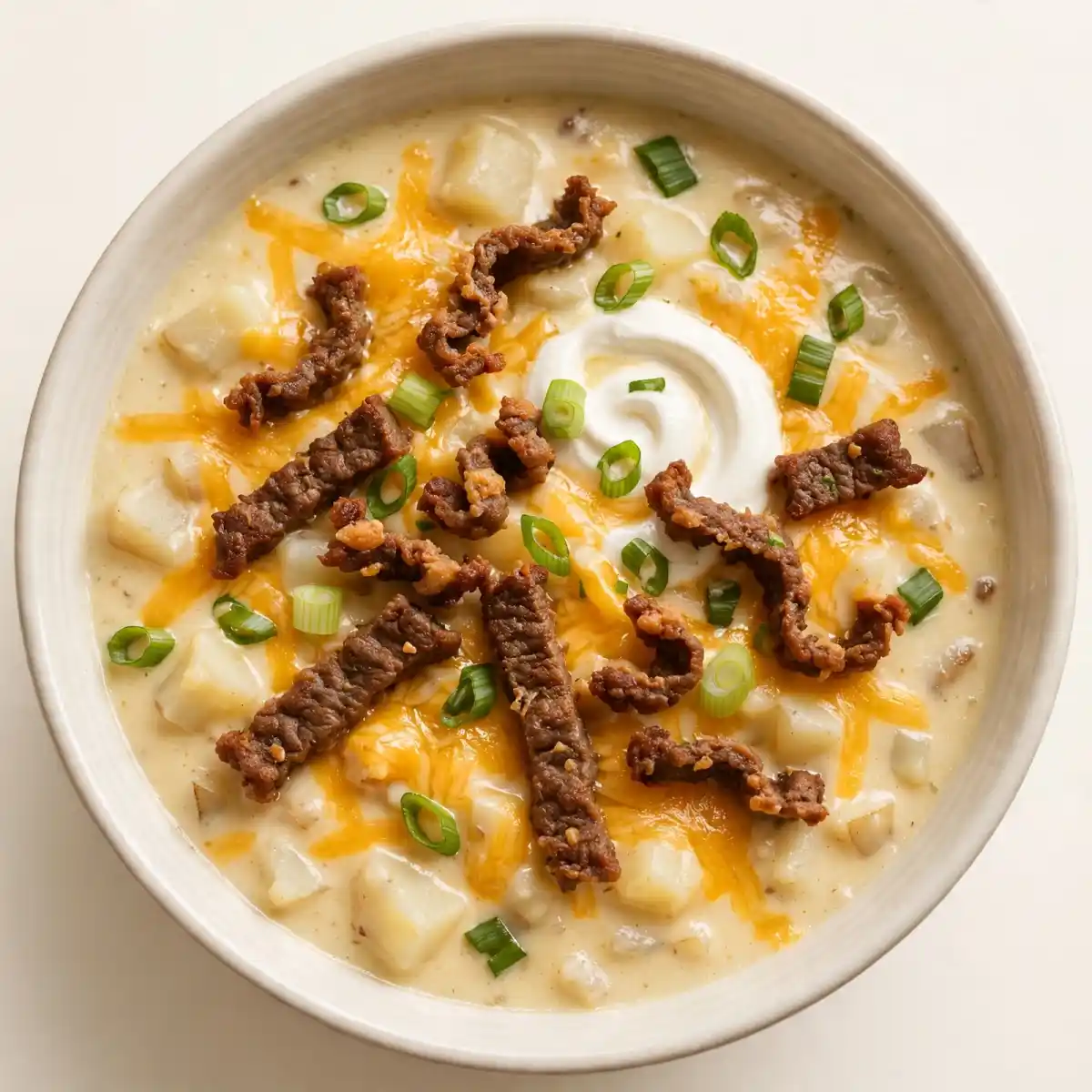
This loaded baked potato soup recipe builds a thick, velvety broth from a butter and flour roux, whole milk, and chicken broth, with russet potatoes cooked directly in the soup and mashed partially against the side of the pot to create body without losing all the texture. The finished soup is topped with shredded cheddar, sour cream, sliced green onions, and crispy spiced beef strips that deliver the salty, savory crunch that makes the loaded potato experience complete. One pot, 50 minutes, serves six people as a hearty main course. It reheats well, freezes acceptably, and is exactly the kind of recipe that earns a permanent place in a cold-weather rotation.
Why You’ll Love This Loaded Baked Potato Soup
- Thick and velvety without a blender. A butter and flour roux plus partial mashing of the potatoes directly in the pot creates a naturally thick, creamy broth. No blending required, which means no mess and no losing all the potato texture that makes this soup satisfying.
- The toppings are not optional extras. Shredded cheddar, sour cream, green onion, and crispy beef strips do more than garnish: they add texture contrast, temperature contrast, and flavor contrast that make each spoonful different from the last.
- One pot, easy cleanup. The roux, the broth, and the potatoes all build in the same pot. The soup plates directly from the stove.
- Russet potatoes break down in exactly the right way. High-starch russet potatoes cook to a soft, fluffy texture that partially dissolves into the broth when mashed, creating natural body without any thickening agents beyond the initial roux.
- Genuinely filling as a main course. The combination of potato, dairy, broth, and protein toppings makes this a complete dinner rather than a starter. A single large bowl with bread alongside is a satisfying meal.

Ingredients You’ll Need
Recipe Timing
| Detail | Info |
|---|---|
| Servings | 6 |
| Difficulty | Easy |
| Course | Main Course, Soup |
| Cuisine | American |
| Prep Time | 15 minutes |
| Cook Time | 35 minutes |
| Total Time | 50 minutes |
The most important ingredient decision in this recipe is the potato variety. Russet potatoes (also called Idaho potatoes) have a high starch content and a low moisture content compared to waxy varieties like Yukon Gold or red potatoes. When russets cook in the soup and are partially mashed, their starch dissolves into the broth, creating natural thickness and that distinctly creamy, full-bodied potato soup texture. Waxy potatoes hold their shape better but don’t contribute the same starch-based body to the broth: the soup ends up thinner and less satisfying. For this recipe specifically, russets are the correct choice. Peel them completely, cut them into 2cm cubes so they cook evenly in the allotted time, and add them directly to the building broth.
For the dairy, this recipe uses both whole milk and chicken broth rather than heavy cream alone. Whole milk provides the creamy, slightly sweet dairy background of the soup without making it as rich or as calorically dense as a pure cream base. The chicken broth adds savory depth and keeps the soup from tasting overly dairy-forward. If you prefer a richer soup, replace half the milk with heavy cream: the soup will be noticeably more indulgent but still follows the same technique.
For the crispy beef strips, thinly sliced beef sandwich meat or beef strips seasoned and pan-fried until crispy provide the salty, savory, crunchy element that loaded potato soup needs at the top of each bowl. Season thin beef slices with smoked paprika, garlic powder, and black pepper and pan-fry in a dry skillet over medium-high heat for 2 to 3 minutes per side until browned and slightly crispy at the edges. Crumble or cut into pieces before serving as the topping.
For the Soup Base:
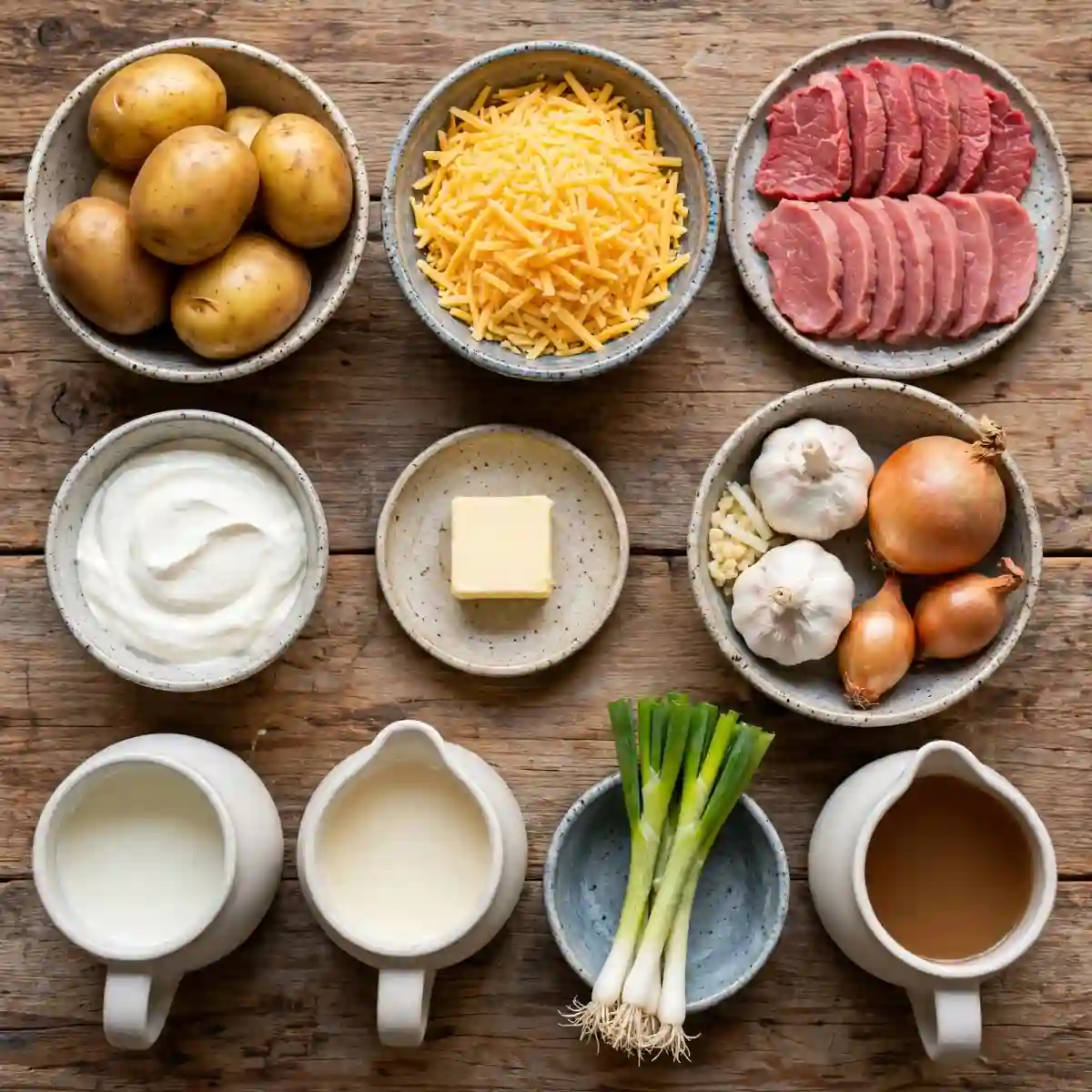
- 1.2kg (about 2.5 lbs) russet potatoes, peeled and cut into 2cm cubes. The body of the soup. High-starch content creates natural thickening when partially mashed.
- 4 tablespoons (60g) unsalted butter. Used to build the roux and cook the aromatics. Provides the rich, dairy background flavor of the soup.
- 1 medium yellow onion, finely diced. Cooked in the butter until soft before the flour goes in. Provides a savory aromatic base.
- 3 cloves garlic, finely minced.
- 1/4 cup (30g) all-purpose flour. Combined with the butter to form the roux that thickens the soup.
- 3 cups (720ml) low-sodium chicken broth. The savory liquid base. Combined with the milk to create the broth.
- 2 cups (480ml) whole milk. Provides the creamy, milky character of the soup. Full-fat milk produces a noticeably richer result than reduced-fat.
- 1 cup (240ml) full-fat sour cream. Stirred in toward the end rather than cooked from the beginning: sour cream added too early can curdle in a boiling soup. Adds tang, richness, and the dairy layering that is part of a loaded potato soup’s character.
- 1.5 cups (170g) sharp cheddar cheese, freshly shredded. Added off the heat in two additions so it melts smoothly without becoming grainy. Pre-shredded cheese contains anti-caking starches that prevent clean melting: shred your own from a block.
- 1 teaspoon fine sea salt, plus more to taste.
- 1/2 teaspoon black pepper.
- 1/2 teaspoon smoked paprika. Adds a subtle smokiness to the base broth that deepens the overall flavor.
- 1/4 teaspoon garlic powder.
For the Toppings:
- 150g (5 oz) thinly sliced beef sandwich meat or beef strips. Pan-fried until crispy and crumbled. Provides the savory, salty crunch element. Season and pan-fry as described above.
- Extra shredded cheddar, for serving.
- Extra sour cream, for serving.
- 3 to 4 green onions (scallions), thinly sliced.
Allergen and Dietary Disclosure
This recipe contains dairy (butter, whole milk, sour cream, cheddar cheese) and gluten (all-purpose flour in the roux).
For a gluten-free version, replace the all-purpose flour in the roux with a certified gluten-free all-purpose flour blend or fine white rice flour in the same quantity. The roux builds and functions identically. Verify that your chicken broth is also labeled gluten-free: some brands contain wheat derivatives.
For a dairy-free version, replace the butter with a vegan butter block, the whole milk with full-fat unsweetened oat or cashew milk, the sour cream with a full-fat plain dairy-free yogurt, and the cheddar with a good-quality dairy-free cheddar-style shred. The soup will be less rich but still thick and flavorful. The cashew milk version produces the closest result to the dairy original.
For a vegetarian version, replace the chicken broth with a good-quality vegetable broth and omit the beef topping, replacing it with extra shredded cheese, crispy chickpeas, or a drizzle of chilli oil for textural interest.
Free from eggs, nuts, and soy as written. Not guaranteed safe for any specific allergy without checking all individual ingredient labels.
Equipment Needed
A large, heavy-bottomed pot or Dutch oven (at least 5 litre capacity). Loaded baked potato soup expands as the potatoes cook and the dairy is added: a pot smaller than 5 litres risks overflow when the soup reaches a simmer with all components combined. A Dutch oven with thick walls maintains a steadier, more even heat for the roux stage, which prevents hot spots that can scorch the flour-butter mixture before the liquid goes in.
A potato masher. Used directly in the pot after the potatoes are cooked through to partially mash approximately half of them against the side, which creates body without losing all the potato chunks. An immersion blender gives too smooth a result for this recipe and blending hot liquid in a countertop blender at full volume is a safety risk. A simple handheld masher is the right tool here.
Step-by-Step Directions
Step 1: Prep the Potatoes and Beef Topping
Peel the russet potatoes completely and cut them into 2cm cubes, dropping them into a bowl of cold water as you cut to prevent browning. Drain and pat lightly dry when ready to use. For the beef topping, lay thin beef slices flat on a cutting board and season both sides lightly with smoked paprika, garlic powder, salt, and black pepper. Heat a dry skillet over medium-high heat and cook the beef slices for 2 to 3 minutes per side until browned and crisped at the edges. Transfer to a plate lined with a paper towel and allow to cool before crumbling or cutting into small pieces. Set aside.

Chef’s Note: Preparing the crispy beef topping at the start while the soup builds means it is ready at serving time and has had a chance to crisp fully from the initial pan heat. Beef strips that are still warm from the pan when added to the soup soften quickly in the steam: a brief rest period keeps them crunchier for longer.
Step 2: Build the Roux

Melt the 4 tablespoons of butter in the large pot over medium heat. Once the butter is fully melted and beginning to foam slightly, add the diced onion. Cook, stirring every 60 seconds, for 4 to 5 minutes until the onion is soft, translucent, and no longer smells raw. Add the minced garlic and stir for 30 seconds until fragrant. Add the flour directly to the pot, stirring constantly to coat the onion and garlic in the flour-butter mixture. Cook the roux, stirring continuously, for 90 seconds until it smells slightly nutty and looks uniformly pale golden: cooking it past the raw flour stage removes the starchy, uncooked flavor that would otherwise persist through the finished soup.
Chef’s Note: Stirring the roux continuously for the full 90 seconds matters more than the heat level during this step. The goal is even cooking of the flour proteins and starch without any scorching at the bottom. If the roux starts to stick or darken too quickly, reduce the heat slightly and keep stirring: a pale golden roux is correct; a brown or dark roux changes the flavor profile of the soup entirely.
Step 3: Add Broth and Potatoes
Pour the chicken broth into the roux in a steady stream while whisking vigorously: adding the liquid slowly and whisking continuously prevents lumps from forming as the roux dissolves into the broth. Once all the broth is incorporated and the mixture looks smooth and slightly thickened, pour in the whole milk. Add the smoked paprika, garlic powder, salt, and pepper. Stir to combine. Add the drained potato cubes directly to the pot and bring the soup to a steady, gentle simmer over medium-high heat, then reduce to medium to maintain the simmer.
Step 4: Simmer Until Potatoes Are Tender
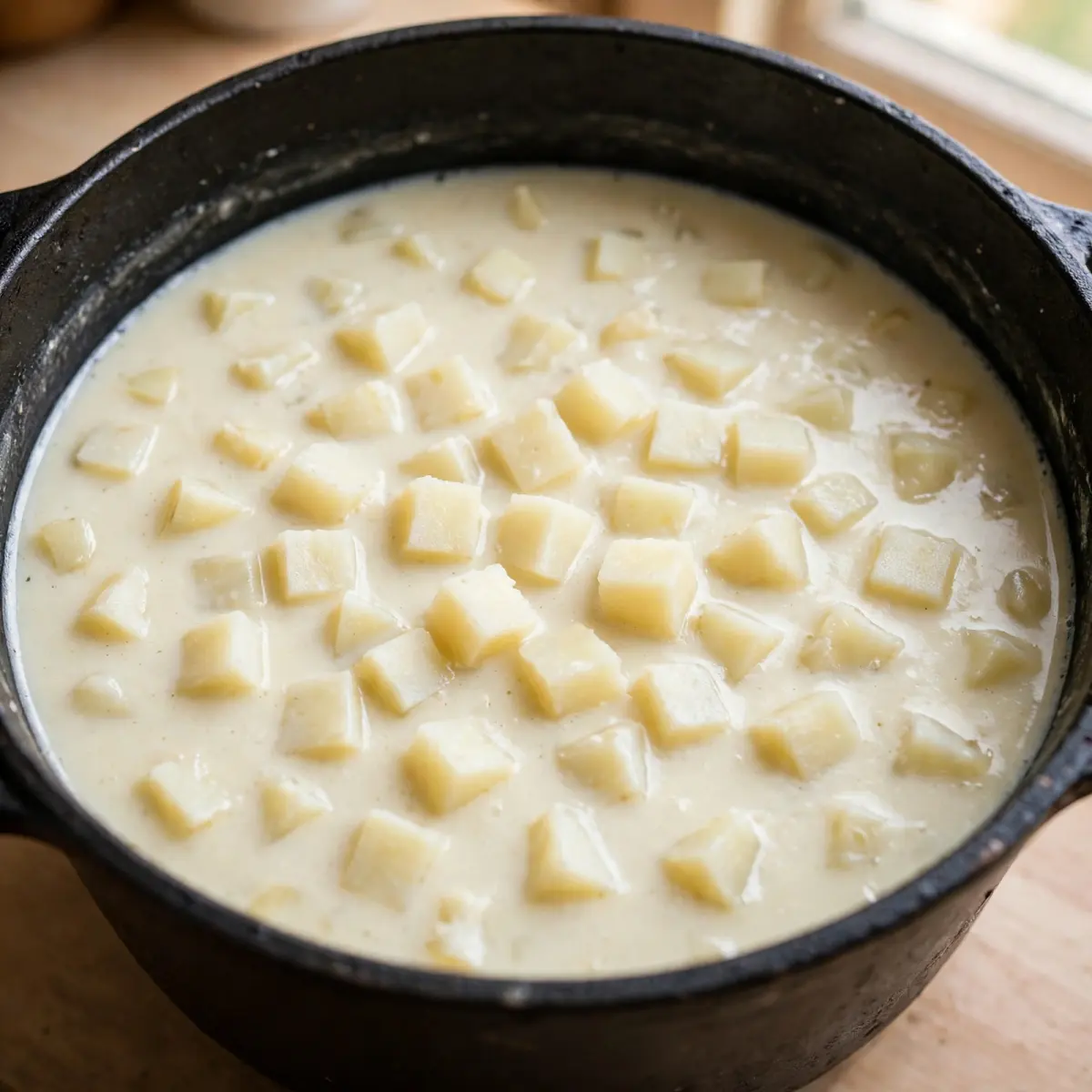
Cover the pot with the lid set slightly ajar and cook for 15 to 18 minutes, stirring every 4 to 5 minutes to prevent anything from settling and sticking at the base of the pot. The potatoes are ready when a fork slides through the center of the largest cube without any resistance and the cube breaks apart easily when pressed against the side of the pot with the spoon. The broth should look pale golden and slightly thickened from the starch the potatoes have been releasing as they cook.
Chef’s Note: Stirring every 4 to 5 minutes during the potato simmer serves two purposes: it prevents the starch-heavy broth from catching at the bottom of the pot, and it actively helps the outer edges of the potato cubes dissolve slightly into the broth, which builds the natural body of the soup without any deliberate mashing yet.
Step 5: Partially Mash the Potatoes
Using a handheld potato masher, press down into the pot and mash approximately half of the potato cubes directly in the soup, working in a circular motion around the pot. The goal is not a smooth puree: you want roughly half the potatoes mashed into the broth to create body and thickness, with the other half remaining as distinct, fork-tender chunks that give each bowl something substantial to eat. After mashing, stir the soup and assess the consistency: it should look considerably thicker and creamier than before the mashing, with visible potato chunks throughout.
Step 6: Add the Dairy Off the Heat
Remove the pot from the heat entirely. Stir in the sour cream first, adding it in spoonfuls and stirring after each addition until fully incorporated and no white streaks remain. The soup should look noticeably creamier and slightly paler after the sour cream is in. Add the shredded cheddar cheese in two additions, stirring each in fully before adding the next. The cheese should melt smoothly into the hot soup off the heat in 30 to 45 seconds per addition. Taste the finished soup and adjust salt: potato-based soups often need a small additional amount of salt at the end since the potatoes absorb seasoning as they cook.
Chef’s Note: Both the sour cream and the cheddar go in off the heat for the same reason: dairy proteins, particularly those in sour cream and cheese, coagulate and separate when added to a vigorously boiling liquid, producing a grainy, slightly curdled texture rather than a smooth, creamy one. The residual heat of a just-removed pot is enough to melt both components smoothly while keeping the proteins stable.
Step 7: Plate and Top Generously
Ladle the finished soup into wide bowls. Top each bowl immediately with a generous amount of extra shredded cheddar (placed in the center so it begins melting from the soup’s heat), a rounded tablespoon of sour cream, a scatter of sliced green onion, and a generous crumble of the prepared crispy beef strips. Serve immediately: the toppings are at their best in the first 5 minutes, before the cheese fully melts and the beef strips soften in the steam.
Common Mistakes and Troubleshooting
| Problem | Cause | Solution |
|---|---|---|
| Soup too thin after potatoes cook | Potatoes not mashed enough; too much liquid for the potato quantity | Mash at least half the potatoes into the broth; reduce the broth by 1/2 cup if the soup looks watery before the dairy goes in |
| Soup grainy or curdled texture | Sour cream or cheese added while soup was still at a full boil | Always remove from heat completely before adding dairy; add sour cream first, then cheese, in multiple additions |
| Cheese clumping and not melting | Pre-shredded cheese used; added in one large amount | Always grate your own from a block; add in two additions and stir fully between each |
| Potatoes not fully tender after 18 minutes | Cut too large; heat too low; lid kept fully on and steam-cooking rather than simmering | Cut potatoes to a consistent 2cm cube; maintain a visible simmer not just steam; keep lid ajar |
| Soup tastes flat despite correct ingredients | Under-salted; roux not cooked long enough; smoked paprika skipped | Taste after dairy addition and add salt in small increments; cook roux for the full 90 seconds; don’t omit the paprika |
| Roux lumpy when broth is added | Liquid added all at once rather than in a stream; liquid too cold | Add broth in a steady stream while whisking continuously; room-temperature broth incorporates more smoothly |
Variations and Substitutions
Extra Cheesy Loaded Potato Soup: Increase the cheddar in the soup to 2 cups and add 1/2 cup of freshly grated Parmesan alongside the cheddar off the heat. The Parmesan adds a sharp, salty, slightly crystalline note that makes the cheese base noticeably more complex. Top each bowl with an extra mound of shredded cheddar and let it melt visually before serving.
Spicy Loaded Potato Soup: Add 1 teaspoon of hot sauce stirred in with the sour cream, increase the smoked paprika to 1 teaspoon, and top each bowl with a scatter of diced pickled jalapeños alongside the other toppings. The jalapeños add an acidic, briny heat that cuts through the richness of the dairy base in a genuinely effective way.
Loaded Potato Soup With Corn: Add 1 cup of frozen sweet corn (no need to thaw) to the pot at the same time as the potatoes. The corn cooks through during the 15 to 18 minute simmer and adds a sweet, pop-in-the-mouth texture contrast against the soft potato and creamy broth. This variation is particularly popular with children and adds color to the finished bowl.
Broccoli Loaded Potato Soup: Add 200g of small broccoli florets to the soup in the last 5 minutes of the potato simmer. They should be bright green and fork-tender by the time the soup is ready for the dairy additions. The broccoli adds color, texture, and a mild brassica flavor that works well with the sharp cheddar and smoked paprika in the base.
Lighter Version: Replace 1 cup of the whole milk with an additional cup of low-sodium chicken broth, replace the sour cream with full-fat plain Greek yogurt (same quantity), and reduce the butter to 2 tablespoons using olive oil for the remaining 2 tablespoons. The soup will be less rich but still thick and satisfying, with the yogurt’s tanginess delivering a similar flavor effect to the sour cream at a lower fat content.
Twice-Baked Potato Soup: Add 1 teaspoon of Dijon mustard to the soup alongside the sour cream for a subtle tangy sharpness that is reminiscent of a fully loaded twice-baked potato. Stir in 1 tablespoon of freshly chopped chives directly into the soup (in addition to the green onion topping) for a more herbal, aromatic finish.
Serving Suggestions
- With crusty bread for dipping. A thick slice of sourdough or a whole dinner roll alongside a bowl of loaded baked potato soup handles the soup at the bottom of the bowl after the toppings are gone: the broth is flavorful and creamy enough that nothing should go to waste.
- As a dinner party first course. Served in smaller portions in wide, shallow bowls with the toppings arranged neatly in the center, loaded baked potato soup makes an impressive starter for a cold-weather dinner. Prepare it up to the point just before the dairy additions and finish it off the heat just before serving.
- With a simple green salad. A crisp romaine or butter lettuce salad dressed with a light lemon vinaigrette alongside the soup balances the richness of the dairy and potato with something fresh and acidic that refreshes the palate between bites.
- In a bread bowl. A hollowed-out round sourdough loaf filled with loaded baked potato soup is as indulgent as it sounds: the bread absorbs the creamy broth as the soup sits, and the last few bites of the softened bread with the remaining soup at the bottom of the loaf are genuinely very good.
- As a potluck or gathering main. Loaded baked potato soup transports well in a covered pot and stays at serving temperature for 30 to 40 minutes off the heat. Bring the toppings in separate small containers for assembly at the table: this keeps the beef strips crispy and the sour cream cold rather than mixing everything together during transport.
- Topped with an extra drizzle of sour cream and chilli oil. A thin swirl of chilli oil over the finished bowl adds a subtle fruity heat and a glossy visual finish that elevates the presentation from casual to thoughtful without any additional cooking.

Tips for the Best Results
- Cook the roux for the full 90 seconds. A roux that is not cooked long enough produces a soup with a faint raw-flour taste that is noticeable even through the cheddar and sour cream. Ninety seconds of continuous stirring over medium heat is enough to remove it: the roux will smell slightly nutty and look uniform and pale golden when it is ready.
- Grate the cheddar yourself. Pre-shredded cheddar is coated in powdered cellulose or potato starch to prevent clumping in the bag. These anti-caking agents don’t dissolve cleanly in hot liquid and produce a slightly grainy, less smooth texture in the finished soup. A block of sharp cheddar grated fresh on the coarse side of a box grater melts into the hot soup in seconds and produces a noticeably cleaner, smoother result.
- Add dairy strictly off the heat. This is the step with the highest failure risk in the recipe. Both sour cream and cheddar contain proteins that coagulate and separate when added to a boiling liquid: the result is a grainy, slightly curdled soup that cannot be fixed after the fact. Pull the pot completely off the burner, let it sit for 30 seconds, then add the sour cream first and the cheddar second.
- Mash to your preference, but do mash. The partial mash is what distinguishes a genuinely thick, restaurant-quality potato soup from a thin broth with potato pieces floating in it. Mashing half the potatoes directly into the soup takes 60 seconds with a handheld masher and transforms the texture completely. If you prefer a chunkier soup, mash less. If you prefer it very thick and creamy, mash more. The technique is the same regardless.
- Taste after every dairy addition. Each addition of dairy (sour cream, then cheese) changes the seasoning balance of the soup: sour cream adds tanginess, cheese adds salt. Tasting after each addition allows you to adjust precisely rather than over-seasoning at the end when correction is harder.
Storage Tips
Refrigerator
Transfer cooled soup to an airtight container and refrigerate for up to 4 days. Store the toppings (crispy beef strips, extra sour cream, shredded cheese, green onion) separately: the beef strips lose their crunch when stored in the soup, and the sour cream and cheese simply melt in. The soup itself thickens significantly in the refrigerator as the potato starch continues to absorb the liquid: add a generous splash of chicken broth or milk when reheating to restore the original consistency.
Freezer
Loaded baked potato soup freezes with one limitation: dairy-based soups can separate slightly after freezing and thawing, with the fat from the sour cream and cheese pooling rather than staying integrated. To minimize this, freeze the soup base (after partial mashing but before adding any dairy) and add the sour cream and cheddar fresh when reheating. If freezing the fully finished soup, whisk it vigorously as it reheats: most of the separation resolves with steady stirring over medium heat. Freeze in portions for up to 2 months.
Reheating
From the fridge: pour the thickened soup into a saucepan and add 1/4 to 1/2 cup of chicken broth or milk to thin it back to its original consistency. Heat over medium-low, stirring regularly, until steaming throughout. Don’t let it boil aggressively: high heat can cause the dairy to separate again. The microwave at 50% power in 90-second intervals with a splash of milk added before heating and a stir between intervals works well for single portions. Add fresh toppings after reheating: never reheat the toppings with the soup.
Nutrition Information
Per serving (approximately 1/6 of the full recipe, soup only without toppings)
| Nutrient | Amount |
|---|---|
| Calories | 390 kcal |
| Protein | 13g |
| Carbohydrates | 42g |
| Fiber | 3g |
| Sugar | 8g |
| Total Fat | 19g |
| Saturated Fat | 12g |
| Cholesterol | 60mg |
| Sodium | 540mg |
| Vitamin C | 18mg |
| Calcium | 260mg |
| Iron | 2mg |
| Potassium | 820mg |
Nutrition values are approximate and may vary based on brands and portion sizes. Toppings add additional calories, fat, protein, and sodium.
Why This Recipe Works
The roux is not simply a thickening agent in this recipe: it is a flavor-building step that sets the tone for the entire soup. When flour is cooked in butter over medium heat for 90 seconds, two things happen simultaneously. The raw starch in the flour gelatinizes slightly, which prepares it to absorb and thicken the liquid added next without clumping. More importantly, the proteins in the flour undergo Maillard browning reactions at the butter’s temperature, producing the faint nutty, cooked-flour flavor that is part of the background note in a good cream soup. A roux that is added raw (flour dumped directly into cold liquid) produces none of these flavor compounds and creates lumps because the starch granules haven’t been properly dispersed in fat before meeting the liquid.
Russet potatoes as the base vegetable is a starch-physics decision. Russets contain 20 to 22% starch by weight, compared to approximately 14 to 16% for Yukon Gold and 10 to 12% for waxy red potatoes. When a high-starch potato cooks in a liquid, it continuously sheds starch granules into the surrounding broth as the cell walls soften and break down. These granules gelatinize in the hot liquid and add body and viscosity that a low-starch potato simply doesn’t contribute. The partial mash accelerates this process by physically rupturing additional cells and releasing their starch directly into the broth. The result is a soup that is thick from the actual potato content rather than from additional starch or cream additions alone.
The two-stage dairy addition (sour cream first, then cheddar) follows a temperature-sensitivity order. Sour cream, which is a fermented product with a pH of approximately 4.5, has a lower heat tolerance than cheddar before its proteins visibly separate: in a hot liquid, it must be stirred in carefully and in portions. Cheddar, as an aged, drier cheese, actually has better heat stability than sour cream and can be added after the soup has cooled slightly (from the sour cream addition) with less risk of seizing. Adding cheddar first and then sour cream increases the risk of both separating: the reverse order is deliberate and produces a consistently smooth result.
The partial mash rather than full blending preserves the textural character that makes loaded baked potato soup distinct from a simple potato bisque. Fully blended potato soup is smooth, homogeneous, and dense: it has no textural contrast and no visible indication of its ingredients. Partially mashed potato soup has three distinct textural elements: the smooth, starchy broth created by the dissolved potato; the tender potato chunks that remain whole; and the cream and cheese swirled through on top. Each spoonful delivers a different proportion of these three elements, which keeps the soup interesting from the first bite to the last.
Pulling the pot off the heat before the dairy additions is a protein chemistry decision. Casein proteins in sour cream and the protein network in cheese both begin to denature and aggregate (clump together) at temperatures above 85°C (185°F). A soup at a full simmer sits at approximately 93 to 95°C: well above the casein denaturation threshold. At this temperature, sour cream curdles visibly and cheese forms sticky, gluey masses rather than melting cleanly. At the residual heat of a just-removed pot, the temperature drops to approximately 75 to 80°C within 30 seconds: warm enough to melt both components smoothly but below the threshold where the proteins seize. The 30 seconds off the heat before adding dairy is the difference between a smooth, creamy soup and a grainy one.
I’ve tested this soup with pre-shredded and block-grated cheddar in separate batches. The pre-shredded version produced a soup with a slightly grainy, less fully integrated cheese texture that was noticeable in every spoonful. The block-grated version melted completely into the hot broth within 45 seconds of stirring and produced a visually smoother, more uniformly orange-gold colored soup. For a recipe where the cheese is as prominent as it is here, the extra minute of grating produces a genuinely better result.
Frequently Asked Questions
Can I make loaded baked potato soup ahead of time?
Yes, with one adjustment. Make the full soup up to the point just before the dairy additions, cool completely, and refrigerate for up to 3 days. When ready to serve, reheat the base over medium-low heat, add an extra 1/4 cup of broth to restore consistency, then remove from heat and add the sour cream and cheddar as directed. The finished soup with dairy added can also be refrigerated for up to 4 days: reheat gently over medium-low with extra milk or broth to thin, and add fresh toppings at serving time.
Why is my potato soup not thick enough?
Thin potato soup usually comes from one of three causes: not enough potatoes relative to the liquid, potatoes not mashed into the broth at all, or the roux not fully building before the liquid was added. The partial mash is the most critical step for thickness: 60 seconds of mashing half the potatoes directly into the soup transforms a thin, brothy base into the creamy, restaurant-style consistency. If the soup is still too thin after mashing, let it simmer uncovered for 5 more minutes: the liquid reduces and the starch further thickens the broth.
Can I use a different potato variety?
Russet potatoes are strongly recommended for this recipe because of their high starch content, which is what creates the naturally thick, creamy broth. Yukon Gold potatoes work as a substitute and produce a slightly buttery-flavored, golden-colored soup that is thinner but still good: increase the flour in the roux by 1 tablespoon to compensate. Red or white waxy potatoes hold their shape well but don’t contribute the same starch-based body: the soup will be significantly thinner and closer to a broth with potato pieces than a creamy potato soup.
How do I keep the cheddar from becoming grainy in the soup?
Three things cause grainy cheese in soup: pre-shredded cheese with anti-caking starch coating, adding cheese to a boiling-hot liquid, and adding it all at once in a large clump. Grate your own cheddar from a block, remove the pot from the heat and let it cool for 30 seconds, then add the cheese in two additions, stirring each in fully before adding the next. These three steps together produce a consistently smooth melt every time.
Is loaded baked potato soup gluten-free?
As written with all-purpose wheat flour in the roux, no. To make it gluten-free, replace the flour with a certified gluten-free all-purpose flour blend (or fine white rice flour) in exactly the same quantity. The roux builds and functions identically. Verify that your chicken broth is also labeled gluten-free: some brands contain wheat derivatives. All other ingredients in the recipe are naturally gluten-free.
Can I use an immersion blender instead of a potato masher?
You can, but it changes the character of the soup significantly. An immersion blender produces a fully smooth, bisque-like result that lacks the distinct potato chunks that give loaded baked potato soup its satisfying texture. If you prefer a completely smooth soup, blend briefly (5 to 8 seconds of pulsing rather than a continuous blend) to get a semi-smooth texture with some remaining texture. Full blending produces a very different dish from the chunky, hearty style this recipe aims for.
Why does my soup taste starchy or floury?
An undercooked roux is the cause. The roux needs a full 90 seconds of continuous stirring over medium heat to cook the raw flour taste out of the starch and fat mixture. If you rush this step or cook it over too low a heat, the flour proteins don’t fully develop and the residual raw starch flavor persists through the finished soup. If you notice this after the fact, return the soup to medium heat and simmer uncovered for an additional 10 minutes: prolonged heat exposure breaks down most of the remaining raw starch flavor, though cooking the roux correctly from the start is always the better fix.

Conclusion
Loaded baked potato soup rewards the cook who takes the two or three minutes to do each step correctly: cook the roux until nutty, mash half the potatoes into the broth before the dairy goes in, and add the sour cream and cheddar strictly off the heat. Those decisions produce a soup that is thick without being starchy, creamy without being heavy, and substantial enough to be dinner rather than a starter. The toppings are where the personality of the dish lives: be generous with them. Make this loaded baked potato soup once and you will understand why it has the reputation it does among cold-weather comfort food recipes.
If you loved this recipe, save it to your cozy soup recipes Pinterest board so you can find it easily later. For more healthy recipes and daily food inspiration, follow TheCookingVibes on Pinterest.
Loaded Baked Potato Soup
Ingredients
Equipment
Method
- Season thin beef slices with smoked paprika, garlic powder, salt, and pepper. Pan-fry in a dry skillet over medium-high for 2 to 3 minutes per side until crispy. Set aside on paper towels to cool and crumble.
- Melt butter in a large pot over medium heat. Add diced onion, cook 4 to 5 minutes until soft and translucent. Add garlic, stir 30 seconds. Add flour, stir continuously for 90 seconds until pale golden and nutty-smelling.
- Pour in chicken broth in a steady stream while whisking until smooth. Add milk, smoked paprika, garlic powder, salt, and pepper. Add potato cubes. Bring to a simmer over medium-high, reduce to medium.
- Cook partially covered for 15 to 18 minutes, stirring every 4 to 5 minutes, until potatoes are fully tender and break apart easily when pressed.
- Use a handheld potato masher to mash approximately half the potatoes directly into the broth. The soup should look considerably thicker and creamier after mashing.
- Remove pot from heat completely. Stir in sour cream in spoonfuls until fully combined. Add shredded cheddar in two additions, stirring each in fully until melted and smooth. Taste and adjust salt.
- Ladle into bowls. Top each serving with extra cheddar, sour cream, green onion, and crispy beef strip crumbles. Serve immediately.
Notes
- Always grate cheddar fresh from a block: pre-shredded cheese contains anti-caking starch that prevents clean melting.
- Add both sour cream and cheddar strictly off the heat to prevent a grainy, separated texture.
- Mash half the potatoes into the broth before adding dairy: this is what creates the thick, restaurant-style consistency.
- Reheat leftovers gently over medium-low with extra broth or milk to restore original consistency.