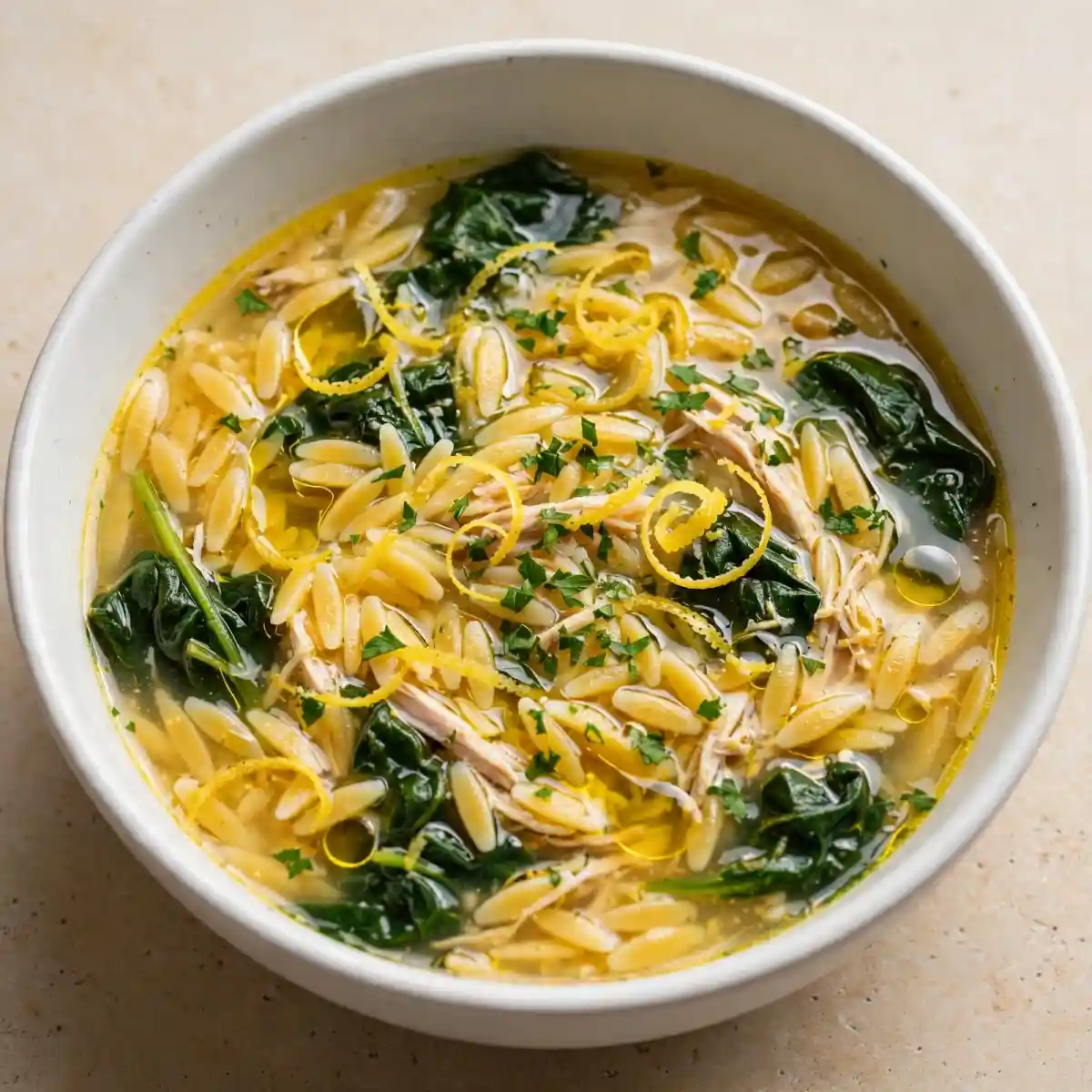
Bright Lemon Orzo Soup — Tender Chicken, Silky Broth, Real Lemon
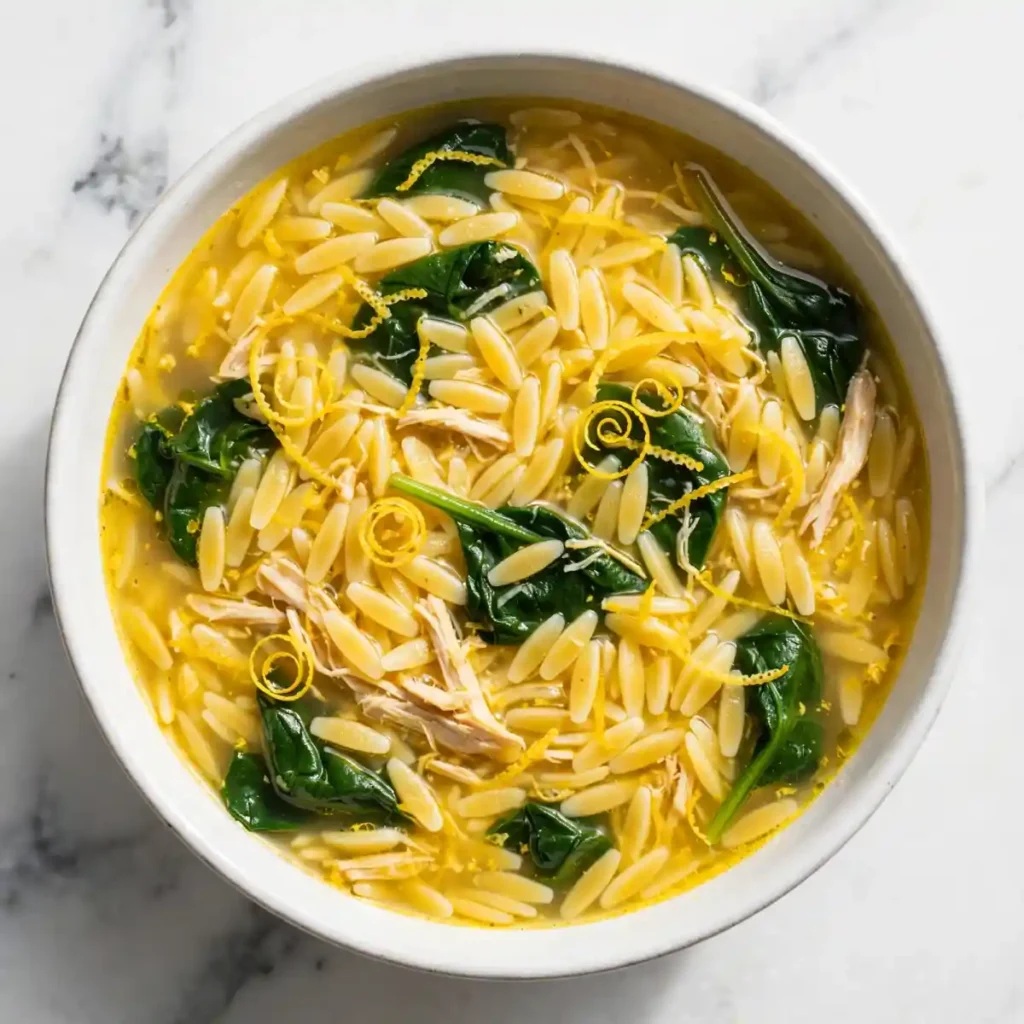
There’s a specific kind of soup that makes you feel better the moment the bowl is in your hands. This is that soup. The broth is golden and deeply savory but lifted by real lemon juice and zest so it tastes both comforting and bright at the same time, and the orzo has absorbed just enough of the broth to be tender without turning mushy. A handful of fresh spinach wilts in at the end, turning each bowl a little more colorful and a little more complete.
This lemon orzo soup builds its flavor from scratch in one pot: sautéed aromatics, shredded chicken thighs cooked directly in the broth, tender orzo pasta, and a generous amount of fresh lemon stirred in just before serving so the citrus stays vivid rather than fading into the background. It makes six servings, reheats well for most of the week, and comes together in 45 minutes without any complicated steps. It’s the kind of recipe that earns a permanent spot in the weeknight rotation once you’ve made it once.
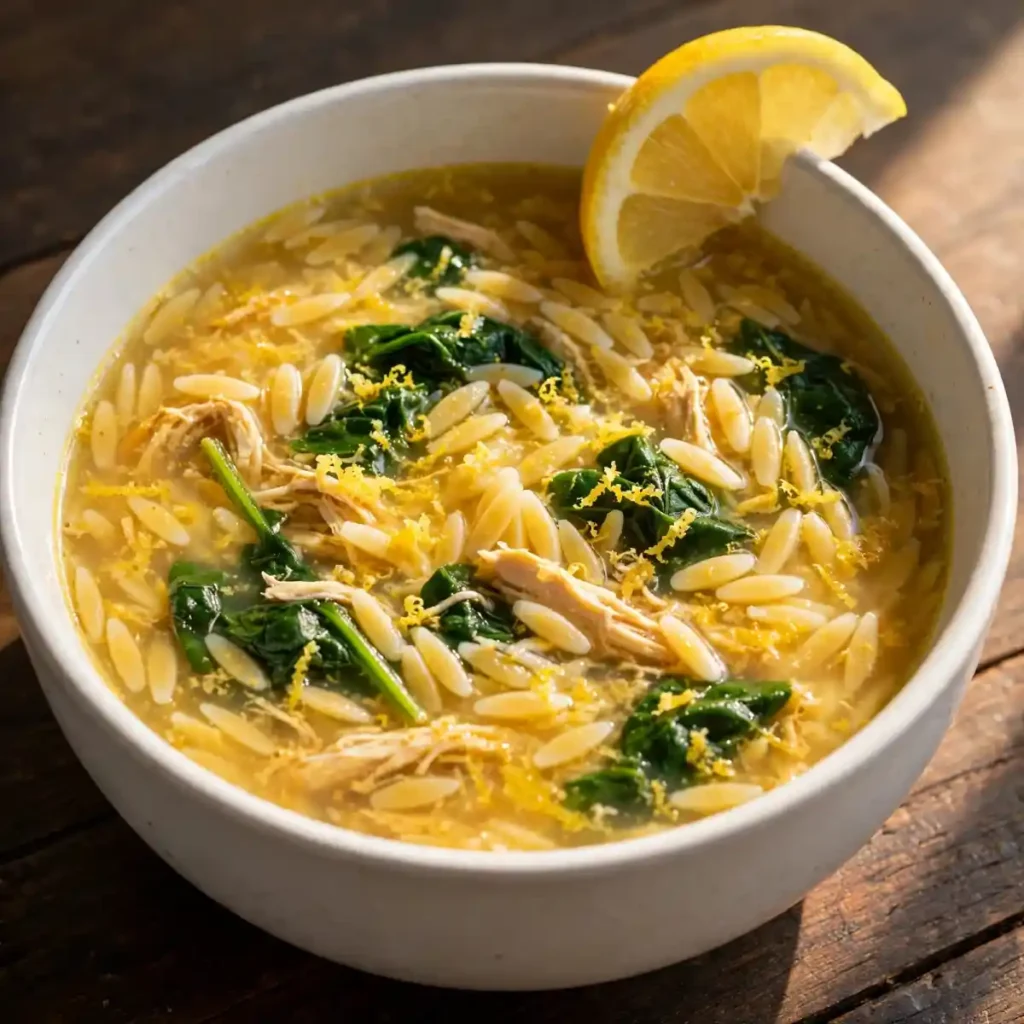
Table of Contents
- Why You’ll Love This Lemon Orzo Soup
- Ingredients You’ll Need
- Allergen and Dietary Disclosure
- Equipment Needed
- Step-by-Step Directions
- Common Mistakes and Troubleshooting
- Variations and Substitutions
- Serving Suggestions
- Tips for the Best Results
- Storage Tips
- Nutrition Information
- Why This Recipe Works
- Frequently Asked Questions
- Conclusion
Why You’ll Love This Lemon Orzo Soup
- The broth is genuinely bright, not just vaguely citrusy. Fresh lemon juice and zest stirred in at the end (not at the beginning, where the acidity would dull over time) keeps the lemon vivid and present in every spoonful rather than a background hint you can barely identify.
- One pot from start to finish. The aromatics sauté, the chicken poaches, the orzo cooks, and the spinach wilts, all in the same pot without any separate pans or draining steps.
- Chicken thighs that shred perfectly. Boneless thighs poached directly in the broth become incredibly tender in about 20 minutes and shred cleanly with two forks. They also contribute flavor to the broth as they cook, which is something chicken breast can’t do as effectively.
- Ready in 45 minutes. There’s no long simmering time or advance prep required. The whole recipe fits into a weeknight schedule without any shortcuts that sacrifice flavor.
- Meal prep friendly for the whole week. It stores well for 4 days in the fridge and the flavor actually improves overnight as the lemon and herbs settle into the broth.
Ingredients You’ll Need
Recipe Timing
| Detail | Info |
|---|---|
| Servings | 6 |
| Difficulty | Easy |
| Course | Main Course, Soup |
| Cuisine | Mediterranean-inspired, American |
| Prep Time | 10 minutes |
| Cook Time | 35 minutes |
| Total Time | 45 minutes |
For the best lemon flavor, use fresh lemons rather than bottled lemon juice. Fresh lemon juice has a brighter, cleaner acidity; bottled juice has an underlying cooked or slightly bitter note that becomes more pronounced in a simple, lightly seasoned broth where the lemon is a primary flavor. You’ll need about 3 medium lemons for the juice and zest this recipe calls for.
For the chicken, boneless skinless thighs are the right choice. They poach to tenderness in about 20 minutes, shred effortlessly, and release natural gelatin into the broth that gives it a silkier body than breast meat would. If you prefer breast meat, reduce the poaching time to 15 minutes and check earlier; overcooked breast becomes stringy and dry.
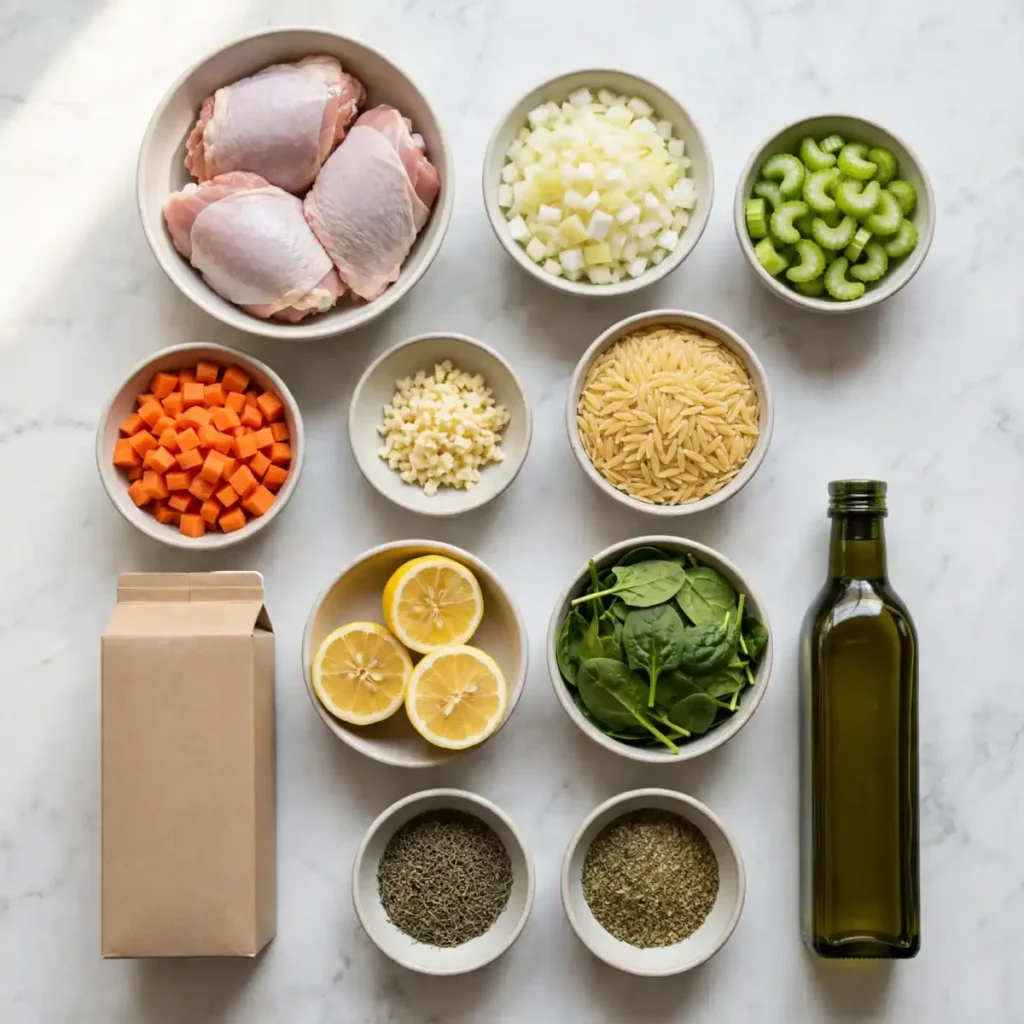
- 450g (1 lb) boneless, skinless chicken thighs — The flavor workhorse of this soup. They contribute far more to the broth than breast meat and stay moist even after shredding. See notes above.
- 2 tbsp olive oil — For sautéing the aromatics. Olive oil’s mild fruitiness works better here than neutral oil because it complements the lemon without competing.
- 1 medium yellow onion, finely diced — The base aromatic that sweetens as it softens and builds the first layer of savory depth.
- 3 stalks celery, sliced — Adds a clean, vegetal note that brightens the broth and pairs well with the lemon.
- 2 medium carrots, diced into small pieces — Provides natural sweetness and color. Dice them small (about 1 cm) so they cook through fully during the simmer time.
- 4 cloves garlic, freshly minced — Added after the other vegetables to prevent burning. Garlic bloomed in the residual oil from the vegetable sauté adds aromatic depth without being sharp.
- 1.5 litres (6 cups) low-sodium chicken broth — The backbone of the soup. Low-sodium gives you control over the final salt level, which matters because the lemon juice will also need to be balanced against the salt at the end.
- 1 cup (200g) dry orzo pasta — The small, rice-shaped pasta that cooks directly in the broth and absorbs it beautifully. Don’t substitute with other pasta shapes; their different cooking times and starch content changes the soup’s body. See storage note about orzo absorbing broth overnight.
- 1 tsp dried thyme — A mild, earthy herb that works in the background without competing with the lemon.
- 1/2 tsp dried oregano — Adds a faint Mediterranean character that suits the lemon-forward profile.
- 1/4 tsp ground black pepper
- 1 tsp fine salt, plus more to taste — Adjust at the end after the lemon juice goes in; the acidity changes how salt is perceived.
- 3 tbsp fresh lemon juice (from about 1.5 lemons) — Added at the end to preserve the bright, fresh citrus flavor. Start with 2 tablespoons and add the third only if the broth needs more lift.
- 1 tsp lemon zest (from about 1 lemon) — Contributes the floral, aromatic citrus notes that juice alone doesn’t carry. Add with the juice at the end.
- 90g (3 oz) fresh baby spinach — Stirred in at the very end; it wilts in about 60 seconds from the residual heat of the soup. Baby kale is a direct substitute with slightly more texture.
- Fresh flat-leaf parsley, roughly chopped, for garnish — Adds a final herbal freshness and a visual lift to the finished bowl.
- Extra lemon wedges, for serving — Letting people add additional lemon at the table accommodates different acidity preferences.
Allergen and Dietary Disclosure
This recipe contains gluten (orzo pasta is made from durum wheat semolina). It does not contain dairy, eggs, or nuts in its base form.
For a gluten-free version, replace the orzo with an equal weight of cooked short-grain gluten-free rice (such as arborio), or use a gluten-free small pasta shape. If using rice, add it at the same stage as the orzo but check doneness at the 15-minute mark since rice absorbs differently than pasta. Also verify that your chicken broth is certified gluten-free, as some brands use wheat-based thickeners.
The base recipe is naturally dairy-free, egg-free, and nut-free. For a fully vegetarian version, skip the chicken and use vegetable broth; add one drained can of white cannellini beans for protein and body.
This recipe has not been prepared in an allergen-free facility. Always verify individual product labels if you are managing a serious allergy.
Equipment Needed
- Large Dutch oven or heavy-bottomed stockpot (at least 5-litre capacity) — This pot handles all the cooking in one vessel. A heavy-bottomed pot prevents the aromatics from scorching during the sauté phase and distributes heat evenly during the simmering stage.
- Two forks — For shredding the cooked chicken thighs after poaching. The thighs should be tender enough that the forks pull the meat apart with minimal effort.
- Fine mesh strainer or ladle — For removing the cooked chicken from the pot before shredding, without losing too much broth in the process.
- Microplane or fine zester — For zesting the lemons without picking up the bitter white pith beneath the yellow skin. A box grater’s finest side works as a substitute.
- Ladle — For serving. A ladle with about 240ml (1 cup) capacity portions the soup with a good ratio of broth, orzo, and chicken in each bowl.
Step-by-Step Directions
Step 1: Sauté the Aromatics
Heat the olive oil in your Dutch oven over medium heat. When the oil shimmers, add the diced onion, sliced celery, and diced carrots. Cook for 6 to 8 minutes, stirring occasionally, until the onion is fully translucent, the celery has softened, and the carrots have lost their raw hardness at the edges. The vegetables should be fragrant and slightly golden at the bottom.
Add the minced garlic, dried thyme, and dried oregano. Stir continuously for about 60 seconds until the garlic is fragrant but hasn’t taken on any color. The dried herbs will bloom in the warm oil, releasing their aromatic compounds before the liquid dilutes them.

Chef’s Note: Blooming the dried herbs in the oil alongside the garlic rather than adding them directly to the broth extracts their fat-soluble flavor compounds, which are more concentrated and complex than the water-soluble ones that would release into the broth alone. This step is fast but genuinely impacts the depth of the finished soup.
Step 2: Add the Broth and Chicken
Pour the chicken broth into the pot, scraping up any aromatic bits that have stuck to the bottom. Add the black pepper and 1 teaspoon of salt. Increase the heat to medium-high and bring the broth to a steady boil, which takes about 5 to 6 minutes.
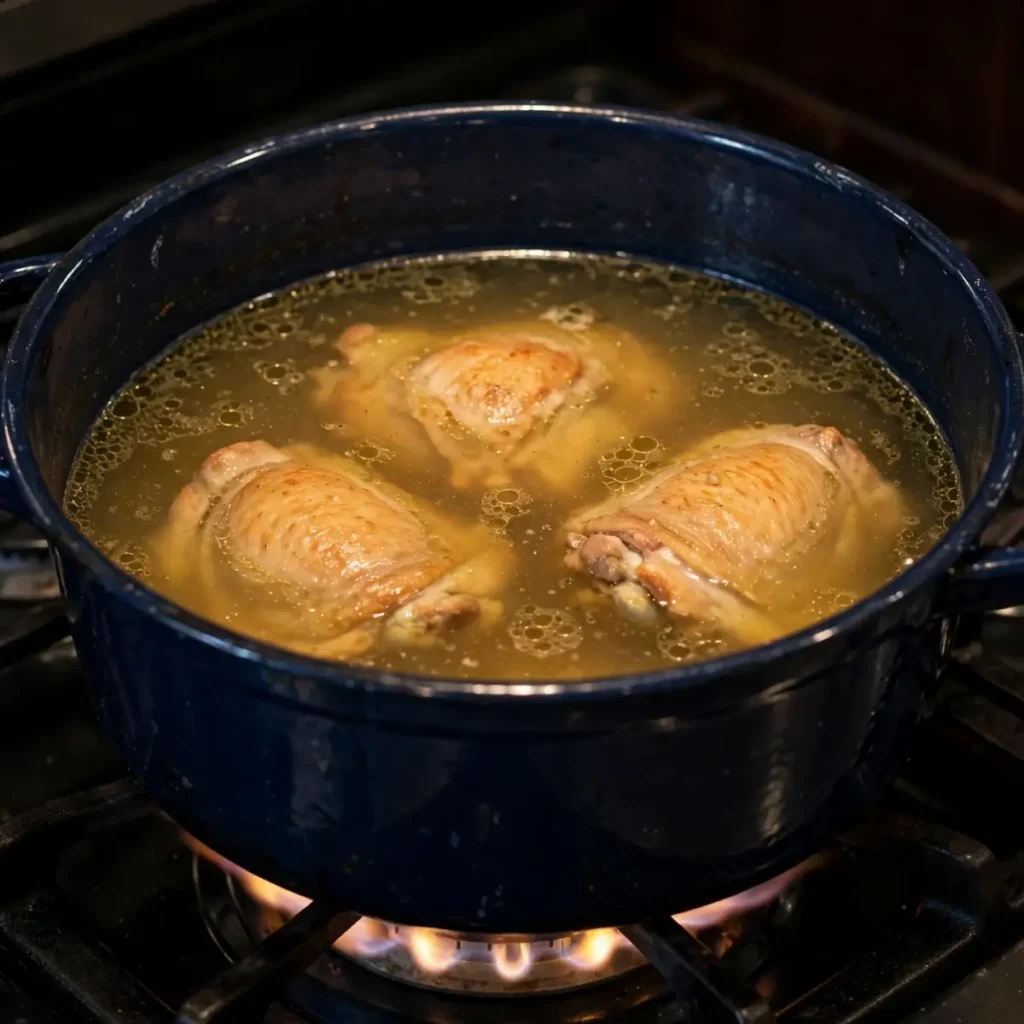
Once boiling, nestle the chicken thighs directly into the broth, pressing them under the surface. The broth should cover them by at least 2 cm. Reduce the heat to medium-low to maintain a gentle, steady simmer with small bubbles breaking the surface.
Food safety note: Use tongs to place the raw chicken into the hot broth rather than your hands. Keep all surfaces that contacted the raw chicken away from other food until they are cleaned.
Step 3: Poach the Chicken
Simmer the chicken thighs, uncovered, for 18 to 22 minutes until they are fully cooked through. The thighs are done when you can pierce the thickest part with a thin knife and the juices run completely clear with no pink tinge, and the internal temperature at the thickest point reads 74°C (165°F). The meat should feel firm but yield easily when pressed.
Use a slotted spoon or tongs to lift the cooked thighs out of the broth and transfer them to a cutting board. Leave the broth simmering gently on the stove.
Step 4: Shred the Chicken
Using two forks, shred the cooked chicken thighs into bite-sized pieces on the cutting board. Hold one fork steady to anchor the meat and use the other to pull pieces away in long, natural fibers rather than chopping them into chunks. Well-poached thighs shred in about 90 seconds. Set the shredded chicken aside.
Chef’s Note: Shredding into the natural grain of the meat produces long, tender strands that sit nicely in the broth and distribute evenly in each bowl. Cutting the chicken into cubes first and then shredding tends to produce smaller, more uniform pieces that can feel starchy in the soup rather than tender.
Step 5: Cook the Orzo
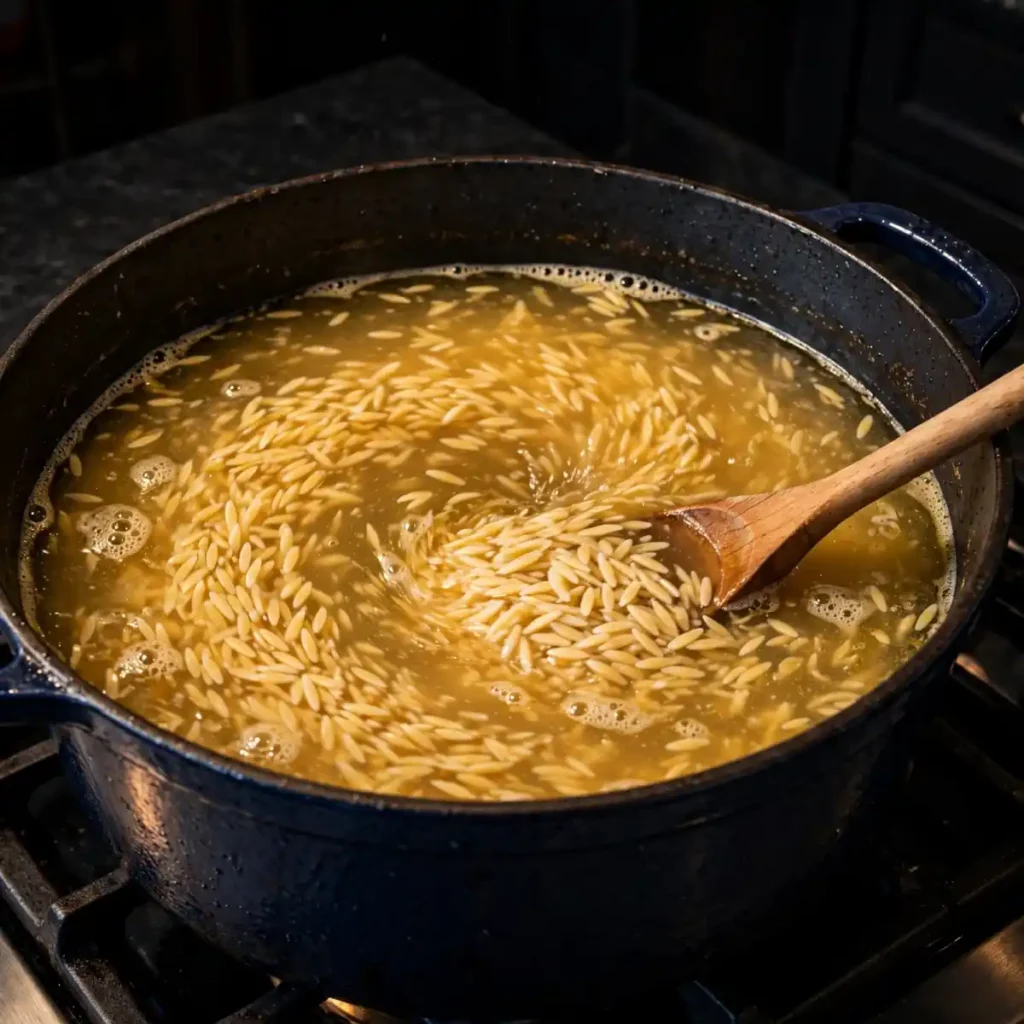
Increase the heat to bring the broth back to a steady boil. Pour the dry orzo directly into the pot and stir immediately so it doesn’t clump together at the bottom. Cook uncovered, stirring every 2 to 3 minutes, for 8 to 10 minutes until the orzo is tender but still has a slight resistance when you bite one piece. It should not be mushy or completely soft; it finishes softening slightly as the soup rests.
Step 6: Return Chicken and Add Lemon
Return the shredded chicken to the pot and stir to distribute it throughout the broth and orzo. Reduce the heat to low. Add the fresh lemon juice, starting with 2 tablespoons, and stir in the lemon zest. Taste the broth and assess: does it taste bright and savory with a clear lemon note? Add the third tablespoon of lemon juice if the citrus feels muted. Adjust salt as needed; the lemon will make the soup taste less salty than it did before it was added, so you may need a small additional pinch.
Chef’s Note: The lemon goes in at the very end for a specific reason. Lemon juice’s volatile aromatic compounds, the ones that make citrus smell and taste fresh, begin to break down when heated for extended periods. Added at the end of cooking to a hot but no longer actively boiling soup, the lemon stays vivid throughout the meal rather than mellowing into a background note by the second bowl.
Step 7: Add the Spinach and Serve
Add the fresh baby spinach to the pot and stir gently for about 60 seconds until all the leaves have wilted completely into the broth. The spinach will reduce dramatically in volume; this is expected. Taste one final time and add a pinch of salt or a few more drops of lemon juice if needed.
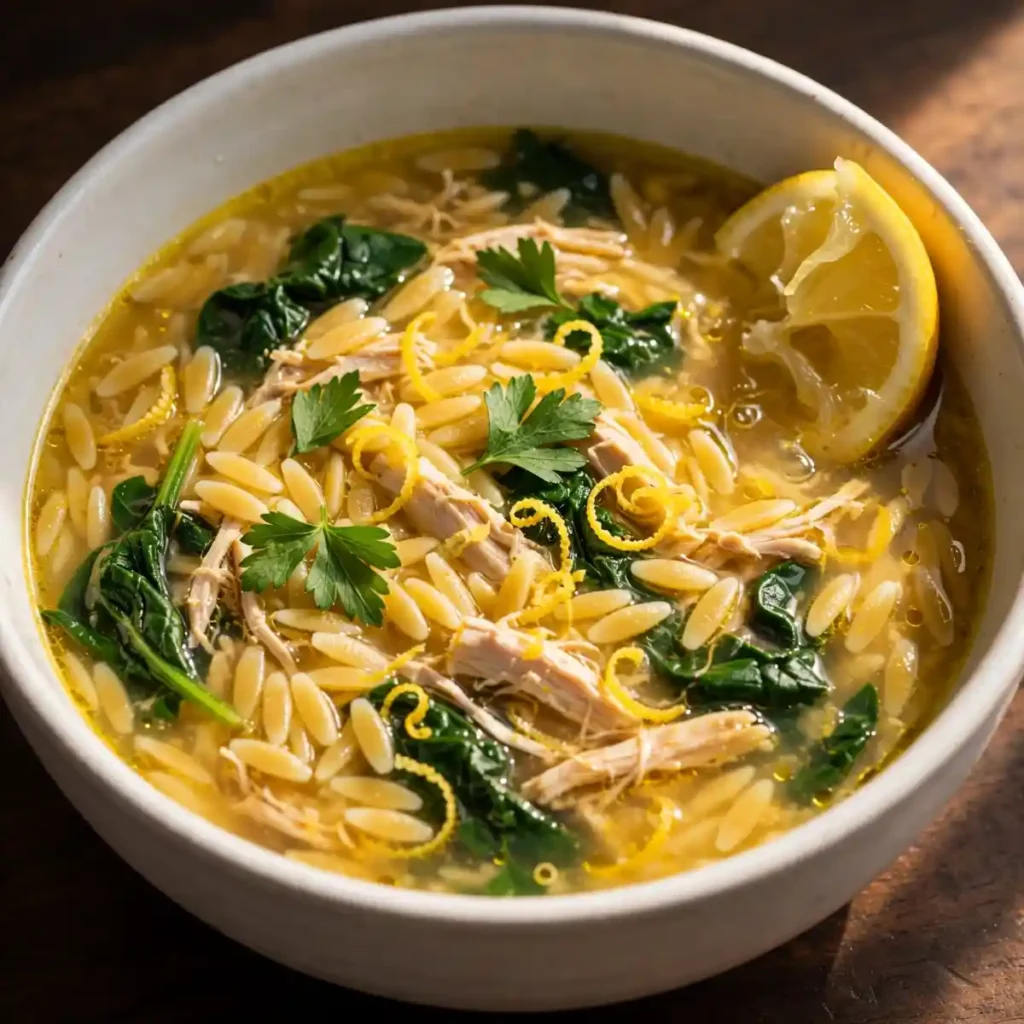
Ladle into bowls, scatter chopped fresh parsley over each one, and serve immediately with extra lemon wedges on the side.
Common Mistakes and Troubleshooting
| Problem | Cause | Solution |
|---|---|---|
| Broth tastes flat despite full simmer | Aromatics weren’t properly sautéed, or herbs were added directly to the liquid without blooming | Always sauté the vegetables until softened before adding the broth. Stir the herbs in the warm oil for 60 seconds before the liquid goes in. |
| Orzo turned mushy and gummy | Cooked too long, or soup was left simmering after the orzo finished cooking | Pull the pot off the heat as soon as the orzo reaches al dente. The pasta will continue softening from residual heat. Set a timer at the 8-minute mark and test. |
| Lemon flavor faded by the second serving | Lemon juice was added too early and cooked into the broth | Always add lemon juice and zest off or at the lowest heat, at the very end, after the orzo is done. Squeeze extra lemon over individual bowls just before eating. |
| Chicken is dry and stringy | Breast meat used instead of thighs, or thighs overcooked past 22 minutes | Use boneless thighs. Set a timer and test at 18 minutes. Remove as soon as the internal temperature reads 74°C (165°F) and juices run clear. |
| Soup is too thick and starchy | Orzo absorbed too much broth during storage | The orzo continues absorbing overnight. Stir in an extra 240 to 480ml of hot chicken broth when reheating to restore the original consistency. |
Variations and Substitutions
Avgolemono-Style (Creamy Egg-Lemon): For a silkier, creamier broth, make a classic Greek egg-lemon enrichment: whisk 2 eggs with 3 tablespoons of fresh lemon juice in a small bowl. Slowly ladle about 240ml of the hot soup broth into the egg mixture, whisking constantly as you pour (this is called tempering; it prevents the eggs from scrambling). Pour the tempered egg-lemon mixture back into the pot and stir gently over very low heat for 2 minutes. The broth transforms into a velvety, pale yellow, slightly thickened texture. Don’t let it boil after adding the eggs.
Vegetarian Lemon Orzo Soup: Omit the chicken and use a rich vegetable broth in place of chicken broth. Add one drained and rinsed can (400g) of cannellini beans at Step 5 when the orzo goes in. The beans add protein, body, and a creaminess that makes the soup satisfying as a main course.
Add Artichoke Hearts: Stir in one drained can (400g) of quartered artichoke hearts in water alongside the spinach in the final step. Artichokes have a mild, faintly earthy flavor that pairs very naturally with lemon and complements the orzo’s starchy texture.
Spiced Version: Add 1/4 teaspoon of red pepper flakes to the garlic and herb bloom in Step 1. The warmth builds slowly through the soup and balances the acidity of the lemon in a way that makes the finished bowl feel more complex without being hot.
Turkey Lemon Orzo Soup: Replace the chicken thighs with an equal weight of boneless turkey thigh meat and proceed identically. Turkey thighs have a slightly richer, gamier flavor than chicken and pair especially well with the lemon and thyme combination. This version works well the day after Thanksgiving when leftover turkey is shredded directly into the broth at Step 6, skipping the poaching step entirely.
Serving Suggestions
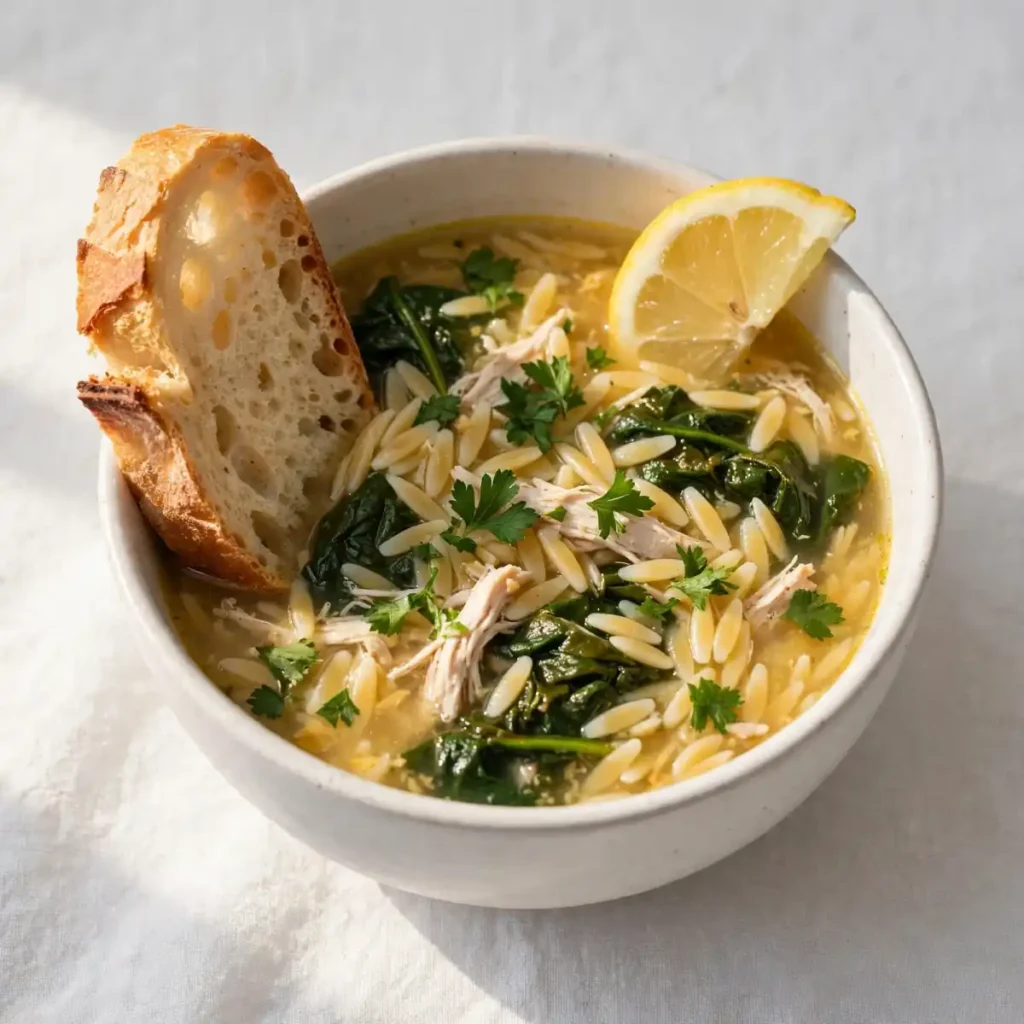
- Serve with warm, crusty bread or toasted sourdough on the side for dipping into the lemony broth. The bread absorbs the golden liquid in a way that makes the last third of the bowl the best part.
- A simple Greek-style salad on the side, with cucumber, cherry tomatoes, olives, and a lemon-oregano vinaigrette, extends the Mediterranean flavor profile of the soup without feeling repetitive on the plate.
- Finish each bowl with a small drizzle of good olive oil just before serving. The olive oil adds richness and a fruity note that rounds out the acidity of the lemon in a way that butter wouldn’t in this context.
- Offer freshly grated parmesan or pecorino romano in a small bowl for anyone who wants to stir a spoonful into their soup. The salty, sharp cheese adds a savory depth that complements the lemon and enriches the broth significantly.
- Serve as a starter in smaller portions (about 240ml each) before a Mediterranean main course of grilled chicken, roasted fish, or a mezze spread. At this size, one batch serves 10 to 12 as an appetizer.
Tips for the Best Results
Use fresh lemon, not bottled. The difference between fresh and bottled lemon juice is especially noticeable in a soup where lemon is the central flavor. Fresh juice has a clean brightness; bottled has a cooked, slightly oxidized quality that dulls the whole soup. The 2 minutes it takes to juice three lemons is worth it every time.
Add the lemon at the very end. Lemon juice added to a boiling broth and cooked for 20 or 30 minutes loses its fresh aromatic character. The volatile compounds that make lemon smell and taste bright are heat-sensitive. Stir the juice and zest in after the heat is reduced, right before serving, so they stay vivid through the whole meal.
Don’t overcook the orzo. Orzo is a small pasta that goes from perfectly al dente to mushy in about 2 minutes. Start testing at the 8-minute mark by tasting a piece; it should be tender but with a faint resistance in the center. It finishes softening from the residual heat of the broth even after you take the pot off the stove.
Store orzo and broth separately if planning ahead. If you know the soup will be refrigerated, cook the orzo slightly more al dente than usual and store the soup with the orzo already in it, but accept that the orzo will absorb a significant amount of broth overnight. Add a cup of hot broth when reheating to restore the original consistency. Alternatively, keep cooked orzo in a separate container and add it to the reheated broth just before serving.
Season after the lemon goes in. Lemon juice’s acidity changes how you perceive saltiness in the broth. A soup that tasted well-seasoned before the lemon is added may taste slightly under-salted afterward. Always do a final taste check after the lemon and zest are stirred in and adjust salt at that point rather than earlier.
Storage Tips
Refrigerator
Cool the soup completely before transferring to airtight containers. It keeps well in the refrigerator for up to 4 days. As noted, the orzo will continue absorbing broth overnight and the soup will thicken considerably by day 2. This is not a problem: simply add 1 to 2 cups of chicken broth when reheating and stir until you reach the desired consistency. The flavor actually improves overnight as the lemon and herbs settle into the broth more fully.
Freezer
Lemon orzo soup freezes best without the orzo, since orzo turns mushy and grainy after freezing and thawing. Freeze the soup base (broth, chicken, vegetables, and lemon) in airtight containers or zip-lock bags for up to 3 months. When ready to serve, thaw overnight in the fridge, reheat to a simmer, add fresh dry orzo, cook for 8 to 10 minutes, then add spinach and adjust lemon and salt at the end. If you’ve already made the soup with orzo and want to freeze it anyway, the flavor will be fine but the orzo texture will be softer than fresh.
Reheating
For stovetop reheating, warm over medium heat with an additional 1 to 2 cups of chicken broth or water, stirring occasionally, until the soup is steaming throughout and the orzo has re-loosened, about 5 to 7 minutes. For microwave reheating, add a splash of broth to the portion, cover loosely with a damp paper towel, and heat at full power for 2 minutes, stir, then heat for another 60 seconds. Squeeze a little fresh lemon juice over the bowl after reheating to bring the brightness back; the lemon fades slightly during storage.
Make-Ahead Note: The soup base (without orzo and spinach) can be made up to 3 days ahead and refrigerated. When ready to serve, reheat to a boil, add the orzo and cook through, then finish with spinach and fresh lemon. This method gives you the freshest possible orzo and lemon flavor even when the soup is mostly pre-prepared.
Nutrition Information
Per serving, based on 6 servings. Values are approximate.
| Nutrient | Amount |
|---|---|
| Calories | 295 kcal |
| Protein | 24g |
| Carbohydrates | 28g |
| Fiber | 3g |
| Sugar | 4g |
| Total Fat | 9g |
| Saturated Fat | 1.8g |
| Cholesterol | 70mg |
| Sodium | 580mg |
| Potassium | 560mg |
| Calcium | 65mg |
| Iron | 2.4mg |
| Vitamin C | 18mg |
Nutrition values are approximate and may vary based on brands and portion sizes.
Why This Recipe Works
Lemon orzo soup’s appeal is in the balance it achieves between two things that don’t always work together easily: savory depth and clean brightness. A broth that’s savory enough to be satisfying often dulls the lemon; a lemony broth that’s genuinely bright often feels thin and sharp rather than comforting.
The sequence of layering in this recipe addresses that balance from both directions. Building the aromatic base with sautéed vegetables and bloomed herbs in olive oil creates savory depth before the broth even goes in. The poaching step, where the chicken thighs cook directly in the broth for 20 minutes, extracts collagen and flavor from the thighs into the liquid, giving the finished broth a fuller body. These two steps ensure the soup is rich enough that the lemon has something substantial to work against rather than dominating a thin, watery base.
The lemon timing is the other structural decision. Citrus juice contains two types of flavor-active compounds: volatile aromatics (mostly in the oils of the zest and in the top notes of the juice) and non-volatile acids (the tartaric and citric acids that provide the sourness). The acids survive heat and add tartness even when cooked. The aromatics don’t, which is why lemon juice added at the beginning of a long cook produces a sour soup but not a bright one. Adding both juice and zest at the very end preserves the volatile compounds that make the finished bowl smell and taste like lemon rather than just tasting acidic.
Orzo’s specific cooking properties also matter. Its small, dense shape means it absorbs broth slowly and evenly during the 8 to 10 minute cook time, taking on the flavor of the lemony broth in each piece without becoming waterlogged. Larger pasta shapes with more surface area absorb too aggressively and bloat; thinner shapes overcook before they’ve absorbed meaningful flavor from the soup.
Across test batches comparing early versus late lemon addition, the late-addition version had a noticeably brighter flavor that held through reheating. The early-addition version tasted more sour than citrusy, particularly after one day in the fridge.
Frequently Asked Questions
Can I make lemon orzo soup ahead of time?
Yes, with one practical consideration. The orzo absorbs broth overnight in the refrigerator, so the soup will be thicker and drier by day 2 than when first made. You can either accept this and add extra broth when reheating, or store the orzo separately and add it fresh each time. The flavor genuinely improves after a day in the fridge as the lemon and herbs settle deeper into the broth. For the freshest result, add a small squeeze of fresh lemon juice after reheating each bowl.
Why is my lemon orzo soup too sour?
Too much lemon juice or lemon added at the beginning of cooking rather than the end. When lemon simmers in the broth for a long time, the acids concentrate as water evaporates, and the aromatic balance shifts to pure tartness without the bright, floral quality of fresh lemon. Always add lemon juice at the very end, start with 2 tablespoons and taste before adding more, and balance with a small extra pinch of salt and a few extra drops of olive oil if the soup already tastes too sharp.
Can I use rotisserie chicken instead of poaching raw chicken?
Yes. Shred about 2 cups (roughly 300g) of meat from a rotisserie chicken and add it at Step 6 when the shredded chicken would normally return to the pot. Skip the poaching steps entirely and proceed straight from sautéing the aromatics to adding the broth and simmering the orzo. The broth will be slightly less flavorful since it won’t have the poached chicken contributing to it, so consider using a richer, more concentrated low-sodium chicken broth to compensate.
How do I know when the orzo is done?
Bite a piece: it should be tender all the way through with just a faint resistance in the very center, like al dente pasta. If it still has a chalky, hard center, it needs 2 more minutes. If it has no resistance at all and flattens when you press it, it’s overcooked. The window between perfectly done and mushy is small (about 2 minutes), so set a timer at 8 minutes and test from there.
Is lemon orzo soup gluten-free?
The base recipe is not gluten-free because orzo is made from durum wheat semolina. For a gluten-free version, replace the orzo with cooked short-grain rice or a certified gluten-free small pasta shape, and verify that your chicken broth doesn’t contain wheat-based additives. The rest of the recipe is naturally gluten-free. Rice works particularly well in this soup; cook it separately and add at the same stage as the orzo, reducing the cooking time since pre-cooked rice only needs to be heated through.
Can I use vegetable broth instead of chicken broth?
Yes. The soup will be lighter in body and slightly less savory without the chicken-based gelatin that chicken broth provides, but the lemon and herb flavors come through clearly either way. If using vegetable broth, the vegetarian version works well by adding white beans for protein and body. You can also add a teaspoon of nutritional yeast to the broth for extra savory depth without dairy.
Why does my orzo turn to mush after one day?
Orzo continues absorbing liquid even after cooking stops. The starch in the pasta soaks up broth during storage at a faster rate than larger pasta shapes. This is a characteristic of small pasta shapes in soups, not a mistake in the recipe. Add 1 to 2 cups of hot chicken broth when reheating to restore the soup’s original liquid-to-pasta ratio. If you plan to store the soup for several days, cooking the orzo slightly al dente (pulling it at 7 minutes rather than 10) gives it more room to continue absorbing without becoming fully soft.
Conclusion
Lemon orzo soup earns its place in the weeknight lineup because it hits every mark a good soup should: savory enough to satisfy, bright enough to feel alive, and simple enough to make on a Tuesday without planning ahead. The 45-minute timeline is genuine, and the one-pot approach means cleanup takes less time than the soup took to cook.
The two things that make this version consistently good are the sautéed, herb-bloomed base that gives the broth real depth, and the late-added lemon that keeps the citrus vivid through the last bite. Once you’ve got those two things right, lemon orzo soup becomes a recipe you can make from memory.
If you loved this recipe, save it to your cozy soup recipes Pinterest board so you can find it easily later. For more same recipes follow Thecookingvibes Pinterest account.
Lemon Orzo Soup
Ingredients
Equipment
Method
- Heat olive oil in a large Dutch oven over medium heat. Add diced onion, sliced celery, and diced carrots. Cook for 6 to 8 minutes, stirring occasionally, until the onion is fully translucent and vegetables have softened.
- Add minced garlic, dried thyme, and dried oregano. Stir continuously for 60 seconds until fragrant.
- Pour in the chicken broth, scraping up any bits from the bottom. Add salt and black pepper. Raise heat to medium-high and bring to a boil.
- Nestle the raw chicken thighs into the boiling broth, ensuring they are submerged. Reduce heat to medium-low and simmer gently, uncovered, for 18 to 22 minutes until the chicken is fully cooked through with no pink at 74°C (165°F) internal temperature.
- Remove the cooked chicken thighs to a cutting board. Shred with two forks into bite-sized pieces. Set aside.
- Raise the broth back to a full boil. Add the dry orzo and stir immediately. Cook uncovered for 8 to 10 minutes, stirring every 2 to 3 minutes, until the orzo is al dente with slight resistance when bitten.
- Return the shredded chicken to the pot. Reduce heat to low. Stir in 2 tablespoons of fresh lemon juice and all the lemon zest. Taste and add the third tablespoon of juice if needed. Adjust salt.
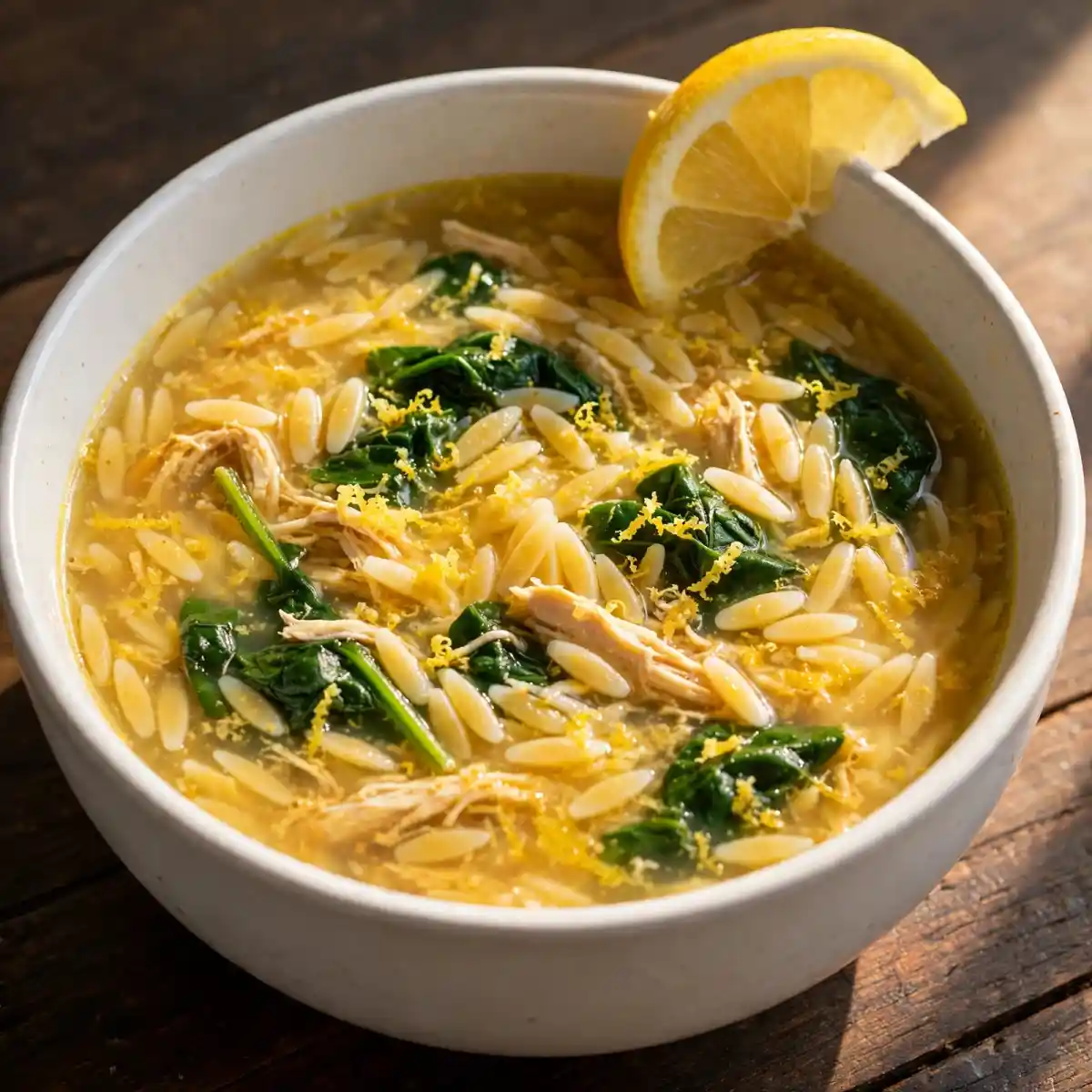
- Add the fresh baby spinach and stir gently for 60 seconds until fully wilted. Ladle into bowls, garnish with parsley, and serve with extra lemon wedges.
Notes
- Always add lemon juice and zest at the very end, after the heat is reduced, to preserve the fresh citrus brightness.
- Orzo absorbs broth significantly overnight in storage. Add 1 to 2 cups of extra hot broth when reheating.
- For the freshest flavor after storage, squeeze a little fresh lemon over the reheated bowl just before eating.
- For a gluten-free version, substitute cooked short-grain rice for the orzo and use certified GF chicken broth.
- Allergens: Contains gluten (orzo pasta). Check chicken broth label for gluten if managing celiac. Naturally dairy-free, egg-free, and nut-free. For gluten-free, use certified GF orzo substitute and GF broth.
- Not prepared in an allergen-free facility. Always check individual product labels.
- Values are approximate and may vary based on brands and portion sizes.