Classic Strawberry Shortcake — Fluffy Biscuits, Fresh Berries, Real Cream
There’s a specific moment when strawberry shortcake is perfect: biscuit warm from the oven, still slightly steamy, berries syrupy and bright red from sitting in sugar, and cold whipped cream melting into everything the second it hits. That combination, when all three parts are made properly, is one of the best summer desserts you can put on a table.
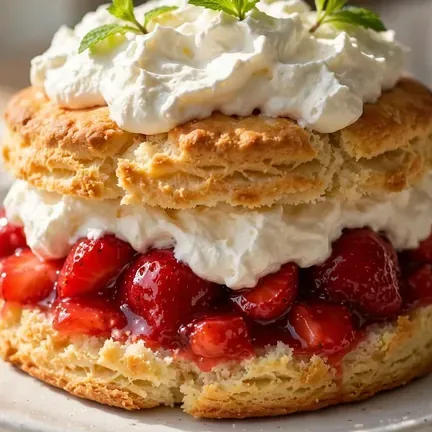
Strawberry shortcake is a classic American dessert built on three components: a buttery, biscuit-style base, fresh strawberries sweetened until they release their own juice, and lightly sweetened whipped cream. This recipe skips the sponge cake shortcut and the canned topping. Shortcake biscuits are tender and buttery, the strawberries are properly macerated until syrupy, and the cream is whipped fresh. One bite and you can tell the difference immediately.
Why You’ll Love This Strawberry Shortcake
- Biscuits with real texture. Cold butter worked into flour creates a tender, slightly crumbly crumb that soaks up strawberry juice without going to mush.
- Berries that sauce themselves. Toss them with sugar 30 minutes ahead and they release their own sweet syrup, no stove needed.
- Whipped cream in under 5 minutes. Made fresh, it’s lighter and less cloying than anything from a can.
- Scales up easily. The recipe makes 6 shortcakes; doubling it for a crowd works without changing anything about the method.
- Only about 35 minutes of active work. The berries macerate while the biscuits bake. The timing practically runs itself.

Ingredients You’ll Need
Recipe Timing
| Detail | Info |
|---|---|
| Servings | 6 |
| Difficulty | Easy |
| Course | Dessert |
| Cuisine | American |
| Prep Time | 20 minutes |
| Cook Time | 15 minutes |
| Rest Time | 30 minutes (strawberry maceration, passive) |
| Total Time | 65 minutes |
A few ingredient selection tips before you start
For the biscuits, cold butter is the only rule that truly matters. Warm butter blends into the flour instead of staying in separate pieces, and you lose the flaky texture entirely. Cut it into cubes and put it back in the freezer for 5 minutes while you measure everything else.
For the strawberries, buy ripe fruit that’s red all the way through with no white core near the stem. The flavor difference between a deeply ripe berry and a pale, underripe one shows clearly in the final dish. Fresh is the only reasonable option here, frozen strawberries release too much liquid and make the biscuit soggy before you’ve even sat down.
Shortcake Biscuits:
- 2 cups (250g) all-purpose flour — provides structure; cake flour is too delicate here
- 1 tablespoon baking powder — the primary lift; makes the biscuits tall and airy inside
- 2 tablespoons granulated sugar — just enough sweetness without making these cake-like
- 1/2 teaspoon salt, ties the other ingredients together and stops the flavor from feeling incomplete
- 1/3 cup (75g) cold unsalted butter, cubed — cold fat creates steam pockets during baking, which is what separates the layers; coconut oil works as a dairy-free substitute
- 3/4 cup (180ml) cold whole milk — whole milk gives a lighter crumb; cold heavy cream produces a richer, denser biscuit
Macerated Strawberries:
- 500g (1 lb) fresh strawberries, hulled and sliced — ripe, fragrant berries only
- 3 tablespoons granulated sugar — draws moisture out and creates the syrup; adjust by a tablespoon depending on berry sweetness
- 1 teaspoon fresh lemon juice — brightens the flavor and keeps the color vivid
Whipped Cream:
- 1 cup (240ml) cold heavy whipping cream — must be cold; 35% fat content minimum or it won’t whip to stable peaks
- 2 tablespoons powdered sugar — dissolves cleanly; granulated sugar can feel slightly grainy in cream
- 1/2 teaspoon pure vanilla extract — adds warmth without competing with the strawberries

Equipment Needed
A few tools here genuinely affect the result, so they’re worth mentioning.
- Pastry cutter or box grater — grating frozen butter directly into the flour is the fastest way to get even small pieces without warming the fat with your hands. A pastry cutter works just as well.
- Baking sheet lined with parchment — direct contact with a bare metal pan browns the bottoms before the tops are done.
- Round biscuit or cookie cutter, 2.5 to 3 inches — press straight down without twisting. Twisting seals the cut edges and reduces how much the biscuit can rise.
- Hand or stand mixer with whisk attachment — for the cream. A balloon whisk by hand works but takes 4 to 5 minutes of sustained effort.
- Chilled mixing bowl — put it in the freezer for 10 minutes before whipping if your kitchen is warm. Cold equipment keeps the cream stable.
Step-by-Step Directions
Step 1: Macerate the Strawberries
Combine the sliced strawberries, sugar, and lemon juice in a bowl and stir once to coat. Pull them out and let them sit on the counter for a full 30 minutes before moving to the next step. Around the 20-minute mark, a pool of pink, syrupy juice will start collecting at the bottom. That syrup is what soaks into the biscuit and pulls the whole dessert together.

Chef’s Note: Don’t rush this step. The longer the berries sit, up to about 2 hours, the more concentrated the syrup becomes. The berries also soften slightly, which is exactly what you want.
Step 2: Preheat and Measure
Set your oven to 220°C (425°F) and line a baking sheet with parchment. Measure the flour, baking powder, sugar, and salt into a large bowl, then whisk for about 20 seconds until the dry ingredients look completely uniform with no visible streaks or clumps. Put the butter cubes back in the freezer for 5 minutes while the oven heats up.
Step 3: Work In the Butter
Scatter the cold butter over the flour mixture. Using a pastry cutter or your fingertips, press and flatten the pieces into the flour until you have a rough, uneven mixture that looks like coarse crumbs with some pea-sized chunks visible. Those irregular chunks are exactly right, they melt during baking and create pockets of steam that push the layers apart.
Chef’s Note: Work fast. The moment the butter starts softening and smearing rather than staying in distinct pieces, the texture shifts from flaky to dense. If your kitchen is warm, put the bowl in the fridge for 5 minutes before you continue.

Step 4: Add the Milk and Form the Dough
Pour the cold milk into the flour-butter mixture all at once. Stir with a fork just until the dough pulls together in rough, shaggy clumps. It will look uneven and slightly dry in spots, that’s correct. Overworking develops gluten and makes the biscuits tough.
Turn the dough onto a lightly floured surface and press it gently into a rectangle about 3/4 inch thick. Fold it in half, then press back to 3/4 inch. Repeat that fold two more times. This short folding process creates thin distinct layers without overworking the dough; it takes about 90 seconds.
Step 5: Cut and Arrange
Press the biscuit cutter straight down through the dough, firm and quick, without twisting. Cut as many rounds as the dough allows, then gently press the scraps together and cut again. Place them on the baking sheet with about an inch of space between each one.
If your kitchen is warm and the dough feels soft, refrigerate the tray for 10 minutes before baking.
Step 6: Bake Until Deep Golden
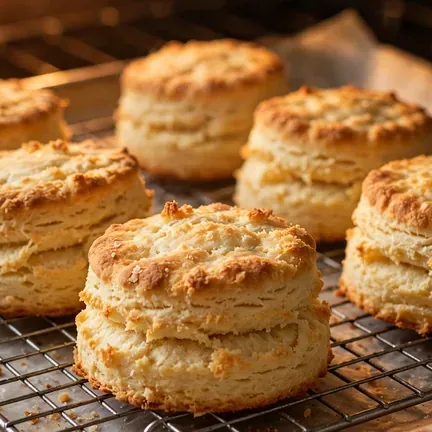
Bake at 220°C (425°F) for 13 to 15 minutes. The tops should be a deep, even golden brown, not pale, not spotty. The sides should look dry and set. Transfer to a wire rack and let them cool for at least 5 minutes before splitting.
Chef’s Note: The high temperature is intentional. A hot oven turns butter into steam before the structure sets, which is the mechanism behind a tall, well-risen biscuit. Don’t lower the heat.
Step 7: Whip the Cream
Pour the cold cream into a chilled bowl. Whip on medium-high speed until it starts to thicken noticeably, then add the powdered sugar and vanilla. Continue whipping until soft peaks form: when you lift the beater, the cream holds a shape but the tip bends over gently. Stop here. Cream that reaches stiff, pointy peaks is one step from becoming grainy and buttery.
Step 8: Assemble and Serve
Split each warm biscuit in half horizontally. Spoon a generous layer of macerated strawberries over the bottom half, including a good pour of the syrup. Add a large spoonful of whipped cream. Set the top half of the biscuit on, then finish with a few more berries and another dollop of cream. Serve immediately.

Common Mistakes and Troubleshooting
| Problem | Cause | Solution |
|---|---|---|
| Biscuits spread flat instead of rising | Butter was too warm going into the oven | Keep butter cold at every stage; chill cut biscuits for 10 minutes before baking if the kitchen is warm |
| Dense, doughy interior | Dough was overworked, developing too much gluten | Mix only until the dough just comes together; visible dry bits in the rough dough are fine |
| Soggy biscuit, watery assembly | Frozen berries used, or berries macerated for too many hours | Use fresh berries only; drain some excess syrup before assembling if the berries have been sitting for over 2 hours |
| Whipped cream collapses fast | Cream was not cold enough, or bowl was warm | Chill bowl and beaters in freezer for 10 minutes; cream should be below 7°C before whipping |
| Pale, soft biscuit tops | Oven temperature too low or rack too low | Bake on the middle rack and verify oven temp with a thermometer; many ovens run 15 to 20°F cool |
| Biscuits won’t rise tall | Biscuit cutter was twisted when cutting | Press straight down and lift straight up; twisting seals the layers at the edge |
Variations and Substitutions
- Dairy-free: Replace the butter with cold coconut oil or a vegan butter stick. Use full-fat coconut cream chilled overnight in place of heavy cream for whipping. It won’t be quite as stable, so assemble right before serving.
- Drop biscuit version: Add an extra tablespoon of milk to the dough and skip the folding and cutting. Drop rough mounds directly onto the baking sheet. Less uniform, genuinely easier, and the texture is slightly more rustic.
- Mixed berry: Swap half the strawberries for raspberries or blueberries. The flavor moves away from classic but the color is striking, especially for a table dessert.
- Spiced biscuit: Add 1/4 teaspoon cardamom and 1/2 teaspoon lemon zest to the dry biscuit ingredients. The cardamom adds warmth without competing with the fruit.
- Balsamic strawberries: Stir 1 teaspoon of good balsamic vinegar into the macerating berries along with the sugar. It deepens the flavor and adds a subtle savory note that works especially well with very ripe berries.
- Gluten-free: A 1:1 gluten-free flour blend with xanthan gum included works reasonably well here. The biscuits will be slightly denser and less flaky, but the flavor holds up well and the assembly is still solid.
Serving Suggestions
- Let the biscuits cool for at least 5 minutes before assembling. A biscuit that’s too hot melts the whipped cream instantly, turning everything into a warm, collapsed pile.
- A small scoop of vanilla ice cream alongside the whipped cream makes this feel more deliberate, particularly for a dinner party dessert.
- For a crowd, set up a build-your-own station: biscuits in a lined basket, berries in a serving bowl with a ladle, whipped cream in a chilled dish. People enjoy putting it together themselves, and nothing goes soggy from sitting pre-assembled.
- A light dusting of powdered sugar over the top before serving and a couple of fresh whole berries on the plate make the presentation clean without requiring any real effort.
- This works best after a lighter main course. The richness of cream and biscuit fits naturally after grilled chicken, a simple pasta, or a salad.

Tips for the Best Results
- Start with the ripest strawberries you can find. This recipe doesn’t mask or enhance strawberry flavor; it showcases it. A flavorful, deeply ripe berry produces a noticeably better result than a pale, firm one.
- Cold butter is the one non-negotiable. Room-temperature butter blends into the flour instead of staying in pieces, and you lose the flaky texture completely. If in doubt, freeze the butter cubes for 15 minutes before you start.
- Don’t skip the fold. The three-fold process takes about 90 seconds and creates visible layers in the finished biscuit. It’s the difference between a layered shortcake and a plain bread roll.
- Taste the strawberries before committing to the full sugar quantity. Very sweet, peak-season berries need less than 3 tablespoons. Firm, underripe berries may need a little more. The goal is a syrup that tastes like concentrated strawberry, not candy.
- Make the whipped cream last. It holds well for 30 to 40 minutes in the fridge after whipping, but beyond that it starts to weep. Freshly whipped cream right before assembly is the best version.
Storage Tips
Refrigerator
Store the three components separately rather than keeping assembled shortcakes. Biscuits keep best at room temperature in an airtight container for up to 2 days; refrigerating them speeds up staling. Macerated strawberries keep in the fridge for up to 3 days, though they soften and produce more liquid over time. Whipped cream should be used fresh or refrigerated for no more than 4 to 6 hours.
Freezer
Baked shortcake biscuits freeze well. Cool them completely, wrap each one in plastic wrap, and store in a sealed freezer bag for up to 2 months. Reheat straight from frozen at 175°C (350°F) for 10 minutes. Macerated strawberries and whipped cream don’t freeze well and should always be made fresh.
Reheating
A 175°C (350°F) oven for 8 to 10 minutes revives day-old or frozen biscuits well. The microwave softens them and makes the outside slightly gummy; the oven crisps the surface back up and gets much closer to the fresh result.
Make-ahead note: Bake biscuits a day ahead and rewarm before serving. Macerate strawberries up to 2 hours before assembly. Whip cream within 30 minutes of serving if possible. Assemble only at the last minute.
Nutrition Information
Per serving, approximately one assembled shortcake (250g):
| Nutrient | Amount |
|---|---|
| Calories | 385 kcal |
| Protein | 5g |
| Total Carbohydrates | 42g |
| Dietary Fiber | 2g |
| Total Sugar | 18g |
| Total Fat | 22g |
| Saturated Fat | 14g |
| Cholesterol | 65mg |
| Sodium | 280mg |
| Vitamin C | 48mg |
| Calcium | 110mg |
| Iron | 1.8mg |
| Potassium | 210mg |
Nutrition values are approximate and may vary based on brands and portion sizes.
Why This Recipe Works
Every part of this recipe has a specific reason behind it. Cold butter creates steam pockets during baking, the fat melts rapidly at high heat, and if it’s still in distinct solid pieces when it hits the oven, the resulting steam pushes the layers apart before the structure sets. That’s the mechanism behind a flaky biscuit, and it only works when the butter stays cold all the way to the oven door.
The high baking temperature (220°C/425°F) exists for the same reason. At lower temperatures, the butter melts more slowly, and the structure sets before the steam has a chance to create lift. The biscuit bakes through just fine but comes out denser and flatter. The high heat is what makes these biscuits rise noticeably taller than the same recipe baked at 180°C.
Macerating the strawberries in sugar works through osmosis. Sugar draws moisture out of the fruit cells, creating a concentrated syrup with the flavor of fresh strawberry juice. The lemon juice slows browning at the cut surfaces and also brightens the overall flavor without adding noticeable acidity.
Whipped cream needs cold because fat is what traps air during whipping. Below about 7°C, the fat molecules are firm enough to hold the air bubbles in a stable foam. Warmer cream takes longer to whip and collapses much faster after whipping because the fat structure is too loose to hold.
I’ve tested this biscuit recipe with both whole milk and heavy cream as the liquid component. Whole milk produces a lighter, less rich crumb that balances well against the cream topping. Heavy cream produces a denser, more buttery biscuit that some people prefer. Both work; this recipe defaults to whole milk because it’s more accessible and the overall balance is slightly better. The one thing that can’t be substituted down is the heavy cream for whipping: anything below 35% fat won’t reach stable peaks.
Frequently Asked Questions
Can I make strawberry shortcake ahead of time?
Each component preps separately. Bake the biscuits a day ahead and keep them at room temperature in an airtight container. Slice and macerate the strawberries up to 2 hours before serving. Whip the cream no more than 30 to 40 minutes before you plate. Assemble at the last minute only, a fully built shortcake held in the fridge for even an hour produces a soggy biscuit and deflated cream. There’s no shortcut around this: the dessert is at its best within about 10 minutes of assembly.
Why didn’t my biscuits rise?
Two causes account for almost every case. First, the biscuit cutter was twisted when cutting, this seals the layer edges together and prevents upward expansion. Press straight down, firm and clean, with no rotation. Second, the butter was warm before baking. Warm butter melts into the flour as the dough heats up rather than steaming, so you get spread instead of rise. Chill the cut biscuits on the tray for 10 minutes before baking if your kitchen is warm.
Can I use frozen strawberries?
Frozen strawberries work, but they need to be cooked first. Thaw them, then simmer with the sugar for 5 to 7 minutes until the mixture thickens slightly into a compote. Let it cool before using. Used raw and thawed directly, frozen berries release enough liquid to make the biscuit waterlogged within minutes of assembly. Fresh strawberries are a much better option whenever they’re available.
How do I know when the whipped cream is ready?
Watch for soft peaks: lift the beater and the cream should hold a distinct shape but the very tip bends over gently rather than standing straight. At this stage it’s airy, stable, and holds its shape for 20 to 30 minutes without collapsing. Stiff peaks, where the tip stands completely straight, are one step from over-whipping. Cream that looks grainy or starts to separate has gone past the point of recovery. Stop at soft peaks and refrigerate until needed.
Can I cut the biscuits without a round cutter?
Yes. A sharp knife cutting the dough into squares or rectangles actually produces a more consistent rise than a poorly used round cutter, because a straight knife cut doesn’t seal the edges at all. The shortcakes won’t be round, but the texture and height are comparable or better.
What can I use instead of heavy cream in the biscuit dough?
Whole milk is the simplest substitute and produces a lighter crumb. Buttermilk is another option, it tenderizes the dough through its acidity and adds a slight tang. If you use buttermilk, add 1/4 teaspoon of baking soda to the dry ingredients alongside the baking powder to neutralize the acidity and prevent a bitter aftertaste.
How much sugar should I use for the strawberries?
Start with 2 tablespoons and taste after 15 minutes of macerating. Sweet, deeply ripe summer berries often don’t need the full 3 tablespoons. Firm or slightly underripe berries benefit from the full amount or even slightly more. The goal is a syrup that tastes clean and bright, not syrupy-sweet. You can always stir in a little more sugar after tasting; you can’t take it back out.

Conclusion
Strawberry shortcake comes down entirely to technique and ingredient quality. Get the butter cold, macerate the berries long enough, and whip the cream at the right moment, and the result takes care of itself. Nothing in this recipe is complicated; the steps just need to be followed in the right order.
The biscuit version is worth the extra effort over a sponge cake shortcut. That layered, buttery crumb absorbs the strawberry syrup without dissolving, holds the cream without collapsing, and has enough flavor to eat on its own. That balance between three well-made components is what makes classic strawberry shortcake hard to improve on.
If you loved this recipe, save it to your strawberry desserts Pinterest board so you can find it easily later! For more same recipes follow Thecookingvibes Pinterest account
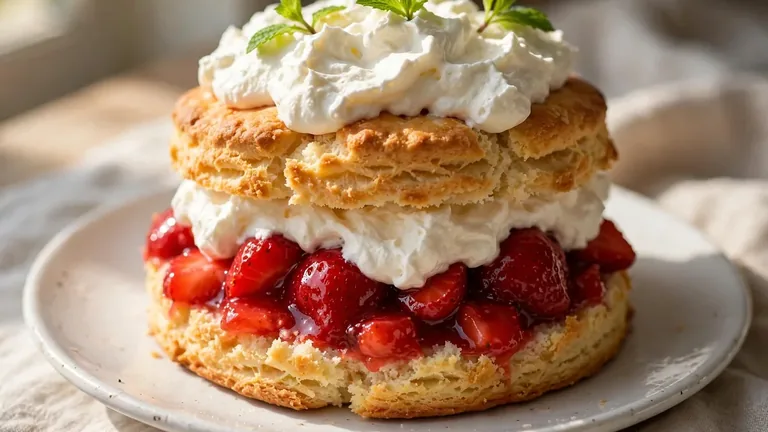
Classic Strawberry Shortcake with Buttery Homemade Biscuits
Ingredients
Equipment
Method
- Combine sliced strawberries, 1/3 cup sugar, and lemon juice in a large bowl. Cover and rest 30 minutes at room temperature, stirring once.
- Heat oven to 425°F (220°C). Line a baking sheet with parchment.
- Whisk flour, 3 tbsp sugar, baking powder, and salt in a large bowl.
- Work cold butter into flour with a pastry blender until pea-sized pieces form.
- Stir in cold milk and vanilla just until a shaggy dough comes together.
- Pat dough 3/4 inch thick on a floured surface. Cut 8 biscuits without twisting the cutter, placing them touching on the sheet.
- Bake 13 to 15 minutes until deep golden. Cool 5 minutes on the pan.
- Beat cold cream, powdered sugar, and vanilla to soft peaks, 2 to 3 minutes.
- Split warm biscuits, layer with berries plus syrup and whipped cream, cap, and serve immediately.
Notes
- Keep butter and milk cold until the moment you use them for the flakiest biscuits.
- Assemble within 10 minutes of serving to avoid soggy bottoms.
- Biscuits freeze well for 2 months; thaw 1 hour at room temperature and warm in the oven.
- Taste berries first and adjust sugar up or down by a tablespoon.