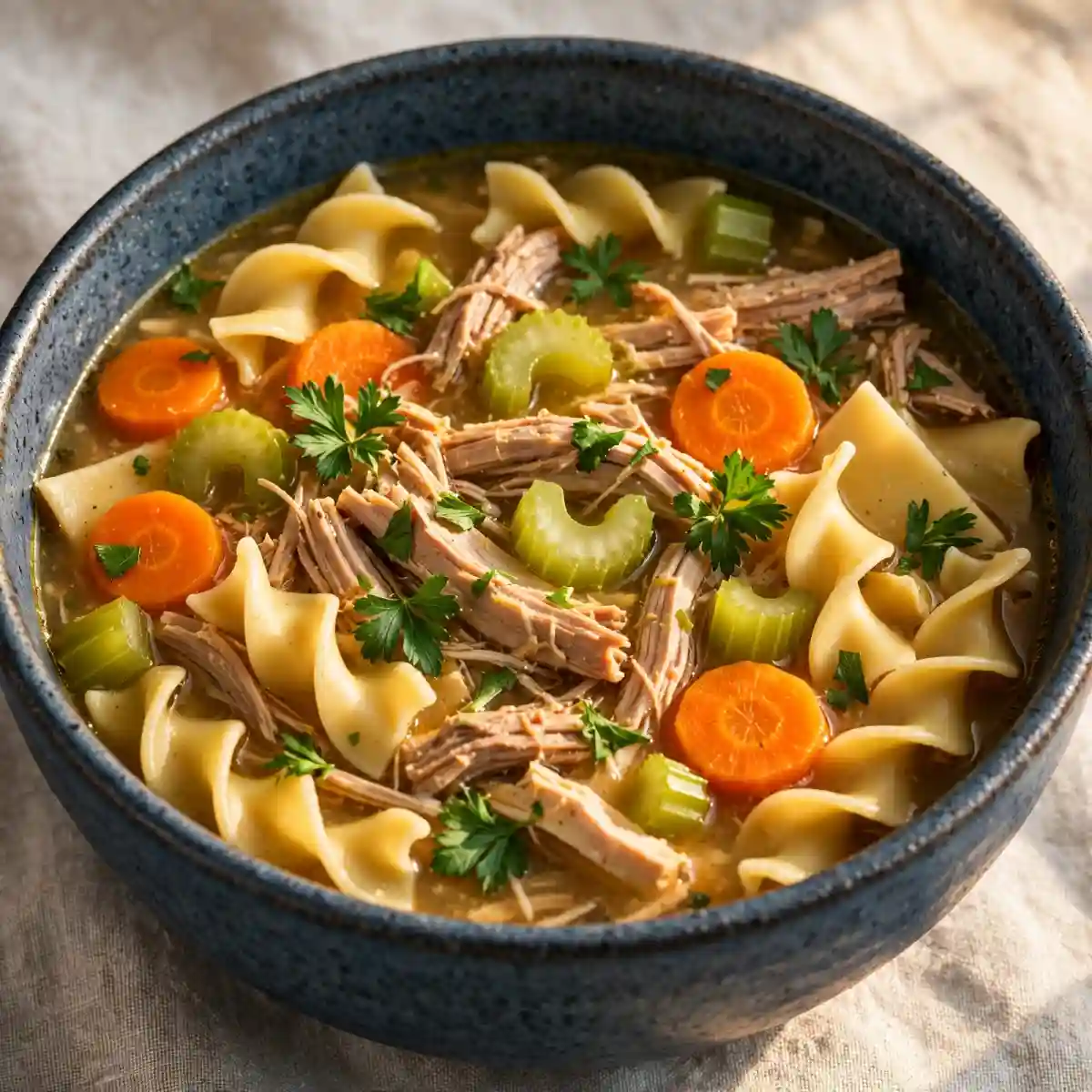
Easy Turkey Soup (Cozy, Hearty, Uses Leftover Turkey)
The day after a big roast, the turkey carcass sitting in the refrigerator is either an afterthought or the start of one of the best soups of the year, depending entirely on whether you know what to do with it. Even without a carcass, leftover shredded turkey produces a genuinely rich, deeply flavored soup in under an hour because the meat has already been seasoned and roasted, bringing far more character into the broth than raw chicken does from the same starting point.
This turkey soup recipe works with leftover roast turkey, fresh turkey thighs, or a combination of both. The broth builds from aromatics cooked in butter, seasoned turkey or chicken broth as the base, classic vegetables, and a generous amount of shredded turkey folded in toward the end so it heats through without drying out. Egg noodles or rice go in during the last 10 minutes and cook directly in the seasoned broth. One pot, 55 minutes, serves six comfortably. It is the kind of soup that is better than what you expected from leftovers, and that keeps improving in the refrigerator over the next two days.
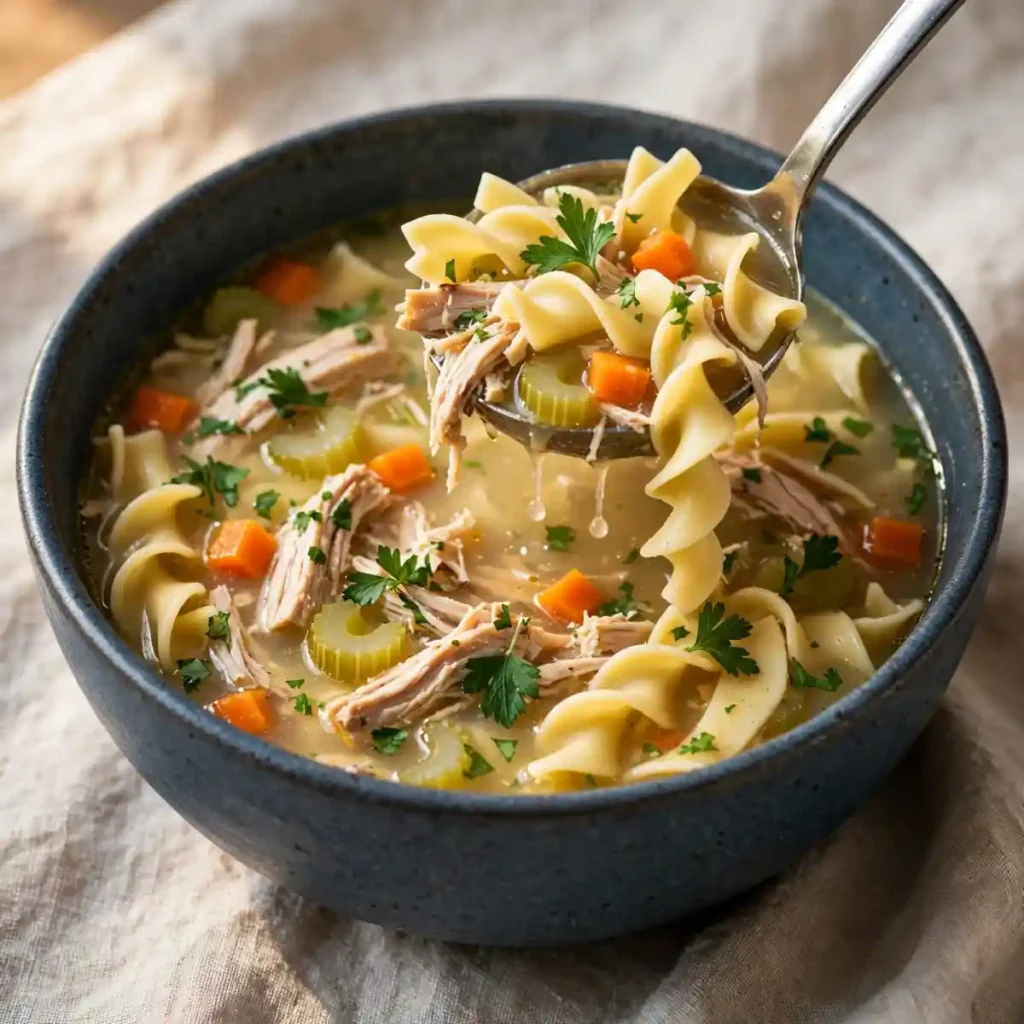
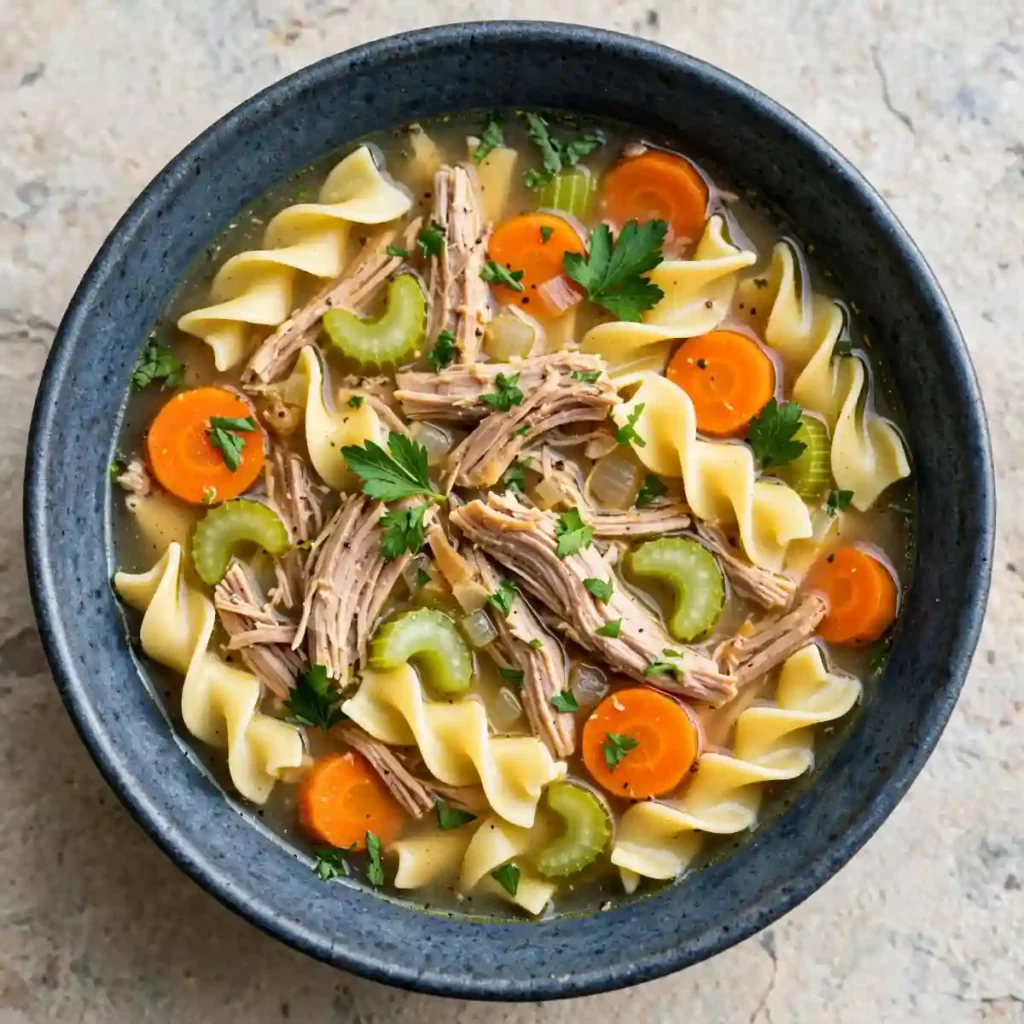
Why You’ll Love This Turkey Soup
- Leftover turkey produces a richer soup than raw chicken does. Already roasted and seasoned meat carries concentrated flavor into the broth from the first minute it goes in, which is why turkey soup made from leftovers often tastes like it simmered all day when it has been on the stove for less than an hour.
- The broth tastes built, not bland. Cooking the aromatics in butter before the liquid goes in, adding tomato paste for depth, and finishing with a splash of lemon juice at the end produces a broth that is layered and savory rather than watery and thin.
- One pot, easy cleanup. The aromatics, broth, vegetables, turkey, and noodles all cook in the same pot in a logical sequence. Nothing needs to be drained separately.
- Works with both leftover and fresh turkey. Leftover roast turkey, freshly cooked turkey thighs, or a combination of both all produce excellent results without changing any other part of the recipe.
- Better the next day. Turkey soup that has rested overnight in the refrigerator is noticeably more flavorful than it was fresh, as the turkey and vegetables continue releasing flavor into the broth and the seasoning settles into every component.
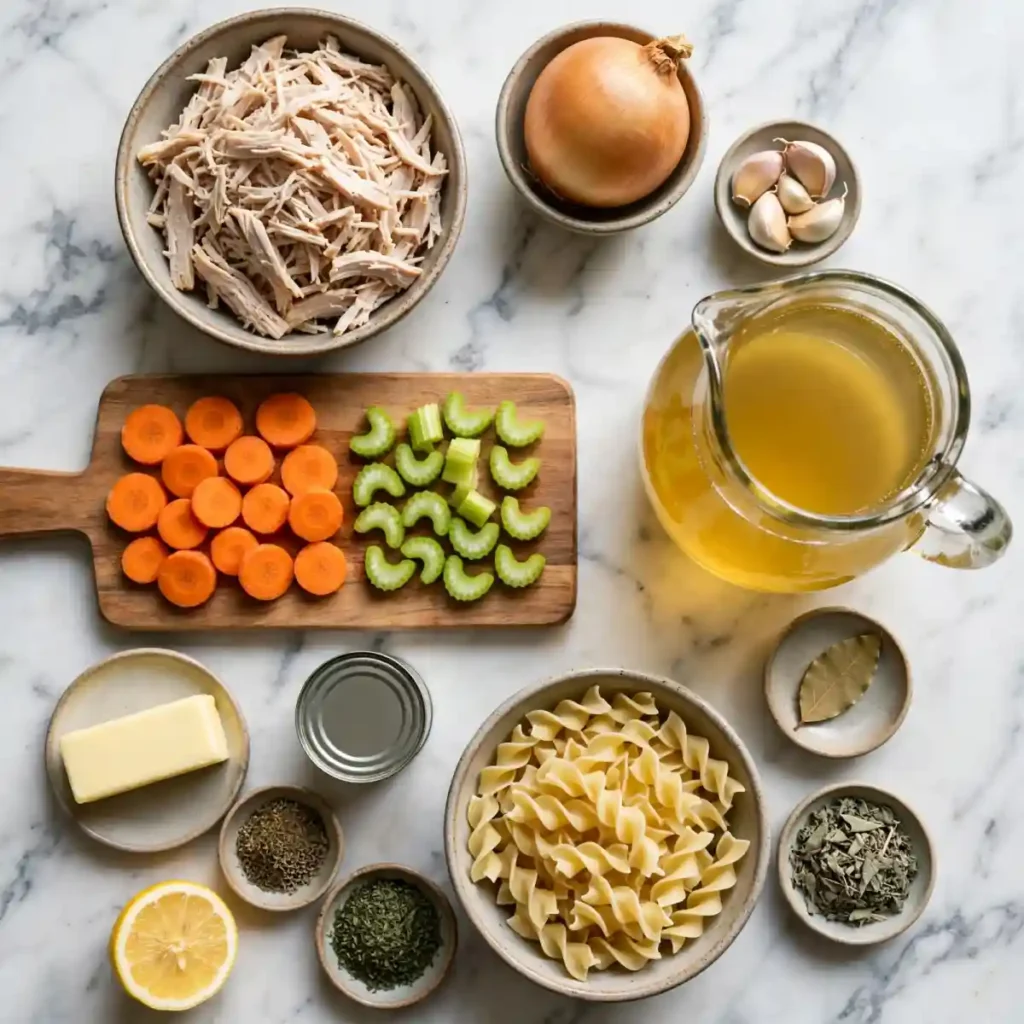
Ingredients You’ll Need
Recipe Timing
| Detail | Info |
|---|---|
| Servings | 6 |
| Difficulty | Easy |
| Course | Main Course, Soup |
| Cuisine | American |
| Prep Time | 15 minutes |
| Cook Time | 40 minutes |
| Total Time | 55 minutes |
The most consequential ingredient choice in this recipe is how you source the turkey. Leftover roast turkey that has been shredded or roughly pulled apart is the most flavorful option: it carries residual seasoning, roasted fond flavors, and a texture that holds up in broth far better than turkey cooked from raw in the soup itself, which can become stringy and dry. If using fresh turkey thighs (bone-in skin-on produce the most flavor, boneless skinless are more practical), simmer them in the broth for 25 to 30 minutes until the internal temperature reaches 74°C (165°F), then remove, cool briefly, shred the meat, and return it to the pot. For a combination of both, add the leftover turkey in the last 10 minutes only, since it needs just enough time to warm through rather than cook.
For the broth, low-sodium chicken broth or turkey broth both work well. If you made a turkey carcass broth after the roast (simmered the carcass with onion, celery, carrot, and water for 2 to 3 hours), use that instead of store-bought: the depth of flavor it adds to the finished soup is substantial. Low-sodium is important because the soup’s seasoning is built in layers and regular-sodium broth makes precise salt control difficult.
For the noodles, wide egg noodles are the classic choice for turkey soup and produce a satisfying, slightly chewy noodle that holds its shape well during reheating. Medium egg noodles work if wide aren’t available. For a rice-based version, use long-grain white rice, added at the same stage and cooked for 15 to 18 minutes.
- 500g (about 3 cups) cooked shredded turkey. The primary protein. Leftover roast turkey is ideal. Fresh turkey thighs can be cooked directly in the broth if no leftovers are available.
- 2 tablespoons (30g) unsalted butter. For cooking the aromatics. The fat carries the flavors of the garlic, onion, and herbs into the broth.
- 1 medium yellow onion, finely diced.
- 4 cloves garlic, finely minced.
- 3 medium carrots, peeled and sliced into 5mm rounds. Add color, sweetness, and body to the soup. Sliced into rounds rather than diced so they remain distinct and visible in the finished bowl.
- 3 stalks celery, sliced 5mm thick. Provides a background savory note alongside the onion and garlic that is fundamental to classic American soup.
- 1 tablespoon tomato paste. Cooked briefly with the aromatics before the broth goes in. Adds a rounded, slightly sweet depth that makes the broth taste built rather than flat.
- 6 cups (1.4 litres) low-sodium chicken broth or homemade turkey broth.
- 1 teaspoon dried thyme.
- 1 teaspoon dried parsley (or 2 tablespoons fresh, added at the end).
- 1/2 teaspoon dried sage. Sage and turkey have an affinity that is worth using in soup as much as in the roast itself: a small amount adds an aromatic warmth without overpowering the broth.
- 1 bay leaf.
- 1/2 teaspoon fine sea salt, plus more to taste.
- 1/4 teaspoon black pepper.
- 2 cups (120g / about 150g dry) wide egg noodles. Added in the last 8 to 10 minutes of cooking.
- 1 tablespoon fresh lemon juice. Stirred in at the very end. The small amount of acid brightens the entire soup and prevents it from tasting heavy.
- Fresh flat-leaf parsley, chopped, for serving.
Allergen and Dietary Disclosure
This recipe contains dairy (butter), gluten (egg noodles), and eggs (egg noodles).
For a gluten-free version, replace the egg noodles with certified gluten-free pasta, cooked rice noodles added at the end, or long-grain white rice cooked directly in the broth for 15 to 18 minutes. Verify that your chicken broth is also labeled gluten-free, as some brands contain wheat derivatives.
For a dairy-free version, replace the butter with 2 tablespoons of olive oil. The finished soup will be slightly less rich but the flavor impact is minimal since the butter’s primary role is as a cooking medium for the aromatics.
For an egg-free version, simply use a gluten-free pasta or rice as described above, as the egg content is entirely in the egg noodles.
Free from nuts and soy as written. Not guaranteed safe for any specific allergy without checking all individual ingredient labels.
Step-by-Step Directions
Step 1: Cook the Aromatics
Melt the butter in a large Dutch oven or heavy-bottomed soup pot over medium heat. When the butter is fully melted and shows the first sign of gentle foaming, add the diced onion, sliced carrots, and sliced celery. Cook for 5 to 6 minutes, stirring every couple of minutes, until the onion has turned soft and translucent and the edges of the carrot rounds have begun to soften slightly. Add the minced garlic and stir continuously for 60 seconds until it smells fragrant and shows just the faintest golden color at its edges.

Chef’s Note: Starting the carrots and celery together with the onion rather than adding them in sequence ensures all three aromatics reach the right level of doneness simultaneously. Carrots and celery cooked from the start of the onion stage are tender by the time the broth goes in, which means they don’t need an extended secondary simmer to soften properly.
Step 2: Caramelize the Tomato Paste
Add the tomato paste directly to the softened vegetables. Using a wooden spoon, smear and press it against the hot pot base, stirring and moving it continuously for 90 seconds to 2 minutes until it darkens from bright orange-red to a deeper, brick-red color and smells noticeably sweeter and more savory than raw paste. This concentrated heat treatment is a 2-minute step with a disproportionate impact on the final broth depth.
Chef’s Note: Raw tomato paste added to cold broth dissolves but stays sharp, slightly metallic, and one-dimensional. The same paste cooked against a hot surface for 2 minutes develops a rounded, slightly caramelized sweetness from the Maillard reaction on its natural sugars, and that sweetness becomes the quiet backbone of the finished broth’s savory depth.
Step 3: Add Broth and Seasonings
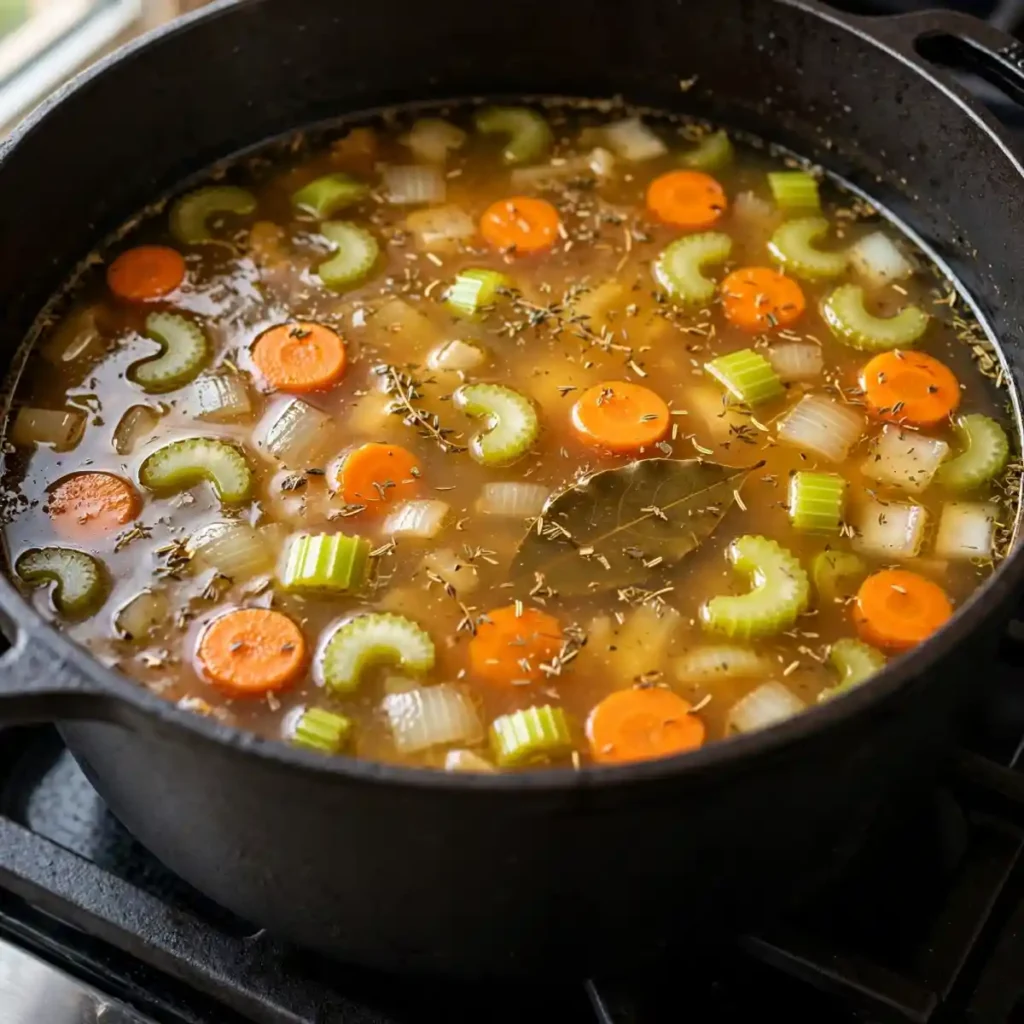
Pour the chicken or turkey broth into the pot with the caramelized vegetables, stirring to lift any sticky bits from the base of the pot as the liquid goes in. Add the dried thyme, dried parsley, dried sage, bay leaf, salt, and black pepper. Stir to combine everything evenly. Raise the heat to medium-high and bring the soup to a full boil, watching the pot as the temperature climbs.
Step 4: Simmer the Vegetables
Once the soup reaches a rolling boil, reduce the heat to medium-low and partially cover the pot with the lid set slightly ajar. Simmer for 15 to 18 minutes, stirring occasionally, until the carrots are fully fork-tender and the broth has deepened in both color and aroma. Remove and discard the bay leaf. Taste the broth at this point and adjust salt if needed: the seasoning level here determines the final seasoning of the entire soup, since the turkey and noodles added later will absorb rather than add salt.
Step 5: Add the Turkey
If using leftover shredded turkey, add it to the simmering broth now. Stir to distribute it evenly through the soup and let it warm in the broth for 3 to 4 minutes before the noodles go in. The turkey needs only to reach serving temperature, not to cook: extended simmering of already-cooked turkey makes it stringy and dry rather than tender.
If using fresh turkey thighs that you are cooking from raw: add them to the broth in Step 3 alongside the seasonings, increase the simmer time in Step 4 to 25 to 30 minutes until the turkey is cooked through to 74°C (165°F) at the thickest part, then remove, shred the meat, and return it to the pot before adding the noodles.
Food Safety Note: Fresh turkey must reach an internal temperature of 74°C (165°F) throughout before it is safe to eat. An instant-read thermometer inserted into the thickest part of the thigh (not touching bone) is the most reliable doneness check for large pieces cooked in broth.
Step 6: Add the Noodles
Increase the heat slightly to bring the broth to a steady simmer. Add the wide egg noodles directly to the soup and stir to prevent them from clumping together. Cook uncovered, stirring occasionally, for 8 to 10 minutes until the noodles are tender but still have a slight chew when you bite into one. The noodles will continue softening in the residual heat of the broth even after the pot is removed from the stove, so pull them off at the al dente stage rather than waiting for them to be fully soft.
Chef’s Note: Cooking the noodles in the seasoned broth rather than in a separate pot of salted water is the right call for turkey soup. The noodles absorb the seasoned broth as they cook, which means every bite of noodle tastes of the soup from the inside rather than simply being surrounded by it. The small amount of starch they release into the broth also gives the liquid a slightly more coating, satisfying body.
Step 7: Finish and Serve
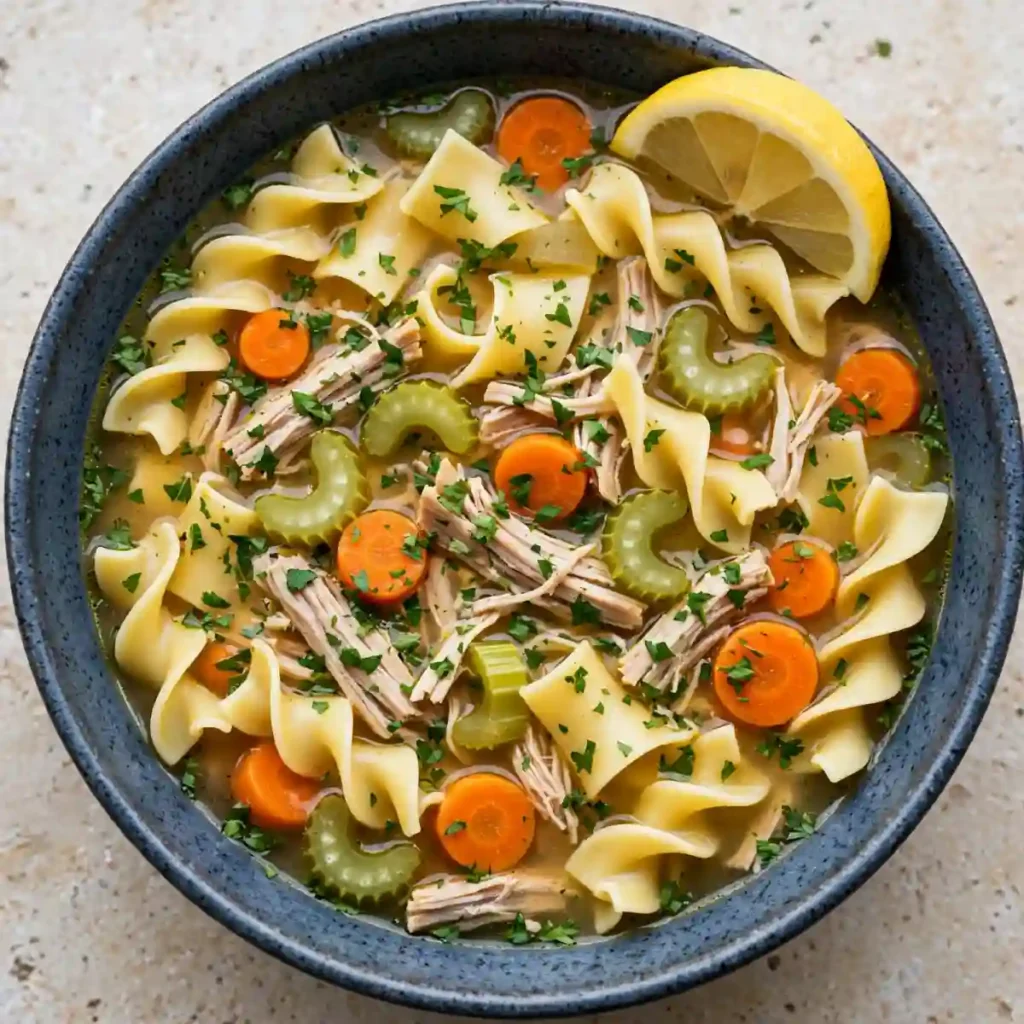
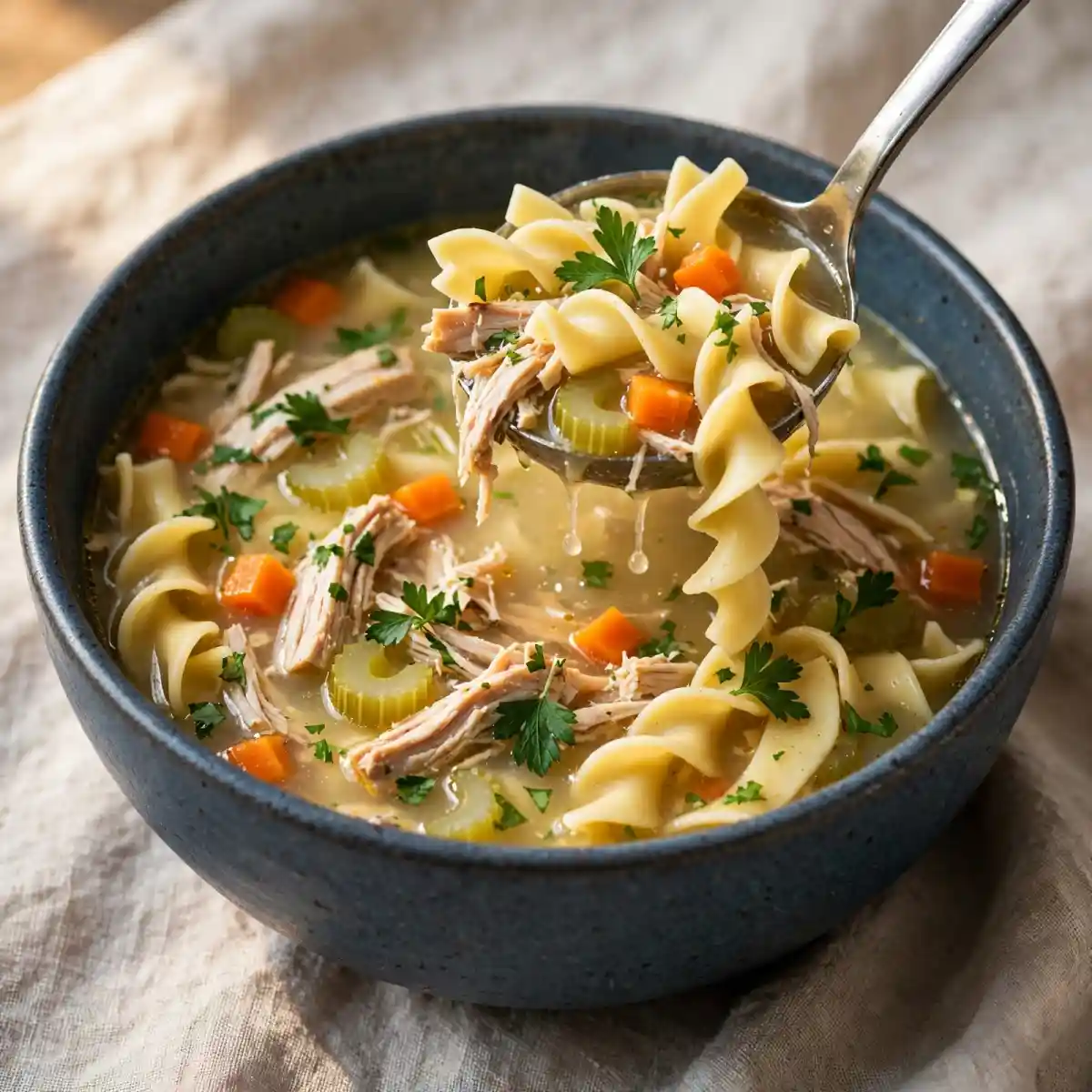
Remove the pot from the heat. Stir in the tablespoon of fresh lemon juice. Taste once more and make any final salt adjustments. Ladle the soup into bowls, distributing turkey, vegetables, and noodles evenly across each serving. Scatter freshly chopped parsley over each bowl and serve immediately.
Common Mistakes and Troubleshooting
| Problem | Cause | Solution |
|---|---|---|
| Broth tastes flat and watery | Tomato paste not caramelized; under-seasoned; bay leaf and sage skipped | Cook tomato paste for the full 2 minutes before adding broth; taste and adjust salt after the simmer; don’t skip the sage and bay leaf |
| Turkey is dry and stringy | Leftover turkey simmered too long in the broth | Add leftover turkey only in the last 3 to 4 minutes before serving: it needs to warm through, not cook again |
| Noodles too soft and mushy | Cooked too long; left in hot broth after pot removed from heat | Pull at al dente; eat within 20 minutes; store noodles separately if making ahead |
| Broth too thin after noodles | Noodles absorbed too much broth; not enough broth to start | The noodles absorb broth as they cook: add an extra 1/2 cup before serving or when reheating; a 6-cup starting volume accounts for this |
| Vegetables still firm after simmer | Heat too low; vegetables cut too thick | Maintain a visible simmer, not just a warm liquid; slice carrots no thicker than 5mm |
| Soup too salty | Regular-sodium broth used; salt added before tasting | Always use low-sodium broth; taste before adding any salt; remember that the turkey and noodles both carry seasoning |
Variations and Substitutions
Turkey Rice Soup: Replace the egg noodles with 2/3 cup (130g) of long-grain white rice, added to the simmering broth in Step 6. Rice takes 15 to 18 minutes to cook through fully in broth, so extend the final cook time accordingly. Rice absorbs more broth than noodles: add an extra 1/2 cup of broth when making the rice version. The finished soup has a slightly heartier, more filling character than the noodle version.
Turkey Vegetable Soup: Add 1 medium diced zucchini and 1 cup of frozen peas alongside the turkey in Step 5. The zucchini softens in 4 to 5 minutes of simmering, and the frozen peas need only 60 seconds to warm through. Both add color, texture, and nutrition without changing the fundamental soup character. This version is particularly good for using up whatever vegetables are in the refrigerator.
Creamy Turkey Soup: Stir 1/2 cup of heavy cream into the finished broth just before adding the noodles. The cream transforms the soup from a clear broth to a richer, slightly pale golden cream soup that pairs particularly well with the sage and thyme seasoning. This version works best with rice rather than egg noodles, since the cream sauce coats rice more evenly.
Turkey Orzo Soup: Replace the wide egg noodles with 3/4 cup (140g) of dry orzo pasta. Orzo cooks in 8 to 9 minutes in simmering broth and produces smaller, rice-shaped pasta pieces that are more delicate in texture than wide noodles. The soup looks more refined and is particularly good for a dinner table presentation. Note that orzo absorbs broth aggressively overnight: store separately if making ahead.
Turkey Sweet Potato Soup: Replace one of the carrots with one medium sweet potato, peeled and diced into 1.5cm cubes. Add the sweet potato with the other vegetables in Step 1 so it has time to become fully tender during the simmer stage. The sweet potato adds a mild sweetness and a creamy, slightly starchy texture that makes the soup feel more substantial. It also adds Vitamin A content to the nutritional profile.
Spiced Turkey Soup: Add 1/2 teaspoon of ground cumin and 1/4 teaspoon of ground turmeric alongside the thyme and sage in Step 3. The cumin adds a warm, earthy note and the turmeric turns the broth a vivid golden-yellow color and adds a subtle peppery warmth. This Middle Eastern-inspired variation pairs beautifully with the mild turkey meat and works well served with flatbread alongside.
Serving Suggestions
- With crusty bread for broth dipping. A golden, slightly crispy exterior slice of bread for soaking up the last of the broth is the natural accompaniment for turkey soup. The broth is too good to leave at the bottom of the bowl and bread handles it cleanly.
- With a simple green salad. A crisp romaine or spinach salad dressed lightly with lemon and olive oil provides a fresh, cold contrast to the warm, savory soup and rounds the meal out without requiring additional cooking.
- As a post-holiday comfort meal. Turkey soup made the day after a holiday roast uses the most flavorful leftover meat in the most satisfying way possible. It is the meal that makes the effort of a large roast feel fully worthwhile rather than leaving you with a refrigerator full of turkey you are not sure how to finish.
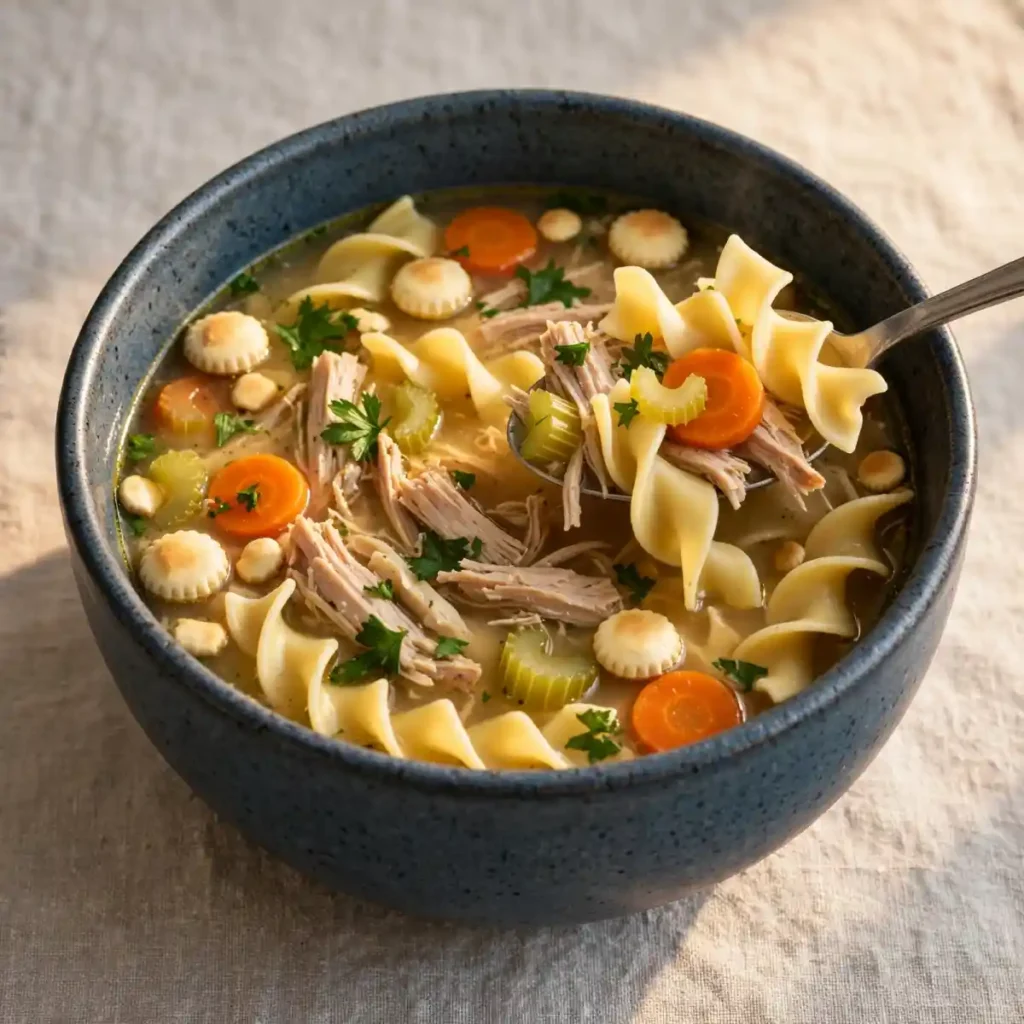
- Topped with oyster crackers. Small oyster crackers scattered over the surface of each bowl add a light, salty crunch that contrasts pleasantly with the tender noodles and soft vegetables. They soften slightly in the hot broth after a minute, creating a layered textural experience as you work through the bowl.
- With a drizzle of chilli oil for heat. A small drizzle of chilli-infused olive oil over each bowl at the table adds a warm, slow-building heat that complements the savory, slightly herby broth without overpowering it. Leave a small bottle at the table for individual adjustment.
- Reheated for lunch the next two days. Turkey soup genuinely improves overnight as the turkey and vegetables continue releasing flavor into the broth. The day-two version is worth looking forward to, and it reheats in 5 minutes on the stovetop. Keep it in the same pot in the refrigerator with a lid for the most practical reheating.
Tips for the Best Results
- Caramelize the tomato paste before any liquid goes in. This two-minute step is easy to skip because the tomato paste looks fine added raw, but the difference in the finished broth is noticeable. Two minutes of direct heat converts the sharp, acidic paste into something sweeter and rounder that becomes the foundation of the soup’s savory depth. It costs nothing except the attention to do it.
- Add leftover turkey at the very end. Already-cooked turkey that simmers in hot broth for more than 5 to 7 minutes begins to tighten and dry out. The goal when using leftovers is to warm the meat through to serving temperature, not to cook it again. Add it 3 to 4 minutes before the noodles are done and it will be perfectly tender in the bowl.
- Store the noodles separately from the broth if making ahead. Egg noodles left in broth overnight absorb a significant volume of liquid, swell considerably, and turn soft and bloated by the next day. The workaround is to cook the noodles in a separate small pot of salted water, drain them, and add a portion to each bowl at serving time, ladling the hot soup over them. This keeps both the broth and the noodles in their best state.
- Taste the broth after the vegetable simmer, before the turkey and noodles go in. The seasoning level of the broth at that point is what determines the final seasoning of the entire finished soup. Turkey and noodles both absorb rather than add salt, so a properly seasoned broth before they go in produces a properly seasoned bowl. A flat broth at that stage produces a flat bowl regardless of what goes in after.
- Use homemade turkey carcass broth when you have it. The difference between a soup made with store-bought low-sodium chicken broth and one made with a homemade turkey carcass broth is substantial: more body, more depth, more of that specific roasted turkey flavor that makes this soup feel like a true post-holiday tradition rather than just another chicken soup variation. If you have a carcass, it takes 10 minutes to put on the stove and produces 2 litres of exceptional broth.
Storage Tips
Refrigerator
Store leftover turkey soup in an airtight container or covered pot in the refrigerator for up to 4 days. The flavors deepen significantly by day two and the soup is often better reheated than it was fresh. If the noodles were stored in the soup, they will have absorbed most of the broth and swelled considerably: add 1/2 to 1 cup of chicken broth when reheating to restore the original consistency and reheat gently over medium-low heat. For the best texture across multiple days, store the broth and noodles separately.
Freezer
The turkey broth and vegetable base (without noodles) freezes very well for up to 3 months. Noodles and rice do not freeze well: they become waterlogged and mushy after thawing. Freeze only the broth component, then cook fresh noodles directly in the reheated broth when ready to serve. Freeze in a labeled airtight container leaving 2cm of headspace for expansion. Thaw overnight in the refrigerator before reheating.
Reheating
From the fridge: transfer the soup to a saucepan over medium heat. Add a splash of broth or water if the soup has thickened overnight from noodle absorption. Stir gently and heat for 4 to 5 minutes until steaming throughout, without letting it boil aggressively which can toughen the turkey. For single portions, the microwave at 50% power in 90-second intervals with the bowl covered works well: add a tablespoon of broth before microwaving to restore moisture. From frozen broth: thaw overnight and reheat on the stovetop to a simmer, then add fresh noodles and cook as directed.
Nutrition Information
Per serving (approximately 1/6 of the full recipe)
| Nutrient | Amount |
|---|---|
| Calories | 295 kcal |
| Protein | 28g |
| Carbohydrates | 26g |
| Fiber | 2.5g |
| Sugar | 4g |
| Total Fat | 8g |
| Saturated Fat | 3g |
| Cholesterol | 85mg |
| Sodium | 540mg |
| Vitamin C | 8mg |
| Calcium | 45mg |
| Iron | 2mg |
| Potassium | 490mg |
Nutrition values are approximate and may vary based on brands and portion sizes. Values reflect leftover roast turkey. Fresh turkey thigh will have a slightly higher fat content.
Why This Recipe Works
Leftover roast turkey contributes more to a soup broth than raw turkey would from the same starting point for a straightforward chemical reason. During roasting, the Maillard reaction and caramelization on the turkey’s surface and in the drippings produce hundreds of flavor compounds, including furans, pyrazines, and thiophenes, that are absent from raw meat. When this already-roasted meat enters the hot broth, those compounds dissolve directly into the liquid over the 3 to 4 minutes of warming time, giving the broth an immediate depth and complexity that raw turkey simmered in plain broth takes 30 to 45 minutes to begin approaching. Using leftovers is not a shortcut: in the context of soup, it is genuinely the superior technique.
The tomato paste caramelization in Step 2 exploits Maillard browning on a concentrated, sugar-rich ingredient to produce flavor compounds that straightforwardly improve the broth. Raw tomato paste added cold to broth contributes tartaric acid and malic acid (the primary organic acids in tomato) in their sharp, unmodified form, which reads as thin acidity rather than depth. At temperatures above approximately 110°C (230°F), which a hot dry pot easily maintains, those same acids undergo browning reactions alongside the paste’s natural sugars and amino acids, converting some of their acidity into sweeter, more complex compounds. Two minutes of contact heat is enough to shift the paste’s flavor contribution from sharp and one-dimensional to rounded and deeply savory.
The small amount of fresh lemon juice added at the very end is a brightness technique rather than a souring one. At one tablespoon across six servings, the lemon provides too little acid to actually make the soup taste lemony. What it does instead is activate the sour taste receptors in a way that makes other flavors, particularly the savory umami of the turkey broth and the aromatic herbs, more perceptible and vivid than they would be without it. This technique, adding a small amount of acid at the end of a savory dish, is used in professional cooking precisely because the acid amplifies the perception of the dish’s flavors rather than adding a new one.
Dried sage in turkey soup is not an arbitrary herb choice: it has a biochemical affinity with the flavor compounds produced during turkey roasting. Turkey breast and thigh fat are rich in gamma-decalactone and related lactone compounds that contribute to cooked poultry’s characteristic aroma. Sage contains thujone, camphor, and linalool, terpene compounds that have been shown to complement these lactone aromas in the same perceptual space that cinnamon complements apple or cardamom complements citrus. The result is a soup that smells and tastes more distinctly like turkey because the sage amplifies rather than competes with the turkey’s existing aromatics.
Cooking the egg noodles directly in the broth instead of separately in salted water produces noodles that are flavored throughout rather than flavored only on their surface. As pasta cooks, it absorbs the surrounding liquid through its surface pores. In salted water, it absorbs water and salt. In a turkey broth seasoned with herbs, tomato, and aromatics, it absorbs all of those flavor compounds simultaneously, which means each noodle carries the flavor of the soup from its interior outward. The starch released from the noodles into the broth also gives the liquid a slightly more coating, satisfying body that plain broth cooked without pasta does not have.
I’ve made this soup with and without the tomato paste in multiple batches to verify that it makes a difference worth including rather than a theoretical one. The broth without it was pleasant but noticeably thinner-tasting and one-dimensional, with the herby, turkey-forward notes unbalanced by any savory sweetness. The broth with 1 tablespoon of caramelized paste was rounder, deeper, and more complete-tasting even when every other ingredient was identical. One tablespoon is the threshold at which the effect is noticeable without making the soup taste of tomato.
Frequently Asked Questions
Can I make turkey soup ahead of time?
Yes, with one practical adjustment. The broth, vegetables, and turkey can be made completely ahead and refrigerated for up to 4 days. Store the noodles separately: cook them in salted water, drain, toss with a small amount of olive oil to prevent clumping, and refrigerate in a separate container. When reheating, warm the soup base to a simmer and add the pre-cooked noodles directly to individual bowls, then ladle the hot soup over them. This prevents the noodles from absorbing all the broth overnight and turning soft.
Why does my turkey soup taste flat?
Flat-tasting turkey soup almost always comes down to one of three causes: the tomato paste was not caramelized before the broth went in, the soup was under-seasoned before the turkey and noodles absorbed more of the salt, or the lemon juice at the end was skipped. Caramelize the paste for the full 2 minutes, taste and adjust salt after the vegetable simmer, and add the tablespoon of lemon juice at the end. Those three decisions together are what produce a broth that tastes built rather than thin.
Can I use turkey breast instead of thighs?
Yes. Turkey breast produces a leaner soup with less richness from the fat, but the flavor is still very good, particularly if using leftover roast breast that has been seasoned. The main adjustment is in how long you simmer fresh breast in the broth: breast meat is fully cooked at 74°C (165°F) and dries out faster than thigh if left longer. Check the temperature at 20 minutes and remove as soon as it is cooked through. Leftover breast added at the end of the recipe needs only 2 to 3 minutes to warm through.
How long should I simmer turkey bones to make turkey carcass broth?
Simmer a turkey carcass broken into large pieces in a pot with one halved onion, two celery stalks, two carrots, a bay leaf, and enough cold water to cover (about 3 litres) for 2 to 3 hours over medium-low heat, skimming the foam that rises in the first 20 minutes. Strain through a fine mesh sieve and discard the solids. The finished broth can be refrigerated for 4 days or frozen for 3 months. This broth used in place of store-bought produces a substantially more flavorful turkey soup.
Is turkey soup gluten-free?
As written with standard egg noodles, no: egg noodles contain wheat flour. The broth, turkey, vegetables, herbs, and all other soup components are naturally gluten-free. For a gluten-free version, replace the egg noodles with certified gluten-free pasta, rice noodles added at the end, or long-grain white rice cooked for 15 to 18 minutes in the simmering broth. Also verify that your chicken or turkey broth is certified gluten-free, as some brands contain wheat-based additives.
Can I add other vegetables to turkey soup?
Yes. Frozen peas, diced zucchini, diced sweet potato, baby spinach, green beans cut into 3cm pieces, and corn kernels all work well. Add dense vegetables (sweet potato, green beans) with the carrots and celery in Step 1 so they have time to become tender. Add delicate vegetables (peas, spinach, corn) alongside the turkey in Step 5: they need only 1 to 2 minutes in the hot broth. Keep the total additional vegetable volume to around 1.5 to 2 cups to avoid diluting the broth proportion.
How do I prevent the noodles from getting mushy when reheating leftovers?
The most reliable method is to store the cooked noodles separately from the soup. Drain and toss them with a small drizzle of olive oil, then refrigerate in a separate airtight container for up to 2 days. When reheating, warm the soup base first and add the noodles directly to individual serving bowls rather than to the whole pot. If the noodles are already mixed into the leftover soup, reheat gently and add extra broth: the texture will be softer than fresh but still edible. For future batches, undercooking the noodles by 2 minutes before storage helps since they will soften further as they sit.
Conclusion
Turkey soup rewards the cook who treats it as a recipe rather than simply a place to put leftovers. Caramelizing the tomato paste, building the aromatics properly in butter, keeping the broth’s seasoning in check before the turkey and noodles go in, and adding the lemon juice at the end: each of those decisions takes almost no extra time and each one produces a noticeable improvement in the finished bowl. The soup that results from those choices is far better than a basic leftover dump, and far better than what most people expect from something assembled in under an hour. Make this turkey soup once with the technique in full and you will find yourself looking forward to leftover turkey specifically because of what comes next.
If you loved this recipe, save it to your cozy soup recipes Pinterest board so you can find it easily later. For more same recipes must follow Thecookingvibes Pinterest account.
Easy Turkey Soup
Ingredients
Equipment
Method
- Melt butter in a large Dutch oven over medium heat. Add diced onion, sliced carrots, and celery. Cook 5 to 6 minutes until softened. Add garlic, stir 60 seconds until fragrant.
- Add tomato paste. Press against the hot pot base, stirring continuously for 90 seconds to 2 minutes until it darkens to a brick-red color and smells sweeter.
- Pour in broth, stirring to lift any bits from the base. Add thyme, parsley, sage, bay leaf, salt, and pepper. Bring to a boil.
- Reduce to medium-low, partially cover, and simmer 15 to 18 minutes until carrots are fork-tender. Remove and discard bay leaf. Taste and adjust salt.
- Add shredded cooked turkey. Stir to distribute and heat through for 3 to 4 minutes.
- Increase heat to a steady simmer. Add egg noodles and cook uncovered 8 to 10 minutes, stirring occasionally, until noodles are tender with a slight chew.
- Remove from heat. Stir in lemon juice. Taste and adjust salt. Ladle into bowls, top with fresh parsley, and serve immediately.
Notes
- Add leftover turkey only at the end: it needs to warm through (3 to 4 minutes), not cook again.
- Caramelize the tomato paste for the full 2 minutes before adding broth: this is what gives the broth its depth.
- Store noodles separately from the broth if making ahead to prevent them from absorbing all the liquid overnight.
- Taste the broth after the vegetable simmer and adjust salt before the turkey and noodles go in.
- Allergens: Contains dairy (butter), gluten (egg noodles), and eggs (egg noodles). Free from nuts and soy as written. Use gluten-free pasta or rice for a gluten-free version; use olive oil instead of butter for dairy-free. Verify chicken broth is gluten-free if needed. Not guaranteed safe for any specific allergy without checking all individual ingredient labels.
- Nutrition values are approximate and may vary based on brands and portion sizes.