Cajun Chicken Pasta (Creamy, Spicy, Ready in 35 Min)
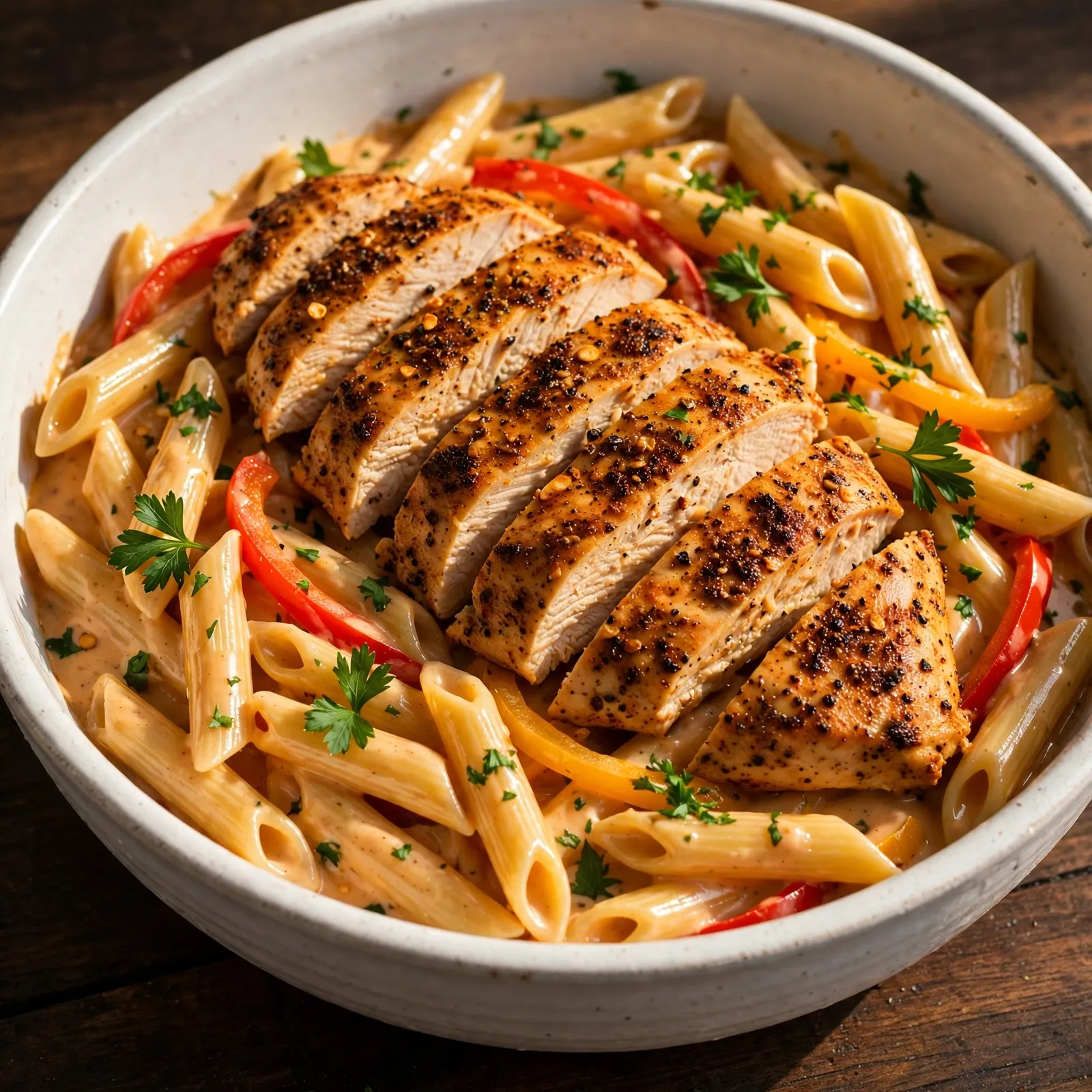
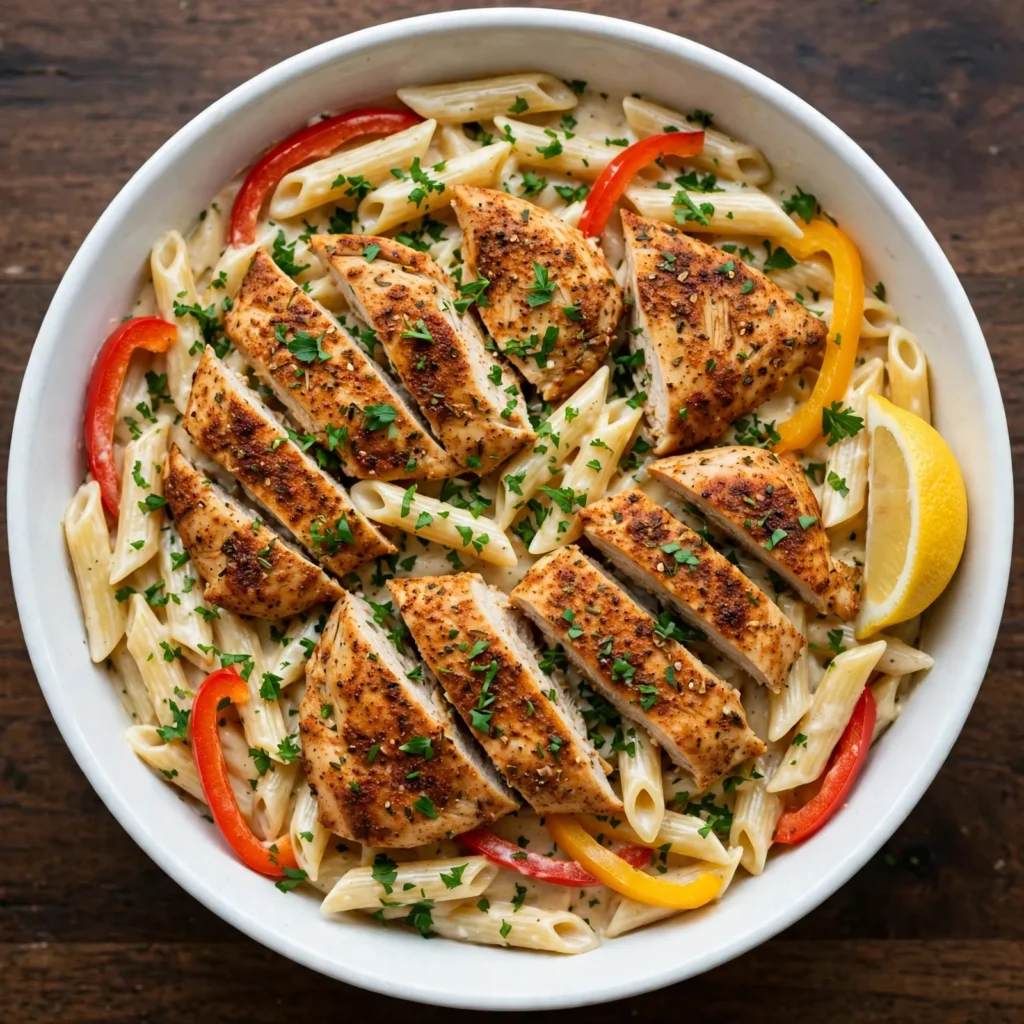
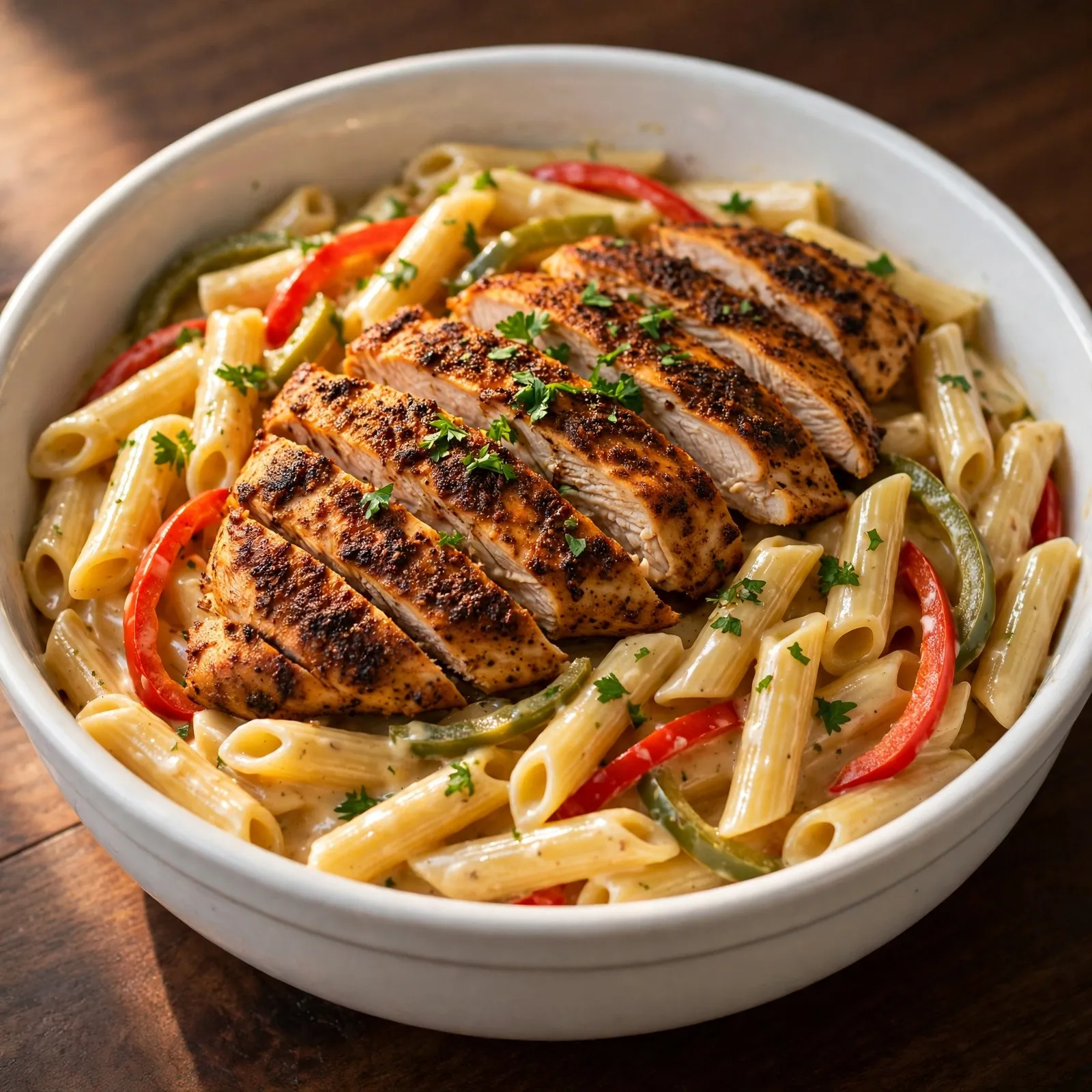
Slice into a piece of Cajun-seasoned Chicken Breast that has been seared properly and you get a crust that gives under the knife with a slight crackle before the juicy interior opens up. That crust, built from a spice rub that includes smoked paprika, cayenne, garlic powder, and dried thyme, does not disappear into the cream sauce: it dissolves into it, seasoning the entire pan with a warm, smoky heat that coats every piece of pasta and every strip of bell pepper from the first bite to the last.
This Cajun chicken pasta recipe builds a cream sauce directly in the same skillet used to sear the chicken, which means every browned bit and spice residue on the pan surface goes into the sauce rather than down the drain. The pasta finishes cooking in the sauce for the last 2 minutes so the noodles absorb the flavor rather than just being coated on the outside. Sliced chicken goes back on top. The whole recipe takes 35 minutes, uses one skillet and one pot, and serves four people as a complete, satisfying dinner with no side dish required.
Why You’ll Love This Cajun Chicken Pasta
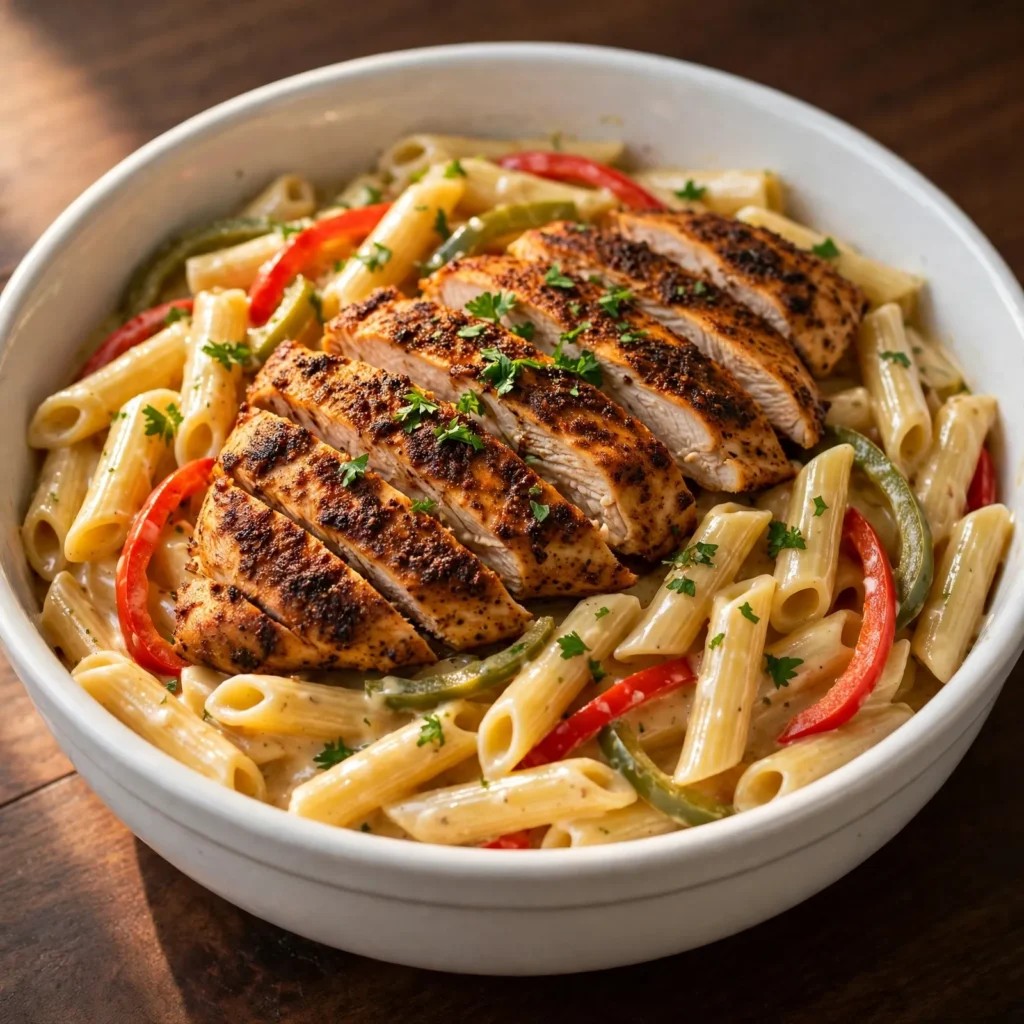
- The spice builds through the entire dish, not just the chicken. The Cajun rub sears into the chicken and the residue from that sear goes directly into the cream sauce, so the smoky, spiced character is woven through the pasta, the sauce, and the bell peppers, not concentrated only in the protein.
- One skillet plus one pot, minimal cleanup. The chicken sears in the skillet. The pasta boils in the pot. The cream sauce builds in the same skillet without any additional cleaning. The two come together in the skillet for the final 2 minutes and go straight to the table.
- The cream sauce holds together and doesn’t break. Starting with a base of aromatics and a small amount of flour before the cream goes in gives the sauce enough body to coat every piece of pasta cleanly without splitting or becoming watery.
- Genuinely adjustable heat level. The cayenne in the spice rub is where all the heat comes from. Reduce it for a milder version, increase it for a dish that builds slowly through the bowl. The smoky, aromatic character of the rest of the spice blend stays the same regardless.
- Better than most restaurant versions. Restaurant Cajun pasta often arrives over-sauced and under-spiced, with cream that tastes of little other than dairy. This version has a spice rub that actually stays on the chicken and a sauce that carries the Cajun flavor all the way through.
Ingredients You’ll Need
Recipe Timing
| Detail | Info |
|---|---|
| Servings | 4 |
| Difficulty | Easy |
| Course | Main Course |
| Cuisine | American, Cajun-Inspired |
| Prep Time | 10 minutes |
| Cook Time | 25 minutes |
| Total Time | 35 minutes |
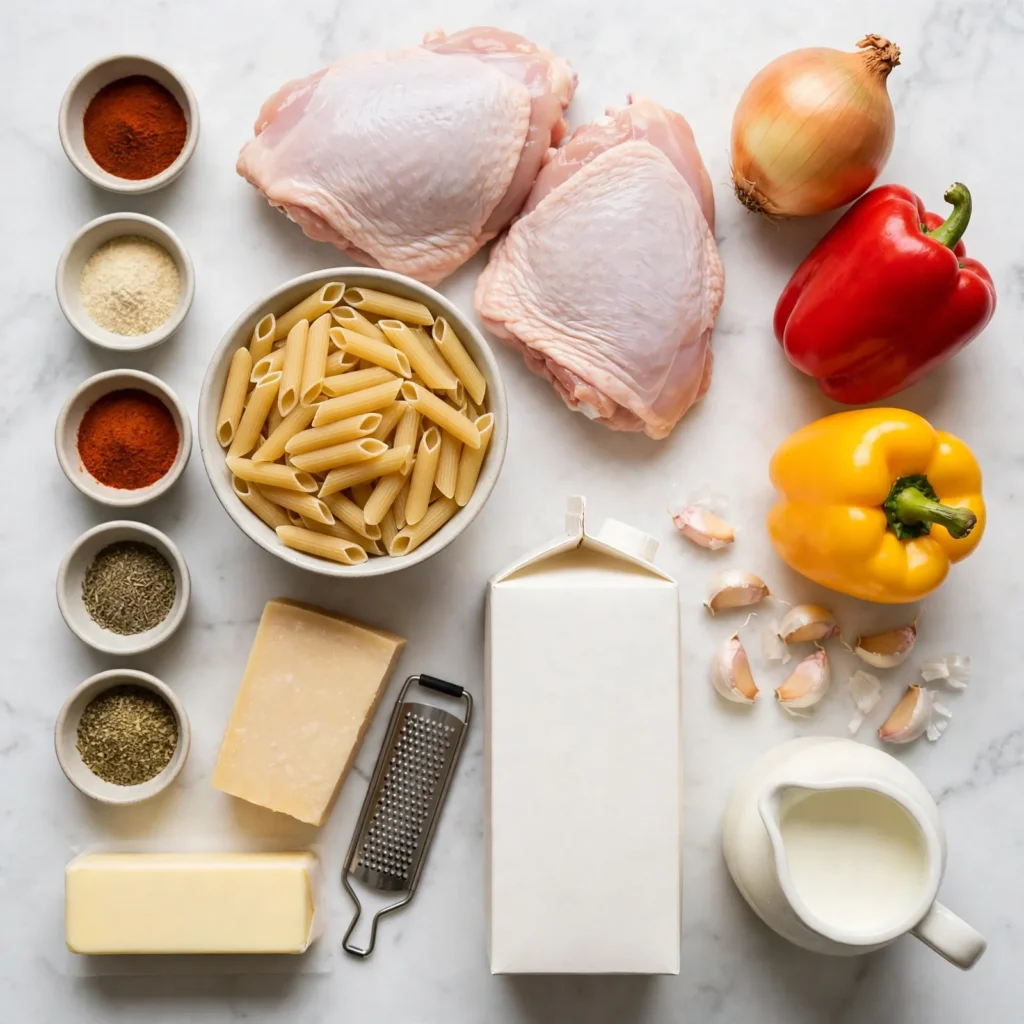
The most important ingredient decision in this recipe is the Cajun spice blend, and specifically whether you use store-bought or make your own. A homemade blend made from the ingredients listed below gives you full control over the heat level and salt content, which matters because many pre-made Cajun seasonings are extremely high in sodium. If using a store-bought blend, taste it before applying: some are very salty, in which case omit the additional salt from the recipe until you taste the final dish.
For the chicken, boneless skinless thighs produce a juicier, more flavorful result than breasts when seared at high heat, and they are more forgiving of 30 seconds of extra cook time. If you prefer chicken breasts, slice them in half horizontally to create two thinner pieces before applying the rub: this halves the cook time and prevents the outside from drying out before the center reaches the right temperature.
For the pasta, penne or rigatoni are the best shapes here because the tubular structure catches cream sauce inside and out. Fettuccine or linguine also work but don’t hold the sauce as well. Don’t use angel hair or thin pasta: it cooks too fast and becomes too soft in the final 2-minute finish in the sauce.
For the Cajun Spice Rub:
- 1 1/2 teaspoons smoked paprika. The primary color and smoky flavor note of the rub. Smoked paprika rather than regular sweet paprika gives the chicken its distinctively charred-looking, deeply colored crust.
- 1 teaspoon garlic powder.
- 1 teaspoon onion powder.
- 3/4 teaspoon dried thyme.
- 3/4 teaspoon dried oregano.
- 1/2 teaspoon cayenne pepper. The heat source. Reduce to 1/4 teaspoon for mild, increase to 3/4 teaspoon or more for noticeably spicy.
- 1/2 teaspoon fine sea salt.
- 1/4 teaspoon black pepper.
For the Cajun Chicken Pasta:
- 500g (about 1 lb) boneless skinless chicken thighs (or breasts, halved horizontally). The primary protein. Pat completely dry with paper towels before applying the rub: moisture on the surface prevents the crust from forming and causes the chicken to steam rather than sear.
- 300g (10 oz) penne or rigatoni pasta. Cooked in salted water to 2 minutes short of the package’s al dente time, then finished in the sauce.
- 2 tablespoons neutral oil (vegetable, canola, or sunflower). For searing the chicken at high heat. A high smoke point oil prevents burning at the searing temperature.
- 1 tablespoon (15g) unsalted butter. Added to the pan after the chicken is removed, for cooking the aromatics. Adds richness to the base of the sauce that oil alone doesn’t provide.
- 1 medium yellow onion, finely diced.
- 1 red bell pepper, sliced into thin strips.
- 1 yellow or orange bell pepper, sliced into thin strips. The two bell peppers add color, mild sweetness, and a slight crunch that contrasts well with the creamy sauce.
- 4 cloves garlic, finely minced.
- 1 tablespoon all-purpose flour. Stirred into the aromatics before the liquid goes in. Provides a light starch matrix that gives the cream sauce body and prevents it from separating when it simmers.
- 1 cup (240ml) low-sodium chicken broth. The primary sauce liquid. Chicken broth deepens the savory, meaty base of the sauce in a way that water cannot. Low-sodium keeps the seasoning level controllable since the spice rub already contributes salt.
- 1 cup (240ml) heavy cream (double cream). Added after the broth to create the rich, coating sauce. Full-fat cream is necessary: reduced-fat cream has too much water and the sauce will be thin and prone to splitting.
- 1/2 cup (50g) freshly grated Parmesan cheese. Stirred in off the heat to add a sharp, savory depth and help thicken the sauce slightly. Grate it fresh: pre-grated Parmesan contains anti-caking agents that prevent it from melting smoothly.
- 1/2 teaspoon additional Cajun seasoning (from the rub blend above), for the sauce. A small amount of the same spice blend goes into the sauce so it carries the same aromatic profile as the chicken’s crust.
- Salt and black pepper, to taste.
- Fresh flat-leaf parsley, roughly chopped, for serving.
Allergen and Dietary Disclosure
This recipe contains dairy (butter, heavy cream, Parmesan), gluten (all-purpose flour, pasta), and eggs are absent.
For a gluten-free version, use certified gluten-free pasta (rice-based or chickpea-based penne works well) and replace the all-purpose flour with 1 teaspoon of cornstarch whisked into the cold chicken broth before adding it to the pan. The sauce thickens slightly differently but the result is comparable.
For a dairy-free version, use a full-fat plant-based cream (oat-based or cashew-based cooking creams are the most stable at simmering temperatures), dairy-free butter, and nutritional yeast (3 tablespoons) in place of Parmesan. The sauce will be slightly lighter in color and less rich but the spiced flavor profile carries through.
Free from eggs, nuts, and soy as written. Not guaranteed safe for any specific allergy without checking all individual ingredient labels.
Step-by-Step Directions
Step 1: Mix the Cajun Spice Rub and Season the Chicken
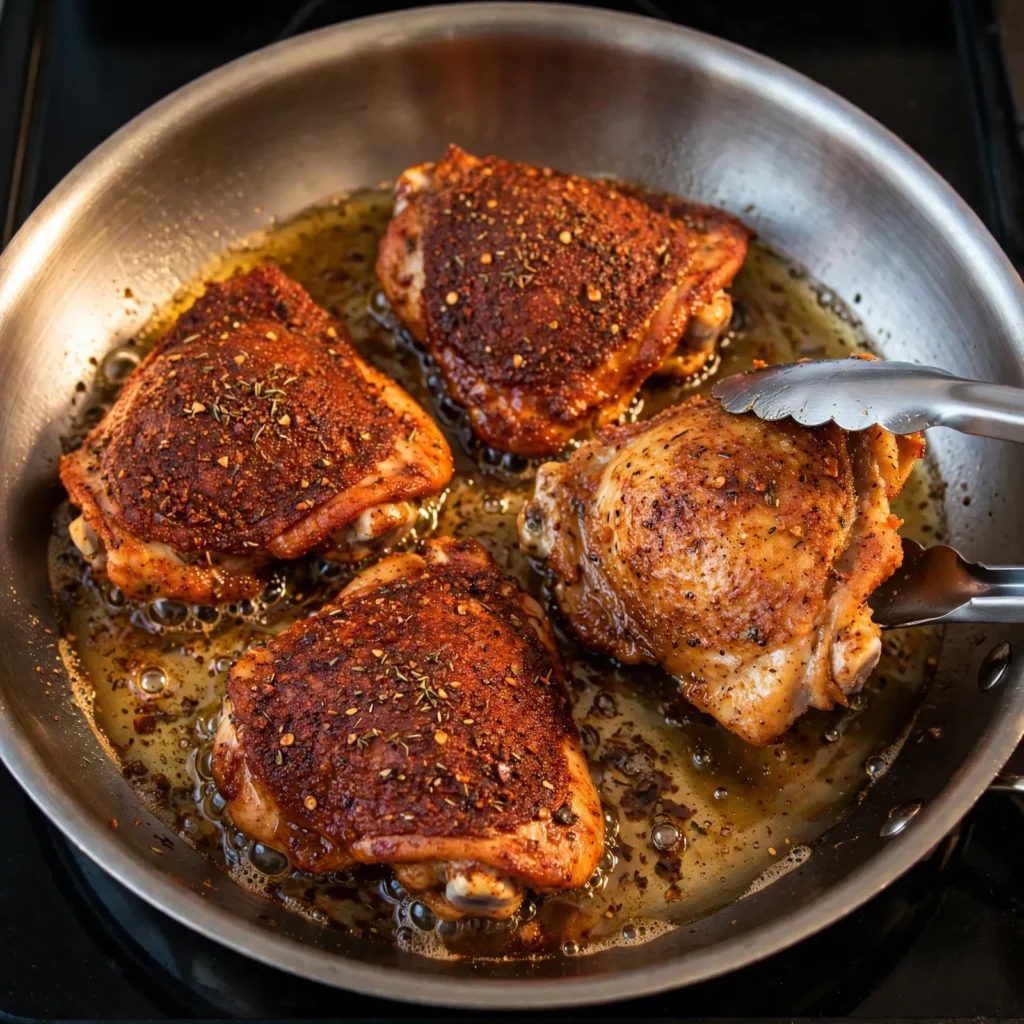
Combine the smoked paprika, garlic powder, onion powder, dried thyme, dried oregano, cayenne pepper, salt, and black pepper in a small bowl and stir until fully mixed. Pat the chicken pieces completely dry with paper towels on both sides: this step is not optional. Moisture on the surface of the chicken creates steam when it hits the hot pan, which prevents the crust from forming and results in chicken that is pale and soft on the outside rather than developing the dark, spiced crust the dish depends on. Sprinkle the spice rub generously over both sides of each piece and press gently so the rub adheres, using the same press-on coating technique as Parmesan Crusted Chicken.

Chef’s Note: The rub needs to touch the hot oil directly to bloom: it is the contact between the fat-soluble spice compounds in the paprika and cayenne and the hot cooking surface that creates the deep, slightly charred crust color and complex seared aroma that defines a properly made Cajun chicken.
Step 2: Cook the Pasta Underdone
Bring a large pot of well-salted water to a full boil. Add the pasta and cook for 2 minutes less than the package’s stated al dente time: if the package says 11 minutes for al dente, cook for 9 minutes. The pasta will finish its cooking in the sauce and absorbs the cream and spice as it does. Drain, toss with a small drizzle of oil to prevent clumping, and set aside. Reserve 1/2 cup of the pasta cooking water before draining: the starchy water is useful for loosening the sauce if it thickens too much.
Chef’s Note: Undercooking the pasta by 2 minutes before the sauce finish is the same principle used in baked ziti and other pasta dishes: the noodles are not done yet and they use the sauce as their final cooking liquid, which means the flavor goes inside the pasta rather than sitting only on the outside.
Step 3: Sear the Chicken
Heat the neutral oil in a large, heavy-bottomed skillet over medium-high heat until it shimmers visibly. Place the seasoned chicken pieces in the pan in a single layer: do not crowd them. If the pieces don’t all fit without touching, sear in two batches. Cook without moving the chicken for 4 to 5 minutes until the bottom has formed a deep reddish-brown crust. Flip each piece and cook the second side for 3 to 4 minutes until no pink remains at the thickest point and the internal temperature reads 74°C (165°F). Transfer to a plate and leave to rest. Don’t wipe the pan.
Food Safety Note: Chicken must reach a minimum internal temperature of 74°C (165°F). Check the thickest part of the largest piece with an instant-read thermometer before removing from the pan.
Step 4: Build the Aromatic Base
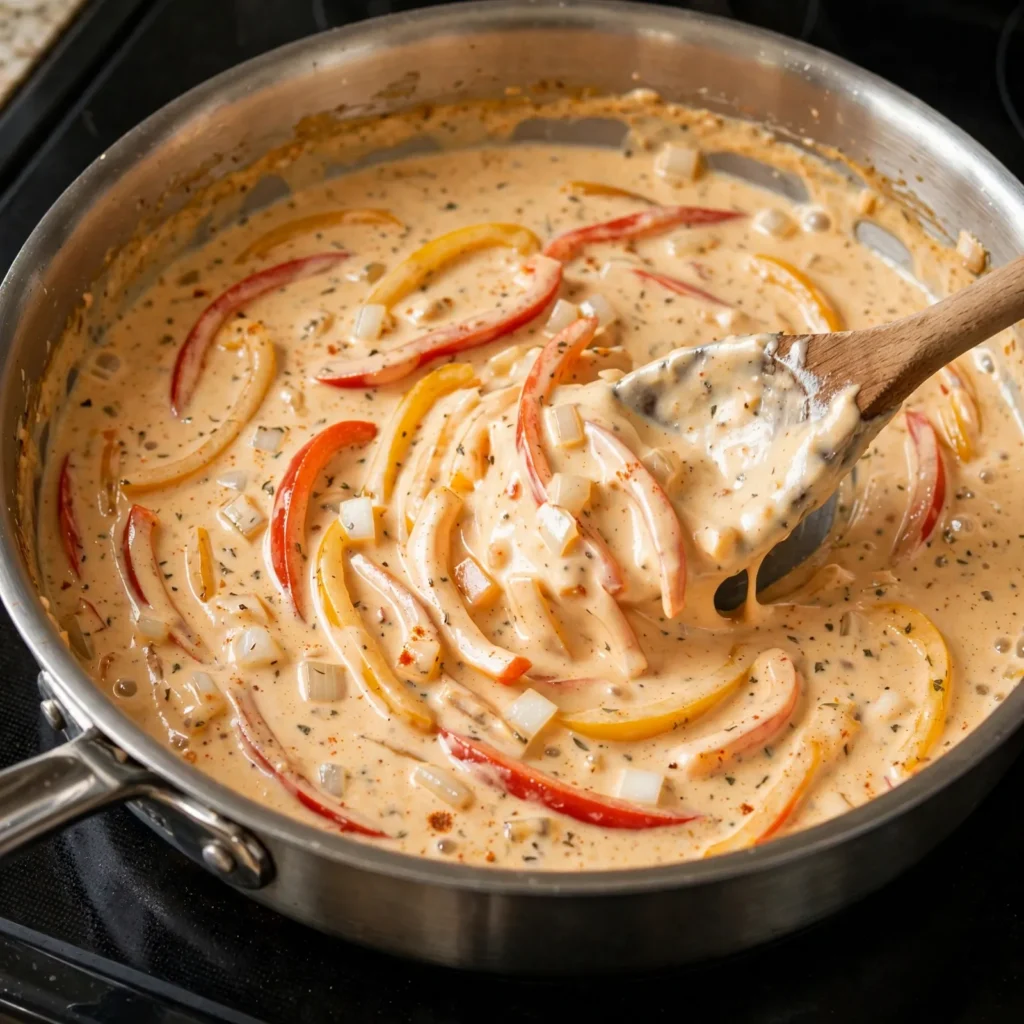
Reduce the heat under the skillet to medium. Add the butter to the pan with the chicken drippings. Once the butter melts and its foam settles, add the diced onion and bell pepper strips. Cook for 3 to 4 minutes, stirring occasionally, until the onion has softened and the peppers have wilted slightly but still have a small amount of firmness at the center. Add the minced garlic and stir for 60 seconds until fragrant. Sprinkle the flour over the vegetable mixture and stir continuously for 60 seconds to cook out the raw flour taste before any liquid goes in.
Chef’s Note: The 60 seconds of cooking the flour in the fat and vegetables is the roux moment that gives this cream sauce its body and stability. Raw flour added to hot liquid produces a starchy, pasty flavor: cooking it briefly in the fat eliminates that and leaves only the thickening property without the taste.
Step 5: Build the Cream Sauce
Pour the chicken broth into the pan with the cooked aromatics, stirring with a wooden spoon and scraping the browned spice residue from the bottom of the pan as the liquid goes in. Every one of those browned bits is concentrated Cajun flavor: get them all. Add the additional 1/2 teaspoon of Cajun seasoning and stir. Bring the broth to a simmer and cook for 2 minutes, stirring occasionally, until it has reduced very slightly. Pour in the heavy cream. Stir to combine and bring the sauce back to a gentle simmer. Cook uncovered for 3 to 4 minutes, stirring frequently, until the sauce thickens enough to coat the back of a spoon in a visible, even layer.
Step 6: Add the Pasta and Finish the Sauce
Add the drained, slightly undercooked pasta directly to the simmering cream sauce. Toss to coat, then cook over medium-low heat for 2 minutes, stirring regularly, until the pasta is fully al dente and has absorbed some of the sauce, which will have thickened slightly around the noodles. If the sauce looks too thick at any point, add the reserved pasta water one tablespoon at a time until it reaches the right coating consistency. Remove the pan from the heat and stir in the freshly grated Parmesan, which will melt immediately into the hot sauce and tighten it slightly. Taste and adjust salt.
Step 7: Slice the Chicken and Serve
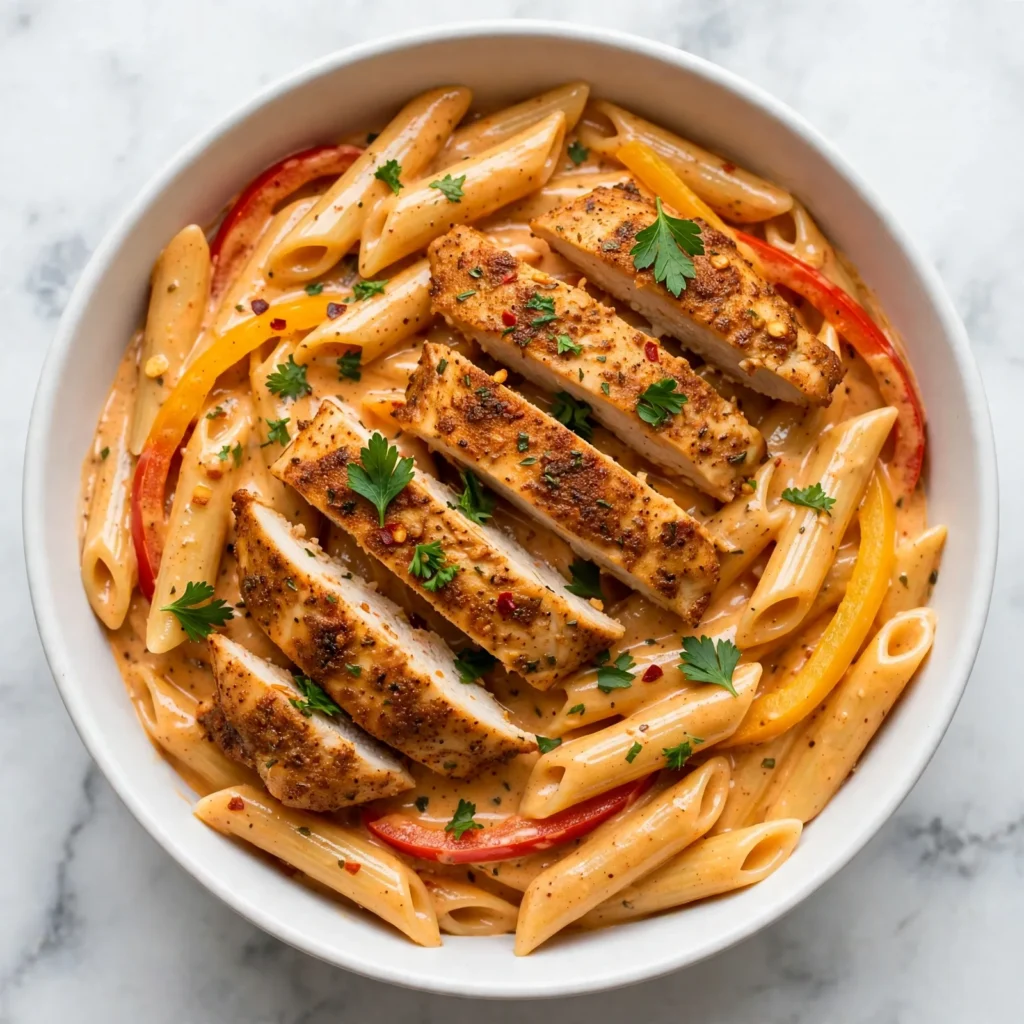
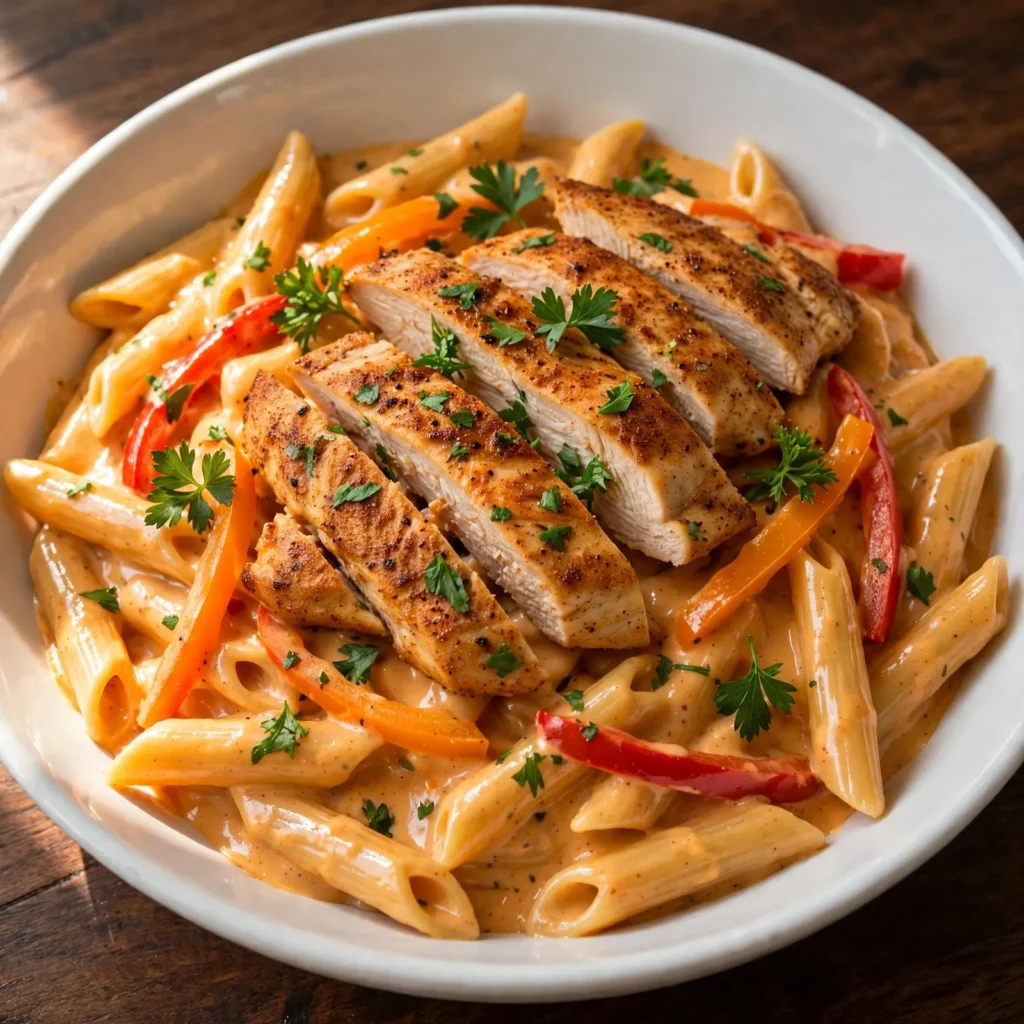
Slice the rested chicken into strips or bite-sized pieces across the grain, which shortens the muscle fibers and produces a more tender bite than slicing with the grain. Arrange the sliced chicken over the sauced pasta in the pan, or transfer the pasta to a serving bowl and lay the chicken across the top. Scatter the chopped fresh parsley over the surface and serve immediately, while the sauce is still fluid and glossy.
Common Mistakes and Troubleshooting
| Problem | Cause | Solution |
|---|---|---|
| Chicken has no crust, looks pale and steamed | Chicken not dried before seasoning; pan not hot enough | Pat chicken completely dry with paper towels; heat oil until shimmering before the chicken goes in |
| Cream sauce split into oily and watery | Heat too high when cream was added; heavy cream not used | Reduce heat to a gentle simmer before cream goes in; never use light cream or half-and-half |
| Sauce too thin | Flour not fully cooked into the fat; cream not simmered long enough | Cook flour for the full 60 seconds; simmer cream sauce 3 to 4 minutes uncovered before adding pasta |
| Pasta is mushy in the finished dish | Cooked to full al dente before being added to the sauce | Always undercook pasta by 2 minutes; it finishes in the sauce and reaches the right texture there |
| Dish not spicy enough | Store-bought Cajun blend used with lower cayenne; spice rub applied too lightly | Make the rub from scratch; apply generously and press into the chicken surface; add extra cayenne directly to the sauce |
| Sauce too thick and gluey | Too much flour; Parmesan added on too-high heat | Use exactly 1 tablespoon flour; stir Parmesan in off the heat; thin with reserved pasta water if needed |
Variations and Substitutions
Cajun Shrimp Pasta: Replace the chicken with 400g of large shrimp, peeled and deveined. Coat the shrimp in the same spice rub and sear in the same oil for 90 seconds per side until pink and curled into a C-shape. Remove them from the pan immediately: shrimp overcooked even by 60 seconds become rubbery. Return to the finished pasta just before serving rather than simmering in the sauce.
Cajun Chicken Pasta With Tomatoes: Add 1 cup of cherry tomatoes halved or 1 can of drained diced tomatoes alongside the bell peppers in Step 4. The tomatoes add acidity and a slight brightness that balances the richness of the cream sauce and adds a jammy, slightly sweet element that becomes part of the sauce as it cooks down, the same jammy tomato role sun-dried tomatoes play in Marry Me Chicken Pasta.
Extra Spicy Cajun Version: Double the cayenne in the rub to 1 teaspoon and add 1 teaspoon of hot sauce (any vinegar-based variety) directly to the cream sauce after the broth goes in. The hot sauce adds heat that builds differently from cayenne alone and a slight vinegary sharpness that cuts through the cream’s richness.
Cajun Pasta Without Cream (Lighter Version): Replace the heavy cream with 1 cup of full-fat coconut milk for a lighter, slightly tropical-adjacent sauce, or use 3/4 cup of cream cheese thinned with 1/2 cup of additional chicken broth. Both produce a coating sauce with less fat than the original while keeping the Cajun spice character intact.
Vegetarian Cajun Pasta: Skip the chicken entirely. Double the bell peppers, add 1 cup of sliced cremini mushrooms and 1 cup of drained and rinsed black beans alongside the onion in Step 4. Use vegetable broth in place of chicken broth. The spice rub goes into the vegetable sauté rather than on a protein: add the full quantity to the pan when the garlic goes in.
Cajun Pasta With Corn: Add 1 cup of fresh or frozen corn kernels alongside the bell peppers. The corn adds a natural sweetness and a slightly chewy texture that works well in the cream sauce and echoes the sweet, smoky combination common in Cajun cuisine. Frozen corn goes in directly with no thawing required.
Serving Suggestions
- As a standalone one-bowl dinner. Cajun chicken pasta is a complete meal with protein, carbohydrates, and vegetables already in the bowl. Nothing alongside it is required unless you want bread for the sauce.
- With garlic bread for sauce dipping. The cream sauce is worth capturing with bread. A thick slice of toasted garlic bread alongside the bowl handles the sauce that clings to the bottom after the pasta is gone.
- With a crisp green salad. A simple romaine or arugula salad with a lemon vinaigrette cuts through the richness of the cream sauce and refreshes the palate between bites. Keep the dressing light and acidic rather than creamy to avoid competing with the sauce.
- Topped with extra Parmesan at the table. A small bowl of freshly grated Parmesan at the table lets everyone add more over their portion. The additional cheese adds a salty, sharp counterpoint to the spiced sauce that intensifies as the pasta cools slightly.
- With steamed broccolini or asparagus alongside. A simply steamed green vegetable with a squeeze of lemon beside the pasta adds color and a neutral counterpoint without requiring any additional seasoning or cooking effort while the pasta finishes.
- As a meal prep dinner for the week. Stored in individual portions in airtight containers, cajun chicken pasta reheats well for up to 4 days and tastes better the next day as the spiced sauce deepens overnight in the refrigerator, just like White Chicken Chili
Tips for the Best Results
- Dry the chicken before applying the rub. The rub is oil-soluble, not water-soluble: it needs contact with hot fat, not a wet surface, to bloom and form the crust. A chicken thigh that goes into the pan with any surface moisture will spend the first 60 seconds of cooking evaporating that water before any searing can start, which delays the crust formation and produces a paler, less flavorful result.
- Don’t clean the pan between the chicken and the sauce. The browned residue left in the skillet after searing the chicken is not debris: it is concentrated spice and rendered chicken fat that forms the flavor foundation of the cream sauce. Wiping the pan clean before building the sauce removes the best part of the entire recipe.
- Grate the Parmesan fresh. Pre-shredded or pre-grated Parmesan contains cellulose or potato starch as anti-caking agents that prevent the cheese from melting smoothly into the sauce. A block of Parmesan grated on the fine side of a box grater takes 2 minutes and produces a sauce that is visibly smoother and more cohesive.
- Add the Parmesan off the heat. Parmesan proteins tighten and become grainy at temperatures above about 80°C (175°F). Stir it into the sauce immediately after pulling the pan from the burner: the residual heat of the sauce is more than sufficient to melt it fully, and the texture is dramatically better than cheese added to a sauce still at a rolling simmer.
- Taste and adjust at the end. Cajun spice blends vary significantly in salt content between brands and homemade batches. Taste the sauce before serving and adjust both salt and heat with a pinch more of the rub or a small squeeze of hot sauce. The pasta water reserved from boiling is also useful here: a tablespoon or two loosens a sauce that has thickened past the right consistency during the final stage.
Storage Tips
Refrigerator
Transfer cooled cajun chicken pasta to an airtight container and refrigerate for up to 4 days. The sauce thickens considerably as it cools because the Parmesan and starch from the pasta set the sauce at refrigerator temperature. Stir in a tablespoon of chicken broth or water per portion when reheating to restore the original saucy consistency. The Cajun spice flavor deepens overnight, which makes the next-day version genuinely excellent.
Freezer
Cream-based pasta sauces can be frozen but the texture changes after thawing: the cream may separate slightly and the pasta softens further during the freeze-thaw cycle. If freezing, store in individual freezer-safe portions for up to 1 month. Freeze the chicken and pasta separately from each other if possible for the best reheated texture. Thaw overnight in the refrigerator before reheating gently. The flavor holds well even when the texture changes slightly.
Reheating
From the fridge: add a tablespoon of water or broth to the container and reheat at 50% microwave power in 90-second intervals, stirring between each, until heated evenly throughout. On the stovetop, reheat over medium-low heat in a small saucepan with 2 to 3 tablespoons of broth added, stirring frequently and not letting the sauce come to a boil, which can cause it to split. A fresh squeeze of lemon juice and a small amount of freshly chopped parsley after reheating restores some of the brightness that fades during storage.
Nutrition Information
Per serving (approximately 1/4 of the full recipe)
| Nutrient | Amount |
|---|---|
| Calories | 620 kcal |
| Protein | 38g |
| Carbohydrates | 58g |
| Fiber | 3.5g |
| Sugar | 6g |
| Total Fat | 26g |
| Saturated Fat | 13g |
| Cholesterol | 155mg |
| Sodium | 680mg |
| Vitamin C | 55mg |
| Calcium | 185mg |
| Iron | 3mg |
| Potassium | 540mg |
Nutrition values are approximate and may vary based on brands and portion sizes.
Why This Recipe Works
The decision not to wipe the pan between searing the chicken and building the cream sauce is the structural choice that gives this recipe most of its flavor. When the Cajun-spiced chicken sears at high heat, the spice compounds in the rub undergo Maillard browning reactions on the surface of the pan where they are in direct contact with the fat. The result is a layer of browned residue, the fond, that contains concentrated versions of the paprika, cayenne, garlic powder, thyme, and oregano flavor compounds, transformed by heat into something more complex than the raw spices were. When the butter goes into that pan and the aromatics begin to cook, they pick up those browned flavor compounds. When the broth goes in and deglazes the pan, they dissolve into the sauce. The cream that follows carries them through the entire dish. A pan wiped clean before the sauce step loses all of that.
The flour in the aromatic base serves the cream sauce in two ways. First, it creates a starch matrix that disperses through the sauce as it cooks, providing a smooth body that prevents the sauce from being thin and watery even before the cream reduces. Second, it creates a buffer that protects the cream proteins from direct high heat as the sauce simmers: the starch dispersed through the sauce prevents the casein proteins in the cream from coagulating and clumping into a broken, oily sauce at higher temperatures. This is why cream sauces thickened with a small amount of flour are more stable through simmering than cream sauces with no starch at all.
Finishing the pasta in the sauce for 2 minutes rather than adding pre-cooked pasta directly is a technique used in pasta restaurants to produce a more cohesive dish. During the final 2 minutes, two things happen simultaneously. The pasta releases a small amount of residual starch into the sauce, which thickens it slightly and helps it cling to the noodles more effectively. The sauce in turn enters the noodles through any micro-cracks or pores on the slightly undercooked surface, so the pasta absorbs flavor from the inside rather than being coated only on the outside. The difference between pasta finished in the sauce and pasta added from a colander directly to a finished sauce is immediately perceptible in the texture and the depth of flavor in each bite.
Adding the Parmesan off the heat protects its texture through protein chemistry. Cheese contains casein proteins that denature and aggregate at temperatures above approximately 80°C (175°F), expelling the fat they were holding and creating a grainy, stringy, partially separated texture. At the residual heat of a pan pulled from the burner, the temperature is warm enough to melt the fat in the cheese and allow the flavor to distribute through the sauce, but not hot enough to cause the protein aggregation that produces graininess. The 60 seconds of stirring the cheese into the off-heat sauce is all that is needed.
I’ve tested this recipe with chicken breasts (halved horizontally) and chicken thighs in side-by-side batches. The thigh version produced juicier, more tender pieces that stayed moist when sliced and returned to the hot sauce. The breast version was noticeably drier by the time it reached the table, particularly if given any extra time in the pan. For a recipe where the chicken sears, rests, gets sliced, and then sits on top of a hot sauce before being served, thighs handle that extended journey significantly better.
Frequently Asked Questions
Can I make cajun chicken pasta ahead of time?
Yes, with a small adjustment. The pasta continues absorbing the sauce as it sits, so reheated leftover cajun chicken pasta will be thicker and the noodles softer than when freshly made. Store in airtight containers in the refrigerator for up to 4 days. When reheating, add a tablespoon of chicken broth or water per serving to loosen the sauce back to the right consistency. The Cajun flavor actually deepens overnight in the fridge, making day-two leftovers genuinely better-seasoned than the original.
Why is my cajun chicken pasta sauce too thin?
A thin sauce usually comes from one of two things: the flour was not cooked long enough in the fat before the liquid was added (less than 60 seconds produces a sauce with less thickening power), or the cream was not simmered long enough before the pasta went in (3 to 4 minutes of uncovered simmering is the minimum for the sauce to reduce to the right consistency). If the sauce is already thin when the pasta goes in, cook for an extra minute before serving. Reserved pasta water also thickens the sauce slightly if added: the starch it contains disperses through the sauce.
Can I use milk instead of heavy cream?
Whole milk produces a noticeably thinner, less rich sauce and is significantly more prone to splitting at simmering temperatures because its fat content (3.5%) is too low to protect the milk proteins from curdling with heat and acidity. If heavy cream is unavailable, the closest substitute is full-fat evaporated milk, which has a higher fat concentration than regular milk and is more heat-stable. Reduce the quantity by about 2 tablespoons compared to the cream quantity and simmer gently.
How spicy is cajun chicken pasta?
As written, with 1/2 teaspoon of cayenne in the rub, the heat level is moderate: noticeable and building through the bowl but not sharp. For a mild version, reduce the cayenne to 1/4 teaspoon. For a genuinely spicy version, increase to 3/4 teaspoon or more in the rub, and add a teaspoon of hot sauce to the cream sauce. The smoked paprika, thyme, and oregano in the rub contribute the Cajun aromatic character regardless of cayenne quantity, so reducing the heat does not change the overall flavor profile significantly.
Is cajun chicken pasta gluten-free?
As written, no: the recipe uses all-purpose flour in the sauce and regular wheat pasta. To make it gluten-free, use certified gluten-free pasta (rice-based or chickpea-based penne) and replace the flour with 1 teaspoon of cornstarch whisked into the cold chicken broth before adding it to the pan. The cornstarch produces a slightly glossier, less opaque sauce than the flour version but thickens effectively at the same simmer time.
Can I use store-bought Cajun seasoning instead of making my own?
Yes. Use 2 tablespoons of store-bought Cajun seasoning in place of the homemade rub. The important caveat is that most store-bought Cajun seasonings are very high in sodium: taste before seasoning the chicken and reduce or eliminate the additional salt from the recipe until you taste the finished dish. Some blends are also heavier in cayenne than others, so taste the rub before applying it to assess the heat level.
Can I add vegetables other than bell peppers?
Yes. Sliced mushrooms (cremini or button), diced zucchini, fresh or frozen corn, baby spinach added at the very end to wilt in the residual heat, and halved cherry tomatoes all work well in the sauce alongside or in place of the bell peppers. Keep the total vegetable volume at roughly 2 cups to avoid overcrowding the pan and dropping the sauce temperature below a simmer during the final stage. Add denser vegetables (mushrooms, zucchini) with the onion and pepper; add quick-cooking additions (spinach, cherry tomatoes) in the final 2 minutes with the pasta.
Conclusion
Cajun chicken pasta succeeds because the flavor does not come from the spice rub alone: it comes from what happens to that spice rub during searing, and then from what happens to those seared remnants when the cream sauce builds over them. That chain of flavor development, rub to sear to fond to sauce to pasta, is the logic that makes this recipe taste significantly more complex than the ingredient list suggests. Once you understand why the pan stays unwashed and why the pasta finishes in the sauce rather than being added from a strainer, the recipe makes complete sense and the steps follow naturally from that understanding. Make cajun chicken pasta once with those two principles in mind and you will not want to make it any other way.
If you loved this recipe, save it to your easy pasta dinner recipes Pinterest board so you can find it easily later. For more same recipes follow Thecookingvibes Pinterest account.
Cajun Chicken Pasta
Ingredients
Equipment
Method
- Mix all spice rub ingredients in a small bowl. Pat chicken completely dry with paper towels. Coat all sides generously with the rub and press to adhere.
- Cook pasta in salted boiling water for 2 minutes less than the package’s al dente time. Drain, toss with a drizzle of oil, and reserve 1/2 cup pasta water. Set aside.
- Heat neutral oil in a large skillet over medium-high until shimmering. Sear chicken 4 to 5 minutes undisturbed until a deep reddish-brown crust forms. Flip and cook 3 to 4 minutes more until internal temperature reaches 74°C (165°F). Remove to a plate. Do not clean the pan.
- Reduce heat to medium. Add butter to the pan drippings. Cook diced onion and bell pepper strips for 3 to 4 minutes until softened. Add garlic, stir 60 seconds. Add flour, stir constantly for 60 seconds.
- Pour in chicken broth, scraping all browned bits from the pan bottom. Add the extra 1/2 teaspoon Cajun seasoning. Simmer 2 minutes. Pour in heavy cream. Simmer uncovered 3 to 4 minutes, stirring often, until sauce coats a spoon.
- Add drained pasta to the sauce. Toss and cook on medium-low for 2 minutes, adding pasta water by the tablespoon if needed. Remove from heat. Stir in Parmesan. Taste and adjust seasoning.
- Slice rested chicken across the grain. Arrange over the pasta. Scatter parsley on top and serve immediately.
Notes
- Always pat chicken dry before applying the spice rub: moisture on the surface prevents crust formation.
- Don’t clean the skillet after searing the chicken: the browned fond is the flavor base of the cream sauce.
- Undercook the pasta by 2 minutes before adding to the sauce: it finishes in the sauce and absorbs flavor as it does.
- Add Parmesan off the heat to prevent the sauce from becoming grainy.