Easy Hamburger Soup (Hearty, Vegetable-Packed, One Pot)
There is a specific kind of soup that feels less like a first course and more like a meal that happens to be in a bowl: thick enough to be satisfying, protein-forward enough to hold you for hours, and built from the kind of pantry and refrigerator staples that don’t require a special shopping trip. Hamburger soup is that recipe. The ground beef gives the broth a savory, meaty backbone that develops in 10 minutes of simmering in a way that takes a chicken soup considerably longer to achieve.
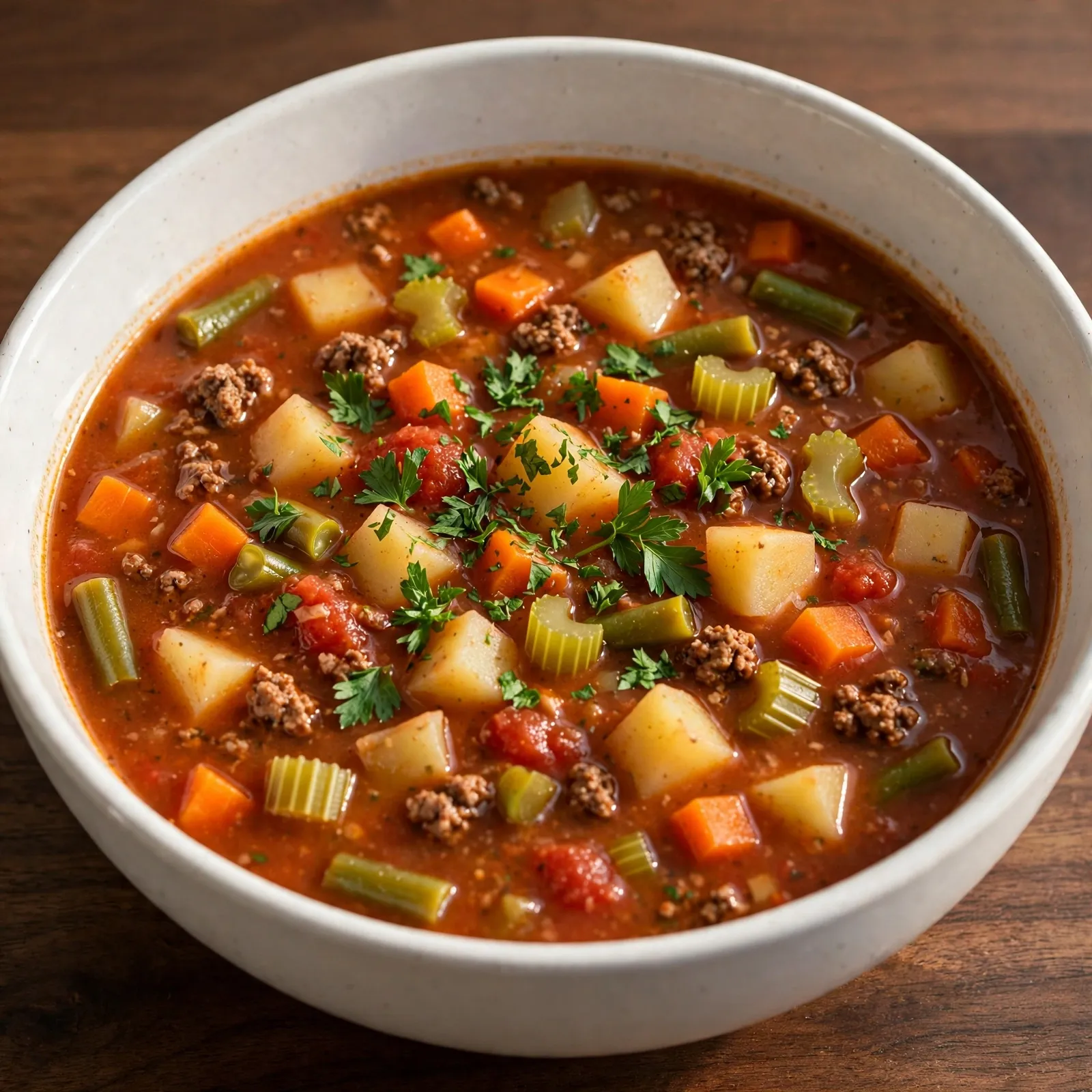
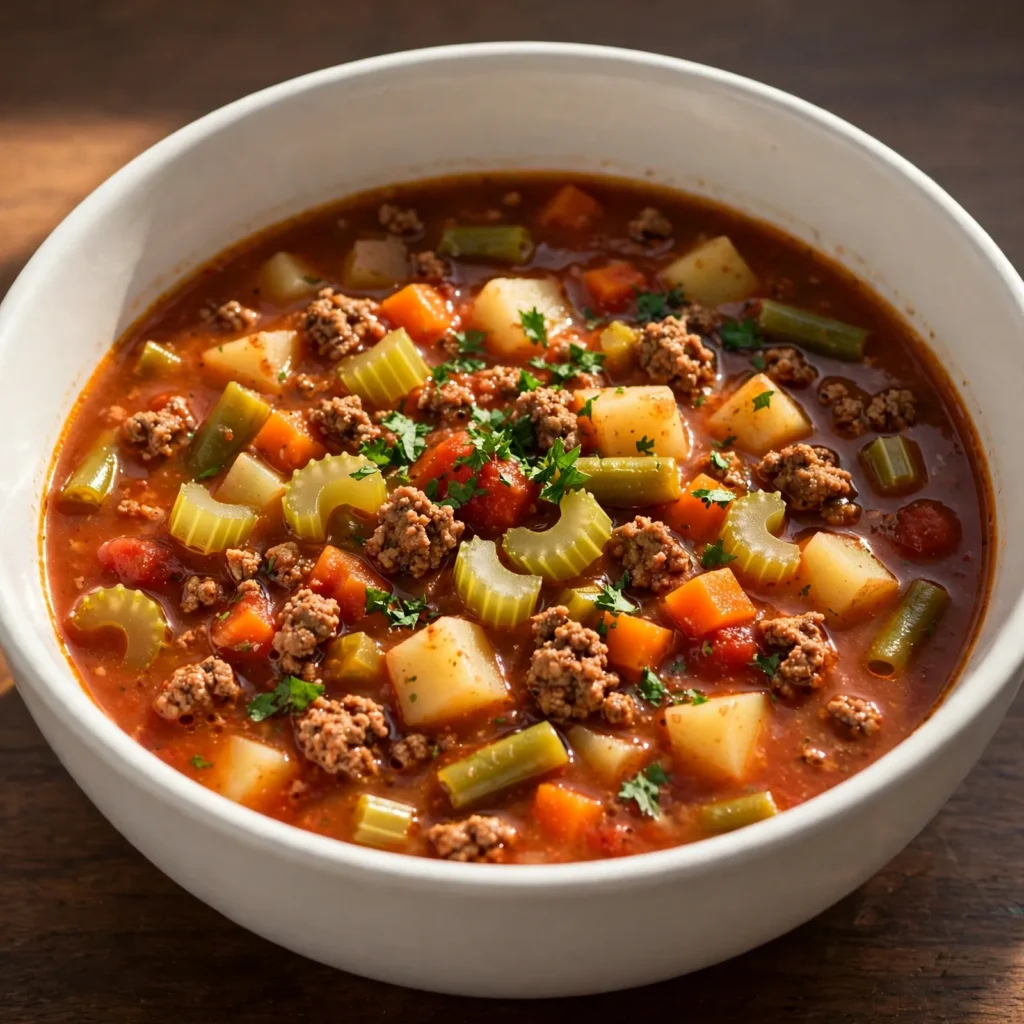
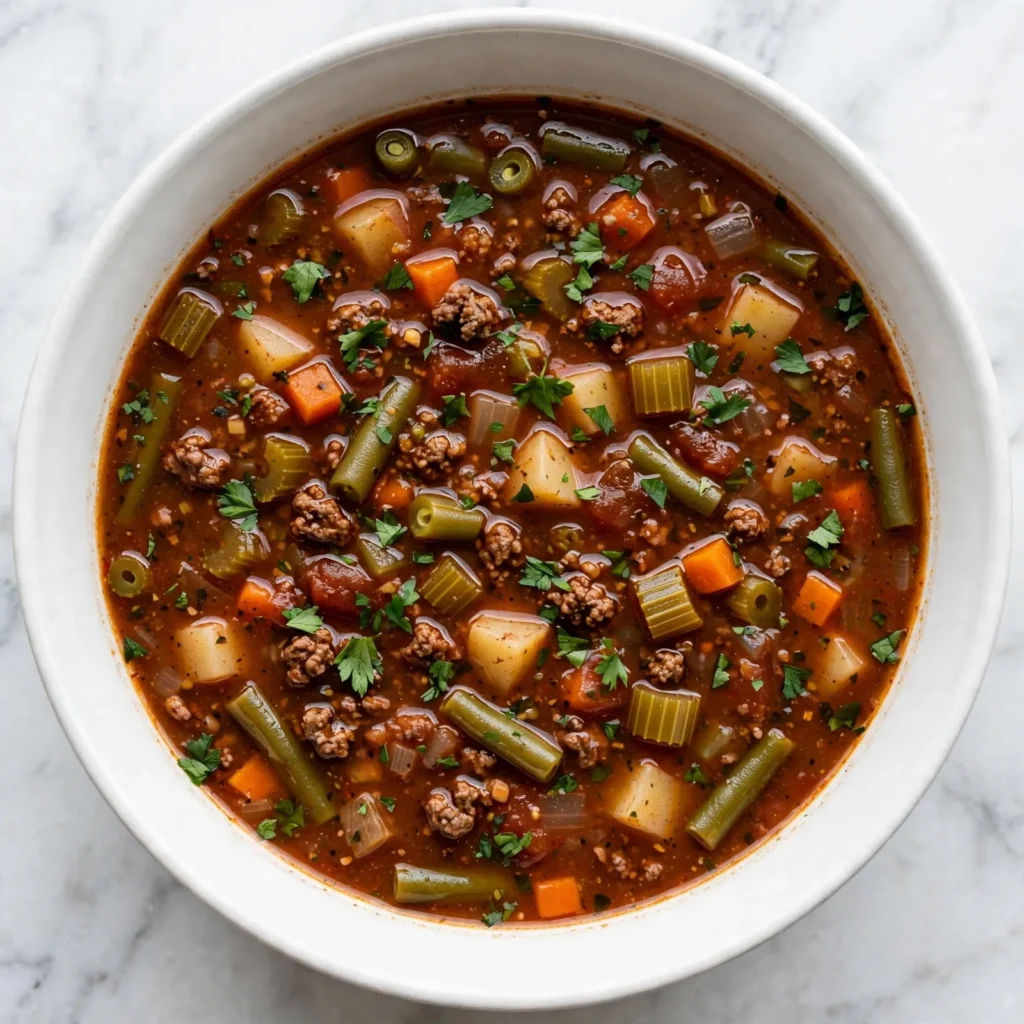
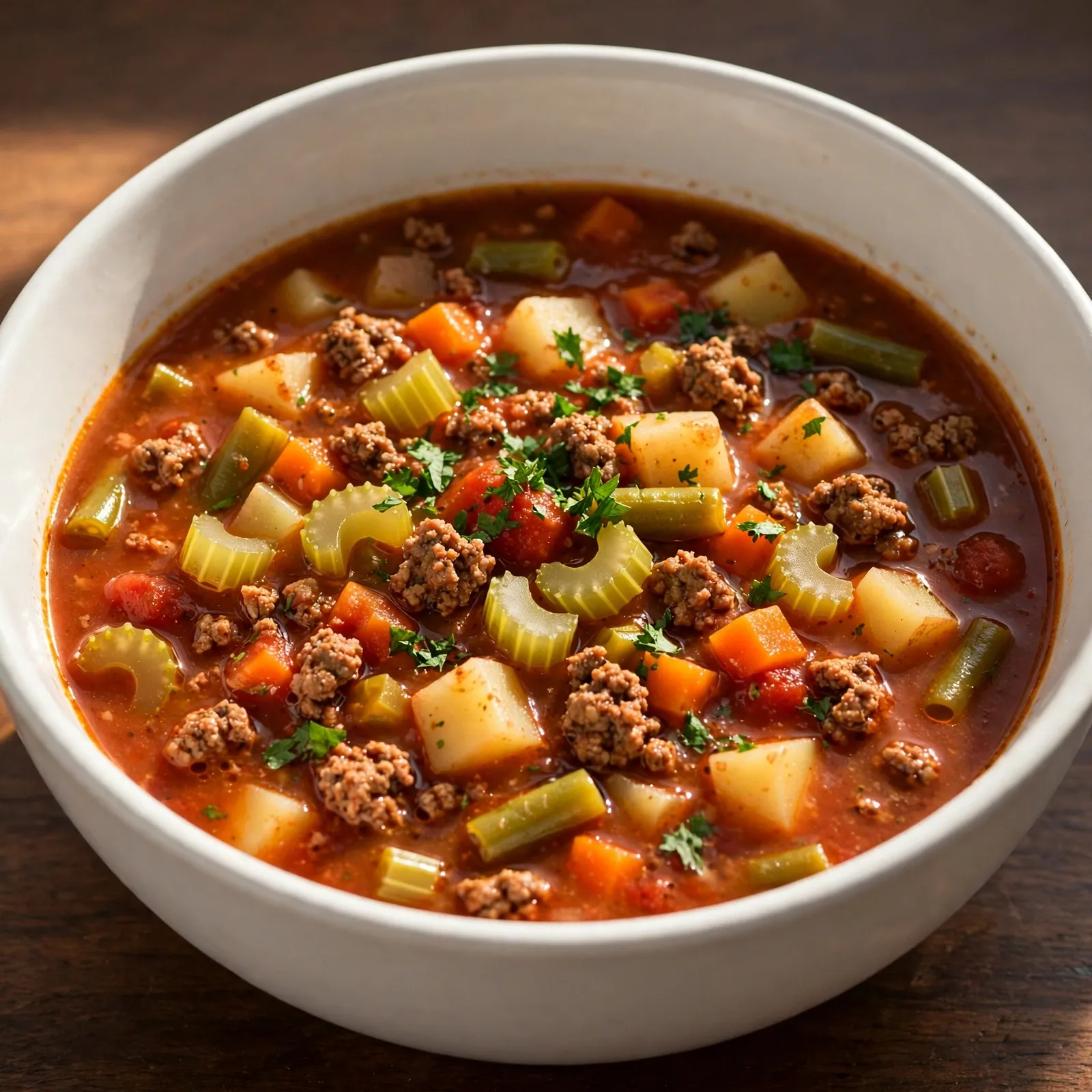
This hamburger soup recipe builds a tomato-based broth around seasoned, browned ground beef, diced potatoes, carrots, celery, and green beans, all cooked in one pot from start to finish in 45 minutes. The vegetables are intentionally cut to a size that cooks through in the same time the broth spends simmering, so everything finishes together without any component being overdone. It serves six people generously, makes excellent leftovers for the next three days, and freezes well for the months ahead. It is the kind of weeknight soup that earns a permanent place in a regular dinner rotation.
Why You’ll Love This Hamburger Soup
- One pot, 45 minutes, zero complexity. Brown the beef, build the aromatics, add the broth and vegetables, simmer until tender. The sequence is straightforward at every stage and requires no technique beyond basic stovetop cooking.
- The broth is genuinely beefy and rich. Properly browning the ground beef before any liquid goes in creates a layer of fond on the pot bottom that dissolves into the broth and gives it a savory, meaty depth that takes much longer to develop in a soup built on chicken or vegetable stock.
- Vegetables that hold their shape. Cutting everything to the same approximate size and adding the vegetables in the right sequence means nothing turns mushy. The potatoes are fork-tender, the carrots have bite, and the green beans stay intact through the full simmer time.
- Scales effortlessly to feed a crowd. Double the recipe in the same pot with the same timing. The broth-to-vegetable ratio stays proportional and nothing changes except the quantity of bowls on the table.
- Outstanding leftover quality. The broth deepens overnight as it continues absorbing the flavors of the beef and vegetables. Day-two hamburger soup reheated with a small splash of broth is consistently better-tasting than it was the evening it was made.
Ingredients You’ll Need
Recipe Timing
| Detail | Info |
|---|---|
| Servings | 6 |
| Difficulty | Easy |
| Course | Main Course, Soup |
| Cuisine | American |
| Prep Time | 15 minutes |
| Cook Time | 30 minutes |
| Total Time | 45 minutes |
The most important technique decision in this recipe is how you cook the ground beef. The beef must be browned in a dry, hot pot in small batches, with the liquid released during cooking allowed to evaporate before the aromatics go in. Ground beef that steams in a pool of its own liquid rather than browning against a hot surface contributes almost no fond to the pot, which means the finished broth tastes thin and under-flavored no matter how long it simmers. Take the extra 2 minutes to ensure the beef is genuinely browned, not just grey.
For the ground beef, use 80/20 or 85/15. Leaner beef lacks the fat needed to develop the fond that gives the broth its character. Drain most of the excess fat after browning but leave a thin layer in the pot for cooking the aromatics: that fat carries the beef flavor into the vegetables and broth.
For the potatoes, Yukon Golds are ideal: their waxy structure holds up through 15 to 20 minutes of simmering without dissolving into the broth. Russets work but can overcook at the edges while the centers are still firm, producing a thicker broth than intended. Cut all potatoes to approximately 1.5cm cubes for the most consistent cook time.
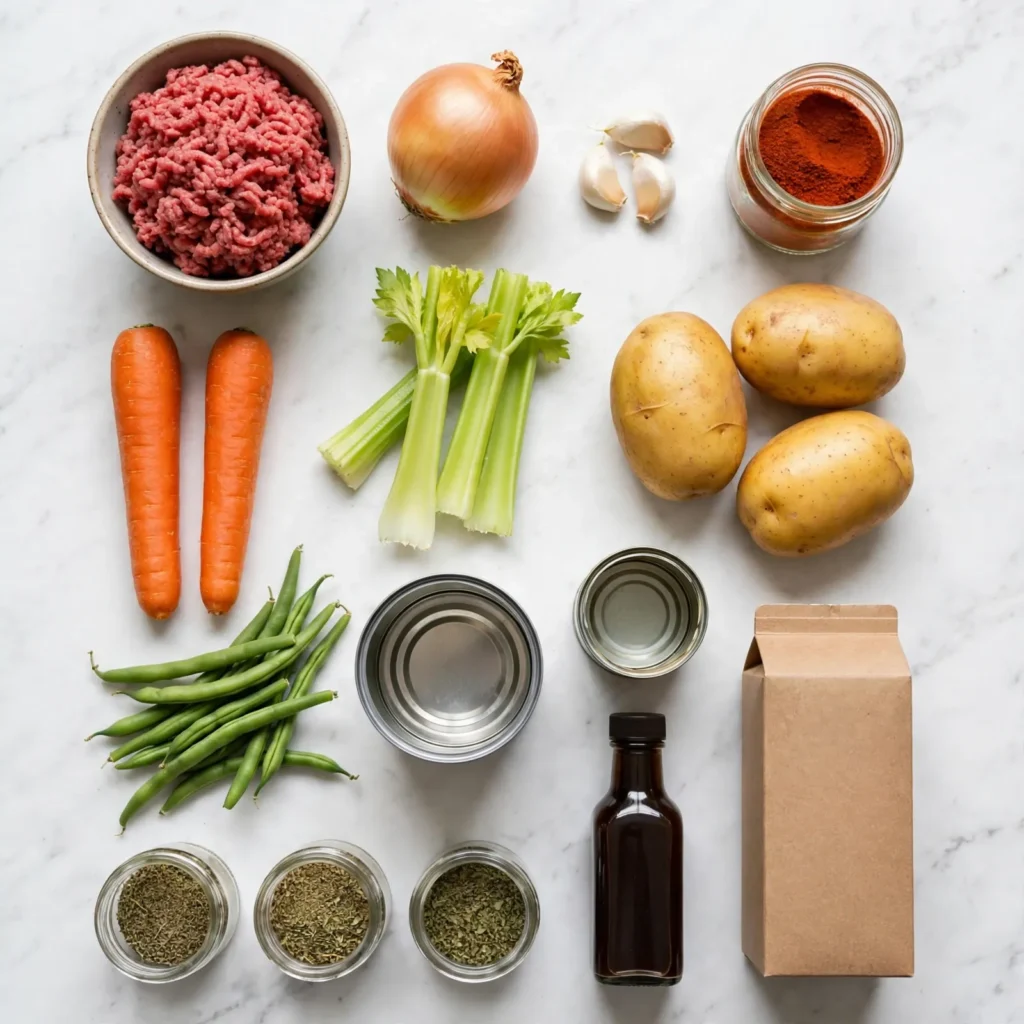
- 500g (1 lb) ground beef, 80/20 fat ratio. The primary protein and the flavor foundation of the broth. Browned properly before any liquid goes in.
- 1 medium yellow onion, finely diced. The primary aromatic. Cooked in the beef drippings after the beef is removed, which amplifies the savory, meaty base.
- 3 cloves garlic, finely minced. Added after the onion softens. Gives the broth a savory depth that prevents it from tasting purely of tomato.
- 2 medium carrots, peeled and sliced into 1cm rounds. Add sweetness, color, and a firm vegetable texture that contrasts well with the softer potato. Sliced rather than diced so they keep their distinct shape in the finished bowl.
- 2 stalks celery, thinly sliced. Adds a background savory note and aroma to the broth that is not identifiable on its own but is noticeably absent when left out.
- 3 medium Yukon Gold potatoes (about 450g), peeled and cut into 1.5cm cubes. The starchy filling element. They absorb the tomato broth flavor as they cook and add body to the overall soup.
- 1 cup (150g) green beans, trimmed and cut into 3cm pieces. Added in the last 10 minutes of simmering so they cook through without becoming soft. Fresh or frozen both work.
- 1 can (400g / 14 oz) diced tomatoes, with their liquid. Adds acidity, body, and the tomato character that defines the broth’s flavor profile. Fire-roasted diced tomatoes add an extra layer of smoky depth if available.
- 2 tablespoons tomato paste. Cooked briefly with the aromatics before the liquid goes in, which concentrates its flavor and caramelizes the sugars. This small amount deepens the tomato flavor of the broth significantly.
- 4 cups (960ml) low-sodium beef broth. The primary liquid. Beef broth amplifies the meaty character of the ground beef. Low-sodium keeps the salt level controllable.
- 1 teaspoon Worcestershire sauce. Adds a savory, slightly tangy depth to the broth that is not identifiable as Worcestershire sauce in the finished bowl but makes the overall flavor more complex.
- 1 teaspoon dried Italian herb blend (or a combination of dried oregano and basil).
- 1/2 teaspoon smoked paprika. Adds a subtle smokiness that deepens the color and flavor of the broth.
- 1/2 teaspoon fine sea salt, plus more to taste.
- 1/4 teaspoon black pepper.
- Fresh flat-leaf parsley, roughly chopped, for serving.
Step-by-Step Directions
Step 1: Brown the Ground Beef
Place a large Dutch oven or heavy soup pot over medium-high heat. Add the ground beef directly to the dry pot with no oil: at this fat ratio, enough fat renders from the beef to prevent sticking. Break the beef apart into pieces roughly the size of a large marble using a wooden spoon or spatula. Cook, stirring only every 60 to 90 seconds, for 6 to 8 minutes until the beef is deeply browned with visible golden-brown color on multiple pieces and the liquid released has fully evaporated from the pot bottom. The sound will shift from a sizzling-in-liquid sound to a drier, crackling sear sound when this point is reached.
Food Safety Note: Ground beef must reach an internal temperature of 71°C (160°F). At the browning stage described, all pieces will be well past this temperature. No pink should remain in any piece before proceeding.
Use a slotted spoon to transfer the browned beef to a plate, leaving the fat and drippings in the pot. Drain off excess fat if there is more than 2 tablespoons remaining, but leave a thin layer coating the pot bottom.

Chef’s Note: The browning is where this soup’s flavor begins. Each dark, slightly crisped piece of beef carries Maillard-browned compounds on its surface that dissolve into the broth and produce a depth that grey, steamed beef simply does not contribute. The extra 2 minutes of patience here is worth more than any additional seasoning later.
Step 2: Cook the Aromatics and Tomato Paste
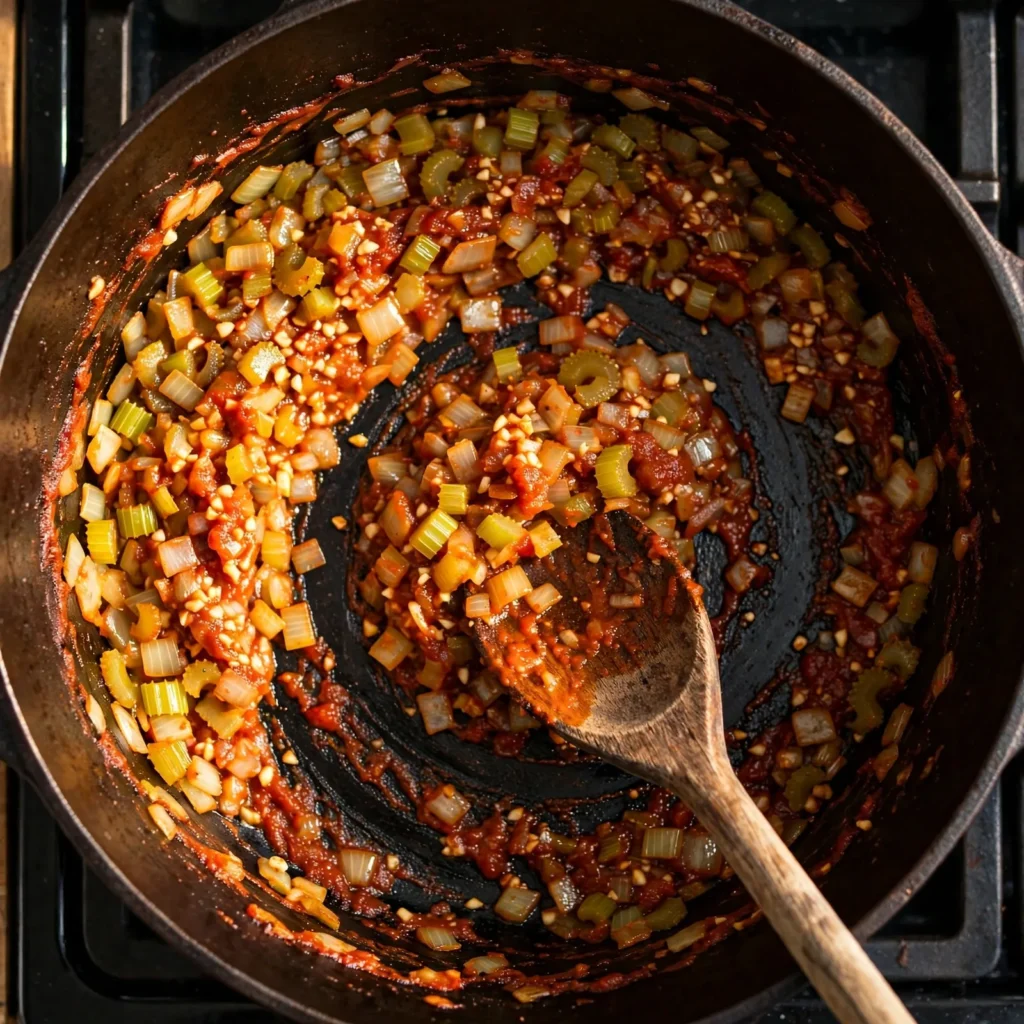
Add the diced onion and sliced celery to the pot with the remaining beef fat. Cook over medium heat for 3 to 4 minutes, stirring occasionally, until the onion has softened and turned translucent. Add the minced garlic and cook for 60 seconds, stirring constantly, until fragrant. Add the tomato paste and stir it into the vegetables, pressing it against the hot pot surface. Cook for 2 minutes, stirring and spreading the paste, until it darkens very slightly in color and smells sweeter and more concentrated than raw tomato paste.
Chef’s Note: Cooking the tomato paste before the liquid goes in is a technique called “caramelizing the paste” and it changes the flavor meaningfully. Raw tomato paste tastes acidic and slightly metallic. Two minutes of direct heat converts some of its sugars and concentrates its umami compounds, giving the broth a more rounded, deeper tomato flavor than paste added straight to liquid would produce.
Step 3: Add the Broth, Tomatoes, and Seasoning
Pour the beef broth into the pot, scraping the bottom as the liquid goes in to dissolve all the caramelized tomato paste and any fond that developed during the browning. Add the diced tomatoes with all their liquid, the Worcestershire sauce, dried herbs, smoked paprika, salt, and black pepper. Stir everything together. Return the browned beef to the pot. Raise the heat to medium-high and bring the soup to a full, rolling boil, watching it closely.
Step 4: Add the Denser Vegetables and Simmer
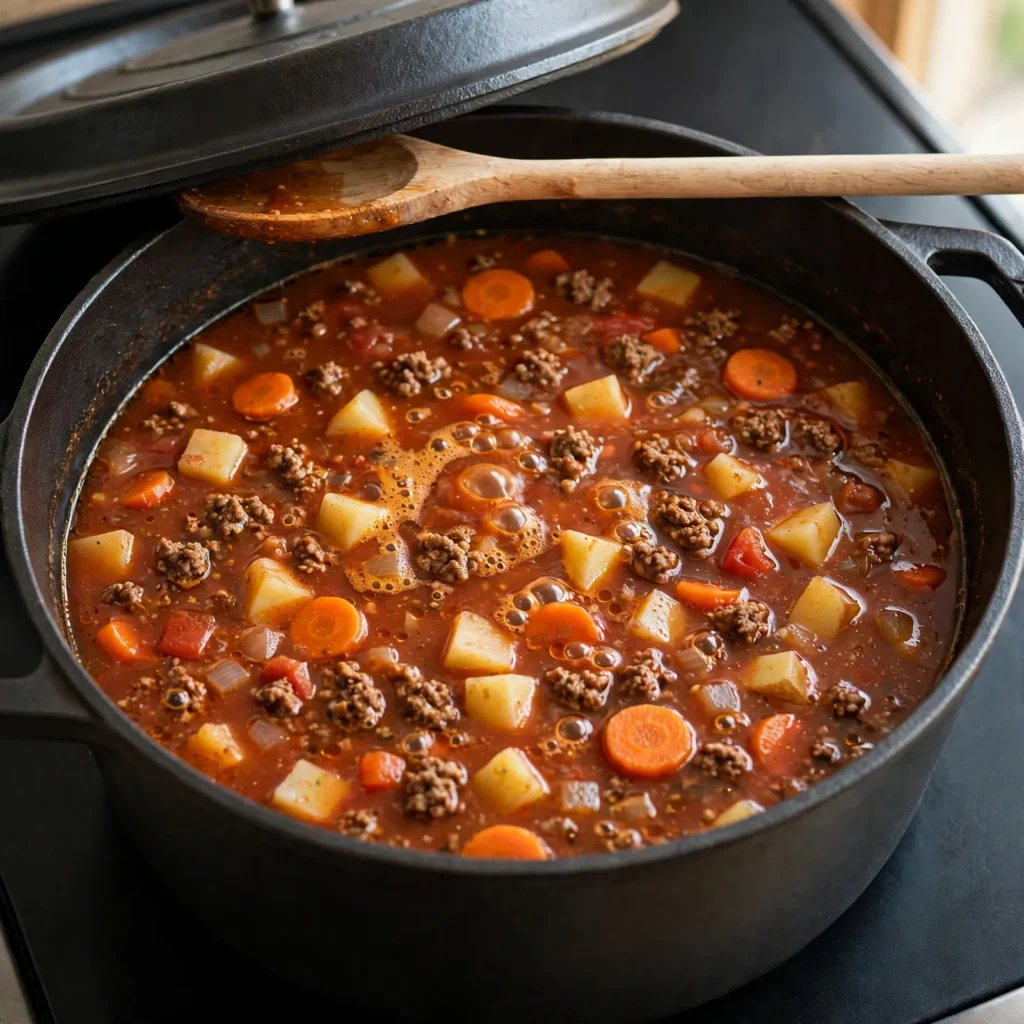
Once the soup reaches a boil, add the diced potatoes and sliced carrots. Stir to submerge them in the broth. Reduce the heat to medium-low, cover the pot with the lid set slightly ajar to allow some steam to escape, and simmer for 15 minutes, stirring every 5 minutes. At the 15-minute mark, the potatoes should be approximately three-quarters cooked through: a knife should penetrate the center of a potato cube but with some resistance still at the very core.
Step 5: Add the Green Beans and Finish Simmering
Add the trimmed and cut green beans to the simmering soup. Stir to distribute them through the broth. Continue simmering uncovered for 8 to 10 more minutes until the potatoes are completely fork-tender (a knife slides through the largest cube with no resistance), the carrots offer no firmness at the center, and the green beans are bright green and tender but still holding their shape rather than limp. Total simmer time from adding the vegetables in Step 4 is approximately 23 to 25 minutes.
Chef’s Note: Adding the green beans 10 minutes after the denser vegetables rather than all at once is the sequencing decision that keeps them bright green and intact rather than dull and soft in the finished soup. Beans take significantly less time to cook than potato and carrot cubes, and adding them from the start would produce beans that are overcooked by the time the potatoes are done.
Step 6: Taste, Adjust, and Serve
Taste the finished soup and adjust the seasoning. If the soup tastes flat, it almost certainly needs more salt rather than more of anything else. If it tastes thin in flavor despite being properly salted, a second teaspoon of Worcestershire sauce added at this stage deepens the umami character quickly. Ladle into bowls and scatter fresh parsley over each serving.
Common Mistakes and Troubleshooting
| Problem | Cause | Solution |
|---|---|---|
| Broth tastes thin and watery | Beef not properly browned; tomato paste not caramelized | Brown beef until truly golden-brown with no liquid remaining; cook tomato paste for the full 2 minutes before adding broth |
| Potatoes falling apart in the broth | Russet potatoes used; simmered too long after potatoes were tender | Use Yukon Gold; check tenderness at 15 minutes and don’t extend the simmer past the tender point |
| Green beans turned grey and mushy | Added at the same time as potatoes; overcooked | Always add green beans in the last 8 to 10 minutes of simmering, not at the beginning |
| Soup too greasy | Excess fat not drained after browning the beef | After removing the beef with a slotted spoon, drain all but 1 to 2 tablespoons of fat before adding the aromatics |
| Soup too acidic | Fire-roasted tomatoes with extra acid; no sweetness balance | Add 1/2 teaspoon of sugar or a pinch more smoked paprika to the finished soup; taste and adjust salt first, as salt suppresses perceived acidity |
| Beef turned grey and steamed | Too much beef in the pot at once; heat too low | Brown in two batches if the pot seems crowded; keep heat at medium-high and don’t stir until the beef has had time to develop a crust |
Variations and Substitutions
Italian Hamburger Soup: Add 1 teaspoon of dried Italian seasoning, 1/2 teaspoon of fennel seeds (lightly crushed), and a Parmesan rind to the broth while it simmers. The Parmesan rind dissolves its umami-rich protein and fat into the broth over the cook time, adding a deeply savory richness. Finish with freshly grated Parmesan over each bowl instead of parsley.
Hamburger Soup With Pasta: Replace the potatoes with 1 cup of small dried pasta (ditalini, elbow macaroni, or small shells). Add the pasta in the last 8 to 10 minutes of simmering rather than earlier, since pasta cooks faster than potato and becomes mushy if given too long. The pasta absorbs the broth as it cooks and gives each spoonful a more substantial, filling bite.
Spicy Hamburger Soup: Add 1/2 teaspoon of cayenne pepper and 1 teaspoon of red pepper flakes alongside the other seasonings in Step 3. A tablespoon of sambal oelek or harissa stirred into the finished soup adds an even more direct heat. Start conservatively and add more at the end after tasting.
Hamburger Soup With Corn and Black Beans: Add 1 cup of frozen corn and 1 can of drained, rinsed black beans alongside the green beans in Step 5. The corn adds natural sweetness and the beans add protein and a hearty, Southwest character that transforms the flavor profile without changing the one-pot method.
Hamburger Vegetable Soup With Cabbage: Replace the green beans with 2 cups of roughly chopped green cabbage. Add the cabbage with the potatoes and carrots in Step 4: it takes approximately the same time to become tender and adds a mild sweetness to the broth. This variation is also lower in carbohydrates than the standard version.
Slow Cooker Hamburger Soup: Brown the beef and cook the aromatics and tomato paste as described in Steps 1 and 2, then transfer everything to a slow cooker. Add all remaining ingredients except the green beans. Cook on low for 6 to 8 hours or high for 3 to 4 hours. Add the green beans in the last 30 minutes of cooking. The slow cooker version has a slightly more unified, blended flavor as the long cook time allows everything to meld together more fully.
Serving Suggestions
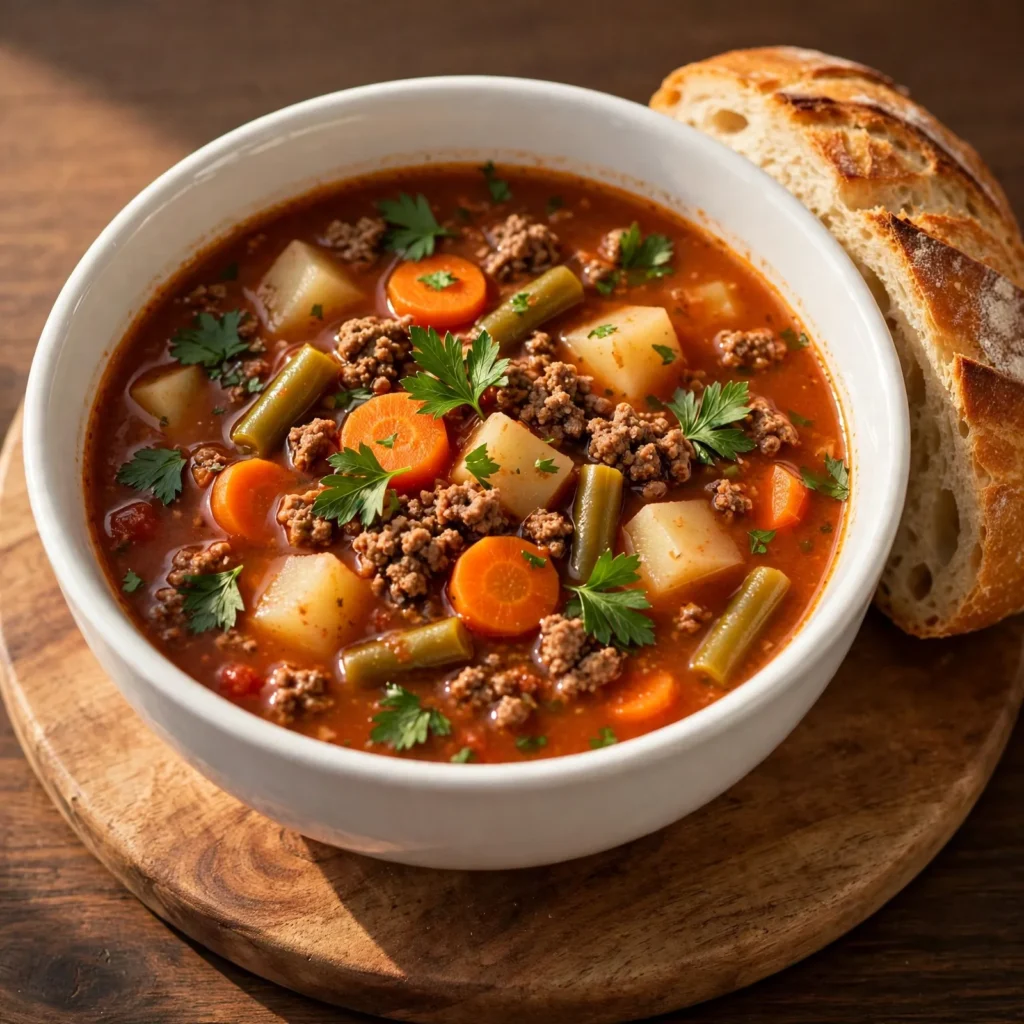
- With crusty bread for dipping. A thick slice of sourdough or a warm dinner roll beside a bowl of hamburger soup is the most natural accompaniment. The bread soaks up the tomato broth in a way that makes the last few tablespoons of the bowl the best part.
- With a simple green salad. A crisp romaine salad with a light lemon vinaigrette alongside a bowl of the soup makes the meal feel complete and provides a fresh, acidic counterpoint to the richness of the beef broth.
- With shredded cheddar cheese on top. A small handful of shredded sharp cheddar scattered over each bowl just before serving melts slightly into the hot broth and adds a creamy, sharp note that makes the soup feel more indulgent with very little additional effort.
- With sour cream and chives. A spoonful of sour cream and a scatter of thinly sliced chives on top of each serving adds a cool, tangy element that mirrors the way a loaded baked potato topping would work against the soup’s potato component.
- As a meal prep staple. Hamburger soup portioned into individual containers keeps for 4 days in the refrigerator and is one of the most consistently good reheated lunches in a meal-prep rotation. The broth deepens and the flavors unify after 24 hours in a way that makes leftover portions genuinely better than the original serving.
- Alongside garlic bread. Buttery, golden garlic bread alongside a bowl of hamburger soup makes the meal feel significantly more substantial and celebratory than either component would on its own.
Tips for the Best Results
- Brown the beef in a dry, hot pot without rushing. The 6 to 8 minutes of genuine browning is not just about cooking the beef through: it is the step that builds the entire flavor foundation of the soup. Every minute spent letting the beef develop a brown crust rather than steaming in its own liquid translates directly into a richer, more complex broth.
- Caramelize the tomato paste before adding liquid. Two minutes of cooking the tomato paste directly against the hot pot surface before any broth goes in transforms it from sharp and raw-tasting to sweet, deep, and savory. This step takes 2 minutes and makes a measurable difference in the finished broth’s flavor.
- Cut vegetables to a consistent size. Potato and carrot pieces of different sizes will cook at different rates, which means some will be overdone while others are still firm. Aim for uniformly cut pieces across both vegetables so the entire pot reaches the right texture at the same moment.
- Taste and season at the end, not just at the beginning. The beef, canned tomatoes, broth, and Worcestershire sauce all contribute salt and flavor that change as they cook down. A soup that seems underseasoned at the start of the simmer often needs only a small final adjustment of salt at the end to come into balance. Always taste before adding the finishing salt.
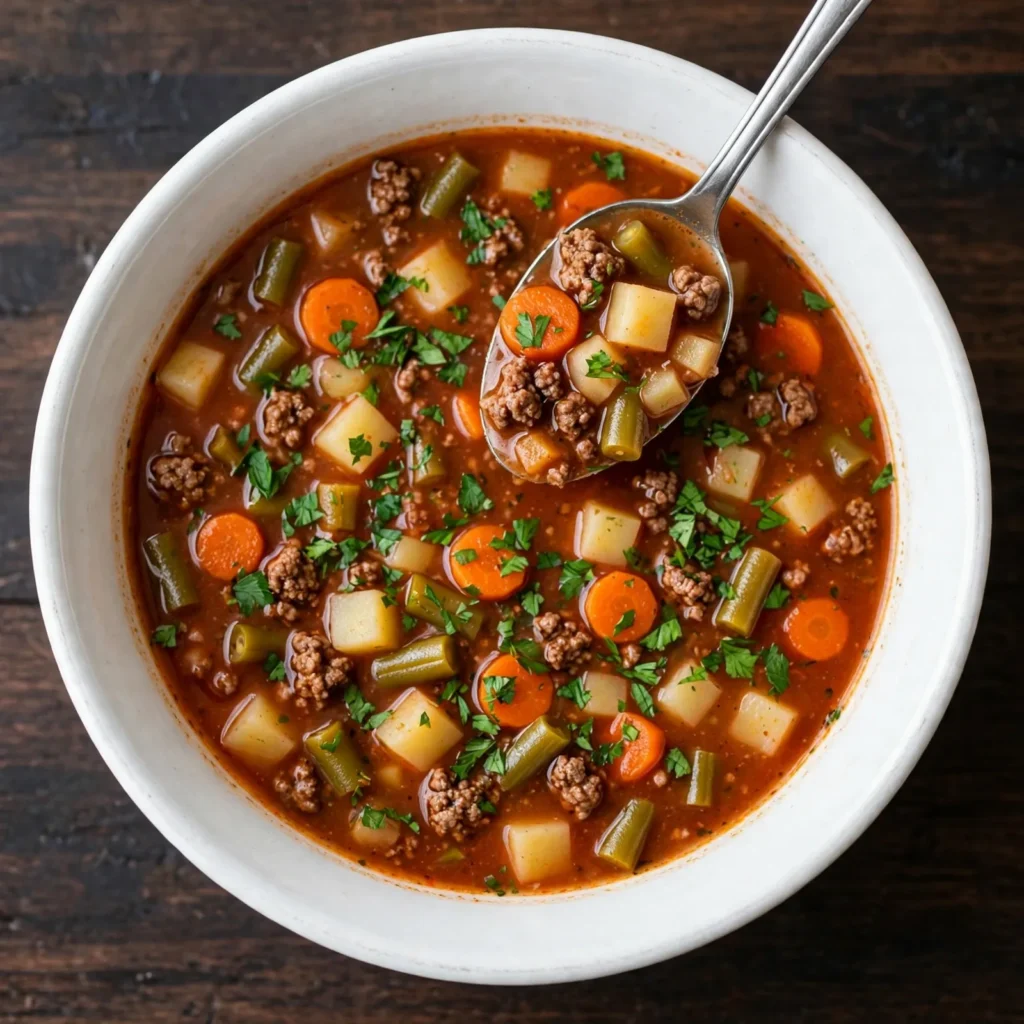
- Don’t skip the parsley. A handful of freshly chopped parsley scattered over the bowls just before serving adds a vivid green freshness that the soup’s color and richness needs as a visual and flavor contrast. It makes the finished bowl look significantly more appealing than the same soup without the herb.
Storage Tips
Refrigerator
Cool the soup completely before transferring to an airtight container. Hamburger soup keeps well in the refrigerator for up to 4 days. As it sits, the potatoes absorb more of the broth and the soup thickens slightly. Stir in a small splash of broth or water when reheating to restore the original consistency. The flavors continue to develop in the refrigerator, and many people find day-two soup noticeably more well-rounded and deeply flavored than the first serving.
Freezer
Hamburger soup freezes very well. Cool completely and portion into freezer-safe containers, leaving 2cm of headspace. Freeze for up to 3 months. The potato texture changes slightly after freezing and thawing: the cubes become softer and a small amount of starch releases into the broth, making it slightly thicker than the original. The flavor is unaffected. Thaw overnight in the refrigerator before reheating gently on the stovetop. If you plan to freeze the soup, consider undercooking the potatoes very slightly before freezing so they reach exactly the right texture after the freeze-thaw cycle.
Reheating
From the fridge: transfer a portion to a small saucepan with a tablespoon or two of water or broth added. Reheat over medium heat, stirring occasionally, for 4 to 5 minutes until steaming throughout. From frozen: thaw overnight in the refrigerator, then reheat as above. The microwave works at full power in 90-second intervals, stirring between each, with a splash of liquid added before heating to prevent the potatoes from drying out at the surface.
Nutrition Information
Per serving (approximately 1/6 of the full recipe, about 400ml)
| Nutrient | Amount |
|---|---|
| Calories | 320 kcal |
| Protein | 24g |
| Carbohydrates | 28g |
| Fiber | 4g |
| Sugar | 7g |
| Total Fat | 13g |
| Saturated Fat | 5g |
| Cholesterol | 65mg |
| Sodium | 560mg |
| Vitamin C | 22mg |
| Calcium | 55mg |
| Iron | 3.5mg |
| Potassium | 780mg |
Nutrition values are approximate and may vary based on brands and portion sizes.
Why This Recipe Works
The browning stage is the structural decision that separates a genuinely flavorful hamburger soup from one that tastes like beef-flavored water with vegetables floating in it. When ground beef hits a hot, dry pan surface at medium-high heat, the Maillard reaction begins almost immediately at the points of contact where the meat surface temperature exceeds 140°C (284°F). The Maillard reaction produces hundreds of new flavor compounds from the interaction of amino acids and reducing sugars in the beef, creating the complex, roasted, savory flavor that characterizes properly browned beef. These compounds are both fat-soluble and water-soluble: the fat-soluble fraction distributes into the cooking fat and then through the aromatics, while the water-soluble fraction dissolves directly into the broth when the liquid is added. Grey, steamed beef that never reached browning temperature contributes almost none of these compounds, which is why the finished broth tastes flat regardless of how long it simmers.
Caramelizing the tomato paste before adding the broth works through a similar mechanism. Raw tomato paste contains citric acid, which is sharp and slightly metallic at room temperature. At temperatures above approximately 100°C (212°F), the Maillard reaction and caramelization reactions begin converting the sugars in the tomato paste into more complex compounds while simultaneously driving off some of the harsher acidic notes. The 2 minutes of direct heat converts the paste from raw and sharp to sweet, complex, and savory in a way that paste added directly to cold broth would take significantly longer to achieve if it did at all.
The sequencing of the vegetables is a practical application of the different cooking times each requires. Potato cubes at 1.5cm take approximately 20 to 25 minutes of simmering to become fork-tender. Sliced carrots at 1cm rounds take 18 to 22 minutes. Green bean pieces at 3cm take 8 to 10 minutes. Adding all three simultaneously would mean the potatoes are done when the green beans are almost inedibly soft, or the green beans are correctly cooked when the potatoes still resist a fork. The 10-minute staggered addition of the green beans after the denser root vegetables gives each component exactly the time it needs without any compromise.
Worcestershire sauce in a beef-based soup is a practical umami amplifier rather than a flavoring agent. Worcestershire contains fermented ingredients including tamarind, vinegar, and spices that are collectively high in naturally occurring glutamates. Glutamates activate the umami taste receptors more broadly than single-source flavors do, which is why a small amount of Worcestershire in a broth makes the surrounding beef and tomato flavors taste more pronounced and savory without tasting of Worcestershire itself. At 1 teaspoon in a 6-serving soup, the Worcestershire is unidentifiable as a flavor on its own but its absence is immediately perceptible.
I’ve made this soup with Yukon Gold, russet, and red-skinned potatoes in side-by-side tests. The Yukon Gold version held the most consistent texture through the full cook and into reheating: the cubes stayed distinct, absorbed the broth flavor throughout, and broke down very little at the edges. The russet version produced thicker broth (from more starch release) but the potato cubes were crumbling at the edges while still firm at the center at the same cook time. The red potato version stayed the firmest but was slightly waxy in texture against the other ingredients. Yukon Gold is the right choice for this soup.
Frequently Asked Questions
Can I make hamburger soup ahead of time?
Yes, and making it a day ahead produces a noticeably better soup. The broth deepens as the beef and vegetable flavors continue to develop together overnight, and the seasoning becomes more integrated and rounded by the next day. Make the full recipe, cool it completely, and refrigerate for up to 4 days. Add a small splash of broth when reheating since the potatoes will have absorbed some liquid. The flavors are genuinely more cohesive and satisfying 12 to 24 hours after cooking.
Why does my hamburger soup taste bland?
Bland hamburger soup almost always means the beef was not properly browned. If the beef steamed in its own liquid rather than developing a brown crust, the Maillard-browned flavor compounds that make a meat-based broth taste rich and savory were never created. The fix for this batch is to taste, then add more salt incrementally and stir in a second teaspoon of Worcestershire sauce, both of which amplify whatever flavor is present. For future batches: use a hot, dry pot, don’t stir the beef too frequently, and wait until the released liquid has fully evaporated before you consider the browning complete.
Can I use ground turkey instead of ground beef?
Yes. Ground turkey produces a lighter, paler broth with a milder flavor than beef. Use dark-meat ground turkey (93/7 or 85/15) rather than extra-lean white-meat turkey for better flavor and browning results. Switch the beef broth to chicken broth to complement the lighter protein. The soup will be lower in fat and taste noticeably different in character than the beef version, but it is a satisfying soup in its own right.
How do I know when the vegetables are done?
The potatoes are the reference vegetable since they take the longest. Pierce the largest potato cube with a fork or knife tip: it should slide through with no resistance and the cube should fall off the tines under its own weight. A cube that offers any firmness at the center needs more time. The carrots should bend slightly when lifted rather than holding completely rigid, and the green beans should be bright green and yield to a gentle bite without snapping. All three should reach this point simultaneously if they were cut to the specified sizes.
Is hamburger soup gluten-free?
As written, hamburger soup is gluten-free: ground beef, vegetables, canned tomatoes, tomato paste, beef broth, and dried herbs contain no gluten. The one ingredient to verify is the Worcestershire sauce, which some brands formulate with malt vinegar derived from barley. Check the label and use a certified gluten-free Worcestershire sauce if cooking for someone with celiac disease or serious gluten sensitivity. Everything else in the recipe is naturally gluten-free.
Can I use frozen vegetables instead of fresh?
Yes, with a small timing adjustment. Frozen carrots and green beans go in 5 minutes later than fresh would, since they are already partially cooked from the blanching that happens before commercial freezing. Frozen potatoes (diced or cubed) are not recommended: they can become waterlogged and fall apart much faster than fresh during the simmer. Use fresh potatoes and substitute frozen vegetables for the carrots and green beans if that is what you have available.
What is the difference between hamburger soup and vegetable beef soup?
The primary difference is proportion: hamburger soup is built around a substantial quantity of seasoned ground beef and a relatively moderate amount of vegetables in a tomato-based broth. Vegetable beef soup traditionally uses less meat (often beef stew pieces or smaller amounts of ground beef) and a larger proportion of vegetables in a clearer, less tomato-forward broth. The two overlap significantly in ingredients and technique, but hamburger soup is specifically associated with ground beef as the primary protein and a richer, more tomato-present broth.
Conclusion
Hamburger soup is one of those recipes that delivers a result far above what its ingredient list or prep time suggests possible, because the technique at the beginning of the recipe does most of the heavy lifting before any liquid is added. Brown the beef properly, caramelize the tomato paste, build the broth on that foundation, and the soup takes care of itself for the remaining 25 minutes of simmering. The vegetable sequencing keeps everything at the right texture. The seasoning comes into balance at the end rather than guesswork at the beginning. Make this hamburger soup once on a weeknight and it will become the recipe you default to whenever you need a soup that feels like a full meal.
If you loved this recipe, save it to your easy soup recipes Pinterest board so you can find it easily later. For more same recipes follow Thecookingvibes Pinterest account.
Easy Hamburger Soup
Ingredients
Equipment
Method
- Place a large Dutch oven over medium-high heat. Add ground beef to the dry pot and break apart. Cook, stirring only every 60 to 90 seconds, for 6 to 8 minutes until deeply browned with no pink remaining and all released liquid evaporated. Transfer beef to a plate with a slotted spoon, leaving drippings. Drain excess fat, leaving about 1 to 2 tablespoons.
- Add diced onion and celery to the pot over medium heat. Cook 3 to 4 minutes until onion is soft. Add garlic, stir 60 seconds until fragrant. Add tomato paste, stir and press it against the hot pot for 2 minutes until it darkens slightly in color and smells sweeter.
- Pour in beef broth, scraping up all the fond from the pot bottom. Add diced tomatoes with their liquid, Worcestershire sauce, herbs, smoked paprika, salt, and pepper. Return browned beef to the pot. Bring to a full boil.
- Add potato cubes and carrot rounds to the boiling soup. Reduce heat to medium-low, cover with lid slightly ajar, and simmer 15 minutes, stirring every 5 minutes.
- Add green beans. Continue simmering uncovered for 8 to 10 minutes until potatoes are fully fork-tender, carrots offer no resistance at the center, and green beans are bright green and tender.
- Taste and adjust salt. Ladle into bowls and top with fresh parsley.
Notes
- Brown the beef fully until genuinely golden-brown with no steaming liquid in the pot: this is the foundation of the broth’s flavor.
- Cook tomato paste directly against the hot pot for 2 minutes before adding liquid: this transforms its flavor from sharp to sweet and savory.
- Add green beans in the last 8 to 10 minutes only: they become mushy and grey if cooked from the start with the other vegetables.
- The soup improves significantly overnight in the refrigerator: make it a day ahead when possible.