Classic Minestrone Soup — Hearty Vegetables, Rich Tomato Broth
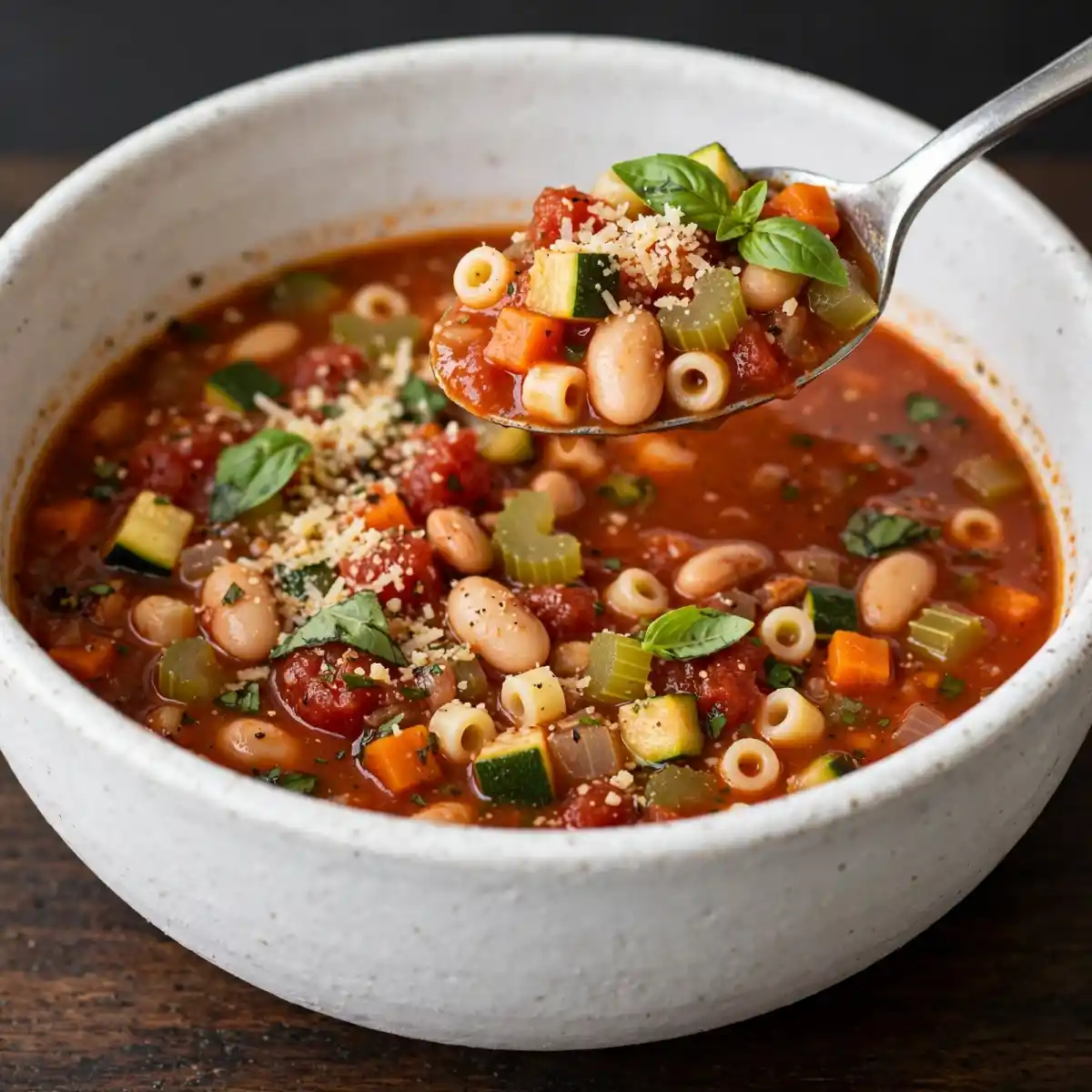
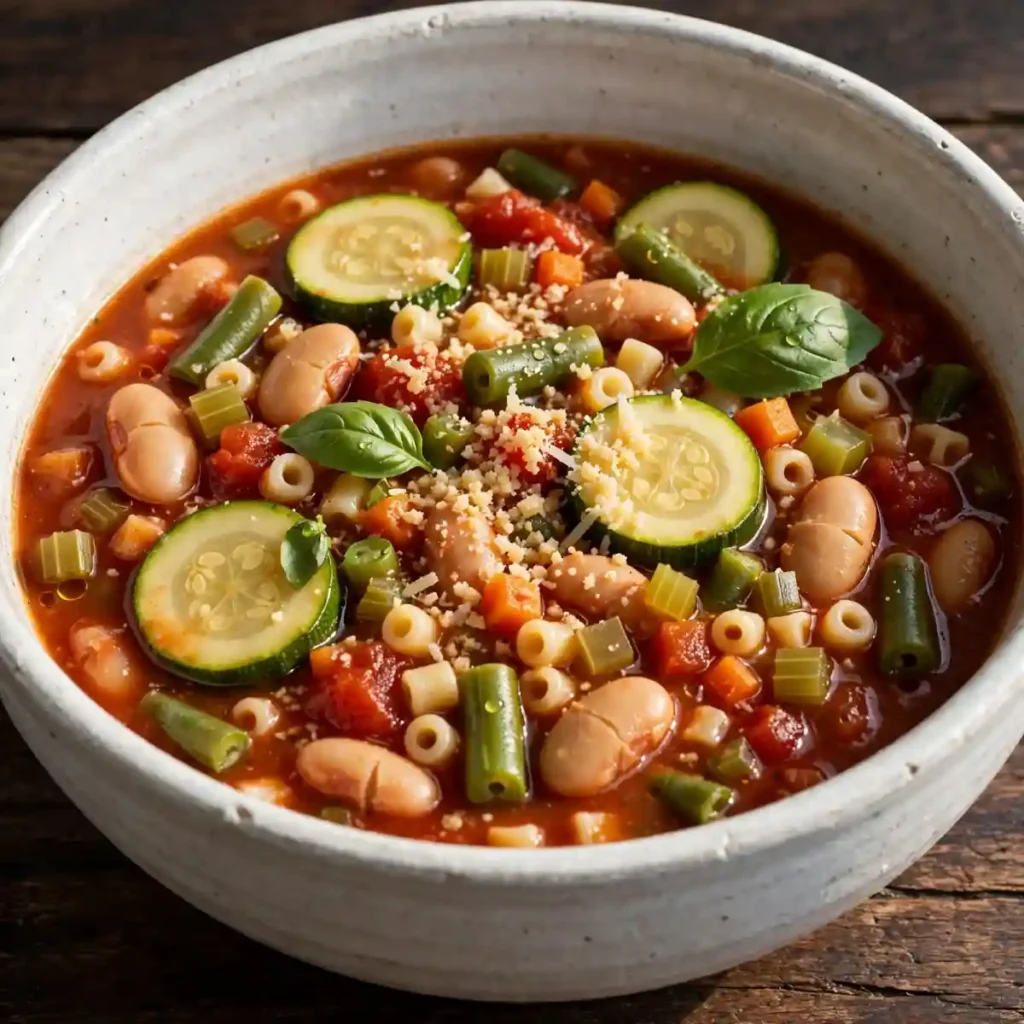
Minestrone is one of those soups that smells better than almost anything else coming from a stovetop: a combination of slowly softened onion and celery, tomato simmering into a deep red broth, and the starchy warmth that fills the kitchen when the pasta finishes in the pot. It’s not a delicate broth soup and it’s not a thin vegetable water; it’s thick, filling, and substantial enough to be dinner on its own, especially with a piece of crusty bread and a generous finish of freshly grated Parmesan across the top.
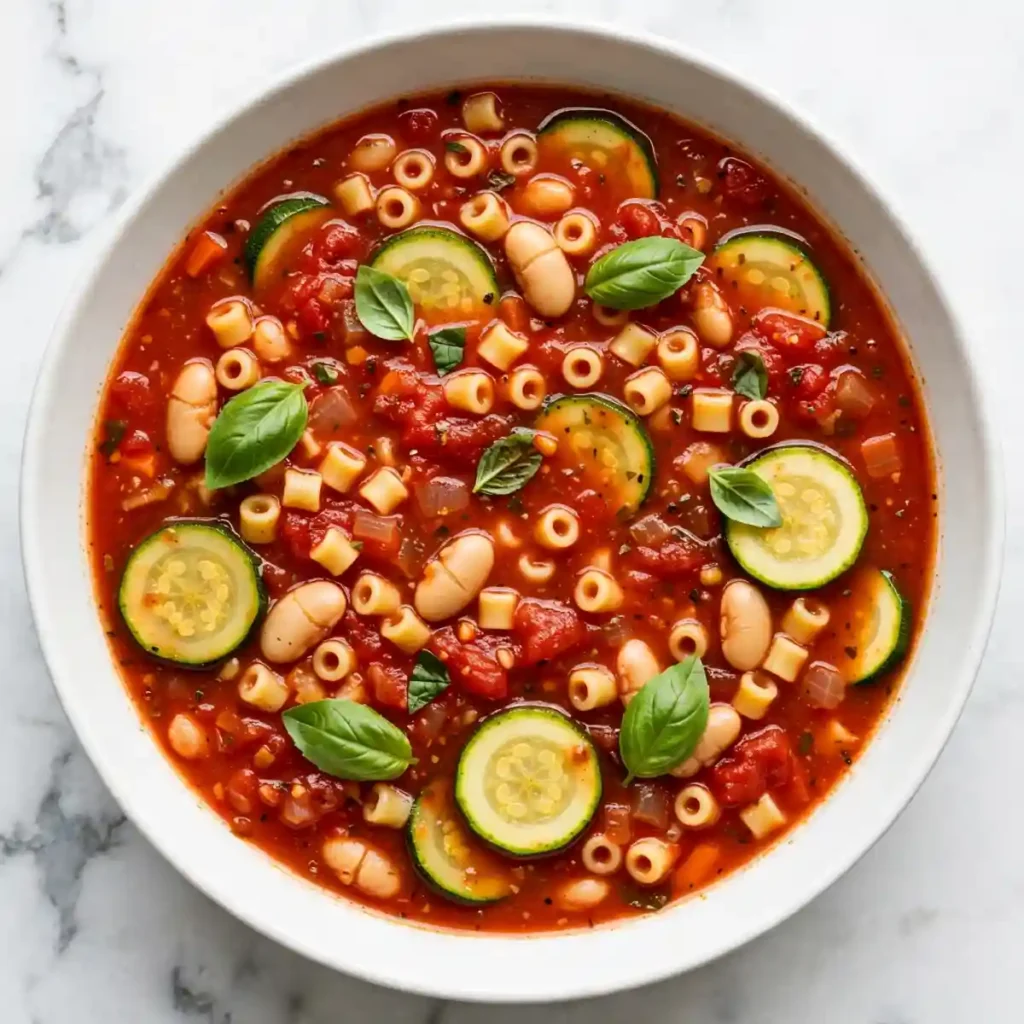
This minestrone soup recipe uses a traditional Italian-American base of onion, celery, carrot, and garlic built in olive oil, then layered with zucchini, green beans, diced tomatoes, cannellini beans, and small pasta that finishes cooking in the broth. The seasoning is simple, dried oregano, fresh thyme, and bay leaves, with a Parmesan rind simmered in the broth for the entire cook time and a final finish of lemon juice and fresh basil that makes the whole pot taste alive rather than flat. It serves 6 to 8, improves significantly on day 2, and is one of the most practical make-ahead soups available because it keeps and reheats better than almost anything else in this category.
Why You’ll Love This Minestrone Soup
- Genuinely thick and filling, not watery. Proper soffritto, the initial low-and-slow sauté of onion, celery, and carrot, builds a sweet, savory base that transforms the broth from plain vegetable liquid into something deeply flavored before the tomatoes or stock are added.
- Parmesan rind simmered in the broth all the way through. A single Parmesan rind added at the beginning of the simmer dissolves slowly and contributes a savory, umami depth that makes the broth taste as though it took far longer than it did; this single addition is the difference between a broth that tastes like vegetable water and one that tastes built.
- Pasta cooked in the broth, not separately. Small pasta added directly to the simmering soup releases its surface starch into the broth, thickening it naturally and producing a more cohesive, integrated result than pasta cooked separately and added at serving.
- Better at day 2 and day 3. The broth continues to develop flavor as it absorbs into the beans and pasta overnight; a minestrone refrigerated for 24 hours tastes noticeably more integrated and complex than the fresh-made version.
- Endlessly adaptable by season. The base method in this recipe works with virtually any vegetable combination you have; the same soffritto foundation, broth, tomato, and bean structure produces an excellent soup regardless of what seasonal vegetables go in the middle.
Ingredients You’ll Need
Recipe Timing
| Servings | 6 to 8 |
| Difficulty | Easy |
| Course | Main Course, Soup |
| Cuisine | Italian-American |
| Prep Time | 20 minutes |
| Cook Time | 35 minutes |
| Rest Time | 0 minutes |
| Total Time | 55 minutes |
For the olive oil, use a good-quality extra virgin olive oil for the soffritto step; this is the fat that carries all the flavor from the aromatics into the broth, and a flavorful oil contributes noticeably to the base. A neutral oil can substitute but produces a flatter-tasting base.
For the canned tomatoes, crushed tomatoes produce the best body and color in the broth, distributing evenly rather than the uneven chunky pieces from diced tomatoes alone. Using both types, crushed for body and diced for texture, produces the ideal result: a deeply colored broth with identifiable tomato pieces throughout.
For the broth, vegetable broth keeps this recipe fully vegetarian; low-sodium chicken broth provides a richer, more savory base for those who don’t need a vegetarian version. Either works; use low-sodium in both cases so the final salt level is controllable.
For the Parmesan rind, save these in a sealed bag in the freezer whenever you finish a block of Parmesan; they keep for 3 months and are one of the most valuable flavor additions available to any slow-cooked broth, soup, or bean dish. If no rind is available, adding 2 tablespoons of grated Parmesan directly to the broth during the final 10 minutes of simmering provides a partial substitute.
For the pasta, small shapes like ditalini, small elbow macaroni, or small shells are traditional in minestrone. Their size is proportionate to the diced vegetables so each spoonful contains a balanced mixture of pasta and vegetables rather than pasta-heavy bites and vegetable-only bites. Large pasta shapes overwhelm the soup’s composition.
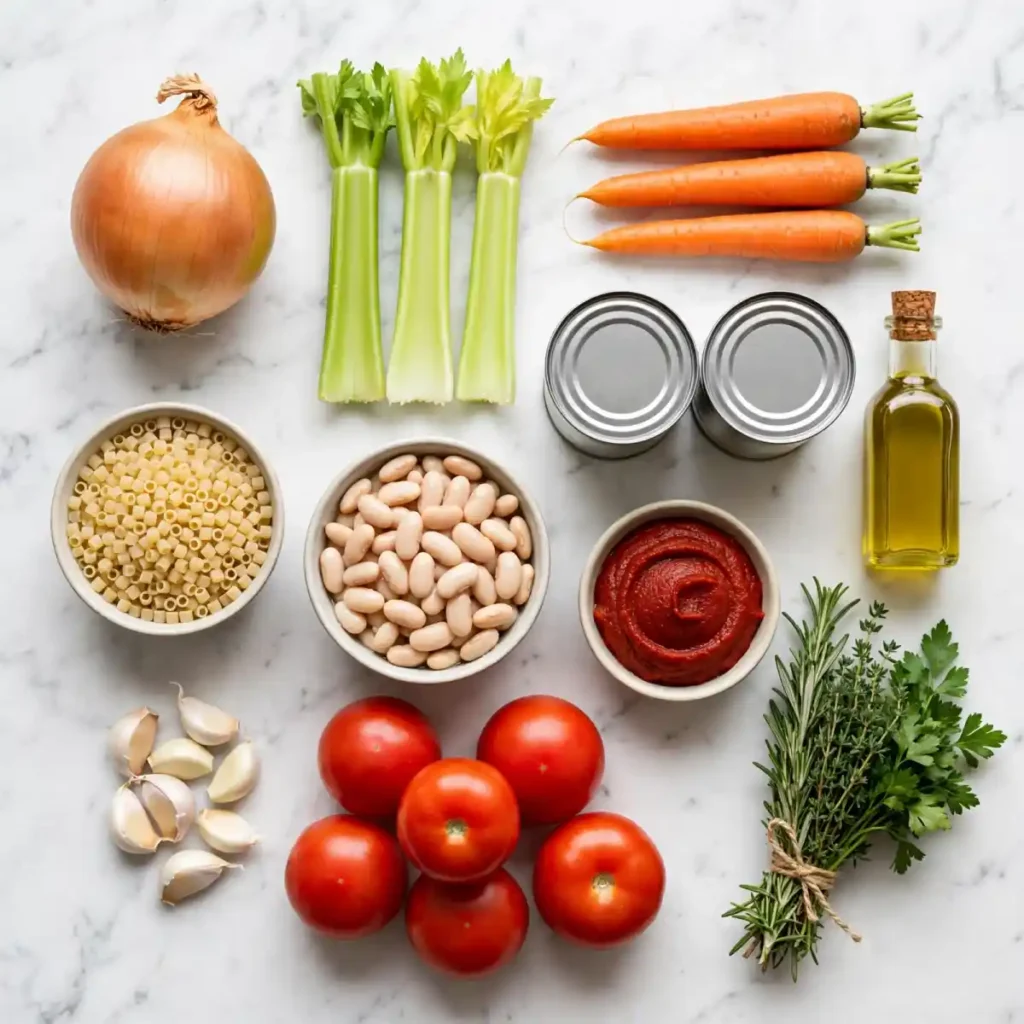
- 3 tablespoons extra virgin olive oil — the base fat for the soffritto; contributes flavor as well as the cooking medium
- 1 large yellow onion, finely diced — the foundational aromatic; softened slowly to sweetness before anything else goes in
- 3 medium celery stalks, finely diced — the second soffritto component; adds a subtle herbal, slightly bitter depth
- 3 medium carrots, peeled and finely diced — the third soffritto component; adds natural sweetness and color
- 5 garlic cloves, finely minced — added after the soffritto softens; provides the aromatic bridge between the base vegetables and the broth
- 2 tablespoons tomato paste — caramelized briefly in the oil before the liquid goes in; adds concentrated, umami-rich tomato depth beyond the canned tomatoes
- 1 can (400g) crushed tomatoes — the primary broth color and body
- 1 can (400g) diced tomatoes — adds texture
- 1.5 litres (6 cups) low-sodium vegetable broth or chicken broth
- 2 cans (400g each) cannellini beans, drained and rinsed — the protein and body of the soup; cannellini’s creamy, mild flavor integrates naturally with the tomato broth
- 200g (about 2 cups) zucchini, quartered lengthwise and cut into 1cm pieces — adds a mild, slightly sweet presence; cut small so it softens by the time the pasta finishes
- 150g (about 1.5 cups) fresh or frozen green beans, trimmed and cut into 2cm pieces — adds a fresh, slightly grassy note; fresh green beans have more snap and color; frozen work at the same quantity
- 150g (5 oz, about 3/4 cup) small dried pasta (ditalini, small elbow, or small shells) — added in the last 10 to 12 minutes; finishes cooking in the broth and thickens it naturally
- 1 Parmesan rind (optional but highly recommended) — simmered for the full cook time; dissolves slowly and contributes savory depth to the broth
- 1 teaspoon dried oregano — the dominant herbal note in the broth
- 3 to 4 fresh thyme sprigs, or 1/2 teaspoon dried thyme
- 2 bay leaves — removed before serving
- 1/2 teaspoon red chili flakes — optional; adds a mild background warmth
- 1 teaspoon fine salt, plus more to taste
- 1/2 teaspoon freshly ground black pepper
- 1 tablespoon fresh lemon juice — added at the very end; lifts and brightens the entire pot
- 1 cup (about 30g) fresh baby spinach or chopped kale — stirred in during the last 2 minutes; adds color and a fresh green note
For serving:
- Freshly grated Parmesan — a generous scatter over each bowl
- Fresh basil leaves, torn — adds a bright, aromatic finish
- Extra virgin olive oil for drizzling — a final pour of good olive oil over the bowl surface
- Crusty bread — for the broth remaining in the bowl
Allergen and Dietary Disclosure
This minestrone soup is naturally dairy-free without the Parmesan rind and Parmesan garnish (omit both for a fully dairy-free version; replace the rind with 1 tablespoon of nutritional yeast added to the broth for savory depth). It is naturally egg-free, nut-free, and vegetarian as written with vegetable broth. It contains gluten from the dried pasta.
For vegan: this soup is fully vegan when made with vegetable broth and without the Parmesan rind and Parmesan garnish. The nutritional yeast substitution provides comparable depth without any animal product.
For gluten-free: replace the dried pasta with certified gluten-free pasta at the same quantity. Add it in the last 8 to 10 minutes rather than 10 to 12, since most gluten-free small pasta shapes soften faster than wheat pasta in hot broth. All other ingredients are naturally gluten-free; verify the vegetable broth label if strict compliance is needed.
For lower sodium: use unsalted or no-sodium-added canned tomatoes and no-sodium broth. The Parmesan rind contributes some sodium; remove it earlier from the broth if the sodium level needs to be strictly controlled.
This recipe has not been tested in a certified allergen-free kitchen and cannot be guaranteed safe for any specific allergy.
Equipment Needed
- Large 5 to 6-quart Dutch oven or heavy-bottomed soup pot — wide and heavy enough for the soffritto step (which requires even, low heat across the entire base) and deep enough to hold 2 litres of broth plus all the vegetables without splashing. A thin-bottomed pot produces uneven soffritto with hot spots that brown some vegetables before others soften.
- Wooden spoon — for stirring the soffritto and the tomato paste caramelization step without scratching the pot’s interior.
Step-by-Step Directions
Step 1: Build the Soffritto
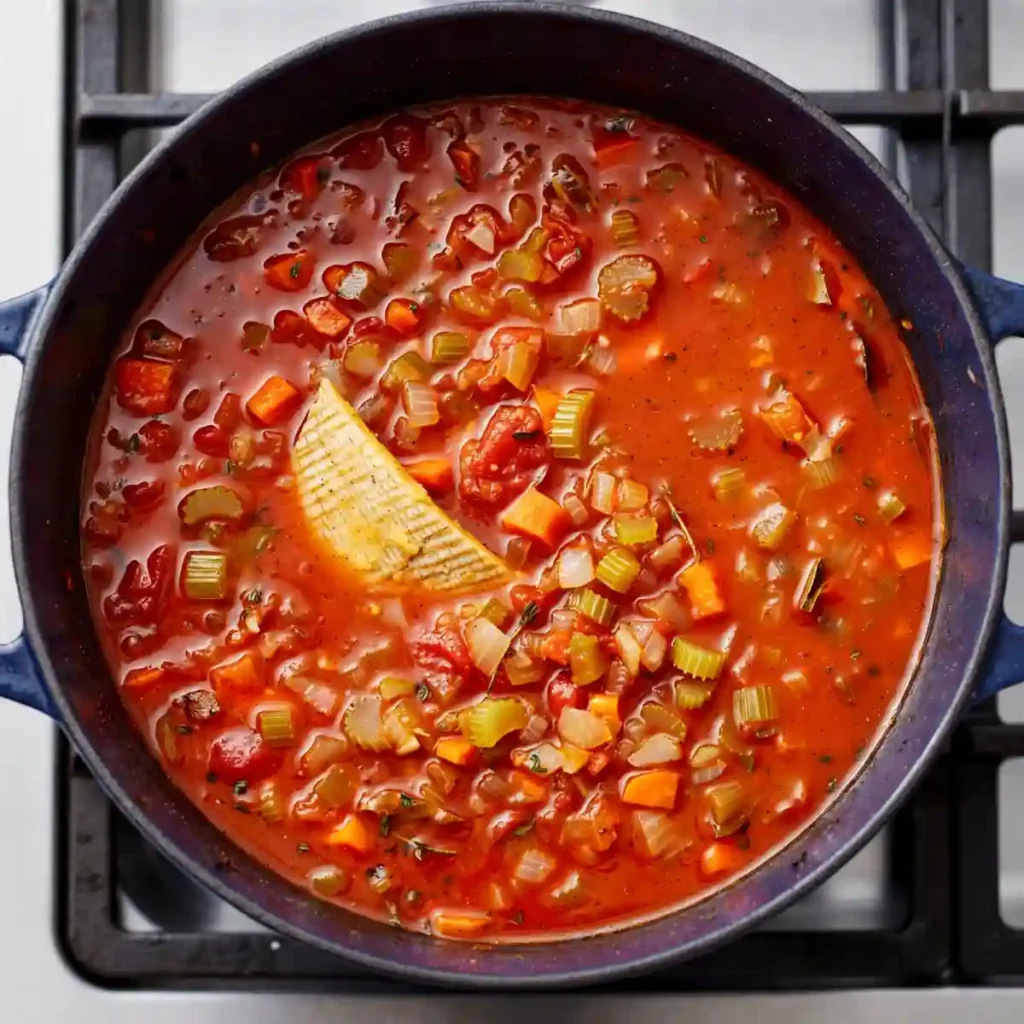
Heat the olive oil in the Dutch oven over medium-low heat until it shimmers gently, about 60 seconds. Add the diced onion, celery, and carrot simultaneously and stir to coat in the oil. Cook over medium-low heat for 8 to 10 minutes, stirring every 60 to 90 seconds, until the onion has turned completely translucent and soft throughout with no visible opaque white centers, the celery has softened and lost its raw crunch, and the carrot has become tender enough to mash easily against the pot side with the back of the spoon. The mixture should look glossy and slightly reduced in volume; nothing should be browned.
The soffritto is complete when it smells sweet and savory simultaneously rather than sharp and raw. This 8 to 10 minute investment is what separates a minestrone broth with real depth from one that tastes like a quick vegetable soup.

Chef’s Note: The word soffritto means “under-fried” in Italian, which describes this exact low-and-slow cooking method precisely. The goal is not to brown or caramelize the vegetables but to coax their cellular water out slowly, concentrating their natural sugars and breaking down their cell walls so they dissolve into the broth during the subsequent simmer. A properly made soffritto looks almost like a soft, fragrant paste after 10 minutes; this concentrated base carries the soup’s foundational flavor.
Step 2: Add Garlic and Tomato Paste
Increase the heat to medium. Add the minced garlic to the softened soffritto and stir continuously for 60 to 90 seconds until the raw garlic smell softens into something sweet and fragrant; don’t let the garlic brown.
Add the tomato paste directly to the center of the pot and let it sit without stirring against the hot base for 45 seconds until it darkens from bright red to a deeper brick-red color. Then stir it thoroughly through the soffritto and cook for another 30 seconds. This brief caramelization of the tomato paste against the hot pot converts some of its concentrated glutamate and reducing sugars into new Maillard browning compounds that deepen the broth’s tomato flavor from bright and acidic to something richer and more complex.
Step 3: Add Tomatoes, Broth, and Aromatics
Pour the crushed tomatoes and diced tomatoes into the pot, stirring to lift any caramelized tomato paste from the base. Add the vegetable broth, dried oregano, fresh thyme sprigs, bay leaves, red chili flakes, salt, and black pepper. Add the Parmesan rind if using, pushing it down so it’s submerged in the liquid.
Stir everything together and bring the soup to a gentle boil over medium-high heat, stirring once as it heats. The broth should turn a vivid, rusty tomato-red from the crushed tomatoes.
Chef’s Note: Adding the Parmesan rind at the start of the broth simmer rather than at the end is essential for extracting its full flavor contribution. The rind’s proteins and fats dissolve gradually into the broth over 20 to 30 minutes of simmering; added only in the final minutes, it has no time to contribute meaningfully. By the end of the cook, the rind will have softened significantly and its edges will look slightly translucent where the outer cheese has dissolved into the surrounding broth.
Step 4: Add Beans and Firm Vegetables
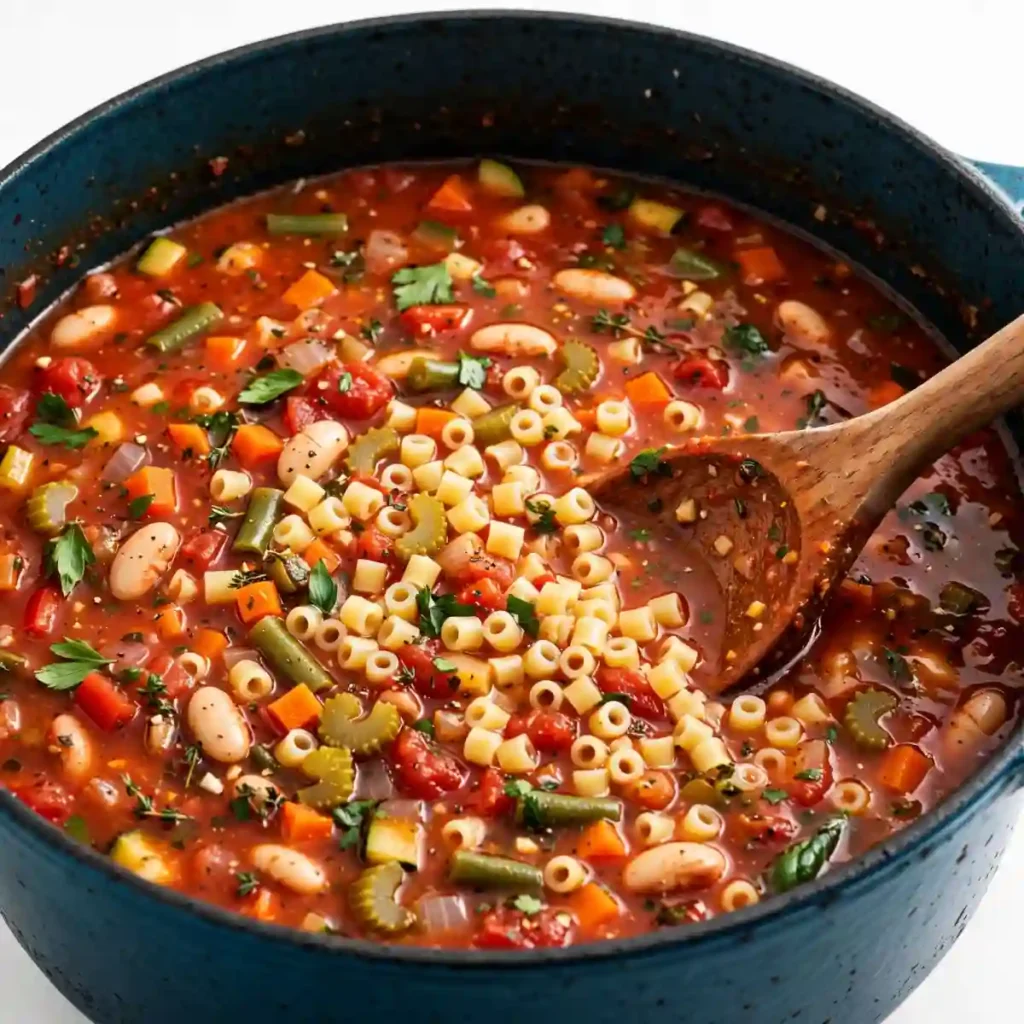
Reduce the heat to a steady simmer (medium-low). Add the drained and rinsed cannellini beans, diced zucchini, and green bean pieces. Stir to combine and simmer uncovered for 10 minutes, stirring occasionally, until the zucchini is just tender and the green beans have lost their raw crunch but still hold their shape with a slight firmness.
Step 5: Add Pasta and Finish the Soup
Add the small dried pasta directly to the simmering soup. Stir to prevent the pasta from clumping at the base and simmer uncovered for 10 to 12 minutes, stirring every 2 to 3 minutes, until the pasta is tender throughout with no doughy center when tasted. The broth will visibly thicken as the pasta cooks and releases its starch; this is the natural thickening that makes minestrone more substantial than a plain broth soup.
Remove and discard the bay leaves, thyme sprigs, and Parmesan rind. Stir in the fresh baby spinach or chopped kale and cook for 60 to 90 seconds until fully wilted. Add the fresh lemon juice, stir through, and taste for salt and pepper. The lemon juice brightens all the flavors simultaneously; add it and taste again before adjusting salt separately.
Chef’s Note: The lemon juice addition at the very end is the step that makes the soup taste finished rather than merely cooked. Acid brightens the perception of all the other flavors already in the pot by suppressing the bitterness receptors on the palate and amplifying the savory and sweet notes; a minestrone without that final acid finish tastes flat and slightly heavy by comparison. Add the lemon and taste immediately; the difference is immediate.
Step 6: Serve
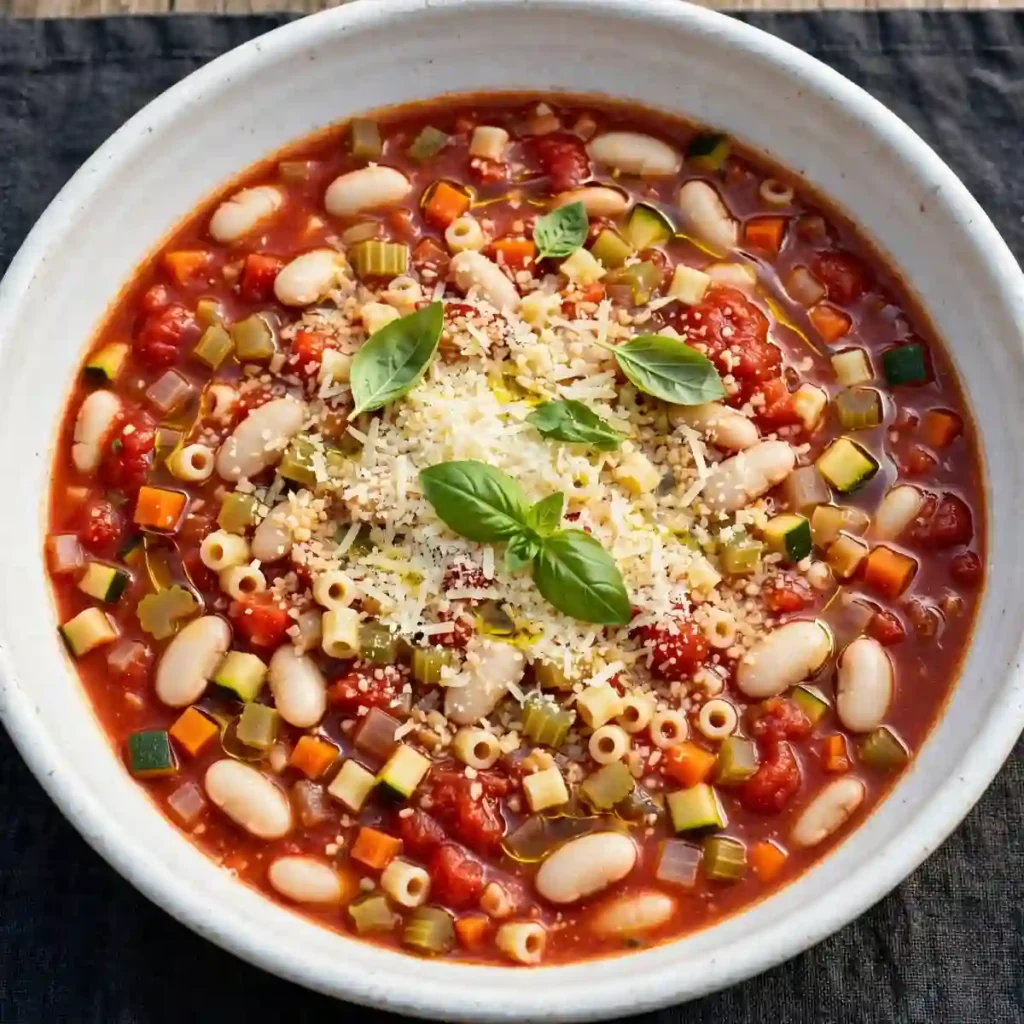
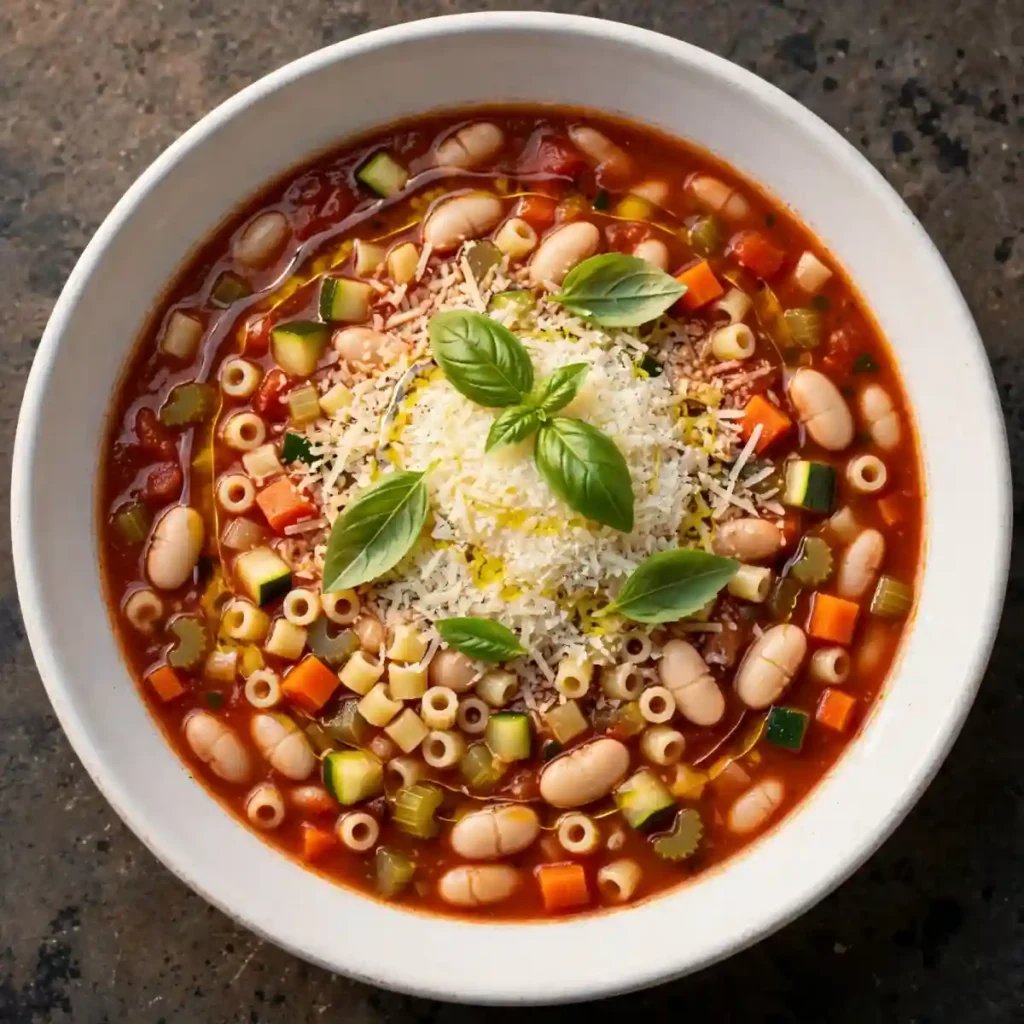
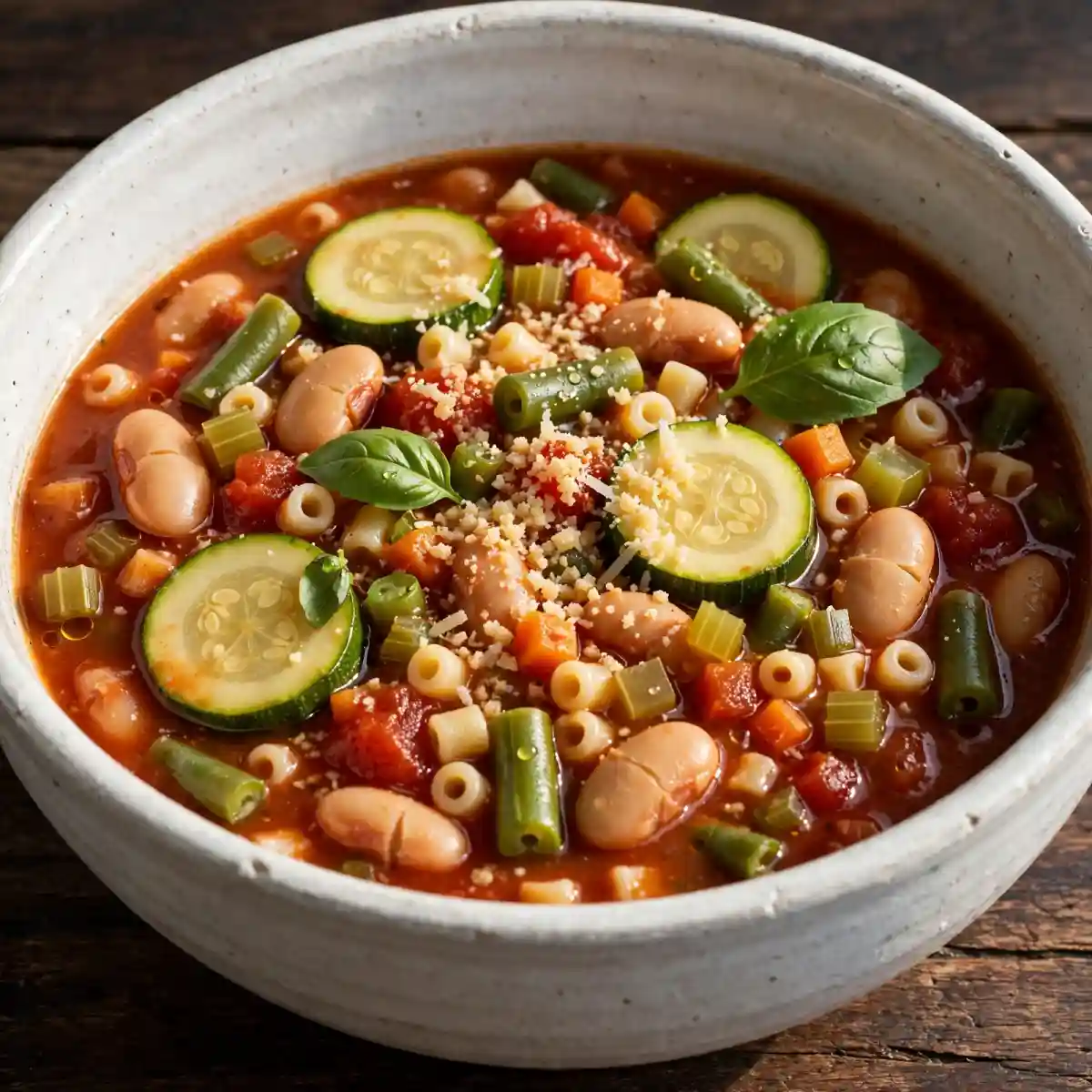
Ladle the minestrone into wide bowls. Drizzle a thin pour of extra virgin olive oil across the surface of each bowl, scatter torn fresh basil leaves, and finish with a generous amount of freshly grated Parmesan. Serve immediately with crusty bread alongside.
Common Mistakes and Troubleshooting
| Problem | Cause | Solution |
|---|---|---|
| Broth watery and flat-tasting | Soffritto rushed at high heat instead of cooked slowly, or no Parmesan rind | Take the full 8 to 10 minutes at medium-low for the soffritto; add a Parmesan rind at the broth stage |
| Pasta turned mushy | Added too early, or soup sat too long before serving | Add pasta in the last 10 to 12 minutes only; for leftover soup, add fresh pasta when reheating |
| Vegetables disintegrated | Overcooked at too high a temperature, or added too early | Simmer, never boil aggressively; add zucchini and green beans after the tomato base has simmered for 15 minutes |
| Soup too thick and starchy | Too much pasta, or cooked too long after pasta was added | Use the stated pasta quantity; serve shortly after the pasta finishes cooking |
| Tomato paste tastes sharp and harsh | Not caramelized long enough before liquid was added | Cook the tomato paste against the hot pot base for the full 45 to 60 seconds until brick-red before adding liquid |
| Soup bland despite full ingredient list | Lemon juice omitted, or insufficient salt | Always add the lemon juice at the end; taste and salt generously; Parmesan garnish also adds significant seasoning |
Variations and Substitutions
- Spring minestrone: Replace the zucchini and green beans with 1 cup of fresh or frozen peas, 1 cup of asparagus tips cut to 2cm, and 2 cups of fresh spinach added at the end. Omit the diced tomatoes and use only the crushed tomatoes for a lighter, paler broth that suits the delicate spring vegetables better than the full double-tomato version.
- Tuscan kale and white bean minestrone: Replace the zucchini with 200g of Tuscan kale (cavolo nero) stems removed and leaves torn into 3cm pieces. Add the kale 5 minutes before the pasta, giving it longer to soften than spinach needs. Use only white cannellini beans and no green beans; the dark, slightly bitter kale against the white beans in a red broth is both visually dramatic and flavor-balanced.
- Hearty winter minestrone: Add 200g of diced butternut squash alongside the zucchini and increase the simmer time for the vegetables by 5 minutes before adding the pasta. The squash softens slowly and breaks down slightly at the edges, thickening the broth further and adding a natural sweetness that makes the winter version feel more substantial and warming than the summer vegetable version.
- Pesto-finished minestrone: Stir 2 to 3 tablespoons of good-quality store-bought or homemade basil pesto directly into the finished pot just before serving rather than into individual bowls. The pesto distributes through the broth, turning it a vivid basil-green at the edges and adding a bright, herbal richness that transforms the flavor profile toward a more Ligurian character.
- Pasta-free version (for meal prep): Omit the pasta entirely and replace with 200g of cooked farro or barley for a heartier grain option that holds its texture better during refrigerator storage than pasta. Alternatively, make the soup without any starch and add freshly cooked pasta to individual bowls at serving time; this keeps the broth from thickening during storage.
- Spicy minestrone: Double the red chili flakes to 1 teaspoon and add 1 finely diced fresh jalapeño with the soffritto vegetables. For a deeper, smokier heat, substitute the red chili flakes with 1 to 2 finely diced chipotle peppers in adobo sauce; this variation’s smoky-spicy character works particularly well with the pesto finish described above.
Serving Suggestions
- Serve in wide, shallow bowls rather than deep ones; the wide surface area allows the olive oil drizzle, fresh basil, and Parmesan to be distributed across the entire bowl rather than concentrated in a narrow center, and each spoonful picks up a balanced combination of broth, vegetables, beans, and pasta rather than pasta from the bottom and broth from the top.
- Thick slices of crusty bread, a fresh sourdough or a ciabatta, are the essential accompaniment; the bread’s purpose is the savory, tomatoey broth left after the solids are eaten, which is worth preserving until the end. Place the bread on the side rather than in the soup to prevent it from becoming soggy before it’s needed.
- A light green salad dressed with lemon and extra virgin olive oil serves as a natural side that provides textural contrast to the thick, warming soup and refreshes the palate between bites; the same acid note from the lemon dressing echoes the soup’s lemon juice finish.
- Serve with a wedge of the same Parmesan block used for the rind placed on the table so guests can grate additional Parmesan over their own bowls; fresh-grated cheese at the table over hot soup melts in a way that pre-grated cheese added in the kitchen does not, and the interactive element suits a relaxed dinner table.
- For a more composed dinner presentation, drizzle a stripe of basil pesto directly across the surface of the finished soup in each bowl; pesto is a traditional Italian accompaniment to minestrone and adds a dramatic green color against the red broth.
- Pair with cold sparkling water with a lemon slice or a cold pressed apple juice; both clean drinks cut through the soup’s richness and provide a refreshing contrast to the warm, tomato-heavy broth.
Tips for the Best Results
- Don’t rush the soffritto. Eight to ten minutes at medium-low heat is the minimum for the onion, celery, and carrot to genuinely soften, become sweet, and start to look almost translucent. Speeding this up with higher heat produces browned vegetables with a different, sharper flavor profile rather than the soft, sweet base that minestrone needs. Set a timer and resist the temptation to increase the heat when nothing appears to be happening; the transformation is happening in the cellular structure of the vegetables, not on their surface.
- Add the Parmesan rind every time. A single rind simmered for 25 to 30 minutes contributes an unmistakable, deeply savory quality that cannot be replicated by adding more salt or more Parmesan as a garnish; those contribute saltiness and surface flavor, while the rind contributes depth and body from dissolved proteins and fat into the broth itself. Freeze rinds as you finish blocks; they keep for 3 months and are worth accumulating specifically for this.
- Cook the pasta in the soup, not separately. The starch released by pasta cooking in a contained broth volume naturally thickens the soup and produces a more cohesive result than pasta cooked in a separate pot of water and added at serving. The only trade-off is that leftover soup continues to thicken as the stored pasta absorbs more broth; this is easily addressed by adding a splash of broth when reheating.
- Add the lemon juice at the very end, every time. Even if the soup tastes well-seasoned before the lemon, adding the tablespoon of lemon juice produces an immediate, noticeable improvement in how all the other flavors present themselves. This is the acid finish that virtually every Italian cook adds to soups and braises; it costs almost nothing and makes a material difference to the finished flavor.
- Taste and season generously at the end. Minestrone contains a large volume of water from the broth and the tomatoes; it needs more salt than it initially seems to, particularly if low-sodium broth was used. Season before the lemon juice, then again after, since the acid changes how the salt is perceived. The final bowl should taste assertively seasoned and bright, not mild or flat.
Storage Tips
Refrigerator
Minestrone soup keeps in the refrigerator for up to 5 days in a sealed container. As mentioned, it tastes noticeably better at day 2 and day 3 as the broth deepens and the flavors integrate. The pasta absorbs a significant amount of liquid during refrigerator storage and the soup will look considerably thicker on day 2; this is normal. Add a splash of vegetable broth when reheating to restore the broth consistency. The vegetables hold their shape well for the first 3 days; by day 4 and 5 they’re softer but the flavor is excellent.
Freezer
Minestrone freezes well for up to 3 months when frozen without the pasta. The pasta texture degrades significantly during freezing and thawing, becoming soft and slightly slimy in a way that pasta-free minestrone doesn’t. For freezer storage, make the full recipe without adding pasta; freeze in portion-sized sealed containers. When reheating from frozen, bring the soup to a full simmer and add dry pasta directly to the reheating pot; cook for 10 to 12 minutes until the pasta is tender. This produces the same fresh pasta texture as the original batch. If the soup was already made with pasta and is being frozen, it’s still safe and adequate on reheating but the pasta will be softer than ideal.
Reheating
Stovetop reheating produces the best result: add the refrigerated minestrone to a saucepan over medium heat with 60 to 120ml of vegetable broth or water per serving to replace the liquid absorbed by the pasta during storage. Heat for 5 to 7 minutes, stirring occasionally, until the soup is steaming and the broth has loosened back to its original flowing consistency. Add fresh Parmesan, basil, and a drizzle of olive oil after reheating to restore the freshness of the garnish. Microwave reheating at 70% power in 90-second intervals with stirring between works adequately for a single portion; add a splash of water before heating and stir well.
Make-ahead note: Minestrone is one of the most genuinely make-ahead-friendly soups available. Making it 1 to 2 days before a gathering and refrigerating the full pot produces a better-flavored soup than same-day serving. If making specifically for storage, hold back the pasta and add it fresh when reheating on the day of serving for the ideal texture.
Nutrition Information
Per serving, approximately 1/7 of the recipe (between 6 and 8 servings):
| Nutrient | Amount |
|---|---|
| Calories | 285 kcal |
| Protein | 12g |
| Total Carbohydrates | 46g |
| Dietary Fiber | 9g |
| Total Sugar | 8g |
| Total Fat | 7g |
| Saturated Fat | 1g |
| Cholesterol | 0mg |
| Sodium | 580mg |
| Vitamin C | 22mg |
| Calcium | 95mg |
| Iron | 4.1mg |
| Potassium | 680mg |
Nutrition values are approximate and may vary based on broth brand, pasta quantity, canned tomato sodium content, and vegetable weights used.
Why This Recipe Works
The soffritto’s flavor contribution to the finished broth is chemical rather than additive; it doesn’t just add vegetable flavor on top of the broth, it fundamentally changes the broth’s character through the breakdown of the aromatic vegetables’ cellular contents during the slow cook. Onion’s fructooligosaccharides and fructose convert from their raw, slightly pungent state into a sweeter, more complex mixture of caramelized sugars and sulfur compounds at medium-low heat over 8 to 10 minutes; the result is a sweet, savory background flavor that neither raw onion nor quickly sautéed onion produces. Celery’s phthalides, a family of aromatic compounds responsible for its characteristic herbal note, release from the cellular matrix during slow cooking and dissolve into the cooking fat, distributing a mild, complex herbal character through the entire fat phase rather than remaining concentrated in the cellular walls of the vegetable pieces.
The Parmesan rind’s contribution to the broth works through two simultaneous mechanisms. First, the outer rind of aged Parmesan contains a concentrated layer of casein proteins and fat that dissolve gradually into the simmering broth, adding body, richness, and savory depth in the same way that a bone adds gelatin to a bone broth. Second, Parmigiano-Reggiano contains the highest free glutamate concentration of any naturally aged food, approximately 1.2 grams per 100 grams; this glutamate, the amino acid directly responsible for umami perception, dissolves from the rind into the surrounding broth during the simmer and intensifies the perceived savoriness of every other ingredient. The rind doesn’t make the broth taste cheesy; it makes it taste more fully savory, in the same way a splash of soy sauce makes a Western stew taste more complete.
The tomato paste caramelization step produces Maillard browning compounds from the tomato’s glutamic acid and reducing sugars that are absent from raw or uncamelized tomato paste. At the medium-high heat of a 45 to 60 second contact with the pot base, the paste’s surface reaches the Maillard temperature threshold (above approximately 140°C) and produces new aromatic compounds including furanones, pyrazines, and melanoidins that convert the sharp, raw tomato character into something deeper, roasted, and more savory. These compounds dissolve into the broth when the liquid is added and distribute through the entire volume, raising the perceived tomato complexity beyond what the volume of canned tomatoes alone could produce.
Finishing the pasta in the simmering broth rather than separately produces a more cohesive soup through two mechanisms. During cooking, pasta releases amylose and amylopectin starch chains into the surrounding liquid; in a large pot of salted water these dissolve to negligible concentration, but in the contained broth volume of minestrone they accumulate to a concentration that measurably thickens the broth through starch gelatinization. The thickened broth coats the pasta, the beans, and the vegetable pieces more effectively than a thin broth does, producing each spoonful as a cohesive, well-integrated mouthful rather than a collection of separate components in a liquid pool. The pasta also absorbs the seasoned broth’s flavor during cooking, so each piece of pasta tastes of the tomato, herb, and savory base from the inside rather than merely being surrounded by it.
The lemon juice addition at the end of cooking is an acid brightening technique that works by suppressing bitterness perception and amplifying sweet and savory notes across the entire palate. The citric and ascorbic acids in lemon juice reduce the perceived bitterness of the cooked celery, canned tomatoes, and green beans and simultaneously intensify the perceived sweetness of the soffritto’s caramelized onion and carrot. The net effect is a soup that tastes more fully developed and less one-dimensionally tomato-forward than the same soup without the acid finish. I’ve made this same minestrone both with and without the final lemon juice across multiple batches; in every case, the lemon version tasted brighter and more finished than the identical version without it, and the difference was noticeable immediately without needing to identify the specific ingredient responsible.
Frequently Asked Questions
Can I make minestrone soup ahead of time?
Yes, and it actively improves with 24 to 48 hours of refrigeration as the broth deepens and the flavors integrate. For the best make-ahead result, prepare the soup without the pasta and refrigerate up to 3 days; add dry pasta when reheating and cook for 10 to 12 minutes until tender. This prevents the pasta from absorbing all the broth during storage. If you’ve already added pasta, reheat with an extra splash of vegetable broth to restore the soup’s flowing consistency.
Why does my minestrone taste watery and flat?
Flat minestrone almost always comes from a rushed soffritto. If the onion, celery, and carrot are sautéed quickly at high heat rather than slowly at medium-low for 8 to 10 minutes, they don’t break down their cellular structure and the sweet, concentrated flavor they’re supposed to contribute to the broth never develops. The Parmesan rind is the other most common missing element; without it the broth lacks the savory depth that makes minestrone taste built. Both steps are easy to include and make a material difference.
Can I use different beans in minestrone?
Yes. Borlotti beans (cranberry beans) are traditional in many Italian versions and produce a slightly earthier, more robust flavor than cannellini. Kidney beans work well and hold their shape through the long simmer; chickpeas add a nuttier character and a firmer texture. Avoid very small beans like French lentils; they disintegrate during the simmer and turn the broth cloudy and starchy rather than producing the whole-bean presence that minestrone needs. Use drained and rinsed canned beans at the same 2-can quantity regardless of variety.
When should I add the pasta to minestrone?
Add the dried pasta in the last 10 to 12 minutes of the simmer, after the vegetables have already softened. Adding it too early produces overcooked pasta that disintegrates into the broth before the vegetables are tender; adding it too late produces undercooked pasta in a bowl that’s already on the table. For gluten-free pasta, start checking at 8 minutes since most gluten-free small pasta shapes soften faster than wheat pasta in hot broth.
Is minestrone soup vegan?
This minestrone soup is fully vegan when made with vegetable broth and without the Parmesan rind and Parmesan garnish. All other ingredients including olive oil, canned tomatoes, beans, vegetables, pasta, and lemon juice are naturally vegan. For a comparable savory depth to the Parmesan rind, stir 2 tablespoons of nutritional yeast into the broth during the final 10 minutes of simmering; it contributes a mild, umami-like depth without any animal product.
Can I freeze minestrone soup?
Yes, with the best results when the soup is frozen without the pasta. Cooked pasta in soup degrades significantly during freezing and thawing, becoming soft and unpleasant in texture. Make the full recipe without adding pasta, cool completely, and freeze in sealed containers for up to 3 months. When reheating from frozen, bring to a full simmer and add dry pasta directly to the reheating pot for 10 to 12 minutes. If the soup was already made with pasta and needs to be frozen, it’s safe and still flavorful after thawing but the pasta texture will be considerably softer than the original.
What vegetables work best in minestrone?
The core structure, soffritto of onion, celery, and carrot plus garlic, canned tomatoes, beans, and broth, works with almost any seasonal vegetable in the middle layer. Summer additions that work well: zucchini, green beans, fresh corn, diced eggplant, and cherry tomatoes. Winter additions: diced butternut squash, sweet potato, cavolo nero (Tuscan kale), cabbage, and leeks. The timing guideline is straightforward: firmer vegetables go in earlier, in the last 15 minutes; softer vegetables like zucchini in the last 10 minutes; delicate greens like spinach in the last 90 seconds.
Conclusion
Minestrone rewards the patience of the first step and the simplicity of everything after it. The 10-minute soffritto and the Parmesan rind together do more for the broth’s depth than any amount of additional seasoning or premium ingredients can accomplish; they’re the two decisions that make it taste as though it simmered all afternoon rather than for 35 minutes.
The practical value of minestrone is that it’s genuinely one of the best make-ahead soups available. It costs very little, uses ordinary pantry ingredients, feeds a household for multiple days, and tastes better each time it’s reheated. Making a full batch on the weekend and eating it through the week is one of the most sensible meal-prep investments in home cooking, and minestrone soup holds up to that routine better than almost anything else in this category.
If you loved this recipe, save it to your easy soup recipes and Italian dinner ideas Pinterest board so you can find it easily later. For more same recipes must follow Thecookingvibes Pinterest account.
Classic Minestrone Soup
Ingredients
Equipment
Method
- Heat olive oil in a large Dutch oven over medium-low. Add diced onion, celery, and carrot simultaneously. Cook for 8 to 10 minutes, stirring every 60 to 90 seconds, until the onion is completely translucent, the celery has softened throughout, and the carrot is tender enough to mash against the pot side. The mixture should smell sweet and savory with nothing browned.
- Increase heat to medium. Add minced garlic; stir continuously 60 to 90 seconds until fragrant. Add tomato paste to the pot center; cook undisturbed 45 seconds until brick-red. Stir through the soffritto and cook 30 seconds more.
- Pour in crushed tomatoes and diced tomatoes, lifting any caramelized bits from the base. Add vegetable broth, dried oregano, thyme, bay leaves, chili flakes, salt, and pepper. Add the Parmesan rind if using. Bring to a gentle boil over medium-high heat.
- Reduce to a steady simmer. Add drained cannellini beans, zucchini, and green beans. Simmer uncovered 10 minutes until zucchini is just tender and green beans have lost their raw crunch while still holding shape.
- Add small dried pasta directly to the simmering soup. Stir to prevent clumping. Simmer uncovered 10 to 12 minutes, stirring every 2 to 3 minutes, until pasta is tender throughout with no doughy center.
- Remove bay leaves, thyme sprigs, and Parmesan rind. Stir in spinach or kale; cook 60 to 90 seconds until wilted. Add lemon juice, stir through, and taste for salt and pepper. Ladle into wide bowls and finish with Parmesan, basil, and an olive oil drizzle.
Notes
- Take the full 8 to 10 minutes at medium-low for the soffritto; this step is the foundation of the broth’s depth.
- The Parmesan rind must go in at the beginning, not at the end; it needs 25 to 30 minutes of simmering to contribute meaningfully.
- For meal prep or freezing, omit the pasta and add it fresh when reheating; stored pasta absorbs all the broth and softens.
- Always add the lemon juice at the very end; it brightens every flavor in the pot immediately.
- Allergens: Contains gluten (pasta) and dairy if Parmesan rind and Parmesan garnish are used. Naturally egg-free and nut-free. Fully vegan without the Parmesan rind and garnish; use nutritional yeast for savory depth instead.
- This recipe has not been tested in a certified allergen-free kitchen and cannot be guaranteed safe for any specific allergy.
- Nutrition values are approximate and may vary based on broth brand, pasta quantity, canned tomato sodium content, and vegetable weights.